💥Join UPSC 2027,2028 Mentorship (July Batch) + XFactor Notes & Microthemes PDF

Subject: Conservation & Mitigation

1. Conservation Progs.
2. Worldwide initiatives
3. Mitigation Strategies
4. Conventions and Protocols

  • [pib] Amendment to the Environment Impact Assessment (EIA) Notification, 2006

    To address unprecedented situation arising from the global outbreak of COVID-19 and to ramp up availability or production of various drugs, the MoEFCC has made an amendment to EIA Notification 2006.

    EIA is a process of evaluating the likely environmental impacts of a proposed project or development, taking into account inter-related socio-economic, cultural and human-health impacts, both beneficial and adverse.  Its a hot topic for mains.

    What is the amendment about?

    • All projects or activities in respect of bulk drugs and intermediates, manufactured for addressing various ailments, have been re-categorized from the existing Category ‘A’ to ‘B2’ category.
    • Projects falling under Category B2 are exempted from the requirement of collection of Baseline data, EIA Studies and public consultation.
    • The re-categorization of such proposals has been done to facilitate decentralization of appraisal to State Level so as to fast track the process.

    Projects Categorization and Clearance under EIA

    • Environmental clearance is required in respect of all new projects or activities listed in the Schedule to the 2006 notification and their expansion and modernization, including any change in product –mix.
    • Since EIA 2006 the various developmental projects have been re-categorised into category ‘A’ and category ‘B’ depending on their threshold capacity and likely pollution potential.
    • They require prior EC respectively from MOEFCC or the concerned State Environmental Impact Assessment Authorities (SEIAAs).
    • Where state-level authorities have not been constituted, the clearance would be provided by the MOEFCC.

    Back2Basics: Environmental Impact Assessment (EIA) in India

    • EIA is a management tool to minimize adverse impacts of developmental projects on the environment and to achieve sustainable development through timely, adequate, corrective and protective mitigation measures.
    • The MoEFCC uses EIA Notification 2006 as a major tool for minimizing the adverse impact of rapid industrialization on the environment and for reversing those trends which may lead to climate change in the long run.
    • EIA has now been made mandatory under the Environmental (Protection Act, 1986 for 29 categories of developmental activities involving investments of Rs. 50 crores and above.

    EIA stages

    • Screening: This stage decides which projects a full or partial assessment need study.
    • Scoping: This stage decides which impacts are necessary to be assessed. This is done based on legal requirements, international conventions, expert knowledge and public engagement. This stage also finds out alternate solutions that avoid or at least reduce the adverse impacts of the project.
    • Assessment & evaluation of impacts and development of alternatives: This stage predicts and identifies the environmental impacts of the proposed project and also elaborates on the alternatives.
    • EIA Report: In this reporting stage, an environmental management plan (EMP) and also a non-technical summary of the project’s impact is prepared for the general public. This report is also called the Environmental Impact Statement (EIS).
    • Decision making: The decision on whether the project is to be given approval or not and if it is to be given, under what conditions.
    • Monitoring, compliance, enforcement and environmental auditing: This stage monitors whether the predicted impacts and the mitigation efforts happen as per the EMP.
  • Know all about the National Board for Wildlife

    The National Board for Wildlife (NBWL) hasn’t met since 2014. Policy decisions and clearances have, meanwhile, come from a standing committee to the dismay of experts.

    This newscard is all about the factoids on National Board for Wildlife. The fact that they haven’t met since 2014 makes it interesting for UPSC to quiz you on its details.

    About National Board for Wildlife

    • The NBWL is constituted by the Central Government under Section 5 A of the Wildlife (Protection) Act, 1972 (WLPA).
    • It serves as an apex body to review all wildlife-related matters and approve projects in and around national parks and sanctuaries.
    • The board is advisory in nature and advises the Central Government on framing policies and measures for conservation of wildlife in the country.

    Composition

    • It is chaired by India’s Prime Minister and its vice-chairman is Minister of Environment.
    • The NBWL has 47 members including the chairperson.
    • Among these, 19 members are ex-officio members.
    • Every new government constitutes a new board, based on the provisions of the WLPA, with the new PM as the chair.

    Functioning

    • The primary function of the NBWL is to promote the conservation and development of wildlife and forests.
    • It has the power to review all wildlife-related matters and approve projects in and around national parks and sanctuaries.
    • No alternation of boundaries in national parks and wildlife sanctuaries can be done without the approval of the NBWL.

    Working through a Standing Committee

    • The National Board may, at its discretion, constitute a Standing Committee.
    • The Committee shall consist of the MoEFCC in charge as Vice-Chairperson, Member Secretary and not more than ten members to be nominated by the Vice-Chairperson from amongst the members of the National Board.
    • The WLPA mandates that without the approval/recommendation of the NBWL, construction of tourist lodges, alteration of the boundaries of PAs, destruction or diversion of wildlife habitat and de-notification of Tiger Reserves, cannot be done.

    Seeking clearances

    • Several proposals seeking statutory approvals for such projects come up before the Standing Committee.
    • Every proposal requires to be submitted by the State Government in the approved format with complete details (maps, field assessments, alternatives explored…).
    • It must also contain the clear opinion of the officer in charge of a PA, the Chief Wildlife Warden and the State Government in consultation with the State Board for Wildlife.
    • The Standing Committee will then have to consider such proposals in accordance with the provisions of the WLPA.

    Back2Basics: Wildlife (Protection) Act, 1972

    • WPA provides for the protection of the country’s wild animals, birds and plant species, in order to ensure environmental and ecological security.
    • It provides for the protection of a listed species of animals, birds and plants, and also for the establishment of a network of ecologically-important protected areas in the country.
    • It provides for various types of protected areas such as Wildlife Sanctuaries, National Parks etc.
    • There are six schedules provided in the WPA for protection of wildlife species which can be concisely summarized as under:
    Schedule I: These species need rigorous protection and therefore, the harshest penalties for violation of the law are for species under this Schedule.
    Schedule II: Animals under this list are accorded high protection. They cannot be hunted except under threat to human life.
    Schedule III & IV: This list is for species that are not endangered. This includes protected species but the penalty for any violation is less compared to the first two schedules.
    Schedule V: This schedule contains animals which can be hunted.
    Schedule VI: This list contains plants that are forbidden from cultivation.


  • Species in news: Himalayan Ibex

    A recent study by scientists of the Zoological Survey of India (ZSI) has proved that Himalayan Ibex, distributed in the trans-Himalayan ranges of Jammu and Kashmir, Ladakh and Himachal Pradesh, is a distinct species from the Siberian Ibex.

    Himalayan Ibex

    IUCN/WPA Status:    Least Concern / Schedule I

    • Himalayan Ibex (Capra ibex sibirica) is widely found in arid and rocky mountain of Karakoram, Hindukush and Himalayas of Gilgit-Baltistan.
    • The males are characterized by heavy body, large horns, long bears while females have small body small horns.
    • The threats that Himalayan ibex face are the illegal hunting, human disturbance, habitat loss and competition for forage with domestic livestock.
  • Protecting Peatlands can help attain climate goals


    Peatlands, which play a crucial role in regulating global climate by acting as carbon sinks, are facing degradation and need to be urgently monitored, according to the FAO. 

    What are Peatlands?

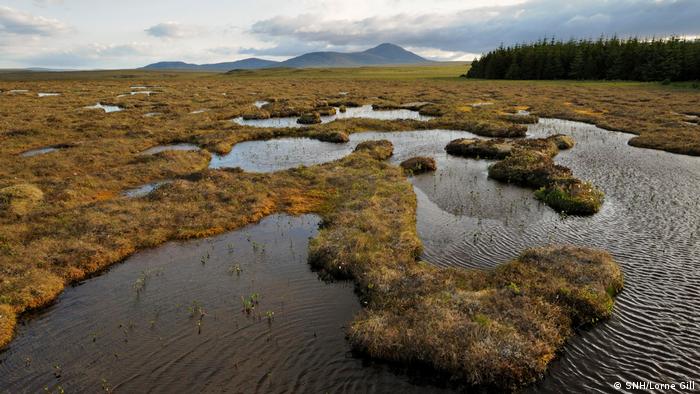
    • Peatlands are a type of wetlands that occur in almost every country on Earth, currently covering 3% of the global land surface.
    • The term ‘peatland’ refers to the peat soil and the wetland habitat growing on its surface.
    • They are formed due to the accumulation of partially decomposed plant remains over thousands of years under conditions of water-logging.
    • In these areas, year-round waterlogged conditions slow the process of plant decomposition to such an extent that dead plants accumulate to form peat.
    • Over millennia this material builds up and becomes several metres thick.

    Why are peatlands significant?

    • Large amounts of carbon, fixed from the atmosphere into plant tissues through photosynthesis, are locked away in peat soils, representing a valuable global carbon store.
    • Peatlands are highly significant to global efforts to combat climate change, as well as wider sustainable development goals.
    • The protection and restoration of peatlands are vital in the transition towards a low-carbon and circular economy.

    1) Better sinks of Carbon

    • Damaged peatlands contribute about 10% of greenhouse gas emissions from the land-use sector.
    • CO2 emissions from drained peatlands are estimated at 1.3 gigatonnes of CO2 This is equivalent to 5.6% of global anthropogenic CO2 emissions.
    • However, at the same time, peatlands are the largest natural terrestrial carbon store. Worldwide, the remaining area of near-natural peatland contains more than 550 gigatonnes of carbon.
    • This represented 42% of all soil carbon and exceeds the carbon stored in all other vegetation types, including the world’s forests. This area sequesters 0.37 gigatonnes of CO2 a year.

    2) Vital ecosystem services

    • By regulating water flows, peatlands help minimize the risk of flooding and drought and prevent seawater intrusion.
    • In many parts of the world, peatlands supply food, fibre and other local products that sustain local economies.
    • They also preserve important ecological and archaeological information such as pollen records and human artefacts.
    • Draining peatlands reduces the quality of drinking water due to pollution from dissolved compounds. Damage to peatlands also results in biodiversity loss.

    Other benefits

    • Peatlands occur in different climate zones.
    • While in a tropical climate, they can occur in mangroves, in Arctic regions, peatlands are dominated by mosses. Some mangrove species are known to develop peatland soils under them.
    • Besides climate mitigation, peatlands are important for archaeology, as they maintain pollen, seeds and human remains for a long time in their acidic and water-logged conditions.
    • In many countries, pristine peatlands are important for recreation activities. These areas also support livelihood in the form of pastoralism
    • The vegetation growing on pristine peatlands provide different kinds of fibres for construction activities and handicrafts.
    • Many wetland species produce berries, mushrooms and fruits, often economically important to local communities.
    • Peatlands also provide fishing and hunting opportunities. It is also possible to practise paludiculture or wet agriculture on rewetted peatlands.

    Various threats

    • Their degradation due to drainage, fire, agricultural use and forestry can trigger the release of the stored carbon in a few decades.
    • Peatlands contain 30 per cent of the world’s soil carbon. When drained, these emit greenhouse gases, contributing up to one gigatonne of emissions per year through oxidation.

    Way forward

    • In India, peatlands occupy roughly 320–1,000 square kilometres area.
    • To prevent further degradation, these areas should be urgently mapped and monitored.

    With inputs from: https://www.iucn.org/resources/issues-briefs/peatlands-and-climate-change

  • [pib] GreenCo Rating System


    The Union Ministry of Railways has informed about the applications of Greenco Ratings on Workshops and Production Units of Indian Railways.

    GreenCo Ratings

    • GreenCo Rating is the “first of its kind in the World” holistic framework that evaluates companies on the environmental friendliness of their activities using life cycle approach.
    • Implementation of GreenCo rating provides leadership and guidance to companies on how to make products, services and operations greener.
    • It is developed by Confederation of Indian Industry’s (CII) Sohrabji Godrej Green Business Centre.
    • It has been acknowledged in India’s Intended Nationally Determined Contribution (INDC) document, submitted to UNFCCC in 2015.
    • GreenCo rating is applicable to both manufacturing facilities and service sector units.
    • The rating is implemented at unit or facility level. The unit or facility has to be in operation for a minimum period of 3 years. In case of new plants/ facilities minimum 2 years operation is required.

    Utility

    It helps the industrial units in identifying and implementing various possible measures in terms of energy conservation, material conservation, recycling, utilization of renewable energy, GHG reduction, water conservation, solid and liquid waste management, green cover etc.

  • Dumping of Radioactive Nuclear Waste

    In a controversial move, Japan has decided to dump the radioactive heavy water from the Fukushima nuclear power plant into the Sea.  The dumping of nuclear waste is considered to be the easiest way to get rid of it.

    What is Heavy Water?

    • Heavy water (deuterium oxide) is a form of water that contains a larger than normal amount of the hydrogen isotope deuterium rather than the common hydrogen that makes up most of the hydrogen in normal water.
    • Heavy water is used in certain types of nuclear reactors, where it acts as a neutron moderator to slow down neutrons.
    • Slowed neutrons are more likely to react with the fissile uranium-235 than with uranium-238 which captures neutrons without fissioning.

    Where is Fukushima waste?

    • It is currently being stored in large tanks, but those are expected to be full by 2022.
    • Almost 1.2 million liters of radioactive water from the Fukushima nuclear power plant is to be released into the ocean.
    • The contaminated water has since been used to cool the destroyed reactor blocks to prevent further nuclear meltdowns.

    Hazards of the nuclear contamination

    • Radioactive pollution in the ocean has been increasing globally — and not just since the disaster at Fukushima.
    • Radiation levels in the sea off Fukushima were millions of times higher than the government’s limit of 100 Becquerel.
    • A single Becquerel that gets into our body is enough to damage a cell that will eventually become a cancer cell.
    • Even the smallest possible dose, a photon passing through a cell nucleus, carries a cancer risk. Although this risk is extremely small, it is still a risk.

    Who else dumped radioactive water into oceans?

    The dumping of nuclear waste in drums was banned in 1993 by the London Convention on the Prevention of Marine Pollution. But discharging liquid contaminated with radiation into the ocean is still permitted internationally.

    • The lion’s share of dumped nuclear waste came from Britain and the Soviet Union, figures from the IAEA show.
    • By 1991, the US had dropped more than 90,000 barrels and at least 190,000 cubic meters of radioactive waste in the North Atlantic and Pacific.
    • To this day, around 90% of the radiation in the ocean comes from barrels discarded in the North Atlantic, most of which lie north of Russia or off the coast of Western Europe.
  • New environment impact norm cuts time for public hearing

    A set of key updates to India’s Environment Impact Assessment (EIA) Act has been proposed to reduce the time given to people to air objections.

    Features proposed by the amendment

    • The draft EIA notification proposes to be an update to the EIA of 2006, which specifies a “minimum of 30 days” for people to respond.
    • The current version of the update, which will likely become law in 60 days, gives a “minimum of 20 days” of notice period.
    • The public hearing process is considered a key component of the EIA. An organisation has to submit a detailed plan, as part of the EIA process that details the nature, need, potential impact and remedial measures, if their proposed infrastructure project threatens to significantly impact a region.
    • It also requires that the public-hearing process be wrapped up in 40 days, as opposed to the existing norm of 45 days.

    Environmental Impact Assessment (EIA) in India

    • EIA is a management tool to minimize adverse impacts of developmental projects on the environment and to achieve sustainable development through timely, adequate, corrective and protective mitigation measures.
    • The MoEFCC uses EIA Notification 2006 as a major tool for minimizing the adverse impact of rapid industrialization on the environment and for reversing those trends which may lead to climate change in long run.
    • EIA has now been made mandatory under the Environmental (Protection Act, 1986 for 29 categories of developmental activities involving investments of Rs. 50 crores and above.

    EIA stages

    1. Screening: This stage decides which projects a full or partial assessment need study.
    2. Scoping: This stage decides which impacts are necessary to be assessed. This is done based on legal requirements, international conventions, expert knowledge and public engagement. This stage also finds out alternate solutions that avoid or at least reduce the adverse impacts of the project.
    3. Assessment & evaluation of impacts and development of alternatives: This stage predicts and identifies the environmental impacts of the proposed project and also elaborates on the alternatives.
    4. EIA Report: In this reporting stage, an environmental management plan (EMP) and also a non-technical summary of the project’s impact is prepared for the general public. This report is also called the Environmental Impact Statement (EIS).
    5. Decision making: The decision on whether the project is to be given approval or not and if it is to be given, under what conditions.
    6. Monitoring, compliance, enforcement and environmental auditing: This stage monitors whether the predicted impacts and the mitigation efforts happen as per the EMP.

    Scope of Environmental Clearance (EC)

    • Environmental clearance is required in respect of all new projects or activities listed in the Schedule to the 2006 notification and their expansion and modernization, including any change in product –mix.
    • Since EIA 2006 the various developmental projects have been re-categorised into category ‘A’ and category ‘B’ depending on their threshold capacity and likely pollution potential.
    • They require prior EC respectively from MOEFCC or the concerned State Environmental Impact Assessment Authorities (SEIAAs).
    • Where state level authorities have not been constituted, the clearance would be provided by the MOEFCC.
  • Species in news: Red Panda


    According to a report by the TRAFFIC report, there has been a considerable reduction in the poaching of Red Panda (ailurus fulgens). The report also recommended trans-boundary law enforcement co-operation through the use of multi-government platforms like SAWEN (South Asia Wildlife Enforcement Network).

    Red Panda

    IUCN Red List Status: Endangered

    • The red panda (Ailurus fulgens) is a mammal native to the eastern Himalayas and southwestern China.
    • Its wild population is estimated at fewer than 10,000 mature individuals and continues to decline due to habitat loss and fragmentation, poaching, and inbreeding depression.
    • Despite its name, it is not closely related to the giant panda
    • The animal has been hunted for meat and fur, besides illegal capture for the pet trade.
    • An estimated 14,500 animals are left in the wild across Nepal, Bhutan, India, China and Myanmar.
    • About 5,000-6,000 red pandas are estimated to be present in four Indian states – Arunachal Pradesh, Meghalaya, Sikkim and West Bengal.
    • The diminishing habitat is a major threat to the species which is a very selective feeder and survives on selected species of bamboos.

    About South Asia Wildlife Enforcement Network (SAWEN)

    • SAWEN is a Regional network is comprised of eight countries in South Asia: Afghanistan, Bangladesh, Bhutan, India, Maldives, Nepal, Pakistan and Sri Lanka.
    • It aims at working as a strong regional intergovernmental body for combating wildlife crime by attempting common goals and approaches for combating illegal trade in the region.
    • The South Asia region is very vulnerable to illegal traffic and wildlife crimes due to the presence of precious biodiversity and large markets as well as traffic routes for wildlife products in the south East Asian region.
    • The collaboration in harmonizing as well as enforcing the wildlife protection in the region is considered very important for effective conservation of such precious biodiversity.
    • India adopted the Statute of the SAWEN and became its formal member in 2016.

    Back2Basics

    TRAFFIC

    • The TRAFFIC, the Wildlife Trade Monitoring Network, is a leading non-governmental organisation working on wildlife trade in the context of both biodiversity conservation and sustainable development.
    • It is a joint program of World Wildlife Fund (WWF) and the IUCN.
    • It aims to ensure that trade in wild plants and animals is not a threat to the conservation of nature.
    • The TRAFFIC is governed by the TRAFFIC Committee, a steering group composed of members of TRAFFIC’s partner organizations, WWF and IUCN.
    • TRAFFIC also works in close co-operation with the Secretariat of the Convention on International Trade in Endangered Species of Wild Fauna and Flora (CITES).
  • [pib] Person in news: Gaura Devi


    Union HRD Minister along with senior women officers of the Ministry planted a sapling in memory of Gaura Devi, Chipko Activist in New Delhi.

    Gaura Devi

    • Gaura Devi was born in 1925 in a village named Lata in the state of Uttarakhand. She moved to a nearby village named Reni by the Alaknanda River.
    • She was elected to lead the Mahila Mangal Dal (Women’s Welfare Association) in the wake of the Chipko movement. The organization worked on the protection of community forests.

    Her contributions in Chipko Movement

    • Gaura Devi came to notice in 1974 when she was told that local loggers were cutting the trees.
    • The men of Reni village had been tricked out of the village by news that the government was going to pay out compensation for land used by the army.
    • She challenged the men to shoot her instead of cutting down the trees and she described the forest with her maika (mother’s house).
    • They managed to halt their work by hugging the trees despite the abuse of the armed loggers.
    • They kept guard of the trees that night and over the next three or four days other villages and villagers joined the action. The loggers left leaving the trees.

    Impact

    • After this incident, the Uttar Pradesh Government established a committee of experts to investigate the issue of felling of trees, and the lumber company withdrew its men from Reni.
    • The committee stated that the Reni forest was an ecologically sensitive area and that no trees should be felled there.
    • Thereafter the government of Uttar Pradesh placed a 10-year ban on all tree-felling in an area of over 1150 km².
  • [pib] Law for Rain Water Harvesting


    The Ministry of Housing & Urban Affairs has issued the Model Building Bye Laws, 2016 for guidance of the States/UTs and has a chapter on ‘Rainwater Harvesting’.

    Why such move?

    • These laws aim to regulate the over-exploitation and consequent depletion of ground water.
    • It would enable States/UTs to enact suitable ground water legislation for regulation of its development, which includes provision of rain water harvesting.

    About the Bye Laws

    • 33 States/UTs have adopted the rainwater harvesting provisions.
    • The provisions of this chapter are applicable to all the buildings.

    Various provisions

    • As per Model Building Bye Laws- 2016, provision of rainwater harvesting is applicable to all residential plots above 100 sq.m.
    • Water being a State subject, initiatives on water management including conservation and water harvesting in the Country is primarily States’ responsibility.
    • So the implementation of the rainwater harvesting policy comes within the purview of the State Government/Urban Local Body / Urban Development Authority.

    Back2Basics

    Groundwater governance in India

    • Central Ground Water Authority (CGWA) has been constituted under Section 3(3) of the ‘Environment (Protection) Act, 1986’ for the purpose of regulation and control of groundwater development and management in the Country.
    • CGWA is regulating ground water withdrawal by industries/infrastructure/ mining projects in the country for which guidelines/ criteria have been framed which includes rainwater harvesting as one of the provisions while issuing No Objection Certificate.