đŸ’„Join UPSC 2027,2028 Mentorship (July Batch) + XFactor Notes & Microthemes PDF

Subject: Conservation & Mitigation

1. Conservation Progs.
2. Worldwide initiatives
3. Mitigation Strategies
4. Conventions and Protocols

  • National Interlinking of Rivers Authority (NIRA)


    The Central government is working on the establishment of an exclusive body to implement projects for linking rivers.

    National Interlinking of Rivers Authority

    • To be called the NIRA, the proposed body is expected to take up both inter-State and intra-State projects.
    • It will also make arrangements for generating up funds, internally and externally.
    • Headed by Union Minister of Jal Shakti, the panel includes Irrigation or Water Resources Ministers and Secretaries of States.
    • It is being assisted by a Task Force for ILR, which is a committee of experts essentially drawn from the Jal Shakti Ministry, Central Water Commission and the NWDA.

    About National River Linking Project (NRLP)

    • The NRLP formally known as the National Perspective Plan, envisages the transfer of water from water ‘surplus’ basins where there is flooding to water ‘deficit’ basins where there is drought/scarcity, through inter-basin water transfer projects.
    • It is designed to ease water shortages in western and southern India while mitigating the impacts of recurrent floods in the eastern parts of the Ganga basin.
    • Interlinking of rivers was conceived more than 125 years ago by Sir Arthur Cotton, mainly to facilitate trade but it was not implemented then.
    • The proposed NRLP, now comprises 29 canals totalling 9,600 km, will involve the movement of 245 trillion litres of water.
    • If and when implemented, it will be one of the biggest inter-basin water transfer projects in the world.

    ILR Projects in India

    • As of now, six ILR projects — the Ken-Betwa, Damanganga- Pinjal, Par-Tapi-Narmada, Manas-Sankosh-Teesta-Ganga, Mahanadi-Godavari and Godavari-Cauvery (Grand Anicut) — have been under examination of the authorities.
    • The Ken-Betwa ILR is India’s first such project.
    • With regard to the peninsular rivers, the Centre has chosen to focus on the Godavari-Cauvery link than the earlier proposal to link the Mahanadi-Godavari-Krishna-Pennar-Cauvery rivers.

    Issues and Concerns

    Ecological issues

    One of the major concerns is that rivers change their course in 70–100 years and thus once they are linked, future change of course could create huge practical problems for the project.

    Aqua life

    A number of leading environmentalists are of the opinion that the project could be an ecological disaster. There would be a decrease in downstream flows resulting in reduction of fresh water inflows into the seas seriously jeopardizing aquatic life.

    Deforestation

    Creation of canals would need large areas of land resulting in large scale deforestation in certain areas.

    Areas getting submerged

    Possibility of new dams comes with the threat of large otherwise habitable or reserved land getting submerged under water or surface water. Fertile deltas will be under threat, with coastal erosion expected to threaten the land and livelihoods of local economies that support 160 million people.

    Displacement of people

    As large strips of land might have to be converted to canals, a considerable population living in these areas must need to be rehabilitated to new areas.

    Dirtying of clean water

    As the rivers interlink, rivers with dirty water will get connected to rivers with clean water, hence dirtying the clean water.

    Disrupting of ecological flow

    On implementation, water discharge in 23 out of 29 rivers will reduce considerably, they say. The Ganga will see a 24% decrease in flow. Its tributaries Gandak (-68%) and Ghaghara (-55%) will be the worst affected. While the Brahmaputra will see only a 6% loss, its tributaries will see massive flow reductions: Manas (-73%), Sankosh (-72%) and Raidhak (-53%). Changes in water flow and trapping of silt in reservoirs will see a dip in the sediment deposited by rivers.


    Must read:

    https://www.indiawaterportal.org/articles/national-river-linking-project-dream-or-disaster

  • [pib] Biomethanation Process


    In an all India coordinated project, efforts are on to produce bio-gas for kitchen use and quality manure for fields using bio-methanation of rice straw by anaerobic digestion method. Six domestic level paddy straw-based bio-gas plants have been installed in Punjab for field trials and further study is in progress.

    What is Biomethanation?

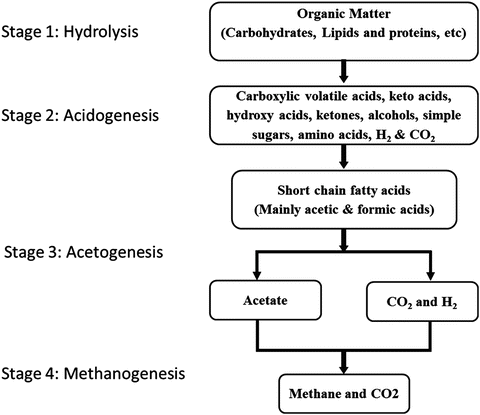
    • It is a process by which organic material is microbiologically converted under anaerobic conditions to biogas.
    • Three main physiological groups of microorganisms are involved: fermenting bacteria, organic acid oxidizing bacteria, and methanogenic archaea.
    • Biomethanation has strong potential for the production of energy from organic residues and wastes. It will help to reduce the use of fossil fuels and thus reduce CO(2) emission.

    How it works?

    • Microorganisms degrade organic matter via cascades of biochemical conversions to methane and carbon dioxide.
    • Syntrophic relationships between hydrogen producers (acetogens) and hydrogen scavengers (homoacetogens, hydrogenotrophic methanogens, etc.) are critical to the process.
    • A wide variety of process applications for biomethanation of wastewaters, slurries, and solid waste have been developed.
    • They utilize different reactor types and process conditions (retention times, loading rates, temperatures, etc.) in order to maximize the energy output from the waste and also to decrease retention time and enhance process stability.
  • Climate change and geopolitics converge to yield locust swarms

    Context

    Abnormal rainfall in the Arabian desert and an effect of the Yemen war have revived a menace that could hit Indian crops

    Butterfly effect- a fitting metaphor for locust attack

    • What is the butterfly effect? The butterfly effect occurs when a trivial cause, such as a butterfly fluttering its wings somewhere in an Amazon rainforest, triggers a series of events that end up having a massive impact elsewhere.
      • Edward Lorenz, the American meteorologist who coined the phrase in the early 1960s, came up with it while building a mathematical model to predict weather patterns.
      • Fitting metaphor: It is a fitting metaphor to explain a “plague” that is currently destroying vegetation and livelihoods in East Africa, the Arabian peninsula, Iran, Pakistan and India.

    The impact of the locust attack in the world

    • Impact in Africa: Several countries in Africa and Asia have been dealing with “the curse of good rains”: Massive swarms—called “plagues”—of the desert locust.
      • Swarms as large as 2,400 sq. km, comprising 200 billion insects, have already damaged over 70,000 hectares of crops in Kenya and around 30,000 hectares in Ethiopia.
    • Last month, Pakistan declared a national emergency over locusts.
    • Impact in India: In India, several districts in Gujarat and Rajasthan have been affected.
      • Rajasthan has announced a compensation of â‚č13,500 per hectare to affected farmers.
      • While locust swarms continue to plague African countries, for now, the outbreak has tapered down in India with swarms headed back towards Sindh and Balochistan.
    • Possibility of return of the locusts: The expectation is that the locusts will be back in June, by which time their numbers would have grown fivefold.

    What are the locusts and how they form swarms?

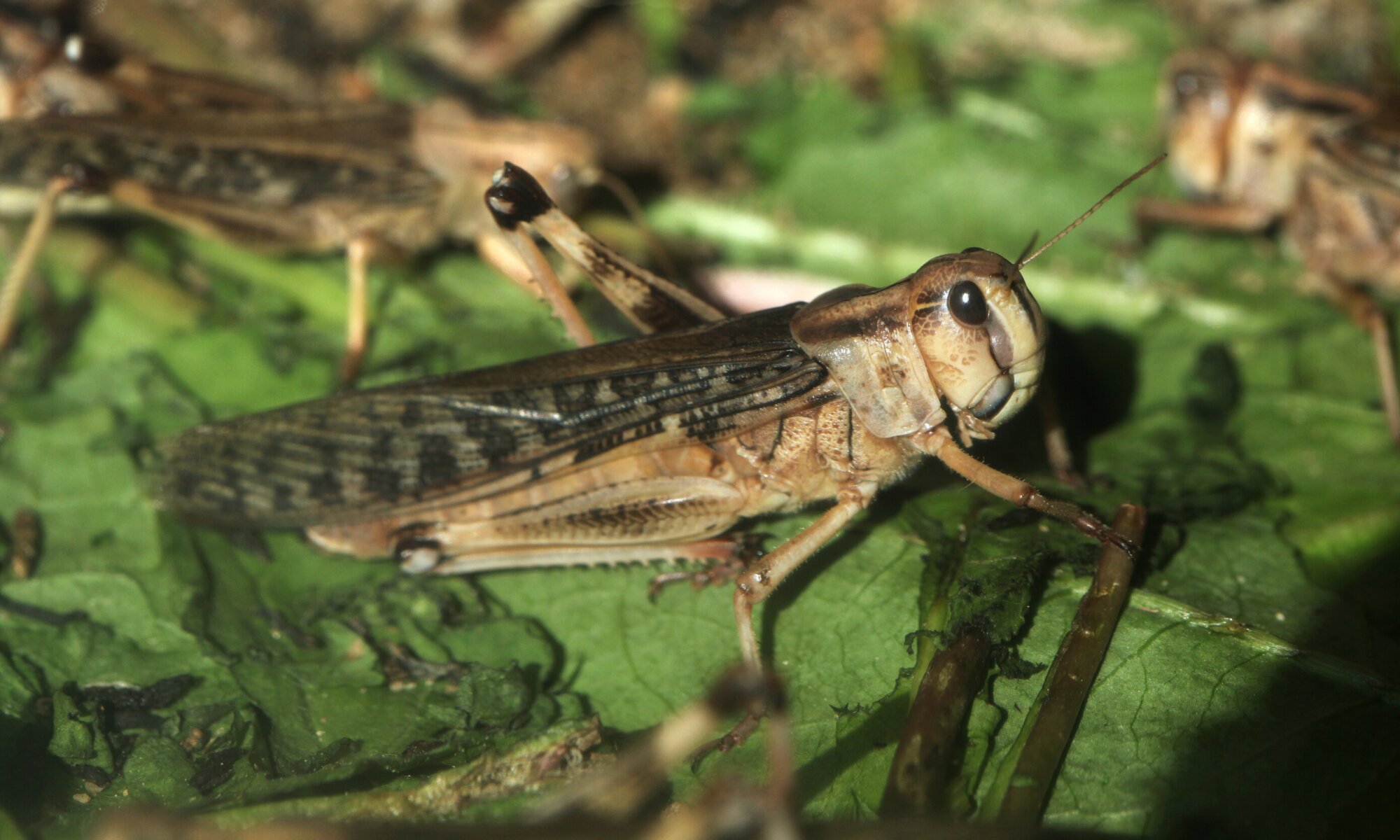
    • Solitary creature: The brown-coloured desert locust usually lives as a solitary creature in the desert and bushlands.
    • Transformation and swarm formation: When several of them gather in close proximity, they undergo a dramatic physical transformation, change colour to black and bright yellow, become gregarious, and start moving around in swarms.
    • Contribution of moisture and temperature: Locusts lay their eggs a few inches under the soil in the presence of moisture, which hatch faster under higher temperatures.
      • Similarly, the flightless nymphs mature faster under warmer conditions and, within weeks, turn into adults that can form swarms of hundreds of millions of insects that can fly over 100km per day.
    • The scale of destruction: Each locust can eat its own body weight—around 2-3 grams—every day.
      • Which means that a swarm can consume hundreds of tonnes of vegetation that it encounters every day.

    Change in the behaviour pattern

    • Limited to recession areas: Normally, desert locusts are limited to a recession area enveloping the African Sahel to the west and Rajasthan to the east.
      • After international preventive control measures started in the 1940s, the intensity and spread of these swarms reduced, resulting only in regional plagues.

    What contributed to this year’s infestation?

    • Two factors contributed to this year’s infestation:
      • Abnormal weather conditions.
      • Region’s geopolitics.
    • Abnormal weather conditions: In 2018, two cyclones a few months apart delivered rain to the Rub al Khali, the remote desert called the “Empty Quarter” of the Arabian peninsula.
      • The resulting ephemeral lakes created new breeding grounds for the desert locust in a poorly monitored region.
    • Region’s geopolitics: Insecticide spraying operations were not conducted because of the war in Yemen.
      • The breeding continued before the swarms crossed the Gulf into Iran and the Red Sea to Ethiopia and Somalia in the Horn of Africa.
      • Here, too, conflict and political unrest limited control operations, leading to further breeding.
    • Another cyclone in 2019: In December 2019, another cyclonic storm hit the Horn of Africa, creating conditions for yet more breeding.
      • Today, the situation is dire in Somalia, Ethiopia and Kenya, and is worsening in Uganda and Tanzania.

    How affected countries are responding to the infestation?

    • Pakistan declared national emergency: Across the Persian Gulf, the Pakistani provinces of Balochistan and Sindh were initially affected, and when Punjab was hit, the government declared a national emergency and approached China for assistance.
    • How India is responding? Across the border, several districts in Gujarat and Rajasthan were affected and neighbouring states, including Uttar Pradesh, are now on alert.
      • Cooperation between India and Pakistan: Despite political tensions, Indian and Pakistani locust control officials met almost once a month over the second half of 2019 to exchange information, if not coordinate control efforts.
      • So far, India’s surveillance, preparedness and response have been competent and effective.
      • The national Locust Warning Organization was set up in 1939 and is well connected to international institutions created to manage locust risks.
      • It publishes weekly bulletins and even has a Twitter handle.
      • Bulletins show when locusts were detected, the location, extent and tonnage of insecticide sprayed and the risk of future infestation.
    • China’s preparedness: China is largely protected against locust plagues by geographical barriers, but is relatively vulnerable in the Xinjiang region.
      • Past similar event: Faced with a similar situation a couple of decades ago, the Chinese government had deployed hundreds of thousands of ducks that would eat the locusts in response to the blowing of a whistle.
      • Reports in the Chinese media indicate that Beijing plans to do the same this year.

     The immediate concern in India

    • Factors that could worsen the problem: Climate change, with higher temperatures and changes in the Indian Ocean Dipole, could worsen the locust problem for India in coming years.
    • The problem could overwhelm the capacity to control: The immediate concern is that by June 2020, there will probably be extraordinarily large swarms in India and that these could overwhelm the country’s current capacity to control them.
      • Preparedness measures by the government: The Union government is procuring additional spraying equipment and planning helicopter and drone-based control operations should the need arise.
      • Containing the swarms at India’s border states is crucial, as India’s agricultural heartland lies just beyond.

    Conclusion

    The government should take stock of its preparedness to deal with the imminent locust attack in June take necessary actions to deal with the menace as it could threaten India’s food security and economy.


  • Bharat Stage (BS) VI emission norms

    Oil marketing companies have informed that there will definitely be a marginal increase in retail prices of the fuels from April 1. Starting April 1, Bharat Stage (BS) VI emission norms come into force. This will be an upgrade on the currently prevalent BS-IV and BS-III norms.

    Why rise in Oil prices?

    • In effect, as India moves up the BS scale, automobiles become cleaner and greener but fuel will go costly.
    • Oil refiners have invested heavily to upgrade their refineries to produce the cleaner, BS-VI compliant fuel.
    • The increase in the pump price of fuel will partially offset this cost that the oil marketing companies have paid.
    • In effect, consumers will have to pay a little extra for auto fuel that is cleaner, and which, ultimately, is expected to lead to cleaner air.

    The BS norms

    • The BS emission standards are norms instituted by the Indian government to regulate the output of air pollutants from internal combustion engine equipment, including motor vehicles.
    • India has been following the European (Euro) emission norms, although with a time lag.
    • The more stringent the BS norm, lower is the tolerance for pollutants in automobile tailpipe emissions. Lower tailpipe emissions are the function of both more efficient engines, and cleaner fuels.

    How is BS-VI fuel different from BS-IV fuel?

    • The main difference between BS-IV and BS-VI (which is comparable to Euro 6) is in the amount of sulphur in the fuel.
    • The lower the sulphur, the cleaner the fuel, so BS-VI fuel is essentially low-sulphur diesel and petrol.
    • BS-VI fuel is estimated to bring around an 80% reduction in sulphur content — from 50 parts per million (ppm) to 10 ppm.
    • Also NOx emissions from diesel cars are expected to come down by nearly 70% and, from cars with petrol engines, by 25%.

    How will things change with the new fuels?

    • Cleaner fuel alone will not make a dramatic difference to air pollution.
    • For the full benefits to be experienced, the introduction of the higher grade fuel must go hand in hand with the rollout of BS-VI compliant vehicles as well.
    • While automakers will sell only BS-VI vehicles from April 1, all BS-IV vehicles sold before that date will stay on the road for as long as their registration is valid.
    • This, however, could be a concern because using BS-VI fuel in the current BS-IV engines (or conversely, running BS-VI engines on the current-grade fuel), may be both ineffective in curbing vehicular pollution, as well as damage the engine in the long run.

    Back2Basics

    History of BS norms in India

    • India introduced emission norms first in 1991, and tightened them in 1996, when most vehicle manufacturers had to incorporate technology upgrades such as catalytic converters to cut exhaust emissions.
    • Fuel specifications based on environmental considerations were notified first in April 1996, to be implemented by 2000, and incorporated in BIS 2000 standards.
    • Following the landmark Supreme Court order of April 1999, the Centre notified Bharat Stage-I (BIS 2000) and Bharat Stage-II norms, broadly equivalent to Euro I and Euro II respectively.
    • BS-II was for the National Capital Region and other metros; BS-I for the rest of India.
    • From April 2005, in line with the Auto Fuel Policy of 2003, BS-III and BS-II fuel quality norms came into existence for 13 major cities, and for the rest of the country respectively.
    • From April 2010, BS-IV and BS-III norms were put in place in 13 major cities and the rest of India respectively.
    • As per the Policy roadmap, BS-V and BS-VI norms were to be implemented from April 1, 2022, and April 1, 2024 respectively.
    • But in November 2015, the Road Transport Ministry issued a draft notification advancing the implementation of BS-V norms for new four-wheel vehicle models to April 1, 2019, and for existing models to April 1, 2020.
  • Locust Invasions and its mitigation


    The locust, a short-horned, desert grasshopper that attacks standing crops and green vegetation, has been making news in India since May-June 2019 when it appeared in Rajasthan and Gujarat. In Kharif season last year, it was also seen in a few areas along Punjab’s border with Rajasthan.

    Context

    • The Locust Warning Organisation (LWO) has been taking measures to control attacks by the pest for the past eight decades in the country.
    • Despite all of LWO’s efforts, the chain of periodic locust attacks in India is yet to be broken.

    Why Locusts attacks are deadly?

    • Adult locust swarms can fly up to 150 km (93 miles) a day with the wind and adult insects can consume roughly their own weight in fresh food per day.
    • A very small swarm eats as much in one day as about 35,000 people.
    • If allowed to breed unchecked in favourable conditions, locusts can form huge swarms that can strip trees and crops over vast areas.

    About LWO

    • In India, the scheme Locust Control and Research (LC&R) is responsible for control of Desert Locust.
    • It is being implemented through Organisation known as “Locust Warning Organisation (LWO)” established in 1939 and later amalgamated with the Directorate of Plant Protection Quarantine and Storage in 1946.
    • Locust Warning organization (LWO) is responsible to monitor and control the locust situation in Scheduled Desert Area (SDA) mainly in the States of Rajasthan and Gujarat while partly in the States of Punjab and Haryana.
    • It keeps itself abreast with the prevailing locust situation at National and International level through monthly Desert Locust Bulletins of FAO.

    What measures are being taken by the LWO to control locust breeding/attacks in India?

    • Experts at the LWO said around three dozen offices including 10 circle offices are working on this issue.
    • They have been doing regular field surveys to keeping a close and regular watch on an over two lakh sq. km area (nearly 11,500 villages) of three states including 1.79 lakh sq. km in Rajasthan (52 per cent of the state’s total area), and the remaining in Gujarat and Haryana.
    • To observe the locust, intensive surveys are conducted by walking along the wind direction and driving at low speed to count flying locusts.

    How often have there been locust attacks in India?

    • The pests have been appearing periodically after a gap of 2-3 or 5-7 years. Around 26 locust attacks have taken place in India in two major cycles.
    • After independence (1947), 25 attacks were observed. Among these, the attacks of 1949-55, 1962 and 1993 were most devastating when 167 and 172 swarms were noticed in 1962 and 1993 respectively.
    • Since 1993, locust attacks have occurred less frequently. The latest attack of 2019-20, has had quite a severe effect on crops in Rajasthan.

    Financial losses incurred

    • According to LWO, to date, the financial loss due to locusts is said to be Rs 50 lakh, Rs 2 lakh and Rs 7.18 lakh in 1962, 1978 and 1993 respectively.
    • A loss of Rs 2 crore was incurred in 1940-46 and 1949-55. Before the LWO was formed, a loss of Rs 10 crore is estimated in the 1926-31 cycle.

    Why has the chain not been broken even after 80 years?

    • LWO experts said it is because there are 30 countries in four regions of different continents that have an arid climate with large deserts that provide an ideal breeding ground for the locust.
    • Most of the time, locusts are coming to India from Pakistan, or from the Middle East via Pakistan.
    • There are four commissions for these 30 countries which include Iran, Pakistan, Afghanistan and India.
    • Laxity by any country would lead to its spread in all these countries which they invade one after another by following almost the same path.
    • The swarms which are coming to India (Rajasthan) have been following the same path, starting from central or western region and then Pakistan mostly in summers.
    • Apart from breaking the chain of summer attacks, the winter swarm has now posed another challenge.

    Where did the current locust attack originate?

    • The locust breeds in high temperatures and high humidity, which is prevalent in areas around the Red Sea.
    • The current attack in India, which started in 2019, has its origin in Yemen, where there was internal conflict and civil war.
    • When the locust was breeding in heavy numbers there in 2018-19, the country could not take care due to its attention towards the civil war and lack of resources to control it.
    • The insect went out of control, took the route of Saudi Arabia, Iran, Pakistan, Somalia, Ethiopia and other countries located on both sides of the Red Sea where they multiplied rapidly.

    Control measures

    • The chain can be broken only when the pest is killed at the time of breeding or before migration to another country.
    • Farmers used to try to drive away the locusts by lighting fires. They also dug up the eggs.
    • Now crops can be sprayed with insecticides from vehicles or airplanes.
    • Scientists are trying to improve the control of locusts, by preventing or dispersing swarms.

    Also read:

    https://www.civilsdaily.com/news/desert-locusts-incursion-in-india/

  • Svalbard Global Seed Vault


    The Svalbard Global Seed Vault — referred to as the earth’s ‘doomsday vault’ — now contains about 1.05 million seeds.

    Global Seed Vault

    • The vault — in the island of Spitsbergen, midway between Norway and the North Pole — opened in 2008 and preserves seeds for several food varieties.
    • The aim of the vault is to preserve a vast variety of crop seeds in the case of a doomsday event, calamity, climate change or national emergency.
    • The vault is artificially cooled at temperatures of minus 18 degrees Celsius.
    • The low temperature and limited access to oxygen will ensure low metabolic activity and delay seed ageing.
    • The permafrost surrounding the facility will help maintain the low temperature of the seeds if the electricity supply fails.

    Access to seeds

    • Vault seed samples are copies of samples stored in the depositing genebanks.
    • Researchers, plant breeders, and other groups wishing to access seed samples cannot do so through the seed vault; they must instead request samples from the depositing genebanks.
    • The samples stored in the genebanks will, in most cases, be accessible in accordance with the terms and conditions of the International Treaty on Plant Genetic Resources for Food and Agriculture, approved by 118 countries or parties.
  • [pib] ‘1000 Springs’ Initiative


    Union Tribal Affairs Ministry has launched “1000 Spring Initiatives” and an online portal on GIS-based Spring Atlas with hydrological and chemical properties of the Springs on the occasion.

    ‘1000 Springs’ Initiative

    • The ‘1000 Springs Initiative’ aims at improving access to safe and adequate water for the tribal communities living in a difficult and inaccessible part of rural areas in the country.
    • It is an integrated solution around natural springs.
    • It includes the provision of infrastructure for piped water supply for drinking; provision of water for irrigation; community-led total sanitation initiatives; and provision for water for backyard nutrition gardens, generating sustainable livelihood opportunities for the tribal people.
    • It will help in harnessing the potential of perennial springs’ water to address the natural scarcity of water in tribal areas.

    Spring Atlas

    • Springs are natural sources of groundwater discharge and have been used extensively in the mountainous regions across the world, including India.
    • However, in the central and eastern Indian belt with more than 75% tribal population, it remains largely unrecognized and under-utilized.
    • An online portal on GIS-based Spring Atlas has been developed to make these data easily accessible from an online platform.
    • Presently, data of more than 170 springs have been uploaded on the Spring Atlas.
  • World Air Quality Report, 2019


    The 2019 World Air Quality Report was recently released

    World Air Quality Report

    • The World Air Quality Report is released by the pollution tracker IQAir and Greenpeace.
    • The report focuses on PM2.5 as a representative measure of air pollution.

    Highlights of the report

    • India accounts for two-thirds of the world’s most polluted cities — 21 of the most polluted 30 cities; 14 of the highest 20; and 6 of the highest 10 — in the report.
    • Among countries, when population is taken into account, average PM2.5 pollution is highest in Bangladesh, followed by Pakistan, while India is at number 5.
    • China is at number 11 in the list of countries affected by population, with population factored in. Chinese cities achieved a 9% average decrease in PM2.5 levels in 2019.
    • While cities in India, on average, exceed the WHO target for annual PM2.5 exposure by 500%, national air pollution decreased by 20% from 2018 to 2019, with 98% of cities experiencing improvements.
    • It said 90% of the global population breathing unsafe air.

    Top polluted Indian Cities


    Back2Basics

    PM 2.5

    • PM 2.5 refers to particulate matter (ambient airborne particles) which measure up to 2.5 microns in size and has a range of chemical makeups and sources.
    • It is widely regarded as the pollutant with the most health impact of all commonly measured air pollutants.
    • Due to its small size PM2.5 is able to penetrate deep into the human respiratory system and from there to the entire body, causing a wide range of short- and long-term health effects.
    • Particulate matter is also the pollutant group which affects the most people globally. It can come from a range of natural as well as man-made sources.
    • Common sources of PM include combustion (from vehicle engines, industry, wood and coal burning), as well as through other pollutants reacting in the atmosphere.
  • Jalyukta Shivar Abhiyan


    Jalyukta Shivar, the flagship water conservation project launched by the earlier government has been officially scrapped by the present Maha government.

    What is Jalyukta Shivar?

    • Launched in December 2014 after Maharashtra experienced consecutive droughts, the project aimed at rolling out measures that could potentially mitigate water scarcity in the most drought-prone villages in a systematic manner.
    • Nearly 52 per cent of the state’s geographical area is prone to drought, either naturally or due to poor rainfall.
    • This includes Marathwada and adjoining areas of Madhya Maharashtra and large parts of Vidarbha.
    • The project targeted strengthening and streamlining existing water resources like canals, bunds and ponds by arresting maximum run-off rainwater during monsoon.
    • Tasks to widen and deepen natural water streams and connect them to nearby water storage facilities like earthen or concrete check-dams were proposed.
    • In the first phase, planned during 2015 – 2019, Jalyukta Shivar envisaged making 5,000 villages drought-free, every year.
    • During its proposed tenure, the government eyed at making 25,000 drought-prone villages water-sufficient.

    Was Jalyukta Shivar beneficial?

    • While the exact number of villages that were declared drought-free remains unknown, the programme attempted to bring water stress down in a majority of the most water-scarce villages in the state.
    • In January last year, then CM had announced that the scheme had transformed 16,000 drought-prone villages of Maharashtra.

    What is the future of water conservation in the state?

    • Geologists and hydrologists, who worked on implementing the project, shared similar views and hailed Jalyukta Shivar.
    • This was mainly due to the interventions undertaken in the existing water reserves, planned de-silting activities, among many others.
    • However, experts agreed that the scheme was not appropriately implemented.
    • Now with Jalyukta Shivar no longer in existence, focused efforts of the past five years, in most likelihood, will go down the drain unless a similar scheme is introduced.
    • With rainfall variations getting more pronounced, in addition to depleting groundwater reserves, the state will need concrete interventions to tackle future water requirements.
  • Biojet fuel that powered the IAF aircraft


    In his monthly Mann ki Baat radio address, PM hailed the use of biofuel in an Indian Air Force transport aircraft.

    What did PM cite?

    • IAF’s An-32 aircraft successfully used a 10% blend of Indian biojet fuel and took off from Leh’s Kushok Bakula Rimpoche Airport on January 31.
    • This was the first time that this mix was used in both engines of an aircraft.
    • Leh is at an altitude of 10,682 ft above mean sea level and is among the world’s highest and most difficult operational airfields.
    • Even during clear weather, operating an aircraft at Leh is a challenge, given the reduced power output of the engines in the rarefied atmosphere, turbulent winds, and proximity of the mountains.

    What is Biojet fuel?

    • Biojet fuel is prepared from “non-edible tree borne oil” and is procured from various tribal areas of India.
    • This fuel is made from Jatropha oil sourced from Chattisgarh Biodiesel Development Authority (CBDA) and then processed at CSIR-IIP, Dehradun.
    • Generally, it is made from vegetable oils, sugars, animal fats and even waste biomass, and can be used in existing aviation jet engines without modification.
    • Jatropha oil is suitable for conversion to jet fuel. This biojet fuel has received wide acceptance from the airline industry.

    Why it matters?

    • Evaluating the performance of biojet fuel under conditions prevalent in Leh was considered extremely important from an operational perspective.
    • The success of the flight validated the capability of the aircraft’s engines to operate smoothly with biojet fuel at the extremities of the operational envelope.
    • The tests were conducted by a team comprising test pilots from the Aircraft and Systems Testing Establishment (ASTE), Bengaluru and pilots from the operational squadrons.
    • The successful test flight also demonstrated the IAF’s capability to absorb newer technology, while sponsoring indigenization.