💥Join UPSC 2027,2028 Mentorship (July Batch) + XFactor Notes & Microthemes PDF

Subject: Judiciary

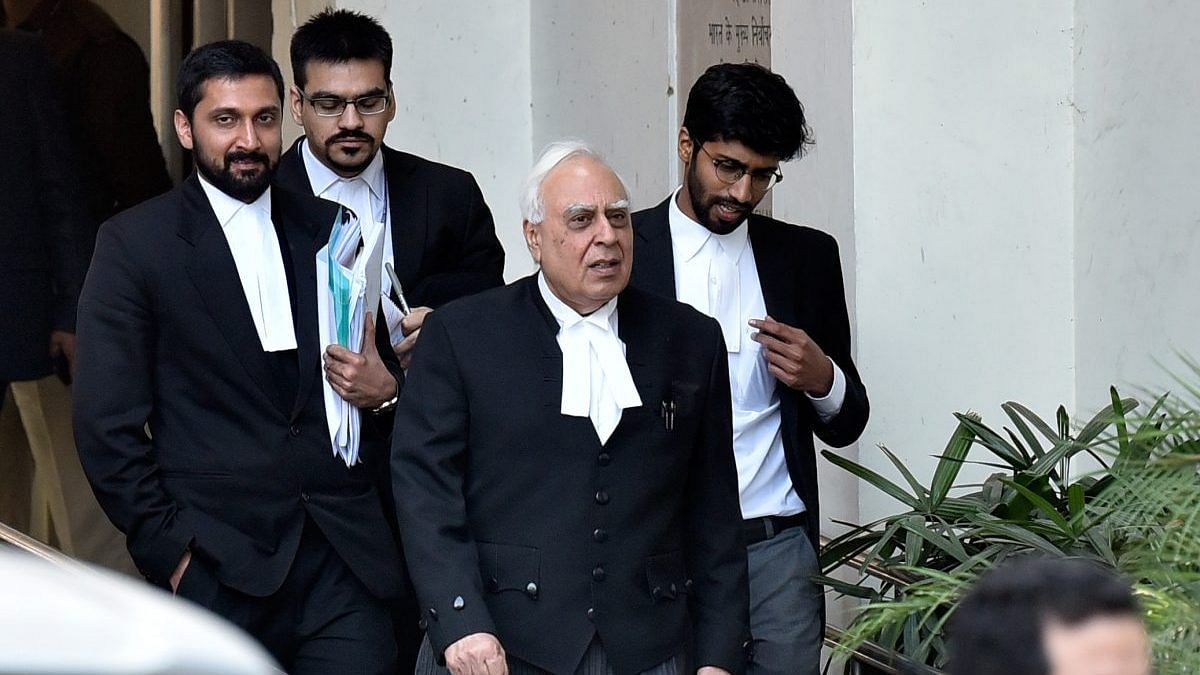
  • Foreign lawyers, firms can operate in India: Bar Council

    bar


    Central Idea: The Bar Council of India (BCI) has opened up law practice in India to foreign lawyers and law firms. It has framed the ‘Bar Council of India Rules for Registration of Foreign Lawyers and Foreign Law Firms in India, 2021’.

    About Bar Council of India (BCI)

    • The BCI is a statutory body established under the section 4 of Advocates Act 1961 that regulates the legal practice and legal education in India.
    • Its members are elected from amongst the lawyers in India and as such represents the Indian bar.
    • It prescribes standards of professional conduct, etiquettes and exercises disciplinary jurisdiction over the bar.
    • It also sets standards for legal education and grants recognition to universities whose degree in law will serve as a qualification for students to enroll themselves as advocates upon graduation.

    History

    • In March 1953, the ‘All India Bar Committee’, headed by S. R. Das, submitted a report which proposed the creation of a bar council for each state and an all India bar council as an apex body.
    • It was suggested that the all-India bar council would regulate the legal profession and set the standard of legal education.
    • The Law Commission of India was assigned the job of assembling a report on judicial administration reforms and helps India to reform justice and equity to whole country.
    • In 1961, the Advocates Act was introduced to implement the recommendations made by the ‘All India Bar Committee’ and ‘Law Commission’.

    Functions

    The functions of the Bar Council are to:

    1. Lay down standards of professional conduct and etiquette for advocates.
    2. Lay down procedure to be followed by disciplinary committees
    3. Safeguard the rights, privileges and interests of advocates
    4. Promote and support law reform
    5. Deal with and dispose of any matter which may be referred by a State Bar Council
    6. Promote legal education and lay down standards of legal education.
    7. Determine universities whose degree in law shall be a qualification for enrollment as an advocate.
    8. Conduct seminars on legal topics by eminent jurists and publish journals and papers of legal interest.
    9. Organise and provide legal aid to the poor.
    10. Recognise foreign qualifications in law obtained outside India for admission as an advocate.
    11. Manage and invest funds of the Bar Council.
    12. Provide for the election of its members who shall run the Bar Councils.

    Constitution

    • As per the Advocates Act, the BCI consists of members elected from each state bar council, and the Attorney General of India and the Solicitor General of India who are ex officio members.
    • The council elects its own chairman and vice-chairman for a period of two years from among its members.
    • Assisted by the various committees of the council, the chairman acts as the chief executive and director of the council.

    Why such move?  

    • The BCI notification also stated that the Rules would help to address the concerns expressed about the flow of Foreign Direct Investment into the country.
    • The Rules would also help make India a hub for international commercial arbitration.

    Move to benefit Indian lawyers

    • The rules enable foreign lawyers and law firms to “practice foreign law, diverse international law and international arbitration matters in India on the principle of reciprocity in a well-defined, regulated and controlled manner”.
    • The BCI said that the move would benefit Indian lawyers, whose standards of proficiency in law are comparable with international standards.
    • The legal fraternity in India is not likely to suffer any disadvantage since the move would be mutually beneficial for lawyers from India and abroad.

    How foreign lawyers can begin operating in India?

    • The Rules prescribe that foreign lawyers and firms would not be entitled to practice law in India without registration with the BCI.
    • Foreign lawyers and law firms are not allowed to practice Indian law in any form or before any court of law, tribunal, board or any other authority legally entitled to record evidence on oath.
    • However, the restriction does not apply to law practice by a foreign lawyer or foreign law firm on a ‘fly in and fly out basis’ for the purpose of giving legal advice to a client in India on foreign law or international legal issues.
    • In such a case, the lawyer or firm cannot have an office in India, and their practice cannot exceed 60 days in any 12-month period.

    Requirements for foreign lawyers and firms

    A primary qualification required from foreign lawyers and firms is-

    1. Certificate from the competent authority of their country that they are entitled to practice law in that country.
    2. Undertaking that they shall not practice Indian law in any form or before any court of law, tribunal, board or any other authority legally entitled to record evidence on oath.


    Are you an IAS Worthy Aspirant? Get a reality check with the All India Smash UPSC Scholarship Test

    Get upto 100% Scholarship | 900 Registration till now | Only 100 Slots Left

  • What is a Caveat in Judiciary?

    Recently, the Supreme Court bench reprimanded a law student for filing a caveat in a petition seeking menstrual leave for female students and working women across Indian institutions.

    What is a Caveat?

    • In common parlance, a caveat refers to “warning” or “caution”.
    • However, legally it connotes a “formal notice requesting the court to refrain from taking some specified action without giving prior notice to the person lodging the caveat.”
    • The person lodging the caveat is called a “caveator”.
    • The provision was inserted by the Amendment Act of 1976 after the Law Commission’s recommendation by Section 148A of the Civil Procedure Code (CPC).
    • However, the term is not expressly defined anywhere except in the Calcutta High Court’s 1978 ruling.

    Who can fill the Caveat?

    • Any person has a right to lodge a caveat in a Court.
    • Any person claiming a right to appear before the Court on the hearing of such application may lodge a caveat in respect thereof.
    • The caveator or the person lodging is also required to serve a notice of the caveat by “registered post” to the person on whose plea they are lodging the application


    Attempt UPSC 2024 Smash Scholarship Test | FLAT* 100% OFF on UPSC Foundation & Mentorship programs

    Get your Rs 10,000 worth of UPSC Strategic Package for FREE | PDFs, Zoom session, Tests, & Mentorship

  • CJI announces launch of ‘Neutral Citations’ for SC judgements

    The CJI expressed hope that High Courts too would follow neutral citation for their judgments. The Delhi, Kerala, and Madras HCs have already introduced neutral citation.

    What is a “Citation”?

    • A case citation is essentially an identification tag for a judgment.
    • Typically, it would contain a reference number, the year of the judgment, the name of the court that delivered that judgment, and a shorthand for the journal publishing the judgment.

    And what is a neutral citation?

    • A neutral citation would mean that the court would assign its own citation — distinct from those given by traditional Law Reporters.
    • Law Reporters are periodicals or annual digests that publish judgments, often with an editorial note to make it accessible for lawyers to refer to precedents.
    • For example, for the landmark Kesavananda Bharati case, the citation in ‘Supreme Court Cases’, a journal published by the Eastern Book Company, is (1973) 4 SCC 225.
    • In the All India Reporter (AIR), the citation is AIR 1973 SC 1461.

    Why is a neutral system good or necessary?

    • Judgments mention citations while referring to precedents and often use citations from different Law Reporters.
    • With artificial intelligence (AI) enabled translation of judgments and transcribing of court proceedings, a uniform citation is necessary.
    • Several High Courts including Delhi High Court have started a neutral citation format.
    • The Delhi HC neutral citation is, for example, in this format: No-YEAR/DHC/XXXXXX

    How will the SC implement the neutral citation system?

    • Our recent initiative is neutral citations for all judgments of the Supreme Court.
    • So all 30,000 judgments are going to have neutral citations.
    • First tranche will be till January 1, 2023, then the other tranche will be till judgments from 2014 and then finally we will go back to 1950.


    Attempt UPSC 2024 Smash Scholarship Test | FLAT* 100% OFF on UPSC Foundation & Mentorship programs

    Get your Rs 10,000 worth of UPSC Strategic Package for FREE | PDFs, Zoom session, Tests, & Mentorship

  • Live transcription of Supreme Court proceedings introduced

    live

    Central idea: The Supreme Court introduced live transcription of court proceedings for the first time in the country, employing artificial intelligence (AI) and high-tech tools.

    Fun fact!

    The CJI announced that the live transcription will commence on an experimental basis with the constitution bench hearing on the vertical political split in a mainstream Maharashtrian political party.


    How does AI-based transcription work?

    • AI-based transcription works by using advanced machine learning algorithms to automatically transcribe audio or video content into written text.
    • The software uses natural language processing (NLP) and speech recognition technology to identify and transcribe spoken words, which are then formatted into a text document.

    What is Natural Language Processing (NLP)?

    • Natural Language Processing (NLP) is a subfield of computer science, artificial intelligence, and computational linguistics concerned with the interactions between computers and human (natural) languages.
    • It involves developing algorithms and computational models that can understand, interpret, and generate human language.
    • NLP is used in a variety of applications, including language translation, sentiment analysis, text summarization, speech recognition, and more.
    • It combines techniques from computer science, linguistics, and psychology to enable computers to process and understand natural language.

    Benefits of the move

    • Improved access to justice: For the hearing impaired and those with limited understanding of English.
    • Enhanced transparency and accountability: The transcripts can be reviewed and analyzed.
    • Reduced errors and inaccuracies: AI-based technology is more efficient and reliable than human transcriptionists.
    • Time-saving and cost-saving: For the court system and litigants, as live transcription eliminates the need for manual transcription and subsequent editing making justice dispensation faster than ever.
    • Legal awareness in public domain: Availability of real-time transcripts can help journalists and researchers report on court proceedings more accurately and quickly.

    Other AI solutions used in Indian Judiciary

    • E-SCR project: The electronic Supreme Court Reports (e-SCR) has more than 34,000 judgments available, accords free access to the official law reports of the Supreme Court’s reported Judgments to the law students, lawyers, and other legal professionals and to the public at large with special tools for the accessibility to those with visual disabilities as well.
    • SUPACE: Supreme Court Portal for Assistance in Courts Efficiency (SUPACE) is a tool that collects relevant facts and laws and makes them available to a judge.
    • SCI-Interact: In 2020, the Supreme Court developed a software called, SCI-Interact, to make all its 17 benches paperless. This software helps judges’ access files, annexures to petitions and make notes on computers.
    • LIMBS: Earlier, the Department of Legal Affairs has introduced a web-based application called LIMBS or Legal Information Management & Briefing System. The idea is to track the entire life cycle of a case efficiently.
    • SUVAAS: In November 2019, the Apex Court launched an indigenously engineered neural translation tool, SUVAAS, to translate judicial orders and rulings from English to vernacular languages faster and efficiently.

    Challenges for the AI breakthrough

    • Cost and Resources: The implementation of live transcription would require significant financial and technological resources.
    • Accuracy of Transcription: The accuracy of the live transcription is an important issue as any errors in the transcription could have significant implications, particularly in legal proceedings.
    • Privacy and Security: The live transcription of court proceedings could raise concerns about privacy and security as sensitive information could be disclosed or key judicial interpretations could be tampered.

    Way forward

    • The ethical and responsible use of AI and ML for the advancement of efficiency enhancing can be increasingly embedded in legal and judicial processes.
    • The Supreme Court has laid a strong foundation basis which efficiency enhancement can be accelerated across functional processes.
    • This is one of the key reasons why justice delivery in India is poised for transformative change.


    Attempt UPSC 2024 Smash Scholarship Test | FLAT* 100% OFF on UPSC Foundation & Mentorship programs

    Get your Rs 10,000 worth of UPSC Strategic Package for FREE | PDFs, Zoom session, Tests, & Mentorship

  • Debating the Abolition of Judicial Vacations

    Central Idea

    • The longstanding tradition of judicial vacations in India has come under scrutiny as a parliamentary committee.
    • Recent remarks by Chief Justice DY Chandrachud reignited discussions on the allocation of vacation days to Indian judges, shedding light on the intricate dynamics of judicial work patterns and the rationale behind vacation allotments.

    Vacation in Judiciary

    • Judicial Workdays: The Supreme Court has 193 working days annually, High Courts function around 210 days, and trial courts operate for 245 days. High Courts possess the authority to structure their calendars as per service rules.
    • Long-standing Practice: The practice of vacations, particularly the extensive 7-week (formerly 10-week) summer recess, has its origins in colonial times.

    Understanding Vacation Benches

    • Composition and Role: The CJI appoints a Vacation Bench, a specialized court that operates during the Supreme Court’s summer and winter breaks. Although the court is not fully closed during vacations, this bench handles cases deemed “urgent matters.”
    • Urgent Cases: While there is no explicit definition for “urgent matters,” the Vacation Bench typically entertains writs associated with habeas corpus, certiorari, prohibition, and quo warranto, all related to enforcing fundamental rights.
    • Rule 6 of Order II of the Supreme Court Rules, 2013: Under this rule, the CJI nominates Division Benches for urgent miscellaneous and regular hearing matters during the summer vacation period. The rule allows for the appointment of judges to hear urgent cases individually or in a Division Court.

    Historical Significance and Notable Cases:

    • Impactful Decisions: Vacation Benches have delivered significant judgments in the past. A well-known instance is when a Vacation Bench Judge refused PM Indira Gandhi’s plea to stay an Allahabad High Court decision in 1975, which led to the Emergency declaration.
    • Triple Talaq Case: In 2017, a Vacation Bench of the Supreme Court heard the triple talaq case during vacation days.

    Debates and Arguments Surrounding Vacation Benches

    [A] Arguments in Favor:

    • Judicial Rejuvenation: Advocates emphasize the need for vacation periods to provide judges with mental and physical rejuvenation.
    • Extended Work Hours: Considering the demanding nature of judicial work, proponents assert that the long working hours necessitate periodic breaks.
    • Writing Judgments: Judges use vacation time to draft judgments, contributing to the timely disposal of cases.

    [B] Arguments Against:

    • Pendency and Delays: Critics argue that the extended and frequent vacations exacerbate the backlog of cases and contribute to the slow pace of justice delivery.
    • Inconvenience to Litigants: For litigants, vacations translate to additional delays in case hearings.

    Calls for Reform

    • Malimath Committee (2000): The committee proposed reducing vacation periods by 21 days, advocating for the Supreme Court to operate for 206 days and High Courts for 231 days annually.
    • Law Commission of India (2009): The commission recommended curtailing vacations by 10-15 days and extending court working hours to address the substantial backlog of cases.
    • Supreme Court’s 2014 Rule Change: The Supreme Court truncated the summer vacation period from 10 weeks to seven weeks.
    • RM Lodha Commission (2014): It suggested that individual judges should take leave at different times throughout the year instead of having all judges on vacation at once.

    Proposed Approach and Suggested Changes

    • Continuous Operation: The 133rd committee supports the notion that individual judges should take their leave at different intervals, thereby ensuring that the courts remain open throughout the year.
    • Redefined Judicial Vacations: The parliamentary report calls for a reevaluation of the traditional concept of vacations, advocating for a more modern and efficient approach to court operation.
    • Comparison with Other Countries: The report suggests that the vacation practices of the Supreme Court and High Courts should be reviewed in comparison to other countries’ higher courts and constitutional institutions.

    Conclusion

    • The debate surrounding the abolition of judicial vacations in India emphasizes the necessity for a dynamic and effective approach to court operations.
    • While the tradition has historical significance, the current judicial landscape calls for a re-evaluation of practices to ensure efficient functioning, address the backlog of cases, and minimize inconveniences to litigants.
  • Supreme Court says NO to Sealed Cover suggestions

    seal

    Central idea: The Supreme Court has said it did not want to accept in a “sealed cover” the Centre’s suggestions on who could be the members of a committee the court had proposed to assess the market regulatory framework and recommend measures, if any, to strengthen it in the wake of the Adani-Hindenburg affair.

    What is the news?

    • The article is about a public interest petition filed in the Supreme Court that calls for the establishment of an expert panel to strengthen regulatory mechanisms related to the Adani Group.
    • The petitioners argue that the Adani Group has been able to bypass regulatory hurdles through its influence on government officials and agencies.

    What is Sealed Cover Jurisprudence?

    • It is a practice used by the Supreme Court and sometimes lower courts, of asking for or accepting information from government agencies in sealed envelopes that can only be accessed by judges.
    • A specific law does not define the doctrine of sealed cover.
    • The Supreme Court derives its power to use it from Rule 7 of order XIII of the Supreme Court Rules and Section 123 of the Indian Evidence Act of 1872.

    Need for sealed cover jurisprudence

    There are several reasons why sealed cover jurisprudence is used-

    • National security: For example, in cases involving sensitive information related to defense or intelligence agencies, the disclosure of such information in open court proceedings could compromise national security.
    • Individual privacy: It is also used to protect the privacy in cases involving sensitive personal information. In such cases, the court may allow the submission of such information in a sealed cover to protect the privacy of the individual concerned.
    • Protect commercial or trade secrets: In cases involving disputes between companies, the disclosure of confidential information related to their business operations could harm their commercial interests.

    Nature of the power: Upholding Secrecy

    • If the Chief Justice or court directs certain information to be kept under sealed cover or considers it of confidential nature, no party would be allowed access to the contents of such information.
    • There is an exception to this if the Chief Justice himself orders that the opposite party be allowed to access it.
    • It also mentions that information can be kept confidential if its publication is not considered to be in the interest of the public.
    • As for the Evidence Act, official unpublished documents relating to state affairs are protected and a public officer cannot be compelled to disclose such documents.

    Grounds of such secrecy

    Other instances where information may be sought in secrecy or confidence is when its publication:

    1. Impedes an ongoing investigation of cases related to national security
    2. Details that are part of the police’s case diary or
    3. Breaches the privacy of an individual

    Prominent cases of sealed jurisprudence

    Sealed cover jurisprudence has been frequently employed by courts in the recent past.

    (1) Rafale Deal

    • In the case pertaining to the controversial Rafale fighter jet deal, a Bench headed by CJI Ranjan Gogoi in 2018, had asked the Centre to submit details related to deal’s decision making and pricing in a sealed cover.
    • This was done as the Centre had contended that such details were subject to the Official Secrets Act and Secrecy clauses in the deal.

    (2) Bhima Koregaon Case

    • In the Bhima Koregaon case, in which activists were arrested under the Unlawful Activities Prevention Act.
    • The Supreme Court had relied on information submitted by the Maharashtra police in a sealed cover.

    Issues with such jurisprudence

    • Undermines open justice: This practice appears to be unfavorable to the principles of transparency and accountability of the Indian justice system.
    • Erodes public faith: It stands in contrast to the idea of an open court, where decisions can be subjected to public scrutiny.
    • Increases arbitrariness: It is also said to enlarge the scope for arbitrariness in court decisions, as judges are supposed to lay down the reasoning for their decisions.
    • Unfair trials: Besides, it is argued that not providing access to such documents to the accused parties obstructs their passage to a fair trial and adjudication.

    Way forward

    • Conduct an independent and thorough investigation: Inquire into the allegations raised in the petition, and take appropriate legal action against the Adani Group if they are found to have violated environmental regulations.
    • Establish an expert panel as suggested by the petitioners: To review the regulatory framework and suggest measures to strengthen it. The panel should include experts from various fields, including environmental science, law, and economics.
    • Ensure transparency and accountability in the regulatory process: Foster a culture of environmental awareness and responsibility among businesses by promoting sustainable and eco-friendly practices. This could involve providing incentives and support to companies that adopt such practices.
    • Review the use of sealed cover jurisprudence: Ensure that it is used judiciously and only in cases where it is necessary to protect sensitive or confidential information.


    Crack Prelims 2023! Talk to our Rankers

    (Click) FREE 1-to-1 on-call Mentorship by IAS-IPS officers | Discuss doubts, strategy, sources, and more

  • 73rd establishment day of Supreme Court

    supreme court

    The Supreme Court of India is hosting its celebration of the 73rd anniversary of its establishment today.

    Why in news?

    • This year’s event is being aired on social media platforms and will witness Singapore’s Chief Justice Sundaresh Menon, who is of Indian origin, as the chief guest.

    When was the Supreme Court founded?

    • On January 28, 1950, two days after India became a sovereign democratic republic, the Supreme Court of India came into being.
    • The first CJI of India was H. J. Kania.
    • The inauguration took place in the Chamber of Princes in the Parliament building which was the home to the Federal Court of India for 12 years preceding the Supreme Court’s establishment.
    • The Parliament House was to be the home of the Supreme Court for years that were to follow until the court acquired its own present building with lofty domes and its signature spacious colonnaded verandas in 1958.

    History of established

    • In 1861, the Indian High Courts Act 1861 was enacted to create high courts for various provinces and abolished Supreme Courts at Calcutta, Madras and Bombay and also the sadar adalats in presidency towns in their respective regions.
    • These new high courts had the distinction of being the highest courts for all cases till the creation of the Federal Court of India under the Government of India Act 1935.
    • The Federal Court had jurisdiction to solve disputes between provinces and federal states and hear appeals against judgment of the high courts.

    Premise of the Supreme Court

    • In 1958, when the court shifted its premises, the building was shaped to project the image of scales of justice, in the central wing.
    • In 1979, two new wings – the East wing and the West wing – were added to the complex. In all, there are 19 Courtrooms in the various wings of the building.
    • The Chief Justice’s Court is the largest of the Courts located at the Centre of the Central Wing.


    Crack Prelims 2023! Talk to our Rankers

    (Click) FREE 1-to-1 on-call Mentorship by IAS-IPS officers | Discuss doubts, strategy, sources, and more

  • Back in news: Collegium System

    collegium

    The Centre has told the Supreme Court that it would soon clear five names that were recommended by the collegium for appointment of judges in the apex court.

    What is Collegium System?

    • The Collegium of judges is the Indian Supreme Court’s invention.
    • It does not figure in the Constitution, which says judges of the Supreme Court and High Courts are appointed by the President and speaks of a process of consultation.
    • In effect, it is a system under which judges are appointed by an institution comprising judges.
    • After some judges were superseded in the appointment of the CJI in the 1970s, and attempts made subsequently to effect a mass transfer of High Court judges across the country.
    • Hence there was a perception that the independence of the judiciary was under threat. This resulted in a series of cases over the years.

    Evolution: The Judges Cases

    • First Judges Case (1981) ruled that the “consultation” with the CJI in the matter of appointments must be full and effective.
    • However, it rejected the idea that the CJI’s opinion, albeit carrying great weight, should have primacy.
    • Second Judges Case (1993) introduced the Collegium system, holding that “consultation” really meant “concurrence”.
    • It added that it was not the CJI’s individual opinion, but an institutional opinion formed in consultation with the two senior-most judges in the Supreme Court.
    • Third Judges Case (1998): On a Presidential Reference for its opinion, the Supreme Court, in the Third Judges Case (1998) expanded the Collegium to a five-member body, comprising the CJI and four of his senior-most colleagues.

    The procedure followed by the Collegium

    Appointment of CJI

    • The President of India appoints the CJI and the other SC judges.
    • As far as the CJI is concerned, the outgoing CJI recommends his successor.
    • In practice, it has been strictly by seniority ever since the supersession controversy of the 1970s.
    • The Union Law Minister forwards the recommendation to the PM who, in turn, advises the President.

    Other SC Judges

    • For other judges of the top court, the proposal is initiated by the CJI.
    • The CJI consults the rest of the Collegium members, as well as the senior-most judge of the court hailing from the High Court to which the recommended person belongs.
    • The consultees must record their opinions in writing and it should form part of the file.
    • The Collegium sends the recommendation to the Law Minister, who forwards it to the Prime Minister to advise the President.

    For High Courts

    • The CJs of High Courts are appointed as per the policy of having Chief Justices from outside the respective States. The Collegium takes the call on the elevation.
    • High Court judges are recommended by a Collegium comprising the CJI and two senior-most judges.
    • The proposal, however, is initiated by the Chief Justice of the High Court concerned in consultation with two senior-most colleagues.
    • The recommendation is sent to the Chief Minister, who advises the Governor to send the proposal to the Union Law Minister.

    Does the Collegium recommend transfers too?

    • Yes, the Collegium also recommends the transfer of Chief Justices and other judges.
    • Article 222 of the Constitution provides for the transfer of a judge from one High Court to another.
    • When a CJ is transferred, a replacement must also be simultaneously found for the High Court concerned. There can be an acting CJ in a High Court for not more than a month.
    • In matters of transfers, the opinion of the CJI “is determinative”, and the consent of the judge concerned is not required.
    • However, the CJI should take into account the views of the CJ of the High Court concerned and the views of one or more SC judges who are in a position to do so.
    • All transfers must be made in the public interest, that is, “for the betterment of the administration of justice”.

    Need for Collegium System

    • Collegium system increases secrecy: Ruma Pal, a former Judge of the Supreme Court of India, stated that this system is one of the best kept secret in the country. It kept secret within the four walls of the body for proper and effective functioning of the institution that makes the system opaque.
    • Political non-interference: The collegium system makes Judiciary independent from the politics. It separates the judiciary from the influence of executive and legislative. With the Govt’s influence judiciary can work without any fear and any sort of favour. This ensures the regulation of the doctrine of separation of power.
    • Ensures merit: The executive organ is not specialist or does not have the knowledge regarding the requirements of the Judge as comparative to the CJI. Collegium system ensures that the deserving one is sitting in the position of the Judge in Supreme Court.

    Loopholes in the Collegium system

    • Lack of Transparency: Opaqueness and a lack of transparency, and the scope for nepotism are cited often.
    • Judges appointing Judge: The attempt made to replace it with a ‘National Judicial Appointments Commission’ was struck down by the court in 2015 on the ground that it posed a threat to the independence of the judiciary.
    • Criteria: Some do not believe in full disclosure of reasons for transfers, as it may make lawyers in the destination court chary of the transferred judge.

    A critical assessment

    • No guidelines framework: This system does not provide any guidelines in selecting the candidates for the judge position of the Supreme Court because of which it leads to wide scope for the nepotism and favoritism.
    • No checks and balances: This system gives the immense power to Judiciary to appoint Judges, so the check on the excessive powers would not be ensured and misuse of powers can be done.
    • Judiciary is nowhere accountable: The collegium system is not accountable to any administrative body that may lead to wrong choice of the candidate while overlooking the right candidate.
    • Huge workload leaves no room: Already there are many cases pending in the Court, they are having limited time the power given to them for the appointment would lead to burden to Judiciary.
    Former Chief Justice of Australia, Sir Harry Gibbs, are worth-quoting:

    Judicial commissions, advisory Committees and procedures for consultation [with the Chief Justice] will be useless unless there exists, among the politicians of all parties, a realization that the interest of the community requires that neither political nor personal patronage nor a desire to placate any section of a society, should play any part in making judicial appointments.

    Some feasible measures that can be incorporated

    • Ensure non-vetoing representatives: To ensure the effectiveness of this mechanism the commission should be representative in nature comprising members of the executive, legislature, judiciary, legal profession and lay persons.
    • Info share in public domain: In addition, it should be ensured that the commission uses a system which is transparent and open to public scrutiny.

    Way ahead

    • In respect of appointments, there has been an acknowledgment that the “zone of consideration” must be expanded to avoid criticism that many appointees hail from families of retired judges.
    • The status of a proposed new memorandum of procedure, to infuse greater accountability, is also unclear.
    • Even the majority opinions admitted the need for transparency, now Collegiums’ resolutions are now posted online, but reasons are not given.

    Conclusion

    • All mechanisms for judicial appointment may have some advantages and disadvantages and therefore, no particular system can be treated as the best system.
    • Despite this, in order to maintain public confidence in the appointment system and to ensure judicial independence the commission system is perhaps a very effective mechanism for judicial appointment.


    Crack Prelims 2023! Talk to our Rankers

    (Click) FREE 1-to-1 on-call Mentorship by IAS-IPS officers | Discuss doubts, strategy, sources, and more

  • Is Judicial Majoritarianism justified?

    As the recent majority judgment of the Supreme Court on demonetization comes under criticism, the minority judgment by J. Nagarathna is being hailed for its challenge to the RBI’s institutional acquiescence (reluctant acceptance) to the Central government.

    What is Judicial Majoritarianism?

    • Numerical majorities are of particular importance to cases which involve a substantial interpretation of constitutional provisions.
    • The requirement for a majority consensus flows from Article 145(5) of the Constitution which states that no judgment in such cases can be delivered except with the concurrence of a majority.
    • It also provides for judges to freely deliver dissenting judgments or opinions.
    • In important cases, Constitutional Benches, consisting of five or more judges, are set up in consonance with Article 145(3) of the Constitution.
    • Such Benches usually consist of five, seven, nine, 11 or even 13 judges.

    Why in news?

    • Blind acceptance: This situation raises questions with respsect to our blind acceptance of numerical majority judgements.
    • Disregard for dissent: This flags issues in judicial decision-making and the constitutional disregard of analysis and appreciation of arguments and evidence in dissenting judgments.
    • Merits of dissent: Analysts now seek to challenge the weightage given to numerical majorities in judicial decisions by our Constitutional Courts as opposed to the merits in their reasoning.

    CASE STUDY: “Why Do Bare Majorities Rule on Courts?”

    • Jeremy Waldron has dealt with this concept at length in his work titled ‘Five to Four: Why Do Bare Majorities Rule on Courts?’.
    • He proffers that the arguments which are made in defense of judicial majoritarianism cannot explain or justify our adherence to majority decisions –

    1.      Efficiency through ease of decision-making;

    2.      Epistemic objectivity through majority adherence; and

    3.      Equality through fairness,

    • He questions why is it that the judges too have to resort to head counting in order to resolve disagreements amongst judges.


    Heart of the debate: Why do experts need to resort to ‘majority’?

    • Defiance of merit: A meritorious minority decision, irrespective of the impeccability of its reasoning receives little weightage in terms of its outcomes.
    • Complex situations: All judges on a particular Bench give their rulings on the same set of facts, laws, arguments and written submissions.
    • Nature of bias: Judicial hunches may be an outcome of subjective experiences, outlooks, perceptions, prejudices and biases.

    Narrow margin: Some meritorious dissents in India

    Our Constitutional history is replete with such meritorious dissents-

    • The dissenting opinion of Justice H.R. Khanna in A.D.M. Jabalpur v. Shivkant Shukla (1976) upholding the right to life and personal liberty even during situations of constitutional exceptionalism is a prime example.
    • Another example is the dissenting opinion of Justice Subba Rao in the Kharak Singh v. State of U.P. (1962) case upholding the right to privacy which received the judicial stamp of approval in the K.S. Puttaswamy v. UOI (2017) case.
    Do you know?

    The Kesavananda Bharati verdict (1973) was divided 7–6 majority. And 4 other judges to bench refused to sign the Judgment! It is almost like the Basic Structure Doctrine was rejected. It should have had an overwhelming majority.


    Way forward

    • Weightage-based assent in judgments: Ronald Dworkin proffers a system that may either give more weightage to the vote of senior judges given that they have more experience or to the junior judges as they may represent popular opinion better.
    • Doing away with headcounts: Such alternatives, however, can only be explored once we identify and question the premises and rationales which underlie head-counting in judicial decision-making.
    • Imbibe critical discourse: The absence of a critical discourse on judicial majoritarianism represents one of the most fundamental gaps in our existing knowledge regarding the functioning of our Supreme Court.
    • Cases to expert benches: As pending Constitutional Bench matters are listed for hearing and judgments are reserved, we must reflect upon the arguments of judicial majoritarianism on the basis of which these cases are to be decided.

    Conclusion

    • There is a need to reflect upon the concept of judicial majoritarianism.
    • The academic discourse on this aspect is still nascent and developing.


    Crack Prelims 2023! Talk to our Rankers

    (Click) FREE 1-to-1 on-call Mentorship by IAS-IPS officers | Discuss doubts, strategy, sources, and more

  • Who is a Puisne Judge, and what does the term mean?

    While recommending two names for appointment as judges of the Supreme Court, the Collegium headed by Chief Justice of India D Y Chandrachud said that the collegium had taken into “consideration the seniority of Chief Justices and senior puisne Judges…”

    Who are Puisne Judge?

    • According to the dictionary, the word puisne has French origins, which means “later born” or younger.
    • It is pronounced / “puny”, the English word that means small or undersized.
    • Puisne is almost always used in the context of judges, and essentially denotes seniority of rank.
    • The term puisne judge is used in common law countries to refer to judges who are ranked lower in seniority, i.e., any judge other than the Chief Justice of that court.

    Now again, what is common law?

    • Common law is the body of law that is created by judges through their written opinions, rather than through statutes or constitutions (statutory law).
    • Common law, which is used interchangeably with ‘case law’, is based on judicial precedent.
    • The United Kingdom (UK) and the Commonwealth countries, including India, are common law countries.

    Legal reference to Puisne Judges

    In the Third Judges Case ruling in 1998, one of the two cases that led to the evolution of the collegium system, the Supreme Court clarified that-

    • The CJI must make a recommendation to appoint a Judge of the Supreme Court and to transfer a Chief Justice or puisne Judge of a High Court in consultation with the four seniormost puisne Judges of the Supreme Court.

    Is a “puisne judge” in India the same as in the UK?

    • In the UK, puisne judges are judges other than those holding distinct titles.
    • The Supreme Court of Judicature Act, 1877 defined a “puisne judge” as any judge of the High Court besides the Lord Chancellor, the Lord Chief Justice of England, and the Master of the Rolls.
    • In India, all judges have the same judicial powers.
    • As the seniormost judge of a court, the Chief Justice has an additional administrative role.
    • In India, there is a reference to a puisne judge only while considering the order of seniority for appointments, elevations to High Courts, etc., but it does not have a bearing on the exercise of a judge’s judicial power.

    What is the recent context?

    • The Supreme Court collegium recommended current Chief Justices of the Allahabad and Gujarat High Courts respectively, for appointment as judges of the Supreme Court.
    • While giving reasons for its recommendation, the collegium said that the decision was made taking “into consideration the seniority of Chief Justices and senior puisne Judges in their respective parent High Courts.
    • This was done because seniority is one of the several criteria that are considered while making appointments to the higher judiciary.


    Crack Prelims 2023! Talk to our Rankers

    (Click) FREE 1-to-1 on-call Mentorship by IAS-IPS officers | Discuss doubts, strategy, sources, and more