💥Join UPSC 2027,2028 Mentorship (July Batch) + XFactor Notes & Microthemes PDF

Author: B2B

  • Everything that you need to know: Wetlands, Ramsar Convention, Montreux Record

    What is a wetland?

    • In simple words: Wetlands are areas where water is the primary factor controlling the environment and the associated plant and animal life
    • Where? They occur where the water table is at or near the surface of the land, or where the land is covered by water
    • Most widespread definition: Lands transitional between terrestrial and aquatic eco-systems where the water table is usually at or near the surface or the land is covered by shallow water
    • Ramsar Convention on Wetlands: Wetlands are areas of marsh, fen, peatland or water, whether natural or artificial, permanent or temporary, with water that is static or flowing, fresh, brackish or salt, including areas of marine water, the depth of which at low tide does not exceed six metres


    Significance:

    • Wetlands, natural and manmade, freshwater or brackish, provide numerous ecological services
    • Earlier: Treated as transitional habitats or seral stages in succession from open water to land
    • Now: Considered to be distinct ecosystems with specific ecological characteristics, functions and values

    Here, this comic might help you understand their importance more clearly…


    Health:

    • The density of birds, in particular, is an accurate indication of the ecological health of a particular wetland
    • However, unsustainable use of wetland without reckoning of their assimilative capacity constitutes major threat to their conservation and management

    Ramsar Convention on Wetland

    • The Ramsar Convention on Wetlands was signed in Ramsar, Iran, in 1971
    • Ramsar is a city on the shores of Caspian sea
    • It is an intergovernmental treaty which provides the framework for national action and international cooperation for the conservation and wise use of wetlands and their resources
    • There are presently 158 Contracting Parties to the Convention, with 1758 wetland sites, totaling 161 million hectares, designated for inclusion in the Ramsar List of Wetlands of International Importance
    • Ramsar Convention is the only global environment treaty dealing with a particular ecosystem

    Need:

    • The Ramsar Convention on Wetlands was developed as a means to call international attention to the rate at which wetland habitats were disappearing
    • This was in part due to a lack of understanding of their important functions, values, goods and services
    • Governments that join the Convention are expressing their willingness to make a commitment to helping to reverse that history of wetland loss and degradation
    • In addition, many wetlands are international systems lying across the boundaries of two or more countries, or are part of river basins that include more than one country
    • The health of these and other wetlands is dependent upon the quality and quantity of the transboundary water supply from rivers, streams, lakes, or underground aquifers
    • This requires framework for international discussion and cooperation toward mutual benefits

    Major obligations under the Convention:

    • Designate wetlands for inclusion in the List of Wetlands of International Importance
    • Promote, as far as possible, the wise use of wetlands in their territory
    • Promote international cooperation especially with regard to transboundary wetlands, shared water systems, and shared species
    • Create wetland reserves

    Montreux Record:

    • It is a register of wetland sites on Ramsar List where changes in ecological character have occurred, are occurring, or are likely to occur as a result of technological developments, pollution or other human interference
    • It is maintained as part of the Ramsar List
    • It was determined that the Montreux Record should be employed to identify priority sites for positive national and international conservation attention
    • Sites may be added to and removed from the Record only with the approval of the Contracting Parties in which they lie

    World Wetland Day:

    • It is celebrated each year on 2 February, marks the date of the adoption of the Ramsar Convention on Wetlands on 2 February 1971
    • It was celebrated for the first time on February 2, 1997, on the 16th anniversary of the Ramsar Convention
    • Each year since 1997, government agencies, non-governmental organizations, and groups of citizens at all levels of the community have taken advantage of the opportunity to undertake actions aimed at raising public awareness of wetland values and benefits in general and the Ramsar Convention in particular

    National Wetland Conservation Programme (NWCP)

    • Government of India opertionalized NWCP in closed collaboration with concerned State Government during the year 1985-86
    • Under the programme, 115 wetlands have been identified till now by the Ministry which requires urgent conservation and management initiatives

    Aim: Conservation and wise use of wetlands in the country so as to prevent their further degradation

    Objectives:

    • To lay down policy guidelines for conservation and management of wetlands in the country
    • To undertake intensive conservation measures in priority wetlands
    • To monitor implementation of the programme
    • To prepare an inventory of Indian wetlands

    Funding pattern:

    • Financial assistance under NWCP is provided for two components i.e.
    • Management Action Plan (MAP) and Research Projects
    • Under the Scheme, 100% assistance is provided for activities
    • Conservation and management of wetlands is primarily vested with the State/UTs, who are in physical possession of the area

    MAP:

    • After identification of wetlands under the Scheme, the State/UTs are to submit long-term comprehensive Management Action Plans (MAPs) for a period of 3-5 years, preferably 5 years, coinciding with the Plan period
    • The State Governments are advised to define objectives taking into consideration factors responsible for degradation of the wetland
    • The MAP should also have short-term objectives to cater to immediate problems confronting wetlands and to go in for immediate rectification measures
    • The comprehensive MAP should be based on integrated and multi-disciplinary approach
    • These are scrutinized and approved by the Central Government with certain necessary changes
    • After the approval of MAP, funds are released annually to the State/UTs as per Annual Plan of Operation (APOs) submitted to the Central Government

    Research:

    Under the Scheme, Ministry also sponsor multidisciplinary research projects by academic/ managerial/ research institutions on various aspects of wetland conservation to supplement execution of MAP in more realistic manner


    Some questions for you:

    1. What are the major threats wetlands around the world face? Evaluate the role of Ramsar convention in addressing the issue of threat to wetlands

    2. Discuss the importance of conservation of wetlands, open space and flood plains for sustainable urban growth

    Published with inputs from Swapnil
  • Different Forms of Traditional Theatre in India – Part 2

    We missed out on 3 forms here. Two of which qualify for UNESCO Intangible Heritage from India. Would you care to name them?

    Hint: We covered them in our previous blog on 9 Indian Arts in the UNESCO’s List of the Intangible Cultural Heritage


    Catch up on the previous part at – Different Forms of Traditional Theatre in India – Part 1

  • Different Forms of Traditional Theatre in India – Part 1

    Traditional theatre forms have definitely been influenced by industrial civilization, industrialization, and urbanization. The socio-cultural aspects of these influences should be carefully studied.

    There was a time when Kanpur became the centre of the traditional theatre Nautanki. Artists, dancers and singers produced plays based on local heroes, their popularity and traditional love stories.

    In this  2 part series, let’s cover the important forms of theatre in india


    Liked this? Read the second part here – Different Forms of Traditional Theatre in India – Part 2

  • 9 Indian Arts in the UNESCO’s List of the Intangible Cultural Heritage

    What’s an intangible heritage?

    As defined by UNESCO, cultural heritage does not end at monuments and collections of objects. It also includes traditions or living expressions inherited from our ancestors and passed on to our descendants.

    Per UNESCO, Intangible cultural heritage is:

    1. Traditional, contemporary and living at the same time
    2. Inclusive – contributes to social cohesion, encouraging a sense of identity
    3. Representative – skills and customs passed on to the rest of the community, from generation to generation
    4. Community-based

    9 Indian Arts forms which found their way into the UNESCO’s List of the Intangible Cultural Heritage

    #1. Koodiyattam, Sanskrit Theatre, Kerala

    1. Koodiyattam is the oldest existing classical theatre form in the entire world, having originated much before Kathakali and most other theatrical forms
    2. Koodiyattam was traditionally a part of the temple rituals
    3. Traditionally, Koodiyattam is presented by Chakyars, a temple caste of Kerala, and Nangiars, the women of Nambiar caste

    #2. Mudiyett: a ritual theatre of Kerala

    Kerala again!

    1. A traditional ritual theatre and folk dance drama from Kerala that enacts the mythological tale of a battle between the goddess Kali and the demon Darika
    2. Mudiyettu is a communal undertaking in which each caste of the village plays a specific role
    3. Being a community based art form it is the community that has traditionally encouraged and trained the next generation to preserve the art form

    #3. The Tradition of Vedic Chanting

    source

    The traditional way of reciting the Vedas is called Vedic chanting. Vedas are the primary source of knowledge on Hindu traditions. They comprise of the Hindu philosophy, myth, poetry and dialogue. The Vedas go back to about 3,500 years to the time of the Aryans, though they were written down much later. There are four chief Vedas – Rig, Yajur, Sama and Atharva.

    #4. Ramlila – the Traditional Performance of the Ramayana

    source

    #5. Ramman: religious festival and ritual theatre of the Garhwal Himalayas

    source

    The Ramman is a religious festival manifested in the form of ritual theatre annually held at Saloor Dungra village, in the Painkhanda Valley of Chamoli district of Uttarakhand, India.

    The Ramman is not replicated or performed at any other site in the Himalayas, being specific to both location and time.

    #6. Kalbelia: folk songs and dances of Rajasthan

    source
    1. Kalbelia is actually an untouchable community from Rajasthan who has always lived on the outskirts of villages and relied on entertaining people for their livelihood
    2. They are also the community who are traditionally snake charmers
    3. Most famous for their sensuous form of dancing, also called Kalbelia, which mimics the movements of snakes in some sense

    #7. Buddhist chanting of Ladakh

    source

    #8. Sankirtana, ritual singing, drumming and dancing of Manipur

    source

    Performed to mark religious occasions and various stages in the life of the Vaishnava people of the Manipur plains

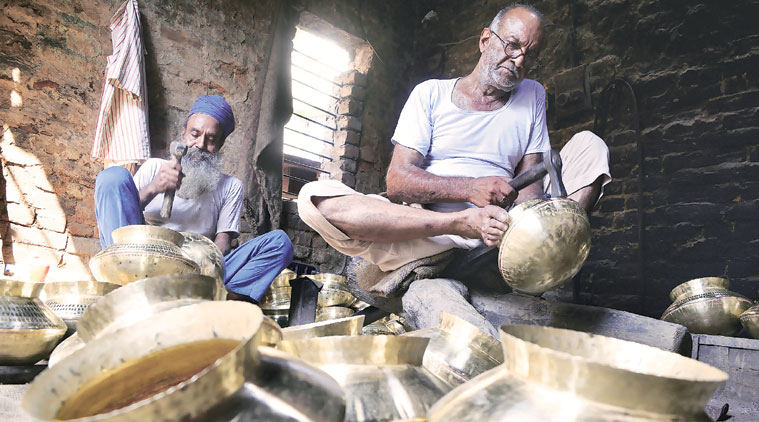
    #9. Traditional brass and copper craft – Thatheras

    source

    The craft of the Thatheras of Jandiala Guru constitutes the traditional technique of manufacturing brass and copper utensils in Punjab.

    Did we miss out on something important? Do let us know in comments here or add to the existing knowledge base!
  • 5 Important International NGOs which often recur in news

    #1. Amnesty International

    Focus: Human Rights

    source: www.amnestyusa.org
    • Founded: 1961 in London, United Kingdom
    • Role: A worldwide organization for the protection of the rights of prisoners of conscience

    Amnesty International was founded in 1961 by the British lawyer Peter Benenson.

    It was originally his intention to launch an appeal in Britain with the aim of obtaining an amnesty for prisoners of conscience all over the world.

    Amnesty International is a worldwide human rights organization run by its members. It is independent of all governments and all financial players. It is also independent of political convictions and religious faiths.

    Organization’s logo – the lit candle surrounded by barbed wire – from a Chinese proverb,“It is better to light a light than to curse the darkness”.

    #2. Commonwealth Human Rights Initiative

    Focus: Human Rights

    The Commonwealth Human Rights Initiative is an international non-governmental organisation formed to support Human Rights and particularly to support the implementation of the Harare Declaration in the countries of the Commonwealth of Nations.

    What was Harare declaration?

    The Harare Commonwealth Declaration sets the association’s priorities for the 1990’s and beyond. Strengthened emphasis on Commonwealth contribution to democracy, human rights and equality.

    #3. CARE International

    Focus: Multiple Interdisciplinary Projects

    CARE International is a large humanitarian INGO that is committed to fighting poverty. They take a special interest in empowering poor women because “women have the power to help whole families and entire communities escape poverty”. Explicit goals:

    • Strengthening capacity for self-help
    • Providing economic opportunity
    • Delivering relief in emergencies
    • Influencing policy decisions at all levels
    • Addressing discrimination in all its forms

    #4. OXFAM

    Focus: Multiple Interdisciplinary Projects

    Oxfam works on trade justice, fair trade, education, debt and aid, livelihoods, health, HIV/AIDS, gender equality, conflict (campaigning for an international arms trade treaty) and natural disasters, democracy and human rights, and climate change. That’s pretty much everything!

    One would hear a lot about Oxfam in news related to Nepal’s earthquake and regeneration efforts. Latest news – Reuters

    #5. Greenpeace International

    Focus: Environmental concerns

    If you haven’t heard about them, chances are you are living under a rock! India has been on a head on collision for all (right and wrong) reasons with this NGOs. Read India’s war on GreenpeaceGreenpeace India’s registration cancelled

    At CD, we have been doing a story over it at NGOs vs. GoI: The Conflicts and Scrutinies and we have seen a pretty good engagement on that story!

    Anyway, back to Greenpeace –

    • Greenpeace is a non-governmental environmental organization with offices in over forty countries and with an international coordinating body in Amsterdam, the Netherlands
    • It uses direct action, lobbying, and research to achieve its goals.

    Question: What do we mean by “direct action” of an NGO?

    Watch this 3 minute video to know about (pretty interesting) history behind Greenpeace


    If we missed an important NGO, do let us know. It is important to know the area of work, HQ and recent focus of important NGOs for IAS Prelims purposes.

  • [E&B special] 6 Animal Welfare Organisations of Importance in India

    If you have been keeping up with news, then you would know that very recently, PETA issued a statement that government has banned the use of animals in tests for soaps and detergents. This welcome news opens us up to do a quick recap of some of the well known animal welfare organisations in India working for this worthy cause.

    #1. Bombay Natural History Society (BNHS)

    • Founded on 15 September 1883, is one of the largest non-governmental organisations in India engaged in conservation and biodiversity research
    • Headquarters: Hornbill House, Mumbai
    • The BNHS logo is the great hornbill, inspired by a great hornbill named William, who lived on the premises of the Society from 1894 until 1920

    Trivia:

    #2. Hoollongapar Gibbon Sanctuary

    A golden-capped Langur
    A golden-capped Langur. Photo: WikimediaCommons
    • An isolated protected area of evergreen forest located in Assam, India. The sanctuary was officially constituted and renamed in 1997
    • The Hoollongapar Gibbon Sanctuary contains India’s only gibbons – the hoolock gibbons, and Northeastern India’s only nocturnal primate – the Bengal slow loris

    Trivia:

    While the western hoolock gibbon is listed as an endangered species by the International Union for Conservation of Nature (IUCN), the establishment of the Gibbon Conservation Centre in 2004 has made a difference, leading to a considerable increase in its numbers.

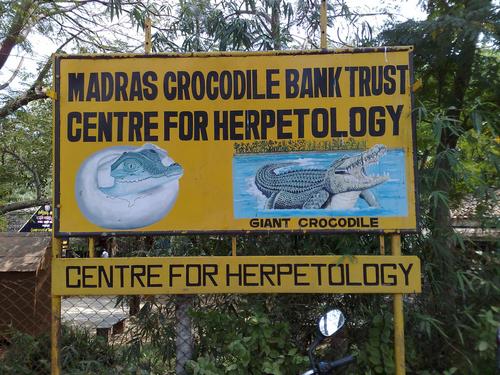
    #3. Madras Crocodile Bank Trust

    • A reptile zoo and herpetology research station
    • What’s herpetology? The branch of zoology concerned with the study of amphibians (including frogs, toads, salamanders, newts, and caecilians (gymnophiona) and reptiles
    • The bank is the first crocodile breeding centre in Asia and comes under the purview of the Central Zoo Authority, Ministry of Environment and Forests

    The core purpose of MCBT was saving 3 Indian endangered species of crocodile—the marsh or mugger crocodile, the saltwater crocodile, and the gharial.

    #4. PETA India

    • PETA India, based in Mumbai, was launched in January 2000
    • PETA India operates under the simple principle that animals are not ours to eat, wear, experiment on or use for entertainment
    • The group has launched investigations of jallikattu events, circuses that use animals in performances, and filthy horse stables in Mumbai, among others

    Trivia:

    Aside from the recent news, PETA India has in past also uncovered gruesome abuse, including the live scalding, starvation and mutilation of birds, and conditions that could lead to potential health hazards, including E. coli, salmonella and bird flu.

    #5. Wildlife Protection Society of India

    • WPSI is one of the most respected and effective wildlife conservation organisations in India
    • Has no direct links to the government
    • Primary focus has been curbing the illegal poaching of tigers and helping GoI with investigation and crime data regarding that

    WPSI is different from theWildlife Institute of India (WII), which is an autonomous institution under the Ministry of Environment Forest and Climate change, Government of India.

    #6. [Bonus] WWF-India

    • Parent organisation: World Wide Fund for Nature (WWF), which is an international non-governmental organization founded on April 29, 1961
    • The group’s mission is “to stop the degradation of the planet’s natural environment and to build a future in which humans live in harmony with nature.”
    • WWF’s giant panda logo originated from a panda named Chi Chi that had been transferred from Beijing Zoo to London Zoo in 1958!
    • Publications: WWF publishes the Living Planet Index in collaboration with the Zoological Society of London.
  • Maritime India Summit 2016: Key Takeaways

    Maritime India Summit 2016 (MIS 2016) is a maiden flagship initiative of the Ministry of Shipping.

    Maiden = First time ever. First time ever translates to a higher probability of it finding its way in the IAS Prelims this year.

    Why do we say so? If you wrote the IAS prelims in 2014, you would remember the National Biodiversity Express initiative launched by GoI that year and how a few questions from E&B found their source in the released pamphlet. So, no harm in giving this a look, right?

    Focus Area for intervention which are important for your review:

    • Port Modernization
    • New Port Development
    • Inland Waterways
    • Green Initiatives in Ports

    Maritime Potential of Indian States

    If you are loath to read through the commentary, make sure you go through this infographic (in desktop mode – click on the pic to enlarge) & make quick notes.


    #1. Port Modernization

    India has 12 Major Ports, administered by the Central Government, and around 200 notified Non-Major Ports, administered by the State Governments. In 2014-15, out of the 200 Non-Major Ports, 69 ports were reported to have handled cargo traffic.

    • Kandla was the last major port built by India – 1950
    • India plans to add 8 major ports to this list of 12. Source: ET

    Fodder points – 

    1. The infrastructure sector, particularly the Maritime Sector, is expected to grow significantly with the increase in international and domestic trade volumes
    2. Since about 95% of India’s trade by volume is via the maritime route (Source : NTDPC), there is a continuous need to develop India’s ports and trade related infrastructure to accelerate growth in the manufacturing industry and to aid the ‘Make in India’ initiative.

    #2. New Port Development

    Why is there a need you may ask?

    1. Capacity Saturation – Ports such as JNPT, Paradip have limited capacity to expand and are saturated with traffic
    2. Non-availability of Ports – There are few specific stretches along the coastline which do not have an operational port. In absence of the port at such locations, the cargo is forced to travel longer distances to use alternate ports
    3. Strategic Locations – The southern tip of India is optimally located as it falls under the East-West trade route. However most of transshipment cargo from India is dependent on ports of Colombo and Singapore. Hence, we need to fulfill this need

    Potential Projects? Greenfield major ports to be developed at

    • Vadhavan (Maharashtra) – MOU was signed by JNPT. Read here.
    • Sagar Island (West Bengal) – This island, also known as Gangasagar or Sagardwip, is a place of Hindu pilgrimage
    • Paradip Satellite Port (Odhisha) – What is a satellite port?
    • Cuddalore/Sirkazhi (Tamil Nadu)
    • Machilipatnam/Vodarevu

    Question: Find out the difference between Greenfield and Brownfield projects. A term often used in PPP parlance. 

    #3. Inland Waterways

    India has an extensive network of inland waterways in the form of rivers, canals, backwaters and creeks. Of the total navigable length of 14,500 km, 5200 km of the river and 4000 km of canals can be used by mechanized crafts.

    India has recognized 106 waterways of which 6 are declared as national waterways – 


    #4. Green Initiatives in Ports

    • Solar and wind based power systems at all the Major Ports across the country
    • What’s the plan? Solar energy capacity at 8 major ports + Wind energy capacity at 3 major ports

    Key initiatives (Fodder points):

    • The Ministry of Shipping has recently introduced an incentive scheme under which the Ministry will share up to 50% of the total project cost that promote the use of green energy
    • Anti-fouling System Convention of International Maritime Organization has been incorporated in the Merchant Shipping Act, 1958
    • Use of bio-diesel at Haldia Dock Complex


    Sources: http://www.maritimeinvest.in 

    If you have time and you want to venture out and see the other heads of developments, do go and visit the website, especially carved out for this summit. 

  • Indian Missile Systems and other developments in 2015-16

    The aim of this compilation is to help you serve as a last minute revision tool for the upcoming IAS Prelims 2016. UPSC is known to pitch in with factual questions in the Prelims Exam. A sincere student ends up missing out on them as a part of his/ her daily studies and here’s where such compilations come to rescue!

    #1. Defence Capability Enhancements 

    India’s biggest ship, aircraft carrier INS Vikramaditya, finally arrives

    source: NDTV.com

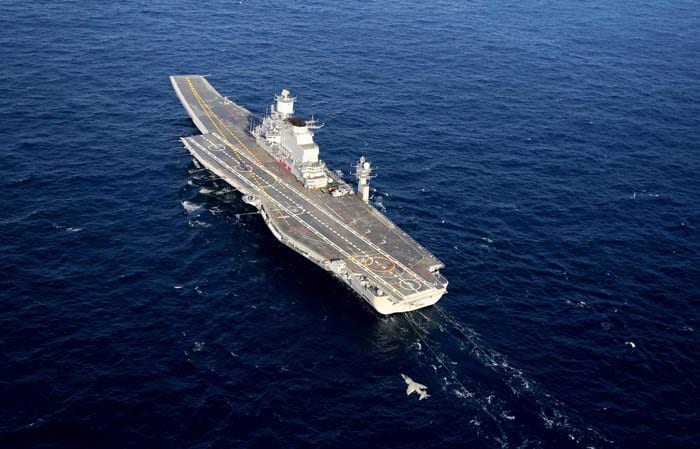
    INS Vikramaditya is a Kiev class aircraft carrier which was commissioned by Russian Navy in 1987 under the name Baku. It was later renamed as Admiral Gorshkov and last sailed in 1995 in Russia, before being offered to India. India agreed to buy it in 2004 for $974 million. The cost kept shooting up as Russia delayed the delivery by over five years.

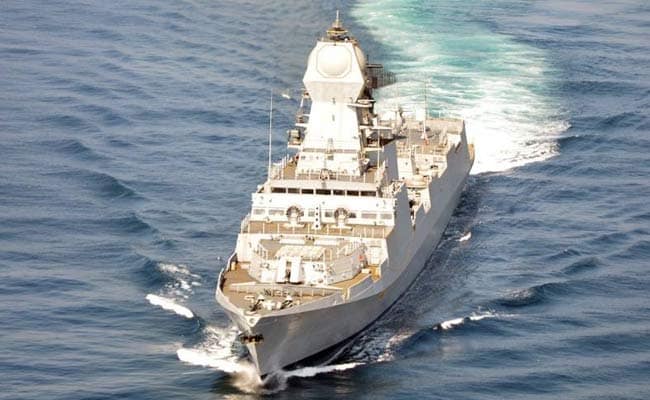
    INS Kolkata – Biggest warship ever to be built in India till date

    source: NDTV.com

    INS Kolkata is the lead ship of the Kolkata-class stealth guided-missile destroyers of the Indian Navy. She was constructed at Mazagon Dock Limited (MDL), and was handed over to the navy on 10 July 2014. A bit of an old news but mightier still!

    • INS Kolkata, under the Project 15 Alpha, belongs to the destroyer class and is the first of three ships currently under construction
    • Being wholly constructed in the country, the ship provides credence to India’s defense capabilities in an geo-politically unstable world.

    #2. Technological Advancements

    Agni 5, India’s Longest Range Ballistic Missile (2015)

    • Agni-V is a solid fueled intercontinental ballistic missile (ICBM)
    • Range – 5,000 km
    • Nuclear capable – YES
    • Three Stage Missile – Solid Fuel
    • Strategic Missile – YES

    What’s the difference between a strategic and a tactical missile system?

    Strategic weapons are used for strategic purposes – threatening an opponent’s industrial infrastructure, targeting their command structure, and are generally designed to hit targets which disrupt the enemy’s ability to conduct warfare at a high level.

    Tactical weapons are for local battlefield use, and are designed to be deployed against targets strictly of immediate military value.

    NOTE: India has started the production of AGNI 6.

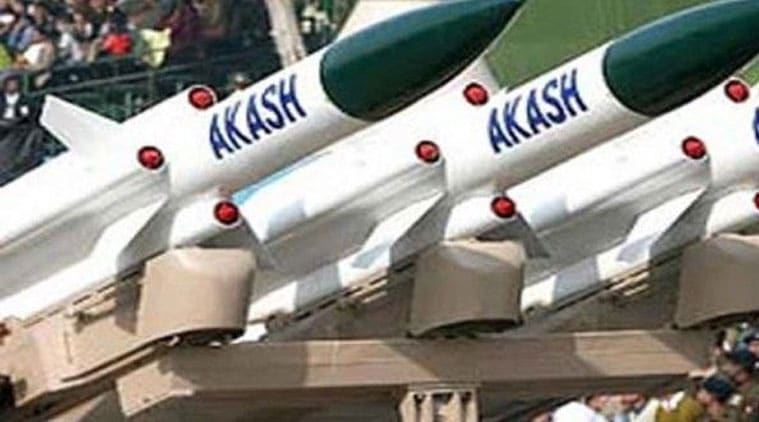
    Surface-to-air missile ‘Akash’ inducted in IAF (2015)

    source: Indianexpress.com
    • ‘Akash’ has been developed by DRDO as part of the Integrated Guided Missile Development
    • The missile can track a target 100 km away and hit the enemy’s helicopter, plane or drone from a 25-km distance

    Astra missile proves anti-jamming capability (2015)

    source: The Hindu
    • Astra is an active radar homing beyond-visual-range air-to-air missile (BVRAAM) developed by the DRDO
    • The missile is technologically more sophisticated than the nuclear capable Agni missile series of strategic ballistic missiles
    • The maximum range of Astra is 110 km in head-on chase and 20 km in tail chase
    • The Mark 2 version of Astra will have a maximum range of 150 km and tail chase range of up to 35 km

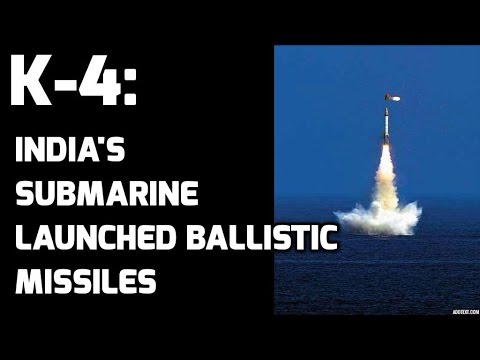
    The secretive submarine-launched K-4 – nuclear missile (2016)

    • A long range submarine-launched ballistic missile, codenamed K-4, capable of can strike targets upto 3,500 kilometres away
    • The K-4, a derivative of the more well known Agni ballistic nuclear missiles already in service, will be the most potent part of India’s nuclear deterrent
    • Incidentally, K-4 is named after APJ Abdul Kalam

    Indian Navy successfully test fires Barak-8

    • The firing was undertaken on the Western Seaboard by INS Kolkata, wherein the missile successfully intercepted an aerial target at extended ranges
    • Long Range Surface to Air Missile (LR SAM) – a significant milestone in enhancing its anti-air warfare capability
    • Developed jointly by India and Israel

    Anti-tank HeliNa missile hits targets in crucial test (2015)

    source: Linkedin.com
    • HeliNa is a helicopter-launched version of Nag and has been developed by the DRDO under the Integrated Guided Missile Development Programme (IGMDP)
    • HeliNa missile will be integrated with the weaponised version of the Advanced Light Helicopter Dhruv, the light combat helicopter produced by Hindustan Aeronautics Limited

    #3. Bonus for our readers

    Most of the time you are likely to be flummoxed by questions on tactical/ strategic – surface to surface missiles. Let’s list down all of them in order for you to remember and revise!


    Did we miss out on anything? Add to the growing list for prelims worthy questions.


  • International Org. | Part 9 | East Asia Summit (EAS)

    source: www.emknowledge.gov.au


    East Asia Summit is a unique Leaders-led forum of 18 countries of the Asia-Pacific region formed to further the objectives of regional peace, security and prosperity.

    Why is EAS important?

    10 East Asia Summits have been held so far. India has been a part of this process since its inception in 2005. Think of it this way –

    • EAS has held its annual meetings without fail since its inception
    • As members – it has 10 ASEAN nations + 8 strategic partners including US, China, India, Japan
    • This is what our PM said in the 9th EAS – “No other forum brings together such a large collective weight of global population, youth, economy and military strength. Nor is any other forum is so critical for peace, stability and prosperity in Asia-Pacific and the world.”

    6 priority areas of regional cooperation within the framework of the EAS

    1. Environment and Energy,
    2. Education,
    3. Finance,
    4. Global Health Issues and Pandemic Diseases,
    5. Natural Disaster Management, and
    6. ASEAN Connectivity

    India’s involvement in regional collaboration in these 6 priority areas

    #1. Education

    At the 4th East Asia Summit (EAS), held in Thailand on 24-25 October 2009, the EAS Leaders endorsed the proposal for the revival of Nalanda University.

    source: outlookindia.com
    • Nalanda was a renowned Buddhist centre of learning, in Ancient India. It taught students in medicine, mathematics, astronomy and politics
    • The University envisages seven schools located at its campus in Rajgir
    • Ministry of External Affairs has offered 6 scholarships to students from Cambodia, Myanmar, Lao PDR and Vietnam to pursue higher studies at Nalanda University
    • In news – Amartya Sen quits Nalanda University

    #2. Global Health Issues and Pandemic Diseases

    • Australia and India are co-chairs of the Task Force for Access to Quality Medicines and other Technologies Task Force (AQMTF)
    • India has also hosted a Round table on Trauma Care and Nursing on 15-16 October 2015, in New Delhi

    #3. Natural Disaster Management

    • 2012: India hosted an ‘EAS-India Workshop 2012: Building Regional Framework for Earthquake Risk Management’ in New Delhi
    • 2014: India also hosted the first Meeting of the 24×7 Points of Contact among the National Disaster Response Agencies of East Asia Summit (EAS) countries
    • Launch of Virtual Knowledge Portal (VKP). What is this?

    The Virtual Knowledge Portal (VKP), a web based tool to share knowledge and best practices related to natural disaster risk assessment, mitigation and response among EAS countries. It is hosted by Natural Institute of Disaster Management, New Delhi.

    #4. Launch of Regional Comprehensive Economic Partnership (RCEP)

    At the 7th EAS in November 2012, the Leaders of 16 EAS participating countries launched the Regional Comprehensive Economic Partnership (RCEP)

    What is RCEP?

    Regional Comprehensive Economic Partnership (RCEP) is a proposed free trade agreement (FTA) between the 10 member states of the ASEAN and the six states with which ASEAN has existing FTAs (Australia, China, India, Japan, South Korea and New Zealand).

    source: asiafoundation.org


    Want to read more?

  • International Org. | Part 8 | Gulf Cooperation Council (GCC)

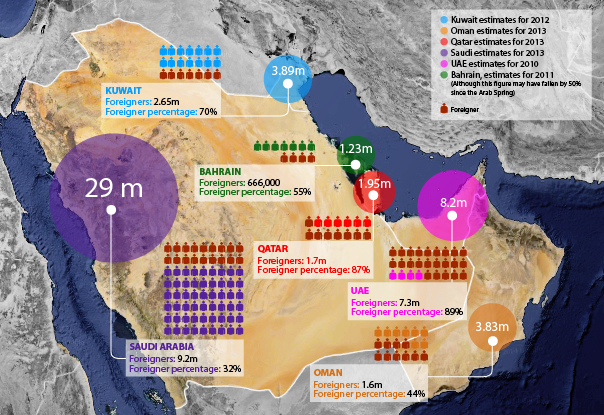
    The Gulf Cooperation Council (GCC) is a regional political organisation comprising the energy rich Gulf monarchies – Bahrain, Kuwait, Oman, Qatar, Saudi Arabia, and the United Arab Emirates.

    source: middleeasteye


    When and why was it founded?

    • Establishment in Abu Dhabi in 1981 | HQ in Riyadh
    • The founding charter focused more on issues of social and cultural cohesion, environmental and scientific coordination and economic cooperation
    • Recently, Morocco and Jordan have applied for the GCC membership which is currently being studied by the GCC Expert Committee

    India and GCC: Contours of cooperation

    • The Gulf constitutes the “immediate” neighborhood of India separated only by the Arabian Sea
    • The Gulf, as the principal source of India’s energy requirements, is central to our energy security interests: it meets 75% of our oil needs at present; as our demand increases in coming years, India’s dependence will go up to 90% by 2035.
    • GCC is India’s largest trading partner as an economic grouping, with two-way trade being more than our ties with the European Union, ASEAN and North America
    • Four GCC countries figure in India’s top 10 trade partners.
    • We also have an eight-million strong community in the GCC that remits annually $35 billion to the national exchequer
    • The India-GCC Free Trade Agreement which is in under negotiation could usher in a new era of trade


    Although India and the GCC countries share a strong economic relationship, there is much progress to be achieved on the political front. Let’s have a close look at some of the important dimensions –

    #1. Defence Diplomacy

    India’s defence diplomacy with countries of the GCC is well reputed.

    • India has signed a military protocol with Oman which has facilitated joint military exercises
    • India has also signed a defence cooperation agreement with the UAE
    • Our new naval diplomacy document increases our focus on west asian countries. Click to read more about it here.

    #2. Counter Terrorism

    The meteoric rise of the Islamic State of Iraq and the Levant (ISIS) in neighbouring countries like Iraq and Syria pose a huge threat to the peace and stability of the GCC countries.

    #3. Maritime Security

    Primary maritime security threats include piracy at sea, smuggling of narcotics and arms and the imminent threat of maritime terrorism.

    • These threats pose major challenges to the Sea Lines of Communication (SLOCs) that India depends heavily on to carry out trade by sea
    • India’s international trade by sea amounts to about 90% of the foreign trade, and it takes place through 13 major ports and several minor ports
    • In recent times the term “Indo Pacific era” has gained currency. You would do well to read this post on – Indian maritime challenges and its diplomatic dimensions

    #4. Culture & Diaspora

    • We have an eight-million strong community in the GCC that remits annually $35 billion to the national exchequer
    • Minor concerns – If you remember, in 2013 Saudi Arabia issues a Nitaqat Law – The ‘Nitaqat’ law makes it mandatory for local companies to hire one Saudi national for every 10 migrant workers
    • There had been widespread perception that the new policy will lead to denial of job opportunities for a large number of Indians working there.
    • India had back then proactively conveyed concerns to the Saudi government


    Want to read more?