💥Join UPSC 2027,2028 Mentorship (July Batch) + XFactor Notes & Microthemes PDF

Distribution: yearly

  • Indian nationals living abroad

    There are over 1.36 crore Indian nationals living abroad, according to data tabled by the Ministry of External Affairs in Lok Sabha.

    Indians abroad

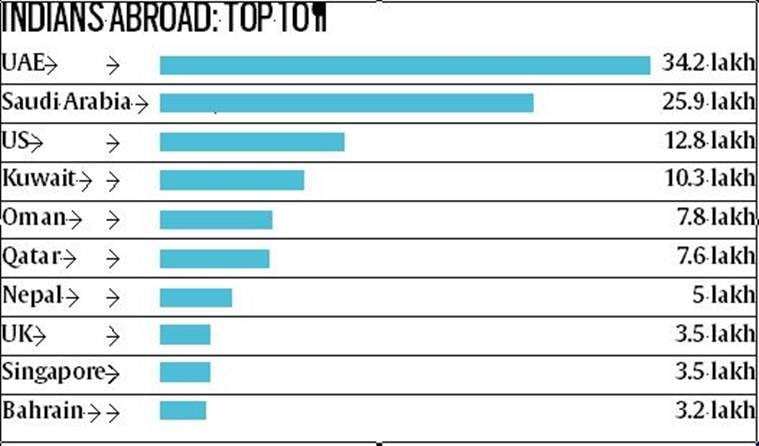
    • The highest number of Indians abroad are living in the United Arab Emirates, where the 34,20,000 Indians comprise about one-fourth of all Indians abroad.
    • The UAE is followed by Saudi Arabia (25,94,947), the US (12,80,000), Kuwait (10,29,861), Oman (7,79,351), Qatar (7,56,062), Nepal (5,00,000), UK (3,51,000), Singapore (3,50,000) and Bahrain (3,23,292).
    • The CPV (Consular, Passport and Visa) division of the ministry is the nodal division that coordinates with all missions / posts abroad regarding transportation of the mortal remains of Indians from abroad to their hometowns in India.

    Total remittances recieved

    • Citing RBI data, the ministry said that during 2018-2019, $76.4 billion was received as remittances from Indians abroad.
    • During 2019-2020 (April-September), $41.9 billion was received.
  • Genome India Project


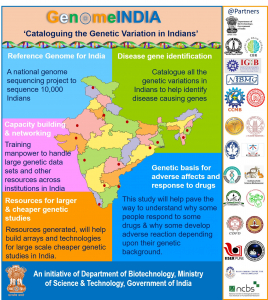
    The Union Govt. has given clearance to an ambitious gene-mapping project, estimated to be worth Rs 238 crore.

    Genome India Project

    • The Genome India Project has been described by those involved as the “first scratching of the surface of the vast genetic diversity of India”.
    • It involves over 20 scientists from institutions including the Indian Institute of Science (IISc) in Bengaluru and a few IITs.
    • One of the most comprehensive genome mapping projects in the world is the Human Genome Project (HGP), which began in 1990 and reached completion in 2003.
    • The international project, which was coordinated by the National Institutes of Health and the US Department of Energy, was undertaken with the aim of sequencing the human genome and identifying the genes that contain it.
    • The project was able to identify the locations of many human genes and provide information about their structure and organisation.

    What is Genome Mapping?

    • According to the Human Genome Project, there are estimated to be over 20,500 human genes.
    • Genome refers to an organism’s complete set of DNA, which includes all its genes and mapping these genes simply means finding out the location of these genes in a chromosome.
    • In humans, each cell consists of 23 pairs of chromosomes for a total of 46 chromosomes, which means that for 23 pairs of chromosomes in each cell, there are roughly 20,500 genes located on them.
    • Some of the genes are lined up in a row on each chromosome, while others are lined up quite close to one another and this arrangement might affect the way they are inherited.
    • For example, if the genes are placed sufficiently close together, there is a probability that they get inherited as a pair.
    • Genome mapping, therefore, essentially means figuring out the location of a specific gene on a particular region of the chromosome and also determining the location of and relative distances between other genes on that chromosome.

    Applications

    • Significantly, genome mapping enables scientists to gather evidence if a disease transmitted from the parent to the child is linked to one or more genes.
    • Furthermore, mapping also helps in determining the particular chromosome which contains that gene and the location of that gene in the chromosome.
    • Genome maps have been used to find out genes that are responsible for relatively rare, single-gene inherited disorders such as cystic fibrosis and Duchene muscular dystrophy.
    • Genetic maps may also point out scientists to the genes that play a role in more common disorders and diseases such as asthma, cancer and heart disease among others.
    • Researchers from several international institutions mapped the handful of genes whose mutation causes several different kinds of cancers.
  • Thwaites Glacier


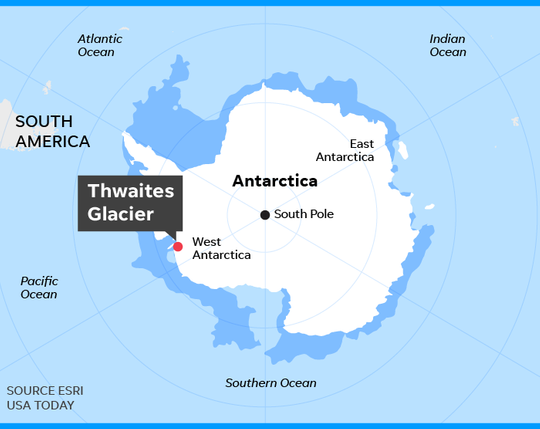
    In the Antarctic floats a massive glacier, roughly the size of Britain, whose melting has been a cause of alarm for scientists over the years. Now, a new study has pinned the cause of the melting to the presence of warm water at a vital point beneath the glacier.

    Thwaites Glacier

    • The Thwaites Glacier is 120 km wide at its broadest, fast-moving and melting fast over the years.
    • Because of its size (1.9 lakh square km), it contains enough water to raise the world sea level by more than half a metre.
    • Studies have found the amount of ice flowing out of it has nearly doubled over the past 30 years. Today, Thwaites’s melting already contributes 4% to global sea level rise each year.
    • It is estimated that it would collapse into the sea in 200-900 years. Thwaites is important for Antarctica as it slows the ice behind it from freely flowing into the ocean.
    • Because of the risk it faces — and poses — Thwaites is often called the Doomsday Glacier.

    What has the new study found?

    • A 2019 study had discovered a fast-growing cavity in the glacier.
    • More recently researchers detected warm water at a vital point below the glacier.
    • Scientists dug a 600-m-deep and 35-cm-wide access hole, and deployed an ocean-sensing device called Icefin to measure the waters moving below the glacier’s surface.
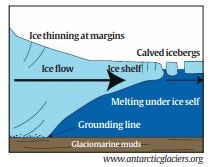
    • The study reported water at just two degrees above freezing point at Thwaites’s “grounding zone” or “grounding line”.

    What is the grounding line?

    • The grounding line is the place below a glacier at which the ice transitions between resting fully on bedrock and floating on the ocean as an ice shelf.
    • The location of the line is a pointer to the rate of retreat of a glacier.
    • When glaciers melt and lose weight, they float off the land where they used to be situated. When this happens, the grounding line retreats.
    • That exposes more of a glacier’s underside to seawater, increasing the likelihood it will melt faster.
    • This resulted in the glacier speeding up, stretching out, and thinning, causing the grounding line to retreat ever further.
  • The high cost of raising trade walls

    Context

    India’s international trade posture appeared to turn protectionist in the past week, with two indicators the government sent out.

    What were the two indicators?

    • The first-Signal sent out in the Budget: The first indicator, which played out live on television was contained in the Union Budget.
      • Laying out the Budget for the year, the finance minister made several references to the problems with free trade and preferential trade agreements (FTAs and PTAs).
      • Raise in tariffs, changes in the act: The Budget raised tariffs on the import of more than 50 items and changed the Customs Act provisions substantially to penalise imports suspected to originate from third countries.
    • The second- India declined negotiations: The other indicator was that India declined to attend a meeting of trade negotiators in Bali that was discussing the next step in the Association of Southeast Asian Nations (ASEAN)-led Regional Comprehensive Economic Partnership (RCEP) trade agreement.

    Issues with the Free Trade Agreement

    • What the FM told Parliament: It has been observed that imports under Free Trade Agreements (FTAs) are on the rise.
      • Undue claims of FTA benefits have posed a threat to the domestic industry.
      • Such imports require stringent checks, adding that the government will ensure that all FTAs are aligned to the conscious direction of our policy.
    • What could be the consequences of the Govt. policy?
      • Discouragement to imports: While the Govt. motive may be to protect Indian markets from dumping-primarily by Chinese goods-
      • The consequence of the changes will be to put Indian importers on notice and discourage imports in general.
      • Even as the government reserves the right to modify or cancel preferential tariffs and ban the import or export of any goods that it deems fit.

    The rise in the trade deficit and decision to walk out of FTA

    • The trade deficit with FTA partners: The government’s problem with FTAs was a key theme in its decision to walk out of the RCEP negotiations (of 16 countries) the rise in trade deficits with FTA partners.
    • Review of all agreements: The government says it will now review all those agreements and wants to “correct asymmetry” in negotiations with new partners. The agreement that would be reviewed includes-
      • TAs signed with the 10-nation ASEAN grouping (FTA).
      • Japan (Comprehensive Economic Partnership Agreement, or CEPA).
      • And South Korea (CEPA).

    Why it would not be easy to negotiate bilateral treaties

    • The bilateral agreement would not be a priority for other countries: If India makes a complete break with RCEP, negotiating the bilateral trade agreements (TAs) will not be a priority for the other countries until RCEP is done.
      • The process of legal scrubbing is likely to take most of the year, and any talks with India will probably only follow that.
      • Difficulty in getting better deal: It is also hard to see any of them being able to offer India a better deal bilaterally once they are bound into the multilateral RCEP agreement.

    India’s pending talks on bilateral treaties

    • Negotiations of CECA with Australia: The case of the Comprehensive Economic Cooperation Agreement (CECA) being negotiated with Australia, will be a difficult task, not the least due to its history.
      • India and Australia began CECA talks in 2011.
      • However, talks hit a dead-end in September 2015. With the focus on RCEP, no progress has been made since then.
    • Negotiations of FTA with the UK: A similar scenario awaits the announcement of the India-United Kingdom FTA talks.
      • It is unlikely that the U.K. will actually be able to talk until next year after terms for the K.’s full withdrawal from the European Union (EU) are completed.
    • Negotiation of BTIA with the EU: Bilateral Trade and Investment Agreement (BTIA) negotiation are also unlikely to make headway until the UK’s complete withdrawal from the EU.
      • Both sides will have to decide how to revive from where they left off in 2013.
      • Why the negotiations are pending? Making the negotiations harder is the government’s decision to scrap all bilateral investment treaties with 57 countries including EU nations, and bringing in a new Bilateral Investment treaty (BIT) model in 2015.
      • Only Kyrgyzstan, Belarus and most recently Brazil have agreed to sign a new investment treaty based on that model.
    • The US-India trade issue: Finally, there is the much-anticipated resolution of U.S.-India trade issues ahead of the visit of U.S. President.
      • The talks in that visit could also include talks on an FTA.
      • At present, there have only been some non-paper talks on the issue.
      • And given that the U.S. has expressed deep misgivings about India’s BIT model, these talks will also take several years to come to fruition.

    Why India should rethink its stand on FTA

    • First-Prospect of no dispute settlement mechanism: The decline of multilateralism, accelerated by the retrenchment of the U.S. and China’s intransigence have all meant the World Trade Organization (WTO) has lost steam as a world arbiter.
      • This leaves states that are not part of arrangements without a safety net on dispute settlement mechanisms.
    • The second-trade deficit of other countries with India: The government has invoked the massive $57-billion trade deficit with China to explain protectionist measures, but it forgets its own trade surpluses with smaller economies.
      • Particularly in the neighbourhood, where Indian exports form more than 80% of total trade with Nepal, Bangladesh, Bhutan and Sri Lanka, respectively.
    • Third- The rise of regional agreements: It is clear that most of the world is now divided into regional FTAs, for example-
      • The North American Free Trade Agreement (NAFTA) for North America.
      • The Southern Common Market (MERCOSUR for its Spanish initials) for South America.
      • The EU, the Eurasian Economic Union (Russia and neighbours).
      • The African Continental Free Trade Agreement (AfCFTA).
      • The Gulf Cooperation Council (GCC) FTA in West Asia.
      • And now the biggest of them all, RCEP, which minus India, represents a third of the world’s population and just under a third of its GDP.
    • Fourth- Finally, the trend across the world does not favour trade in services the way it does in goods.
      • India’s strength in the services sector and its demand for more mobility for Indian employees, is thus becoming another sticky point in FTA negotiations.

    Conclusion

    India’s demographic might is certainly attractive for international investors, but only if that vast market has purchasing power and is not riven by social unrest and instability. India’s demographic might is certainly attractive for international investors, but only if that vast market has purchasing power and is not riven by social unrest and instability.
     

  • Cancer Gene Mapping


    A series of new papers in the journal Nature has revealed the most comprehensive gene map ever of the genes causing cancer. It shows departures from normal behaviour i.e. mutations trigger a cascade of genetic misbehaviours that eventually lead to cancer.

    What is Mutation?

    • A mutation is a change that occurs in our DNA sequence, either due to mistakes when the DNA is copied or as the result of environmental factors such as UV light and pollution etc.
    • Structural variations mean deletion, amplification or reorganization of genomic segments that range in size from just a few bases to whole chromosomes.
    • Bases are the structural units of genes.
    • Over a lifetime our DNA can undergo changes or ‘mutations’ in the sequence of bases A, C, G and T.

    Why study cancer?

    • Cancer is known to be a disease of uncontrolled growth.
    • The growth process, like all other physiological processes, has genetic controls so that the growth is self-limiting. When one or more genes malfunction, the growth process can go out of hand.
    • Not just cancer, there are many other diseases with a genetic link in varying degrees.
    • Just a handful of “driver” mutations could explain the occurrence of a large number of cancers, the researchers said, raising hopes of a cancer cure being nearer than ever.

    How big is the cancer burden?

    • Cancer is the second most-frequent cause of death worldwide, killing more than 8 million people every year; incidence of cancer is expected to increase by more than 50% over the coming decades.
    • 1 in 10 Indians will develop cancer during their lifetime, and one in 15 Indians will die of cancer, according to the World Cancer Report by WHO.
    • The Northeastern states, UP, Rajasthan, West Bengal, Haryana, Gujarat, Kerala, Karnataka and Madhya Pradesh account for 44% of the cancer burden in India, says a recent analysis, published in The Lancet.

    Is the genetic link to cancer well established?

    • Yes, it is. One such association, for example, is of breast cancer with the BRCA 1 and BRCA 2 genes; the actress Angelina Jolie, who discovered that she carried the former gene, chose to undergo a preventive double mastectomy.
    • This is personalised therapeutics where, instead of traditional toxic medications like chemotherapy, drugs that specifically target the delinquent genetic mutation are already being used.
    • Such therapy, however, remains very expensive.

    What is the new study that has oncologists around the world excited?

    • It is a major international collaboration called the Pan-Cancer Analysis of Whole Genomes (PCAWG), in which researchers has published a series of papers after analysing some whole-cancer genomes and their matching normal tissues across 38 tumor types.
    • They concluded that on average, cancer genomes contained 4-5 driver mutations when combining coding and non-coding genomic elements.
    • This is the largest genome study ever of primary cancer.
    • Various kinds of cancers required to be studied separately because cancers of different parts of the body often behave very differently from one another; so much so that it is often said that cancer is not one disease but many.

    Breakthrough achievement of the study

    • The mutations identified by the team have been catalogued. Identification and cataloguing of the genes is a very crucial step and has taken science’s understanding of cancer and its genesis ahead by several leaps.
    • The catalogue, which is already available online, allows doctors and researchers from all over the world to look things up, consult and find information about the cancer of a given patient.
    • The study has discovered causes of previously unexplained cancers, pinpointed cancer-causing events and zeroed in on mechanisms of development, opening new vistas of personalized cancer treatment to strike at the root of the problem.
    • When it comes to drug development, however, the gene mapping is but a first step.

    The next step

    • The process of drug development will have to now kick in with pharmaceutical companies first identifying the compound(s) that target these gene mutations and then it being subjected to the rigours of clinical trials to prove its safety and efficacy.
    • That could take anything from a few decades to a few years to cover all the mutations identified.
  • [pib] Regulation of Bio-Medical Waste


    The State Pollution Control Boards (SPCBs) / Pollution Control Committees (PCCs) have recently published the details of State/UT-wise quantum of bio-medical waste generation (during 2016-18) in the country.

    Bio-Medical Waste

    Biomedical waste/hospital waste is any kind of waste containing infectious materials.  It may also include waste associated with the generation of biomedical waste that visually appears to be of medical.

    • Hospital waste refers to all waste, biological or non‐ biological that is discarded and not intended for further use.
    • Bio-medical waste means any waste, which is generated during the diagnosis, treatment or immunization of human beings or animals or in research activities pertaining thereto or in the production or testing of biological and including categories mentioned in Schedule I, of the BMW rules, 2016.

    Who deals with Bio-medical wastes in India?

    • Central Pollution Control Board has been following up with all SPCBs/PCCs to ensure effective management of biomedical waste in States/UTs.

    Collection and disposal

    • The collection and disposal is treated and disposed as per the specified methods of disposal prescribed under Schedule I of the Rules.
    • Bio-medical waste generated from the hospitals shall be treated and disposed by Common Bio-medical Waste Treatment and Disposal Facility.
    • In case there is no common facility in the reach of a healthcare facility, then such healthcare facility should install captive treatment and disposal facility.
    • There are 200 authorized Common Bio-medical Waste Treatment and Disposal Facilities (CBWTFs) in 28 States for environmentally safe disposal of biomedical waste.
    • Remaining 7 States namely Goa, Andaman Nicobar, Arunachal Pradesh, Lakshadweep, Mizoram, Nagaland and Sikkim do not have CBWTFs.

    Categorization

    As informed by CPCB and as per Bio-medical Waste Management Rules, 2016, Bio-medical waste is required to be segregated in 4 color coded waste categories.

    • Common methods of treatment and disposal of bio-medical waste are by incineration/plasma pyrolysis/deep-burial for Yellow Category waste;
    • Autoclaving/microwaving/chemical disinfection for Red Category waste;
    • Sterilization and shredding, disinfection followed by burial in concrete pit/recycling through foundry/encapsulation for White Category sharps waste; and
    • Washing, disinfection followed by recycling for Blue Category glass waste.
  • [pib] Ease of Living Index and Municipal Performance Index 2019

    The surveys to determine the Ease of Living Index (EoLI) and Municipal Performance Index (MPI) 2019 has been initiated by the Ministry of Housing & Urban Affairs. Both these indices are designed to assess the quality of life of citizens in 100 Smart Cities and 14 other Million Plus Cities.

    Municipal Performance Index

    • With the MPI 2019, the Ministry has sought to assess the performance of municipalities based on five enablers namely Service, Finance, Planning, Technology and Governance.
    • These have been further divided into 20 sectors which will be evaluated across 100 indicators.
    • This will help Municipalities in better planning and management, filling the gaps in city administration, and improving the liveability of cities for its citizens.

    Ease of Living Index

    • EOLI is aimed at providing a holistic view of Indian cities – beginning from the services provided by local bodies, the effectiveness of the administration, the outcomes generated through these services in terms of the liveability within cities and, finally, the citizen perception of these outcomes.
    • The key objectives of the EOL Index are four-folds, viz.
    1. Generate information to guide evidence-based policy making;
    2. Catalyse action to achieve broader developmental outcomes including the SDG;
    3. Assess and compare the outcomes achieved from various urban policies and schemes; and
    4. Obtain the perception of citizens about their view of the services provided by the city administration.
    • For the first time, as part of the EOLI Assessment, a Citizen Perception Survey is being conducted on behalf of the Ministry (which carries 30% of the marks of the Ease of Living Index).
    • This is a very important component of the assessment exercise as it will help in directly capturing perception of citizens with respect to quality of life in their cities.
    • This survey, which is being administered both online and offline, has commenced from 1st February 2020 and will continue till 29th February 2020.
    • The offline version involving face-to-face interviews will commence on the 1st of February and will run parallel to the on-line versions.
  • Remdesivir: Under-trail vaccine against Coronavirus

    The Wuhan Institute of Virology at Wuhan, China has filed for a patent on Remdesivir, an antiviral experimental drug from the US which may help treat the novel coronavirus (nCoV-2019).

    Remdesivir

    • It is an experimental drug and has not yet been licensed or approved anywhere globally. It has not been demonstrated to be safe or effective for any use.
    • It is currently being developed for the treatment of Ebola virus infection.
    • Remdesivir and chloroquine effectively inhibit the recently emerged novel coronavirus (2019-nCoV) in vitro.
    • Chloroquine is a “widely used” anti-malarial and autoimmune disease medicine that has recently come to light as a potential antiviral drug.

    Can Remdesivir treat coronavirus?

    • Significantly, Remdesivir has demonstrated in vivo (experimentation using a whole living organism) and in vitro (activity performed in a controlled environment) activity in animal models against viral pathogens that cause MERS and SARS.
    • Even so, the use of the experimental drug has been allowed only as an emergency treatment, which can be administered in the absence of any other approved treatment options.
    • These two diseases are also caused by coronaviruses structurally similar to the nCoV-2019.
    • Additionally, limited clinical data is available from the emergency administration of Remdesivir in patients with Ebola.
    • Even so, it is yet to be seen if Remdesivir and chloroquine can be effective against the novel coronavirus in humans.

    How can the novel coronavirus infection be treated?

    • As of now, there is no known treatment for the novel coronavirus, and an appropriate antiviral drug is required for this.
    • Ideally, a vaccine against the infection can also prove to be effective, but such a development does not seem to be in the offing for at least three-four months.
  • Listening to the call of the informal

    Context

    Attempt to formalise the informal sector would not necessarily benefit it as two recent papers reveal.

    What do the research papers reveal?

    • The first paper-No strong evidence that formalisation improves business outcomes.
      • Published by the National Bureau of Economic Research, economist Seema Jayachandran argues that there is no strong evidence from studies conducted in many developing countries that formalisation improves business outcomes.
    • The second article-Formalisation an evolutionary process:
      • In the second article, a background paper for the International Labour Organisation (ILO), economist Santosh Mehrotra calls formalisation an evolutionary process.
      • During this evolutionary process small, informal enterprises learn the capabilities required to operate in a more formal, global economy.
      • He says they cannot be forced to formalise.

    The formalisation trap

    • Why does the state want to formalise?
      • Easy monitoring and taxation: The state finds it easier to monitor and to tax the firms that adopt its version of formality.
      • Reduced last-mile cost for banks: Formality can reduce the last-mile costs for banks also.
    • Problem with the imposed formalisation
      • The added cost outweighs benefits: Ms Jayachandran’s study reveals that most of the formalities imposed from above, add to the costs of the firms that outweigh the benefits of inappropriate formalisation.

    How informal sector improves themselves?

    • Association with their peers: Small entrepreneurs gain from forming effective associations with their peers.
    • Mentoring: They also benefit greatly from ‘mentoring’.
    • On job skill development: Skills of small entrepreneurs and their employees are best developed on-the-job.
      • This is because they cannot afford the loss of income by taking time off for training.
    • Soft skills to form associations and manage enterprises, matter as much for the success of the enterprises as ‘hard’ resources of finance and facilities.

    Problems with connecting to global supply chains-

    • There is a desire to connect small firms in India more firmly with global supply chains.
      • Search for lover cost source supply: Mehrotra points out that the primary motivation of multinational companies for expanding their global supply chains is to tap into lower-cost sources of supply.
      • Supply chains compete with each other.
      • When wages and costs increase in their source countries, they look for other lower-cost sources.
      • Informal-the lowest labour cost firms: The lowest labour cost firms at the end of supply chains are generally informal.
      • Thus, the push by the state to formalise firms is countered by the supply chain’s drive to lower its costs.

    Way forward

    • India’s jobs, incomes, and growth challenges necessitate a reorientation of policies towards the informal sector.
    • First-The government and its policy advisers must stop trying to reduce its size.
      • The development of an economy, from agriculture to the production of more complex products in the industry, is a process of learning.
      • Informal enterprises provide the transition space for people who have insufficient skills and assets to join the formal sector.
    • Second-Policymakers must learn to support informal enterprises on their own terms.
      • Merely making it easy for MNCs and large companies to invest will not increase the growth of the economy.
    • Third-Find ways to speed up the process of learning.
      • Policymakers must learn how to speed up the process of learning within informal enterprises by developing their ‘soft’ skills.
      • Large schemes to provide enterprises with hard resources such as money and buildings, which the government finds easier to organise, are necessary but inadequate for the growth of small enterprises.
    • Fourth-Networks and clusters of small enterprises must be strengthened.
      • They improve the efficiency of small firms by enabling sharing of resources.
      • More clout to negotiate: They give them more clout to improve the terms of trade in their favour within supply chains.
      • Reduced last-mile cost: They reduce the ‘last mile costs’ for agencies and providers of finance and other inputs to reach scattered and tiny enterprises.
    • Fifth-The drumbeat for labour reforms must be changed.
      • The laws should be simplified, and their administration improved. And, their thrust should be to improve the conditions of workers.
    • Finally- The social security framework for all citizens must be strengthened.
      • Health insurance and the availability of health services must be improved.
      • And disability benefits and old-age pensions must be enhanced.
      • The purpose of ‘labour reforms’ must be changed to provide safety nets, rather than make the workers’ lives even more precarious with misdirected attempts to increase flexibility.


  • [pib] National Means-cum-Merit Scholarship Scheme (NMMSS)


    The NMMSS has helped to reduce the drop-out rate at the secondary and senior secondary classes, informed Union HRD Minister.

    National Means-cum-Merit Scholarship Scheme

    • The Centrally Sponsored Scheme NMMSS was launched in May, 2008.
    • The objective of the scheme is to award scholarships to meritorious students of economically weaker sections to arrest their drop out at class VIII and encourage them to continue the study at secondary stage.
    • Under the Scheme one lakh fresh scholarships @ of Rs.12000/- per annum per student are awarded to selected students of class IX every year and their continuation/renewal  in classes X to XII for study in a State Government, Government-aided and Local body schools.
    • The selection of students for award of scholarships under the scheme is made through an examination conducted by the States/UTs Governments.

    Progress of the scheme

    • As on date approx 16.93 lakh scholarships have been sanctioned to the Students across the country.
    • Heads of all the institutions disclosed that the NMMS Scheme has reduced the drop-out rate at the secondary and senior secondary classes, particularly from Classes VIII to XII.