💥Join UPSC 2027,2028 Mentorship (August Batch) + XFactor Notes & Microthemes PDF

GS Paper: India & Its Neighborhood – Relations

  • India’s Troubled Neighborhood, Myanmar

    India-myanmar

    Context

    • Twenty-one months after a military coup, which derailed a decade old experiment with limited democracy, Myanmar is struggling to cope with the consequences. People are suffering, authorities and opposition forces are locked in a cycle of violent clashes, the economy is deteriorating, and ASEAN’s mission to produce a solution has failed.

    Background of Present situation in Myanmar

    • Violation of constitution by Military: When the Tatmadaw (military), unhappy with the victory of the Aung San Suu Kyi led National League for Democracy in the November 2020 elections, chose to violate the constitution, it acted in the belief that the people would accept its diktat, as they had done in previous decades.
    • Civilian opposition continues: Clearly, military junta underestimated public anger and their commitment to freedom and democracy. Even after killing over 2,300 people and imprisoning thousands, including Ms. Suu Kyi, the military still faces a rebellion. Its plan to hold an election next year stands jeopardized.
    • Imprisonment of Suu Kyi: Suu Kyi, 77, the most popular leader, has been sentenced to 26 years of imprisonment in multiple cases on apparently trumped-up charges. Besides, 1.1 million Rohingya, driven by military oppression to seek shelter in Bangladesh in 2017, continue to languish there. Dhaka’s efforts to arrange their safe return have failed.
    • Migration crisis in India and Bangladesh: Armed clashes between the military and their ethnic opponents in the border region are having a spill-over effect in Bangladesh. Dhaka continues to show restraint and a preference for diplomacy to manage the situation.

    India-Myanmar

    How is the response of civilian opposition against military?

    • National unity Government: The parallel National Unity Government (NUG) may not be recognized by any state, but it continues to receive political and financial support from abroad. It has effectively channelled popular indignation against military rule, while still being vulnerable due to the paucity of resources and the absence of a visible leader.
    • Support of ethnic groups to NUG: About 20 ethnic armed organizations (EAOs), located in the east, north and west of Myanmar’s periphery, have divergent approaches towards the postcoup conflict. Many view it as an intra Bamar contestation, an issue of limited concern to them. Some like the Karens and Kachin’s support the NUG, while others, especially those controlled or supported by China, remain aloof.
    • Strong military but disunity among groups: Those operating in the Chin and Rakhine states are engaged in a fierce armed conflict with the military and have enfeebled it. But overall, due to their divergences and relative weaknesses, the EAOs are unlikely to defeat the military.
    • No nationwide opposition: While the opposition has performed well, it is unable to turn the tide in its favour, without a nationwide front against the Tatmadaw. National reconciliation between the military and civilian forces, and ethnic reconciliation between the majority Bamars and ethnic minorities, have been put on hold.

    India-Myanmar

    UN and International criticism

    • Criticism of coup: The UN has been forthright in criticizing the coup. It has expressed concern over continuing violence, support for a ‘democratic transition’, a release of all political prisoners and dialogue among the parties concerned.
    • Division among international community: However, the UN Secretary General’s special envoy has had little success in promoting peace. The UN’s failure lies in the sharp divisions within the international community on how to deal with this vexed issue.
    • Sanction on military: The western powers have been severely critical of the military. They have put in place several restrictive measures and imposed more sanctions. They have extended support to the NUG.
    • Russian support to military: On the other hand, Russia has given considerable backing to the military regime, seeing in its own isolation an opportunity to strengthen bilateral cooperation in defence and energy supplies.
    • China’s exploiting the opportunity: China is keeping a door open to democratic forces even while doing business with the regime and exploiting every opportunity to ensure progress on the China-Myanmar Economic Corridor.
    • ASEAN’s divided response: ASEAN is divided in three ways: Indonesia, Malaysia, and Singapore are prodemocracy; Thailand and Laos are promilitary; and Vietnam and the Philippines are ambivalent. This disunity and the Tatmadaw’s refusal to cooperate with ASEAN have led to the non-implementation of the Five Point Consensus. The upcoming ASEAN summit may provide clues on whether the grouping can forge a united stand and devise something that works better.

    India-Myanmar

    India’s reaction to Myanmar situation

    • Refugee crisis in India: India is concerned as the postcoup conditions have adversely impacted its interests and hampered bilateral cooperation. Mega projects stand delayed. Some 50,000 refugees, as per unofficial estimates, have been camping in Mizoram.
    • Advocating the democracy: Meanwhile, there is an erroneous perception that India has abandoned the Myanmar people. The reality is that India proactively advocates an early restoration of democracy, the release of prisoners, and internal dialogue.
    • Myanmar under the shadow of India-China relations: Can India do more? It can explore the possibility of a combined mediatory role with ASEAN and likeminded neighbors. Will China have a role in such a group? India-China relations preclude that possibility.
    • Brokering the political settlement: Through greater unity, external players can help Myanmar in creating a suitable environment for dialogue on a political settlement. Distant countries such as Norway and Japan can play a helpful role as catalysts. But the principal responsibility to construct a solution must rest with the Myanmar elite and leadership of both camps. Through resilience and pragmatism, they crafted a way out in 2011-21. They must recreate that spirit.

    Conclusion

    • India has been walking on tight rope on balancing national interest and restoration of democracy in Myanmar. Sooner the civil war in Myanmar ends better for India and especially for Mizoram. ‘The Golden Land’, where Lord Buddha is revered, needs to be reinspired by his teachings. Else, a prolonged, contested military rule or a failed state seems a distinct possibility.

    Mains Question

    Q. How situation in Myanmar is affecting the national interest of India? What is the India’s response to the military coup in Myanmar?
    Click and Get your FREE copy of Current Affairs Micro notes

  • Assertive China, Implication for world and India

    China

    Context

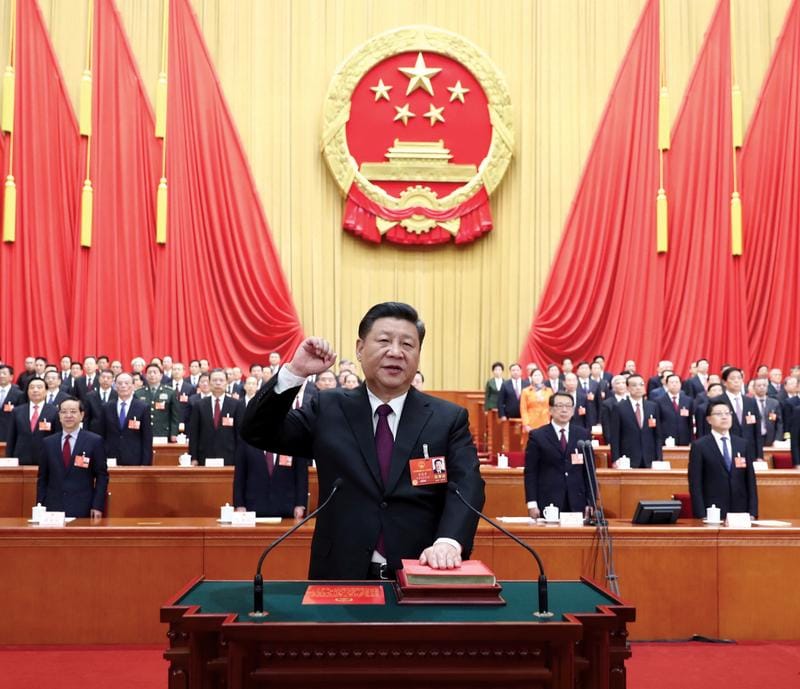
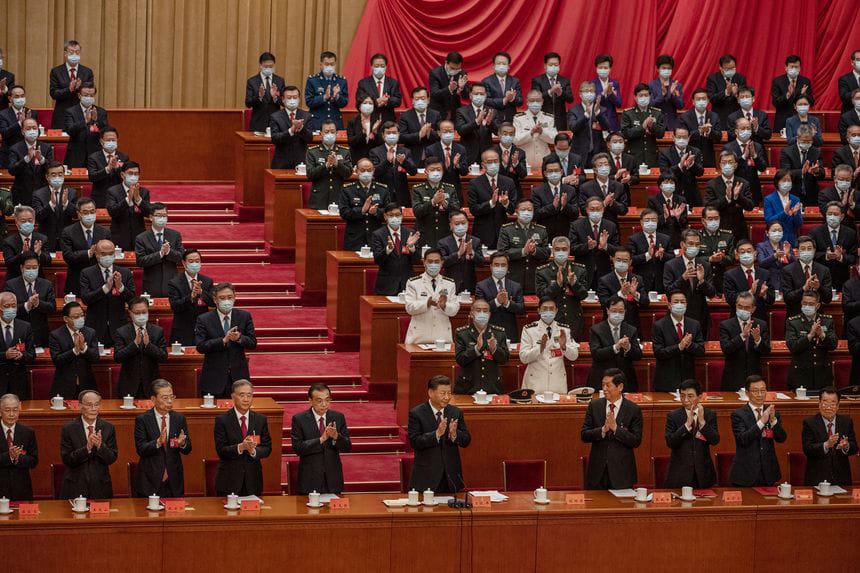
    • China’s 20th Party Congress concluded with hardly any surprises, and a predetermined script was implemented without any hitch. Xi Jinping was anointed President for an unprecedented third term, and all six of his acolytes made it to the powerful Politburo Standing Committee.

    Why China’s 20th Party Congress is important?

    • Extension of tenure of Xi Jinping: Xi’s ‘core’ status has been further reinforced, and he is now set to eclipse Deng Xiaoping and Jiang Zemin, placing him next only to Mao. Mr. Xi’s Thought on ‘Socialism with Chinese Characteristics for a New Era’ will be the Chinese Communist Party/Communist Party of China (CCP)’s guiding philosophy for the future.
    • Xi’s control over party: It was also evident that Mr. Xi enjoys wide, if not overwhelming, support within the Party elite, enabling him to infuse a renewed sense of purpose alongside tightening of controls over it.
    • High focus on national security: National security would be the key factor dictating all aspects of governance. A common theme that permeated the proceedings was affirmation of the CCP’s historical mission.
    • Emphasized ideological coherence: There was only a single narrative, crafted in a manner that extolled Mr. Xi’s role in revitalization of the CCP, further enhancing his cult status. Unequivocally rejected was an earlier Xi thesis of a ‘Community of Common Destiny’ which has been replaced by the belief that international public opinion was currently anti-China and also included an incitement to overthrow the existing Communist regime. To counter such disruptive philosophies, it had become necessary for the CCP to emphasize ideological coherence and internal discipline.
    • Avoiding the soviet style collapse: This would help to avoid the danger of a ‘Soviet style collapse’ caused by ideological laxity, corruption, divisions within the party and attempts by outsiders to foment unrest.

    China

    What are the problematic declarations at 20th party congress?

    • Undermining the USA: In the realm of geopolitics, the Congress declared that the objective is to effectively reduce the authority and the power of the United States.
    • Rejecting the Indo-pacific: This was especially true of China’s neighborhood, essentially the Indo-Pacific.
    • Achieving the lost glory: Also, to be eschewed by China were the vague and contradictory goals of the past, made at a time when China sought to make rapid progress in several directions.
    • Theory of victimhood of international conspiracy: Implicit in the proceedings was the belief that China was being deliberately denied access, and the ability, to import certain vital technological items, and in this regard, of being a victim of major international conspiracies. Earlier pragmatism was replaced by concerns about western pressures to derail China’s progress.
    • Possible lifelong tenure to Xi: The Party Congress is indicative of the fact that Mr. Xi is much more than a mere party ‘restorer’, and that he adheres to the belief that the CCP’s role is central to Chinese society and critical to determining China’s role in world affairs.
    • Raising the national strength and international influence: In terms of China’s world view, the Party Congress reiterated that the goal is to make China a modern socialist power by 2035, boost per capita income to middle income levels, and modernise the armed forces. By 2049, the 100th anniversary of the Peoples’ Republic of China, China is determined to lead the world in terms of composite national strength and international influence.

    China

    What are the implications for the world?

    • Premature takeover of Taiwan: one can expect that notwithstanding the level of rhetoric and assertions that this is a dangerous phase, China is unlikely to take any premature step to take over Taiwan, and thereby risk a wider conflict with the U.S. and the rest of the world at this point. Mr. Xi is far more likely to devote attention to internal matters within China, since unity within the Communist Party remains ephemeral; while dissent has been stamped out for the present, more consolidation would be necessary.
    • Short term conciliation with world: Consequently, one might well see China stepping back from its present confrontational posture with the U.S. and several other countries, and adopting a more conciliatory approach in the near future.
    • Conflicts are likely to happen: There are, of course, certain red lines any attempt at provocation within the ‘First Island Chain’, or encouraging Taiwan to seek independence or break away from China are certain to lead to a conflict, irrespective of how it would adversely affect China’s 2049 plans and objectives.

    China

    Implications for India

    • Border incursion will rise: In India’s case, further skirmishes between the two countries along the several thousand kilometres of the undefined land border is to be expected.
    • Conflicts in Indian ocean: China is unlikely to embark on an open conflict with it anywhere else in the Indian Ocean region. This could alter, if India were to pursue a more aggressive policy in support of the West’s ‘open seas policy’ in waters in China’s vicinity.
    • Prime target in west vs China battle: India is, however, likely to be a principal target of Chinese wrath in the next few years. As India’s economic fortunes steadily improve even as China’s declines, the perception conflict will become more intense.
    • China’s progress at the cost of India: Moreover, if India is seen as a major recipient of western technology, the kind being denied to China, China would make it a point to use its economic, rather than military muscle, to deter India’s progress. For China to achieve greatness by 2049, subduing India economically, and reducing its image in the eyes of the world would be critically important.

    Conclusion

    • China’s middle kingdom complex, unjustified assertion, paranoic claims on borders and seas and wolf warrior diplomacy is against the international rules and order. China has challenged the USA’s hegemony and entire international system without any tangible punishment. India has to choose its options carefully without compromising national security and ambitions.
  • Why is ASEAN holding a special meeting on Myanmar?

    asean

    Foreign ministers from member countries of the Association of Southeast Asian Nations (ASEAN) are meeting to discuss an intensifying crisis in Myanmar, 18 months after agreeing a peace plan with its military rulers.

    What is ASEAN?

    • ASEAN is a political and economic union of 10 member states in Southeast Asia.
    • It brings together ten Southeast Asian states – Brunei, Cambodia, Indonesia, Laos, Malaysia, Myanmar, the Philippines, Singapore, Thailand and Vietnam – into one organisation.
    • It was established on 8th August 1967 in Bangkok, Thailand with the signing of the Bangkok Declaration by the founding fathers of the countries of Indonesia, Malaysia, Thailand, Singapore, and the Philippines.
    • The preceding organisation was the Association of Southeast Asia (ASA) comprising of Thailand, the Philippines, and Malaysia.
    • Five other nations joined the ASEAN in subsequent years making the current membership to ten countries.

    Why is the meeting happening?

    • ASEAN’s peace effort is the only official diplomatic process in play.
    • There has been a failure with the junta unwilling to implement a so-called “five-point consensus” that it agreed to with ASEAN in April 2021.
    • The United Nations has backed the ASEAN plan, but with suspicion the generals are paying lip service and buying time to consolidate power and crush opponents before a 2023 election.
    • For ASEAN to remain credible as a mediator, it may need to present a new strategy before the summit.

    What is the consensus?

    • The agreement includes-
    1. Immediate end of hostilities
    2. All parties engaging in constructive dialogue
    3. Allowing an ASEAN envoy to mediate and meet all stakeholders, and
    4. ASEAN to provide humanitarian assistance.
    • So far, the only success cited by ASEAN chair Cambodia has been allowing some humanitarian access, but that has been limited and conditional.

    How has the Junta (Military govt. in Myanmar) responded?

    • The military government has accused critical ASEAN members of meddling and warned them not to engage.
    • It has accused its opponents of trying to sabotage the ASEAN plan and has justified military offensives as necessary to secure the country and enable political talks.
    • Instead of advocating for the five-point ASEAN plan, the generals have instead been pushing a five-step roadmap of their own towards a new election, with few similarities.


    UPSC 2023 countdown has begun! Get your personal guidance plan now! (Click here)

  • What is China’s ‘Wolf Warrior’ Diplomacy?

    wolf

    Chinese President Xi Jinping will get an endorsement for a third term as President. His “wolf warrior” style of diplomacy has particularly attracted attention.

    What does Wolf Warrior’ Diplomacy mean?

    • A term that gained popularity, especially after Xi became President, “wolf warrior diplomacy” is a tactic for the Chinese government to extend its ideology beyond China and counter the West and defend itself.
    • It is an unofficial term for the more aggressive and confrontational style of communication that Chinese diplomats have taken to in the last decade.
    • A 2015 Chinese action film, titled ‘Wolf Warrior’, and its sequel have served as the inspiration for the term.
    • The films, with their nationalist themes and dialogues, focus on Chinese fighters who frequently face off against Western mercenaries.

    Do you know?

    Panchasheel also called the Five Principles of Peaceful Co-existence was signed on 29p April 1954 and since then it has become a guiding principle of India’s bilateral relations with other countries.

    Why China resorts to such diplomacy?

    The change in strategy has been attributed to many reasons, such as:

    1. Xi’s more authoritarian tendencies as compared to earlier leaders
    2. Deteriorating US-China relations under former US President Donald Trump and
    3. Coronavirus pandemic-related accusations on China, etc.

    What does this look like in practice?

    • Some examples can be seen in the form of messaging on social media too, where Chinese officials are quick to counter any allegations by the West and proactively launch attacks.
    • For instance, in 2021 Chinese government spokesperson Lijian Zhao tweeted a digitally morphed photo of an Australian soldier killing a child, claiming the Australian army was killing children in Afghanistan.
    • This led the Australian Prime Minister to announce he would seek an official apology, but China did not budge.
    • But this is not limited to Western countries.

    Indian experience

    • The new ‘wolf warrior diplomacy’ confronts head-on any criticism of China in the public sphere.
    • They lecture host governments and don’t always show up when ‘summoned’ by foreign offices.
    • Delhi has been at the receiving end for a while — especially during the recent crises of Doklam and Ladakh.


    UPSC 2023 countdown has begun! Get your personal guidance plan now! (Click here)

  • Bangladesh favours early solution for Teesta Dispute

    India and Bangladesh should resolve all bilateral issues, including the differences over the waters of the Teesta, at an early date, said Bangladesh PM on her visit to India.

    What is the news?

    • Bangladeshi PM is on a visit to India.
    • Both ministers discussed the long-standing disputes over Teesta river water sharing.
    • The two sides shared 54 rivers that required both nations to work together and share “environmental responsibility” in areas such as the Sundarbans.

    About Teesta River

    • Teesta River is a 315 km long river that rises in the eastern Himalayas, flows through the Indian states of Sikkim and West Bengal through Bangladesh and enters the Bay of Bengal.
    • It is a tributary of the Brahmaputra (known as Jamuna in Bangladesh), flowing through India and Bangladesh.
    • It originates in the Himalayas near Chunthang, Sikkim and flows to the south through West Bengal before entering Bangladesh.
    • Originally, it continued southward to empty directly into the Padma River but around 1787 the river changed its course to flow eastward to join the Jamuna river.
    • The Teesta Barrage dam helps to provide irrigation for the plains between the upper Padma and the Jamuna.

    What is the dispute about?

    • The point of contention between India and Bangladesh is mainly the lean season flow in the Teesta draining into Bangladesh.
    • The river covers nearly the entire floodplains of Sikkim while draining 2,800 sq km of Bangladesh, governing the lives of hundreds of thousands of people.
    • For West Bengal, Teesta is equally important, considered the lifeline of half-a-dozen districts in North Bengal.
    • Bangladesh has sought an “equitable” distribution of Teesta waters from India, on the lines of the Ganga Water Treaty of 1996, but to no avail.
    • The failure to ink a deal had its fallout on the country’s politics, putting the ruling party of PM Sheikh Hasina in a spot.

    Q.The hydrological linkages between India and Bangladesh are a product of geography and a matter of shared history. Discuss this statement in line with the Teesta water sharing dispute.

    The deal

    • Following a half-hearted deal in 1983, when a nearly equal division of water was proposed, the countries hit a roadblock. The transient agreement could not be implemented.
    • Talks resumed after the Awami League returned to power in 2008 and the former Indian PM Manmohan Singh visited Dhaka in 2011.
    • In 2015, PM Modi’s visit to Dhaka generated more ebullient lines: deliberations were underway involving all the stakeholders to conclude the agreement as soon as possible.

    Issues from the Indian side

    • It remains an unfinished project and one of the key stakeholders — West Bengal CM is yet to endorse the deal.
    • Her objection is connected to “global warming. Many of the glaciers on the Teesta basin have retreated.
    • The importance of the flow and the seasonal variation of this river is felt during the lean season (from October to April/May) as the average flow is about 500 million cubic metres (MCM) per month.
    • The CM opposed an arrangement in 2011, by which India would get 42.5% and Bangladesh 37.5% of the water during the lean season, and the plan was shelved.

    Why does this deal matters?

    • India and Bangladesh have resolved border problems through the Land Boundary Agreement of 2015.
    • However, both nations have locked horns over the sharing of multiple rivers that define the borders and impact lives and livelihoods on both sides.


    UPSC 2023 countdown has begun! Get your personal guidance plan now! (Click here)

  • Domicile based job quota laws in States

    The Karnataka government recently tabled The Kannada Language Comprehensive Development Bill which gives preference to Kannadigas in government jobs and also provides for a reservation to locals in private jobs generated in the state.

    What does the Karnataka legislation envisage?

    • Apart from ensuring job guarantee to Kannada speakers, the Bill pushes for the use of Kannada in institutes of higher learning and for sops to industries that employ locals.
    • Features highlighted in the Bill include reservation in higher, technical and professional education to those who studied in Kannada medium schools.
    • It seeks introduction of Kannada as essential language for seeking employment in the state government.
    • Also, industries will be entitled to concessions, tax rebates and deferment of taxes if they provide reservation for Kannadigas, as per the state’s industrial policy.

    What is Quota for Locals?

    Ans. Constitutional provision for Equal Treatment

    • Article 16 of the Constitution guarantees equal treatment under the law in matters of public employment. It prohibits the state from discriminating on grounds of place of birth or residence.
    • Article 16(2) states that “no citizen shall, on grounds only of religion, race, caste, sex, descent, place of birth, residence or any of them, be ineligible for, or discriminated against in respect of, any employment or office under the State”.
    • The provision is supplemented by the other clauses in the Constitution that guarantee equality.
    • However, Article 16(3) of the Constitution provides an exception by saying that Parliament may make a law “prescribing” a requirement of residence for jobs in a particular state.
    • This power vests solely in the Parliament, not state legislatures.

    Why does the Constitution prohibit reservation based on domicile?

    • When the Constitution came into force, India turned itself into one nation from a geographical unit of individual principalities and the idea of the universality of Indian citizenship took root.
    • India has single citizenship, and it gives citizens the liberty to move around freely in any part of the country.
    • Hence the requirement of a place of birth or residence cannot be qualification for granting public employment in any state.

    But are reservations not granted on other grounds such as caste?

    • Equality enshrined in the Constitution is not mathematical equality and does not mean all citizens will be treated alike without any distinction.
    • To this effect, the Constitution underlines two distinct aspects which together form the essence of equality law:
    1. Non-discrimination among equals, and
    2. Affirmative action to equalize the unequal

    Supreme Court rulings on quota for locals

    • The Supreme Court has ruled against reservation based on place of birth or residence.
    • In 1984, ruling in Dr Pradeep Jain v Union of India, the issue of legislation for “sons of the soil” was discussed.
    • The court expressed an opinion that such policies would be unconstitutional but did not expressly rule on it as the case was on different aspects of the right to equality.
    • In a subsequent ruling in Sunanda Reddy v State of Andhra Pradesh (1995), the Supreme Court affirmed the observation in 1984 ruling to strike down a state government policy that gave 5% extra weightage to candidates.
    • In 2002, the Supreme Court invalidated appointment of government teachers in Rajasthan in which the state selection board gave preference to “applicants belonging to the district or the rural areas of the district concerned”.
    • In 2019, the Allahabad HC struck down a recruitment notification by the UP PSC which prescribed preference for women who are “original residents” of the UP alone.

    Why it is a bad idea?

    • Against Equality as well as meritocracy: It goes against the Constitution of India. In fact, it violates several fundamental rights, such as freedom to move anywhere, the right not to be discriminated on the basis of place of birth, the right to be treated equally before laws and the right to pursue one’s livelihood.
    • Migration criteria not justified: The actual data on inter-State migration shows that inter-State migration is relatively low in India. Migration often bring skills, motivation, energy which may be in short supply or lacking locally.
    • Free movement of labour: A more analytical aspect to highlight is that free movement of labour partly compensates for the uneven economic progress of different States. The idea also goes against the established fact that migration of labour is good for the economy.
    • Un-ease of doing business: Local reservation in the private sector may not be the ideal solution to tackle the unemployment crisis. In fact, it can deter the corporate sector from investing in states that come up with such a rule.
    • Scapegoating the private sector: What distinguishes the private sector from the public sector is the inherent competition and a hunger for improvement. In such a scenario, chief ministers should do well to engage with the private sector in a much more holistic manner, and not burden it with unfeasible rules.
    • MSMEs to be hit harder: MSMEs could be the hardest hit. They do not have the necessary capital to relocate and many studies have shown that more than 50 per cent of employees are not residents of the state.

    Arguments in favour of quota in private

    • Avoiding encroachments: Often the privileged castes (or groups) use nefarious arguments to protect their interests.
    • Foul argument of merit: Reservations once accepted in the constitutional framework are not a charity that is to be kept away from the ‘meritocracy’ of ‘private’ operations.
    • Ensuring equal opportunity: Like all other constitutional guarantees, one may feel the necessity to get ensured of equal opportunity in all spaces.
    • Preventing exclusion: Giving preference and quotas for socially and educationally deprived sections in the private space is, therefore, in keeping with this fundamental tenet.

    Conclusion

    • The politics of identity and polarization on region/religious lines seems inadequate for the elections.
    • The philosophy and pragmatism of universal excellence through equality of opportunity for education and advancement across the nation is part of our founding faith and constitutional creed.
    • Clearly, this is not the appropriate domain of being “vocal for local”.
    • Although some reservations may still be necessary for the socio-political condition in India, reservation on the basis of domicile or residence within a State would be highly discriminatory.
    • It is more likely that such politically motivated steps would be overturned by the judiciary as has been done several times in the past.


    UPSC 2023 countdown has begun! Get your personal guidance plan now! (Click here)

  • Geopolitics follows the geoeconomics and not vice-versa

    geoeconomicsContext

    • Over the recent years India’s manoeuvres in indo-pacific have highlighted the India’s geopolitical and ambitions. Pandemic and Chinese incursion in Ladakh forced India to move fast to achieve its geopolitical ends. However missing link in India’s endeavour is geoeconomics.

    What is mean by geopolitics and geo-economics?

    • Geopolitics: is defined as the struggle over the control of geographical entities with an international and global dimension, and the use of such geographical entities for political advantage.
    • Geo-economics: is defined as the combination of economic and geographic factors relating to international trade and a governmental policy guided by geoeconomics.
    • Geopolitics and geoeconomics are sometimes used interchangeably.

    What is the strategy to pursue geopolitical goals in indo-pacific?

    • India has managed to emerge as a major pivot of the global Indo-Pacific grand strategic imagination.
    • Avoided the temptations to militarise/securitise the Quad (Australia, Japan, India and the United States).
    • Which has ensured that the Association of Southeast Asian Nations (ASEAN) states do not feel uneasy by the ever-increasing balance of power articulations in the Indo-Pacific

    geoeconomicsWhat is the missing link in India’s geopolitical strategy?

    • The missing link in geoeconomics is India’s decision to take to the Indo-Pacific and Quad in a big way.
    • While unwilling to join two of the region’s key multilateral trading agreements goes to show that geoeconomics and geopolitics are imagined and pursued parallelly in New Delhi, not as complimenting each other.
    • The most recent example is India’s refusal to join the trade pillar of the Indo-Pacific Economic Framework (IPEF) while deciding to join the three other pillars of the IPEF supply chains, tax and anti-corruption, and clean energy.

    India also withdrew from ASEAN led RCEP.

    Is the lack of geoeconomic bad for foreign policy?

    • The absence of the world’s fifth largest economy from various regional trading platforms will invariably boost China’s geo-economic hegemony in Asia.
    • Staying out of IPEF is a bad idea is because for India, it would be hard to integrate itself into the regional and global supply chains without being a part of important regional multilateral trading agreements.
    • We have no option but to address some of the deeper challenges plaguing the investment and business environment in India.
    • If India is indeed serious about its maritime grand strategy, which cannot be solely military in nature, it needs to get the states in the region to create economic stakes in India (something China has done cleverly and consistently) and vice-versa.
    • Another impact of India’s hesitation about joining regional multilateral trading arrangements is its potential regional economic isolation. The less India engages with the region economically, and the more China does so, and given the Sino-Indian rivalry, India might risk getting economically isolated in the broader region.

    Geo-economics: is defined as the combination of economic and geographic factors relating to international trade and a governmental policy guided by geoeconomics. Geopolitics and geoeconomics are sometimes used interchangeably.What can be done?

    • New Delhi should: rethink its geoeconomic choices if it is serious about enhancing its geopolitical influence in the region. Given that India has not closed the door on the trade pillar of the IPEF, we have an opportunity to rethink our position.
    • India should: also rethink its decision not to join the RECP and seek to join the Comprehensive and Progressive Agreement for Trans-Pacific Partnership (CPTPP) from which the U.S. walked out and China is seeking to join.
    • India should: also proactively lobby to become a part of the Minerals Security Partnership, the U.S.-led 11-member grouping to secure supply chains of critical minerals.

    Conclusion

    • In the words of external affairs minister Dr. Jaishankar,” geopolitics follows the geoeconomics and not vice-versa”. Geoeconomics is inclusive of geoeconomics. India should integrate itself in multilateral trading platforms and leverage its big market to bargain the best deal for itself.

    Mains question

    Q. Indias pursuit of geopolitics is futile without inclusion of geoeconomics. Comment.

    UPSC 2023 countdown has begun! Get your personal guidance plan now! (Click here)

  • Constitutional Breakdown in Nepal

    nepal

    Nepal is in a constitutional crisis with major organs of the state confronting each other as the Chief Justice is under undeclared house arrest and the PM openly criticizing the President.

    Nepal polity in turmoil

    • Prime Minister who is backed by the chiefs of four major coalition partners, is at loggerheads with President.
    • The President might seek to rule as an extra-constitutional authority beyond the sanction and imagination of the Constitution that completed six years last week.

    Genesis of the crisis: Row over Citizenship

    • The current crisis began after President refused to ratify Nepal’s citizenship bill, which was sent to her twice after it was passed by both Houses of Parliament over the span of a month.
    • The bill seeks to give citizenship by birth and by descent to an estimated 500,000 individuals.
    • It was also sought to provide non-voting citizenship to non-resident Nepalis living in non-SAARC countries.

    Constitutional crisis in Nepal: A backgrounder

    • Nepal transitioned into a democracy beginning with the fall of the monarchy in 2006 and the subsequent election of the Maoist government in 2008.
    • The emergence of the multiparty system was followed by the adoption of a constitution on September 20, 2015.
    • All Nepalese citizens born before this date got naturalised citizenship.
    • But their children remained without citizenship as that was to be guided by a federal law which has not yet been framed.
    • This amendment Act was expected to pave the way to citizenship for many such stateless youth as well as their parents.

    What are the issues with the Act?

    Ans. Gender bias

    • The main criticism against the Citizenship Amendment Act, 2006 is that it goes against established parameters of gender justice.
    • According to Article 11(2b), a person born to a father or a mother with Nepalese citizenship can get citizenship by descent.
    • Another article says a person who is born to a Nepalese mother (who has lived in the country) and an unidentified father will also get citizenship by descent.
    • But this section appears humiliating for a mother as she has to declare that her husband is unidentified for the child to be eligible for citizenship.
    • In case of a Nepalese father, such declarations are not required.

    Why has the President refused to sign the Act?

    • Bhandari is the first female President of Nepal.
    • Her refusal to sign the Act has drawn attention to certain sections in the constitution that thrusts greater responsibility on women.
    • For example, Article 11 (5) says that a person who is born to a Nepalese mother and an unidentified father can be granted citizenship by descent.
    • Next, it says that in case the unidentified father turns out to be a foreigner, the citizenship by descent would be converted to naturalised citizenship.
    • Furthermore, it supports punitive action against the mother if the father is found later.

    Indian connection to the issue

    • There is an unarticulated concern in the orthodox sections that Nepalese men, particularly from the Terai region, continue to marry women from northern India.
    • These people feel that Nepalese identity would be undermined.
    • Because of this “Beti-Roti” (Nepalese men marrying Indian women) issue, many women could not become citizens of Nepal.
    • They were subjected to the infamous seven-year cooling off period before they could apply for citizenship in Nepal.
    • As such women were stateless, children of such families were also often found to be without Nepalese citizenship.
    • However, the new amendments have done away with the cooling off period for these stateless women.


  • Kyrgyzstan-Tajikistan Conflict

    conflict

    Nearly 100 people have been killed and scores injured in violent border clashes between Kyrgyzstan and Tajikistan over the last week.

    What is the Kyrgyzstan-Tajikistan Conflict?

    • The clashes are replaying old pre- and post-Soviet era legacies.
    • The borders of the two republics were demarcated under Joseph Stalin’s leadership.
    • Historically, the Kyrgyz and Tajik populations enjoyed common rights over natural resources.
    • The issue of the delimitation of the border is a relic of the Soviet era.
    • While regular talks have tried to resolve the issue, one of the crucial points of disagreement remains over the map which should be used for demarcation purposes.
    • Almost half of its close to a 1000 km border is disputed.

    Genesis of the dispute

    • The creation of the Soviet Union saw the large-scale redistribution of livestock to collective and state farms, which upset the existing status quo.
    • Unfortunately, there was only so much land to go around.
    • The Tajik territory of Batken saw their livestock increase, and with scarce grazing land, agreements were signed between the two populations over the utilisation of Kyrgyz territory by the Tajiks’ livestock.

    What is happening now at the border?

    • The last few weeks have seen constant shelling, violent confrontations by local communities, and active engagement by security forces on either side.
    • The Batken region of Kyrgyzstan is seeing families being moved out and getting relocated.
    • According to Kyrgyzstan, close to 1,50,000 people out of the 5,50,000 odd population of the Batken region have either fled the area or have been relocated by the state.
    • The situation in Osh, Kyrgyzstan, is no different. The highly militarised borders also add to tensions.

    Significance of Batken

    • The Batken region, bordering Tajikistan and Uzbekistan in the south of the country, is one of the seven regions of Kyrgyzstan with its natural underground and water resources, natural beauty, smooth transit routes and a population of around 500,000.
    • Located 750 kilometers (466.02 miles) from Bishkek, the capital of Kyrgyzstan, and in the southwest of the country, the Batken region is located on the edge of the famous Fergana Valley in Central Asia.
    • Fergana Valley includes Fergana, Namangan, Andijan in Uzbekistan, Hocand in Tajikistan, Osh, Jalalabad and Batken in Kyrgyzstan.
    • The Batken region borders the Republic of Uzbekistan in the northeast and the Republic of Tajikistan in the southwest and north.
    • Covering 8.5% of Kyrgyzstan’s land, the region has agricultural, underground, water and energy resources, as well as oil and natural gas resources, albeit small.

    What led to the current flare-up?

    • The ideological basis of the current set of clashes is reinforced by developmental issues, thus providing a fertile ground for the entire geopolitical space to become a hotbed of multiple minor conflicts and clashes.
    • The groups from either side planted trees in disputed areas and engaged in a physical confrontation using agricultural equipment as weapons.

    Why are the clashes occurring now?

    • The collapse of the Soviet Union and the subsequent dissolution of the then-existing water and land agreements saw the creation of multiple smaller independent farms.
    • This has led to a marked increase in water consumption patterns among the farmers.
    • Both countries share multiple water channels with undulating trajectories and flow, which upset equitable access to water on both sides.
    • As a result, small-scale conflicts occur practically every year during the crucial irrigation period.

    What is the road ahead?

    • The path to resolution of the conflict will require groups to agree upon a common map.
    • Russia often brokers between the two.
    • The international community will have to make efforts to solve the dispute by involving elders in the communities, as historically, elders have been used to resolve conflicts.
    • The informal small-scale governance mechanisms would also have to be further strengthened through a concerted effort by the respective countries to stabilize the geopolitical dynamics.


    UPSC 2023 countdown has begun! Get your personal guidance plan now! (Click here)

  • Why the India China Border situation is still risky?

    india china borderContext

    • According to the consensus reached in the 16th round of India China Corps Commander Level Meeting, the Indian and Chinese troops in the area of Gogra-Hotsprings (PP-15) have begun to disengage in a coordinated and planned way. With disengagement at PP 15 India China border, forces of the two countries have disengaged at all friction points in the region which included the North and South banks of the Pangong Tso, PP 14, PP 15 and PP 17A.

    India china borderWhy the India-China Border situation is still risky?

    The tentative conciliatory steps between two nuclear-armed rivals are important; but they also carry risks, especially for India. The risks are as follows:

    • Uneasy peace: Despite the latest round of disengagement, the LAC remains deeply unsettled. Observers have pointed out that the buffer zones produced by the crisis inhibit India’s ability to patrol its own territory.
    • Un-resolve areas: India and China have tacitly agreed to postpone settlement at two other confrontation sites, particularly tactically valuable area known as Depsangand Charding Nala regions.
    • Persisting threat: The reinforcements that each side deployed since 2020 have not returned to garrison. Even if future rounds of talks continue “disengagement and de-escalation,” and reduce those forces, returning to the status quo ante is now impossible.
    • Border infrastructure: Both sides on India China border are racing towards building permanent military infrastructure near the border, to help them surge forces to the border. Unsurprisingly, China seems to have outpaced India in building these roads, helipads, and communications nodes.
    • Possibility of conflict: The increasing capabilities and mobility on both sides of the border means that a crisis can more quickly escalate to a large military stand-off anywhere on the LAC, and possibly even trigger a conflict

    india china borderWhat are the Strategic implications?

    • Changing priorities: India has reassigned one of three originally Pakistan-facing Strike Corps to the China front. It has deployed its newest artillery, jets, and drones to the China border.
    • Unattended Indian Ocean: India has not yet improved its capabilities or posture in the Indian Ocean region significantly.
    • Diversion from real threat: With the border crisis, China seems to have successfully fixed India’s gaze to the land border, at the expense of that more consequential competition over the Indian Ocean.
    • Loss of grazing: Ladakh’s elected representatives said the disengagement has caused loss of huge grazing land as it would now be converted into no man’s land.

    india china borderSteps taken by India

    • Increasing capability: from cruise missile-equipped fighter jets and U.S.-origin naval helicopters to a brand-new indigenously-built aircraft carrier.
    • Atmanirbhar Bharat: India undertook several structural economic reforms for strengthening domestic capability and reducing the economic parity between two nations. Defence ministry has decided to increase CAB (capital acquisition budget), around 64% of modernization fund around 70000 cr. has been allocated for purchasing from domestic market. Atma Nirbhar Bharat and Make in India mission will also include Defence sector, we can see the local or private companies can also participate in procurement of defence equipment
    • Defence India Start-up Challenge (DISC): Started by the defence ministry and over 1200 MSMEs participated in the fourth edition of the DISC in 2020. The government has prepared a negative list, it include light combat helicopters, artillery guns; these items will not be imported by anyone thus encouraging self-reliant India.
    • The SRIJAN portal: Launched to facilitate the two initiatives, Atmanirbhar Bharat and make in India
    • Sagarmala project: The sagarmala project has been started to revamp port Infrastructure which is a welcome step in modernization.

    Conclusion

    • For china Deception is diplomacy. Time and again China tries a deception strategy from its Confucius doctrine to defeat its enemy. From 1962 to 2022 India has made a lot of progress in military and economic sphere but China is way ahead than us. Strategic competition between two Asian giants will continue foreseeable future. So as long as India doesn’t gain domestic capabilities it would be prudent step to undertake strategic balancing.

    Mains Question

    Q. India has decided to maintain a strategic balance with china rather than being subsidiary to china. Discuss.

    UPSC 2023 countdown has begun! Get your personal guidance plan now! (Click here)