A Supreme Court Bench, led by the Chief Justice of India, recently dismissed a petition by former civil servants and activists seeking suspension of military export licenses to Israel during the ongoing conflict.
India’s Ongoing Exports to Israel
India exports military equipment and arms to Israel, which includes both public sector and private sector companies supplying defense-related materials.
During the ongoing conflict in Gaza, the Indian government has continued to issue licenses for the export of arms and military equipment to Israel, despite international concerns about potential violations of humanitarian law.
India has developed a strong defense relationship with Israel, marked by regular arms deals, military cooperation, and technology transfers.
How does India’s arms exports to Israel violate the law?
Complicity in Genocide: By exporting arms to Israel, India risks being complicit in violations of international humanitarian law, including potential war crimes and genocide committed by Israel, as indicated by various international bodies.
As a signatory to the Genocide Convention, India is obligated (Article 1) to prevent genocide and avoid providing aid or assistance to any state engaged in such acts.
Indian Constitution: Article 21 of the Indian Constitution guarantees the right to life and personal liberty to citizens as well as to foreigners.
International Court of Justice (ICJ) Precedents: ICJ rulings have repeatedly warned states against exporting arms to conflict zones where such weapons might be used to violate international law.
Genocide Convention (1948)
Definition and Purpose: The Genocide Convention, adopted by the United Nations in 1948, aims to prevent and punish acts of genocide, which include killings and other acts intended to destroy, in whole or part, a national, ethnical, racial, or religious group.
Obligations of Signatory States:
States party to the Convention are obligated to prevent and punish acts of genocide, both within their territories and in international contexts.
Article III of the Convention makes states’ complicity in genocide a punishable offense, meaning states must refrain from providing material or logistical support to nations engaged in genocide.
India’s Commitment: India ratified the Genocide Convention, thereby binding itself to these obligations. Under this Convention, India is required to ensure that it is not complicit in such crimes through its actions, including military exports.
International Pressure and ICJ Opinions
ICJ Provisional Measures (2023): In January 2023, the ICJ ordered provisional measures against Israel for violations of the Genocide Convention in the Gaza Strip, including an immediate halt to killings and destruction.
Global Response: Many countries like Canada, Spain, and the UK have suspended arms exports to Israel, in compliance with their obligations under international law to prevent genocide and war crimes.
India’s Non-Compliance: Despite these international legal obligations and warnings, India continues to provide military aid to Israel, raising questions about its commitment to international humanitarian law.
Conclusion: India’s continued arms exports to Israel, despite international legal concerns, highlight the delicate balance between strategic defence relations and adherence to international humanitarian obligations under the Genocide and Geneva Conventions.
Mains PYQ:
Q India’s relations with Israel have, of late, acquired a depth and diversity, which cannot be rolled back.” Discuss. (UPSC IAS/2018)
The recent surge in violence in Manipur has reignited discussions on Centre-State relations and the use of emergency provisions by the Centre.
What is the federal structure of governance in India?
Federal System with Centre-State Powers: India follows a federal structure of governance where powers are divided between the Centre and the States. The Seventh Schedule of the Constitution demarcates subjects under the Union List, State List, and Concurrent List, defining respective jurisdictions.
State’s Domain on Law and Order: Maintenance of law and order is primarily the responsibility of State governments, aligning with the decentralized governance model of federalism. States are sovereign in areas assigned to them by the Constitution.
Cooperative Federalism: India’s federal structure also emphasises cooperative federalism, where both the Centre and States work together on certain subjects, particularly in the Concurrent List.
How do Articles 355 and 356 affect Federalism?
Article 355 (Duty of the Centre): Article 355 places a constitutional duty on the Union to protect States from external aggression and internal disturbance and to ensure governance as per the Constitution.
Article 356 (President’s Rule): Article 356 allows the Centre to impose President’s Rule in a State if there is a failure of the constitutional machinery. This provision can undermine federalism if misused, as it enables the Centre to dismiss a State government and take over its administration.
Impact on Federalism:
Cooperative Federalism:Article 355 allows the central government for intervention in state matters, which can be seen as a deviation from cooperative federalism.
Central Overreach: Historically, Article 356 was often misused to dismiss State governments, leading to concerns over central overreach and the undermining of State autonomy.
Judicial Safeguards: The S.R. Bommai case (1994) limited its misuse by subjecting it to judicial review, ensuring it is invoked only in cases of a breakdown of constitutional governance, not merely law and order issues.
Way forward:
Sarkaria Commission (1987): Suggested that Article 355 grants the Union both the duty and the authority to act to ensure constitutional governance in the States.
National Commission to Review the Working of the Constitution (2002): Reinforced the need for careful use of emergency provisions, emphasizing the role of Article 355 in providing support and corrective measures.
Punchhi Commission (2010): Advocated for the use of Article 356 only in the most critical circumstances and stressed the importance of using Article 355 to address issues before considering the President’s Rule.
Mains PYQ:
Q Under what circumstances can the Financial Emergency be proclaimed by the President of India? What consequences follow when such a declaration remains in force? (UPSC IAS/2018)
Turkey has officially applied to join the BRICS group after Russia supported its entry. Russia is set to hold the BRICS Summit in Kazan from October 22 to 24, 2024.
Malaysia and Thailand had also expressed their interest in joining the expanded BRICS group of emerging economies.
Turkey’s Geopolitical Position:
Joining BRICS could signify Turkey’s foreignpolicy shift, possibly distancing the country further from its long-standing ambition to join the European Union (EU).
Turkey has faced Western criticism for its purchase of Russian S-400 defence systems, its ties with Russia, and its stance on sanctions.
Ankara is positioning itself as a middle power that can balance relationships between the West and the Global South.
What is BRICS?
Details
Members
BRICS (Brazil, Russia, India, China, South Africa)
Origin
Coined by economist Jim O’Neill in 2001 as BRIC, formalised as BRICS in 2010
Formation
First meeting of BRIC Foreign Ministers in 2006. South Africa was invited to join BRIC in December 2010
Global share of BRICS
Population: 41%
GDP: 24%
Global trade: 16%
Chairmanship
Rotated annually among members, following sequence B-R-I-C-S
India’s Hosting
Hosted the 2021 BRICS Summit
Key Initiatives
New Development Bank (NDB) established in 2014: Approved 70 infrastructure and sustainable development projects
Contingent Reserve Arrangement signed in 2014: Aims to forestall short-term balance of payments pressures and strengthen financial stability
Customs agreements signed for trade facilitation
BRICS Remote Sensing Satellite Constellation initiated in 2021: Involves six existing satellites developed by members
Expansion
Egypt, Ethiopia, Iran, Saudi Arabia, and the United Arab Emirates joined as new full members on January 1, 2024.
Argentina refused to join the BRICS group in 2024
Malaysia, Thailand and Turkey have bid for its membership.
PYQ:
[2014] With reference to a grouping of countries known as BRICS, consider the following statements:
1. The First Summit of BRICS was held in Rio de Janeiro in 2009.
2. South Africa was the last to join the BRICS grouping.
Which of the statements given above is/are correct?
Department for Promotion of Industry and Internal Trade (DPIIT), Ministry of Commerce and Industry
Objective
To strengthen India’s startup ecosystem by centralizing resources and facilitating collaboration
Target Audience
Startups, investors, mentors, service providers, and government bodies
Key Features
Networking and Collaboration: Connects startups, investors, and mentors, enabling interaction across sectors.
Centralized Access to Resources: Provides instant access to critical tools, knowledge, and resources for startups, enhancing decision-making and growth.
Personalized BHASKAR IDs: Each stakeholder (startup, investor, mentor) receives a unique ID for tailored interactions and services.
Enhanced Discoverability: Users can easily search and find relevant resources, collaborators, and opportunities using powerful search features.
Access to Funding Opportunities: Facilitates connections between startups and potential investors for funding.
Global Outreach: Supports cross-border collaborations and fosters India’s global presence in the innovation ecosystem.
Impact
Promotes innovation, entrepreneurship, and job creation
Enhances India’s status as a global leader in startups
Growth of the Startup Ecosystem
As of May 2023, India boasts over 99,000 officially recognized startups, making it the third-largest startup ecosystem globally. This growth reflects an increase from 84,012 startups in 2022 and a notable rise from just 452 in 2016.
The ecosystem has also produced 108 unicorns, startups valued at over $1 billion, collectively worth approximately $340.80 billion
PYQ:
[2015] “Success of ‘Make in India’ program depends on the success of ‘Skill India’ programme and radical labour reforms.” Discuss with logical arguments.
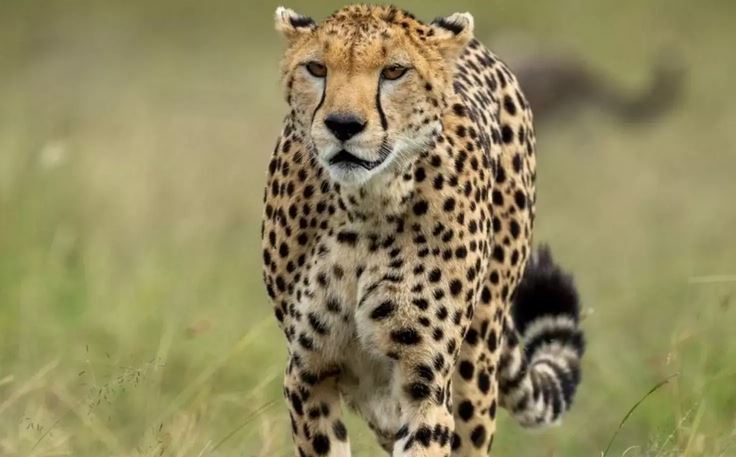
The Cheetah Action Plan (CAP) which aimed to introduce African cheetahs into India’s Open Natural Ecosystems (ONEs), is completing its two years.
About Cheetah:
The cheetah is a fast-running big cat, and there are two types of Cheetahs globally:
African (savannahs, arid mountains, and hilly deserts)
Asiatic (desert and semi-desert areas only in Iran)
Cheetahs live in three main groups: females with cubs, male coalitions, and solitary males. They hunt during the day, preferring dawn and dusk.
The global cheetah population was 6,500 mature individuals (IUCN, 2021).
IUCN Status: Vulnerable (Globally) and Critically Endangered (Asiatic Cheetah)
Cheetah Reintroduction in India:
In India, cheetahs disappeared in the early 1950s due to hunting and the loss of their habitat.
Cheetahs (i.e. Southeast African Cheetah) from Namibia were reintroduced in Kuno National Park(MP) under the Project Cheetah.
This area was deemed a habitat parallel to Maasai Mara (National Park) in Kenya, suitable for cheetahs.
Current Issues:
Despite the initial excitement, all of these cheetahs remain in captivity at Kuno.
Unfortunately, no cheetahs are currently roaming freely in the wild, raising concerns about the success of the reintroduction efforts.
What is Project Cheetah?
Aim: To conserve threatened species and restore ecosystem functions. It is spearheaded by the National Tiger Conservation Authority (NTCA).
The plan involves partnering with other countries to conserve cheetahs, enhancing conservation and eco-tourism in India’s dry forests.
The population should reach Kuno National Park’s capacity in 15 years, needing sustained support.
Sunset Clause: The concept of a sunset clause in the context of Project Cheetah refers to the long-term criteria (at least 30-40 years) for establishing a viable cheetah population in India.
PYQ:
[2012] Consider the following: (2012)
Black-necked crane
Cheetah
Flying squirrel
Snow leopard
Which of the above are naturally found in India?
(a) 1, 2 and 3 only
(b) 1, 3 and 4 only
(c) 2 and 4 only
(d) 1, 2, 3 and 4
Q ‘Climate change’ is a global problem. How India will be affected by climate change? How Himalayan and coastal states of India will be affected by climate change? (UPSC CSE 2015)
Q Describe the major outcomes of the 26th session of the Conference of the Parties (COP) to the United Nations Framework Convention on Climate Change (UNFCCC). What are the commitments made by India in this conference? (UPSC CSE 2021)
Q ‘Clean energy is the order of the day.’ Describe briefly India’s changing policy towards climate change in various international fora in the context of geopolitics. (UPSC CSE 2022)
Prelims:
With reference to the ‘Global Climate Change Alliance’, which of the following statements is/are correct? (UPSC CSE 2017) 1. It is an initiative of the European Union. 2. It provides technical and financial support to targeted developing countries to integrate climate change into their development policies and budgets. 3. It is coordinated by the World Resources Institute (WRI) and the World Business Council for Sustainable Development (WBCSD). Select the correct answer using the codes given below: (a) 1 and 2 only (b) 3 only (c) 2 and 3 only (d) 1, 2 and 3
Mentor’s Comment: The alarming trend of breaching planetary boundaries, highlighted by the shift of Earth’s “overshoot day” from 1970 to 2024, underscores the urgent need for immediate action.
So, what is Earth’s Overshoot Day?
Earth’s Overshoot Day (30 December 1970), is the day when humanity’s demand for resources exceeds the Earth’s ability to regenerate them within a year. The Global Footprint Network, an international research organization, calculates Earth Overshoot Day by dividing the Earth’s biocapacity by humanity’s ecological footprint and multiplying by 365. The remainder is the number of days when humanity exceeds the Earth’s capacity.
Now, as we have exhausted our planet’s capacity to renew its natural resources, we risk upcoming future generations with a depleted and uninhabitable world. We must change our course to not only safeguard the well-being of those currently affected by environmental degradation but also to fulfill our moral obligation to protect the rights and livelihoods of future generations.
_
Let’s learn!
Why in the News?
The Summit of the Future at the UN in September 2024 will bring together stakeholders to explore multilateral solutions to pressing global challenges, to create a more secure and equitable future for all.
About Summit of the Future 2024:
• United Nations is convening this Summit on 20 and 21 September 2024 at UN Headquarters in New York. •Theme: Multilateral Solutions for a Better Tomorrow. •Aim: To bring world leaders together to forge a new international consensus on how we deliver a better present and safeguard the future. •Major Pillars of the Summit: Sustainable development and Financing for development, International peace and security, Science and Technology, Youth and Future generations, Global Governance.
How do different countries view the legal obligations towards future generations?
An argument against Legal Duties: Some, like legal scholar Stephen Humphreys, believe the focus on future generations is just rhetoric belief that distracts from the real needs of people alive today.
It allows governments to prioritize short-term economic gains over environmental protection, by claiming they are securing a better future.
Argument for Future Generations’ Rights: In contrast, a group of legal experts, including Margaretha Wewerinke-Singh, argue that existing human rights law already protects future generations.
They point to the Maastricht Principles, which state that human rights extend across time and that states have legal duties to future generations.
How do Maastricht Principles connect future generations to Climate justice?
•Intergenerational Equity: The Principles assert that human rights are not limited to present generations; they extend to future generations as well. •Right to a Healthy Environment: A core aspect of the Principles is the right to a clean, healthy, and sustainable environment which is essential for ensuring that future generations can enjoy their fundamental human rights, including health, adequate living standards, and access to natural resources. •State Obligations: The Principles clarify that states have binding obligations which include taking proactive measures to combat climate change, promote sustainable development, and prevent environmental degradation that could harm future populations. •Guidance for Legal Frameworks: They help ensure that national and international laws reflect commitments to intergenerational justice, particularly in the context of environmental policies and climate action.
Growing Legal Recognition:
Global Scenario:
Germany’s top court ruled parts of its climate law were unconstitutional for not sufficiently protecting young people’s rights.
Pakistan’s Supreme Court upheld a ban on polluting industries to prevent “decolonizing our future generations”.
Kenya’s High Court stated the present generation has a legal obligation to maintain natural resources for the future.
Norway’sConstitution gives everyone a right to a well-maintained environment for future generations.
Indian Scenario:
Recently, the National Green Tribunal (NGT) of India has also upheld the principle of intergenerational equity in the right to environment.
Need to pay heed to ‘overshoot day’: By prioritizing sustainable practices and responsible stewardship of our planet, we should prevent the irresponsible legacy of environmental bankruptcy and ensure a thriving Earth for generations to come. The time to act is now; our collective future depends on it.
India is currently experiencing an urban transformation due to significant demographic shifts and increasing infrastructure needs. To effectively address these challenges, it must adopt a holistic urban-rural continuum approach.
Issue of Over-Centralisation of Finances:
Over Financial Centralisation: Recent times have seen an over-centralization of finances, which has negatively impacted financial decentralization and autonomy for local bodies.
The 13th Finance Commission highlighted that local bodies are being “asphyxiated” due to this centralization.
Tied vs. Untied Grants: Local bodies face financial constraints because grants are often tied to centrally sponsored schemes.
The rise in property tax needs to match the rise in State Goods and Services Tax to avoid losing tied grants, which have increased relative to untied grants over the years.
Programmatic Limitations: Flagship programmes like the Swachh Bharat Mission and Atal Mission for Rejuvenation and Urban Transformation (AMRUT) fail to address the urban-rural continuum effectively.
Urban-Rural Continuum Challenge: Infrastructure funding for areas like sewage treatment plants often excludes contiguous urban villages and census towns, which are integral parts of the broader urban ecosystem.
Initiatives taken by the Government:
AMRUT: It aims to improve urban infrastructure for liquid waste management, but its scope initially covered only statutory towns, now extended to all statutory towns.
Swachh Bharat Mission 1.0: It focuses on making urban India garbage-free and managing solid and liquid waste.
Swachh Bharat Mission 2.0: The mission aims to extend beyond open defecation-free status to sustainable waste management in urban areas and solid and liquid waste management in rural areas.
Governance models needs to be revisited:
73rd and 74th Constitutional Amendments: District Planning Committees, including Zila Panchayats and urban local bodies, need to be empowered to address the urban-rural continuum effectively.
Strengthening District Planning Committees: Currently, District Planning Committees are often subordinate to the district bureaucracy. Strengthening these committees can better integrate urban and rural planning and improve governance.
Integrated Planning: The current approach to separate urban and rural local bodies needs updating. Given India’s rapid urbanisation, there is a need for integrated and joint planning to address the blurring lines between urban and rural areas effectively.
Collaborative Infrastructure Planning: Solid waste management and other infrastructure projects could benefit from collaborative planning at the district or regional levels, rather than being implemented in a compartmentalised manner.
Way forward:
Enhance Financial Decentralisation and Flexibility: Reform financial mechanisms to reduce centralisation, provide greater autonomy to local bodies, and ensure grants are more flexible, allowing for better alignment of local needs with urban-rural continuum challenges.
Strengthen Integrated Planning Frameworks: Revise governance models to empower District Planning Committees for more cohesive urban-rural planning, and promote collaborative infrastructure development across district and regional levels to address the interconnectedness of urban and rural areas.
Mains PYQ:
Q What are ‘Smart Cities’? examine their relevance for urban development in India. Will it increase rural-urban differences? Give arguments for ‘Smart Villages’ in the light of PURA and RURBAN Mission. (UPSC IAS/2016)
The Indian government’s Mines and Minerals Act of 2015, which mandated auctions and established the District Mineral Foundation (DMF), continues to ensure local communities benefit from natural resource-led development.
DMF after entering its 10th year has amassed almost ₹1 lakh crore, transforming mineral wealth into a development lifeline for these regions.
How did the District Mineral Foundation (DMF) work in India?
The DMF mandates mining licensees and leaseholders to contribute a portion of their royalty payments to the DMF. The ‘National DMF Portal’ has been introduced to enhance transparency and efficiency.
It aims to promote sustainable development and welfare for mining-affected communities.
A District Collector leads the DMF, ensuring that funds are allocated to areas with the greatest need.
Funds are used for decentralized, community-centric development projects in mining districts.
As of 2024, around 3 lakh projects have been sanctioned across 645 districts in 23 states. These initiatives focus on improving socio-economic and human development indicators.
About Pradhan Mantri Khanij Kshetra Kalyan Yojana (PMKKKY):
Objective: Launched under the DMF, PMKKKY focuses on implementing developmental and welfare projects in mining-affected regions.
It aims to minimise the negative impacts of mining on local communities and ensure sustainable livelihoods.
Complementary Approach: PMKKKY works alongside existing state and central government schemes, reinforcing district development goals.
PMKKKY projects cover healthcare, education, skill development, sanitation, water supply, and sustainable livelihoods.
It has also empowered women through self-help groups and supported youth skill development initiatives like drone technology training.
Significance and Scope of DMF in India:
Community Welfare: DMFs provide direct financial resources for the welfare of communities affected by mining activities, transforming mineral wealth into tangible social benefits.
Inclusive Development: DMFs empower local communities, with focus on social inclusivity by involving elected representatives and non-elected gram sabha members in governance structures.
Cooperative Federalism: DMFs are a model of cooperative federalism, converging national, state, and local governance to address mining impacts and foster regional development.
Innovation and Planning: Various DMFs innovate to maximise project impact, adopting three-year plans for goal-oriented development, establishing dedicated engineering departments, and employing Public Works Department personnel for efficient project execution.
Sustainability: DMFs aim to align with the Sustainable Development Goals (SDGs), focusing on forest dwellers’ livelihoods, sports infrastructure, and health. They contribute to long-term environmental and socio-economic sustainability.
Way Forward:
Standardisation and Best Practices: Establish uniform guidelines to standardise successful practices across DMFs while retaining local knowledge, ensuring efficient implementation of long-term, goal-oriented projects.
Enhanced Integration with National Schemes: Strengthen the integration of DMF activities with ongoing central and state schemes, particularly in aspirational districts, to amplify the socio-economic and environmental benefits in mining-affected regions.
The retreat of glaciers is one of the most visible indicators of climate change, but it also creates new ecosystems that could play a role in mitigating its effects, according to a global study titled ‘The Development of Terrestrial Ecosystems Emerging After Glacier Retreat’ published in “Nature”.
How are Glaciers Formed?
Glaciers form when snowfall accumulates over time in a particular area where temperatures are consistently cold enough for snow to remain year-round.
Over the years, the weight of accumulating snow compresses the lower layers, turning them into firn (a dense snowpack). Further compression transforms firn into ice.
Once thick enough, glaciers begin to move under the force of gravity, flowing slowly like rivers of ice. The glacier’s movement is driven by the internal deformation of the ice and sliding at its base, leading to the formation of crevasses and other glacial features.
What is Glacier Retreat?
Glacier retreat refers to the process where glaciers lose mass due to melting and insufficient snowfall to replenish their ice. This phenomenon is accelerated by climate change, leading to rising sea levels and altered water supplies.
As global temperatures rise, glaciers shrink more rapidly, which impacts ecosystems and human communities that rely on glacial meltwater for drinking, agriculture, and hydropower.
Key Highlights of the Recent Study
The recent study titled “The Development of Terrestrial Ecosystems Emerging After Glacier Retreat,” published in Nature, presents several significant findings:
Ecosystem Development: The study indicates that while glacier retreat is a clear sign of climate change, it also leads to the emergence of new ecosystems that can mitigate climate change effects because of it can enhance carbon capture and storage through biogeochemical processes.
Microbial Colonization: Following glacier retreat, microorganisms such as bacteria and algae are the first to colonize the barren landscapes, which helps in soil formation.
Within a decade, hardy plants like lichens and grasses establish themselves, further enriching the soil and enabling more complex life forms to thrive.
Management Importance: The study emphasizes that with appropriate strategies to manage it because, these areas can quickly develop, providing habitats for species threatened by climate change and contributing to biodiversity conservation.
Water Regulation: In regions like the Himalayas, post-glacial ecosystems are vital for regulating water availability, impacting rivers that support millions of people.
Potential for Discoveries: The biodiversity in these areas may lead to new agricultural and medicinal discoveries, highlighting the ecological benefits of protecting and studying these ecosystems
Way forward:
Ecosystem Management: Implement strategies for managing emerging post-glacial ecosystems to enhance their carbon capture potential and biodiversity conservation, supporting climate change mitigation efforts.
Research and Conservation: Prioritize research on these ecosystems, particularly in regions like the Himalayas, to safeguard water resources and explore potential agricultural and medicinal discoveries, benefiting both the environment and local economies.
Mains PYQ:
Q Bring out the relationship between the shrinking Himalayan glaciers and the symptoms of climate change in the Indian sub-continent. (UPSC IAS/2014)
![[17th September 2024] The Hindu Op-ed: Rights of future generations must guide climate debate](https://www.civilsdaily.com/wp-content/uploads/2024/09/17-SEP2-1568x882.jpg)