The Indo-Pacific region has been under pressure and East Asia, in particular, has had to weather repeated storms.
Background
Recently, U.S. President Joseph Biden was on his five-day visit to Asia.
During this visit, the new conservative South Korean government showed a willingness to expand the presence of a U.S. missile defence system in the country, which had earlier angered China.
In Japan, the administration promised him that it was ready to do away with its long-standing 1% GDP ceiling for annual defence spending.
Mr. Biden said at a press conference that the U.S. would intervene militarily to defend Taiwan if it came under attack from China.
The President and members of his delegation later clarified that there is no change in the substance of American foreign policy, which is still governed by the Taiwan Relations Act.
As per the 1979 Congressional law, the U.S. “shall provide Taiwan with arms of a defensive character” so that the region can defend itself.
The law says nothing about the U.S. being required to step in militarily to defend Taiwan in the event of an invasion by China.
China-challenge in Indo-Pacific
South Korea and Japan face regular nuclear and missile threats from North Korea.
Challenge to international maritime law: China not only challenges international maritime laws in the South China Sea, but also confronts Japan over the Senkaku Islands.
Spratly Islands dispute: Six nations, including China and Taiwan, are involved in the dispute over the Spratly Islands, which are supposedly sitting on vast reserves of oil and natural gas.
Militarisation of disputed isles: China has vigorously militarised some portions of the disputed isles, islets and coral reefs; and countries like Vietnam and the Philippines are anxious not to be left behind.
Will IPEF framework help in tackling challenges from China?
The US has sought to deal with China by establishing an Indo-Pacific Economic Framework (IPEF) with Australia, Brunei, India, Indonesia, Japan, South Korea, Malaysia, New Zealand, the Philippines, Singapore, Thailand, and Vietnam.
Four pillars of IPEF: The IPEF will work on fine-tuning four major pillars: standards and rules for digital trade; resilient supply chains; green energy commitments; and fair trade.
Issues of trade and tariffs: However, there is discontent that the framework does not address issues of trade and tariffs.
Lack of trade component: Asian partners really want is trade, they want market access.
And the trade component of the IPEF is really lacking.
Two facets of Indo-Pacific
1] Balance relations with US and China: One is that China’s neighbours would rather balance relations between Washington and Beijing.
2] Extent of resistance: Second is the extent to which countries in the region will want to get on the anti-China bandwagon, economic or strategic.
Whether it is in East, Southeast or South Asia, every country has its own unique relationship with Beijing.
India may be a part of the Quad, but is quite mindful that it is the only country in the group that shares a land border with China.
South Korea and Japan are part of a strong American security/strategic partnership but will be keen on maintaining their economic status with China.
This is also true for the Association of South East Asian Nations.
Conclusion
Given the complex nature of the threats and the challenges the Indo-Pacific faces, drawing up any strategy remains to be an uphill task.
A rate hike in the monetary policy committee’s June meeting was a foregone conclusion after the spike in inflation and an off-cycle surprise interest rate hike on May 4.
Reasons fast forwarding of interest rate hike
1] Broad based inflation: A confluence of factors has pushed inflation higher and made it persistent and broad-based.
2] Policy rates are still negative: Even with this hike, the repo rate, the signalling tool for bank interest rates, is still below pre-pandemic levels.
The real policy rate (repo rate less expected inflation) remains negative and has some distance to cover before it reaches positive territory — where the RBI would like to see it.
3] Lag in effect: Monetary policy impacts growth, and thereafter, inflation with a lag.
To control inflation, the RBI needed to act faster by front loading rate hikes.
4] Elevated inflation expectations: The risk of inflation expectations getting unmoored had risen.
Household and business inflation expectations remain elevated, as indicated by the RBI’s inflation expectations survey of households.
5] Interest rate hike in the US: The aggressive stance of the US Federal Reserve and ensuing tightening financial conditions.
India is better placed today than in 2013 to face the Fed’s actions with a stronger forex shield.
How US Fed’s actions affect India?
India is not insulated.
Capital outflow: The headwinds now are stronger than in 2013 and we have seen net capital outflows since October 2021.
S&P Global expects the US federal funds rate to be hiked to 3-3.25 per cent in 2023, higher than the pre-pandemic level, and highest since early 2008.
Despite a strong forex hoard, the RBI has had to deploy monetary policy to mute the impact of the Fed’s actions.
Inflation and its impact
Upward pressure on food inflation: The pressure on food inflation has increased owing to the impact of the freak heatwave on wheat, tomatoes and mangoes, which is driving prices higher.
This is on top of rising input costs for agricultural production, the global surge in food prices and the expected sharper than usual rise in minimum support price.
Fuel inflation will remain high, duty cuts notwithstanding, as global crude prices remain volatile at elevated levels.
Core inflation, the barometer of demand, is a complex story.
Goods (despite only partial pass-through of input costs) are witnessing higher inflation than services.
That’s because services faced tighter restrictions during the Covid-19 waves, restricting their consumption and the pricing power of providers as well.
Service categories that are mostly regulated, such as public transport, railways, water and education, have over 50 per cent weight in core services.
However, prices of discretionary services such as airlines, cinema, lodging and other entertainment are rising.
Transportation-related services have seen the sharpest rise in the past six months due to fuel price increases.
Impact on the poor: For those at the bottom of the pyramid, high inflation hits harder because energy and food are a big chunk of their consumption basket.
Growth prospects
S&P Global has recently cut the growth outlook for major economies for 2022 — that of the US to 2.4 per cent from 3.2 per cent, for Eurozone to 2.7 per cent from 3.3 per cent earlier, and for China to 4.2 per cent from 4.9 per cent.
This will hurt exports which are very sensitive to global demand.
Monetary policy actions
Not all aspects of supply-driven inflation can be addressed via monetary policy.
So the authorities are complementing monetary policy actions by using the limited fiscal space to cut duties and extend subsidies to the vulnerable.
Conclusion
Monetary tightening impacts growth with a lag of at least 3-4 quarters and the fact that real interest rates are negative and borrowing rates still below pre-pandemic levels, implies monetary policy is unlikely to be growth-restrictive for this year.
The lesson emerging from the pandemic experience is that if India does not want a repeat of the immeasurable suffering and the social and economic loss, we need to make public health a central focus.
Need for institutional reforms in the health sector
The importance of public health has been known for decades with every expert committee underscoring it.
Ideas ranged from instituting a central public health management cadre like the IAS to adopting an institutionalised approach to diverse public health concerns — from healthy cities, enforcing road safety to immunising newborns, treating infectious diseases and promoting wellness.
Covid has shifted the policy dialogue from health budgets and medical colleges towards much-needed institutional reform.
About National Health Mission (NHM)
The National Health Mission (NHM) seeks to provide universal access to equitable, affordable and quality health care which is accountable, at the same time responsive, to the needs of the people, reduction of child and maternal deaths as well as population stabilization, gender and demographic balance.
The Framework for Implementation of NUHM has been approved by the Cabinet on May 1, 2013.
NHM encompasses two Sub-Missions, National Rural Health Mission (NRHM) and National Urban Health Mission (NUHM).
The National Rural Health Mission (NRHM) was launched in 2005 with a view to bringing about dramatic improvement in the health system and the health status of the people, especially those who live in the rural areas of the country.
Learning from the failure of National Health Mission (NHM)
The National Health Mission (NHM) has been in existence for about 15 years now and the health budget has trebled— though not as a proportion of the GDP.
Despite this less than 10 per cent of the health facilities below the district level can attain the grossly minimal Indian public health standards.
Clearly, the three-tier model of subcentres with paramedics, primary health centres with MBBS doctors and community health centres (CHC) with four to six specialists has failed.
Lack of accountability framework: The model’s weakness is the absence of an accountability framework.
The facilities are designed to be passive — treating those seeking care.
Suggestions
1] FHT: Instead of passive design of NHM, we need Family Health Teams (FHT) like in Brazil, accountable for the health and wellbeing of a dedicated population, say 2,000 families.
The FHTs must consist of a doctor with a diploma in family medicine and a dozen trained personnel to reflect the skill base required for the 12 guaranteed services under the Ayushman Bharat scheme.
A baseline survey of these families will provide information about those needing attention.
Family as a unit: The team ensures a continuum of care by taking the family as a unit and ensuring its well-being over a period.
Nudging these families to adopt lifestyle changes, following up on referrals for medical interventions and post-operative care through home visits for nursing and physiotherapy services would be their mandate.
2] Health cadre: The implication of and central to the success of such a reset lies in creating appropriate cadres.
3] Clarity to nomenclatures: There is also a need to declutter policy dialogue and provide clarity to the nomenclatures.
Currently, public health, family medicine and public health management are used interchangeably.
While the family doctor cures one who is sick, the public health expert prevents one from falling sick.
The public health management specialist holds specialisation in health economics, procurement systems, inventory control, electronic data analysis and monitoring, motivational skills and team-building capabilities, public communication and time management, besides, coordinating with the various stakeholders in the field.
4] Move beyond doctor-led systems: India needs to move beyond the doctor-led system and paramedicalise several functions.
Instead of wasting gynaecologists in CHCs midwives (nurses with a BSc degree and two years of training in midwifery) can provide equally good services except surgical, and can be positioned in all CHCs and PHCs.
This will help reduce C Sections, maternal and infant mortality and out of pocket expenses.
5] Counsellors and physiotherapists at PHC: Lay counsellors for mental health, physiotherapists and public health nurses are critically required for addressing the multiple needs of primary health care at the family and community levels.
6] Review of existing system: Bringing such a transformative health system will require a comprehensive review of the existing training institutions, standardising curricula and the qualifying criteria.
Increase spending on training: Spending on pre-service and in-service training needs to increase from the current level of about 1 per cent.
7] Redefining of functions: A comprehensive redefinition of functions of all personnel is required to weed out redundancies and redeploy the rewired ones.
Conclusion
Resetting the system to current day realities requires strong political leadership to go beyond the inertia of the techno-administrative status quoist structures. We can.
India’s approach in dealing with Pakistan today is very different from the framework that emerged at the dawn of the 1990s.
Terms of engagement with Pakistan
From the 1990s, for nearly three decades, it was Pakistan that had the political initiative.
The turmoil in Kashmir, the international focus on nuclear proliferation, and the relentless external pressure for a sustained dialogue with Pakistan put Delhi in a difficult situation.
If Pakistan was on the political offensive, a series of weak coalition governments in Delhi were forced onto the back foot.
At the heart of Pakistan’s ambition was to change the status quo in Jammu and Kashmir.
Islamabad also played up to the concerns in Western chancelleries that the conflict in Kashmir might escalate to the nuclear level.
The new international consensus that Kashmir is the “world’s most dangerous nuclear flashpoint” aligned well with Pakistan’s strategy.
Delhi had no option but to respond, but any move to counter Pakistan would make the situation worse.
Under Prime Minister Narendra Modi, India has begun to reset the terms of the engagement agenda.
Change in regional and international context: Meanwhile, the regional and international context has also altered in many ways since the early 1990s essentially in India’s favour.
Reset in engagement
India’s transformed relations with the US, the resolution of Delhi’s dispute with the global nuclear order, and getting the West to discard its temptation to mediate on Kashmir enormously improved India’s diplomatic position.
But the most consequential change has been in the economic domain.
The persistent neglect of economic challenges left Pakistan in an increasingly weaker position in relation to India.
If India has inched its way into the top six global economies, Pakistan today is broke.
Modi had the opportunity to build on these shifting fortunes of Delhi and Islamabad and develop a three-pronged strategy of his own.
1] India bet that the heavens won’t fall if Delhi stops talking to Islamabad or negotiating with Pakistan-backed militant groups in Kashmir.
2] Delhi has been unafraid of staring at nuclear escalation in responding to Pakistan’s cross-border terrorism.
3] By changing the constitutional status of Kashmir in 2019, India has reduced the scope of India’s future negotiations with Pakistan on Kashmir.
Way forward
Pakistan’s hand today is much weaker than in the 1990s and Delhi’s room for manoeuvring has grown, notwithstanding the challenges it confronts on the China border.
That opens some room for new Indian initiatives toward Pakistan.
Getting Pakistan’s army and its political class to be more practical in engaging India is certainly a tall order; but Delhi can afford to make a move.
Conclusion
While there can be much disagreement on Pakistan’s capacity to respond, Delhi’s new initiatives can reinforce the positive evolution of Indian foreign policy, and expand the space for Indian diplomacy in the region and beyond.
UPSC Prelims 2022 is over & now it’s time to cross the higher bar. Knowing the unpredictability of this journey, many believe that only hard work can make them luckier. But shockingly, even after working with all their might,90% of them remain very much clueless about their “strategy” being right or wrong.
What are the things our toppers have done different this year?
Moreover, a quick strategy re-orientation is required for 2022 Mains aspirants as no time is left now.
Sukanya ma’am will be analyzing and dissecting toppers’ answers for you to highlight what makes their answers different from an average aspirant.
Strategies & Approaches, in This Free Live Webinar by Sukanya Ma’am!
How CD’s Mains programs guaranteed 200+ aspirants to enter in UPSC 2021 final merit list. & what are the things they have done different this year. Best, authentic, minimum materials forUPSC-CSE Mains Preparation. Do’s & Dont’s, How to remake‘Recognition of information’ into ‘recall, analyze & express’.
Whether your answers ought to reflect the editorial standards of The Hindu! What should be the foolproof strategy? What subject to pick up first to start your Mains Preparation!
How toppers prioritize speed over content, and content over structure. How to fix your answer writing structure, improve the content
How to create a basic conceptual framework of the answer before committing anything to paper. Implications of overstretching your imagination.
How to fetch maximum score in both ‘Essay’ & ‘Ethics’ papers to enhance your marks in total.
What is the difference between ‘Opinion-based’ & ‘Fact-based’ questions will also be discussedthoroughly in this webinar?
How & where to present the answer, replete with a Map/diagram/flowchart/, It will help to get extra 0.25-0.5 marks across 80 questions of GS papers. If the question is in two parts,sticking to the word limit, how to address the demand of each part. What is the way to enclose also any critical analysis you should have within the subheading?
How to enhance writing patterns, where to take mock regularly, how many mock tests are fit, Etc. will be discussed in this live webinar.
The untold secret of coverage of the Mains syllabus is that the syllabus can be covered 100%. The most brilliant of candidates will testify that even their coverage of the syllabus was not completely 100%.
Our Civilsdaily Mains Program Head Mrs. Sukanya Rana has been mentoring 1500+ students & 100+ Rankers across multiple stages from prelims to mains to interviews. She is part of Smash Mains as an Ethics Mentor and helped Civilsdaily topper to achieve their dream.
She has firsthand experience of 4 mains and 2 interviews of UPSC. She has also appeared in the State PCS interview.
Sukanya Ma’am has scored consistently 100+ marks in ethics and in 2019 her marks were 140 in GS 4. In 2020 and 2021, under her mentorship, many smash mains students were able to secure 110+ marks.
The global economy was well on its path to recovery until the invasion of Ukraine by Russia.
Uncertainties in global growth prospects
Divergent economic recoveries: Economic prospects have worsened since the Ukraine crisis, worsening the divergence between the economic recoveries of advanced economies and those of the developing ones.
The prevailing uncertainties in global growth prospects come in the aftermath of frequent disruptions to worldwide supply chains in the last two years.
Against this background, two key macroeconomic variables have a persistent effect on growth rebound.
1] Price pressure: There is tenacious price pressure, leading to policy trade-offs especially in developing economies.
2] Capital outflow: There have been capital outflows and a tightening of financial conditions, affecting investment and growth in the medium and long term.
1] Price pressure
Global concern: In some of the advanced economies, inflation has reached its highest level in the last 40 years.
The major contributors to high inflation are energy and food prices.
A spike in oil and gas prices due to a tight fossil fuel supply and geopolitical uncertainty have led to substantial increases in energy costs worldwide.
In developing economies, rising food prices have had cascading effects, culminating in higher overall inflation.
This gets intensified if poor weather hits harvests and rising oil prices drive up the cost of producing and transporting fertilizers.
In developing economies, higher prices for food impacts different sections of the population differently, depending on the types of food consumed and the share of food expenditure in a household’s consumption basket.
Persistent short supply and increases in food and fuel prices could significantly increase the risk of social unrest as the poorer sections are pushed to the edge of heightened deprivation.
2] Capital outflow
Emerging markets suffered their first portfolio outflows in a year in March 2022.
The Institute of International Finance (IIF) says “foreign net portfolio outflows for emerging markets came to $9.8 billion in March.
Investors have become more selective, as higher risk sensitivity mounts due to tighter monetary conditions and rising inflation.
Reasons for capital outflow: Interest rates tightening in the United States is associated with capital flow reversals from emerging markets.
Impact on developing economies: For developing economies, the result of sudden large capital outflows is currency depreciation and tighter external sector conditions, leading to growth fluctuations.
Way forward
Monitor the pass-through of international prices: Though the factors contributing to high inflation (global supply shocks) are beyond the control of central banks, they need to carefully monitor the pass-through of rising international prices to domestic inflation to calibrate their responses.
Calibrate the pace of policy tightening: The pace of policy tightening needs to be attuned to prevailing economic situations and activity levels.
Communicate the importance of inflation targeting: Central banks could also signal a readiness to shift the monetary stance to maintain the credibility of their inflation-targeting frameworks by clearly communicating the importance of inflation stabilisation in their objectives and backing it with policy actions.
Foreign exchange interventions: As sudden capital flow reversals can threaten financial stability, foreign exchange interventions could address market imbalances.
Fiscal consolidation: There exists an imperative to prune expenditure and get back to the road of fiscal consolidation.
However, a push for consolidation should not prevent governments from prioritising spending to protect and help vulnerable populations affected by price increases and the pandemic.
Income support policies: In the post-pandemic global economy, there will be a likely cross-sectoral labour reallocation.
These transitions require labour market and income support policies that are designed to provide safety nets for workers without hindering employment growth.
Conclusion
The message from the current phase of global growth is clear. Policymakers in the developing economies have to prepare for tighter financial conditions and spillovers from geopolitical volatility.
Guys! The fundamental contrast between UPSC-CSE Prelims and Mains is that while the Prelims focus on recognition (of information) and requires an exhaustive study covering a wide variety of topics, Mains need the ability to recall, analyze and express (ideas and information, including one’s own thoughts) properly which can only be done through an intensive study of the topic. Therefore it is very important to evaluate in-depth, shun procrastination answering writing, and developing a skill does not happen magically after you clear prelims. the topics that you have picked for Mains, and in doing so you have to match your skills with the subject at hand. Using the right approach and picking the right parts of the syllabus for the intensive study will not only help manage time but also garner more marks in the end.
The FLT program with One to One mentorship will focus on how to deliver a rule of thumb to answer only what the question demands. In 2021, 82% of students in our smash mains programwere able to clear the mains examination.
The Hindu has acknowledged CD’s Mains answer writing & Mentorship programs.
..Students will also get 250+ most important topics for mains 2022
12 Full-length tests: After the prelims, it is time to go full gear. Practice 3 rounds of FLT based on 4 GS paper.
Quality Enrichment Program Notes:QEP is an intensive and holistic program for IAS Mains 2022 GS papers. We aim to cover up to 250 most relevant issues with a 360-degree view, covering all dimensions of each and every topic. Not only you’ll learn and analyze these issues but will also understand how to utilize them via Daily Answer Writing and Mains Test Series.
Additional Materials: Important keywords from economic survey, data, case studies & quality enhancement additional materials for good practices.
Personalized discussion in 1-to-1 mentorship: You doubt why you are scoring less or how you can improve your score for the next paper. No worries! Just schedule a call with our mentor to clear all your doubts and queries.
Civilsdaily’s handholding: You will be provided membership to Mains 2023 club on Habitat. There you can put up your doubts and queries. Also can be used to interact with peers on strategies to improve your mains writing. You can also contact mentors like Sajal sir, Sukanya ma’am, Sudhanshu sir and Poornima Ma’am. They all have interview-level experience, so utilize their experience to your benefit.
Civilsdaily magazine: Your current affairs will be covered with access to our 1-year subscription.
Sectional Tests: 8 sectional tests to cover your static portions in detail. The scope will be spread over your core subjects like history, economics, polity, etc.
Full-length tests: 12 FLTs to help you practice for the final main examination. These FLTs are patterned on the UPSC Examination and have medium-to-high-quality questions. They will surely boost your preparation and test your analytical skills.
One-on-One Mentorship: After every test, a call with a mentor will be arranged and you can clear your doubts on the paper. This is important as, with your mentor, you can discuss your weaknesses and strategize for the next paper.
A Quality Enrichment Program Notes: QEP is an intensive and holistic program for IAS Mains 2022 GS papers. We aim to cover up to 250 of the most relevant issues with a 360-degree view, covering all dimensions of each and every topic. Not only will you learn and analyze these issues, but you will also understand how to utilize them via Daily Answer Writing and the Mains Test Series.
Civilsdaily’s handholding: You will be provided membership to Mains 2023 club on Habitat. There you can put up your doubts and queries. Also can be used to interact with peers on strategies to improve your mains writing. You can also contact mentors like Sajal sir, Sukanya ma’am, Sudhanshu sir and Poornima Ma’am. They all have interview-level experience, so utilize their experience to your benefit.
Civilsdaily magazine: Your current affairs will be covered with access to our 1-year subscription.
It happens under a team of experienced Civilsdaily faculty. Questions framed are from the most important UPSC relevant themes and papers are based on the latest pattern of UPSC.
Our questions specifically state:
Whether they are straightforward or thought-provoking/analytical.
Whether they have sub-parts.
Why this question – similar to previous year’s questions, the importance of the theme, etc.
CD Innovation – Red-green highlight – to let you know about the necessary and innovative points.
2. One-to-One Discussion
We believe in personalized individual attention. This is the biggest reason why you should join our TS. Students can schedule a call within 2 days of receiving their checked copies.
A one-to-one discussion with your Mentor will not only highlight your weaknesses but will also help in tracking your improvements over the subsequent tests. It will also ensure consistency, continuity, and progressive improvement.
3. Answer Checking
Our evaluation focuses on multiple dimensions and parameters like structure, flow, presentation, contextuality, relevance to question, analytical excellence, and cross-domain inter-linkages than simply on superficial, memory-based lapses.
4. Model Answers
More than just simply providing information, our model answers cover all the aspects of a question and provide enriching points to the student. They also include:
For ‘thought-provoking/analytical’ type of questions, we’ll provide the best way to approach them.
Alternate introductions
Sub-headings and categorization to enhance readability and answer structure.
Colour coding for main arguments, reports, data, scholars, etc. OTB – Out of the box points for additional marks
5. Civilsdaily’s Handholding
You’ll be assigned to a special group on Civilsdaily’s Habitat, there you can interact with different mentors like Partha Sir, Sukanya ma’am, Ajay Sir, Swatantra sir, and others.
6. Value-added material
Current affairs magazines – Civilsdaily’s Magazines are the best in terms of comprehensive coverage, superb design, and high readability.
Listicles and other relevant study material – Supplementary content provided will be helpful in covering multiple related questions.
Our Civilsdaily Mains Program Head Sukanya Rana has been mentoring 1500+ students & 100+ Rankers across multiple stages from prelims to mains to interviews. She is part of Smash Mains as an Ethics Mentor and helped Civilsdaily topper to achieve their dream. She has firsthand experience of 4 mains and 2 interviews of UPSC. She has also appeared in the State PCS interview. She aims to guide future aspirants in finding success. Sukanya Ma’am has scored consistently 100+ marks in ethics and in 2019 her marks were 140 in GS 4. In 2020, under her mentorship, many smash mains students were able to secure 110+ marks.
👉 Acknowledging the need to ensure fastest mentorship response, Senior IAS mentor like Partha Sir, Swatantra Sir, will receive your call.
The Supreme Court of India recently ruled that “The recommendations of the GST Council are not binding on either the Union or the States…”.
About GST Council
The GST Council is a federal body that aims to bring together states and the Centre on a common platform for the nationwide rollout of the indirect tax reform.
Article 279 (1) of the amended Indian Constitution states that the GST Council has to be constituted by the President within 60 days of the commencement of the Article 279A.
According to the article, the GST Council will be a joint forum for the Centre and the States. It consists of the following members:
1] The Union Finance Minister will be the Chairperson.
2] As a member, the Union Minister of State will be in charge of Revenue of Finance.
3] The Minister in charge of finance or taxation or any other Minister nominated by each State government, as members.
The Council has to function as a platform to bring the Union and State governments together.
As a mark of cooperative federalism, the Council shall, unanimously or through a majority of 75% of weighted votes, decide on all matters pertaining to GST and recommend such decisions to the Union and State governments.
Article 279A (4) specifies that the Council will make recommendations to the Union and the States on the important issues related to GST, such as the goods and services will be subject or exempted from the Goods and Services Tax.
Article 246A confers simultaneous or concurrent powers on Parliament and the state legislatures to make laws relating to GST.
This article is in sharp contrast to the constitutional scheme that prevailed till 2017.
Background of the case
In Union of India Anr. vs Mohit Minerals Pvt. Ltd., the Supreme Court of India on May 19, 2022 ruled on a petition relating to the levy of Integrated Goods and Services Tax (IGST) on ocean freight paid by the foreign seller to a foreign shipping company.
Mohit Minerals had filed a writ petition before the Gujarat High Court challenging notifications levying IGST on the ground that customs duty is levied on the component of ocean freight and the levy of IGST on the freight element in the course of transportation would amount to double taxation.
GST is paid by the supplier, but if the shipping line is located in a non-taxable territory, then GST is payable by the importer, the recipient of service.
Ocean freight is a method of transport by which goods and cargo is transported by ships through shipping lines.
Important aspects of the judgement
Power to legislate simultaneously: Article 246A gives powers to the Union and State governments simultaneously to legislate on the GST.
In other words, the two tiers of the Indian Union can simultaneously legislate on matters of the GST (except the IGST, which is in the legislative domain of the Union government).
In this case, the Government of India had argued that “Neither can Article 279A override Article 246A nor can Article 246A be made subject to Article 279A.”
However, cooperative federalism is to operate through the GST Council to bring in harmony and alignment in matters pertaining to the GST from both governments.
Given this background, the Union government had almost delegated the powers to create laws under the GST Act Section 5(1) to the GST Council.
Persuasive value only: The Supreme Court of India adjudicated that the GST Council’s recommendations are non-qualified and the simultaneous legislating powers of the Union and State governments give only persuasive value to the Council’s recommendations.
The power of the recommendations rests on the practice of cooperative federalism and collaborative decision-making in the Council.
Issues with voting rights in GST council
Inbalance in voting rights: The Union government holds one-third weight for its votes and all States have two-thirds of the weight for their votes.
This gives automatic veto power to the Union government because a resolution can be passed with at least three-fourths of the weighted votes.
This imbalance in the voting rights between the Union and State governments, makes democratic decision-making difficult.
Equal weight to all states creates political problems: Though all the States are not equal in terms of tax capacity, everyone has equal weight for their votes.
This creates another political problem as the smaller States with lesser economic stakes can be easily influenced by interest groups.
Debate on political lines: The debates in the GST Council will be on political lines rather than on the economics of taxation.
When the States governed by Opposition parties are vocal on counter-points, the States governed by the same party at the Union government are mute spectators.
Way forward
Work in a harmonised manner: The Supreme Court has recorded, “Since the Constitution does not envisage a repugnance provision to resolve inconsistencies between the Central and State laws on GST, the GST Council must ideally function, as provided by Article 279A(6) in a harmonised manner to reach a workable fiscal model through cooperation and collaboration.”
Cooperative federalism: The nuanced understanding of cooperative federalism shows that there is no space for one-upmanship in either of the two tiers of the Indian federal government and particularly for the Union government under a quasi-federal Constitution.
Conclusion
Given the lopsided power structure favouring the Union government in the GST Council, it is against the spirit of democracy and federalism that the finances of governments can be left to such bodies.
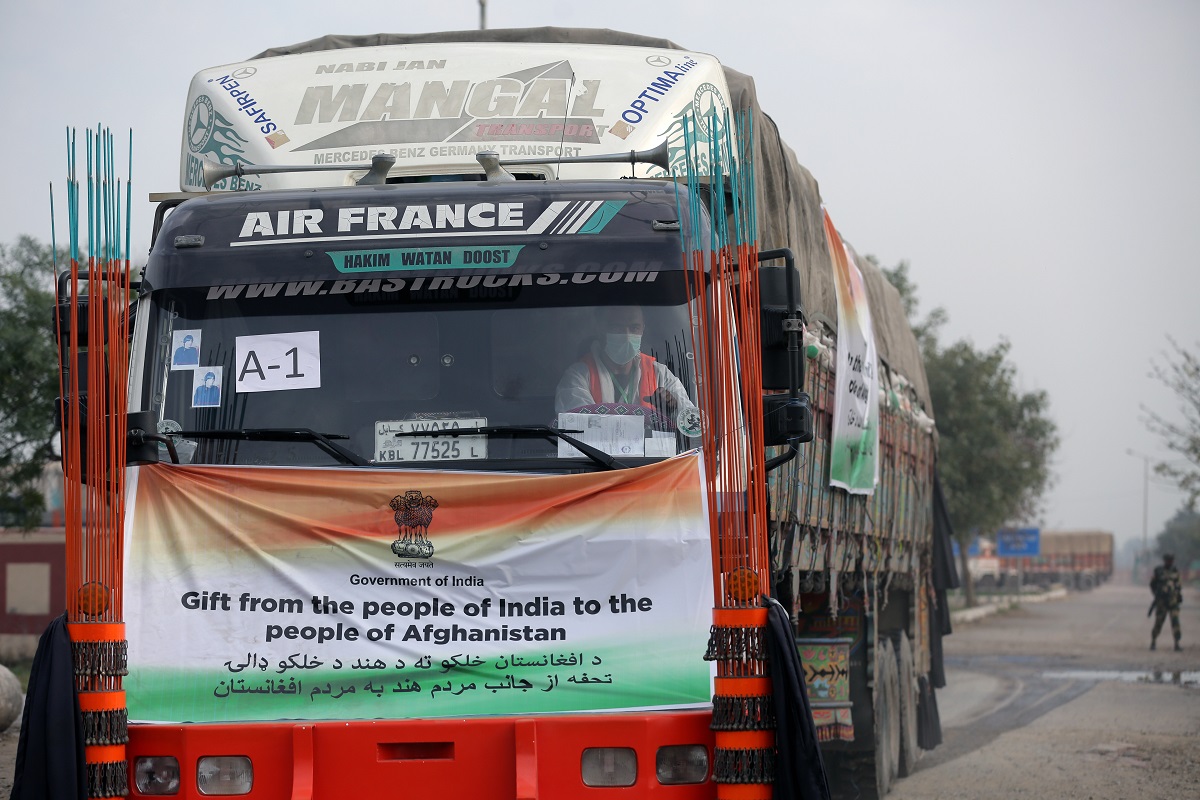
For the first time since the Taliban takeover on 15 August 2021, India has sent an official delegation to Afghanistan.
India discussed a host of issues that included resumption of stalled infrastructure projects, activation of diplomatic ties, and restarting the issue of visas for Afghan students and patients.
Points of Discussion
Has India officially recognized the Talibans?
Tashkent held recently meet excluded Pakistan. Is Pakistan out of the Afghan security scenario?
Highlights of the discussion
With this, it appears that the Indian is now less divided about the need to engage formally with the Taliban and prevent Afghan people getting marginalised.
Afghanistan is vital to India’s strategic interests in the region where thepeople’s (and even Taliban’s) affection for India is legendary.
Expected outcomes of the meet
Recognition of the Taliban government is not on the cards yet.
The visit may have paved the way for the reopening of the Indian embassy, albeit a downgraded one.
India and Taliban: A quick timeline of engagement
Initial reluctance: From 1996 to now, India’s journey from first opposition, then diffidence to engaging with the Taliban is in no small measure a story of India’s problematic relationship with Pakistan.
Beginning of Kashmir Insurgency: In 1996, when the Taliban fought their way through warring mujahideen factions into Kabul for the first time, in India, fearing a spillover on Kashmir insurgency (there was indeed some).
1999 hijacking: During the hijacking of IC814, when the Pakistani hijackers took the plane to Kandahar, the then ruling Taliban acted as a support arm of the hijackers.
Since then, any engagement was a standstill.
When did India reach out to the Talibans?
9-11 terror attacks: After 9/11, under the US umbrella, India invested money and energy into the rebuilding of Afghanistan.
But by 2010, with increasing doubts about the US continuance, India was again considering reaching out to the Taliban.
New Delhi did not want to be left out or marginalised in the Afghanistan of the future.
After the execution of Osama bin Laden in Pakistan in 2011, the Obama Administration was getting ready to declare an end to the war.
Since then, the way was paved for the talks.
How did its neighbors capitalize on the Afghan Crisis?
Pakistan had delivered the Taliban to the Trump Administration for talks.
Russia was backing the Taliban fully as the future ruler of Afghanistan, seeing in this sweet revenge for its own defeat in Afghanistan by US-financed, Pakistan-trained mujahideen.
Iran was also glad at America’s defeat at the hands of the Taliban.
China leveraged its relationship with Pakistan to get a foot into Kabul.
India’s considerations: Counter-intuitive timing
Radicalism: India’s cautious opening to the Taliban has come at a time when the group has made it clear it has not changed from its previous satanical radicalism.
Restrictions on women: This has increased, from not being allowed to attend school to curbs on free movement in public spaces and at work.
Patronage to terror outfits: Taliban continues to remain close to Al-Qaeda, with a significant presence of its multinational fighting force in Afghanistan.
Threats in Kashmir: They also flag the JeM and LeT training camps in Nangarhar and Kumar, close to the Pakistan border.
Why is India engaging with the Taliban now?
Reducing Pakistan’s footprint: It is time to de-hyphenate Pakistan from the Taliban, especially as the Pakistan security establishment is finding the going tough with the Kabul regime.
Inducing political insight: Another reason advanced for India’s change in policy is that the Taliban in power are more divided than they were as a fighting force.
Averting another crisis: This situation may provide room for a layered political and diplomatic engagement with different actors.
Eliminating terrorism: It has also helped that the Taliban have made no hostile statements on Kashmir since taking over in Kabul.
Afghanistan impacts India’s security: It has, in the past, provided space to al Qaeda with which the Taliban had a special relationship. Afghanistan has an ISIS presence too.
Humanitarian assistance: India aims at facilitating humanitarian assistance through international organizations, and paving the way for access to consular services.
Protecting its investment: India built vital roads, dams, electricity transmission lines and substations, schools and hospitals, etc. Total assistance is now estimated to be worth well over $3 billion.
Way forward
An engagement with the Taliban would at least give an opportunity to convey Indian concerns directly.
The visit has encouraged those elements within the group who wish to open up its diplomatic choices.
All in all, the sooner India establishes a permanent presence in Kabul the better for the pursuit of national interests in the external sphere.
This is not an exercise in evangelism but the cold and undeterred pursuit of interests, which often requires supping with the devil — of course, with a long spoon.