The steering committee of a global programme to end child marriage is on a visit to India to witness state interventions which have helped reduce the prevalence of child marriage.
What are the findings of the committee?
Increase in Child marriage as a pandemic effect: The visit by the UNFPA-UNICEF Global Programme to End Child Marriage team is in view of an estimated increase in number of child brides due to the pandemic. The UNFPA-UNICEF estimates that 10 million children could become child brides as a result of the pandemic globally.
Child marriages reduced in India according to NFHS-5: In India, child marriage reduced from 47.4% in 2005-06 to 26.8% in 2015-16, registering a decline of 21% points during the decade. In the last five years, it declined by 3.5% points to reach 23.3% in 2020-21, according to the latest National Family Health Survey-5 data.
What is the situation in the world?
As per the UNICEF data: The total number of girls married in childhood stands at 12 million per year, and progress must be significantly accelerated in order to end the practice by 2030 the target set out in the Sustainable Development Goals. Without further acceleration, more than 150 million additional girls will marry before they turn 18 by 2030.
Progress is Uneven and not enough: While it is encouraging that in the past decade great progress has been made in South Asia, where a girl’s risk of marrying before she is 18 has dropped by more than a third, from nearly 50% to below 30%, it is not enough, and progress has been uneven.
Dire consequences of child marriage: Rights activists and health experts say the consequences of child marriage are dire, not only because it violates children’s rights, but also because it results in more infant and maternal deaths. Children born to adolescent mothers have a greater possibility of seeing stunted growth as they have low weight at birth. According to NFHS-5, prevalence of child stunting is 35.5% in 2019-21.
Declining trend in overall child marriage: There is a growing trend for decline in the overall prevalence of child marriage, but 23.3% is still a disturbingly high percentage in a country with a population of 141.2 crore. Eight States have a higher prevalence of child marriage than the national average.
High prevalence in some bigger States: West Bengal and Bihar have the highest prevalence of girl child marriage. States with a large population of tribal poor have a higher prevalence of child marriage. West Bengal, Bihar and Tripura top the list with more than 40% of women aged 20-24 years married below 18, according to NFHS data.
Scenario in Jharkhand and Assam: In Jharkhand, 32.2% of women in the age bracket 20-24 got married before 18, according to NFHS-5; infant mortality stood at 37.9%, and 65.8% of women in the 15-19 age bracket are anaemic. Assam too has a high prevalence of child marriage (31.8% in 2019-20 from 30.8% in 2015-16).
Child marriages reduced in some states: Some States have shown a reduction in child marriages, like Madhya Pradesh (23.1% in 2020-21 from 32.4% in 2015-16), Rajasthan (25.4% from 35.4%) and Haryana.
Several States are pegged just below the national average: In Odisha, 20.5% of women were married off before 18 in 2020-21 from 21.3% in 2015-16.
States on better social indices as a result of high literacy: States with high literacy levels and better health and social indices have fared much better on this score. In Kerala, women who got married before the age of 18 stood at 6.3% in 2019-20, from 7.6% in 2015-16. Tamil Nadu too has shown improved figures with 12.8% of women in the age group 20-24 years getting married before 18 compared to 16.3% in 2015-16.
What are the laws and policy interventions?
Prohibition of Child Marriage Act, 2006 and the Protection of Children from Sexual Offences Act, 2012: These laws aim at protecting children from violation of human and other rights.
A positive debate on raising the age of Marriage: A parliamentary standing committee is weighing the pros and cons of raising the age of marriage for women to 21, which has been cleared by the Union Cabinet. With various personal laws governing marriages in India, the government wants to amend the law, a reform that activists and agencies have said will not be enough to stop the practice of child marriage.
Various schemes: There are no of Centralised schemes like the Beti Bachao Beti Padhao, which are performing better on empowering the girl children
Various initiatives by the states: States have launched many initiatives to improve the factors linked to child marriage, from education to health care and awareness programmes. For instance, West Bengal’s Kanyashree scheme offers financial aid to girls wanting to pursue higher studies, though women’s activists have pointed out that another scheme Rupashree, which provides a one-time payment of ₹25,000 to poor families at the time of a daughter’s marriage, may be counter-productive. Bihar and other States have been implementing a cycle scheme to ensure girls reach safely to school; and U.P. has a scheme to encourage girls to go back to school.
What needs to be done?
Need a multidimensional approach: According to Sandeep Chachra, ActionAid Association India, which has been working with UNICEF and UNFPA said the solution lies in empowering girls, creating proper public infrastructure and addressing societal norms.
Awareness not only about the law but also about the dire consequences on Health: Uma Mahadevan-Dasgupta, who serves in the IAS, says several thousand child marriage prohibition officers have been notified in Karnataka and 90,000 local gram panchayat members have been oriented to spread awareness on child marriage, not only that it is illegal to get a child married off before 18, but also the dangers to the child’s health and her offspring.
Focusing on the overall girl child development: They stress on an all-pronged approach to end the practice; strong laws, strict enforcement, preparing an ideal situation on the ground to ensure that the girl child girls with either or below primary level education have experienced higher levels of child marriage as data show gets an education and preferably vocational training as well so that she can be financially independent.
Schemes need better implementation: Centralised schemes like the Beti Bachao Beti Padhao, which need better implementation on the ground. Various schemes by the states needs through analysis and better implementation at the grass root level.
Conclusion
Data shows that child marriage is a key determinant of high fertility, poor maternal and child health, and lower social status of women. There has been a rise in child marriages during the pandemic, but many have been prevented as well. A lot more needs to be done on factors closely linked to child marriage, including eradication of poverty, better education and public infrastructure facilities for children, raising social awareness on health, nutrition, regressive social norms and inequalities.
Question
Q. Child marriages comes with dire consequences on adolescent mothers and children born to them. Evaluate the status on prevalence of child marriages In India and how to address the situation?
The mismanagement of time for any UPSC aspirant, whether a working professional or a full-time one, is caused by a lack of understanding of how to divide time according to the priority and relevance of the syllabus.
What is mismanagement of time?
It has 3 dimensions
Spend a lot of time on Prelims only
Starting Answer writing and Optional Subject after prelims
Not following a segregated daily approach
Examinees are often advised to devote at least 12 months to prepare for the civil service examinations. But, these 12 months even may run short if you don’t have a proper/flexible timetable. The importance of planning, discipline, and consistency for UPSC preparation comes from making a timetable and planning in a manner that is balanced and integrated, which means it should include UPSC prelims, Mains, and Optional preparation.
You mustn’t waste time if you have limited time and still wish to pass the exam because the syllabus is comprehensive and often open-ended, it needs bright covering with a select few sources.
Acknowledging the need to ensure a holistic flexible timetable/daily routine, Priya Rani AIR 284 is taking up a webinar masterclass to help you make a timetable and impart skills to plan your day for a holistic and integrated preparation.
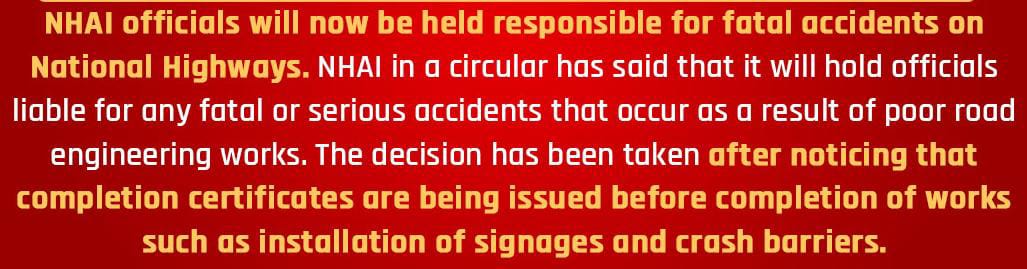
In a March 2019 circular, the National Highways Authority of India (NHAI) raised the subject of premature issuance of completion certificates for national highway works. NHAI had noticed that, in certain cases, completion certificates had been issued even before the completion of works ‘up to the standards and specifications’ prescribed by the Ministry of Road Transport & Highways.
Status of National highways and deaths
35 percent of all road deaths: NHAI is the principal organization responsible for construction of National Highways in India. National highways constitute a mere 2 percent of the country’s road network, but account for close to 35 percent of all road deaths.
Record 37 kms per day: The ministry has been taking credit for the pace at which national highways are being constructed. In the fiscal year 2021, it reached a record 37 kms per day. This has come down to 19.44 km per day in the first six months of the financial year 2022.
What was the circular issued by NHAI?
Issuance of completion certificate: The circular forbade the issuance of such certificates, especially if non-completion resulted in ‘material inconveniences to users’ or affected their safety.
Likely cause of fatalities: Items such as road shoulders, road signs, markings, dressing of slopes, and road furniture were explicitly mentioned. circular was not taken with due seriousness by some authorized engineers. This negligence could have contributed to road crashes, probably resulting in fatalities.
Dereliction of duty by NHAI’s officials: The NHAI has now warned the delinquents that such behavior would be treated as a serious dereliction of duty and disciplinary action would be taken against officers issuing such certificates to incomplete road works. Additionally, the officers would be held personally liable in case of serious accidents that occur on such unfinished infrastructure.
Safety is better than pace of construction: The Minister for Road Transport & Highways stressed that it is necessary to build safer roads even if this decelerated the pace of construction.
Case study of NHAI’s road construction?
Death of Cyrus Mistry: Unfortunately, self-introspection by the NHAI in regard to safety failures and the large number of deaths on national highways was not in evidence in the aftermath of the death of Cyrus Mistry on the Ahmedabad-Mumbai national highway in September 2022.
Crash was result of poor infrastructure: In this instance, a seven-member forensic investigation team found that the car crash was the result of an infrastructure issue. The car in which Mistry was travelling happened to tragically hit a bridge that was faultily designed.
Invisible dividers: The bridge parapet was found to be protruding into the shoulder lane. Furthermore, the road with three lanes unexpectedly narrowed to a road with two lanes with a dangerous L-shaped concrete divider that had no proper paint on it.
Inadequate safety signs: Road signages were grossly inadequate, making that road stretch a ‘black spot’. This epithet is used for a road section where accidents are a frequent occurrence.
Expressways are constructed for more speed: The accident also raised issues of the excessive speed of the car that crashed. It was said that the car was travelling at a speed in excess of 100 km per hour. However, the minister himself has been in favour of higher speeds on Indian expressways and national highways. He proposed a speed limit of 140 kmph on expressways and at least 100 kmph on four-lane national highways. This, he stated, was advocated on account of considerable improvements in the quality of India’s highways that permit vehicles to go faster than in the past.
Speed limit safety needs to be revise: The minister was also critical of some judicial rulings that disallowed hiking speeds on national highways. However, in the light of certain facts repeatedly surfacing in regard to safety issues of national highways, it does appear that greater caution in regard to increasing speed needs to be taken.
Critical analysis of NHAI’s road construction and maintenance
Rains and potholes: While the government claims that they are of international standard, a recent report highlighted the plight of road travelers on national highways post India’s monsoons. The rains have left the country’s arterial network in poor shape as they have become riddled with potholes.
Higher toll but poor roads: The cited report mentioned the Gurgaon-Jaipur stretch of NH-8, which, despite a hike in toll rates, remains incomplete and terribly potholed. The reason for this sorry state of affairs was revealed in a reply by the government to a parliamentary standing committee.
Insufficient maintenance: The budgetary provision for maintenance of national highways was a mere 40 percent of their own estimated standards. Clearly, maintenance of national highways was being discounted in favour of more kilometres of road construction. The shortfall of 60 percent of maintenance money was terribly high and resulted in the resources being thinly spread, making adequate maintenance intervention highly unlikely.
Inadequate budgetary allocation: The parliamentary committee pointed out in its report titled ‘Issues related to road sector’ that the shortfall in sufficient budgetary allocation was echoed in the poor quality of national highways often witnessed across the country. The committee emphasized that the maintenance of national highways was vitally significant in regard to safety and good average traffic speeds and ought to be given high priority. The issue had been repeatedly flagged by the committee.
NITI Aayog’s acknowledgement of poor infrastructure: Similarly, NITI Aayog, in its report titled ‘Strategy for New India @75’, advised that the government should earmark 10 percent of its annual budget for maintenance of roads and highways and move towards the developed country norm of marking 40 percent of the budget for road upkeep. It is evident that if national highways are not in shape, the economy of the country and the states takes a hit.
Conclusion
It is absolutely necessary for citizens to follow road safety norms but government cannot look away from its responsibility. Scientific road construction even at the cost of slow construction rate is non-negotiable for sake of accident prevention. Safety of citizens is prior to any world record.
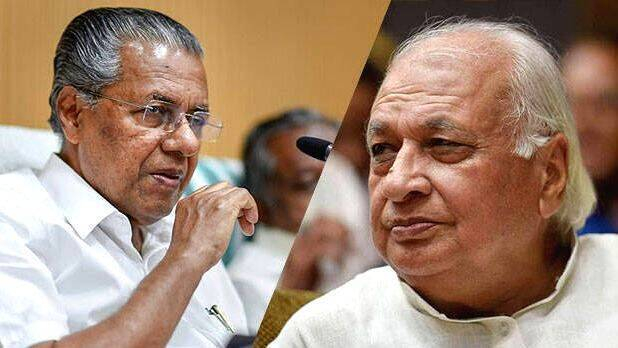
A tweet put out recently by the office of the Kerala Governor evoked nationwide attention. The Governor sent a letter to the Kerala CM asking him to act against the State Finance Minister, who, according to the Governor, had “ceased to enjoy” the Governor’s “pleasure”. The Chief Minister declined to do so.
In the recent past, Indian parliamentary democracy has witnessed several examples of Governor’s activism from Maharashtra to west Bengal with this being the latest incident.
In this context, this edition of the Burning issue will analyze the issues related to the Governor’s office, and the governor’s Activism and suggest a way forward.
About Governors Post in India
Parallel to President: The Governors of the states of India have similar powers and functions at the state level as those of the President of India at the Central level. The Governor’s post finds its origin in the Government of India Act, 1935.
Nominal head: The Governor acts as the nominal head whereas the real power lies with the Chief Ministers of the states and her/his councils of ministers.
Constitutional Provisions related to the Governor
Article 154: The executive power of the state shall be vested in the Governor and shall be exercised by him either directly or through officers subordinate to him in accordance with this Constitution.
Article 163 (1): There shall be a council of ministers with the chief minister as the head to aid and advise the Governor in the exercise of his functions, except in so far as he is required to exercise his functions at his discretion.
Article 163 (2): If any question arises whether a matter falls within the Governor’s discretion or not, the decision of the Governor is final and the validity of anything done by him cannot be called in question on the ground that he ought or ought not to have acted in his discretion.
Governor’s Constitutional and Situational Discretion
Constitutional Discretion
Reservation of a bill for the consideration of the President (Articles 200 and 201).
Recommendation for the imposition of the President’s Rule in the state (Article 356). While exercising his functions as the administrator of an adjoining Union territory (in case of an additional charge).
Special responsibility for 5th and 6th schedule areas.
Seeking information from the chief minister with regard to the administrative and legislative matters of the state.
Situational discretion
Appointment of the chief minister when no party has a clear-cut majority in the state legislative assembly or when the chief minister in office dies suddenly and there is no obvious successor.
Dismissal of the council of ministers when it cannot prove the confidence of the state legislative assembly.
Dissolution of the state legislative assembly if the council of ministers has lost its majority.
Legislative Powers of the Governor
Governor summons the sessions of both houses of the state legislature and prorogues them.
The Governor can even dissolve the State Legislative Assembly.
These powers are formal and the Governor’s use of these powers must comply with the advice of the Council of Ministers headed by the Chief Minister.
He addresses the first session of the state legislature after the general elections in the state.
Appointments to the legislature
He appoints 1/6th of members of the State Legislative Council in states wherever there is a bicameral legislature.
He nominates one member in the state legislative assembly from the Anglo-Indian Community if in view; the community is not well represented.
Governor is empowered under Article 192 to disqualify a member of the State legislature when the election commission recommends that the legislator is no longer complying with provisions of Article 191.
Passing of Bills
All the bills passed by the state legislatures are sent to the Governor for assent.
Once a bill is sent to Governor for assent, he can give assent to the bill, Withhold the assent, Return the bill to the legislature for reconsideration if it is not a money bill or Reserve the bill for consideration of the President.
If the bill is re-passed by the legislature with or without amendment, the Governor has to give assent to the bill.
When is the Bill sent to the President?
This is done under the circumstances when a bill:
Violates the constitution or against directive principles of state policy (DPSP)
Conflict with union powers
Against the larger interest of the country and people
May endanger the position of the high court in the state.
Ordinance making power
When the state legislature is not in session and the Governor considers it necessary to have a law, then the Governor can promulgate ordinances.
These ordinances are submitted to the state legislature at its next session.
They remain valid for no more than six weeks from the date the state legislature is reconvened unless approved by it earlier.
Executive functions of the Governor include
An important function of the Governor is to appoint the Chief Minister of the State.
Other ministers are also appointed by the Governor on the advice of the Chief Minister.
The ministers including the Chief Minister hold office at the pleasure of the Governor.
The Governor has the constitutional right to know the decisions of the Council of Ministers relating to the administrative affairs of the State and the proposals for legislation.
Nani A. Palkhivala- “The Constitution intended that the Governor should be the instrument to maintain the fundamental equilibrium of the people of the State and to ensure that the mandates of the Constitution are respected in the State”.
Storm in news:Doctrine of pleasure
The Doctrine of Pleasure is a special prerogative of the British Crown where a servant of the Crown holds office during the pleasure of the Crown and he can be dismissed from the service of the Crown at pleasure.
The tenure of the office of a civil servant can be terminated at any time without assigning any cause. The justification for the rule is that the crown should not be bound to continue in public service for any person whose conduct is not satisfactory.
In India, Article 310 of the Constitution says every person in the defense or civil service of the Union holds office during the pleasure of the President, and every member of the civil service in the States holds office during the pleasure of the Governor. However, Article 311 imposes restrictions on the removal of a civil servant.
Under Article 164, the Chief Minister is appointed by the Governor; and the other Ministers are appointed by the Governor on the CM’s advice. It adds that Ministers hold office during the pleasure of the Governor.
ISSUE: In a constitutional scheme in which they are appointed solely on the CM’s advice, the ‘pleasure’ referred to is also taken to mean the right of the Chief Minister to dismiss a Minister and not that of the Governor. This is what lies at the core of the Kerala Governor and Chief Minister’s current controversy.
Other Issues with Governors in India
Appointment by Union Only: This often leads to the appointment of persons aligning with the party’s ideology to the post of Governor and he/she remains faithful to the Union government of the day rather than acting on the advice of the State Executive.
Arbitrary removal: Even after the Supreme Court Judgement in B.P. Singhal v. Union of India calling for a fixed tenure for Governors to encourage neutrality and fairness in the discharge of their duties, it is not being implemented on the ground.
Withholding or delaying assent to State bills: The question of whether a Governor is permitted by the Constitution to cause uncertainty in the matter of giving assent to the Bills passed by State legislatures assumes great importance, the best example of it being the NEET bill controversy in Tamil Nadu.
Presidential Assent: The provision concerned makes it clear that a Bill can be reserved for the consideration of the President only if the Governor forms an opinion that the Bill would endanger the position of the High Court by whittling away its powers. The Constitution does not mention any other type of Bill which is required to be reserved for the consideration of the President. Nevertheless, the courts have conceded a certain discretion to the Governors in the matter of sending Bills to the President.
Constitution ambiguity: The Constitution does not mention the grounds on which a Governor may withhold assent to a Bill.
No remedy: The Indian Constitution does not provide any such remedy to tackle the above issue. The courts too have more or less accepted the position that if the Governor withholds assent, the Bill will go. Thus, the whole legislative exercise will become fruitless. It does not square with the best practices in old and mature democracies.
Lack of a timeline: Since the Constitution does not fix any timeline for the Governor to decide the question of assent, he can wait for any length of time without doing anything. This is illogical and militates against the constitutional scheme in respect of law-making by the legislatures.
Misuse of discretionary powers: States allege that this provision has often been misused by the Governor who acts on the behest of the union government which is opposed to the basic scheme of the Indian Constitution.
Contradictory Aid and advise and Discretion: Article 163(1) says that the Council of Ministers must aid and advise the Governor. However, according to Article 163(2), the Governor can act at his discretion in certain matters as permitted by the Constitution
Apparatus of interaction missing: There are no provisions laid down for how the Governor and the state must engage publicly when there is a difference of opinion. The management
Political appointment: This is because Governors have become political appointees. Politicians become Governors and then resign to fight elections.
Nature of appointment: In the Constitution, there are no guidelines for the exercise of the Governor’s powers, including for appointing a CM or dissolving the Assembly.
Defying constituent assembly: The Constituent Assembly envisaged Governor to be apolitical.
Nature of appointment: The CM is answerable to the people. But the Governor is answerable to no one except the Centre.
Constitutional vacuum: One can relate it with ideas of constitutional morality and values, but the truth is there is a fundamental defect in the Constitution.
Security of Tenure: There is no provision for impeaching the Governor, who is appointed by the President on the Centre’s advice. While the Governor has 5-year a tenure, he can remain in office only until the pleasure of the President.
Powers in legislation: There is no limit set for how long a Governor can withhold assent to a Bill.
SC judgments related to Governor’s post
B.P. Singhal Vs Union of India
In the B.P. Singhal versus Union of India (2010) SC said “A Governor is neither an employee nor an agent of the Union Government… Like the President, Governors are expected to be apolitical, discharging purely constitutional functions, irrespective of their earlier political background.
“Governors cannot be politically active. While some of them may come from a political background, once they are appointed as Governors, they owe their allegiance and loyalty to the Constitution and not to any political party.”
It was also held that judicial review of withdrawal of pleasure was limited in the case of a Governor and that only when a prima facie case of the arbitrariness of mala fide was made out, could the court require the Centre to produce materials to satisfy itself that the withdrawal of pleasure was for good and compelling reasons.
Nabam Rebia & others
The Nabam Rebia judgment was a consequence of the Arunachal Pradesh Governor J.P. Rajkhowa’s decision to advance the Assembly session, a move which led to unrest in the State and culminated in the President’s rule. The Constitution Bench held Mr. Rajkhowa’s decision to be a violation of the Constitution.
The SC said: “It is an accepted principle that in a parliamentary democracy with a responsible form of government, the powers of the Governor as Constitutional or formal head of the State should not be enlarged at the cost of the real executive, viz. the Council of Ministers.”
The Supreme Court highlighted how Article 163 of the Constitution does not give the Governor a “general discretionary power to act against or without the advice of his Council of Ministers”.
Way forward
Recommendations of the Punchhi Commission and Sarkaria Commission: should be considered as guiding light for the appointment and conduct of the Governors.
Various Supreme Court Judgments should also serve as directions for the union and state governments to deal with the office of Governors.
Governor’s office should be apolitical. A collegium involving the CM, opposition, and the judiciary in the selection procedure of the Governor. Governor should be appointed only after consultation with the CM of the state where he/she will work.
Constitutional amendments should be done in relevant articles to curtail the Discretionary powers of the Governor, including setting a timeline for assent to bills in important matters.
The Governor should diligently follow the “Doctrine of neutrality” to be seen as a patron of the state rather as a ‘union’s agent.
Conclusion
It is worth noting here that during the Constituent Assembly debates Dr. B. R. Ambedkar categorically stated: “If the Constitution remains in principle the same as we intend that it should be, The Governor should be a purely constitutional Governor, with no power of interference in the administration of the province…”
The Army has approved sanction orders for the development of niche technology by the Indian industry under the Make-II route of defence procurement.
What are Make-Category Projects?
The provision of ‘Make’ category of capital acquisition in Defence Procurement Procedure (DPP) is a vital pillar for realising the vision behind the ‘Make in India’ initiative.
It aims to foster indigenous capabilities through design & development of required defence equipment/product/systems or upgrades/ sub-systems/components /parts by both public and private sector in a faster time frame.
‘Make’ Procedure has following two sub-categories:
Make-I (Government Funded): Projects under ‘Make-I’ sub-category will involve Government funding of 90%, released in a phased manner and based on the progress of the scheme, as per terms agreed between MoD and the vendor.
Make-II (Industry Funded): Projects under ‘Make-II’ category will involve prototype development of equipment/ system/ platform or their upgrades or their sub-systems/ sub-assembly/assemblies/ components. They aim primarily for import substitution/innovative solutions, for which no Government funding will be provided for prototype development purposes.
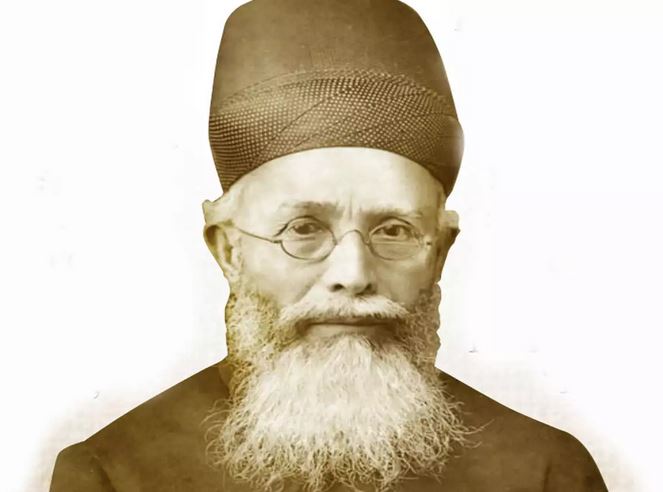
This year, 2022, marks the 130th anniversary of the election, in 1892, of the first person of Indian origin, Dadabhai Naoroji to the House of Commons.
Why in news?
Election of Rishi Sunak as British PM with a narrow majority has brought to focus Naoroji.
He too had won Finsbury seat as a MP with a three vote’s majority.
Dadabhai Naoroji (1825-1917)
Dadabhai Naoroji is well known as the “Grand Old Man of India” and “Unofficial Ambassador of India”.
He was a Liberal Party Member of Parliament in the British House of Commons, represnting Finsbury Central between 1892 and 1895.
He was the second person of Asian descent to be a British MP, the first being Anglo-Indian MP David Ochterlony Dyce Sombre.
He was an Indian political leader, merchant, scholar and writer who was served as 2nd, 9th, and 22nd President of the Indian National Congress from 1886 to 1887, 1893 to 1894 & 1906 to 1907.
His book Poverty and Un-British Rule in India brought attention to his theory of the Indian “wealth drain” into Britain.
He was also a member of the Second Communist International (1889).
Other works
Started the Rast Goftar Anglo-Gujarati Newspaper in 1854.
The manners and customs of the Parsees (Bombay, 1864)
The European and Asiatic races (London, 1866)
Admission of educated natives into the Indian Civil Service (London, 1868)
The wants and means of India (London, 1876)
Condition of India (Madras, 1882)
Influence on Gandhi and Jinnah
Before his Finsbury win, Naoroji met a young student of law in Inner Temple, 23-year-old Mohandas K Gandhi, and left an everlasting impact on the future leader.
He also met another aspiring lawyer then enrolled at Lincoln’s Inn — 16-year-old Mohammed Ali Jinnah, who was to serve for a while as Naoroji’s secretary.
Jinnah had the distinction of hearing Naoroji’s maiden speech in the House of Commons from the Visitors’ Gallery.
A safe and a secure world is a shared responsibility. When threats like terrorism, drug trafficking, corruption and organized crime are global, the response to them cannot just be local.
That was PM Modi’s emphasis at the 90th Interpol General Assembly, recently held in New Delhi.
Interpol will turn 100 next year. Now is the time to calibrate to counter emergent challenges.
What is INTERPOL?
The Interpol, or International Criminal Police Organization, is an inter-governmental organization comprising 195 member countries, which helps police forces in all these countries to better coordinate their actions.
It was set up in 1923 by 19 countries in the wake of an urgent need to facilitate cooperation between police across borders.
It enables member countries to share and access data on crimes and criminals and offers a range of technical and operational support.
It is run by a secretary general with its headquarters in Lyon, France, with a global complex for innovation in Singapore, and several satellite offices in different regions.
India accepted Interpol membership in June 1956.
The General Assembly is the apex governing body of Interpol that meets every year to discuss its functioning.
Key functions of INTERPOL
Global police-level cooperation: Interpol is a global organisation that provides a platform for cooperation between the police forces of various member countries even between countries that do not have existing diplomatic relations.
Database of crime and criminals: It also manages databases with information on crimes and criminals which are accessible in real-time to member countries.
Investigative and training support: It lends investigative and training support such as forensics, analysis, and assistance in locating fugitives around the world.
Combating global crimes: Interpol also plays a key role in combating crimes across three global areas namely terrorism, cybercrime and organized crime which pose a significant threat in the current era.
Key challenges to global security
At present countries across the world are facing unprecedented complexity in the criminal threat landscape with threats including-
Cybercrime
Cross-border terrorism
Drug trafficking and
Women and child sexual abuse
All these crimes are interlinked. Here is how?
Mixed nature of crime: Transnational organised crime continues to thrive due to illicit networks that operate on the strength of money laundering.
Radicalization: In recent years, terrorism is not only spreading in physical space but has started spreading its presence through online radicalization and cyber threats.
Financial crimes: Corruption and money laundering threaten people in every aspect of their lives across the world. So are the payment frauds.
Environmental crime: This includes illicit cross-border trade in wildlife.
Why need INTERPOL?
Rising criminality has caused law enforcement to come under strain.
In a democratic polity, police forces have to act with restraint, within the boundaries of legal procedures.
Lawbreakers enjoy the ease of mobility and access to the internet. There is no diminishing trend of these threats within sight.
How is INTERPOL equipped to curb transnational crimes?
Interpol uses 19 databases and tools for issuing alerts, sharing information about criminals and their modus operandi.
It has a huge repository of fingerprints, DNA profiles, facial recognition kits, cyber-enabled financial crimes, and property crimes, among others.
Providing information about crime and criminals in the digital space, preventing abuse of cyberspace and stalling hackers on the dark web are areas where Interpol’s global security architecture is used.
Interpol issues colour-coded notices of various hues — red, yellow, blue, black, orange, green and purple.
INTERPOL and India
A large number of red corner notices have been issued at the request of Indian law enforcement, resulting in the detention of several accused and convicted fugitives.
India, as one of the oldest and strongest members of Interpol, has been involved in productive engagements over the years.
Several operations have been undertaken by the CBI with Interpol.
Limitations of INTERPOL
Vague composition: In its composition, Interpol is like the UN. But it is not meant for dispute resolution. It is designed to assist the police forces of member nations.
Not a policing body: Interpol is neither an investigative agency like the CBI nor a front-line police force.
Assistive role: It is mandated to share information and provide back-end technical assistance to law enforcement agencies.
Not an independent organization: Interpol action against notorious fugitives is consequential upon commensurate action from member nations where the fugitives might be seeking shelter.
More of a bilateral tool: Interpol cannot act on its own. The desired legal course of action depends on bilateral arrangements like mutual legal assistance treaties.
How can India leverage INTERPOLs benefit?
India becoming the fifth-largest economy in the world, and on the path to becoming the third-largest in the near future.
The country has created a positive impact by bringing down terrorist-related violence.
Moreover, India is now an acknowledged technology powerhouse.
This demographic dividend of a large and young technology-oriented workforce in startups can be utilised for upgrading the security architecture.
Indian skill development resources through capacity building programmes run by the CBI training academy are used periodically by the international police fraternity.
Way forward
There should be close collaboration between global security organisations such as the Interpol, United Nations Security Council (UNSC) and Financial Action Task Force (FATF).
It is important that these security organisations reposition their strategies in line with the realities of the current century and the latest advancements.
In this context, India must push for the establishment of the Comprehensive Convention on International Terrorism (CCIT) which was proposed by India in 1996.
It is time for Indian coaxial engagements with Interpol and other member nations to accelerate further, both bilaterally and multilaterally.
HOW TO ATTEMPT ANSWERS IN DAILY ANSWER WRITING ENHANCEMENT(AWE)?
Daily 4 questions from General studies 1, 2, 3, and 4 will be provided to you.
A Mentor’s Comment will be available for all answers. This can be used as a guidance tool but we encourage you to write original answers.
You can write your answer on an A4 sheet and scan/click pictures of the same.
Upload the scanned answer in the comment section of the same question.
Along with the scanned answer, please share your Razor payment ID, so that paid members are given priority.
If you upload the answer on the same day like the answer of 11th February is uploaded on 11th February then your answer will be checked within 72 hours. Also, reviews will be in the order of submission- First come first serve basis
If you are writing answers late, for example, 11th February is uploaded on 13th February , then these answers will be evaluated as per the mentor’s schedule.
We encourage you to write answers on the same day. However, if you are uploading an answer late then tag the mentor like @Staff so that the mentor is notified about your answer.
*In case your answer is not reviewed, reply to your answer saying *NOT CHECKED*.
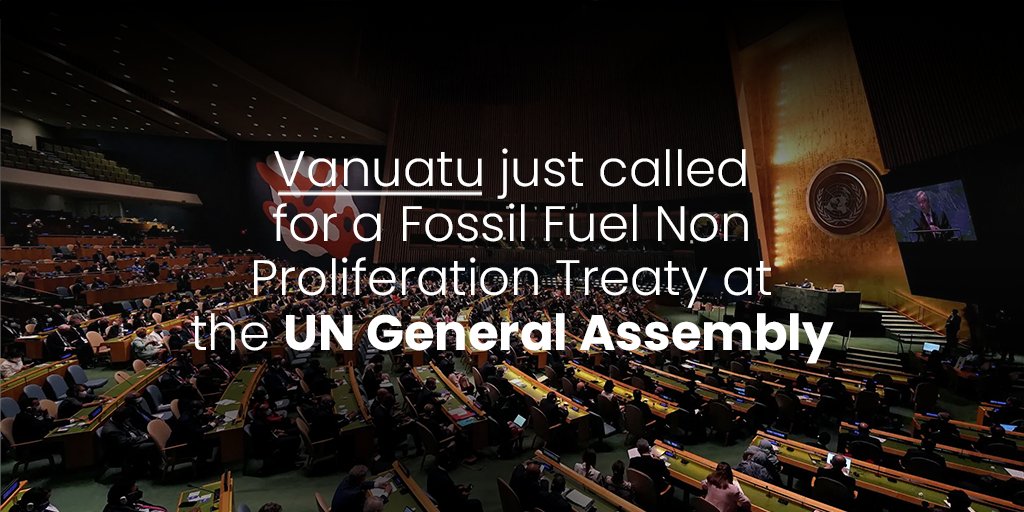
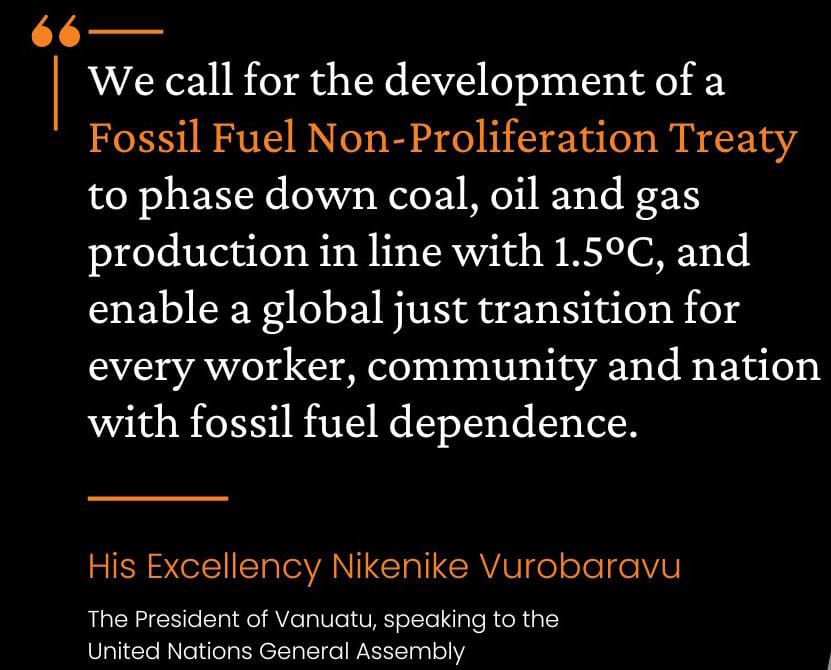
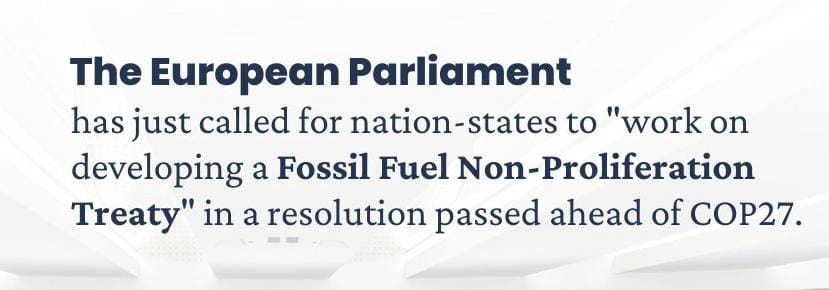
The President of Vanuatu, a small Pacific Island, wanted the General Assembly to adopt a universal Non-Proliferation Treaty to ban the use of fossil fuels across the world.
Why such extreme call on fossil fuel ban?
Unlikely discussion on climate change: There is a strong belief in some quarters that the next climate conference, just days away in Sharm El Sheikh in Egypt this year (COP27) may not discuss climate change mitigation largely on account of the ongoing energy stress in Europe.
Ukraine conflict and rising energy demand: It is felt that the Russia Ukraine crisis and resulting global energy supply shortages have dented everyone’s ability to reduce emissions. This may be a legitimate view but the discussion on coal in the United Nations General Assembly, in September, points to an opposite possibility.
Why this demand is significant?
Vanuatu represents the strong voice of island nations: Usually, such a call by a nation whose contribution to the global energy supplies and emissions is negligible would have gone unnoticed. But Vanuatu represents a strong and vocal group of small islands developing states whose voice is heard with attention and empathy in the UN.
Endorsement from various stakeholders: More so, when it is a matter that will affect the global discourse on climate change. The small island group has gone around seeking endorsements from various quarters governments, the corporate world and civil society.
Support from Indian quarters: Interestingly, the Mayor of Kolkata, capital of one of the largest coal producing States in India, has lent his voice of support.
Similar demand of ban on coal use
Demand of coal ban on Glasgow conference: Vanuatu’s plea comes in the wake of a similar call for phaseout of coal which was made last year at the Glasgow climate conference.
From phaseout to phasedown: After strong protest by the Indian interlocutors, the language of the decision at Glasgow was toned down from phaseout to phase down of unabated coal power and inefficient fuel subsidies.
Unfair for developing countries: When India argued that a phaseout was unfair to countries that were heavily dependent on coal power in the medium term, there was consternation among climate enthusiasts. Given this background, the Alliance of Small Island States (AOSIS) may be preparing the ground to make the fossil fuel elimination a part of national climate plans at COP 27.
What will be the implications of fossil fuel ban?
No responsibility of polluting countries under UN charter: a call to end fossil fuels through a mandate in the UN has very different implications than when it is presented under the UN Climate Change Convention. A UN mandate of this nature is divorced from the legal responsibility of the polluting countries to reduce their emissions on the basis of responsibility, capability and national circumstances, as required by the Climate Change Convention.
No commitment technological and financial innovations: It also makes no provisions for technological and financial innovations that are necessary to ensure the transition.
Attempt of securitization of climate: A few months ago, a similar attempt had been made in the UN to treat the matter of climate change as that of global security and request the UN Security Council to resolve it. This was dropped because of the opposition of most of the global south, which saw in this an attempt to address climate change not through international cooperation and consensus but by imposing the wish of a select few on others.
Without sacrificing the developing economy: A plan to drastically reduce coal fired power would in fact do very little to arrest the problem of climate change globally but may create insurmountable difficulties in securing the progress of developing economies towards key sustainable development goals.
Just and equitable transition: If the transition to a world of lower emissions has to be sustainable, it must also be just and equitable.
Equal access to alternative energy: It must ensure equal access to energy and secure energy supplies to all, not just to a few. While the developed economies have full access to alternative sources of energy, because of their strength in terms of technology and resources, the developing nations are handicapped. Therefore, a just transition needs to be built on the promise that green energy and a green future will be available to all.
Promoting the philosophy LiFE: It is in this context that the call for Lifestyle for Environment (LiFE) issued by Prime Minister Narendra Modi and the UN Secretary General, jointly in India recently, assumes importance. Consumers in countries that consume at an unsustainable pace and contribute to rising emissions have a much greater responsibility to clean up the planet and support the growth of green energy.
Most vulnerable should be attended first: The world today is suffering from the adverse effects of climate change which have devastated homes and the livelihoods of large populations in various parts of the vulnerable world. Addressing these impacts and preparing the world for an uncertain future should be the priority.
Conclusion
It is high time that building climate resilient infrastructure in the developing and growing countries is given as much importance as phasing down coal and investment in energy innovations and alternative technologies.
Mains Question
Q.What will be the implication for developing countries if call on ban on fossil fuel is adopted? Explain the LiFE in the light of climate transition debate.
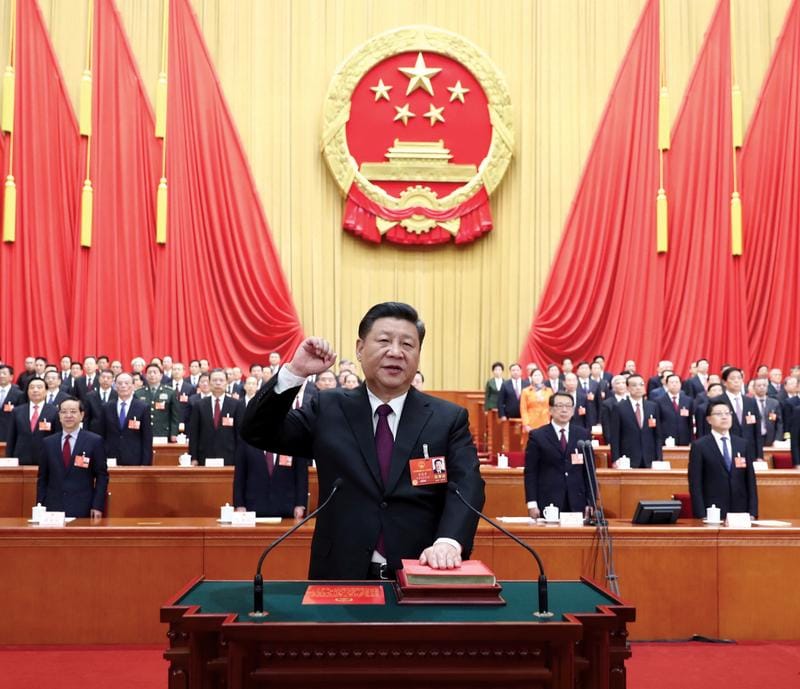
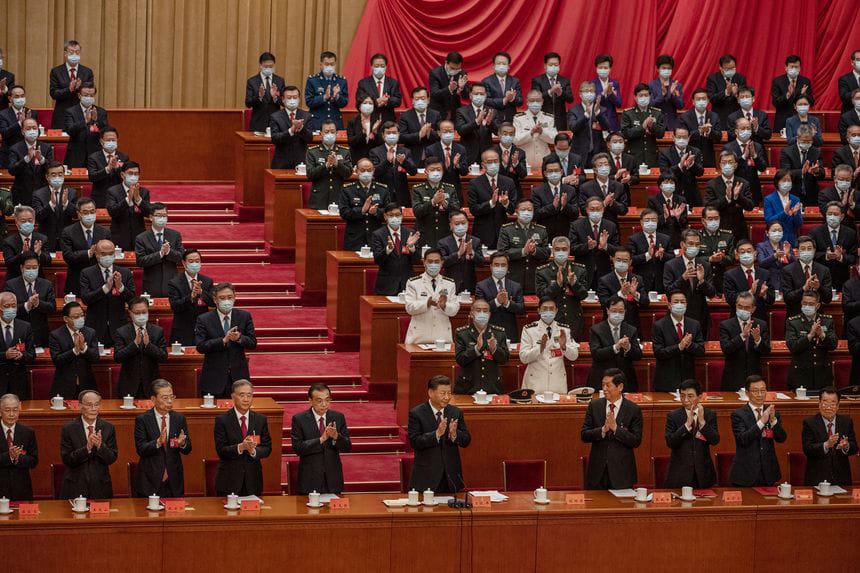
China’s 20th Party Congress concluded with hardly any surprises, and a predetermined script was implemented without any hitch. Xi Jinping was anointed President for an unprecedented third term, and all six of his acolytes made it to the powerful Politburo Standing Committee.
Why China’s 20th Party Congress is important?
Extension of tenure of Xi Jinping: Xi’s ‘core’ status has been further reinforced, and he is now set to eclipse Deng Xiaoping and Jiang Zemin, placing him next only to Mao. Mr. Xi’s Thought on ‘Socialism with Chinese Characteristics for a New Era’ will be the Chinese Communist Party/Communist Party of China (CCP)’s guiding philosophy for the future.
Xi’s control over party: It was also evident that Mr. Xi enjoys wide, if not overwhelming, support within the Party elite, enabling him to infuse a renewed sense of purpose alongside tightening of controls over it.
High focus on national security: National security would be the key factor dictating all aspects of governance. A common theme that permeated the proceedings was affirmation of the CCP’s historical mission.
Emphasized ideological coherence: There was only a single narrative, crafted in a manner that extolled Mr. Xi’s role in revitalization of the CCP, further enhancing his cult status. Unequivocally rejected was an earlier Xi thesis of a ‘Community of Common Destiny’ which has been replaced by the belief that international public opinion was currently anti-China and also included an incitement to overthrow the existing Communist regime. To counter such disruptive philosophies, it had become necessary for the CCP to emphasize ideological coherence and internal discipline.
Avoiding the soviet style collapse: This would help to avoid the danger of a ‘Soviet style collapse’ caused by ideological laxity, corruption, divisions within the party and attempts by outsiders to foment unrest.
What are the problematic declarations at 20th party congress?
Undermining the USA: In the realm of geopolitics, the Congress declared that the objective is to effectively reduce the authority and the power of the United States.
Rejecting the Indo-pacific: This was especially true of China’s neighborhood, essentially the Indo-Pacific.
Achieving the lost glory: Also, to be eschewed by China were the vague and contradictory goals of the past, made at a time when China sought to make rapid progress in several directions.
Theory of victimhood of international conspiracy: Implicit in the proceedings was the belief that China was being deliberately denied access, and the ability, to import certain vital technological items, and in this regard, of being a victim of major international conspiracies. Earlier pragmatism was replaced by concerns about western pressures to derail China’s progress.
Possible lifelong tenure to Xi: The Party Congress is indicative of the fact that Mr. Xi is much more than a mere party ‘restorer’, and that he adheres to the belief that the CCP’s role is central to Chinese society and critical to determining China’s role in world affairs.
Raising the national strength and international influence: In terms of China’s world view, the Party Congress reiterated that the goal is to make China a modern socialist power by 2035, boost per capita income to middle income levels, and modernise the armed forces. By 2049, the 100th anniversary of the Peoples’ Republic of China, China is determined to lead the world in terms of composite national strength and international influence.
What are the implications for the world?
Premature takeover of Taiwan: one can expect that notwithstanding the level of rhetoric and assertions that this is a dangerous phase, China is unlikely to take any premature step to take over Taiwan, and thereby risk a wider conflict with the U.S. and the rest of the world at this point. Mr. Xi is far more likely to devote attention to internal matters within China, since unity within the Communist Party remains ephemeral; while dissent has been stamped out for the present, more consolidation would be necessary.
Short term conciliation with world: Consequently, one might well see China stepping back from its present confrontational posture with the U.S. and several other countries, and adopting a more conciliatory approach in the near future.
Conflicts are likely to happen: There are, of course, certain red lines any attempt at provocation within the ‘First Island Chain’, or encouraging Taiwan to seek independence or break away from China are certain to lead to a conflict, irrespective of how it would adversely affect China’s 2049 plans and objectives.
Border incursion will rise: In India’s case, further skirmishes between the two countries along the several thousand kilometres of the undefined land border is to be expected.
Conflicts in Indian ocean: China is unlikely to embark on an open conflict with it anywhere else in the Indian Ocean region. This could alter, if India were to pursue a more aggressive policy in support of the West’s ‘open seas policy’ in waters in China’s vicinity.
Prime target in west vs China battle: India is, however, likely to be a principal target of Chinese wrath in the next few years. As India’s economic fortunes steadily improve even as China’s declines, the perception conflict will become more intense.
China’s progress at the cost of India: Moreover, if India is seen as a major recipient of western technology, the kind being denied to China, China would make it a point to use its economic, rather than military muscle, to deter India’s progress. For China to achieve greatness by 2049, subduing India economically, and reducing its image in the eyes of the world would be critically important.
Conclusion
China’s middle kingdom complex, unjustified assertion, paranoic claims on borders and seas and wolf warrior diplomacy is against the international rules and order. China has challenged the USA’s hegemony and entire international system without any tangible punishment. India has to choose its options carefully without compromising national security and ambitions.
The recent release of the National family health survey (NFHS) data for 2019-21 allows for a detailed analysis of the progress in the reduction of absolute poverty and related determinants like nutrition.
Poverty estimation in India
Planning Commission Expert Group (1962): It formulated the separate poverty lines for rural and urban areas at ₹20 and ₹25 per capita per year respectively.
VM Dandekar and N Rath (1971): They made the first systematic assessment, based on National Sample Survey (NSS) data. They suggested providing 2250 calories per day in both rural and urban areas.
YK Alagh Committee (1979): It constructed a poverty line for rural and urban areas on the basis of nutritional requirements and related consumption expenditure.
Lakdawala Committee (1993): It suggested that consumption expenditure should be calculated based on calorie consumption as earlier. State specific poverty lines should be constructed. It asked for discontinuation of scaling of poverty estimates based on National Accounts Statistics.
Tendulkar Committee (2009): The current official measures of poverty are based on the Tendulkar poverty line, fixed at daily expenditure of ₹27.2 in rural areas and ₹33.3 in urban areas is criticized by many for being too low.
How poverty is estimated under NFHS?
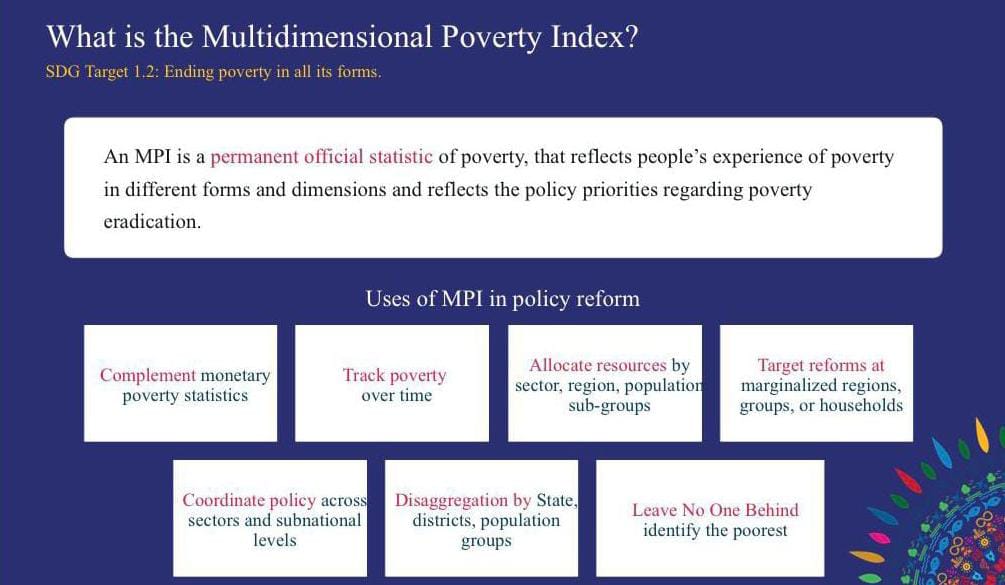
Multidimensional poverty index: The NFHS surveys are part of a multinational attempt to provide estimates of a multidimensional poverty index. Its computation rests on estimates of poverty according to 10 different indicators:
Nutrition
Child mortality
Years of schooling
School attendance
Cooking fuel
Sanitation
Drinking water
Electricity
Housing
Assets
The deprivation index: the deprivation index for each indicator is the per cent poor (deprived) according to that indicator. The aggregation of the 10 indicators into one index involves legitimate issues of weighting, but individual components do not suffer from this drawback.
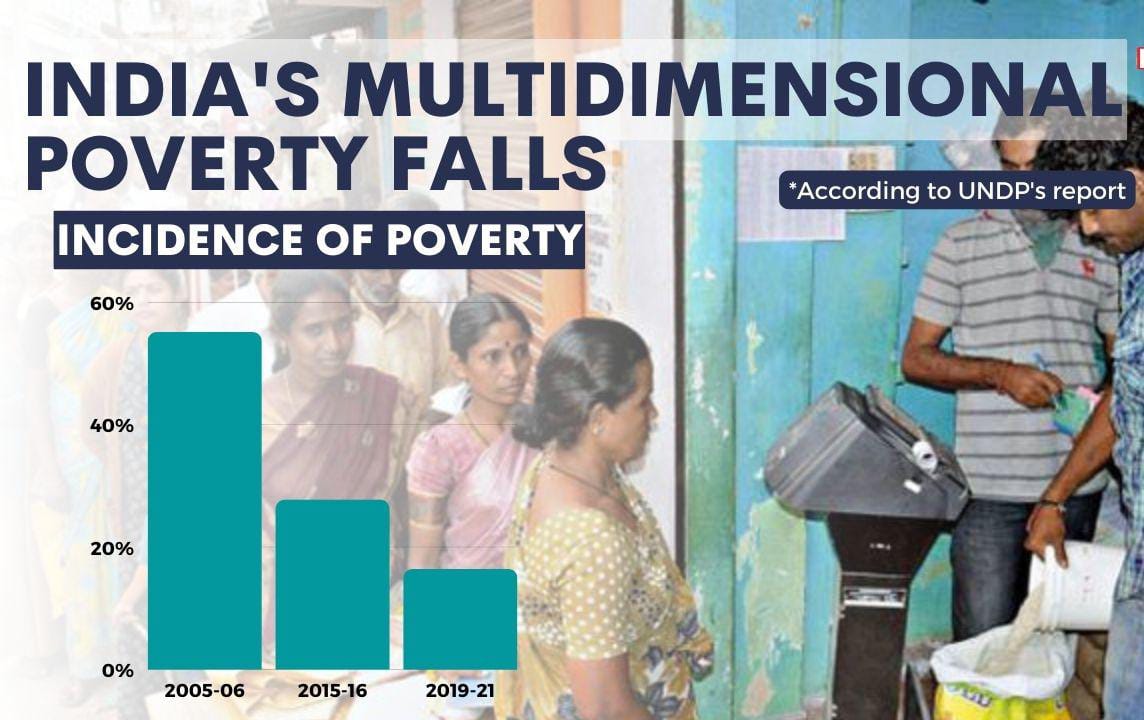
Multidimensional poverty declined: at a compounded annual average rate of 4.8 per cent per year in 2005-2011 and more than double that pace at 10.3 per cent a year during 2011-2021.
Declining child mortality: There are some issues with the 2011 child-mortality data, but for each of the 10 components of the MPI index, the rate of decline in 2011-2021 is considerably faster than in 2005-2011.
Average decline in overall indicators: The average equally weighted decline for nine indicators was 1.9 per cent per annum in 2005-2011 and a rate of 16.6 per cent per annum, more than eight times higher in 2011-2021.
Consumption inequality decline: Every single household survey or analysis has shown that consumption inequality declined during 2011-2021. This is consistent with the above finding of highly inclusive growth during 2011-2021.
What are the efforts behind inclusive growth and reduced poverty?
A major factor behind the inclusive nature of growth during 2011-2021 is the focus of government policies on each of the individual indicator’s indicative of a dignified standard of living. A direct impact of this dedicated fiscal push is that slow-moving variables such as housing, access to cooking fuel, sanitation, etc, have witnessed a remarkable increase.
Swachh Bharat Mission: The government’s Swachh Bharat mission in 2014-2021 constructed over 110 million toilets even if some were without easy access to water, many were.
Saubhagya Yojana: Similarly, close to one-third of Indians were deprived of electricity till as recently as 2014. It was only after a dedicated push (Saubhagya Yojana) that India managed to electrify every village, and eventually households. Electricity deprivation declined by a 28.2 per cent rate post-2014; between 2005 and 2011, the rate of decline was close to zero.
Jan Dhan Yojana: Another example is the Jan Dhan Yojana which made financial inclusion a reality in India, especially for women.
Ujjwala Yojana: On access to modern cooking fuel (through the Ujjwala Yojana), deprivation was nearly halved from 26 per cent to 14 per cent in just five years. The previous halving (2005/6 to 2015/16) took 10 years.
Awas Yojana: The affordable housing scheme (Awas Yojana) has meant that less than 14 per cent are now deprived, compared to thrice that number in 2011/12.
Jal Jeevan Mission: More recently, government has embarked on an ambitious project of ensuring universal access to piped water under the Jal Jeevan Mission. Rural piped water coverage was a little less than 17 per cent in 2019, but is now well above 54 per cent and expected to at least be near, if not meet, the 100 per cent target by 2024.
Conclusion
Extreme poverty in India is surely on decline but pandemic have pushed people again back to the poverty. Pandemic have put the break on inclusive growth of people. Government must realize these and plan accordingly.
Mains Question
Q. Analyze the data of NFHS for poverty estimation in India? How government policies have helped to reduce the extreme poverty in India?
The Ministry of Home Affairs has asked the States/Union Territories to appoint a Child Welfare Police Officer (CWPO) in every police station to exclusively deal with children, either as victims or perpetrators.
Who is a Child Welfare Police Officer (CWPO)?
Police play a pivotal role in the prevention and investigation of child abuse and neglect while helping to make communities safer for children and families.
CWPO is stipulated in advisory issued by the National Commission for Protection of Child Rights.
To handle cases of both juveniles in conflict with law and children in need have care of protection
To function as a watch-dog for providing legal protection against all kinds of cruelty, abuse and exploitation of children and report instances of non-compliance for further legal action
To take serious cognizance of adult perpetrators of crimes against children
To ensure that the accused are apprehended immediately and booked under the appropriate provisions of the law
To ensure that the juvenile or child is provided with immediate medical attention, basic needs and create a child-friendly atmosphere at the time of first contact.
Need for CWPO
CWPO ensure that juvenile or child is treated with decency and dignity during investigation, enquiry, search etc.
They help upheld right to confidentially and privacy of the juvenile/child.
Back2Basics: National Commission for Protection of Child Rights (NCPCR)
The NCPCR is a statutory body established by the Commission for Protection of Child Rights (CPCR) Act, 2005.
The Commission works under the aegis of Ministry of Women and Child Development.
The Commission is mandated under section 13 of CPCR Act, 2005 to ensure that all laws and policies are in consonance with the Child Rights perspective as enshrined by the UN Convention on the Rights of the Child.
As defined by the commission, a child includes persons up to the age of 18 years.
Recently a self-proclaimed god-man convicted for rape and murder in Haryana has been released on Parole.
What is Parole?
Furlough and parole envisage a short-term release from custody, both aimed as reformative steps towards prisoners.
Parole is granted to meet a “specific exigency” and cannot be claimed as a matter of right.
Both provisions are subject to the circumstances of the prisoner, such as jail behaviour, the gravity of offences, sentence period and public interest.
Furlough may be granted without any specific reason after a convict spends a stipulated number of years.
It is a matter of right although cannot be claimed as an ‘absolute legal right’.
Is ‘parole an extraordinary move?
The state governments often take a compassionate view on applications for parole during festivals of Diwali, Rakshabandhan etc.
The legislature/politicians do not have direct powers to grant parole on suo-motu cognizance.
Who can opt for parole and how?
The provision of parole is available to convicts found guilty by a court and such a prisoner.
The prisoner’s relative/legal aid may submit an application to the prison superintendent.
He/she in turn forwards the application to the ‘competent authority’, often under the jurisdiction of district magistrate concerned and comprising prison and police authorities, to sanction release.
After due verification of reasons and prisoner’s conduct by the competent authority, an order for grant of release on parole will be issued.
In case of rejection of the said application, a convict may approach the High Court.
Duration of Parole
The Prison rules state that parole period may be granted for not more than 30 days.
The competent authority may exercise its discretion in case of serious illnesses or death of “nearest relative such as mother, father, sister, brother, children, spouse of the prisoner, or in case of natural calamity.”
Parole or extension of parole cannot be granted without a report of the police
Apart from the remedy to approach a high court for parole in case of a rejected application, a prison can also approach the high court directly in case of an extraordinary emergency.
Try this PYQ from CSP 2021:
Q. With reference to India, consider the following statements:
When a prisoner makes a sufficient case, parole cannot be out denied to such prisoner because it becomes a matter of his/her right.
State Governments have their own Prisoners Release on Parole Rules.
Which of the statements given above is/are correct?
Cordy gold nanoparticles (Cor-AuNPs), the outcome of a collaborative experiment by scientists from four Indian institutions, has earned an international patent from Germany.
What is Cordy gold nanoparticles ?
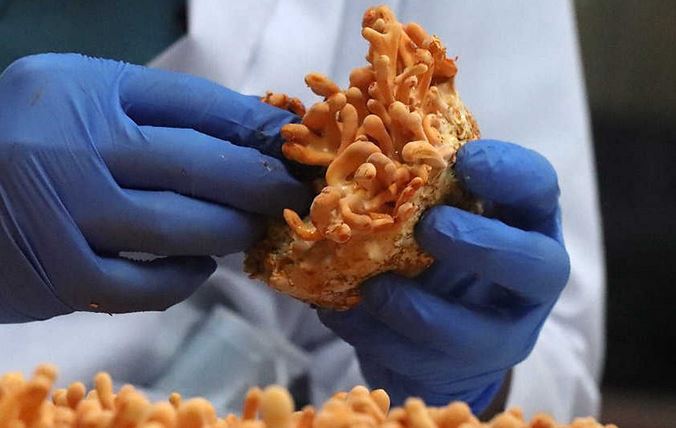
Cordy gold nanoparticles (Cor-AuNPs) are derived from the synthesis of the extracts of Cordyceps militaris and gold salts.
They could make drug delivery in the human body faster and surer.
Cordyceps militaris is a high-value parasitic fungus, lab-grown at the Department of Biotechnology’s Technology Incubation Centre (TIC) in Bodoland University.
Gold salts are ionic chemical compounds of gold generally used in medicine.
Benefits offered by this nanoparticle
Penetration in the cells is more when the drug particles are smaller.
Cordyceps militaris adds bioactive components to the synthesis of gold nanoparticles for better penetration.
It can be delivered as ointments, tablets, capsules, and in other forms.
Back2Basics: Gold Nanoparticles for Medicines
Gold nanoparticles (AuNPs) are small gold particles with a diameter of 1 to 100 nm which, once dispersed in water, are also known as colloidal gold.
Functionalized gold nanoparticles with controlled geometrical and optical properties are the subject of intensive studies and biomedical applications.
They find applications in genomics, biosensorics, immunoassays, clinical chemistry, laser phototherapy of cancer cells and tumors, the targeted delivery of drugs etc.
A team of astronomers have spotted a massive near-Earth asteroid called 2022 AP7 believed to be the largest planet killer-sized asteroid to be spotted in nearly a decade.
2022 AP7 Asteroid
An asteroid is a relatively small chunk of rocky minerals that orbits the Sun, often described as a minor planet.
2022 AP7 is among the three asteroids hiding in the glare of the Sun.
It is 1.5-kilometre-wide and has an orbit that may someday put it on a collision course with our planet.
At present, researchers have little information about the asteroid, including further details on its possible trajectory and its composition.
It was found using the Dark Energy Camera at the Cerro Tololo Inter-American Observatory in Chile.
What about the other two?
The two — 2021 LJ4 and 2021 PH27 — have orbits that are safely constrained inside the limits of Earth’s orbit.
At less than a kilometer in diameter, 2021 LJ4 is the smallest in size.
The asteroid, 2021 PH27, is the closest known asteroid to the Sun.
Due to this, its surface gets hot enough to melt lead.
Is there an immediate threat to Earth?
At present, the asteroid only crosses the Earth’s orbit while it is on the opposite side of the Sun i.e., when the Sun comes between the Earth and the asteroid.
This will continue for several centuries as it takes the asteroid about five years to orbit the sun.
If impacted, Earth’s atmosphere would be inundated with dust and pollutants for years, preventing sunlight from entering.