💥Join UPSC 2027,2028 Mentorship (August Batch) + XFactor Notes & Microthemes PDF

Subject: Space Technology

  • ASTROSAT Satellite

    ASTROSAT, India’s first multi-wavelength satellite observatory, has detected an extreme ultraviolet (UV) light from a galaxy which is 9.3 billion light-years away from Earth.

    Try out:


    Consider the following statements regarding the AstroSat:

    1)AstroSat is India’s multi-wavelength space telescope.
    2)ASTROSAT mission is that enables the simultaneous multi-wavelength observations of various astronomical objects with a single satellite.
    3)ASTROSAT observes the universe in the optical and high energy X-ray regions of the electromagnetic spectrum.

    Which of the following above statements is true?

    a.1 and 2
    b.2 and 3
    c.1 and 3
    d.1, 2 and 3

    AUDFs01

    • AstroSat has detected extreme-UV light from a galaxy, called AUDFs01, 9.3 billion light-years away from Earth.
    • The galaxy is located in the Hubble Extreme Deep field, through AstroSat.
    • This is a very important clue to how the dark ages of the universe ended and there was light in the universe.

    About ASTROSAT

    • AstroSat is India’s first dedicated multi-wavelength space telescope. It was launched on a PSLV-XL on 28 September 2015.

    It is the first dedicated Indian astronomy mission aimed at studying celestial sources in X-ray, optical and UV spectral bands simultaneously.

    ————–//—————-

    Find some time to scroll through recent ISRO missions and discoveries.

    ISRO Missions and Discoveries

  • Dwarf Planet Ceres

    The dwarf planet Ceres, which lies in the asteroid belt between Mars and Jupiter now, has the status of an “ocean world”.

    Note various dwarf planets and the criteria making a planet dwarf, as mentioned in the B2b section.

    Ceres exploration

    • The dwarf planet was first spotted by Giuseppe Piazzi in 1801, who assumed that Ceres was the missing planet between Mars and Jupiter.
    • It was classified as a dwarf planet in 2006 and is the first dwarf planet to be orbited by a spacecraft.
    • In 2015, NASA’s Dawn reached it to study its surface, composition and history.

    What does it mean to be an “ocean world”?

    • With a crust that mixes ice, salts, rock-forming minerals and other materials, Ceres looks to be a remnant “ocean world,” wearing the chemistry of its Old Ocean and records of the interaction on its surface.
    • The observations from Dawn suggest the presence of briny liquid (saltwater) water under Ceres’s surface.
    • Scientists have determined that Ceres has a brine reservoir located about 40 km deep and which is hundreds of miles wide, making the dwarf planet, “water-rich”.

    Why do researchers study Ceres?

    • Scientists are interested in this dwarf planet because it hosts the possibility of having water, something that many other planets do not have.
    • Therefore, scientists look for signs of life on Ceres, a possibility that has also maintained scientists’ interest in the planet Mars, whose atmosphere was once warm enough to allow water to flow through it.
    • Another reason why scientists are interested in that studying it can give insights about the formation of the Solar System since it is considered to be a fossil from that time.

    Back2Basics: Dwarf Planets

    • As of today, there are officially five dwarf planets in our Solar System.
    • The most famous is Pluto, downgraded from the status of a planet in 2006.
    • The other four, in order of size, are Eris, Makemake, Haumea and Ceres. The sixth claimant for a dwarf planet is Hygiea, which so far has been taken to be an asteroid.
    • These four criteria are – that the body orbits around the Sun, it is not a moon, has not cleared the neighbourhood around its orbit and has enough mass for its gravity to pull it into a roughly spherical shape.
  • [pib] Sarabhai Crater

    The Indian Space Research Organization (ISRO) has named a crater captured by Chandrayaan 2 Orbiter after Vikram Sarabhai.

    Try this PYQ:

    What do you understand by the term Aitken Basin? (CSP 2012)

    (a) It is a desert in southern Chile which is known to be the only location on earth where no rainfall takes place

    (b) It is an impact crater on the far side of the Moon

    (c) It is a Pacific coast basin, which is known to house large amounts of oil and gas

    (d) It is a deep hypersaline anoxic basin where no aquatic animals are found

    Sarabhai Crater

    • “Sarabhai” Crater is named after Dr Vikram Sarabhai and around 250 to 300 kilometres east of this Crater is where the Apollo 17 and Luna 21 Missions had landed.
    • The crater captured in 3D images shows that the Crater has a depth of around 1.7 Kms taken from its raised rim and the slope of Crater walls is in between 25 to 35 degree.
    • These findings will help the Space Scientists to understand further the process of the lunar region filled with lava.

    Who was Vikram Sarabhai?

    • Sarabhai was an Indian physicist and astronomer who initiated space research and helped develop nuclear power in India.
    • He is internationally regarded as the Father of the Indian Space Program.
    • Known as the cradle of space sciences in India, the Physical Research Laboratory (PRL) was founded in 1947 by him. He was the founder of ISRO.
    • He started a project for the fabrication and launch of an Indian satellite.
    • As a result, the first Indian satellite, Aryabhata, was put in orbit in 1975 from a Russian cosmodrome.
  • SPT0418-47: The Baby Milky Way

    SPT0418-47, a golden halo glinting 12 billion light-years away is the farthest galaxy resembling our Milky Way was recently spotted by astronomers.

    Try this PYQ:

    Which of the statements about black holes in space is/are correct?  (CSP 2016)

    1. It is a region in space where the pulling force of gravity is so strong that light is not able to escape.
    2. It can result from the dying stars.

    Select the correct answer using the code given below:

    (a) 1 only

    (b) 2 only

    (c) Both 1 and 2

    (d) Neither 1 nor 2

    SPT0418-47

    • The galaxy, called SPT0418-47, is so far away that it took billions of years for its light to reach Earth and so our image of it is from deep in the past.
    • It was picked up by the powerful Alma radio telescope in Chile using a technique called gravitational lensing, where a nearby galaxy acts as a powerful magnifying glass.
    • This was when the Universe was 1.4 billion years old — just 10% of its current age — and galaxies were still forming.
    • It has features similar to our Milky Way — a rotating disc and a bulge, which is the high density of stars packed tightly around the galactic centre.

    What makes it special?

    • This is the first time a bulge has been seen this early in the history of the Universe, making SPT0418-47 the most distant Milky Way look-alike.
    • Thus the infant star system challenges our understanding of the early years of the Universe.
    • Researchers expect these young star systems to be chaotic and without the distinct structures typical of mature galaxies like our Galaxy.
    • This unexpected discovery suggests the early Universe may not be as chaotic as once believed and raises many questions on how a well-ordered galaxy could have formed so soon after the Big Bang.

    Back2Basics: Milky Way

    • The Milky Way is the galaxy that contains our Solar System, with the name describing the galaxy’s appearance from Earth.
    • It appears like a hazy band of light seen in the night sky formed from stars that cannot be individually distinguished by the naked eye.
    • From Earth, the Milky Way appears as a band because its disk-shaped structure is viewed from within.
    • Galileo Galilei first resolved the band of light into individual stars with his telescope in 1610.
    • Until the early 1920s, most astronomers thought that the Milky Way contained all the stars in the Universe.
    • Following the 1920 Great Debate between the astronomers Harlow Shapley and Heber Curtis, observations by Edwin Hubble showed that the Milky Way is just one of many galaxies.
  • Perseids Meteor Shower

    The Perseids meteor shower is going to be active from August 17-26.

    Try this question from CSP 2014:

    Q.What is a coma, in the content of astronomy?

    (a) Bright half of material on the comet

    (b) Long tail of dust

    (c) Two asteroids orbiting each other

    (d) Two planets orbiting each other

    What is the Perseids meteor shower?

    • The Perseids meteor shower peaks every year in mid-August. It was first observed over 2,000 years ago.
    • The Perseids occur as the Earth runs into pieces of cosmic debris left behind by the comet Swift-Tuttle.
    • The cloud of debris is about 27 km wide, and at the peak of the display, between 160 and 200 meteors streak through the Earth’s atmosphere every hour as the pieces of debris.
    • They travel at the speed of some 2.14 lakh km per hour; burn up a little less than 100 km above the Earth’s surface.

    What are Meteor Showers?

    • Meteors are bits of rock and ice that are ejected from comets as they manoeuvre around their orbits around the sun.
    • As meteors fall towards the Earth, the resistance makes the space rocks extremely hot and, as meteorites pass through the atmosphere, they leave behind streaks of glowing gas that are visible to the observers and not the rock itself.
    • Meteor showers, on the other hand, are witnessed when Earth passes through the trail of debris left behind by a comet or an asteroid.
    • When a meteor reaches the Earth, it is called a meteorite and a series of meteorites, when encountered at once, is termed as a meteor shower.
    • According to NASA, over 30 meteor showers occur annually and are observable from the Earth.

    Where do the Perseids come from?

    • The comet Swift-Tuttle, which was discovered in 1862 by Lewis Swift and Horace Tuttle, takes 133 years to complete one rotation around the sun.
    • The last time it reached its closest approach to the sun was in 1992 and will do so again in 2125.
    • Every time comets come close to the sun, they leave behind dust that is essentially the debris trail, which the Earth passes through every year as it orbits around the Sun.

    Back2Basics:


  • Magnetoseismology of Sun’s Corona

    A group of researchers has measured the global magnetic field of the Sun’s corona for the very first time.

    Try this PYQ:

    The terms ‘Event Horizon’, ‘Singularity’, `String Theory’ and ‘Standard Model’ are sometimes seen in the news in the context of (CSP 2017)-

    (a) Observation and understanding of the Universe

    (b) Study of the solar and the lunar eclipses

    (c) Placing satellites in the orbit of the Earth

    (d) Origin and evolution of living organisms on the Earth

    Basis of the research

    • The properties of waves depend on the medium in which they travel.
    • By measuring certain wave properties and doing a reverse calculation, some of the properties of the medium through which they have travelled can be obtained.
    • Waves can be longitudinal waves (for example, sound waves) or transverse waves (for example, ripples on a lake surface).
    • The waves that propagate through magnetic plasma are called magnetohydrodynamic (MHD) waves.
    • From the theoretical calculation, it can be shown that the properties of the transverse MHD wave are directly related to the strength of magnetic fields and the density of the corona.

    How was the Magnetic Field measured?

    • The team used a technique known as coronal seismology or magnetoseismology to measure the coronal magnetic field which has been known for a few decades.
    • This method requires the measurement of the properties of magnetohydrodynamic (MHD) waves and the density of the corona simultaneously.
    • In the past, these techniques were occasionally used in small regions of the corona, or some coronal loops due to limitations of our instruments/and proper data analysis techniques.

    The CoMP instrument

    • The team used the improved measurements of the Coronal Multi-channel Polarimeter (CoMP) and advanced data analysis to measure the coronal magnetic field.
    • CoMP is an instrument operated by High Altitude Observatory, of the U.S.
    • It is located at Mauna Loa Solar Observatory, near the summit of that volcano on the big island of Hawaii.

    Why measure the solar magnetic field?

    • It is very important to measure the corneal magnetic fields regularly since the solar corona is highly dynamic and varies within seconds to a minute time scale. There are two main puzzles about the Sun which this advancement will help address:

    (1) Coronal heating problem

    • Though the core of the Sun is at a temperature of about 15 million degrees, its outer layer, the photosphere is a mere 5700 degrees hot.
    • However, its corona or outer atmosphere, which stretches up to several million kilometres beyond its surface, is much, much hotter than the surface.
    • It is at a temperature of one million degrees or more.
    • What causes the atmosphere of the Sun (corona) to heat up again, though the surface (photosphere) is cooler than the interior? That is the question which has baffled solar physicists.
    • Popular attempts to explain this puzzle invoke the magnetic field of the corona. Hence the present work will help understand and verify these theories better.

    (2) Mechanisms of eruptions of the Sun

    • The eruptions on the Sun include solar flares and coronal mass ejections.
    • These are driven by magnetic reconnections happening in the Sun’s corona.
    • Magnetic reconnection is a process where oppositely polarity magnetic field lines connect and some of the magnetic energy is converted to heat energy and also kinetic energy which leads to the generation of heating, solar flares, solar jets, etc.
  • SN5 Starship by SpaceX

    SpaceX has successfully test-launched its “Mars ship”, a stainless steel test vehicle called SN5, and which is a part of the Starship spacecraft.

    Elon Musk’s aerospace company has been putting continuous wins on the board ever since it became the first privately funded group to put a payload in Earth orbit.

    What is Starship?

    • Designed by SpaceX, Starship is a spacecraft and super-heavy booster rocket meant to act as a reusable transportation system for crew and cargo to the Earth’s orbit, Moon and Mars.
    • SpaceX has described Starship as “the world’s most powerful launch vehicle” with an ability to carry over 100 metric tonnes to the Earth’s orbit.
    • Starship has been under development since 2012 and is a part of Space X’s central mission to make interplanetary travel accessible and affordable and to become the first private company to do so.

    So what all can Starship do?

    • SpaceX is planning its first cargo mission to the red planet by 2022 and by 2024, the company wants to fly four ships including two cargo and two crewed ones to Mars.
    • Once functional, the Starship spacecraft will enter Mars’ atmosphere at a speed of 7.5 km per second and will be designed to withstand multiple entries.
    • Starship is also expected to help carry large amounts of cargo to the Moon, for human spaceflight development and research.
    • Beyond the Moon, the spacecraft is being designed for carrying crew and cargo for interplanetary missions as well.

    A quest for reusability

    • Therefore, the company is working on building a fleet of reusable launch vehicles, capable of carrying humans to Mars and other destinations in the solar system.
    • Reusability is at the heart of making interplanetary travel accessible.
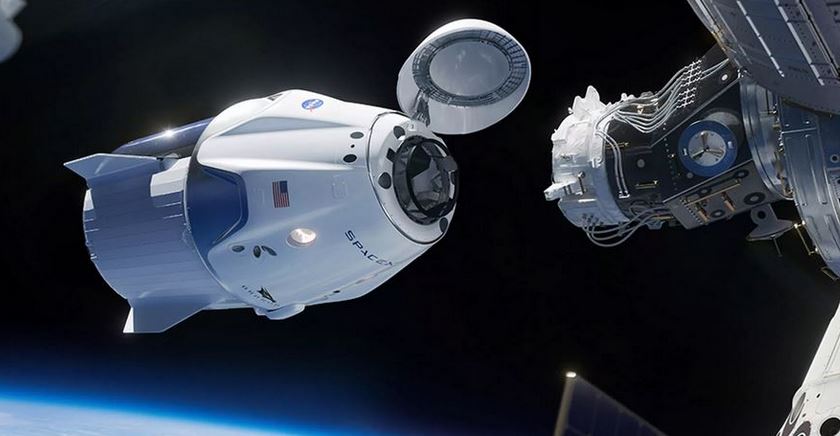
  • SpaceX’s Crew Dragon capsule ‘Endeavour’

    Two NASA astronauts returned to Earth from the International Space Station (ISS) in a dramatic, retro-style splashdown, their capsule parachuting into the Gulf of Mexico to finish an unprecedented test flight.

    We can get a match the pair type question in prelims asking various space missions and their purposes. Make note of similar space missions from here.

    Crew Dragon

    • Crew Dragon is a part of the Dragon 2, a class of reusable spacecraft developed and manufactured by American aerospace manufacturer SpaceX.
    • It is the fifth class of US spacecraft to take human beings into orbit, after the Mercury, Gemini, Apollo and Space Shuttle programs.
    • The rocket, named Falcon 9, which carried the spaceship into the orbit, was also built by SpaceX.
    • It is done under the Demo-2 Mission of NASA and SpaceX.

    Demo-2: What is the mission?

    • The Demo-2 mission is part of NASA’s Commercial Crew Program with the aim of developing reliable and cost-effective access to and from the ISS.
    • Essentially, the lift-off is a flight test to certify if SpaceX’s crew transportation system can be used to ferry crew to and from the space station regularly.

    What makes it a special event?

    • It was the first splashdown by U.S. astronauts in 45 years, with the first commercially built and operated spacecraft to carry people to and from orbit.
    • The last time NASA astronauts returned from space to water was on July 24, 1975, in the Pacific to end a joint U.S.-Soviet mission known as Apollo-Soyuz.
    • The return clears the way for possible tourist flights in the near future.

    Back2Basics: SpaceX

    • Space Exploration Technologies Corp., trading as SpaceX, is a private American aerospace manufacturer and space transportation Services Company headquartered in Hawthorne, California.
    • It was founded in 2002 by Elon Musk with the goal of reducing space transportation costs to enable the colonization of Mars.
    • It has developed several launch vehicles and the Dragon spacecraft.
  • What is Interplanetary Contamination?

    As ambitious space missions are proliferating, along with advances in commercial space flight, astrobiologists have expressed concerns about possible ‘interplanetary contamination’.

    A statements based question can be expected from the two types of interplanetary contamination.

    What is Interplanetary Contamination?

    • Interplanetary contamination refers to biological contamination of a planetary body by a space probe or spacecraft, either deliberate or unintentional.
    • There are two types of interplanetary contamination:
    1. Forward contamination is the transfer of life and other forms of contamination from Earth to another celestial body.
    2. Back contamination is the introduction of extraterrestrial organisms and other forms of contamination into Earth’s biosphere. It also covers infection of humans and human habitats in space and on other celestial bodies by extraterrestrial organisms, if such habitats exist.
    • The main focus is on microbial life and on potentially invasive species.
    • Non-biological forms of contamination have also been considered, including contamination of sensitive deposits (such as lunar polar ice deposits) of scientific interest.

    Are there any mechanisms to prevent such contaminations?

    • Current space missions are governed by the Outer Space Treaty and the COSPAR (Committee on Space Research) guidelines for planetary protection.
    • Forward contamination is prevented primarily by sterilizing the spacecraft.
    • According to NASA, the guidelines have had far-reaching implications on human spacecraft design, operational procedures, and overall mission structure.
  • [pib] Asteroid 2020 ND

    NASA has issued a warning that a huge “Asteroid 2020 ND” will move past Earth on July 24.

    Try this question from CSP 2014:

    Q.What is a coma, in the content of astronomy?

    (a) Bright half of material on the comet

    (b) Long tail of dust

    (c) Two asteroids orbiting each other

    (d) Two planets orbiting each other

    What are Asteroids?

    • Asteroids are small, rocky objects that orbit the Sun. They are leftover from the formation of our solar system.
    • Although asteroids orbit the Sun like planets, they are much smaller than planets.
    • There are lots of asteroids in our solar system. Most of them live in the main asteroid belt—a region between the orbits of Mars and Jupiter.
    • Some asteroids go in front of and behind Jupiter. They are called Trojans.
    • Asteroids that come close to Earth are called Near-Earth Objects, NEOs for short. NASA keeps a close watch on these asteroids.

    Asteroid 2020 ND

    • The 2020 ND is about 170 metres-long.
    • It will be as close as 0.034 astronomical units (5,086,328 kilometres) to our planet and is travelling at a speed of 48,000 kilometres per hour.
    • Its distance from Earth has placed it in the “Potentially Hazardous Asteroids (PHAs)” category.

    How are PHAs defined?

    • PHAs are currently defined based on parameters that measure the asteroid’s potential to make threatening close approaches to the Earth.
    • NASA classifies objects like these as ‘near-Earth objects’ (NEOs) as they get nudged by other planets’ gravitational attraction resulting in their proximity to our solar system.
    • It is not necessary that asteroids classified as PHAs will impact the Earth. It only means there is a possibility for such a threat.

    Can they be deflected?

    • Over the years, scientists have suggested different ways to ward off such threats, such as blowing up the asteroid before it reaches Earth or deflecting it off its Earth-bound course by hitting it with a spacecraft.
    • The most drastic measure undertaken so far is the Asteroid Impact and Deflection Assessment (AIDA), which includes NASA’s Double Asteroid Redirection Test (DART) mission and the ESA’s Hera.
    • Both mission’s target is Didymos, a binary near-Earth asteroid, one of whose bodies is of the size that could pose the most likely significant threat to Earth.
    • In 2018, NASA announced that it had started the construction of DART, which is scheduled to launch in 2021 with an aim to slam into the smaller asteroid of the Didymos system at around 6 km per second in 2022.
    • Hera, which is scheduled to launch in 2024, will arrive at the Didymos system in 2027 to measure the impact crater produced by the DART collision and study the change in the asteroid’s orbital trajectory.

    Back2Basics: Near-Earth objects (NEOs)

    • NEOs are comets and asteroids nudged by the gravitational attraction of nearby planets into orbits which allows them to enter the Earth’s neighbourhood.
    • These objects are composed mostly of water ice with embedded dust particles, and occasionally approach close to the Earth as they orbit the Sun.
    • NASA’s Center for Near-Earth Object Study (CNEOS) determines the times and distances of these objects as and when their approach to the Earth is close.