Farmers in India constantly battle against skewed monsoon and erratic rainfall, extreme natural events, interrupted supply chains and rising inflation. Like this was not enough. These troubles now are supplemented this year by the COVID induced lockdowns and the heralding Locusts Attack!
God bless our Annadatas!
Context
The start of the coronavirus pandemic has coincided with the peak harvesting season. As the markets are locked down, there is a threat to the crop in over 100 lakh hectares in the country.
Even among the different segments, the impact varies widely among different regions and among producers and agricultural wage labourers. This impact will reverberate across the larger economy and will linger longer than a few months.
Issues surfaced after COVID pandemic
In spite of all the measures and in view of continuing restrictions on movements of people and vehicular traffic, concerns have been raised regarding negative implications of COVID19 pandemic on the farm economy. The immediate problems in agriculture at the moment are primarily categorized under two heads:
A. Impact on Global Agriculture

1) Crop production and availability of seeds
- For crop production, the largest part of the seeding process will be almost unaffected between now and the summer.
- So there would be no impact as such on seeds availability for now.
- But if the same scenario continues till year end, then surely seed availability can be an issue.
2) Fertilizers shortage
- Due to global trade disturbance, farmers are facing the shortage of agricultural inputs like fertilizer and pesticides.
- In a shorter span, there is little shortage to be expected.
- In the longer term, the delivery of fertilizer via international markets may become a problem since some of the production plants in China have been shut down.
3) On food production and distribution
- Most of the countries have taken measures such as home confinement, travel bans and business closure to control the rate of infection.
- Agriculture produce is mostly perishable in nature, so farmers are compelled to hold their unsold produce for a longer period of time.
- This has led to a reduction in food quality as well as an increase in the cost of production.
4) On livestock
- Different agricultural sector such as livestock and fishery have been hit hard by the pandemic.
- In India, COVID-19 has caused a higher impact on livestock farming due to limited access to animal feed and a shortage of labour.
- For example, the travel ban has affected the delivery of breeding stock of poultry.
5) On workers
- Agricultural workers in low and middle-income countries lack proper health services and social protection and due to little saving or no saving.
- Many informal workers in agriculture are obligate to work for their sustenance despite the self-isolation protocol during COVID-19 pandemic.
6) Impact on food demand and food security
- The demand for food has affected due to reduction in income and purchasing capacity.
- Panicked Consumers are stock piling the foods which in turn has affected the food availability and price.
- Due to the decline in international trade, disturbance in food supply chain and food production, food insecurity may arise.
B. Impact on India
Agriculture contributes about 17 per cent to Indian GDP. Agriculture, with its allied sectors, is the largest source of livelihoods in India. 70 percent of rural households still depend primarily on agriculture for their livelihood.

1) Peak harvest with no procurement
- This is the peak of Rabi season in India and crops like wheat, gram, lentil, mustard, etc. (including paddy in irrigated tracts) were at a harvestable stage or almost reaching maturity.
- This is also the time when the farm harvests reach the mandis for assured procurement operations by designated government agencies.
2) Labour unavailability due to reverse migration
- The non-availability of labour has hurt operations in many parts.
- Consequently, the shortage of migrant labour has resulted in a sharp increase in daily wages for harvesting crops.
- Some parts of agriculture that have the luxury of deploying technology for harvestings, like Paddy and Wheat, are relatively more insulated since they often do not have to depend on large numbers of manual labour.
3) Fall in prices
- Agricultural prices have collapsed due to lack of market access including the stoppage of transportation and closure of borders.
- The rise in labour costs and lack of access means that farmers are staring at huge losses and hence allowing crops to rot in the fields, a better ‘stop-loss’ mechanism.
4) Scarcity of public goods
- Making the food grains, fruits and vegetables and other essential items available to consumers, both in rural and urban areas, is the most critical challenge.
- Transportation of public distribution system (PDS) items to last-mile delivery agents, by both rail and road, has been severely impacted in the beginning.
5) Restrictions on Sale
- There were self-imposed restrictions on the inter- and intra-State movements of farmers/labourers, as well as harvesting and related farm machines.
6) Disruptions in supply-chain
- The absence of transport facilities clubbed with vigilant blocking roads has a limiting effect on the movement of migratory harvest labour and agri-machinery.
- Also, trucks and tractors are not inclusive of ‘farm machinery’ by definition..
7) Lockdown induced debt and Cash Flow Constraints
- The most important issue that farmers have to surmount is the problem of repaying their crop loans, gold loans and other informal debts.
- Crop loans are repaid between April and May and a fresh loan is granted at the onset of a new season.
- Any failure to do so will mean that they will be forced to borrow money from the informal sector at high rates of interest for the new season.
Impact on Food Security

- Border closures, quarantines, and market, supply chain and trade disruptions are restricting people’s access to sufficient/diverse and nutritious sources of food, especially in countries hit hard by the virus or already affected by high levels of food insecurity.
- In slowdown times, as demand for food will decrease over the next months, prices should go down in 2020, and this will have a negative impact on farmers and the agricultural sector.
- As of now, disruptions have been minimal as food supply has been adequate and markets have been stable so far to meet the ongoing demands (though skewed)..
Indian response to Covid: Agriculture version

The Center and State Governments have worked in harmony to redress the grievances of farmers. Both have introduced a series of measures every day such as subsidies, including crop insurance to farmers, free flow of agricultural credit, unemployment allowance to rural landless/migrant workers under MANREGA, etc.
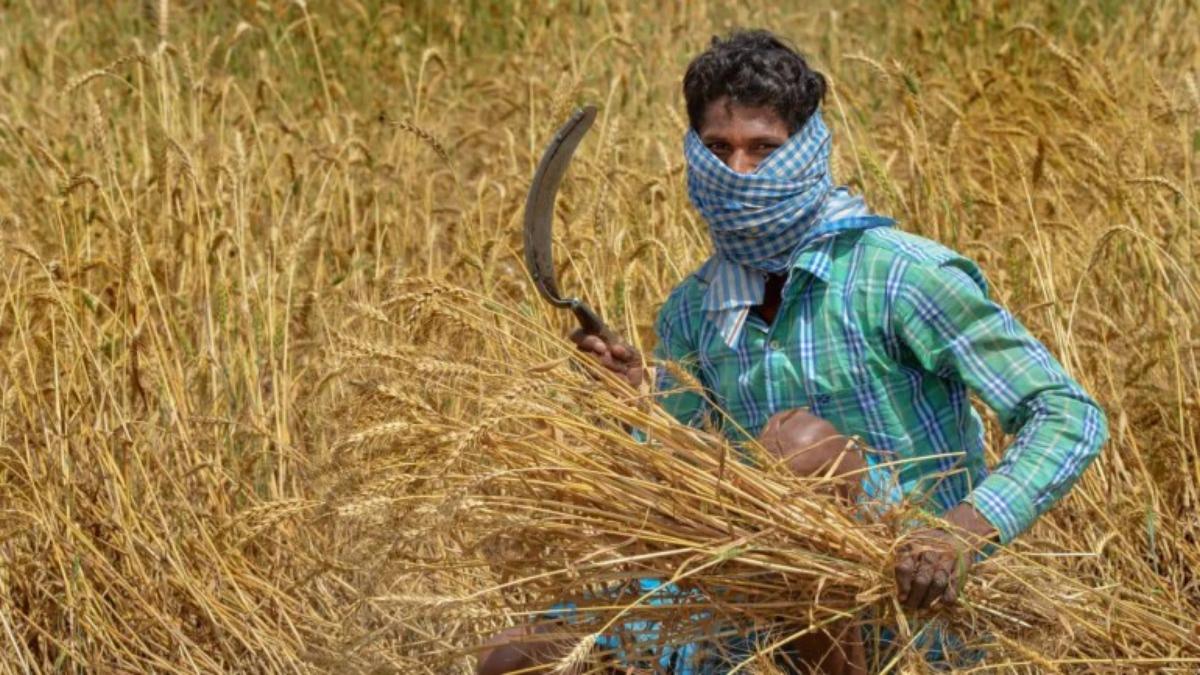
The govt. is using every arrow in its quiver to ensure the health of farmers by continuously sensitizing the farmers about working in fields with covered faces while maintaining social distancing.
In order to reinforce a zero hurdle harvest season, the govt has exempted the movement of farm machinery from lockdown.
1) Reforms in e-NAM
- The new features of National Agriculture Market platform were introduced as a welcoming move to decongest mandis.
- They aim to strengthen agriculture marketing by reducing the need for farmers to physically access the wholesale mandis for selling their harvested produce.
2) Technological support
- Kisan Sabha App developed by CSIR to connect farmers to supply chain and freight transportation management system was recently launched to support farmers during the lockdown.
- The app aims to provide the most economical and timely logistics support to the farmers and increase their profit margins by minimizing the interference of middlemen and directly connecting with the institutional buyers.
- Kisan Rath app was also launched to facilitate farmers & traders in searching for transport vehicles for movement of Agriculture & Horticulture produce.
3) Boost to Contract farming
- Various states have promoted innovative model allowing investors and farmers to enter into an agreement for contract farming in view of the continuing uncertainties due to the pandemic.
- For example, the Consumer-Farmer Compact in Telangana has been ensuring food availability and access in COVID-19 times.
- In this system, the consumers support farmers with their agricultural needs; in return, farmers ensure consumers are able to access food in a hassle-free manner.
4) Allocations for direct transfers
- Increasing the allocations for DBT to farmers through PM KISAN and including everyone who is actively undertaken during the lockdown.
- This has helped most farming families to be partially compensated for the losses seen in months of March and April.
- It has provided them with some cushion against the deflationary effect seen on farm-prices due to the prolonged lockdown.
Future scope of reforms
1) Focussing on Alternative Market Channels
- The alternative market channel works on the principles of decentralisation and direct-to-home delivery.
- The idea is to create smaller, less congested markets in urban areas with the participation of farmers’ groups and Farmer Producer Companies (FPCs) so that farmers have direct access to consumers.
- It may provide a valuable option against the lockdown when efforts to avoid crowding in the wholesale markets are likely to continue.
2) Reforming APMC
- With these reforms, the government has also set in motion plans to dismantle the decades-old monopolies of state-run APMCs, that were often blamed for unfair trading, and had become a barrier for farmers to get a fair price on their produce.
- There is an urgent need for abolishing or reframing the APMC Act and encourage direct buying of agri-produce from farmers/farmer producer organisations (FPOs).
- The companies, processors, organised retailers, exporters, consumer groups, that buy directly from FPOs need not pay any market fee as they do not avail the facilities of APMC yards.
3) Designating warehouses as markets
- The warehouse receipt system can be scaled up.
- The private sector should be encouraged to open mandis with modern infrastructure, capping commissions.
4) Logistics transformation
- To sustain the demand for agricultural commodities, investments in key logistics must be enhanced.
- Moreover, e-commerce and delivery companies and start-ups need to be encouraged with suitable policies and incentives.
- The small and medium enterprises, running with raw materials from the agriculture and allied sector or otherwise, also need special attention so that the rural economy doesn’t collapse.
5) Institutionalizing farm labour
- To obviate the immediate concerns of the scarcity of farm labour, policies must facilitate easy availability of machinery through state entities, Farmer Producer Organizations (FPOs) or custom hiring centres (CHCs) with suitable incentives.
- It is also suggested to explore leveraging NREGS funds to pay part of the farm labour (with farmers paying the balance wage amount) to lessen the monetary burden on the farmer while ensuring wage employment to the landless labourers and workers.
6) Expanding institutional lending
- As the Kharif (rainy/wet) season is fast approaching, institutional lending of crop loans should be expanded and facilitated for smooth (and sufficient) flow of credit to borrowing farmers.
- Agri-inputs – seeds, fertilizers, agro-chemicals, etc. – have to be pre-positioned for easy availability. The private sector must play a significant role in necessary policy support.
Future of Agriculture in India

Indian agriculture is in a way, a victim of its own past success – especially the green revolution…..
1) Farming as a Viable Livelihood
- Agriculture is dying, not as in the production of food but as a desirable profession.
- One bad yield, whether due to errant rains, pests, etc., and most farmers have no buffer available.
- The last point worth considering is that food and agriculture are not the same. Expenditures on food span the value-add, including processing, preparation, service in restaurants, etc.
- Farmers in India merely get paid for their product and not for the food we eat.
2) Rainbow revolution holds the key
- The first major barrier to overcome is declining productivity.
- Data reveals that India’s average yield of cereal per hectare is far less than that of many countries. Further, there is a huge inter-regional variation.
- In order to cross the declining productivity barrier, there is a need to herald a rainbow revolution by making a shift from the wheat-rice cycle to other cereals and pulses.
- However, this is not sufficient and has to be complemented with a huge investment in public infrastructure.
3) Per drop more crop
- The second major barrier is the scarcity of two major resources for agriculture – cultivable land and water.
- While the cultivable land per person is declining because of the fragmentation of farms due to the rising population.
- India also has much less per capita water available as compared to other leading agrarian countries.
- Given this scenario, it is time to make a shift to micro-irrigation so that the efficient and judicious use of scarce water resources can be made.
4) R&D is the future
- One of the major barriers to boosting farm productivity is the lack of new technologies and major breakthroughs post the green revolution.
- While the National Agriculture Research System played a major role in the green revolution, in recent years there hasn’t been any major breakthrough in research.
- One of the main reasons for this is the lack of financial resources.
- There has also not been any major contribution from the private sector towards research and development.
- The government should thus woo private players by giving them incentives to play a major role in agricultural research and development.
Way Forward

- With a burgeoning population, there is a corresponding rise in food demand in India.
- A post-COVID situation offers that unique opportunity to repurpose the existing food and agriculture policies for a healthier population.
- India, being trade-surplus on commodities like rice, meat, milk products, tea, honey, horticultural products, etc. may seize the opportunities by exporting such products with a stable agri-exports policy.
- Development of export-supportive infrastructure and logistics would need investments and support of the private sector that will be in the long term interests of farmers in boosting their income.
- This is indeed good news in the COVID scenario, assuming agriculture can practice largely unscathed.
- Designing agricultural policies, post-COVID scenario, must include these imperatives for a food systems transformation in India.
- Immediately, the govt. should focus on the coming Kharif cropping season, especially ensuring timely availability of seeds, fertilisers, pesticides, credit and other inputs.
Conclusion
Structural reforms such as land leasing, contract farming and private agricultural markets, etc. have long been advocated to bring enhanced investments into the agriculture sector and to push its growth. However, there has not been the uniform implementation of these legislations by State Governments and so the full potential of the sector is unrealized. These reforms need significant political will.
The end of the lockdown will not end the problems. On the contrary, they are likely to be compounded at the onset of the new agricultural sowing season. There is a greater need for government support in the form of support for other agricultural inputs. Lack of any relief will only make the agricultural crisis worse. The need of the hour is to maximise possibilities of agriculture, which has demonstrated its utility and resilience in trying times.
References
https://www.civilsdaily.com/news/alleviating-the-farmers-pain/
https://www.icrisat.org/containing-covid19-impacts-on-indian-agriculture/
https://www.deccanherald.com/opinion/covid-19-impact-on-agriculture-varied-and-devastating-828390.html
https://indianexpress.com/article/opinion/editorials/india-agriculture-sector-crisis-corona-impact-on-farmers-niti-aayog-6392233/
https://www.civilsdaily.com/story/agricultural-marketing-reforms/
https://thewire.in/agriculture/what-is-the-future-of-agriculture-in-india
http://www.fao.org/2019-ncov/q-and-a/impact-on-food-and-agriculture/en/


