In the introduction, give a brief description of normative ethics theories along with the Golden principle.
In the body, discuss in points contribution of ancient Greek philosophers in the field of normative ethics. Quote as many philosophers and works as possible and try to provide a gist of their works and thoughts on normative ethics.
In Conclusion, mention other great philosophers like Kant, Locke etc and their duty theories.
In the intro, mention model rules released by OECD.
In the body, mention two pillars of the rules, how it will help in bringing the common principles at the domestic-law and treaty levels to tax income of specified business. In the challenges mention an ambitious timeline, willingness on part of the US lawmakers to embrace a modified GILTI (Global Intangible Low Taxed Income).
Conclude by mentioning that this may not be a complete solution to the challenge of taxing digital companies, it establishes a floor for competition among nations on tax rates
In the intro, mention the recent move by China to rename villages in Arunachal Pradesh.
In the body, mention challenges posed by Chinese aggression on border, lopsided trade relations, China’s increasing closeness with India’s neighbourhood etc. In measures, mention internal and external rebalancing through the relations with the US, a coalition of like-minded democracies, creation of resilient supply chains etc.
Conclude by mentioning the need to recognise the challenge and dealing with it on various fronts.
UPSC Mains 2021 has started today with the Essay paper. You can view the UPSC IAS Mains 2021 Essay Question Paper in the text format and in the picture given above.
Those who are not attempting 2021 exam will get an idea that this year’s paper has taken the candidates by surprise as usual. In fact, the ‘U’ in UPSC stands for Unpredictable.
Try to answer these questions. In case you are facing any difficulties, fill the form below for a dedicated Civilsdaily mentor to give you a strategy call in 24 hours. Share us your burdens and concerns, we are waiting to resolve them.
A Moscow-led military alliance called Collective Security Treaty Organization (CSTO) dispatched troops to help quell mounting unrest in Kazakhstan.
Ongoing situation in Kazakhstan
Long seen as one the most stable of the ex-Soviet republics of Central Asia, energy-rich Kazakhstan is facing its biggest crisis.
There are ongoing protests over rising fuel prices escalated into widespread unrest.
The nationwide protests are also signifying a wider, region-wide longing for political change.
Under increasing pressure, Kazakh President appealed to the Russia for CSTO army to be deployed in Kazakhstan.
Concerns over CTSO troop’s deployment
It is argued that domestic turmoil could be utilized by Russian nationalists for asserting their claims in Northern Kazakhstan.
What is CSTO?
The CSTO is a Russia-led military alliance of seven former Soviet states that was created in 2002.
Current CSTO members are Armenia, Belarus, Kazakhstan, Kyrgyzstan, the Russian Federation and Tajikistan.
Afghanistan and Serbia hold observer status in the CSTO.
Its purpose is to ensure the collective defence of any member that faces external aggression.
Outlined functions of CSTO
Version of NATO: It has been described by political scientists as the Eurasian counterpart of NATO, which has 29 member states, while the CSTO has just six.
Arms trade and mutual defense: CSTO supports arms sales and manufacturing as well as military training and exercises, making the CSTO the most important multilateral defence organization in the former Soviet Union.
Non- proliferation of weapons: CSTO also coordinates efforts in fighting the illegal circulation of weapons among member states and has developed law enforcement training for its members in pursuit of these aims.
What does CSTO membership provide?
Barring relations with NATO: While CSTO membership means that member states are barred from joining other military alliances, limiting, for example, their relationship with NATO.
Benefits in arms import from Russia: Its members receive discounts, subsidies, and other incentives to buy Russian arms, facilitating military cooperation.
Assurance against military conquest: In the CSTO, aggression against one signatory is perceived as aggression against all. It however remains unclear whether this feature works in practice.
The Reserve Bank of India (RBI) has informed that Airtel Payments Bank Ltd. has been categorized as a Scheduled Bank.
Why such a move?
With this, the bank can now pitch for government-issued Requests for Proposals (RFP) and primary auctions.
It can undertake both Central and State Government businesses participating in government-operated welfare schemes.
What are Scheduled Banks?
Scheduled Banks refer to those banks which have been included in the Second Schedule of Reserve Bank of India Act, 1934.
Reserve Bank of India (RBI) in turn includes only those banks in this Schedule which satisfy the criteria laid down vide section 42(6)(a) of the said Act.
Every Scheduled bank enjoys two types of principal facilities: it becomes eligible for debts/loans at the bank rate from the RBI; and, it automatically acquires the membership of clearing house.
Banks not under this Schedule are called Non-Scheduled Banks
Types of Scheduled Banks
There are two main categories of commercial banks in India namely:
Scheduled Commercial banks
Scheduled Co-operative banks
Scheduled commercial Banks are further divided into 5 types as below:
Nationalised Banks
Development Banks
Regional Rural Banks
Foreign Banks
Private sector Banks
Payment bank (currently four banks Airtel Payments Bank, Fino Payments Bank, India Post Payments Bank, Paytm Payments Bank have been granted Scheduled bank status).
Scheduled Co-operative banks are further divided into 2 types namely:
The Ministry of Science & Technology has inaugurated India’s first open rock museum displaying different types of rocks gathered from different States of ages ranging from 3.3 billion years to around 55 million years.
Rock System in India
Based on this complex and varied geological history, the Geological Survey of India has classified rock systems of the country into 4 major divisions:
Archaean Rock System
Dravidian Rock System
Purana Rock System
Aryan Rock System
[I] Archaean Rock System:
The Archaean group of rocks consists of two systems-(a) Achaean granites and gneisses, and (b) Dharwarian sedimentary:
Archaean Gneisses and Schists (pre-2500 million years)
The Archean System contains the first formed rocks of the earth.
The rocks are primarily gneisses and granites, having no marks of fossils.
They often underlie the strata formed subsequently and the system is generally known as the basement complex or fundamental gneisses.
The Archaean rocks cover two-thirds of peninsular India. They also occur in the roots of the mountain peaks all along the Greater Himalayas, trans-Himalayan ranges of Zaskar, Ladakh and Karakoram.
Dharwar System (2500-1800 million years ago)
The weathering of the Archaean rocks yielded the earliest sediments and formed the oldest sedimentary strata, the Dharwar system.
These are found today in metamorphic forms and do not contain fossils.
These rocks occur in scattered patches in parts of Karnataka, Tamil Nadu, central and eastern parts of Chotanagpur plateau, Meghalaya plateau, Aravalis, Himalayan region etc
Mineral contents:
They contain gneisses (which range from granite to gabbro) and schists (crystalline rocks such as mica, talc etc.).
These rocks have metallic and non-metallic minerals like copper, tin, graphite, lead, zinc, etc.
[II] Dravidian Rock System:
This is also known as carboniferous rock system and formed during the Paleozoic era, i.e., from 600- 300 million years ago.
They are not much abundant in India.
They have plentiful fossils and beginning of coal formation can be seen in this period. The quality of carboniferous coal is high.
They are found in extra- Peninsular regions of the Himalayas and the Gangetic plains.
Mineral content
This type of rock system comprises of limestones, shale and quartzite and Mount Everest is formed of upper Carboniferous limestones.
Most of the coal is not of the Carboniferous period, which is found in India.
The meaning of Carboniferous in geology is coal-bearing.
[III] Purana Rock System:
The Purana rock system has two divisions: Cuddapah system and Vindhyan system. The word ‘Purana’ was used in place of a Proterozoic era in India.
Cuddapah Rock system:
They are observed in Cuddapah districts of Andhra Pradesh.
The non-fossiliferous clay, slates, sandstones and limestones were accumulated in the depression between two-fold mountains which is known as synclinal basins.
They also have a large accumulation of building purpose cement grade limestones and quartzites.
This type of rock contains ore of iron, cobalt, nickel, manganese etc.
Vindhya Rock System:
This type of rock system is also ancient or old sedimentary rocks which are superimposed on the Archaean rock base and derived its name from Vindhya mountains.
The recognition of fossils is negligible, only traces of few animal and plant life were found.
This rock system has diamond-bearing regions from which Golconda and Panna diamond mined.
[IV] Aryan Rock System
The Aryan rock system in India has the following four subsystems:
Gondwana rock system
Jurassic Rock System
Cretaceous system/ Deccan Trap
Tertiary rock system
(1) Gondwana Rock System:
These are found mainly in Raniganj, Jharia regions of Jharkhand, Damodar valley, Pench valley in Chhattisgarh and Madhya Pradesh.
They are called so after the name of Gondwana tribe (indigenous people especially residing in Telangana and Andhra Pradesh region).
In this type of rock system, you found metallic minerals like iron, manganese, uranium etc. other than coal.
They have low carbon content as it is much younger than Carboniferous coal. These rocks have nearly 98% of India’s coal reserve.
(2) Jurassic Rock System
During the latter part of Jurrasic when sea level rises as compared to land and shoreline moves towards ground or land which result in a flood. In geology, this phenomenon is called marine transgression.
This gives rise to a thick series of shallow-water deposits kin Rajasthan and Kutch. Between the Guntur and Rajamundry, another transgression in the east coast of Peninsula.
In Kuchchh, coral limestone, shales and conglomerates are found.
(3) Deccan traps
These are formed by the flow of magma over the solidified rock system in layers.
Deccan trap gets rise due to volcanic outburst over a major area of Peninsular India from the end of Cretaceous till the beginning of Eocene.
The meaning of trap is “stair” or “step” in Swedish and called due to deposition of the volcanic outburst which has a flat top and steep sides.
It is mainly found in parts of Kuchchh, Saurashtra, Maharashtra, the Malwa plateau and Northern Karnataka and presently cover near 5 lakh sq. Km.
Regur, which is black soil, is formed due to the weathering of these rocks for a long time.
(4) Tertiary rock system
The formation of this type of rock system occurs from 60 to 7 million years ago.
It is the most noteworthy period in India’s geological history as the Himalayas were born and recent form came in this period.
Smash Prelims Program is back after a thumping success in Prelims 2021. Out of 25 students Santosh sir has mentored, 15 have cleared prelims this time.Our students were kind enough to take time out of their hectic Mains preparation and let us know how Santosh sir’s mentorship benefitted them in the exams. We wish them all the very best for the upcoming Mains exam from 7th January onwards!
Why Your Focus for Next 5 Months Must be About Scoring Above Cut-Off Marks in UPSC-CSE Prelims? Isn’t the last 1 Month Enough for This?
Every year, the competition for UPSC-CSE is increasing while vacancies are decreasing drastically. This year there are only 712 vacancies as against 2019 which had 927 vacancies. However, atleast 10 lakh students will attempt the prelims exam. This is why right now, it’s important to start having an Olympic Athlete mindset. You need to daily focus on scoring above the cut-off marks in your test series.
Civilsdaily Student and 2019 UPSC-CSE AIR 8 Topper Abhishek Saraf had practiced nearly 6000+ MCQs under us to clear prelims!
What makes prelims tough? It’s because the paper is unpredictable. If this year, science questions are a breeze then the next year you will have to answer advanced concept-based questions. Unlike Mains, Prelims has negative markings.
Toppers like Pranav Vijayvergiya (AIR 65) andSwati Sharma(AIR 17) have found Prelims to be tougher than Mains. In fact, Pranav failed to clear Prelims thrice. But, in his fourth attempt he took Civilsdaily mentorship and cleared Prelims, Mains and Interview in one shot!
Are you feeling low that you are unable to get the required cut-off marks in your test series. Worry not, for about 65% of the UPSC toppers have said that they scored below cut-off marks till December. But by June, they were able to boost their marks to get through the prelims hurdle. It’s time to be like them now.
One has to be good at elimination methods to choose the right option amongst two similar ones. Our Smash Prelims Program started as a pilot project last year with an aim to introduce step-wise improvement in our chosen 25 aspirants. Over a period of 2 months, Santhosh sir inculcated confidence in aspirants who were either newbies or gave too many attempts. This year, we achieved a remarkable 60% success ratio. Next year, we have set our eyes on 100%. Yes, we are ambitious and aspirational just like any other UPSC aspirant.
Why is Mentorship Required for UPSC-CSE Prelims in Every Step – From Test Series, to Study Materials, Classes to Doubt Resolution?
If you are appearing for UPSC-CSE 2022 exams, you might have completed your entire prelims and mains syllabus right now. So what are your main priorities right now? To succeed in UPSC-CSE Prelims 2022, you have to check all these boxes in terms of preparation—
You need clear strategy for next 150 days.
You need to revise effectively to remember whole syllabus at the eve of exam.
You need to practice lots of tests to score accurately, to understand elimination techniques and reduce exam anxiety.
You need to revise current affair of 1.5 years that you have been studying daily.
You need a mentor to fill the critical gaps that have been ignoring till now as you had no one to address them for you.
Santhosh Sir’s Weekly Zoom Session
Do you want to have a mentor who conducts and evaluates medium to advanced test series regularly? A mentor explains to you the different kinds of elimination techniques after you have taken a test series. Before attending a test do you want the mentor to discuss with you the study materials required for the test and provide the right notes with integrated current affairs? While studying a subject, you might have umpteen number of questions. Having someone who responds quickly and explains the topics in simple terms saves your time. And, after a test do you want an experienced mentor to discuss the right answers and motivate you? Do you want the mentor to provide you classes on static+dynamic prelims topics? If yes, then this is the right program for you! The registrations are open for all UPSC 2022 aspirants
Self Preparation with Mentorship: What do Civilsdaily Students think of Santosh Sir’s Mentorship for UPSC-CSE Prelims?
Santhosh Sir, Core Civilsdaily Mentor. He has attended Interview Thrice & Cleared Prelims 6/6 times with above 145 marks.
We asked Santosh sir’s students about their opinion on mentorship — if it was something that saved their time or wasted their time in studies and this is what they had to say:
Kamini: “If I can say in one word, then Santosh sir’s mentorship is unique. Before I joined his program, I used to score 90 marks in Full Length Test Series. Santhosh sir had done in depth analysis of my test papers and suggested ways to reduce the negatives. Right now I am able to score 100+ in advanced test series of not only Civilsdaily but other institutes. He is always available to clear my doubts and solve my issues on call or phone. No issue is too big enough for Santosh sir. He has always told me after you finish a test series, read the same topics again and take another test series the same day to see if your marks improve. From Santosh sir’s polity and economic survey notes, we got questions in 2021 Prelims. I always feel its better to do self studies with mentorship than join coaching institutes and get spoon fed with information.”
Sweetie Raj: “I am a banking professional, living with a joint family. Attending coaching classes is out of question because I won’t have time to read the books myself. Santosh sir helps me self-study by providing me mentorship daily. I study daily from 9PM to 3AM. Santosh sir has been available for 1 hour strategy calls even during this time. No other teacher would have wanted me to succeed as much as he wants me to. I can understand concepts by myself and don’t need help in that. I want someone who pushes me to complete the target modules, checks if I did my mains answer writing for the day and analyses the previous year question papers with me. Because of Santosh sir, I understood that its just not enough reading one book but at the same time I dont have to waste time reading many books. He tells me the topic-wise sources to refer. Also he has designed a study plan for me that I can follow every week. Once, I told Santhosh sir I was missing test series discussion classes as it was conducted at 7PM. Immediately, he provided me recorded videos and kept the session at 8.30PM.”
Specific Features of Smash Prelims 2022 by Santosh Sir
Sincere aspirants who are scoring in the range of 80-90 marks must not attend last minute crash courses right now. They should instead focus on self revision, test series practice and guided mentorship to qualify for UPSC Prelims 2022. Here are the features of Prelims Focused Program by Civilsdaily —
Pillar-1
PRELIMS TESTS:
40 Full Length Tests(12 Basic + 6 Advanced + 10 CA tests + 8 Full tests + 4 CSAT).
In addition to this, in the month of January, we will have 60 sectional tests for practice. This will have 50 questions each. Hence, totally 100 Test Papers (40 FLTs + 60 Sectional Test Papers)
FIRST TEST WILL START ON JANUARY 15TH. SO, REGISTER ASAP.
VALUE ADDITIONS NOTES AND CLASSES BY VETERAN CIVILSDAILY MENTORS like SUDHANSHU SIR, SAJAL SIR & SUKANYA MA’AM
Polity: Sudhanshu sirwill conduct two sessions covering all the Polity Fundamentals, a session analyzing past year papers, another session on important current affairs related to polity this year and will discuss your test solutions.
History: Santosh Gupta sir will conduct a session on Sectoral Developments in Modern History, a session analyzing past year papers, and test discussion.
Economy: Sajal sir will conduct sessions on economic survey, trend analysis, discussion of most important economic current affairs, past year paper analysis, and economy final test discussion.
Geography: Santosh sir will conduct sessions on the most difficult aspects like Geography Mapping, Economic Geography, and Indian Agriculture.
Environment:Sukanya Ma’amwill cover sessions on Environment innovatively. Key concepts like vegetation and biome, Indian wildlife, conventions and protocols, national parks and sanctuaries, agriculture and sustainable development, and environment current affairs will be covered.
Science & Technology: This year’s prelims paper questioned on the basic concepts of science. Keeping this in mind, Santosh Gupta sir will conduct 2 sessions on One basic concept and current affairs of science and technology.
2. Civilsdaily Current Affairs Magazines for 1 year
3. Civilsdaily compilations of Yojna, Kurukshetra, PRS and RS TV.
4. Civilsdaily Budget And Economic Survey Summary.
5. Handouts on key subject-wise static topics to remember the terms and definitions for Prelims 2022.
Pillar-3
Santosh Gupta sir’s mentorship program
1. Introductory mentor call to every aspirant immediately upon commencement of program.
2. Weekly zoom strategy session by Santosh sir for doubt clearance and continuous improvement.
3. 1-1 mentor calls after 3-4 tests by mentor. After every test series, zoom sessions will be conducted by Birendra sir with all members of the batch for test discussion.
4. Support from mentors on the Habitat Group.
5. Frequent sessions with toppers for support and guidance. will have these special features for aspirants.
6. Mentor will guide on the FCE Approach i.e the Factual and Conceptual Methods of Elimination.
7. Mentor call as per request and mandatory check up call by mentor once a month.
Toppers’ Speak: How Civilsdaily Mentorship Helped Me Clear UPSC?
https://www.youtube.com/watch?v=DSwO38weHAA
About Santosh Gupta Sir
Santosh sir has scored above 140 twice in UPSC prelims and 120 plus in all 6 attempts. He has written all 6 mains and has appeared for Interviews 3 times. He has qualified UPSC EPFO and BPSC 56-59th also. As the Prelims coordinator at Civilsdaily, he has helped 15 out of 25 students clear the prelims examination this year.
India realized the need to protect its indigenous, unique, and reputed products through GI when an American company was given a patent of Basmati rice, and India had to resort to an expensive procedure of challenging the patent in the US court of law.
This necessitated India to enact the Geographical Indications of Goods (Registration and Protection) Act, 1999 in 2003 to give protection for GI through sui generis legislation.
To facilitate this process, the Geographical Indications Registry of India was set up in Chennai.
Darjeeling tea was the first Indian product that was awarded the GI tag in 2004 for its naturally occurring quality, flavor, and market potential.
Arriving at GI framework
The present international framework on the Geographical Indications (GIs) derives its strength from Article 22 of the Trade-Related Aspects of Intellectual Property Rights (TRIPS) Agreement.
It defines GIs as ‘indications which identify a good as originating in the territory of a member, or a region or locality in that territory, where a given quality, reputation or other characteristics of the good is essentially attributable to its geographical origin’.
GI are also covered as an element of Intellectual Property Rights (IPRs) under Articles 1(2) and 10 of the Paris Convention for the Protection of Industrial Property.
What is Geographical Indication (GI)?
GI is not a property right given to an individual to use it, rather it is attributed to goods or services specific to a region which allows every producer in the specified region to use the said GI.
It is applicable as long as the quality of the GI goods is similar to the specified qualities of the identified product of the said region.
This mandates member countries to provide for the protection of all GIs, where the obligation is for the members to provide the’ legal means for interested parties’, to secure protection of their GIs.
Need for GI
In general, GIs backed up by solid business management can bring competitive advantage by:
More added value to a product
Increased export opportunities
Strengthened brand of produce
Protect Indian products
Better price and branding
Recognition of uniqueness
Initiatives taken by India
In a bid to popularize India’s GI-tagged products and works of artisans, the government is aiming to market the products in international markets.
GI Logo and taglines: While launching the new logo for the GI products, a new tagline for promotion ‘Invaluable Treasure of Incredible India’ has been selected.
Marketing: The Ministry of Commerce is working with the Ministry of Civil Aviation as well as the Ministry of Railway to arrange a display for GI-tagged products.
Dedicated GI stores: India’s very first GI Store of Cashew Export Promotion Council of India (CEPCI) was launched in 2019, at the departure terminal of Goa.
Export promotion: India’s Foreign Trade Policy (FTP) 2021-2026, which targets to achieve the exports value to USD 1.0 trillion by 2025, has recognized GI-tagged Agri commodities as one of the growth drivers.
Various exemptions: Another small but important step to boost indigenous toys production to support artisans and MSMEs is the government adopting Toys (Quality Control) Second Amendment Order, 2020 which exempts goods manufactured and sold by artisans and those registered as GI from Quality Control Orders.
Buyer-Seller Meets: Many agencies as well as the State governments are now frequently organizing Buyer-Seller Meet with a specific focus on GI-tagged products.
Way forward
Awareness: There is a need to prepare a strategy to raise awareness about various GI products, and the difference between GI and non-GI products amongst local farmers, consumers, and other relevant stakeholders.
Promotions through policy input: The Central Government needs to come out with some long-term policy to provide Indian GI products an assured domestic as well as international market.
FPOs promotion: The Central Sector Scheme of promotion and nurturing of 10,000 Agri-based Farmers Producers Organisations (FPOs), is being implemented through three national agencies, NABARD, SFAC, and NCDC, and a few other agencies.
Cluster approach: Ex. One District One Product (ODOP) has been adopted to increase value addition, marketing, and exports which will benefit small, marginal, and landless farmers by giving access to technological inputs, finances, and better markets and prices for their crops.
Necessary infrastructure: The government needs to make efforts for creating required infrastructures such as customs clearance facilities, laboratory testing facilities, pack-houses, and pre-cooling facilities, which would harness and boost the exports potential of GI products.
Conclusion
Despite GI tagging, the commercial performance of many GI products is not up to the mark, even in the domestic market.
Therefore, the govt may identify such product-place clusters and evaluate them commercially to develop them in their entirety.
Setting up an incubation centre for helping users/farmers/entrepreneurs for obtaining GI and traceability solutions of their produce may help GI products to grow.
The open-source app, Bulli Bai, hosted on the web platform GitHub for “auctioning Muslim women” has laid bare the harassment women face online.
Cybercrimes against women
As per the Telecom Regulatory Authority of India (TRAI) there were around 825 million internet users in India at the end of March 2021.
The minuscule amount of rogue elements among these internet users have the lethal capability to create havoc in the nation, its polity, economy and the personal and professional lives of citizens.
Reluctance to file case: Many times, police officers are approached by anxious parents, days before marriage, seeking help about fake profiles or morphed photographs of their daughters on the internet.
A formal police case is thus never lodged.
The stark reality is that cyber blackmailing, stalking and bullying is a humongous issue, causing a lot of stress to women and their families.
NCRB statistics show that total cyber crimes in India during 2020 were 50,035, and those specifically against women were only 10,405.
Steps need to be taken
Promt reporting and registration: To find out the true magnitude of cyber crime, prompt reporting and registration are the only options.
International cooperation through treaties: There are many international gangs which successfully avoid detection as “servers” used by them are located outside India.
International cooperation through formal treaties and informal channels has to be pursued.
CERT-IN has been doing commendable work in this regard.
Registering a criminal case is the first crucial step as it sets the law into motion, leading to tracing, arresting and prosecuting the rogues even if they are located outside the country.
Increase awareness: There is need to increase awareness about cyber safety and security so that youth, especially young girls and women, take proper precautions while surfing the virtual world.
Better policing: As for the police, we do need better infrastructure, more special cyber cells and police stations, regular training, and collaboration with cyber experts on a continuous basis.
Strengthening the capability of forensic laboratories can lead to timely collection of evidence of cyber bullying, threatening, morphing and profiling.
Many state labs do not have sufficient numbers of cyber experts to seize, preserve and store images of digital evidence essential for securing conviction in courts.
The central government has given funds to states and Union territories under the Cyber Crime Prevention Against Women and Children (CCPWC) scheme to start “cyber forensic-cum-training laboratories”.
Fast trial: Fast trial of cyber crimes would indeed help. As per the NCRB, during 2020, court trials were completed in only nine cases of cyber blackmailing and threatening with a 66.7 per cent conviction rate — 393 such cases are pending in courts.
Systematic training of prosecutors and judicial officers in dealing with cyber crimes would definitely speed up trials.
Conclusion
Prompt reporting of cyber crime by citizens, technically proficient investigation by police adequately supported by forensics, and time-bound completion of court trials are essential for catching cyber offenders who are terrorising people, especially women, in the virtual as well as the real world.
Let’s admit this— As much as we have heard our seniors, mentors and toppers advise us to answer fewer questions in Prelims exams due to negative marking, do we want to follow it? All of us wish to answer as many questions as possible correctly. However, post 2014, questions have started getting tougher so much that now –
“Prelims is no longer about selecting the right option. It’s searching for the correct option by eliminating the incorrect ones.”
Let’s take a sample question from Prelims 2021 Paper —
Constitutional government means:
a representative government of a nation with federal structure
a government whose Head enjoys nominal powers
a government whose Head enjoys real powers
a government limited by the terms of the Constitution
An average aspirant gets confused between 2-3 options. Option a), b) and d) look equally correct but you have to select only one. The right answer is option d). How can you find out what was the missing criteria in option a) and b) which option d) fulfilled to emerge as the right answer?
Attend the free webinar by Sajal and Sudhanshu sir to get the answer.
Prelims question papers have become more or less like a game of Sudoko. Except, in Sudoko you can solve the puzzle at your leisure and over here you are limited by 2 hours. We hope this webinar will help all 2022 aspirants implement the suggestions of Sajal sir & Sudhanshu sir
SajalSingh has the distinction be being 2017 topper of GS Mains. He has appeared for interview 3 times. Over 400 students have emerged as toppers under SajalSir’s mentorship in the last 7 years.
Sudhanshu (IIM-K, MBA cont.) has first-hand experience of UPSC civil services and helped many candidates sail through. Prior to this he had served in India’s largest industrial defense complex under Ministry of Defense for 10 years. He also keeps a keen interest in regional and global geopolitics with contributions in several online portals including CivilsDaily IAS.
Let’s admit this— As much as we have heard our seniors, mentors and toppers advise us to answer fewer questions in Prelims exams due to negative marking, do we want to follow it? All of us wish to answer as many questions as possible correctly. However, post 2014, questions have started getting tougher so much that now –
“Prelims is no longer about selecting the right option. It’s searching for the correct option by eliminating the incorrect ones.”
Let’s take a sample question from Prelims 2021 Paper —
Constitutional government means:
a representative government of a nation with federal structure
a government whose Head enjoys nominal powers
a government whose Head enjoys real powers
a government limited by the terms of the Constitution
An average aspirant gets confused between 2-3 options. Option a), b) and d) look equally correct but you have to select only one. The right answer is option d). How can you find out what was the missing criteria in option a) and b) which option d) fulfilled to emerge as the right answer?
Attend the free webinar by Sajal and Sudhanshu sir to get the answer.
Prelims question papers have become more or less like a game of Sudoko. Except, in Sudoko you can solve the puzzle at your leisure and over here you are limited by 2 hours. We hope this webinar will help all 2022 aspirants implement the suggestions of Sajal sir & Sudhanshu sir
SajalSingh has the distinction be being 2017 topper of GS Mains. He has appeared for interview 3 times. Over 400 students have emerged as toppers under SajalSir’s mentorship in the last 7 years.
Sudhanshu (IIM-K, MBA cont.) has first-hand experience of UPSC civil services and helped many candidates sail through. Prior to this he had served in India’s largest industrial defense complex under Ministry of Defense for 10 years. He also keeps a keen interest in regional and global geopolitics with contributions in several online portals including CivilsDaily IAS.
HOW TO ATTEMPT ANSWERS IN DAILY ANSWER WRITING ENHANCEMENT(AWE)?
Daily 4 questions from General studies 1, 2, 3, and 4 will be provided to you.
A Mentor’s Comment will be available for all answers. This can be used as a guidance tool but we encourage you to write original answers.
You can write your answer on an A4 sheet and scan/click pictures of the same.
Upload the scanned answer in the comment section of the same question.
Along with the scanned answer, please share your Razor payment ID, so that paid members are given priority.
If you upload the answer on the same day like the answer of 11th October is uploaded on 11th October then your answer will be checked within 72 hours. Also, reviews will be in the order of submission- First come first serve basis
If you are writing answers late, for example, 11th October is uploaded on 13th October, then these answers will be evaluated as per the mentor’s schedule.
We encourage you to write answers on the same day. However, if you are uploading an answer late then tag the mentor like @Staff so that the mentor is notified about your answer.
*In case your answer is not reviewed, reply to your answer saying *NOT CHECKED*.
In introduction, mention what do you understand by emotional intelligence.
In the body, elaborate how can EI be applied by administrators. Write about increasing self-awareness, self-regulation,social skills, empathy, motivation etc
Let’s admit this— As much as we have heard our seniors, mentors and toppers advise us to answer fewer questions in Prelims exams due to negative marking, do we want to follow it? All of us wish to answer as many questions as possible correctly. However, post 2014, questions have started getting tougher so much that now –
“Prelims is no longer about selecting the right option. It’s searching for the correct option by eliminating the incorrect ones.”
Let’s take a sample question from Prelims 2021 Paper —
Constitutional government means:
a representative government of a nation with federal structure
a government whose Head enjoys nominal powers
a government whose Head enjoys real powers
a government limited by the terms of the Constitution
An average aspirant gets confused between 2-3 options. Option a), b) and d) look equally correct but you have to select only one. The right answer is option d). How can you find out what was the missing criteria in option a) and b) which option d) fulfilled to emerge as the right answer?
Attend the free webinar by Sajal and Sudhanshu sir to get the answer.
Prelims question papers have become more or less like a game of Sudoko. Except, in Sudoko you can solve the puzzle at your leisure and over here you are limited by 2 hours. We hope this webinar will help all 2022 aspirants implement the suggestions of Sajal sir & Sudhanshu sir
SajalSingh has the distinction be being 2017 topper of GS Mains. He has appeared for interview 3 times. Over 400 students have emerged as toppers under SajalSir’s mentorship in the last 7 years.
Sudhanshu (IIM-K, MBA cont.) has first-hand experience of UPSC civil services and helped many candidates sail through. Prior to this he had served in India’s largest industrial defense complex under Ministry of Defense for 10 years. He also keeps a keen interest in regional and global geopolitics with contributions in several online portals including CivilsDaily IAS.
In the intro, mention the article in the Economist and prediction by Morgan Stanley.
In the body, mention India’s current situation for India such as falling fixed capital formation, falling capex growth rate for the listed companies, decreasing new projects, low capacity utilisation etc.
Going by the indication given by these factors you can conclude that capex wave is unlikely to happen in India’s case.
In the intro, mention the recent incident of Bulli Bai app.
In the body, mention the various ways in which women face harassment and the issue of reluctance to file the case. In the steps mention work being done by CERT-IN and the Cyber Crime Prevention Against Women and Children (CCPWC) scheme. Inthe suggestions mention promo reporting and registration of a case, international cooperation through formal treaties and informal channels and fast trial of cybercrime etc.
Conclude by mentioning that prompt reporting of cybercrime by citizens, technically proficient investigation by police adequately supported by forensics, and time-bound completion of court trials are essential for catching cyber offenders who are terrorising people, especially women, in the virtual as well as the real world.
In the introduction, write down about the formation of Bangladesh and the context leading to it.
In the body, mention the reasons that prompted India to intervene such as large scale genocide, refugee influx in India, atrocities on minorities, strategic calculations etc.
A Canadian court has ordered the seizure of more than $30 million worth of Airport Authority of India’s assets.
Background
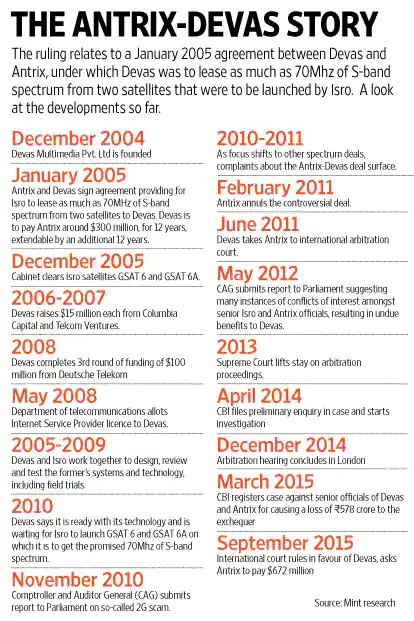
In 2005, Devas Multimedia signed an agreement with Antrix —a commercial arm of the IISRO —to provide multimedia services to mobile users using the leased S-band satellite spectrum to be provided by Antrix.
In 2011, the UPA-2 government canceled this agreement on the ground that it needed the S-band satellite spectrum for national security and other social purposes.
This led to arbitration between Antrix and Devas at the International Chambers of Commerce (ICC) and two bilateral investment treaty (BIT) arbitrations. India lost all three disputes.
India’s non-compliance
AAI and Air India are being targeted because they are Indian public sector entities with overseas assets and serve as a proxy for the government of India.
The Canada court can do so through the concept of restrictive immunity.
In the meanwhile, the National Company Law Tribunal (India) ordered the liquidation of Devas Multimedia on the ground that the affairs of the company were being carried on fraudulently.
Why did India cancel the deal?
The scandal first came to light when in 2011, the news reported that there were some irregularities in the agreement between Antrix and Devas.
They reported the findings of a draft audit report and pointed out discrepancies including financial mismanagement, conflict of interest, non-compliance of rules, and favoritism.
This revelation came at the heel of the 2G spectrum scam which was condemned for the high level of corruption.
How can a Canadian court order the attachment of Indian assets?
State immunity — a well-established principle of international law — shields a state and its property against legal proceedings in the courts of other countries.
This covers immunity from both jurisdiction and execution.
However, there is no international legal instrument in force dealing with state immunity in the municipal legal systems of different countries, which has created an international void.
Consequently, countries have filled this void through their national legislations and domestic judicial practices on state immunity.
Typically, prominent jurisdictions such as Canada follow the concept of restrictive immunity (a foreign State is immune only for sovereign functions) and not absolute immunity.
How can assets of AAI be seized when the claim is against India?
In execution proceedings, assets of an entity can be seized if that entity is an alter ego of the State that fails to comply with the arbitral award.
In other words, if the foreign sovereign exercises such extensive control over the entity, then the presumption that the entity has a separate corporate character is set aside.
Thus, the Canadian court must have concluded that the Indian government extensively controls AAI.
What options does India have?
The first option is to comply with the two adverse BIT awards. However, it is highly unlikely that India would do so.
The second option is to challenge this decision in an appellate court in Canada as per Canadian law where India can try proving that the ‘extensive control requirement’ is not met in the case of AAI.
However, state immunity from execution is purely a procedural hurdle to the enforcement of the BIT award.
It cannot justify India’s breach of its international law obligations enshrined in the two BITs and the continued failure to comply with the arbitral awards.
Back2Basics: New Space India Limited (NSIL)
It functions under the administrative control of the Department of Space (DOS).
It aims to commercially exploit the research and development work of ISRO Centres and constituent units of DOS.
The NSIL would enable Indian Industries to scale up high-technology manufacturing and production base for meeting the growing needs of the Indian space program.
It would further spur the growth of Indian Industries in the space sector.
ANTRIX
Antrix Corporation Limited (ACL), Bengaluru is a wholly-owned Government of India Company under the administrative control of the Department of Space.
It is as a marketing arm of ISRO for promotion and commercial exploitation of space products, technical consultancy services and transfer of technologies developed by ISRO.
Antrix is engaged in providing Space products and services to international customers worldwide.