đŸ’„Join UPSC 2027,2028 Mentorship (July Batch) + XFactor Notes & Microthemes PDF

Subject: Conservation & Mitigation

1. Conservation Progs.
2. Worldwide initiatives
3. Mitigation Strategies
4. Conventions and Protocols

  • [pib] Extended Producers Responsibility on Plastic Packaging

    The Union Ministry of Environment, Forest, and Climate Change has notified the Guidelines on Extended Producers Responsibility on plastic packaging under Plastic Waste Management Rules, 2016.

    What is EPR?

    • Extended Producer Responsibility (EPR) means the responsibility of a producer for the environmentally sound management of the product (plastic packaging) until the end of its life.
    • India had first introduced EPR in 2011 under the Plastic Waste (Management and Handling) Rules, 2011, and E-Waste Management and Handling Rules, 2011.

    What are the new EPR rules for Plastic Waste?

    (A) Plastic packaging

    • The new EPR guidelines cover three categories of plastic packaging including:
    1. Rigid plastic
    2. Flexible plastic packaging of a single layer or multilayer (more than one layer with different types of plastic), plastic sheets and covers made of plastic sheet, carry bags (including carrying bags made of compostable plastics), plastic sachet or pouches
    3. Multi-layered plastic packaging has at least one layer of plastic and at least one layer of material other than plastic.
    • It has also specified a system whereby makers and users of plastic packaging can collect certificates — called Extended Producer Responsibility (EPR) certificates — and trade in them.

    (B) Ineligible plastics for EPR

    • Only a fraction of plastic that cannot be recycled will be eligible to be sent for end-of-life disposals such as road construction, waste to energy, waste to oil, and cement kilns.
    • Only methods prescribed by the Central Pollution Control Board will be permitted for their disposal.

    Targets for recycling

    • In 2024, a minimum of 50% of their rigid plastic (category 1) will have to be recycled as will 30% of their category 2 and 3 plastic.
    • Every year will see progressively higher targets and after 2026-27, 80% of their category 1 and 60% of the other two categories will need to be recycled.
    • If entities cannot fulfill their obligations, they will on a “case by case basis” be permitted to buy certificates making up for their shortfall.

    Effects on non-compliance

    • Non-compliance, however, will not invite a traditional fine.
    • Instead, an “environmental compensation” will be levied, though the rules do not specify how much this compensation will be.

    Challenges in mandatory EPR

    There are several challenges faced by both producers and bulk consumers that hinder proactive participation.

    • Consumer awareness: Waste segregation has been the greatest challenge in India owing to the lack of consumer awareness.
    • Lack of compliance: The plastic producers do not wish to engage in the process holistically and take the effort to build awareness.
    • Large-scale involvement: The EPR doesn’t take into account the formalization of informal waste pickers, aggregators, and dismantlers.
    • Lack of recycling infrastructure: These challenges range from lack of handling capacity to illegitimate facilities in the forms of multiple accounting of waste, selling to aggregators, and leakages.

    Way forward

    • Tracking mechanism: Develop tracking mechanisms and provide oversight of waste compliance, in order to ensure that the mechanism of waste disposal is streamlined.
    • Strict enforcement: While enforcement strictness is of paramount importance, it is also vital to build an incentive structure around this to ensure better complicity by the producers.
    • Innovation: The time is ripe for innovators to come up with an alternative for plastics and the strong will of the Government to rid the toxic waste in a sustainable and safe manner.

    Try answering this PYQ:

    Q.In India, ‘extended producer responsibility’ was introduced as an important feature in which of the following?

    (a) The Bio-medical Waste (Management and Handling) Rules, 1998

    (b) The Recycled Plastic (Manufacturing and Usage) Rules, 1999

    (c) The e-Waste (Management and Handling) Rules, 2011

    (d) The Food Safety and Standard Regulations, 2011


    [wpdiscuz-feedback id=”sv9ethomi6″ question=”Please leave a feedback on this” opened=”1″]Post your answers here.[/wpdiscuz-feedback]


    UPSC 2022 countdown has begun! Get your personal guidance plan now! (Click here)

  • ‘climate smart’ agriculture

    Context

    In the backdrop of the 2070 carbon neutrality target set by India at the CoP26 in Glasgow, the Union Budget for 2022-23 has listed “climate action” and “energy transition” as one of the four priorities for the Amrit Kaal.

    Climate related announcement in Budget 2022-23

    • An additional allocation of Rs 19,500 crore for solar PV modules has been made.
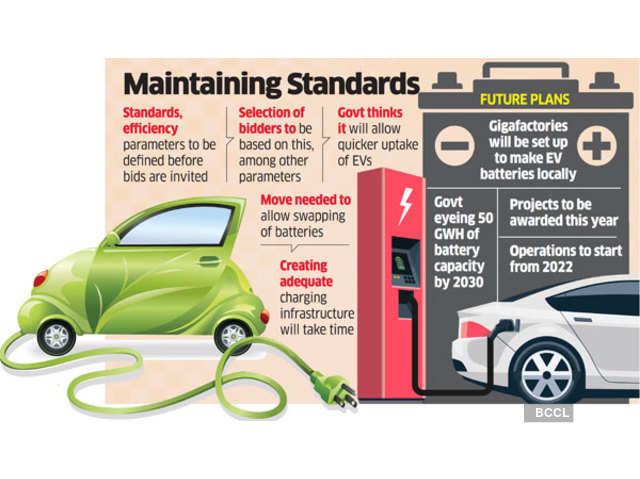
    • The finance minister also talked of co-firing of 5-7 per cent of biomass pellets in thermal power plants, “sovereign green bonds” and a “battery-swapping policy”.
    • These are positive steps towards making the energy and transport sectors less polluting.

    How agriculture impact environement

    • Agriculture contributes 73 per cent of the country’s methane emissions. 
    • Third largest emitter: India has kept away from the recent EU-US pledge to slash methane emissions by 30 per cent by 2030, despite the country being the world’s third largest emitter of methane.
    • As per the national GHG inventory, the agriculture sector emits 408 MMT of carbon-dioxide equivalent and rice cultivation is the third highest source (17.5 per cent) of GHG emissions in Indian agriculture after enteric fermentation (54.6 per cent) and fertiliser use (19 per cent).
    • Paddy fields are anthropogenic sources of atmospheric nitrous oxide and methane, which have been reckoned as 273 and 80-83 times more powerful than carbon dioxide in driving temperature increase in 20 years’ (Sixth Assessment Report IPCC 2021).
    • Moreover, paddy fields require about 4,000 cubic metres of water per tonne of rice for irrigation.
    •  There is scientific evidence that intermittent flooding reduces water and methane emissions but increases nitrous oxide emissions.
    • Thus, lowering of methane emissions through controlled irrigation does not necessarily mean net low emissions. 
    • Role of subsidies and procurement policies: The environmental damage caused by agriculture is largely a result of the various kinds of subsidies — on urea, canal irrigation and power for irrigation — as well as the minimum support prices (MSP) and procurement policies concentrated on a few states and largely on two crops, rice, and wheat.

    Excess rice and wheat stock

    • As of January 1, the stocks of wheat and rice in the country’s central pool were four times higher than the buffer stocking requirement.
    • Rice stocks with the Food Corporation of India (FCI) are seven times the buffer norms for rice.
    • The financial value of these excessive grain stocks is Rs 2.14 lakh crore, of which Rs 1.66 lakh crore is because of excess rice stocks — as per the economic cost of rice and wheat given by the FCI.
    • All this does not just reflect inefficient use of scarce capital, the amount of greenhouse gases (GHG) embedded in these stocks is also large.

    Way forward

    • Carbon tax: According to the IMF, the world needs a carbon tax of $ 75 per tonne by 2030 to reduce emissions to a level consistent with a 2 degree Celsius warming target.
    • India does not have an explicit carbon-price yet, but many countries have begun to implement carbon pricing.
    • Revisiting policies: The Economic Survey 2021-22 points out that the country is over-exploiting its ground water resource (see map), particularly in the northwest and some parts of south India.
    • This calls for revisiting policies to subsidise power and fertilisers, MSP and procurement and reorient them towards minimising GHG emissions.
    • Farmer groups and the private sector can be mobilised to develop carbon markets in agriculture, both at the national and international levels, which can reward farmers in cash for switching from carbon-intensive crops to lower GHG emissions.

    Consider the question “Elaborate on the impact of agriculture on the environment. Suggest the changes needed in Indian agriculture policies to reduce the impact.”

    Conclusion

    Such a move towards “net-zero” agriculture will give India a “climate smart” agriculture in Amrit Kaal. And, if we can protect productivity levels with a low-carbon footprint, it will help India to access global markets too.

    UPSC 2022 countdown has begun! Get your personal guidance plan now! (Click here)
  • Australia lists Koalas as Endangered Species

    Once found in abundance, Australia’s much-loved koalas have now been officially classified as ‘endangered’ after widespread bushfires, drought and land clearing destroyed much of their eucalyptus-rich habitat.

    Koalas

    IUCN Status: Vulnerable

    • According to fossil records, Koala species have inhabited parts of Australia for at least 25 million years, a WWF report states.
    • But today, only one species remains — the Phascolarctos cinereus.
    • They are found in the wild in the southeast and eastern sides of Australia — in coastal Queensland, New South Wales, South Australia and Victoria.

    Threats to Koalas

    • Since Europeans first settled in the region, the Koala population has faced widespread habitat loss, particularly due to agriculture and the construction of urban settlements.
    • They survive on a strict diet of up to a kilogram of eucalyptus leaves every day.
    • Due to the low nutritional value of these leaves, koalas tend to sleep for extended periods, often up to 18 hours a day, to conserve energy.


    UPSC 2022 countdown has begun! Get your personal guidance plan now! (Click here)

  • Species in news: White-Cheeked Macaque

    In an important discovery, scientists have recorded presence of White-Cheeked Macaque (Macaca leucogenys) from central Arunachal Pradesh.

    White-Cheeked Macaque

    • White- Cheeked Macaques are distinct from other macaques found in the region by displaying white cheeks, long and thick hairs on the neck area, and a longer tail.
    • The species was discovered in 2015 by a group of Chinese scientists from the Modog region in southeastern Tibet.
    • This discovery was considered a significant breakthrough as far as primates are concerned.

    Existence in India

    • From India, the species has not been sighted or reported after a single incidence of photographic capture from Anjaw district, Arunachal Pradesh in 2015.
    • The number of these mammals reported from India stands at 434.
    • The significance of the discovery is that it marks a new addition to mammals of India.

    Protection status

    • It has NOT been yet included in the Wildlife (Protection) Act, 1972 of India.
    • The potential threat to all species of macaques in the landscape is due to hunting by locals for consumption and habitat degradation due to urbanization and infrastructure development.


    UPSC 2022 countdown has begun! Get your personal guidance plan now! (Click here)

  • Places in news: Basai Wetlands

    The Basai Wetlands in Gurugram has shrunk to a quarter of its original size over the years.

    Basai Wetlands

    • Basai wetland, located in Basai village in Gurgaon Haryana is a flora and fauna rich water body.
    • It lies in one of the paleochannel of the Sahibi River, a tributary of Yamuna which originates from the Aravalli range in Rajasthan and flows through the region.

    Its significance

    • It is recognized as one of India’s Important Bird and Biodiversity Areas and is of global conservation significance.
    • It supports populations of several endangered, vulnerable, and threatened bird species.
    • It is recognized globally as an Important Bird Area (IBA) by the BirdLife International housing 20,000 birds of over 280 species including migratory birds and endangered birds.
    • However, it has not yet been declared a protected wetland by the Government of Haryana.

    Threats

    • Given the accelerated expansion of the city of the future, the wetland continues to disappear under newly laid roads, modern housing constructions and other infrastructure development.
    • An upcoming expressway, cutting through the terrain here, has majorly impacted the flyway of thousands of migratory birds from Europe and Central Asia.


    UPSC 2022 countdown has begun! Get your personal guidance plan now! (Click here)

  • Species in news: Golden Langur

    Neighbours of a golden langur habitat in western Assam’s Bongaigaon district have opposed a move by the State government to upgrade it to a wildlife sanctuary.

    Kajoijana Bamuni Hill Wildlife Sanctuary

    • The Assam Forest Department has issued a preliminary notification for converting the 19.85 sq. km. patch of forest into the Kajoijana Bamuni Hill Wildlife Sanctuary.
    • It is one of the better-known homes of the golden langur (Trachypithecus geei) found only in Assam and Bhutan.

    About Golden Langur

    • Gee’s golden langur (Trachypithecus geei), also known as simply the golden langur, is an Old World monkey.
    • It is found in a small region of Western Assam and in the neighboring foothills of the Black Mountains of Bhutan.
    • Long considered sacred by many Himalayan people, the golden langur was first brought to the attention of the western world by the naturalist Edward Pritchard Gee in the 1950s.
    • Adult males have a cream to golden coat with darker flanks while the females and juveniles are lighter.
    • It has a black face and a long tail up to 50 cm in length.

    Its habitat

    • It lives in high trees and has a herbivorous diet of ripe and unripe fruits, mature and young leaves, seeds, buds and flowers.
    • The average group size is eight individuals, with a ratio of several females to each adult male.
    • It is one of the most endangered primate species of India and Bhutan.

    Distribution

    • Its habitat is bounded on the south by the Brahmaputra River, on the east by the Manas River, on the west by the Sankosh River, in Assam and on the north by the Black Mountains of Bhutan.

    Conservation status

    • IUCN Red List: Endangered
    • CITES: Appendix I
    • Wildlife Protection Act, 1972: Schedule I


    Try this question from CSP 2014:


    Q. Which one of the following groups of animals belongs to the category of endangered species?


    (a) Great Indian Bustard, Musk Deer, Red Panda, Asiatic Wild Ass

    (b) Kashmir Stag, Cheetah, Blue Bull, Great Indian Bustard

    (c) Snow Leopard, Swamp Deer, Rhesus Monkey, Saras (Crane)

    (d) Lion Tailed Macaque, Blue Bull, Hanuman Langur, Cheetah


    [wpdiscuz-feedback id=”5b66kfytn5″ question=”Please leave a feedback on this” opened=”1″]Post your answers here.[/wpdiscuz-feedback]


    UPSC 2022 countdown has begun! Get your personal guidance plan now! (Click here)

  • [pib] Definition of Forest in India

    The Union Ministry of Environment, Forest & Climate Change has informed about the criteria used to define forest in India.

    Defining Forests universally

    • As per the Conference of Parties (CoP) 9-Kyoto Protocol, the forest can be defined by any country depending upon the capacities and capabilities of the country.
    • Forest- Forest is defined structurally on the basis of
    1. Crown cover percentage: Tree crown cover- 10 to 30% (India 10%)
    2. Minimum area of stand: area between 0.05 and 1 hectare (India 1.0 hectare) and
    3. Minimum height of trees: Potential to reach a minimum height at maturity in situ of 2 to 5 m (India 2m)

    India’s definition of Forests

    The definition of forest cover has clearly been defined in all the India State of Forest Report (ISFR) and in all the International communications of India.

    • The forest cover is defined as ‘all land, more than one hectare in area, with a tree canopy density of more than 10 percent irrespective of ownership and legal status.
    • Such land may not necessarily be a recorded forest area. It also includes orchards, bamboo and palm’.

    Classification of forest cover

    In ISFR 2021 recently published has divided the forest cover as:

    1. Inside Recorded Forest Area: These are basically natural forests and plantations of Forest Department.
    2. Outside Recorded Forest Area: These cover mango orchards, coconut plantations, block plantations of agroforestry.

    Back2Basics: Forest Classification in India

    The Forest Survey of India (FSI) classifies forest cover in 4 classes.

    • Very Dense forest: All lands with tree cover (including mangrove cover) of canopy density of 70% and above.
    • Moderately dense forest: All lands with tree cover (including mangrove cover) of canopy density between 40% and 70%.
    • Open forests: All lands with tree cover (including mangrove cover) of canopy density between 10% and 40%.
    • Scrubs: All forest lands with poor tree growth mainly of small or stunted trees having canopy density less than 10%.


    UPSC 2022 countdown has begun! Get your personal guidance plan now! (Click here)

  • Places in news: Godavari Estuary in Coringa Wildlife Sanctuary (CWS)

    Godavari Estuary in Coringa Wildlife Sanctuary (CWS) is facing due ignorance despite meeting all nine criteria of Ramsar Convention.

    Godavari Estuary

    • The estuary, including 235.70 sq. km Coringa Wildlife Sanctuary (CWS), is one of the rarest eco-regions on the earth.
    • It is also home to India’s second-largest mangrove cover after the Sundarbans.
    • The CWS is inhabited by 115 endangered fishing cats (Prionailurus viverrinus), Olive Ridley turtles, Indian smooth-coated otter, and saltwater crocodiles.

    What are the nine criteria laid out by Ramsar Convention?

    • Criterion 1: “it contains a representative, rare, or unique example of a natural or near-natural wetland type found within the appropriate biogeographic region.”
    • Criterion 2: “it supports vulnerable, endangered, or critically endangered species or threatened ecological communities.”
    • Criterion 3: “it supports populations of plant and/or animal species important for maintaining the biological diversity of a particular biogeographic region.”
    • Criterion 4: “it supports plant and/or animal species at a critical stage in their life cycles, or provides refuge during adverse conditions.”
    • Criterion 5: “it regularly supports 20,000 or more waterbirds.”
    • Criterion 6: “it regularly supports 1% of the individuals in a population of one species or subspecies of waterbird.”
    • Criterion 7: “it supports a significant proportion of indigenous fish subspecies, species or families, life-history stages, species interactions and/or populations that are representative of wetland benefits and/or values and thereby contributes to global biological diversity.”
    • Criterion 8: “it is an important source of food for fishes, spawning ground, nursery and/or migration path on which fish stocks, either within the wetland or elsewhere, depend.”
    • Criterion 9: “it regularly supports 1% of the individuals in a population of one species or subspecies of wetland-dependent non-avian animal species.”

    Back2Basics: Ramsar Convention

    • The Convention on Wetlands of International Importance (better known as the Ramsar Convention) is an international agreement promoting the conservation and wise use of wetlands.
    • It is the only global treaty to focus on a single ecosystem.
    • The convention was adopted in the Iranian city of Ramsar in 1971 and came into force in 1975.
    • Traditionally viewed as a wasteland or breeding ground of disease, wetlands actually provide fresh water and food and serve as nature’s shock absorber.
    • Wetlands, critical for biodiversity, are disappearing rapidly, with recent estimates showing that 64% or more of the world’s wetlands have vanished since 1900.
    • Major changes in land use for agriculture and grazing, water diversion for dams and canals, and infrastructure development are considered to be some of the main causes of loss and degradation of wetlands.


    UPSC 2022 countdown has begun! Get your personal guidance plan now! (Click here)

  • Places in news: Sultanpur National Park

    Homestays would soon be allowed in the villages around Sultanpur National Park in Gurugram to promote tourism and provide an opportunity for the visitors to catch a glimpse of rural life in Haryana.

    Sultanpur National Park

    • Sultanpur NP is located at Sultanpur village on Gurugram-Jhajjar highway, 15 km from Gurugram, Haryana and 50 km from Delhi.
    • It was a bird sanctuary, ideal for birding and bird lookers. Its area covers approximately 142.52 hectares.
    • Migratory birds start arriving in the park in September. Birds use the park as a resting place till the following March-April.
    • During summer and monsoon months the park is inhabited by many local bird species.
    • In April 1971, the Sultanpur Jheel inside the park (an area of 1.21 sq. km.) was accorded Sanctuary status under section 8 of the Punjab Wildlife Preservation Act of 1959.
    • The status of the park was upgraded to National Park under the Wildlife (Protection) Act, 1972 in July 1991.

    Why must we remember it?

    • It is one of the few NPs in the small state of Haryana.
    • Another NP in Haryana is Kalesar National Park.

    Important Fauna at the Park

    • Mammals: Blackbuck, Nilgai, Hog deer, Sambar, Leopard etc.
    • Birds: Siberian Cranes, Greater Flamingo, Demoiselle Crane etc.


    UPSC 2022 countdown has begun! Get your personal guidance plan now! (Click here)

  • What is Pollution-Under-Control (PUC) Certificate?

    Delhi govt will soon make PUC certificate mandatory for fuel at filling stations.

    What is PUC Certificate?

    • The PUC certificate is a document that any person driving a motor vehicle can be asked to produce by a police officer in uniform authorized by the state government.
    • These issue certificates if a vehicle is found complying with the prescribed emission norms.
    • Since the Motor Vehicles (Amendment) Act, 2019 came into force, PUC certificate has been made mandatory.
    • A PUC certificate contains information such as the vehicle’s license plate number, PUC test reading, date on which the PUC test was conducted and the expiry date.

    How is a pollution control check carried out?

    • The computerized model for pollution check was developed by the Society of Indian Automobile manufacturers.
    • A gas analyzer is connected to a computer, to which a camera and a printer are attached.
    • The gas analyzer records the emission value and sends it to the computer directly, while the camera captures the license plate of the vehicle.
    • Subsequently, a certificate may be issued if the emission values are within the limits.

    Fines for non-compliance

    • The test costs between Rs 60 and Rs 100.
    • The validity of the test is one year for BS IV vehicles and three months for others.
    • The fine for PUC violations has now gone up to Rs 10,000; it used to be Rs 1,000 for the first offence and Rs 2,000 for subsequent violations before the amendments came into force.


    UPSC 2022 countdown has begun! Get your personal guidance plan now! (Click here)