đŸ’„Join UPSC 2027,2028 Mentorship (July Batch) + XFactor Notes & Microthemes PDF

GS Paper: Major Crops & Cropping Patterns

  • Centre rules out an increase in MSP for Cotton

    While cotton farmers in several States have demanded an increase in the minimum support price (MSP) of the crop, the Centre has said that it is watching the cotton production scenario and decide accordingly.

    What is MSP?

    • The MSP assures the farmers of a fixed price for their crops, well above their production costs.
    • MSP, by contrast, is devoid of any legal backing. Access to it, unlike subsidized grains through the PDS, isn’t an entitlement for farmers.
    • They cannot demand it as a matter of right. It is only a government policy that is part of administrative decision-making.
    • The Centre currently fixes MSPs for 23 farm commodities based on the Commission for Agricultural Costs and Prices (CACP) recommendations.

    Fixing of MSPs

    • The CACP considered various factors while recommending the MSP for a commodity, including the cost of cultivation.
    • It also takes into account the supply and demand situation for the commodity; market price trends (domestic and global) and parity vis-Ă -vis other crops; and implications for consumers (inflation), environment (soil and water use) and terms of trade between agriculture and non-agriculture sectors.

    What changed with the 2018 budget?

    • The Budget for 2018-19 announced that MSPs would henceforth be fixed at 1.5 times of the production costs for crops as a “pre-determined principle”.
    • Simply put, the CACP’s job now was only to estimate production costs for a season and recommend the MSPs by applying the 1.5-times formula.

    How was this production cost arrived at?

    • The CACP projects three kinds of production cost for every crop, both at the state and all-India average levels.
    • ‘A2’ covers all paid-out costs directly incurred by the farmer — in cash and kind — on seeds, fertilizers, pesticides, hired labor, leased-in land, fuel, irrigation, etc.
    • ‘A2+FL’ includes A2 plus an imputed value of unpaid family labor.
    • ‘C2’ is a more comprehensive cost that factors in rentals and interest forgone on owned land and fixed capital assets, on top of A2+FL.

    How much produce can the government procure at MSP?

    • The MSP value of the total production of the 23 crops worked out to around Rs 10.78 lakh crore in 2019-20.
    • Not all this produce, however, is marketed. Farmers retain part of it for self-consumption, the seed for the next season’s sowing, and also for feeding their animals.
    • The marketed surplus ratio for different crops is estimated to range differently for various crops.
    • It ranges from below 50% for ragi and 65-70% for bajra (pearl millet) and jawar (sorghum) to 75% for wheat, 80% for paddy, 85% for sugarcane, 90% for most pulses, and 95%-plus for cotton, soybean, etc.
    • Taking an average of 75% would yield a number of just over Rs 8 lakh crore.
    • This is the MSP value of production that is the marketable surplus — which farmers actually sell.

    Nature of MSP

    • There is currently no statutory backing for these prices, nor any law mandating their enforcement.

    Farmers demand legalization

    • Legal entitlement: There is a demand that MSP based on a C2+50% formula should be made a legal entitlement for all agricultural produce.
    • Private traders’ responsibility: Some say that most of the cost should be borne by private traders, noting that both middlemen and corporate giants are buying commodities at low rates from farmers.
    • Mandatory purchase at MSP: A left-affiliated farm union has suggested a law that simply stipulates that no one — neither the Government nor private players — will be allowed to buy at a rate lower than MSP.
    • Surplus payment by the govt.: Other unions have said that if private buyers fail to purchase their crops, the Government must be prepared to buy out the entire surplus at MSP rates.
    • Expansion of C2: Farm unions are demanding that C2 must also include capital assets and the rentals and interest forgone on owned land as recommended by the National Commission for Farmers.

    Government’s position

    • The PM has announced the formation of a committee to make MSP more transparent, as well as to change crop patterns — often determined by MSP and procurement.
    • The panel will have representatives from farm groups as well as from the State and Central Governments, along with agricultural scientists and economists.

    Back2Basics: Cotton Cultivation in India

    • Cotton, a semi-xerophyte, is grown in tropical & sub-tropical conditions.
    • A minimum temperature of 15C is required for better germination at field conditions.
    • The optimum temperature for vegetative growth is 21-27C & it can tolerate temperature to the extent of 43C but temperature below 21C is detrimental to the crop.
    • Cotton is grown on a variety of soils ranging from well-drained deep alluvial soils in the north to black clayey soils of varying depth in central region and in black and mixed black and red soils in south zone.
    • It is semi-tolerant to salinity and sensitive to water logging and thus prefers well-drained soils.

    Sowing season

    • The sowing season of cotton varies considerably from tract to tract and is generally early (April-May) in northern India.
    • Sowing is delayed as its proceeds down south (monsoon based in southern zone).


    Click and get your FREE Copy of CURRENT AFFAIRS Micro Notes

    (Click) FREE 1-to-1 on-call Mentorship by IAS-IPS officers | Discuss doubts, strategy, sources, and more

  • Millet-only lunch in Parliament

    millet

    To raise awareness on millets and prepare for 2023, PM Modi, along with fellow parliamentarians across party lines, enjoyed a sumptuous lunch where millets were front and centre.

    Why in news?

    • 2023 has been declared as the “International Year of Millets” by the United Nations, after a proposal from India in 2019.

    What are Millets?

    • Millet are small-grained cereals like sorghum (jowar), pearl millet (bajra), foxtail millet (kangni), little millet (kutki), kodo millet, finger millet (ragi/ mandua), proso millet (cheena/ common millet), barnyard millet (sawa/ sanwa/ jhangora), and brown top millet (korale).
    • They were among the first crops to be domesticated.
    • There is evidence for consumption of millets in the Indus-Sarasvati civilisation (3,300 to 1300 BCE).
    • Several varieties that are now grown around the world were first cultivated in India.
    • West Africa, China, and Japan are also home to indigenous varieties of the crop.

    Cultivation of millets

    • Millets are now grown in more than 130 countries, and are the traditional food for more than half a billion people in Asia and Africa.
    • Globally, sorghum (jowar) is the biggest millet crop.
    • The major producers of jowar are the US, China, Australia, India, Argentina, Nigeria, and Sudan.
    • Bajra is another major millet crop; India and some African countries are major producers.

    Millets in India

    millet

    • In India, millets are mainly a kharif crop.
    • During 2018-19, three millet crops — bajra (3.67%), jowar (2.13%), and ragi (0.48%) — accounted for about 7 per cent of the gross cropped area in the country, Agriculture Ministry data show.

    (1) Jowar

    • Jowar is mainly grown in Maharashtra, Karnataka, Rajasthan, Tamil Nadu, Andhra Pradesh, Uttar Pradesh, Telangana, and Madhya Pradesh.
    • In 2020-21, the area under jowar stood at 4.24 million hectares, while production was 4.78 million tonnes.
    • Maharashtra accounted for the largest area (1.94 mn ha) and production (1.76 million tonnes) of jowar during 2020-21.

    (2) Bajra

    • Bajra is mainly grown in Rajasthan, Uttar Pradesh, Haryana, Gujarat, Madhya Pradesh, Maharashtra and Karnataka.
    • Of the total 7.75 mn ha under bajra in 2020-21, the highest (4.32 mn ha) was in Rajasthan.
    • The state also produced the most bajra in the country (4.53 million tonnes of the total 10.86 million tonnes) in 2020-21.
    • The consumption of millets was reported mainly from these states: Gujarat (jowar and bajra), Karnataka (jowar and ragi), Maharashtra (jowar and bajra), Rajasthan (bajra), and Uttarakhand (ragi).

    Benefits of Millets

    • Millets are eco-friendly crops: They require much less water than rice and wheat, and can be grown in rainfed areas without additional irrigation.
    • Lesser water footprints: Wheat and rice have the lowest green water footprints but the highest blue water footprints, while millets were exactly opposite. Green water footprint refers to water from precipitation whereas blue water refers to water from land sources.
    • Highly nutritious: Agriculture Ministry declared certain varieties of millets as “Nutri Cereals” for the purposes of production, consumption, and trade.
    • Nutrition security: Millets contain 7-12% protein, 2-5% fat, 65-75% carbohydrates and 15-20% dietary fibre. Small millets are more nutritious compared to fine cereals. They contain higher protein, fat and fibre content.

    Back2Basics: 2023- the Year of Millets

    • On March 3, 2021, the United Nations General Assembly (UNGA) adopted a resolution to declare 2023 as the International Year of Millets.
    • The proposal, moved by India, was supported by 72 countries.
    • Several events and activities, including conferences and field activities, and the issuing of stamps and coins, are expected as part of the celebrations.
    • These are aimed at spreading awareness about millets, inspiring stakeholders to improve production and quality, and attracting investments.


    Click and get your FREE Copy of CURRENT AFFAIRS Micro Notes

    (Click) FREE 1-to-1 on-call Mentorship by IAS-IPS officers | Discuss doubts, strategy, sources, and more

  • PR23: A perennial rice variety developed by China

    pr23

    Farmers in China are now growing a perennial variety of rice called PR 22 which does not need to be planted every year.

    What is PR23?

    • Researchers at the Yunnan University have developed a variety of perennial rice named PR23 by cross-breeding regular annual rice Oryza sativa with a wild perennial variety from Africa.
    • Unlike regular rice which is planted every season, PR23 can yield eight consecutive harvests across four years (as these plants with stronger roots grow back vigorously after each harvest).
    • PR23 yields, reported at 8 tons per hectare, are comparable to regular irrigated rice.
    • But growing it is much cheaper since it requires less labour, seeds and chemical inputs.

    Benefits of the variety

    • It can result in remarkable environmental benefits such as soils accumulating close to a ton of organic carbon (per hectare per year) along with increases in water available to plants.
    • It is were preferred by farmers since it saved 58% in labour and 49% in other input costs, over each regrowth cycle.
    • The researchers claim it can transform farming by improving livelihoods, enhancing soil quality and by inspiring research on other grains.
    • The invention could transform rice farming by making it climate-friendly, besides using less of labour and other inputs.

    Why is the discovery of the new variety significant?

    • Rice feeds about half of the world, and its farming and consumption are primarily in Asia.
    • Most crops grown today were once perennial, but bred to be annual, short-duration, to make them more productive.
    • Perennial rice could be a transformational innovation if it proves to be economically sustainable.

    Significance for India

    • India is the world’s second largest rice producer, after China, and the largest exporter with a 40% share in global trade.
    • It is grown during both summer and winter crop seasons.
    • Perennial rice can reduce the drudgery of annual trans-plantation, a back-breaking task, and generate savings on seeds and other inputs.
    • China’s early success has another lesson for India: to raise investments in public research and agricultural sciences.
    • This can help counter the impact of climate change on food security and rural incomes.


    Click and get your FREE Copy of CURRENT AFFAIRS Micro Notes

    (Click) FREE1-to-1 on-call Mentorship by IAS-IPS officers | Discuss doubts, strategy, sources, and more

  • Darjeeling Tea Industry in Crisis

    tea

    Tea Board officials admitted that Indian tea had not been able to establish itself globally, and that one of its key brands, Darjeeling Tea, was under acute stress.

    About Darjeeling Tea

    • Darjeeling Tea, called the ‘Champagne of Teas’, was the first Indian product to get the GI (Geographical Identification) tag in 2004 for its distinctive aroma and flavour.
    • About 87 gardens in Darjeeling which employ about 55,000 workers produce approximately 7 million kg of tea, most of which is exported.

    Why is it under distress?

    • Garden owners are reeling under higher costs of production and other issues.
    • Inferior quality tea from Nepal is being imported, and then sold and re-exported as premium Darjeeling Tea.
    • Nepal shares similar climatic conditions and terrain, produces tea at a lower price because of less input costs, particularly labour, and fewer quality checks.
    • In 2017, the production of Darjeeling Tea hit a low of 3.21 million kg. Since a substantial market of Darjeeling Tea switched to cheaper varieties of tea, including the imported variety from Nepal.
    • Tea planters and industry experts admit that the tea industry in Darjeeling has not recovered from the damage it incurred in 2017.

    Is climate change impacting production?

    • The decline in production is due to multiple factors, which include climate change, declining yields, and high absenteeism among workers.
    • Because of the hilly terrain of Darjeeling, there is no land left for expansion of tea gardens.
    • The tea bushes are older than other parts of the country.
    • Uprooting and planting them is both time and cost-intensive.


    Click and get your FREE Copy of CURRENT AFFAIRS Micro Notes

    (Click) FREE1-to-1 on-call Mentorship by IAS-IPS officers | Discuss doubts, strategy, sources, and more

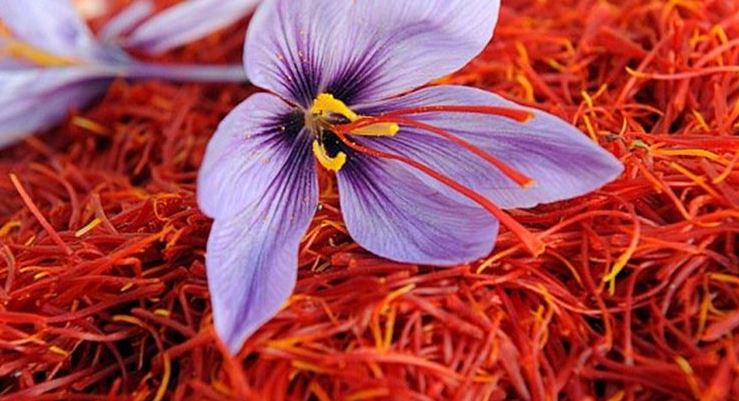
  • GI tag in news: Kashmir Saffron

    saffron

    The Directorate of Tourism, Kashmir has organised a saffron festival in the Karewa of Pampore.

    Saffron

    • Saffron is a spice derived from the flower of Crocus sativus, commonly known as the “saffron crocus”.
    • The vivid crimson stigma and styles, called threads, are collected and dried for use mainly as a seasoning and colouring agent in food.

    Kashmir Saffron

    • It is cultivated and harvested in the Karewa (highlands) in some regions of Kashmir, including Pulwama, Budgam, Kishtwar and Srinagar.
    • It has been associated with traditional Kashmiri cuisine and represents the rich cultural heritage of the region.
    • Its cultivation is believed to have been introduced in Kashmir by Central Asian immigrants around 1st Century BCE. In ancient Sanskrit literature, saffron is referred to as ‘bahukam’.
    • In 2020, the Centre issued a certificate of Geographical Indication (GI) registration for Saffron grown in the Kashmir Valley.

    Major types

    The saffron available in Kashmir is of three types —

    • ‘Lachha Saffron’, with stigmas just separated from the flowers and dried without further processing;
    • ‘Mongra Saffron’, in which stigmas are detached from the flower, dried in the sun and processed traditionally; and
    • ‘Guchhi Saffron’, which is the same as Lachha, except that the latter’s dried stigmas are packed loosely in air-tight containers while the former has stigmas joined together in a bundle tied with a cloth thread

    Whats’ so special about Kashmir Saffron?

    • The unique characteristics of Kashmir saffron are its longer and thicker stigmas, natural deep-red colour, high aroma, bitter flavour, chemical-free processing, and high quantity of crocin (colouring strength), safranal (flavour) and picrocrocin (bitterness).
    • It is the only saffron in the world grown at an altitude of 1,600 m to 1,800 m AMSL (above mean sea level), which adds to its uniqueness and differentiates it from other saffron varieties available the world over.

    Policy moves

    • The National Saffron Mission (launched as a part of Rashtriya Krishi Vikas Yojana) was sanctioned by the central government in the year 2010 in order to extend support for creation of irrigation facilities.
    • It seeks to facilitate farmers with tube wells and sprinkler sets which would help in production of better crops in the area of saffron production.
    • North East Centre for Technology Application and Reach (NECTAR) under Saffron Bowl Project has identified few locations in Arunachal Pradesh and Meghalaya for saffron cultivation.


    Click and get your FREE copy of Current Affairs micro notes

  • GI in news: Kalanamak Rice

    kalanamak

    Kalanamak, a traditional variety of paddy is all set to get a new look and name.

    Kalanamak Rice

    • Kalanamak rice is a paddy with black husk and strong fragrance, which is considered a gift from Lord Buddha to the people of Sravasti when he visited the region after enlightenment,
    • It is grown in 11 districts of the Terai region of northeastern Uttar Pradesh and in Nepal.
    • The traditional Kalanamak rice is protected under the Geographical Indication (GI) tag
    • It’s recorded in the GI application that Lord Budhha gifted Kalanamak paddy to the people of Sravasti so that they remembered him by its fragrance.

    What is the upgrade?

    • The traditional paddy has been prone to ‘lodging’, a reason for its low yield.
    • Lodging is a condition in which the top of the plant becomes heavy because of grain formation, the stem becomes weak, and the plant falls on the ground.
    • Addressing the problem, the Indian Agriculture Research Institute (IARI) has successfully developed two dwarf varieties of Kalanamak rice.
    • They have been named Pusa Narendra Kalanamak 1638 and Pusa Narendra Kalanamak 1652.

    Back2Basics:  Geographical Indication

    • A GI is a sign used on products that have a specific geographical origin and possess qualities or a reputation that are due to that origin.
    • Nodal Agency: Department for Promotion of Industry and Internal Trade (DPIIT), Ministry of Commerce and Industry
    • India, as a member of the World Trade Organization (WTO), enacted the Geographical Indications of Goods (Registration and Protection) Act, 1999 w.e.f. September 2003.
    • GIs have been defined under Article 22 (1) of the WTO Agreement on Trade-Related Aspects of Intellectual Property Rights (TRIPS) Agreement.
    • GI is granted for a term of 10 years in India. As of today, more than 300 GI tags has been allocated so far in India (*Wikipedia).
    • The tag stands valid for 10 years.


    Click and Get your FREE copy of Current Affairs Micro notes

  • Rejuvenating the Indian coffee industry

    coffee

    Context

    • Coffee cultivation is becoming an increasingly loss-making proposition in India. Already weighed down by the high cost of inputs and production as well as labor shortage, the industry is now also affected by changes in climate patterns, reports from Karnataka’s coffee heartland.

    All you need to know about Coffee plantation

    • Coffee is a tropical plantation crop.
    • 16° – 28°C temperature, 150-250cm rainfall and well-drained slopes are essential for its growth.
    • It grows on hilly slopes at the height of 900-1800m.
    • Low temperature, frost, dry weather for a long time and harsh sunshine are harmful for its plant.

    The status Coffee in India

    • India contributes about 4% of the world’s total coffee production. It ranks 6thin the world in coffee production.
    • At present, more than half of the total coffee production in India is produced by Karnataka alone, followed by Kerala and Tamil Nadu.
    • Coffee plants grow better in the laterite soils of Karnataka in India.
    • The Arabica variety initially brought from Yemen is produced in the country.
    • Indian coffee is highly rated and commands premium prices in the global coffee markets.
    • Indian coffee offering innumerable flavors, aromas and blends. The commodity, for several decades, enjoyed a special position in India’s export lists.
    • Coffee has high value and high imagery potential at home and overseas market. From being handled and sold as a berry, a green bean, a processed bean, a roasted bean and now a roasted and ground offering, coffee has climbed the hierarchy of value-addition.
    • Coffee was an important export item for the Union government, when the commodity’s exports were in the range of â‚č4,000-â‚č5,000 crore annually.

    coffee

    Do you know the history of Coffee in India?

    • The history of Indian coffee dates back to around 1600 AD with the planting of Seven Seeds of Mocha by legendary saint Baba Budan in the courtyard of his hermitage in Chikmangalur, Karnataka. The coffee plants remained a garden curiosity before they gradually spread as backyard plantings, and later on to the hills of what is now known as Baba Budan Hills.
    • However, it wasn’t until the 18th century the British entrepreneurs started taking coffee cultivation properly and turned forests in Southern India into commercial coffee plantations

    What are Challenges faced by Coffee cultivation in India?

    • Impact of Climate Change: Drastic changes in climate patterns over the last few years have adversely impacted India’s coffee production and the quality of the crop. There were dry spells between 2015 and 2017 and unseasonal heavy rains, floods and landslides between 2018 and 2022. According to the Coffee Board of India’s post-blossom estimate, production for the 2022 crop is anticipated to be some 30% lower than the estimated production due to the extreme climatic conditions.
    • Impact of heavy rains: Destruction caused by heavy rains between July and September. The impact of the rains continues, with diseases affecting plants, and estate infrastructure suffering long-term damage. Plantations in Wayanad in Kerala and Palani in Tamil Nadu have also suffered similar losses. fruit rot, stalk rot and root rot and other irreparable damage due to heavy rainfall and landslides, berries turned black and dropped.
    • Emergence of New diseases: Erratic weather conditions are helping pests to breed and new diseases to emerge, further stressing coffee plantation.

    coffee

    Crisis in Coffee Industry of India

    • No adequate fund support by government: Sturdy and weather-resistant varieties of coffee may help and stand against climate change, but sadly the government is not providing adequate funds to coffee research stations to develop these.
    • The volatility in market prices marginalizing producers: The volatility in market prices and the reduced influence of producers in the value chain render coffee cultivation an increasingly loss-making proposition. Producers are getting marginalized. This is rapidly turning out to be a buyer-driven commodity market.
    • Impact of Exports on cost competitiveness: More than 75% of Indian coffee production is exported. This has an impact on the cost competitiveness of Indian coffee vis-Ă -vis the coffee that is exported from other producer regions, especially since those growers get their finances at very low interest rates.
    • High Cost of financing: Most private banks insist that growers provide collateral for financing. Since small and medium-size growers are invariably not in a position to provide collateral, the interest rates are high, at around 12%. International interest rates, on the other hand, are negligible, mostly in single digits. This is an advantage for competing coffee-producing region.
    • Increasing cost of Inputs: Due to the rise in the cost of inputs year on year and the increase in the cost of labor and benefits, which constitute 60% to 70% of total plantation expenditure, coffee growers are left with very little money in hand which is not adequate to repay loans. The cost of inputs around coffee such as fertilizers and agrochemicals has increased by almost 20% in a year.
    • No pricing mechanism: There is no official price setting mechanism even in the domestic market. So, traders and curers are calling the shots and fixing prices, and growers are at their mercy.
    • Identity crisis for Indian coffee: On the brand front, Indian coffee is still facing an identity crisis in global markets, although the country started exporting coffee actively before the 19th century. The fact that India sells Robusta and Arabic at a price higher than the hugely advertised Colombia is an indication of the brand building done by the Indian exporter and the quality of Indian coffee. Yet, Indian coffee does not have an individual brand identity in the international markets, Indian coffee was never considered a separate origin coffee. It was always used as filler.

    What are the reasons behind the High cost of production?

    • Rising labor charges: In India, production of coffee is low while the cost of production is on the rise compared to other coffee countries such as Vietnam and Brazil. In Brazil, labour charges account for 25% of the entire production cost, but in India, planters say they account for about 65%
    • Hard terrain and topography: It is possible to bring down the cost of production to some extent through mechanization, but India’s coffee terrains and topography limit this possibility. At the same time, Indian coffee has a unique positioning as it is shade-grown and grown at elevations, while other major producing countries grow coffee in flat lands.
    • High cost of Irrigation: Power cuts makes irrigation expensive as the cost of diesel is high. The high cost of inputs leads to the high cost of production which is the main problem for coffee growers. It makes coffee cultivation unviable. Earlier, the cost of production would go up by 4% to 5% annually, but now it goes up at least 20% annually.
    • Unskilled migrant labour and wage costs: There is increasingly a shortage of labor while the cost of labour is on the rise in the coffee sector. The children of workers in all the three coffee-growing States Karnataka, Tamil Nadu and Kerala prefer to move to urban areas. This means plantations are forced to depend heavily on migrant labours who are unskilled. A lot of effort, time and energy has to be invested in training migrant labours. As wage costs are not linked to productivity, growers are mandated to pay the usual wage along with other social costs such as housing and medicines, which adds up some 30% more to the wages. Most plantations simply don’t find skilled labour, especially for tasks such as shade-lopping, pruning, and borer tracing.

    coffee

    Way forward

    • Alternative source of revenue: Finding alternative sources of revenue and increasing domestic consumption on the one hand and branding and promoting Indian coffee better in the global market on the other.
    • Creating in addition revenue streams: Growers should create additional revenue streams through inter-cropping or through innovative measures. In addition to traditional inter-cropping of pepper and cardamom, coffee growers could try planting exotic fruit-bearing trees, food crops, or getting into fish farming, dairy farming, apiary or green tourism to increase incomes from their coffee gardens. For instance, progressive farmers from Thandikudi in Dindigul district in Tamil Nadu, and from Sakleshpur in Chikkamagaluru district, are growing avocados, mangosteens, oranges, guavas and other fruit bearing trees, amid their coffee plants. In some seasons they say they have even earned more money from these than from coffee and pepper.
    • Government should permit to plant alternate crops: Considering the change in land use, the government could permit growers to plant alternate crops in a land not suitable for coffee cultivation. Timely conversion will prevent growers from going financially sick.
    • Coffee Act and the new Coffee (Promotion and Development Bill), 2022: India’s share in the global coffee market may be less than 5%, but the coffee sector is hopeful that the Coffee Act and the new Coffee (Promotion and Development Bill), 2022, will do away the 80-year-old coffee regulation and usher in change.

    Conclusion

    • The coffee community in India, comprising close to 4 lakh coffee growers, hundreds of large planters, associations that represent growers, planters, curers and exporters, and over a dozen Fair Trade Organizations, hopes to boost coffee in the domestic and international markets and counter the problems the industry faces.

    Mains Question

    Q. Even after getting out of the shackles of the pooling system in 1996, the bean maintained a special status as a valuable export commodity for a long time. Discuss the problems of coffee industry taking a back seat in India and suggest solutions.

    UPSC 2023 countdown has begun! Get your personal guidance plan now! (Click here)

  • Why the govt plans to scrap the decades-old Coffee Act?

    The Ministry of Commerce and Industry is planning to replace the 80-year-old Coffee Act with the new Coffee (Promotion and Development Bill), 2022, which has been listed for the Monsoon Session of Parliament.

    What is the Coffee Act?

    • The Coffee Act, 1942 was first introduced during World War II, in order to protect the struggling Indian coffee industry from the economic downturn caused by the war.
    • In the 1930s, the Indian coffee industry was facing significant problems, such as large-scale damage by pests and diseases, and the global economic downturn caused by the Great Depression.
    • With coffee planters making significant losses, the government passed the Coffee Cess Act (XIV of 1935) and established the first Indian Cess Committee in November 1935.
    • This aimed to promote the sale of coffee and increase consumption of Indian coffee at home and abroad.
    • These problems from the 1930s were compounded with the outbreak of World War II, as low demands and a loss of foreign markets led to a sharp decline in coffee prices.
    • Since the Cess Committee was not able to deal with the crisis faced by the industry, the government formed the Coffee Board, through the introduction of the Coffee Act, 1942.

    Purpose of the Act

    • The purpose of the Act was to provide for the development of the coffee industry.
    • The Board was tasked with supporting the industry in marketing, promotion of consumption, finance and research and development.

    Why scrap the old law?

    • The government is now trying to scrap the law because it claims that many of the provisions have become redundant and are too restrictive.
    • It has also proposed to repeal the decades old laws on tea, spices and rubber, and introduce new legislations in order to increase the ease of doing business and promote the development of these sectors.
    • These are very old laws and the idea is only to simplify them, make it easier to do business.
    • It aims to ensure that the small people in the different areas like coffee growing, tea growing do not have to suffer from high levels of compliance burden.

    Major contentious factor: Pooling System

    • Before India liberalised its economy in 1991, the Coffee Board controlled the marketing of the commodity in its entirety, both in India and abroad.
    • The Act introduced a pooling system, where each planter was required to distribute their entire crop to a surplus pool managed by the Board, apart from the small quantities that were allowed for domestic use and seed production.
    • The Board marketed 70% of the total pool for export and 30% for domestic markets, and sold them in separate auctions, according to Takamasa Akiyama, an economist affiliated with the World Bank.
    • In order to spur domestic consumption, the price of domestic coffee was kept artificially low.

    The changes since liberalization

    • While the Coffee Board no longer maintains its monopolistic control over the marketing of Indian coffee.
    • Through a series of amendments, the Board’s authority was reduced, and in 1996, the pooling system was abolished and growers were allowed to directly sell to processing firms.
    • The coffee market was entirely deregulated and the growers exposed to the free market.
    • Since liberalization, the Coffee Board plays more of an advisory role, and aims at increasing production, promoting further export and supporting the development of the domestic market.

    What are the proposed changes?

    • In order to facilitate growth and ease of doing business, the government would remove the restrictive and redundant provisions.
    • The centre wants to introduce a simplified version of the Act to suit the present needs of the industry.
    • The government would not close the Coffee Board, but would rather shift it from the Ministry of Commerce to the Ministry of Agriculture.
    • Here it aims to ensure that the benefits of all agricultural schemes are extended to coffee growers.
    • The new legislation is now primarily concerned with promoting the sale and consumption of Indian coffee including through e-commerce platforms, with fewer government restrictions.
    • It also aims at encouraging further economic, scientific and technical research in order to align the Indian coffee industry with “global best practices.”

    Back2Basics: Coffee Production in India

    • India is the third-largest producer and exporter of coffee in Asia and the sixth-largest producer and fifth-largest exporter of coffee in the world.
    • The country accounts for 3.14% (2019-20) of the global coffee production.
    • Coffee production in India is dominated in the hill tracts of South Indian states, with Karnataka accounting for 71%, followed by Kerala with 21% and Tamil Nadu (5%).
    • Indian coffee is said to be the finest coffee grown in the shade rather than in direct sunlight anywhere in the world.
    • Almost 80% of Indian coffee is exported.
    • The two well-known species of coffee grown are the Arabica and Robusta. The first variety was introduced in the Baba Budan Giri hill ranges of Karnataka in the 17th century.
    • Brazil is, the largest coffee producer in the world.


    UPSC 2023 countdown has begun! Get your personal guidance plan now! (Click here)

  • What is Direct Seeding of Rice (DSR)?

    The Punjab government recently announced Rs 1,500 incentive per acre for farmers opting for Direct Seeding of Rice (DSR), which is known for saving water.

    What is DSR technique?

    • In transplanting, farmers prepare nurseries where the paddy seeds are first sown and raised into young plants.
    • These seedlings are then uprooted and replanted 25-35 days later in the main field.
    • Paddy seedlings are transplanted on fields that are “puddled” or tilled in standing water using tractor-drawn disc harrows.
    • In DSR, there is no nursery preparation or transplantation. The seeds are instead directly drilled into the field by a tractor-powered machine.

    How much water is required to grow one kg rice?

    • Paddy is non-shelled rice that farmers grow and sell in mandis and then after milling paddy rice is prepared.
    • According to the studies, around 3,600 litres to 4,125 litres of water is required to grow one kg rice depending upon the paddy variety.
    • Long duration varieties consume more water.
    • In Punjab, 32% area is under the long duration (around 158 days) paddy varieties, and the rest comes under paddy varieties that take 120 to 140 days to grow.
    • So, on an average 3,900 to 4,000 litres water is required to grow one kg rice in the state.

    How much water is used in Punjab every year to grow rice?

    • In 2020-21, Centre procured 203 lakh tonnes of paddy from Punjab.
    • After milling, this procured paddy resulted in 135.98 lakh tonnes of rice.
    • Since studies put average water required to produce one kg rice at 4,000 litres, so in one year – based on last year’s estimate – Punjab needed 5,400 billion litres of water to produce 135 lakh tonnes rice.

    How much water can DSR help save?

    • DSR technique can help save 15% to 20% water.
    • In some cases, water saving can reach 22% to 23%.
    • With DSR, 15-18 irrigation rounds are required against 25 to 27 irrigation rounds in traditional method.
    • Since area under rice in Punjab is almost stagnant, DSR can save 810 to 1,080 billion litres water every year if entire rice crop is brought under the technique.

    Are there any other benefits of DSR tech?

    • DSR can solve labour shortage problem because as like the traditional method it does not require a paddy nursery and transplantation of 30 days old paddy nursery into the main puddled field.
    • With DSR, paddy seeds are sown directly with machine.
    • DSR offers avenues for ground water recharge as it prevent the development of hard crust just beneath the plough layer due to puddled transplanting.
    • It matures 7-10 days earlier than puddle transplanted crop, therefore giving more time for management of paddy straw.
    • Research trials indicated that yield, after DSR, are one to two quintals per acre higher than puddled transplanted rice.

    Getting optimum results

    • Experts said that with DSR technique, which is called ‘tar-wattar DSR’ (good soil moisture), farmers must sow paddy only after pre-sowing (rauni) irrigation and not in dry fields.
    • Further, the field should be laser levelled.
    • They said that spraying of herbicide must be done simultaneously along with sowing, and the first irrigation, which is done at 21 days after sowing.

    Limitations of the DSR

    • Suitability of soil is the most important factor as farmers must not sow it in the light-textured soil.
    • This technique is suitable for medium to heavy textured soils including sandy loam, loam, clay loam, and silt loam which accounts for around 80% area of the state.
    • It should not be cultivated in sandy and loamy sand as these soils suffer from severe iron deficiency, and there is higher weed problem in it.
    • Also, avoid direct seeding of rice in fields which are under crops others than rice (like cotton, maize, sugarcane) in previous years as DSR in these soils is likely to suffer more from iron deficiency and weed problems.


    UPSC 2023 countdown has begun! Get your personal guidance plan now! (Click here)

  • What is Samba Cultivation?

    Around four lakh more acres have been brought under the Crop Insurance Scheme for the Samba Cultivation season of 2021-22 in Tamil Nadu.

    What is Samba Cultivation?

    • It is a Tamil name for paddy cultivation season.
    • Other paddy seasons in Tamil Nadu include:
    1. Kuruvai: June-July
    2. Samba: August
    3. Late Samba / Thaladi: September- October
    4. Navarai: December- January

    Back2Basics: Major crop seasons

    (1) Kharif Crop

    • Kharif crops, monsoon crops, or autumn crops are cultivated and harvested in the monsoon season.
    • The farmers sow seeds at the beginning of the monsoon season and harvest them at the end of the season. i.e., between September and October.
    • Kharif crops need a lot of water and hot weather for proper growth.
    • Examples: Rice, Maize, Millet, Soybean, Arhar, Cotton. etc.

    (2) Rabi Crop

    • Rabi means spring in Arabic. Crops grown in the winter season [October to December] and harvested in the spring season [Aril-May] are called Rabi crops.
    • These crops require a warm climate for germination and maturation of seeds and need a cold environment for their growth.
    • Rain in winter spoils the Rabi crop but is good for the Kharif crop.
    • Examples: Wheat, Gram, Barley, Peas, Oats, Chickpea, Linseed, Mustard, etc.

    (3) Zaid Crop

    • Zaid crops are grown between Kharif and Rabi Seasons, i.e., between March to June.
    • They require warm, dry weather as a vital growth period and longer day length for flowering.
    • Zaid crop is significant for farmers as it gives fast cash to the farmers and is also known as gap-filler between two chief crops, Kharif and Rabi.
    • Examples: Cucumber, Pumpkin, Bitter gourd, Watermelon, Muskmelon, Sugarcane, Groundnut, Pulses, etc.


    UPSC 2022 countdown has begun! Get your personal guidance plan now! (Click here)