💥UPSC 2026, 2027, 2028 UAP Mentorship (March Batch) + Access XFactor Notes & Microthemes PDF

Search results for: “”

  • Roadmap For Paris Climate Talks: Part I


    We are going to publish a series of articles on Paris Climate Talks and the underlying issues.

    In this article, we will explore what is the ‘conference of parties’, and why we will hear more about it as the year-end approaches. We will also understand the how planet’s future could hinge on a deal in Paris.

    What is the CoP-21 and its origin?

    • The annual meeting is called CoP, or Conference of Parties, ‘parties’ being a reference to the 196 signatories to the UN Framework Convention on Climate Change (UNFCCC), that came into force in 1994.
    • The Paris meeting is the 21st meeting of the CoP, and hence it is being called CoP-21.

    Lets understand the objective of COP-21 

    • To deliver an agreement that will facilitate the reduction of greenhouse gas emissions, the only way to mitigate climate change.

    What are the options to achieve this objective

    • Move to processes that do not release carbon dioxide, or minimises their emission. In terms of energy, sources like solar, wind or nuclear.
    • Make use of better technology to make industrial processes more efficient, and lower carbon emissions.


    What is the quantum of emissions to be cut?

    • The purpose is to restrict the global surface temperature within 2-degree Celsius as compared to pre-industrial times.
    • The 2-degree target is a certain maximum amount of carbon dioxide that can be left accumulated in the atmosphere, often referred to as carbon budget.
    • Scientists argue that at the current rate of greenhouse gas emissions, the budget would be exhausted in the next 25 years.

    Why is it difficult to cut this quantum of emissions?

    • Almost every human/industrial activity involves the use of energy which is produced primarily by burning fossil fuels, such as coal, oil, etc; all of which have high carbon content.
    • Cutting emissions will mean slowing these activities and, thus, economic development.

    There is more serious impact on developed countries

    The emission cuts for richer and developed countries would mean

    • Altering their lifestyles
    • Giving up big private vehicles to embrace public transport
    • Reducing consumption <This would have impact on countries whose economy is based on consumption>
    Published with inputs from Pushpendra
  • IAS Mains 2015 & Beyond – Mini Quiz #3

    With special focus on GS3, here are the questions to solve for today. Model answers will be made available tomorrow.


    #1. Write a note on Green India Mission with special emphasis on its goals and current status.

    The National Mission for Green India (GIM) is one of the eight Missions outlined under the National Action Plan on Climate Change (NAPCC). It aims at protecting; restoring and enhancing India’s diminishing forest cover and responding to climate change by a combination of adaptation and mitigation measures.

    Try to consolidate your answer and keep it to the point. Do not start explaining the concept and waste words on that.

    #2. (a) What is ‘DigiLocker’? Discuss its utility.
    #2. (b) What is ‘Could Computing’? Identify its benefits.

    Factual question. Should be an easy answer. Try putting in some government of india centric points on how this can be extended to enhance participation, reach etc.

    #3. ‘Cyberspace has emerged as the biggest challenge to the national security’. Comment.

    Start your answer with an India centric viewpoint. Use a popular case (example) to establish your theory.

    #4. Discuss the environmental impact of constructing dams in Himalayan region and suggest the mitigating strategies.

    #5. Climate change has increased the frequency and intensity of the disasters/ As an administrator what steps shall you initiate to mitigate impact of flooding in the coastal and island territories of the country.

  • How to Make Most Out of Coaching Classes for IAS Preparation

    Still in college or a dilemma whether to  go for coaching classes or rely on self studies for IAS Preparation? Read To coaching or not to coaching first to make up your mind.


    Now then, if you have indeed made up your mind to attend some, here are 5 recommendations on How to Make Most Out of Coaching Classes for IAS Preparation:

    #1. Follow the class plan religiously

    Most of the coaching centre follow a pre-meditated plan which is generally handed over at the outset listing the topics to be covers and the dates. Take advantage of this routine!

    Since you already have the topic that shall be covered by the instructor, go through it from the reference books or the study material that may have been provided by the institute. The rationale behind doing so is that you shall have a fair idea of what to expect in the class, you shall be able to relate more to the topic and shall also be able to clarify doubts that would have cropped if you had read the topic from the reference books at a later stage.

    Secondly, there is high chance that sometimes you might miss what the instructor just said in the ongoing clatter. In such cases you can still manage to get back on the track because you shall be able to fill up the gap from your prior reading of the topic. Thirdly, you will only take down the instructions that are not there in the reference book avoiding jotting down everything that the instruction speaks.

    #2. Read your books, even if they are just NCERTs

    At times the instructors shall themselves ask you to read some books, which may even be an NCERT, before you come for the next class. Read it. Do not assume that it will not serve any purpose as it is ‘just a NCERT’. NCERTs help a lot in understanding the most complex issues and the instructor must be having a reason to refer to it.

    #3. Utilise your travel time well. Don’t waste it in playing teen patti!

    Many of the aspirants travel from far off places to their coaching center. Make use of this traveling time. Opening a newspaper and spreading it might be annoying to fellow travelers and in any case does not give you the luxury of underlining in most cases and a reference book may be too heavy to carry everyday. Fall back on digital media. Best time to read up on from Civilsdaily’s Newscards, right?

    #4. Avoid being the last bencher

    It was just fine and cool if you were last bencher in your school/college, but in these classrooms try to occupy front benches if you really want to gain some knowledge. The last benches have enough non-serious candidates and noise to distract you through out the class. If some of them are your friends, shun them, for the class we mean!

    #5. Create a better network – Study & Share

    Few days into the class, you can very well identify the candidates who are there because they want to be there and are serious about their preparation. Befriend them. They will not only increase the utility of the class but shall also come in handy for discussing the issues. It is only with discussions with such candidates that you open up to new ideas and develop alternative perspectives.


  • Cornelia Sorabji: India’s First Woman Barrister

    While women in Britain were campaigning for the right to vote, Cornelia Sorabji became the first woman to practise law in India. Here are a few things that you should know about the woman who was a contemporary of Sarojini Naidu.


    In the later 19th century, while a woman was accepted in the field of teaching and medicine was slowly opening up, law was a closed case. In 1894, Cornelia returned home to India after studying law from Oxford. It was only by 1924 that women were officially permitted to practice law in India.

    What was she doing before all the while? Well, she couldn’t practice law in courts so she accepted the invitation of Maharajas who regaled in their trivialities!

    In one such case she was ordered to defend an elephant, against the Maharaja himself. The judge presiding the case? Also the Maharaja.

    Quite an intriguing personality she was!

    She was an Indian whose loyalty to the British Raj never wavered; a passionate advocate of women’s rights whose own career was nearly compromised through her inappropriate relationship with a married man; and, an independent and free-thinking intellectual who depended for work on patronage from an elite circle.

  • IAS Prelims 2016 Corner #5

    Today let’s take a detour through the Indian landscape. It is a favourite topic among the examiners with the richness and variety it can throw in the questions and who knows what surprises IAS Prelims 2016 can throw! Let’s go!

    #1. Which of the following forms a watershed between the Brahmaputra and the  Barak river systems?

    (a) Dafla Hills

    (b) Barail Range

    (c) Mishmi Hills

    (d) Garo Hills

    #2. Eight Degree Channel separates

    (a) Minicoy Island and Maldives

    (b) Little Andaman and Car Nicobar Islands

    (c) Great Nicobar Island and Indonesia

    (d) Amindivi and Cannanore Islands

    #3. Consider the following pairs:

    Peak/Hills                   Region

    1. Amarkantak     :   Vindhyan Range

    2. Kudremukh     :    Middle Sahyadri

    3. Girnar Hills     :    Kathiawar Peninsula

    Which of the above is/are correctly matched?

    (a) 1 only

    (b) 1 and 3 only

    (c) 2 and 3 only

    (d) 1, 2 and 3

    #4. Which of the following is/are tributaries of River Krishna?

    1. Tungabhadra

    2. Indravati

    3. Bhima

    4. Pranhita

    Select the correct alternative using the codes given below:

    (a) 1 and 4 only

    (b) 1, 2 and 3 only

    (c)  2 and 4 only

    (d) 1 and 3 only

    #5. Which of the following is most southerly located?

    (a) Nilgiri Hills

    (b) Shevaroy Hills

    (c) Javadi Hills

    (d) Cardamom Hills

    #6. Karewas are a feature generally found in the state of

    (a) Arunachal Pradesh

    (b) Himachal Pradesh

    (c) Jammu and Kashmir

    (d) Uttarakhand

    #7. River Alaknanda is joined by the river Pindar at

    (a) Devprayag

    (b) Vishnuprayag

    (c) Rudraprayag

    (d) Karnaprayag

    Answer Key:

    #1. (b)

    #2. (a)

    #3. (c)

    #4. (d)

    #5. (d)

    #6. (c)

    #7. (d)

  • Google’s Project Loon: Balloon powered Internet

    What is Google’s project loon ?


    Many of us think of the Internet as a global community. But two-thirds of the world’s population does not yet have Internet access.

    Balloon powered Internet: Project Loon is a network of balloons traveling on the edge of space, designed to connect people in rural and remote areas, help fill coverage gaps, and bring people back online after disasters.

    Then, How it exactly works ?

    • Project Loon balloons travel approximately 20 km above the Earth’s surface in the stratosphere.
    • Winds in the stratosphere are stratified, and each layer of wind varies in speed and direction.
    • Project Loon uses software algorithms to determine where its balloons need to go, then moves each one into a layer of wind blowing in the right direction.
    • By moving with the wind, the balloons can be arranged to form one large communications network.

    How is the Loon designed ?

    • The inflatable part of the balloon is called a balloon envelope.
    • Each balloon’s electronics are powered by an array of solar panels.
    • The panels produce approximately 100 Watts of power in full sun, which is enough to keep Loon’s electronics running.
    • Project Loon is able to power itself using entirely renewable energy sources.


    How does it connect?

    • Each balloon can provide connectivity to a ground area about 40 km in diameter using a wireless communications technology called Long-Term Evolution (LTE).
    • With this LTE, people will be able to access the Internet everywhere directly from their phones and other LTE-enabled devices.
    • Balloons relay wireless traffic from cell phones and other devices back to the global Internet using high-speed links.

    Very quickly then, what has Loon upto all this while?

    • Project Loon began in June 2013 with an experimental pilot in New Zealand.
    • The results of the pilot test as well as subsequent tests in New Zealand, California’s Central Valley and in Northeast Brazil were analysed.
    • They were used to improve the technology in preparation for the next stages of the project.

    What are Superpressure balloons?

    • Superpressure balloons are made out of tightly sealed plastic capable of containing highly pressurised lighter-than-air gases.
    • The concept was first developed for the US Air Force in the 1950s using a stretched polyester film called Mylar.
    • More recently, Nasa has experimented with the technology and suggested superpressure balloons could one day be deployed into Mars’s atmosphere.

    What’s the way forward for Google balloons?

    • Google suggests that Project Loon would be a cheaper solution than installing fibre optic cables or building mobile phone masts across all of Indonesia’s islands, which contain jungles and mountains.
    • Google is in talks with the Indian government to deploy this wind power project here. The company hopes to begin production by 2016.

    Published with inputs from Arun
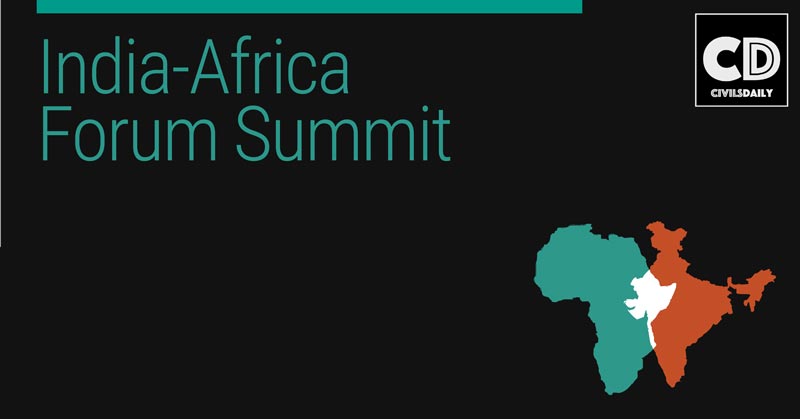
  • India-Africa Forum Summit: Old Friends – Old Family

    It’s likely to be the biggest diplomatic event in independent India’s political history. Never have more than 39 heads of states gathered in the country.


    • The India-Africa forum summit on October 29, four-day summit meeting between India and 54 African nations, aimed at deepening the spirit of partnership, strengthening international solidarity and expanding cooperation.
    • India hopes to create conditions that stimulate trade and investment flows between India and African countries.

    What is India-Africa Forum Summit and how did it start?

    • The India-Africa Forum Summit (IAFS) is a celebration of the close partnership between Africa and India, started in 2008.
    • It was decided to hold the summits every three years, alternately in India and Africa. New Delhi was the venue in 2008 and Addis Ababa in 2011.
    • The third summit, scheduled to be held in 2014, was postponed because of the Ebola outbreak, and will now be held in Delhi from October 26 to 29.


    Reasons behind such an initiative?

    • Economically, Africa is very resource-rich, and has moved from being an underdeveloped continent to having several fast-growing economies, and new democracies.
    • Strategically, there are key shared interests in battling global terrorism, and piracy in the Indian Ocean.
    • Politically, India’s ambition to become a permanent member of the UN Security Council makes it imperative that it engages with all 54 countries of the continent.
    • New Delhi would also want a stronger partnership with Africa on climate change ahead of the COP-21 in Paris.

    How did it help in the development process of the African continent?

    • In the past three years alone, 25000 Africans have been trained or educated in India.
    • The Pan Africa e-network , which now connects 48 African countries, is becoming the new highway of regional connectivity and human development.
    • Under the India Technical and Economic Cooperation (ITEC) programme, over 100 officials from sub-Saharan Africa receive training annually in India.
    • The continent’s progress will add great stability and momentum to the global economy and benefit India as well.

    Why India and Africa are important for world?

    • India and Africa constitute one-third of the world’s population. A large majority of them are in their youth.
    • Indeed, India and Africa will have a significant part of the global youth population in this century. Their future will shape the course of this world to a great extent.

    In what ways can the New Development Bank of BRICS benefit African countries?

    • It has brought together the five BRICS countries (especially South Africa) as equal partners in the establishment of the Bank, which reflects a completely new paradigm of financial structure of such institutions.
    • It would also, hopefully, have an African window or regional presence of the Bank in the future.

    Obsession with Chinese investments in Africa, Really?

    • World Bank estimates that private Chinese investment accounted for 55% of all Chinese direct investment in Africa by the end of 2011, with most of the spending in manufacturing and the service sector.
    • India seeks to challenge China’s dominance on a continent that is blessed with vast natural resources and has the world’s fastest-growing population.
    • New Delhi wants to project its soft power and historical ties to Africa, in contrast to China’s focus on resource extraction and capital investment that has sparked a backlash in some countries against Beijing’s mercantilist expansion.

    What is on the agenda of this IAFS?

    1. A forceful support for United Nations Security Council reforms.
    2. The endorsement of India’s position at the WTO with regard to agricultural subsidies.
    3. An understanding of the African position on emerging mega free trade agreements like the US-led Trans Pacific Partnership.
    4. Finally a ‘Feel Good Factor’ to deepen diplomatic relations with African governments.

    Seven of the world’s fastest growing economies are now in Africa. All of this means that Africa’s engagement with the world is an opportunity for better, more equal relations.

    The third Summit, which will see the participation of all African nations for the first time, this is an opportunity to take India’s Africa policy out of China’s shadow and truly bring foreign policy home.


    Published with inputs from Arun
  • Indian Polity

    # Types of Majorities

    # Rule of Law v/s Rule by Law

    # Directive Principles of State Policy

    # Powers of President and governor – Comparative analysis of position of governor vis-a-vis president, discretionary powers, bills reserved for president.

    # Speaker of the Lok Sabha

    # Emergency Provisions

    Also related here: President’s rule: Is it Failure of state machinery? – Article 356, R. Bommai case, Recent developments in Uttarakhand and Arunachal Pradesh; and The Emergency, 40 Years On.

    # NJAC Related here: [Judicial Appointments Conundrum]

    # Judicial Pendency: Judges to set time bound targets – Reforms for addressing judicial pendency, improving conditions of jails, access to Justice project.

    # National Court of Appeal – Do we really need a National Court of Appeal?

    #Electoral Reforms In India – Historical background of Electoral Reforms, issue of compulsory voting, misuse of religion in elections, totaliser machines, NOTA, green protocol for elections in Kerala, Election Laws (Amendment) Bill, 2016, New Delhi Declaration on Poltical Finance, Justice A.P. Shah Report on Electoral Disqualifications.

    # Corruption And The Idea Of Lokpal – Transparency International and Corruption Perception Index, Uttar Pradesh Lokayukta controversy, Anti-corruption bill.

    # Panchayati Raj Institutions: Issues and Challenges – Gram Uday Se Bharat Uday

    # Panchayat Election Norms: Is Democracy at stake? – Haryana Panchayat Law, Amendment to the Rajasthan Panchayat Raj Act, 1994.

    # Debating Santhara: The Right to Death

    # Who should have the last word on governance in Delhi?

    # Freedom of Speech and Criminal Defamation Law

    # Uniform Civil Code – The debate, triple talaq and polygamy among Muslims, Christian divorce law

    # Striking the Sec 66A of IT Act: The Shreya Singhal Case

    # LGBT Rights: Call on section 377 – IPC and the need for modernisation

    # Juvenile Justice (JJ) Act – Main provisions, key Issues and analysis.

    # Negotiable Instruments Act – Should we have commercial courts? Negotiable Instruments (Amendment) Bill, 2015.

    # TRAI Recommendations and Guidelines – Call drop rules, ruling on net neutrality, spectrum pricing and reforms.

    # Call Drops And Issues Circumventing It – DoT guidelines, call drops and concerns about Digital India.

    # Special Category Status and States – What special category status means and benefits states having ‘Special Category’ status enjoy. Why the status has been removed? Special Status vs. Special Category Status – What’s the difference?

    # Food Safety and Standards Authority of India (FSSAI) – Maggi Noodle Fiasco and Mono Sodium Glutamate

  • Governance and Social Justice

    Governance

    # CCTNS Project: Reforming the Policing in India

    # Lodha committee’s recommendations on the BCCI

    # Direct Benefits Transfer: The Big Reform – Issues with current DBT implementation and recommendations, DBT in fertilizers.

    # RTI – About Central Information Commission (CIC), Bringing political parties under RTI

    # Land Acquisition: Issues and Challenges – Land Reforms in India, India’s land laws and FDI

    # Liquor Policy of States: A New Era of Prohibition – Kerala’s Liquor Policy, Bihar’s prohibition law

    # Aadhaar Cards: The Identity Revolution – Aadhaar Bill 2016, Hopes and Concerns.

    # Empowering The Democracy – PM’s annual award for extraordinary and innovative work, Gram Uday Se Bharat Uday Abhiyan

    # Prime Minister’s Office : Important Updates – PRAGATI – the ICT-based, multi-modal platform for Pro-Active Governance and Timely Implementation.

    # Ministry of Railways: Important Updates – Transforming Indian Railways through 7 Mission Mode activities – Avataran, smarter railway stations, Railway Budget to be merged with General Budget from 2017, IT Enabled Applications For Transparency in Indian Railways, Financial reforms for railways, 5 investment models in Indian Railways.

    # Ministry of Home Affairs: Important Updates – Performance grading of Police Stations, MHA sends back anti-conversion Bills, Beat Policing and Counter-radicalisation. Related: Home Ministry Denies Clearance to TV & Radio Networks.

    Health

    # World Health Organisation: Important Updates – Coalition for Epidemic Preparedness Innovations (CEPI), WHO report on doctors in India, International Agency for Research on Cancer.

    # Policy Wise: India’s Health Sector – The Global Hunger Index (GHI), Janani Suraksha Yojana, HIV and AIDS Bill, 2014, WHO report on doctors in India, Public spending on health, obsessive compulsive disorder (OCD), National Programme for Health Care of the Elderly, Rashtriya Swasthya Bima Yojana, Chronic Obstructive Pulmonary Disease (COPD), Janani Suraksha Yojana,Rashtriya Swasthya Bima Yojana (RSBY)

    # Organ & tissue transplant- policies, technologies – India’s organ transplant programme and National registry of organ and tissue donors

    # The Fight Against Tuberculosis – India’s TB burden, India sets an example in subsidised TB diagnosis, Chennai’s new strategy to eliminate TB.

    # Tobacco: The Silent Killer – National Tobacco Control Programme (NTCP)? Pictorial warnings on tobacco products, E-Cigarettes: Risks that they hold.

    # Drug Pricing Policy and Essential Medicines – National Pharmaceutical Pricing Authority, Bulk drugs, Essential medicines, Drug price control, Pharma Jan Samadhan.

    # Polio Eradication And Endgame Strategy – Polio vaccine switching

    # Zika virus outbreak: WHO declares public health emergency – What’s special about Cuba’s health care?

    # Ministry of Health and Family Welfare: Important Updates – Regulation of medical devices, Bar coding of drugs, Pharma zones, GIS-enabled HMIS application and the self-printing of e-CGHS card, Kayakalp awards, project Clean Street Food, New Health Protection Scheme, Arogya Fair, National Deworming initiative, National Resource Facility for Bio-medical Research (NARF), Health as a Fundamental Right.

    # Developments In Pharma Sector – Pharmacovigilance Programme, India’s drug monitoring programme, Katoch Committee recommendations, First malaria vaccine.

     Education

    # The State Of Affairs In Higher Education – Central Advisory Board of Education (CABE), National Institutional Ranking Framework, University Grants Commission (UGC) and AICTE, All India Survey on Higher Education, The Global Initiative of Academic Networks, Bharatvani project.

    # Ministry of Human Resource Development : Important Updates – Degrees in digital format, IIMs’ demands on autonomy, Confederation of Indian Industry (CII), Modernization of Madarsas’ Education, Seema Darshan, Athulyam programme, Recommendations of Devnani Committee.

    # New Education Policy and TSR Subramanian committee – Draft proposal by TSR Subramanian committee, RTE provisions about minority educational institutions, Issues with UGC.

     Social Justice:

    # Child labour Law & the Way Forward – Child Labour Law amendments

    # Social Sector Expenditure: India’s Approach – Pradhan Mantri Ujjwala Yojana, ESI scheme, social sector spending.

    # National Food Security Act: Issues & Developments

    # Social isolation of Dalits: Is this Equality? – Rohith Vemula

    # Ministry of Tribal Affairs: Important Updates – Tribal rights, Recommendation of Prof. Xaxa Committee

    # National Human Rights Commission : Important Updates – Why more complaints in NHRC than FIRs?

    # Child Protection & Child Rights in India – Draft Bill on child abduction, UNICEF, Central nodal agency to curb human trafficking, Operation Smile, Operation Vatsalya.

    # Crop Insurance: Issues & Developments – Pradhan Mantri Fasal Bima Yojana

    # MGNREGA

    # One Rank One Pension

    # Beti Bachao, Beti Padhao – Beti Bachao Beti Padhao, Sukanya Samridhi Yojana

    # Developmental and Welfare Policies – Ek Bharat Shreshtha Bharat Programme, MGNREGA, Nai Manzil, Giriputrika Kalyana Pathakam, Balamrutam, Eyeway National Helpdesk, Accessible India Campaign, Himayat Programme, Deen Dayal Upadhyaya Grameen Kaushalya Yojana or DDU-GKY, National Rural Livelihoods Mission, Atal Pension Yojana, Bhavishya – Pension Sanction and Payment Tracking System, National Mission on Bamboo Applications (NMBA), Makeathon, Housing for All, Pradhan Mantri Khanij Kshetra Kalyan Yojana.

    # Other Government Schemes and programs – Schemes from the ministry of minority affairs, Schemes for the development of north-east, Indira Gandhi Matritva Sahyog Yojana, Schemes on Protection of Women, One Stop Centre Scheme and the Nirbhaya Fund, Sukanya Samriddhi Yojana, Global Initiative of Academic Networks (GIAN), School Nursery Yojana, Pradhan Mantri Khanij Kshetra Kalyan Yojana (PMKKKY), Deen Dayal Upadhyaya Antyodaya Yojana, Deen Dayal Upadhyaya Gram Jyoti Yojana, Pandit Deendayal Upadhyay Shramev Jayate Karyakram, Social Security Scheme for Farmers : Ministry of Agriculture.

    # Themes, Indexes & Reports Around the World – World Happiness Report, Conflict Armament Research (CAR), Internet readiness index, USCC IP Index, Global Talent Competitiveness Index, World Economic Forum (WEF), World Development Report, Global ICT Development Index, Human Development Report by UNDP and Human development index.

More posts