💥UPSC 2026, 2027, 2028 UAP Mentorship (March Batch) + Access XFactor Notes & Microthemes PDF

Search results for: “”

  • SC refuses to direct Centre to create independent Indian Environment Service

    The Supreme Court has refused to intervene and direct the government to create an independent Indian Environment Service within the All India Service cadre. A specialized environment service was recommended in the T.S.R. Subramanian Committee report in 2014.

    TSR Subramanian Committee Report on Environment

    • The Subramanian committee was set up in August 2014 to review the country’s green laws and the procedures followed by the Ministry of Environment, Forest and Climate Change (MoEF&CC).
    • It suggested several amendments to align with the Government’s economic development agenda.
    • The report had suggested amendments to almost all green laws, including those relating to the environment, forest, wildlife and coastal zone clearances.
    • The committee suggested that another committee, with more expertise and time, be constituted to review the environmental laws.

    Key recommendations

    (a) Establishment of Environment Management Authorities

    • The report proposed an ‘Environmental Laws (Management) Act’ (ELMA), that envisioned full-time expert bodies to be constituted at the Central and State levels respectively:
    1. National Environmental Management Authority (NEMA)
    2. State Environmental Management Authority (SEMA)

    (b) Project clearances

    • These authorities evaluate project clearance (using technology and expertise), in a time bound manner, providing for single-window clearance.
    • It suggested a “fast track” procedure for “linear” projects (roads, railways and transmission lines), power and mining projects and for “projects of national importance.”
    • It also suggested an appellate mechanism against the decisions of NEMA/SEMA or MoEF&CC, in respect of project clearance, prescribing a three-month deadline to dispose appeals.

    (c) Expanding Environment Protection Act

    • The Air Act and the Water Act is to be subsumed within the EP Act.
    • The existing Central Pollution Control Board and the State PCBs, which monitor and regulate the conditions imposed on the industries to safeguard environment be integrated into NEMA and SEMA.

    (d) Evaluating Environmental Reconstruction Cost (ERC)

    • The report also recommends that an “ERC” should be assessed for each project on the basis of the damage caused by it to the environment and this should be added into the cost of the project.
    • This cost has to be recovered as a cess or duty from the project proponent during the life of the project.

    (e) Research and Development

    • It proposed the establishment of a National Environment Research institute “on the lines of the Indian Council of Forestry Research and Education”.
    • It would bring in the application of high-end technology in environment governance.

    (f) Establishment of Indian Environment Service (IES)

    • Finally, an Indian Environment Service should be established to recruit qualified and skilled human resource in the environment sector.

    Status of these recommendations

    • The Centre never formally accepted this report and neither constituted a new committee as recommended by the Parliamentary Standing Committee.
    • However, many of these recommendations are implicitly making their way into the process of environmental regulation.

    Why was IES proposed?

    • Environmental governance in India involves several clearances.
    • Currently, officers from all India civil services, conducted by UPSC, deals with environment clearances and policies.

    Do we really need IES?

    • The IAS were founded on the colonial government’s Council of India’s law member T.B. Macaulay’s notion of generalised work done by one official.
    • However, the modern era, based on a socio-economic model of high specialization, cannot survive on this.
    • The IAS is filled with people without the requisite specialized skills and qualifications to successfully accomplish their tasks.
    • This was lamented by the PM when he posed the question “Can babusdo everything?” (babu is a euphemism for bureaucrats).
    • There was a proposed functional field for specialization that was recommended in 1970 by India’s first Administrative Reforms Commission, but like the Subramaniam Committee suggestions, it was never implemented in its full.

    Way forward

    • There is need of an active bureaucracy for the implementation of environment policy.
    • These administrators need to be aware of their responsibility, which can be made effective if a service dedicated to the environment is created.
    • The challenge of climate change would then be able to be effectively approached through the bureaucracy.

    Conclusion

    • Policymakers must build on the exercise of reforming environmental governance.
    • The process must involve reforming our laws, strengthening our institutions and streamlining the processes.


    (Click) FREE1-to-1 on-call Mentorship by IAS-IPS officers | Discuss doubts, strategy, sources, and more

  • Hwasong-17: North Korea’s new ‘monster missile’

    hwasong

    North Korea said it test-fired its massive new Hwasong-17 intercontinental ballistic missile (ICBM).

    Hwasong-17  

    • The Hwasong-17 is nuclear-armed North Korea’s biggest missile yet, and is the largest road-mobile, liquid-fuelled ICBM in the world.
    • Its diameter is estimated to be between 2.4 and 2.5 metres, and its total mass, when fully fuelled, is likely somewhere between 80,000 and 110,000 kg.
    • Unlike North Korea’s earlier ICBMs, the Hwasong-17 is launched directly from a transporter, erector, and launcher (TEL) vehicle with 11 axles, photos by state media showed.

    How far can it fly?

    • The missile launched on Friday flew nearly 1,000 km (621 miles) for about 69 minutes and reached a maximum altitude of 6,041 km.
    • The weapon could travel as far as 15,000 km (9,320 miles), enough to reach the continental United States.

    What is North Korea trying to demonstrate with the missile launches?

    • North Korea is wary of joint drills between the US and South Korea and believes them to be a rehearsal for invasion and proof of hostile policies.
    • Notably, Pyongyang’s record launches this year began even before military exercises between the allies, one also involving Japan.
    • While it says it is responding to the “provocative” drills, some analysts believe that Kim Jong-un must be setting the stage for something bigger— the resumption of nuclear testing after five years.
    • Pyongyang may also be showcasing its pre-emptive abilities in response to South Korea’s own pre-emptive “kill chain” strategy.

    Failure of diplomacy

    • North Korea pulled out of the Nuclear Non-proliferation Treaty (NPT) in January 2003 and has conducted six nuclear tests so far since 2006.
    • Diplomatic talks have been starting and halting over the past two decades.
    • The Six-Party Talks involving South and North Korea, China, Japan, Russia, and the United States, started in 2003, have since stalled with changing geopolitical dynamics.
    • Former U.S. President Donald Trump met with Kim Jong-un thrice between 2018 and 2019 but talks broke down and resulted in more sanctions from the West and increased testing by Pyongyang.
    • The Joe Biden administration did make attempts to restart talks, and North Korea has not seemed keen either.


    (Click) FREE1-to-1 on-call Mentorship by IAS-IPS officers | Discuss doubts, strategy, sources, and more

  • Pensionary benefits for Women in combat

    Combat

    Context

    • The Supreme Court recently directed the Centre and the Indian Air Force to consider granting Permanent Commission to 32 retired women Short Service Commission (SSC) officers based on their suitability with the purpose of giving them pensionary benefits. The SC has, however, clarified that the retired women officers will only be considered for pension benefits and not salary arrears.

    Background

    • The military opened its doors to women in 1992 when the Air Force inducted its first batch.
    • The landmark judgment came in which Justice Kishan Kaul (then with the High Court of Delhi) had hoped that “with expanding horizon of women’s participation in different walks of life, the armed forces would be encouraged to have larger participation of women in more areas of operation.”

    combat

    The case of women inducted into short service

    • The 32 retired women officers were inducted into short service commission between 1993 and 1998.
    • Though they were not granted permanent commission, their service was extended by six years and then then again for another four years.

    Another Important verdict

    • In a landmark verdict on February 17, 2020, the top court had directed that women officers in the Army be granted permanent commission, rejecting the Centre’s stand on their “physiological limitations” as being based on “sex stereotypes” and “gender discrimination against women”

    combat

    Permanent Commission (PC) Vs. Short Service Commission (SSC)

    • SSC means an officer’s career will be of a limited period in the Indian Armed Forces whereas a PC means they shall continue to serve in the Indian Armed Forces, till they retire.
    • The officers inducted through the SSC usually serve for a period of 14 years. At the end of 10 years, the officers have three options.
    • A PC entitles an officer to serve in the Navy till he/she retires unlike SSC, which is currently for 10 years and can be extended by four more years, or a total of 14 years.
    • They can either select for a PC or opt-out or have the option of a 4-years extension.
    • They can resign at any time during this period of 4 years extension.

    Why males have ever dominated the armed forces?

    • Militaries across the world help entrench hegemonic masculine notions of aggressiveness, strength and heterosexual prowess in and outside their barracks.
    • The military training focuses on creating new bonds of brotherhood and camaraderie between them based on militarized masculinity.
    • This temperament is considered in order to enable conscripts to survive the tough conditions of military life and to be able to kill without guilt.
    • To create these new bonds, militaries construct a racial, sexual, gendered “other”, attributes of whom the soldier must routinely and emphatically reject.

    combat

    Struggle of women in combat role

    • Gender parity in forces still needs a relook: Though women have been in the forces since 1992 all roles and career options are not offered to them. Women have been allowed in combat in the Air Force, but we are yet to see women in combat roles in the army and navy.
    • Battle of acceptance: Acceptance of women in the military has not been smooth in any country. Every army has to mould the attitude of its society at large and male soldiers in particular to enhance acceptability of women in the military.
    • Adjusting with the masculine set up: To then simply add women to this existing patriarchal setup, without challenging the notions of masculinity, can hardly be seen as “gender advancement”.
    • Capabilities of women are questioned: Although women are equally capable, if not more capable than men, there might be situations that could affect the capabilities of women such as absence during pregnancy and catering to the responsibilities of motherhood, etc.
    • Physical and Physiological Issues: The natural physical differences in stature, strength, and body composition between the sexes make women more vulnerable to certain types of injuries and medical problems. The natural processes of menstruation and pregnancy make women particularly vulnerable in combat situations.

    Conclusion

    • Women have been allowed in combat in the Air Force, but we are yet to see women in combat roles in the army and navy. Even though women have been in the forces since 1992 all roles and career options are not offered to them. Women in combat have still to fight for the equal opportunities and equal treatment.

    Mains Question

    Q. The Indian Army has sought to induct women into combat roles but equality remains a challenge on many fronts. Critically analyze.

    (Click) FREE1-to-1 on-call Mentorship by IAS-IPS officers | Discuss doubts, strategy, sources, and more

  • 18th Nov| Daily Answer Writing Enhancement

    Topics for Today’s questions:

    GS-1            Modern Indian history from about the middle of the eighteenth century until the present – significant events, personalities, issues.

    GS-2          Salient features of the Representation of People’s Act.

    GS-3          Infrastructure: Energy, Ports, Roads, Airports, Railways etc.

    GS-4          Case Studies

    Question 1)


    Q.1 Although the revolt of 1857 came at first as a mere military mutiny, it speedily changed its character and became a national insurrection. Discuss. (10 Marks)


    Question 2)

    Q.2 It is said that political funding plays a pivotal role in fostering political competition in the country. Critically evaluate the electoral bonds scheme in making the political funding process more transparent. (15 Marks)

    Question 3)

    Q.3 While infrastructure can act as the force multiplier to achieve a 5 trillion USD economy, Gatishakti masterplan can play a similar role for the growth of infrastructure. Elaborate. (15 Marks)

    Question 4)  

    Q.4 Akhil is a very reputed doctor who is passionate about the role of medical profession in development of India. Akhil is also an honest tax payer, having paid nearly 40% of his income in personal tax during the previous financial year. He has a small family with a 3-year-old daughter and a wife. They live in a major city that faces problems of acute pollution each year in winters. Given the sustained nature of the problem, Akhil has been thinking for some time about shifting to another city. Akhil started his professional journey as a doctor along with his childhood friend Rajesh. They studied in the same school and went to the same medical college. Today, both of them are highly paid doctors. They are thinking about partnering to start a hospital chain in India for affordable health care. Recently they organized a medical camp, bringing along other doctors and provided free cataract surgeries. At the camp family members of a patient thrashed a doctor and the medical staff attending the patient for alleged negligence in surgery. In wake of this incident, Rajesh has decided to migrate to country X which has attractive personal tax rates, better civic facilities, good schools, clean air, and is welcoming for skilled medical professionals. The beating of medical staff at the medical camp has left Akhil worried as well. He does not see this as a one-off incident. In recent years attacks on doctors and medical staffs by families of patients have increased across the country. Rajesh is trying to convince Akhil to move to X along with him. Akhil is a patriotic person and he feels conflicted about the prospect of moving to another country. He is aware that there is shortage of skilled medical professional in India, and migrating to another country would be doing a disservice to a medically under-served nation like India. But he is also feeling frustrated at the quality of life he seems to be getting in this country. As he is pondering over the thought, he sees the day’s newspaper filled with reports about crimes against women. He is thinking that in a more gender-sensitive society her daughter will be able to develop her potential in a free-spirited way. In light of these facts, answer: a) Akhil considers himself a patriot and wants to serve the nation as a doctor. Everyone has a different conception of patriotism. What does patriotism mean to you? b) What options are available to Akhil? Suggest and justify the most preferable choice. (20 Marks)


    HOW TO ATTEMPT ANSWERS IN DAILY ANSWER WRITING ENHANCEMENT(AWE)?

    1. Daily 4 questions from General studies 1, 2, 3, and 4 will be provided to you.

    2. A Mentor’s Comment will be available for all answers. This can be used as a guidance tool but we encourage you to write original answers.

    3. You can write your answer on an A4 sheet and scan/click pictures of the same.

    4.  Upload the scanned answer in the comment section of the same question.

    5. Along with the scanned answer, please share your Razor payment ID, so that paid members are given priority.

    6. If you upload the answer on the same day like the answer of 11th  February is uploaded on 11th February then your answer will be checked within 72 hours. Also, reviews will be in the order of submission- First come first serve basis

    7. If you are writing answers late, for example, 11th February is uploaded on 13th February , then these answers will be evaluated as per the mentor’s schedule.

    8. We encourage you to write answers on the same day. However, if you are uploading an answer late then tag the mentor like @Staff so that the mentor is notified about your answer.

    *In case your answer is not reviewed, reply to your answer saying *NOT CHECKED*. 

    1. For the philosophy of AWE and payment: 

  • Q.4 Akhil is a very reputed doctor who is passionate about the role of medical profession in development of India. Akhil is also an honest tax payer, having paid nearly 40% of his income in personal tax during the previous financial year. He has a small family with a 3-year-old daughter and a wife. They live in a major city that faces problems of acute pollution each year in winters. Given the sustained nature of the problem, Akhil has been thinking for some time about shifting to another city. Akhil started his professional journey as a doctor along with his childhood friend Rajesh. They studied in the same school and went to the same medical college. Today, both of them are highly paid doctors. They are thinking about partnering to start a hospital chain in India for affordable health care. Recently they organized a medical camp, bringing along other doctors and provided free cataract surgeries. At the camp family members of a patient thrashed a doctor and the medical staff attending the patient for alleged negligence in surgery. In wake of this incident, Rajesh has decided to migrate to country X which has attractive personal tax rates, better civic facilities, good schools, clean air, and is welcoming for skilled medical professionals. The beating of medical staff at the medical camp has left Akhil worried as well. He does not see this as a one-off incident. In recent years attacks on doctors and medical staffs by families of patients have increased across the country. Rajesh is trying to convince Akhil to move to X along with him. Akhil is a patriotic person and he feels conflicted about the prospect of moving to another country. He is aware that there is shortage of skilled medical professional in India, and migrating to another country would be doing a disservice to a medically under-served nation like India. But he is also feeling frustrated at the quality of life he seems to be getting in this country. As he is pondering over the thought, he sees the day’s newspaper filled with reports about crimes against women. He is thinking that in a more gender-sensitive society her daughter will be able to develop her potential in a free-spirited way. In light of these facts, answer: a) Akhil considers himself a patriot and wants to serve the nation as a doctor. Everyone has a different conception of patriotism. What does patriotism mean to you? b) What options are available to Akhil? Suggest and justify the most preferable choice. (20 Marks)

    Mentor’s Comments-

    • Start by writing the gist of the case and the conflict at hand. Write your understanding of patriotism giving reference to the case.
    • List the options available for Akhil. Write merits and demerits of each choice.
    • Then for the last part, discuss the most suitable course of action and justification for it.
  • Q.3 While infrastructure can act as the force multiplier to achieve a 5 trillion USD economy, Gatishakti masterplan can play a similar role for the growth of infrastructure. Elaborate. (15 Marks)

    Mentor’s Comments-


  • Q.2 It is said that political funding plays a pivotal role in fostering political competition in the country. Critically evaluate the electoral bonds scheme in making the political funding process more transparent. (15 Marks)

    Mentor’s Comments-

  • Q.1 Although the revolt of 1857 came at first as a mere military mutiny, it speedily changed its character and became a national insurrection. Discuss. (10 Marks)

    Mentor’s Comments-

    • Introduce with a short description of revolt of 1857 and mention the debate over its national and local characterization.
    • List down the factors that contributed to the transformation in the scale of revolt.
    • Then, list elements that bring out the national character of revolt. Also, mention elements that indicate against a national characterization.
    • Conclude in favour of 1857 being the first national insurrection in modern India.
  • Addressing the Leakages in PDS in the light of PMGKAY

    PMGKAY

    Context

    • The government of India extended Pradhan Mantri Garib Kalyan Anna Yojana (PMGKAY), a scheme to distribute free food grains to the poor, for another three months. However, issues of food grain leakages remains unaddressed.

    Pradhan Mantri Garib Kalyan Anna Yojana (PMGKAY)

    • PM-GKAY: Launched during COVID-19 crisis to provided food security to the poor, needy and the vulnerable households/beneficiaries so that they do not suffer on account of non-availability of adequate foodgrains. Under PMGKAY, effectively it has doubled the quantity of monthly foodgrains entitlements being normally delivered to beneficiaries.
    • Benefits: Under PMGKAY welfare scheme, 5 kg of food grain per person per month is provided free of cost for all the beneficiaries covered under the National Food Security Act (NFSA) including those covered under Direct Benefit Transfer (DBT).
    • Financial Expenditure: Financial implication for the Government of India has been about 3.45 Lakh Crore for Phase-VI of PMGKAY. With the additional expenditure of about Rs. 44,762 Crore for Phase-VII of this scheme, the overall expenditure of PMGKAY will be about Rs. 3.91 lakh crore for all the phases.
    • Grain Allotment: The total outgo in terms of food grains for PMGKAY Phase VII is likely to be about 122 LMT. Food grain for phases I- VII is about 1121 LMT.
    • Implementation: PM Garib Kalyan Ann Yojana (PMGKAY) has been implemented in the following phases –
    1. Phase I and II (8 months): April’20 to Nov.’20
    2. Phase-III to V (11 months): May’21 to March’22
    3. Phase-VI (6 months): April’22 to Sept.’22

    PMGKAY

    Impact of the PMGKY scheme

    • Ensuring food security and public health: Policymakers and experts concede that the scheme made a difference to food security and public health during the pandemic.
    • IMF commended the scheme: Be it the Parliamentary Standing Committee on Food and Public Distribution or the authors of an IMF-published working paper, “Pandemic, Poverty, and Inequality: Evidence from India” (April 2022), the scheme has received commendation.
    • Absorbing the shock in the pandemic: The working paper concluded that “the social safety net provided by the expansion of India’s food subsidy program absorbed a major part of the pandemic shock.”

    Why the experts are suggesting the study of PMGKY?

    • Rationalizing the budget: To keep the budgetary allocation under control, rules on quota for rice or wheat can be changed suitably.
    • Checking the diversion of Funds: While it is all right to provide foodgrains free during the pandemic, the central and State authorities need to ponder over the scheme’s continuance, given the chronic problem of diversion from the Public Distribution System (PDS).
    • Combing the Centre and state subsidy: In many States, including West Bengal, Kerala and Karnataka, the 50 kg is free. In Tamil Nadu, for over 10 years, rice-drawing card holders have been getting rice free.

    PMGKAY

    How the transparent study of PMGKY will help in leakage detection?

    • Updating the database of beneficiary: Study should be the basis for updating the database of foodgrain-drawing card holders, scrutinising the data critically and zeroing in on the needy.
    • Automation of PDS: The task should not be onerous, given the widespread application of technological tools in the PDS such as Aadhaar, automation of fair price shops and capturing of the biometric data of beneficiaries.
    • Estimation of PHH: Using this database, the Centre and States can decide whether the size of the Priority Households (PHH) nearly 71 crores, can be pruned or not.
    • Reasonable price to avoid freebies culture: In addition, if they feel the need to go beyond the mandate of the NFSA, as is being done under the PMGKAY, they can supply the foodgrains at a reasonable price. The culture of providing essential commodities free of cost at the drop of a hat has to go.

    Conclusion

    • PMGKY has helped the needy in people in the dark period of pandemic. However, with good intention of government food grain leakages of PDS couldn’t be stopped. Transparent study of will certainly help in leakage detection and more targeted delivery.

    Mains Question

    Q. Schemes of food security are always with good intentions; However, lack of transparency and leakages disturbs targeted delivery. Discuss the measures to ensure the last mile delivery of food grains.

    (Click) FREE1-to-1 on-call Mentorship by IAS-IPS officers | Discuss doubts, strategy, sources, and more

  • (At 5 pm) सजल सरांचा MPSC वेबिनार- MPSC पूर्व 2022 च्या अपयशातून कसे परत यायचे?MPSC पूर्व 2023 मध्ये यश मिळवण्यासाठी 10 Themes | 19th Nov, 5 pm

    (At 5 pm) सजल सरांचा MPSC वेबिनार- MPSC पूर्व 2022 च्या अपयशातून कसे परत यायचे?MPSC पूर्व 2023 मध्ये यश मिळवण्यासाठी 10 Themes | 19th Nov, 5 pm

    https://youtu.be/2XKozWChLJ0

    19th Nov, 5 pm | Register for the webinar and get MPSC current affairs notes and Most important MCQs for FREE

    Dear students, hope you all are doing well!

    A couple of days before I was talking to some of my MPSC aspirants students, discussing the strategy for the next 6 months. Some of them had appeared in 2022 as well and were not able to clear the exam.

    Don’t let MPSC Prelims 2022 failure hold you back. Let us bounce back from failure

    I realised that failure in previous MPSC Prelims exam (2022) was still haunting them, making them underconfident and losing the belief they had when they first appeared for the Prelims.

    No failure is final unless you stop giving your 120% to learn from the previous mistakes and give your everything to work towards success.

    So students, let us meet over a Zoom session tomorrow (19th November), to discuss how to strategise and plan the next 6 months for MPSC Prelime 2023.

    I will be conducting a special webinar session for MPSC 2023 aspirants and especially for those who failed in MPSC Prelims 2022.


    During my MPSC seminar in CivilsDaily Pune branch

    MPSC Prelims 2023 is just around 6 months away. Understanding the criticality of time is of utmost importance. If you want to crack MPSC with a rank in 2023, everything that you do must be under a plan, a strategy.


    Table of content

    1. Topic, date, venue
    2. Who can register for this Seminar?
    3. CivilsDaily’s Preparatory package worth Rs 7000 for FREE + 10% Scholarship
    4. Important Points to be covered in the webinar
    5. About me

    The topic for the Seminar:

    How to bounce back from MPSC Prelims 2022 failure? Strategy and 10 themes to focus on for MPSC Prelims 2023(Detailed points and agenda below)

    Date and Time:

    19th November 2022 (Saturday) at 5 pm

    Time: 5 pm to 8 pm

    Venue: This Workshop will be held in both offline and online mode. You can attend in CivilsDaily’s Pune center in offline mode, and for Online mode, we will share a Zoom link in your email. Please register.

    Address: Civilsdaily IAS, First floor, 518, Ramprasad, opposite Radhika Bhel, Sadashiv Peth, Pune, Maharashtra 411030

    Contact here: 086685 82260

    (10% scholarship (FEE waiver) across all courses of CivilsDaily to Webinar attendees)

    FREE CivilsDaily’s Preparatory Package worth Rs 7000 + Personalized Mentorship session

    Post-seminar CivilsDaily will share a special Preparatory Package both for Offline and Online attendees. Details here

    You are also entitled to a personalized intensive mentorship session by a senior IAS mentor wherein you can avail of a personalized study plan, schedule, and doubt resolution session.

    This is for you if you are:

    1. MPSC aspirant who failed in 2022 Prelims and want to crack MPSC 2023
    2. A working professional or college student who will be attempting MPSC 2023 with a job. Facing a serious time crunch and mismanagement in MPSC preparation.
    3. A MPSC beginner – confused about the syllabus, prioritizing subjects, making timetables & targets, or just getting started.

    Strategic planning will help you fully uncover your options, set priorities for them, and define the methods to achieve them.

    With my student Mantri Mourya Bharadwaj, AIR 28, UPSC 2021

    Important points that will be discussed in the Webinar

    1. Trend analysis of MPSC Prelims exam based on the previous years’ paper, considering the changed pattern and understanding the expectations of MPSC.

    2. How to undo the mistakes you have committed in the previous MPSC Prelims? How to find out the mistakes

    3. What should be your approach for the next 6.5 months even if you have just started the preparation? Strategy for the next 1 week, 1 month, 3 months, and like that, will be shared with you.

    4. How to cover the MPSC syllabus? Understanding the pattern of MPSC. Focussing on the essentials first. What are the best resources?

    5. You just need to invest effectively 5 hours per day for MPSC success. How to effectively manage preparation time? Make a timetable and set targets. Learn from the UPSC guru Sajal sir himself.

    6. Managing MPSC preparation with a serious time crunch; job – working professionals, college students, and family (especially for homemaker aspirants)

    7. Building a strong foundation: NCERT, current affairs, and standard books. How and which one to focus more on? Best sources for GS and Current Affairs.

    8. Breaking the inertia towards answer writing, and attempting mock tests. When and how to attempt tests and start mains answer writing?

    9. Do’s and Dont’s; and breaking the myths around MPSC. Eg. Aspirants from rural or non-engineering backgrounds, rural and Marathi background are at a disadvantage.


    upsc 2023 exam date
    CivilsDaily’s mentorship: Acknowledged by The Hindu

    10. How to take notes and organize information/content for MPSC prelims and Mains answers? Basically the skill of taking notes. What topics necessitate notes and which do not?

    10. MPSC Hacks and tricks like Tikdams or Intelligent Elimination that worked for my previous students who are UPSC rankers. A PDF will be shared with you all.

    11. Revision techniques that are common, standard, and used frequently. What exactly are they?

    12. How to take full advantage of the FREE CivilsDaily’s Preparatory Package and personalized mentorship session (FREE) that will follow?

    About me

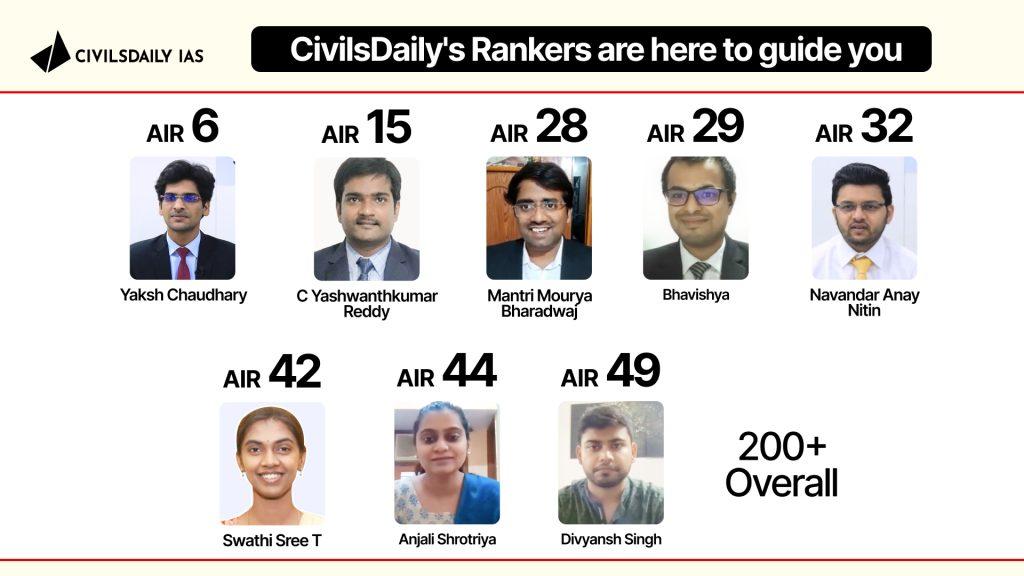
    I have guided around 200+ rankers in UPSC 2021 exam and 600+ overall rankers have been mentored by me. From AIR 6, 15 to 28, 29, 32, 42, 44, 49, and it goes on and on. I was a UPSC Mains Topper in 2017 after scoring highest marks in Mains.

    Anay, AIR 32 was also my mentorship student for UPSC 2021

    What you’ll get as a part of the Special Preparatory Package?

    As a part of this:

    1. FREE Mentorship session with Senior MPSC-UPSC Mentor on strategy and approach for MPSC 2023. (You can schedule by clicking here as well)
    2. Samachar Manthan’s current week’s module and Mains Questions, MPSC current Affairs
    3. Prelims Weekly MCQ PDF
    4. Mains 250+ Value notes
    5. Current month’s Monthly Magazine

    Karishma Nair, AIR 14 was also Sajal sir’s student
    AIR 65, Pranav mentored under Sajal sir for UPSC 2020
    best coaching for upsc in delhi
  • Is India a Diabetes capital of the world?

    Diabetes

    Context

    • India is often referred to as the ‘Diabetes Capital of the World as it accounts for 17%percent of the total number of diabetes patients in the world. There are currently close to 80 million people with diabetes in India and this number is expected to increase to 135 million by 2045. World Diabetes day is observed on 14 November.

    What is Diabetes?

    • Diabetes is a chronic (long-lasting) health condition that affects how our body turns food into energy.
    • Diabetes is a metabolic disorder in which the body has high sugar levels for prolonged periods of time.
    • The lack of insulin causes a form of diabetes.
    • Type-I Diabetes: It is a medical condition that is caused due to insufficient production and secretion of insulin from the pancreas. Type 1 diabetes is thought to be caused by an autoimmune reaction (the body attacks itself by mistake). This reaction stops your body from making insulin. Approximately 5-10% of the people who have diabetes have type 1
    • Type-2 diabetes: With type 2 diabetes, your body doesn’t use insulin well and can’t keep blood sugar at normal levels. About 90-95% of people with diabetes have type 2.

    Diabetes

    Type-2 diabetes in brief 

    • Long term Condition: It is long-term (chronic) condition which results in too much sugar circulating in the bloodstreams and poor response of insulin. Eventually, high blood sugar levels can lead to disorders of the circulatory, nervous and immune systems. Type 2 diabetes is an impairment in the way the body regulates and uses sugar (glucose) as a fuel. It is a defective response of Insulin
    • More common in adults: Type 2 is more common in older adults, but the increase in the number of children with obesity has led to more cases of type 2 diabetes in younger people.
    • Slow signs and symptoms: Signs and symptoms of type 2 diabetes often develop slowly. Symptoms include, Increased thirst, Frequent urination, Increased hunger, Unintended weight loss, Fatigue, Blurred vision, Slow-healing sores, Frequent infections etc. It develops over many years and is usually diagnosed in adults (but more and more in children, teens, and young adults).
    • Cure for Type-2: There’s no cure for type 2 diabetes, but losing weight, eating well and exercising can help you manage the disease. If diet and exercise aren’t enough to manage your blood sugar, you may also need diabetes medications or insulin therapy.

    What is insulin?

    • Insulin is a hormone produced by the pancreas.
    • Insulin regulates the movement of sugar into your cells.
    • Blood glucose levels tightly controlled by insulin.
    • When the blood glucose elevates (for example, after eating food), insulin is released from the pancreas to normalize the glucose level

    Diabetes

    The prevalence of diabetes in India

    • People living with Diabetes in India: There are an estimated 77 million people with diabetes in India. Which means one in every 10 adults in India has diabetes. Half of those who have high blood sugar levels are unaware. Even among those who have been diagnosed with diabetes, only half of them have their blood sugar level under control.
    • Rapid increase in younger population: According ICMR report, the prevalence of diabetes in India has increased by 64 percent over the quarter-century. prevalence among the younger population has also increased above 10%.
    • Children impacting more: Worryingly, in India, a large number of children are also impacted by diabetes. Children are developing obesity and metabolic syndrome early because of the change in diets to more processed and fast foods.
    • Projected Estimation: About 98 million Indians could have diabetes by 2030, these projections come from the International Diabetes Federation and the Global Burden of Disease project.
    • Children impacting more: Worryingly, in India, a large number of children are also impacted by diabetes. Children are developing obesity and metabolic syndrome early because of the change in diets to more processed and fast foods.

    Why Indians are more prone to diabetes?

    • Lifestyle changes: The current exponential rise of diabetes in India is mainly attributed to lifestyle changes. The rapid change in dietary patterns, physical inactivity, and increased body weight, especially the accumulation of abdominal fat, are some of the primary reasons for increased prevalence.
    • Ethnically more prone: Ethnically, Indians seem to be more prone to diabetes as compared to the Caucasians, although the precise mechanisms are not well known. we Indians have a greater degree of insulin resistance which means our cells do not respond to the hormone insulin. And when compared to Europeans, our blood insulin levels also tend to rise higher and more persistently when we eat carbohydrates.
    • Greater genetic predisposition: The epidemic increase in diabetes in India along with various studies on migrant and native Indians clearly indicate that Indians have an increased predilection to diabetes which could well be due to a greater genetic predisposition to diabetes in Indians.
    • Decrease in traditional diets: At the same time, the increased ‘westernization’, especially in the metros and the larger cities, has led to a drastic change in our dietary pattens. Indian diets have always been carbohydrate-heavy and now the reliance on refined sugars, processed food in the form of quick bites and fuss-free cooking and trans fatty acids are creating havoc.
    • Mechanization of day-to-day work: With the increasing availability of machines to do our work, there’s also a substantial drop in day-to-day activities.
    • Consumption of high calorie food and lack of physical activities: Obesity, especially central obesity and increased visceral fat due to physical inactivity, and consumption of a high-calorie/high-fat and high sugar diets, thus become major contributing factors.
    • Rapid urbanization: Currently, India is undergoing a rapid epidemiological transition with increased urbanization. The current urbanization rate is 35% compared to 15% in the 1950’s and this could have major implications on the present and future disease patterns in India with particular reference to diabetes and coronary artery disease.
    • Rural-urban migration: The rural migration to urban areas and associated stress plays a significant role in lifestyle change.

    Diabetes

    Ways to manage Increasing Diabetes in India

    • Aggressive Screening procedures: Indians need an upstream approach or prioritizing protection of the population as a whole, beginning with women and children. This can be done with aggressive screening procedures. “Anybody above 18, with a clear-cut risk like family history, weight issues and young women with polycystic ovarian syndrome (PCOS) should be tested. All Indians above 30 should be screened.
    • Timely diagnosis and right management: Medical experts feel that timely detection and right management can go a long way in helping patients lead a normal life.
    • Diet discipline for children: For children, Doctors recommends a serious diet discipline. “Only healthy meals are the option that remains. Tutor the tastebuds of the young and stop their access to fast foods. There can be supportive policy measures making healthy fruits and vegetables accessible in a cost-effective manner to all instead of plain carbs. The mid-day meal or tiffin needs to be looked at thoughtfully and to make it healthy.
    • Promoting physical activities: “The overall decline in physical activity has had devastating impacts on our metabolism,” while agreeing with the 30-minute a day exercise and activity schedule, sounds a note of caution. The recent scientific evidence suggests even five minutes of walk after any meal provides some protection.
    • Adopting healthy Lifestyle: Though a chronic medical condition, Diabetes can be curbed at the initial level by introducing lifestyle changes. Experts suggests, reduce stress; sleep on time and for minimum of seven hours, maintaining ideal body weight, regular physical activity stop smoking, stopping/ minimum alcohol intake and get early treatment for any pre-existing or co-morbid health condition such as hypertension.
    • Regular check-ups: Regular visits to the doctor are important to assess sugar control and assessment/ prevention of complications related to the disease.

    Conclusion

    • With the country having the highest number of diabetic patients in the world, the sugar disease is posing an enormous health problem to our country today. According to a World Health Organization (WHO) fact sheet on diabetes, an estimated 3.4 million deaths are caused due to high blood sugar in the world.

    Mains Question

    Q. Diabetes is increasing alarmingly across all age groups in India. Discuss the reasons and suggest measures to manage epidemic of diabetes if it is not curable?

    (Click) FREE1-to-1 on-call Mentorship by IAS-IPS officers | Discuss doubts, strategy, sources, and more

  • What is a Narco Test?

    narco test

    A court in Saket, New Delhi, has allowed Delhi Police to conduct a narco test on a psychopath accused of raping and killing his live-in partner.

    What is a Narco Test?

    • In a ‘narco’ or narcoanalysis test, a drug called sodium pentothal is injected into the body of the accused.
    • This transports the accused to a hypnotic or sedated state, in which their imagination is neutralised.
    • In this hypnotic state, the accused is understood as being incapable of lying, and is expected to divulge information that is true.
    • Sodium pentothal or sodium thiopental is a fast-acting, short duration anaesthetic, which is used in larger doses to sedate patients during surgery.
    • It belongs to the barbiturate class of drugs that act on the central nervous system as depressants.

    History of its use

    • Because the drug is believed to weaken the subject’s resolve to lie, it is sometimes referred to as a “truth serum”.
    • It is said to have been used by intelligence operatives during World War II.

    Reasons to use such tests

    • In recent decades, investigating agencies have sought to employ these tests in investigation, which are sometimes seen as being a “softer alternative” to torture or “third degree” to extract the truth from suspects.
    • However, neither method has been proven scientifically to have a 100% success rate, and remain contentious in the medical field as well.

    Restrictions on these tests

    • No self-incrimination: The Bench took into consideration international norms on human rights, the right to a fair trial, and the right against self-incrimination under Article 20(3) of the Constitution.
    • Consent of the accused: In ‘Selvi & Ors vs. State of Karnataka & Anr’ (2010), a Supreme Court Bench comprising then CJI ruled that no lie detector tests should be administered “except on the basis of consent of the accused”. The subject’s consent should be recorded before a judicial magistrate, the court said.
    • Legal assistance to such convicts: Those who volunteer must have access to a lawyer, and have the physical, emotional, and legal implications of the test explained to them by police and the lawyer.
    • Guidelines at place: It said that the ‘Guidelines for the Administration of Polygraph Test on an Accused’ published by the National Human Rights Commission in 2000, must be strictly followed.

    Can the results of these tests be considered as “confessions”?

    • Not a confession: Because those in a drugged-induced state cannot exercise a choice in answering questions that are put to them.
    • Assumed as evidence: However, any information or material subsequently discovered with the help of such a voluntarily-taken test can be admitted as evidence.
    • Supports investigation: It reveals the location of, say, a physical piece of evidence (which is often something like a murder weapon) in the course of the test.


    (Click) FREE1-to-1 on-call Mentorship by IAS-IPS officers | Discuss doubts, strategy, sources, and more

  • National Investment and Infrastructure Fund (NIIF)

    Finance Minister has urged the National Investment and Infrastructure Fund (NIIF) to expand its operations and explore ways to crowd in private capital for projects under the National Infrastructure Pipeline, PM Gati Shakti and National Infrastructure Corridor.

    What is NIIF?

    • National Investment and Infrastructure Fund (NIIF) is India’s first infrastructure specific investment fund or a sovereign wealth fund that was set up in February 2015.
    • The objective behind creating this fund was to maximize economic impact mainly through infrastructure investment in commercially viable projects, both Greenfield and Brownfield.
    • It was proposed to be established as an Alternative Investment Fund to provide long tenor capital for infrastructure projects with an inflow of ₹20,000 crore from the GoI.
    • It was registered with SEBI as Category II Alternative Investment Fund.

    Types of funds in NIIF

    • NIIF manages three funds: Master Fund, Fund of Funds and Strategic Fund.
    • The funds were set up to make investments in India by raising capital from domestic and international institutional investors.
    1. Master Fund: It is an infrastructure fund with the objective of primarily investing in operating assets in the core infrastructure sectors such as roads, ports, airports, power etc.
    2. Fund of Funds: The Fund of Funds anchor and/or invest in funds managed by fund managers who have good track records in infrastructure and associated sectors in India. Some of the sectors of focus include Green Infrastructure, Mid-Income & Affordable Housing, Infrastructure services and allied sectors.
    3. Strategic Opportunities Fund: It is registered as an Alternative Investment Fund II under SEBI in India. Its objective is to invest largely in equity and equity-linked instruments. It has been established to provide long-term capital to strategic and growth oriented sectors in the country with the aim to build domestic leaders.

    Functions of NIIF

    The functions of NIIF are as follows:

    1. Fund raising through suitable instruments including off-shore credit enhanced bonds, and attracting anchor investors to participate as partners in NIIF;
    2. Servicing of the investors of NIIF.
    3. Considering and approving candidate companies/institutions/ projects (including state entities) for investments and periodic monitoring of investments.
    4. Investing in the corpus created by Asset Management Companies (AMCs) for investing in private equity.
    5. Preparing a shelf of infrastructure projects and providing advisory service


    (Click) FREE1-to-1 on-call Mentorship by IAS-IPS officers | Discuss doubts, strategy, sources, and more

  • What is the Koronivia Joint Work on Agriculture (KJWA)?

    India has expressed its concern over the draft decision text to implement the Koronivia Joint Work on Agriculture.

    What is the news?

    • India said developed countries are blocking a pro-poor and pro-farmer decision by insisting on expanding the scope for mitigation to agriculture.
    • Developed countries are thereby compromising the very foundation of food security in the world.

    What is the Koronivia Joint Work?

    • The KJWA is a decision under the United Nations Framework Convention on Climate Change (UNFCCC).
    • It seeks to recognize the unique potential of agriculture in tackling climate change.
    • It emphasizes reducing emissions of greenhouse gases due to the agriculture sector.
    • The Koronivia decision addresses six interrelated topics on soils, nutrient use, water, livestock, methods for assessing adaptation, and the socio-economic and food security dimensions of climate change across the agricultural sectors.

    India’s arguments against Koronivia joint work

    • India said that agricultural emissions are not “luxury” emissions but “survival” emissions of the poor.
    • The world is facing a climate crisis today because of the excessive historic cumulative emissions by the developed nations.
    • These nations are unable to reduce their emissions domestically by any worthwhile change in their lifestyles.
    • Rather, they are searching for cheaper solutions abroad.
    • In most developing countries across the world, agriculture is done by small and marginal farmers who toil hard and brave the vagaries of extreme weather and climate variability to ensure food security.

    Back2Basics: Agricultural Emissions

    koronivia

    • Farms emitted 6 billion tonnes of GHGs in 2011, or about 13 percent of total global emissions.
    • That makes the agricultural sector the world’s second-largest emitter, after the energy sector (which includes emissions from power generation and transport).
    • Most farm-related emissions come in the form of methane (CH4) and nitrous oxide (N2O).
    • Cattle belching (CH4) and the addition of natural or synthetic fertilizers and wastes to soils (N2O) represent the largest sources, making up 65 percent of agricultural emissions globally.
    • Smaller sources include manure management, rice cultivation, field burning of crop residues, and fuel use on farms.


    (Click) FREE1-to-1 on-call Mentorship by IAS-IPS officers | Discuss doubts, strategy, sources, and more

  • Moscow Format to Engage with the Talibans

    The Moscow Format of Consultations on Afghanistan was recently held in the Russian capital.

    What is the Moscow Format?

    • The Moscow format was introduced in 2017 on the basis of the six-party mechanism for consultations between special representatives from Russia, Afghanistan, China, Pakistan, Iran and India.
    • The present meeting includes a group of 10 nations including India, China, Pakistan, Iran and the Central Asian republics with Taliban officials.
    • Russia had previously convened a new meeting of the ‘Extended Troika’ on Afghanistan which included Russia, the United States, China and Pakistan.
    • The US pulled out of the last meeting.
    • Taliban did not participate in the talks but, welcomed the discussion and declared that it will not allow Afghan territory to be used against “stability of the region”.

    Key outcomes of the meet

    • The dialogue called for respect for all Afghan ethnic groups and minorities in a bid to create national reconciliation in the war torn country.
    • The Russian hosts, presented a White Book on the civilian losses in Afghanistan due to the actions of the NATO forces during the past two decades.
    • The representatives at the talks also called for “complete unfreezing” of Afghanistan’s assets by Washington.

    Urging the Taliban Govt.

    • Prevent poppy cultivation: Participating countries called upon the Taliban setup to “fulfil its commitments to eradicate terrorism and drug trafficking” that continue to emanate from the Afghan territory.
    • Stop atrocities: The return of the Taliban has been followed by a series of attacks on Shia Hazaras and growing atrocities against women and political opponents.
    • Inclusive govt. formation: The participants underscored the importance of forming a “truly inclusive government in Afghanistan, reflecting the interests of all major ethno-political groups of the country.”


    (Click) FREE1-to-1 on-call Mentorship by IAS-IPS officers | Discuss doubts, strategy, sources, and more

  • Uda Devi: A Dalit freedom fighter

    uda devi

    On November 16, events to commemorate the martyrdom of Uda Devi, a freedom fighter from the Pasi community, were held at various places in Uttar Pradesh.

    Who was Uda Devi?

    • Uda Devi is remembered not only for her stories of valour but also for her skill as a leader who managed to mobilise people — especially Dalit women — to take up arms against the British.
    • Born in Ujirao, Lucknow, she was part of the royal guard of Begum Hazrat Mahal of Awadh.
    • Her husband, Makka Pasi, worked as a foot soldier in the army of Awadh’s Nawab, Wajid Ali Shah.
    • Hazrat Mahal’s palace had several women belonging to marginalised communities, and their occupation was mostly to take care of the needs of the royalty.
    • Some of them, who showed promise, were also trained as warriors. Uda Devi was one of them.

    Her legend

    • Amid the revolt of 1857, on June 10, at Chinhat near Ismailganj, a battle was fought between the army of Lucknow and the British troops led by Henry Lawrence, in which Makka Pasi lost his life.
    • The death of her husband spurred Uda Devi on to take up a more active role in the mutiny.
    • On November 16, 1857, Uda Devi was among the soldiers who clashed with the British regiment stationed near the Gomti River.
    • Although not much of the fight has been documented in history, it is said that Uda Devi killed at least three dozen British soldiers from atop a tree before she could be spotted.

    Can you recall the Eka Movement of 1921 from your modern history references? If not, take your time to revise. Read about the contribution of Madari Pasi in this movement.


    (Click) FREE1-to-1 on-call Mentorship by IAS-IPS officers | Discuss doubts, strategy, sources, and more

  • Festival in news: Cuttack Baliyatra

    baliyatra

    In his address to the Indian diaspora in Bali on the sidelines of the G20 summit, PM Modi mentioned the annual Baliyatra on the banks of the Mahanadi in Cuttack, which celebrates the ancient trade relations between India and Indonesia.

    Baliyatra

    • Baliyatra/ Balijatra, literally ‘voyage to Bali’, is one of India’s largest open-air fairs.
    • It is organised every year to commemorate the 2,000-year-old maritime and cultural links between ancient Kalinga (today’s Odisha) and Bali and other South and Southeast Asian regions.

    Origins of the festival

    • The origins of the festival, which begins on Kartik Purnima (full moon night in the month of Kartik) can be traced back more than 1,000 years.
    • The Bay of Bengal region had several ports, and sadhavas (traders) traditionally began their voyage across the sea on this auspicious day, when the winds were favourable for the boats, known as boita, to sail.
    • The traders would set sail to distant lands of Bali, as well as Java (at the time of the voyage known as “Yawadvipa”), Sumatra, Borneo (all in Indonesia), and Sri Lanka (formerly Ceylon) for trade and cultural expansion.
    • According to historians, popular items of trade between Kalinga and Southeast Asia included pepper, cinnamon, cardamom, silk, camphor, gold, and jewellery.
    • Even today, thousands of people across Odisha sail decorative miniature boats made of banana stems, paper, or thermocol to celebrate boita bandana, or the worshipping of the boats.


    (Click) FREE1-to-1 on-call Mentorship by IAS-IPS officers | Discuss doubts, strategy, sources, and more

  • Cross the UPSC Prelims 2023 hurdle with Smash Prelims | November Batch launched | From failing thrice, to scoring 130+ in UPSC Prelims – read success stories | Intake only 50 students – Register now!

    Cross the UPSC Prelims 2023 hurdle with Smash Prelims | November Batch launched | From failing thrice, to scoring 130+ in UPSC Prelims – read success stories | Intake only 50 students – Register now!

    Smash Prelims 2023 under Santosh Gupta sir’s mentorship can increase your chances to clear Prelims by 85%

    There is no doubt that UPSC Prelims is the toughest & most vital stage. It is the great filter that weeds out the not-so-serious candidates but at times many serious ones too.

    Although there can be many reasons for failing prelims like inadequate syllabus coverage, not attempting mock or test series, not proper planning, lack of conceptual understanding, etc. but the main one is lack of guidance, preparation analysis, and course revision at regular intervals.

    Tavishi failed thrice in the Prelims before but after joining Santosh sir’s mentorship cleared Prelim 2022 on her 4th attempt. Schedule a call with Tavishi’s mentor

    Moreover, candidates must be prepared for those offbeat MCQs thrown by UPSC in prelims (new things being tried by UPSC- like options, subjects, etc.).

    To fill this gap we launched the Smash Prelims program under Santosh Gupta sir last year and the results were amazing.


    SMASH PRELIMS 2023: PERSONALIZED MENTORSHIP, TEST SERIES, LECTURES, NOTES

    Our Smash Prelims Program started as a pilot project last year with an aim to introduce step-wise improvement in our chosen 40 aspirants. Over a period of 2 months, Santhosh sir inculcated confidence in aspirants who were either newbies or gave too many attempts. This year, we achieved a remarkable 80% success ratio. This year, we have set our eyes on 100%. Yes, we are as ambitious and aspirational just like any other UPSC aspirant.

    ‘Answer to all your dilemmas of Prelims’: Program inclusion

    1) One-to-One mentorship for UPSC Prelims 2023 by dedicated mentors and Santosh sir

    2) 44 tests (14 basics + 8 Advanced + 10 FLT + 6 CSAT + 6 CA ) for back to back intensive revision

    3) Weekly LIVE Zoom sessions with Santosh Sir for doubt clearance and QnA

    4) Value-addition classes on the 50 most important topics for Prelims

    5) LIVE MCQs solving (1000 questions) based on elimination techniques for a sure score of 120+ marks

    6) 1 year’s complete current affairs (LIVE) by the core CD faculty in featured classes with a LIVE discussion + PDF notes

    Click and Enroll here

    Timetable

    Features of the Program:

    • Highly experienced UPSC-qualified mentors (Experience of 4+ years)
    • Mentors call after each test to clear your doubts and help cover the entire syllabus
    • Evidence-based questions based on the UPSC’s current trends
    • Tests discussions
    • Weekly LIVE zoom sessions by Santosh sir to learn from his experience of 6 out of 6 prelims with 130+ marks
    • Ask me anything sessions
    • Weekly classes cover the 50 most important and scoring areas of UPSC Prelims for a push to 120+ marks (Unmissable for any sincere aspirants) taken by Santosh sir himself based on his own notes
    • Santosh sir will teach you the secret of elimination methods from his own experience of getting 130+ every time (Learn 36 techniques through solving 1000+ questions with him)
    • Accuracy improvement classes
    • Current affairs live classes by core faculty of CD with concise notes from 2022 with a focused approach (2022-23 current affairs will be provided for free)
    • CA magazine + budget and economic survey will be provided for free
    • Special Session on Prelims with toppers (Subject experts)
    • 1000+ students qualified for Prelims under Santosh sir’s guidance

    Specifically made Current affairs notes + Live classes by core faculty for the entire two years for prelims.

    You are 8 times more likely to clear Prelims 2023 with Santosh sir’s mentorship under the Smash Prelims program

    About Santosh Gupta sir

    Santosh Gupta sir has scored above 140 twice in UPSC prelims and always 120 plus in all 6 attempts. He wrote all 6 mains and appeared for Interviews 3 times. He has qualified for UPSC EPFO and BPSC 56-59th also. He has been teaching and mentoring UPSC aspirants for the last 5 years.


    What CivilsDaily’s Smash Prelims students have to say?

    Schedule a free mentorship call for prelims 2023 | click and fill up the form


    Success Stories of Smash Prelims 2022

    From failing twice-thrice to clearing Prelims 2022
    Click and Enroll here

More posts