💥Join UPSC 2027,2028 Mentorship (July Batch) + XFactor Notes & Microthemes PDF

Author: CD Staff

  • [Burning Issue] The Surrogacy (Regulation) Bill, 2020


    Surrogacy in India and Indian surrogates became increasingly popular amongst intended parents in industrialized nations because of the relatively low costs and easy access offered by Indian surrogacy agencies.

    Before commercial surrogacy was banned in 2015, India was a popular destination for surrogacy.

    The economic scale of surrogacy in India is unknown, but study backed by the United Nations in July 2012 estimated the business at more than $400 million a year, with over 3,000 fertility clinics across India.

    Context

    • The Union Cabinet recently approved the Surrogacy (Regulation) Bill, 2020 which allows any “willing” woman to be a surrogate mother and proposes that widows and divorced women can also benefit from its provisions, besides infertile Indian couples.
    • The bill incorporates all recommendations made by a Rajya Sabha select committee, which studied an earlier version of the draft legislation.
    • The bill establishes a liberal view on the issues of reproductive rights of women, be it medical termination of pregnancy, the Assisted Reproductive Technology Regulation Bill.

     What are the new Amendments?

    It allows any “willing” woman to be a surrogate mother and proposes that widows and divorced women can also benefit from its provisions, besides infertile Indian couples.

    The bill proposes to regulate surrogacy by establishing National Surrogacy Board at the central level and, State Surrogacy Board and appropriate authorities in states and UTs respectively.

    The proposed insurance cover for surrogate mother has now been increased to 36 months from 16 months provided in the earlier version.

    Ethical surrogacy will be allowed on fulfilment of certain conditions  to lndian married couples, Indian-origin married couples and Indian single woman (only widow or divorcee between the age of 35 and 45 years).

    Various provisions of the 2019 Bill 


    Background

    • The Surrogacy (Regulation) Bill, 2019 was introduced by the Minister of Health and Family Welfare in Lok Sabha in July 2019.
    • The Bill defined surrogacy as a practice where a woman gives birth to a child for an intending couple with the intention to hand over the child after the birth to the intending couple.

    Regulation of surrogacy

    • The Bill prohibited commercial surrogacy but allowed altruistic surrogacy.
    • Altruistic surrogacy involves no monetary compensation to the surrogate mother other than the medical expenses and insurance coverage during the pregnancy.
    • Commercial surrogacy includes surrogacy or its related procedures undertaken for a monetary benefit or reward (in cash or kind) exceeding the basic medical expenses and insurance coverage.

    Purposes for which surrogacy is permitted

    Surrogacy is permitted when it is:

    1. for intending couples who suffer from proven infertility
    2. altruistic
    3. not for commercial purposes
    4. not for producing children for sale, prostitution or other forms of exploitation and
    5. for any condition or disease specified through regulations

    Eligibility criteria for intending couple

    • The intending couple should have a ‘certificate of essentiality’ and a ‘certificate of eligibility’ issued by the appropriate authority.
    • A certificate of essentiality will be issued upon fulfilment of the following conditions:
    1. A certificate of proven infertility of one or both members of the intending couple from a District Medical Board;
    2. An order of parentage and custody of the surrogate child passed by a Magistrate’s court; and
    3. Insurance coverage for a period of 16 months covering postpartum delivery complications for the surrogate.

    Preconditions for Eligibility

    The certificate of eligibility to the intending couple is issued upon fulfilment of the following conditions:

    1. the couple being Indian citizens and married for at least five years;
    2. between 23 to 50 years old (wife) and 26 to 55 years old (husband);
    3. they do not have any surviving child (biological, adopted or surrogate); this would not include a child who is mentally or physically challenged or suffers from life-threatening disorder or fatal illness; and
    4. other conditions that may be specified by regulations.

    Eligibility criteria for surrogate mother

    To obtain a certificate of eligibility from the appropriate authority, the surrogate mother has to be:

    • a close relative of the intending couple;
    • a married woman having a child of her own;
    • 25 to 35 years old;
    • a surrogate only once in her lifetime; and
    • possess a certificate of medical and psychological fitness for surrogacy.  Further, the surrogate mother cannot provide her own gametes for surrogacy.

    Appropriate authority

    • The central and state governments shall appoint one or more appropriate authorities within 90 days of the Bill becoming an Act.
    • The functions of the appropriate authority include;
    1. granting, suspending or cancelling the registration of surrogacy clinics;
    2. enforcing standards for surrogacy clinics;
    3. investigating and taking action against breach of the provisions of the Bill;
    4. recommending modifications to the rules and regulations.

    Registration of surrogacy clinics

    • Surrogacy clinics cannot undertake surrogacy related procedures unless they are registered by the appropriate authority.
    • Clinics must apply for registration within a period of 60 days from the date of appointment of the appropriate authority.

    National and State Surrogacy Boards

    • The central and the state governments shall constitute the National Surrogacy Board (NSB) and the State Surrogacy Boards (SSB), respectively.
    • Functions of the NSB include:
    1. advising the central government on policy matters relating to surrogacy;
    2. laying down the code of conduct of surrogacy clinics; and
    3. supervising the functioning of SSBs.

    Parentage and abortion of surrogate child

    • A child born out of a surrogacy procedure will be deemed to be the biological child of the intending couple.
    • An abortion of the surrogate child requires the written consent of the surrogate mother and the authorisation of the appropriate authority.
    • This authorisation must be compliant with the Medical Termination of Pregnancy Act, 1971.
    • Further, the surrogate mother will have an option to withdraw from surrogacy before the embryo is implanted in her womb.

    Offences and penalties for non-compliance

    • The offences under the Bill include:
    1. undertaking or advertising commercial surrogacy;
    2. exploiting the surrogate mother;
    3. abandoning, exploiting or disowning a surrogate child; and
    4. selling or importing human embryo or gametes for surrogacy.
    • The penalty for such offences is imprisonment up to 10 years and a fine up to 10 lakh rupees.
    • The Bill specifies a range of offences and penalties for other contraventions of the provisions of the Bill.

    Issues with the 2019 bill

    • Having a child is a basic human right. Declaration of Human Rights 1948 says, inter alia, that “men and women of full age without any limitation due to race, nationality or religion have the right to marry and found a family”.
    • The Judiciary in India also has recognized the reproductive right of humans as a basic right.
    • If the reproductive right is basic constitution right then the right to have a child through surrogacy should also be a basic constitutional right.
    • The Bill left out a lot of people who might want to have a baby through surrogacy, including unmarried couples, homosexual couples and single men and women.

    Various issues with Surrogacy

    • The woman, who is carrying a baby, generally get very less remuneration and large share is taken by ART clinics.
    • Surrogacy is generally involves gender selection which itself illegal in India. ART clinics on the name of surrogacy illegally running sex determination and abortion industry.
    • The women health is a serious issue in surrogacy.
    • The surrogacy involves many risks to baby health such as genetic disorders, low birth weight or membrane damage, etc.
    • Surrogacy leads to commoditization of the child, breaks the bond between the mother and the child, interferes with nature and leads to exploitation of poor women in developing countries.
    • Many religions do not allow surrogacy even in case of in vitro fertilization like in Catholicism. According to it a child is a gift not right and adopting unnatural means are gravely immoral.
    • International Surrogacy involves bilateral issues, where the laws of both the nations have to be at par/uniformity else the concerns and interests of parties involved will remain unresolved. Many times citizenship issues arise due to lack of information on laws of both the countries.

    Way Forward

    • In India, people are practising surrogacy when nearly 12 million several children are orphans.
    • Adoption of a child in India is a complicated and lengthy procedure for those childless couples who want to give a home to these children. Hence, they are forced to opt for IVF or surrogacy.
    • There is a strong need to modify and make the adoption procedure simple as an alternative to surrogacy.
    • A proper law with strict regulations and enforcement which would address the concerns of all stakeholders in the industry is required.


    References

    https://www.prsindia.org/billtrack/surrogacy-regulation-bill-2019

    https://www.livemint.com/politics/policy/cabinet-nod-to-surrogacy-bill-now-widows-and-divorcee-women-can-benefit-as-well-11582720671346.html

    https://www.myadvo.in/blog/surrogacy-laws-in-india-an-evaluation/

  • [Burning Issue] Trump in India


    Donald Trump’s visit to India continues a trend of more and more frequent visits by US Presidents. He is the first US President to visit India on a stand-alone visit in the seven decades of Indo-US diplomatic ties. US Presidents who came to India before him, from Dwight Eisenhower to Barack Obama, all had other stops in the region.

    Here’s how ties between the two countries have evolved, strengthening in key areas while some areas remain a concern.

    Visits before 2000, and later

    • Between 1947 and 2000, the first 53 years of India-US ties, there were only three visits by US Presidents to India — Dwight Eisenhower in 1959, Richard Nixon in 1969 and Jimmy Carter in 1978.
    • In the 20 years since 2000, there have been four visits by three US Presidents — Bill Clinton in 2000, George W Bush in 2006, and Obama in 2010 and 2015. Trumps being the fifth.
    • While only three of the nine US Presidents during 1947-2000 visited India, every President in the last two decades has visited India at least once.

    Many reasons could be ascribed to the higher frequency of visits — a shift in global geo-politics in the post-Cold War era, India’s economic ascent, rise of an assertive China, and New Delhi’s place on the global high table.

    The beginning of Strategic Partnership

    • In 2003-04, the first seeds of the Next Steps of Strategic Partnership were sown during the Atal Bihari Vajpayee regime.
    • The relationship peaked with the Indo-US nuclear deal in 2008, which was negotiated during 2005-08 between the Manmohan Singh government and the Bush administration, and is considered the game-changer.
    • The Obama administration carried forward the relationship, and during his visit in 2010 hosted by Singh, the US promised support to India for a UN Security Council membership.
    • When Narendra Modi became PM in 2014, Obama navigated the transition and visited again in 2015, when he was the chief guest for the Republic Day celebrations.

    Ties after Trump

    • After Trump came to power in 2016, there was a shift in the US political landscape as his unpredictability defined his presidency.
    • The Indian government moved fast, and Modi visited the White House in June 2017. It is in this backdrop that the visit is taking place in a year that will witness US presidential elections.

     Namaste Trump

    Outcomes of the Visit

    Despite years of high-level negotiations, India and the United States did not announce a trade deal—even a so-called mini-deal—despite Trump’s hinted during the visit that an “incredible” agreement was in the works.

    President Trump’s visit can easily be cleaved into two separate parts:

    1. the symbolism of the joint rally with PM Modi, along with their obvious personal rapport, and
    2. the actual bilateral outcomes of their Delhi meeting
    • The visit’s concrete outcomes were not as dramatic or historical as the rally images were.
    • Although the External Affairs Ministry had said at least five MoUs would be ready for signing, the three made ready were two on health care, and one Letter of Cooperation on LNG pipeline infrastructure.
    • The agreement signed for defence purchases worth $3-billion, including American helicopters, has led to both sides signalling more cooperation in defence, military exercises and technology sharing.

    Disagreements over the price of apples, walnuts, and medical devices; the US’s demands for greater access to India’s dairy, poultry and e-commerce market; and ongoing discussions over lowering Indian tariffs on American-made Harley Davidson motorcycles, remain unresolved.

    A “new designation” to the bilateral ties:

    Comprehensive Strategic Global Partnership

    • Giving concrete shape to an India-US ‘Comprehensive Global Strategic Partnership’ was the biggest achievement of Trump’s visit which was otherwise high on optics and low on substance.
    • The CGSP was initiated in 2013 when PM Manmohan Singh had visited the US and met President Barack Obama.
    • The two leaders had then claimed that the India-US relationship has developed a “comprehensive global strategic partnership”.
    • In a joint statement, both nations vowed to strengthen India-US CGSP, anchored in mutual trust, shared interests, goodwill and robust engagement of their citizens.

    Core of the extravaganza

    Why US matters for India?

    1) Support against terrorism

    • This intense engagement has helped achieve robust support from the US against terrorism.
    • This was evident after the Pulwama attack last year, leading to designation of Jaish-e-Mohammed chief Masood Azhar as a global terrorist under UN Security Council Resolution 1267, and the placing of Pakistan on the grey-list of the FATF.
    • While Trump was once very critical on Pakistan, he has nuanced his position on Pakistan in the last seven months.
    • And now, with a deal between the US and the Taliban likely, his approach towards Pakistan, long-time benefactor of the Taliban, will be tested in the months to come.

    2) Defence

    • For India, its relationship with the US on defence issues has strengthened.
    • India has procured over $18 billion worth of defence items from the US, almost half of this in the last five years.
    • India conducts more bilateral exercises with the US than with any other country.
    • And, under Trump, the announcement of India’s elevation to Tier I of the Strategic Trade Authorization licence exception has opened up US defence technologies from the time when India faced a technology-denial regime.

    3) Energy

    • The other area where the relationship has grown in recent years is energy.
    • The bilateral Strategic Energy Partnership was launched in April 2018; India has started importing crude and LNG from the US from 2017 and 2018 respectively.
    • The total imports are estimated at $6.7 billion — having grown from zero.
    • The US is also India’s sixth largest source of crude oil imports, with hydrocarbon imports rising to $7 billion in the last two years.

    4) Trade

    • In the backdrop of the global economic slowdown, where India’s global exports have fallen consistently, it is important for the country to diversify and strengthen bilateral relations with other markets.
    • It has set its sights on “large developed markets”, improved access to which would help its industry and services sectors.
    • These include the US, which has, over the last two decades, become a crucial trading partner in terms of both goods and services.

    Why India matters to the US?

    1) India as an open data market

    • India is, after all, the largest open data market in the universe. Per capita, more data is consumed in India than anywhere else in the world.
    • For American “big tech” firms, India provides a scale for their products unavailable in any other country.
    • Despite current economic woes, this will continue to be the largest growing and relatively open consumer market for American products and business.

    2) Indian-Americans

    • About 4.5 million people of Indian origin live in the US today, but despite their relatively small numbers, Indian Americans are a growing political force in the country.
    • Trump has sought to court the Indian-American vote in the run-up to the 2020 election.

    3) India as a defence partner

    • India is also a large arms importer.
    • Defence trade is widely seen as the silver lining in this relationship – US-India defence deals have ballooned in the past decade, from nearly zero in 2008 to a little more than $15bn in 2019.

    4) India as a possible solution to China’s hegemony

    • On the trade front, India can be an effective supplier rather than being an outsourcing hub if compared to China.
    • Strategically also, the U.S. views India as a platform to contain China’s hegemony.
    • India sees it as an opportunity for economic expansion, with the U.S. being an equal partner.

    Areas of contention

    Tariff issues

    • The US feels that India is a high tariff country, and wants these reduced and a more predictable regime to conduct business.
    • Although the growth is 10% per year, many feel the potential is much higher.

    Visa norms

    • The other area of contention has been the movement of Indian skilled professionals to the US under the H1B programme.
    • While the US President has always made immigration a key campaign theme, it has not led to any major barriers for Indians so far. But in an election year in the US, the rhetoric could sharpen.

    Conclusion

    • India needs to keep US on its side for strategic and security reasons – the grand welcome India accorded the US president showed how serious it is about the relationship.
    • But the immediate future of the relationship depends on the upcoming US presidential elections.
    • These are relationship-building visits that serve as signalling mechanisms too.
    • If India-US relationship is a defining one for this century, as Modi said, Trump’s visit helps in that definition.
    • India will find it easier to deal with a leader it has already invested in, hoping Trump’s unpredictable nature won’t harm the relationship.

    Way Forward

    • Although any major trade package deal could not be clinched this time, in terms of emboldening the bilateral ties, this visit was critical.
    • The fact that President Trump did visit India and understand the imperatives is in itself a big achievement, considering his unpredictable nature.
    • It is also true that these visits are never about massive deliverables. These visits create an impression.
    • As many regards, the thinking beyond transactionalism in this event was a big achievement for both.
    • Having a trade deal becomes an uphill task with both sides taking a protectionist stance.
    • The two governments must now strive to complete the unfinished agreements and set the course for their newly designated ‘Comprehensive Strategic Global Partnership’.


    References

    https://indianexpress.com/article/explained/explained-donald-trump-visit-india-us-ties-over-the-years-bush-nixon-clinton-jimmy-carter-6280481/

    https://www.livemint.com/opinion/online-views/no-trade-deal-with-trump-still-a-win-for-india-11582771353905.html

    https://theprint.in/diplomacy/comprehensive-global-strategic-partnership-what-modi-trump-just-formalised-is-2013-concept/371631/

  • [Burning Issue] SC judgement on Reservation not being a Fundamental Right


    Nearly nine decades after the 1932 Poona pact between B.R. Ambedkar and Mahatma Gandhi that initiated reservation for backward classes, the debate on social justice is only getting shriller. In the latest, a February 7 Supreme Court order, that states that reservation is not a fundamental right, has sparked an intense political debate and disquiet amongst backward communities.


    Context

    • The SC was deciding a group of appeals pertaining to the reservations to SC’s and ST’s in promotions in the posts of Assistant Engineer (Civil) in the Public Works Department, Government of Uttarakhand.
    • It ruled that “there is no fundamental right which inheres in an individual to claim reservation in promotion”, and that ‘no mandamus can be issued by court directing state government to provide reservations.’

    What does the Constitution say on reservations?

    • Article 14 of the Constitution guarantees equality before the law and equal protection of laws to everyone.
    • Similarly, Article 16(1) and 16(2) assure citizens equality of opportunity in employment or appointment to any government office. 
    • Article 15(1) generally prohibits any discrimination against any citizen on the grounds of religion, caste, sex or place of birth. 
    • However, Articles 15(4) and 16(4) state that these equality provisions do not prevent the government from making special provisions in matters of admission to educational institutions or jobs in favor of backward classes, particularly the Scheduled Castes (SCs) and the Scheduled Tribes (STs).
    • Article 16(4A) allows reservations to SCs and STs in promotions, as long as the government believes that they are not adequately represented in government services.

    What did the Hon’ble Supreme Court rule?


    Reservation is not a Fundamental Right

    • Article 16 (4) and 16 (4-A) are in the nature of enabling provisions, vesting a discretion on the State Government to consider providing reservations, if the circumstances so warrant.
    • It is settled law that the State Government cannot be directed to provide reservations for appointments in public posts.
    • Similarly, the State is not bound to make reservations for Scheduled Castes and Scheduled Tribes in matters of promotions.

    Quota in promotion

    • The judgment added that it is for the State Government to decide whether this was necessary.
    • The State can form its own opinion on the basis of the material it has in its possession already or it may gather such material through a Commission/Committee, person or authority.
    • All that is required is that there must be some material on the basis of which the opinion is formed.
    • The court should show due deference to the opinion of the State and such opinion is not beyond judicial scrutiny, SC said.

    Need for quantifiable data

    • However, if the state wishes to exercise their discretion and make such provision, the State has to collect quantifiable data showing the inadequacy of representation of that class in public services, the bench said.
    • It added that if the decision of the State Government to provide reservations in promotion is challenged, the State concerned shall have to place before the Court the requisite quantifiable data and satisfy the Court that such reservations became necessary.
    • It should be on account of the inadequacy of representation of SCs and STs in a particular class or classes of posts without affecting the general efficiency of administration as mandated by Article 335 of the Constitution.
    • On the requirement for data collection, the court said this is only to justify reservation to be made in the matter of appointment or promotion to public posts, according to Article 16 (4) and 16 (4-A) of the Constitution.
    • As such, collection of data regarding the inadequate representation of members of the SCs and STs is a prerequisite for providing reservations and is not required when the State Government decided not to provide reservations.

    What do the precedents say?

    • There are several major Supreme Court judgments that have, in the past, ruled that Articles 15(4) and 16(4) does not provide a fundamental right per se.
    • A five-judge apex court bench, as early as 1962 in the R. Balaji v. the State of Mysore had ruled that Article 15(4) is an “enabling provision”, meaning that “it does not impose an obligation, but merely leaves it to the discretion of the appropriate government to take suitable action, if necessary”.
    • The court was hearing a challenge to an order passed by the erstwhile state of Mysore reserving 68 percent of seats in engineering and medical colleges for educationally and socially backward classes and SCs and STs.
    • Five years later, in 1967, another five-judge bench in A. Rajendran v. Union of India reiterated this position, holding that the government is under no constitutional duty to provide reservations for SCs and STs, either at the initial stage of recruitment or at the stage of promotion.
    • Article 16(4), it said, does not confer any right on the citizens and is an enabling provision giving discretionary power to the government to make reservations.
    • The position went on to be reiterated in several other decisions, including the nine-judge bench ruling in Indra Sawhney v. Union of India (1992) and the five-judge bench decision in M Nagaraj v. Union of India (2006).

    What has happened in the Uttarakhand case?

    • The Court set aside the Uttarakhand High Court order directing data collection on the adequacy or inadequacy of representation of SC/ST candidates in the State’s services.
    • Its reasoning is that once there is a decision not to extend reservation — in this case, in promotions — to the section, the question whether its representation in the services is inadequate is irrelevant.

    What does the judgment mean?

    • Reservations are not rights: The latest judgment is a reminder that affirmative action programs allowed in the Constitution flow from “enabling provisions” and are not rights as such.
    • Not a new legal position: This legal position is not new. Major judgments- these include those by Constitution Benches-note that Article 16(4), on the reservation in posts, is enabling in nature.
    • The state is not bound to provide reservation: In other words, the state is not bound to provide reservations. But if the state provides reservations, it must satisfy the following two criteria-
      • For the backward class: It must be in favor of sections that are backward.
      • Inadequately represented: And inadequately represented in the services based on quantifiable data.

    Question of government obligation

    • The idea that reservation is not a right may be in consonance with the Constitution allowing it as an option.
    • But a larger question looms is there no government obligation to continue with affirmative action if-
      • The social situation that keeps some sections backward.
      • And at the receiving end of discrimination persists?

    Consequences of this judgment

    • Possibility of the unequal system: Some may even read into this an inescapable state obligation to extend reservation to those who need it, lest its absence renders the entire system unequal.
    • Possibility of perceptible imbalance: For instance, if no quotas are implemented and no study on backwardness and extent of representation is done, it may result in a perceptible imbalance in social representation in public services.

    Why reservation matters for equality?

    • Reservation is no more seen by the Supreme Court as an exception to the equality rule; rather, it is a facet of equality.
    • The terms “proportionate equality” and “substantive equality” have been used to show that the equality norm acquires completion only when the marginalized are given a legal leg-up.

     Substantive Equality under question

    • Formal equality is about treating all people alike and distributing resources equally among them.
    • However, someone at a disadvantage needs support to a greater extent than someone who is comfortably placed. Substantive equality recognizes this qualitative difference.
    • Unlike formal equality, it classifies the prospective beneficiaries on the basis of their need and the likely scope of benefit to them.
    • It takes into account people’s location along an axis of advantages and disadvantages. If substantive equality is part of our right to equality, it is untenable to insist that reservation is not a right.
    • While a limited interpretation of fundamental rights may be technically correct, it will not make for sound policy.

    Way forward

    • Meanwhile, calls for reform and ret­hinking reservation policies get louder; one question is whether there’s a need to continue with reservation and if benefits have reached targets.
    • The challenge for India is that while many sections of the society remain disadvantaged, political action has resulted in the relative discrimination within reserved groups.
    • As the reservation pie grows larger, in effect, it becomes a method of exclusion rather than inclusion.
    • It is time that India has to make a critical assessment of its affirmative action programs.
    • Simplification, legislative sunsets, and periodic reviews should be important principles in the redesign.


    References

    https://www.civilsdaily.com/news/reservation-as-right-on-supreme-court-judgment/

    https://indianexpress.com/article/india/reservation-in-job-promotions-not-fundamental-right-supreme-court-6258857/

    https://www.nationalheraldindia.com/opinion/supreme-court-on-reservation-opening-pandoras-box

    https://theprint.in/theprint-essential/sc-quota-ruling-is-nothing-new-reservation-in-jobs-was-never-a-fundamental-right/363200/

  • [Burning Issue] Genome India Project

    The Union Govt. has given clearance to an ambitious gene-mapping project, estimated to be worth Rs 238 crore. The project is said to be among the most significant of its kind in the world because of its scale and the diversity it would bring to genetic studies.


    Genome India Project

    • The Genome India Project has been described by those involved as the “first scratching of the surface of the vast genetic diversity of India”.
    • It involves over 20 scientists from institutions including the Indian Institute of Science (IISc) in Bengaluru and a few IITs.
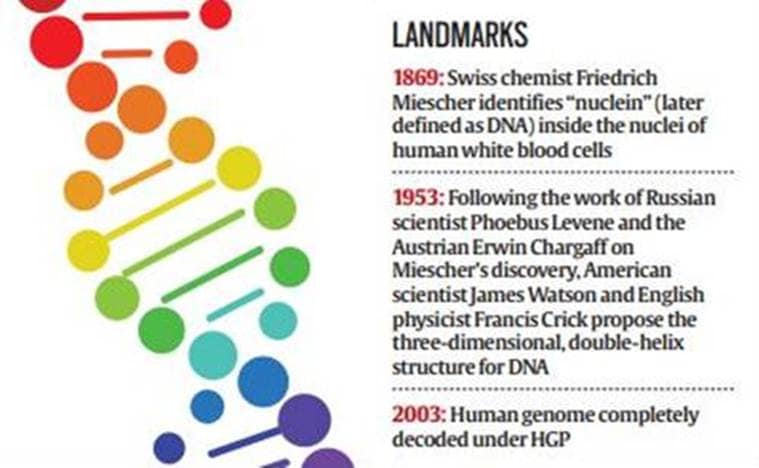
    • It is inspired by the Human Genome Project (HGP 1990-2003) an international programme that led to the decoding of the entire human genome.

    About Human Genome Project

    • One of the most comprehensive genome mapping projects in the world is the Human Genome Project (HGP), which began in 1990 and reached completion in 2003.
    • The international project, which was coordinated by the National Institutes of Health and the US Department of Energy, was undertaken with the aim of sequencing the human genome and identifying the genes that contain it.
    • The project was able to identify the locations of many human genes and provide information about their structure and organisation.

    What is a Genome?

    • Every organism’s genetic code is contained in its Deoxyribose Nucleic Acid (DNA), the building blocks of life.
    • The discovery that DNA is structured as a “double helix” by James Watson and Francis Crick in 1953, started the quest for understanding how genes dictate life, its traits, and what causes diseases.
    • A genome is all the genetic matter in an organism. It is defined as “an organism’s complete set of DNA, including all of its genes.
    • Each genome contains all of the information needed to build and maintain that organism.
    • In humans, a copy of the entire genome contains more than 3 billion DNA base pairs.
    • Each pair consists of 23 pairs of chromosomes for a total of 46 chromosomes, which means that for 23 pairs of chromosomes in each cell, there are roughly 20,500 genes located on them.

    What does genome-mapping tell us?

    • Some of the genes are lined up in a row on each chromosome, while others are lined up quite close to one another and this arrangement might affect the way they are inherited.
    • For example, if the genes are placed sufficiently close together, there is a probability that they get inherited as a pair.
    • Genome mapping, therefore, essentially means figuring out the location of a specific gene on a particular region of the chromosome and also determining the location of and relative distances between other genes on that chromosome.

    What is the significance of GIP?

    • HGP has a major diversity problem as most genomes (over 95%) mapped under HGP have been sourced from urban middle-class white people.
    • Thus, HGP should not really be seen as representative of the human genome.

    In this context, the GIP aims to vastly add to the available information on the human species and advance the cause, both because of the scale of the Indian population and the diversity here. This diversity can be depicted by:

    Horizontal Diversity: The Indian subcontinent has been the site of huge migrations, where the first migrations were from Africa. Also, there have been periodic migrations by various populations from all around the world, making this a very special case of almost all races and types intermingling genetically.

    Vertical Diversity: There has been endogamy or inter-marriage practised among distinct groups, resulting in some diseases passed on strictly within some groups and some other traits inherited by just some groups. Studying and understanding both diversities would provide the bedrock of personalised healthcare for a very large group of persons on the planet.

    Its applications

    • Significantly, genome mapping enables scientists to gather evidence if a disease transmitted from the parent to the child is linked to one or more genes.
    • Furthermore, mapping also helps in determining the particular chromosome which contains that gene and the location of that gene in the chromosome.
    • Genome maps have been used to find out genes that are responsible for relatively rare, single-gene inherited disorders such as cystic fibrosis and Duchene muscular dystrophy.
    • Genetic maps may also point out scientists to the genes that play a role in more common disorders and diseases such as asthma, cancer and heart disease among others.
    • Researchers from several international institutions mapped the handful of genes whose mutation causes several different kinds of cancers.

    Challenges involved

    Fear of Scientific Racism

    • The question of heredity and racial purity has obsessed civilisations, and more scientific studies of genes and classifying them could reinforce stereotypes and allow for politics and history to acquire a racial twist.
    • The work on cranial volume measurements of the physician Samuel Morton (regarded in America as the father of scientific racism) justified slavery before the US Civil War.
    • In India, a nation divided by identity politics, scientific work in mapping genetic groups may further strengthen the divisions in the society based on the prevalent notion of race.

    Data & Storage

    • After collection of the sample, the anonymity of the data and questions of its possible use and misuse would need to be addressed.
    • India is yet to pass a Data Privacy Bill with adequate safeguards and launching the GIP before the privacy question is settled could give rise to another set of problems.

    Medical Ethics

    • In a project that aims only to create a database of genetic information poses a risk of doctors privately performing gene modification.
    • Selective breeding or Eugenics has always been controversial for long, as recently a Shenzhen-based scientist, created the world’s first gene-edited babies, has been sentenced to three years in prison.

    A word of Caution

    • Mapping the genetic diversity of India would further scientific understanding of evolution both from a biological (intra- and inter-species interaction, species-ecology interactions, etc) and sociological (migration patterns, rituals, etc) point of view.
    • Caution must be exercised that the effort to map India’s genetic diversity doesn’t devolve into the politically-motivated and discriminatory effort to root indogeneity in misguided notions of biological essentialism.


    Way Forward

    • The budget for FY21 spoke of expanding genome mapping to agriculture—a greater understanding of the genetic basis for susceptibility to diseases like blights, rusts, etc, would aid genetic engineering efforts to reduce chemical dependence in agriculture.
    • Nor would healthcare be the only field to which the benefits of the project would accrue.
    • To gain fully from the genomics revolution, India needs to collect information about the genetics of its population and train manpower capable of interpreting it.
    • The information that is needed has to come from a large and sustained collection of data — fully sequenced individual genomes along with medical histories for the individuals who volunteer for this effort.
    • Genome India Project provides an opportunity for India to make leap and bounds progress in the fields of biotechnology, agriculture and healthcare.
    • Thus, it should be carried with maximum speed and maximum caution.


    References

    https://www.civilsdaily.com/news/genome-india-project/

    https://www.financialexpress.com/opinion/genome-india-project-a-boon-for-personalised-medicine-that-mustnt-be-misused-for-origin-tracing/1866186/

    https://indianexpress.com/article/opinion/editorials/genome-india-project-india-genetic-diversity-6259645/

  • [Burning Issue] 15th Finance Commission and its recommendations (Part II)


    Key recommendations in the first report (2020-21 period) include:


    Devolution of taxes to states

    • The share of states in the centre’s taxes is recommended to be decreased from 42% during the 2015-20 period to 41% for 2020-21.
    • The 1% decrease is to provide for the newly formed union territories of Jammu and Kashmir, and Ladakh from the resources of the central government.
    • The individual shares of states from the divisible pool of central taxes are provided in table in the annexure.

    Why need devolution formula?

    • The Finance Commission is required to recommend the distribution of the net proceeds of taxes of the Union between the Union and the States (commonly referred to as vertical devolution), and the allocation between the States of the respective shares of such proceeds (commonly known as horizontal devolution).
    • The FC determines the States’ aggregate share in the divisible pool and its horizontal devolution among the States.

    • The basic objective of a horizontal devolution is to enable the States to provide basic public goods and services with equivalent tax effort. Achieving this may entail:
      1. filling up the vertical fiscal gap of the States;
      2. providing horizontal equity (by providing higher share to poorer regions);
      3. equalizing the fiscal capacities of States (revenue equalization);
      4. providing for cost differentials in States for basic public service (expenditure equalization); and
      5. ensuring that the States have enough incentives to mobilise own revenue and spend them appropriately in an efficient manner.

    Various criteria used

    Criteria 14th FC

    2015-20

    15th FC

    2020-21

    Income Distance 50.0 45.0
    Population (1971) 17.5
    Population (2011) 10.0 15.0
    Area 15.0 15.0
    Forest Cover 7.5
    Forest and Ecology 10.0
    Demographic Performance 12.5
    Tax Effort 2.5
    Total 100 100


    Income distance: Income distance is the distance of the state’s income from the state with the highest income.  The income of a state has been computed as average per capita GSDP during the three-year period between 2015-16 and 2017-18.  States with lower per capita income would be given a higher share to maintain equity among states.

    New criteria ‘Demographic performance’: The Terms of Reference (ToR) of the Commission required it to use the population data of 2011 while making recommendations.   Accordingly, the Commission used only 2011 population data for its recommendations.

    The Demographic Performance criterion has been introduced to reward efforts made by states in controlling their population.   It will be computed by using the reciprocal of the total fertility ratio of each state, scaled by 1971 population data.   States with a lower fertility ratio will be scored higher on this criterion.  The total fertility ratio in a specific year is defined as the total number of children that would be born to each woman if she were to live to the end of her child-bearing years and give birth to children in alignment with the prevailing age-specific fertility rates.

    Forest and ecology: This criterion has been arrived at by calculating the share of dense forest of each state in the aggregate dense forest of all the states.

    Tax effort: This criterion has been used to reward states with higher tax collection efficiency.   It has been computed as the ratio of the average per capita own tax revenue and the average per capita state GDP during the three-year period between 2014-15 and 2016-17.


    Grants-in-aid

    In 2020-21, the following grants will be provided to states:

    (i) Revenue deficit grants,

    (ii) Grants to local bodies, and

    (iii) Disaster management grants

    The Commission has also proposed a framework for sector-specific and performance-based grants.  State-specific grants will be provided in the final report.

    Revenue deficit grants: 

    • In 2020-21, 14 states are estimated to have an aggregate revenue deficit of Rs 74,340 crore post-devolution.
    • The Commission recommended revenue deficit grants for these states.

    Special grants:

    • In case of three states, the sum of devolution and revenue deficit grants is estimated to decline in 2020-21 as compared to 2019-20.
    • These states are Karnataka, Mizoram, and Telangana.

     Sector-specific grants: 

    • Sector-specific grants for the following sectors will be provided in the final report: (i) nutrition, (ii) health, (iii) pre-primary education, (iv) judiciary, (v) rural connectivity, (vi) railways, (vii) police training, and (viii) housing

    Performance-based grants:

    Guidelines for performance-based grants include: (i) implementation of agricultural reforms, (ii) development of aspirational districts and blocks, (iii) power sector reforms, (iv) enhancing trade including exports, (v) incentives for education, and (vi) promotion of domestic and international tourism.  The grant amount will be provided in the final report.

    Grants to local bodies: 

    • The total grants to local bodies for 2020-21 has been fixed at Rs 90,000 crore, of which Rs 60,750 crore is recommended for rural local bodies (67.5%) and Rs 29,250 crore for urban local bodies (32.5%).
    • This allocation is 4.31% of the divisible pool.   This is an increase over the grants for local bodies in 2019-20, which amounted to 3.54% of the divisible pool.
    • The grants will be divided between states based on population and area in the ratio 90:10. The grants will be made available to all three tiers of Panchayat- village, block, and district.

    Disaster risk management:  

    • The Commission recommended setting up National and State Disaster Management Funds (NDMF and SDMF) for the promotion of local-level mitigation activities.
    • The Commission has recommended retaining the existing cost-sharing patterns between the centre and states to fund the SDMF (new) and the SDRF (existing).
    • The cost-sharing pattern between centre and states is (i) 75:25 for all states, and (ii) 90:10 for north-eastern and Himalayan states.


    Recommendations on fiscal roadmap

    Fiscal deficit and debt levels: 

    • The Commission noted that recommending a credible fiscal and debt trajectory roadmap remains problematic due to uncertainty around the economy.
    • It recommended that both central and state governments should focus on debt consolidation and complies with the fiscal deficit and debt levels as per their respective Fiscal Responsibility and Budget Management (FRBM) Acts.

    Off-budget borrowings: 

    • The Commission observed that financing capital expenditure through off-budget borrowings detracts from compliance with the FRBM Act.
    • It recommended that both the central and state governments should make full disclosure of extra-budgetary borrowings.
    • The outstanding extra-budgetary liabilities should be clearly identified and eliminated in a time-bound manner.

    Statutory framework for public financial management: 

    The Commission recommended forming an expert group to draft legislation to provide for a statutory framework for sound public financial management system.   It observed that an overarching legal fiscal framework is required which will provide for budgeting, accounting, and audit standards to be followed at all levels of government.

    Tax capacity: 

    • In 2018-19, the tax revenue of state governments and central government together stood at around 17.5% of GDP.
    • The Commission noted that tax revenue is far below the estimated tax capacity of the country.  Further, India’s tax capacity has largely remained unchanged since the early 1990s.
    • In contrast, tax revenue has been rising in other emerging markets.
    • The Commission recommended: (i) broadening the tax base, (ii) streamlining tax rates, (iii) and increasing capacity and expertise of tax administration in all tiers of the government

    GST implementation: 

    • The Commission highlighted some challenges with the implementation of the Goods and Services Tax (GST).
    • These include: (i) large shortfall in collections as compared to original forecast, (ii) high volatility in collections, (iii) accumulation of large integrated GST credit, (iv) glitches in invoice and input tax matching, and (v) delay in refunds.
    • The Commission observed that the continuing dependence of states on compensation from the central government for making up for the shortfall in revenue is a concern.
    • It suggested that the structural implications of GST for low consumption states need to be considered.

    Other recommendations


    Financing of security-related expenditure:

    • The ToR of the Commission required it to examine whether a separate funding mechanism for defence and internal security should be set up and if so, how it can be operationalised.
    • In this regard, the Commission intends to constitute an expert group comprising representatives of the Ministries of Defence, Home Affairs, and Finance.
    • The Commission noted that the Ministry of Defence proposed following measures for this purpose:

    (i) setting up of a non-lapsable fund, (ii) levy of a cess, (iii) monetisation of surplus land and other assets, (iv) tax-free defence bonds, and (v) utilising proceeds of disinvestment of defence public sector undertakings.


    Challenges before 15th FC


    Even as the work of the Commission was in a fairly advanced stage, designed towards submitting the report by the stipulated date, there were new developments which impacted the recommendations of the XV-FC.

    First was the enactment of the Jammu and Kashmir Reorganization Act, 2019, leading to the creation of two new UTs. The FC needs to closely examine how best the needs of the UT of J&K can be addressed keeping in view all relevant factors.

    Second, the global scenario is unpredictable and experiencing a synchronised slowdown. After successive downward revisions, the IMF forecast global growth for 2019 at 3 per cent, which is the lowest since the global financial crisis of 2008-09, with further downside risk.

    Third, like many other countries, India too is going through a period of economic sluggishness. The growth in real GDP is expected to slow down from 7.2 per cent in 2017-18 to around 6 per cent estimated for 2019-20.

    Fourth, weak revenue collections, driven by slowing activity as well as teething problems in implementing some of the newly introduced structural reforms, have elevated the fiscal risks. With real economic growth at a seven-year low, combined with relatively low inflation, growth has been weak in nominal terms as well, leading to a weak tax base.


    Criticisms

    • The population parameter used by the Commission has been criticised by the governments of the southern states.
    • The previous FC used both the 1971 and the 2011 populations to calculate the states’ shares, giving greater weight to the 1971 population (17.5%) as compared to the 2011 population (10%).
    • The use of 2011 population figures has resulted in states with larger populations like UP and Bihar getting larger shares, while smaller states with lower fertility rates have lost out.
    • The combined population of the Bihar, Uttar Pradesh, Madhya Pradesh, Rajasthan and Jharkhand is 47.8 crore.
    • This is over 39.48% of India’s total population and is spread over 32.4% of the country’s area, as per the 2011 Census.
    • On the other hand, the southern states of Tamil Nadu, Kerala, Karnataka and undivided Andhra Pradesh are home to only 20.75% of the population living in 19.34% of the area, with a 13.89% share of the taxes.
    • This means that the terms decided by the Commission are loaded against the more progressive (and prosperous) southern states.


    References

    https://www.prsindia.org/report-summaries/report-15th-finance-commission-fy-2020-21

    https://en.wikipedia.org/wiki/Fifteenth_Finance_Commission

    https://www.civilsdaily.com/news/recommendations-of-the-15th-finance-commission/

  • [Burning Issue] 15th Finance Commission and its recommendations (Part I)


    Context

    • The Finance Commission is a constitutional body formed by the President of India to give suggestions on centre-state financial relations.
    • The 15th Finance Commission was required to submit two reports. The commission’s chairman is N. K. Singh, with its full-time members being Ajay Narayan Jha, Ashok Lahiri and Anoop Singh.
    • The first report, consisting of recommendations for the financial year 2020-21, was tabled in Parliament on February 1, 2020.
    • The final report with recommendations for the 2021-26 period will be submitted by October 30, 2020.

    Background

    What is Finance Commission?

    • The Finance Commission (FC) was established by the President of India in 1951 under Article 280 of the Indian Constitution.
    • It was formed to define the financial relations between the central government of India and the individual state governments.
    • The Finance Commission (Miscellaneous Provisions) Act, 1951 additionally defines the terms of qualification, appointment and disqualification, the term, eligibility and powers of the Finance Commission.
    • As per the Constitution, the FC is appointed every five years and consists of a chairman and four other members.
    • Since the institution of the First FC, stark changes in the macroeconomic situation of the Indian economy have led to major changes in the FC’s recommendations over the years.

    Constitutional Provisions

    Several provisions to bridge the fiscal gap between the Centre and the States were already enshrined in the Constitution of India, including Article 268, which facilitates levy of duties by the Centre but equips the States to collect and retain the same.

    Article 280 of the Indian Constitution defines the scope of the commission:

    1. The President will constitute a finance commission within two years from the commencement of the Constitution and thereafter at the end of every fifth year or earlier, as the deemed necessary by him/her, which shall include a chairman and four other members.
    2. Parliament may by law determine the requisite qualifications for appointment as members of the commission and the procedure of selection.
    3. The commission is constituted to make recommendations to the president about the distribution of the net proceeds of taxes between the Union and States and also the allocation of the same among the States themselves. It is also under the ambit of the finance commission to define the financial relations between the Union and the States. They also deal with the devolution of unplanned revenue resources.

    Why need Finance Commission?

    • As a federal nation, India suffers from both vertical and horizontal fiscal imbalances.
    • Vertical imbalances between the central and state governments result from states incurring expenditures disproportionate to their sources of revenue, in the process of fulfilling their responsibilities.
    • However, states are better able to gauge the needs and concerns of their inhabitants and therefore more efficient at addressing them.
    • Horizontal imbalances among state governments result from differing historical backgrounds or resource endowments, and can widen over time.
    • The first FC was established in 1951 by Dr. B.R. Ambedkar, the then-incumbent law minister, to address these imbalances.

    Important functions

    • Distribution of net proceeds of taxes between Center and the States, to be divided as per their respective contributions to the taxes.
    • Determine factors governing Grants-in-Aid to the states and the magnitude of the same.
    • To make recommendations to the president as to the measures needed to augment the Fund of a State to supplement the resources of the panchayats and municipalities in the state on the basis of the recommendations made by the finance commission of the state.
    • Any other matter related to it by the president in the interest of sound finance.

    Members of the Finance Commission

    • The Finance Commission (Miscellaneous Provisions) Act, 1951 was passed to give a structured format to the finance commission and to bring it to par with world standards.
    • It laid down rules for the qualification and disqualification of members of the commission, and for their appointment, term, eligibility and powers.
    • The Chairman of a finance commission is selected from people with experience of public affairs. The other four members are selected from people who:
    1. Are, or have been, or are qualified, as judges of a high court,
    2. Have knowledge of government finances or accounts, or
    3. Have had experience in administration and financial expertise; or
    4. Have special knowledge of economics

    Finance Commission versus Planning Commission

    • It is alleged that Planning Commission (PC) which is neither a constitutional nor a statutory body had usurped the role of FC.
    • PC had restricted FC’s role to mere recommend grants to states on revenue account only under article 275 of Indian constitution.
    • However, after the formation of NITI Aayog which replaced the PC, the government seeked to empower FC with the originally envisaged task of distribution of revenue to the states.
  • [Burning Issue] Highlights of the Union Budget 2020


    Estimates

    Prominent themes of the Budget 2020


    Agriculture

    • A budget allocation of ₹2.83 lakh crore for the sector comprising agriculture and allied activities.
    • Doubling farmers incomes by 2022.
    • Agri-credit availability set at ₹15 lakh crore for 2020-21.
    • Comprehensive measures for 100 water stressed districts.
    • Provide 20 lakh farmers to set up standalone solar pumps. Help another 15 lakh farmers to solarise their power grid.
    • Village storage scheme proposed to be run by women SHGs.
    • Indian Railways to have refrigerated coaches capability in ‘kisan trains’ to carry perishables and milk.
    • Krishi UDAN on international and national routes.

    Health and Sanitation

    • An allocation of ₹69,000 crore for the health sector.
    • ₹12,300 crore for Swachh Bharat this year.
    • Proposal to set up hospitals in Tier-II and Tier-III cities with the private sector using PPP.
    • Expand Jan Aushadhi scheme to provide for all hospitals under Ayushman Bharat by 2025.

    Education

    • ₹99,300 crore for education sector in 2021 and about ₹3,000 crore for skill development.
    • Urban local bodies to provide internship to young engineers for a year.
    • Degree-level full fledged online education programmes by institutions ranked in top 100 in NIRF rankings, especially to benefit underprivileged students.
    • A national police university and a national forensic science university is proposed to be setup.
    • IND SAT exam for students of Asia and Africa to promote “study in India” programme.

    Infrastructure

    • Budget proposes to provide ₹1.7 lakh crore for transport infrastructure in 2021
    • National Logistics Policy to be released soon.
    • Chennai-Bengaluru Expressway to be started.
    • Aim to achieve electrification of 27,000 km of lines.
    • Plan to have a large solar power capacity for Indian Railways.
    • The government also proposes a Bengaluru suburban rail project at a cost of ₹18,600 crore.
    • Govt to monetise 12 lots of national highways by 2024.
    • 100 more airports will be developed by 2024 to support UDAN.

    Culture and Tourism

    • Indian Institute of Heritage and Conservation has been proposed under the Ministry of Culture. This will be given a status of deemed university.
    • 5 sites will be developed as iconic sites with on-site museums
    1. Rakhigarhi (Haryana)
    2. Hastinapur (Uttar Pradesh)
    3. Shivsagar (Assam)
    4. Dholavira (Gujarat)
    5. Adichanallur (Tamil Nadu)
    • Maritime museum to be set up at Lothal- the Harappan age maritime site near Ahmedabad, by Ministry of Shipping.

    Tax

    • A new tax regime has been announced. Those who want to be in the old regime with exemptions, can continue to pay at the old rates.
    Income Tax
    Between ₹5 lakh and ₹7.5 lakh Reduced to 10% from the current 20%
    Between ₹7.5 lakh to ₹10 lakh Reduced to 15% from the current 20%
    Between ₹10 lakh to ₹12.5 lakh Reduced to 20% from the current 30%
    Between ₹12.5 lakh to ₹15 lakh Reduced to 25% from the current 30%
    Above ₹15 lakh Continue at 30%, but without exemptions
    • Over 70 deductions have been removed.
    • Companies will no longer be required to pay Dividend Distribution Tax (DDT).
    • Aadhaar-based verification for GST compliance to be introduced.

    Also read:

    Government Budgeting

  • [Burning Issue] Divestment of LIC


    Context

    • Finance Minister has said that the government will sell a part of its holding in Life Insurance Corporation of India (LIC) through an initial public offering (IPO).
    • The government owns 100 per cent of LIC. The government’s move is a part of efforts to push through an aggressive disinvestment and asset monetisation programme.
    • Some are calling it India’s Saudi Aramco, a listing on Indian stock exchanges like none other.

    Background

    Life Insurance Corporation of India (LIC)

    • LIC is an Indian state-owned insurance group and investment corporation owned by the Government of India.
    • It was founded in 1956 when the Parliament of India passed the Life Insurance of India Act that nationalized the insurance industry in India.
    • Over 245 insurance companies and provident societies were merged to create the state-owned LIC.

    Beginning of life insurance in India

    • The Oriental Life Insurance Company, the first company in India offering life insurance coverage, was established in Kolkata in 1818.
    • Its primary target market was the Europeans based in India, and it charged Indians heftier premiums.
    • Surendranath Tagore had founded Hindusthan Insurance Society, which later became Life Insurance Corporation.
    • The Bombay Mutual Life Assurance Society, formed in 1870, was the first native insurance provider.

    Nationalization in 1956

    • In 1955, parliamentarian Feroze Gandhi raised the matter of insurance fraud by owners of private insurance agencies.
    • The Parliament passed the Life Insurance of India Act on 19 June 1956 creating the LIC which started operating in September of that year.
    • It consolidated the business of 245 private life insurers and other entities offering life insurance services; this consisted of 154 life insurance companies, 16 foreign companies and 75 provident companies.
    • The nationalization of the life insurance business in India was a result of the Industrial Policy Resolution of 1956, which had created a policy framework for extending state control over at least 17 sectors of the economy, including life insurance.

    Present capital base

    LIC is India’s largest financial institution, and if LIC shares are listed on stock exchanges, it could easily emerge as the country’s top listed company in terms of market valuation, overtaking current leaders Reliance and TCS.

    The corporation, which started its business with around 300 offices, 5.7 million policies and a corpus of INR 45.9 crores (US$92 million as per the 1959 exchange rate of roughly ₹5 for US$1), had grown to 25,000 servicing around 350 million policies and a corpus of over ₹800,000 crore by the end of the 20th century.

    • From its creation, LIC, which commanded a monopoly of soliciting and selling life insurance in India, created huge surpluses and by 2006 was contributing around 7% of India’s GDP.
    • As of 2019, LIC had toa tal life fund of ₹28.3 trillion.
    • The total value of sold policies in the year 2018-19 is ₹21.4 million.
    • LIC settled 26 million claims in 2018-19. It has 290 million policyholders.

    LIC: A milch cow for government

    • Governments have long shied away from considering listing India’s top insurer, given the institution’s perceived role in supporting the markets by buying shares during major sell-offs and also shares of state-owned companies during divestment and when investor participation has been weak.
    • The corporation had invested heavily in IPOs and follow-on offers of companies such as ONGC.
    • It is also the largest investor in government securities and stock markets every year. On an average, LIC invests Rs 55,000 crore to Rs 65,000 crore in stock markets every year and emerges as the largest investor in Indian stocks.
    • LIC also has huge investments in debentures and bonds besides providing funding for many infrastructure projects according to its Annual Report for 2017-18.

    Initial Public Offerings (IPO) of LIC

    A big-bang announcement

    • The government could start by initially selling a small tranche of the government controlled institution through an IPO, and subsequently dilute the government’s holdings.
    • The IPO is likely to fetch a huge premium as LIC currently has a small equity base.
    • In the Budget of July 2019, the government had announced a proposal to make minimum public holding of 35 per cent for listed companies.
    • The government had listed the shares of General Insurance Corporation and New India Assurance through IPOs three years ago.
    • Public listing of LIC will lead to more disclosures of investment and loan portfolios and better governance, with greater transparency and accountability.

    How will the IPO go?

    • The government will have to amend the LIC Act first before taking the Corporation public.
    • LIC is currently under the supervisory oversight of the Insurance Regulatory Development Authority of India (IRDAI), but it is governed by The LIC Act of 1956,
    • The act enables it to obtain a special dispensation in several areas including higher stakes in companies beyond the limit set by the IRDAI.
    • Under Section 37 of The LIC Act, the government has guaranteed the sum assured with bonus in all LIC policies to ensure the availability of financial security to the family of the deceased.

    Implications

    • It seems like the government is trying to make the most of the brand value of LIC, given that it is one of the few remaining profit-making entities owned by the state.
    • Will the listing of LIC, which is the country’s largest financial institution with assets under management of close to ₹30 trillion, do any good to its policyholders?

    Let’s have a look:

    1) Listing will boost LIC’s efficiency and thereby policy returns

    • The listing of LIC will be a positive move for policyholders. The benefit will, however, be indirect.
    • As a 100% government-owned entity, LIC’s financial health is largely outside the scrutiny of the financial markets.
    • Investment returns for traditional policies are dependent on the insurer’s performance. Such plans form a big portion of LIC’s book.
    • Unlike unit-linked insurance plan investors, who have a clear visibility on the daily performance of underlying funds, the endowment policyholders’ visibility is limited to annually declared bonuses.
    • Listing will allow analysts to monitor LIC’s governance. LIC will come under Sebi’s direct watch and will have to comply with the requirements meant for other listed firms.
    • Such compliance is likely to strengthen its overall corporate governance, financial and investment discipline. Over time, this will increase its efficiency and it may deliver higher returns to policyholders.

    2) Peers will be under pressure to improve pricing and features

    • Any company going public is good news for stakeholders since it ensures higher transparency, better governance, more disclosures and scrutiny from the investors.
    • However, LIC is not a typical company. LIC has in the past invested in the equity markets to stem its fall.
    • After being listed, LIC will be answerable to public shareholders and, hence, will be a prudent investment decision, which is good for policyholders.
    • LIC will also become more competitive. This will put pressure on its peers to innovate, benefitting policyholders in terms of pricing, product features and services.
    • LIC policyholders enjoy a sovereign guarantee on the sum assured and the bonus declared. This has been one of the main selling points for LIC policies.
    • The proposed “partial” divestment, in all likelihood, will ensure that the majority stake is still with the government, thereby continuing the sovereign guarantee.

    3) Less govt interference will be a positive for LIC’s financial health

    • For LIC, it will be a significant task to enhance the quality of asset management given that the government sometimes is reliant on it to bail out PSUs, without delving deep into the fiscal prudence of these assets.
    • Being under scrutiny, the quality of asset management by LIC will be enhanced as the government’s influence on its asset management will reduce.
    • Further, LIC services a few state-sponsored schemes which have underwriting challenges on the commercial front. With the IPO, these services might fall into place, improving the overall stability of LIC.
    • In a nutshell, with less federal interference, LIC will be more accountable with strong governance protocols, which will be a positive for its financial health.
    • However, the sovereign guarantee element currently enjoyed by each LIC policyholder might cease to exit after the IPO. Some policyholders may then find it hard to trust LIC.

    4) If sovereign guarantee continues, policyholders won’t perceive risk

    • So far, LIC has operated almost like a mutual insurance company by passing on most of the earnings to the policyholders and keeping very little as profits, despite having a massive operation.
    • The listing of LIC is a positive move which will result in transparency of the corporation in public view, sparking renewed interest in the insurance industry in international markets.
    • Government-owned General Insurance Co. of India is already listed, so the process and transparency will not be any different.
    • As long as sovereign guarantee over the maturity proceeds and sum assured continue, policyholders won’t perceive any risk.
    • The return on policies may have to be moderated to boost profitability and technical reserves in the face of shareholder and analyst scrutiny.
    • It is not clear how much of the company will be diluted. So, the opportunity for the general public to pick up equity in LIC in the IPO may be limited.

    Challenges

    Structural challenges

    • LIC can even evolve into a bank like many of its global peers like Axa, Berkshire, and Munich Re.
    • But even after the listing, the LIC stock will still be controlled by the Indian government.
    • And, it will continue to exercise some amount of control.
    • So, investors in LIC might face what those of PSU banks do – be a part of poor governance, bad decisions — despite controlling 70% of the country’s banking system.

    Market hurdles

    • LIC’s own issues are not the only challenge the company would face in going public. It also remains to be seen if the Indian share market is ready to absorb such a large public issue.
    • Whilst it will definitely help deepen the markets, given that SEBI regulations need a minimum dilution of 10 per cent to the public, it is unclear if there is enough liquidity for such a large sized IPO.
    • Additionally, LIC has been a port of call for various PSU fund raises in the past.
    • Once a behemoth the size of LIC goes for listing, it will be interesting to see if other private life insurance companies will still be able to attract funds at expected valuation.

    Impact on growth

    • The size of the IPO will determine the extent of liquidity it will suck out, but Indian markets do not have depth to take the issue of a very size.
    • Critics argue that it’s too early for LIC to go public. LIC could see plenty of high growth despite the ongoing slowdown in the economy.

    Fears of disclosure

    • The company’s books and operations have been opaque for far too long but it is trusted by 250 million policyholders.
    • It could have been the saviour for many more listed state-owned companies, but the government has decided to sell the golden goose itself.
    • LIC is also famous for investing millions whenever stock market tanks, just to prop it up.
    • But once it is listed in the market, these tricks will be impossible to execute. The disclosures will lead to a lot of discontents due to NPAs.

    Investors trust

    • Being one of the biggest financial institutions of the country, the move to privatise LIC will shake the confidence of the common man and will be an affront to our financial sovereignty.
    • The very purpose of LIC to provide insurance coverage to socially and economically backward class at a reasonable cost will be defeated and motto will change from service to profit.


    Way Forward

    • LIC is all set to see significant disruption. The scale of that disruption would be unprecedented within the organisation and outside.
    • Over the years, LIC has become ‘the lender of last resort’ to the Government of India.
    • Confronted with an unprecedented fiscal deficit and worried by an economy in crisis, the government has to find resources.
    • This disinvestment is also a preferred option for ideological and practical reasons.
    • The government could utilize the money gained by selling off its stakes to improve services in public goods like infrastructure, health and education.
    • However, listing LIC wouldn’t be an easy task and calls for a political will.
    • Private insurers in India like HDFC Life, SBI Life and ICICI Pru Life are growing faster than LIC due to their small size.
    • In the new avatar, LIC would have to benchmark itself against private insurers and global insurance giants like


    Also read

    Disinvestment Policy in India.


    References

    https://www.livemint.com/money/personal-finance/what-does-partial-divestment-in-lic-mean-for-its-policyholders-11580664343791.html

    https://www.moneycontrol.com/news/business/moneycontrol-research/listing-lic-a-big-reform-4893191.html

    https://indianexpress.com/article/explained/life-insurance-corporation-lic-ipo-explained-6245933/

    https://www.businesstoday.in/markets/ipo-corner/lic-ipo-nirmala-sitharaman-budget-lic-npas-reliance-industries-tcs-hdfc-bank-stocks/story/395342.html

    https://www.firstpost.com/business/lic-ipo-about-1-lakh-employees-stage-walk-out-across-country-against-proposed-stake-sale-future-course-of-action-to-be-decided-next-month-8005191.html

  • [Burning Issue] West Asia Peace Plan


    Context

    • With West Asia Peace plan the US plans to revive the stalled two-state talks between the Israelis and the Palestinians.
    • Israel has consistently been encroaching more and more in the West Bank through its settlements.
    • Israeli PM Benjamin Netanyahu, who had earlier spoken against the two-state solution, has accepted the Trump plan.

    Background

    • After World War I, both West Bank and the Gaza Strip became part of British-mandated Palestine.
    • But by the end of World War II, there was a strong demand from Jews fleeing Nazi Europe for a homeland within Palestine, an Arab-dominated region.
    • It also had to do with Jerusalem, considered a holy city by the Jews, which was inside British-mandated Palestine.
    • When the British mandate ended in 1947, the UN proposed an Arab-Jewish partition of Palestine — between Palestine and the new state of Israel.
    • This partition plan mandated 53 per cent of the land to the Jewish-majority state (Israel) and 47 per cent to the Palestinian-majority state (Palestine).

    Birth of Israel

    • The idea of creating a new-Jewish majority state didn’t bode well for the Arab countries in the Middle East.
    • Jewish paramilitary groups, however, formed the state of Israel by force in 1948.

    Shrinking of Palestine

    • This prompted a deadly war with its Arab neighbours — Egypt, Iraq, Lebanon, Syria, and Jordan in 1948. This was the first Arab-Israeli war.
    • Israel won this war and ended up occupying more land than previously envisaged in the 1947 UN partition plan.
    • By the end of the war in 1949, Israel had taken up 78 per cent of what was supposed to be original Palestine. The Palestinian territory shrank to 22 per cent of what it had earlier been.
    • Meanwhile, the West Bank and East Jerusalem came under Jordan’s rule while West Jerusalem went to Israel. The Gaza Strip was under Egyptian military rule after the 1949 war.

    Six-Day War of 1967

    • In 1967, the Arab countries again refused to recognise Israel as a state, which led to another war — known as the Six-Day War.
    • Israel won this war too and occupied even more parts of Palestine.
    • The West Bank, the Gaza Strip and East Jerusalem — which houses the holy Old City — came under Israel’s control. It also occupied Syrian Golan Heights and Egypt’s Sinai Peninsula.
    • With the exception of the Sinai Peninsula, all other parts remain occupied by Israel till date.
    • Since 1967, a large part of the Palestinian population had been living under Israeli-occupied territories in both West Bank and the Gaza Strip.

    The core of the dispute: West Bank & Gaza Strip


    West Bank

    • The West Bank is located to the west of the Jordan River.
    • It is a landlocked territory, bordered by Jordan to the east and Israel to the south, west and north.
    • Following the Oslo Accords between the Israeli government and the Palestine Liberation Organization (PLO) during the 1990s, part of the West Bank came under the control of the Palestinian Authority.
    • With varying levels of autonomy, the Palestinian Authority controls close to 40 per cent of West Bank today, while the rest is controlled by Israel.

    Gaza Strip

    • The Gaza Strip is a small boot-shaped territory along the Mediterranean coast between Egypt and Israel.
    • A couple of years later in 2007, Hamas, an anti-Israel military group, took over Gaza Strip. The militia group is often involved in violent clashes with the Israeli Defence Forces.
    • While Palestine has staked claim to both territories — West Bank and Gaza Strip — Israel’s objective has been to keep expanding Jewish settlements in these regions.

    Both the West Bank and Gaza Strip are home to a large number of Palestinian populations. There are approximately 2 million Palestinians in the Gaza Strip and 3 million in the West Bank, according to the Palestinian Authority’s Population Registry.

    The West Asia Peace Plan

    • The plan unveiled by Trump seeks to give the Israelis what they have long wanted — an expansive state with Jerusalem as its “undivided capital” and tight security control over a future Palestinian state.
    • The Trump Plan is a 180-page document called “Peace for Prosperity”.
    • The plan seeks to address most of the contentious issues in the conflict such as the border of Israel, the status of Palestinian refugees, Jewish settlements on the West Bank, land swap between Israel and Palestine, Israel’s security concerns and the status of the city of Jerusalem.

    Takeaways of the Plan

    The creation of a “Palestinian state” must meet a set of basic conditions where Palestinian leaders must:

    • accept peace by recognizing Israel as a Jewish national state
    • thus, Arabs with Israeli citizenship will receive the status of a national minority in Palestine, in their homeland
    • reject “terrorism” in all its forms (“In order to achieve a comprehensive peace, the Palestinian people must clearly state that they reject the ideology of destruction, terror and conflict”)
    • reach agreements that relate to the “vital” needs of Israel and the region
    • create effective institutions and choose pragmatic solutions; “pragmatic decisions” refers primarily to peace with Israel under Israeli conditions

    1) Jerusalem: The undivided Capital

    • Jerusalem, perhaps the most contentious issue, would be “the undivided capital” of Israel, with Palestine gaining its capital in the east of the city — beyond the security border Israel has already built.
    • In return, Israel would freeze further settlement activities on the West Bank for four years — the time for negotiations.

    2) Land Swap

    • According to the Oslo Accords, the West Bank was divided into three areas and only one of them is under the direct control of the Palestinian Authority.
    • The plan proposes some land swap for the Israeli annexation of the West Bank Jewish settlements.
    • It seeks to enlarge Gaza and connect the strip with the West Bank through a tunnel.
    • The Arab towns in the southeast of Israel, which are close to Gaza, could become part of a future Palestinian state.

    3) Curb on Hamas

    • During this period, the Palestinian Authority should dismiss its current complaints at the International Criminal Court against Israel and refrain itself from taking further actions.
    • It should also crackdown on “terrorist” groups such as Hamas and the Islamic Jihad.

    4) Investment Plans

    • The US has also proposed $50 billion in investment over 10 years should Palestine accept the proposals.
    • In the final settlement, Palestine would get control over more land than what it currently controls.

    5) Security restrictions

    • Following the signing of the agreement, the State of Israel will maintain responsibility for Palestinian security.
    • The State of Israel will be responsible for the security of all international crossings of the Palestinian State.
    • The Palestinian state must be completely demilitarized.
    • A Palestinian state will be prohibited from entering into military, intelligence or security agreements with any state or organization that the State of Israel views negatively in terms of its security.

    End of the Palestinian aspirations

    • The US has proposed to almost all of these issues favour the Israeli positions.
    • For example, Israel would be allowed to annex the Jewish settlements on the West Bank as well as the Jordan Valley.
    • The Palestinian refugees, who were forced out from their homes during the 1948 Arab-Israeli war that followed the declaration of the state of Israel in historic Palestine, would not be allowed to return.
    • They could move to the future Palestinian state, be integrated into the host countries or settled in other regional countries.

    Implications for Palestine

    • The Palestine position is backed by most of the world powers is the formation of an independent, sovereign Palestinian state based on the 1967 border.
    • But the US has effectively rejected the Palestinian claims outright and asked them to make more compromises.
    • And for this, the Palestinians should take action against militant groups, stop supporting Palestinian families of those jailed or killed by Israel and refrain it from questioning the occupation in international fora.
    • As a result, from all of the above, it is clear why the Palestinians are not ready to accept such a “limited sovereignty” version of the Palestinian state.

    India’s stance

    • India has since long been maintaining that Israel-Palestine conflict should be resolved through negotiation resulting in sovereign, independent, viable and united State of Palestine, with East Jerusalem as its capital.
    • India has urged both countries to “engage with each other, including on the recent proposals put forward by the United States, and find an acceptable two-state solution for peaceful coexistence”.

    Conclusion

    • The plan re-iterates the ideals of US fondness of Israel. It is no way a negotiation but a dictation of the vested US interest to control the Arab region.
    • The consequences of America’s poor understanding of West Asia geopolitics are there to see in Iraq and Libya, among other states in the region.
    • Netanyahu needs the plan now because the one-sided, all-out-for-Israel US vision will divert attention from a corruption indictment that was filed against him in court a few days ago.
    • Call upon the international community to divest from, boycott and sanction Israel in order to stop the “ongoing catastrophe”. 

    Way Forward

    • The situation in Palestine is not a conflict but a struggle against settler colonialism. Not unlike the struggle against Apartheid South Africa.
    • It is a travesty of truth that the influential and all-pervasive pro-Israel lobby has stayed silent on this plan of U.S.
    • Land grabbing with force has been a fundamental element of Israel’s approach towards the Palestinians.
    • It is time for international actors who care about the situation of the Palestinians and start pushing for the latter solution.
    • The world at large needs to come together for a peaceful resolution to ensure a viable and long-lasting solution to solve this issue.
    • However, with the reluctance of the Israeli government and the US involved in this issue, it may not be possible in the near future.
    • Pressure from the outside, a continued popular struggle from the inside and a clear Palestinian vision for the future can turn this vision into reality.


    References

    https://www.civilsdaily.com/news/explained-west-asia-peace-plan/

    https://eurasiantimes.com/why-palestine-has-rejected-the-trump-peace-plan-to-resolve-israel-palestine-conflict/

    https://www.deccanherald.com/national/national-politics/india-keeps-mum-on-east-jerusalem-reacts-cautiously-on-us-president-donald-trumps-west-asia-peace-plan-799417.html

  • [Burning Issue] Comprehensive Bodo Settlement Agreement


    • The MHA, the Assam government and the Bodo groups have signed an agreement to redraw and rename the Bodoland Territorial Area District (BTAD) in Assam, currently spread over four districts of Kokrajhar, Chirang, Baksa and Udalguri.
    • Several Bodo groups led have been demanding a separate land for the ethnic community since 1972, a movement that has claimed nearly 4,000 lives.

    Who are the Bodos?

    • Bodos are the single largest tribal community in Assam, making up over 5-6 per cent of the state’s population. They have controlled large parts of Assam in the past.
    • The four districts in Assam — Kokrajhar, Baksa, Udalguri and Chirang — that constitute the Bodo Territorial Area District (BTAD), are home to several ethnic groups.

    What was the dispute?

    • The Bodos have had a long history of separatist demands, marked by armed struggle.
    • In 1966-67, the demand for a separate state called Bodoland was raised under the banner of the Plains Tribals Council of Assam (PTCA), a political outfit.
    • In 1987, the All Bodo Students Union (ABSU) renewed the demand. “Divide Assam fifty-fifty”, was a call given by the ABSU’s then leader, Upendra Nath Brahma.
    • The unrest was a fallout of the Assam Movement (1979-85), whose culmination — the Assam Accord — addressed the demands of protection and safeguards for the “Assamese people”, leading the Bodos to launch a movement to protect their own identity.
    • In December 2014, separatists killed more than 30 people in Kokrajhar and Sonitpur. In the 2012 Bodo-Muslim riots, hundreds were killed and almost 5 lakh were displaced.

    Reasons behind separatist tendencies

    • For centuries, Bodos survived Sanskritisation without giving up their original ethnic identity.
    • However, in the 20th century, they had to tackle a series of issues such as illegal immigration, the encroachment of their lands, forced assimilation, loss of language and culture.
    • The 20th century also witnessed the emergence of Bodos as a leading tribe in Assam which pioneered the movements for safeguarding the rights of the tribal communities in the area.
    • From then on, they have been consistently deprived of the political and socio-economic rights by successive state and central governments.
    • The Bodos have not only become an ethnic minority in their own ancestral land but have also been struggling for their existence and status as an ethnic community.

    Background of the accord

    • The first Bodo accord was signed with the ABSU in 1993, leading to the creation of a Bodoland Autonomous Council with limited political powers.
    • The recent Bodo Accord was signed in 2003 which resulted in the establishment of an autonomous administrative unit- Bodoland Territorial Council (BTC) under Sixth Schedule of the Constitution of India.
    • The BTC has been divided into four districts viz. Kokrajhar, Chirang, Baska, and Udalguri.
    • The BTAD and other areas mentioned under the Sixth Schedule of the Constitution have been exempted from the Citizenship (Amendment) Act, 2019.

    Highlights of the 2020 Agreement

    The Bodoland Territorial Council, All Bodo Students Union (ABSU), various factions of National Democratic Front of Bodoland (NDFB) — Gobindo Basumatary faction, Dhirendra Bodo faction, RanjanDaymari faction and Saoraigwra faction and the United Bodo Peoples Organization (UBPO) are party to the agreement with the Centre and the Assam government.

    • As per the agreement, villages dominated by Bodos that were present outside the BTAD would be included and those with non-Bodo population would be excluded.
    • Bodos living in the hills would be conferred a Scheduled Hill Tribe status.
    • The BTAD is to be renamed as the Bodoland Territorial Region (BTR).

    I. Rehabilitation and relief

    • The criminal cases registered against members of the NDFB factions for “non-heinous” crimes shall be withdrawn by the Assam government and in cases of heinous crimes it will be reviewed.
    • A Special Development Package of Rs. 1500 Crore would be given by the Centre to undertake specific projects for the development of Bodo areas.

    II. A separate Commission

    • It proposes to set up a commission under Section 14 of the Sixth Schedule to the Constitution which will recommend the inclusion or exclusion of tribal population residing in villages adjoining BTAD areas.
    • In this commission, besides State government, there will be representatives from ABSU and BTC. It will submit its recommendation within six months.

    III. Changes in Legislature

    • The total number of Assembly seats will go up to 60, from the existing 40.
    • The present settlement has a proposal to give more legislative, executive, administrative and financial powers to BTC.

    IV. Bodo as an official language

    • The Assam government will also notify Bodo language as an associate official language in the state and will set up a separate directorate for Bodo medium schools.
    • Bodo with Devnagri script would be the associate official language for the entire Assam.

    Significance of the agreement


    I. Satisfying identity aspiration

    • The signing of the agreement would end the 50-year-old crisis and violent struggle.
    • The renaming is designed to satisfy the identity and aspirations of the Bodo people.

    II. Not ceding territory solved tricky matter

    • Renaming also solved the politically tricky matter of ceding territory for the government of Assam.
    • Ceding territory would also have fuelled similar demands from the other parts of the state like- Karbi Anglong, Dima Hasao and Cachar, which also have homelands of non-Ahom ethnicities.

    III. Avoiding similar demand from other states

    • Indeed, it could have affected the ongoing Naga peace process, leading Naga rebels to demand territorial and administrative autonomy in Naga homelands in Manipur.

    IV. End of militancy

    • Around 1500 cadres of BODO militant factions will be rehabilitated by Centre and Assam Government.

    Way Forward

    • The Government of Assam needs to ensure that the pact signed changes the situation on the ground and leads to a development on the ground.
    • The state also needs to allay the fears in the Bengali-speaking minority.
    • Moreover, true autonomy, true peace, and true development are always worth more than the paper on which they are promised.

    Conclusion

    • The accord aims to bring together the leading stakeholders under one framework i.e. those who were previously associated with armed resistance groups.
    • The accord will end violence pertaining to Bodoland and help those associated with armed struggle enter the mainstream.
    • The Accord will further protect and popularize the unique culture of the Bodo people. They will get access to a wide range of development-oriented initiatives.


    References

    https://www.civilsdaily.com/news/comprehensive-bodo-settlement-agreement/

    https://www.civilsdaily.com/news/explained-the-bodoland-dispute/

    https://www.civilsdaily.com/news/op-ed-snap-optimal-delivery-or-mere-optics-in-bodo-peace-deal/