💥Join UPSC 2027,2028 Mentorship (July Batch) + XFactor Notes & Microthemes PDF

Author: CD Staff

  • [Burning Issue] Outbreak of Coronavirus


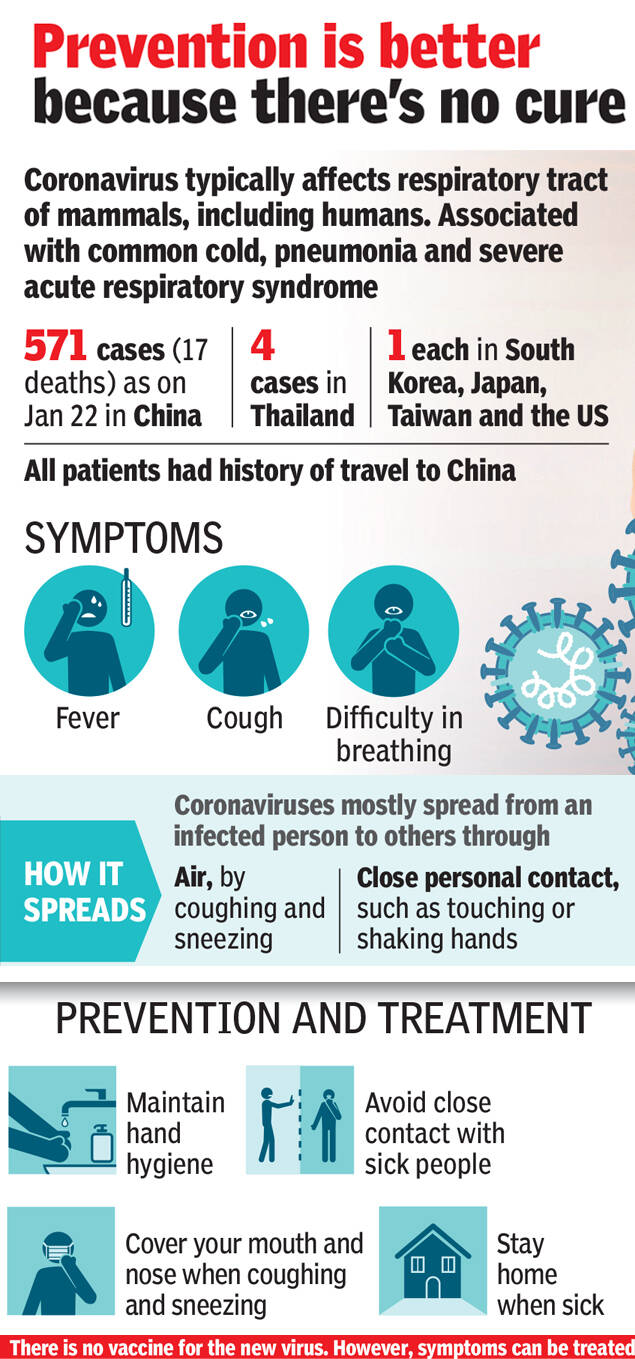
    • An outbreak of a new Coronavirus that began in the Chinese city of Wuhan has already killed at least 106 people in China.
    • Infections have been confirmed in many other countries. But of the 4,500 people who have so far contracted the virus, the vast majority live in China.
    • With crumbling health infrastructure due to an overburden of diseases in the country, India’s preparedness for handling epidemics such as novel coronavirus (nCoV) becomes a major challenge.
    • The World Health Organisation has warned that due to human to human transmission, the virus can fast spread in other countries also.

    A world pandemic begins with ignorance

    • Chinese officials underestimated the severity of the outbreak, even downplaying the mode of infection, and this attitude had an important role in the rapid spread of the disease in the country.
    • As India prepares itself against the virus, a similar denial or underplaying of the crisis can have equally serious consequences.

    What is the Novel Coronavirus (nCoV?)
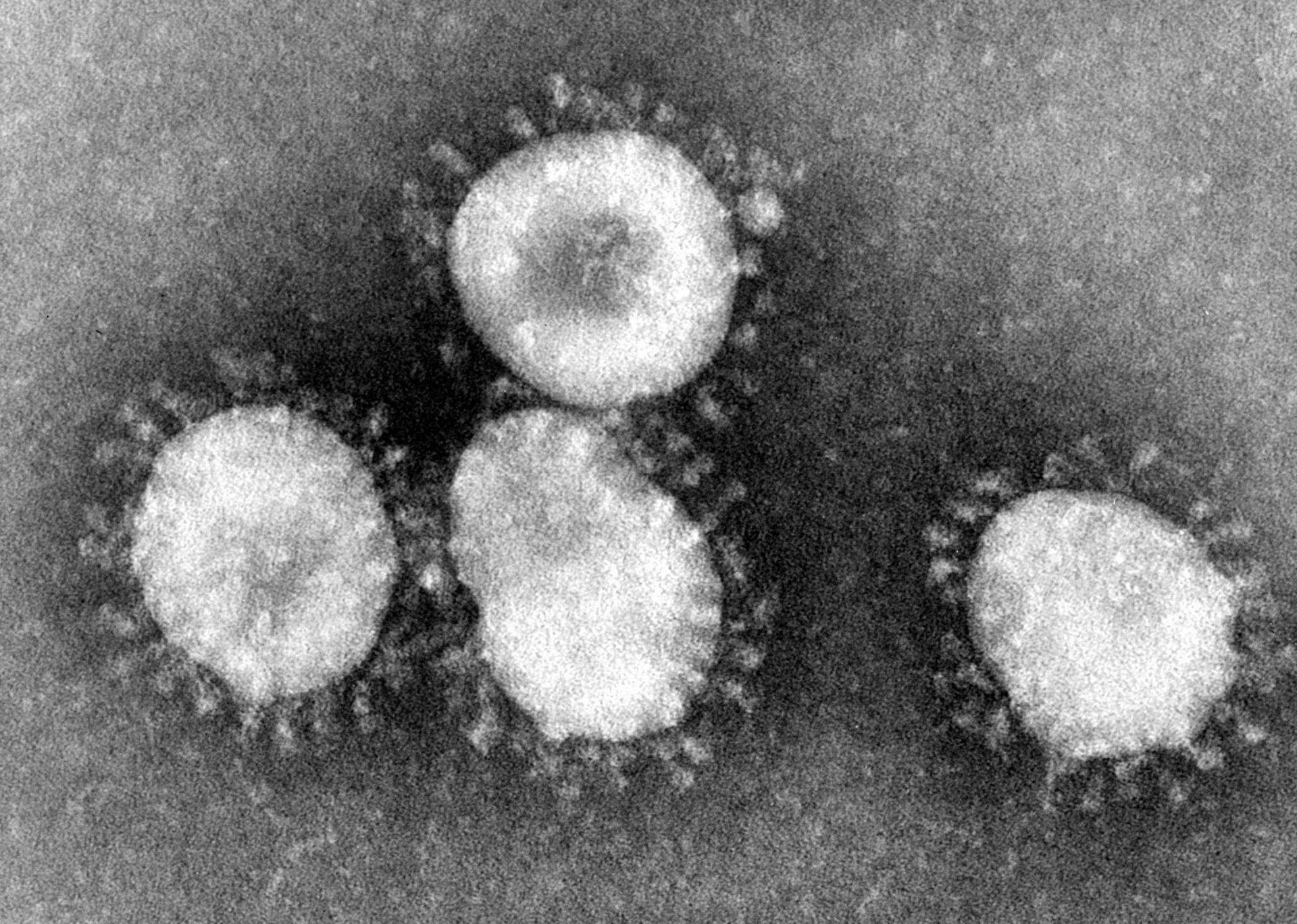
    • Coronaviruses are large family of viruses, which cause illnesses to people and also circulate in animals including camels, cats and bats.
    • They cause illness ranging from the common cold to more severe diseases such as Middle East Respiratory Syndrome (MERS) and Severe Acute Respiratory Syndrome (SARS).
    • 2019-nCoV is a new strain that has not been previously identified in humans.
    • Human to human transmission has been recently confirmed. However the source remains unknown.

    How does it spread?

    • Coronaviruses are zoonotic, meaning they are transmitted between animals and people.  
    • Detailed investigations found that SARS-CoV was transmitted from civet cats to humans and MERS-CoV from dromedary camels to humans.
    • Several known coronaviruses are circulating in animals that have not yet infected humans.

    Signs and symptoms of Coronavirus

    1. Coughing
    2. Fever
    3. Pneumonia
    4. Shortness of breath
    5. Vomiting
    6. Diarrhea
    7. In advanced cases, the patient can have very serious complications, which can lead to death, such as: Sever pneumonia, Renal (Kidney) failure

    Its’ prevention

    • Standard recommendations to prevent infection spread include regular hand washing, covering mouth and nose when coughing and sneezing, thoroughly cooking meat and eggs.
    • Avoid close contact with anyone showing symptoms of respiratory illness such as coughing and sneezing.
    • WHO also advises that people should avoid close contact with anyone showing symptoms of respiratory illness such as coughing and sneezing.

    Why such major outbreaks occur in China only?

    • Several deadly new viruses in recent years have emerged in China — Severe Acute Respiratory Syndrome (SARS), bird flu, and now the novel Coronavirus (nCOV).
    • The reason could lie in the busy food markets dotting cities across the country — where fruits, vegetables, hairy crabs and butchered meat are often sold next to bamboo rats, snakes, turtles, and palm civets.
    • Closely packed stalls in busy marketplaces, the Chinese taste for exotic meats, and the high population density of cities create the conditions for the spread of zoonotic infections.

    Impacts of Coronavirus

    • For starters, when we have a disease outbreak, the government has to spend a lot of money on diagnosing and treating patients.
    • It’s also imperative that it invest in preventive measures i.e. setting up protocols to screen people in high-risk areas, commission studies to understand the virus/epidemic better, coordinate with other countries to contain the outbreak.

    Human cost of the outbreak

    • When the healthcare infrastructure in your country can’t deal with the crisis effectively, mortality rates shoot up.
    • Think, Ebola. Over 11,000 people died in Guinea, Liberia, and Sierra Leone. But that’s not all.
    • Because the response team was so ill-equipped, over 150 health care workers perished in the process.
    • As the WHO notes — “Every single loss of a doctor or nurse diminishes response capacity significantly” And this further aggravates the crisis.

    Skewed production

    • China is now one of the largest producers and consumers of a wide range of commodities, including oil, steel, copper, corn, wheat and soybean.
    • But considering the country is now in lockdown, there isn’t a whole lot of activity going on here.
    • When workers don’t go back to work, you have to leave the smelters and the refineries as is. Productivity suffers, output declines and supply industries are hit hard.
    • Countries dependant on China for commodities also take a hit.

    Impact on Economy

    • When there are such devastating human costs involved, you will see a material impact on the economy almost immediately.
    • These are people who participate in the labour force i.e. people who work, earn and spend.
    • The eventual loss in productivity because of a sudden collapse of the nation’s workforce doesn’t bode well for anybody.
    • All the people desist from visiting public places, the movies, trains etc. The fear of a widespread epidemic can manifest in ways that further erodes confidence in an economy and hurt it in perpetuity.
    • We are talking about cancelled tourist trips, a decline in retail trade and an overall sense of doom and gloom surrounding the country.
    • Past evidence has shown that consumer spending also goes down dramatically when news of an outbreak spreads.

    India steps up vigil

    • Thermal screening is being done at seven designated airports—New Delhi, Kolkata, Mumbai, Chennai, Bengaluru, Hyderabad and Kochi.
    • The government has set up a 24×7 helpline number to attend to queries about the coronavirus as number of cases rose across the world.
    • Anyone seeking information can call on the number 011-23978046,” the Union ministry of health said in a tweet.
    • Indian authorities are prepared to evacuate citizens from Hubei Province, China.

    India’s limits

    • India’s ability to contain an epidemic is far less than that of China.
    • Its scientific infrastructure is less advanced and extensive, its ability to quarantine a large number of people non-existent, its hospitals ill-equipped to treat large armies of sick people.
    • The only advantage is the knowledge of the Chinese experience, which India can use to limit the spread of the disease.
    • If this is true, there may be a large number of infected people spread widely in the Chinese population, and it makes controlling the epidemic far more difficult.
    • India’s scientific expertise, despite its depth in pockets, is not broad enough to respond quickly in such situations.
    • As the director of the National Institute of Virology said recently, India needs 20 times as many virologists as it has at the moment.
    • For a country of 1.3 billion people, India has too few scientists and healthcare professionals to deal with such emergencies.

    Is India prepared to face this havoc?

    • Current health infrastructure in India paints a dismal picture of healthcare delivery system in the country. Health Infrastructure has been described as the basic support for the delivery of public health activities.
    • Public health experts believe that India is ill-equipped to handle such emergencies. It is not prepared to tackle health epidemics, particularly given its urban congestion.
    • In fact given the city structure and the way the settlements have grown epidemics once occurs will spread at a galloping rate.
    • The slum clusters all around the cities and the unhygienic growth, poor waste disposal system will only aggravate the situation.

    Way Forward

    • The aerial spread of the newly detected coronavirus poses a threat of rapid dissemination but it can still be contained with an efficient response which combines effective public health, microbiological, clinical and communication responses.
    • While our laboratory network has improved after the H1N1 scare, much needs to be done to improve the community facing primary health services and risk communication to the public.
    • In general, hospital services can quickly gear up to treat severe cases in urban areas but rural healthcare needs a step up.
    • Kerala’s success in responding swiftly and smartly to the Nipah outbreak should be a role model to other states.
    • Effective risk communication to the general public needs to be circulated to prevent panic and provide advice on precautionary measures.
    • Central and state health agencies must act in tandem. The media too must helping in increasing awareness without triggering panic.

    Conclusion

    • Capacity to contain a virus outbreak depends on the ability to identify cases and contacts in the community on clinical criteria while ensuring smart surveillance on inward travellers; isolate and identify the causative virus; treat severe cases while counselling mild cases.
    • India’s healthcare system is too small for such a large population.
    • Dealing with pandemics would require a multi-pronged approach, ranging from mathematical analysis to the ability to rapidly develop drugs and vaccines.


    References

    https://www.civilsdaily.com/news/pib-novel-corona-virus-ncov/
    https://www.civilsdaily.com/news/why-china-has-emerged-as-the-epicentre-of-global-outbreaks-of-disease/

    https://www.business-standard.com/article/current-affairs/limited-expertise-may-hurt-india-s-ability-to-contain-coronavirus-outbreak-120012800181_1.html

    https://www.livemint.com/news/india/is-india-equipped-to-handle-health-epidemics-like-coronavirus-11580199650282.html

  • [Burning Issue] Annual Status of Education Report 2019


    Context

    • The recently released ASER (Annual Status of Education Report) is an annual survey released by NGO Pratham.
    • It aims to provide reliable annual estimates of children’s schooling status and basic learning levels for each state and rural district in India.
    • It is the largest citizen-led survey in India and is also the only annual source of information on children’s learning outcomes available in India today.

    Key highlights of the report


    • Only 16% of children in Class 1 in 26 surveyed rural districts can read text at the prescribed level, while almost 40% cannot even recognise letters, according to
    • Only 41% of these children could recognise two-digit numbers.

    Private schools on progress

    • Of six-year-olds in Class 1, 41.5% of those in private schools could read words in comparison to only 19% from government schools.
    • Similarly, 28% of those in government schools could do simple addition as against 47% in private schools.
    • This gap is further exacerbated by a gender divide: only 39% of girls aged 6-8 are enrolled in private schools in comparison to almost 48% of boys.
    • The report also found that a classroom could include students from a range of age-groups, skewing towards younger children in government schools.

    Role of Mothers

    • Among the key findings of ASER 2019 is that the mother’s education often determines the kind of pre-schooling or schooling that the child gets.
    • The report says that among children in the early years (ages 0-8), those with mothers who had completed eight or fewer years of schooling are more likely to be attending anganwadis or government pre-primary classes.
    • With 75% of women in the productive age group not in the workforce, they can be better engaged in their children’s development, learning and school readiness.

    Determinants of poor outcomes

    • The ASER report shows that a large number of factors determine the quality of education received at this stage, including the child’s home background, especially the mother’s education level; the type of school, whether anganwadis, government schools or private pre-schools; and the child’s age in Class 1.
    • More than a quarter of Class 1 students in government schools are only 4 or 5 years old, younger than the recommended age.
    • The ASER data shows that these younger children struggle more than others in all skills.
    • Permitting underage children into primary grades puts them at a learning disadvantage which is difficult to overcome,” said the report.

    Why are children entering school before 6?

    • This is partly due to the lack of affordable and accessible options for pre-schooling. Therefore, too many children go to Std I with limited exposure to early childhood education. 
    • Children from poor families have a double disadvantage — lack of healthcare and nutrition on one side and the absence of a supportive learning environment on the other. 
    • Although the Anganwadi network across India is huge, by and large, school readiness or early childhood development and education activities have not had a high priority in the ICDS system.

    Key suggestions made by the report

    • ASER found that the solution is not to spend long hours teaching children the 3Rs.
    • Counter-intuitively, the report argues that a focus on cognitive skills rather than subject learning in the early years can make a big difference to basic literacy and numeracy abilities.
    • The survey shows that among Class 1 children who could correctly do none or only one of the tasks requiring cognitive skills, about 14% could read words, while 19% could do single-digit addition.
    • However, of those children who could correctly do all three cognitive tasks, 52% could read words, and 63% could solve the addition problem.

    Why is learning level in schools important?

    • The quality of the learning level bears directly on India’s future workforce, its competitiveness and the economy.
    • India’s demographic dividend depends on the learning level of students. Thus quality of education has a direct bearing on any economy.
    • With some 240 million students or nearly 20% of the Indian population in school, their quality of learning or lack of it assumes significance for the competitiveness of the country.
    •  It has an impact on the quality of life, efficiency at the workplace, and labour productivity issues.

    Policies under suspicion

    • Access to elementary (classes I-VIII) schooling is almost universal and the number of children out of schools is below 4%, but a quality deficit, that too for more than a decade, raises questions about the priorities of governments at the central and state levels.
    • This poor learning outcome in India is despite the Right to Education (RTE) Act has been in force since April 2010 making eight years of education compulsory for children and the Centre floating schemes such as “Padhe Bharat Badhe Bharat”, apart from states’ efforts.

    What needs to be done?

    • Setting up a Review mechanism: Now that the ASER measure is available for 10 years, the Centre should institute a review mechanism involving all States for both government and private institutions, covering elementary education and middle school.
    • Shifting focus on outcome-based learning: A public consultation on activity-based learning outcomes, deficits in early childhood education, and innovations in better performing States can help.
    • Improve the quality of education: At present, children start learning in a variety of environments: from poorly equipped Anganwadi centres to private nurseries. Therefore, any policy framework should also consider this aspect.

    Focus on productive learning

    • ASER data shows that children’s performance on tasks requiring cognitive skills is strongly related to their ability to do early language and numeracy tasks,” says the report.
    • This suggests that focussing on play-based activities that build memory; reasoning and problem-solving abilities are more productive than an early focus on content knowledge.
    • Global research shows that 90% of brain growth occurs by age 5, meaning that the quality of early childhood education has a crucial impact on the development and long-term schooling of a child.

    Need for expanding Anganwadi outreach

    • There is considerable scope for expanding Anganwadi outreach for three and four-year-old children.
    • All-India data from 2018 shows that slightly less than 30 per cent children at age three and 15.6 per cent of children at age four are not enrolled anywhere.
    • Expanding access to anganwadis is an important incremental step.
    • Strengthening the early childhood components in the ICDS system would help greatly in raising school readiness among young children.

    Need to extend RTE age limit

    • The Right to Education Act refers to free and compulsory education for the age group six to 14.
    • It is commonly assumed that children enter Standard I at age six and that they proceed year by year from Std I to Std VIII, reaching the end of elementary school by age 14.
    • However, the practice on the ground is quite different. ASER 2018 data show that 27.6 per cent of all children in Std I are under age six.

    Considering age implications for children’s learning

    • The gap between policy and practice is also very visible in what happens inside preschools and pre-primary grades.
    • Data from ASER 2019 indicate that in Std I, the ability to do cognitive activities among seven-eight-year olds can be 20 percentage points higher than their friends who are five years old but in the same class.
    • In terms of reading levels in Std I, 37.1 per cent children who are under six can recognise letters whereas 76 per cent of those who are seven or eight can do the same.
    • Many believe that more years of schooling is better than less and that the sooner the child enters “school” the faster she or he will learn and be ready for future learning.

    Conclusion

    • The latest ASER assessment of how children are faring in schools in rural areas indicates there has been no dramatic improvement in learning outcomes.
    • There is concern that curricular expectations on literacy and numeracy have become too ambitious, requiring reform.
    • The enactment of the Right to Education Act was followed by a welcome rise in enrolment, which now touches 96% as per ASER data.
    • Empowering as it is, the law needs a supportive framework to cater to learners from different backgrounds that often cannot rely on parental support or coaching.

    Way Forward

    • It is a long time to have only awareness, and a quantum jump in the education sector is the need of the hour.
    • Simultaneously we need to focus on three aspects—bigger spending on education (upto 6% of GDP instead of the present 2.7%), political willingness to improve education, and a drastic change in the quality of teacher education.
    • There is a need to leverage the existing network of Anganwadi centres to implement school readiness.
    • The year 2020 marks the 10th anniversary of the RTE Act.
    • This is the best moment to focus on the youngest cohorts before and during their entry to formal schooling and ensure that 10 years later they complete secondary school as well-equipped and well-rounded citizens of India.


    References

    https://www.civilsdaily.com/news/annual-status-of-education-report-rural-2019/

    https://www.livemint.com/Opinion/ulDY2PQfNpsrha1Lr5Oe2N/Opinion–Indiaseducationsector-needs-a-quantum-shift.html

    https://indianexpress.com/article/opinion/columns/education-policy-india-schooling-6216711/

  • [Burning Issue] Bru– Reang Repatriation Agreement

    • The Ministry of Home Affairs has presided over the signing of an agreement between Union Government, Governments of Tripura and Mizoram and Bru-Reang representatives to end the 23-year old Bru-Reang refugee crisis.
    • 37,000 people of the Bru (or Reang) community were forced to flee their homes to neighbouring Tripura due to severe ethnic clashes in Mizoram.

    Bru Community: Refugees at home

    • The Bru or Reang is a community indigenous to Northeast India, living mostly in Tripura, Mizoram, and Assam.
    • In Tripura, they are recognised as a Particularly Vulnerable Tribal Group (PVTG).
    • Over two decades ago, they were targeted by the Mizo groups who demanded that the Bru be excluded from electoral rolls in the state.
    • In October 1997, following ethnic clashes, nearly 37,000 Bru fled Mizoram’s Mamit, Kolasib, and Lunglei districts to Tripura, where they were sheltered in relief camps.
    • Since then, over 5,000 have returned to Mizoram in nine phases of repatriation, while 32,000 people from 5,400 families still live in six relief camps in North Tripura.

    Miseries of the Bru

    • Under a relief package announced by the Centre, a daily ration of 600 gm rice was provided to every adult Bru migrant and 300 g to every minor. Some salt was also given to each family.
    • Every adult received a daily cash dole of Rs 5; every minor Rs 2.50.
    • Meagre allocations were made from time to time for essentials such as soap, slippers, and mosquito nets.
    • Most migrants sold a part of their rice and used the money to buy supplies, including medicines.
    • They depended on the wild for vegetables, and some of them have been practising slash-and-burn (jhum) cultivation in the forests.
    • They live in makeshift bamboo thatched huts, without permanent power supply and safe drinking water, with no access to proper healthcare services or schools.

    How did the agreement come about?

    • In June 2018, Bru leaders signed an agreement in Delhi with the Centre and the two-state governments, providing for repatriation to Mizoram.
    • Most residents of the camps, however, rejected the “insufficient” terms of the agreement.
    • The camp residents said the package did not guarantee their safety in Mizoram, and that they feared a repeat of the violence that had forced them to flee.
    • On November 16, 2019, Pradyot Kishore Debbarma, scion of Tripura’s erstwhile royal family, wrote to Home Minister seeking the resettlement of the Bru in the state.

    Highlights of the Quadripartite Agreement

    • All Bru tribals currently living in temporary relief camps in Tripura will be settled in the state if they want to stay on.
    • The Bru who returned to Mizoram in the eight phases of repatriation since 2009, cannot come back to Tripura.
    • Each resettled family will get 03 acre (1.5 ganda) of land for building a home, Rs 1.5 lakh as housing assistance, and Rs 4 lakh as a one-time cash benefit for sustenance.
    • They will also receive a monthly allowance of Rs 5,000, and free rations for two years from the date of resettlement.
    • All cash assistance will be through Direct Benefit Transfer (DBT), and the state government will expedite the opening of bank accounts and the issuance of Aadhaar, permanent residence certificates, ST certificates, and voter identity cards to the beneficiaries.

    Where will they be resettled?

    • Revenue experts reckon 162 acres required for the rehabilitation.
    • The move will require khash or government land, but since Tripura is a small state (only 10,491 sq km) the state authorities would explore the possibility of diverting forest lands.
    • Diverting forest land for human settlements will, however, need clearance from the MoEFCC which is likely to take at least three months.

    When will the resettlement take place?

    • Physical verification to identify beneficiaries will be carried out within 15 days of the signing of the deal.
    • The land for resettlement will be identified within 60 days, and the land for allotment will be identified within 150 days.
    • The beneficiaries will get housing assistance, but the state government will build their homes and hand over possession.
    • They will be moved to resettlement locations in four clusters, paving the way for the closure of the temporary camps within 180 days of the signing of the agreement.
    • All dwelling houses will be constructed and payments completed within 270 days.

    Issues With The Agreement

    • The agreement to settle some 35,000 Bru tribal people in Tripura and not in Mizoram from where they were displaced, could encourage the creation of ethnocentric States in the northeast, rights activists have said.
    • Activists argue that the  “solution” has the potential of creating conflicts between the Brus and indigenous communities of Tripura, but addresses the insecurities of a tribe that survived and fled violence.
    • The northeast has had a history of ethnic conflicts — not only between the “indigenous” and “settlers” but inter-tribe too — and issues could also arise within smaller sub-groups within the same tribe.
    • Decision could also throw up questions of citizenship, specifically in Assam where a process is on to define who is indigenous and who is not.
    • Assam-based activists said the move on the Brus legitimises the settlement of foreigners under Citizenship (Amendment) Act too, creating conflicts with the indigenous people as well as communities that settled earlier.

    Conclusion

    • Despite the issues flagged by various stakeholders in the region, the agreement has provided the Brus with a solution.
    • Various Mizo organizations have reassured they have welcomed those who came back.
    • According to these organizations, they have no issues with those identified by the government as Mizoram inhabitants even if they return now in spite of the Tripura rehabilitation offer.
    • The Brus cannot live in transit camps forever.


    References

    https://www.civilsdaily.com/news/agreement-to-end-the-bru-reang-refugee-crisis/

    https://indianexpress.com/article/explained/understanding-the-bru-refugees-settlement-mizoram-tripura-6224956/

    https://indianexpress.com/article/north-east-india/tripura/bru-migrants-mizoram-tripura-home-ministry-package-6220039/

  • [Burning Issue] Internet Shutdowns in India


    • Nowadays, India is widely considered to be a world leader in cutting off access to the Net.
    • Yet, there are no detailed official data on Internet shutdowns in India.
    • Taking a serious note of the situation, the Supreme Court has for the first time set the stage for challenging such suspension orders before courts.
    • It has directed the government to mandatorily publish all orders permitting Internet shutdowns. It has opened such decisions amenable to judicial review.

    Internet shutdowns in India


    • The cutting off internet access to control restive populations is an increasing trend around the world with India at the lead.
    • Of the 196 shutdowns in 25 countries documented by Access Now in 2018, as many as 134 were in India, followed by Pakistan (12).

    Legal mechanisms allowing shut-downs

    • Home Departments in the states are mostly the authorities that enforce shutdowns, drawing powers from The Temporary Suspension of Telecom Services (Public Emergency or Public Safety) Rules, 2017.
    • The decisions are reviewed by a state government review committee. The central government also has powers under this law, but has not used it.
    • Section 144 of the Code of Criminal Procedure has enabled many of the shutdowns in the recent past, especially until the time the telecom suspension Rules came into force in 2017.
    • Less frequently used is The Indian Telegraph Act, 1885, whose Section 5(2) allows central and state governments to prevent the transmission of messaging during a public emergency or in the interest of public safety or in the interests of the sovereignty and integrity of India etc.

    Who can pass the orders of Internet Shutdowns?

    • The Rules, issued under the Indian Telegraph Act, 1885, stipulate that only the Home Secretary of the Union or a state can pass an order, and that the order must include the reasons for the decision.
    • The order should be forwarded to a review committee the day after it is issued, and must be reviewed by the committee within five days to assess its compliance with Section 5(2) of The Telegraph Act.
    • Under this the government has the power to block the transmission of messages during a public emergency or for public safety.
    • In the case of the central government, the review committee comprises the Cabinet Secretary and the Secretaries of the Departments of Legal Affairs and Telecommunications.
    • In the case of states, the committee comprises the Chief Secretary, Secretary, Law or Legal Remembrancer In-Charge, Legal Affairs, and a Secretary to the state government (other than the Home Secretary).

    Who else can issue such orders?

    • In “unavoidable circumstances”, the order can be issued by an officer of the rank of Joint Secretary or above, authorised by the Centre or the state Home Secretary.
    • Telecom service providers must designate nodal officers to handle such requests.

    What laws governed this area before the 2017 Rules were notified?

    • Internet shutdowns were ordered under Section 144 of the CrPC, which gives District Magistrates broad powers during dangerous situations.
    • Even after 2017, many local shutdowns are issued under this law. Section 69(A) of the IT (Amendment) Act, 2008 gives the government powers to block particular websites, not the Internet as a whole.

    Why such shut-downs?

    • Worldwide, Internet shutdowns are typically used when there is civil unrest, in order to block the flow of information about government actions or to end communication among activists and prevent the spread of rumours and fake news.
    • Internet serves as a medium for the transmission of information through pictures, videos and text that have the potential to cause civil unrest and exacerbate the law and order
    • Check Fake News: Internet shutdowns are typically used when there is civil unrest, in order to block the flow of information about government actions or to end communication among activists and prevent the spread of rumours and fake news.
    • Shutdown helps prevent the “spreading of rumours and misinformation using social media platforms which can hinder peace and law and order”.
    • Preventive Response: Cutting off the Internet is both an early and preventive response to block restive groups to organise riots against the Government.
    • National Interest: The Internet cannot be independent of national sovereignty. Therefore, the necessary regulation of the internet is a reasonable choice of sovereign countries based on national interests.

    Kashmir deprived of Internet

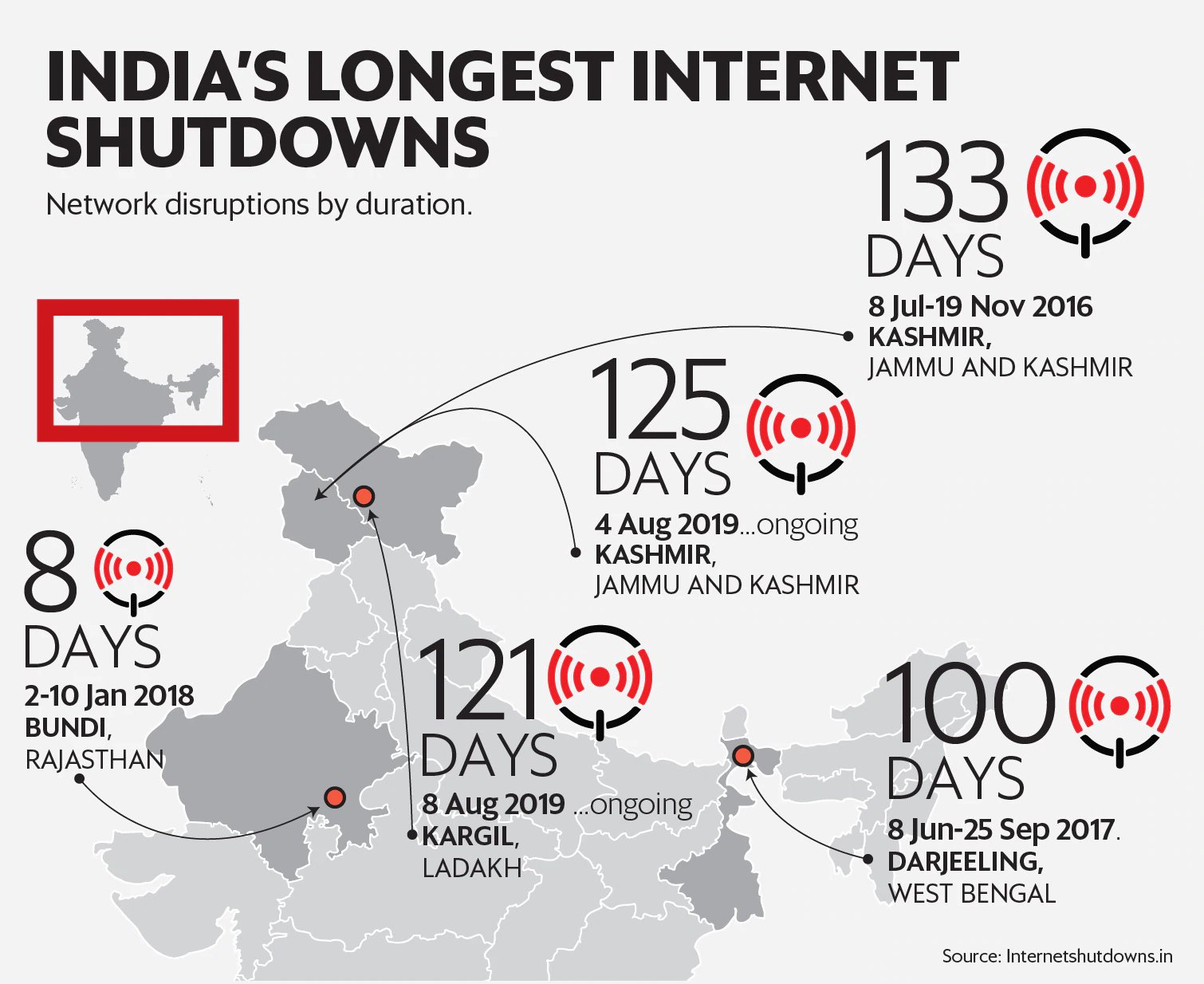
    • The Centre has never ordered a nationwide Internet shutdown. Still, India tops the list of Internet shutdowns globally.
    • According to Software Freedom Law Center’s tracker, there have been 381 shutdowns since 2012, 106 of which were in 2019.
    • The ongoing shutdown in Kashmir is the longest ever in any democratic country.
    • The erstwhile state has seen 180 Internet shutdowns since 2012, according to SFLC.
    • The most commonly offered reasons for cutting access have been “encounter between security forces and militants”, “massive search operations”, “gunfights”, and “attack on CRPF men”.

    Issues with the Kashmir Shutdown

    • The Internet shutdown in Kashmir was not compliant with the Rules.
    • The Rules require the suspension to be temporary; also, the orders did not provide reasons for the restrictions.
    • The petitioner contended that the order claims a law-and-order danger, as opposed to a public order danger specified in the Rules.

    Justifying the Kashmir situation

    • Lastly, the court-mandated that all orders regarding the Kashmir case be made public, and to provide essential services such as e-banking and hospitals immediately.
    • What the centre was arguing, in this case, was that this is a matter of national security given that it pertains to Kashmir with a history of militancy.

    Supreme Court Judgement on Internet Shutdowns

    What did the court say?

    The court ordered the government to review its order, ruling that the freedom of speech and trade on the Internet is a fundamental right.

    • The court said that because the Rules require the order to be in accordance with Section 5(2) of The Telegraph Act, the order must be during a “public emergency” or in the “interest of public safety”.
    • Also, the suspension must be “necessary” and “unavoidable”.
    • In furtherance of the same, the State must assess the existence of an alternate less intrusive remedy,” the court said.
    • The Bench also said that the State should make the orders freely available, even though the Suspension Rules do not specify this.
    • The Rules also don’t specify a time limitation for the shutdown, the use of “Temporary” in the title notwithstanding. The Bench decided that an indefinite suspension is “impermissible”.

    The prime mover for the Judgment

    • The Temporary Suspension of Telecom Services (Public Emergency or Public Service) Rules, 2017 issued under the Telegraph Act deals with restricting Internet access.
    • It does not provide for publication or notification of the order suspending Internet, the apex court-mandated that such orders must be made available to the public.
    • The court declared that it is a “settled principle of law, and of natural justice” that requires publication of such orders, “particularly one that affects lives, liberty and property of people”.
    • This allows individuals to now challenge the orders before courts in J&K and rest of India.

    Internet suspension orders are subjected to Judicial Review

    • In the wake of protests against the new citizenship law, Internet services were suspended temporarily in parts of Uttar Pradesh, Delhi and Karnataka.
    • There should not be an excessive burden on free speech even if complete prohibition is imposed, and the government has to justify the imposition of such prohibition and explain why lesser alternatives were inadequate, the bench stated.
    • It ruled that Restrictions are to be imposed in an emergency. Hence they must be proportionate to the concern. Their objective must be legitimate rather than cavalier.
    • Authorities must necessarily consider an alternative and least restrictive mechanism before opting to restrict rights. Every decision to impose restriction should be backed by sufficient material and amenable to judicial review.

    Pacing up with technology

    • The bench also noted that the law needs to keep pace with technological development:
    • We need to note that the law should imbibe the technological development and accordingly mould its rules so as to cater to the needs of society.
    • Non-recognition of technology within the sphere of law is only a disservice to the inevitable.

    Internet as a necessity

    Lifeline for people

    • While the Internet is certainly the main source of information and communication and access to social media, it is so much more than that.
    • People working in the technology-based gig economy — like the thousands of delivery workers for Swiggy, Dunzo and Amazon and the cab drivers of Uber and Ola — depend on the Internet for their livelihoods.
    • It is a mode of access to education for students who do courses and take exams online. Access to the Internet is important to facilitate the promotion and enjoyment of the right to education.
    • It is also a mode to access to health care for those who avail of health services online. 
    • It is a means for business and occupation for thousands of small and individual-owned enterprises that sell their products and services online.

    Legal basis for Right to Internet

    • The access to the Internet is a right very similar to what the Supreme Court held with respect to the right to privacy in Justice K.S. Puttaswamy
    • The Human Rights Council of the United Nations Resolution dated July 2, 2018, on the promotion, protection and enjoyment of human rights on the Internet, made important declarations.
    • It noted with concern the various forms of undue restriction on freedom of opinion and expression online, including where countries have manipulated or suppressed online expression in violation of international law.
    • It said that the same rights that people have offline must also be protected online, in particular freedom of expression, which is applicable regardless of frontiers and through any media of one’s choice.

    The Kerala case

    • The High Court of Kerala made a start to the domestic recognition of the right to Internet access.
    • The judgment in Faheema Shirin R.K. v. State of Kerala & Others holds that “…a rule or instruction which impairs the right of the students cannot be permitted to stand in the eye of the law.” 
    • It notes that mobile and broadband Internet shutdowns impact women, girls, and marginalized communities more disproportionately than others.

    Trauma of shutdowns


    Economic impact

    • While there is no proven benefit of closing down the internet, there are serious economic repercussions.
    • A report by the Brookings Institute adjudged India to have topped the list by incurring losses to the tune of $968 million in 2016 itself.
    • Over the past five years, some 16,000 hours of Internet shutdowns cost the economy a little over $3 billion, according to estimates in a report by the Indian Council for Research on International Economic Relations (ICRIER).

    Governance hurdles

    • In Sept. 2018, the Dept. of Telecommunication had acknowledged the adverse impact of a rising number of internet shutdowns that State governments are ordering.
    • The Govt. has embarked upon a programme to deliver services through mobile and internet apart from promoting a cashless economy.
    • Neither banking transactions using credit and debit cards nor internet banking can be done, which leads to hardships to common citizens.

    No permanent solution

    • The practice of shutting down the internet not just disrupts the smooth functioning of the state at large but is also not in line with the fundamentals of democracy.
    • Internet shutdown cannot be a solution to a larger governance problem.
    • Shutting down the internet may result in information blackout that can also create hysteria, panic.

    Conclusion

    • It is time that we recognise that the right to access to the Internet is indeed a fundamental right within our constitutional guarantees.
    • The Internet is pretty much a basic human right, even if not legally defined as such, for most parts of the world — without access to the virtual world, a very large number of vital human activities simply stops.
    • Internet shutdowns leave people without access to information and other services that could be the difference between life and death.
    • It is in recognition of the Internet as a human right that the UN in 2016 passed a non-binding resolution condemning countries that disrupt Internet access to its citizens.

     Way Forward

    • There exists no qualitative or quantitative evidence to show that internet shutdowns are effective tools to restore normalcy.
    • In fact, the internet itself can be used to resolve the problem. For example, the Government can have verified sources to spread legitimate information across various mediums stating areas that are safe/affected the updated status of the situation, etc.
    • State interests like security are important because they are the prerequisites for us to exercise our freedoms. However, in pursuing this, the freedoms themselves cannot be suspended.
    • Therefore, the government needs to clearly lay down a comprehensive framework, stating the conditions behind such Internet shutdowns.


    References

    https://www.civilsdaily.com/news/internet-shutdowns-in-india/

    https://www.civilsdaily.com/news/sc-order-on-internet-shutdowns/

    https://www.civilsdaily.com/news/op-ed-snap-guarantee-internet-rights/

    https://www.thehindubusinessline.com/specials/india-file/the-trauma-of-internet-shutdown/article30560717.ece

  • [Burning Issue] The Mineral Laws (Amendment) Ordinance, 2020

    Context

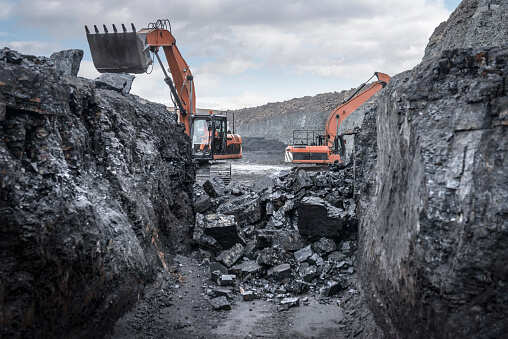
    • In an attempt to attract investments in coal mining, the Union Cabinet approved the promulgation of Mineral Laws (Amendment) Ordinance 2020.
    • With this India has opened up the coal sector completely for commercial mining for all local and global firms after easing restrictions on end-use and prior experience in auctions.
    • The move is sought to bring an end to state-run Coal India Ltd’s (CIL) monopoly.

    Background: India’s Coal Sector

    • Coal is the most important and abundant fossil fuel in India. It accounts for 55% of the country’s energy need.
    • India has the fifth-largest coal reserves in the world producing 662.79 million metric tons (730.60 million short tons) in 2016–17.
    • The Coal resources of India are available in older Gondwana Formations of peninsular India and younger Tertiary formations of north-eastern region.
    • Due to high demand and poor average quality, India is forced to import high quality coal to meet the requirements of steel plants.

    Types of Coal found in India

    • Anthracite: It is the highest grade of coal containing a high percentage of fixed carbon. It is hard, brittle, black and lustrous. It is found in smaller quantity in regions of Jammu and Kashmir.
    • Bituminous: It is a medium grade of coal having high heating capacity. It is the most commonly used type of coal for electricity generation in India. Most of bituminous coal is found in Jharkhand, Odisha, West Bengal, Chhattisgarh, and Madhya Pradesh.
    • Subbituminous: It is black in colour, dull (not shiny) and has a higher heating value than lignite.
    • Lignite: It is the lowest grade coal with the least carbon content. It is found in the regions of Rajasthan, Tamil Nadu, and Jammu & Kashmir.

    About the Ordinance

    • The Union Cabinet approved promulgation of Mineral Laws (Amendment) Ordinance 2020 to amend the Coal Mines (Special Provisions) Act, 2015, as well as the Mines and Minerals (Development and Regulation) Act, 1957.

    Key Provisions

    • The ordinance democratizes the coal industry and makes it attractive for merchant mining companies, including multinationals to look at India.
    • The ordinance allows any India-registered company to bid and develop coal blocks.
    • It would allow any companies that do not have coal mine operations in India to also participate in coal block auctions.
    • The end-use restrictions – meaning coal produced from them could be used only for the designated captive purpose only and not traded in the market has now been lifted.
    • The central government can auction coal and lignite mining licences only to companies engaged in iron and steel, power and coal washing sectors.
    • The companies also needed prior experience of mining in India to bid for the blocks.

    How it worked earlier?

    • Until now there were restrictions on who could bid for coal mines.
    • Only those in power, iron and steel, and coal washery business could bid for mines and the bidders needed prior experience of mining in India.
    • This effectively limited the potential bidders to a select circle of players and thus limited the value that the government could extract from the bidding.

    Other provisions of the Ordinance

    • The Centre has set a mining target of 1.5 billion tonnes of coal by 2020.
    • Of this, 1 billion tonnes were to be from CIL and 500 million tonnes from non-CIL sources, in line with the government’s push to raise natural resources production to kickstart economic growth.
    • This has now been revised down to 1 billion tonnes of coal by 2023-24.

    Why was such Ordinance promulgated?

    Attracting FDIs

    • The government plans to promote FDI in the coal sector by removing restrictions and eligibility criteria for participation in coal block auctions.

    Curbing import

    • Despite having the world’s fourth-largest coal reserves, India imported 235 million tonnes (mt) of coal last in 2019 of which 135mt valued at ₹171,000 crore.
    • With these amendments the government aims to curb imports of coal through and encourage the use of the country’s coal reserves, which had earlier been available only for the captive use of the steel and power industry.

    Boosting economic growth

    • Till now, FDI was only allowed in coal mines allotted for captive use, meaning for use by the companies themselves.
    • But now with the slowing economy the centre New is trying to attract foreign investment to get economic growth back on track.

    Benefits of the move

    • The move will help India gain access to sophisticated technology for underground mining used by global miners.
    • It will ease rules for auctioning coal mines to open up to all sectors.
    • Large investment in mining will create jobs and set off demand in critical sectors such as mining equipment and heavy commercial vehicles.

    Consequences on CIL

    • Coal India Limited (CIL) is a Maharatna PSU and tremendous public resources have been invested in the company over the years. It contributes to around 82% of the coal production in India.
    • The company employs about 3 lakh people and is a national asset. Opening up of coal mining effectively ends CIL’s monopoly status.
    • However CIL will be “supported and strengthened” and adequate blocks will be allocated to it to meet the target of producing 1 billion tonnes of coal by 2023.

     Conclusion

    • The move comes at a time when the window for fossil fuels is rapidly closing, and the global energy landscape evolving, with fundamental changes to the investment culture amid growing climate concerns.
    • As a responsible global player, India must put in place stringent norms to limit pollution and carbon emissions, even if fresh coal is being mined.
    • Getting access to new and environment-friendly technologies could be a precondition to allowing foreign players in mining coal.


    References

    https://www.thehindu.com/opinion/editorial/mining-deep/article30526562.ece

    https://www.livemint.com/industry/energy/india-opens-up-coal-mining-further-11578477090179.html

    https://indianexpress.com/article/business/cabinet-clears-ordinance-to-remove-restrictions-on-coal-block-bidding-6206950/

    https://economictimes.indiatimes.com/industry/indl-goods/svs/metals-mining/govt-approves-ordinance-to-auction-coal-mines/articleshow/73153778.cms?from=mdr

    http://www.indiaenvironmentportal.org.in/content/466643/mineral-laws-amendment-ordinance-2020/

  • [Burning Issue] Regulation of Minority Institutions

    Context

    • Freedom of religion in India is a fundamental right guaranteed by Article 25-28 of the Constitution of India.
    • The Supreme Court in a recent judgement has held that the state is well within its rights to introduce a regulatory regime in the “national interest” to provide minority educational institutions with well-qualified teachers in order for them to “achieve excellence in education.”
    • The judgment came in connection with a case that concerned the validity of the West Bengal Madrasah Service Commission Act 2008, which had constituted a commission to appoint teachers in madrasas.

    What did the Supreme Court rule?

    • Upholding the validity of the 2008 Act, the apex court held that the commission was made up of persons with knowledge of Islamic culture and theology and that the provisions of the Act were “specially designed” for madrasas.
    • The court held that the Act was “not violative of the rights of the minority educational institutions on any count”.
    • The court held that minority institutions cannot ignore such a legal regime on the grounds that it is their fundamental right under Article 30 of the constitution to establish and administer their educational institutions.

    What is Article 30 all about?

    Article 30 upholds the right of the minorities “to establish and administer educational institutions. It reads:

    • Article 30(1) says that all minorities, whether based on religion or language, shall have the right to establish and administer educational institutions of their choice.
    • Article 30(1A) deals with the fixation of the amount for acquisition of property of any educational institution established by minority groups.
    • Article 30(2) states that the government should not discriminate against any educational institution on the ground that it is under the management of a minority, whether based on religion or language while giving aid.

    Why minorities need special rights?

    • The idea to make the provision for minorities to protect their educational right is not inequality towards the privileged classes but it definitely gives the sense of security to the minority class people.
    • It is clear from the census that the minorities in India are not well-off when compared with the privileged class.
    • Therefore, it is important to give the minorities certain legal rights, thus helping them uplifting their position in society.

    Classification of Minorities under Article 30

    I. Religious Minorities

    • The six community groups existing in India are Muslims, Buddhists, Sikhs, Jains, Christians and Zoroastrians.
    • These communities have been nominated as minorities by the union government. India is a multi-religious country.
    • Out of these communities, some of the community groups are greater in number and they are stated as majority communities.
    • The basic ground for a community to be nominated as a religious minority is the numerical strength of the community.
    • For example, in India, Hindus are the majority community. As India is a multi-religious country, it becomes important for the government to conserve and protect the religious minorities of the country.
    • The National Commission for Minorities (NCM) was established by the government in 1992 to protect the rights and interests of the minority groups.

    II. Linguistic Minorities

    • Class or group of people whose mother language or mother tongue is different from that of the majority groups is known as the linguistic minorities.
    • The Constitution of India protects the interest of these linguistic minorities.

    Article 30 is not absolute

    • The verdict said that Article 30(1) (right of minorities to establish and administer educational institutions of their choice) was neither absolute nor above the law.
    • The regulatory law should, however, balance the dual objectives of ensuring standard of excellence as well as preserving the right of the minorities to establish and administer their educational institutions.
    • Regulations that embrace and reconcile the two objectives should be reasonable.
    • The managements of minority institutions cannot ignore such a legal regime by saying that it is their fundamental right under Article 30.

    Is Article 30 diluted now?

    • To achieve a balance between the twin objectives of ensuring excellence in education and preserving the right of minorities, the court said, it divides education into two categories.
    • They are the secular education and education “directly aimed at or dealing with preservation and protection of the heritage, culture, script and special characteristics of a religious or a linguistic minority.”
    • On the latter, the court advocated that “maximum latitude” be given to the management to appoint teachers.
    • The court also holds that only “teachers who believe in the religious ideology or in the special characteristics of the concerned minority would alone be able to imbibe in the students admitted in such educational institutions, what the minorities would like to preserve, profess and propagate.
    • However, when it comes to the second category, the governing criteria must be to see to it that the most conducive atmosphere is put in place where the institution achieves excellence and imparts best possible education.
    • If the subjects in the curriculum are purely secular in character, that is to say, subjects like Arithmetic, Algebra, Physics, Chemistry or Geography, the intent must be to impart education availing the best possible teachers,” the bench said.
    • Where the curriculum was “purely secular”, the intent must be to impart education by availing the best teachers.

    Significance of the Judgement

    Besides safeguarding the rights of religious and linguistic minorities to establish educational institutions of their choice, the Article categorically directs the government to ensure that the minority rights do not get abrogated in case of compulsory acquisition of educational institutions run by minorities.

    • The clause (1A) was inserted in the Article during the 44th amendment of the Indian Constitution in 1978.
    • The primary objective behind including this clause was to make sure that the acquisition of minority institution should be followed by ‘conformable compensation.’
    • The clause (2) of Article 30 further creates a level playing field for the minority institutions.
    • It states that the government shall not discriminate against any educational institution run by a religious or linguistic minority while granting aid.

    Serving the national interest

    • A regulation framed in the national interest must necessarily apply to all institutions regardless whether they are run by majority or minority as the essence of Article 30(1) is to ensure equal treatment between the majority and minority institutions.
    • An objection can certainly be raised if an unfavourable treatment is meted out to an educational institution established and administered by minority.
    • But if ensuring of excellence in educational institutions is the underlying principle behind a regulatory regime and the mechanism of selection of teachers is so designed to achieve excellence in institutions, the matter may stand on a completely different footing.

    Way Forward

    • The court explains how to strike a “balance” between the two objectives of excellence in education and the preservation of the minorities’ right to run their educational institutions.
    • For this, the court broadly divides education into two categories – secular education and education “directly aimed at or dealing with preservation and protection of the heritage, culture, script and special characteristics of a religious or a linguistic minority.”
    • When it comes to the latter, the court advocated “maximum latitude” to be given to the management to appoint teachers.
    • The court reasons that only “teachers who believe in the religious ideology or in the special characteristics of the concerned minority would alone be able to imbibe in the students admitted in such educational institutions, what the minorities would like to preserve, profess and propagate.”
    • However, minority institutions where the curriculum was “purely secular”, the intent must be to impart education availing the best possible teachers.


    References

    https://www.civilsdaily.com/news/state-can-regulate-minority-institutions-says-supreme-court/

    http://www.legalserviceindia.com/legal/article-230-educational-rights-of-minorities-under-article-30-a-prime-source-of-inequality.html

    https://thewire.in/law/supreme-court-minority-institutions

  • [Burning Issue] Farmers’ suicide in India


    Context

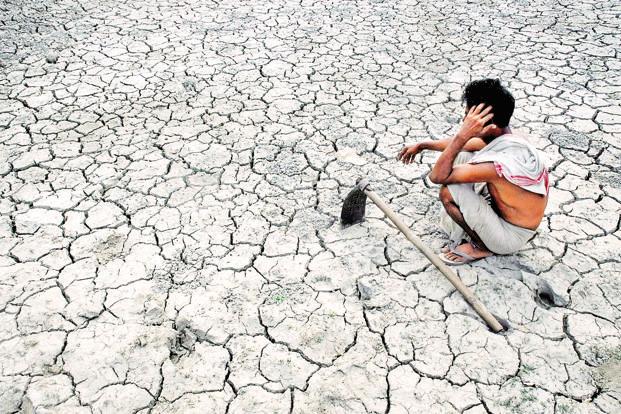
    • The national catastrophe of farmers committing suicide since the 1990s, often by drinking pesticides is attributed to their inability to repay loans mostly taken from landlords and banks.
    • The recent data released by NCRB show a very marginal decline in the suicide rate compared to last year signifying the sorry state of Indian agriculture.

    Farmers distress: Not a decadal phenomenon

    • Historical records relating to frustration, revolts and high mortality rates among farmers in India, particularly cash crop farmers, date back to the 19th century. However, suicides due to the same were rare.
    • The high land taxes of the 1870s, payable in cash regardless of the effects of frequent famines on farm output or productivity, combined with colonial protection of money lenders and landowner rights, contributed to widespread frustration among cotton and other farmers.
    • However, in those days, starvation related deaths far exceeded those by suicide, the latter being officially classified under “injuries”.

    NCRB Stats on Farmers Suicide

    • In 2017, 10,655 people involved in agriculture committed suicide in India, according to data released January 2, 2020, by the National Crime Record Bureau (NCRB).
    • NCRB had released the 2017 crime data last October 2019 but held back information on suicides.

    Highlights by NCRB

    • A total of 10,349 farmers and agricultural labourers committed suicide in 2018, a marginal dip from the 10,655 cases in the year before.
    • Out of 5,763 farmer/cultivator suicides, a total of 5,457 were male and 306 were female during 2018.
    • Among those who took their lives, 5,955 were farmers/cultivators and 4,700 agricultural labourers — both lower than in 2016.
    • The number of women farmers committing suicide, however, jumped to 480 in 2017 from 275 in ’16.
    • In 2016, 6270 farmers killed themselves, down from 8,007 in 2015, while 5,109 farmhands committed suicide, up from 4,595.

    Statewise data

    • In 2018, Maharashtra accounted for the highest share in farm-related suicides at 34.7%, followed by Karnataka at 23.2%, Telangana 8.8%, Andhra Pradesh 6.4% and Madhya Pradesh at 6.3%.
    • In 2017, the most number of farm suicides were reportedly in Maharashtra (34.7 per cent), followed by Karnataka (20.3 per cent), Madhya Pradesh (9 per cent), Telangana (8 per cent) and Andhra Pradesh (7.7 per cent).
    • The trend is quite similar to that of 2016.
    • In 2015 too Maharashtra tops in farmers suicides followed by Karnataka, Madhya Pradesh in 2016.
    • West Bengal, Odisha, Nagaland, Manipur, Mizoram, Uttarakhand, Chandigarh, Dadra and Nagar Haveli, Daman and Diu, Delhi, Lakshadweep and Puducherry reported zero suicides.

     Causes of Farmers Suicide

    • There is no consensus on what the main causes might be but studies show suicide victims are motivated by more than one cause however the primer reasons being the inability to repay loans.
    • Major causes reportedly are bankruptcy/indebtedness, problems in the families, crop failure, illness and alcohol/substance abuse.
    • Most of the suicides have occurred in areas of cash crops like cotton and sugarcane, which is high input, high output gambling, not based on the principle of sustained and resilient high yield.

    Case of Maharashtra

    • A 2012 study in rural Vidarbha (Maharashtra) was held to qualitatively rank the expressed causes among farming families who had lost someone to suicide.
    • The expressed reasons in order of importance behind farmer suicides were – debt, alcohol addiction, environment, low produce prices, stress and family responsibilities, apathy, poor irrigation, increased cost of cultivation, private money lenders, use of chemical fertilizers and crop failure.
    • In other words, debt to stress and family responsibilities as reasons were significantly higher than fertilizers and crop failure.
    • Other causes attributed are insufficient or risky credit systems, the difficulty of farming semi-arid regions, poor agricultural income, absence of alternative income opportunities, a downturn in the urban economy which forced non-farmers into farming, and the absence of suitable counselling services.

    Other causes

    • Disguised unemployment on farms remains high. Fragmentation of land holdings has left far too many farmers with farms that are too small to be remunerative.
    • Low access to credit, irrigation and technology worsens their ability to make a comfortable living. A tenth of our farmers are landless.
    • They use rented land, but the inadequacies of land-leasing mechanisms make it difficult for them to raise production.

    Latent causes of suicide

    • Since most discussions and parleys on suicides are overtaken by issues of crop failures, rising debts, new farming techniques, the psychological aspect is largely ignored.
    • One of the major causes behind suicidal intent is depression, found the researchers.
    • It needs to be understood that at times a farmer under a debt of Rs 2 lakh shows a tendency to end his life, while another under a debt of Rs 10 lakh does not.

    Flawed preventive measures

    • Irrigation reaches less than half of India’s overall farmland, a picture that has not changed much over the past decade, and more than 60% of our farmers are susceptible to rainfall anomalies.
    • Rain-fed farming yields are typically less than half those of irrigated farmland.
    • Though India has caught up with global levels of fertilizer use, this is neither efficient nor environmentally sustainable. Both add to the cost of cultivation.
    • Research on high-yielding crops has plateaued after an initial burst during the Green Revolution and farmers have to resort to patented seeds to draw more out of their scanty acres.
    • Initiatives like the eNAM are helping integrate the farmers’ produce directly with the market, however, cutting the role of intermediaries is still lagging behind.

    Enough with appeasement

    • Loan waivers instead of restructuring, re-investment measures are disguised pullbacks on govt. initiative to double farmer’s income by 2020.
    • The subsequent governments have focused only on credit and loan facilitation rather than income, productivity and farmers prosperity.
    • Our approach of handling farmer indebtedness and farmer suicides has been appeasement politics like the recent move by the Maharashtra, Punjab and UP government to waive off thousands of crore worth of loans.
    • Surprisingly this comes at a time when agricultural yield is expected to be better in the wake of a good monsoon.

    Need of the hour: Psychological assistance

    • The study suggested roping in psychologists and counsellors on various issues.
    • They included battling depressive ruminations, suicidal ideations, negative cognitions, hopelessness, helplessness.
    • It aimed at recognising and managing stressors like financial distress, relationship problems, and enhancing psychological resources through emotional well being, and mindfulness.

    Model of 7’s

    • The researchers developed a ‘7D’ model of triggering and confounding factors and a ‘7R’ model of preventive and protecting factors to deal with the problem of farmer suicides.

    ‘7D’ model

    It encapsulates:

    1. Drugs,
    2. Debt,
    3. Disease,
    4. Disputes,
    5. Depression,
    6. Disrepute and
    7. Death

     ‘7R’ model

    It looks at the prevention of suicides. It consists:

    1. Remunerative agriculture,
    2. Resilience building,
    3. Rational expenditure,
    4. Reassurance through connectivity,
    5. Righteous conduct,
    6. Religious support and
    7. Responsible reporting

    Way Forward

    • With years of policy failures, it can be concluded that there is no single sure-shot method to reduce the burden on our farmers.
    • Information technology promises to improve weather forecasting, crop identification as well as damage control, soil health monitoring, and mapping of available water resources.
    • Improvements in marketing and logistics can significantly raise the share that cultivators get of the money people pay for their food.
    • The govt. is using technology to connect farmers to a nationwide e-market, but the states need to amend their antiquated farm produce marketing laws that have squeezed farmers’ earnings.
    • An old problem of price signals failing to adjust demand and supply may also need fixing.
    • For agricultural incomes to rise, reforms, rather than cash transfers, loan waivers and the like, are the way ahead.

    Conclusion

    • The government, in consultation with various stakeholders, should come up with effective and long-term measures to reduce farmer indebtedness, improve crop yield, manage water resources efficiently and make alternate income sources to farmers.
    • Along with subsidies, increased farm profits, the focus should also be on resilience building and problem-solving skills of farming families.
    • In suicide-prone states, agricultural institutes and scientists should start distributing seeds of resilience, tolerance and contentment among farmers, suggested researchers.


    References

    https://www.civilsdaily.com/news/ncrb-report-on-farmers-suicide/

    https://www.civilsdaily.com/news/behavioural-aspect-of-farmer-suicides/

  • [Burning Issue] Killing of General Qassem Soleimani and its global implications


    Image result for general qassem soleimani upsc


    Context

    • Major General Qassem Soleimani, the Iranian Revolutionary Guards commander was killed in a US strike near Baghdad International airport.
    • One of the most popular figures in Iran, Soleimani was known as the most powerful general in the Middle East and has been repeatedly touted as a possible presidential candidate.
    • He was the long-serving head of Iran’s Quds (‘Jerusalem’) Force and has been seen as a deadly adversary by America and its allies.

    Clouds of Wars


    • The US and Iran have already been in confrontation for over a week, with each attack leading to a counterattack.
    • On December 27, more than 30 rockets were launched at an Iraqi military base, killing an American contractor.
    • The US responded on December 29 with airstrikes on sites in Iraq and Syria, killing 24 members of an Iranian-backed militia.
    • On December 31 pro-Iranian militia members laid siege to the US Embassy in Baghdad, trapping American diplomats for more than 24 hours. Then came the US drone strike that killed Soleimani and others.

    Who was Soleimani?

    • Born March 11, 1957, Soleimani hails from a village in the mountains of Kerman Province, a region in Iran’s southeast, not far from the borders with Afghanistan and Pakistan.
    • Revered in his home country and feared on battlefields across the Middle East, Soleimani remains virtually unknown in the West.

    The Quds Force

    • Until his death, Soleimani commanded the Quds Force, which is the Arabic word for Jerusalem and is responsible for carrying out unconventional warfare and intelligence activities.
    • The force is responsible for training, financing and providing assistance to some extremist groups overseas.
    • Ayatollah Ruhollah Khomeini set up the IRGC in 1979 after the Iranian Revolution ended to protect the Islamic order of the new Iranian government.
    • According to the Centre for Strategic and International Studies, the IRGC has contributed roughly 125,000 men to Iran’s forces and has the capability of undertaking asymmetric warfare and covert operations.
    • This includes the Quds Force that over the years has established links with the Hezbollah of Lebanon, Shi’ite militias in Iraq, Shi’ites in Afghanistan and the Palestinian territories.

    What did the Quds Force do?

    • In 1982, Revolutionary Guard officers were sent to Lebanon to help organise Shia militias in the civil war, which eventually led to the creation of Hezbollah.
    • The IRGC including the Quds Force has contributed roughly 125,000 men to Iran’s forces and has the capability of undertaking asymmetric warfare and covert operations.
    • As Quds head, Soleimani briefly worked in cooperation with the US. This was during the US crackdown in Afghanistan following 9/11; Soleimani wanted the Taliban defeated.
    • The cooperation ended in 2002 after President George W Bush branded Iran a nuclear proliferator an exporter of terrorism, and part of an “Axis of Evil”.
    • By 2003, the US was accusing Soleimani of plotting attacks on US soldiers following the 2003 invasion of Iraq, which eventually toppled Saddam Hussein.
    • And in 2011, the Treasury Department placed him on a sanctions blacklist.
    • In recent years, Soleimani was believed to be the chief strategist behind Iran’s military ventures and influence in Syria, Iraq and throughout the Middle East.

    In popular support

    • In recent years, Soleimani has gained a huge following on Instagram.
    • His profile rose suddenly when he was pushed forward as the public face of Iran’s intervention in the Syrian conflict from 2013 appearing in battlefield photos, documentaries — and even being featured in a music video and animated film.

    Active Politics

    • Soleimani had become Iran’s most recognizable battlefield commander, ignoring calls to enter politics but becoming as powerful, if not more, than its civilian leadership.
    • Soleimani wielded his regional clout publicly since 2018 when it was revealed that he had direct involvement in top-level talks over the formation of Iraq’s government.
    • He has been in and out of Baghdad ever since, most recently last month as parties seeking to form a new government.

    Why he was killed?

    • The US accused Iranian general is actively developing plans to attack American diplomats and service members in Iraq and throughout the region.
    • The Pentagon said that Gen Soleimani and his Quds Force “were responsible for the deaths of hundreds of American and coalition service members and the wounding of thousands more”.
    • The Islamic Revolutionary Guard Corps (IRGC) of which Soleimani’s Quds Force was the overseas operations arm and was designated a Foreign Terrorist Organisation (FTO).
    • The regime in Tehran is responsible for the deaths of at least 603 American service members in Iraq since 2003.
    • This according to the US accounts for 17% of all deaths of US personnel in Iraq from 2003 to 2011 and is in addition to the many thousands of Iraqis killed by the IRGC’s proxies.

    According to the US, the Quds Force was involved in:

    1. # 2011: The Quds Force plotted a terrorist attack against the Saudi Ambassador to the US on American soil.
    2. # September 2018: A US federal court found Iran and the IRGC liable for the 1996 Khobar Towers bombing which killed 19 Americans.
    3. # Support to terror organisations: Iran funds, equips, and fuels terrorism, violence, and unrest across the Middle East and around the world.
    4. # Support to al-Qaeda: The US alleges that Iran allows al-Qaeda operatives to live in the country, and “move money and fighters to South Asia and Syria”.

    Old enmity

    • The US designated Iran a State Sponsor of Terrorism in January 1984.
    • Ever since, Iran has been subjected to a number of sanctions and restrictions, including restrictions on US foreign assistance, a ban on defence exports and sales, exports controls of dual-use items, and miscellaneous financial and other restrictions.

    Implications of the killing

    • Soleimani’s death has resulted in a dramatic escalation in relations between the US and Iran. The strike has left the Middle East on edge, with possible repercussions beyond the region.
    • President Rouhani said the killing would make Iran more decisive in resisting the US, while the Revolutionary Guards said anti-US forces would exact revenge across the Muslim world.
    • Israel, too, was preparing for Iranian strikes.
    • The killing could have a ripple effect in any number of countries across the Middle East where Iran and the US compete for influence. Oil prices have already jumped by $3 a barrel.

    Possibility of retaliation

    • The killing forced Iran’s hand, and Tehran immediately warned of retaliation. Each strike has led to a more severe retaliation.
    • Also, by clearing the killing of Soleimani, Donald has taken a step his predecessors had avoided.
    • But analysts believe Iran will also be conscious that it is more vulnerable than the US, with all the conflict likely to be in the Middle East itself, including within Iran.
    • That said Iran’s military capabilities are higher than those of others in its neighbourhood.
    • The US might be wary of that. At the same time, analysts believe Iran would require time to put together a working nuclear warhead.
    • That possibility would end if the US chooses to strike Iran’s nuclear installations.

    Can it be war?

    • A lot will depend on how provocative Iran’s inevitable retaliation turns out to be.
    • If these provoke the US into a direct strike on Iran, it can potentially open up the threat of a sustained war.
    • While the possibility of an unintended slide to war is impossible to rule out, fears of World War Three —a phrase that trended overnight on social media are overblown.

    Repercussions on India


    Delay of Chabahar

    • The killing is expected to slow down India’s plans to develop the Chabahar port that New Delhi first spoke of turning into a gateway to access landlocked Central Asia and Afghanistan.
    • The 2015 Iran nuclear deal gave India a chance to revisit its plans to develop Chabahar port, also seen as a strategic counter to Pakistan’s Gwadar port developed by China.
    • US sanctions on Iran for its suspect nuclear programme and India’s aim to clinch a civil nuclear deal with the US had delayed plans to develop the Chabahar port in the intervening years since 2003.
    • In May 2016, India, Iran and Afghanistan signed a transport and transit corridor pact as well as a bilateral pact with Tehran to develop the Chabahar port and lay a railway line to Afghanistan and Central Asia.

    Oil prices hike

    • India’s immediate concern is the impact of tensions on international fuel prices that soared 4% last week.
    • Brent crude futures jumped nearly $3 to hit a high of $69.16 a barrel the highest since September while the U.S.
    • With India’s GDP growing at a record low of 4.5% in the September quarter, there are serious concerns that high fuel prices could adversely impact its economic recovery.
    • Though India does not import oil from Iran thanks to a new set of sanctions but any unrest in the volatile region could impact imports from countries like Saudi Arabia.

    Impact on trade

    • Most of the exports take place through the Straits of Hormuz a narrow waterway carrying a fifth of the world’s traded oil which Iranian officials had threatened to block in retaliation for sanctions.
    • India had deployed naval assets in the region to protect its supplies in the wake of mine attacks on oil tankers.

    Remittances flow

    • A secondary worry is that tensions between Iran and the US could impact India’s trade with the region that now stands at $ 78 billion (from Gulf Cooperation Council member countries ie Saudi Arabia, Kuwait, the UAE, Qatar, Bahrain and Oman).
    • The West Asia region is the source of some $200 billion in terms of remittances, trade and investments for India.

    Way Forward

    • Overall, India will view the U.S.-Iran developments with deep concern and hope that the situation does not escalate.
    • Beyond its short-term anxiety about India will have a medium-to-long-term concern about further deterioration — namely, that it will result in continued, if not greater, U.S. involvement in the Middle East at the expense of the Indo-Pacific.
    • India wants US focused on the China challenge and it has hoped for years that the U.S. would indeed undertake a rebalance.
    • Any escalation between the U.S. and Iran would put paid to any such shift; moreover, as India saw with the Afghanistan and Iraq wars, it could increase China’s space.


    References

    https://www.livemint.com/news/india/us-killing-of-soleimani-revives-worries-for-india-11578059448629.html

    https://indianexpress.com/article/explained/explained-qasem-soleimani-the-us-accusations-against-irans-quds-force-6198051/

    https://www.thehindu.com/news/international/watch-who-was-qasem-soleimani/article30472935.ece

    https://indianexpress.com/article/explained/irans-major-general-qassem-soleimani-killing-why-few-expect-full-blown-war-but-no-one-rules-it-out-donald-trump-6201285/

  • [Burning Issue] India State of Forest Report 2019 : Part-II

    Continued ….


    Comparison with 2017 report

    • The 2019 survey has found an increase of 5,188 sq km in total forest and tree cover in the country.
    • Tree and forest cover together made up 24.56% (8,07,276 sq km) of India’s area. In the last assessment it was 24.39%.
    • The nation’s tree and forest cover has largely hovered from 21-25% and is short of the National Forest Policy, 1988, which envisages 33% to be under such cover.
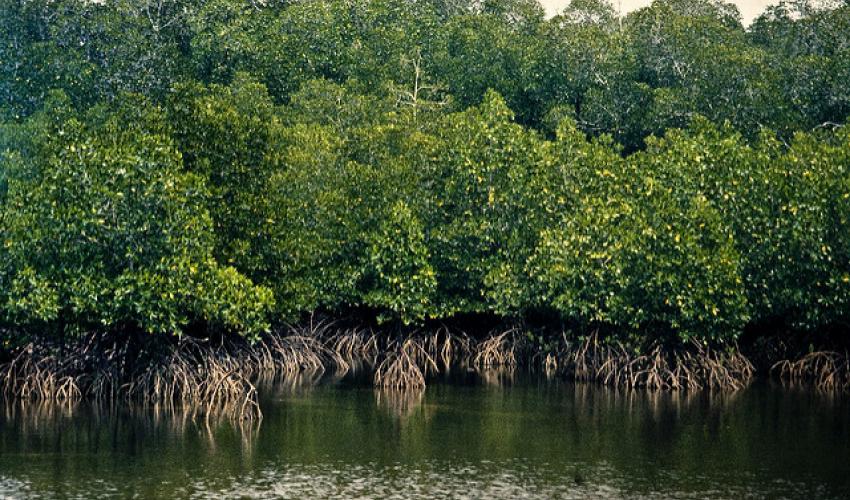
    • Mangrove cover in the country has increased by 54 sq km (1.10%) as compared to the previous assessment.

    Various factors attributed to the increasing trend

    The increasing trend of forest cover is largely due to the various national policies aimed at Conservation and sustainable management of our forests. Few of them are:

    Green India Mission: It has the broad objective of both increasing the forest and tree cover by  5 million ha,  as well as increasing the quality of the existing forest and tree cover in another 5 million ha of forest/ non forest lands in 10 years.

    PM Ujjwala Yojana: In India 67 per cent of the rural households depend on firewood for cooking.In order to address this problem, the Ujjwala scheme provides free LPG connections to BPL families in remote rural areas.

    National Agroforestry Policy (NAP): A dynamic ecologically based concept which integrates woody perennials in the agricultural landscape diversifies and sustains production.

     REDD+ policy:  Its objective is to mitigate climate change through reducing net emissions of greenhouse gases through enhanced forest management in developing countries.

    Joint forest management (JFM): It is the concept of developing relationships between fringe forest groups and forest department on the basis of mutual trust and jointly defined roles and responsibilities for forest protection and development.

    National Afforestation Programme: It provides support, both in physical and capacity building terms, to the Forest Development Agencies (FDAs) which in turn are the main organs to move forward institutionalization of Joint Forest Management.

    CAMPA: Funds under Compensatory Afforestation Fund Management and Planning Authority (CAMPA) has proved instrumental in compensating forest land diverted for non-forest purpose which would mitigate impact of diversion of such forest land.

    Critical evaluation of the report

    • The latest report should seem heartening given, today this stands at 7.12 lakh sq km, up from 6.7 lakh sq km in 2005—that too, in the face of development needs compelling the diversion of forest land.
    • The depletion in the northeastern states forest cover is worrying given these are very old forests, and have greater carbon sequestration capacity.
    • The rapid increase in forest cover, especially with a fair share of the gain being concentrated in the dense forests category (canopy density higher than 40%), is likely rooted in two factors.

    Flaws with the satellite imaging

    • The Forest Survey of India has been using better satellite imagery with a 1:50,000 scale, compared to the 1:250,000 scale earlier.
    • This means any area, even as small as 0.01 sq km, with a canopy density of more than 10% is captured as a forest; the earlier resolution meant land units under 0.25 sq km didn’t get captured as forest.
    • Thus, land that has been denuded of forest cover but did not get recorded as forest earlier because it fell below the 0.25 sq km threshold now figures in the ISFR as a “gain” in forest cover.

    Canopy as a basis of identification

    • The tree canopy basis of identification doesn’t differentiate between natural forests, plantations, orchards, or even palm groves.
    • This means the loss in diversity doesn’t get captured by the data.
    • Thus, the growth in forest-cover could be attributed to fast-growing plantation trees like eucalyptus that are favoured in compensatory afforestation programmes.

    Accounting plantation

    • ISFR 2019, for the first time ever, gives data for forest diversity.
    • The ‘plantations/trees outside forests’ already account for nearly 9% of the total area under forests—making plantations the fourth largest group.
    • Some of these are fast-growing species such as bamboo in the north-eastern region and also rubber and coconut plantations in the southern states.
    • Monoculture practices cannot substitute natural forests in biodiversity or ecological services.

    Less realistic data

    • The last two decades have been almost drought for Andhra Pradesh, and 60% of Karnataka reeled under drought in 9-11 years between 2001 and 2015.
    • It is hard to see how the two states have performed so well in increasing forest cover.

    Conclusion

    • Where forest cover is concerned, India has set itself a target that needs a much higher rate of afforestation in the coming years than the current one of 35 million tonnes per year carbon dioxide equivalent.
    • Even though a progress has been made in increasing the green cover over the past few years, India is still quite far from achieving its target of 33 per cent of the total geographical area by 2030.
    • India has committed to the UNFCCC as part of its Nationally Determined Contribution (NDC) that, besides reducing emission intensity of its GDP by 33-35 per cent by 2030.
    • The forest data needs to reflect more of the ground reality instead of becoming a tool to lull the country into inaction on forests.


    References

    https://www.civilsdaily.com/news/india-state-of-forest-report-isfr/

    https://www.thehindu.com/sci-tech/energy-and-environment/total-tree-forest-cover-in-country-increases-by-5188-sq-km-forest-report/article30431835.ece

    https://www.financialexpress.com/opinion/indias-forest-cover-growing-isfr-data-masking-harsher-on-ground-realities/1809920/

    https://swachhindia.ndtv.com/tree-plantation-while-green-cover-in-india-has-increased-existing-forests-are-thining-india-state-of-forest-report-2019-40722/

    https://www.thehindubusinessline.com/specials/clean-tech/time-to-step-up-forest-cover-pace/article30445513.ece

    https://www.thehindu.com/sci-tech/energy-and-environment/one-fifth-of-countrys-forests-prone-to-fires-study/article30446295.ece

    https://www.researchgate.net/publication/330222412_Potential_of_Short_Rotation_Forestry_and_Agroforestry_for_Climate_Change_Mitigation_and_Sustainability 

  • [Burning Issue] India State of Forest Report 2019 : Part-I

    Context

    • Forests play an extremely important role in ensuring ecological balance and existence of life on the earth.
    • However, rampant cutting of trees and thinning of forests has been taking place in the country due to activities related to development and infrastructure building, emphasise the environmental experts.
    • Thus, in a bid to keep up the pace of conservation of forests amidst developmental activities, the Forest Survey of India (FSI), an organisation under MoEFCC started monitoring forest cover in 1987.
    • Under the same initiative, FSI released its biennial assessment report, India State of Forest Report 2019.

     India State of Forest Report (ISFR)

    • The ISFR is a biennial report published by the Forest Survey of India (FSI).
    • FSI has been mandated to assess the forest and tree resources of the country including wall-to-wall forest cover mapping in a biennial cycle.
    • Starting 1987, 16 assessments have been completed so far. ISFR 2019 is the 16th report in the series.

    Highlights of the report

    • In the present assessment, the total forest and tree cover of the country is 80.73 million hectare which is 24.56 per cent of the geographical area of the country.
    • As compared to the assessment of 2017, there is an increase of 5,188 sq. km in the total forest and tree cover of the country.
    • Out of this, the increase in the forest cover has been observed as 3,976 sq km and that in tree cover is 1,212 sq. km.
    • Range increase in forest cover has been observed in open forest followed by very dense forest and moderately dense forest.
    • The top three states showing increase in forest cover are Karnataka (1,025 sq. km) followed by Andhra Pradesh (990 sq km) and Kerala (823 sq km).

    Some Major Findings

    • Area-wise Madhya Pradesh has the largest forest cover in the country followed by Arunachal Pradesh, Chhattisgarh, Odisha and Maharashtra.
    • In terms of forest cover as percentage of total geographical area, the top five States are Mizoram (85.41%), Arunachal Pradesh (79.63%), Meghalaya (76.33%), Manipur (75.46%) and Nagaland (75.31%).

    Increase in the tree cover

    • Tree cover comprises of tree patches of size less than 1 hectare occurring outside the recorded forest area.
    • The tree cover of the country is estimated as 95,027 sq km which is 2.89% of the geographical area.
    • Maharashtra has had the highest increase in tree cover and a large part of that is due to horticulture.

    Forest Cover in Tribal Districts

    • The total forest cover in the tribal districts is 4,22,351 sq km, which is 37.54% of the geographical area of these districts.
    • There has been a decrease of 741 sq km of forest cover within the Recorded Forest Area/ Green Wash (RFA/GW) in the tribal districts and an increase of 1,922 sq km outside.
    • There has been a decline in tree cover inside forests due to tribal populations getting “land titles” (patta) and there has been a rise in trees outside the forest area due to an increase in tree plantation and afforestation.

    Mangroves

    • Mangrove cover has been separately reported in the ISFR 2019 and the total mangrove cover in the country is 4,975 sq km.
    • An increase of 54 sq Km in mangrove cover has been observed as compared to the previous assessment of 2017.
    • Top three states showing mangrove cover increase are Gujarat (37 sq km) followed by Maharashtra (16 sq km) and Odisha (8 sq km).

    Bamboo

    • The extent of bamboo bearing area of the country has been estimated 16.00 million hectare.
    • There is an increase of 0.32 million hectare in bamboo bearing area as compared to the last assessment of ISFR 2017.

    Wetlands

    • Wetlands within forest areas form important ecosystems and add richness to the biodiversity in forest areas, both of faunal and floral species.
    • Due to importance of wetlands, FSI has carried out an exercise at the national level to identify wetlands of more than 1 ha within RFA.
    • There are 62,466 wetlands covering 3.8% of the area within the RFA/GW of the country.

    Carbon Stock

    • Under the current assessment the total carbon stock in country’s forest is estimated 7,124.6 million tonnes.
    • There an increase of 42.6 million tonnes in the carbon stock of country as compared to the last assessment of 2017.
    • The annual increase in the carbon stock is 21.3 million tonnes, which is 78.2 million tonnes CO2 eq.

    Decline of Forest Cover in North Eastern

    • Total forest cover in the North Eastern region is 1,70,541 sq km, which is 65.05% of its geographical area.
    • There has been a decrease of forest cover to the extent of 765 sq km (0.45%) in the region.
    • Except Assam and Tripura, all the States in the region show decrease in forest cover.

    Forest Fires

    • About 21.40% of forest cover in India is prone to fires, with forests in the north-eastern region and central India being the most vulnerable a/c to the report.
    • The forest fire points (FFP) identified during the 13 years add up to 2,77,758.
    • They were analysed using a moderate resolution imaging spectro-radiometer (MODIS) by overlaying the points coverage over the grid coverage of 5 km x 5 km.
    • The analysis showed that extremely fire-prone areas account for 3.89% of total forest cover, very highly fire-prone areas account for 6.01% and highly fire-prone areas for 11.50%.
    • Together, the three categories come to 21.40 % of forest cover.


    to be continued …….

    Note: Part-II of the same Burning Issue will be published by 20:00 hrs.