💥Join UPSC 2027,2028 Mentorship (July Batch) + XFactor Notes & Microthemes PDF

Subject: History

  • Ram Setu and The Sethusamudram Project (SSCP)

    Ram Setu

    Context

    • On November 10, the Supreme Court gave the Centre four weeks’ time to file a response clarifying its stand on a plea seeking national heritage status for the ‘Ram Setu’.

    Ram Setu

    • Also known as Adam’s bridge, Ram Setu is a 48-km long bridge-like structure between India and Sri Lanka.
    • It finds mention in the Ramayana but little about its formation is known or proven, scientifically.

    Interesting Research on “Ram Setu”

    • Conclusion by the researchers that Ram Setu is not man-made:
    • In 2003, space-based investigations, using satellite remote sensing imagery, by researchers at the Space Applications Centre in Ahmedabad concluded that Ram Setu is not man-made, but comprises 103 small patch reefs lying in a linear pattern with reef crest, sand cays and intermittent deep channels.
    • Cays, also known as keys, refer to low-elevation islands situated on surfaces made of coral reef.
    • Reasoning behind the conclusion:
    • It is reasonable to assume that Ram Setu is a linear ridge made of coral reefs and forms a shallow part of the ocean that is being constantly impacted by sedimentation processes.
    • Like the Great Barrier Reef, the Ram Setu is also a continuous stretch of limestone shoals that runs from Pamban Island near Rameswaram to the Mannar Island on the northern coast of Sri Lanka.
    • During glaciation period: During a global glaciation period that began around 2.6 million years ago and ended 11,700 years ago, the Indian coast, including parts of the Sethusamudram, may have been raised above water.
    • Post glaciation: The post-glaciation period witnessed a steady rise in sea levels around the world and coral polyps could once again have grown higher on the newly submerged platforms. And in time, the platforms may have been used by migrants to cross oceans.
    • Ramayana belief: The Ramayana refers to a putative land bridge in this region; believers hold it as the structure that Lord Rama and his army built to reach Lanka. This ridge may have been used in the distant past as a migratory route.

    Ram Setu

    Sethusamudram Ship Channel Project (SSCP)

    • Sethusamudram Ship Channel Project (SSCP) can be traced back to the British, who Proposed as channel to link the Palk Strait with the Gulf of Mannar.
    • It was only in 2005 that the project was inaugurated.
    • Separating the shallow sea consisting of the Gulf of Mannar in the south and Palk Bay in the north is a somewhat linear coral ridge called Adam’s Bridge or Ram Setu.
    • This runs between Rameswaram in Tamil Nadu and Thalaimannar in Sri Lanka.
    • The SSCP, if completed, is expected to considerably reduce the navigation time between the east and west coasts of India.

    Click and get your FREE Copy of CURRENT AFFAIRS Micro Notes

    Memory shot

    • “The Sethusamudram project envisages dredging of a channel across the Palk Strait between India and Sri Lanka to allow ships to sail between the east and west coasts of India, instead of circumventing the island nation.”

    What are the Concerns raised about the project?

    • High energy waves may bring sediments: Computer models suggest that the central, eastern and north-eastern parts of the Palk Bay may be impacted by waves of higher energy. This means that these areas also receive more sediment, rendering them more turbid.
    • Alignment is not easy: The models also indicate that waves enter the Bay from its north and south, corresponding to how the channel is aligned.
    • High frequency of cyclonic storms: The area is also vulnerable to cyclonic storms. A cyclone in 1964 was so powerful that it wiped out the town of Dhanushkodi. Such storms can cause the local sedimentary dynamics to go haywire.
    • Dumping of dredged material may harm marine ecosystem: Finding safe places for dumping dredged material without harming terrestrial or marine ecosystems is therefore a big challenge.
    • Air and water pollution by the ships: Emissions from ships traversing the narrow channel will pollute the air and water. And if a rogue ship carrying oil or coal is grounded or strays from its course within the canal, it could cause an ecological disaster.
    • Religious belief of Significant Ram Setu: While environmental groups have been protesting against the project for the huge environmental cost it would entail, religious groups have been opposing it as they believe that the structure, which is mentioned in the Ramayana, is of religious significance.

    Ram Setu

    What is the need of protection?

    • Marine biosphere reserves: The coral reef platforms between Thoothukudi and Rameswaram in the Gulf of Mannar were notified as a marine biosphere reserve in 1989.
    • Biodiversity rich area:
    • More than 36,000 species of flora and fauna reportedly live there, flanked by mangroves and sandy shores which are considered conducive for turtles to nest.
    • This is also a breeding ground for fish, lobsters, shrimps and crabs.
    • Of the 600 recorded varieties of fish in the region, 70 are said to be commercially important.
    • Area is already under stress:
    • This area is already threatened by discharge from thermal plants, brine run-off from salt pans, and illegal mining of corals.
    • The SSCP, if it becomes a reality, will be the final blow to this sensitive environment and to the livelihoods of the people there.

    Perspective: Area is not only a religious belief but also a “Geo heritage site”.

    • While considering this issue from a believer’s point of view, it is also important to consider this feature from a ‘geoheritage’ perspective.
    • The geoheritage paradigm is used in nature conservation to preserve the natural diversity of significant geological features.
    • The value of abiotic factors like geology, soils and landforms is also recognised for their roles in supporting habitats for biodiversity.
    • Geodiversity here consists of varied landforms and features representative of dynamical natural processes, is under threat from human activities and needs protection.

    Ram Setu

    Do you Know Underwater archaeological project at Ram Setu?

    • The National Institute of Oceanography (NIO) will undertake a three-year scientific project.
    • The idea is to see whether Ram Setu is a man-made structure or not.
    • The most important aspect of the project is to establish its age, scientifically.
    • The explorers will apply a number of scientific techniques while attempting to date the Ram Setu, study its material composition, outline the sub-surface structure along with attempting to excavate remnants or artefacts, if any, from the site.
    • Once it is known, the information can be verified and co-related with its mention in the Ramayana and similar scriptures.

    Conclusion

    • The Ram Setu carries the unique geological imprints of an eventful past. Therefore, it needs to be preserved not just as a national heritage monument, but also as a Geoheritage structure as defined from a scientific perspective.

    Mains Question

    Q. What is Sethusamudram Ship channel project? Discuss the Concerns raised over the stability of the project.

    (Click) FREE1-to-1 on-call Mentorship by IAS-IPS officers | Discuss doubts, strategy, sources, and more

  • Uda Devi: A Dalit freedom fighter

    uda devi

    On November 16, events to commemorate the martyrdom of Uda Devi, a freedom fighter from the Pasi community, were held at various places in Uttar Pradesh.

    Who was Uda Devi?

    • Uda Devi is remembered not only for her stories of valour but also for her skill as a leader who managed to mobilise people — especially Dalit women — to take up arms against the British.
    • Born in Ujirao, Lucknow, she was part of the royal guard of Begum Hazrat Mahal of Awadh.
    • Her husband, Makka Pasi, worked as a foot soldier in the army of Awadh’s Nawab, Wajid Ali Shah.
    • Hazrat Mahal’s palace had several women belonging to marginalised communities, and their occupation was mostly to take care of the needs of the royalty.
    • Some of them, who showed promise, were also trained as warriors. Uda Devi was one of them.

    Her legend

    • Amid the revolt of 1857, on June 10, at Chinhat near Ismailganj, a battle was fought between the army of Lucknow and the British troops led by Henry Lawrence, in which Makka Pasi lost his life.
    • The death of her husband spurred Uda Devi on to take up a more active role in the mutiny.
    • On November 16, 1857, Uda Devi was among the soldiers who clashed with the British regiment stationed near the Gomti River.
    • Although not much of the fight has been documented in history, it is said that Uda Devi killed at least three dozen British soldiers from atop a tree before she could be spotted.

    Can you recall the Eka Movement of 1921 from your modern history references? If not, take your time to revise. Read about the contribution of Madari Pasi in this movement.


    (Click) FREE1-to-1 on-call Mentorship by IAS-IPS officers | Discuss doubts, strategy, sources, and more

  • Festival in news: Cuttack Baliyatra

    baliyatra

    In his address to the Indian diaspora in Bali on the sidelines of the G20 summit, PM Modi mentioned the annual Baliyatra on the banks of the Mahanadi in Cuttack, which celebrates the ancient trade relations between India and Indonesia.

    Baliyatra

    • Baliyatra/ Balijatra, literally ‘voyage to Bali’, is one of India’s largest open-air fairs.
    • It is organised every year to commemorate the 2,000-year-old maritime and cultural links between ancient Kalinga (today’s Odisha) and Bali and other South and Southeast Asian regions.

    Origins of the festival

    • The origins of the festival, which begins on Kartik Purnima (full moon night in the month of Kartik) can be traced back more than 1,000 years.
    • The Bay of Bengal region had several ports, and sadhavas (traders) traditionally began their voyage across the sea on this auspicious day, when the winds were favourable for the boats, known as boita, to sail.
    • The traders would set sail to distant lands of Bali, as well as Java (at the time of the voyage known as “Yawadvipa”), Sumatra, Borneo (all in Indonesia), and Sri Lanka (formerly Ceylon) for trade and cultural expansion.
    • According to historians, popular items of trade between Kalinga and Southeast Asia included pepper, cinnamon, cardamom, silk, camphor, gold, and jewellery.
    • Even today, thousands of people across Odisha sail decorative miniature boats made of banana stems, paper, or thermocol to celebrate boita bandana, or the worshipping of the boats.


    (Click) FREE1-to-1 on-call Mentorship by IAS-IPS officers | Discuss doubts, strategy, sources, and more

  • Handloom in news: Patan Patola

    patola

    At the G20 summit, Prime Minister gifted traditional artworks from Gujarat- the ‘Patan Patola’ scarf to his Italian counterpart Giorgia Meloni.

    What is Patan Patola?

    • The ancient art of double ikat or Patola woven in pure silk dates back to the 11th century.
    • The Patola fabrics bear an equal intensity of colours and design on both sides.
    • This peculiar quality has its origins in an intricate and difficult technique of dyeing or knot dyeing, known as ‘bandhani’, on the warp and weft separately before weaving.

    How is it woven?

    patola

    • Patola is woven on primitive hand-operated harness looms made out of rosewood and bamboo strips. The loom lies on a slant.
    • The other commonly worn Patola is the Rajkot Patola, woven on a flat loom.
    • The process involves warp and weft silk threads that are tied with cotton thread on portions marked with the proposed design.
    • This tied portion then remains unexposed to colours while dyeing, which is followed by tying, untying, redyeing and dyeing in different shades.
    • Single and primary colours are applied one after another as mixed shades develop by overlapping. This makes the design stand out.

    Who weaves it?

    • The last surviving family into Patola weaving is the Salvi family in Patan.
    • From the oldest 70-year-old Rohit to the youngest 37-year-old Savan, the entire nine member-family of five men and four women is engaged with this art form.
    • The Salvi family shared that before World War II, Indonesia was the major buyer of Patolas.
    • Legend has it that King Kumarpal of the Solanki dynasty invited some 700 families of Patola weavers from Jalna (Maharashtra) to settle in Patan in North Gujarat, and the Salvis are among them.
    • The family has also been honoured with several national awards.

    How costly it is?

    • While possessing and wearing a Patola is considered a matter of pride, the fabric has largely remained inaccessible to common people because of its high price.
    • The base price of a Patola saree in the Patan weave starts from Rs 1.5 lakh up and can go up to Rs 6 lakh.
    • A typical 46-inch dupatta or scarf sells in the range of Rs 80,000, depending on the intricacy of the design.


    (Click) FREE1-to-1 on-call Mentorship by IAS-IPS officers | Discuss doubts, strategy, sources, and more

  • Birth anniversary of Birsa Munda: The leader, his contributions

    birsa

    On the occasion of the birth anniversary of tribal leader Birsa Munda, the Centre marked the second Janjatiya Gaurav Divas on November 15 to celebrate the contributions of tribal communities to Indian culture.

    Who was Birsa Munda (1875-1900)?

    birsa

    • Birsa Munda was a tribal freedom fighter, religious leader, and folk hero who belonged to the Munda tribe.
    • He spearheaded a tribal religious millenarian movement that arose in the Bengal Presidency (now Jharkhand) in the late 19th century, during the British Raj.

    His legacy

    (A) Birth and early childhood

    • Born on November 15, 1875, Birsa spent much of his childhood moving from one village to another with his parents.
    • He belonged to the Munda tribe in the Chhotanagpur Plateau area.
    • He received his early education at Salga under the guidance of his teacher Jaipal Nag.
    • On the recommendation of Jaipal Nag, Birsa converted to Christianity in order to join the German Mission school.
    • He, however, opted out of the school after a few years.

    (B) New faith ‘Birsait’ against religious conversion

    • The impact of Christianity was felt in the way he came to relate to religion later.
    • Having gained awareness of the British colonial ruler and the efforts of the missionaries to convert tribals to Christianity, Birsa started the faith of ‘Birsait’.
    • Soon members of the Munda and Oraon community started joining the Birsait sect and it turned into a challenge to British conversion activities.
    • The Mundas called him Dharati Aaba, the father of earth.

    (C) The Ulgulan

    • The Great Tumult or Ulgulan was a movement started by Birsa Munda against the exploitation and discrimination against tribals by the local authorities.
    • Although the movement failed, it did result in the Chotanagpur Tenancy Act which forbade tribal lands passing to non-tribals, protecting their land rights for the foreseeable future.

    (D) Death

    • On March 3, 1900, Birsa Munda was arrested by the British police while he was sleeping with his tribal guerilla army at Jamkopai forest in Chakradharpur.
    • He died in Ranchi jail on June 9, 1900, at the young age of 25.

    (E) Creation of Jharkhand

    • Birsa Munda’s achievements are known to be even more remarkable by virtue of the fact that he came to acquire them before he was 25.
    • In recognition of his impact on the national movement, the state of Jharkhand was created on his birth anniversary in 2000.


    Try this PYQ from CSP 2020

    With reference to the history of India, “Ulgulan” or the Great Tumult is the description of which of the following event?

    (a) The Revolt of 1857

    (b) The Mappila Rebellion of 1921

    (c) The Indigo Revolt of 1859-60

    (d) Birsa Munda’s Revolt of 1899-1900


    [wpdiscuz-feedback id=”49eza8o2rp” question=”Please leave a feedback on this” opened=”1″]Post your answers here.[/wpdiscuz-feedback]


    (Click) FREE1-to-1 on-call Mentorship by IAS-IPS officers | Discuss doubts, strategy, sources, and more

  • Who was Nadaprabhu Kempegowda?

    kempegowda

    PM unveiled a 108-feet tall bronze statue of ‘Nadaprabhu’ Kempegowda in Bengaluru, credited to be the city’s founder.

    Who was Nadaprabhu Kempegowda?

    • Nadaprabhu Kempegowda, a 16th century chieftain of the Vijayanagara empire, is credited as the founder of Bengaluru.
    • It is said that he conceived the idea of a new city while hunting with his minister, and later marked its territory by erecting towers in four corners of the proposed city.
    • Kempegowda is also known to have developed around 1,000 lakes in the city to cater to drinking and agricultural needs.
    • He was from the dominant agricultural Vokkaliga community in south Karnataka.

    Political motives behind

    • Kempegowda is an iconic figure among Karnataka’s second most dominant Vokkaliga community after Lingayats.
    • Political parties plan to woo the Vokkaliga community by honoring Kempegowda.
    • The statue would be known as the ‘Statue of Prosperity’.


    Click and get your FREE Copy of CURRENT AFFAIRS Micro Notes

  • Forgotten Heroes: Indian Soldiers in World War-II

    Soldiers

    Context

    • On the eleventh hour of the 11th day of the 11th month of 1918, the guns fell silent over Europe, bringing an end to a brutal first world war that drew in soldiers and contributions from around the world. Indian soldiers and their contribution are not widely recognized in India.

    Background of Indian involvement World War II

    • Fight against Fascism: Two conflicts and a reticence Indian reticence over these two conflicts arises from the uneasy relationship between the Indian contribution to fighting fascism on a global stage and the nationalist movement for freedom at home.
    • Betrayal of nationalistic expectation: The success of the first is seen to have come at the cost of the second. It began with the betrayal of nationalist expectations of greater autonomy for India in return for support during the Great War.
    • No consultation with Indian leaders: This was compounded by the bitterness of Viceroy Lord Linlithgow declaring war on Germany on India’s behalf in 1939 without consulting Indian leaders, and further roiled by the pitting of Indian against Indian when Netaji Subhas Chandra Bose’s Indian National Army sided with the Axis Powers in the hope that this might bring freedom.
    • Fighting for India and for World: But the failure of Indian independence to follow automatically from India’s participation in the wars does not mean that the war efforts extended colonial rule, or were all about protecting Britain: there was fighting on Indian soil to defend India.

    Soldiers

    What is Indian soldiers role in World War II

    • Support of nationalist leaders: Almost 1.5 million men volunteered to fight in the Great War. Indians mobilized four days after Britain declared war on Germany, with the support of nationalist leaders, including Mahatma Gandhi.
    • War in Europe, Asia and Africa: Indians fought with valor and distinction in the trenches of Europe, West Asia and North Africa, earning 11 Victoria Crosses along the way. Of those men, about 74,000 never came home.
    • Largest volunteer for war: India raised the largest ever volunteer army, of 2.5 million, for the Second World War. More than 87,000 of those men are cremated or buried in war cemeteries around the world and in India.
    • Thirty-one Victoria Crosses: 15 % of the total Victoria crosses went to soldiers from undivided India. Without Indian soldiers, non-combatant labourers, material and money, the course of both conflicts would have been very different as acknowledged by Field Marshal Auchinleck, Britain’s last Commander-in-Chief of the Indian.

    The issue of Non-recognition of India’s contribution

    • Indian soldiers are honored by Britain: In Britain, the contribution of the Commonwealth including the Indian subcontinent is memorialized in the Commonwealth Memorial Gates that lead up to Buckingham Palace. The Gates commemorate the campaigns where Commonwealth soldiers served with distinction; there is also a canopy inscribed with the names of the Commonwealth recipients of the George and Victoria Crosses.
    • Indian soldiers fought the Britain’s war: Much of India’s recent history is encapsulated in these gates, in a spirit of gratitude and equality. Britain, after all, has much to be grateful for, but Indians seem less keen to acknowledge this. British perfidy, however, does not in any way reduce the sacrifices of those who fought for freedom. Those who went abroad to fight alongside white British soldiers returned with the knowledge that they were equal to their colonial masters. In not recognizing and honoring this, we push those men back into colonial subjugation.
    • Britain betrayed the hopes of freedom: Some of this ambivalence owes itself to the atrocities of colonial history, which must be acknowledged too. Britain may have handed out 11 Victoria Crosses over the course of the First World War, but it betrayed the hopes of nationalists with the imposition of martial law after the war ended, culminating in the horror of Jallianwala Bagh in April 1919.

    Soldiers

    Does India fought the war for its own sake?

    • Indian fought the Japanese: These were not just European wars to defend foreign lands. India was threatened in the Second World War by advancing Japanese forces who got as far as Burma/Myanmar. They were repulsed in the battles of Imphal and Kohima between March and July 1944. These were brutal battles. In Kohima, the two sides were at one point separated by the width of a tennis court. A Commonwealth cemetery on Garrison Hill, Kohima, contains this epitaph (by John Maxwell Edmonds): ‘When You Go Home, Tell Them of Us, and Say/For Your Tomorrow, We Gave Our Today’.
    • Ultimate sacrifice for India’s freedom: The memory of the almost 10 million battlefield deaths in the First World War and the 15 million or more who were killed fighting the Second World War is now honored in countries around the world on November 11, with nationwide silences and the laying of wreaths. Not so much in India apart from in Army cantonments and at the British Consulate in Kolkata even though over 1,61,000 men made the ultimate sacrifice for India’s freedom.

    Conclusion

    • Seventy-five years after Independence, it is time to honor India’s immense contribution to the world wars and move it from a footnote in another country’s history to the main stage, where it belongs. These were India’s wars too.

    Mains Question

    Q. What role the Indian soldier played in Second world War? What are the issues regarding non recognition of contribution of Indian soldiers in world wars?

    Click and Get your FREE copy of Current Affairs Micro notes

  • In news: Wangala Dance of Garo Tribe

    wangala

    This newscard is an excerpt from a picture in the print edition of TH.

    Wangala Dance

    wangala

    • Wangala is also called the festival of “The Hundred Drums“.
    • It is a harvest festival celebrated by the Garo tribe in Meghalaya, Nagaland and Assam and Greater Mymensingh in Bangladesh.
    • In this post-harvest festival, they give thanks to Misi Saljong the sun god, for blessing the people with a rich harvest.
    • Wangala is celebrated in the months from September to December, with different villages setting different dates for the occasion.

    Course of celebration

    • The ceremony performed on first day is known as “Ragula” is performed inside the house of the chief.
    • On the second day is known as “Kakkat“.
    • Folks dressed in their colorful costumes with feathered headgears dance to the tune of music played on long oval-shaped drums.
    • While the men beat the drums, the line moves forward in rhythmic accord.
    • The ‘orchestra’ of men includes drums, gong and flutes, punctuated by the sonorous music of an primitive flute made of buffalo horn.


    Click and get your FREE Copy of CURRENT AFFAIRS Micro Notes

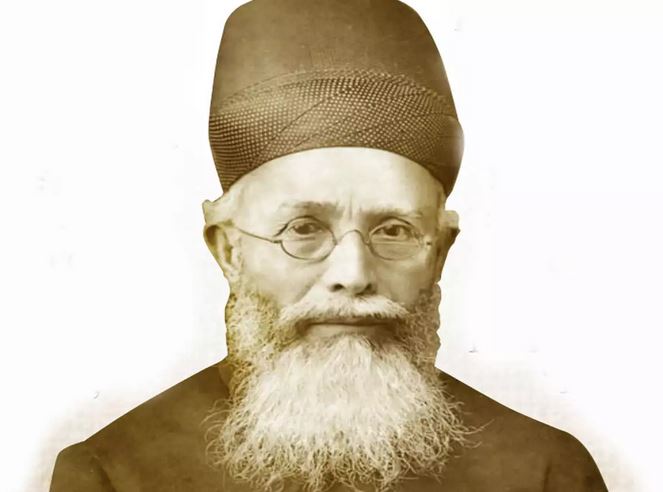
  • Person in news: Dadabhai Naoroji

    dadabhai

    This year, 2022, marks the 130th anniversary of the election, in 1892, of the first person of Indian origin, Dadabhai Naoroji to the House of Commons.

    Why in news?

    • Election of Rishi Sunak as British PM with a narrow majority has brought to focus Naoroji.
    • He too had won Finsbury seat as a MP with a three vote’s majority.

    Dadabhai Naoroji (1825-1917)

    • Dadabhai Naoroji is well known as the “Grand Old Man of India” and “Unofficial Ambassador of India”.
    • He was a Liberal Party Member of Parliament in the British House of Commons, represnting Finsbury Central between 1892 and 1895.
    • He was the second person of Asian descent to be a British MP, the first being Anglo-Indian MP David Ochterlony Dyce Sombre.
    • He was an Indian political leader, merchant, scholar and writer who was served as 2nd, 9th, and 22nd President of the Indian National Congress from 1886 to 1887, 1893 to 1894 & 1906 to 1907.
    • His book Poverty and Un-British Rule in India brought attention to his theory of the Indian “wealth drain” into Britain.
    • He was also a member of the Second Communist International (1889).

    Other works

    • Started the Rast Goftar Anglo-Gujarati Newspaper in 1854.
    • The manners and customs of the Parsees (Bombay, 1864)
    • The European and Asiatic races (London, 1866)
    • Admission of educated natives into the Indian Civil Service (London, 1868)
    • The wants and means of India (London, 1876)
    • Condition of India (Madras, 1882)

    Influence on Gandhi and Jinnah

    • Before his Finsbury win, Naoroji met a young student of law in Inner Temple, 23-year-old Mohandas K Gandhi, and left an everlasting impact on the future leader.
    • He also met another aspiring lawyer then enrolled at Lincoln’s Inn — 16-year-old Mohammed Ali Jinnah, who was to serve for a while as Naoroji’s secretary.
    • Jinnah had the distinction of hearing Naoroji’s maiden speech in the House of Commons from the Visitors’ Gallery.


    Click and get your FREE copy of Current Affairs micro notes

  • Arts in news: Tambo Art

    tambo

    Wayanad farmer creates Ashoka Chakra using Tambo art.

    What is Tambo Art?

    • Tambo art is an artistic technique that consists of creating a design with different varieties of rice directly in a rice field.
    • The origin of this art can be traced to Japan where people plant paddy of various varieties and hues to create the desired images.
    • The image of Ashoka Chakra has been created using four varieties of paddy seeds such as Nazar bath, Kala bath, Kaki sala and Ramlee.
    • They will ripen in shades that range from brown to golden, light brown to black, green to black and green to white and black.


    UPSC 2023 countdown has begun! Get your personal guidance plan now! (Click here)