💥Join UPSC 2027,2028 Mentorship (July Batch) + XFactor Notes & Microthemes PDF

Subject: History

  • Mangarh Massacre of 1913

    mangarh

    Ahead of PM Modi’s visit to Mangarh Dham in Banswara district, Rajasthan CM has sought the declaration of the memorial for tribals as a monument of national importance.

    About Mangarh Massacre

    • Mangarh Dham is known for the massacre of tribals by the British Indian Army in 1913.
    • This place is widely referred to as Adivasi Jallianwala.
    • About 1,500 Bhil tribals and forest dwellers were killed at Mangarh on November 17, 1913, when the British Indian Army opened fire on the protesters.
    • The people were gathered to demand abolition of bonded labour system and relaxation in heavy agricultural taxes imposed by the rulers of princely states.
    • The tribals in the southern Rajasthan region were led by social reformer Govind Guru.

    Course of events

    • Govind Guru started his movement among Bhils in the early 1890s.
    • The movement had, as its religious centrepiece, the concept of a fire god, which required his followers to raise sacred hearths in front of which Bhils pray while performing the purifying havan called dhuni.
    • In 1903, the guru set up his main dhuni on Mangadh Hill.
    • Mobilised by him, the Bhils placed a charter of 33 demands before the British by 1910 primarily relating to forced labour, high tax imposed on Bhils and harassment of the guru’s followers by the princely states.
    • The Bhil struggle for justice under Govind Guru took a serious turn after the British and local rulers refused to accept the demands and tried to break the Bhagat movement in 1913.

    Try this PYQ:

    Q. Which amongst the following provided a common factor for tribal insurrection in India in the 19th century?

    (a) Introduction of a new system of land revenue and taxation of tribal products.

    (b) Influence of foreign religious missionaries in tribal areas.

    (c) Rise of a large number of money lenders, traders and revenue farmers as middlemen in tribal areas.

    (d) The complete disruption of the old agrarian order of the tribal communities.


    [wpdiscuz-feedback id=”xviispmiet” question=”Please leave a feedback on this” opened=”1″]Post your answers here.[/wpdiscuz-feedback]


    UPSC 2023 countdown has begun! Get your personal guidance plan now! (Click here)

  • The Art of Bhoota Kola

    bhoota

    There has been a controversy over the folk art of Bhoota Kola recently depicted in a famous Kannada movie.

    What is Bhoota Kola?

    • Bhoota Kola is an animistic ritual dance performance where local spirits or deities are worshipped.
    • It is believed that a person performing the ritual has temporarily become a god himself.
    • This performer is both feared and respected in the community and is believed to give answers to people’s problems, on behalf of the god.
    • There are several ‘Bhootas’ who are worshipped in the Tulu-speaking belt of Dakshina Kannada, Uttara Kannada and Udupi districts.
    • It is usually performed in small local communities and rural areas.

    How is it performed?

    • The Kola (or dance performance for the Gods) is basically performed in an area near the temple of the village deity which is usually close to large open fields.
    • The ritual involves music, dance, recital, and elaborate costumes.
    • Recitals in Old Tulu recount the origins of the deity and tell the story of how it came to the present location.
    • The divine medium start their traditional performances as the local folklore called ‘paddanas’ are recited.


    UPSC 2023 countdown has begun! Get your personal guidance plan now! (Click here)

  • Lothal: ‘Oldest Dock in the World’, to get heritage complex

    lothal

    Prime Minister has reviewed the construction of the National Maritime Heritage Complex (NMHC) site at Gujarat’s Lothal via video conferencing.

    Where is Lothal?

    • Lothal was one of the southernmost sites of the Indus Valley civilization, located in the Bhal region of what is now the state of Gujarat.
    • The port city is believed to have been built in 2,200 BC. Lothal was a thriving trade centre in ancient times, with its trade of beads, gems and ornaments reaching West Asia and Africa.
    • The meaning of Lothal (a combination of Loth and (s) thal) in Gujarati is “the mound of the dead”.
    • Incidentally, the name of the city of Mohenjo-daro (also part of the Indus Valley Civilisation, now in Pakistan) means the same in Sindhi.
    • In the region, it can be compared with other Indus port towns of Balakot (Pakistan), Khirasa (in Gujarat’s Kutch) and Kuntasi (in Rajkot).

    When was it discovered?

    • Indian archaeologists started the search for cities of the Harappan Civilisation post-1947 in Gujarat’s Saurashtra.
    • Archaeologist SR Rao led the team which discovered a number of Harappan sites at the time, including the port city of Lothal.
    • Excavation work was carried out in Lothal between February 1955 and May 1960.
    • Adjacent to the excavated areas stands the archaeological site museum, where some of the most prominent collections of Indus-era antiquities in India are displayed.

    How was it identified as port city?

    • The National Institute of Oceanography in Goa discovered marine microfossils and salt, gypsum crystals at the site, indicating that sea water once filled the structure and it was definitely a dockyard.
    • It had the world’s earliest known dock, connecting the city to an ancient course of the Sabarmati river.
    • A metropolis with an upper and a lower town had in on its northern side a basin with vertical wall, inlet and outlet channels which has been identified as a tidal dockyard.
    • Satellite images show that the river channel, now dried, would have brought in considerable volume of water during high tide, which would have filled the basin and facilitated sailing of boats upstream.

    What heritage value does it hold?

    • Lothal was nominated in April 2014 as a UNESCO World Heritage Site, and its application is pending on the tentative list of UNESCO.
    • It is the only port-town of the Indus Valley Civilisation.
    • Its heritage value is comparable to following ancient port-towns around the world-
    1. Xel Ha (Peru)
    2. Ostia (Port of Rome)
    3. Carthage (Port of Tunis) in Italy
    4. Hepu in China,
    5. Canopus in Egypt
    6. Gabel (Byblos of the Phoenicians),
    7. Jaffa in Israel,
    8. Ur in Mesopotamia
    9. Hoi An in Vietnam

    Building up of Heritage Complex

    • The project began in March 2022, and is being developed at a cost of Rs 3,500 crore.
    • It will have several innovative features such as Lothal mini-recreation, which will recreate Harappan architecture and lifestyle through immersive technology.
    • It has four theme parks – Memorial theme park, Maritime and Navy theme park, Climate theme park, and Adventure and Amusement theme park.


    UPSC 2023 countdown has begun! Get your personal guidance plan now! (Click here)

  • Person in news: Jayaprakash Narayan (JP)

    jp

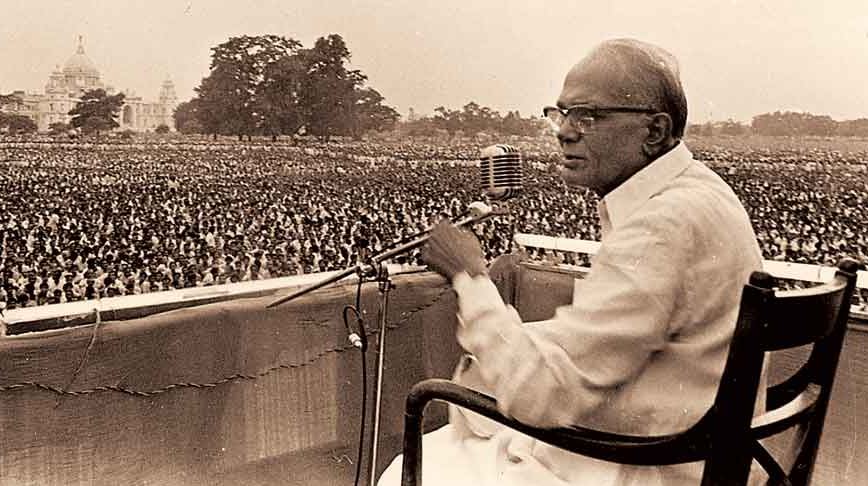
    Union Home Minister unveiled a 15-foot statue of Jayaprakash Narayan or JP on his 120th birth anniversary at the socialist icon’s birthplace, Sitab Diara village in Bihar’s Saran district.

    Who was Jayaprakash Narayan?

    • JP was born in 1902 in Bihar’s Sitab Diara, a village prone to frequent-flooding, after which his family moved to a village in Uttar Pradesh’s Balia district.
    • He quit college to join the non-cooperation movement, before going to study at the University of California, Berkeley, where he was influenced by the ideas of Karl Marx.

    Political affiliations

    • JP returned to India in 1929 and joined the freedom struggle and the Indian National Congress, upon the invitation of Jawaharlal Nehru and drawn by a speech by Maulana Abul Kalam Azad.
    • He went on to become the founding members of the Congress Socialist Party (CSP).
    • However after independence took it out of the Congress and formed the Socialist Party, which was merged with J B Kripalani’s Kisan Mazdoor Praja Party to form the Praja Socialist Party.

    Dissociation from active politics

    • While Nehru was keen on JP joining the Union government, JP sought to distance himself from electoral politics, opting to focus on social causes instead.
    • He was disillusioned with political parties and called for communitarian democracy.
    • Parties, he believed, were centralized and susceptible to moral and financial corruption.

    The JP movement

    • Students in Gujarat began demonstrating in late 1973, in response to mounting mess bills.
    • The protests became widespread in the state, with workers, teachers and several other groups joining in the movement, calling for a change in government.
    • JP saw the youth of Gujarat that had been able to bring about political change as an alternative route from electoral.
    • The protests against corruption grew widespread, and students of Bihar began their movement in March 1974.
    • The students approached JP, who left his self-imposed political exile and led the movement. At a rally in Patna he called for Sampoorna Kranti (Total Revolution).

    Opposition to the Emergency

    • When Indira Gandhi imposed an Emergency on June 25, 1975, JP shifted his focus to opposing the authoritarian rule and opposition parties looked to him for leadership.
    • The Socialists were naturally drawn to him ideologically, while the RSS and its political front the Jana Sangh sought to return to the mainstream, and were happy to be dissolved into the Janata Party that JP had formed.
    • JP is celebrated for launching a popular, mass movement against the Indira Gandhi government, which led to the formation of the Janata Party government in the 1977 general election.
    • This was the first non-Congress government in the country.

    Try this PYQ:

    Who among the following were the founders of the “Hind Mazdoor Sabha” established in 1948?

    (a) B. Krishna Pillai, E.M.S. Namboodiripad and K.C. George

    (b) Jayaprakash Narayan, Deen Dayal Upadhyay and M.N. Roy

    (c) C.P. Ramaswamy Iyer, K. Kamaraj and Veeresalingam Pantulu

    (d) Ashok Mehata, T.S. Ramanujan and G.G. Mehta


    [wpdiscuz-feedback id=”z8t4wjbqux” question=”Please leave a feedback on this” opened=”1″]Post your answers here.[/wpdiscuz-feedback]


    UPSC 2023 countdown has begun! Get your personal guidance plan now! (Click here)

  • Ponniyin Selvan and the Cholas

    In all the buzz around the Tamil film Ponniyin Selvan: 1 or PS1, a fictional period drama, a point of focus has been the Chola dynasty that the film is based on.

    Why in news?

    • A notable actor has spoke about the progressiveness of the Chola era.
    • He mentioned the architectural marvels and temples, the social setup of the time, and how cities were named after women.

    Behind the name- PS1

    • The fictional account of the Chola kingdom appeared in a weekly journal in the early 1950s and garnered popularity.
    • These were later compiled into a novel called ‘Ponniyin Selvan’, which became the inspiration for the movie, whose second part is due for release in 2023.

    Who were the Cholas?

    • The Chola kingdom stretched across present-day Tamil Nadu, Kerala, and parts of Andhra Pradesh and Karnataka around 9th to 12th century AD.
    • The dynasty was founded by the king Vijaylaya, described as a “feudatory” of the Pallavas.
    • Despite being a relatively minor player in the region among giants, Vijaylaya laid the foundation for a dynasty that would rule a major part of southern India.

    Might of the Cholas

    (1) Defense

    • One of the biggest achievements of the Chola dynasty was its naval power, allowing them to go as far as Malaysia and the Sumatra islands of Indonesia in their conquests.
    • The domination was such that the Bay of Bengal was converted into a “Chola lake” for some time.

    (2) Economy

    • While the extent of this domination is disputed, the Cholas had strong ties with merchant groups and this allowed them to undertake impressive naval expeditions.
    • In general, even merchant guilds, which had close ties to the court, had to hire their own guards because roads could be dangerous.

    (3) Culture

    • Another feature is how the practice of building grand temples, common to the dynasties of the region around this time, was ramped up in an unprecedented way by the Cholas, according to Kanisetti.
    • The grand Brihadeeswara temple of Thanjavur, built by the Cholas, was the largest building in India in that period.
    • Additionally, artworks and sculptures were commissioned by Chola kings and queens, including the famous bronze Nataraja idols.

    Women under the Cholas

    • The role of women in the royal family is being brought to focus given their impact on public life.
    • But that is not to suggest that ordinary women wielded equal power as men.
    • The royal women’s proximity to male power was valued, rather than women in general.

    Local annexations

    • When the Chola King Rajadhiraja came to power in 1044, he was able to “subdue” Pandyan and Kerala kings, and presumably to celebrate these victories performed the Ashvamedha sacrifice.
    • The Chola rulers sacked and plundered Chalukyan cities including Kalyani and massacred the people, including Brahmans and children.
    • They destroyed Anuradhapura, the ancient capital of the rulers of Sri Lanka.


    UPSC 2023 countdown has begun! Get your personal guidance plan now! (Click here)

  • SC takes up pleas against Places of Worship Act

    The Supreme Court has set the ball rolling on a series of petitions challenging the validity of the Places of Worship Act of 1991, a parliamentary law that protects the identity and character of religious places as on August 15, 1947.

    What are the petitions about?

    • A slew of petitions has been filed against the Act.
    • The Act has fixed a retrospective cut-off date illegally barring Hindus, Jains, Buddhists and Sikhs from approaching courts to re-claim their places of worship which were invaded and encroached.
    • The main objective of these petitions is to set right a historical wrong committed by barbaric invaders.

    Places of Worship Act, 1991

    • It was passed in 1991 by the P V Narasimha Rao-led government.
    • The law seeks to maintain the “religious character” of places of worship as it was in 1947 — except in the case of the Ram Janmabhoomi-Babri Masjid dispute, which was already in court.
    • The law was brought in at the peak of the Ram Mandir movement, exactly a year before the demolition of the Babri Masjid.
    • Introducing the law, then Home Minister S B Chavan said in Parliament that it was adopted to curb communal tension.

    What are its provisions?

    What are its provisions?

    • Anti-conversion: Section 3 of the Act bars the conversion, in full or part, of a place of worship of any religious denomination into a place of worship of a different religious denomination — or even a different segment of the same religious denomination.
    • Holiness of a place: Section 4(1) declares that the religious character of a place of worship “shall continue to be the same as it existed” on August 15, 1947.
    • Litigation: Section 4(2) says any suit or legal proceeding with respect to the conversion of the religious character of any place existing on August 15, 1947, pending before any court, shall abate — and no fresh suit or legal proceedings shall be instituted.
    • Exception for Ayodhya: Section 5 stipulates that the Act shall not apply to the Ramjanmabhoomi-Babri Masjid case, and to any suit, appeal or proceeding relating to it.

    Why is the law under challenge?

    • The cut-off date of August 15, 1947, is “arbitrary, irrational and retrospective” and prohibits Hindus, Jains, Buddhists, and Sikhs from approaching courts to “reclaim” their places of worship.
    • Such places, he argued, were “invaded” and “encroached” upon by “fundamentalist barbaric invaders”.
    • The right-wing politicians have opposed the law even when it was introduced, arguing that the Centre has no power to legislate on “pilgrimages” or “burial grounds” which is under the state list.
    • Another criticism against the law is that the cut-off is the date of Independence, which means that the status quo determined by a colonial power is considered final.


    UPSC 2023 countdown has begun! Get your personal guidance plan now! (Click here)

  • How India adopted its military flags and badges based on Lord Mountbatten’s suggestions?

    The new Naval Ensign (flag), which will be unveiled by PM in Kochi, has brought into focus the flags and ranks adopted by the Indian military after Independence.

    Do you know?

    The octagonal shape with twin golden borders draws inspiration from the seal of the great Indian emperor, Chhatrapati Shivaji Maharaj, whose visionary maritime outlook established a credible naval fleet

    Why in news?

    • Documents accessed from National Archives of India show that Lord Mountbatten, former Viceroy and Governor General of India, played a major role in suggesting new flags and rank badges.
    • This was when India was about to become a Republic on January 26, 1950.

    When did India switch from British-era flags and ranks?

    • The switch from British-era flags and ranks took place when India became a Republic (26th Jan, 1950).
    • Prior to that the flags and badges of ranks of the military were of the British pattern.
    • The new, Indian pattern of flags of Army, Navy and Air Force, and also the Regimental Flags of the Army and badges of ranks of all three services were adopted on January 26, 1950.
    • The ‘Kings Commission’ granted to Indian military officers was also changed to ‘Indian Commission’ on the same date.
    • And at a subsequent date the King’s Colours of the various Regiments were laid to rest in Indian Military Academy (IMA), Dehradun.

    When did Lord Mountbatten come into the picture?

    • The national archives have files, dated 1949, that include a detailed note from Lord Mountbatten regarding names, flags and ranks of the armed forces, and then PM Nehru’s letter to the then Defence Minister Baldev Singh regarding Mountbatten’s suggestions.
    • The note, archives reveal, was given to Nehru by Lord Mountbatten when the two met in London.
    • The note was forwarded from the PM’s office to the office of then Governor General C Rajagopalachari on May 24, 1949, stating that it is on the issue of ‘Names and Insignia of Indian Armed Forces’ after India becomes a Republic.
    • The letter also stated that the note should be placed before the Governor General.

    What did Lord Mountbatten say in the note?

    • The note begins by saying that consequent to becoming a Republic the word ‘Royal’ shall be dropped from India’s Army, Navy and Air Force.
    • Mountbatten strongly recommended that no other word like ‘State’ of ‘Republican’ should replace the word ‘Royal’.
    • This was because it would have the effect of separating the forces of India psychologically from the other services in the Commonwealth.
    • He further suggested in the letter that the Crown should be replaced from the insignias and replaced by the “three lions of Ashoka”.
    • Regarding the Naval Ensign, he said that all Commonwealth navies fly the same flag which consists of a large white flag with a red-cross and Union Jack in the upper corner nearer the staff and is known as the ‘White Ensign’.
    • The new Ensign, the note suggested, should continue to have the red-cross but the Indian national flag should replace the Union Jack.
    • He suggested this to maintain commonality with the Commonwealth flags.

    What changes did Mountbatten suggest for uniforms?

    • He strongly urged that existing uniforms should be changed as little as possible.
    • He added that the Crown worn on badges of ranks of Majors and above should be replaced by the “three lions of Ashoka”.
    • The Star of the Order of the Bath should be replaced by Star of India or another form of star.
    • He also suggested that the crossed sword and baton on the badges of ranks of Generals should be retained.
    • The former Viceroy advocated retaining the stripes of rank in Navy and Air Force saying these were internationally almost the same.

    How did the Indian government react to Mountbatten’s suggestions?

    • Nehru wrote to the then defence minister in September 1949 saying that he agreed with the suggestions made by the former Governor General that there should be as little change as possible.
    • The then PM particularly mentioned the changes suggested by Mountbatten for the Navy.
    • Then Governor General C Rajagopalachari also wrote back to Nehru in May 1949 itself agreeing to Mountbatten’s suggestions.
    • In the end, Mountbatten’s suggestions were virtually all accepted and implemented with effect from January 26, 1950.


    UPSC 2023 countdown has begun! Get your personal guidance plan now! (Click here)

  • In news: Sittanavasal Rock Cave Temple

    Sittanavasal

    The Sittanavasal Rock Cave Temple, a major centre of Jain influence for 1,000 years just before the Christian era, is in need of better upkeep.

    Sittanavasal

    • Sittanavasal is a small hamlet in Pudukkottai district of Tamil Nadu, India.
    • It is known for the Sittanavasal Cave, a 2nd-century Jain cave complex. From the 7th to the 9th century A.D., the village flourished as a Jain centre.
    • Sittanavasal is the name used synonymously for the hamlet and the hillock that houses the:
    1. Arivar Kovil (temple of Arihants — Jains who conquered their senses)
    2. Ezhadipattam (a cavern with 17 polished rock beds), megalithic burial sites and the
    3. Navachunai tarn (small mountain lake) with a submerged shrine

    What makes it special?

    • The artwork on the ceiling of the sanctum and the ardha mandapam of Arivar Kovil is an early example of post-Ajanta cave paintings of the fourth to sixth centuries.
    • It was also done using the fresco-secco technique (a process that dispenses with preparation of the wall with wet plaster).

    Features of the cave paintings

    • The ceiling paintings show ‘bhavyas’ (exalted souls who work to achieve moksha or spiritual liberation) enjoying themselves in a pool, full of lotuses; today much of it is obscured by patchy plastering.
    • Faint outlines linger of dancing girls on the ‘ardha mandapam’ pillars.
    • The colours are a mixture of plant dyes and mineral elements such as lime, lamp black, and clay pigments such as ochre for yellow and terre verte for the greyish-green tints.

    Why in news now?

    • Unrestricted public access and general exposure to the elements have led to a gradual fading away of these paintings.
    • At the Ezhadipattam, inscriptions have been vandalised beyond recognition.

    Also try this PYQ:

    Q.There are only two known examples of cave paintings of the Gupta period in ancient India. One of these is paintings of Ajanta caves. Where is the other surviving example of Gupta paintings?

    (a) Bagh caves

    (b) Ellora caves

    (c) Lomas Rishi cave

    (d) Nasik caves


    [wpdiscuz-feedback id=”qd62vk8saj” question=”Please leave a feedback on this” opened=”1″]Post your answers here.[/wpdiscuz-feedback]


    UPSC 2023 countdown has begun! Get your personal guidance plan now! (Click here)

  • What is Ambedkar Tourist Circuit?

    The Central government has announced a special tourist circuit encompassing five key sites associated with Dr. B.R. Ambedkar.

    Why in news?

    • Activists have urged that Mahad, located in Raigad District of Maharashtra, famous for Mahad Lake Satyagraha should also be included in the proposed circuit.

    Ambedkar Circuit

    • The five cities in the tourist circuit as announced are Mhow (his birthplace), London (where he resided and studied), Nagpur (also studied here), Delhi (where he passed away) and finally Mumbai (where he was cremated).
    • With a special AC train, the government is looking to trace the footsteps of Ambedkar in India by giving better connectivity to four of these spots.
    • The idea is to attract tourists beyond the Dalit community, who mostly visit these places as a pilgrimage.
    • The journey will include meals, ground transportation, and entry to the sites.

    About the sites

    1. Janma Bhoomi– Ambedkar’s birthplace in Madhya Pradesh’s Mhow
    2. Shiksha Bhoomi– the place in London where he stayed while studying in the UK
    3. Deeksha Bhoomi– the place in Nagpur where he embraced Buddhism
    4. Mahaparinirvan Bhoomi- the place of his demise in Delhi and
    5. Chaitya Bhoomi- the place of his cremation in Mumbai

    Back2Basics: Tourism Circuits

    • The government had identified 15 tourist circuits under the Swadesh Darshan Scheme in 2014-15.
    • Besides the Ramayana and Buddhist Circuits, others include Coastal Circuit, Desert Circuit, Eco Circuit, Heritage, North East, Himalayan, Sufi, Krishna, Rural, Tribal, and Tirthankar Circuits.
    • In terms of train collaboration, the Ramayana, Buddhist, and North East Circuits are already active, while Ambedkar will be fourth.


    UPSC 2023 countdown has begun! Get your personal guidance plan now! (Click here)
  • How Hyderabad became a part of India?

    The Government of India began its year-long celebrations for the ‘Telangana Liberation Day’ on September 17, marking how on the same day in 1948, the state of Hyderabad got its independence from Nizam’s rule, as said in a press release.

    Why in news?

    • From 1911 to 1948, Nizam Mir Usman Ali, the last Nizam of Hyderabad, ruled the state composed of Telangana and parts of present-day Karnataka and Maharashtra (Marathwada).
    • While these states mark the Liberation Day officially, Telangana has never done so.

    Hyderabad’s accession into India: A backgrounder

    (1) Reluctance of Nizam

    • At the time of India’s independence, British India was a mix of independent kingdoms and provinces that were given the options of joining India, Pakistan, or remaining independent.
    • One among those who took a long time to make a decision was the Nizam of Hyderabad.
    • Believed to be one of the richest people in the world at the time, the Nizam was not ready to let go of his kingdom.

    (2) Sufferings for the people

    • Meanwhile, the majority population of Hyderabad state was far from enjoying the same kind of wealth as the Nizam did.
    • The feudal nature of the state at the time caused the peasant population to suffer high taxes, indignities of forced labour, and various other kinds of exploitation at the hands of powerful landlords.

    (3) Lingual friction

    • There was also a demand by the Andhra Jan Sangham for Telugu to be given primacy over Urdu.
    • By the mid-1930s, apart from a reduction in land revenue rates and the abolition of forced labour, introducing Telugu in local courts became another important issue.

    (4) Mass movement

    • Soon after the organisation became the Andhra Mahasabha (AMS), and Communists became associated with it.
    • Together, the two groups built a peasant movement against the Nizam that found local support.

    Who were the Razakars and the Ittehad-ul-Muslimeen?

    • By October 1946, the Nizam banned the AMS.
    • A close aide of the Nizam, Qasim Razvi, leader of the Ittehad-ul-Muslimeen, became closely involved in securing the Nizam’s position.
    • The Ittehad-ul-Muslimeen was a political outfit that sought a greater role for Muslims in the early 20th century, but after Razvi took over the organisation, it became extremist in its ideology.
    • It was under him that a militia of the ‘Razakars’ was formed to suppress the peasant and communist movement, launching a brutal attack.
    • Around this time, the Standstill Agreement was also signed between the Nizam and the Indian government in November 1947, declaring a status quo.
    • This meant that until November 1948, the Nizam could let things be as they were and not finalise a decision as negotiations with the Indian union continued.

    How did the situation escalate to military action?

    • In the first half of 1948, tensions grew as the razakar leaders and the government in Hyderabad began to speak of war with India and began border raids with Madras and Bombay Presidencies.
    • As a response, India stationed troops around Hyderabad and began to ready itself for military intervention.

    India commences Operation Polo

    • With the Nizam importing more arms and the violence of the Razakars approaching dangerous proportions, India officially launched ‘Operation Polo’ on September 9 and deployed its troops in Hyderabad four days later.
    • On September 17, three days after the deployment, the Nizam surrendered and acceded to the Indian Union in November.
    • India has decided to be generous and not punish the Nizam.
    • He was retained as the official ruler of the state and given a privy purse of five million rupees.

    The legacy of Operation Polo

    • It has also been said that the army’s march into Hyderabad did not just target the razakars and the radical extremist forces.
    • A four-member goodwill mission led by Pandit Sunderlal was constituted by the then Prime Minister.
    • At the request of then PM Nehru, a month was spent in Hyderabad in November 1948 where evidence was gathered and at the end, a report was filed.
    • Estimated thousands of people died in communal violence during the military action.

    Why debate now?

    • The debate about whether the day of independence was about integration into the Indian union after months of negotiations, or liberation from an autocratic monarch has continued.
    • Hyderabad’s history continues to affect today’s politics.
    • After Qasim Rizvi left India for Pakistan, the organisation was handed over to Abdul Wahed Owaisi, the grandfather of a present day Parliamentarian.
    • And communal-sectarian politics is storming up the city of Hyderabad leading to religious tensions.


    UPSC 2023 countdown has begun! Get your personal guidance plan now! (Click here)