💥UPSC 2026, 2027, 2028 UAP Mentorship (March Batch) + Access XFactor Notes & Microthemes PDF

Type: Species

  • Wildlife Conservation Efforts

    IUCN Redlist Update of Indian Species

    Why in the News?

    In the latest State of India’s Birds (SoIB) 2025 report and IUCN assessment, four bird species dependent on these ecosystems have been uplisted, reflecting alarming habitat loss and population decline.

    Bird Species Uplisted by IUCN:

    1. Indian Courser (Cursorius coromandelicus):
      • Endemic to the Indian Subcontinent.
      • Uplisted from Least Concern → Near Threatened due to loss of grasslands and fallow land.
    2. Indian Roller (Coracias benghalensis): Uplisted to Near Threatened; impacted by habitat conversion and electrocution from power lines.
    3. Rufous-tailed Lark (Ammomanes phoenicura): Uplisted to Near Threatened; declining due to intensive agriculture and land-use change.
    4. Long-billed Grasshopper-Warbler (Locustella major): Uplisted to Endangered; severely impacted by loss of reedbeds and open scrub habitat.

    About State of India’s Birds (SoIB) Assessment:

    • Overview: SoIB is conducted by the State of India’s Birds Partnership, a consortium of 13 government and non-government institutions, including BNHS, WII, ZSI, SACON, WTI, WWF-India, ATREE, NCF, FES, Wetlands International – South Asia, NCBS, and NBA.
    • Coverage: Of 1,360 bird species assessed globally, 12 species were from India.
    • Findings:
      • 8 species downlisted (showing improved conservation trends).
      • 4 species uplisted, highlighting heightened risk of extinction.
    • The report underscores the fragility of India’s open-country habitats, which support a unique but shrinking avifaunal diversity.
  • Wildlife Conservation Efforts

    Snow Leopards are the world’s least genetically diverse Big Cat

    Why in the News?

    A new Stanford University-led study has revealed that the Snow Leopard has the lowest genetic diversity among all big cats, even lower than the Cheetah.

    Snow Leopards are the world’s least genetically diverse Big Cat

    About Snow Leopard:

    • Overview: Also called the “ghost of the mountains”; Belongs to the genus Panthera but genetically distinct from tigers and leopards, with unique adaptations for alpine life.
    • Physical Features: Thick pale-gray fur with rosettes, powerful hind limbs, and a long, muscular tail that aids balance and warmth.
    • Habitat: Found at altitudes between 3,000–5,500 metres, thriving in rugged, snow-covered mountain ranges and alpine meadows.
    • Geographical Distribution:
      • In India: Present in Ladakh, Himachal Pradesh, Uttarakhand, Sikkim, Arunachal Pradesh, and parts of Jammu & Kashmir.
      • Globally: Distributed across Central and South Asian mountain systems, including the Himalayas, Pamirs, and Tien Shan.
    • Population Status:
      • Global estimate: 4,500–7,500 individuals.
      • India: Approximately 718 individuals, representing 10–15% of the global total.
    • Conservation Status:
      • IUCN Red List: Vulnerable
      • CITES: Appendix I
      • Wildlife (Protection) Act, 1972 (India): Schedule I
    • National Conservation Measures:
      • Project Snow Leopard (2009): Integrates community participation in Himalayan conservation.
      • SECURE Himalaya Project (GEF–UNDP): Focuses on sustainable ecosystem management.
      • Himalaya Sanrakshak (2020): Enlists local guardians for high-altitude habitats.
      • National Protocol on Population Assessment (2019):  Ensures standardized monitoring.

    Ecological Significance:

    • Apex Predator Role: Serves as the top carnivore in the Himalayan and Central Asian alpine ecosystems, maintaining the balance between herbivores like blue sheep, ibex, and argali.
    • Indicator of Ecosystem Health: Its presence reflects ecosystem integrity, as it thrives only in undisturbed, well-connected, prey-rich habitats.
    • Climate Regulation: Snow leopard landscapes, glaciers, permafrost zones, and alpine grasslands, act as major carbon sinks and regulate water flows to nearly two billion people across Asia.
    • Biodiversity Link: By controlling herbivore populations, it prevents overgrazing, thus preserving alpine vegetation and soil stability.
    • Cultural and Economic Value: Revered in Himalayan folklore and central to eco-tourism-based livelihoods, symbolizing coexistence between humans and nature.
    • Transboundary Importance: Its habitat spans across 12 range countries, making it a flagship species for international cooperation under the Global Snow Leopard and Ecosystem Protection Programme (GSLEP).
    [UPSC 2012] Consider the following:

    1. Black-necked crane 2. Cheetah 3. Flying squirrel 4. Snow leopard

    Which of the above are naturally found in India? Options: (a) 1, 2 and 3 only (b) 1, 3 and 4 only* (c) 2 and 4 only (d) 1, 2, 3 and 4


  • New Species of Plants and Animals Discovered

    News specie “Chlorophytum vanapushpam” found

    Why in the News?

    Researchers have discovered a new species of perennial herb Chlorophytum vanapushpam from the Vagamon hills of Idukki district, Kerala.

    Chlorophytum vanapushpam

    About Chlorophytum vanapushpam:

    • Discovery & Location: Newly discovered perennial herb of the Asparagaceae family, identified in Vagamon and Neymakkad hills (Idukki, Kerala) within the Western Ghats biodiversity hotspot.
    • Name & Meaning: “Vanam” (forest) + “Pushpam” (flower) = forest flower.
    • Publication & Context: Reported in Phytotaxa, reaffirming the Western Ghats as the centre of origin for the Chlorophytum genus (18 Indian species).
    • Related Species: Closely allied to C. borivilianum (safed musli) but differs in form and lacks underground tubers.

    Key Features:

    • Growth Form: Herb up to 90 cm tall, clinging to rocky hill slopes.
    • Habitat & Range: Found between 700 m – 2,124 m elevation in moist, rocky terrains.
    • Leaves & Flowers: Slender, grass-like leaves; white clustered blossoms.
    • Reproduction: Seeds 4–5 mm; flowering and fruiting Sep–Dec.
    [UPSC 2016] Recently, our scientists have discovered a new and distinct species of banana plant which attains a height of about 11 metres and has orange-coloured fruit pulp.

    In which part of India has it been discovered?

    Options: (a) Andaman Islands * (b) Anaimalai Forests (c) Maikala Hills (d) Tropical rain forests of northeast


  • New Species of Plants and Animals Discovered

    New species of finless Snake Eel named after Kanniyakumari

    Why in the News?

    ICAR- National Bureau of Fish Genetic Resources (NBFGR) researchers in Kochi have discovered a new finless snake eel species, Apterichtus kanniyakumari, named after Kanniyakumari district.

    New species of finless Snake Eel named after Kanniyakumari

    About Finless Snake Eel (Apterichtus kanniyakumari):

    • Location: Discovered off the Colachel coast, Kanniyakumari (Tamil Nadu), at ~100 m depth during deep-sea trawling.
    • Etymology: Named kanniyakumari in honour of the district’s cultural, linguistic, historical, and geographical heritage.
    • Taxonomy: Belongs to the genus Apterichtus, family Ophichthidae, commonly known as finless snake eels.
    • Morphological traits: Golden-yellow body, pale white ventral head with yellow jaw lines, three black blotches (behind eyes, at rictus, behind rictus origin), conical uniserial teeth, 3 preopercular & 9 supratemporal pores.
    • Molecular confirmation: Mitochondrial CO1 gene analysis shows it as a distinct clade, closely related to Apterichtus nanjilnaduensis.
    • Significance: Marks the 16th new species described from the Indian coast by NBFGR; adds to India’s marine biodiversity records.
    [UPSC 2016] Recently, our scientists have discovered a new and distinct species of banana plant which attains a height of about 11 meters and has orange coloured fruit pulp. In which part of India has it been discovered?

    (a) Andaman Islands *

    (b) Anaimalai Forests

    (c) Maikala Hills

    (d) Tropical rain forests of northeast


  • New Species of Plants and Animals Discovered

    Ant Queens giving birth to different species

    Why in the News?

    A groundbreaking study published in Nature (2025) has revealed that Messor ibericus, a Mediterranean harvester ant species, can produce male offspring of a completely different species, Messor structor.

    Ant Queens giving birth to different species

    About the Specie Messor ibericus:

    • Overview: A Mediterranean harvester ant, widely distributed across Southern Europe, known for its grain-harvesting behaviour and large colonies.
    • Hybrid Workers: All workers are hybrids, carrying DNA from both Messor ibericus and Messor structor.
    • Cross-Species Male Production: About 10% of queen’s eggs develop into pure Messor structor males, even without nearby structor colonies.
    • Genetic Signature: These males retain Messor ibericus mitochondrial DNA, proving maternal origin.
    • Reproductive Strategy: As per the Nature study:
      • Ibericus sperm produces new queens.
      • Structor sperm produces hybrid workers and additional structor males.
    • Evolutionary Significance: First documented case of a species naturally producing offspring of another species, challenging classical species concepts.
    • Colony Advantage: By producing both hybrid workers and pure structor males, queens secure compatible mates for future generations, sustaining both lineages.
    [UPSC 2024] Which one of the following shows a unique relationship with an insect that has coevolved with it and that is the only insect that can pollinate this tree?

    Options:

    (a) Fig* (b) Mahua (c) Sandalwood (d) Silk cotton


  • Innovations in Biotechnology and Medical Sciences

    Researchers develop Red Ivy Plant-Based Wound-Healing Pad

    Why in the News?

    Researchers at JNTBGRI has developed a multifunctional wound-healing pad using nanomaterials, inspired by the red ivy plant (Strobilanthes alternata), traditionally used in folk medicine.

    About the Red Ivy Plant:

    • Overview: Strobilanthes alternata, locally called murikooti pacha, belonging to the Acanthaceae family.
    • Habitat: Found abundantly in tropical regions, including India.
    • Traditional Use: Used in folk medicine for treating cuts and wounds.
    • Scientific Discovery: JNTBGRI, Palode isolated acteoside, a natural bioactive compound, for the first time in this plant.
    • Therapeutic Use: Acteoside, known elsewhere for medicinal activity, showed high wound-healing efficacy at 0.2% concentration in red ivy.

    Features of the Wound-Healing Pad:

    • Design: India’s first multifunctional herbal wound dressing pad, combining traditional knowledge with nanotechnology.
    • Components: Electro-spun nanofiber layer (biodegradable, porous, antimicrobial barrier); Acteoside + neomycin sulfate blend (healing and infection control); Sodium alginate sponge (absorbs exudates); Activated carbon layer (controls odour).
    • Significance: Affordable, scalable, and a model of herbal medicine integrated with modern nanotech innovation.
    [UPSC 2021] Which one of the following is used in preparing a natural mosquito repellent?

    Options:

    (a) Congress grass (b) Elephant grass (c) Lemongrass* (d) Nut grass


  • Wildlife Conservation Efforts

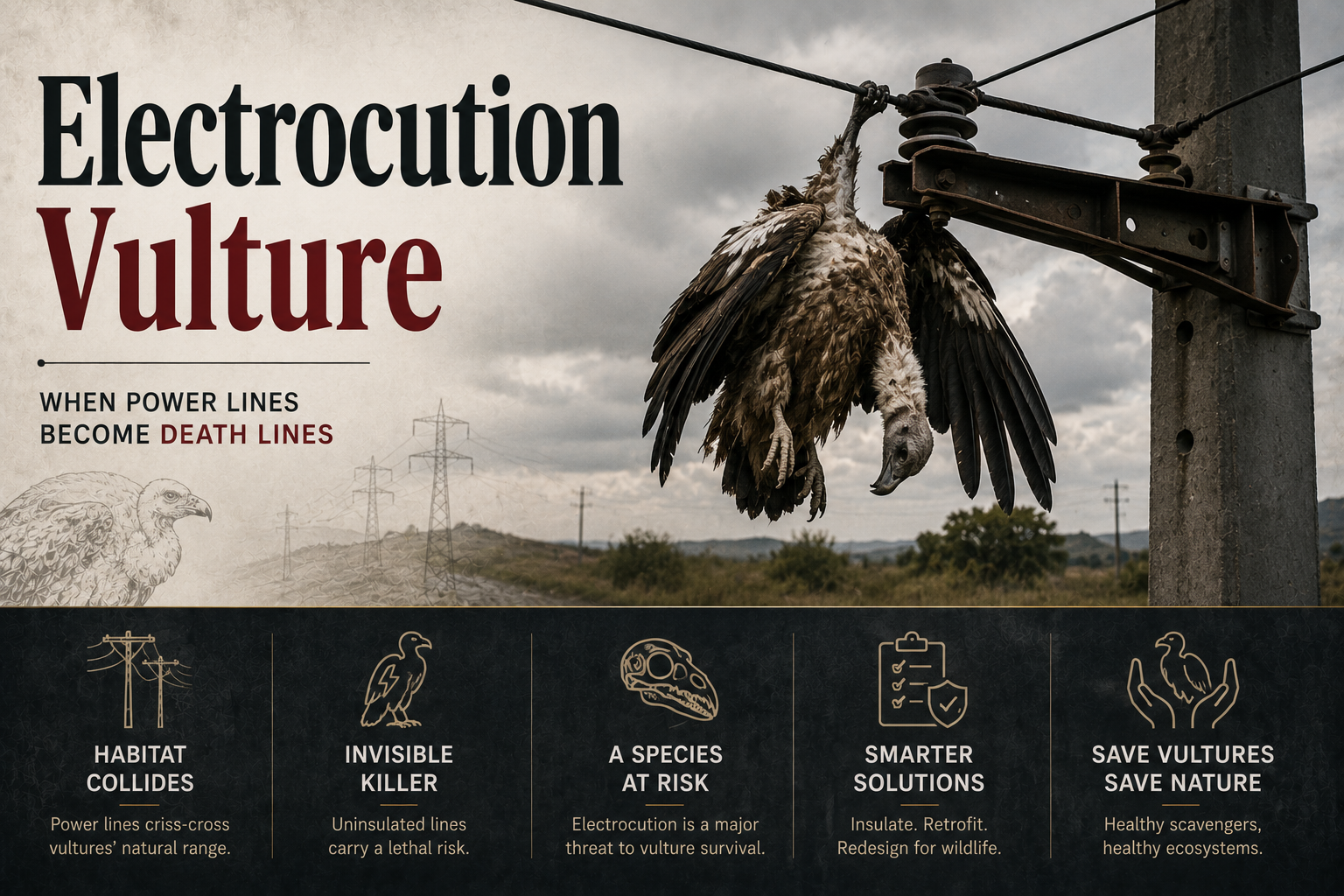
    Vultures and Pandemic Prevention

    Why in the News?

    Vultures, vital for carcass disposal and disease control, are key to pandemic preparedness.

    About Vulture Species in India:

    • Overview: Vultures are among 22 global species of large scavenger birds, found mostly in tropics and subtropics.
    • Ecological Role: Serve as nature’s garbage collectors, preventing disease spread and maintaining balance in ecosystems.
    • Indian Diversity: India hosts 9 species — Oriental white-backed, Long-billed, Slender-billed, Himalayan, Red-headed, Egyptian, Bearded, Cinereous, and Eurasian Griffon.

    Vultures and Pandemic Prevention

    Distribution and Population Trends:

    • Historic Abundance: In the 1980s, India had over 40 million vultures, often in large groups near carcass dumps.
    • Population Crash: Since the 1990s, numbers have declined by over 95%, mainly due to diclofenac poisoning from veterinary use.
    • Flyway Connection: Vultures are part of the Central Asian Flyway (CAF), linking breeding sites in Central Asia with South Asia’s wintering zones.
    • Global Relevance: The CAF spans 30+ countries, making vulture conservation a regional and international public health concern.

    Vultures and Pandemic Preparedness:

    • Carcass Disposal: By consuming dead animals, vultures stop spread of pathogens such as anthrax, Clostridium botulinum, rabies.
    • Bio-Monitor Role: As first responders at carcasses, they act as natural surveillance systems, reducing risks of zoonotic spillover.
    • Conservation Gap: Protection of vultures is rarely included in One Health strategies, despite being low-cost compared to pandemic response.
    • Community Involvement: Local communities coexisting with vultures can aid in awareness, conservation, and disease monitoring, but remain underutilised.
    [UPSC 2012] Vultures which used to be very common in Indian countryside some years ago are rarely seen nowadays. This is attributed to:

    (a) the destruction of their nesting sites by new invasive species disease among them

    (b) a drug used by cattle owners for treating their diseased cattle persistent and fatal*

    (c) scarcity of food available to them

    (d) a widespread, persistent and fatal disease among them


  • Wildlife Conservation Efforts

    Why are Killer Whales offering fresh prey to humans?

    Why in the News?

    A new study in the Journal of Comparative Psychology documents rare instances of Killer Whales (Orcinus orca) sharing freshly killed prey with humans.

    Why are Killer Whales offering fresh prey to humans?

    About Killer Whales (Orcinus orca):

    • Overview: Largest member of the dolphin family (Delphinidae), often called “wolves of the sea”.
    • Apex predators: At the top of the marine food chain.
    • Physical traits:
      • Black dorsal side, white underside, distinctive eye patch, saddle patch behind dorsal fin.
      • Can grow up to 9 m, weigh over 5,000 kg, and swim up to 54 km/hr.
    • Social structure: Live in pods led by a matriarch; highly coordinated hunters using complex tactics.
    • Distribution: Found in all oceans worldwide, from polar to tropical seas, in both open and coastal waters.
    • IUCN – Data Deficient: But many regional populations face threats from climate change, prey decline, and pollution.

    Why do they offer their fresh prey to humans?

    • Study Findings (2004–2024):
      • Killer whales were observed offering whole prey to humans (fish, birds, mammals, etc.) in multiple oceans.
      • In most cases, they waited for a human response before reclaiming or abandoning prey.
    • Possible Reasons:
      • Exploration/Curiosity: Reflects their advanced cognition and social curiosity; a way to learn about humans.
      • Prosocial Behaviour: They are among the few species that share food within and outside their groups.
      • Play Theory Rejected: Behaviour not limited to juveniles; adults also involved, often with whole prey.
      • Scientific Thinking Analogy: Behaviour resembles “asking questions” and testing human reactions — a form of exploratory intelligence.
      • Machiavellian Behaviour: Could sometimes be manipulative, as killer whales are known to steal fish and disrupt vessels.
    [UPSC 2023] Which one of the following makes a tool with a stick to scrape insects from a hole in a tree or a log of wood?

    Options: (a) Fishing cat (b) Orangutan * (c) Otter (d) Sloth bear


  • New Species of Plants and Animals Discovered

    Ice Age-era Dragon Fly rediscovered

    Why in the News?

    Odonatologists have reconfirmed the presence of the elusive dragonfly species Crocothemis erythraea in the southern Western Ghats.

    About Crocothemis erythraea Dragonfly:

    • Species Type: A rare dragonfly species, usually found in Europe, Asia, and the Himalayas.
    • Recent Finding: Reconfirmed in the Western Ghats, specifically in Kerala and Tamil Nadu high ranges.
    • Comparison: Closely resembles the common lowland species Crocothemis servilia, leading to earlier misidentifications.
    • Habitat Preference: Inhabits cooler, high-altitude areas above 550 metres.
    • Historical Origin: Likely spread to South India during the Ice Age and survived in montane habitats such as Sholas and grasslands.

    Significance of the Discovery:

    • Biodiversity Insight: Demonstrates how ancient climate changes influenced current biodiversity patterns.
    • Ecological Importance: Reinforces the Western Ghats’ status as a biodiversity hotspot of global value.
    • Conservation Message: Highlights the need to protect sensitive high-altitude habitats like Sholas and montane grasslands.
    • Scientific Contribution: Adds to India’s growing record of documenting and conserving rare species.
    [UPSC 2024] The organisms Cicada, Froghopper and Pond skater are:

    Options: (a) Birds (b) Fish (c) Insects* (d) Reptiles


  • Wildlife Conservation Efforts

    Saltwater Crocodile Population Survey in Sundarbans

    Why in the News?

    A 2025 survey by the West Bengal Forest Department shows an increase in saltwater crocodile population in the Sundarbans Biosphere Reserve (SBR).

    Saltwater Crocodile Population Survey in Sundarbans

    About Saltwater Crocodile (Crocodylus porosus):

    • Largest living reptile and the largest of all crocodilians.
    • Males grow much larger than females; females usually 2.5–3 m in length.
    • Habitat: mangrove forests, swamps, rivers, and coastal waters; tolerant of varying salinity.
    • Distribution in India: Odisha, West Bengal (Sundarbans), Andaman & Nicobar Islands.
    • Behaviour: Apex predator, feeds on carcasses and diverse prey; communicates through barks, hisses, growls, chirps.
    • Conservation Status:
      • IUCN Red List: Least Concern.
      • CITES: Appendix I (except populations of Australia, Indonesia, PNG → Appendix II).
      • Wildlife Protection Act (1972): Schedule I.
    • Conservation Efforts: Bhagabatpur Crocodile Project (1976, West Bengal) – breeding and conservation programme; 577 crocodiles released till 2022.

    Other Crocodile Species in India:

    • Gharial: Critically Endangered; survives in only 2% of former range; Found in small stretches of Chambal and a few other rivers.
    • Mugger/Marsh Crocodile: Vulnerable; found in freshwater lakes, rivers, marshes.