💥Join UPSC 2027,2028 Mentorship (July Batch) + XFactor Notes & Microthemes PDF

Distribution: yearly

  • [Burning Issue] Reorienting MGNREGA in times of COVID


    Termed in a moment of hubris by present government as ‘“a living monument of UPA’s failures”, the government has fallen back on this Scheme in this moment of crisis. This piece is an attempt to understand the silent success of the Mahatma Gandhi National Rural Employment Guarantee Act (MGNREGA) which was allegedly dying a slow death.

    Context

    Due to the sudden lockdown and resultant job losses, over 1 crore people have returned to their homes, some walking hundreds of kilometres, others using all conceivable means of transport. A sizeable number may take several months to return to the cities and towns to earn a living. This extraordinary scenario of a pandemic poses a formidable challenge for the governments of the ‘home states’ to arrange suitable job opportunities for securing their livelihoods.

    In this bleak scenario, MGNREGA is providing a ray of hope.

    The mighty MGNREGA

    • The MGNREGA stands for Mahatma Gandhi National Rural Employment Guarantee Act of 2005.
    • This is labour law and social security measure that aims to guarantee the ‘Right to Work’.
    • The act was first proposed in 1991 by P.V. Narasimha Rao.

    The objectives of the MGNREGA are:

    • To enhance the livelihood security of the rural poor by generating wage employment opportunities.
    • To create a rural asset base which would enhance productive ways of employment, augment and sustain a rural household income.

    Anyways, what is so Unique about it?

    • MGNREGA is unique in not only ensuring at least 100 days of employment to the willing unskilled workers, but also in ensuring an enforceable commitment on the implementing machinery i.e., the State Governments, and providing a bargaining power to the labourers.
    • The failure of provision for employment within 15 days of the receipt of job application from a prospective household will result in the payment of unemployment allowance to the job seekers.
    • Employment is to be provided within 5 km of an applicant’s residence, and minimum wages are to be paid.
    • Thus, employment under MGNREGA is a legal entitlement.

    Constitutional goals of MGNREGA: The idealistic edge
    1) Implementation of DPSP

    • The MGNREGA aims to follow the DPSPs enunciated in Part IV of the Constitution of India.
    • The law by providing a ‘right to work’ is consistent with Article 41 that directs the State to secure to all citizens the right to work.
    • The statute also seeks to protect the environment through rural works which is consistent with Article 48A that directs the State to protect the environment.
    • It also follows Article 46 that requires the State to promote the interests of and work for the economic uplift of the SCs and STs and protect them from discrimination and exploitation.
    • Article 40 mandates the State to organise village panchayats and endow them with such powers and authority as may be necessary to enable them to function as units of self-government.
    • Conferring the primary responsibility of implementation on Gram Panchayats, the Act adheres to this constitutional principle.

    2) Implementation of FRs

    • In accordance with the Article 21 of the Constitution of India that guarantees the right to life with dignity to every citizen of India, this act imparts dignity to the rural people through an assurance of livelihood security.
    • The FRs enshrined in Article 16 of the Constitution of India guarantees equality of opportunity in matters of public employment.

    The REAL Issues crippling MGNREGA

    On ground, policies and schemes do depart from their idealistic purposes. Go through these Issues to understand HOW?

    1) Insufficient budgetary allocations – No Money!

    • MGNREGA’s success at the ground level is subject to proper and uninterrupted fund flow to the states.
    • Increase in the nominal budget but actual budget (after adjusting inflation) decreased over the years.
    • Rs 61,500 crore has been allocated for the MGNREGA for the year 2020-21, down by more than 13 per cent from the total estimated expenditure for 2019-20 which was at Rs 71,001.81 crore.

    2) Approved Labour Budget Constraints

    • The Centre through the arbitrary “Approved Labour Budget” has reduced the number of days of work and put a cap on funds through the National Electronic Fund Management System
    • According to Ne-FMS guidelines, states won’t be allowed to generate employment above the limits agreed by Approved labour Budget.

    3) Not so attractive wages rate

    • Currently, MGNREGA wage rates of 17 states are less than the corresponding state minimum wages.
    • The ridiculously low wage rates have resulted in a lack of interest among workers in working for MGNREGA schemes, making way for contractors and middlemen to take control, locally.

    4) Delay in wage (Not so attractive) payments

    • Under the MGNREGA, a worker is entitled to get his or her due wages within a fortnight of completion of work, failing which the worker is entitled to the compensation.
    • As of 2016-17, the total amount of wage pending is Rs. 11000 crore.
    • Even the Gram Rozgar Sevak, who is the backbone of the entire scheme, who works part-time, living in the same village, does not get paid on time.

    5) No-work situations are rising

    • None of the states was able to provide full 100 days employment as mentioned in the scheme.
    • Even though the scheme aims at providing 100 days of guaranteed employment, below 50 days of employment was actually provided an average at an all-India level in FY 18.

    6) Data manipulations by authorities

    • A recent study has found that data manipulation in the MGNREGA is leading to gross violations in its implementation.
    • Numerous ground reports across the country suggest that because of a funds crunch, field functionaries do not even enter the work demanded by labourers in the MGNREGA database.

    7) Non-purposive spending and corruptions

    • Many works sanctioned under MGNREGA often seem to be non-purposive.
    • Quite often, they are politically motivated hotspots to create rampant corruption by dominant sections of the local population.
    • Even social audits of such projects are locally manipulated.

    8) Workers penalized for administrative lapses

    • The ministry withholds wage payments for workers of states that do not meet administrative requirements within the stipulated time period (for instance, submission of the previous financial year’s audited fund statements, utilization certificates, bank reconciliation certificates etc).
    • There is no logical or legal explanation for this bizarre arrangement. It is beyond any logic as to why workers would be penalized for administrative lapses.

    9) Genuine job cards being deleted

    • Genuine job cards are being randomly deleted as there is a huge administrative pressure to meet 100 per cent DBT implementation targets in MGNREGA.
    • In states like Jharkhand, there are multiple examples where the districts had later requested to resume job cards after civil society interventions into the matter.

    10) Too much centralization weakening local governance

    • A real-time MIS-based implementation and a centralised payment system has further left the representatives of the Panchayati Raj Institutions with literally no role in implementation.
    • It has become a burden as they hardly have any power to resolve issues or make payments.

    11)  Local priorities being ignored

    • MGNREGA could be a tool to establish decentralized governance. But, with the administration almost dictating its implementation, it is literally a burden now for the people and especially for the local elected representatives.
    • The Gram Sabhas and gram panchayats’ plans are never honoured. This is a blatant violation of the Act as well.

    Dark Knight Rises: MGNREGA in times of COVID

    Within days, India has realized, political friend and foe alike, right-wing egotist and left-wing activist alike, that the world’s largest social welfare scheme, operationalised by UPA 1 in 2006 is a rare lifeline, almost as if designed for times of extreme adversity.

    The importance of the MGNREGA scheme is now accepted by one and all. No wonder that with its hands tied due to Covid-19 crisis the state governments are struggling to ensure remunerative work in villages for the large workforce.

    The central government, too, after considering all options and in order to provide job support to the large workforce which has or is reaching native villages, has acted rationally and announced another Rs 40,000 crore allocation for the MGNREGA scheme.

    Highest registrations

    • MGNREGA data shows that job demand this May was the highest in eight years even as all the data for May is still pouring in.
    • Over 45 crore person days have been generated (2.63 crore households and 3.6 crore individuals have worked) in the 45 days of 2020-21 since works began on April 20.
    • Traditionally, the months of May and June have always witnessed the highest NREGA work demand because is the lean agriculture season after Rabi harvest and before Kharif sowing.

    Only viable option available

    • MGNREGA appears to be the primary hope of sustaining livelihood in almost all states the during a time of massive reverse migration due to the lockdown imposed in light of COVID-19.
    • MGNREGA is the only viable option at present to provide relief and work to the labourers.

    Some innovation in MGNREGA that can go a long way

    1) Looping in the skilled worker

    • First, there is a suggestion to use it to meet the wage cost of their employment in small and medium enterprises (SMEs).
    • Accordingly, skilled migrant workers may be placed in SMEs and their wages would be charged to MGNREGA.

    2) Including farm related works

    • In the last few years, un-remunerative prices of several crops have been the root cause of widespread agrarian distress.
    • The suggestion is to allow farmers to employ MGNREGA workers in agricultural operations like land preparation, sowing, transplantation of paddy, plucking of cotton, intercultural operations and harvesting of crops etc. so as to reduce the cost of cultivation.
    • The idea is to pay part of the wages of labour in agricultural operations from MGNREGA.

    3) Increasing the number of Work Schemes

    • Currently, there are only 2-3 work schemes (say PMAY) running per panchayat, which is leading to the crowding of workers at worksites.
    • To prevent this and to ensure that all willing households are able to access employment through NREGA, the number of schemes needs to be increased, and 6-8 schemes must be introduced in each village.

    4) Paying Workers Immediately

    • Rural households urgently need cash-in-hand, and so the emerging demand is for immediate payment to workers. NREGA payments are frequently delayed by weeks or months.
    • Given the circumstances, such delays will be entirely counterproductive.
    • It is recommended that in remote areas, wage payments should be made in cash, and paid on the same day.

    5) Modify Daily Workloads

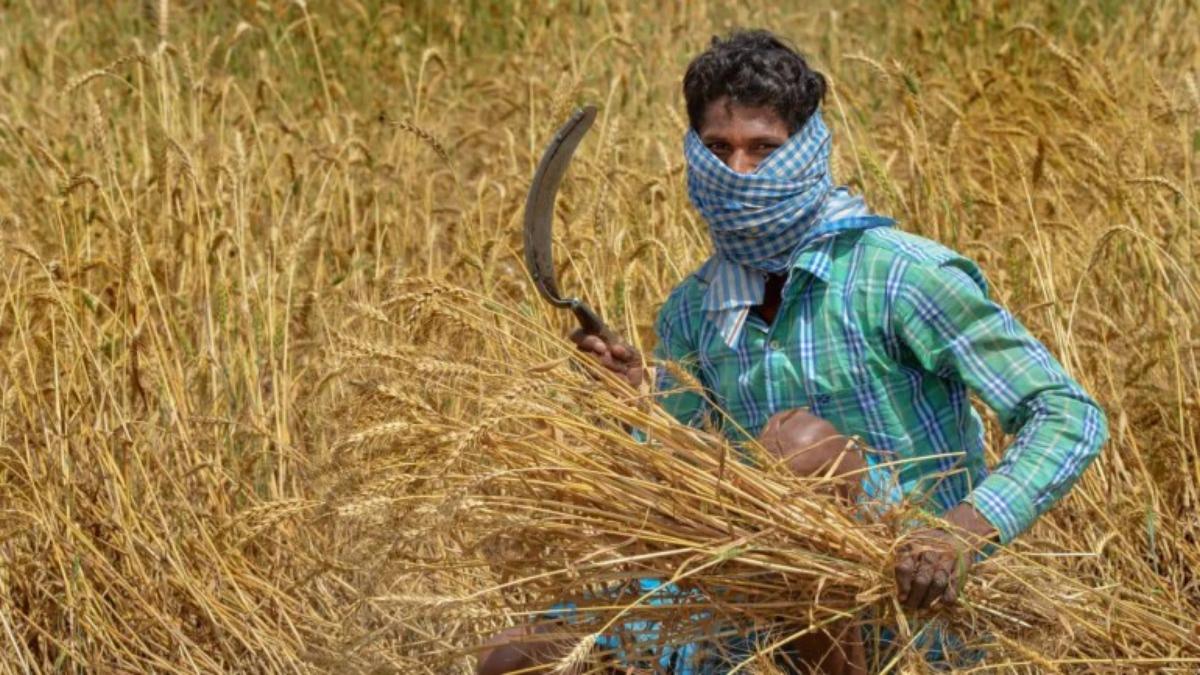
    • In compliance with COVID-19 guidelines, workers are wearing masks and other forms of face protection.
    • NREGA works typically involve hard physical labour and workers are finding it challenging to breathe comfortably while working.
    • Consequently, for as long as workers are required to wear masks, the daily volume of work assigned to them must be reduced.

    6) By increasing Wages

    • If NREGA wages are to effectively support rural households as they cope with this crisis, they must, at a minimum, be at par with states’ agricultural wages.
    • For example, the Government of Odisha has increased the daily-wage rate for unskilled manual work under NREGA to INR 298 per day in its 20 migration-prone blocks.

    7) Increase budgetary allocations

    • The central government’s budgetary allocation of INR 61,500 crore to NREGA for FY 2020-21 is inadequate..
    • An additional Rs 1 lakh crore needs to be allocated so that NREGA can act as a safety net and help rural households cope with the devastating impact of the lockdown.

    Way Forward

    • Large scale social security programmes like MGNREA are subjected to undergo several stumbling blocks in the times of ongoing pandemic.
    • Government and NGOs must study the impact of MGNREGA in rural areas so as to ensure that this massive anti-poverty scheme is not getting diluted from its actual path.
    • Since the adverse impact of the COVID-19 pandemic on employment is going to persist in 2020-21, government can ensure more effective implementation and strengthening of the oversight of MGNREGA through mandated social audit.
    • The scheme is not only an ocean of possibilities for the jobless migrants, but it has also given the Central government a chance to get a second bite at the cherry after the devastating economic and job creation figures now officially out for FY 2019-20.

    At this point in time what is needed is neither dismantling of the programme nor its slow suffocation.

    Conclusion

    This week the entire nation saw how teachers in Jaipur started working as MGNREGA labourers amid the pandemic. Unfortunate and not to be celebrated, it nevertheless underlines the importance of MGNREGA as a ray of hope amidst extreme darkness.

    This article has attempted to convey the transformative power of MGNREGA, particularly at a time of economic stress.

    To be clear, MGNREGA cannot substitute deeper and systemic efforts to generate jobs; nor can it address structural weaknesses in the economy. The need of the hour is for the Government to place MGNREGA at the heart of its strategy to tackle this economic emergency.

    The Economic Survey of 2019-20 suggested that MGNREGA offers an early warning signal to detect rural distress. We can help by changing the narrative that has for too long maligned MGNREGA.

    We must view MGNREGA as an opportunity and explicitly include it in a broad-based strategy to tackle the current economic crisis.


    Think!

    If the idea is to provide work to anybody demanding it, there should, in principle, be no restrictions on the kind of activities allowed under this scheme. If higher material component helps in building more assets with durable quality, why cannot these projects qualify under the MGNREGA? Why tie it down to particular “permitted works”? What stops MGNREGA labour from being used even to undertake railway or national highway work?


    References

    https://thewire.in/government/mgnrega-wage-payment-delays

    https://www.theindiaforum.in/article/continuing-relevance-mgnrega

    https://www.downtoearth.org.in/blog/economy/mgnrega-is-failing-10-reasons-why-62035

    https://thewire.in/economy/mgnrega-rural-india-farmers

    https://indianexpress.com/article/opinion/editorials/mgnrega-demand-rural-labours-migrant-workers-coronavirus-6441371/

    https://www.thequint.com/news/india/how-nrega-can-help-rural-areas-in-times-of-covid-19-distress

  • Tax Avoidance: case study on Flipkart deal

    Through this story, we will explore how investment fund companies exploit the tax agreements between the two countries. This story involves the famous case of investment by Walmart in Flipkart. So, let’s see what was involved in the case and what argument was made by the investment fund involved in the case.

    Tax avoidance

    Tax avoidance is the use of legal methods to minimize the amount of income tax owed by an individual or a business. This is generally accomplished by claiming as many deductions and credits as is allowable. It may also be achieved by prioritizing investments that have tax advantages, such as buying municipal bonds.

    First, let’s understand why Mauritius is favourite among investors?

    • Mauritius and India do have a tax treaty to start with.
    • Suppose an investment company based out of (why not based in?) Mauritius made a lot of money selling shares of an Indian company.
    • Now, Indian authorities won’t tax the gains you made via the transaction.
    • Instead, you’ll be taxed in Mauritius.
    • But since Mauritius does not tax capital gains, you get away without paying capital gain tax.
    • So you got the answer to why Mauritius.
    • Obviously, foreign corporations lapped up this opportunity until 2016 — when the government finally decided to plug the gaps.
    • They made amendments to the treaty.

    The story of Tiger Global’s investment into Flipkart

    • Tiger Global was one of the earliest investors in Flipkart.
    • They held 22% of the company until 2018 when they sold about 17% to Walmart’s Luxembourg entity FIT Holdings.
    • This transaction was valued at over INR 14,500 Cr.
    • But Tiger Global had made its investments through funds based out of Mauritius.
    • Since Tiger Global had made most of its investments during the first half of the decade (obviously before 2016).
    • So the amendment to the treaty wasn’t really applicable to them.
    • So when they made all that money selling their stake in Flipkart, they figured they wouldn’t have to pay any tax.
    • And at first sight, this argument seems legit.

    Let’s dig deeper into the case by going through 3 arguments

    • The funds were operating out of Mauritius.
    • The directors were discharging their duties in Mauritius.
    • All in all, everything was firmly placed in Mauritius.
    • But if you peel back the layers, you’ll see that these funds are ultimately owned by Tiger Global Management LLC, USA — albeit through a maze of holding companies.
    • So, the tax authorities argued that Tiger Global had in fact set up the Mauritius based entity for the sole purpose of avoiding taxes.
    • And therefore contested that they shouldn’t be exempt from paying tax on gains they made through the Flipkart Transaction.
    • Tiger Global, miffed with the taxmen, took the matter to a quasi-judicial body — The Authority for Advance Rulings (AAR).

    And the case begins.

    Let’s look into three arguments.

    1. Focus on transaction, not on the entity that involved in the transaction

    • Tiger Global investment fund counsel had the following argument to make:
    • “It must be proven that the transaction [the final sale of shares] itself was designed to avoid taxes.”
    • And proving that the structure of the entity undertaking the transaction was designed for the avoidance of income-tax should not be necessary here.
    • So, the Revenue (the Income Tax Department) had failed to discharge its burden of proof. But AAR didn’t agree with this argument.

    2. So, what’s AAR’s argument?

    • AAR said that you don’t just compute taxes by looking at the final transaction.
    • Instead, you look at the transaction as a whole —When were the shares bought? What was the purchase price? What happened in between? Who’s the primary executioner? What’s the appreciation in value? You look at everything.
    • More importantly, the “head and brains” executing the transaction resided elsewhere.
    • Tax authorities had shown rather conclusively that a certain Mr. Charles P. Coleman (operating out of a U.S based entity) was the beneficial owner of the fund.
    • And that “he” was primarily responsible for most management decisions.
    • So the AAR hit back with the following observation:

    In our opinion, it is not the holding structure only that would be relevant. The holding structure coupled with prima facie management and control of the holding structure, including the management and control of the applicants, would be relevant factors for determining the design for avoidance of tax. The applicant companies were only a “see-through entity” to avail the benefits of India-Mauritius DTAA [Double Taxation Avoidance Agreements]

    But wait… what about the past judgements?

    • Tiger Global had another weapon in its arsenal — Past judgements on the matter.
    • Specifically, a particular ruling in the case of Moody’s Analytics Inc.
    • AAR in this case conceded that capital gains accruing to a Mauritius based entity from the transfer of shares of an Indian company shouldn’t ideally be taxed.

    3. Flipkart is a Singaporean company. So, pay the taxes!

    • The AAR said that “In this particular case, gains were made by transferring shares of a Singaporean company. Not an Indian company.”
    • That’s right. Flipkart is based out of Singapore.
    • Flipkart Singapore is the strategic shareholder of Flipkart India.
    • Flipkart India is the entity that owns most of the capital assets.
    • The shares that were sold to Walmart — that’s Flipkart Singapore, not Flipkart India.
    • But the India-Mauritius tax treaty agreement is only applicable to the transfer of shares of Indian companies.

    Is Flipkart Indian?

    Consider the question “Examine the basis used by the Authority for Advance Rulings (AAR) that led it to rule in favour of tax authorities.”

    Conclusion

    AAR concluded that there was no doubt that Tiger Global had set up the Mauritius based entity to avoid paying taxes and therefore should be liable to pay what the Income Tax authorities deem fit.


    Back2Basics: Vodafone tax

    Can India tax the gains made by selling the shares of Singaporean company?

    • According to Section 9(1)(i), (popularly known as the Vodafone tax), any income accruing or arising, whether directly or indirectly (through multiple layers), inter-alia, through the transfer of a capital asset situated in India, shall be deemed to accrue or arise in India.”
    • So Indian tax laws are pretty clear about where the gains ought to be taxed.
    • But the India-Mauritius treaty doesn’t say anything about this matter.
    • That’s why the AAR ruled the way it did.
  • Explained: Gross Value Added (GVA) Method

    The National Statistical Office (NSO) recently released its provisional estimates of national income for the financial year 2019-20. The release also detailed the estimates of the Gross Value Added (GVA).

    Try this question from CSP 2011:

    Q. In the context of Indian economy, consider the following statements

    1. The growth rate of GDP has steadily increased in the last five years.

    2. The growth rate in per capita income has steadily increased in the last five years.

    Which of the statements given above is/are correct?

    (a.) 1 only

    (b.) 2 only

    (c.) Both 1 and 2

    (d.) Neither 1 nor 2

    The GVA method

    • In 2015, in the wake of a comprehensive review of its approach to GDP measurement, India opted to make major changes to its compilation of national accounts.
    • It aims to bring the whole process into conformity with the UN System of National Accounts (SNA) of 2008.

    What is GVA?

    • As per the SNA, GVA is defined as the value of output minus the value of intermediate consumption.
    • GVA is a measure of the contribution to GDP made by an individual producer, industry or sector.
    • At its simplest, it gives the rupee value of goods and services produced in the economy after deducting the cost of inputs and raw materials used.
    • It can be described as the main entry on the income side of the nation’s accounting balance sheet, and from economics, perspective represents the supply side.

    How it has changed income calculation?

    • While India had been measuring GVA earlier, it had done so using ‘factor cost’.
    • GDP at ‘factor cost’ was the main parameter for measuring the country’s overall economic output until the new methodology was adopted.
    • GVA at basic prices became the primary measure of output across the economy’s various sectors and when added to net taxes on products amounts to the GDP.
    • In the new series, the base year was shifted to 2011-12 from the earlier 2004-05.

    GVA estimates by NSO

    • As part of the data on GVA, the NSO provides both quarterly and annual estimates of output — measured by the gross value added — by economic activity.
    • The sectoral classification provides data on eight broad categories that span the gamut of goods produced and services provided in the economy.
    • These are: 1) Agriculture, Forestry and Fishing; 2) Mining and Quarrying; 3) Manufacturing; 4) Electricity, Gas, Water Supply and other Utility Services; 5) Construction; 6) Trade, Hotels, Transport, Communication and Services related to Broadcasting; 7) Financial, Real Estate and Professional Services; 8) Public Administration, Defence and other Services.

    How relevant is the GVA data given that headline growth always refers to GDP?

    • The GVA data is crucial to understand how the various sectors of the real economy are performing.
    • The output or domestic product is essentially a measure of GVA combined with net taxes.
    • However, GDP can be and is also computed as the sum total of the various expenditures incurred in the economy.
    • It includes private consumption spending, government consumption spending and gross fixed capital formation or investment spending; these reflect essentially on the demand conditions in the economy.

    Significance of GVA

    • From a policymaker’s perspective, it is vital to have the GVA data to be able to make policy interventions, where needed.
    • Also, from global data standards and uniformity perspective, GVA is an integral and necessary parameter in measuring a nation’s economic performance.

    Issues with GVA

    • As with all economic statistics, the accuracy of GVA as a measure of overall national output is heavily dependent on the sourcing of data and the fidelity of the various data sources.
    • To that extent, GVA is as susceptible to vulnerabilities from the use of inappropriate or flawed methodologies as any other measure.
    • Economists argue that India’s switch of its base year to 2011-12 had led to a significant overestimation of growth.
    • They argued that the value-based approach instead of the earlier volume-based tack in GVA estimation had affected the measurement of the formal manufacturing sector and thus distorted the outcome.
  • Environment Performance Index 2020

    India has secured 168 ranks in the 12th edition of the biennial Environment Performance Index (EPI Index 2020).

    CSP 2019 has been a year with two questions based on rankings and indices viz. the EoDB index and Global Competitiveness Index.  Note all such indices and their publishing agencies here at  [Prelims Spotlight] Important reports and indexes

    About EPI

    • The EPI measures the environmental performance of 180 countries.
    • It is biennially released by the Yale University.
    • It considers 32 indicators of environmental performance, giving a snapshot of the 10-year trends in environmental performance at the national and global levels.

    The performance on climate change was assessed based on the following indicators —

    • Adjusted emission growth rates;
    • Composed of growth rates of four greenhouse gases and one pollutant;
    • Growth rate in carbon dioxide emissions from land cover;
    • Greenhouse gas intensity growth rate; and
    • Greenhouse gas emissions per capita.

    Performance of the South Asian Region

    • The 11 countries lagging behind India were — Burundi, Haiti, Chad, Solomon Islands, Madagascar, Guinea, Côte d’Ivoire, Sierra Leone, Afghanistan, Myanmar and Liberia.
    • All South Asian countries, except Afghanistan, were ahead of India in the ranking.

    India’s performance

    • A ten-year comparison progress report in the index showed that India slipped on climate-related parameters.
    • India scored below the regional average score on all five key parameters on environmental health, including air quality, sanitation and drinking water, heavy metals and waste management.
    • It has also scored below the regional average on parameters related to biodiversity and ecosystem services too.
    • Among South Asian countries, India was at the second position (rank 106) after Pakistan on ‘climate change’. Pakistan’s score (50.6) was the highest under the category.

    Remarks for India

    • The report indicated that black carbon, carbon dioxide emissions and greenhouse emissions per capita increased in 10 years.
    • India needs to re-double national sustainability efforts on all fronts, according to the index.
    • It needs to focus on a wide spectrum of sustainability issues, with a high-priority to critical issues such as air and water quality, biodiversity and climate change.
  • Aerosols Radiative Effects in the Himalayas

    Indian researchers have found that the effect of anthropogenic aerosols is much higher over the high altitudes of western trans-Himalayas.

    Try this question from CSP 2019:

    Q. In the context of which of the following do some scientists suggest the use of cirrus cloud thinning technique and the injection of sulphate aerosol into the stratosphere?

    (a) Creating the artificial rains in some regions

    (b) Reducing the frequency and intensity of tropical cyclones

    (c) Reducing the adverse effects of solar wind on the Earth

    (d) Reducing the global warming

    What are Aerosols?

    • An aerosol is a suspension of fine solid particles or liquid droplets in air or another gas.
    • They can be natural or anthropogenic.
    • Examples of natural aerosols are fog, mist, dust, forest exudates and geyser steam. Examples of anthropogenic aerosols are particulate air pollutants and smoke.
    • The liquid or solid particles have diameters typically less than 1 μm; larger particles with a significant settling speed make the mixture a suspension, but the distinction is not clear-cut.
    • Technological applications of aerosols include dispersal of pesticides, medical treatment of respiratory illnesses, and combustion technology.

    Heat pump over the Himalayas

    • The transport of light-absorbing carbonaceous aerosols and dust from the polluted Indo-Gangetic Plain and desert areas over the Himalayas constitutes a major climatic issue due to severe impacts on atmospheric warming and glacier retreat.
    • This heating over the Himalayas facilitates the “elevated-hat pump” that strengthens the temperature gradient between land and ocean and modifies the atmospheric circulation and the monsoon rainfall.

    Findings of the research

    • The monthly-mean atmospheric radiative forcing of aerosols leads to heating rates of 0.04 to 0.13 C per day.
    • Further, the temperature over the Ladakh region is increasing 0.3 to 0.4 degrees Celsius per decades from the last 3 decades.

    How are aerosols fuelling the heat?

    • The atmospheric aerosols play a key role in the regional/global climate system through scattering and absorption of incoming solar radiation and by modifying the cloud microphysics.

    Assessing the Aerosol potential

    • Despite the large progress in quantifying the impact of different aerosols on radiative forcing, it still remains one of the major uncertainties in the climate change assessment.
    • Precise measurements of aerosol properties are required to reduce the uncertainties, especially over the oceans and high altitude remote location in the Himalayas where they are scarce.
    • Researchers have analysed the variability of aerosol optical, physical and radiative properties and the role of fine and coarse particles in aerosol radiative forcing (ARF) assessment.
    • ARF is the effect of anthropogenic aerosols on the radiative fluxes at the top of the atmosphere and at the surface and on the absorption of radiation within the atmosphere.

    Significance of ARF study

    • A scientific study of aerosol generation, transport, and its properties has important implications in our understanding and mitigation of climate change via atmospheric warming.
    • Aerosols impact the snow and glacier dynamics over the trans-Himalayan region.
    • The results from the study can help better understanding of aerosol effects in view of aerosol-climate implications.
  • ‘Race to Zero’ campaign

    The UN has launched the “Race to Zero” campaign ahead of delayed COP 26 Climate Talks.

    Possible question for prelims:

    The ‘Race to Zero’ campaign often seen in news is related to zeroing: Global Hunger/Carbon Emission/HR violations/None of these.

     ‘Race to Zero’ campaign

    • The campaign aims to codify commitments made via the Climate Ambition Alliance (CAA), which launched ahead of last year’s COP25 in Madrid.
    • It encourages countries, companies, and other entities to deliver structured net-zero greenhouse-gas emission pledges by the time the talks begin.
    • This messaging for the campaign — carried out under the aegis of the UNFCCC— seeks to emphasise the potential for non-state actors to raise climate ambition.
    • The campaign refers to these as ‘real economy actors’, noting they “cover just over half the gross domestic product, a quarter of global CO2 emissions and over 2.6 billion people”.

    About the Climate Ambition Alliance

    • The CAA currently includes 120 nations and several other private players that have committed to achieving zero net greenhouse gas emissions by 2050.
    • Signatories are responsible for 23 per cent of current greenhouse-gas emissions worldwide and 53 per cent of global GDP.

    What Are the Criteria?

    • The minimum criteria for establishing a recognized pledge were developed through dialogues coordinated by Oxford University.
    • The pledges must include a clear net-zero target date no later than 2050, they must also begin immediately and include interim targets.
    • Much like the Paris Agreement itself, the criteria are designed to strengthen over time, but they begin at a level that reflects current best practices.

    Issue over offsetting

    • Offsets are emission-reductions generated outside a company’s own operations, and they are used in both compliance programs to meet mandated emission caps (“cap and trade”) and involuntary programs to reduce a company’s overall impact (voluntary carbon markets).
    • The Race to Zero criteria emphasizes that if offsets are ultimately recognized, they must only be used to neutralize residual emissions that can’t be eliminated internally – at least not immediately.
  • Nagar Van (Urban Forest) Scheme

    On the occasion of World Environment Day (5th June), the union govt has announced the implementation of the Nagar Van Scheme to develop 200 Urban Forests across the country in the next five years.

    Do you know?

    India has 8 per cent of world’s biodiversity, despite having many constraints like only 2.5 % of the world’s landmass, has to carry 16% of human population and having only 4% of freshwater sources.

    Urban Forest Scheme

    • The scheme will be implemented with people’s participation and collaboration between the Forest Department, Municipal bodies, NGOs and corporates.
    • These forests will work as lungs of the cities and will primarily be on the forest land or any other vacant land offered by local urban local bodies.
    • This urban area rejuvenation scheme is based on the Smriti Van in the Warje area of Pune City
    • This forest now hosts rich biodiversity with 23 plant species, 29 bird species, 15 butterfly species, 10 reptiles and 3 mammal species.
    • This Urban Forest project is now helping maintain ecological balance, serving both environmental and social needs.
  • [Burning Issue] COVID-19 and its Impact on Agriculture

    Farmers in India constantly battle against skewed monsoon and erratic rainfall, extreme natural events, interrupted supply chains and rising inflation. Like this was not enough. These troubles now are supplemented this year by the COVID induced lockdowns and the heralding Locusts Attack!

    God bless our Annadatas!

    Context

    The start of the coronavirus pandemic has coincided with the peak harvesting season. As the markets are locked down, there is a threat to the crop in over 100 lakh hectares in the country.

    Even among the different segments, the impact varies widely among different regions and among producers and agricultural wage labourers. This impact will reverberate across the larger economy and will linger longer than a few months.

    Issues surfaced after COVID pandemic

    In spite of all the measures and in view of continuing restrictions on movements of people and vehicular traffic, concerns have been raised regarding negative implications of COVID19 pandemic on the farm economy. The immediate problems in agriculture at the moment are primarily categorized under two heads:

    A. Impact on Global Agriculture


    1) Crop production and availability of seeds

    • For crop production, the largest part of the seeding process will be almost unaffected between now and the summer.
    • So there would be no impact as such on seeds availability for now.
    • But if the same scenario continues till year end, then surely seed availability can be an issue.

    2) Fertilizers shortage

    • Due to global trade disturbance, farmers are facing the shortage of agricultural inputs like fertilizer and pesticides.
    • In a shorter span, there is little shortage to be expected.
    • In the longer term, the delivery of fertilizer via international markets may become a problem since some of the production plants in China have been shut down.

    3) On food production and distribution

    • Most of the countries have taken measures such as home confinement, travel bans and business closure to control the rate of infection.
    • Agriculture produce is mostly perishable in nature, so farmers are compelled to hold their unsold produce for a longer period of time.
    • This has led to a reduction in food quality as well as an increase in the cost of production.

    4) On livestock

    • Different agricultural sector such as  livestock and fishery have been hit hard by the pandemic.
    • In India, COVID-19 has caused a higher impact on livestock farming due to limited access to animal feed and a shortage of labour.
    • For example, the travel ban has affected the delivery of breeding stock of poultry.

    5) On workers

    • Agricultural workers in low and middle-income countries lack proper health services and social protection and due to little saving or no saving.
    • Many informal workers in agriculture are obligate to work for their sustenance despite the self-isolation protocol during COVID-19 pandemic.

    6) Impact on food demand and food security

    • The demand for food has affected due to reduction in income and purchasing capacity.
    • Panicked Consumers are stock piling the foods which in turn has affected the food availability and price.
    • Due to the decline in international trade, disturbance in food supply chain and food production, food insecurity may arise.

    B. Impact on India

    Agriculture contributes about 17 per cent to Indian GDP. Agriculture, with its allied sectors, is the largest source of livelihoods in India. 70 percent of rural households still depend primarily on agriculture for their livelihood.

    1) Peak harvest with no procurement

    • This is the peak of Rabi season in India and crops like wheat, gram, lentil, mustard, etc. (including paddy in irrigated tracts) were at a harvestable stage or almost reaching maturity.
    • This is also the time when the farm harvests reach the mandis for assured procurement operations by designated government agencies.

    2) Labour unavailability due to reverse migration

    • The non-availability of labour has hurt operations in many parts.
    • Consequently, the shortage of migrant labour has resulted in a sharp increase in daily wages for harvesting crops.
    • Some parts of agriculture that have the luxury of deploying technology for harvestings, like Paddy and Wheat, are relatively more insulated since they often do not have to depend on large numbers of manual labour.

    3) Fall in prices

    • Agricultural prices have collapsed due to lack of market access including the stoppage of transportation and closure of borders.
    • The rise in labour costs and lack of access means that farmers are staring at huge losses and hence allowing crops to rot in the fields, a better ‘stop-loss’ mechanism.

    4) Scarcity of public goods

    • Making the food grains, fruits and vegetables and other essential items available to consumers, both in rural and urban areas, is the most critical challenge.
    • Transportation of public distribution system (PDS) items to last-mile delivery agents, by both rail and road, has been severely impacted in the beginning.

    5) Restrictions on Sale

    • There were self-imposed restrictions on the inter- and intra-State movements of farmers/labourers, as well as harvesting and related farm machines.

    6) Disruptions in supply-chain

    • The absence of transport facilities clubbed with vigilant blocking roads has a limiting effect on the movement of migratory harvest labour and agri-machinery.
    • Also, trucks and tractors are not inclusive of ‘farm machinery’ by definition..

    7) Lockdown induced debt and Cash Flow Constraints

    • The most important issue that farmers have to surmount is the problem of repaying their crop loans, gold loans and other informal debts.
    • Crop loans are repaid between April and May and a fresh loan is granted at the onset of a new season.
    • Any failure to do so will mean that they will be forced to borrow money from the informal sector at high rates of interest for the new season.


    Impact on Food Security

    • Border closures, quarantines, and market, supply chain and trade disruptions are restricting people’s access to sufficient/diverse and nutritious sources of food, especially in countries hit hard by the virus or already affected by high levels of food insecurity.
    • In slowdown times, as demand for food will decrease over the next months, prices should go down in 2020, and this will have a negative impact on farmers and the agricultural sector.
    • As of now, disruptions have been minimal as food supply has been adequate and markets have been stable so far to meet the ongoing demands (though skewed)..

    Indian response to Covid: Agriculture version

    The Center and State Governments have worked in harmony to redress the grievances of farmers. Both have introduced a series of measures every day such as subsidies, including crop insurance to farmers, free flow of agricultural credit, unemployment allowance to rural landless/migrant workers under MANREGA, etc.

    The govt. is using every arrow in its quiver to ensure the health of farmers by continuously sensitizing the farmers about working in fields with covered faces while maintaining social distancing.

    In order to reinforce a zero hurdle harvest season, the govt has exempted the movement of farm machinery from lockdown.

    1) Reforms in e-NAM

    • The new features of National Agriculture Market platform were introduced as a welcoming move to decongest mandis.
    • They aim to strengthen agriculture marketing by reducing the need for farmers to physically access the wholesale mandis for selling their harvested produce.

    2) Technological support

    • Kisan Sabha App developed by CSIR to connect farmers to supply chain and freight transportation management system was recently launched to support farmers during the lockdown.
    • The app aims to provide the most economical and timely logistics support to the farmers and increase their profit margins by minimizing the interference of middlemen and directly connecting with the institutional buyers.
    • Kisan Rath app was also launched to facilitate farmers & traders in searching for transport vehicles for movement of Agriculture & Horticulture produce.

    3) Boost to Contract farming

    • Various states have promoted innovative model allowing investors and farmers to enter into an agreement for contract farming in view of the continuing uncertainties due to the pandemic.
    • For example, the Consumer-Farmer Compact in Telangana has been ensuring food availability and access in COVID-19 times.
    • In this system, the consumers support farmers with their agricultural needs; in return, farmers ensure consumers are able to access food in a hassle-free manner.

    4) Allocations for direct transfers

    • Increasing the allocations for DBT to farmers through PM KISAN and including everyone who is actively undertaken during the lockdown.
    • This has helped most farming families to be partially compensated for the losses seen in months of March and April.
    • It has provided them with some cushion against the deflationary effect seen on farm-prices due to the prolonged lockdown.

    Future scope of reforms

    1) Focussing on Alternative Market Channels

    • The alternative market channel works on the principles of decentralisation and direct-to-home delivery.
    • The idea is to create smaller, less congested markets in urban areas with the participation of farmers’ groups and Farmer Producer Companies (FPCs) so that farmers have direct access to consumers.
    • It may provide a valuable option against the lockdown when efforts to avoid crowding in the wholesale markets are likely to continue.

    2) Reforming APMC

    • With these reforms, the government has also set in motion plans to dismantle the decades-old monopolies of state-run APMCs, that were often blamed for unfair trading, and had become a barrier for farmers to get a fair price on their produce.
    • There is an urgent need for abolishing or reframing the APMC Act and encourage direct buying of agri-produce from farmers/farmer producer organisations (FPOs).
    • The companies, processors, organised retailers, exporters, consumer groups, that buy directly from FPOs need not pay any market fee as they do not avail the facilities of APMC yards.

    3) Designating warehouses as markets

    • The warehouse receipt system can be scaled up.
    • The private sector should be encouraged to open mandis with modern infrastructure, capping commissions.

    4) Logistics transformation

    • To sustain the demand for agricultural commodities, investments in key logistics must be enhanced.
    • Moreover, e-commerce and delivery companies and start-ups need to be encouraged with suitable policies and incentives.
    • The small and medium enterprises, running with raw materials from the agriculture and allied sector or otherwise, also need special attention so that the rural economy doesn’t collapse.

    5) Institutionalizing farm labour

    • To obviate the immediate concerns of the scarcity of farm labour, policies must facilitate easy availability of machinery through state entities, Farmer Producer Organizations (FPOs) or custom hiring centres (CHCs) with suitable incentives.
    • It is also suggested to explore leveraging NREGS funds to pay part of the farm labour (with farmers paying the balance wage amount) to lessen the monetary burden on the farmer while ensuring wage employment to the landless labourers and workers.

    6) Expanding institutional lending

    • As the Kharif (rainy/wet) season is fast approaching, institutional lending of crop loans should be expanded and facilitated for smooth (and sufficient) flow of credit to borrowing farmers.
    • Agri-inputs – seeds, fertilizers, agro-chemicals, etc. – have to be pre-positioned for easy availability. The private sector must play a significant role in necessary policy support.

    Future of Agriculture in India

    Indian agriculture is in a way, a victim of its own past success – especially the green revolution…..

    1) Farming as a Viable Livelihood

    • Agriculture is dying, not as in the production of food but as a desirable profession.
    • One bad yield, whether due to errant rains, pests, etc., and most farmers have no buffer available.
    • The last point worth considering is that food and agriculture are not the same. Expenditures on food span the value-add, including processing, preparation, service in restaurants, etc.
    • Farmers in India merely get paid for their product and not for the food we eat.

    2) Rainbow revolution holds the key

    • The first major barrier to overcome is declining productivity.
    • Data reveals that India’s average yield of cereal per hectare is far less than that of many countries. Further, there is a huge inter-regional variation.
    • In order to cross the declining productivity barrier, there is a need to herald a rainbow revolution by making a shift from the wheat-rice cycle to other cereals and pulses.
    • However, this is not sufficient and has to be complemented with a huge investment in public infrastructure.

    3) Per drop more crop

    • The second major barrier is the scarcity of two major resources for agriculture – cultivable land and water.
    • While the cultivable land per person is declining because of the fragmentation of farms due to the rising population.
    • India also has much less per capita water available  as compared to other leading agrarian countries.
    • Given this scenario, it is time to make a shift to micro-irrigation so that the efficient and judicious use of scarce water resources can be made.

    4) R&D is the future

    • One of the major barriers to boosting farm productivity is the lack of new technologies and major breakthroughs post the green revolution.
    • While the National Agriculture Research System played a major role in the green revolution, in recent years there hasn’t been any major breakthrough in research.
    • One of the main reasons for this is the lack of financial resources.
    • There has also not been any major contribution from the private sector towards research and development.
    • The government should thus woo private players by giving them incentives to play a major role in agricultural research and development.

    Way Forward

    • With a burgeoning population, there is a corresponding rise in food demand in India.
    • A post-COVID situation offers that unique opportunity to repurpose the existing food and agriculture policies for a healthier population.
    • India, being trade-surplus on commodities like rice, meat, milk products, tea, honey, horticultural products, etc. may seize the opportunities by exporting such products with a stable agri-exports policy.
    • Development of export-supportive infrastructure and logistics would need investments and support of the private sector that will be in the long term interests of farmers in boosting their income.
    • This is indeed good news in the COVID scenario, assuming agriculture can practice largely unscathed.
    • Designing agricultural policies, post-COVID scenario, must include these imperatives for a food systems transformation in India.
    • Immediately, the govt. should focus on the coming Kharif cropping season, especially ensuring timely availability of seeds, fertilisers, pesticides, credit and other inputs.

    Conclusion

    Structural reforms such as land leasing, contract farming and private agricultural markets, etc. have long been advocated to bring enhanced investments into the agriculture sector and to push its growth. However, there has not been the uniform implementation of these legislations by State Governments and so the full potential of the sector is unrealized. These reforms need significant political will.

    The end of the lockdown will not end the problems. On the contrary, they are likely to be compounded at the onset of the new agricultural sowing season. There is a greater need for government support in the form of support for other agricultural inputs. Lack of any relief will only make the agricultural crisis worse. The need of the hour is to maximise possibilities of agriculture, which has demonstrated its utility and resilience in trying times.


    References

    https://www.civilsdaily.com/news/alleviating-the-farmers-pain/

    https://www.icrisat.org/containing-covid19-impacts-on-indian-agriculture/

    https://www.deccanherald.com/opinion/covid-19-impact-on-agriculture-varied-and-devastating-828390.html

    https://indianexpress.com/article/opinion/editorials/india-agriculture-sector-crisis-corona-impact-on-farmers-niti-aayog-6392233/

    https://www.civilsdaily.com/story/agricultural-marketing-reforms/

    https://thewire.in/agriculture/what-is-the-future-of-agriculture-in-india

    http://www.fao.org/2019-ncov/q-and-a/impact-on-food-and-agriculture/en/

  • A chill in US-China relations and India as a collateral damage

    Even before the covid pandemic we could sense the rising tension between the U.S. and China. However, pandemic proved to be the tipping point. This article explains the role the U.S. played in China’s rise. And its recent acceptance under Donald Trump of not so peaceful rise of China.

    Let’s look into recent announcements on China by the US President

    •  On May 29, the Trump administration said it would revoke Hong Kong’s special trade status under U.S. law.
    • It passed an order limiting the entry of certain Chinese graduate students and researchers who may have ties to the People’s Liberation Army.
    • The U.S. President has also ordered financial regulators to closely examine Chinese firms listed in U.S. stock markets.
    • And warned those that do not comply with U.S. laws could be delisted.

    So, what all these measures indicate?

    • These announcements are a clear indication that the competition between the U.S. and China is likely to sharpen in the post-COVID world.

    U.S. is complicit in China’s rise, but how?

    •  After the Chinese communists seized power, the Americans hoped to cohabit with Mao Zedong in a world under U.S. hegemony.
    • The Chinese allowed them to believe this and extracted their price.
    • U.S. President Richard Nixon gave China the international acceptability it craved in return for being admitted to Mao’s presence in 1972.
    • President Jimmy Carter terminated diplomatic relations with Taiwan in order to normalise relations with China in 1978.
    • President George H.W. Bush washed away the sins of Tiananmen in 1989 for ephemeral geopolitical gain.
    • And Bill Clinton, who as a presidential candidate had criticised Bush for indulging the Chinese, proceeded as President to usher the country into the World Trade Organization at the expense of American business.
    • All American administrations since the 1960s have been complicit in China’s rise in the unrealised hope that it will become a ‘responsible stakeholder’ under Pax Americana.

    China is creating its own universe

    • The collapse of the Soviet Union reinforced the view that the U.S. wants to keep its order and change China’s system.
    • This strengthened China’s resolve to resist by creating its own parallel universe.
    • China is building an alternate trading system: the Belt and Road Initiative.
    • A multilateral banking system under its control-Asian Infrastructure Investment Bank, New Development Bank.
    • Its own global positioning system BeiDou.
    • Digital payment platforms like WeChat Pay and Alipay.
    • A world-class digital network-Huawei 5G.
    • Cutting-edge technological processes in sunrise industries.
    • And a modern military force.
    • It is doing this under the noses of the Americans and some of it with the financial and technological resources of the West.

    U.S. accepting the uneasy fact that China’s rise has not been peaceful

    • It is only under Mr. Trump that the Americans are finally acknowledging the uneasy fact that the Chinese are not graven in their image.
    • He has called China out on trade practices.
    • He has called China out on 5G.
    • It was Mr. Trump’s 2017 National Security Strategy document that, perhaps for the first time, clubbed China along with Russia as a challenge to American power, influence and interests.
    • His recent China-specific restrictions on trade and legal migration are, possibly, only the beginning of a serious re-adjustment.

    Decoupling of the economies and new cold war

    • A full-spectrum debate on China is now raging across the U.S.
    • Former White House Chief of Staff Steve Bannon declared that the U.S. is already at war with China.
    • Others like diplomat Richard Haass and former president of the World Bank, Robert Zoellick, warn that a new Cold War will be a mistake.
    • Scholar Julian Gewirtz, in his brilliant essay, ‘The Chinese Reassessment of Interdependence’, talks about a similar process underway in Beijing.
    • Both sides are acutely aware how closely their economies are tied together: from farm to factory, the U.S. is heavily dependent on supply chains in China and the Chinese have been unable to break free of the dollar.
    • If Mr. Trump’s wish is to disentangle China’s supply chains, Mr. Xi is equally determined to escape from the U.S. ‘chokehold’ on technology.
    • To what extent the de-coupling is possible is yet to be determined.
    • But one thing is inevitable, India will become part of the collateral damage.

    Hong Kong: Sign of U.S. China rivalry entering in ideological domain

    • Will Hong Kong become a game-changer in the post-COVID world?
    • China’s decision to enact the new national security law for Hong Kong has been condemned in unison by the U.S. and its Western allies as an assault on human freedoms.

    Why is this significant?

    • The points of divergence, even dispute, between them have so far been in the material realm.
    • With Hong Kong, the U.S.-China rivalry may, possibly, be entering the ideological domain.
    • For some time now there are reports about Chinese interference in the internal affairs of democracies.
    • Countries in the West have tackled this individually, always mindful of not jeopardising their trade with China.
    • Hong Kong may be different.
    • It is not only a bastion for Western capitalism in the East, but more importantly the torch-bearer of Western democratic ideals.
    • Think of it as a sort of Statue of Liberty; it holds aloft the torch of freedom and democracy for all those who pass through Hong Kong en route to China.
    • This is an assault on beliefs, so to speak.

    Issue of China’s role in Covid-19 pandemic

    • These is growing demands that China should come clean on its errors of omission in the early days of COVID-19.
    • In the months ahead, more information may become public, from sources inside China itself, about the shortcomings of the regime.
    • That will further fuel a debate on the superiority of the Chinese Model as an alternative to democracy.

    Will this form the ideological underpinning for the birth of a new Cold War?

    • That will depend on who wins in Washington in November.
    • It will also depend on whether profit will again trump politics in Europe.
    • Moreover, how skilfully the Wolf Warriors of China can manipulate global public opinion will also make the be an important factor.

    Consider the question-“Various recent measures by the U.S. on China and the debate on the role of China in Covid-19 makes it clear that the next Cold War is all but imminent. And India has to be careful to avoid being collateral damage in that war. Comment.”

    Conclusion

    The lines are beginning to be drawn between the Americans on the one side and China on the other. A binary choice is likely to test to the limit India’s capacity to maintain strategic and decisional autonomy.

  • Defence reforms must ensure the alignment of its various domains

    This article draws on the model used for accident investigation but in a reverse manner. For proper functioning of the defence system of a country, proper alignment of various domains is essential. This article divides the defence system of the country into three layers and visualises them as a slice of cheese in the model. Each component is analysed and the issues associated with it are looked into.

    What is the Swiss Cheese Model?

    • The Swiss cheese model is associated with accident investigation in an organisation or a system.
    • A system consists of multiple domains or layers, each having some shortcomings.
    • These layers are visualised in the model as slices of Swiss cheese, with the holes in them being the imperfections.
    • Normally, weaknesses get nullified, other than when, at some point, the holes in every slice align to let a hazard pass through and cause an accident.

    Applying the Swiss Cheese Model for nations defence preparedness

    • When applied to a nation’s defence preparedness, the Swiss cheese model, in its simplest form, works the reverse way.
    • The slices represent the major constituents in a nation’s war-making potential, while the holes are pathways through which the domains interact.
    • At the macro level, there are only three slices with holes in each.
    • These must align to ensure that a nation’s defence posture is in tune with its political objectives.
    • Any mismatch may turn out to be detrimental to the nation’s aatma samman (self-respect) when the balloon goes up.
    • In these days of the Aatmanirbhar Bharat Abhiyan, a clinical analysis is necessary to obviate any missteps that may prove costly a few years or decades down the line.

    Let’s analyse the Indian defence set-up from three slice perspective

    • In the Indian defence set-up, the three slices are as described below-
    • 1)The policymaking apparatus comprising the Department of Military Affairs (DMA) and Ministry of Defence (MoD).
    • 2) The defence research and development (R&D) establishment and domestic manufacturing industry.
    • 3) The three services.
    • When the MoD alone existed, a certain relationship between the three layers saw India prosecute four major wars since independence.
    • The holes in the three slices were aligned to different degrees and hence the results were varied in each conflict.
    • That the system required an overhaul would be an understatement.

    So, let’s look at the three-slices of Indian defence

    1) Policymaking: How changes in technology forced militaries to be joint?

    • With technology progressing exponentially, a single service prosecution of war was no longer tenable.
    • Because the advent of smart munitions, computer processing, networking capabilities and the skyrocketing cost of equipment brought in the concept of parallel warfare.
    • Synergised application of tools of national power became an imperative.
    • Thus, it became essential for militaries to be joint to apply violence in an economical way.
    • Economical in terms of time, casualties, costs incurred, and political gains achieved.
    • The setting up of the DMA and the creation of the post of Chief of Defence Staff (CDS) to achieve synergy are the most fundamental changes.
    • As further modifications and tweaking take place in the way the services prepare to go to war, it is imperative that the transformation be thought through with clinical analysis, without any external, emotional, political or rhetorical pressure.

    Hostile security environment

    • India’s security managers have to factor in the increasingly belligerent posture of the country’s two adversaries.
    • Terrorist activities have not reduced in Jammu and Kashmir.
    • Ongoing incidents along the northern border with China do not foretell a peaceful future.
    • And the China-Pakistan nexus can only be expected to get stronger and portentous.
    • Such a security environment demands that capability accretion of the three services proceed unhindered.

    2) Indigenous R&D and manufacturing is still some years away

    • To elaborate, the Indian Air Force at a minimum requires 300 fighters to bolster its squadron strength.
    • The Army needs guns of all types; and the Navy wants ships, helicopters, etc.
    • The requirements are worth billions of dollars but with COVID-19-induced cuts in defence spending.
    • Enter the well-meaning government diktat for buying indigenous only, but for that, in-house R&D and manufacturing entities have to play ball.
    • Hindustan Aeronautics Limited can, at best, produce just eight Tejas fighters per year presently.
    • The Army has had to import rifles due to the failure of the Defence Research and Development Organisation to produce them.
    • And the Navy has earnest hopes that the hull designs that its internal R&D makes get the vital innards for going to war.
    • So, the Swiss cheese slice representing indigenous R&D and a manufacturing supply chain that ensures quality war-fighting equipment, at the right time and in required quantities, is still some years away.

    3) The three services and creation of theatre commands

    • The forthcoming reform of creating theatre commands is the most talked about result of jointness expected from the Swiss cheese slice in which lie the DMA and a restructured MoD.
    • Doing so would be a shake-up of huge proportions as it strikes at the very foundation of the war-fighting structure of the services.
    • The three-year deadline spoken about by the CDS must take into account the not-so-comfortable state of assets of each service which would need to be carved up for each theatre.
    • The Chinese announced their ‘theaterisation’ concept in 2015; it is still work in progress.
    • The U.S. had a bruising debate for decades before the Goldwater-Nichols Act came into force in 1986.
    • New relationships take time to smooth out, and in the arena of defence policymaking, which is where the DMA and MoD lie, the element of time has a value of its own.
    • Any ramming through, just to meet a publicly declared timeline, could result in creating a not-so-optimal war-fighting organisation to our detriment.
    • So, the three services that constitute the third Swiss cheese slice have to contend with the other two slices being in a state of flux for some time to come.

    Consider the question “Any defence system reforms must ensure the alignment and coordination of the various component of it which involves policymaking apparatus,  defence R&D and manufacturing and the three services. Comment.”

    Conclusion

    The political, civil and military leadership must have their feet firmly on ground to ensure that the holes in their Swiss cheese continue to stay aligned; impractical timelines and pressures of public pronouncements must not be the drivers in such a fundamental overhaul of our defence apparatus.