💥UPSC 2026, 2027, 2028 UAP Mentorship (March Batch) + Access XFactor Notes & Microthemes PDF

Type: Species

  • New Species of Plants and Animals Discovered

    New Palm Species ‘Phoenix roxburghii’ discovered

    Why in the News?

    A palm specie ‘Phoenix roxburghii’ first described in the 17th-century botanical treatise Hortus Malabaricus has been recently confirmed.

    About Phoenix roxburghii:

    • Origin: Named after William Roxburgh, regarded as the father of Indian Botany.
    • Distribution: Found along India’s eastern coast, Bangladesh, Gujarat, Rajasthan, and Pakistan.
    • Height: Grows up to 12–16 metres, taller than Phoenix sylvestris.
    • Distinct Features:
      • Solitary trunk
      • Larger leaves and leaflets
      • Musty-scented staminate flowers
      • Large, obovoid orange-yellow fruits

    Back2Basics: India’s Oil Palm Scenario

    • National Mission on Edible Oils – Oil Palm (NMEO-OP) (2021): Centrally sponsored, aims to boost domestic crude palm oil (CPO) production and reduce import dependence.
    • Targets:
      • Expand area to 10 lakh ha by 2025–26.
      • Raise production from 0.27 lakh tonnes (2019–20) to 11.2 lakh tonnes (2025–26), further to 28 lakh tonnes (2029–30).
    • Support Mechanisms: Viability Price (VP), Direct Benefit Transfer (DBT), planting subsidy (₹29,000/ha), and special aid for NE & Andaman regions.
    • Cultivation States: Andhra Pradesh, Telangana, and Kerala (98% of output); others include Karnataka, Tamil Nadu, Odisha, Gujarat, and NE states.
    • Potential vs Current: 28 lakh ha potential; only 3.7 lakh ha cultivated.
    • Imports: India is the world’s largest palm oil importer (9.2 million tonnes in 2023–24). Palm oil forms 60% of edible oil imports, sourced mainly from Indonesia, Malaysia, and Thailand.
    • Unique Advantage: Palm oil yields are 5× higher than traditional oilseeds.
    [UPSC 2021] With reference to ‘palm oil,’ consider the following statements:

    1. The palm oil tree is native to Southeast Asia.

    2. Palm oil is a raw material for some industries producing lipstick and perfumes.

    3. Palm oil can be used to produce biodiesel.

    Which of the statements given above are correct?

    Options: (a) 1 and 2 only (b) 2 and 3 only* (c) 1 and 3 only (d) 1, 2, and 3


  • Wildlife Conservation Efforts

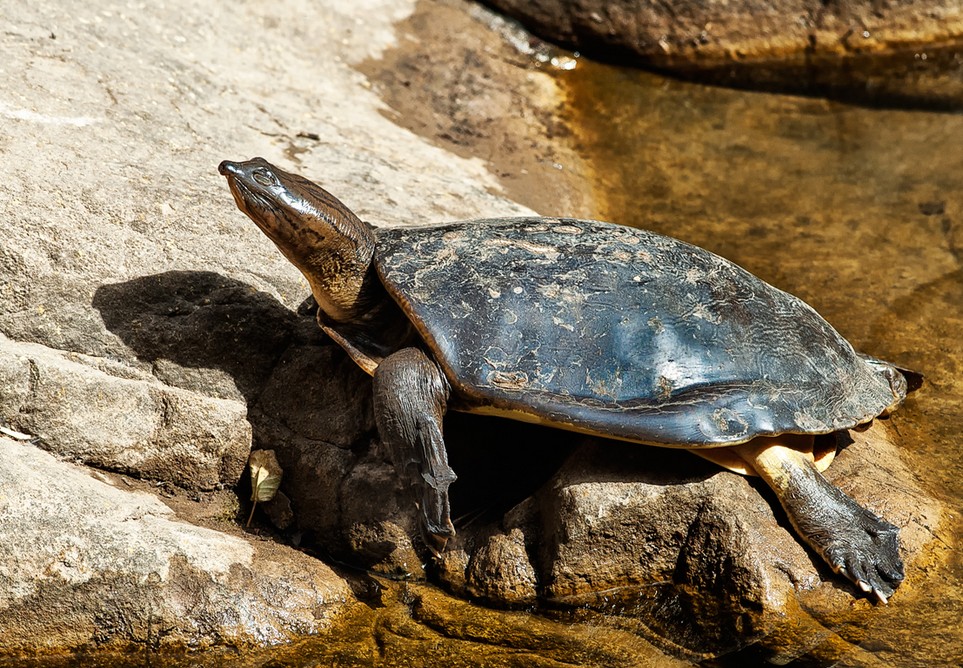
    Specie in news: Indian flapshell turtle (Lissemys punctata)

    Why in the News?

    The Social Forestry Department of Vadodara rescued an Albino Indian flapshell turtle (Lissemys punctata) from a freshwater lake in Chikhodra, Gujarat.

    Specie in news: Indian flapshell turtle (Lissemys punctata)

    About Indian Flapshell Turtle (Lissemys punctata):

    • Type: Small, freshwater softshell turtle native to South Asia
    • Unique Feature: Named for femoral flaps on the plastron that cover the limbs when retracted
    • Geographic Range: Found in India, Pakistan, Nepal, Bangladesh, Sri Lanka, and Myanmar
    • River Systems: Occurs in the Indus, Ganges, Irrawaddy, and Salween basins
    • Habitat: Prefers shallow, quiet freshwater bodies like rivers, ponds, lakes, marshes, tanks, and canals with muddy or sandy bottoms for burrowing
    • Conservation Status:
      • IUCN Red List: Vulnerable
      • CITES Listing: Appendix II
      • Wildlife (Protection) Act, 1972: Schedule I (maximum protection)
    • Major Threats:
      • Poaching for meat, blood-based potions, aphrodisiacs, and traditional medicine
      • Illegal trade for fishing bait, livestock feed, leather, and exotic pets
      • Habitat loss due to pollution, encroachment, and waterbody destruction
      • Albino individuals especially targeted in the illegal pet market
    [UPSC 2013] Consider the following fauna of India:

    1. Gharial 2. Leatherback turtle 3. Swamp deer

    Which of the above is/are endangered?

    Options: (a) 1 and 2 only (b) 3 only (c) 1, 2 and 3* (d) None


  • Wildlife Conservation Efforts

    Rhisotope Project

    Why in the News?

    In a move to combat rhino poaching, the University of the Witwatersrand in South Africa, supported by the International Atomic Energy Agency (IAEA), has launched the Rhisotope Project.

    What is Rhisotope Project? 

    • Launched By: University of the Witwatersrand, South Africa, with support from the International Atomic Energy Agency (IAEA).
    • Initiation: Concept began in 2021; formally launched in July 2024.
    • Objective: Prevent rhino poaching by making horns traceable and unsuitable for illegal trade.
    • Pilot Site: Waterberg Biosphere Reserve, South Africa.
    • Pilot Implementation: 20 rhinos injected with radioisotopes (exact isotope remains undisclosed) for testing.

    How the Isotope Tagging Works?

    • Isotope Basics: Uses radioactive isotopes that emit detectable radiation as they decay.
    • Injection Method: A small hole is drilled into the horn; a low dose of isotope is inserted safely.
    • Detection Mechanism: Radiation Portal Monitors at ports can detect tagged horns—even inside 40-foot containers, as proven using 3D-printed horn simulations.


    Significance:

    • Safety Assurance: No damage to rhinos observed; cytological tests showed no cellular or physiological harm.
    • Impact on Illegal Trade: Horn becomes detectable, unusable, and toxic for illegal human consumption.
    [UPSC 2019] Consider the following statements:

    1. Asiatic lion is naturally found In India only.     2. Double-humped camel is naturally found in India only.     3. One-horned rhinoceros is naturally found in India only.

    Which of the statements given above is / are correct?”

    Options:   (a) 1 only *  (b) 2 only   (c) 1 and 3 only    (d) 1, 2 and 3


  • Wildlife Conservation Efforts

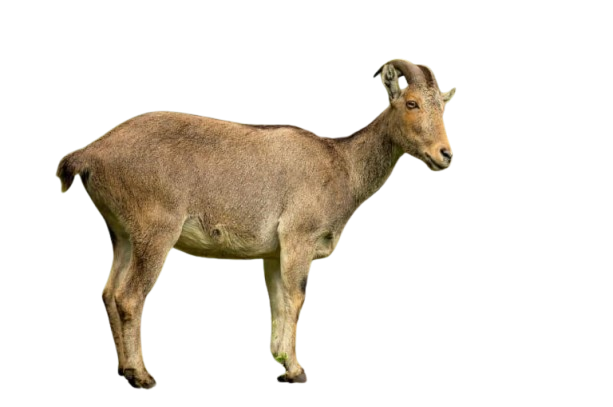
    Population Census of Nilgiri Tahrs  

    Why in the News?

    A joint population census conducted by Kerala and Tamil Nadu has revealed the presence of 2,668 Nilgiri tahrs in the Western Ghats.

    Population Census of Nilgiri Tahrs  

    About Nilgiri Tahr (Nilgiritragus hylocrius):

    • Endemism: Found only in the Nilgiri Hills and southern Western Ghats of Tamil Nadu and Kerala, India.
    • Ecological Role: Key grazer in the montane grassland ecosystem, influencing plant growth and grassland regeneration.
    • Habitat:
      • Open montane grasslands interspersed with shola forests (South Western Ghats montane rain forests eco-region).
      • Occurs at elevations between 1,200 to 2,600 metres (3,900 to 8,500 feet).
      • Prefers steep rocky slopes, cliff edges, and grassy plateaus — areas with clear visibility to detect predators.
    • Population: Estimated 3,122 individuals in the wild; Locally extinct in about 14% of its historical habitat.
      • In Kerala (1,365): Eravikulam National Park (ENP) – largest single population (~841 individuals); Anamalai Hills landscape.
      • In Tamil Nadu (1303): Mukurthi National Park; Grass Hills National Park; Kalakkad-Mundanthurai Tiger Reserve (lesser presence)
    • Conservation Status:
      • IUCN Red List: Endangered
      • Wildlife (Protection) Act, 1972: Schedule I
    • Cultural Significance:
      • Official state animal of Tamil Nadu.
      • Mentioned in Tamil Sangam literature (~2,000 years ago).
      • Seen in Mesolithic rock art (10,000–4,000 BC), indicating its deep historical importance.
    [UPSC 2018] Consider the following fauna of India:

    1. Gharial 2. Leatherback turtle 3. Swamp deer

    Which of the above is/are endangered?

    Options: (a) 1 and 2 only (b) 3 only (c) 1, 2 and 3 * (d) None


  • Wildlife Conservation Efforts

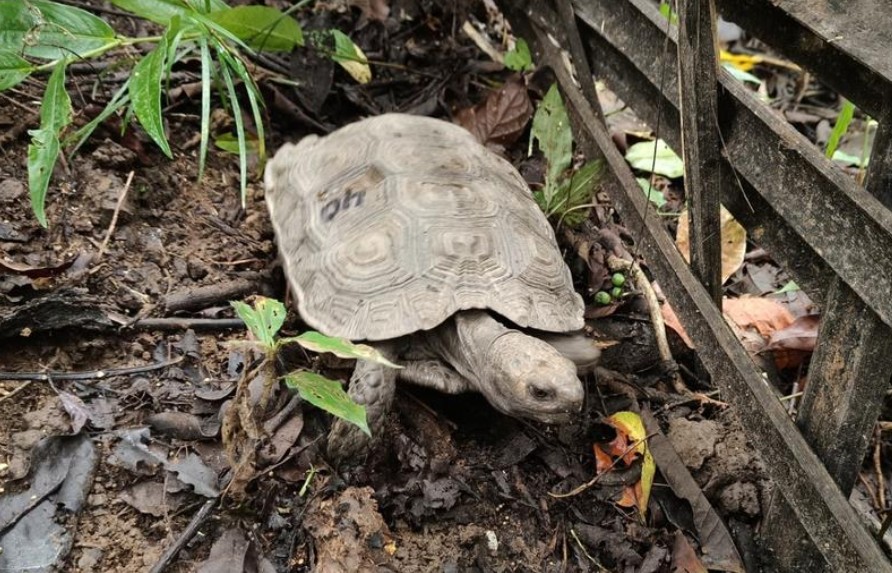
    Asian Giant Tortoise reintroduced in Nagaland

    Why in the News?

    The Asian giant tortoise (Manouria emys), the largest tortoise in mainland Asia, has been reintroduced into the Zeliang Community Reserve in Nagaland’s Peren district.

    Asian Giant Tortoise reintroduced in Nagaland

    About Asian Giant Tortoise (Manouria emys):

    • It is the largest tortoise in mainland Asia.
    • Two subspecies: Manouria emys emys and Manouria emys phayrei.
    • Uniquely, it lays eggs above ground in leaf-litter nests.
    • Behaviour: It is solitary and active mostly during dawn and dusk.
    • Found in evergreen and bamboo forests across India, Bangladesh, Myanmar, Thailand, Malaysia, and Indonesia.
    • Habitat in India: Nengpui WLS, Nongkhyllem WLS, and North Cachar Hills.
    • Conservation status: IUCN – Critically Endangered; CITES – Appendix II; Wildlife Protection Act – Schedule IV.
    • Major threats: Illegal hunting for meat, habitat degradation, forest fires, and bamboo removal.
    [UPSC 2017] In India, if a species of tortoise is declared protected under Schedule I of the Wildlife (Protection) Act, 1972, what does it imply?

    Options: (a) It enjoys the same level of protection as the tiger*

    (b) It no longer exists in the wild, a few individuals are under captive protection; and how it is impossible to prevent its extinction

    (c) It is endemic to a particular region of India

    (d) Both (b) and (c) stated above are correct in this context.


  • Wildlife Conservation Efforts

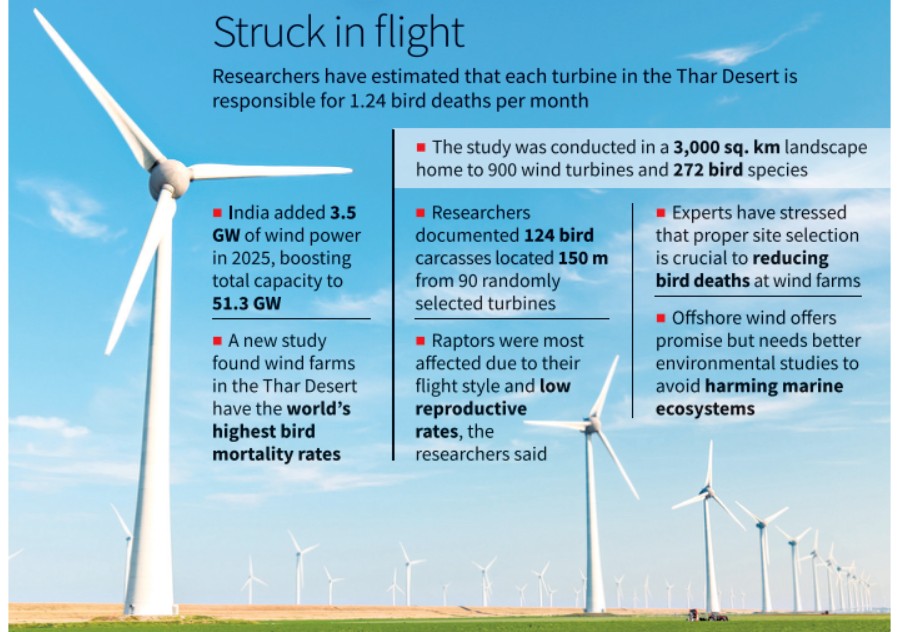
    Bird Deaths in Thar Desert

    Why in the News?

    A new study by the Wildlife Institute of India (WII) reveals that wind farms in the Thar Desert, Rajasthan, have the highest recorded bird mortality rates globally.

    Bird Deaths in Thar Desert

    Bird Mortality at Wind Farms: Key Findings

    • Study Details: Conducted across 3,000 sq. km in Jaisalmer, Rajasthan, covering 90 wind turbines and 272 bird species, including the critically endangered Great Indian Bustard.
    • Carcass Count: 124 bird carcasses found within 150m radius of turbines.
    • Annual Mortality Estimate: 4,464 birds per 1,000 sq. km, after corrections for detection gaps and scavenger interference.
    • Control Sites: 28 sites (500–2,000m from turbines) found zero carcasses — indicating turbines as the direct cause.
    • Reasons:
      • Policy Gap: Onshore wind projects in India do not require Environmental Impact Assessments (EIAs), which weakens ecological safeguards.

    India’s Wind Energy Growth:

    • Current Status: India added 3.5 GW of wind power in the first half of 2025 — an 82% YoY increase.
    • Total Installed Capacity: Now stands at 51.3 GW.
    • Untapped Potential: Estimated at 1163.9 GW at 150 meters above ground level (National Institute of Wind Energy).

    Comparison with Past Studies:

    • 2019 Studies: Recorded just 0.47 bird deaths per turbine/year in Kutch and Davangere.
    • Thar Desert Rate: 1.24 bird deaths per turbine/month — significantly higher.
    • Contributing Factors:
      • High bird density in Thar.
      • Location along Central Asian Flyway.
      • Collisions with turbine-linked power lines included in this study.

    Proposed Mitigation Measures:

    • Technological:
      • Paint one turbine blade for visibility.
      • Shut down turbines during peak migration or high-risk periods.
    • Planning-Based:
      • Careful Site Selection seen as most critical step.
      • Use of tools like AVISTEP (Avian Sensitivity Tool for Energy Planning), which maps avian sensitivity across India.
      • AVISTEP ranks zones as low to very high sensitivity — intended as a guide for site avoidance.
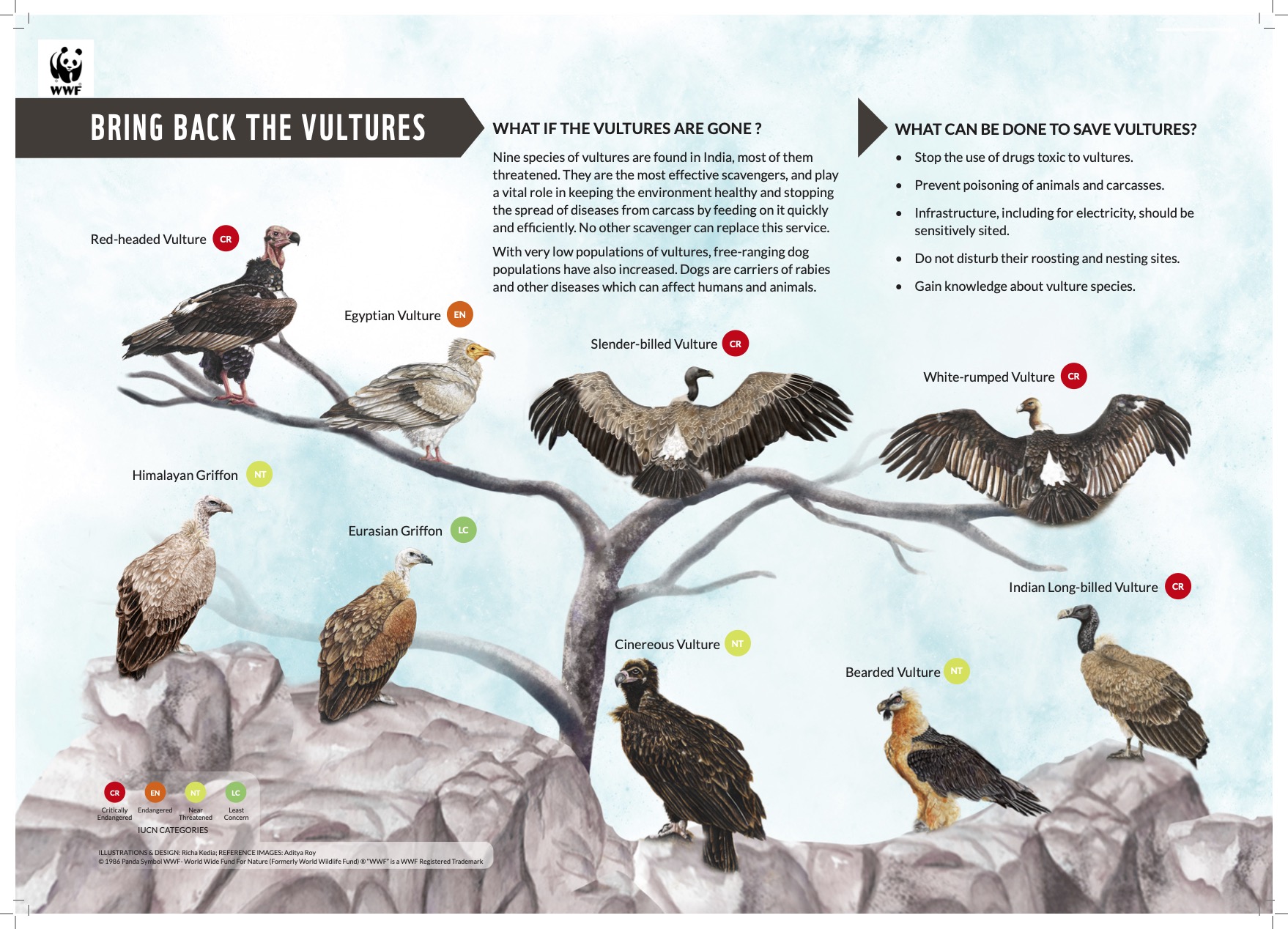
    [UPSC 2012] Vultures which used to be very common in Indian countryside some years ago are rarely seen nowadays. This is attributed to:

    Options: (a) the destruction of their nesting sites by new invasive species disease among them

    (b) a drug used by cattle owners for treating their diseased cattle persistent and fatal *

    (c) scarcity of food available to them

    (d) a widespread, persistent and fatal disease among them


  • Wildlife Conservation Efforts

    Species in news: Alpine Musk Deer

    Why in the News?

    A Central Zoo Authority (CZA) report reveals a major conservation error — the critically endangered Alpine musk deer was wrongly replaced by the Himalayan musk deer in India’s breeding programmes.

    Species in news: Alpine Musk Deer

    Back2Basics: Central Zoo Authority (CZA):

    • Establishment: Formed in 1992 under Wildlife (Protection) Act, 1972.
    • Mandate: Captive breeding, zoo oversight, and assigning species to zoos.
    • Expanded Scope (2022): Includes rescue centres, off-display facilities, and conservation breeding centres.

    About Alpine Musk Deer (Moschus chrysogaster):

    • Not a true Deer: closer to goats and antelopes (Bovidae).
    • Musk Sac: Males have a visible musk sac between the testes.
    • Canines: Grows fang-like canines during the mating season.
    • Habitat: Found at 3,000–5,000 m in forests of the Himalayas.
    • Range: India (J&K, HP, Uttarakhand, Sikkim, Arunachal), Nepal, Bhutan, China.
    • Diet: Eats grasses, leaves, lichens, mosses, and twigs.
    • Behaviour: Solitary and crepuscular (active at dawn/dusk).
    • Legal Protection:  IUCN Status Critically Endangered (2014), CITES Appendix I; Indian Wildlife Act- Schedule I.
    • Threats: Poaching for musk and habitat loss.
    • Key Habitats: Askot, Gangotri & Kedarnath Wildlife Sanctuaries (Uttarakhand).
    [UPSC 2020] Which of the following are the most likely places to find the musk deer in its natural habitat?

    1. Askot Wildlife Sanctuary 2. Gangotri National Park

    3. Kishanpur Wildlife Sanctuary 4. Manas National Park

    Options: (a) 1 and 2 only * (b) 2 and 3 only (c) 3 and 4 only (d) 1 and 4 only


  • New Species of Plants and Animals Discovered

    [pib] New Lichen Species reveals ancient Symbiosis

    Why in the News?

    A team of Indian scientists has discovered a new species of lichen, Allographa effusosoredica, in the Western Ghats, a global biodiversity hotspot.

    What are Lichens?

    lichen

    • Lichens are symbiotic organisms, composed of a fungus (mycobiont) and a photosynthetic partner (photobiont)—either a green alga or a cyanobacterium.
    • The fungus provides structure and protection, while the photobiont produces food through photosynthesis.
    • Lichens are key ecological contributors:
      • They build soil by breaking down rocks.
      • Serve as bioindicators of environmental and air quality.
      • Provide food for insects and small animals.
    • Despite being often overlooked, lichens are vital to ecosystem stability and resilience.

    About the Newly Discovered Lichen Species:

    • Discovery: Allographa effusosoredica was discovered in the Western Ghats by MACS-Agarkar Research Institute, Pune.
    • First of Its Kind: First Indian Allographa species confirmed using molecular data.
    • Biodiversity Addition: 53rd Allographa species in India; 22nd from the Western Ghats.
    • Funding Support: Research funded by Anusandhan National Research Foundation (ANRF) under a lichen symbiosis project.

    Key Features Revealed:

    • Morphology: Crustose body with effuse soredia; Contains norstictic acid—rare among related species.
    • Algal Partner: Photobiont identified as Trentepohlia, expanding understanding of tropical lichen symbiosis.
    • Molecular Markers: Analysis used fungal markers (mtSSU, LSU, RPB2) and algal marker (ITS).
    • Phylogenetic Placement: Closely related to Allographa xanthospora; visually similar to Graphis glaucescens.
    [UPSC 2014] Lichens, which are capable of initiating ecological succession even on a bare rock, are actually a symbiotic association of:

    Options: (a) algae and bacteria (b) algae and fungi* (c) bacteria and fungi (d) fungi and mosses


  • Wildlife Conservation Efforts

    Rhino DNA Index System (RhODIS)

    Why in the News?

    The Assam Forest Department is conducting DNA profiling of 2,500 rhino horns using the Rhino DNA Index System (RhODIS) to aid wildlife forensics and curb illegal trade.

    What is Rhino DNA Index System (RhODIS)?

    • Overview: It is a wildlife forensic tool designed to combat rhino poaching through DNA profiling.
    • Development: It was originally developed by South Africa and later adapted for use in India.
    • Working: The system helps build a genetic database of individual rhinos by collecting DNA from horns, tissues, dung, or blood samples.
    • Utility: Each rhino has a unique DNA profile, making it possible to match confiscated horns with individual animals or poaching locations.
    • Implementing Agency: In India, the Wildlife Institute of India (WII) is responsible for RhODIS genetic analysis under the RhODIS India program.
    • Applications of RhODIS: The system plays a vital role in linking seized rhino horns to poaching incidents, providing admissible forensic evidence in court cases, tracking illegal wildlife trade routes and criminal networks, and monitoring genetic diversity and population health over time.

    About One-Horned Rhinoceros:

    • Overview: The Greater One-Horned Rhinoceros (Rhinoceros unicornis) is a herbivorous megafauna species native to the Indian subcontinent.
    • Distinctive Features: It is also called the Indian rhinoceros and is characterized by its single black horn and thick, armor-like skin.
    • Conservation Status: It is listed as Vulnerable on the IUCN Red List, in Appendix I of CITES, and under Schedule I of the Wildlife Protection Act, 1972 (India).
    • Major Habitats in India: Its primary habitats include Kaziranga, Pobitora, Manas, and Orang National Parks in Assam; Jaldapara and Gorumara National Parks in West Bengal; and the Dudhwa Tiger Reserve in Uttar Pradesh.
    • Population Growth: Its has increased from around 1,500 in the 1980s to over 4,000 in 2024, with Assam alone holding 80% of the global population. Kaziranga National Park houses the largest population, with 2,613 rhinos as per 2022 data.
    • Primary Threats: Major threats include poaching for horns driven by illegal wildlife trade and false beliefs about medicinal value, as well as habitat degradation due to floods, encroachment, and climate change.
    • Indian Rhino Vision 2020 (Project Rhino):  It was launched in 2005, aimed to spread the rhino population across seven protected areas.
    [UPSC 2019] Consider the following statements:

    1. Asiatic lion is naturally found In India only.

    2. Double-humped camel is naturally found in India only.

    3. One-horned rhinoceros is naturally found in India only.

    Which of the statements given above is / are correct?

    Options: (a) 1 only*  (b) 2 only (c) 1 and 3 only (d) 1, 2 and 3


  • New Species of Plants and Animals Discovered

    New butterfly species Zographetus mathewi found in Western Ghats

    Why in the News?

    A team of Indian conservationists has identified a new butterfly species, Zographetus mathewi, in the biologically rich Western Ghats.

    About Zographetus mathewi

    • Overview: Zographetus mathewi is a newly identified species of skipper butterfly.
    • Taxonomic Classification: It belongs to the family Hesperiidae and the genus Zographetus Watson, 1893.
    • Distribution: This species is endemic to the low-elevation forests of Kerala, Western Ghats.
    • Genus: It is the 15th species in the Zographetus genus and the 5th recorded in India.
    • Publication and Naming: Published in the journal Entomon, the butterfly was named in honour of George Mathew, a noted Indian entomologist.

    Key Features of Zographetus mathewi

    • Similarity with Other Species: It closely resembles Zographetus ogygia but differs in wing venation patterns and genitalia structure in both male and female butterflies.
    • Species Group Traits: It belongs to the Zographetus satwa species-group, which is known for swollen forewing veins in males as a secondary sexual trait, a distinct basal hair tuft on the underside of the forewing, and yellow-ochre scaling on the hindwing underside.
    [UPSC 2025] Regarding Peacock tarantula (Gooty tarantula), consider the following statements :

    I. It is an omnivorous crustacean.

    II. Its natural habitat in India is only limited to some forest areas.

    III. In its natural habitat, it is an arboreal species.

    Which of the statements given above is/are correct?

    Options: (a) I only   (b) I and III   (c) II only  (d) II and III*