💥UPSC 2027,2028 Mentorship (April Batch) + Access XFactor Notes & Microthemes PDF

Archives: News

  • Issues with draft EIA Notification 2020

    The changes made in the recent notification gives rise to several issues. These changes and issues that could arise are discussed in this article.

    • Environmental Impact Assessment (EIA) is a process of evaluating the likely environmental impacts of a proposed project or development, taking into account inter-related socio-economic, cultural and human-health impacts, both beneficial and adverse.
    • UNEP defines Environmental Impact Assessment (EIA) as a tool used to identify the environmental, social and economic impacts of a project prior to decision-making.
    • It aims to predict environmental impacts at an early stage in project planning and design, find ways and means to reduce adverse impacts, shape projects to suit the local environment and present the predictions and options to decision-makers.
    • Environment Impact Assessment in India is statutorily backed by the Environment Protection Act, 1986 which contains various provisions on EIA methodology and process.

    History of EIA in India

    • The Indian experience with Environmental Impact Assessment began over 20 years back. It started in 1976-77 when the Planning Commission asked the Department of Science and Technology to examine the river-valley projects from an environmental angle.
    • Till 1994, environmental clearance from the Central Government was an administrative decision and lacked legislative support.
    • On 27 January 1994, the then Union Ministry of Environment and Forests, under the Environmental (Protection) Act 1986, promulgated an EIA notification making Environmental Clearance (EC) mandatory for expansion or modernisation of any activity or for setting up new projects listed in Schedule 1 of the notification.
    • The Ministry of Environment, Forests and Climate Change (MoEFCC) notified new EIA legislation in September 2006.
      • The notification makes it mandatory for various projects such as mining, thermal power plants, river valley, infrastructure (road, highway, ports, harbours and airports) and industries including very small electroplating or foundry units to get environment clearance.
      • However, unlike the EIA Notification of 1994, the new legislation has put the onus of clearing projects on the state government depending on the size/capacity of the project.

    The EIA Process

    EIA involves the steps mentioned below. However, the EIA process is cyclical with interaction between the various steps.

    • Screening: The project plan is screened for scale of investment, location and type of development and if the project needs statutory clearance.
    • Scoping: The project’s potential impacts, zone of impacts, mitigation possibilities and need for monitoring.
    • Collection of baseline data: Baseline data is the environmental status of study area.
    • Impact prediction: Positive and negative, reversible and irreversible and temporary and permanent impacts need to be predicted which presupposes a good understanding of the project by the assessment agency.
    • Mitigation measures and EIA report: The EIA report should include the actions and steps for preventing, minimizing or by passing the impacts or else the level of compensation for probable environmental damage or loss.
    • Public hearing: On completion of the EIA report, public and environmental groups living close to project site may be informed and consulted.
    • Decision making: Impact Assessment Authority along with the experts consult the project-in-charge along with consultant to take the final decision, keeping in mind EIA and EMP (Environment Management Plan).
    • Monitoring and implementation of environmental management plan: The various phases of implementation of the project are monitored.
    • Assessment of Alternatives, Delineation of Mitigation Measures and Environmental Impact Assessment Report: For every project, possible alternatives should be identified, and environmental attributes compared. Alternatives should cover both project location and process technologies.
      • Once alternatives have been reviewed, a mitigation plan should be drawn up for the selected option and is supplemented with an Environmental Management Plan (EMP) to guide the proponent towards environmental improvements.
    • Risk assessment: Inventory analysis and hazard probability and index also form part of EIA procedures.

    Importance of Precautionary Principle

    • The basis in global environmental law for the EIA is the “precautionary principle”.
    • Environmental harm is often irreparable and it is cheaper to avoid damage to the environment than to remedy it.
    • We are legally bound to the precautionary principle under international treaties and obligations, as well as by Supreme Court judgments.

    What is the issue?

    • Streamlining the EIA process and bringing it in line with recent judgments are the reasons given by the government for latest notification.
    • The Draft EIA Notification disables it, shrinks its scope and removes what teeth it did have.
    • The most devastating blow to the EIA regime is the creation of an ex-post-facto clearance route. 

    1.What is ex-post-facto clearance route?

    • It applies to ongoing or completed project for which an EIA clearance was never sought or granted, and the construction of the project took place regardless.[violating the norms]
    • The project now can be slapped with minor fines for the violations and get cleared.
    • Where such ex-post-facto clearances were being granted previously, the courts cracked down on them as illegal.
    • Therefore, what could not be ratified will now find itself notified.
    • The legality of sidestepping the courts is questionable and will have to be tested.

    How it will affect?

    •  It will become a business decision as to whether the
    • There is an argument that this route will be an “exception”.
    • But it is difficult to believe in India. Our law has a long history of expanding the exception into the rule.

    Time to furnish response shortened

    • The draft notification also shortens the time for the public to furnish responses on the project.
    • For project-affected people, who are frequently forest dwellers or otherwise do not have access to information and technology.
    • This will make it harder to put forth representations.

    2.Monitoring requirements reduced

    • Monitoring requirements have been slackened.
    • The draft EIA notification halves the frequency of reporting requirements from every six months to once a year.
    • It also extends the validity period for approvals in critical sectors such as mining.

    3.Scope of EIA reduced

    • Industries that previously required a full assessment have been downgraded.
    • The construction industry will be one such beneficiary, where only the largest projects will be scrutinised fully.
    • While defence and national security installations were always understandably exempt, a vague new category of projects “involving other strategic considerations” will also now be free from public consultation requirements.

    4.Recent industrial mishaps

    • Oil India Limited’s oil wells in the Tinsukia district, Assam went up in flames this month.
    • It is situated only a few kilometres away from protected forest.
    • Recent processes for expansion and modification apparently took place without fresh environmental clearance.
    • There was a deadly gas leak at LG Polymers’ Visakhapatnam plant in May.
    • The plant had been operating without a valid environmental clearance for decades.

    Consider the question “Examine the changes made in the draft EIA Notification and what are the issues with it? “

    Way Forward

    On a positive note, the 2020 draft notification has a clause dedicated to definitions to several terms related to EIA. It may be beneficial in the sense that it consolidates the EIA rules and has the potential of alleviating some ambiguity in the present law.

    • The ministry, instead of reducing the time for public consultation, should focus on ensuring access to information as well as awareness about the public hearing and its impact upon the whole EIA process.
    • In order to improve ease of doing business, the government should bring down the average delay of 238 days in granting environmental clearance, that emanates from bureaucratic delays and complex laws.
    • Grow now, sustain later should not be the policy, as the notion is dangerously tilted against the concept of sustainable development.

    Conclusion

    Environmental regulation must balance damage to the environment with sustainable development and possible benefits but the new notification lays more emphasis on the benefits and so must be reconsidered.

  • Foreign Policy Watch: India-China

    Will banning Chinese imports hurt India’s exports?

    • Following the recent clashes with Chinese troops in Ladakh, there has been a growing clamour in the country to boycott goods from the neighbouring country.
    • However, the development has caused an alarm among various industry bodies that are concerned about the adverse impact in the event of a blanket ban on exports in several sectors.

    Practice question for mains:

    Q.“Curbing Chinese imports to India will do more harm than any good”. Analyse.

    How dependent is India on Chinese imports?

    China accounts for a sizable portion of India’s top imports, especially where intermediate products or components and raw materials are concerned.  Electronics: The neighbouring country also accounts for 45 per cent of India’s total electronics imports.

    • A third of machinery and almost two-fifths of organic chemicals that India purchases from the world come from China.
    • Automotive parts and fertilizers are other items where China’s share in India’s import is more than 25 per cent.
    • Several of these products are used by Indian manufacturers in the production of finished goods, thus thoroughly integrating China in India’s manufacturing supply chain.
    • For instance India sources close to 90 per cent of certain mobile phone parts from China.

    India’s export to China

    • Even as an export market, China is a major partner for India. At $15.5 billion, it is the third-largest destination for Indian shipments.
    • At the same time, India only accounts for a little over two per cent of China’s total exports, according to the Federation of Indian Export Organisation (FIEO).

    How could a blanket ban on Chinese imports hit India’s exports?

    • Across sectors from pharmaceuticals to telecommunications and automobiles, industry associations have been speaking up against a complete boycott of Chinese imports.
    • A “blanket ban” may not be feasible because of India’s dependence on the country for crucial raw materials.
    • Banning the imports of raw materials from China without which products over here cannot be manufactured will make things difficult.
    • If China takes any retaliatory measures, it would impact India more negatively.

    Most crucial: The Pharma sector could be worst hit

    • For instance, of the nearly $3.6 billion worth of ingredients that Indian drug-makers import to manufacture several essential medicines, China catered to around 68 per cent.
    • India is considered one of the largest pharma industries in the world and accounts for a considerable portion of imports of finished formulations by other large economies like the US.
    • While pharma consignments from China have unofficially been stopped at ports in India, and are expected to be cleared after thorough checks,
    • A ban could create shortages of medicines both for India’s domestic and export markets.

    Are there any alternatives in this situation?

    • The decision to boycott non-essential products made in China can be left to the individuals.
    • However, trade-related measures like raising duties on cheaper raw materials imported from China would be better than an outright embargo.
    • This would still allow access to crucial ingredients in the short-term while India looks to build self-reliance or maybe switch to alternate trade partners.
    • It would be better to maybe raise duties on cheaper raw materials instead of going in for a blanket ban.

    Alternatives to Chinese imports

    • Countries like the US, Vietnam, Japan, Mexico and certain European countries could be tapped as alternate import sources for some critical electronic, vehicular and pharmaceutical components as well.
    • It is likely that the costs of the raw materials from these alternate sources will be higher and may get passed on to consumers if the manufacturers cannot absorb them.
    • India will need to look into the totality of its trade with China and Hong Kong and implement certain short- to long-term plans to reduce its dependence on them, according to FIEO.

    Way forward

    • The government’s “Atmanirbhar” focus is expected to help ministries handhold industries where self-reliance needs to be built.
    • Some measures, like the decision to push bulk drug parks in India, have to be executed.
    • While an increase in tariff can be one way to achieve import substitution, the more effective strategy would be to provide an ecosystem that addresses the cost disability of Indian manufacturing leading to such imports.
  • Primary and Secondary Education – RTE, Education Policy, SEQI, RMSA, Committee Reports, etc.

    Global Education Monitoring (GEM) Report 2020

    The COVID-19 pandemic has exacerbated inequalities in education systems across the world a/c to the latest GEM report.

    Practice question for mains:

    Q.Discuss the impact of COVID-19 induced lockdown on India’s education sector.

    About the report

    • Originally the EFA Global Monitoring Report, it has been renamed as the Global Education Monitoring Report.
    • It is developed by an independent team and published by UNESCO aimed to sustain commitment towards Education for All.
    • The ‘UNESCO Institute for Statistics (UIS), based in Montreal provides data for the report on students, teachers, school performance, adult literacy and education expenditure.

    Highlights of the 2020 report

    • The report noted that efforts to maintain learning continuity during the pandemic may have actually worsened exclusion trends.
    • During the height of school closures in April 2020, almost 91% of students around the world were out of school.
    • About 40% of low- and lower-middle-income countries have not supported learners at risk of exclusion during this crisis, such as the poor, linguistic minorities and learners with disabilities.

    1. Risks of school closure

    • School closures also interrupted support mechanisms from which many disadvantaged learners benefit.
    • For poor students who depend on school for free meals or even free sanitary napkins, closures has been a major blow.
    • Cancellation of examinations in many countries, including India, may result in scoring dependence on teachers’ judgements of students, which could be affected by stereotypes of certain types of students.

    2. Substitutes were imperfect

    • Education systems responded with distance learning solutions, all of which offered less or more imperfect substitutes for classroom instruction said the report.
    • Many poorer countries opted for radio and television lessons, while some upper-middle-income countries adopted for online learning platforms for primary and secondary education.
    • India has used a mix of all three systems for educational continuity.

    3. The digital divide has resurfaced yet again

    • Even as governments increasingly rely on technology, the digital divide lays bare the limitations of this approach.
    • Not all students and teachers have access to an adequate internet connection, equipment, skills and working conditions to take advantage of available platforms.
  • Wildlife Conservation Efforts

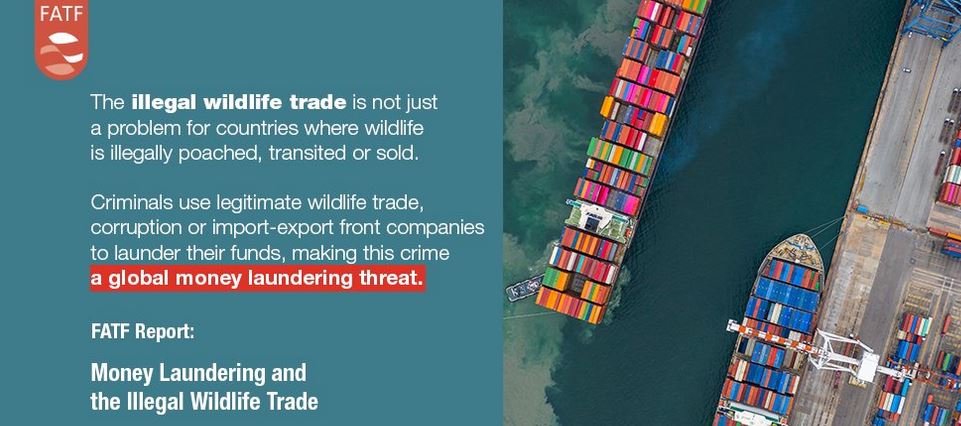
    “Money Laundering and the Illegal Wildlife Trade” Report

    A first global report on the illegal wildlife trade has been recently published by the Financial Action Task Force (FATF).

    Try this MCQ:

    Q.The report “Money Laundering and the Illegal Wildlife Trade”  recently seen in news is released by:

    A. TRAFFIC/ B. CITES/ C. IUCN/ D. FATF

    Highlights of the Report

    • FATF has described illegal wildlife trade as a “global threat”, which also has links with other organised crimes like modern slavery, drug trafficking and arms trade.
    • The illegal trade is estimated to generate revenues of up to $23 billion a year.
    • The report flagged a lack of focus on the financial aspects of wildlife crime.

    (1)Economy of illicit wildlife trade

    • It said that criminals are frequently misusing the legitimate wildlife trade, as well as other import-export type businesses.
    • The FATF found that jurisdictions often did not have the required knowledge, legislative basis and resources to assess and combat the threat posed by the funds generated through the illegal trade.
    • The study has highlighted the growing role of online marketplaces and mobile and social media-based payments to facilitate the movement of proceeds warranting a coordinated response from government bodies, the private sector and the civil society.

    (2)Money laundering is prominent

    • According to the report, criminal syndicates are misusing the formal financial sector to launder the proceeds.
    • Funds are laundered through cash deposits, under the guise of loans or payments, e-banking platforms, licensed money value transfer systems, and third-party wire transfers via banks.
    • Accounts of innocent victims are also used and high-value payments avoided evading detection.

    (3)Misuse of front companies

    • Another common trend is the misuse of front companies with links to the legal wildlife trade, said the report.
    • Front companies, often linked to import-export industries, and shell firms are used for the movement of goods and trans-border money transfers.

    Recommendations of the report

    • The report says the financial probe is the key to dismantling the syndicates involved, which can in turn significantly impact the associated criminal activities.
    • It recommended that jurisdictions should consider implementing good practices, as observed during the study.
    • They include providing all relevant agencies with the necessary mandate and tools; and cooperating with other jurisdictions, international bodies and the private sector.
    • The FATF said that legislative changes were necessary to increase the applicability of anti-money laundering laws to the illegal wildlife trade-linked offences.

    Back2Basics

    https://www.civilsdaily.com/news/financial-action-task-force-fatf-2/

  • Global Geological And Climatic Events

    What is the Anthropause Period?

    Researchers in the UK are set to study the “Anthropause”, a term they have coined to refer to the coronavirus-induced lockdown period and its impact on other species.

    Practice question for mains:

    Q. What is the significance of declaring Anthropocene epoch? Discuss how it is different from any geological events. Discuss the Anthropause Period.

    Anthropause Period

    • Researchers have suggested the lockdown period, which is also being referred to as the “Great Pause”, be referred to with a more precise term.
    • It is referred specifically to a considerable global slowing of modern human activities, notably travel.
    • The unprecedented curbs imposed on millions of people around the world, mainly due to restrictions in travel, led to reports of unusual animal behaviour.
    • For instance, there were pumas sighted in Chile’s Santiago, jackals in the parks of Tel Aviv in Israel, dolphins in the waters of Italy and even a monkey fight on the streets of Thailand.
    • The researchers believe studying this period will provide valuable insights into the relationship between human-wildlife interactions in the 21st century.

    What do the researchers hope to find?

    • As a result of the lockdown, nature appears to have changed, especially in urban environments, since not only are there now more animals, but also some “unexpected visitors.”
    • In their outline, researchers mention how the scientific community can use these “extraordinary circumstance” provided by global lockdowns to understand how human activity affects wildlife.
    • On the other hand, there are some animals for which the lockdown may have made things more challenging.
    • For instance, for various urban-dwelling animals, such as rats, gulls and monkeys who depend on food provided or discarded by humans, the lockdown would have made life more difficult.

    Why is studying the lockdown important?

    • Expanding human populations continue to transform their environments at unprecedented rates.
    • Further, because the reduction in human activity during the lockdown on both land and sea has been “unparalleled” in recent history, the effects have been “drastic, sudden and widespread”.
    • Essentially, this gives them a chance to study the extent to which modern human mobility affects wildlife.
    • The study can be linked can help provide insights that may be useful in preserving global biodiversity, maintaining the integrity of ecosystems and predicting global zoonoses and environmental changes.

    Back2Basics

    https://www.civilsdaily.com/news/anthropocene-as-earths-new-epoch/

  • North-East India – Security and Developmental Issues

    Article 371A and Nagaland

    In a scathing letter to CM, Nagaland Governor has said the “scenario in the State is grim” and that “law and order has collapsed”.

    Practice question for mains:

    Q.Discuss the success of Naga Peace Accord in light of the ongoing law and order crisis in the state.

    Nagaland (Article 371A, 13th Amendment Act, 1962)

    • Parliament cannot legislate in matters of Naga religion or social practices, the Naga customary law and procedure, administration of civil and criminal justice involving decisions according to Naga customary law.
    • Parliament also cannot intervene in ownership and transfer of land and its resources, without the concurrence of the Legislative Assembly of the state.
    • This provision was inserted in the Constitution after a 16-point agreement between the Centre and the Naga People’s Convention in 1960, which led to the creation of Nagaland in 1963.
    • Also, there is a provision for a 35-member Regional Council for Tuensang district, which elects the Tuensang members in the Assembly.
    • A member from the Tuensang district is Minister for Tuensang Affairs. The Governor has the final say on all Tuensang-related matters.

    What is the issue?

    • Challenging the legitimacy of the government without any resistance from the State law and order machinery has created a crisis of confidence in the system.
    • The constitutional establishment is being challenged on a day-to-day basis by armed gangs who question the integrity and sovereignty of the nation.
    • The instruments of law and order have remained totally unresponsive.

    Armed militancy is back again

    • Their armed miscreants appoint their own dealers for every commodity from salt to construction material coming into the State and levy illegal taxes on every item.
    • There is over 200% cost escalation in transportation the moment a goods laden truck enters Nagaland due to gunpoint extortions by the armed miscreants.
  • Foreign Policy Watch: India-China

    Why China is being aggressive along the LAC

    Despite India’s careful approach which involved not upsetting China’s domestic and geopolitical sensitivities, Galwan happened. What explains the Chinese aggression? There could be many factors. This article delves into these factors. 

    Not upsetting China

    • The India government has been very careful not to upset China’s domestic and geopolitical sensitivities.
    • Barring occasional joint statements issued with leaders from the U.S. and Asia-Pacific countries, reasserting India’s commitment to “freedom of navigation”  India has stayed away from criticising China on controversial topics,
    • On issues such as “de-radicalisation” camps in Xinjiang, crackdown on protests in Hong Kong, or disputes with Taiwan India India didn’t criticise China.

    Yet China chose to increase tensions along the LAC. Why?

    1. China wants to reorient global order

    • Unlike the Soviet Union of the 1940s China is not an ideological state that intends to export communism to other countries.
    • When it was rising, China had adopted different tactical positions — “hide your capacity and bide your time”, “peaceful rise” or “peaceful development”.
    • That era is over.
    • Under President Xi Jinping, the Chinese think they have arrived.
    • With the global economy in the doldrums, globalisation in a crisis and the U.S. under an isolationist President hostile towards China Beijing believes the global order is at a breaking point.
    • It is fighting back through what game theorists call “salami tactics” — where a dominant power attempts to establish its hegemony piece by piece.
    • India is one slice in this salami slice strategy.

    2. India: An ally-in-progress of the US

    • It sees India as an ally-in-progress of the U.S.
    •  So, China actions are a result of the strategic loss [India] that has already happened.
    • If India is what many in the West call the “counterweight” to China’s rise, Beijing’s definite message is that it is not deterred by the counterweight.
    • This is a message not just to India, but to a host of China’s rivals that are teaming up and eager to recruit India to the club.

    Factors that could explain China’s move

    Global factors

    • Europe has been devastated by the virus.
    • The U.S. is battling in an election year the COVID-19 outbreak.
    • It is also battling the deepest economic meltdown since the Great Depression.
    • Its global leadership is unravelling fast.

    Regional and local factors

    • The Indian economy was in trouble even before COVID-19 struck the country, slowing down its rise.
    • Social upheaval over the Citizenship (Amendment) Act (CAA), 2019, and the National Register of Citizens had weakened the Indian polity.
    • India’s traditional clout in its neighbourhood was slipping.
    • Tensions with Pakistan have been high keeping the troops occupied in the border areas.
    • Nepal raised boundary issues with India.
    • Sri Lanka is diversifying its foreign policy.and China is making deep inroads into that region.
    • Bangladesh was deeply miffed with the CAA.
    • Even in Afghanistan, where Pakistan, China, Russia and the U.S. are involved in the transition process, India is out.
    •  A confluence of all these factors, which point to a decline in the country’s smart power, allowed China to make aggressive moves on the LAC.

    Consider the question “At the time when relations reached a nadir with China, India needs to focus on its neighbourhood and mend win back the friendly neighbours. Comment”

    Conclusion

    What India needs is a national security strategy that’s decoupled from the compulsions of domestic politics and anchored in neighbourhood realism. It should stand up to China’s bullying on the border now, with a long-term focus on enhancing capacities and winning back its friendly neighbours. There are no quick fixes this time.

  • Economic Indicators and Various Reports On It- GDP, FD, EODB, WIR etc

    International Comparison Programme (ICP) by World Bank

    The World Bank has released its ICP report for the reference year 2017. India has retained its position as the third-largest economy in the world in terms of purchasing power parity (PPP), behind the US and China.

    Try this MCQ:

    Q. The International Comparison Programme (ICP) Report recently seen in news is released by:  IMF/World Bank/OECD/None.

    The International Comparison Programme (ICP)

    • ICP is one of the largest statistical initiatives in the world.
    • It is managed by the World Bank under the auspices of the United Nations Statistical Commission.
    • Globally 176 economies participated in the 2017 cycle of ICP. The next ICP comparison will be conducted for the reference year 2021.

    The main objectives of the ICP are:

    (i) To produce purchasing power parities (PPPs) and comparable price level indexes (PLIs) for participating economies;

    (ii) To convert volume and per capita measures of gross domestic product (GDP) and its expenditure components into a common currency using PPPs.

    Highlights of the report

    • India accounts for 6.7% or $8,051 billion, out of the world’s total of $119,547 billion of global GDP in terms of PPP compared to 16.4 % in case of China and 16.3 % for the US.
    • India is also the third-largest economy in terms of its PPP-based share in global Actual Individual Consumption and Global Gross Capital Formation.
    • In the Asia-Pacific Region, in 2017, India retained its regional position, as the second-largest economy, accounting for 20.83 % in terms of PPPs.
    • China was first at 50.76% and Indonesia at 7.49% was third.
    • India is also the second-largest economy in terms of its PPP-based share in regional Actual Individual Consumption and regional Gross Capital Formation.

    Trends in INR

    • The PPPs of Indian Rupee per US$ at the GDP level is now 20.65 in 2017 from 15.55 in 2011.
    • The Exchange Rate of US Dollar to Indian Rupee is now 65.12 from 46.67 during the same period.

    Significance of PPP

    • Purchasing Power Parities are vital for converting measures of economic activities to be comparable across economies.
    • It is calculated based on the price of a common basket of goods and services in each participating economy and is a measure of what an economy’s local currency can buy in another economy.
    • Market exchange rate-based conversions reflect both price and volume differences in expenditures and are thus inappropriate for volume comparisons.
    • PPP-based conversions of expenditures eliminate the effect of price level differences between economies and reflect only differences in the volume of economies.
  • ISRO Missions and Discoveries

    IN-SPACe: Future forerunner for India’s space economy

    • The government approved the creation of Indian National Space Promotion and Authorisation Centre (IN-SPACe) to ensure greater private participation in India’s space activities.
    • This decision is described as historic being part of an important set of reforms to open up the space sector and make space-based applications and services more widely accessible to everyone.

    Practice question for mains:

    Q. What is IN-SPACe? Discuss how it would benefit ISRO and contribute to India’s space economy.

    What is IN-SPACe?

    • IN-SPACe is supposed to be a facilitator, and also a regulator.
    • It will act as an interface between ISRO and private parties and assess how best to utilise India’s space resources and increase space-based activities.
    • IN-SPACe is the second space organisation created by the government in the last two years.
    • In the 2019 Budget, the government had announced the setting up of a New Space India Limited (NSIL), a public sector company that would serve as a marketing arm of ISRO.

    Confusion over NSIL and ANTRIX

    • NSIL’s main purpose is to market the technologies developed by ISRO and bring it more clients that need space-based services.
    • That role, incidentally, was already being performed by Antrix Corporation, another PSU working under the Department of Space, and which still exists.
    • It is still not very clear why there was a need for another organisation with overlapping function.
    • The government now had clarified the role of NSIL that it would have a demand-driven approach rather than the current supply-driven strategy.
    • Essentially, what that means is that instead of just marketing what ISRO has to offer, NSIL would listen to the needs of the clients and ask ISRO to fulfil those.

    Then, why was IN-SPACe needed?

    (1) ISRO and its limited resources

    • It is not that there is no private industry involvement in India’s space sector.
    • In fact, a large part of the manufacturing and fabrication of rockets and satellites now happens in the private sector. There is increasing participation of research institutions as well.
    • Indian industry, however, is unable to compete, because till now its role has been mainly that of suppliers of components and sub-systems.
    • Indian industries do not have the resources or the technology to undertake independent space projects of the kind that US companies such as SpaceX have been doing or provide space-based services.

    (2) India and the global space economy

    • Indian industry had a barely three per cent share in a rapidly growing global space economy which was already worth at least $360 billion.
    • Only two per cent of this market was for rocket and satellite launch services, which require fairly large infrastructure and heavy investment.
    • The remaining 95 per cent related to satellite-based services, and ground-based systems.

    (3) Catering to domestic demands

    • The demand for space-based applications and services is growing even within India, and ISRO is unable to cater to this.
    • The need for satellite data, imageries and space technology now cuts across sectors, from weather to agriculture to transport to urban development and more.
    • If ISRO is to provide everything, it would have to be expanded 10 times the current level to meet all the demand that is arising.

    (4) Promoting other private players

    • Right now, all launches from India happen on ISRO rockets, the different versions of PSLV and GSLV.
    • There were a few companies that were in the process of developing their own launch vehicles, the rockets like ISRO’s PSLV that carry the satellites and other payloads into space.
    • Now ISRO could provide all its facilities to private players whose projects had been approved by IN-SPACe.

    How ISRO gains from all these?

    • There are two main reasons why enhanced private involvement in the space sector seems important.
    • One is commercial, and the other strategic. And ISRO seems unable to satisfy this need on its own.
    • Of course, there is a need for greater dissemination of space technologies, better utilization of space resources, and increased requirement of space-based services.
    • The private industry will also free up ISRO to concentrate on science, research and development, interplanetary exploration and strategic launches.
    • Right now too much of ISRO’s resources are consumed by routine activities that delay its more strategic objectives.

    A win-win situation for all

    • ISRO, like NASA, is essentially a scientific organisation whose main objective is the exploration of space and carrying out scientific missions.
    • There are a number of ambitious space missions lined up in the coming years, including a mission to observe the Sun, a mission to the Moon, a human spaceflight, and then, possibly, a human landing on the Moon.
    • And it is not that private players will wean away from the revenues that ISRO gets through commercial launches.
    • The space-based economy is expected to “explode” in the next few years, even in India, and there would be more than enough for all.
    • In addition, ISRO can earn some money by making its facilities and data available to private players.
  • RBI Notifications

    Urban, multi-State cooperative banks to come under RBI supervision

    To ensure that depositors are protected, the Centre has decided to bring all urban and multi-State cooperative banks under the direct supervision of the Reserve Bank of India (RBI).

    Practice question for mains:

    Q. What are Cooperative Banks? How are they regulated? Discuss their role in extending credit facilities in rural India.

    What are Cooperative Banks?

    • A Co-operative bank is a financial entity which belongs to its members, who are at the same time the owners and the customers of their bank.
    • They are registered under the States Cooperative Societies Act.
    • They are also regulated by the Reserve Bank of India (RBI) and governed by the Banking Regulations Act 1949 and Banking Laws (Co-operative Societies) Act, 1955.

    What is the present decision?

    • The urban cooperatives and multi-State cooperative banks have been brought under RBI supervision process, which is applicable to scheduled banks.
    • Currently, these banks come under dual regulation of the RBI and the Registrar of Co-operative Societies.

    Why such a move?

    • The move to bring these urban and multi-State coop banks under the supervision of the RBI comes after several instances of fraud and serious financial irregularities.
    • The most recent was the major scam at the Punjab and Maharashtra Co-operative (PMC) Bank last year.
    • The RBI was forced to supersede the PMC Bank’s board and impose strict restrictions.

Join the Community

Join us across Social Media platforms.
