💥UPSC 2026, 2027, 2028 UAP Mentorship (March Batch) + Access XFactor Notes & Microthemes PDF

Type: Prelims Only

  • Goods and Services Tax (GST)

    In news: GST Council Decisions

    Note4Students

    From UPSC perspective, the following things are important:

    Prelims level: GST, GST Council

    Mains level: NA

    Central Idea

    • The Goods and Services Tax (GST) Council convened its 50th meeting on July 11, announcing significant revisions and clarifications to tax rates.
    • Additionally, the council discussed the establishment of GST Appellate Tribunals.
    • It sought to address the concerns surrounding inclusion of the GST Network under the Prevention of Money Laundering Act (PMLA).

    What is GST Council?

    • The Goods and Services Tax (GST) Council is a crucial body established under the 101st Constitutional Amendment in 2016 to oversee the implementation of the GST regime in India.
    • Comprised of representatives from the central government and the states, the Council plays a pivotal role in making recommendations and decisions related to GST.

    Composition of the GST Council

    • Joint forum: The GST Council is a joint forum consisting of members from the Centre (Union Finance Minister and Union Minister of State for Finance) and representatives from the states.
    • State representation: Each state nominates a minister in charge of finance, taxation, or any other relevant minister to be a member of the Council.

    Objectives of the GST Council

    • Recommendation-making authority: The Council is responsible for making recommendations to the Union and the states on important GST-related issues. This includes suggestions on the goods and services that should be subjected to or exempted from GST, as well as the formulation of model GST laws.
    • Decision-making on tax rates: The Council determines the various rate slabs under the GST regime. It has the authority to decide the applicable tax rates for different goods and services.

    Recent Tax Rate Changes proposals

    • Uncooked and unfried snack pellets and fish soluble paste: The tax rate on these items was reduced from 18% to 5%.
    • Imitation zari threads or yarn: The GST rate on these items was reduced from 12% to 5%.
    • Food and beverages consumed inside cinema halls: The GST rate for these items was reduced to 5% without any input tax credits, compared to the previous 18% levied on cinema services.
    • Special utility vehicles (SUVs): The tax treatment for SUVs was clarified, ensuring that the higher GST compensation cess does not affect sedans. The conditions for classifying a vehicle as an SUV were revised to exclude the requirement of being popularly seen as an SUV. The ground clearance of 170 mm should now be for an unladen vehicle.
    • Exemption for satellite launch services: The Council offered an exemption on GST for satellite launch services provided by private organizations.

    Other recommendations: GST Appellate Tribunals

    • Proposal for setting up GST Appellate Tribunals: States’ proposals to establish 50 Benches of GST Appellate Tribunals were examined. These tribunals will play a crucial role in resolving GST disputes.
    • Operational timeline: The government aims to make the tribunals operational within four to six months, starting with the establishment of Benches in State capitals and places where High Courts have Benches.
    • Appointment and service conditions: The Council cleared the appointment and service conditions for tribunal members and the president, which will come into effect from August 1.

    Inclusion of GST Network under PMLA

    • Concerns raised by non-BJP ruled states: Representatives from states not governed by the BJP criticized the decision to bring the GST Network under the purview of the Prevention of Money Laundering Act (PMLA) administered by the Enforcement Directorate (ED).
    • Tamil Nadu’s opposition: Tamil Nadu expressed opposition to the move, stating that it is against the interests of taxpayers and goes against the objective of decriminalizing offenses under the GST law.
    • Explanation and clarification: Revenue Secretary presented an explanation of the provision, stating that it is a requirement of the Financial Action Task Force (FATF) and not directly related to the GST law.
    • Information sharing: The GSTN will not share information about private businesses with other law enforcement agencies. The ED will neither receive nor provide information, but the director of the Financial Intelligence Unit may provide information to the GSTN to empower tax authorities in combating tax evasion and money laundering.

     

  • Innovations in Sciences, IT, Computers, Robotics and Nanotechnology

    Quantum Supercomputer using Majorana Zero Modes

    Note4Students

    From UPSC perspective, the following things are important:

    Prelims level: Majorana Zero Modes

    Mains level: Not Much

    majorana

    Central Idea

    • Microsoft researchers have made significant strides in the creation of Majorana zero modes, a type of particle that could revolutionize quantum computing.
    • Majorana zero modes, which are their own antiparticles, possess unique properties that could make quantum computers more robust and computationally superior.

    Majorana Fermions: A conceptual backgrounder

    • Fermions and Antiparticles: All subatomic particles that constitute matter are known as fermions, with each fermion having an associated antiparticle that annihilates upon interaction.
    • Majorana Fermions: In 1937, Italian physicist Ettore Majorana discovered that certain particles, known as Majorana fermions, can satisfy specific conditions and be their own antiparticles.
    • Neutrinos as Potential Majorana Fermions: Neutrinos are one type of subatomic particle that scientists speculate may exhibit Majorana fermion behavior, although experimental confirmation is still pending.

    Understanding Majorana Zero Modes

    • Quantum Numbers and Spin: All particles have four quantum numbers, with one called the quantum spin having half-integer values for fermions. This property allows any fermion, even a large entity like an atom, to be classified as a fermion.
    • Bound States and Fermions: Bound states composed of two particles can also be classified as fermions if their total quantum spin possesses a half-integer value.
    • Majorana Zero Modes: When these bound states are their own antiparticles and do not readily de-cohere, they are known as Majorana zero modes, which have been sought after by physicists for many years.

    Easy explained: Majorana Zero Modes

    In the world of physics, particles can have interesting properties and behave in strange ways. One type of particle that scientists have been studying is called a Majorana particle.

    Majorana particles have a special property called “non-Abelian statistics.” Without getting too technical, this property means that when two Majorana particles come close together, something interesting happens. Instead of behaving like normal particles, they can combine in a special way to form a new kind of particle called a Majorana zero mode.

    A Majorana zero mode is a very peculiar particle because it is its own antiparticle. Normally, particles have antiparticles with opposite properties, like an electron and a positron. But Majorana zero modes are special because they don’t have separate antiparticles. They are their own antiparticles!

    Potential Benefits for Computing

    • Enhanced Stability: Majorana zero modes offer increased stability for qubits, the fundamental units of information in quantum computing. Even if one entity within the bound state is disturbed, the qubit as a whole can remain protected and retain encoded information.
    • Topological Quantum Computing: Majorana zero modes can enable topological quantum computing, which takes advantage of non-Abelian statistics. These statistics introduce an additional degree of freedom, allowing algorithms to produce different outcomes based on the order in which steps are performed.

    Challenges and Future Prospects

    • Creating Majorana Zero Modes: Scientists have been exploring various setups, such as topological superconductors, to generate Majorana zero modes. However, confirming their existence remains a challenge, as their effects on surrounding materials must be inferred indirectly.
    • Recent Advances by Microsoft Researchers: Microsoft researchers recently engineered a topological superconductor using an aluminium superconductor and an indium arsenide semiconductor. Their device passed a stringent protocol, suggesting a high probability of hosting Majorana zero modes.

    Future prospects

    • While this achievement is significant, the existence of Majorana fermions and their potential for topological quantum computing still need independent confirmation.
    • Continued improvements in simulation, growth, fabrication, and measurement capabilities are necessary to achieve the desired topological gap for coherent operations.
  • ISRO Missions and Discoveries

    LVM-3: the ISRO Rocket

    Note4Students

    From UPSC perspective, the following things are important:

    Prelims level: LVM3

    Mains level: NA

    lvm

    Central Idea

    • ISRO is scheduled to launch the Chandrayaan 3 mission on July 14.
    • The mission will be carried out using the LVM-3 configuration.
    • The GSLV is used for heavier payloads and higher orbits, with the most powerful configuration known as LVM-3.
    Soon a comprehensive article about Chandrayaan 3 would be released!


    LVM3: Unlocking New Frontiers of Space Exploration

    • Expendable Space Launch Vehicle: LVM3 is an expendable space launch vehicle meticulously crafted by ISRO.
    • Purpose: Its primary objective is to deploy satellites and space objects into Geosynchronous Transfer Orbits (GTO).
    • Launch History: ISRO successfully launched the first LVM3 on April 18, 2001, and has accomplished a total of 13 launches to date.
    • Impressive Specifications: With a lift-off mass of 420 tonnes, LVM3 demonstrates its robustness in handling complex missions.

    Stages of LVM3: Powering the Journey to Orbit

    First Stage:

    • S139 Solid Booster: The initial stage of LVM3 features the S139 solid booster, armed with 138 tonnes of propellant.
    • Liquid Strap-on Motors: Additionally, it incorporates four liquid strap-on motors, each carrying 40 tonnes of propellant.

    Second Stage:

    • Liquid Engine: The second stage of LVM3 is equipped with a liquid engine, propelling the vehicle with 40 tonnes of liquid propellant.

    Third Stage:

    • Cryogenic Upper Stage (CUS): LVM3 showcases its technological prowess with the indigenously built CUS, capable of accommodating 15 tonnes of cryogenic propellants.

    Back2Basics: Sattelite Launch Vehicles

    slv

  • Water Management – Institutional Reforms, Conservation Efforts, etc.

    Turtle Rehabilitation: A Crucial Element in Ganges Conservation

    Note4Students

    From UPSC perspective, the following things are important:

    Prelims level: Turtle Rehabilitation

    Mains level: Not Muchga

    turtle

    Central Idea

    • Hundreds of turtles will be released into the river as a joint endeavour between the Namami Gange Programme, the Forest and Wildlife Department, and the Wildlife Institute of India (WII).
    • These turtles, hatched at a breeding and rehabilitation center in Varanasi, aim to contribute to the cleanliness and rejuvenation of the sacred Ganges.

    Turtle Rehabilitation Center: A Crucial Element in Ganges Conservation

    • Significance: The turtle rehabilitation center in Varanasi, established under the Ganga Action Plan (GAP) in the late 1980s, plays a pivotal role in the conservation of the Ganges River.
    • Achievements: Over 40,000 turtles have been released from the center, with approximately 28,000 turtles released during the initial phase of the GAP.
    • Renewed Focus: The center has gained renewed attention and support following the launch of the Namami Gange Programme in 2014, a flagship initiative of the Central government aimed at combating pollution and restoring the river’s ecological balance.

    Strengthening the Ganges Clean-up Efforts

    • Turtle Population: The center nurtures around a dozen turtle species, including herbivores and carnivores, which are vital in maintaining a balanced ecosystem.
    • Collection of Eggs: The Forest and Wildlife Department collects turtle eggs from the coastal areas of the Chambal region.
    • Controlled Hatching Process: The eggs are carefully monitored for 70 days in a specially designed room for hatching. They are buried in sand-filled wooden boxes placed on a water-filled ground with bricks on top.
    • Monitoring and Care: After hatching between June and July, the turtles are observed and nurtured in an artificial pond for two years to ensure their health and readiness for release into the river.

    Role of Turtles in Ganges Restoration

    • Impact on Water Quality: Turtles contribute to improving the quality of the Ganges by feeding on meat and waste products present in the river.
    • Positive Indicators: Water quality assessments conducted by the Namami Gange Programme reveal improvements in biochemical demand (BOD), faecal coliform (FC), and dissolved oxygen (DO) levels.
    • Government’s Findings: The Uttar Pradesh Government confirmed that the pH levels at various locations, including Varanasi, meet bathing water quality criteria, while DO, BOD, and FC levels have shown improvement at 16, 14, and 18 out of 20 locations, respectively.
  • Primary and Secondary Education – RTE, Education Policy, SEQI, RMSA, Committee Reports, etc.

    Performance Grading Index (PGI) released for 2021-22

    Note4Students

    From UPSC perspective, the following things are important:

    Prelims level: Performance Grading Index (PGI)

    Mains level: Not Much

    grading

    Central Idea

    • The annual Performance Grading Index (PGI) released by the Union government ranks the performance of States and Union Territories in school education for the year 2021-22.
    • While Chandigarh and Punjab emerged as the top performers, none of the states or UTs achieved the highest grade, Daksh, indicating room for improvement across the board.

    Performance Grading Index (PGI)

    • The Performance Grading Index (PGI) is a tool to provide insights on the status of school education in States and UTs including key levers that drive their performance and critical areas for improvement.
    • The Department of School Education and Literacy (DoSEL) has designed the PGI to catalyse transformational change in the field of school education.

    Key Parameters of the PGI

    • Learning Outcomes: Assessing students’ performance in subjects such as language, math, science, and social science.
    • Access to Education: Evaluating net enrolment ratio, retention rates, transitions between educational levels, and mainstreaming of out-of-school children.
    • Infrastructure: Examining availability of science labs, computer labs, book banks, vocational education subjects, mid-day meal supply, functional drinking water facilities, and provision of uniforms and free textbooks.
    • Equity: Considering the performance gap between marginalized communities and the general category, as well as the presence of inclusive infrastructure like ramps and disabled-friendly toilets.
    • Educational Governance and Management: Assessing digital attendance records, the presence of single-teacher primary schools, vacancies in educational posts, inspections, and teacher evaluations.

    PGI Grades and Rankings

    • Daksh: The highest grade in the PGI, scoring above 940 out of 1,000 points.
    • Akanshi-3: The lowest grade, with scores up to 460 points.
    • Top Performers: Chandigarh and Punjab secured the sixth-highest grade, Prachesta-2, followed closely by Gujarat, Kerala, Maharashtra, Delhi, Puducherry, and Tamil Nadu at Prachesta-3.
    • Improvement Needed: Thirteen states, including Andhra Pradesh, Chhattisgarh, Haryana, West Bengal, and Madhya Pradesh, were categorized as Akanshi-1 states, indicating substantial room for improvement.

    Action for Improvement

    • Domain-Wise Action: The report highlights that states can take specific actions in each domain to improve their overall score in the PGI.


  • Judicial Reforms

    Nari Adalat: Women-only Courts

    Note4Students

    From UPSC perspective, the following things are important:

    Prelims level: Nari Adalat

    Mains level: Not Much

    naari adalat

    Central Idea

    • The government is launching a unique initiative ‘Nari Adalat’ to establish women-only courts at the village level.

    Nari Adalat

    • Nari Adalat aims to provide an alternative dispute resolution forum for issues such as domestic violence, property rights, and countering patriarchal norms.
    • The pilot project will commence in 50 villages each in Assam and Jammu and Kashmir, with plans for nationwide implementation over the next six months.

    Structure and Functioning  

    • Composition: Each Nari Adalat will consist of 7-9 members, with half elected members of the gram panchayat and the other half being women with social standing, such as teachers, doctors, and social workers.
    • Objectives: It will address individual cases, promote awareness about social schemes, collect feedback, raise awareness about legal rights, and resolve cases falling within its jurisdiction.
    • Services Provided: The platform will offer alternate dispute resolution, grievance redressal, counseling, evidence-based decision making, pressure group tactics, negotiation, mediation, and reconciliation for accessible and affordable justice.

    Implementation and Collaboration

    • Ministry-In-Charge: The Ministry of Women and Child Development will oversee the implementation of the scheme under the Sambal sub-scheme of Mission Shakti, dedicated to women’s safety, security, and empowerment.
    • Collaborative Efforts: The Ministry of Panchayati Raj, the Ministry of Rural Development, and the Ministry of Electronics and Information Technology’s Common Service Centers will collaborate in the implementation process.
    • Standard Operating Procedures: Detailed procedures for all states have been prepared and will be released to ensure uniformity and effective functioning of Nari Adalats.

    Inception of the idea

    • Previous Initiatives: The scheme draws inspiration from the Parivarik Mahila Lok Adalats (People’s Court of Women) previously operated by the National Commission for Women (NCW).
    • Focus Areas: These courts addressed matters related to family affairs, matrimonial disputes, bigamy, succession, and motor vehicle accident disputes related to labor.
    • Discontinued Scheme: The NCW-assisted Parivarik Mahila Lok Adalats conducted a total of 298 sessions before the scheme was discontinued in 2014-15.

     Need for such scheme

    • Persisting Gender Bias: Women’s only courts counter gender bias in traditional court systems, providing a fair and non-discriminatory environment for women’s cases.
    • Cultural and Social Barriers: These courts break down cultural and social barriers that prevent women from seeking justice, offering a culturally sensitive space where they can freely participate.
    • Empowerment and Agency: Women’s only courts empower women to assert their rights, challenge patriarchal norms, and access justice independently.
    • Addressing Specific Issues: These courts focus on women’s unique issues, including domestic violence, property rights, and gender-based discrimination.
    • Enhanced Access to Justice: By being located at the village level, women’s only courts improve access to justice for women who face geographical and logistical challenges in reaching mainstream courts.
    • Alternative Dispute Resolution: These courts offer mediation and negotiation options, which are more effective and less adversarial for resolving disputes, particularly in family and community conflicts.
    • Precedents and Awareness: Women’s only courts set legal precedents and raise awareness about women’s rights, influencing social norms and promoting positive change.

    Conclusion

    • The establishment of women-only courts at the village level through the Nari Adalat initiative demonstrates the government’s commitment to empowering women and promoting gender justice.
  • Modern Indian History-Events and Personalities

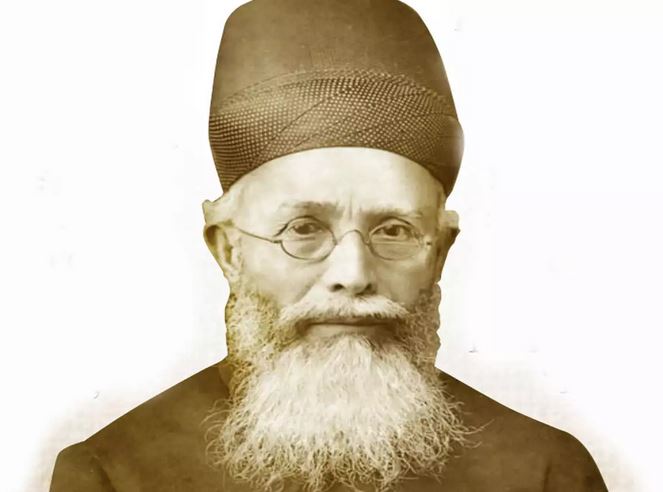
    In news: Dadabhai Naoroji (1825-1917)

    Note4Students

    From UPSC perspective, the following things are important:

    Prelims level: Dadabhai Naoroji

    Mains level: Not Much

    dadabhai

    Central Idea

    • Dadabhai Naoroji, the first Indian member of the British Parliament, played a significant role in India’s anti-colonial struggle.
    • His scholarly work exposed the economic exploitation of India under British rule, emphasizing the drain theory.

    Who was Dadabhai Naoroji?

    • Early Life: Naoroji was born in Navsari, Gujarat, into a Parsi Zoroastrian family. He received his education at the Elphinstone Institute School.
    • Social Reforms: He founded the Rahnumai Mazdayasan Sabha and the Rast Goftar newspaper to promote Parsi social reforms and clarify Zoroastrian concepts.
    • Political Activism: Naoroji co-founded the London Indian Society and the East India Association, advocating for Indian political rights and countering negative stereotypes.
    • Indian National Congress: He played a crucial role in the Indian National Congress and served as its President on three occasions.
    • British Parliament: Naoroji became the first Indian MP in the British House of Commons, representing Finsbury Central from 1892 to 1895.
    • Economic Critique: His book “Poverty and Un-British Rule in India” exposed the drain of wealth from India to Britain and its impact on India’s development.

    His proposition of Drain Theory and Poverty

    • Naoroji’s Drain Theory: He identified six factors contributing to the wealth drain, including foreign governance, lack of immigration, and unequal employment opportunities.
    • Impact of Drain: Naoroji estimated a drain of 200-300 million pounds from India to Britain, which hindered India’s economic progress.
    • Railways and Tribute: Naoroji argued that India paid for services like railways, but the profits were drained out of the country, leading to economic imbalances.
    • Exploitative Trade: British workers in India were encouraged to repatriate their earnings, and Indian goods were undervalued, allowing for economic exploitation.

    Major works

    • Started the Rast Goftar Anglo-Gujarati Newspaper in 1854.
    • The manners and customs of the Parsees (Bombay, 1864)
    • The European and Asiatic races (London, 1866)
    • Admission of educated natives into the Indian Civil Service (London, 1868)
    • The wants and means of India (London, 1876)
    • Condition of India (Madras, 1882)

    Legacy and Views

    • Naoroji’s Significance: He is considered a crucial figure in India’s independence movement, advocating for responsible government and Indian autonomy.
    • Influence on Gandhi: Mahatma Gandhi was influenced by Naoroji’s writings and recognized him as a father figure for the Indian people.
    • Admirations: Bal Gangadhar Tilak praised Naoroji’s leadership and stated that Indians would unanimously elect him if given the chance.
    • Recognition: Naoroji’s contributions are honoured through various roads, streets, and awards named after him.
  • Global Geological And Climatic Events

    Evidence of High Rainfall during Deccan Traps Volcanism

    Note4Students

    From UPSC perspective, the following things are important:

    Prelims level: NanoSIMS

    Mains level: Not Much

    deccan

    Central Idea

    • A team of scientists from IIT Kharagpur has discovered evidence of exceptionally high annual rainfall during the volcanic activity that formed the Deccan Traps in India around 66 million years ago.
    • Using a new technique called Nanoscale Secondary Ion Mass Spectrometry (NanoSIMS), the researchers analyzed the isotopic composition of fossil trees from the Cretaceous period.
    • They determined the isotopic composition of the rainfall-derived lake water.

    Nanoscale Secondary Ion Mass Spectrometry (NanoSIMS)

    • NanoSIMS is an advanced analytical technique to determine the composition and distribution of elements and isotopes at a microscopic scale.
    • It allows for high-resolution imaging and quantitative analysis of samples.
    • The technique involves bombarding the sample surface with a focused beam of primary ions.
    • This causes the ejection of secondary ions from the sample surface.
    • The secondary ions are collected and analyzed using a mass spectrometer.
    • The mass spectrometer separates the ions based on their mass-to-charge ratio and measures their abundance.

    Analysis and Findings

    • New Technique: The team used Nanoscale Secondary Ion Mass Spectrometry to analyze oxygen isotopes in fossil trees and measure the isotopic composition of the lake water derived from rainfall.
    • Depleted Oxygen Isotopes: The analysis revealed depleted oxygen isotope values, indicating higher tropical rainfall in India during the terminal Cretaceous period.
    • Link to Paleoclimatic Changes: The increase in rainfall closely corresponded to changes in paleo-atmospheric carbon dioxide levels, suggesting a potential underlying link between the two.

    Implications and Comparison

    • Atmospheric Carbon Dioxide Concentration: The eruption of Deccan Trap lavas released a significant amount of carbon dioxide, raising atmospheric levels to as high as 1,000 ppm.
    • Comparison to Modern Rainfall: The data from fossil trees indicated an annual rainfall of 1,800-1,900 mm, exceeding the average modern rainfall of 1,000-1,200 mm in most parts of peninsular India.
    • Climate Change Predictions: The findings align with predictions made by the Intergovernmental Panel on Climate Change (IPCC) for extreme warming scenarios, suggesting a correlation between high carbon dioxide levels and increased rainfall.

    Climate Models and Future Projections

    • Rising Carbon Dioxide Levels: Fossil fuel emissions have raised carbon dioxide levels from 280 ppm to about 420 ppm in 2023.
    • Impact on Rainfall: Climate models indicate that doubling carbon dioxide levels will intensify atmospheric circulation and subsequently increase rainfall.
    • IPCC AR6 Report: The report warns of a significant increase in the wettest day precipitation and tropical cyclone-associated rainfall if carbon dioxide emissions continue to rise unabated.

    Conclusion

    • The study provides evidence of high rainfall during the volcanic activity that formed the Deccan Traps in India millions of years ago.
    • The findings suggest a correlation between elevated carbon dioxide levels and increased rainfall, supporting predictions made by climate models for future climate change scenarios.


  • Global Geological And Climatic Events

    Gravity Hole in the Indian Ocean

    Note4Students

    From UPSC perspective, the following things are important:

    Prelims level: Gravity Hole

    Mains level: Not Much

    gravity hole
    The true shape of our Earth

    Central Idea

    • One intriguing phenomenon recently discovered is the presence of a significant “gravity hole” in the Indian Ocean, where the gravitational pull is notably weaker.
    • Recent research sheds light on the possible causes behind this anomaly.

    What is a Gravity Hole?

    • A “gravity hole” refers to a region on Earth where the gravitational pull is significantly weaker compared to the surrounding areas or the global average.
    • It is characterized by a dip or low gravity anomaly.
    • In such areas, the sea level may be lower than average due to the weaker gravitational force acting upon the water.
    • This term is often used to describe specific locations, such as the Indian Ocean geoid low (IOGL), where the gravitational pull is notably diminished compared to nearby regions.
    • The exact causes of gravity holes can vary and may involve factors such as variations in the Earth’s mass distribution or underlying geological features.

    What is Indian Ocean Geoid Low (IOGL)?

    • It is located approximately 1,200 kilometers southwest of the southernmost tip of India.
    • IOGL is an area in the Indian Ocean where the sea level is about 106 meters below the global average.

    Unraveling the Causes of IOGL

    • Discovering the Anomaly: Geophysicist Felix Andries Vening Meinesz first identified the IOGL during a survey in 1948. Since then, it has been confirmed by subsequent ship-based experiments and satellite measurements.
    • Ancient Ocean Hypothesis: Researchers from the Indian Institute of Science conducted computer-simulated models spanning 140 million years. They discovered remnants of an ancient ocean, located approximately 965 kilometers below the Earth’s crust, just beneath Africa.
    • Molten Rock Plumes: The simulations revealed molten rock plumes below Africa, potentially caused by tectonic plates subducting into the mantle. These plumes are believed to be a contributing factor to the IOGL.
    • Possible origination: Researchers said that the IOGL comprises slabs from the Tethys Sea, a long-lost sea that plunged into the depths of the planet millions of years ago. Tethys Sea, which once separated the supercontinents of Gondwana and Laurasia is believed to have perturbed the African Large Low Shear Velocity province.

    Future Perspectives

    • Lack of Seismic Evidence: While the simulated models suggest the presence of molten rock plumes beneath the Indian Ocean, seismographic evidence has yet to confirm their actual existence.
    • Additional Factors at Play: The researchers emphasize that other factors contributing to the gravitational anomaly in the Indian Ocean need to be further explored before reaching a definitive conclusion.
    • Further Research: Continuation of studies, including seismic surveys and detailed modelling, is necessary to gain a comprehensive understanding of the IOGL and its causes.
  • Global Geological And Climatic Events

    Places in news: Ubinas Volcano

    Note4Students

    From UPSC perspective, the following things are important:

    Prelims level: Ubinas Volcano

    Mains level: NA

    Central Idea

    • Peru declared a state of emergency for sixty days in areas around the Ubinas volcano.
    • The volcano has been spewing ash and gas and is probably set to erupt.

    Ubinas Volcano

    • Ubinas is an active stratovolcano located in the Moquegua Region of southern Peru, approximately 60 kilometers east of the city of Arequipa.
    • It is part of the Central Volcanic Zone of the Andes and stands at an elevation of 5,672 meters above sea level.

    Geological Characteristics

    • Stratovolcano Formation: Ubinas is characterized by its stratovolcano structure, comprising layers of hardened lava, ash, and other volcanic materials.
    • Caldera and Crater: The volcano’s summit contains a 1.4-kilometer-wide and 150-meter-deep caldera, within which lies a smaller crater. This distinct feature adds to the volcano’s geological significance.
    • Ubinas I and Ubinas II: The volcano exhibits an upwards-steepening cone shape, with a notable notch on its southern side. The lower part is referred to as Ubinas I, while the steeper upper section is known as Ubinas II, representing different stages in the volcano’s geological history.

    Volcanic Activity

    • Active Volcanic History: Ubinas is recognized as the most active volcano in Peru, displaying a history of small to moderate explosive eruptions and persistent degassing.
    • Notable Eruptions: The volcano has experienced notable eruptions throughout history, including the 2006–2007 event that resulted in eruption columns, ash fall, health concerns, and evacuations in the region.
    • Recent Activity: From 2013 to 2017, Ubinas exhibited lava flow within the crater, accompanied by ash falls, leading to further evacuations in nearby towns.

    Eruption and Impact

    • Ash and Gas Emissions: The Ubinas volcano has been actively spewing ash and gas.
    • Smoke Cloud and Affected Areas: The smoke cloud generated by the eruption has reached towns located up to 10 kilometers away from the volcano. This has raised concerns for the well-being of approximately 2,000 people residing in the affected areas.
    • The “Ring of Fire”: The region where Ubinas is situated falls within the “Ring of Fire,” an area around the Pacific Ocean known for its high volcanic and seismic activity.