💥UPSC 2026, 2027, 2028 UAP Mentorship (March Batch) + Access XFactor Notes & Microthemes PDF

Type: Species

  • Wildlife Conservation Efforts

    Rhino horns are shrinking

    Note4Students

    From UPSC perspective, the following things are important:

    Prelims level: Indian Rhino

    Mains level: Not Much

    rhino

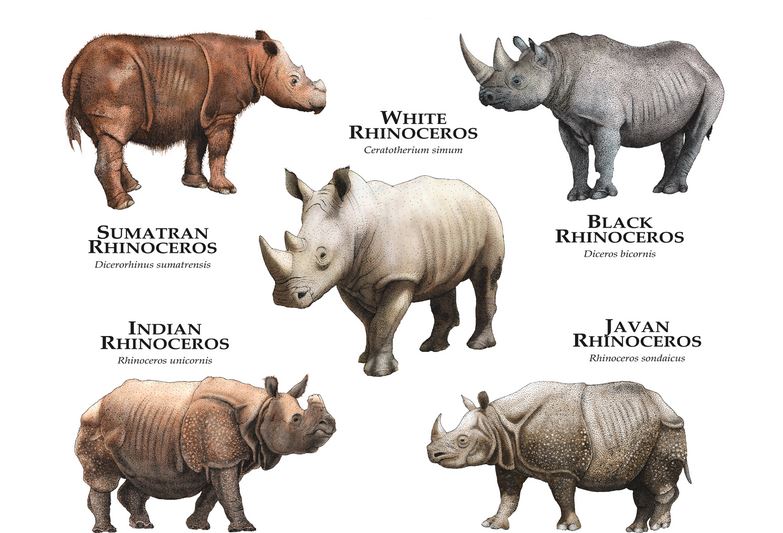
    The horns of rhinoceroses may have become smaller over time from the impact of hunting, according to a recent study spanning more than five centuries.

    About Indian Rhino

    • The Indian rhinoceros also called the greater one-horned rhinoceros and great Indian rhinoceros is a rhinoceros native to the Indian subcontinent.
    • It is listed as Vulnerable on the IUCN Red List and Schedule I animal in the Wildlife Protection Act, 1972.
    • It once ranged across the entire northern part of the Indian Subcontinent, along the Indus, Ganges and Brahmaputra River basins, from Pakistan to the Indian-Myanmar border.
    • Poaching for rhinoceros horn became the single most important reason for the decline of the Indian rhino.

    Why are Rhinos poached for horns?

    • Ground rhino horn is used in traditional Chinese medicine to cure a range of ailments, from cancer to hangovers, and also as an aphrodisiac.
    • In Vietnam, possessing a rhino horn is considered a status symbol.
    • Due to demand in these countries, poaching pressure on rhinos is ever persistent against which one cannot let the guard down.


    Click and get your FREE copy of Current Affairs micro notes

  • Wildlife Conservation Efforts

    Species in news: Amur Falcon

    Note4Students

    From UPSC perspective, the following things are important:

    Prelims level: Amur Falcon

    Mains level: NA

    falcon

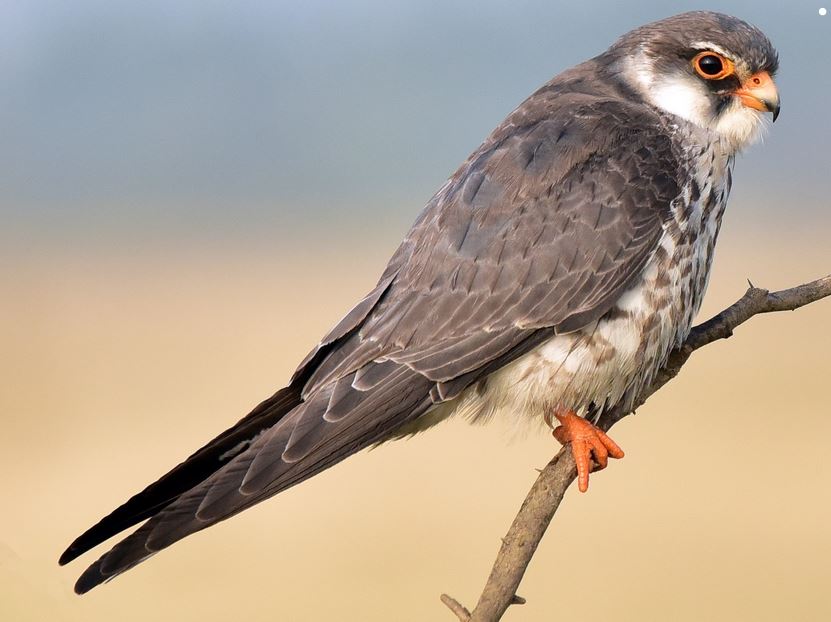
    The Amur falcons have begun to arrive in Manipur after travelling over 20,000 km.

    Amur Falcon

    • The Amur falcon (Falco amurensis) is a small raptor of the falcon family.
    • It breeds in south-eastern Siberia and Northern China before migrating in large flocks across India and over the Arabian Sea to winter in Southern and East Africa.

    How it migrates?

    • Locally known as Akhuipuina, the bird arrives mainly in Manipur and Nagaland on its southbound migration from breeding grounds in North China, Eastern Mongolia and far-east Russia.
    • They travel to Manipur en-route to its wintering grounds in South Africa.
    • The one-way journey via India is about 20,000 km long and the birds do this twice a year.
    • They spend three-four weeks in many parts of Manipur to build fat reserves by preying on termites that emerge around this time.

    Conservation status

    • It is protected under the Wildlife Protection Act 1972 and included under its Schedule IV.
    • It is listed in the IUCN Red list as Least Concern.
    • Hunting of the birds or possessing its meat is punishable with imprisonment up to three years or a fine up to Rs 5,000.
    • In 2018, the forest department started a conservation programme by radio-tagging the birds to study their migratory route.

    Click and get your FREE copy of Current Affairs micro notes

  • Wildlife Conservation Efforts

    Dolphins return to the Ganga

    Note4Students

    From UPSC perspective, the following things are important:

    Prelims level: Gangetic Dolphin

    Mains level: Not Much

    dolphin

    Dolphins have started coming back to the Ganga with improvement in the quality of the river water made possible by the Namami Gange Programme.

    About Gangetic Dolphin

    • The Gangetic river system is home to a vast variety of aquatic life, including the Gangetic dolphin (Platanista gangetica).
    • It is one of five species of river dolphin found around the world.
    • It is found mainly in the Indian subcontinent, particularly in Ganga-Brahmaputra-Meghna and Karnaphuli-Sangu river systems.
    • An adult dolphin could weigh between 70 kg and 90 kg. The breeding season of the Gangetic dolphin extends from January to June.
    • They feed on several species of fishes, invertebrates etc.

    Threats to Gangetic dolphins

    • The construction of dams and barrages and increasing pollution has led to a decline in the population of aquatic animals in the rivers in general and of dolphins in particular.
    • Aquatic life is an indicator of the health of river ecosystems.
    • As the Gangetic dolphin is at the top of the food chain, protecting the species and its habitat will ensure

    How are they conserved?

    • Although efforts to save them were started in the mid-1980s, the estimates suggest the numbers have not risen as a result.
    • The Gangetic dolphin remains listed as Endangered by the IUCN.
    • After the launch of Ganga Action Plan in 1985, the government on November 24, 1986, included Gangetic dolphins in the First Schedule of the Indian Wildlife (Protection), Act 1972.
    • This was aimed at checking hunting and providing conservation facilities such as wildlife sanctuaries.
    • For instance, Vikramshila Ganges Dolphin Sanctuary was established in Bihar under this Act.
    • It has been recognized as National Aquatic Animal of India.

    Policy moves for conservation

    • The government had prepared The Conservation Action Plan for the Ganges River Dolphin 2010-2020.
    • The National Mission for Clean Ganga celebrates October 5 as National Ganga River Dolphin Day.
    • There is also Project Dolphin on the lines of Project Tiger, which has helped increase the tiger population.


    Try this PYQ:

    Which one of the following is the national aquatic animal of India?

    (a) Saltwater crocodile

    (b) Olive ridley turtle

    (c) Gangetic dolphin

    (d) Gharial


    Post your answers here.


    Click and Get your FREE copy of Current Affairs Micro notes

  • New Species of Plants and Animals Discovered

    Species in news: Kannimara Teak

    Note4Students

    From UPSC perspective, the following things are important:

    Prelims level: Kannimara teak

    Mains level: Not Much

    The legendary Kannimara teak of the Parambikulam Tiger Reserve is still growing in height and girth.

    What is the news?

    • Over the last five years, the centuries-old teak has grown by 1.85 metres in height and 9 cm in girth.
    • This might be one of the largest and oldest teak tree in the world.

    Kannimara teak

    • Worshipped by the tribes of Parambikulam, the Kannimara teak remains a flagship of the tiger reserve offering a spectacular view to visitors.
    • For the tribespeople of Parambikulam, it is still a ‘virgin tree’.
    • That was why they named it Kannimara (meaning virgin tree).
    • The tribal legend has it that the tree had bled when people tried to cut it.
    • So they protected it and started worshipping the tree by offering annual pujas.
    • The Kannimara tree had won the Union government’s Mahavriksha Puraskar in its first year of introduction in 1994.


    UPSC 2023 countdown has begun! Get your personal guidance plan now! (Click here)

  • Wildlife Conservation Efforts

    World’s first Fishing Cat Census done in Chilika

    Note4Students

    From UPSC perspective, the following things are important:

    Prelims level: Fishing Cats

    Mains level: Not Much

    The Chilika Lake, Asia’s largest brackish water lagoon, has 176 fishing cats, according to a census done by the Chilika Development Authority (CDA) in collaboration with the Fishing Cat Project (TFCP).

    About Fishing Cats

    • About twice the size of a typical house cat, the fishing cat is a feline with a powerful build and stocky legs.
    • It is an adept swimmer and enters water frequently to prey on fish as its name suggests.
    • It is known to even dive to catch fish.
    • It is nocturnal and apart from fish also preys on frogs, crustaceans, snakes, birds, and scavenges on carcasses of larger animals.
    • It is capable of breeding all year round but in India its peak breeding season is known to be between March and May.

    Conservation status

    • IUCN Red List: Endangered
    • CITES: Appendix II
    • Indian Wildlife (Protection) Act, 1972: Schedule I

    Various threats

    • One of the major threats facing the fishing cat is the destruction of wetlands, which is its preferred habitat.
    • As a result of human settlement, drainage for agriculture, pollution, and wood-cutting most of the wetlands in India are under threat of destruction.
    • Another threat to the fishing cat is the depletion of its main prey-fish due to unsustainable fishing practices.
    • It is also occasionally poached for its skin.

    Back2Basics: Chilika Lake

    • Chilika Lake is a brackish water lagoon, spread over the Puri, Khurda and Ganjam districts of Odisha.
    • It is located at the mouth of the Daya River, flowing into the Bay of Bengal, covering an area of over 1,100 km2.
    • It is the largest coastal lagoon in India and the largest brackish water lagoon in the world after The New Caledonian barrier reef.
    • It has been listed Ramsar Site as well as a tentative UNESCO World Heritage site.

    Its formation

    • The process of the formation of the Chilika might have begun in the latter part of the Pleistocene epoch, around 20,000 years ago.
    • India’s peninsular river Mahanadi carried a heavy load of silt and dumped part of it at its delta.
    • As the sediment-laden river met the Bay of Bengal, sand bars were formed near its mouth.
    • These created a backflow of the seawater into the sluggish fresh water at the estuary, resulting in the huge brackish water lake.
    • Marine archaeological studies on the Odisha coast clearly show that the Chilika once acted as a safe harbor for cargo ships bound for Southeast Asia and other parts of the world.


    UPSC 2023 countdown has begun! Get your personal guidance plan now! (Click here)

  • New Species of Plants and Animals Discovered

    Posidonia Australis: World’s Largest Plant

    Note4Students

    From UPSC perspective, the following things are important:

    Prelims level: Posidonia Australis

    Mains level: Not Much

    The world’s largest plant has recently been discovered off the West Coast of Australia: a seagrass 180 km in length.

    Posidonia australis

    • The ribbon weed, or Posidonia australis, has been discovered in Shark Bay by a group of researchers from Flinders University and The University of Western Australia.
    • These researchers have also found that the plant is 4,500 years old, is sterile, has double the number of chromosomes than other similar plants.
    • It has managed to survive the volatile atmosphere of the shallow Shark Bay.

    So how remarkable is this plant’s size?

    • The ribbon weed covers an area of 20,000 hectares.
    • The next on the podium, the second largest plant, is the clonal colony of a quaking Aspen tree in Utah, which covers 43.6 hectares.
    • The largest tree in India, the Great Banyan in Howrah’s Botanical Garden, covers 1.41 hectares.

    If it is so large, how come it has just been discovered?

    • The existence of the seagrass was known, that it is one single plant was not.
    • Researchers were interested in what they then thought was a meadow because they wanted to study its genetic diversity, and collect some parts for seagrass restoration.

    How did it grow, and survive for, so long?

    • Sometime in the Harappan era, a plant took root in the Shark Bay.
    • Then it kept spreading through its rhizomes, overcoming everything in its way, and here we are today.
    • Ribbon weed rhizomes can usually grow to around 35cm per year, which is how the scientists arrived at its lifespan of 4,5000 years.
    • The researchers found that the ribbon weed cannot spread its seeds, something that helps plants overcome environmental threats.
    • Also, Shark Bay sees fluctuations in temperature and salinity and gets a lot of light, conditions challenging for any plant.

    Ecological significance

    • Because seagrass performs a vital role in the environment, and if some of it is hardy, it is good news for everyone in a world threatened by climate change.
    • In India, seagrass is found in many coastal areas, most notably in Gulf of Mannar and Palk Strait.
    • Apart from being home to a variety of small organisms, seagrass trap sediments and prevent water from getting muddy, absorb carbon from the atmosphere, and prevent coastal erosion.


    UPSC 2023 countdown has begun! Get your personal guidance plan now! (Click here)

  • New Species of Plants and Animals Discovered

    Species in news: Eublepharis pictus

    Note4Students

    From UPSC perspective, the following things are important:

    Prelims level: Eublepharis pictus

    Mains level: NA

    A gecko found in Visakhapatnam in 2017, then thought to belong to a known species, has now been identified as a member of a new species.

    Eublepharis pictus

    • The species, Eublepharis pictus, also known as the Painted Leopard Gecko, has been described in the journal Evolutionary Systematics.
    • Phylogenetic study and morphological comparisons have distinguished it as a new species.
    • It is endemic to the forests of Andhra Pradesh and Odisha.
    • The gecko genus Eublepharis now has 7 species.

    Conservation status

    • The species occurs outside protected areas.
    • Most leopard geckos are killed when encountered.
    • Activists have called for raising awareness about the fact that the species is actually harmless.


    UPSC 2023 countdown has begun! Get your personal guidance plan now! (Click here)

  • New Species of Plants and Animals Discovered

    Species in news: Sela Macaque

    Note4Students

    From UPSC perspective, the following things are important:

    Prelims level: Sela Macaque, Sela Pass

    Mains level: Not Much

    A new species of old world monkey recorded from Arunachal Pradesh has been named after a strategic Sela pass at 13,700 ft above sea level.

    Sela macaque (Macaca selai).

    • This new primate was identified and analysed by a team of experts from the Zoological Survey of India (ZSI) and the University of Calcutta.
    • Earlier it was called as White- Cheeked Macaque displaying white cheeks, long and thick hairs on the neck area, and a longer tail.
    • Their study has been published in the latest edition of Molecular Phylogenetics and Evolution.
    • Phylogenetics relate to the evolutionary development and diversification of a species or group of organisms.
    • The phylogenetic analysis revealed that the Sela macaque was geographically separated from the Arunachal macaque (Macaca munzala) of Tawang district by Sela.
    • This mountain pass acted as a barrier by restricting the migration of individuals of these two species for approximately two million years.

    Protection status

    • It has NOT been yet included in the Wildlife (Protection) Act, 1972 of India.
    • The potential threat to all species of macaques in the landscape is due to hunting by locals for consumption and habitat degradation due to urbanization and infrastructure development.

     About Sela Pass

    • The Sela Pass is a high-altitude mountain pass located on the border between the Tawang and West Kameng districts in Arunachal Pradesh.
    • It has an elevation of 4170 m and connects the Indian Buddhist town of Tawang to Dirang and Guwahati.
    • The pass supports scarce amounts of vegetation and is usually snow-covered to some extent throughout the year.
    • While Sela Pass does get heavy snowfall in winters, it is usually open throughout the year unless landslides or snow require the pass to be shut down temporarily.
    • The strategically-significant Sela Tunnel project is now nearing completion well before the deadline.


    UPSC 2023 countdown has begun! Get your personal guidance plan now! (Click here)

  • Wildlife Conservation Efforts

    Species in news: Indian Tent Turtles

    Note4Students

    From UPSC perspective, the following things are important:

    Prelims level: Indian Tent Turtles

    Mains level: Not Much

    Indian tent turtle is now listed in Schedule –I of the Wild Life (Protection) Act, 1972 and is thereby provided the highest degree of protection.

    Why in news?

    • The Indian tent turtle is threatened due to illegal mining in Narmada River.
    • This turtle has also been widely traded as a pet at aquariums.

    Indian Tent Turtles

    IUCN status: Least Concerned

    • The Indian tent turtle (Pangshura tentoria) is a species of turtle in the family Geoemydidae. The species is endemic to India and Bangladesh.
    • Its preferred habitats are freshwater rivers and swamps.
    • The species is native to India, Nepal and Bangladesh, with three subspecies recorded from the region viz., P. t. tentoria, P. t. circumdata and P. t. flaviventer.
    • t. tentoria occurs in peninsular India and is recorded from Orissa, Maharashtra, Andhra Pradesh, Assam and Madhya Pradesh.
    • t. circumdata occurs in the western tributaries of Ganga and the rivers of Gujarat. It is found in Rajasthan, Madhya Pradesh, Uttar Pradesh and Gujarat.
    • t. flaviventer occurs in the northern tributaries of Ganga and is recorded from Uttar Pradesh, Bihar, West Bengal and Assam.

    Back2Basics:  Wildlife (Protection) Act, 1972

    • WPA provides for the protection of the country’s wild animals, birds and plant species, in order to ensure environmental and ecological security.
    • It provides for the protection of a listed species of animals, birds and plants, and also for the establishment of a network of ecologically-important protected areas in the country.
    • It provides for various types of protected areas such as Wildlife Sanctuaries, National Parks etc.

    There are six schedules provided in the WPA for protection of wildlife species which can be concisely summarized as under:

    Schedule I: These species need rigorous protection and therefore, the harshest penalties for violation of the law are for species under this Schedule.
    Schedule II: Animals under this list are accorded high protection. They cannot be hunted except under threat to human life.
    Schedule III & IV: This list is for species that are not endangered. This includes protected species but the penalty for any violation is less compared to the first two schedules.
    Schedule V: This schedule contains animals which can be hunted.
    Schedule VI: This list contains plants that are forbidden from cultivation.


    UPSC 2022 countdown has begun! Get your personal guidance plan now! (Click here)


  • Wildlife Conservation Efforts

    Rhino population up by 200 in Kaziranga

    Note4Students

    From UPSC perspective, the following things are important:

    Prelims level: Indian Rhino

    Mains level: Not Much

    The population of the greater one-horned or Indian rhinoceros in the Kaziranga National Park and Tiger Reserve has increased by 200 (from 2413 in 2018) in four years, the latest census of the flagship animal has revealed.

    About Indian Rhino

    • The Indian rhinoceros also called the greater one-horned rhinoceros and great Indian rhinoceros is a rhinoceros native to the Indian subcontinent.
    • It is listed as Vulnerable on the IUCN Red List and Schedule I animal in the Wildlife Protection Act, 1972.
    • It once ranged across the entire northern part of the Indian Subcontinent, along the Indus, Ganges and Brahmaputra River basins, from Pakistan to the Indian-Myanmar border.
    • Poaching for rhinoceros horn became the single most important reason for the decline of the Indian rhino.

    Why are Rhinos poached for horns?

    • Ground rhino horn is used in traditional Chinese medicine to cure a range of ailments, from cancer to hangovers, and also as an aphrodisiac.
    • In Vietnam, possessing a rhino horn is considered a status symbol.
    • Due to demand in these countries, poaching pressure on rhinos is ever persistent against which one cannot let the guard down.

    Try this PYQ:

    Q. Consider the following statements:

    1. Asiatic lion is naturally found in India only.
    2. Double-humped camel is naturally found in India only.
    3. One-horned rhinoceros is naturally found in India only.

    Which of the statements given above is/are correct?

    (a) 1 only

    (b) 2 only

    (c) 1 and 3 only

    (d) 1, 2 and 3


    Post your answers here.

    UPSC 2022 countdown has begun! Get your personal guidance plan now! (Click here)