💥UPSC 2026, 2027, 2028 UAP Mentorship (March Batch) + Access XFactor Notes & Microthemes PDF

Type: Species

  • New Species of Plants and Animals Discovered

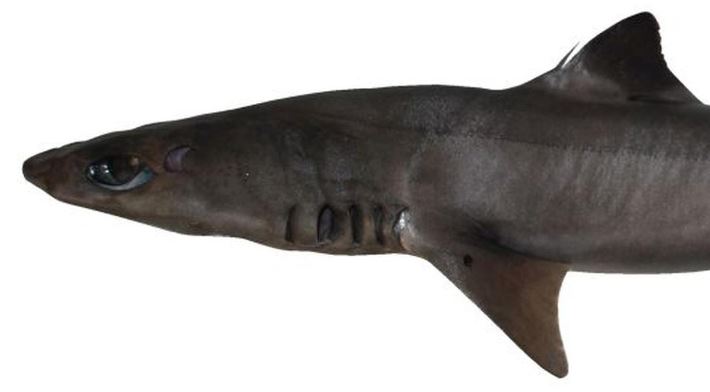
    Squalus hima: A new deep-water Dogfish Shark discovered in Kerala

    Note4Students

    From UPSC perspective, the following things are important:

    Prelims level: Squalus hima

    Why in the News?

    Scientists from the Zoological Survey of India (ZSI) have discovered a new species of deep-water dogfish shark, Squalus hima, from the Sakthikulangara fishing harbour in Kerala along the Arabian Sea.

    About Squalus hima

    • Squalus is a genus of dogfish sharks in the family Squalidae, commonly known as spurdogs, characterized by smooth dorsal fin spines.
    • The new species, Squalus hima sp. nov., has been misidentified with S. mitsukurii and S. lalannei in the past.
    • Squalus hima differs from other species by the number of precaudal vertebrae, total vertebrae, teeth count, trunk and head heights, fin structure, and fin colour.

    Comparison with Other Species

    • On the Indian coast, two species of Squalus are found from the southwest coast of India.
    • The new species, Squalus hima n.sp., is very similar to Squalus lalannei but differs in many characteristics.
    • Species in the Squalus megalops group are characterized by an angular short snout, a small mouth almost as wide as the snout, the first dorsal fin origin behind the pectoral fins, and a body without any spots.

    Economic and Conservation Implications

    • Sharks in the genus Squalus and Centrophorus are exploited for their liver oil, which contains high levels of squalene, used in high-end cosmetic and anti-cancer products.
    • Fishermen from southern India and the Andaman and Nicobar Islands harvest these sharks for their liver oil, making conservation of these species critical.

    Importance of the Discovery

    • The discovery of Squalus hima is significant for the conservation of shark species exploited for commercial purposes.
    • Dogfish sharks are commercially important for their fins, liver oil, and meat and are sometimes caught as by-catch in fisheries targeting other species.

    PYQ:

    [2019] Consider the following pairs:

    Wildlife Naturally found in
    1. Blue-finned Mahseer Cauvery River
    2. Irrawaddy Dolphin Chambal River
    3. Rusty-spotted Cat Eastern Ghats

    Which of the pairs given correctly matched?

    (a) 1 and 2 only

    (b) 2 and 3 only

    (c) 1 and 3 only

    (d) 1, 2 and 3

  • Wildlife Conservation Efforts

    Threats to Island Reptiles and Cacti Highlighted by IUCN

    Note4Students

    From UPSC perspective, the following things are important:

    Prelims level: Species mentioned; IUCN.

    Why in the News?

    The International Union for Conservation of Nature (IUCN) has issued an update on the threats faced by various reptile and cactus species due to invasive species and illegal trade.

    Species highlighted by the IUCN

    Species Status Change Reason for Decline Location Threats
    Ibiza Wall Lizard

    Near Threatened → Endangered 50% population decline since 2010 due to invasive snake Ibiza, Spain Invasive horseshoe whip snake (Haemorrhoids Hippocrepis)
    Gran Canaria Giant Lizard

    Least Concern → Endangered >50% decline since 2014 due to the introduction of California Kingsnake Gran Canaria, Spain California Kingsnake (Lampropeltis California)
    Gran Canaria Skink

    Least Concern → Endangered >50% decline since 2014 due to the introduction of California Kingsnake Gran Canaria, Spain California Kingsnake (Lampropeltis California)
    Copiapoa Cacti

    Critically Endangered 82% critically endangered, up from 55% in 2013 Atacama Desert, Chile Illegal trade for ornamental purposes, climate change impacts


    Back2Basics: IUCN Overview Table

    Details
    Founded 1948
    Headquarters Gland, Switzerland
    Mission To conserve nature and ensure the sustainable and equitable use of natural resources.
    Focus Areas
    • Initially conservation ecology
    • Now includes sustainable development issues
    Influence
    • Influences governments, businesses, and stakeholders
    • Known for the IUCN Red List of Threatened Species
    IUCN Red List
    • Estimates the probability of species’ extinction for animals, fungi, and plants globally
    • Public and universally accessible
    • Provides specific data on species’ attributes, dangers, and protection efforts
    • Assists in conservation decisions and policy-making
    Categories of Extinction Risk
    • Nine categories from NE (Not Evaluated) to EX (Extinct)
    • Threatened categories: Critically Endangered (CR), Endangered (EN), and Vulnerable (VU)
    Global Targets Indicator Serves as a headline indicator for SDGs and Aichi Targets
    IUCN Green Status of Species
    • Assesses the effectiveness of recovery and conservation processes for species’ populations
    • Categories: EW (Extinct in the Wild), CR (Critically Endangered), LR/cd (Least Concern/Conservation Dependent), MOD (Moderately Depleted), SL (Stable), FR (Fluctuating Range), ND (Not Determined), ID (Insufficient Data)


    PYQ:

    [2023] Invasive Species Specialist Group’ (that develops Global Invasive Species Database) belongs to which one of the following organizations?

    (a) The International Union for Conservation of Nature
    (b) The United Nations Environment Programme
    (c) The United Nations World Commission for Environment and Development
    (d) The World Wide Fund for Nature

    [2015] With reference to the International Union for Conservation of Nature and Natural Resources (IUCN) and the Convention on International Trade in Endangered Species of Wild Fauna and Flora (CITES), which of the following statements is/are correct?

    1. IUCN is an organ of the United Nations and CITES is an international agreement between governments
    2. IUCN runs thousands of field projects around the world to better manage natural environments.
    3. CITES is legally binding on the States that have joined it, but this Convention does not take the place of national laws.

    Select the correct using the code given below.
    (a) 1 only
    (b) 2 and 3 only
    (c) 1 and 3 only
    (d) 1, 2 and 3

  • Wildlife Conservation Efforts

    Indian Star Tortoises rescued from Malaysia

    Note4Students

    From UPSC perspective, the following things are important:

    Prelims level: Indian Star Tortoise; TRAFFIC

    Why in the News?

    Malaysia has seized about 200 smuggled Indian Star Tortoises and Turtles in a major crackdown. The Indian star tortoise is the single most confiscated species of freshwater tortoise in the world, according to wildlife trade watchdog TRAFFIC.

    About Indian Star Tortoises (Geochelone elegans)

    Details
    Habitat
    • Found in Central and Southern India, West Pakistan, and Sri Lanka
    • Typically resides in dry, open habitats such as scrub forests, grasslands, and rocky outcroppings
    Threats
    • Habitat fragmentation due to urbanization and agricultural practices
    • Loss of genetic diversity due to hybridization
    • 90% of trade occurs in the international pet market, according to the Wildlife Crime Control Bureau
    Protection Status
    • IUCN Red List: Vulnerable
    • Wild Life Protection Act 1972: Schedule I
    • CITES: Appendix I


    Back2Basics: TRAFFIC (Trade Records Analysis of Flora and Fauna in Commerce)

    Details
    Founded 1976
    Headquarters Cambridge, United Kingdom
    Mission Ensure that trade in wild plants and animals does not threaten the conservation of nature.
    Founding Partners World Wildlife Fund (WWF) and the International Union for Conservation of Nature (IUCN)
    Focus Areas
    • Biodiversity Conservation
    • Sustainable Development
    Governance
    • TRAFFIC Committee (WWF and IUCN members)
    • Cooperation with the CITES Secretariat
    Staff Expertise Biologists, conservationists, academics, researchers, communicators, investigators
    Global Network Research-driven, action-oriented global network
    Key Functions
    • Evolution of wildlife trade treaties
    • Expertise on urgent species trade issues (tiger parts, elephant ivory, rhino horn)
    • Addressing large-scale commercial trade in timber and fisheries products
    TRAFFIC in India
    • Programme Division of WWF-India since 1991
    • Based in New Delhi
    • Collaborates with national and state governments to curb illegal wildlife trade


    PYQ:

    [2013] Consider the following:

    1. Star tortoise
    2. Monitor lizard
    3. Pygmy hog
    4. Spider monkey

    Which of the above are naturally found in India?

    (a) 1, 2 and 3 only
    (b) 2 and 3 only
    (c) 1 and 4 only
    (d) 1, 2, 3 and 4

  • Wildlife Conservation Efforts

    Great Indian Bustard Recovery Plan

    Note4Students

    From UPSC perspective, the following things are important:

    Prelims level: Great Indian Bustard and its recovery

    bustard

    Why in the News?

    • The Compensatory Afforestation Fund Management and Planning Authority (CAMPA) approved Rs 56 crore for the next phase of the conservation program for the Great Indian Bustard (GIB) and the Lesser Florican for the 2024-2029 period.

    Note: Both the Bustard and Lesser Florican are critically endangered, with only 140 Bustards and less than 1,000 Lesser Floricans surviving.

    Back2Basics:  Compensatory Afforestation Fund Management and Planning Authority (CAMPA)

    Details
    Establishment
    • Established by the MoEFCC.
    • Legal Basis: Compensatory Afforestation Fund Act, 2016.
    Objective Ensure effective utilization of funds for compensatory afforestation, catchment area treatment, wildlife management, and forest resource development.
    Background Created due to the diversion of forest land for non-forest purposes; aimed at mitigating the loss of forest cover through compensatory afforestation.
    Structure National CAMPA Advisory Council: Provides policy advice and ensures inter-ministerial coordination.

    State CAMPAs: Manage funds and oversee implementation at the state level.

    Fund Utilization Funds are used for afforestation, forest ecosystem regeneration, wildlife protection, forest infrastructure, and conservation activities.
    Key Activities
    • Afforestation and reforestation
    • Wildlife management
    • Forest management
    • Soil and moisture conservation
    Financial Management
    • Managed by CAMPA at national and state levels;
    • Funds are non-lapsable and specifically allocated for forestry and wildlife activities.
    Monitoring and Reporting Includes regular audits and progress reports to ensure transparency and accountability in fund utilization and project implementation.
    Legal Framework Governed by the Compensatory Afforestation Fund Act, 2016

    CAMPA Guidelines.

    Impact and Significance Crucial for mitigating deforestation impacts, supporting ecological balance, biodiversity conservation, and sustainable forest management.

    About Great Indian Bustards

    • GIBs are the largest among the four bustard species found in India, the other three being MacQueen’s bustard, the lesser florican, and the Bengal florican.
    • GIBs’ historic range included much of the Indian sub-continent but it has now shrunken to just 10 percent of it.
      • Among the heaviest birds with flight, GIBs prefer grasslands as their habitats.
    • GIBs are mainly found in Desert National Park, Rajasthan.
    • Bustards face major threats, including habitat changes and collisions with power lines.
    • Protection accorded:
      • Birdlife International: uplisted from Endangered to Critically Endangered (2011)
      • Protection under CITES: Appendix I
      • IUCN status: Critically Endangered
      • Protection under Wildlife (Protection) Act: Schedule I

    What is the GIB Recovery Plan?

    • The proposal was prepared by the Wildlife Institute of India (WII).
    • The proposal includes:
      • Rewilding Bustards bred in ex-situ conservation centres,
      • Conducting detailed population studies, and
      • Developing artificial insemination techniques.

    Back2Basics: Wildlife Institute of India (WII)

    • WII is an autonomous institution under the Ministry of Environment, Forest and Climate Change.
    • It was established in 1982.
    • It is based in Dehradun, Uttarakhand.
      • Functions: It offers training programs, academic courses, and advisory in wildlife research and management.

    Why such a move?

    • Indicator Species: The GIB is a key indicator species of grassland habitat, signalling the health of these environments.
    • Population Decline: The population has declined from around 700 individuals to less than 150 due to habitat loss, predation, and death by overhead power lines.
    • Supreme Court Order: The Supreme Court recognized the threat from power lines and constituted an expert committee to assess the feasibility of overhead and underground electric lines in the bustard’s habitats.

    Conservation Efforts and Achievements

    • Recovery Plan: Initial efforts began between 2012-2013 with a long-term recovery project, which firmed up in 2016 with a Rs 33.85 crore funding outlay.
    • Funding and Agreements: The project was funded by the Compensatory Afforestation Fund, with a tripartite agreement in 2018 involving the Environment Ministry, Rajasthan Forest Department, and WII.
    • In-Situ Breeding: Conservation breeding began in 2019, resulting in a founder population of 40 GIBs at the Ramdevra centre.

    Achievements at Breeding Centres

    • Successful Breeding: Eggs collected from the wild were incubated and chicks were hand-reared. The breeding centres now have a founder population of 40 GIBs.
    • Scientific Reasoning: Creating a founder population prevents extirpation and captures genetic variability. The goal is to have at least 20 adult birds including 15 females.

    Future Plans

    • Next Phase (2024-2033): The immediate next phase will run until 2029, targeting the upgradation of the CBC at Ramdevra and the development of the Lesser Florican CBC at Sorsan.
    • Population Surveys: Surveys will be conducted in Rajasthan and other range states to monitor population status.
    • Release into the Wild: The most important target is releasing captive-bred GIBs into the wild, preceded by soft release in enclosures.

    PYQ:

    [2020] With reference to India’s Desert National Park, which of the following statements are correct?
    1. It is spread over two districts.
    2. There is no human habitation inside the Park.
    3. It is one of the natural habitats of the Great Indian Bustard.
    Select the correct answer using the code given below:
    (a) 1 and 2 only
    (b) 2 and 3 only
    (c) 1 and 3 only
    (d) 1, 2 and 3

    [2019] Consider the following statements:

    1. As per law, the Compensatory Afforestation Fund Management and Planning Authority exists at both National and State levels.
    2. People’s participation is mandatory in the compensatory afforestation programmes carried out under the Compensatory Afforestation Fund Act, 2016.

    Which of the statements given above is/are correct?

    (a) 1 only
    (b) 2 only
    (c) Both 1 and 2
    (d) Neither 1 nor 2

  • Wildlife Conservation Efforts

    Striped Caecilian: Limbless Amphibian spotted in Kaziranga’s fauna

    Note4Students

    From UPSC perspective, the following things are important:

    Prelims level: Striped Caecilian, Herpetofauna

    Why in the News?

    • A limbless amphibian, the striped caecilian (Ichthyophis spp), has been newly identified within the 1,307.49 sq. km Kaziranga National Park and Tiger Reserve.
      • Assam’s wildlife officials reported its discovery during a herpetofauna survey.

    Back2Basics: Herpetofauna

    • Herpetofauna refers to a group of reptiles and amphibians collectively.
    • The term combines “herpeto-” from the Greek “herpeton,” meaning “creeping animal,” and “fauna,” referring to the animal species found in a particular region or time.
    • Herpetofauna play essential roles in ecosystems:
      • They act as both predators and prey, help regulate insect populations, and serve as indicators of environmental health.
      • They serve as environmental indicators and play significant roles in pest control.

    About Striped Caecilian

    • The Striped Caecilian (Ichthyophis spp.) is a type of limbless amphibian belonging to the family Ichthyophiidae.
    • Caecilians are often mistaken for snakes or worms due to their elongated, cylindrical bodies and lack of limbs.
    • They are primarily found in tropical regions of Africa, Asia, and the Americas.
    • They usually live underground or in moist soil habitats.

    Key features of the Striped Caecilian include:

    1. They have smooth, cylindrical bodies with a ringed or striped pattern, hence the name “striped.”
    2. Caecilians are predominantly fossorial (burrowing), spending most of their lives underground or in leaf litter. This behaviour makes them elusive and difficult to study.
    3. They are carnivorous, feeding on small invertebrates found in soil and leaf litter.
    4. Their eyesight is generally poor, and they rely on chemoreception (sensing chemicals in the environment) to locate prey.
    5. Caecilians are known for their unique reproductive strategies, which can involve live births or laying eggs. Some species exhibit parental care, with adults guarding eggs or young offspring.

    Significance: Kaziranga’s Biodiversity

    • Kaziranga National Park’s diverse ecosystem, encompassing flood plains, wetlands, grasslands, and hill tracts, provides an ideal habitat for herpetofauna.
    • The park hosts 24 amphibian species, 74 reptile species, and 21 of India’s 29 species of tortoises and freshwater turtles.

    About Kaziranga National Park

    Details
    Location Assam, India
    Geographical Features Situated between Brahmaputra River and Karbi (Mikir) Hills
    Significance Eastern Himalayan Biodiversity Hotspot
    Rivers Diphlu River runs through the park
    Highways National Highway 37 passes through the park
    Legal Status
    • Designated as a National Park in 1974.
    • UNESCO World Heritage Site (1985).
    • Important Bird Area by Birdlife International
    Key Conservation Achievements
    • Houses around 2/3rd of the world’s Great Indian One-Horned Rhinoceros.
    • Declared a Tiger Reserve due to high tiger density
    ‘Big Five’ species Great Indian One-Horned Rhino, Asian Elephant, Royal Bengal Tiger, Asiatic Water Buffalo, Swamp Deer
    Aquatic Species Gangetic River Dolphin
    Vegetation Wet Alluvial Grasslands, Tropical Moist Deciduous Forests, Semi-Evergreen

    Forests


    PYQ:

    [2024] The organisms “Cicada, Froghopper and Pond skater are:

    (a) Birds

    (b) Fish

    (c) Insects

    (d) Reptiles

  • New Species of Plants and Animals Discovered

    Phtheirospermum Lushaiorum: Hemiparasite Plant Species named after Lushai Tribe  

    Note4Students

    From UPSC perspective, the following things are important:

    Prelims level: Phtheirospermum Lushaiorum:

    Mains level: NA

    Why in the News?

    • A rare hemi-parasitic terrestrial plant has been found in Phawngpui National Park of Mizoram.
      • It has been named ‘Phtheirospermum Lushaiorum’ after the Lushai tribe of Mizoram, honoring their commitment to biodiversity conservation.

    About  Lushai Tribe

      • Lushai is another tribe under the Kuki-chin group (racially from Mongolia) of tribes.
        • They are commonly known as Mizos.
        • In Tripura there are 5,384 persons (as per 2011 Census).
      • Occupation: They mostly reside in the Jampui Hills area of Tripura and have Jhum Cultivation and hunting of wild animals as their main occupation.
    • Culture and belief:
      • converted to Christianity and still follow Christianity as their religion.
      • Their Cheraw Dance (Bamboo Dance) is quiet famous.

    About Phtheirospermum Lushaiorum

    • This plant lacks a fully developed root system and taps into the sap of host plants through specialized structures known as haustoria.
    • Despite its parasitic nature, it contains chlorophyll and can produce its food, showing some independence from its host.
    • It flowers from July to September, with fruit production occurring from August to October.
    • The plant grows near a popular trekking route in Phawngpui National Park, facing threats from both anthropogenic activities and natural factors.

    Back2Basics: Phawngpui National Park

      • Also known as Blue Mountain National Park, it is one of the two national parks in Mizoram (the other being Murlen NP).
    • Geographical location:
        • Close to the border with Burma (Myanmar).
        • The park overlooks the Chhimtuipui River, which flows toward Burma.
        • The geography of Phawngpui is characterized by its cloud-covered mountain area, which gives it a distinctive blue appearance from a distance.
    • Flora and Fauna:
        • Bird species:Blyth’s tragopan, falcons, sunbirds, dark-rumped swifts, and the Mizoram state bird, Mrs. Hume’s pheasant.
        • Mammals: Mountain goat, slow loris, tiger, leopard, leopard cat, serow, goral, Asiatic black bear, stump-tailed macaque, and capped langur. 
    • Flora: Grassy meadows, orchids, rhododendrons, and bamboo groves.


    PYQ:

    [2016] Recently, our scientists have discovered a new and distinct species of banana plant which attains a height of about 11 meters and has orange-coloured fruit pulp. In which part of India has it been discovered?

    (a) Andaman Islands

    (b) Anaimalai Forests

    (c) Maikala Hills

    (d) Tropical rain forests of Northeast

  • Wildlife Conservation Efforts

    Scientists document Sperm Whales ‘Phonetic Alphabet’

    Note4Students

    From UPSC perspective, the following things are important:

    Prelims level: Sperm Whales, Project CETI

    Why in the news?

    • A recent study has uncovered the intricate structure of their communication system, which appears to possess a “phonetic alphabet,” offering new insights into the depth of their social interactions.
      • Sperm whales, the largest toothed whales, utilize a diverse array of vocalizations to communicate, including bursts of clicking noises known as ‘codas’.

    About Sperm Whales (Physeter macrocephalus)).

    • Sperm whales, the largest toothed whales
    • It has a series of vertical creases or wrinkles on its body and a small, inconspicuous dorsal fin located near the rear of its back.
    • The sperm whale uses ‘echolocation’ to navigate and locate prey during these deep dives.
      • Prey: Sperm whales primarily feed on squid (including the giant squid) sharks and deep-sea fish.
      • Habitat: Sperm whales are found in deep oceanic waters worldwide, from the equator to the edges of the pack ice in the Arctic and Antarctic.
      • Behavior: Known for their exceptional diving capabilities, sperm whales can dive to depths of over 2,000 meters (6,560 feet) and stay submerged for up to 90 minutes. They are social animals, typically found in groups called pods’, which can contain up to twenty individuals.
    • Conservation Status: Listed as ‘VULNERABLE’ by the IUCN.
      • Threats cause: Collisions with ships, entanglement in fishing gear, and noise pollution.

    Insights from the Study:

    • Expressivity: The study, which utilized data from Project CETI demonstrated that sperm whale calls exhibit a broader range of expressivity than previously recognized, hinting at a nuanced mode of communication.
    • Social Dynamics: Like all marine mammals, sperm whales rely heavily on vocalizations as an integral aspect of their social interactions.
    • Contextual Analysis: The next phase of research aims to decipher the behavioural context surrounding sperm whale vocalizations, shedding light on their potential meanings.

    About Project CETI (Cetacean Translation Initiative)

    • Project CETI is a non-profit, interdisciplinary scientific and conservation initiative on a mission to listen to and translate the communication of sperm whales off the island of Dominica in the Eastern Caribbean.


    PYQ:

    [2013] Consider the following animals

    1. Sea cow
    2. Sea horse
    3. Sea lion

    Which of the above is/are mammal/mammals?

    (a) 1 only

    (b) 1 and 3 only

    (c)  2 and 3 only

    (d) 1, 2 and 3

  • Forest Conservation Efforts – NFP, Western Ghats, etc.

    Preserving Rajasthan’s Semal Trees 

    Note4Students

    From UPSC perspective, the following things are important:

    Prelims level: Semal Trees and its habitat

    Mains level: NA

    Why in the News?

    Despite its ecological importance, rampant harvesting of Semal Trees for bonfires poses a grave threat to their existence, undermining biodiversity and cultural heritage alike.

    About Semal/ Silk Cotton Trees

    • The Semal tree, scientifically known as Bombax ceiba, is a deciduous tropical tree.
    • It is native to India, South-East Asia, and Northern Australia.
    • It can grow up to 60 meters tall. It has a distinctive straight trunk, often with spiky thorns, and a wide, spreading canopy.
    • It produces vivid red flowers that are large and attractive, making it quite conspicuous when in bloom.
    • The fruit of the Semal tree is a capsule that contains several seeds surrounded by a fibrous, cotton-like substance which is wind-dispersed.

    Commercial Uses

    • The fibers extracted from the fruit, known as kapok, are used for stuffing pillows, mattresses, and life jackets due to their buoyancy and insulating properties.
    • The wood is soft and is often used for making paper, while in rural areas, it is used as fuelwood and for making cheap furniture.

    Ecological Significance

    • Members of tribal communities consume the tree’s reddish root for food during the monsoons.
    • Larvae of the moth Bucculatrix crateracma feed on its leaves.
    • The golden-crowned sparrow weaves the lining of its nests with white cotton from its seeds.

    Felling of a Semal Tree: Which laws are violated?

    1. Rajasthan Forest Act 1953: This act prohibits various activities in reserved forests without prior permission. Specifically, it bars any unauthorized person from felling, uprooting, damaging, or otherwise harming trees. Violating these prohibitions can lead to penalties including imprisonment, fines, or both, depending on the severity of the offence. Semal tree is not recorded in the state’s list of ‘rare, threatened, and endangered’ species. (Trees on this list enjoy priority conservation efforts.) (Indian Kanoon)​
    2. Forest (Conservation) Act 1980: This act is more comprehensive at the national level and was enacted to provide for the conservation of forests and to regulate deforestation. It requires that any non-forest use of forest land must have prior approval from the Central Government. This includes clearances for felling trees, which are only granted under specific conditions that ensure the conservation and sustainable use of forest resources.​ (UNEPLawEnvAssistantPlat)​

    PYQ:

    [2015] In India, in which one of the following types of forests is teak a dominant tree species?

    (a) Tropical moist deciduous forest

    (b) Tropical rainforest

    (c) Tropical thorn scrub forest

    (d) Temperate forest with grasslands

  • Wildlife Conservation Efforts

    Species in news: Himalayan Magpies 

    Note4Students

    From UPSC perspective, the following things are important:

    Prelims level: Himalayan Magpies

    Mains level: NA

    Why in the news?

    Blue magpie species are frequently observed from Kashmir to Myanmar.

    About Himalayan Magpies

    • Magpies belong to the Corvidae family, which also includes crows, jays, and ravens.
    • These birds are typically noisy and inquisitive, often featured as omens in folklore around the world.
    • Species Distribution and Habitat:
      • Gold-billed Magpie (Urocissa flavirostris): Also known as the yellow-billed blue magpie, this species inhabits high altitudes between 2,000 and 3,000 meters above sea level, thriving in the high-altitude zones of the Himalayas from Kashmir to Myanmar.
      • Red-billed Magpie: Found at slightly lower altitudes than the gold-billed magpie.
      • Blue Magpie: Occupies lower altitudes and is more likely to be found near human settlements. It builds nests in rhododendron trees.
    • IUCN Status: ‘Least Concerned’

    Observations:

    • The best sightings of yellow and red-billed magpies are along a trekking corridor in Western Sikkim, which spans from tropical forests at lower altitudes to Alpine landscapes.
    • Over 250 species of birds have been documented in this region, with significant bird activity around 2,500 meters.

    PYQ:

    [2014] If you walk through countryside, you are likely to see some birds stalking alongside the cattle to seize the insects, disturbed by their movement through grasses.

    Which of the following is/are such bird/birds?

    1. Painted Stork
    2. Common Myna
    3. Black-necked Crane

    Select the correct answer using the code given below.

    (a) 1 and 2

    (b) 2 only

    (c) 2 and 3

    (d) 3 only

  • New Species of Plants and Animals Discovered

    Kerala bans Oleander Flowers in Temple Offerings

    Note4Students

    From UPSC perspective, the following things are important:

    Prelims level: Oleander Flowers

    Why in the news?

    Kerala temple authorities have banned the use of oleander flowers in offerings following the accidental poisoning of a woman who chewed oleander leaves.

    What is Oleander?

    • Nerium oleander, commonly known as oleander or rosebay, is a plant cultivated worldwide in tropical, subtropical, and temperate regions. 
    • Known for its drought tolerance, the shrub is often used for ornamental and landscaping purposes.
    • In Kerala, it’s called arali or kanaveeram and is used for natural fencing along highways and beaches.
    • According to the IUCN Red List, Nerium oleander (Oleander) is classified as Least Concern

    Traditional Medicinal Uses:

    • Termed as “desert rose” in ancient texts, oleander has been trusted with its medicinal properties such as a hangover cure, in cancer treatments, and as an antiviral.
    • The Ayurvedic Pharmacopoeia of India mentions oleander, particularly the use of oil from the root bark to treat skin diseases.
    • oleander’s use in treating skin diseases, leprosy, wounds, itching, and parasites.

    Toxicity of Oleander:

    • Oleander is highly toxic due to cardiac glycosides present in all parts of the plant.
    • Cardiac glycosides like oleandrin and digitoxigenin exert pharmacological effects on the heart, leading to nausea, vomiting, irregular heartbeat, and, in severe cases, death..

    PYQ:

    [2018] Why is a plant called Prosopis Juliflora often mentioned in the news?

    (a) Its extract is widely used in cosmetics

    (b) It tends to reduce the biodiversity in the area in which it grow

    (c) Its extract is used in the synthesis of pesticides

    (d) None of the above