💥UPSC 2027,2028 Mentorship (April Batch) + Access XFactor Notes & Microthemes PDF

Archives: News

  • Foreign Policy Watch: India-Afghanistan

    Turning Tides: Pakistan-Afghanistan Tensions

    Introduction

    When the Taliban recaptured Kabul in August 2021, Pakistan perceived it as a strategic victory after two decades of covert support to the insurgents. However, the celebration was short-lived. Four years later, Pakistan faces an unprecedented internal security crisis, with over 2,400 people killed in militancy-related violence in 2025 alone. The rise of the Tehrik-e-Taliban Pakistan (TTP) and recent Pakistani airstrikes on Kabul (October 2025) signal a dangerous escalation — and a stark reversal of the country’s long-standing policy of using non-state actors as strategic assets.

    Why in the News?

    For the first time, Pakistan bombed Kabul, directly targeting militants across the Afghan border. This marks a major policy shift, as Islamabad traditionally treated the Taliban as an ally and buffer against India. The strikes came while Afghan Foreign Minister Amir Khan Muttaqi was visiting India, adding a symbolic twist to regional alignments. The scale of violence, with over 2,414 deaths this year, underscores the depth of Pakistan’s internal crisis and its failure to control militancy in Khyber Pakhtunkhwa. This development has drawn comparisons to India’s own doctrine of cross-border strikes, raising questions about whether Pakistan is now borrowing from a playbook it once condemned.

    The Illusion of Strategic Depth

    1. Taliban Patronage: Pakistan’s military establishment nurtured the Afghan Taliban for decades, offering refuge and logistical support during their insurgency against the U.S.-backed Afghan government.
    2. Strategic Depth Doctrine: Islamabad’s rationale was to create a friendly regime in Kabul that could serve as a buffer against India and offer “strategic depth” in case of war.
    3. Backfiring Reality: Instead, the Taliban’s rise empowered the TTP, an ideologically aligned but operationally separate entity, turning Pakistan’s proxy into its nemesis.

    How the Taliban’s Return Changed the Equation

    1. End of Patron-Client Relationship: Once in power, the Taliban sought state-to-state relations, not subservience to Pakistan’s military agenda.
    2. Durand Line Dispute: Kabul never recognized the Durand Line, reigniting border tensions that colonial history had left unresolved.
    3. TTP Empowerment: Inspired by the Afghan Taliban’s triumph, the TTP now demands enforcement of strict Islamic law and reversal of the merger of tribal areas with Khyber Pakhtunkhwa.
    4. Refugee Crisis: Pakistan’s decision to deport thousands of Afghan refugees further worsened ties, adding a humanitarian dimension to political hostility.

    Pakistan’s New Doctrine: Borrowing from India?

    1. Airstrikes as Deterrence: By bombing Kabul, Pakistan appears to be testing a new counter-terrorism strategy, directly holding Afghanistan responsible for cross-border militant attacks.
    2. India Parallel: The move is reminiscent of India’s 2016 and 2019 strikes on Pakistani territory after terror attacks in Uri and Pulwama.
    3. Diplomatic Irony: The timing, coinciding with the Afghan FM’s India visit, highlights shifting regional equations where India engages diplomatically, and Pakistan responds militarily.

    The Security Crisis within Pakistan

    1. Rising Violence: The Khyber Pakhtunkhwa province has become the epicenter of TTP-led insurgency.
    2. Contradictory Policy: Pakistan’s dual policy of fighting terrorism while nurturing militants targeting its neighbors has eroded domestic stability.
    3. Blowback Effect: Militancy now threatens Pakistan’s political order, economic recovery, and regional credibility.
    4. Qatar-Brokered Ceasefire: A fragile truce mediated by Qatar hints at the international community’s anxiety over a new South Asian flashpoint.

    Why Pakistan’s Strategy is Self-Defeating

    1. Cycle of Violence: Airstrikes may offer short-term political gains but deepen long-term instability.
    2. Internal vs External Conflict: Pakistan’s greatest threat now emanates from within its borders, not across them.
    3. Loss of Moral Credibility: Its past of backing non-state actors undercuts its legitimacy when accusing others of the same.
    4. Strategic Isolation: Continued conflict risks alienating even traditional allies like China and Gulf states, who seek regional stability.

    Conclusion

    Pakistan’s experiment with militant patronage has collapsed under its own contradictions. The strategic depth doctrine that once defined its Afghan policy has morphed into a strategic liability. Peace in Pakistan cannot be achieved through bombs over Kabul, but through a coherent internal reform of its security, political, and ideological ecosystem. As the editorial aptly concludes, “Pakistan cannot ensure internal security by bombing Afghanistan.”

    PYQ Relevance

    [UPSC 2013] The proposed withdrawal of the International Security Assistance Force (ISAF) from Afghanistan in 2014 is fraught with major security implications for the countries of the region. Examine in light of the fact that India is faced with a plethora of challenges and needs to safeguard its own strategic interests.

    Linkage: The 2013 PYQ and this 2025 editorial both explore the Afghan theatre as a pivot of regional security, then, in anticipation of instability; now, in its full manifestation. Both are invaluable for analysing India’s neighbourhood policy, counter-terror strategy, and regional diplomacy in the post-US Afghanistan order.

  • Poverty Eradication – Definition, Debates, etc.

    What is Rangarajan Poverty Line?

    Why in the News?

    After the C. Rangarajan Committee (2014) set India’s last official poverty line, economists from the Reserve Bank of India (RBI) have now revisited and updated the estimates using new household consumption data from Household Consumption Expenditure Survey (HCES) 2022–23.

    Evolution of Poverty Measurement in India:

    1. Planning Commission (1962): ₹20 (rural) and ₹25 (urban) per month; excluded health and education.
    2. Dandekar & Rath Committee (1971): Calorie-based standard (2250 kcal/day).
    3. Y. K. Alagh Committee (1979): Calorie-linked poverty line (2400 kcal rural; 2100 kcal urban).
    4. Lakdawala Committee (1993): Introduced state-specific and composite consumption baskets.
    5. Tendulkar Committee (2009): Uniform basket for rural/urban; ₹816 rural and ₹1000 urban (2011–12); shifted from calorie to expenditure-based poverty.

    About C. Rangarajan Committee on Poverty Estimation:

    • Objective: To evolve a broader and realistic poverty metric incorporating food, health, education, clothing, and shelter costs, beyond calorie-based norms.
    • Overview: Formed by the Planning Commission in 2012, chaired by Dr. C. Rangarajan, former RBI Governor, to review India’s poverty measurement methodology.
    • Report Submission: Submitted in June 2014; became a major benchmark in the debate on India’s official poverty line and methodological framework.
    • Definition of Poverty: Based on Monthly Per Capita Expenditure (MPCE) ₹972 (rural) and ₹1,407 (urban) at 2011–12 prices, equating to ₹32/day (rural) and ₹47/day (urban).
    • Data & Methodology: Used Modified Mixed Reference Period (MMRP) consumption data with separate rural–urban baskets, adjusting for state-wise price differentials.
    • Poverty Estimate (2011–12): Found 29.5% of India’s population below the poverty line.
    • Key Revision over Tendulkar: Expanded consumption basket to include education, healthcare, rent, transport, and other essentials; replaced calorie-based with expenditure-based cost-of-living approach.

    RBI 2025 Update (DEPR Study):

    • Source & Method: Conducted by RBI’s Department of Economic & Policy Research (DEPR) using HCES 2022–23 data for 20 states; retained Rangarajan framework.
    • New Price Index: Created a Poverty Line Basket (PLB) index instead of CPI reflecting actual consumption inflation more accurately.
    • PLB Composition: Rural PLB had 57% food share (vs 54% in CPI); Urban PLB had 47% (vs 36% in CPI).
    • Key Findings:
      • Rural Odisha poverty fell from 47.8% → 8.6%; Urban Bihar from 50.8% → 9.1%.
      • Lowest Poverty: Himachal Pradesh (0.4% rural), Tamil Nadu (1.9% urban).
      • Highest Poverty: Chhattisgarh (25.1% rural; 13.3% urban).
    • Significance: Confirms broad-based poverty decline yet highlights regional disparities; renews calls for a new official poverty line reflecting modern consumption trends.
    [UPSC 2019] In a given year in India, official poverty lines are higher in some States than in others because
    Options: (a) poverty rates vary from State to State
    (b) price levels vary from State to State *
    (c) Gross State Product varies from State to State
    (d) quality of public distribution varies from State to State


  • Universe, Solar System Discoveries

    What are Transient Lunar Phenomena (TLP)?

    Why in the News?

    For centuries, astronomers and observers have recorded strange, short-lived visual events on the Moon’s surface, known as Transient Lunar Phenomena (TLPs).

    Transient Lunar Phenomena (TLPs)

    About Transient Lunar Phenomena (TLPs):

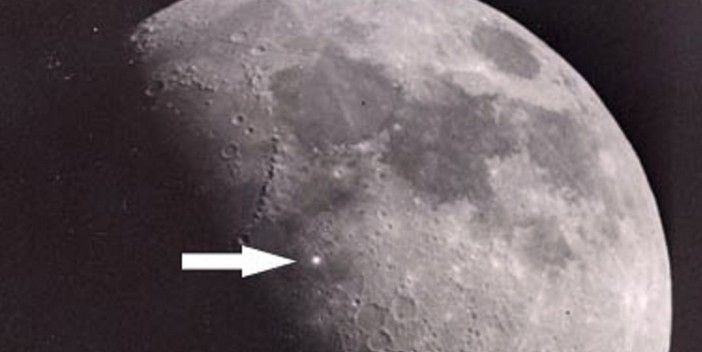
    • What is it: Short-lived flashes, glows, or hazy patches observed on the Moon’s surface, lasting seconds to several hours before fading.
    • Observation History: Reported for over a thousand years, including Apollo 11 astronauts (1969) who noted a luminous lunar glow.
    • Appearance Types: Include reddish glows, star-like flashes, and mist-like obscurations.
    • Active Regions: Concentrated around Aristarchus and Plato craters, considered the most dynamic lunar zones.
    • Scientific Implication: Suggests that the Moon remains geologically active, contradicting earlier assumptions of total dormancy.
    • Theories on Origin: Scientists propose several explanations for TLPs:
      1. Lunar Outgassing: Trapped gases such as radon or argon may escape through fissures, triggered by gravitational stresses or surface heating, causing dust or gas to glow or reflect sunlight.
      2. Meteoroid Impacts: Frequent meteoroid collisions on the Moon’s airless surface produce brief, intense flashes, accounting for many observed TLPs.
      3. Electrostatic Dust Levitation: Charged lunar dust particles, activated by solar radiation, may levitate and scatter light, producing transient luminous effects.
      4. Atmospheric Distortion on Earth: Some TLPs may be optical artifacts, caused by turbulence or refraction in Earth’s atmosphere altering the Moon’s apparent brightness or colour.

    Recent Research and Monitoring:

    • Observation Technology: Use of automated telescopes and CCD (charge-coupled device) imaging systems for real-time detection.
    • Space Missions: NASA’s Lunar Reconnaissance Orbiter (LRO) and ISRO’s Chandrayaan series monitor gas release and new impact craters.
    • Spectroscopic Evidence: Studies of Aristarchus Plateau show episodic radon emissions, supporting the outgassing theory.
    • Integrated Monitoring: Global programs combine optical, seismic, and spectrometric data to validate events.
    • Scientific Aim: To understand lunar surface dynamics, internal processes, and signs of ongoing geological activity.
  • Wildlife Conservation Efforts

    Indian wolf (Canis lupus pallipes) to be classified as new species by IUCN

    Why in the News?

    The IUCN has separately evaluated the Indian wolf (Canis lupus pallipes) from the gray wolf, suggesting it may be recognised as a distinct Canis species.

    Indian wolf (Canis lupus pallipes) to be classified as new species by IUCN

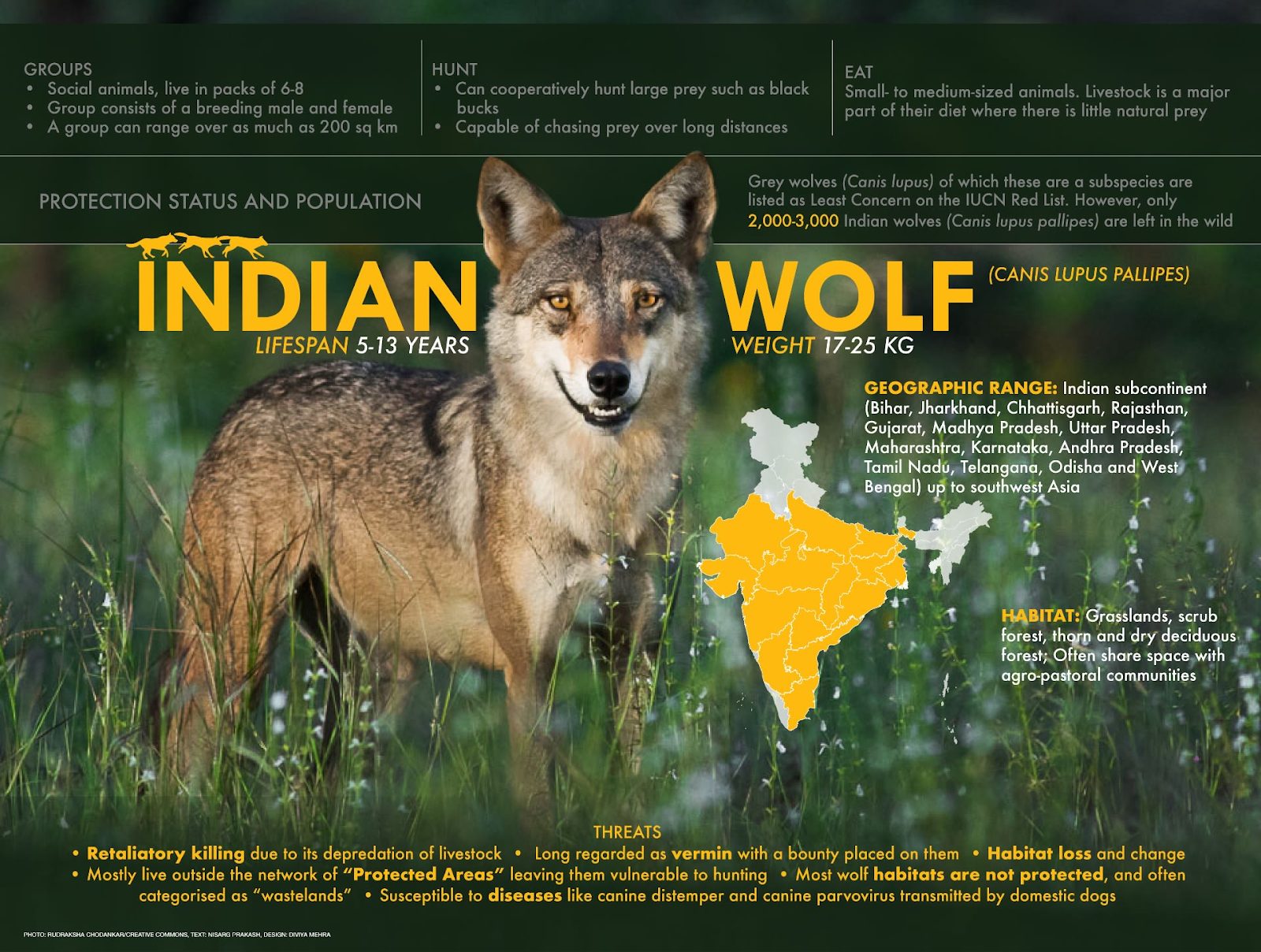
    About Indian Wolf (Canis lupus pallipes):

    • Overview: Also called the Peninsular Wolf or Indian Grey Wolf; proposed as Canis indica owing to genetic divergence 110,000–200,000 years ago.
    • Distinct Lineage: Genomic studies identify it as the oldest surviving wolf lineage, basal to all other Canis lupus subspecies.
    • Distribution: Found across Deccan Plateau, Gujarat, Rajasthan, Madhya Pradesh, Maharashtra, Karnataka, and Andhra Pradesh, extending into Pakistan and Iran; only 12.4 % of its range lies inside protected areas.
    • Population Status (2025): Estimated 2,877–3,310 individuals (IUCN Red List 2025) — classified as Vulnerable.
    • Legal Protection: Listed in *Schedule I of the Wildlife (Protection) Act, 1972, prohibiting hunting, trapping, or killing <citation needed>.
    • Habitat: Prefers scrublands, dry grasslands, and thorn forests, increasingly threatened by agriculture, solar projects, and highways.
    • Ecological Role: Functions as a top predator regulating prey such as blackbuck, chinkara, hares, and rodents in India’s open ecosystems.
    • Social Behaviour: Lives in packs of 6-8 members, exhibiting cooperative hunting and silent coordination strategies.

    Evolutionary and Taxonomic Significance:

    • Early Divergence: Fossil and genetic data show divergence from Eurasian and Himalayan wolves well before the last Ice Age, evolving within India’s semi-arid zones.
    • Evolutionary Importance: Serves as a key model for studying wolf evolution, adaptation, and behaviour in tropical and dry environments.
    • Taxonomic Debate: Researchers propose recognition as a distinct species (Canis indica) based on unique genetic, ecological, and behavioural traits.
    [UPSC 2024] Question: Consider the following statements:

    Statement-I: The Indian Flying Fox is placed under the “vermin” category in the Wild Life (Protection) Act, 1972.

    Statement-II: The Indian Flying Fox feeds on the blood of other animals.

    Which one of the following is correct in respect of the above statements?

    Options: (a) Both statement I and Statement II are correct and statement II explains statement I

    (b) Both Statement-I and Statement-II are correct, but Statement-II does not explain Statement-I

    (c) Staement- I is correct , but Statement II is incorrect*

    (d) Statement-I is incorrect, but Statement-II is correct


  • Air Pollution

    IMO’s 2023 Greenhouse Gas (GHG) Strategy

    Why in the News?

    The International Maritime Organisation (IMO) delayed a vote on its 2027 carbon pricing plan under the 2023 Greenhouse Gas (GHG) Strategy after U.S. pressure, stalling efforts for net-zero shipping by 2050.

    What the IMO is trying to achieve?

    • Decarbonisation Goal: Targets net-zero emissions in global shipping by 2050, aligning with the Paris Agreement’s 1.5 °C limit; shipping contributes 2–3 % of global CO.
    • Carbon Intensity Reduction: Implements fuel-efficiency standards and CIIs to cut CO per tonne-mile of cargo transported.
    • Fuel Transition: Promotes shift from heavy fuel oil to green ammonia, methanol, hydrogen, and biofuels, supported by a global carbon pricing framework.
    • Equitable Transition: Upholds common but differentiated responsibilities, offering financial and technological aid to developing and island nations.
    • Market-Based Mechanisms: Developing carbon-pricing and fuel-levy systems to internalise environmental costs and fund innovation.
    • Regulatory Uniformity: Seeks to avoid fragmented regional rules (e.g., EU ETS) by maintaining global maritime emission standards.

    About IMO’s 2023 Greenhouse Gas (GHG) Strategy:

    • Adoption: Finalised in July 2023 at Marine Environment Protection Committee (MEPC-80) (London) under the MARPOL Annex VI framework.
    • Carbon Intensity Targets: Cut 40 % by 2030 (vs 2008) and strive for 70 % by 2040.
    • Net-Zero Timeline: Achieve full sectoral decarbonisation by 2050.
    • Zero/Low-Emission Fuels: Ensure 5 % (aspire 10 %) of shipping energy from near-zero-GHG fuels by 2030; expand hydrogen and electrified propulsion.
    • Fuel & Emission Standards: Introduce Global Fuel Standard (GFS) and Global Pricing Mechanism (GPM) by 2027, covering ships above 5,000 GT (~85 % of emissions).
    • MRV Framework: Strengthen monitoring, reporting, and verification with emission databases and compliance audits.
    • Support Mechanisms: Establish GHG Fund to assist developing states in retrofits, technology adoption, and port upgrades.

    Significance: 

    • Global Climate Milestone: First binding, worldwide roadmap for a high-emission transport sector outside aviation.
    • Regulatory Shift: Moves from voluntary action to enforceable standards in maritime law.
    • Strategic Impact: Positions the IMO as a key climate-governance body, linking trade regulation and environmental responsibility.
    [UPSC 2024] According to the Environmental Protection Agency (EPA), which one of the following is the largest source of sulphur dioxide emissions?

    Options: (a) Locomotives using fossil fuels

    (b) Ships using fossil fuels

    (c) Extraction of metals from ores

    (d) Power plants using fossil fuels*


  • Soil Health Management – NMSA, Soil Health Card, etc.

    Arsenic Toxicity in Rice Cultivation

    Why in the News?

    A recent study has revealed that the composition of microbial communities in rice paddies critically determines the buildup of arsenic compounds in rice grains.

    Arsenic Toxicity in Agriculture:

    • Overview: Arsenic (As) is a potent carcinogen and phytotoxin, bioaccumulating in rice and posing severe health and agronomic risks in Asian paddies.
    • Mechanism in Flooded Fields: Under anaerobic conditions, microbes convert arsenic into soluble, bioavailable forms that rice roots readily absorb.
    • Toxic Compounds: Organic forms like dimethylarsinic acid (DMA) and dimethylated monothioarsenate (DMMTA) cause straighthead disease, producing sterile, erect panicles and yield losses up to 70 %.
    • Speciation vs. Concentration: Toxicity depends on arsenic speciation, not total soil As levels, even low-As soils may cause poisoning.
    • Geographic Hotspots: Severe in West Bengal, Bihar, and Bangladesh, where arsenic-laden groundwater is used for irrigation.

    About Soil Age and Microbial Composition:

    • Research Insight: Study by Peng Wang (Nanjing Agricultural University) shows soil age dictates microbial dominance and arsenic behaviour.
    • Young Soils (< 700 yrs): Dominated by arsenic-methylating bacteria that convert inorganic As into toxic organic forms (DMA, DMMTA).
    • Old Soils (> 700 yrs): Rich in demethylating archaea that detoxify As by breaking down methylated compounds.
    • Global Microbiome Survey: Across 801 paddy soils, identified 11 methylators and 6 demethylators as key toxicity predictors.
    • Risk Threshold: When methylator: demethylator ratio > 1.5, probability of straighthead disease rises sharply.

    How does Microbial balance govern Arsenic toxicity?

    • Biological Equilibrium: Arsenic toxicity depends on balance between methylating bacteria (risk) and demethylating archaea (detoxification).
    • Environmental Triggers: Flood duration, oxygen, temperature, and hydrological shifts can tilt this balance toward higher toxicity.
    • Mitigation Measures: Mid-season drainage, silicon fertilisation, and microbial community management restore redox balance and reduce As uptake.
    [UPSC 2013] Which of the following can be found as pollutants in the drinking water in some parts of India?

    1. Arsenic 2. Sorbitol 3. Fluoride 4. Formaldehyde 5. Uranium

    Select the correct answer using the codes given below.

    Options: (a) 1 and 3 only (b) 2, 4 and 5 only (c) 1, 3 and 5 only* (d) 1, 2, 3, 4 and 5


  • Wildlife Conservation Efforts

    Status of Elephants in India Report (2025)

    Why in the News?

    The Wildlife Institute of India (WII) released its report “Status of Elephants in India” on October 14, 2025, marking the country’s first-ever DNA-based elephant population estimation.

    Elephants in India:

    • Overview: Elephas maximus, Asian Elephant, listed as Endangered (IUCN); protected under Schedule I of the Wildlife (Protection) Act 1972 and Appendix I of CITES.
    • National Importance: India sustains over 60 % of the global wild Asian elephant population, making it a global conservation stronghold.
    • Conservation Framework:
      • Project Elephant (1992) – habitat protection, research, corridor restoration, and conflict management.
      • Elephant Reserves – 33 notified across 15 states, covering ~80,000 sq km.
      • Corridor Initiatives – joint mapping of ~101 corridors by WII, WWF-India, and WTI to ensure genetic connectivity.
    • Major Landscapes:
      • Western Ghats – dense forests with corridor fragmentation.
      • North-Eastern Hills – contiguous habitats under human pressure.
      • Central India & Eastern Ghats – isolated herds with high conflict.
      • Shivalik–Gangetic Plains – corridor bottlenecks amid dense settlements.
    • Ecological Role: Elephants act as ecosystem engineers, dispersing seeds, maintaining forest–grassland balance, and regulating hydrology.

    About Status of Elephants in India Report (2025):

    • Publisher & Framework: Released by the Wildlife Institute of India (WII) under Project Elephant. It employs, for the first time in India, a DNA-based mark–recapture (genetic) estimation method for elephant census.
    • Census Period & Title: Conducted between 2021–2025, termed the Synchronous All-India Population Estimation of Elephants (SAIEE 2021-25).
    • Feature: Combines genetic sampling, field transects, and spatial-capture–recapture modelling.
    • Scientific Advancement: Establishes India’s first genetic reference library for elephants, linking individuals, herds, and landscapes for improved long-term monitoring.
    • Policy Context: Conducted under Project Elephant (1992) to align with national targets for corridor protection, conflict mitigation, and ecosystem restoration.

    Key Highlights:

    • Total Population (2025): 22,446 wild Asian elephants estimated nationwide using genetic data.
    • Previous Estimate (2017): About 29,964; apparent ~25 % drop due to new methodology rather than actual decline.
    • Regional Distribution:
      • Western Ghats Landscape: 11,934 (≈ 53 %)
      • North-East & Brahmaputra Plains: 6,559 (≈ 22 %)
      • Shivalik Hills & Gangetic Plains: 2,062 (≈ 9 %)
      • Central India & Eastern Ghats: 1,891 (≈ 8 %)
    • State-wise Concentration: Karnataka (6,013), Assam (4,159), Tamil Nadu (3,136), Kerala (2,785), Uttarakhand (1,792), Odisha (912).
    • Demographic Insights: DNA profiling enabled sex ratio identification, family linkages, and migration-corridor tracking, turning a static census into a dynamic population map.
    • Conservation Implications: WII urges genetic recensuses every 5 years, restoration of identified corridors, and integration of coexistence models in land-use planning.
    [UPSC 2020] With reference to Indian elephants, consider the following statements:

    1. The leader of an elephant group is a female.

    2. The maximum gestation period can be 22 months.

    3. An elephant can normally go on calving till the age of 40 years only.

    4. Among the States in India, the highest elephant population is in Kerala.

    Which of the statements given above is/are correct?

    Options: (a) 1 and 2 only * (b) 2 and 4 only (c) 3 only (d) 1, 3 and 4 only


  • Air Pollution

    What are Green Crackers?

    Why in the News?

    The Supreme Court of India has temporarily permitted the sale and bursting of green crackers in the Delhi–NCR region from October 18 to 21 for Diwali celebrations.

    Background and Judicial Origin:

    • Trigger: Severe air pollution episodes during Diwali (2016–2017) pushed Delhi’s Air Quality Index (AQI) beyond 500, creating a public-health emergency.
    • Supreme Court Intervention (2018):
      • Affirmed that cultural freedom cannot override the Fundamental Right to Life (Article 21).
      • Banned conventional firecrackers containing heavy metals such as barium, lead, and mercury.
      • Directed CSIR to develop less-polluting alternatives, with PESO (Petroleum and Explosives Safety Organisation) tasked to test and certify them.
    • Outcome: Introduction of green crackers as a compromise solution balancing festive traditions with public-health protection.
    • Legal Oversight: The Supreme Court continues to monitor compliance, permitting use only within fixed time windows and under strict emission-control standards.

    About Green Crackers:

    • Overview: Green crackers are eco-friendly fireworks developed by the Council of Scientific and Industrial Research – National Environmental Engineering Research Institute (CSIR-NEERI) to curb air pollution during festive celebrations.
    • Chemical Composition: Manufactured using modified formulations that exclude barium nitrate and significantly reduce sulphur and aluminium content, thereby cutting toxic emissions.
    • Emission Reduction: These crackers emit about 30 % less particulate matter (PM. and PM₁₀) and 10 % less sulphur dioxide (SO) and nitrogen oxides (NO) than conventional firecrackers.
    • Identification & Legality: Each authorised packet carries the Green Fireworks logo and a QR code verifiable through the CSIR-NEERI Green QR Code App; crackers without codes are illegal.
    • Purpose: Designed to retain the cultural and festive appeal of fireworks while mitigating health and environmental impacts in pollution-prone regions such as Delhi-NCR.

    Types of Green Crackers:

    1. SWAS (Safe Water Releasable): Releases water vapour during combustion to reduce dust and temperature, lowering particulate emissions.
    2. STAR (Safe Thermite Cracker): Uses thermite-based reactions instead of conventional oxidisers, producing bright light and sound with reduced toxic output.
    3. SAFAL (Safe Minimal Aluminium): Limits metallic fuel content, maintaining luminosity and sound intensity while reducing aluminium and sulphur emissions.

    All three maintain sound levels around 100–120 dB, comparable to traditional fireworks but with a cleaner emission profile and shorter atmospheric residence time.

    [UPSC 2024] What is the common characteristic of the chemical substances generally known as CL-20, HMX and LLM-105, which are sometimes talked about in media?

    (a) These are alternatives to hydro- fluorocarbon refrigerants

    (b) These are explosives in military weapons *

    (c) These are high-energy fuels for cruise missiles

    (d) These are propulsion fuels for rocket


  • Foreign Policy Watch: India-China

    [18th October 2025] The Hindu Op-ed: Better global governance led by China and India

    PYQ Relevance

    [UPSC 2023] Virus of Conflict is affecting the functioning of the SCO.” In the light of the above statement, point out the role of India in mitigating problems.

    Linkage: This PYQ is important as it tests India’s diplomatic balance within the SCO, amid regional rivalries. The article connects by showing how the Xi–Modi meeting and Global Governance Initiative reflect India’s role in restoring trust and strengthening multilateralism within the SCO framework.

    Mentor’s Comment

    As the world enters a phase of geopolitical churn and institutional fatigue, the call for a reformed, people-centric global governance system grows louder. The 75th anniversary of India-China diplomatic ties and the 80th year of the UN offer a historical moment: two Asian giants, once colonised, now rising powers, can redefine global order. For UPSC aspirants, this theme bridges multilateral diplomacy, global reforms, and India’s evolving foreign policy—key areas across GS Paper 2 and IR essays.

    Introduction

    The year 2025 marks a milestone in both bilateral and global history. India and China, home to over 2.8 billion people, commemorate 75 years of diplomatic relations, even as the United Nations celebrates its 80th anniversary. Against the backdrop of unilateralism and weakening multilateralism, the Global Governance Initiative (GGI) proposed by China, with India’s cooperation, offers a blueprint for a more equitable international order. As Asia’s two leading powers move from rivalry to partnership, their convergence could transform the world’s governance architecture, symbolising a decisive shift toward multipolarity and shared prosperity.

    Why is the India-China cooperation in 2025 a landmark moment?

    1. Historical Context: The two leaders, Xi Jinping and Narendra Modi, have met 18 times since 2014, an unprecedented frequency symbolising sustained engagement despite border tensions.
    2. Symbolic Restoration: The bilateral meeting at the 16th BRICS Summit in Kazan (2024) and now at the 25th SCO Summit in Tianjin (2025) reflects a conscious reset in relations.
    3. Global Expectation: Their 19th meeting during the Tianjin Summit is being seen globally as a moment to restore balance to multilateral decision-making, especially amid Western dominance fatigue.
    4. Public Diplomacy: Both sides emphasise “partners, not rivals,” signaling a shift from competition to cooperation.

    What is changing in the global governance discourse?

    1. Erosion of Trust: The early 21st century witnessed rising unilateralism, protectionism, and hegemonism, eroding faith in international institutions.
    2. UN at 80: The UN system, though foundational, now faces criticism for its limited representation of developing nations and sluggish response to global crises.
    3. Reform Imperative: The question before humanity is not just “who governs” but “how governance is shared.” The article highlights the need for reform without rupture, evolving existing systems rather than replacing them.
    4. Asia’s Moment: The decline of Western dominance and the rise of Asia and Eurasia are redefining the rules of the game, with India and China at the center.

    What is the Global Governance Initiative (GGI)?

    1. New Vision: The GGI, announced by President Xi at the Tianjin SCO Summit, aims to correct the deficit in global governance by promoting a fair, inclusive order.
    • Five Core Principles:
      1. Sovereign Equality: Respect for all nations’ independence and dignity; greater democracy in international relations.
      2. Rule of Law: Equal application of international law and rejection of double standards.
      3. Multilateralism: Strengthening the UN as the core platform for global decision-making.
      4. People-Centric Approach: Governance should prioritise well-being, safety, and fulfillment of citizens globally.
      5. Real Results Orientation: Developed nations must shoulder more responsibility, while developing nations must cooperate for shared solutions.
      6. Essence: The GGI is not about creating parallel institutions but reforming and improving existing ones to respond effectively to modern challenges.

    How can India-China cooperation strengthen multilateralism?

    1. Shared Responsibilities: Both countries, as major developing economies and SCO/BRICS members, bear the responsibility to defend international fairness and justice.
    2. Strategic Coordination: The leaders’ dialogue stresses communication on major international and regional issues to bridge divides in the Global South.

    Complementary Visions:

    1. China’s “community of shared future for mankind
    2. India’s “Vasudhaiva Kutumbakam” (One Earth, One Family, One Future)
    3. Together, they embody the moral and developmental leadership needed for a post-Western global order.
    4. Practical Gains: Resumption of direct flights, maintenance of border stability, and enhanced trade cooperation show concrete steps toward normalisation.

    What challenges lie ahead for India-China collaboration?

    1. Trust Deficit: Lingering border disputes and differing political models may slow strategic trust-building.
    2. Competing Ambitions: While both aspire to leadership in the Global South, perception management and narrative balance will be crucial.
    3. Western Reaction: The West may perceive India-China cooperation as a counterweight to transatlantic power, potentially complicating India’s strategic autonomy.
    4. Need for Institutionalisation: Long-term progress demands institutional mechanisms, track-II dialogues, multilateral coordination cells, and joint UN reform working groups.

    Conclusion

    The India-China partnership in 2025 signals more than a diplomatic milestone, it represents a potential rebalancing of world order. As the UN turns 80, the call for shared leadership between emerging powers grows urgent. If pursued with mutual trust and strategic maturity, the GGI-led collaboration can make the 21st century truly an Asian century rooted in equity, inclusivity, and sustainability. In a fractured world, cooperation, not competition, may be the only path to survival and progress.

  • Internal Security Architecture Shortcomings – Key Forces, NIA, IB, CCTNS, etc.

    Gorkhaland statehood, Government names ex-DY NSA as interlocutor

    Introduction

    India’s federal architecture is unique: it allows the creation of new states to accommodate cultural, linguistic, administrative, or developmental aspirations under Article 3 of the Constitution. Yet, every statehood movement also reflects deeper struggles over identity, representation, and development.

    The Gorkhaland issue, revived by the Centre’s recent move to appoint an interlocutor, is one of the oldest and most persistent among these. While it directly concerns the Darjeeling hills and adjoining areas of West Bengal, it mirrors similar aspirations voiced across India, from Vidarbha to Bodoland, Harit Pradesh, and Kukiland.

    The Gorkhaland Appointment: Why is this news significant?

    The Centre’s decision to name ex-Dy NSA Pankaj Kumar Singh as interlocutor for Gorkha talks is a politically charged step:

    1. First formal engagement in years: It revives official talks after a long hiatus, moving beyond ad hoc arrangements like the Gorkhaland Territorial Administration (GTA).
    2. High-level signalling: The appointment of a senior security expert signals that the government sees the issue as sensitive, with implications for internal security and electoral politics.
    3. Identity at stake: It concerns recognition of the Gorkha community’s distinct identity, and a permanent political solution to decades of protests and autonomy struggles.
    4. Pre-election dimension: With West Bengal Assembly elections approaching, the move is seen as an attempt to politically engage the hill electorate, which has historically swung between national and regional parties.
    5. Potential precedent: Success in structured dialogue may offer a model for addressing other regional aspirations through negotiation instead of agitation.

    Understanding the Gorkhaland Issue

    Historical Context

    1. Origins: The demand for Gorkhaland dates back to 1907, when the Hillmen’s Association first sought a separate administrative unit for the Nepali-speaking people of Darjeeling under British rule.
    2. Post-Independence Phase: With linguistic reorganisation (1950s), Nepali-speaking Gorkhas felt their identity was inadequately represented in Bengali-dominated West Bengal.
    3. 1980s Uprising: The movement, led by Subhash Ghising’s Gorkha National Liberation Front (GNLF), turned violent; it led to the creation of the Darjeeling Gorkha Hill Council (DGHC) in 1988 as a compromise.
    4. Second Wave: In 2007, Bimal Gurung formed the Gorkha Janmukti Morcha (GJM), renewing the demand; this led to the Gorkhaland Territorial Administration (GTA) in 2011, but unrest persisted.
    5. Present Phase: The latest talks under an interlocutor aim to find a “permanent political solution” and recognition of 11 sub-tribes as Scheduled Tribes.

    Key Demands

    1. Separate Gorkhaland State: Carved out of Darjeeling and parts of Kalimpong, to ensure administrative autonomy and cultural recognition.
    2. Scheduled Tribe Status: For 11 Gorkha sub-tribes to ensure constitutional protections and socio-economic inclusion.
    3. Constitutional Recognition: Safeguards for the political identity and rights of the Gorkha people under the Indian Constitution.

    Statehood Demands in India: The Bigger Picture

    India has witnessed over 30 major statehood demands since Independence. While the Constitution empowers Parliament to reorganize states under Article 3, these movements have tested the balance between administrative efficiency, cultural autonomy, and political representation.

    Why Do Statehood Demands Arise?

    • Cultural & Linguistic Identity:
        1. Key reason: Desire for recognition of unique language, ethnicity, or cultural practices.
        2. Examples: Gorkhaland (Nepali-speaking identity), Bodoland (Bodo tribes), Vidarbha (Marathi dialect and identity).
    • Developmental Disparities:
        1. Economic neglect and poor resource distribution often drive demands.
        2. Example: Telangana’s movement was anchored in perceived neglect by Andhra’s political elite.
    • Administrative Efficiency:
        1. Smaller states are believed to ensure better governance and resource management.
        2. Example: Creation of Chhattisgarh and Uttarakhand in 2000.
    • Political Representation & Power-sharing:
        1. Regional elites demand greater political space or autonomy to reflect local aspirations.
    • Ethnic Security and Integration:
      1. Fear of cultural assimilation or discrimination by dominant groups drives ethnic-based mobilisation (e.g., Bodoland, Kukiland, Karbi Anglong).
    Year Movement Outcome
    1953 Andhra State (Potti Sriramulu movement) First linguistic state formed
    1960 Maharashtra & Gujarat Bombay Reorganisation Act
    1972 Meghalaya, Manipur, Tripura New northeastern states created
    1987 Mizoram & Arunachal Pradesh Granted full statehood
    2000 Chhattisgarh, Jharkhand, Uttarakhand Created for administrative and developmental reasons
    2014 Telangana Result of sustained agitation
    Ongoing Gorkhaland, Bodoland, Vidarbha, Bundelkhand Unresolved, periodic agitations

    Constitutional Mechanism for Creating New States

    Article 3 empowers Parliament to form new states by altering the boundaries or names of existing ones.

    Procedure:

    1. Process: Bill introduced in Parliament → Referred to State Legislature for views (not consent) Passed by simple majority.
    2. Centre’s Discretion: State opinion is advisory, not binding — ensuring national flexibility but sometimes triggering discontent.
    3. Examples:
      • Telangana was created despite Andhra Pradesh’s legislature opposing it.
      • Jharkhand was carved out of Bihar through a parliamentary process.

    Challenges and Implications of Statehood Movements

    1. Political Fragmentation: Multiplying small states may weaken national coherence and increase Centre-State friction.
    2. Administrative Burden: Creating new bureaucratic structures increases fiscal costs.
    3. Resource Distribution Issues: Conflicts over rivers, minerals, and forest resources (e.g., Telangana-Andhra).
    4. Ethnic Competition: One community’s recognition can fuel new demands from others.
    5. Positive Outcomes: Improved local governance, targeted development, and better representation when well-implemented (e.g., Chhattisgarh’s success in rural health and PDS).

    Lessons from Gorkhaland and Other Movements

    1. Need for Institutional Dialogue: Interlocutors and commissions reduce the risk of violent agitation by creating formal channels for negotiation.
    2. Multi-stakeholder Approach: Engagement should include Centre, State, local bodies, and civil society, not just political parties.
    3. Development-Based Solutions: Autonomy and identity must align with socio-economic development for long-term peace.
    4. Model for Others: If successful, the Gorkhaland dialogue could serve as a precedent for resolving other autonomy demands peacefully.

    Conclusion

    The Gorkhaland issue is not merely a regional agitation; it is part of India’s broader story of balancing unity with diversity, integration with autonomy, and identity with development. The Centre’s interlocutor initiative provides a constitutional, consultative path forward, one that aligns with India’s ethos of resolving internal aspirations democratically.

    As India continues to evolve, the challenge will be to ensure that new demands for statehood or autonomy are addressed through dialogue, data, and development, not through division or delay.

    PYQ Relevance

    [UPSC 2013] Creation of a large number of smaller States would bring in effective governance at the State level. Discuss.

    Linkage: This PYQ links directly with Gorkhaland and other statehood demands, testing ideas of better governance and federal balance. The article helps students with examples, chronology, and constitutional context to write precise GS II answers.

Join the Community

Join us across Social Media platforms.