💥UPSC 2026, 2027, 2028 UAP Mentorship (March Batch) + Access XFactor Notes & Microthemes PDF

Archives: News

  • Artificial Intelligence (AI) Breakthrough

    Impose ‘Robot Tax’ for AI-induced Job Loss: RSS

    Why in the News?

    The Swadeshi Jagran Manch (SJM), affiliated with the Rashtriya Swayamsevak Sangh (RSS), wants a ‘robot tax’ to help employees who lose their jobs because companies are using Artificial Intelligence (AI).

    SJM’s Proposals and Suggestions

    • Robot Tax Proposal: SJM proposes a ‘robot tax’ to create a fund supporting workers displaced by AI adoption to upskill and adapt to new technologies.
    • Tax Incentives for Job Creation: Suggestions include tax incentives for industries based on their employment-output ratio to encourage job creation.
    • Fund for Worker Upskilling: Emphasizes the need for economic measures to cope with the human cost of AI. SJM suggests using a ‘robot tax’ to fund worker upskilling programs.

    Additional Budgetary Recommendations

    • Incentivise job creation: SJM suggests tax incentives for industries generating more employment, based on an employment-output ratio.
    • Subsidies for Small Farmers: SJM proposes subsidies for micro irrigation projects to boost productivity among small farmers.
      • SJM recommends that micro-irrigation projects be made eligible for funding via CSR by adding them to Schedule VII of the Companies Act, 2013.
    • Wealth tax on Vacant Lands: SJM suggests a wealth tax on “vacant land” to discourage unnecessary landholding for future requirements.

    What is a Robot Tax?

    • A robot tax is a proposed tax on companies that use automation and artificial intelligence (AI) technologies to replace human workers.
    • The idea behind this tax is to generate revenue that can be used to support workers who lose their jobs due to automation.
      • This can include retraining programs, unemployment benefits, and other forms of social support.

    Need for a Robot Tax

    • Job Displacement:
      • Automation Impact: AI and automation can lead to significant job losses in various industries as machines and software perform tasks previously done by humans.
      • Worker Support: A robot tax can provide financial resources to support displaced workers, helping them transition to new roles or acquire new skills.
    • Economic Inequality:
      • Wealth Distribution: Automation tends to concentrate wealth among those who own the technology, leading to increased economic inequality.
      • Redistribution: Taxing companies that benefit from automation can help redistribute wealth more fairly across society.
    • Funding for Public Programs:
      • Social Safety Nets: Revenue from a robot tax can fund social safety nets such as unemployment benefits, retraining programs, and other social services.
      • Infrastructure: It can also support public infrastructure projects and other initiatives that benefit society as a whole.
    • Incentivising Human Employment:
      • Employment Decisions: By imposing a tax on automation, companies might be more inclined to consider human workers over robots for certain tasks.
      • Balanced Approach: This can help maintain a balance between technological advancement and human employment.

    Examples and Proposals

    • Bill Gates’ Proposal: Bill Gates in 2022 advocated for a robot tax, suggesting that the revenue could fund job retraining and other social benefits.
    • European Parliament: In 2017, the European Parliament considered a robot tax as part of broader regulations on AI and robotics, though it was ultimately not implemented.

    Criticisms and Challenges

    • Implementation: Determining how to effectively implement and enforce a robot tax can be challenging.
    • Innovation Stifling: Critics argue that a robot tax could hinder innovation and technological progress.
    • Global Competition: There are concerns that companies might relocate to countries without such a tax, affecting global competitiveness.

    Conclusion

    • A robot tax is a controversial yet potentially beneficial approach to addressing the economic and social impacts of AI and automation.
    • It aims to provide support for displaced workers, reduce economic inequality, and ensure that the benefits of technological advancements are shared more broadly across society.

    PYQ:

    [2013] Disguised unemployment generally means:

    (a) large number of people remain unemployed

    (b) alternative employment is not available

    (c) marginal productivity of labour is zero

    (d) productivity of workers is low

  • Health Sector – UHC, National Health Policy, Family Planning, Health Insurance, etc.

    Why are dengue cases on the rise worldwide?     

    Why in the news?

    In recent weeks, there has been an increase in dengue cases, notably in Karnataka, with rising numbers also observed in Kerala and Tamil Nadu.

    What is the global situation of dengue?

    • Epidemiological Burden: In 2024, over 7.6 million cases of dengue were reported globally, with 3.4 million confirmed cases and significant numbers of severe cases and deaths. Dengue affects approximately half of the world’s population, with an estimated 100-400 million infections occurring annually.
    • Geographical Distribution: Dengue transmission occurs in 90 countries worldwide, predominantly in tropical and subtropical regions. The disease is endemic in more than 100 countries across WHO regions, including Africa, the Americas, the Eastern Mediterranean, South-East Asia, and the Western Pacific.

    Are urbanisation and climate change fuelling dengue spread in the world?

    Urbanization:

    • Increased Population Density: Urban areas provide optimal conditions for the Aedes aegypti mosquito due to the availability of breeding sites like stagnant water in containers, tires, and other urban infrastructure.
    • Expansion of Cities: Rapid urbanization leads to unplanned growth, inadequate waste management, and inadequate water supply, creating breeding grounds for mosquitoes.
    • Human Movement: Urbanization facilitates increased human mobility, enabling the spread of the dengue virus through infected individuals travelling between urban centers.

    Climate Change:

    • Temperature and Rainfall Patterns: Warmer temperatures and altered rainfall patterns associated with climate change create favourable conditions for mosquito breeding and survival.
    • Shifts in Geographic Distribution: Changing climate allows Aedes mosquitoes to expand their range to new regions previously unaffected by dengue, including temperate climates.
    • Extreme Weather Events: Increased frequency and intensity of extreme weather events like hurricanes and floods provide breeding opportunities for mosquitoes and facilitate virus transmission.

    Impact:

    • Health Impact: India accounts for an estimated 33 million clinically apparent dengue cases each year, contributing to a third of the global dengue burden
    • Economic Impact: A cost analysis study in southern India estimated the direct medical costs per hospitalized dengue patient at around ₹20,000 in 2017-18, with costs soaring to over ₹61,000 for complications requiring intensive care.
    • Impact on Individuals: Dengue can cause a wide spectrum of illness, from mild flu-like symptoms to severe complications like internal bleeding, organ impairment, and potentially death if not treated promptly.

    Way forward: 

    • Enhance Urban Infrastructure: Improve urban planning to include effective waste management, regular clearing of stagnant water sources, and sustainable water supply systems to reduce mosquito breeding grounds.
    • Public Awareness Campaigns: Launch comprehensive public awareness campaigns focusing on urban populations to promote community involvement in mosquito control measures and encourage responsible waste disposal practices.

    Mains PYQ: 

    Q Public health system has limitation in providing universal health coverage. Do you think that private sector can help in bridging the gap? What other viable alternatives do you suggest? (UPSC IAS/2015)

  • Health Sector – UHC, National Health Policy, Family Planning, Health Insurance, etc.

    Breaking the taboo around men’s reproductive health  

    Why in the news? 

    Following World Population Day (July 11), amidst discussions on global population dynamics, it is essential to highlight a topic often overlooked in conversations about reproductive health: male infertility.

    World Health Organization (WHO) Global Perspective on infertility:

    • Prevalence: WHO estimates that 60 million to 80 million couples worldwide experience infertility.
    • Male vs. Female Infertility: Globally, male infertility accounts for approximately 50% of all infertility cases.

    Issues Specific to India:

    • Data Deficiency: Unlike global estimates, specific prevalence data for infertility in India are outdated (from ICMR guidelines in 2005) and not comprehensive.
    • Male Infertility: In India, male infertility constitutes a significant portion of all infertility cases, estimated to be around 50%, mirroring global trends.
    • Contributing Factors: Unique challenges in India include environmental pollution, pesticide exposure in agriculture, lifestyle changes including late marriages and stress, which contribute to rising infertility rates.
    • Access to Treatment: Disparities in access to advanced infertility treatments exist, with urban areas having better access compared to rural regions.
    • Cultural and Social Stigma: Infertility remains stigmatized in Indian society, affecting mental health and social well-being of affected couples, and hindering open discussions and seeking timely medical help.

    What are the actual causes of infertility?   

    • Male Factors: Low sperm count (oligospermia) or poor sperm motility (asthenozoospermia). Anatomical issues such as blocked sperm ducts or varicocele. Hormonal imbalances, genetic factors, and environmental influences like exposure to toxins.
    • Female Factors: Ovulation disorders, including hormonal imbalances like PCOS. Structural issues like blocked fallopian tubes or uterine abnormalities. Endometriosis, is a condition where tissue similar to the lining of the uterus grows outside the uterus.
    • Shared Factors: Age-related decline in fertility. Lifestyle factors such as smoking, excessive alcohol consumption, and obesity. Medical conditions like cancer and its treatments, autoimmune disorders, and certain medications affecting fertility.

    Treatment options

    • Semen Analysis: Essential for diagnosing male infertility, conducted after a period of sexual abstinence.
    • Medical Consultation: Vital to identify underlying causes, whether physical (e.g., blocked sperm flow, anatomical issues) or genetic.
    • Corrective Surgeries: Address issues like blocked sperm ducts, undescended testicles, or anatomical abnormalities affecting sperm production and flow.

    Assisted Reproductive Technologies (ART):

    • Intra Cytoplasmic Sperm Injection (ICSI): Effective for cases of severe male infertility where sperm count is extremely low.
    • Intrauterine Insemination (IUI): Suitable when sperm motility is good but count is low, facilitating fertilization within the uterus.
    • In vitro Fertilisation (IVF): Used when both sperm count and motility are low, involving fertilization outside the body before implantation.
    • Donor Sperm Insemination or Adoption: Options for couples where male infertility is irreparable, providing alternative paths to parenthood.

    Way forward: 

    • Enhanced Data Collection and Research: Update and expand prevalence data on infertility in India through national surveys and research initiatives. This should include both urban and rural populations to understand regional disparities.
    • Public Awareness and Support Programs: Launch nationwide campaigns to raise awareness about infertility as a medical condition, debunk myths, and reduce stigma.

    Mains PYQ: 

    Q In order to enhance the prospects of social development, sound and adequate health care policies are needed particularly in the fields of geriatric and maternal health care. Discuss. (UPSC IAS/2020)

  • Electric and Hybrid Cars – FAME, National Electric Mobility Mission, etc.

    Future investments in India’s EV space  

    Why in the news? 

    The government plans to expand its EV policy to include retrospective benefits, incentivizing entities that have already invested, with a formal announcement expected in August.

    Why is the government considering extending the EV policy?

    • Retrospective Effect: To include a retrospective effect, extending benefits to entities that have already made investments, aiming to reward and encourage early movers in the EV sector.
    • Encouraging Global Players: The policy seeks to prompt global players to localize production and invest in the domestic ecosystem.
    • Inclusive Incentives: Earlier, entities were eligible for incentives only if they set up local facilities within three years of receiving approval. The extension aims to make these incentives more inclusive.

    EV Policy of India: 

    • FAME Scheme: The Faster Adoption and Manufacturing of (Hybrid &) Electric Vehicles (FAME) scheme is India’s flagship program to incentivize EV adoption. FAME-II, the current phase, provides incentives of:
      • ₹15,000 per kWh for 2-wheelers, up to 40% of the vehicle cost
      • ₹10,000 per kWh for 3-wheelers and 4-wheelers
      • ₹20,000 per kWh for electric buses
    • Phased Manufacturing Program (PMP): To boost local manufacturing, the government has implemented a Phased Manufacturing Program that gradually increases import duties on EV components over time, incentivizing domestic production.

    About the New EV Policy 2024:

    The key highlights of the new EV policy announced in 2024 include:

    • Reduced customs duty of 15% on imported EVs with a minimum CIF value of $35,000
    • A cap of 8,000 imported EVs per year
    • Requirement for manufacturers to invest at least ₹4,150 crore (~$500 million) and achieve 25% domestic value addition within 3 years, escalating to 50% in 5 years
    • Duty waiver capped at the investment made or ₹6,484 crore (equal to the PLI scheme incentive), whichever is lower.

    How does the revised policy align with India’s goals of enhancing local manufacturing and technology adoption in the EV industry?

    • Domestic Value Addition: The policy mandates that half of the value addition in manufacturing be done domestically within five years, boosting local manufacturing.
    • Import Duty Reduction: Reducing import duty on EVs with a minimum CIF value of $35,000 from 70%-100% to 15% to make the transition commercially viable.
    • Strengthening EV Ecosystem: By encouraging local production and investment, the policy aims to strengthen the entire EV ecosystem in India.
    • Global Leadership: Positioning India as a leader in the global transition from internal combustion engines to electric vehicles by fostering a sustainable and technologically advanced manufacturing environment.

    In what ways can the policy’s focus on localization and production volume increase competition and lower costs?

    • Economies of Scale: Higher volumes of production can lead to economies of scale, reducing the per-unit cost of EVs.
    • Healthy Competition: Encouraging competition among EV players to innovate and improve efficiency, thereby lowering production costs and prices for consumers.
    • Cost Reduction: Achieving higher production volumes and localized manufacturing will contribute to a significant decline in production costs, making EVs more affordable for Indian consumers.
    • Comprehensive Ecosystem: The focus on localization ensures the development of a robust supply chain and after-sales service network, further enhancing the viability and attractiveness of EVs in India.

    Way forward: 

    • Support Local Manufacturers: Provide incentives and support for domestic manufacturers to produce critical EV components such as batteries, motors, and controllers. This will reduce dependency on imports and enhance self-reliance.
    • R&D Investment: Increase investment in research and development to drive innovation in EV technology, ensuring that India remains at the forefront of advancements in the industry.

    Mains PYQ: 

    Q ‘Clean energy is the order of the day.’ Describe briefly India’s changing policy towards climate change in various international fora in the context of geopolitics. (UPSC IAS/2022)

  • Foreign Policy Watch: India-SAARC Nations

    India hosts BIMSTEC Foreign Ministers amid raging Myanmar crisis

    Why in the News? 

    At the first BIMSTEC Foreign Ministers’ retreat, External Affairs Minister S. Jaishankar emphasized that BIMSTEC must address regional challenges internally, fostering collaboration among member nations.

    About BIMSTEC Countries  

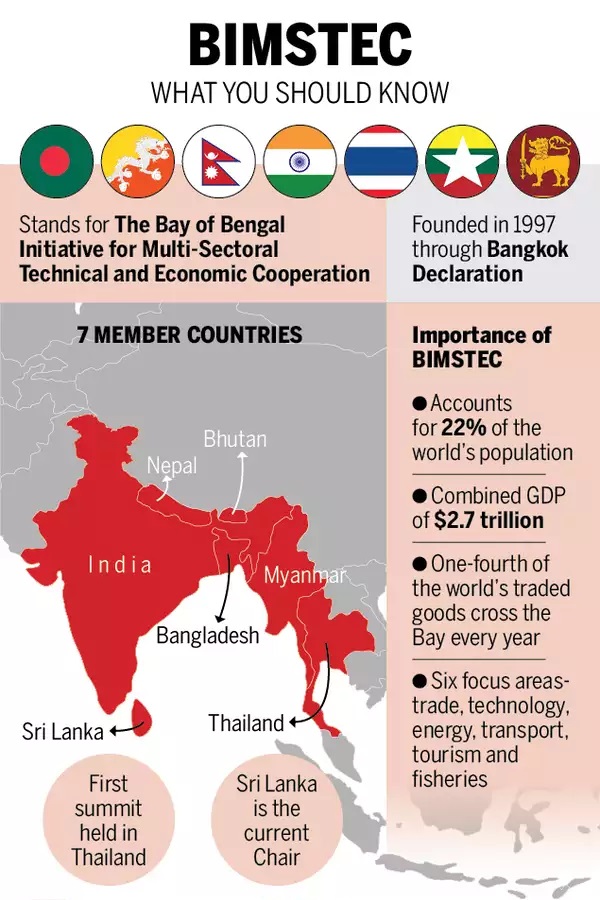
    BIMSTEC (Bay of Bengal Initiative for Multi-Sectoral Technical and Economic Cooperation) is a regional organization comprising seven member countries lying in the littoral and adjacent areas of the Bay of Bengal. These countries are Bangladesh, Bhutan, India, Myanmar, Nepal, Sri Lanka, and Thailand.

    Significance of BIMSTEC:

    • Economic Cooperation: Facilitates trade and investment among member countries.
    • Connectivity Projects: Enhances regional connectivity through road, rail, and maritime links.
    • Technical and Technological Collaboration: Promotes capacity building and technology sharing.
    • Security Cooperation: Addresses transnational crimes, terrorism, and humanitarian assistance.
    • Cultural Exchange: Strengthens cultural ties and people-to-people contacts.

    India’s Stand on Myanmar Crisis

    India has adopted a cautious and balanced approach to the crisis in Myanmar, emphasizing the following points:

    • Connectivity Projects: India focuses on the importance of ongoing connectivity projects for the future of BIMSTEC, which are crucial for regional integration.
    • Humanitarian Assistance: Discussions on humanitarian assistance remain limited to displaced populations and some military personnel seeking refuge in Mizoram, reflecting India’s cautious humanitarian stance.
    • Border Stability: India emphasizes maintaining stability along its border with Myanmar, considering the volatile situation and the control of trade routes by Ethnic Armed Organizations (EAOs).
    • Security Cooperation: Countering transnational crimes, including cyber, narcotics, and illegal arms, remains a priority, reflecting India’s security concerns.

    India Pushes to Link South Asia with Southeast Asia via BIMSTEC

    • Enhanced Connectivity: Promoting infrastructure projects such as road and rail links, and port development to improve trade routes.
      • Encouraging cultural exchanges, tourism, and academic collaborations to strengthen regional bonds
    • Economic Integration: Facilitating trade agreements and economic cooperation to boost regional trade and investment.
    • Energy Cooperation: Exploring opportunities for energy trade and development, including renewable energy projects.
    • Security Collaboration: Addressing common security challenges, including terrorism, human trafficking, and maritime security.

    Way forward: 

    • Establish a Permanent Secretariat: Enhance coordination and efficiency by establishing a fully functional permanent secretariat for BIMSTEC with adequate resources and authority to implement and monitor projects.
    • Promoting Sustainable Development Goals (SDGs): Launch joint initiatives to combat climate change, focusing on disaster risk reduction, sustainable management of natural resources, and renewable energy projects, leveraging the diverse ecological systems within the member states.

    Mains PYQ: 

    Q Do you think that BIMSTEC is a parallel organisation like the SAARC? Waht are the similarities and dissimilarities between the two? How are Indian foreign policy objectives realized by forming this new organisation? (UPSC IAS/2022)

  • Minority Issues – SC, ST, Dalits, OBC, Reservations, etc.

    The case for a Caste Census 

    Why in the news? 

    The Census Act, 1948 ought to be revised to mandate the inclusion of caste enumeration as a regular part of the Census process, incorporating specific questions in the questionnaire to gather this data systematically, rather than leaving it subject to discretionary decisions by the Union executive.

    Why a Caste Census?

    • Social Relevance: Caste remains a significant social determinant in India, influencing access to opportunities, resources, and representation. A caste census is essential to understand and address caste-based inequalities and social stratification accurately.
    • Policy Formulation: Constitutionally mandated policies such as reservations in education, employment, and legislative bodies rely on caste-based data to ensure effective implementation. Detailed enumeration helps in identifying beneficiaries, preventing misclassification, and ensuring equitable distribution of benefits.
    • Administrative Precision: Detailed caste-wise data is crucial for administrative purposes, including planning and allocation of resources. It helps in targeting development programs and policies for specific caste groups based on their socio-economic status and needs.
    • Historical Context: India has a history of caste-based discrimination and marginalization. A caste census provides empirical evidence of existing disparities, enabling the government and civil society to design interventions aimed at promoting social justice and equality.

    The arguments against caste Census

    • Social Divisiveness: Critics argue that emphasizing caste through a census could perpetuate social divisions and caste identities. They fear that highlighting caste differences could exacerbate tensions and hinder national unity.
    • Administrative Complexity: Conducting a caste census is seen as administratively challenging due to the sheer number of caste groups in India, estimated to be thousands, many of which are region-specific. Critics argue that accurately enumerating and categorizing these castes could pose logistical difficulties and lead to inaccuracies.
    • Political Implications: There are concerns that caste-based data could be misused for electoral gains and political manoeuvring. Critics argue that caste enumeration might lead to demands for increased reservations and create further divisions along caste lines in political representation and decision-making processes.

    How an attempt at caste Census failed

    • Constitutional Mandate: The Constitution of India provides for reservations in education (Article 15(4)) and public employment (Article 16(4)) for OBCs. Enumerating OBCs in the Census is essential to effectively implement these constitutional provisions and ensure accurate representation.
    • Policy Implementation: Detailed caste-wise data is necessary for effective policy formulation and implementation related to reservations, social justice, and welfare schemes targeting OBC communities. It helps in identifying deserving beneficiaries and avoiding wrongful inclusions or exclusions.
    • Judicial Imperative: The Supreme Court of India, in various rulings like Indra Sawhney case (1992), has underscored the importance of accurate caste data for upholding reservation policies and ensuring social justice. The court has emphasized the need for periodically revising the OBC list based on updated census data.
    • Local Governance and Representation: Post the 73rd and 74th Amendments to the Constitution, which introduced reservations for OBCs in local bodies (panchayats and municipalities), accurate caste data at the local level is crucial for fair representation and effective governance.

    How an attempt at caste Census failed

    • Poor Design and Execution: The Socio-Economic and Caste Census (SECC)-2011, conducted through Union Ministries of Rural Development and Urban Development, lacked the expertise and experience needed for sociological surveys
    • Legal and Administrative Challenges: The SECC-2011 was not conducted under the Census Act, 1948, which meant it lacked the legal framework and procedural clarity required for a comprehensive census.

    Way forward: 

    • Amendment of Census Act: Amend the Census Act, 1948, to explicitly include caste as a parameter for enumeration. This legal revision will provide a clear mandate and framework for conducting a comprehensive caste Census, ensuring adherence to standardised procedures and data collection methodologies.
    • Expert Involvement and Public Consultation: Engage sociological and anthropological experts to develop a detailed list of caste categories specific to each state. Publish the draft list online for public review and feedback, facilitating transparency and accuracy in caste enumeration.

    Mains PYQ: 

    Q Caste system is assuming new identities and associational forms. Hence, the caste system cannot be eradicated in India.” Comment. (UPSC IAS/2018)

  • Industrial Sector Updates – Industrial Policy, Ease of Doing Business, etc.

    MSMEs need funds for tech upgrades, green transition

    Why in the news? 

    Union Minister for MSMEs Jitan Ram Manjhi outlined six strategic pillars identified to foster the growth of the MSME sector.

    What are the 6 pillars for the growth of the MSME Sector   

    • Formalisation and Access to Credit: Promoting formalization of MSMEs to enhance their credibility and access to formal financial institutions.Improving access to credit through schemes like Credit Guarantee Fund Trust for Micro and Small Enterprises (CGTMSE).
    • Increased Access to Market and E-commerce Adoption: Facilitating MSMEs’ access to domestic and international markets through initiatives like market linkages and export promotion schemes.
    • Higher Productivity Through Modern Technology: Encouraging MSMEs to adopt modern technologies and digital tools to improve productivity and efficiency.
    • Enhanced Skill Levels and Digitalisation in the Service Sector: Focusing on skill development and training programs to enhance the capabilities of the MSME workforce.
    • Support to Khadi, Village, and Coir Industry for Globalisation: Promoting traditional industries like Khadi and Coir by providing marketing support and international exposure.
    • Empowerment of Women and Artisans Through Enterprise Creation: Encouraging entrepreneurship among women and artisans through skill development and financial support.

    How can Employment be raised?   

    • Promoting MSME Growth: Support MSMEs with policies for credit access, market expansion, tech modernization, and encourage startups for job creation.
    • Skill Development and Training: Invest in industry-aligned skill development, collaborating with educational institutions and industry partners for vocational training.
    • Infrastructure Development: Invest in infrastructure projects for job creation; develop industrial clusters and economic zones for manufacturing jobs.
    • Supporting Employment-intensive Sectors: Promote high-employment sectors like tourism, agriculture, healthcare, renewable energy; prioritize job creation in rural areas.

    Indian Government steps taken for MSME 

    • Prime Minister Employment Generation Programme (PMEGP): It aims to create employment opportunities through the setting up of new micro-enterprises.
    • Credit Guarantee Scheme for Micro & Small Enterprises (CGTMSE): Provides collateral-free loans of up to ₹1 crore to individual Micro and Small Enterprises (MSEs).
    • Financial Support to MSMEs in ZED Certification Scheme: Provides up to 80% subsidy to MSMEs to inculcate Zero Defect and Zero Effect (ZED) practices in manufacturing.
    • A Scheme for Promoting Innovation, Rural Industry & Entrepreneurship (ASPIRE): Facilitates innovative business solutions, promotes entrepreneurship, and creates new jobs at the grassroots level.

    Way to Green Transition and R&D (Way forward)

    • Financial Incentives and Soft Funds: Offer MSMEs financial incentives, subsidies, and soft loans for green tech and support R&D with grants and tax incentives.
    • Policy Support and Regulatory Framework: Develop supportive policies and regulatory frameworks that encourage MSMEs to integrate environmental sustainability into their operations.
    • Capacity Building and Technical Assistance: Offer capacity-building programs and technical assistance to MSMEs to enhance their knowledge and capabilities in green technologies.
    • Promotion of Green Products and Market Access:Promote green products via marketing campaigns, certification programs, and platforms for showcasing and selling.

    Mains PYQ: 

    Q Economic growth in the recent past has been led by an increase in labour productivity.” Explain this statement. Suggest the growth pattern that will lead to the creation of more jobs without compromising labour productivity. (UPSC IAS/2022)

  • Wildlife Conservation Efforts

    Central India’s land-use patterns, roads fragmenting gaur & sambar populations, threatening genetic diversity   

    Why in the news? 

    A recent study by the National Centre for Biological Sciences (NCBS) found that land-use alterations and road construction in central India affect the genetic connectivity of two prominent herbivores: the gaur and the sambar.

    What is Genetic diversity?

    • Genetic diversity refers to the variety and variability of genetic material within a species or population, essential for adaptation, resilience to environmental changes, and long-term survival of organisms.

    About National Centre for Biological Sciences (NCBS)   

    • NCBS is a premier research institute located in Bangalore, India that is part of the Tata Institute of Fundamental Research (TIFR) under the Department of Atomic Energy of the Government of India.
    • The mandate of NCBS is to conduct fundamental research in the frontier areas of biology, ranging from the study of single molecules to ecology and evolution.

    Observations made by the National Centre for Biological Sciences (NCBS)   

    • Impact of Habitat Modification: The NCBS study underscores the significant impact of habitat loss and fragmentation on wildlife populations, particularly highlighting how expanding linear infrastructure like highways and railway lines disrupts animal movement and genetic connectivity.
    • Genetic Connectivity of Herbivores: It is the first study in India to investigate the genetic connectivity of large herbivores, specifically the gaur and sambar, at a landscape scale. The research reveals how these species are affected differently by landscape features and human activities, influencing their genetic diversity and ability to adapt to environmental changes.
    • Conservation Urgency: The study emphasizes the urgent need for conservation measures in fragmented habitats, such as Umred Karhandla Wildlife Sanctuary in Maharashtra, where small and genetically isolated populations of herbivores require targeted interventions to ensure their survival and genetic health.
    • Methodological Advances: Using advanced genetic techniques like next-generation sequencing (NGS) and landscape genetics, the NCBS researchers demonstrated how these tools can provide crucial insights into population dynamics, genetic diversity, and the impacts of human-induced changes on wildlife populations.

    Present Issues from Tiger reserves and Wildlife sanctuaries in MP and MH

    • Habitat Fragmentation and Connectivity: Both states face significant challenges related to habitat fragmentation due to expanding linear infrastructure like highways and railway lines. These developments disrupt wildlife corridors essential for the movement of animals, leading to isolated populations and reduced genetic connectivity, as observed in the NCBS study.
    • Human-Wildlife Conflict: Increasing instances of human-wildlife conflict pose a threat to both animals and human communities living near tiger reserves and wildlife sanctuaries. Encroachment of habitat for agriculture and settlements often results in conflicts over resources and occasionally leads to casualties among both wildlife and humans.
    • Poaching and Illegal Wildlife Trade: Despite conservation efforts, tiger reserves and sanctuaries in MP and MH continue to face challenges related to poaching and illegal wildlife trade. Tigers and other endangered species are targeted for their skins, bones, and other body parts, driven by demand in illegal markets.
    • Resource Extraction and Mining: Mining activities and resource extraction near protected areas pose significant environmental threats. These activities not only lead to habitat destruction but also contribute to pollution and disturbance, affecting the overall ecosystem health and biodiversity of these regions.
    • Climate Change Impacts: The effects of climate change, such as erratic weather patterns and changing rainfall regimes, also impact tiger reserves and wildlife sanctuaries in MP and MH. These changes can alter habitat suitability for wildlife species, affecting their distribution, migration patterns, and ability to adapt to new environmental conditions.

    Way forward: 

    • Enhanced Habitat Connectivity and Protection: Implement measures to mitigate habitat fragmentation caused by linear infrastructure. This includes creating wildlife corridors over or under highways and railways to facilitate safe animal movement
    • Integrated Conservation and Community Engagement: Foster collaboration between local communities, conservation organizations, and government agencies to address human-wildlife conflict and illegal activities like poaching.

    Mains PYQ: 

    Q How does biodiversity vary in India? How is the Biological Diversity Act,2002 helpful in the conservation of flora and fauna? (UPSC IAS/2018)

  • Poverty Eradication – Definition, Debates, etc.

    A case of people versus Population    

    Why in the news? 

    Since 1989, July 11 has been designated as World Population Day, marking the global population surpassing the five billion mark.

    About Malthus Theory of Population

    • Thomas Malthus’ Theory of Population, proposed in 1798, posited that population growth would outpace food production, leading to widespread famine and poverty.
    • He believed population grows exponentially while food production increases linearly. However, advancements in agriculture and technology have prevented the catastrophic outcomes he predicted.

    Present Scenario

    • Population Growth and Food Production: Despite significant population growth, currently estimated at 8.1 billion globally, advancements in technology and agriculture have enabled food production to keep pace. This disproves Malthus’ prediction of widespread famine due to population outstripping food supply.
    • India’s Demographics: India, the most populous nation with 1.44 billion people, has seen its annual population growth rate fall below 1%, with a total fertility rate (TFR) of 2, just below the replacement level. Economic growth has surged, with per capita GDP increasing sixfold from $400 to $2,400 over the past 27 years.
    • Poverty Reduction and Challenges: The percentage of Indians living below the poverty line has decreased from 43% to 11%. However, significant disparities persist, with certain states like Uttar Pradesh, Bihar, Madhya Pradesh, and Jharkhand accounting for 83% of the nation’s poverty. Climate change remains a critical challenge, disproportionately affecting poorer populations.

    Changes in India

    • Population : Population Growth has Increased from 1 billion to 1.44 billion (44% increase). The Annual population growth rate decreased from nearly 2% to below 1%. Total Fertility Rate (TFR) has declined from 3.4 to 2, below the replacement level of 2.1.
    • Economic Indicators: Per Capita GDP has rose sixfold from $400 to $2,400, signifying substantial economic growth. And percentage of people living below the multi-dimensional poverty line decreased from 43% to 11%.
    • Life Expectancy: Increased from 61 years to 70 years, indicating improvements in healthcare and living standards.

    Impact of Climate Change on Population

    • Increased Vulnerability of the Poor: Climate change disproportionately affects poorer populations in developing countries like India. Inadequate housing, infrastructure, and resources make these communities more susceptible to the adverse effects of extreme weather events, such as floods, droughts, and heatwaves.
    • Agricultural Disruption: Unpredictable weather patterns and extreme climate conditions disrupt agricultural productivity, leading to food insecurity. This particularly impacts rural populations who depend on farming for their livelihoods, exacerbating poverty and malnutrition.
    • Migration and Displacement: Climate change-induced events, such as rising sea levels and severe weather, force people to migrate from their homes. This internal displacement puts additional strain on urban areas and exacerbates existing social and economic challenges, leading to overcrowding and increased competition for resources.

    Agenda of Global South Population 

    • Economic Growth and Poverty Eradication: Developing nations in the Global South prioritize economic growth to reduce poverty and improve living standards. The focus is on sustainable development, ensuring that economic progress is not compromised while addressing the immediate needs of their populations. India’s aim to achieve zero poverty within the next decade exemplifies this priority.
    • Sustainable Development and Climate Responsibility: The Global South advocates for a balanced approach to climate change, emphasizing the need for developed countries (with higher historical emissions) to take greater responsibility. The G-20 New Delhi Declaration (2023) highlights the importance of the circular economy, resource efficiency, and extended producer responsibility in achieving sustainable development without hindering economic growth.

    A Pathway for the Most Populous Nation (Way Forward) 

    • Balancing Economic Growth and Environmental Sustainability: India must continue prioritizing economic growth to alleviate poverty and improve living standards while integrating sustainable practices. Emphasizing circular economy principles, resource efficiency, and extended producer responsibility can help decouple economic growth from environmental degradation.
    • Reducing Poverty and Inequality: Targeted efforts to address regional disparities and uplift impoverished populations are crucial. Programs focusing on education, healthcare, and infrastructure development, particularly in states with high poverty levels like Uttar Pradesh, Bihar, Madhya Pradesh, and Jharkhand, are essential to ensure inclusive growth.
    • Climate Change Mitigation and Adaptation: India should implement strategies to mitigate climate change impacts, such as investing in renewable energy, enhancing disaster resilience, and promoting sustainable agriculture. While striving for net-zero emissions by 2070, India must ensure that climate actions do not compromise its economic growth and poverty eradication goals.

    Mains PYQ: 

    Q Critically examine whether growing population is the cause of poverty OR poverty is the mains cause of population increase in India. (UPSC IAS/2015)

  • Women Safety Issues – Marital Rape, Domestic Violence, Swadhar, Nirbhaya Fund, etc.

    Muslim Women entitled to seek Alimony, says SC

    PC: Hindustan Times

    Why in the News?

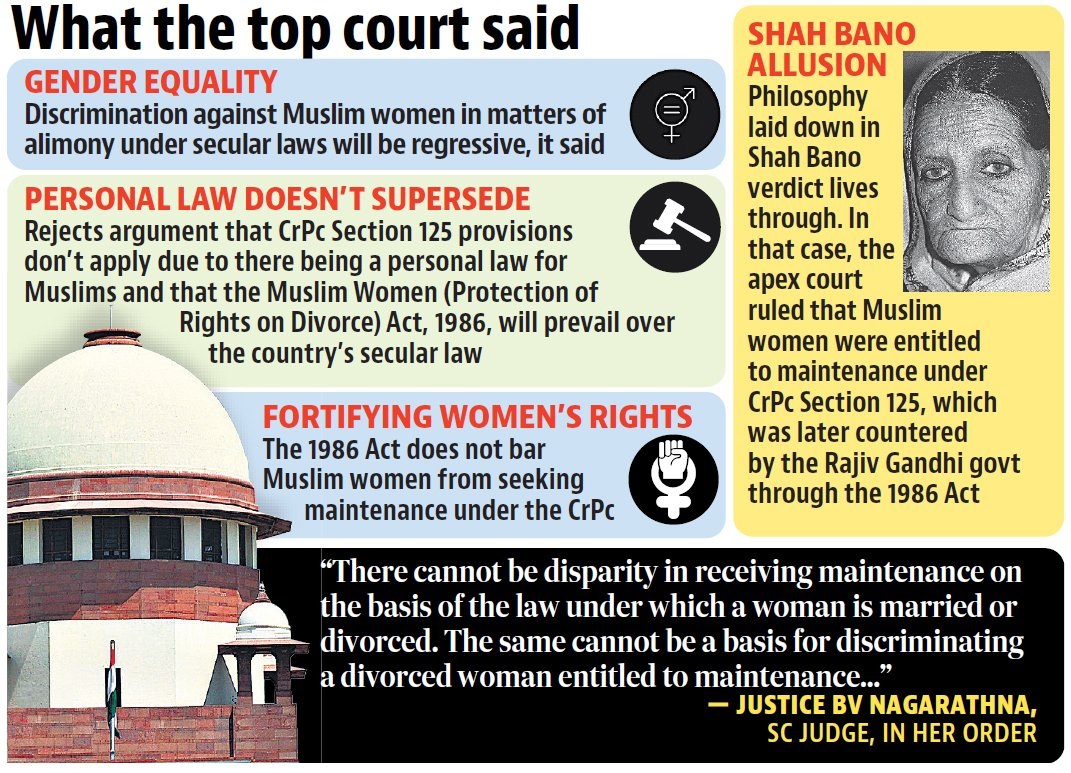
    • The Supreme Court has ruled that a divorced Muslim woman is entitled to seek maintenance from her husband under Section 125 of the Criminal Procedure Code (CrPC).
      • The court asserted that any discrimination against Muslim women in matters of alimony under the secular laws of the country would be regressive and against gender justice, equality.

    Story so far:

    • The Supreme Court bench rejected the argument that Section 125 of the CrPC does not apply to Muslims because they have their own personal law.
    • The court ruled that the Muslim Women (Protection of Rights on Divorce) Act, 1986, does not override the secular law.

    Key Points of the Judgment

    • Legal Standing: “There cannot be the disparity in receiving maintenance on the basis of the law under which a woman is married or divorced.”
    • Application of Section 125: Justice Nagarathna emphasized, “Section 125 of the CrPC cannot be excluded from its application to a divorced Muslim woman irrespective of the law under which she is divorced.”
    • Role of the 1986 Act: The judgment underscored that rights granted under the 1986 Act to receive maintenance during ‘iddat’ are in addition to, not in derogation of, those under Section 125 of the CrPC.

    Muslim Women (Protection of Rights on Divorce) Act, 1986:

    Purpose:

    • To protect the rights of Muslim women who have been divorced by, or have obtained a divorce from, their husbands.
    • To provide for matters connected with or incidental to their divorce.

    Key Provisions:

    • Maintenance:
      • During Iddat Period: A Muslim woman is entitled to a reasonable and fair provision and maintenance from her husband during the iddat period (a waiting period after divorce).
      • Post-Iddat Maintenance: If she cannot maintain herself after the iddat period, she can claim maintenance from her relatives who would inherit her property on her death. If no relatives are available, the State Wakf Board is responsible for her maintenance.
    • Mehr (Dower): The woman is entitled to the payment of mehr (dower) that was agreed upon at the time of marriage.
    • Return of Property: The woman is entitled to all the properties given to her before or at the time of marriage or after the marriage by her relatives, friends, husband, or any other person.
    • Rights of Children: The Act also provides for the maintenance of children born out of the marriage until they reach the age of two years.
    • Application to Magistrate:
      • A divorced woman, or someone acting on her behalf, can apply to a Magistrate for an order under the Act.
      • The Magistrate has the authority to make orders for payment of maintenance, mehr, and return of property.

    Criticisms and Issues:

    • Limited Scope: Critics argue that the Act’s provisions are limited to the iddat period and do not ensure long-term maintenance.
    • Dependence on Relatives: Post-iddat maintenance depends on relatives, which might not always be practical or feasible.
    • Role of Wakf Board: The effectiveness of the Wakf Board in providing maintenance has been questioned due to administrative and financial constraints.
    • Violation of Right to Equality: The MWPRD Act has been criticized for creating discriminatory practices by limiting the maintenance period for Muslim women compared to women of other communities, thus violating the Right to Equality under Article 14 of the Constitution.

    Context and Historical Perspective:

    • Shah Bano Case (1985): The court referenced the landmark Shah Bano case, which affirmed Muslim women’s right to maintenance under Section 125 of the CrPC.
    • Danial Latifi Case (2001): It highlighted subsequent interpretations ensuring that the 1986 Act does not deprive Muslim women of rights under Section 125.
    • Rejection of Restrictions: The court rejected restrictive interpretations that could hinder gender justice and emphasized the importance of providing adequate maintenance, not minimal amounts, to destitute Muslim women.
    • Continuation of Section 144: The judgment noted that the Bharatiya Nagarik Suraksha Sanhita, 2023, which has replaced the CrPC, retains the older provision on alimony under Section 144.

    Section 125 of the Criminal Procedure Code (CrPC)

    Purpose:

    • Maintenance Orders: Section 125 of the CrPC provides for the maintenance of wives, children, and parents who are unable to maintain themselves.

    Key Provisions:

    • Eligible Persons:
      • Wife: Includes a divorced wife who has not remarried.
      • Legitimate and illegitimate minor children.
      • Adult children are unable to maintain themselves due to physical or mental abnormalities.
      • Parents: Includes both father and mother who are unable to maintain themselves.
    • Conditions:
      • The person liable to pay maintenance has sufficient means.
      • The person liable has neglected or refused to maintain the eligible person.
    • Order: The Magistrate can order a monthly allowance for the maintenance of the eligible person.
    • Maximum Amount: There is no fixed maximum amount; it is determined by the Magistrate based on the circumstances.

    Significance:

    • Social Justice: It aims to prevent vagrancy and destitution by ensuring that dependents are provided for.
    • Secular Applicability: It applies to all religions and is not specific to any particular religion.

    Implications and Legal Precedent

    • Equality under Law: The judgment reinforces the principle that Muslim women have the same legal recourse as women of other faiths under Section 125 of the CrPC.
    • Additional Remedies: It affirmed that provisions like the Muslim Women (Protection of Rights on Marriage) Act, 2019, do not exclude rights under Section 125.


    PYQ:

    [2020] Customs and traditions suppress reason leading to obscurantism. Do you agree?

    [2019] Which Article of the Constitution of India safeguards one’s right to marry the person of one’s choice?

    (a) Article 19
    (b) Article 21
    (c) Article 25
    (d) Article 29

Join the Community

Join us across Social Media platforms.