💥UPSC 2026, 2027, 2028 UAP Mentorship (March Batch) + Access XFactor Notes & Microthemes PDF

Type: India Mapping

  • Dams and Hydroprojects

    Ratle Hydroelectric Project Seeks Extension of Environmental Clearance  

    Why in the News?

    Ratle Hydroelectric Power Corporation Limited has sought an extension of Environmental Clearance (EC) for its 850 MW Ratle Hydroelectric Project on the Chenab River, citing delays due to litigation and COVID-19. The proposal is under appraisal by the Expert Appraisal Committee (EAC) of the Union Environment Ministry.

    About the Ratle Hydroelectric Project

    • Capacity: 850 MW
    • Location: Kishtwar district, Jammu and Kashmir
    • River basin: Indus Basin
    • Type of dam: Concrete gravity dam

    Environmental Clearance Timeline

    • Original EC granted: December 2012
    • Initial validity: Up to 2022
    • Extended validity for hydropower projects: Till December 11, 2025
    • Extension sought due to:
      • Court litigations between 2014–2021
      • COVID-19 disruption (April 2020 to March 2021)

    Current Legal Issues

    • Case pending before National Green Tribunal
    • Allegations of illegal muck dumping into the Chenab
    • Petition filed by residents of Thathri
    • Judgment reserved in December 2025

    Prelims Pointers

    • Ratle project is on the Chenab River
    • Falls under the Indus Basin
    • EC validity can exclude court stay and COVID periods
    • Joint venture led by NHPC
    • Under scrutiny of NGT
    [2009] The Dul Hasti Power Station is based on which one of the following rivers? 

    (a) Beas 

    (b) Chenab 

    (c) Ravi 

    (d) Sutlej

  • North-East India – Security and Developmental Issues

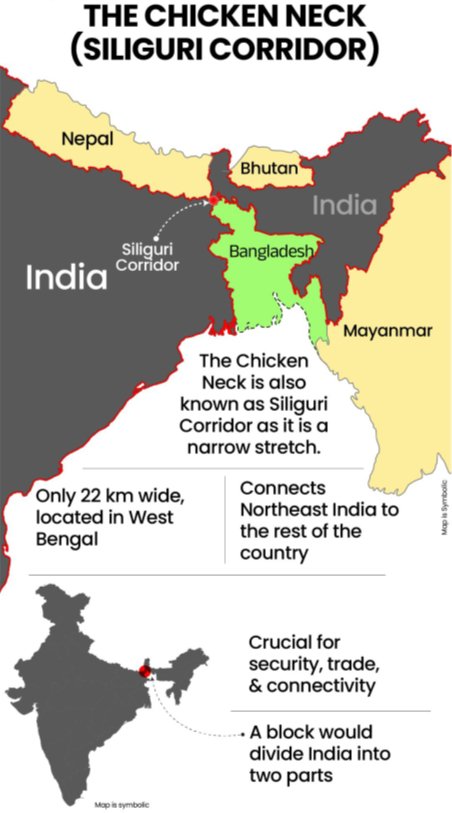
    Army sets up three new garrisons near the Siliguri Corridor

    Why in the News?

    India has set up three new Army garrisons at Dhubri, Kishanganj, and Chopra to secure the vulnerable eastern frontier and protect the Siliguri Corridor amid instability in Bangladesh and rising Chinese activity.

    Army sets up three new garrisons near the Siliguri Corridor

    About Siliguri Corridor:

    • Overview: A narrow land strip connecting mainland India to the Northeast, popularly called the Chicken Neck due to its thin, vulnerable shape.
    • Dimensions: Roughly 60 km long and 17–22 km wide, making it one of India’s most strategically sensitive corridors.
    • Location: Lies in northern West Bengal, bordered by Nepal (west), Bangladesh (south), Bhutan (north), with China’s Chumbi Valley close to the tri-junction.
    • Link to Northeast: The only land route for supplying all eight northeastern states, carrying road, rail, fuel, food and military logistics (except limited Bangladesh transit routes).
    • Strategic Sensitivity: Its narrowness and proximity to the India–China–Bhutan tri-junction make it a potential chokepoint in conflict scenarios.
    • Military Importance: Acts as the primary logistical artery for moving Indian Army troops and equipment toward Sikkim and Arunachal Pradesh, especially during LAC tensions.
    • Security Challenges: Surrounded by multiple international borders, making it prone to illegal immigration, smuggling, cross-border crime, and potential external military pressure.
    • Economic Significance: Key route for trade with Nepal and Bhutan, and supports tourism to Darjeeling, Sikkim and Bhutan.

    About the New Eastern Garrison Deployments:

    • Purpose: Developed to address rising security risks due to political changes in Bangladesh, demographic pressures along the border, and China’s increasing activity near the tri-junction.
    • Locations:
      1. Lachit Borphukan Military Station, Dhubri (Assam)
      2. Forward base, Kishanganj (Bihar)
      3. Forward base, Chopra (West Bengal)
    • Operational Role: Enables continuous surveillance, rapid troop movement, and strengthens defence preparedness across the India–Bangladesh frontier.
    • Local Support: Assam facilitated quick setup of the Dhubri station, named after Ahom general Lachit Borphukan, symbolising regional identity and military determination.

    Drivers Behind the Reinforcement:

    • Regime Change in Bangladesh: Expected shifts in border behaviour, cross-border movement, and potential security spillovers.
    • Illegal Immigration Concerns: Union Home Ministry has flagged demographic changes in border districts linked to cross-border inflow.
    • China’s Expanding Influence:
      • Accelerated LAC military build-up in Arunachal Pradesh.
      • Growing ties with Pakistan and Bangladesh, including a trilateral meet in Kunming, raising regional security concerns.
    • Regional Military Activity: India has conducted major exercises like Poorvi Prachand Prahar and IAF flying displays in Assam to signal operational readiness.
    • Pakistan–Bangladesh Engagements: Recent visit of a Pakistan Navy ship to Chattogram (first since 1971) has added a fresh strategic dimension to India’s eastern security planning.
  • Forest Conservation Efforts – NFP, Western Ghats, etc.

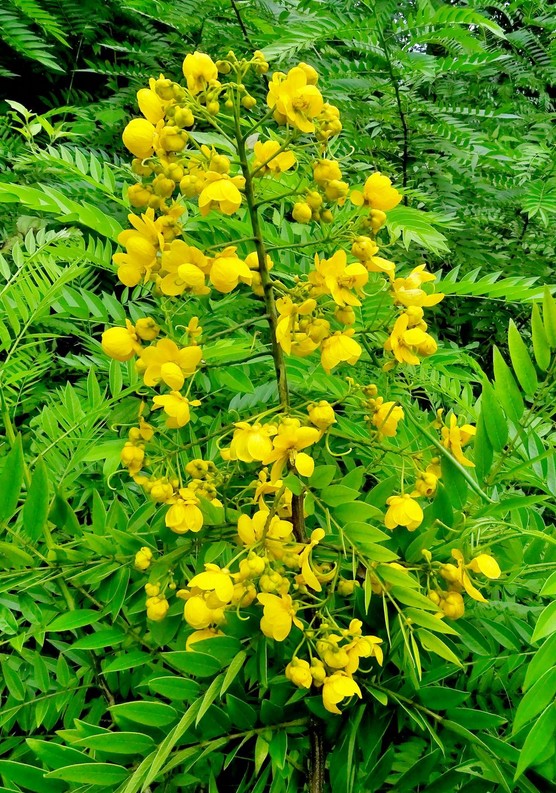
    Senna spectabilis removed from 1,963 hectares of land in Mudumalai TR

    Why in the News?

    The Tamil Nadu Forest Department has successfully removed Senna spectabilis, a highly invasive tree species, from 1,963 hectares of the Mudumalai Tiger Reserve (MTR).

    Senna spectabilis removed from 1,963 hectares of land in Mudumalai TR

    Mudumalai Tiger Reserve

    • Location: Situated in Nilgiris District, Tamil Nadu, at the tri-junction of Tamil Nadu, Kerala, and Karnataka.
    • Area: Covers 321 sq. km, forming part of the Nilgiri Biosphere Reserve, India’s first biosphere reserve.
    • Terrain: Undulating landscape ranging from 960–1266 m elevation.
    • Rivers: The Moyar River flows through the reserve, supporting rich biodiversity.
    • Vegetation: Includes evergreen, moist and dry deciduous forests, teak, bamboo, and grasslands (vayals).
    • Flora: Contains wild relatives of cultivated plants like rice, turmeric, and ginger.
    • Fauna: Home to tigers, elephants, gaurs, sambars, leopards, blackbucks, wild dogs, and 8% of India’s bird species.
    • Boundaries: Shares borders with Bandipur Tiger Reserve (Karnataka) and Wayanad Wildlife Sanctuary (Kerala).
    • Cultural Note: The Oscar-winning documentary “The Elephant Whisperers” was filmed at the Theppakadu Elephant Camp inside MTR.

    About Senna spectabilis:

    • Origin: A fast-growing deciduous tree native to tropical America, introduced in India as an ornamental and shade plant.
    • Issues: Reaches 15–20 metres, produces thousands of seeds annually, spreading rapidly.
    • Invasive Impact: Dense canopy suppresses native trees and grasses, causes food scarcity for herbivores, and reduces biodiversity.
    • IUCN Status: Listed as ‘Least Concern’ but ecologically harmful in Indian forests.

    How was the eradication achieved?

    • Method: Threefold strategy- debarking mature trees, uprooting saplings with weed pullers, and mechanically clearing seedlings.
    • Duration: Large trees dry up in about 18 months after debarking.
    • Post-Removal Use: Felled trees used for paper production.
    • Objective: Restore native flora, improve wildlife forage, and ensure long-term ecosystem recovery.
    [UPSC 2018] Why is a plant called Prosopis juliflora often mentioned in news?

    Options: (a) Its extract is widely used in cosmetics.

    (b) It tends to reduce the biodiversity in the area in which it grows. *

    (c) Its extract is used in the synthesis of pesticides.

    (d) None of the above.


  • Wetland Conservation

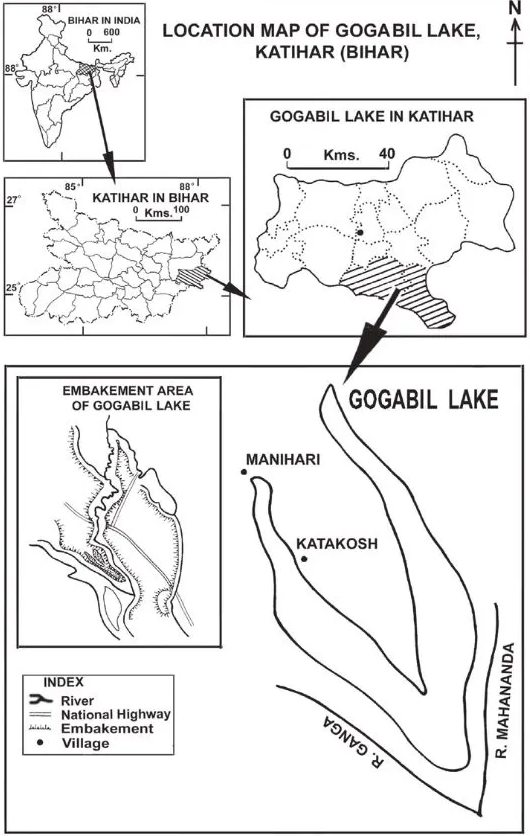
    Bihar’s Gogabeel Lake declared India’s 94th Ramsar Site

    Why in the News?

    Gogabeel Lake, located in Katihar district, Bihar, has been officially designated as India’s 94th Ramsar Site and sixth from Bihar.

    Bihar's Gogabeel Lake declared India's 94th Ramsar Site

    About Gogabeel Lake:

    • Overview: An oxbow lake situated in Katihar district, Bihar, within the Trans-Gangetic Plains, formed between the Ganga and Mahananda rivers.
    • Hydrological Nature: Connects to both rivers during monsoon floods, functioning as a dynamic floodplain wetland.
    • Legal Status: Declared Bihar’s first community reserve, co-managed by local communities and forest authorities.
    • Ecological Significance: Serves as a key habitat for migratory birds and a breeding site for vulnerable species such as the Lesser Adjutant Stork, Black-necked Stork, and Smooth-coated Otter.
    • Biodiversity: Hosts 90+ bird species (including 30 migratory), wetland flora, and fish species like Helicopter Catfish (Wallago attu).
    • Ecosystem Services: Provides flood mitigation, groundwater recharge, carbon storage, and climate regulation, contributing to the Gangetic ecosystem’s stability.
    • Cultural Linkages: Integral to local festivals like Sirva, Adra, and Chhath, symbolising people–nature harmony in rural Bihar.
  • Dams and Hydroprojects

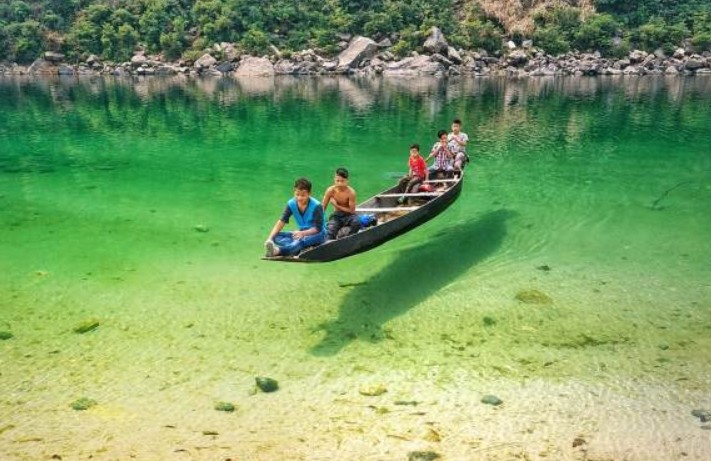
    Meghalaya’s Umngot River turns Muddy

    Why in the News?

    The Umngot River, celebrated for its crystal-clear waters and tourist appeal at Dawki and Shnongpdeng, has turned murky and opaque.

    Meghalaya’s Umngot River turns Muddy

    About Umngot River:

    • Location: Flows through West Jaintia Hills district, Meghalaya, close to the India–Bangladesh border.
    • Origin: Arises from the Jaintia Hills, traversing limestone-rich terrain that naturally filters impurities and maintains clarity.
    • Distinct Appearance: Known for its crystal-clear waters that create the illusion of boats floating on air, earning it global recognition.
    • Length & Course: Flows southward to Dawki town, where it merges with Bangladesh’s Piyain River.
    • Ecological Features: Possesses high dissolved oxygen levels, preventing algal growth and supporting diverse aquatic biodiversity.
    • Tourism Hub: Popular at Dawki and Shnongpdeng for boating, fishing, camping, and eco-tourism, drawing thousands of visitors annually.
    • Infrastructure Landmark: The Dawki Suspension Bridge (1932) is a heritage structure spanning the river and serving as a trade route link.
    • Economic Role: Sustains cross-border trade, local fishing, and tourism-driven livelihoods vital to Meghalaya’s rural economy.
    • Cultural Boundary: Serves as a natural divider between Ri Pnar (Jaintia Hills) and Hima Khyrim (Khasi Hills).

    Cause of Discoloration:

    • Primary Cause: Linked to Shillong–Dawki road-widening project upgrading it to a two-lane highway with a 400 m bridge at Dawki.
    • Pollution Source: Hill-cutting, excavation, and soil dumping along sites near Umtyngar and Dawki caused heavy sediment runoff.
    • Inspection Findings: The Meghalaya State Pollution Control Board (MSPCB) detected uncontained debris and sliding soil entering the river, reducing water transparency.
    [UPSC 2021] Consider the following rivers:

    1. Brahmani 2. Nagavali 3. Subarnarekha 4. Vamsadhara

    Which of the above rise from the Eastern Ghats?

    Options: (a) 1 and 2 (b) 2 and 4* (c) 3 and 4 (d) 1 and 3


  • Forest Conservation Efforts – NFP, Western Ghats, etc.

    Pampadum Shola National Park

    Why in the News?

    At Pampadum Shola National Park, invasive Australian wattles are being removed and native grasslands restored naturally leading streams to flow again and biodiversity to rejuvenate.

    About Pampadum Shola National Park:

    • Location: Situated in Idukki district, Kerala, near the Tamil Nadu border, about 35 km from Munnar.
    • Area & Status: Smallest NP in Kerala (11.753 sq km); declared in 2003 to protect the shola–grassland ecosystem.
    • Landscape: Lies at 1,600–2,400 m elevation within the Anamalai–High Range landscape, part of the Anamudi Sub-cluster (UNESCO World Heritage Site).
    • Hydrology: Serves as a watershed for the Pambar and Vaigai Rivers, vital to Tamil Nadu’s plains.
    • Flora & Fauna: Features evergreen forests, moist deciduous patches, and montane grasslands; key species include Nilgiri Marten, Kerala Laughing Thrush, Nilgiri Tahr, and Indian Giant Squirrel.
    • Restoration Efforts: Ecological restoration (2020–2024) underway, removal of invasive Australian wattles (Acacia mearnsii) has revived native grasslands and streams.
    • Climate & Tourism: Experiences cool, misty weather (6°C–30°C) with dual monsoons; regulated trekking under Forest Department supervision.

    What are Shola Forests?

    • Overview: Tropical montane evergreen forests found above 1,600 m in the Western Ghats across Kerala, Tamil Nadu, and Karnataka.
    • Etymology: Derived from Tamil word “solai”, meaning sacred grove or thicket.
    • Structure: Occur as a mosaic of stunted evergreen forests and grasslands, forming the shola–grassland ecosystem.
    • Floral Composition: Dominated by Michelia nilagirica, Rhododendron, Eurya, Schefflera, and Elaeocarpus species with rich epiphyte growth.
    • Ecological Role: Act as natural sponges, absorbing rain, recharging aquifers, and feeding perennial rivers like Cauvery, Bhavani, Vaigai, and Thamirabarani.
    • Biodiversity: Support high endemism, harbouring Nilgiri Tahr, Lion-tailed Macaque, Nilgiri Pipit, and other rare fauna.


    [UPSC 2020] Which of the following Protected Areas are located in Cauvery basin?

    1. Nagarhole National Park

    2. Papikonda National Park

    3. Sathyamangalam Tiger Reserve

    4. Wayanad Wildlife Sanctuary

    Select the correct answer using the code given below:

    (a) 1 and 2 only (b) 3 and 4 only (c) 1, 3 and 4 only * (d) 1, 2, 3 and 4


  • Wetland Conservation

    Rowmari- Donduwa Wetland Complex

    Why in the News?

    Environmentalists in Assam have proposed the Rowmari–Donduwa Wetland Complex for designation as a Ramsar Site, citing its exceptional biodiversity and ecological services.

    Assam’s Wetland Context:

    • Current Scenario: Assam has 3,500+ wetlands (≈1.01 lakh ha), but only Deepor Beel (2002) is a Ramsar Site.
    • Conservation Importance: Designating Rowmari–Donduwa would fill a 20-year conservation gap and enhance Assam’s global wetland profile.
    • Regional Context: North-East India’s Ramsar Sites-  Deepor Beel (Assam), Loktak (Manipur), Rudrasagar (Tripura), Pala (Mizoram).

    About Rowmari–Donduwa Wetland Complex:

    • Overview: Situated within the Laokhowa–Burhachapori Wildlife Sanctuary, Nagaon district, Assam, forming part of the Kaziranga–Orang landscape.
    • Ecological Role: An interconnected floodplain–marsh system acting as an ecological corridor between Kaziranga and Orang National Parks, supporting wildlife movement and genetic diversity.
    • Biodiversity Significance: The 6th Kaziranga Wetland Bird Census (2025) recorded 47,000+ birds of 120 species, exceeding counts from Deepor Beel and Loktak Lake.
    • Key Species: Hosts globally threatened birds, Knob-billed Duck, Lesser Adjutant Stork, Black-necked Stork, Ferruginous Pochard, and Common Pochard.
    • Ecosystem Services: Provides flood control, groundwater recharge, carbon storage, and supports fisheries and ecotourism-based livelihoods.
    • Ramsar Eligibility: Fulfils 8 of 9 Ramsar criteria, qualifying as a Wetland of International Importance.

    Back2Basics: Ramsar Convention

    • Establishment: Signed on 2 February 1971 in Ramsar, Iran.
    • Objective: Provide a framework for conservation and wise use of wetlands and their resources.
    • Functions:
      • Identify and designate wetlands of international importance.
      • Promote effective management of wetlands.
      • Foster international cooperation for conservation.
    • Members: 173 countries (as of 2025).
    • India and Ramsar:
      • India joined in 1982.
      • First Ramsar site: Chilika Lake, Odisha (1981).
      • Current total: 93 sites (Sept 2025), covering 13,60,718 hectares.
      • Growth: From 26 sites in 2012 to 93 in 2025 (51 added since 2020).
      • State-wise: Tamil Nadu has the highest (20), followed by Uttar Pradesh (10).
      • About 10% of India’s total wetland area is under Ramsar listing.
    • Montreux Record: List of Ramsar sites under threat of ecological change.
      • 48 sites globally (2025).
      • 2 Indian sites included: Keoladeo National Park (Rajasthan) and Loktak Lake (Manipur).
    • World Wetlands Day: Celebrated on February 2nd every year.
      • 2025 Theme: “Protecting Wetlands for Our Common Future”.

    Criteria for Declaration (9 Criteria):

    A wetland can be declared a Ramsar site if it meets at least one of these:

    1. Has unique, rare, or representative wetland types.
    2. Supports vulnerable, endangered, or endemic species.
    3. Provides critical habitat for waterfowl, especially during migration.
    4. Contains significant ecological, botanical, zoological, limnological, or hydrological features.
    5. Supports biodiversity conservation and scientific research.
    6. Provides ecosystem services like flood control, groundwater recharge, and water purification.
    7. Has cultural, spiritual, or recreational importance.
    8. Ensures sustainable livelihoods for local communities.
    9. Faces threats requiring international cooperation for conservation.


    [UPSC 2022] Consider the following pairs:

    Wetland/Lake Location

    1. Hokera Wetland- Punjab

    2. Renuka Wetland- Himachal Pradesh

    3. Rudrasagar Lake- Tripura

    4. Sasthamkotta Lake- Tamil Nadu

    How many pairs given above are correctly matched?

    Options: (a) Only one pair (b) Only two pairs* (c) Only three pairs (d) All four pairs


  • Floods force closure of Bhavani Island

    Why in the News?

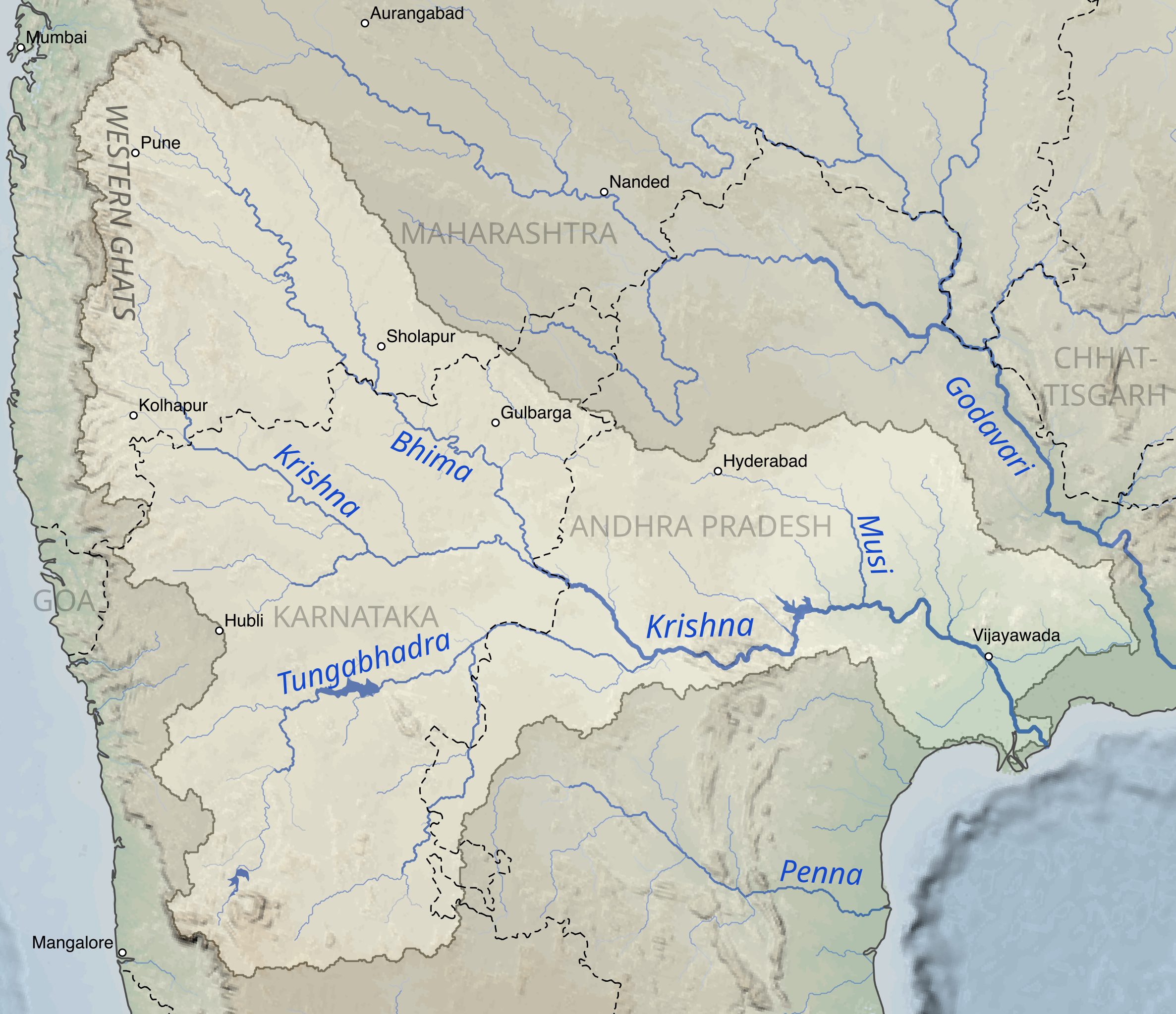
    Flood discharges at Prakasam Barrage on the Krishna River has led to the closure of Bhavani Island from the mainland.

    About Bhavani Island:

    • Location: Situated on the Krishna River, near Vijayawada, Andhra Pradesh.
    • Area: Spans ~133 acres, among India’s largest river islands.
    • Management: Operated by the Andhra Pradesh Tourism Department as a major eco-tourism and recreational hub.
    • Accessibility: Lies upstream of Prakasam Barrage, connected only by ferry services from the mainland.
    • Ecology & Features: Rich in greenery, ponds, and meadows, offering boating, gardens, adventure parks, rural museums, and event spaces.
    • Cultural Link: Named after Goddess Bhavani (Kanaka Durga); her temple atop Indrakeeladri Hill overlooks the river.

    Krishna River

    Floods force closure of Bhavani Island

    • Overview: One of India’s major peninsular rivers, stretching about 1,400 km.
    • Origin & Course: Rises near Mahabaleshwar (Maharashtra), flows eastward through Karnataka, Telangana, and Andhra Pradesh, entering the Bay of Bengal at Hamsaladeevi.
    • Basin Extent: Covers ~2.59 lakh sq km, nearly 8% of India’s area.
    • Boundaries: Flanked by Balaghat Range (north), Eastern Ghats (east), and Western Ghats (west).
    • Tributaries:
      • Right Bank: Ghataprabha, Malaprabha, Tungabhadra, and Musi Rivers.
      • Left Bank: Bhima, Koyna, Yerla, Panchganga, and Dudhganga Rivers.
    • Projects & Dams: Major hydropower and irrigation structures including Almatti, Srisailam, Nagarjuna Sagar, Narayanpur, and Jurala.
    • Prakasam Barrage: Built near Vijayawada to regulate water flow, support irrigation, navigation, and tourism.
    • Economic Role: Sustains agriculture, fisheries, and power generation, forming the riverine backbone of southern India.
  • Wildlife Conservation Efforts

    Nauradehi WLS to become 3rd home for Cheetahs in Madhya Pradesh

    Why in the News?

    Madhya Pradesh CM has announced that Nauradehi Wildlife Sanctuary will soon become the third home for cheetahs in the State, after Kuno National Park and Gandhi Sagar Sanctuary.

    About Nauradehi Wildlife Sanctuary:

    • Overview: Largest wildlife sanctuary in Madhya Pradesh, covering 1,197 sq km across Sagar, Damoh, and Narsinghpur districts; located between the Narmada and Ganga river basins, forming a key ecological transition zone.
    • Establishment: Declared in 1975 to conserve the Indian wolf (Canis lupus pallipes), the flagship species. Habitat includes dry deciduous forests, scrublands, and grasslands supporting leopard, sloth bear, blackbuck, nilgai, chital, and hyena populations.
    • Upgradation (2024): Elevated to a Tiger Reserve to strengthen protection and become eligible for Project Cheetah under the National Tiger Conservation Authority (NTCA).
    • Connectivity: Linked with Panna Tiger Reserve and Satpura Tiger Reserve through the Nauradehi–Panna corridor, ensuring gene flow across Central India’s forest landscapes.
    • Habitat Characteristics: Open woodlands, scrub forests, and wide grass patches with undulating terrain ideal for high-speed pursuit predators like cheetahs.
    • Prey Base: Rich in blackbuck (Antilope cervicapra), chital (Axis axis), nilgai (Boselaphus tragocamelus), and wild boar.
    • Environmental Setting: Moderate rainfall, tributaries of the Narmada River, and dry tropical climate create a balanced hydrological regime.
    • Scientific Endorsement: Recognised by Wildlife Institute of India (WII) and NTCA as among India’s most feasible future cheetah habitats.

    Nauradehi WLS to become 3rd home for Cheetahs in Madhya Pradesh

    Cheetahs and their Reintroduction in India:

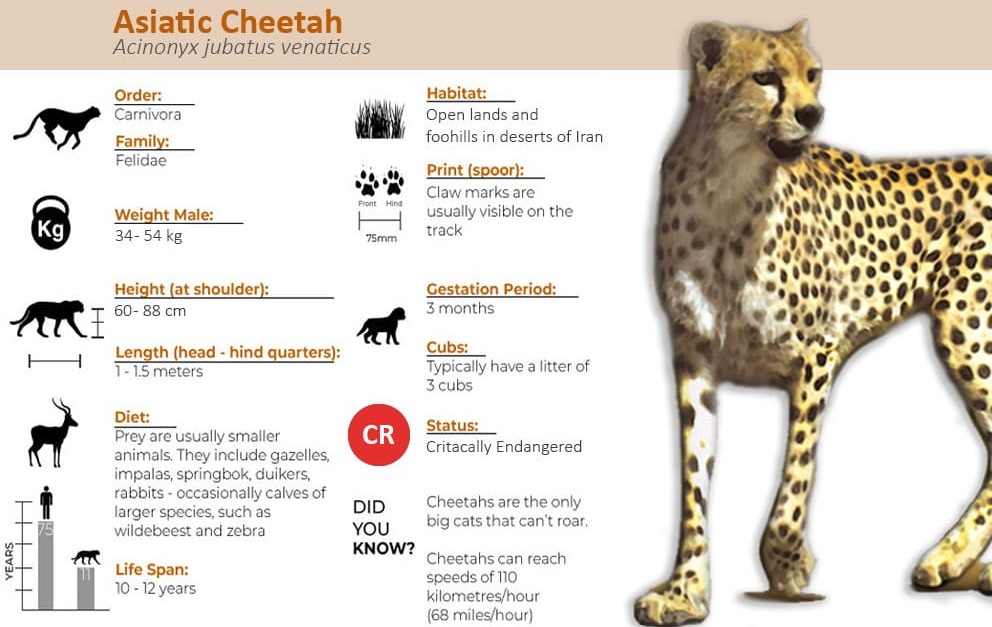
    • Overview: The cheetah (Acinonyx jubatus) is the world’s fastest land mammal (80–128 km/h). Two subspecies: African cheetah (A.j. jubatus) across Africa and Asiatic cheetah (A.j. venaticus) confined to Iran (< 30 individuals).
    • Conservation Status: Asiatic subspecies Critically Endangered by the IUCN; global population ≈ 6,500 mature individuals.
    • Extinction in India: Last recorded in Koriya (Chhattisgarh) in 1947; officially declared extinct in 1952 due to hunting and grassland degradation.
    • Project Cheetah (2022): Implemented by Ministry of Environment, Forest and Climate Change (MoEFCC) and NTCA with WII support; aims to restore cheetahs in India’s grasslands and revive lost ecological roles.
    • Translocation Phases: Eight cheetahs from Namibia (Sept 2022) and twelve from South Africa (Feb 2023) released at Kuno National Park (Madhya Pradesh).
    • Meta-Population Plan: To establish a connected population across Kuno, Gandhi Sagar, Nauradehi, and Mukundra Hills (Rajasthan) ensuring genetic diversity and landscape-level connectivity.
    • Long-Term Goal: Create a self-sustaining population of 35–40 individuals within 15 years through science-based, landscape-driven restoration.
    • Current Phase: Majority under semi-captive adaptation at Kuno; expansion to Nauradehi and Gandhi Sagar Tiger Reserves planned to reduce crowding and enhance resilience.


    [UPSC 2012] Consider the following:
    1. Black-necked crane 2. Cheetah 3. Flying squirrel 4. Snow leopardWhich of the above are naturally found in India?(a) 1, 2 and 3 only  (b) 1, 3 and 4 only*  (c) 2 and 4 only (d) 1, 2, 3 and 4


  • Wetland Conservation

    Water Pollution in Manipur’s Loktak Lake

    Why in the News?

    A recent Nagaland University study has raised alarms over the deteriorating ecological health of Loktak Lake, India’s largest freshwater lake and a designated Ramsar Site (since 1990) in Manipur.

    Key Findings of the Study:

    • Core Issue: Land-use changes such as agriculture expansion, human settlements, and shifting cultivation (jhum) are deteriorating the water quality of rivers feeding the lake.
    • Sampling and Rivers: Water quality analysis was done across nine major rivers draining into Loktak, linking land-use patterns with water quality indicators such as dissolved oxygen (DO), biological oxygen demand (BOD), and temperature.
    • Polluted Rivers:
      • Nambul River recorded the lowest oxygen levels and highest organic contamination, influenced by 47% agricultural land and 11% settlement areas in its sub-catchment.
      • Khuga River had the second poorest quality due to 42% shifting cultivation (jhum).
      • Iril and Thoubal Rivers, flowing through dense forested areas, showed better water quality, underscoring the protective role of forests.

    About Loktak Lake:

    • Overview: Situated in Manipur, about 40 km from Imphal, it is the largest freshwater lake in Northeast India.
    • Unique Feature: Known for its floating biomass called phumdi (in the Meitei language), a mixture of soil, vegetation, and organic matter that supports unique aquatic life.
    • Ecological Significance: The Keibul Lamjao National Park, the world’s only floating national park and habitat of the endangered brow-antlered deer (Sangai), forms an integral part of the lake ecosystem.
    • Hydrology: Fed by nine major rivers, including Khuga, Western, Nambul, Imphal, Kongba, Iril, Thoubal, Heirok, and Sekmai and drained through the Ithai Barrage.
    • Global Recognition:
      • Declared a Ramsar Site in 1990, signifying its international ecological importance.
      • Listed under the Montreux Record in 1993 for undergoing ecological degradation.
    • Biodiversity: Hosts 132 plant species and 428 animal species, supporting fisheries, hydropower generation, transport, and tourism.
    • Socioeconomic Role: Provides livelihoods for local communities through fishing, agriculture, and tourism while regulating floods and water supply in the Imphal valley.
    [UPSC 2015] Which of the following National Parks is unique in being a swamp with floating vegetation that supports a rich biodiversity?

    Options:

    (a) Bhitarkanika National Park

    (b) Keibul Lamjao National Park*

    (c) Keoladeo Ghana National Park

    (d) Sultanpur National Park