💥UPSC 2026, 2027, 2028 UAP Mentorship (March Batch) + Access XFactor Notes & Microthemes PDF

Type: op-ed snap

  • Labour, Jobs and Employment – Harmonization of labour laws, gender gap, unemployment, etc.

    Changes in the labour laws needs to discussed and debated

    Note4Students

    From UPSC perspective, the following things are important:

    Prelims level: Labour Code Bills

    Mains level: Paper 2- Issues with the labour laws

    Increase in the jobs without employment security

    • Between 2004-05 and 2017-18, the share of salaried workers outside agriculture without any written contract increased from 60 per cent to 71 per cent.
    • Even in private and public limited companies, this share increased from 59 per cent to 71 per cent.
    • In the government and the public sector the share of such workers increasing from 27 per cent to 45 per cent over the period.
    • Many of the wage jobs in the organised sector came through contractors.
    • In organised manufacturing, the reported share of contract labour increased from 13 per cent in 1995-06 to 36 per cent in 2017-18.

    Policy response

    • A policy to deal with the problem of employment security was much needed.
    • The response came in the form the three revised labour Code Bills — on Industrial Relations, Occupational Safety, Health and Working Conditions, and Social Security.
    • These were introduced in Parliament in the Monsoon Session, and approved on September 23.
    • These three labour codes, along with the Code on Wages approved earlier, touch the lives of every Indian worker.

     “Fixed term” worker

    • In 2018, the government amended the Standing Orders on Employment Act and introduced the category of “fixed term” worker.
    • That category creates a permanent cadre of temporary workers, with no prospects of career growth and job security.

    Changes and issues with the Bills

    • 1) Government had rationalised fixed-term employment by arguing that industries had resorted to the third-party engagement of contract labour to get around the rigidities in firing workers.
    • But that has not stopped the Codes from further liberalising the provisions relating to employment of contract labour and making their regulation applicable only in establishments employing 50 or more workers, instead of 20 or more.
    • 2) The key provisions which regulate the employment of inter-state migrant workers have been further diluted and made applicable only to establishments employing 10 or more such workers, compared to five earlier.
    • 3) Along with the provisions of retrenchment, the applicability of the Standing Orders, which regulate the categorisation as well as the terms of employment of workers in establishments, has also been raised from 100 to 300 workers.
    • 4) The threshold for factories has now been doubled — from 10 to 20 workers with power — thereby eliminating a large number of important regulatory provisions for the smaller factories.
    • 5) Relevant governments have been given much more leeway in exempting establishments from the applicability of a whole range of provisions in the Code.
    • 6) Inspection provisions have been diluted in all the Codes and will no longer even be complaints based.
    • 7)  The changes have also made legal industrial action a virtual impossibility, and the presence of unions less possible.

    Conclusion

    Informality contributes to inequality and to conditions which make sustainable growth impossible, and economic recovery more difficult. It also creates conditions in which employers under-invest in workers’ capacities and workers are not invested in a company’s future — leading to low productivity and lack of competitiveness.

  • Industrial Sector Updates – Industrial Policy, Ease of Doing Business, etc.

    Finishing the unfinished task of reform in land and labour markets

    Note4Students

    From UPSC perspective, the following things are important:

    Prelims level: APMC Act, Companies Act, ECA 1955

    Mains level: Paper 3- Reforms in various sectors of economy

    The article discusses the issues faced by the various sectors of the economy and how the reform measures introduced by the government could help these sectors.

    Exploitation of farmers and consumers

    • The Indian farmer has bee treated as captive sources of producing cheap food grain while living at subsistence levels.
    • There was no freedom to choose the point of sale for his produce, he could not decide the price of his product and had no say in selecting the buyer.
    • The end consumer was equally short-changed with frequent cycles of persistent high inflation.
    • The only beneficiaries of this perverse system were middlemen who thrived under political protection.

    How reforms will help farmers

    • The stifling nature of the Essential Commodities Act and the APMC Act have both been removed.
    • Contract farming is now nationally enabled, allowing private investment to come in.
    • Private investment will bring in technology, modern equipment, better seeds, know-how for in-between-season crops, improved yields, better logistics and freer access to national and international markets.
    • The Indian farm sector will now finally begin to see the benefits of economies of scale.

    Need for the reforms in various sectors

    • There were 44 different labour laws with more than 1,200 sections and clauses that demanded compliance if one even thought of becoming an entrepreneur.
    • Different inspectors and departments administered these laws and this stunted many entrepreneurs.
    • The Companies Act of 2013 completely paralysed risk-taking and quick decision-making among the private wealth creators.
    • There were a large number of organisations that called themselves “banks” but were completely outside the ambit of RBI regulation.
    •  The politicians who controlled these banks were the primary obstacles in introducing any reforms in these sectors.
    • Indian mainstream banks, contrary to international norms, had a peculiar practice of “grossing” their bilateral liabilities rather than “netting”.
    • As per estimates, this locked anywhere between Rs 50,000 to Rs 70,000 crore funds.

    Reforms made by the government

    • In place of the 44 central labour laws,  the Parliament has now put in place four labour codes that are much simpler — the Code on Wages, the Industrial Relations Code, the Social Security Code and the Occupational Safety, Health and Working Conditions Code.
    • The bilateral banking netting law has been passed and a large corpus of unproductive capital has been freed to be deployed in the market.
    • Cooperative banks will now be regulated by the RBI and its customers will have the same protections as those of other regular banks.
    • The problematic sections of the Companies Act 2013 have been done away with and the fear of criminal prosecution gone.

    Conclusion

    The reforms in various sectors of the economy are bound to help the faster recovery of the economy as well as help the farmers realising their full potential.

  • Contention over South China Sea

    Quad

    Note4Students

    From UPSC perspective, the following things are important:

    Prelims level: Quad members

    Mains level: Paper 2- Future course of action for Quad

    The article discusses the future course of action for the Quad and issues it faces in the present circumstances.

    Evolution of the Quad

    • In 2007, the Quad (the United States, Japan, India, and Australia) was an idea whose time had not yet come.
    • The global financial crisis was yet to happen as America continued to enjoy its ‘unipolar moment’.
    • The American still expected China to become a ‘responsible stake-holder’.
    • America required Chinese goodwill in handling issues with North Korea and Iran, and the War on Terror.
    • Japan and Australia were riding the China Boom to prosperity.
    • If India was ambivalent at the time, it was because this mirrored the uncertainties of others.

    China’s reaction and naval expansion

    • When the idea of Quad was barely on the table; the Chinese, labelled it as an Asian version of the North Atlantic Treaty Organization.
    • The real reason for China’s hyperreaction was out of concern that such a grouping would “out” China’s plans for naval expansion by focusing on the Indo-Pacific maritime space.
    • Once the idea of Quad 1.0 had died down, China advanced a new claim — the Nine-Dash Line — in the South China Sea.
    • It undertook the rapid kind of warship building activity
    • It built its first overseas base in Djibouti.
    • It started systematically to explore the surface and sub-surface environment in the Indian Ocean beyond the Malacca Straits.
    • China’s dismissal of the Arbitral Award in the dispute with the Philippines on the South China Sea and its militarization of the islands has given a second chance to the Quad.

    Quad: A plurilateral mechanism

    • The Quad nations need to better explain that the Indo-Pacific Vision is an overarching framework being discussed in a transparent manner.
    • They should also explain that the objective of Indo-Pacific vision is of advancing everyone’s economic and security interests.
    • The Quad is a plurilateral mechanism between countries that share interest on specific matters.
    • In 2016, China itself established a Quadrilateral Cooperation and Coordination Mechanism with Afghanistan, Pakistan and Tajikistan.
    • The Quad is no exception.

    Way forward

    • The forthcoming Ministerial Quad meeting will be an opportunity to define the idea and chart a future path.
    • Needless provocation of China should be avoided.
    • Other countries might be invited to join in the future.
    • An outreach to the Indian Ocean littoral states is especially important since there are reports from some quarters suggesting that India is seeking to deny access to some extra-regional countries through the Indian Ocean.

    Conclusion

    A positive agenda built around collective action in humanitarian assistance and disaster relief, monitoring shipping for search and rescue or anti-piracy operations, infrastructure assistance to climatically vulnerable states, connectivity initiatives and similar activities, will re-assure the littoral States that the Quad will be a factor for regional benefit, and a far cry from Chinese allegations that it is some sort of a military alliance.

  • Languages and Eighth Schedule

    Should India have one national Language?

    Note4Students

    From UPSC perspective, the following things are important:

    Prelims level: Eight Schedule

    Mains level: Paper 2- Eighth Schedule and related issues

    The article discusses the issues with excessive attention given to Hindi and how the neglect of another language could lead to the loss of language and the way of life associated with it as well.

    Debate in Constituent Assembly and issues in the adoption of Hindi

    • The issue of adopting a national language could not be resolved when the Constituent Assembly began drafting India’s Constitution.
    • Members from the Hindi-speaking provinces who moved a number of pro-Hindi amendments and argued for adopting Hindi as the sole national language.
    • Widespread resistance to the imposition of Hindi led to the passage of the Official Languages Act of 1963, which provided for the continued use of English for all official purposes.
    • Hindi became the sole working language of the Union government by 1965 with the State governments free to function in the language of their choice.
    • The constitutional directive for the Union government to encourage the spread of Hindi was retained within Central government entities in non-Hindi-speaking States.

    Issues with the Eighth Schedule

    • According to the 2001 Census, India has 30 languages that are spoken by more than a million people each.
    • The Constitution lists 22 languages and protects them in the eighth schedule.
    • Many languages are kept out of this schedule even if they deserve to be included.
    • This includes Tulu which is spoken by over 1.8 million people and has inscriptions dating back to the 14th and 15th centuries.
    • While Hindi, a much younger Indo-Aryan language, has been gaining prominence since before independence.
    • When a refined language loses its status in literary and daily interactions, the way of life associated with it also vanishes.
    • The Census found that while Hindi is the fastest growing language, the number of speakers of other languages has dropped.

    Way forward

    • While discussing Hindi and its use, let us also focus on the merit of other Indian languages.
    • Instead of focusing on one national language, we should learn a language beyond the mother tongue and get to know a different way of life too.

    Conclusion

    If we don’t protect and promote other well-evolved or endangered and indigenous languages, our future generations may end up never understanding their ‘real’ roots and culture

  • Labour, Jobs and Employment – Harmonization of labour laws, gender gap, unemployment, etc.

    Code on Wages 2019

    Note4Students

    From UPSC perspective, the following things are important:

    Prelims level: Not much

    Mains level: Paper 2-Issues with the Code on the Wages

    The article discusses the issues in the Code on Wages (yet to be notified) 2019 and how it fails to achieve what it seeks to achieve.

    Code on Wages 2019

    • The Code on Wages, 2019 seeks to consolidate and simplify four pieces of legislation into a single code. These 4 legislations are-
    • 1) Payment of Wages Act, 1936.
    • 2) Minimum Wages Act, 1948.
    • 3) Payment of Bonus Act, 1965.
    • 4) Equal Remuneration Act, 1976.
    • Its object and reasons stated that even the Second National Commission on Labour- 2002 suggested consolidating all labour laws into four codes.

    Issues with the consolidation

    • While the previous four pieces of legislation had a total of 119 sections, the new Code has 69 sections.
    • Any consolidation will impact the length of the sections.
    • Further, all requirements for enforcing the Act, have been relegated to the Rules.
    • As a result, the delegated pieces of legislation (Rules) will be bigger than the Code; this is no way to condense prior pieces of legislation.
    • All the four repealed pieces of legislation were enacted historically at different points in time and to deal with different situations.
    • The combining of asymmetrical laws into a single code is not an easy task and will only create its own set of new problems.
    • The central government will have the power to fix a “floor wage”.
    • Once it is fixed, State governments cannot fix any minimum wage less than the “floor wage”.
    •  The concept should be for a binding minimum wage and not have dual wage rates — a binding floor wage and a non-binding minimum wage.
    • Neither the Code nor the Rules (presently, draft Rules) prescribe the qualifications and experience required for appointment of competent authority.
    • Anew provision (Section 52) has been introduced where an officer will be notified with power to impose a penalty in the place of a judicial magistrate.
    • An essential judicial function is now sought to be vested with the executive in contravention of Article 50 of the Constitution.

    Issue of MGNREGA wages

    • There were cases as to whether the Minimum Wages Act would have an over-riding effect over the provisions of the Mahatma Gandhi National Rural Employment Guarantee Act (MGNREGA), 2005.
    • Several High Courts have placed the Minimum Wages Act to override MGNREGA.
    • That has been set to rest by excluding MGNREGA from the purview of the Code on Wages.
    • That has been set to rest by excluding MGNREGA from the purview of the Code on Wages.

    Conclusion

    The Code on Wages (yet to be notified) has neither succeeded in consolidation of laws nor will it achieve the expansion of the coverage of workers in all industries in the unorganised sector.

  • Tax Reforms

    Lessons to learn from Vodafone ruling

    Note4Students

    From UPSC perspective, the following things are important:

    Prelims level: Retrospective legislation

    Mains level: Paper 3-Implications of Vodafone tax case ruling

    Context

    •  An Investor-State Dispute Settlement (ISDS) tribunal has ruled that India’s imposition of tax liability amounting to ₹22,000 crore on Vodafone is in breach of India-Netherlands bilateral investment treaty obligations.

    Background of the case

    • This case arose after the Indian Parliament in 2012 amended the Income Tax Act.
    • As per the amendment, income deemed to be accruing to non-residents, directly or indirectly, through the transfer of a capital asset situated in India is taxable retrospectively with effect from April 1, 1962.
    • This amendment was carried out to override the Supreme Court ruling in favour of Vodafone.
    • This amendment dented India’s reputation as a country governed by the rule of law, and shook the faith of foreign investors.

    Key lessons from Vodafone case

    • 1) All the three organs of the Indian state — Parliament, executive, and the judiciary — need to internalise India’s BIT and other international law obligations.
    • These organs need to ensure that they exercise their public powers in a manner consistent with international law, or else their actions could prove costly to the nation.
    • 2) India should learn that being a country that values the rule of law is an important quality to win over the confidence of foreign investors and international goodwill.
    • 3) It is likely that the government might challenge the award at the seat of arbitration or resist the enforceability of this award in Indian courts alleging that it violates public policy.
    •  It would mean that India does not honour its international law obligation.
    • 4) This ruling might have an impact on the two other ISDS claims that India is involved in with Cairn Energy and Vedanta on the imposition of taxes retrospectively.
    • 5) It is quite possible that India might use this award to further harden its antagonistic stand against ISDS and BITs.
    • India unilaterally terminated almost all its BITs after foreign investors started suing India for breaching BITs.
    • But the fact is that this case and several others are a result of bad state regulation.
    • 6) This decision shows the significance of the ISDS regime to hold states accountable under international law when in case of undue expansion of state power.
    • The case is a reminder that the ISDS regime, notwithstanding its weaknesses, can play an important role in fostering international rule of law.

    Consider the question “What were the issues involved in the Vodafone tax case? What are the implication of Investor-State Dispute Settlement ruling for India?”

    Conclusion

    If government is serious about wooing foreign investment, India should immediately comply with the decision.

  • Foreign Policy Watch: United Nations

    UN and the retreat from multilateralism

    Note4Students

    From UPSC perspective, the following things are important:

    Prelims level: U.N. and its organs

    Mains level: Paper 2- United Nations and the challenges it faces

    As the U.N. enters into 75th year of its existence, it faces several challenges. The article discusses such challenges.

    Challenges to the multilateralism

    1) Withdrawal of the main stakeholders: U.S. and the U.K.

    • The U.S. is withdrawing from multilateralism and so it the U.K.
    • Brexit has shown that nationalism remains strong in Europe.
    • Nevertheless, the most important development is the position of the U.S.
    • The U.S., which created the international system as we know today, is no longer willing to be its “guarantor of last resort”.
    • U.S. President Donald Trump stressed “America First” and suggested that others too should put their countries first.

    2) China’s reluctance

    • China has stepped in to take advantage of the West’s retreat from multilateralism.
    • But China is not embracing the idea of multilateralism.
    • China’s Belt and Road Initiative consists of a series of bilateral credit agreements with recipient countries with no mechanism for multilateral consultation or oversight.
    • The European Union’s and U.S.’s sanctions against Russia have driven it closer to China.
    • Work of the UN Security Council has been affected by the lack of consensus between its permanent members.

    3) Turkey’s interventions

    • Turkey has intervened in Syria, Libya, and the Eastern Mediterranean, which is a breach of international law.
    • The last was a reference to Turkey sending a drilling ship in Greek and Cypriot exclusive economic zones.
    • Turkish President Recep Tayyip Erdogan made a detailed reference to the Jammu and Kashmir issue.
    • As Turkey has assumed the position of UN General Assembly President, statement and its actions matters.

    4) Paucity of resources

    • Over 40 UN political missions and peacekeeping operations engage 95,000 troops, police, and civil personnel. it suffers from a paucity of resources.
    • The UN peacekeeping budget, a little over $8 billion, is a small fraction of the $1.9 trillion military expenditure governments made in 2019.
    •  Most of the humanitarian assistance, developmental work, and budgets of the specialised agencies are based on voluntary contributions.
    • There are calls for increasing public-private partnerships. This is not a satisfactory arrangement.
    • The UN provides ‘public goods’ in terms of peace and development often in remote parts of the world.
    • There may not be enough appetite on the part of corporations. The UN remains an inter-governmental body.

    5) Climate action

    • President Trump mentioned that China’s emissions are nearly twice of those of the U.S.
    • Despite its withdrawal from the Paris Agreement, the U.S. has reduced its carbon emissions by more than any country in the world.
    • President Xi said that after peaking emissions by 2030, China will achieve carbon neutrality before 2060.
    • President Macron said that he was determined to see the EU agree on a target of achieving carbon neutrality by 2050.

    Consider the question “As the world is facing the retreat from multilateralism, what are the challenges facing the U.N. in the current global order?”

    Conclusion

    What does the UN bring to the developing countries? It gives them greater political space. We need to support reform not only to expand the permanent members’ category of the Security Council but also to revitalise the role of the General Assembly. The retreat from multilateralism would undermine the UN’s capacity to face diverse challenges.

  • Minimum Support Prices for Agricultural Produce

    Explained: Farm Acts and federalism

    Note4Students

    From UPSC perspective, the following things are important:

    Prelims level: Doctrine of colorable legislation

    Mains level: Federalism issue raised by the Agricultural Bills

    The President has finally given assent to the controversial farm Bills passed by Parliament last week. Amid protests by farmers’ organisations across the country, questions are being raised about the anti-federal nature of these ‘Acts’.

    Here we shall only discuss its constitutionality and federal nature. Tap to read more about the theme at:

    What is the question over the constitutionality of these laws?

    • These are some of the questions that will be raised in the petitions challenging the constitutionality of the Acts.
    • As per Union of India v H.S.Dhillon (1972), the constitutionality of parliamentary laws can be challenged only on two grounds — that the subject is in the State List, or that it violates fundamental rights.
    • As per Ram Krishna Dalmia v Justice S R Tendolkar (1958) and other judgments, the Supreme Court will begin hearings after presuming the constitutionality of these laws.
    • The bills (now Acts as they have got the President’s assent) do not mention, in the Statement of Objects & Reasons, the constitutional provisions under which Parliament has the power to legislate on the subjects covered.

    Where does the question of federalism come in?

    What is federalism, first?

    • Federalism is the system of government in which sovereignty is constitutionally divided between a central governing authority and constituent political units.
    • It is based upon democratic rules and institutions in which the power to govern is shared between national and state governments, creating a federation.
    • It essentially means both the Centre and states have the freedom to operate in their allotted spheres of power, in coordination with each other.

    Try this PYQ:

    Q.Which of the following federal principles are not found in Indian federation?

    1. Bifurcation of the judiciary between the Federal and State Governments
    2. Equality of representation of the states in the upper house of the Federal Legislature
    3. The Union cannot be destroyed by any state seceding from the Union at its will
    4. Federal Government can redraw the map of the Indian Union by forming new States

    Select the correct answer using the codes given below:

    a) 1, 2 and 3

    b) 2, 3 and 4

    c) 1 and 2

    d) 3 and 4

    Federalism in India

    • The Seventh Schedule of the Constitution contains three lists that distribute power between the Centre and states.
    • There are 97 subjects in the Union List, on which Parliament has exclusive power to legislate (Article 246); the State List has 66 items on which states alone can legislate.
    • The Concurrent List has 47 subjects on which both the Centre and states can legislate, but in case of a conflict, the law made by Parliament prevails (Article 254).
    • Parliament can legislate on an item in the State List under certain specific circumstances laid down in the Constitution.

    Concretization of the idea

    • Federalism, like constitutionalism and separation of powers, is not mentioned in the Constitution. But it is the very essence of our constitutional scheme.
    • In the State of West Bengal v Union of India (1962), the Supreme Court held that the Indian Constitution is not federal.
    • But in SR Bommai v Union of India (1994), a nine-judge Bench held federalism as part of the basic structure of the Constitution.
    • Neither the relative importance of the legislative entries in Schedule VII, Lists I and II of the Constitution, nor the fiscal control by the Union per se is decisive to conclude the Constitution is unitary.
    • The respective legislative powers are traceable to Articles 245 to 254… The State qua the Constitution is federal in structure and independent in its exercise of legislative and executive power,” it said.

    Where is agriculture in the scheme of legislative powers?

    Terms relating to agriculture occur at 15 places in the Seventh Schedule.

    1. Entries 82, 86, 87, and 88 in the Union List mention taxes and duties on income and assets, specifically excluding those in respect of agriculture.
    2. In the State List, eight entries contain terms relating to agriculture: Entry 14 (agricultural education and research, pests, plant diseases); 18 (rights in or over land, land tenures, rents, transfer agricultural land, agricultural loans, etc.); 28 (markets and fairs); 30 (agricultural indebtedness); 45 (land revenue, land records, etc.); 46 (taxes on agricultural income); 47 (succession of agricultural land); and 48 (estate duty in respect of agricultural land).
    3. In the Concurrent List, Entry 6 mentions the transfer of property other than agricultural land; 7 is about various contracts not relating to agricultural land; and 41 deals with evacuee property, including agricultural land.
    • It is clear that the Union List and Concurrent List put matters relating to agriculture outside Parliament’s jurisdiction, and give state legislatures exclusive power.
    • No entry in respect of agriculture in the State List is subject to any entry in the Union or Concurrent Lists.

    What about Entry 27 of the State List that is subject to Entry 33 of List III (Concurrent)?

    • Entry 33 of the Concurrent List mentions trade and commerce, production, supply and distribution of domestic and imported products of an industry over which Parliament has control in the public interest.
    • This includes foodstuffs, including oilseeds and oils; cattle fodder; raw cotton and jute.
    • The Centre could, therefore, argue that it is within its powers to pass laws on contract farming and intra- and inter-state trade, and prohibit states from imposing fees/cesses outside APMC areas.
    • However, like education, farming is an occupation, not trade or commerce.
    • If foodstuffs are considered synonymous with agriculture, then all the powers of states in respect of agriculture, listed so elaborately in the Constitution, shall become redundant.

    So what happens in case of legislation that covers entries in two Lists?

    • In cases such as State of Rajasthan v G Chawla (1959), courts have used the doctrine of “pith and substance” to determine the character of legislation that overlaps between entries.
    • The constitutionality of legislation is upheld if it is largely covered by one list and touches upon the other list only incidentally.
    • But the two new farm Acts go beyond that — they impinge on entries in the State List.
    • In interpreting the lists, the Supreme Court in State of Bihar v Kameshwar Singh (1952) invoked the doctrine of colourable legislation, which means you cannot do indirectly what you cannot do directly.

    What is the Doctrine of Colorable Legislation?

    • This doctrine refers to the question of competency of the legislature while enacting a provision of law.
    • If a legislature is prohibited from doing something, it may not be permitted to do this under the guise or pretence of doing something while acting within its lawful jurisdiction and this prohibition is an implied result of the maxim “what cannot be done directly, cannot be done indirectly”
    • This doctrine is a tool used to determine the legislative competence of laws enacted by various legislatures.
    • Therefore, it is a means to implement the separation of powers and impose judicial accountability.
  • Medical Education Governance in India

    Dealing with the problems of medical education

    Note4Students

    From UPSC perspective, the following things are important:

    Prelims level: Not much

    Mains level: Paper 2- Issues with medical education in India

    The article discusses the issues with medical education in India and how it affects the principle of equality.

    Role of private entities

    • Due to demand for high-quality medical care on the one hand and constraints on public resources on the other, private entities have been permitted to establish medical educational institutions to supplement government efforts.
    • In the field of health care, there is a continuing shortage of health-care personnel.
    • The infrastructure required for high-quality modern medical education is expensive.
    • The three stated objectives of medical education has been — providing health-care personnel in all parts of the country, ensuring quality and improving equity.
    • None of the three stated objectives of medical education has been achieved by the private sector.
    • Though they are supposed to be not-for-profit, taking advantage of the poor regulatory apparatus and the ability to both tweak and create rules, these private entities, with very few exceptions, completely commercialised education.

    Demand for regulation and equity

    • There have been attempts to regulate fees, sometimes by governments and sometimes by courts.
    •  These efforts have not been fruitful.
    • The executive, primarily the Medical Council of India, has proven unequal to the task of ensuring that private institutions comply with regulations.
    •  When the courts are approached, which issues are seen as important depends on the Bench.
    • It was in this situation that led to the introduction of the National Eligibility-cum-Entrance Test (Undergraduate), or NEET-UG, as a single all-India gateway for admission to medical colleges.
    •  Challenged in courts, after an initial setback, the NEET scheme has been upheld.

    How NEET affected equity

    • NEET may have improved the quality of candidates admitted to private institutions to some extent, but it seems to have further worsened equity.
    • Under any scheme of admission, the number of students from government schools who are able to get admission to a medical college is very low.
    • With NEET, the number has become lower.
    • The high fees of private medical colleges have always been an impossible hurdle for students from government schools, whatever the method used for admission.

    Way forward

    • The basic cause of inequity in admission to higher educational institutions is the absence of a high quality school system accessible to all.
    • Allowing government medical colleges to admit students based on marks in Standard XII and using NEET scores for admission to private colleges will be more equitable right now.

    Conclusion

    Only a resolute government, determined to ensure that economic policy facilitates quality and equity in education, can do it.

  • Coronavirus – Economic Issues

    Growth compulsion, fiscal arithmetic

    Note4Students

    From UPSC perspective, the following things are important:

    Prelims level: Fiscal deficit and government budget

    Mains level: Paper 3- Impact of pandemic on Indian economy

    The government faces the challenge of high fiscal deficit and declining revenue. This article discusses the challenge and suggests the way forward to deal with the situation.

    Dismal growth prospects

    • At (-)23.9% contraction for the first quarter of 2020-21, India’s growth showed one of the highest contraction globally.
    • What is most surprising in the Q1 data is that the sector ‘Public Administration, Defence and other Services’ contracted at (-) 10.3%.
    • This means that there was no fiscal stimulus.
    • The 2020-21 real GDP growth for India is forecast in the range of (-) 5.8% (RBI) to (-) 14.8% (Goldman Sachs).
    • The OECD in its September 2020 Interim Economic Outlook has projected a contraction of (-) 10.2% in FY21 for India.

    Challenge of decline in revenue

    • Due to a sharp contraction in nominal GDP growth, central and State tax revenue, both may contract.
    • . In the first quarter of 2020-21, the Centre’s gross tax revenues contracted by (-) 32.6%.
    • The CAG-based data pertaining to 19 States show a contraction of (-) 45% in their own tax revenues.
    • Given the adverse impact of the lockdown, even the budgeted non-tax revenues are not likely to be realised.
    • The revenue calculations of the Budget were made on the assumption that the nominal income of the country would grow at 10%.
    • Some estimates indicate that the tax and non-tax revenue and non-debt capital receipts in the current fiscal may fall well short of the budget estimates by an amount higher than ₹5-lakh crore.
    • The combined fiscal deficit of the Centre and the States will have to make up for the shortfall in tax and non-tax revenues, if the level of budgeted expenditures is to be maintained.

    Challenge of widening of fiscal deficit

    • In order for the central government to maintain the level of budgeted expenditure and also provide for additional stimulus, its fiscal deficit may have to be increased to close to an estimated 8.8% of GDP.
    • If one adds the Centre’s and States’ fiscal deficit, the combined fiscal deficit amounts to 13.8% of GDP.
    • If the nominal GDP actually contracts in 2020-21, the fiscal deficit as the percent of GDP would go up further.

    Role of the RBI

    • The International Monetary Fund, in its June 2020 update of the World Economic Outlook, estimated the fiscal deficit of India and China at 12.1% of GDP.
    • India doesn’t have adequate resources to support a fiscal deficit of nearly 14% of GDP.
    • All this will therefore require substantial support from the Reserve Bank of India which will have to take on itself, either directly or indirectly, a part of the central government debt.
    • In the direct mode, the RBI takes on the debt directly from government at an agreed rate.
    • It took India long to move away from the automatic monetisation of debt.
    • Even if the RBI wants to support the borrowing programmes, it should not do so directly.
    • The indirect method is preferable as the market still sends out the signals on interest rate.
    • In both cases, the RBI is the provider of liquidity.
    • The question ultimately relates to the extent of debt monetisation that may be undertaken.
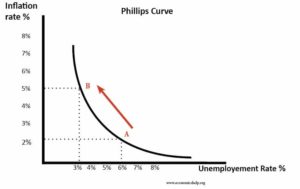
    • The country has also to guard against high inflation.

    Role of government

    • The economic situation warrants enhanced government expenditure.
    • It appears that governments are withholding expenditure. That is not the right approach.
    • At the same time, there is a limit to monetisation of debt.

    Conclusion

    Perhaps the best course of action would be to keep the combined fiscal deficit at around 14% of GDP in the current year and find ways to finance it. This will have to be brought down gradually. It may take several years of normalisation.