💥UPSC 2026, 2027, 2028 UAP Mentorship (March Batch) + Access XFactor Notes & Microthemes PDF

Type: Prelims Only

  • WTO and India

    WTO Agreement on Safeguards (AoS)

    Why in the News?

    Invoking the Agreement on Safeguards (AoS), India has notified the WTO of its plan to impose $724 million in retaliatory tariffs on the U.S. for breaching trade commitments through unilateral auto import duties.

    What is the Agreement on Safeguards (AoS)?

    • Overview: It is a World Trade Organization (WTO) treaty that allows countries to apply temporary trade barriers—called safeguard measures—when a domestic industry is harmed by a surge in imports.
    • Purpose in Practice: The agreement maintains global trade discipline, offering legal protection tools but with checks to avoid abuse.
    • Conditions for Use: Safeguards can only be used when there is clear evidence of serious injury or threat to domestic producers due to increased imports.
    • Rules-Based System: The agreement ensures safeguard actions are transparent, time-bound, and non-discriminatory, preventing misuse for permanent protectionism.
    • Key Rules:
      • Article 12.3: Before acting, a country must notify and consult with other WTO members who may be affected by the safeguard.
      • Article 8: If consultation fails, the affected country can retaliate by suspending trade benefits equal to the loss it suffered.
      • Ban on Informal Restrictions: AoS strictly prohibits voluntary export restraints or informal quotas that evade WTO rules, ensuring fairness.

    India’s Use of the AoS – The 2025 U.S. Tariff Case:

    • Trigger: The U.S. had imposed 25% tariffs on Indian-origin vehicles and parts in March 2025, which India claims are safeguard measures disguised as unilateral tariffs.
    • Violation of Rules: India alleges that the U.S. did not follow Article 12.3 (mandatory consultations) and thus violated both AoS and GATT 1994 rules.
    • Impact on Indian Exports: India estimates that $2.89 billion worth of exports have been affected and that the U.S. collected nearly $723.75 million in duties, matching India’s proposed retaliation.
    • India’s Justification: India asserts that this move is legal under WTO rules, not protectionist, and aims to defend its export interests while continuing trade talks with the U.S.

    India’s Changing Role in WTO Safeguard Policy:

    • Early Strategy (1995–2010): India was initially cautious at the WTO, accepting tough terms under TRIPS, GATS, and AoA, and rarely used legal tools like retaliation, focusing more on diplomatic solutions.
    • Recent Assertiveness (Post-2010): India now actively invokes WTO rules like AoS to protect its interests and has won key disputes—such as:
      • The solar panel case against the U.S.
      • Legal challenges to EU’s export restrictions on food.
    • Global Leadership Role: India has taken the lead among developing countries to protect food security rights and push for fairer global trade terms, especially at Bali (2013) and Nairobi (2015) WTO summits.

    Back2Basics: 

    TRIPS (Trade-Related Aspects of Intellectual Property Rights)

    • WTO agreement (1995) setting minimum standards for IPR protection (patents, copyrights, etc.).
    • Enforced 20-year patent protection; India amended its Patent Act in 2005 to comply.
    • Allows compulsory licensing in emergencies (e.g., for medicines).

    GATS (General Agreement on Trade in Services)

    • WTO treaty covering international trade in services like IT, banking, and tourism.
    • Operates through 4 Modes of Supply:
      1. Mode 1 – Cross-border supply (e.g., online consulting)
      2. Mode 2 – Consumption abroad (e.g., medical tourism)
      3. Mode 3 – Commercial presence (e.g., foreign bank branch in India)
      4. Mode 4 – Movement of natural persons (e.g., Indian professionals working overseas)
    • India strongly supports Mode 4 for its skilled labour force.


    [UPSC 2015] The terms ‘Agreement on Agriculture’, ‘Agreement on the application of Sanitary and Phytosanitary Measures’ and ‘Peace Clause’ appear in the news frequently in the context of the affairs of the:

    Options: (a) Food and Agricultural Organization (b) United Nations Framework Conference on Climate Change (c) World Trade Organization* (d) United Nations Environment Programme


  • Judicial Appointments Conundrum Post-NJAC Verdict

    CJI assures ‘complete transparency’ in Collegium System

    Why in the News?

    Recently, CJI B.R. Gavai affirmed that the collegium system will ensure merit, transparency, and inclusive representation, and will not be swayed by external pressures.

    What is the Collegium System?

    • About: The Collegium System is the process by which judges are appointed and transferred in the Supreme Court and High Courts of India.
    • Origin: It was developed by the Supreme Court itself and is not mentioned in the Constitution.
    • Purpose: It aims to ensure judicial independence by minimizing the role of the executive in judicial appointments.
    • Basis for Appointments:
      • Supreme Court Judges: Under Article 124, the President appoints judges after consulting relevant judges from the Supreme Court and High Courts.
      • High Court Judges: Under Article 217, appointments are made by the President after consulting the Chief Justice of India, Governor of the State, and Chief Justice of the High Court concerned.
    • Structure of the Collegium:
      • Supreme Court Collegium: It consists of 5 judges — the Chief Justice of India (CJI) and the four senior-most judges of the Supreme Court.
      • High Court Collegium: It comprises the Chief Justice of the High Court and the two senior-most judges of that High Court.

    Qualifications for SC Judges:

    • Citizenship: Must be an Indian citizen.
    • Judicial Experience: At least 5 years as a High Court judge or 10 years as an advocate in one or more High Courts.
    • Alternative Route: Can also be a distinguished jurist, in the President’s opinion.

    Qualifications for HC Judges:

    • Experience: Must have held a judicial office for 10 years or practiced as an advocate for 10 years in a High Court.
    • Bar Enrollment: Must be enrolled with the Bar Council of India.

    Evolution of the Collegium System:

    • First Judges Case (1981): The Supreme Court ruled that the executive had primacy in appointments, and the CJI’s opinion was not binding.
    • Second Judges Case (1993): The Court reinterpreted “consultation” to mean “concurrence”, giving primacy to the judiciary and formally creating the Collegium System.
    • Third Judges Case (1998): On Presidential Reference, the Collegium was expanded to five members — the CJI + 4 senior-most judges.

    How does it Work?

    • Appointment of Chief Justice of India (CJI): The outgoing CJI recommends the next CJI, based on seniority. The Law Minister forwards it to the PM, who advises the President.
    • Appointment of Other SC Judges: The CJI initiates the proposal after consulting Collegium members and the senior-most judge from the concerned High Court.
    • Appointment of High Court Judges: Initiated by the High Court Chief Justice, approved by the High Court Collegium, and forwarded via the state government to the Union Law Ministry.
    [UPSC 2012] What is the provision to safeguard the autonomy of the Supreme Court of India?

    1. While appointing the Supreme Court Judges, the President of India has to consult the Chief Justice of India.

    2. The Supreme Court Judges can be removed by the Chief Justice of India only.

    3. The salaries of the Judges are charged on the Consolidated Fund of India to which the legislature does not have to vote.

    4. All appointments of officers and staff of the Supreme Court of India are made by the Government only after consulting the Chief Justice of India.

    Which of the statements given above is/are correct?

    Options: (a) 1 and 3 only * (b) 3 and 4 only (c) 4 only (d) 1, 2, 3 and 4


  • Oil and Gas Sector – HELP, Open Acreage Policy, etc.

    Oil Exploration in the Andaman Basin

    Why in the News?

    The Union Minister for Petroleum has revealed that India is on the brink of a Guyana-like oil discovery in the Andaman Sea

    Do you know?

    Guyana, now a major oil-producing nation, has seen 47% average real GDP growth since 2022, driven by offshore oil.


    Oil Exploration in the Andaman Basin

    About the Oil Exploration in Andaman Basin:

    • Location & Scale: It lies in the southeastern Bay of Bengal and covers about 2.25 lakh sq. km, making it one of India’s largest underexplored offshore sedimentary basins.
    • Geological Importance: It shares tectonic and structural similarities with nearby hydrocarbon-rich basins in North Sumatra (Indonesia) and Irrawaddy-Margui (Myanmar).
    • Historical Restrictions: The area was long considered a ‘No-Go’ zone due to environmental and strategic reasons, preventing oil exploration until recently.
    • Scientific Breakthrough: In 2020, Oil India Ltd launched the Deep Andaman Offshore Survey, which discovered mud volcanoes and Baratang formations — signs of hydrocarbon activity.
    • Data Entry into National Records: The survey findings were added to the National Data Repository (NDR) in 2023, making crucial geological data available to investors.
    • Rising Strategic Interest: The basin is now seen as vital for India’s energy security due to its deepwater potential and ability to cut down oil imports.
    • Recent Collaborations: Companies like ONGC partnered with TotalEnergies (France) in 2023 to explore deepwater blocks in the basin.

    Policy Shift that Enabled Exploration:

    • Introduction of HELP: The Hydrocarbon Exploration and Licensing Policy (HELP) was introduced in 2016, replacing the older NELP system with a more industry-friendly framework.
    • Licensing Reform: HELP provides a single license for all hydrocarbons — oil, gas, shale, and coal bed methane — removing the need for separate permits.
    • Revenue Sharing System: Instead of auditing costs, the government now receives a fixed share of revenue, simplifying financial compliance and reducing disputes.
    • OALP and Investor Flexibility: The Open Acreage Licensing Policy (OALP) allows companies to bid for exploration blocks of their own choosing throughout the year, encouraging customized investment.
    • Use of Geological Data: The National Data Repository (NDR) helps companies make informed decisions using extensive geological and seismic information.
    • Market Freedom: Under HELP, companies have the freedom to price and market their oil and gas, which boosts competitiveness and attracts private players.
    • Royalty Incentives: A graded royalty system reduces rates for deepwater and ultra-deepwater blocks, offsetting high-risk exploration like in the Andaman.
    [UPSC 2006] Which one of the following companies is associated with the exploration and commercial production of oil in Barmer Sanchore basin of Rajasthan?

    Options: (a) Cairn Energy * (b) Unocal Corporation (c) Reliance Energy Ventures (d) ONGC


  • Innovations in Sciences, IT, Computers, Robotics and Nanotechnology

    [pib] SAKSHAM-3000  

    Why in the News?

    The Ministry of Communications has launched SAKSHAM-3000, a 25.6 Tbps indigenous switch-cum-router, to boost India’s data, cloud, and telecom infrastructure, marking a major leap in advanced networking technology.

    What is SAKSHAM-3000?

    • Overview: It is a high-speed switch-cum-router developed by the Centre for Development of Telematics (C-DOT) to strengthen India’s digital infrastructure.
    • Indigenous Operating System: The device runs on CROS (C-DOT Router Operating System), enabling modular, scalable, and secure network operations.
    • Next-Gen Capability: It is designed for ultra-fast data transmission, offering up to 25.6 Terabits per second (Tbps) throughput.
    • Use Cases: It is suitable for data centres, 5G/6G networks, AI systems, and hyperscale computing clusters.
    • Cloud and Telecom Ready: It supports cloud-native deployments, legacy protocols, and future network architectures simultaneously.

    Technical Highlights and Capabilities:

    • Massive Throughput: It supports 32 ports of 400G Ethernet and multiple speeds from 1G to 400G, delivering full 25.6 Tbps capacity.
    • Wire-Speed Performance: Data packets are processed at line rate, ensuring real-time transmission with no bottlenecks.
    • Time-Sensitive Applications: It includes support for Precision Time Protocol (PTP) and Synchronous Ethernet (Sync-E) to ensure accurate timing in industrial and telecom networks.
    • Full Protocol Support: It is compatible with Layer-2 switching, IP routing, and Multi-Protocol Label Switching (MPLS) for broad network configurations.
    • Traffic Management: Features like Weighted Round Robin (WRR) and Weighted Random Early Detection (WRED) improve traffic handling and reduce congestion.
    • Energy Efficiency: It uses a power-optimized architecture, balancing high performance with low power consumption for sustainable data centre use.
    • Flexible Licensing: Enterprises and telecom providers can customize licensing models for cost-effective scalability based on specific deployment needs.
    [UPSC 2016] With reference to ‘LiFi’, recently in the news, which of the following statements is/are correct?

    1. It uses light as the medium for high-speed data transmission. 2. It is a wireless technology and is several times faster than ‘WiFi’.

    Select the correct answer using the code given below.

    Options: (a) 1 only (b) 2 only (c) Both 1 and 2* (d) Neither 1 nor 2


  • Modern Indian History-Events and Personalities

    Who are the Girmitiyas?

    Why in the News?

    PM Narendra Modi, while speaking in Trinidad and Tobago, paid tribute to the Girmitiyas—19th-century indentured Indian labourers who helped shape Indo-Caribbean culture.

    About Girmitiyas:

    • Overview: The word “Girmitiya” comes from “agreement,” which was pronounced as “girmit” by Indian labourers who signed contracts to work abroad.
    • Origin of the Labourers: Most Girmitiyas were recruited from eastern Uttar Pradesh and Bihar, especially from areas suffering poverty or famine.
    • Language and Community: These workers primarily spoke Bhojpuri, Awadhi, or Hindi and came from agricultural castes and communities.
    • Role of Recruitment Agents: Agents known as arkatis enticed labourers with promises of good wages while hiding the reality of harsh plantation conditions.
    • Scale and Scope of Migration: Between 1834 and 1920, over 1.2 million Indians were sent to British colonies like Mauritius, Fiji, Trinidad & Tobago, Guyana, South Africa, and Suriname.
    • Cultural Continuity Abroad: Despite minimal belongings, Girmitiyas preserved Indian languages, religious practices, and cultural expressions like Ramleela in the Caribbean.

    Indentured Labour System: A New Form of Slavery:

    • Post-Abolition Labour Need: After slavery ended in 1834, the British created the Indian Indentured Labour System to meet the demand for plantation workers.
    • Contract Terms and Reality: Although the agreement lasted five years, labourers were often deceived, worked in poor conditions, and could not change employers.
    • Criminalisation of Movement: If a labourer was found outside the plantation without documentation, they could be arrested for vagrancy.
    • Punitive Wage Deductions: Tactics like the “double-cut” system—cutting two days’ pay for one day’s absence—made the system exploitative.
    • Wage Withholding: Employers often withheld wages to delay repatriation and trap labourers in economic dependence.
    • Gender Exploitation: Women were underrepresented, often brought for demographic balance, and suffered wage discrimination and sexual abuse, as documented by scholars like Kamala Kempadoo.
    • Critique by Historians: While colonial rulers called it a “Great Experiment,” historian Hugh Tinker famously termed it “a new system of slavery” in his 1974 book.

    Who are the Girmitiyas?

    Gandhiji’s Campaign Against Indenture:

    • Early Opposition: Mahatma Gandhi opposed the system after witnessing its abuse during his legal work in South Africa.
    • Malaviya’s Blocked Attempt: In 1917, Pandit Madan Mohan Malaviya tried to introduce a bill for abolition but was denied by the British colonial government.
    • Protest Strategy: Gandhi launched an all-India movement, using the press, public meetings, and moral advocacy to gather support.
    • Engagement with British: Gandhi met with Viceroy Lord Chelmsford and united national leaders in opposition to the practice.
    • Finally, Abolition: The mounting public pressure led to the official abolition of indentured labour on July 31, 1917.
    • Moral Significance: Gandhi later wrote in My Experiments with Truth that the victory represented India’s moral and spiritual awakening under nonviolent protest.


    [UPSC 2019] With reference to the British colonial rule in India, consider the following statements:

    1. Mahatma Gandhi was instrumental in the abolition of the system of ‘indentured labour’.

    2. In Lord Chelmsford’s ‘War Conference’, Mahatma Gandhi did not support the resolution on recruiting Indians for World War.

    3. Consequent to the breaking of the Salt Law by the Indian people, the INC was declared illegal by the colonial rulers.

    Which of the statements given above are correct?

    Options: (a) 1 and 2 only (b) 1 and 3 only* (c) 2 and 3 only (d) 1, 2 and 3


  • Higher Education – RUSA, NIRF, HEFA, etc.

    National Sports Policy, 2025

    Why in the News?

    The Union Cabinet recently approved the National Sports Policy, 2025.

    About the National Sports Policy, 2025:

    • It is a comprehensive policy approved by the Union Cabinet to transform India into a leading sporting nation.
    • It replaces the earlier 2001 policy and aligns with the vision of Viksit Bharat @2047 and the National Education Policy (NEP) 2020.
    • The policy envisions India as a global sporting powerhouse and strengthens its bid to host international events, including the 2036 Olympic Games.
    • It was developed through extensive consultations involving central ministries, NITI Aayog, state governments, national sports federations, athletes, and experts.
    • The Khelo Bharat Niti 2025 serves as the operational framework for NSP 2025.

    Key Features of the National Sports Policy, 2025:

    1. Excellence on the Global Stage
      • Talent identification and athlete development from grassroots to elite level.
      • Expansion of leagues, rural-urban infrastructure, and high-performance training.
      • Adoption of sports science, medicine, and technology.
      • Reforms in governance and functioning of National Sports Federations.
    1. Sports for Economic Development
      • Promotion of sports tourism and hosting of global events.
      • Support for indigenous manufacturing, startups, and PPP investments.
      • Encouragement of CSR in sports development.
    1. Sports for Social Development
      • Inclusive participation of women, tribals, PwDs, and marginalised groups.
      • Revitalisation of traditional and indigenous games.
      • Dual-career pathways and diaspora engagement.
    1. Sports as a People’s Movement
      • Nationwide campaigns for fitness and community participation.
      • Launch of fitness indices and public access to sports infrastructure.
    1. Integration with Education (NEP 2020)
      • Sports embedded in school curricula.
      • Training for educators and promotion of sports education.
  • Modern Indian History-Events and Personalities

    170th Anniversary of Santhal Revolt 

    Why in the News?

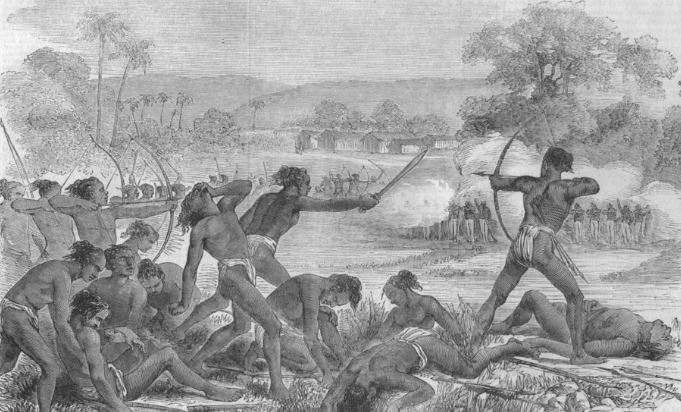
    Jharkhand on observed ‘Hul’ Diwas to commemorate the rebellion’s 170th anniversary of Santhal Revolt which was held on June 30, 1855.

    santhal

    About the Santhal Revolt:

    • Overview: The Santhal Hul (Revolt) began on June 30, 1855, in present-day Jharkhand, and is observed annually as Hul Diwas.
    • The ‘Hul’: It means revolution, symbolising one of India’s earliest organized uprisings against British colonialism, even before the 1857 Revolt.
    • Leaders Associated: It was led by Sidho, Kanho, Chand, Bhairav Murmu, and sisters Phulo and Jhano, and gathered support from 32 different tribal and non-tribal communities.
    • Nature of the Revolt: The Santhal Hul was marked by tribal unity, guerrilla warfare, and was primarily an agrarian uprising, not driven by religion or elite politics.
    • Causes:
      • Exploitation by Landlords: It opposed the British East India Company, the Zamindari system, and moneylenders who exploited tribal communities.
      • Damin-i-Koh Policy: In 1832, the British created Damin-i-Koh in the Rajmahal Hills to resettle Santhals from Bengal and Jharkhand to clear forests and take up agriculture.
      • Alienation: Santhals were subjected to land alienation, forced labor (like kamioti and harwahi), usurious debt traps, and Zamindari-court-police nexus oppression.
    • Suppression measures: The British imposed Martial Law on November 10, 1855, and crushed the uprising by January 3, 1856, using modern firearms and war elephants; Sidho and Kanho were killed in action.
    • Continued resistance: Even after its suppression, tribal uprisings continued during the 1857 Sepoy Mutiny in areas like Hazaribagh and Manbhum (now Dhanbad and Purulia).

    Key Outcomes of the Revolt:

    • Santhal Pargana Tenancy Act (1876): This law banned land transfers to non-Adivasis, allowed inheritance under tribal customs, and protected Santhal self-governance.
    • Chhotanagpur Tenancy Act (1908): Inspired by later tribal movements, it restricted sale of tribal and Dalit land, and required Collector’s approval for land transfer within caste and locality.
    • Impact on Tribal Identity: The revolt helped shape tribal consciousness, legal land safeguards, and anti-colonial resistance legacies.
    • Modern Legacy: The Santhals are now India’s third-largest tribal group, living in Jharkhand, Bihar, Odisha, and West Bengal, and they use the ‘Ol Chiki’ script to preserve the Santhali language.
    [UPSC 2018] After the Santhal Uprising subsided, what was/were the measure/measures taken by the colonial government?

    1. The territories called `Santhal Parganas’ were created.
    2. It became illegal for a Santhal to transfer land to a non-Santhal.

    Select the correct answer using the code given below:

    Options: (a) 1 only (b) 2 only (c) Both 1 and 2 (d) Neither 1 nor 2


  • Child Rights – POSCO, Child Labour Laws, NAPC, etc.

    Child Adoption in India

    Why in the News?

    In a major step toward digital adoption reform, Central Adoption Resource Authority (CARA) has confirmed that digitally certified adoption orders sent by e-mail are now legally valid under current rules.

    Child Adoption in India: Legal Framework and Process

    • Adoption in India is governed by multiple laws, depending on the religion and category of the child:
      1. Hindu Adoption and Maintenance Act (HAMA), 1956: Applies to Hindus, Jains, Sikhs, and Buddhists.
      2. Juvenile Justice (Care and Protection of Children) Act, 2015: Applies to all religions and governs adoption of orphans, abandoned, and surrendered children.
      3. Guardians and Wards Act, 1890: Applies to Muslims, Christians, Jews, Parsis (allows guardianship, not full adoption).
    • Who can be adopted:
      • Children declared legally free by a Child Welfare Committee (CWC).
      • Children of relatives (uncle, aunt, or grandparent).
      • Stepchildren surrendered by biological parents.
    • Who can adopt:
      • Indian citizens, NRIs, OCIs, and certain foreign nationals (under strict guidelines).
      • Must be mentally, physically, and financially stable with no life-threatening conditions.
      • Married couples: Stable relationship of at least two years; combined age ≤ 110 years.
      • Single women can adopt any child; single men cannot adopt girls.
      • Minimum age gap of 25 years between the adoptive parent and the child.
      • Couples with three or more children are generally not eligible unless adopting children with special needs.
    • Adoption Process:
      • Online registration on CARA’s CARINGS portal; Submission of documents and Home Study Report.
      • Counseling sessions by licensed agencies.
      • Matching of child and parents; Acceptance and foster care phase.
      • Legal adoption order issued by the District Magistrate (post-2021 amendment).
      • Two-year follow-up by the adoption agency.

    Role of Central Adoption Resource Authority (CARA):

    • CARA is India’s statutory body under the Ministry of Women and Child Development, and functions as the central regulatory authority for all adoptions:
    • Established in 1990, CARA became a statutory body in 2015 under Section 68 of the JJ Act.
    • It is the only legally empowered authority for in-country and inter-country adoption of Indian children.
    • India’s Hague Convention central authority, responsible for overseeing foreign adoptions (India ratified the convention in 2003).

    Key Functions of CARA:

    CARA plays a pivotal role in the adoption ecosystem through the following functions:

    • Regulation and Oversight
      • Monitors all adoptions—domestic and inter-country—through licensed agencies.
      • Ensures adoptions are in compliance with laws and child rights standards.
    • Platform and Technology: It operates the CARINGS portal (Child Adoption Resource Information and Guidance System) for:
      • Registration of prospective adoptive parents.
      • Tracking adoption progress.
      • Referrals and matching children with parents.
    • Inter-Agency Coordination: It coordinates with:
      • State Adoption Resource Agencies (SARAs)
      • District Child Protection Units (DCPUs)
      • Specialised Adoption Agencies (SAAs)
      • Authorized Foreign Adoption Agencies (AFAAs)
    • Legal and Policy Role
      • Issues No Objection Certificates (NOC) and Conformity Certificates for inter-country adoptions.
      • Drafts and revises Adoption Regulations (latest version: 2022).
      • Issues clarifications and advisories, e.g., recognition of digitally certified adoption orders.
    • Promotion of In-country Adoptions
      • Encourages domestic adoption over inter-country adoption, especially for orphans and abandoned children.
      • Launches awareness campaigns to reduce illegal adoptions and child trafficking.
    • Post-Adoption Monitoring
      • Ensures the well-being of adopted children through follow-up reports for two years.
      • Promotes integration of children into adoptive families through counseling and support.
    • Policy Innovation and Reforms
      • Oversees foster-to-adoption transitions (notably in Jammu & Kashmir).
      • Expanding agency networks—245 new agencies added (2024–25).
      • New modules for step-parent and relative adoptions.
    [UPSC 2016] Examine the main provisions of the National Child Policy and throw light on the status of its implementation.


  • New Species of Plants and Animals Discovered

    Species in news: Garcinia kusumae

    Why in the News?

    Researchers in Assam have discovered a new tree species, Garcinia kusumae, locally called thoikora, adding to the Garcinia genus in a notable botanical find.

    About Garcinia kusumae:

    • Species Identity: Garcinia kusumae is a newly discovered evergreen tree species that is endemic to Assam, India.
    • Genus and Local Name: It belongs to the Garcinia genus, locally called thoikora in Assamese.
    • Discovery: It was discovered in 2024 by Jatindra Sarma, during a field survey in Bamunbari, Baksa district.
    • Botanical Traits: It is dioecious, grows up to 18 metres, flowers between February and April, and fruits between May and June.
    • Distinct Features: It differs from similar species by having up to 15 staminate flowers per fascicle, fewer stamens, and blackish resinous berries.
    • Ethnobotanical Uses: Its fruit is used in sherbet, fish curries, and for diabetes and dysentery remedies; the seed aril is eaten raw with condiments.

    What is the Garcinia Genus?

    • Taxonomy: Garcinia is the largest genus in the Clusiaceae family, comprising trees and shrubs.
    • Geographical Spread: It is found in tropical regions of Africa, Southeast Asia, and Australasia, especially in rainforests.
    • Notable Characteristics: The genus is known for floral diversity, medicinal value, and culinary applications.
    • Presence in India: India hosts 33 species and 7 varieties of Garcinia, with Assam having 12 species and 3 varieties.
    • Famous Species: Commonly known species include Garcinia indica (kokum), Garcinia cowa, and Garcinia mangostana (mangosteen).
    • Utility and Significance: It is important for ethnobotanical uses, rural livelihoods, and climate-resilient forestry.
    • Traditional Practices: Several species are used in traditional food, medicine, and rituals.
    [UPSC 2016] Recently, our scientists have discovered a new and distinct species of banana plant which attains a height of about 11 metres and has orange-coloured fruit pulp.

    In which part of India has it been discovered?

    Options: (a) Andaman Islands* (b) Anaimalai Forests (c) Maikala Hills (d) Tropical rain forests of northeast


  • Health Sector – UHC, National Health Policy, Family Planning, Health Insurance, etc.

    Biomarkers of Healthy Aging, Resilience, Adversity, and Transitions (BHARAT)

    Why in the News?

    IISc Bengaluru has launched BHARAT (Biomarkers of Healthy Aging, Resilience, Adversity, and Transitions), a pioneering study exploring the biology, lifestyle, and environment behind Aging.

    About the BHARAT Project:

    • Scientific Launch: It is a nationwide research initiative by the Indian Institute of Science (IISc), Bengaluru.
    • Primary Goal: It aims to build India’s first scientific baseline on how Indians age—biologically, environmentally, and socially.
    • Project Leadership: The project is led by Professor DK Saini from IISc’s Department of Development Biology and Genetics.
    • Addressing Global Gaps: It fills a major research void by offering Indian-specific data, unlike most global ageing studies based on Western populations.
    • Redefining Normal: It will challenge international health standards (e.g., for cholesterol, vitamin D) that may misclassify Indian health parameters.
    • Biological Age Focus: Instead of using chronological age, the project will study biomarkers of biological ageing for early disease risk detection.

    Key Features of the Project:

    • India-Centric Baseline: The database will offer reference biomarker cut-offs tailored to Indian genetics, diet, and lifestyle.
    • Wide Biomarker Range: It will include genomic, metabolic, and environmental indicators to detect organ ageing and resilience early.
    • AI-Driven Analysis: Machine learning tools will be used to find ageing patterns, simulate health interventions, and forecast risks.
    • Holistic Ageing Model: The study will include nutrition, pollution, infections, and social factors that influence how Indians age.
    • Equity for Global South: It corrects global biases that misdiagnose Indians as deficient by using locally validated health data.
    • Healthspan Focus: The emphasis is on quality of life—living healthier for longer—rather than just extending life years.
    [UPSC 2024] Consider the following countries: 1. Italy 2. Japan 3. Nigeria 4. South Korea 5. South Africa

    Which of the above countries are frequently mentioned in the media for their low birth rates, or ageing population or declining population?

    Options: (a) 1,2 and 4 * (b) 1,3 and 5 (c) 2 and 4 only (d) 3 and 5 only