💥UPSC 2026, 2027, 2028 UAP Mentorship (March Batch) + Access XFactor Notes & Microthemes PDF

Archives: News

  • Cyber Security – CERTs, Policy, etc

    China’s cyber eye and India

    Amid souring relations between India and China last year, evidence has emerged that a Chinese government-linked company’s attempt led to a power outage in Mumbai yesterday and now in Telangana today.

    Q.The use of cyber offensive tools and espionage is a fairly active element of the People’s Republic of China. Discuss in light of recent incidences of cyber attack in India.

    Red Echo & ShadowPad

    • On February 28, a Massachusetts-based firm published a report saying it had observed a steep rise in the use of resources like malware by a Chinese group called Red Echo.
    • It aimed to target “a large swathe” of India’s power sector.
    • It said 10 distinct Indian power sector organisations were targeted, including four Regional Load Despatch Centres (RLDCs) that are responsible for the smooth operation of the country’s power grid by balancing the supply and demand of electricity.
    • Red Echo used malware called ShadowPad, which involves the use of a backdoor to access servers.

    India confirms cyber attack

    • The Ministry of Power has confirmed these attempts, stating it had been informed in November 2020 about the ShadowPad malware at some control centres.
    • The Ministry said it was informed of Red Echo’s attempts to target the country’s load despatch centres in February.
    • It had said “no data breach/data loss” had been detected due to the incidents.

    What does it imply?

    • This is clearly something that is linked to China’s geopolitical interests.
    • It is established very clearly that the use of cyber offensive tools and espionage is a fairly active element of what the People’s Republic of China seems to be adopting and encouraging.
    • Even when they are not directly in charge of an offensive operation, they seem to be consistently encouraging actors to develop this capability.

    PRC’s long term strategy

    • These cyber-attacks are seen as an attempt to test and lay the grounds for further operations in the future.
    • We need to remember that sometimes these offensive operations are carried out to distract people from other places that they might be targeting or other activities that might be occurring.
    • There was an increase in cyber offensive operations and incidents around the world in the second half of 2020 especially targeting the healthcare and vaccine space.
    • When vaccine companies are targeted, the motive could be competition.
    • The motivation behind Stone Panda’s attack against SII and Bharat Biotech’s IT systems was to extract the companies’ intellectual property and gain a competitive advantage.

    Other such attacks: Stone Panda & vaccines

    • A Chinese hacker group known as Stone Panda had identified gaps and vulnerabilities in the IT infrastructure and supply chain software of Bharat Biotech and the Serum Institute of India.
    • These companies have developed Covaxin and Covishield, which are currently being used in the national vaccination campaign.
    • They are also in the process of testing additional Covid-19 vaccines that could add value to efforts around the world.

  • Foreign Policy Watch: India-Sri Lanka

    India, Japan back in another Sri Lanka port project

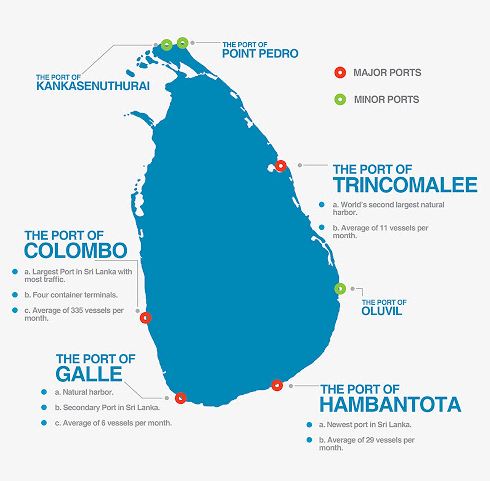
    Sri Lanka has confirmed that it will develop the West Container Terminal (WCT) at the Colombo Port along with India and Japan.

    Q.The threat of Chinese presence in South Asia can be tackled more effectively if India changes course in its dealings with its neighbours and becomes more sensitive to their concerns. Critically analyse.

     Why in news?

    • The decision comes a month after the Rajapaksa government ejected the two partners from a 2019 tripartite agreement to jointly develop the East Container Terminal (ECT), citing resistance to “foreign involvement”.
    • Neither India nor Japan has officially commented on the offer, or on the said private investment from the countries.

    An alternative to ECT

    • SL has offered India and Japan the WCT as an alternative, allowing higher stakes.
    • In the ECT project agreed upon earlier, the Sri Lanka Ports Authority (SLPA) was to hold a majority 51%, but in the WCT proposal, India and Japan will be accorded an 85% stake.
    • The nearby Colombo International Container Terminal (CICT), where China Merchants Port Holdings Company Limited holds 85%.
    • This makes it a strategically desirable spot for India, whose concerns over China’s presence in Sri Lanka are well known.

    Issues with a new project

    • The WCT is adjacent to the China-run CICT and just a couple of kilometres away from the China-backed Port City being built on reclaimed land.
    • The West Container Terminal, however, has to be built from scratch, requiring a much higher investment.
    • The return on investment has not been envisaged yet.

    Why is Colombo so generous this time?

    • Colombo’s alternative offer also comes at a time when Sri Lanka is seeking support at the ongoing UN Human Right Council session, where a resolution on the country’s rights record will soon be put to vote.
  • Parliament – Sessions, Procedures, Motions, Committees etc

    Live Telecast of Parliament Proceedings

    Lok Sabha Television (LSTV) and Rajya Sabha Television (RSTV) have been merged into a single ‘Sansad TV’.

    Live telecast of parliament

    • Lok Sabha TV is the older of the two — it started operating on July 24, 2006.
    • The channel’s vision, according to its website, is to reach the “live proceedings of the Parliament House…to every household”.
    • This is because awareness of citizens towards the working of Member of Parliament in the Parliament House helps in bringing awareness about various efforts of various stakeholders in the governance process.
    • The information empowers the citizens to utilise their democratic rights diligently and be part of the democratic ecosystem.

    Do you know?

    The Union Budget allocates funds for the running of channels.

    Inception of the idea

    • LSTV was the brainchild of former Lok Sabha Speaker Somnath Chatterjee.
    • People familiar with the circumstances in which the channel was set up, said that then Rajya Sabha Chairman Bhairon Singh Shekhawat was not really convinced with Chatterjee’s proposal.
    • It was during his time of Shekhawat’s successor, Hamid Ansari, that the separate channel for the Upper House materialized.

    Before the channels

    • Before LSTV started functioning as a channel, select parliamentary proceedings had been televised since December 20, 198.
    • On April 18, 1994, the entire proceedings of Lok Sabha started to be filmed.
    • And in August that year, a Low Power Transmitter (LPT) was set up and made operational in Parliament House to telecast the proceedings live.
    • From December 1994, Question Hour in both Houses was telecast live on alternate weeks on Doordarshan.
    • It was arranged in such a manner that during the telecast of the Question Hour of one House by Doordarshan, the Question Hour of the other House was broadcast by All India Radio.
    • When the DD News channel was launched, Question Hour in both Houses started getting telecast simultaneously on DD channels.

    Separate channels

    • But it was only after a decade, in December 2004, that a separate dedicated satellite channel was set up for the live telecast of the proceedings of both Houses.
    • In 2006, LSTV started airing the proceedings of the Lower House live.
    • RSTV was launched in 2011. Apart from telecasting live the proceedings in Rajya Sabha, it also brings analyses of parliamentary affairs and provides a platform for knowledge-based programmes.
  • Women empowerment issues – Jobs,Reservation and education

    LinkedIn Opportunity Index 2021

    The Opportunity Index 2021 highlights the difference in perception of available opportunities in the market for men and women in India.

    LinkedIn Opportunity Index 2021

    • The report seeks to understand how people perceive opportunities and the barriers that stand in the way of achieving them.
    • This year’s report dives deep to understand how women perceive opportunities, and how the gender gap is further slowing down career progress for working women in India amid the pandemic.

    LinkedIn is an American business and employment-oriented online service that operates via websites and mobile apps. Launched on May 5, 2003, the platform is mainly used for professional networking and allows job seekers to post their CVs and employers to post jobs

    Highlights of the report

    India’s working women still face the strongest gender bias across Asia Pacific countries.

    • Covid impact: Nine in 10 (89%) women state they were negatively impacted by the COVID-19 pandemic.
    • General Bias: 1 in 5 (22%) working women in India said their company’s exhibit a ‘favourable bias’ towards men at work when compared to the regional average of 16%.
    • Work opportunity: While 37% of India’s working women say they get fewer opportunities than men, only 25% of men agree with this.
    • Pay: This disparity in perception is also seen in conversations about equal pay, as more women (37%) say they get less pay than men, while only 21% of men share this sentiment.
    • Promotion: In India, more than 4 in 5 working women (85%) claim to have missed out on a raise, promotion, or work offer because of their gender, compared to the regional average of 60%.
    • Family burden: Lack of time and family care stop 7 in 10 Indian women from progressing in their careers.
    • Maternity: Consumer sentiment from the report shows that more than 7 in 10 working women (71%) and working mothers (77%) feel that managing familial responsibilities often come in their way of career development.

    Scope for equality

    • The report shows that even though 66% of people in India feel that gender equality has improved compared to their parents’ age.
    • In India, the top three job opportunities sought by both men and women are job security, a job that they love, and a good work-life balance.
    • But despite having similar goals, more women (63%) think a person’s gender is important to get ahead in life when compared to men (54%).

    Barriers faced by Indian women

    • Lack of required professional skills and a lack of guidance through networks and connections are also some of the other barriers that get in the way of career development for working women in India.

    What next?

    • Organisations should step up to provide robust maternity policies and flexibility programs.
    • Reduced and flexible schedules, more sabbaticals, and new opportunities to upskill and learn are critical offerings that can help organizations attract, hire, and retain more female talent.
  • Cashless Society – Digital Payments, Demonetization, etc.

    [pib] Better Than Cash Alliance

    The Government of India, FICCI, and the Better Than Cash Alliance has come under the partnership to achieve the industry level commitment of responsible digitization of merchants.

    Make a note here that it is a BTCA is a global partnership with diverse funding, a UN office as its secretariat and Indian being its member.

    Better Than Cash Alliance

    • The Better Than Cash Alliance is a global partnership of 75 governments, companies, and international organizations that accelerates the transition from cash to digital payments in order to reduce poverty and drive inclusive growth.
    • It was created in September 2012 by the United Nations Capital Development Fund (Secretariat), the US Agency for International Development, the Bill & Melinda Gates Foundation and Visa Inc. among others.
    • Based at the UN, the Alliance has over 50 members, works closely with other global organizations, and is an implementing partner for the G20 Global Partnership for Financial Inclusion.
    • India became a member of the alliance in 2015 to digitize payments to achieve financial inclusion and to share success stories from PM Jan Dhan Yojana, the world’s largest financial inclusion program.

    Working method

    The Better Than Cash Alliance partners with governments, companies, and international organizations that are the key drivers behind the transition to make digital payments widely available by:

    1. Advocating for the transition from cash to digital payments in a way that advances financial inclusion and promotes responsible digital finance.
    2. Conducting research and sharing the experiences of our members to inform strategies for making the transition.
    3. Catalyzing the development of inclusive digital payments ecosystems in member countries to reduce costs, increase transparency, advance financial inclusion– particularly for women– and drive inclusive growth.
  • Foreign Policy Watch: India-Pakistan

    India, Pak, China must build on de-escalation

    Three power, India, Pakistan and China need to take a new look at the factors underlying their relationship with each other. The article deals with this issue.

    Hope for regional politics to turn a new leaf

    • The announcement by India and Pakistan of strict observance of all agreements, understandings and cease firing along the Line of Control is a welcome step.
    • It is premature to conclude what all this will amount to in the long term.
    • But if all three powers, China, Pakistan and India, can draw the appropriate lessons in humility, there is hope for regional politics to turn over a new leaf.

    Lessons for India

    • First, the belligerent use of foreign policy in domestic politics has unintended effects on your international standing.
    • In 2019, the official rhetoric was promising India retaking PoK and putting more military pressure on Pakistan.
    • In contrast, the discourse on foreign policy since the Chinese pressure on the LAC has been one of marked sobriety scaling back all expectations of a flippant militarism.
    • Second, the standoff with China has brought home some stark realities. We can speculate on Chinese motives.
    •  The LAC standoff considerably released the pressure on Pakistan.
    • We were reminded that the LAC and LoC can be linked; that the zone around Kashmir was a trilateral and not a bilateral contest, and that India will need significant resources to deal with China.
    • In the matter of the CAA the talk of evicting Bangladeshis has been starkly checkmated by the need to placate Bangladesh, which is vital to our strategic interests.

    Lessons for Pakistan

    • First, India now has enough weight in the international system that any attempts to internationalise Kashmir are a non-starter.
    • Second, the revocation of Article 370 did not unleash the kinds of fissures and cycle of violence within the Valley that Pakistan might have been hoping to exploit.
    • Third, the pandemic is a great opportunity for Pakistan to recognise that opening up to the South Asian region is in its interest in the long term than acting on the coattails of China.

    Lessons for China

    • India may not have, in a literal sense, restored the status quo ante on the LAC, the fact of the matter is that it has stood up with enough firmness to send the signal that it will not be a pushover.
    • India signalled a resolve that Chinese military and economic hegemony can be resisted.
    • China cannot wish away considerable Indian power.
    • In fact, by concentrating India’s mind on the China challenge, it may have unwittingly done India a favour.

    Way forward

    • So this moment can be a constructive one if everyone understands the one lesson in world politics: There are diminishing returns to belligerence.
    • With Pakistan, India should seize the moment and build on the de-escalation.
    • The pandemic offers an opportunity for greater economic cooperation.
    • Political establishments of both countries will have to think of what is a win-win political narrative they can legitimately offer their citizens.

    Consider the question “If all three powers, China, Pakistan and India, can draw the appropriate lessons in humility, there is hope for regional politics to turn over a new leaf. Comment.

    Conclusion

    The region will be better off with a humility that tries to align them, rather than a hubris that exults in unilateral triumphalism.

  • Judicial Reforms

    Issues with Master of the Roaster power of CJI

    CJI’s power as Master of Roaster and issues with it

    • The Supreme Court recently closed the proceedings enquiring into a conspiracy to threaten the independence of the judiciary on the basis of sexual harassment allegations against the former CJI.
    • The singular power of the CJI as the Master of the Roster – i.e., the vests exclusive discretion in the Chief Justice to constitute benches and allocate cases.
    • While the CJI’s other powers such as recommending appointments to constitutional courts are shared with other senior judges, the power of Master of the Roster is enjoyed without scrutiny.
    • This power enabled Justice Gogoi to institute suo motu proceedings despite being an accused; label the case as a matter of judicial independence; and preside over it.
    • This power lay at the heart of the controversy surrounding the proceedings the Court has now closed.

    Implications for independence of judiciary

    • From the standpoint of judicial independence, the Master of the Roster power makes the CJI’s office a high stakes one.
    • It makes the CJI the sole point of defence of the Court against executive interference.
    • However, this has a flip side.
    • With the CJI as the sole Master of the Roster, any executive seeking to influence the Supreme Court needs only a pliant CJI.
    • Yet, the Supreme Court has been reluctant to dilute this power.
    • In Asok Pande v. Supreme Court of India (2018), a three-judge bench of the Court held that Master of the Roster is the CJI’s exclusive power.
    • Thereafter, a two-judge bench in Shanti Bhushan v. Supreme Court of India (2018) rejected the plea that the Master of the Roster should be interpreted as the collegium.

    Need for the reforms

    • The collegium system has failed to keep executive interferences at bay from the Supreme Court.
    • This is for two reasons:
    • First, as Justice Gogoi’s case shows, there is an attractive lure of post-retirement jobs.
    • Second, as the privilege of Master of the Roster shows, the CJI’s allocation of cases is an unchecked power.
    • The continuing project of judicial reforms should then address these two issues.

    Way forward

    • A cooling-off period between retirement and a post-retirement appointment has often been suggested as a way to deal with the first problem.
    • For the second, the power of Master of the Roster needs to be diversified beyond the CJI’s exclusive and untrammelled discretion.

    Consider the question “What are the issues with the Master of the Roaster power of the Chief Justice of India? Suggest the ways to deal with the issue.” 

    Conclusion

    We need to carry out these reforms make the judiciary less prone to interference from the executive.

  • Food Procurement and Distribution – PDS & NFSA, Shanta Kumar Committee, FCI restructuring, Buffer stock, etc.

    NITI Aayog proposes revisions to National Food Security Act

    The NITI Aayog has recently proposed a revision in the National Food Security Act (NFSA), 2013 for lowering the coverage of both rural and urban population to save up to Rs 47,229 crore annually.

    National Food Security (NFS) Act

    • The NFS Act, 2013 aims to provide subsidized food grains to approximately two-thirds of India’s 1.2 billion people.
    • It was signed into law on 12 September 2013, retroactive to 5 July 2013.
    • It converts into legal entitlements for existing food security programmes of the GoI.
    • It includes the Midday Meal Scheme, Integrated Child Development Services (ICDS) scheme and the Public Distribution System (PDS).
    • Further, the NFSA 2013 recognizes maternity entitlements.
    • The Midday Meal Scheme and the ICDS are universal in nature whereas the PDS will reach about two-thirds of the population (75% in rural areas and 50% in urban areas).
    • Pregnant women, lactating mothers, and certain categories of children are eligible for daily free cereals.

    Key provisions of NFSA

    • The NFSA provides a legal right to persons belonging to “eligible households” to receive foodgrains at a subsidised price.
    • It includes rice at Rs 3/kg, wheat at Rs 2/kg and coarse grain at Rs 1/kg — under the Targeted Public Distribution System (TPDS).
    • These are called central issue prices (CIPs).

    Try this PYQ:

    Q.With reference to the provisions made under the National Food Security Act, 2013, consider the following statements:

    1. The families coming under the category of ‘below poverty line (BPL)’ only are eligible to receive subsidized food grains.
    2. The eldest woman in a household, of age 18 years or above, shall be the head of the Household for the purpose of issuance of a ration card.
    3. Pregnant women and lactating mothers are entitled to a ‘take-home ration’ of 1600 calories per day during pregnancy and for six months thereafter.

    Which of the statements given above is/are correct?

    (a) 1 and 2 only

    (b) 2 only

    (c) 1 and 3 only

    (d) 3 only

    What has NITI Aayog asked for review?

    • A revision of CIPs is one of the issues that have been discussed.
    • The other issues are updating of the population covered under the NFSA, and beneficiary identification criteria.
    • Under sub-section (1) of Section 3 of the Act, the term “eligible households” comprises two categories — “priority households”, and families covered by the Antyodaya Anna Yojana (AAY).
    • Priority households are entitled to receive 5 kg of foodgrains per person per month, whereas AAY households are entitled to 35 kg per month at the same prices.

    Provisions for review

    • Under Schedule-I of the Act, these subsidised prices were fixed for “a period of three years from the date of commencement of the Act”.
    • While different states began implementing the Act at different dates, the deemed date of its coming into effect is July 5, 2013, and the three-year period was therefore completed on July 5, 2016.
    • However, the government has yet not revised subsidised prices.
    • The government can do so under Schedule-I of the Act, after completion of the three-year period.
    • To revise the prices, the government can amend Schedule-I through a notification, a copy of which has to be laid before each House of Parliament as soon as possible after it is issued.
    • The revised prices cannot exceed the minimum support price for wheat and coarse grains, and the derived minimum support price for rice.

    The question of coverage

    • The Act has prescribed the coverage under “eligible households” — 75% of the rural population and up to 50% of the urban population.
    • On the basis of Census 2011 figures and the national rural and urban coverage ratios, 81.35 crore persons are covered under NFSA currently.
    • This overall figure has been divided among the states and UTs, based on the NSSO Household Consumer Expenditure Survey 2011-12.
    • Section 9 of the Act deals with an update of coverage of the population under the Act.
    • However, given the population increase since then, there have been demands from the states and union territories to update the list by ensuring an annual updating system under NFSA.

    Propositions by NITI Aayog

    • The NITI Aayog has suggested that the national rural and urban coverage ratio be reduced from the existing 75-50 to 60-40.
    • If this reduction happens, the number of beneficiaries under the NFSA will drop to 71.62 crores (on the basis of the projected population in 2020).
    • To make these changes in the law, the government will have to amend sub-section (2) of Section 3 of the NFSA. For this, it will require parliamentary approval.

    Implications of the move

    • If the national coverage ratio is revised downward, the Centre can save up to Rs 47,229 crore (as estimated by the NITI Aayog paper).
    • On the other hand, if the rural-urban coverage ratio remains at 75-50, then the total number of people covered will increase from the existing 81.35 crores to 89.52 crore —an increase of 8.17 crore.
    • This estimate by the NITI Aayog is based on the projected 2020 population, and, according to the paper, will result in an additional subsidy requirement of Rs 14,800 crore.
  • Foreign Policy Watch: India – EU

    Swiss Neutrality in World Affairs

    Switzerland’s traditional foreign policy of neutrality has become attractive again because of the changing political reality in the world, said its Ambassador recently.

    Q.In context to foreign policy, discuss the relevance, benefits and limitations of Swiss Neutrality.(150 W)

    What is Swiss Neutrality?

    • Swiss neutrality is one of the main principles of Switzerland’s foreign policy which dictates that Switzerland is not to be involved in armed or political conflicts between other states.
    • This policy is self-imposed, permanent, and armed, designed to ensure external security and promote peace.
    • Under this, Switzerland pursues an active foreign policy and is frequently involved in peace-building processes around the world.

    Historic significance

    • Switzerland has the oldest policy of military neutrality in the world; it has not participated in a foreign war since its neutrality was established by the Treaty of Paris in 1815.
    • The European powers (Austria, France, the UK, Portugal, Prussia, Russia, Spain and Sweden) agreed at the Congress of Vienna in May 1815 that Switzerland should be neutral.
    • But final ratification was delayed until after Napoleon Bonaparte was defeated so that some coalition forces could invade France via Swiss territory.

    Swiss moves for the status

    • Since World War II, Switzerland has taken a more active role in international affairs by aiding with humanitarian initiatives, but it remains fiercely neutral with regard to military affairs.
    • It has never joined the North Atlantic Treaty Organization (NATO) or the European Union, and only joined the United Nations in 2002.

    Relevance today

    • Neutrality has become necessary as a foreign policy tool as the phase of power politics has returned in world affairs.
    • Now with big power politics, Switzerland’s neutrality and Switzerland as a place to meet is much more attractive again.
  • North-East India – Security and Developmental Issues

    What is Khujli Ghar?

    Some villages in Nagaland are trying to revive a traditional form of punishment that seeks to check crime with an itch in time.

    What is Khujli Ghar?

    • Social offenders or violators of Naga customary laws have over the ages dreaded a cramped, triangular cage made from the logs of an indigenous tree that irritates the skin.
    • The dread is more of humiliation or loss of face within the community or clan than of spending at least a day scratching furiously without any space to move.
    • Such itchy cages are referred to as khujli ghar in Nagamese but each Naga community has its own name.
    • The Aos, one of the major tribes of Nagaland, call it Shi-ki that means flesh-house.

    Terminologies associated

    • The cage is usually placed at a central spot in the village, usually in front of the morung or bachelor’s dormitory, for the inmate to be in full public view.
    • The cage is made of the logs of Masang-fung, a local tree that people avoid because of the irritation it causes.
    • It does not affect the palm but people who make the cages have to be careful.

    Naga belief in this

    • It is not proper to view the itchy cages from the prism of modern laws.
    • They have served a purpose for ages and have often proved to reform offenders, as identity and family or clan reputation is very important to a Naga.

    Do you know?

    Article 371(A) of the Constitution guarantees the preservation of the Naga customary laws.

    The State also funds the customary courts in villages and towns where cases — mostly dealing with land litigation, money-lending and marital disputes — have a high rate of prompt disposal.


    Back2Basics: Article 371A

    • Parliament cannot legislate in matters of Naga religion or social practices, the Naga customary law and procedure, administration of civil and criminal justice involving decisions according to Naga customary law.
    • Parliament also cannot intervene in ownership and transfer of land and its resources, without the concurrence of the Legislative Assembly of the state.
    • This provision was inserted in the Constitution after a 16-point agreement between the Centre and the Naga People’s Convention in 1960, which led to the creation of Nagaland in 1963.
    • Also, there is a provision for a 35-member Regional Council for Tuensang district, which elects the Tuensang members in the Assembly.
    • A member from the Tuensang district is Minister for Tuensang Affairs. The Governor has the final say on all Tuensang-related matters.

Join the Community

Join us across Social Media platforms.