💥UPSC 2027,2028 Mentorship (April Batch) + Access XFactor Notes & Microthemes PDF

Archives: News

  • Economic Indicators and Various Reports On It- GDP, FD, EODB, WIR etc

    Don’t blame it on NSO

    Context

    The latest GDP data witnessed significant revisions that have gone largely unnoticed.

    The GDP data revision and its criticism

    • Revisions an act of due diligence: In the last few years there has been a lot of noise regarding the data revisions.
      • The need for closer examination: While part of revision requires closer examination, we must be fair to our statistical system as such revisions are, in large part, due diligence and happen globally.
    • Schedule of NSO estimates
      • First estimate: The NSO releases the first estimates of any fiscal year in January.
      • Revises the January’s first estimates in February.
      • And then again in May.
      • Simultaneous revision in February: Simultaneously, it revises the previous year estimates in February, alongside the February data release.
    • Suspicion of statistically protecting the 5% growth: The primary criticism, with the current year’s fiscal data, is that the revisions in February for 2019-20 and the 4th revision in 2018-19 are almost identical, implying that the sanctity of 5 per cent growth was statistically protected.

    Examining the criticism purely on the data

    • Precedence of 1st and 2nd quarter revision: There is precedence to the first and second quarter revisions for the current financial year that happen in February.
      • For example, while in the current fiscal, the cumulative downward revision was close to Rs 30,000 crore.
      • In FY19, there was even a greater upward revision of roughly Rs 86,000 crore in February.
    • Is there precedence of such large first-time revisions? Yes, there has been since 2014-15. In 2018-19, the first-time data was revised by a sharp Rs 1.43 lakh crore, while in 2017-18, it was revised by an even larger Rs 1.69 lakh crore.
    • Revision in the same direction: The simultaneous revisions are mostly in the same direction, though different in magnitude, and hence it is unfair to say that the 2018-19 data was revised downwards to protect the 2019-20 numbers.

    What was the problem?

    • Uncertainty: The problem has been that the global and domestic uncertainties in 2017-18 and 2018-19 have been so swift that it has been virtually impossible to predict the outcome initially.
      • While in 2017-18, the final estimates were progressively higher.
      • In 2018-19, while the interim estimates were higher, they were drastically scaled-down later as the impact of the NBFC crisis began to unfold.
    • The US example: The US Fed had also missed the possibility of the US economy bouncing back in 2018 on the back of tax cuts when in 2015 it had projected the economy to expand by only 2 per cent, only to change it to 3 per cent in 2018 (almost at par with scale of revisions in India).

    Why such unconditional biases arise?

    • Asymmetric loss function: It is common for such unconditional bias to arise due to the fact that the statistical reporting agency produces releases according to an asymmetric loss function.
      • For example, there may be a preference for an optimistic/pessimistic release in the first stage, followed by a more pessimistic/optimistic one in the later stage.
    • Cost factor: Intuitively, one might argue that the cost of a downward readjustment of the preliminary data is higher than the cost of an upward adjustment.
    • This asymmetric loss function is not so relevant at the reporting stage but at the forecasting stage.
    • Interpreting the data revision: A statistical reporting agency like the NSO simply does not have all the data at hand and has to forecast the values of the yet to be collecting data.
      • It is at that moment that the asymmetric loss function comes into play.
      • So, we must be careful about interpreting data revisions by the NSO by attributing ulterior motives as we more often tend to do.

    India lagging in the use of data analysis

    • Unlike countries across the world, India is still significantly lagging in its use of data analysis.
      • Methodologies based on thin surveys: Some of the current methodologies of data collection is based mostly on thin surveys.
      • Not supported by the data in public domain: It is also not supported by data available in the public domain that are more comprehensive, less biased and real-time in nature, based on digital footprints.
      • The end result is that we end up publishing survey results that are misleading.

    Way forward

    • Development of big data and AI bases ecosystem: We must develop an ecosystem that is high quality, timely and accessible.
      • Big data and artificial intelligence are key elements in such a process.
      • Big data helps acquire real-time information at a granular level and makes data more accessible, scalable and fine-tuned.
    • Use of payment data: The use of payments data can also help track economic activity, as is being done in Italy.
      • Different aggregates of the payment system in Italy, jointly with other indicators, are usually adopted in GDP forecasting and can provide additional information content.

    Conclusion

    To be fair to both the RBI and the NSO, the volatility of oil prices and structural changes in the economy make the forecasting of inflation and GDP a difficult job indeed. However, we should supplement our existing measurement practices with “big data” to make our statistical system more comprehensive and robust.

  • Global Geological And Climatic Events

    Explained: Cycle 25/ Solar Cycle


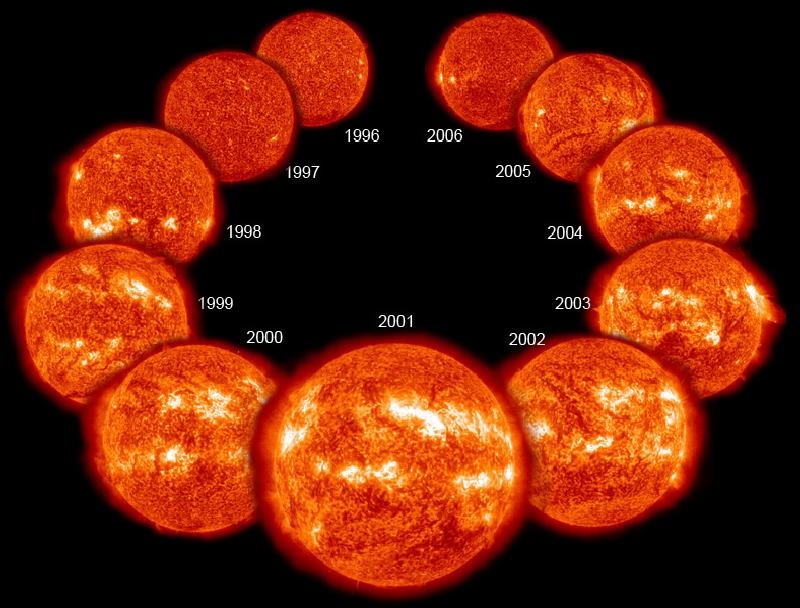
    The sunspots identified by researchers from IISER Kolkata herald the start of a new solar cycle called Cycle 25.

    What are Sunspots?

    • Sunspots are temporary phenomena on the Sun’s photosphere that appear as spots darker than the surrounding areas. They are relatively cooler spots on the Sun’s surface.
    • They are regions of reduced surface temperature caused by concentrations of magnetic field flux that inhibit convection.
    • Sunspots usually appear in pairs of opposite magnetic polarity with a leader and a follower.

    What is Solar Cycle?

    • From our safe distance of about 148 million km, the Sun appears to be sedate and constant. However, huge solar flares and coronal mass ejections spew material from its surface into outer space.
    • They originate from sunspots, an important phenomenon that people have been following for hundreds of years. They originate deep within the Sun and become visible when they pop out.
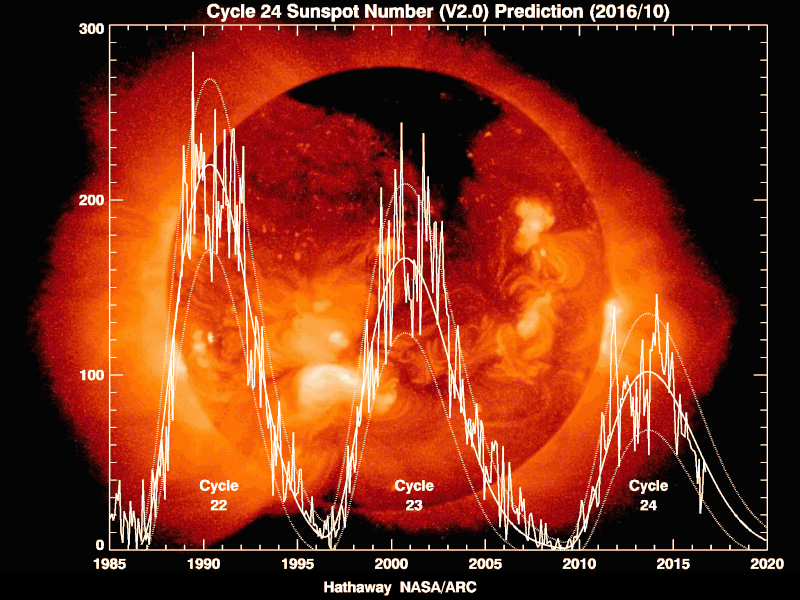
    • Their number is not constant but shows a minimum and then rises up to a maximum and then falls again in what is called the solar cycle.
    • Every 11 years or so, the Sun’s magnetic field completely flips. This means that the Sun’s north and south poles switch places. Then it takes about another 11 years for the Sun’s north and south poles to flip back again.
    • So far, astronomers have documented 24 such cycles, the last one ended in 2019.

    How do they occur?

    • Given the high temperatures in the Sun, matter exists there in the form of plasma, where the electrons are stripped away from the nuclei.
    • The Sun is made of hot ionized plasma whose motions generate magnetic fields in the solar interior by harnessing the energy of the plasma flows.
    • This mechanism is known as the solar dynamo mechanism (or magnetohydrodynamic dynamo mechanism).
    • Simply stated, it is a process by which kinetic energy of plasma motions is converted to magnetic energy, which generates the magnetised sunspots, giving rise to the solar cycle..
    • Because of the nature of the solar dynamo, the part of its magnetic field that gives rise to sunspots reverses direction when it moves from one solar cycle to another.
    • This can be inferred by observing when the relative orientation of the sunspot pairs flips.

    Features

    • The solar cycle affects activity on the surface of the Sun, such as sunspots which are caused by the Sun’s magnetic fields. As the magnetic fields change, so does the amount of activity on the Sun’s surface.
    • One way to track the solar cycle is by counting the number of sunspots.
    • The beginning of a solar cycle is a solar minimum, or when the Sun has the least sunspots. Over time, solar activity—and the number of sunspots—increases.
    • The middle of the solar cycle is the solar maximum, or when the Sun has the most sunspots. As the cycle ends, it fades back to the solar minimum and then a new cycle begins.
    • Giant eruptions on the Sun, such as solar flares and coronal mass ejections, also increase during the solar cycle. These eruptions send powerful bursts of energy and material into space.

    Impacts of Solar Cycle

    • This activity has effects on Earth. For example, eruptions can cause lights in the sky, called aurora, or impact radio communications. Extreme eruptions can even affect electricity grids on Earth.
    • Solar activity can affect satellite electronics and limit their lifetime.
    • Radiation can be dangerous for astronauts who do work on the outside of the International Space Station.
    • Forecasting of the solar cycle can help scientists protect our radio communications on Earth, and help keep satellites and astronauts safe.

    Start of cycle 25

    • Following a weakening trend in activity over the last few cycles, there were predictions that the Sun would go silent into a grand minimum in activity, with the disappearance of cycles.
    • However, a team from IISER Kolkata has shown that there are signs that cycle 25 has just begun.
    • They used the data from the instrument Helioseismic and Magnetic Imager aboard NASA’s space-based Solar Dynamics Observatory for their calculations.

    Why is this so important to us on earth?

    • After all the sunspots look small and are hardly even visible to us. Contrary to this, sunspot activity may be correlated with climate on earth.
    • In the period between 1645 and 1715, sun spot activity had come to a halt on the Sun – a phenomenon referred to as the Maunder minimum.
    • This coincided with extremely cold weather globally. So sunspots may have a relevance to climate on earth.
    • Such links are tenuous, but definitely solar activity affects space weather, which can have an impact on space-based satellites, GPS, power grids and so on.
  • NPA Crisis

    What is ‘Yes Bank Crisis’?

    On the advice of the Reserve Bank of India (RBI), the government imposed a moratorium on Yes Bank with effect from 6 p.m. on March 5 up to April 3. This has created a furore among the account holders of the bank.

    What restrictions did RBI put?

    • The RBI superseded the private sector lender’s board and appointed as an administrator.
    • Under the moratorium, deposit withdrawals have been capped at ₹50,000.
    • Within 24 hours, the RBI proposed a reconstruction scheme under which SBI could take a maximum 49% stake in the restructured capital of the bank.

    Why was it imposed?

    • The RBI cited a steady decline in Yes Bank’s financial position mainly due to the lender’s inability to raise adequate capital to make provisions for potential non-performing assets.
    • This failing resulted in downgrades by credit rating agencies, which in turn made capital raising even more difficult — a vicious cycle that further worsened its financials.
    • This apart there were serious lapses in corporate governance.
    • The bank has also experienced serious governance issues and practices in the recent years which have led to steady decline of the bank.

    When did it all start?

    • As on March 31, 2014, the bank’s loan book was ₹55,633 crore and deposits were ₹74,192 crore.
    • Since then the loan book expanded fourfold to ₹2,24,505 crore while deposit growth failed to keep pace and increased less than three times to ₹2,09,497 crore.
    • Asset quality also worsened during the period with gross non-performing assets sharply rising from 0.31% as on March 31, 2014, to 7.39% at the end of September 2019.
    • The exponential growth at Yes Bank during that period also came under the regulator’s scanner.
    • The lender has substantial exposure to several troubled borrowers including the IL&FS.

    What will be the likely impact on depositors?

    • While deposit withdrawals have been capped at ₹50,000, there are exceptions under which a higher amount can be withdrawn, with the permission of the RBI.
    • The RBI can allow a customer to withdraw more than ₹50,000 under the following conditions:
    1. in connection with the medical treatment of the depositor or any person actually dependent on the depositor;
    2. towards the cost of higher education of the depositor or any person actually dependent on him for education in India or outside India;
    3. to pay obligatory expenses in connection with marriage or other ceremonies of the depositor or his/her children or of any other person actually dependent upon depositor;
    4. or any other unavoidable emergency.
    • The total withdrawal should, however, not exceed ₹5 lakh or the actual balance in the account, whichever is lower.

    What about deposit insurance?

    • In case Yes Bank goes belly up for any reason, depositors will not lose all their money since deposits up to ₹5 lakh are covered under deposit insurance.
    • While the deposit insurance cover was ₹1 lakh till recently, this was increased to ₹5 lakh in the aftermath of the crisis at the Punjab and Maharashtra Cooperative (PMC) Bank Limited.
    • Finance Minister has announced the increase in deposit insurance in this year’s Budget.

    What do such bank failures imply?

    • While the government and the regulator have asserted that the problem is solely related to this particular bank, the latest developments spotlight the governance risks in India’s banking sector.
    • There is a risk that the already poor operating environment for the banking sector could suffer further impairment if the government’s efforts to tackle problems in the bank fail to provide reassurance to depositors and investors.
  • Judicial Reforms

    Right of an accused to be defended


    Recently the Karnataka High Court observed that it is unethical and illegal for lawyers to pass resolutions against representing accused in court.  This is not the first time that bar associations have passed such resolutions, despite a Supreme Court ruling that these are “against all norms of the Constitution, the statute and professional ethics”.

    What does the Constitution say about the right of an accused to be defended?

    • Article 22(1) gives the fundamental right to every person not to be denied the right to be defended by a legal practitioner of his or her choice.
    • Article 14 provides for equality before the law and equal protection of the laws within the territory of India.
    • Article 39A, part of the DPSP, states that equal opportunity to secure justice must not be denied to any citizen by reason of economic or other disabilities, and provides for free legal aid.

    What has the Supreme Court said about such resolutions by bar associations?

    • The Supreme Court referred to writer Thomas Paine, who had been tried for treason in England in 1792.
    • Thomas Erskine, Attorney General for the Prince of Wales, was warned of dismissal if he defended Paine, but still took up the brief, saying: “… If the advocate refuses to defend from what he may think of the charge or of the defence, he assumes the character of the Judge…”
    • The Supreme Court cited other historical examples of accused being defended — revolutionaries against British rule; alleged assailants of Mahatma Gandhi and Indira Gandhi; Nazi war criminals at the Nuremberg trials.

    A matter of professional ethics

    • The Supreme Court ruled that such resolutions are wholly illegal, against all traditions of the bar and against professional ethics.
    • Every person however wicked, criminal, perverted or repulsive he may be regarded by society has a right to be defended in a court of law and correspondingly and it is the duty of the lawyer to defend him.
    • It said such resolutions were against all norms of the Constitution, the statute and professional ethics, called these a disgrace to the legal community, and declared them null and void.

    How are the professional ethics of lawyers defined?

    • The Bar Council of India has Rules on Professional Standards, part of the Standards of Professional Conduct and Etiquette to be followed by lawyers under the Advocates Act.
    • An advocate is bound to accept any brief in the courts or tribunals, at a fee consistent with his standing at the Bar and the nature of the case.
    • The Rules provide for a lawyer refusing to accept a particular brief in “special circumstances”.
    • Last year, The Uttarakhand HC clarified that these special circumstances refer to an individual advocate who may choose not to appear in a particular case, but who cannot be prohibited from defending an accused by any threat of removal of his membership of the bar association.
  • Electoral Reforms In India

    Election Commission of India unveils roadmap for revamp

    The Election Commission of India (ECI) is considering a series of new reforms proposed by working groups it set up in 2019. Some of them are:

    • New voting methods,
    • Capping the campaign expenditure of political parties,
    • Online registration of new voters at 17 years and
    • Ending social media campaigning 48 hours before polling among the recommendations

    Various suggested reforms

    Voters registration

    • Among the recommendations being considered is replacing all the forms for various voter services, including registration of new voter and change of address, with one single form.
    • Multiple numbers of forms create confusion and affect the efficiency in the process. It is now proposed to have a unified and simplified form for all services to voters.
    • Another recommendation was to start online registration facilities at the school or college-level for all prospective voters at 17 years of age so they can be enrolled in the electoral roll as soon as they become eligible at 18.
    • The ECI also recommended four cut-off dates in a year to enroll as a voter. Currently, January 1 is the qualifying date so those who turn 18 after that date are not eligible to vote the whole year.
    • The ECI has proposed January 1, April 1, July 1 and October 1 as the qualifying dates, while the Law Ministry has suggested two dates — January 1 and July 1.

    Electronic voter cards

    • The ECI also proposed to give out electronic versions of the voter ID card — EPIC — for convenience of voters.
    • Though not specifying the method, one of the recommendations was to look at the “possibility and feasibility of different voting methods”.
    • The IIT-Madras was working on a prototype for an Aadhaar-linked remote voting system for the ECI.
    • The Commission has already implemented one-way online transfer of postal ballots for service and implemented the same for the whole country in 2019.
    • It has been seen that approximately 30% of electors are not able to participate in elections for various reasons.
    • Some of them, as assessed in a report on facilities of domestic migrants may poll to the category of migrants who continue to remain voters at their previous locations.

    Expenditure and campaigning

    • For political parties, the recommendations included online nomination of candidates and a cap on the spending allowed by parties.
    • Currently, individual candidates are allowed a limited expenditure on campaigning.
    • Another recommendation was to impose a “silence period of 48 hours” before polling on social media and print media.
    • Campaigning on electronic media in the last 48 hours before polling is prohibited currently.
  • Wildlife Conservation Efforts

    Species in news: Red Panda


    According to a report by the TRAFFIC report, there has been a considerable reduction in the poaching of Red Panda (ailurus fulgens). The report also recommended trans-boundary law enforcement co-operation through the use of multi-government platforms like SAWEN (South Asia Wildlife Enforcement Network).

    Red Panda

    IUCN Red List Status: Endangered

    • The red panda (Ailurus fulgens) is a mammal native to the eastern Himalayas and southwestern China.
    • Its wild population is estimated at fewer than 10,000 mature individuals and continues to decline due to habitat loss and fragmentation, poaching, and inbreeding depression.
    • Despite its name, it is not closely related to the giant panda
    • The animal has been hunted for meat and fur, besides illegal capture for the pet trade.
    • An estimated 14,500 animals are left in the wild across Nepal, Bhutan, India, China and Myanmar.
    • About 5,000-6,000 red pandas are estimated to be present in four Indian states – Arunachal Pradesh, Meghalaya, Sikkim and West Bengal.
    • The diminishing habitat is a major threat to the species which is a very selective feeder and survives on selected species of bamboos.

    About South Asia Wildlife Enforcement Network (SAWEN)

    • SAWEN is a Regional network is comprised of eight countries in South Asia: Afghanistan, Bangladesh, Bhutan, India, Maldives, Nepal, Pakistan and Sri Lanka.
    • It aims at working as a strong regional intergovernmental body for combating wildlife crime by attempting common goals and approaches for combating illegal trade in the region.
    • The South Asia region is very vulnerable to illegal traffic and wildlife crimes due to the presence of precious biodiversity and large markets as well as traffic routes for wildlife products in the south East Asian region.
    • The collaboration in harmonizing as well as enforcing the wildlife protection in the region is considered very important for effective conservation of such precious biodiversity.
    • India adopted the Statute of the SAWEN and became its formal member in 2016.

    Back2Basics

    TRAFFIC

    • The TRAFFIC, the Wildlife Trade Monitoring Network, is a leading non-governmental organisation working on wildlife trade in the context of both biodiversity conservation and sustainable development.
    • It is a joint program of World Wildlife Fund (WWF) and the IUCN.
    • It aims to ensure that trade in wild plants and animals is not a threat to the conservation of nature.
    • The TRAFFIC is governed by the TRAFFIC Committee, a steering group composed of members of TRAFFIC’s partner organizations, WWF and IUCN.
    • TRAFFIC also works in close co-operation with the Secretariat of the Convention on International Trade in Endangered Species of Wild Fauna and Flora (CITES).
  • Modern Indian History-Events and Personalities

    Who were the Marakkars?

    The big-budget Malayalam film Marakkar: The Lion of the Arabian Sea is set to be released. It is a war film depicting the heroics of the Marakkar clan, whose leaders were naval chieftains of the Zamorin of Calicut during the 16th and 17th centuries.

    Who were the Marakkars?

    • By some accounts, they were of Arab origin and had migrated from Tunisia to Panthalayani near Koyilandy in present-day Kozhikode, and later moved to the region around present-day Kottakkal and Thikkodi near Payyoli.
    • By other accounts, the Marakkars were descendants of affluent businessman from the Cochin kingdom who migrated later to Calicut.
    • Historians say the name ‘Marakkar’ could have originated from maram or marakkalam, meaning ship, as these families lived along the coast and used ships.
    • Alternatively, it could have originated from the Arabic word markaba, meaning those who migrated via ships.
    • The Marakkars were mostly Muslims, but in some parts, they have been found to be Hindus as well.

    What was the war against the Portuguese about?

    • The Zamorin, Samoothiri in Malayalam, was the title given to rulers of the Calicut kingdom on the Malabar coast.
    • Faced with invading Portuguese ships, the Zamorin reached out to the Marakkars to defend the coast. The Marakkars fought against Portuguese invaders for nearly a century.
    • They were led in succession by four Marakkars, chief admirals who were appointed by the Zamorin with the title of Kunjali.
    • Related by bloodline, they were Kuttyali Marakkar (Kunjali Marakkar I, appointed in 1507), Kutty Pokker (Kunjali Marakkar II), Pathu Marakkar (Kunjali Marakkar III) and Muhammad Ali Marakkar (Kunjali Marakkar IV, appointed in 1595).
    • Their strategy was similar to guerrilla warfare. The Portuguese had massive ships which could not make easy manoeuvres in the sea.
    • The Marakkars used small ships which could easily surround the Portuguese ships, enabling the fighters to attack at will.

    Who is depicted the ‘Lion of the Arabian Sea’?

    • Kunjali Marakkar IV earned his reputation with his fierce onslaught on Portuguese ships, the favours he gave those who fought against the Portuguese, and his efforts to strengthen the fort at Kottakkal.
    • When he took charge in 1595, relations between the Zamorin and the Marakkars were deteriorating.
    • The Zamorin was feeling threatened by Kunjali Marakkar IV’s popularity, and by reports (said to be spread by the Portuguese) that he was planning to create a Muslim empire.
    • In 1597, the Zamorin signed a peace treaty with the Portuguese and attacked Kottakkal fort. For months, the Marakkars resisted the attack by the Zamorin’s Nair soldiers and the Portuguese fleet.
    • Eventually, as Portugal sent more forces and the Zamorin mounted his effort, Marakkar surrendered to the Zamorin on the assurance that their lives would be spared. But the Portuguese violated the terms, arrested him, took him to Goa and beheaded him.
  • Women empowerment issues – Jobs,Reservation and education

    The role of women in developing a knowledge economy

    The role of women in developing a knowledge economy

    Context

    Indian economic success requires scientific skills that can foster a knowledge economy, the emergence of which depends on how gender-balanced the workforce is.

    Half the scientific potential squandered

    • The requirement of the skilled workforce: A rapidly growing India requires a highly skilled technical workforce that is crucial for developing a knowledge economy.
      • Unfortunately, half the scientific potential of India—women in science—is squandered.
      • Women make up only 14% of the 280,000 scientists, engineers, and technologists in research and development institutions across the country, according to a recent study.
    • Several barriers in careers: Today, fewer women apply for or hold key scientific positions as several barriers prevent them from progressing in their careers, in comparison with their male counterparts.

    Several unacknowledged factors that disadvantage women

    • There is widespread frustration experienced by women, who find it difficult if not impossible to fulfil their scientific potential.
      • Even today, several factors that disadvantage women are not acknowledged widely enough.
    • What are the difficulties faced by women: Peer-reviewed research reports have indicated that women-
      • Scientists earn less.
      • Have less prestige within departments.
      • Have less lab space.
      • Are offered inadequate jobs on graduating with science degrees and have more teaching responsibilities.
      • They also face greater difficulty in receiving grants and therefore apply for fewer grants in the first place.
    • Imperative to tackle issues: It is imperative to tackle these issues with vigour if India is to take its rightful place among developed nations.

    Lack of informal networks

    • Women tend to lack access to informal networks that provide opportunities to work in high-profile projects.
      • Which include attending conferences abroad or on-the-job opportunities.
    • How it affects them? They lack the work experience that would enable them to rise up the ranks and provide access to the wide range of developmental models that could build the credibility they need to advance.

    Importance of mentor

    • Performance assessment is now an integral part of an organization’s performance management systems, implemented as companies move away from the age-old concepts of training and skill development.
    • How mentors matters? Mentors often help build confidence as well as professional identity in protégés and offer access to developmental opportunities, allowing individuals to demonstrate their ability and gain trust.
      • Mentors keep information channels open and provide feedback on performance in crucial times.
      • It has been noted that almost every successful woman has had a mentor at some time.

    How organizations work culture matters?

    • Unepathetic culture: Organizations often define success by the willingness of their employee to work for long hours and prioritize work over everything else—a “live to work” ideal, generally regarded as more masculine.
      • Group membership as criteria leads to discrimination: When women feel selected or assessed on the basis of group membership rather than their work record and abilities, they experience gender discrimination.
      • Women feel that an unempathetic culture is one of the most significant barriers to their advancement.
    • Gender bias as a major career obstacle: A study highlighted that only 3% of women surveyed regarded family responsibilities as their most serious career obstacle, while 50% cited gender bias.
      • Only 7% of female employees surveyed reported leaving the organization for family reasons, whereas 73% reported leaving because they saw limited opportunities.
      • Quit rate: The quit rates for women were significantly lower in organizations that provided better training and promotion opportunities.
    • The need for the employee-friendly policies: In recent years, we have witnessed an increase in the number of women with children who participate in the country’s paid workforce.
      • An organization’s culture has a significant impact on those who work within it.
      • Unfortunately, not many organizations have revised their work policies or employee expectations to enable women to strike a balance between their work and family responsibilities.
      • Flexible policies: For instance, the internet and telecom revolutions have enabled organizations to introduce employee-friendly policies such as Flexi-work hours and work-from-home that have significantly transformed workplace practices.

    Way forward

    • Need for the realisation of the full potential of women: Science needs the best scientists, and a knowledge economy needs a gender-balanced workforce. This can only be attained by realizing the full potential of women.
    • Reach out to young girls: Apart from being wasteful and unjust, the under-representation of women in science threatens the goal of achieving excellence in the field. To tackle this, we must set an ambitious target of reaching out to 1 million young girls each year and encourage them to take up science and make a difference.
    • Convention of women: A national convention of women in science must be held annually, with a specific focus on discussing and building general awareness around the major challenges that women face.

    Conclusion

    We must mobilize all our resources if India aims to be a $5 trillion economy. The gender imbalance in science and technology is a looming challenge and threatens to weaken our country’s competitive economic position. By addressing these concerns, we can empower and motivate more women to join scientific fields, unlock India’s full potential, and develop the country to become a knowledge economy.

  • Land Reforms

    Supreme Court upholds 2018 order on land acquisition

    • The Supreme Court reaffirmed its February 2018 ruling on Section 24 on land acquisition compensation awards given by a three-judge bench led by Justice Arun Mishra in the Indore Development Authority.
    • It also has overruled an earlier co-ordinate Bench ruling in the Pune Municipal Corporation case of 2014 under the Right to Fair Compensation and Transparency in the Act of 2013.

    What is the provision and why it needed interpretation?

    • The Right to Fair Compensation and Transparency in Land Acquisition, Rehabilitation and Resettlement Act 2013 (2013 Act) replaced the Land Acquisition Act, 1894 (1894 Act).
    • The new Act provides for higher compensation to those deprived of land by the government for both public and private sector projects.
    • It also mandates consent of a majority of land-owners, and contains provisions for rehabilitation and resettlement.
    • Under Section 24(2) land acquisition made under the old law of 1894 lapses if the award of compensation had been made five years before the new Act came into force, but has not been paid.
    • In such cases, the process will have to be gone through afresh under the new Act, which mandates higher compensation.

    Issue over compensation

    • There are cases in which farmers and other land-owners have refused the compensation, leading to delay in the government taking possession.
    • In this situation, the compensation amount is deposited in the government treasury. According to one interpretation, if this is done, the acquisition process is saved.
    • Then again, others contend that such cases will fall under the new Act because compensation has not been paid to the land-owners, and the lapsing clause in Section 24 should be applied.
    • If, through interpretation, a long-pending land acquisition process is closed under the old law and fresh acquisition proceedings started under the new one, the land-owners stand to benefit, but project proponents will have to pay higher compensation.
    • Therefore, the provision concerned is often a subject of litigation.

    What happened in the case before the Supreme Court?

    • On January 24, 2014 the court ruled that the acquisition of a piece of land had “lapsed” because the compensation awarded had neither been paid to the landowners/persons interested nor deposited in the court.
    • The deposit of the compensation amount in the government treasury was held to be “of no avail” as it was not equivalent to the compensation being “paid”.
    • Based on this judgment, subsequent cases were decided on the same principle: acquisition that had taken place earlier than five years before the new Act commenced would lapse if compensation amount was not paid to the land-owners or, in cases in which the owners refused to accept compensation, deposited in court.

    How was this precedent dealt with in another case in 2018?

    • The same question arose in Indore Development Authority vs. Shailendra. Another Bench did not accept the earlier Bench’s view.
    • On February 8, 2018, the majority, consisting of the first two judges, ruled that the acquisition would not lapse merely because the compensation amount was not deposited in court, but was instead deposited in the treasury.
    • It ruled that the past practice of more than a century, under which the amount was deposited in the treasury, was not taken into account by the earlier Bench.
    • Some provisions and orders that allowed this practice were not placed before that Bench. Further, the land acquisition in that particular case had been quashed by a High Court in 2008.
    • Since it was not a subsisting process, the question under Section 24(2), whether the acquisition lapsed because of non-payment of compensation or non-deposit in the court, did not arise at all.
    • On these grounds, Justice Mishra and Justice Goel overruled the earlier judgment and held that it was per incuriam, that is a verdict passed in disregard of law and, therefore, wrong.

    What does the controversy mean for land-owners and project proponents?

    • A ruling that old acquisitions lapse for non-deposit of compensation will be more beneficial to land-owners and farmers as they stand to get higher compensation and rehabilitation and resettlement measures.
    • On the other hand, project proponents feel such an interpretation would mean that those who refused to take compensation, even after it had been fixed and the money deposited in the government treasury, would be taking advantage of their own wrong.

    Present ruling

    On Acquisition

    • The provision said that in such cases if the physical possession has not been taken “or” the compensation is not paid, the acquisition proceeding is “deemed to have lapsed”.
    • The court held that a land acquisition proceeding under Section 24(2) would only lapse if the authorities have neither taken physical possession nor paid the compensation due to the landowner for five or more years prior to January 1, 2014.
    • For this an “or” in the Section was “interpreted” as an “and”.
    • Further, the Bench held that Section 24(2) of the Act of 2013 does not give rise to a new cause of action to question the legality of concluded proceedings of land acquisition.

    On compensation

    • The government if it so wishes would have to initiate “fresh acquisition proceedings” under the new Act of 2013 which provides for “fair-compensation”.
    • The judgment however said compensation would be considered paid if the amount is put in the Treasury.
    • There was no obligation that the amount should be deposited in the court in order to sustain the land acquisition proceedings under the 2013 Act.
    • Thus there is no lapse if possession has been taken and compensation has not been paid. Similarly, there is no lapse if compensation has been paid and possession not taken of the land.
  • NGOs vs. GoI: The Conflicts and Scrutinies

    Foreign Funding of Public Organizations

    The Central government cannot brand an organisation ‘political’ and deprive it of its right to receive foreign funds for using “legitimate forms of dissent” like bandh, hartal, road roko or jail ‘bharo’ to aid a public cause, the Supreme Court held.

    Why such Judgement?

    • The verdict came on a petition filed by Indian Social Action Forum challenging certain provisions of the Foreign Contribution Regulation Act (FCRA), 2010 and the Foreign Contribution (Regulation) Rules of 2011.
    • Both of these confer the Centre with “unguided and uncanalised power” to brand organisations ‘political’ and shut down their access to foreign funds.
    • The FCRA 2010 prohibited acceptance and utilization of foreign contribution or foreign hospitality for any activities detrimental to the national interest, it the court said.
    • The FCRA and its Rules allowed the government to indulge in its whims and fancies to deprive organisations of their foreign contributions.
    • The terms used in the statute like ‘political objectives’, ‘political activities’, ‘political interests’ and ‘political action’ had no clarity.

    Issues with FCRA

    • The provisions under challenge before the court included Section 5 (1) of the FCRA.
    • This provision allowed the Centre a free hand to decide whether a seemingly non-political organisation was actually political in nature. INSAF argued that Section 5(1) was vague and thus unconstitutional.
    • The Delhi High Court, which INSAF approached first, said the provision was “expansive” and not vague. The Supreme Court agreed with the High Court.
    • The next provision under the microscope was Section 5(4) of the FCRA.
    • INSAF said the provision did not exactly identify the authority before which an organisation could represent its grievance. But the apex court dismissed this contention.
    • INSAF had also challenged the various clauses of Rule 3 of the 2011 Rules. This provision identified the various types of ‘political’ activities for which/organisations whose foreign funding could be stopped by the government.

    Foreign funds are permissible for non-political organizations

    • Any organisation which supports the cause of a group of citizens agitating for their rights without a political goal or objective cannot be penalized by being declared as an organisation of a political nature.
    • But the foreign funding pipeline could be cut if an organisation took recourse to these forms of protest to score a political goal, the court said.
    • It struck a similar balance in the cases of organisations of farmers, workers, students, youth based on caste, community, religion, language, etc.
    • It said their foreign funding could continue as long as these organisations worked for the “social and political welfare of society” and not to further “political interests”.

    What about Political Organizations?

    • The court wholesomely agreed that organisations with avowed political objectives in its memorandum of association or bye laws cannot be permitted access to foreign funds.
    • Such organisations were clearly of a “political nature,” it concluded.

    Why regulate foreign funding?

    • The purpose for which the statute prevents organisations of a political nature from receiving foreign funds is to ensure that the administration is not influenced by foreign funds.
    • Prohibition from receiving foreign aid, either directly or indirectly, by those who are involved in active politics is to ensure that the values of a sovereign democratic republic are protected.
    • On the other hand, such of those voluntary organisations which have absolutely no connection with either party politics or active politics cannot be denied access to foreign contributions.

    Back2Basics

    FCRA

    • Government of India enacted the Foreign Contribution (Regulation) Act (FCRA) in the year 1976 with an objective of regulating the acceptance and utilization of foreign contribution.
    • The act was majorly modified in 2010 with several amendments because many NGOs were found using illegal use of foreign funding.
    • It is a consolidating act whose scope is to regulate the acceptance and utilisation of foreign contribution or foreign hospitality by certain individuals or associations or companies.
    • It aims to prohibit funding for any activities detrimental to the national interest and for matters connected therewith.
    • In 2016 license of about 20,000 NGOs were cancelled after reviewing their work.

Join the Community

Join us across Social Media platforms.