💥UPSC 2027,2028 Mentorship (April Batch) + Access XFactor Notes & Microthemes PDF

Archives: News

  • North-East India – Security and Developmental Issues

    Explained: Behind Meghalaya violence


    Last week, ethnic violence left three dead in Meghalaya. The violence underlined the ethnic complexities of Meghalaya, with tensions coming back to the fore following the passage of the Citizenship (Amendment) Act.

    Multi-ethnic Meghalaya

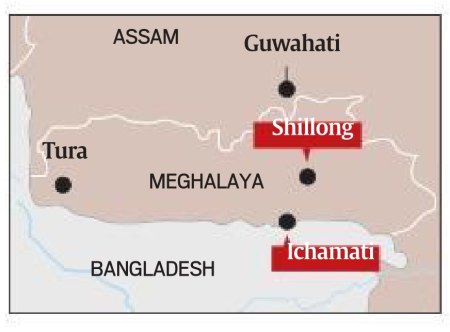
    • Meghalaya became a state in 1972 when it was carved out of Assam. Before that, Shillong, now Meghalaya’s capital, used to be the capital of Assam.
    • Sharing a 443-km border with Bangladesh, Meghalaya has seen decades of migration from areas that are now in Bangladesh, as well as from various Indian states via Assam.
    • Besides the indigenous groups, Meghalaya’s residents include Bengalis, Nepalis, Marwaris, Biharis and members of various other communities.
    • Meghalaya is a tribal majority state, and the indigenous Khasis, Jaintias and Garos are entitled to 80% reservation in government jobs.
    • Various groups have continuously expressed concerns that illegal migration from Bangladesh and the growth of “outsiders” from other states would overwhelm the indigenous communities.

    Meghalaya violence: The CAA context

    • The CAA relaxes the norms for Hindus from Bangladesh (among six religious groups from three countries) for eligibility to apply for Indian citizenship.
    • Long before that, the legislation was already facing protests in the Northeast, including Meghalaya. Eventually, the Centre decided the CAA will not apply in Sixth Schedule areas.
    • The Sixth Schedule of the Constitution has special provisions for administration of certain areas in the Northeast, including almost the whole of Meghalaya.
    • Despite the large exemption, the concerns have persisted in Meghalaya, and demands for an Inner Line Permit (ILP) regime have gathered fresh momentum.
    • If the ILP system is introduced, every Indian citizen from any other state would require a time-bound permit to visit Meghalaya.

    Signals simmering tensions

    • The last four decades have seen numerous incidents of violence in Meghalaya targeted at non-tribals, including from Bengal and Nepal.
    • The latest bout follows a sustained campaign over the implementation of the Inner Line Permit and unrest in the Northeast over the CAA that led to six deaths in Assam two months ago.
    • The violence last week has an immediate context in the anti-CAA campaign and ILP demand.

    Shillong, then and now

    • Shillong has seen violence against “outsiders” several times in the last four decades.
    • The targets were Bengalis in 1979, Nepalis in 1987, and Biharis in 1992.
    • In 2018, Shillong saw clashes between Khasis and Punjab-origin Dalit Sikhs whose ancestors had settled there over 100 years ago.
    • All that began collapsing after Independence, Constitutional institutions set up to safeguard the interest of the tribes came to be popularly perceived as opportunities to convert these tribal areas into exclusive zones of tribal hegemony.
    • The issue of ‘foreigners’ illegally residing in the state of Meghalaya was one of the most important issues which dominated state politics in the 1970s and 1980s.
    • In 1979, the state was plunged into a crisis for the first time since it was created.

  • Parliament – Sessions, Procedures, Motions, Committees etc

    When does Speaker suspend MPs from Lok Sabha?

    Seven MPs of a political party were suspended for unruly behaviour in the Lok Sabha. The motion was passed by a voice vote.

    What is the reason for suspending an MP?

    • The general principle is that it is the role and duty of the Speaker of Lok Sabha to maintain order so that the House can function smoothly.
    • This is a daunting task even at the best of times.
    • In order to ensure that proceedings are conducted in the proper manner, the Speaker is empowered to force a Member to withdraw from the House (for the remaining part of the day), or to place him/her under suspension.

    What are the rules under which the Speaker acts?

    Rule Number 373 of the Rules of Procedure and Conduct of Business says:

    • The Speaker, if is of the opinion that the conduct of any Member is grossly disorderly, may direct such Member to withdraw immediately from the House, and any Member so ordered to withdraw shall do so forthwith and shall remain absent during the remainder of the day’s sitting.

    To deal with more recalcitrant Members, the Speaker may take recourse to Rules 374 and 374A. Rule 374 says:

    1. The Speaker may, it deems it necessary, name a Member who disregards the authority of the Chair or abuses the rules of the House by persistently and wilfully obstructing the business thereof.
    2. If a Member is so named by the Speaker, the Speaker shall, on a motion being made forthwith put the question that the Member (naming such Member) be suspended from the service of the House for a period not exceeding the remainder of the session: Provided that the House may, at any time, on a motion being made, resolve that such suspension be terminated.
    3. A member suspended under this rule shall forthwith withdraw from the precincts of the House.

    What is the procedure for revocation of a Member’s suspension?

    • While the Speaker is empowered to place a Member under suspension, the authority for revocation of this order is not vested in her.
    • It is for the House, if it so desires, to resolve on a motion to revoke the suspension.

    What happens in Rajya Sabha?

    • Like the Speaker in Lok Sabha, the Chairman of the Rajya Sabha is empowered under Rule Number 255 of its Rule Book to “direct any Member whose conduct is in his opinion grossly disorderly to withdraw immediately” from the House.
    • Any Member so ordered to withdraw shall do so forthwith and shall absent himself during the remainder of the day’s meeting.
    • The Chairman may name a Member who disregards the authority of the Chair or abuses the rules of the Council by persistently and wilfully obstructing business.
    • In such a situation, the House may adopt a motion suspending the Member from the service of the House for a period not exceeding the remainder of the session.
    • The House may, however, by another motion, terminate the suspension.
    • Unlike the Speaker, however, the Rajya Sabha Chairman does not have the power to suspend a Member.

    Way Forward: Striking a balance

    • There can be no question that the enforcement of the supreme authority of the Speaker is essential for smooth conduct of proceedings. A balance has to be struck.
    • However, it must be remembered that her job is to run the House, not to lord over it.
    • The solution to unruly behaviour has to be long-term and consistent with democratic values.
    • A step in that same direction could be to discontinue the practice of herding people out of the visitors’ gallery when the House witnesses chaos.
    • So, the ruling party of the day invariably insists on the maintenance of discipline, just as the Opposition insists on its right to protest. And their positions change when their roles flip.
  • Freedom of Speech – Defamation, Sedition, etc.

    Freedom in the World 2020


    India has become one of the world’s least free democracies, according to a global survey.

    Freedom in the World Report

    • It is a yearly survey and report by the U.S. based non-governmental organization Freedom House.
    • It measures the degree of civil liberties and political rights in every nation and significant related and disputed territories around the world.
    • The report derives its methodology from the Universal Declaration of Human Rights, adopted by the UN General Assembly in 1948.
    • It covers 195 countries, awarding scores based on political rights indicators such as the electoral process, political pluralism and participation and government functioning, as well as civil liberties indicators related to freedom of expression and belief associational and organisational rights, the rule of law and personal autonomy and individual rights.

    Highlights of the report


    Deteriorating freedom in India

    • The report ranks India at the 83rd position, along with Timor-Leste and Senegal.
    • This is near the bottom of the pile among the countries categorised as “Free”.
    • India’s score fell by four points to 71, the worst decline among the world’s 25 largest democracies this year.
    • India scored 34 out of 40 points in the political rights category, but only 37 out of 60 in the civil liberties category, for a total score of 71, a drop from last year’s score of 75.
    • The report treats “Indian Kashmir” as a separate territory, which saw its total score drop precipitously from 49 to 28 this year, moving it from a status of “Partly Free” to “Not Free”.

    Reason for the downfall

    • The annulment of autonomy and the subsequent shutdown of Kashmir, the NRC and the CAA, as well as the crackdown on mass protests, have been listed as the main signs of declining freedom in the report.
    • These three actions have shaken the rule of law in India and threatened the secular and inclusive nature of its political system said the report.
    • The report slammed the internet blackout in Kashmir terming it the longest shutdown ever imposed by democracy.
    • It said freedom of expression was under threat in India, with journalists, academics and others facing harassment and intimidation when addressing politically sensitive topics.
    • It warned that the Indian government’s alarming departures from democratic norms under present govt. could blur the values-based distinction between Beijing and New Delhi.
  • Gairsain as new summer capital of Uttarakhand


    Uttarakhand govt names Gairsain as the new summer capital of the state.

    Gairsain

    • Gairsain is situated at the eastern edge of the vast Dudhatoli mountain range, located almost at the centre of the state, at a distance of approximately 250 kilometres from Dehradun.
    • It is easily accessible from both the Garhwal and the Kumaon divisions, and in a way, acts as the bridge between the two regions.
    • Uttarakhand was carved out as a separate state from Uttar Pradesh in 1998.
    • Gairsain was best suited to be the capital of the mountainous state as it was a hilly region falling on the border of Kumaon and Garhwal regions.
    • But it was Dehradun, located in the plains that served as the temporary capital.
    • With the fresh announcement, there is no clarity on either the city’s current status or a new winter capital.
    • The state Assembly is located in Dehradun, but sessions are held in Gairsain as well.
  • Higher Education – RUSA, NIRF, HEFA, etc.

    World University Rankings by Subject 2020


    Indian higher-education institutes have improved their performance on the global stage, with a greater number getting ranked in the top-100 programs, according to the latest edition of the Quacquarelli Symonds (QS) World University Rankings by Subject 2020.

    Major findings of the report

    • IIT Bombay (44), IIT Delhi (47), IIT Kharagpur (86), IIT Madras (88) and IIT Kanpur (96) found place in top 100 of this category.
    • In the Natural Sciences category, three Indian institutions made it to the top 200: IIT-Bombay at 108th rank closely followed by the IISc, Bangalore at the 111th position, while IIT-Madras scraped in at the 195th rank.
    • Jawaharlal Nehru University remained the country’s top institution in the Arts and Humanities category, with a global ranking of 162, followed at a distance by Delhi University at 231.
    • Delhi University topped the Social Sciences and Management category, with a global ranking of 160, followed by IIT-Delhi at 183.
    • There are no Indian institutions in the world’s top 200 when it comes to Life Sciences and Medicine.
    • The top institution in the country is the All India Institute of Medical Sciences, which had a global ranking of 231.
    • Other top subjects included physics & astronomy with 18 Indian institutes, biological sciences (16), electrical engineering (15), chemical engineering (14) and mechanical engineering (14).
    • MIT, Stanford University and the University of Cambridge has secured top three positions in the Engineering and Technology category.
  • Innovations in Sciences, IT, Computers, Robotics and Nanotechnology

    [pib] Polymer Electrolyte Membrane Fuel Cells (PEMFC)

    Scientists at International Advanced Research for Powder Metallurgy & New Materials (ARCI), Hyderabad have developed Polymer Electrolyte Membrane fuel cells (PEMFC).

    Polymer Electrolyte Membrane Fuel Cells

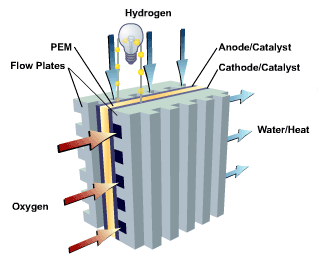
    • Proton-exchange membrane fuel cells, also known as polymer electrolyte membrane (PEM) fuel cells (PEMFC) are a type of fuel cell being developed mainly for transport applications, as well as for stationary fuel-cell applications and portable fuel-cell applications.
    • Their distinguishing features include lower temperature/pressure ranges (50 to 100 °C) and a special proton-conducting polymer electrolyte membrane.
    • PEMFCs generate electricity and operate on the opposite principle to PEM electrolysis, which consumes electricity.
    • They are a leading candidate to replace the aging alkaline fuel-cell technology, which was used in the Space Shuttle.

    Working


    • The PEMFC uses a water-based, acidic polymer membrane as its electrolyte, with platinum-based electrodes.
    • The protons pass through the membrane to the cathode side of the cell while the electrons travel in an external circuit, generating the electrical output of the cell.

    Applications in disaster management

    • Emergency Operation Centres (EOC) backed with 10 kW systems is being planned as a natural disaster management measure.
    • Tamil Nadu is generally affected by five to six cyclones every year, of which two to three are severe and is followed by frequent power cuts.
    • ARCI is now planning to set up a PEMFC system for Tamil Nadu to operate the systems like early warning systems, VHF set, IP phone, BSNL Ethernet and office equipment like scanner, computers, printers, phone, FAX and normal requirements like lighting and fan.
  • Water Management – Institutional Reforms, Conservation Efforts, etc.

    [pib] Law for Rain Water Harvesting


    The Ministry of Housing & Urban Affairs has issued the Model Building Bye Laws, 2016 for guidance of the States/UTs and has a chapter on ‘Rainwater Harvesting’.

    Why such move?

    • These laws aim to regulate the over-exploitation and consequent depletion of ground water.
    • It would enable States/UTs to enact suitable ground water legislation for regulation of its development, which includes provision of rain water harvesting.

    About the Bye Laws

    • 33 States/UTs have adopted the rainwater harvesting provisions.
    • The provisions of this chapter are applicable to all the buildings.

    Various provisions

    • As per Model Building Bye Laws- 2016, provision of rainwater harvesting is applicable to all residential plots above 100 sq.m.
    • Water being a State subject, initiatives on water management including conservation and water harvesting in the Country is primarily States’ responsibility.
    • So the implementation of the rainwater harvesting policy comes within the purview of the State Government/Urban Local Body / Urban Development Authority.

    Back2Basics

    Groundwater governance in India

    • Central Ground Water Authority (CGWA) has been constituted under Section 3(3) of the ‘Environment (Protection) Act, 1986’ for the purpose of regulation and control of groundwater development and management in the Country.
    • CGWA is regulating ground water withdrawal by industries/infrastructure/ mining projects in the country for which guidelines/ criteria have been framed which includes rainwater harvesting as one of the provisions while issuing No Objection Certificate.
  • International Space Agencies – Missions and Discoveries

    NASA’s new Mars rover: Perseverance

    NASA has named its next Mars rover ‘Perseverence’.

    About Perseverance

    • The Perseverance rover weighs less than 2,300 pounds and is managed by NASA’s Jet Propulsion Lab.
    • The rover’s mission will be to search for signs of past microbial life. It will also collect samples of Martian rocks and dust, according to the release.
    • The rover will also be tasked with studying the red planet’s geology and climate.
    • All of NASA’s previous Mars rovers — including the Sojourner (1997), Spirit and Opportunity (2004) and Curiosity (exploring Mars since 2012) — were named in this way.
  • Banking Sector Reforms

    [pib] Mega Consolidation in Public Sector Banks 

    The Union Cabinet, chaired by the Prime Minister has approved the mega consolidation of ten PSBs into four which include the –

    • Amalgamation of Oriental Bank of Commerce and United Bank of India into Punjab National Bank
    • Amalgamation of Syndicate Bank into Canara Bank
    • Amalgamation of Andhra Bank and Corporation Bank into Union Bank of India
    • Amalgamation of Allahabad Bank into Indian Bank

    About the merger

    • The amalgamation would be effective from 1.4.2020 and would result in creation of seven large PSBs with scale and national reach with each amalgamated entity having a business of over Rupees Eight lakh crore.
    • The Mega consolidation would help create banks with scale comparable to global banks and capable of competing effectively in India and globally.
    • Greater scale and synergy through consolidation would lead to cost benefits which should enable the PSBs enhance their competitiveness and positively impact the Indian banking system.

    Must read

    Bank Mergers

    [Burning Issue] Merger of Public Sector Bank

  • Women empowerment issues – Jobs,Reservation and education

    Skill her, skill India

    Context

    On March 8, we honour and celebrate women on the occasion of the International Women’s Day. Women in our country are making strides in social, financial and political fields.

    Women breaking the barriers

    • Women working for the development of the country: Be it the 1857 mutiny for India’s freedom or the struggle for Independence, our women have always made India proud.
      • Even today, women are performing their duties with full devotion for the development of the country and upliftment of society.
      • They are working efficiently in various fields, such as academics, literature, music and dance, sports, media, business, information technology, science and technology, politics and social development.
    • Breaking barriers in various fields: Indian women from metropolitan cities like Delhi, Mumbai, Kolkata and Chennai are breaking barriers in fields ranging from politics to the corporate sector.
    • Giving society a new direction: Women are giving society a new direction through their leadership and critical participation in panchayat elections.
      • Increasing awareness and clear intentions are the reason behind women strengthening economic, social and cultural establishments.
      • This is very important for a democratic system.

    Female participation in the corporate sector

    • IT sector participation: There is a constant evolution of female participation in the corporate sector. Female participation is constantly increasing in the Information Technology sector.
    • Presence in other areas: Along with the IT sector, the presence of women is also increasing in the banking and finance sector.
      • Last year, the Indian Space Research Organisation decided to hand over the command of Chandrayaan-2 to two women, and these women also played a key role in the mission.

    Government schemes for women empowerment

    • Our government is running many schemes for women’s empowerment such as the Pradhan Mantri Ujjwala Yojana, Beti Bachao Beti Padhao, Mahila E-haat Scheme, Sukanya Samriddhi Yojana, Sakhi Yojana, Ladli Yojana, Digital Laado and the Swachh Bharat Mission.
    • Government is also working extensively on women’s nutrition.
    • Multiple ministries working on the same: The Ministry of Skill Development and Entrepreneurship, Women and Child Empowerment, and Human Resource Development are working closely in this regard.
    • Identification of skill set: We know that every person has a unique skill-set. What is needed is a mechanism to ensure that that skill-set is identified and honed in the best possible way.
      • The government need to ensure that all women in our country from different occupations are trained in their respective skill-sets and are employable.
    • Government need to put to best use their skill-set to become self-employed entrepreneurs and progress.
    • Around 68.12 lakh women in India have been trained under the Pradhan Mantri Kaushal Vikaas Yojana 2.0.
    • Under the Jan Shikshan Sansthan Scheme, around 08 lakh women have been trained in the 2018-2020 period, while 38.72 lakh women have been trained in Industrial Training Institutes (ITI).
      • At present, there are 18 National Skill Training Institutes across the country to train women. Special batches are being conducted to provide basic, theoretical and advanced training to women.
    • Making progress in non-traditional skills: It is a matter of joy and pride that while women in India are studying electronics, fashion design, technology and business management, there are also those who hone their new-age skills in artificial intelligence, data analytics, 3D printing, etc.
      • Along with traditional skills like beauty, wellness and healthcare, women are also progressing quickly in non-traditional skills such as electronics and hardware.

    The role of various missions in strengthening women’s skill

    • The National Rural Livelihood Mission has strengthened women’s skills and prepared them for employment.
    • Training for self-employed tailors, beauty therapists, customer care executives, hairstylists, yoga trainers, etc. are being carried out in the Prime Minister Skill Centres.
    • Women playing a significant role in various missions: Very soon, one will get to see women playing significant roles in central government schemes such as the Ayushman Bharat Yojana, Swachh Bharat Mission and Smart City Mission.
      • By joining these missions, women will make a huge contribution in giving a new shape to society.
      • In fact, in the creation of a New India, women’s education and skill development are going to be critical.
    • In the last few years, the central government has rolled out various schemes that have emboldened the women of our country and taken them on the path of self-reliance and security.

    Conclusion

    The efforts of our government have created a milieu of trust in the women of our country. They are confident that the country’s government machinery is standing by them by creating an atmosphere of respect and development for women. In the past few years, our government has made massive advancements in providing education and honing skill-sets. We pledge to make sure that these efforts reach each and every Indian woman.


Join the Community

Join us across Social Media platforms.