💥UPSC 2027,2028 Mentorship (April Batch) + Access XFactor Notes & Microthemes PDF

Archives: News

  • Modern Indian History-Events and Personalities

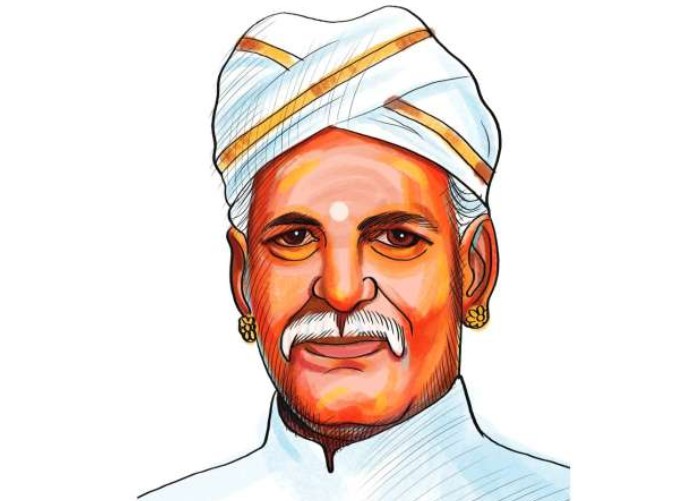
    [pib] Mahatma Ayyankali (1863–1941)

    Why in the News?

    On his Jayanti (August 28), PM paid tribute to Mahatma Ayyankali.

    About Mahatma Ayyankali:

    • Birth: August 28, 1863, in Venganoor, Travancore (present-day Thiruvananthapuram, Kerala).
    • Community: Belonged to the Pulayar caste, among the most oppressed and excluded groups.
    • Background: Faced severe caste discrimination despite family owning land; denied access to temples, schools, roads, and public spaces.
    • Legacy: Remembered as a Dalit leader of modern Kerala and a pioneer of social justice, education, and labour rights.

    Key Reforms and Contributions:

    • Caste Defiance: Famous Villuvandi Yatra (1893) – ox-cart ride on caste-restricted roads, triggering riots but also mass mobilization for Dalit rights.
    • Education Movement: Demanded access for Dalit children to public schools; Travancore government issued 1907 order allowing entry, implemented by 1910.
    • Sadhu Jana Paripalana Sangham (SJPS): Founded in 1907 to promote Dalit education, legal aid, and social upliftment; expanded into hundreds of branches.
    • Legislative Role: In 1910, became the first Dalit member of the Sree Moolam Popular Assembly (Travancore Legislative Council).
    • Labour Reforms: Fought for higher wages and dignity for agricultural labourers.
    • Social Reforms: Campaigned for Dalit women’s right to cover their upper bodies in public, a practice denied earlier.
    • Temple Entry Movement: Early campaigns from 1895 onwards contributed to the 1936 Temple Entry Proclamation, ending exclusion of Dalits from temples in Travancore.
    • Recognition: Admired by Mahatma Gandhi, who called him the “Pulaya King”. Indira Gandhi later hailed him as “India’s greatest son”.
    [UPSC 2025] Who among the following was the founder of the ‘Self-Respect Movement’?

    Options: (a) ‘Periyar’ E. V. Ramaswamy Naicker * (b) Dr. B. R. Ambedkar (c) Bhaskarrao Jadhav (d) Dinkarrao Javalkar


  • Festivals, Dances, Theatre, Literature, Art in News

    [pib] Nuakhai Festival

    Why in the News?

    PM extended wishes to the Odia-speaking communities on the occasion of Nuakhai.

    About Nuakhai Festival:

    • Meaning: Derived from “Nua” (new) and “Khai” (food); literally “new food”, marking the first consumption of freshly harvested rice.
    • Region: Celebrated mainly in Western Odisha and also observed in parts of Chhattisgarh and Jharkhand by Odia-speaking communities.
    • Significance: Agrarian thanksgiving to deities, ancestors, and the earth; symbol of prosperity, good harvest, and family unity.
    • Date: Observed on Bhadraba Sukla Panchami (5th day after Ganesh Chaturthi).
    • Historical Roots: Traces to Vedic rituals of first grain offerings (Pralambana yajna); formalized in the 14th century by Raja Ramai Deo of Patna State, Sambalpur.
    • Social Role: Strengthens community bonds; people greet with “Nuakhai Juhar”, reconcile disputes, and seek elders’ blessings.

    Festivities and Cultural Elements:

    • Preparations: Begin 15 days in advance; involve nine ritual steps (Navaranga) such as fixing the date, cleaning homes, harvesting grain, offering puja, and sharing food.
    • Ritual Practice: Family head or priest performs puja, offering the first grain to the local deity, followed by distribution within the family.
    • Cultural Celebrations: Sambalpuri folk dances like Rasarkeli, Dalkhai, Maelajada, Sajani; folk songs praising harvest and community spirit.
    [UPSC 2018] Consider the following pairs: Tradition | State

    1. Chapchar Kut festival — Mizoram

    2. Khongjom Parba ballad — Manipur

    3. Thong-To dance — Sikkim

    Which of the pairs given above is/are correct?

    Options: (a) 1 only (b) 1 and 2* (c) 3 only (d) 2 and 3


  • Climate Change Negotiations – UNFCCC, COP, Other Conventions and Protocols

    United Nations Conference on Environment and Development (UNCED)

    Why in the News?

    This year marks three decades since the landmark Earth Summit in Rio de Janeiro in 1992, which established the United Nations Framework Convention on Climate Change (UNFCCC).

    About United Nations Conference on Environment and Development (UNCED):

    • Event: Also called the Earth Summit, held in Rio de Janeiro, Brazil (June 3–14, 1992).
    • Participation: 178 countries, 117 heads of state, thousands of NGOs and civil society groups.
    • Objective: Reconcile economic growth with environmental protection, mainstreaming sustainable development globally.
    • Key Outcomes:
      • Rio Declaration (27 principles, including precautionary principle & Common but Differentiated Responsibilities (CBDR)).
      • Agenda 21 (non-binding action plan for sustainable development).
      • UNFCCC (binding treaty on climate change; later Kyoto Protocol, Paris Agreement).
      • Convention on Biological Diversity (CBD) (binding treaty on biodiversity).
      • Statement of Forest Principles (non-binding guidelines for sustainable forests).
      • Commission on Sustainable Development (CSD) created to monitor implementation.
    • Significance: Landmark in international environmental diplomacy, embedding sustainability in global policy and leading to follow-ups (Rio+10, Rio+20).

    India and UNCED:

    • Stance & Advocacy:
      • Strongly pushed for Common but Differentiated Responsibilities (CBDR); developed nations must bear greater responsibility due to historical emissions and resource use.
      • Emphasized poverty eradication and the right to economic growth for developing countries.
      • Called for financial support and technology transfer from developed countries to the Global South.
    • Commitments:
      • Signed & ratified all key Rio agreements: Rio Declaration, Agenda 21, UNFCCC, CBD.
    • Domestic Follow-up:
      • Integrated Agenda 21 principles into national policies (sustainable resource use, biodiversity protection, EIAs).
      • Strengthened environmental legislation under the Environment Protection Act (1986).
    • Role: Positioned itself as a voice of developing countries, balancing environment with development imperatives.
    [UPSC 2010] The United Nations Framework Convention on Climate Change (UNFCCC) is an international treaty drawn at-

    Options:

    (a) United Conference on the Human Environment, Stockholm, 1972

    (b) UN Conference on Environment and Development, Rio De Janerio, 1992 *

    (c) World Summit on Sustainable Development, Johannesburg, 2002

    (d) UN Climate Change Conference, Copenhagen, 2009


  • Primary and Secondary Education – RTE, Education Policy, SEQI, RMSA, Committee Reports, etc.

    UDISE+ Report, 2025

    Why in the News?

    The latest round of Unified District Information System for Education Plus (UDISE+) data was released by the Ministry of Education (MoE).

    About UDISE+

    • Launch: Introduced in 2018–19 as an upgraded version of UDISE (2012–13).
    • Purpose: Collects and monitors school-level data across India.
    • Coverage: Tracks enrolment, dropout rates, teachers, infrastructure, and gender indicators.
    • Design: Built to speed up data entry, reduce errors, improve verification, and enhance data quality.
    • Policy Role: Functions as a key tool for planning, monitoring, and implementing education reforms.
    • Scope: Covers schools at all levels – foundational, preparatory, middle, and secondary.

    Key Highlights of the UDISE+ 2025 Report:

    • Teachers: Number of teachers crossed 1 crore (1,01,22,420) in 2024–25, a 6.7% rise from 2022–23.
    • Pupil–Teacher Ratio (PTR): Improved to 10 (foundational), 13 (preparatory), 17 (middle), and 21 (secondary), well below NEP’s 1:30 recommendation.
    • Dropout Rates: Fell sharply to 2.3% (preparatory), 3.5% (middle), 8.2% (secondary) in 2024–25, compared to 8.7%, 8.1%, 13.8% respectively in 2022–23.
    • Retention Rates: Reached 98.9% (foundational), 92.4% (preparatory), 82.8% (middle), 47.2% (secondary).
    • Gross Enrolment Ratio (GER): Rose to 90.3% (middle) and 68.5% (secondary).
    • Transition Rates: Increased to 98.6% (foundational → preparatory), 92.2% (preparatory → middle), 86.6% (middle → secondary).
    • Zero-Enrolment & Single Teacher Schools: Single-teacher schools reduced to 1,04,125; zero-enrolment schools dropped to 7,993 (38% decline).
    • Infrastructure: 64.7% schools with computer access, 63.5% with internet, 93.6% with electricity, 99.3% with drinking water, 97.3% with girls’ toilets, 96.2% with boys’ toilets. 95.9% with handwashing, 83% with playgrounds, 89.5% with libraries, 54.9% with ramps/handrails, 29.4% with rainwater harvesting.
    • Gender Representation: Girls’ enrolment rose to 48.3%. Female teachers increased to 54.2% of the workforce.
    [UPSC 2018] Consider the following statements:

    1. As per the Right to Education (RTE) Act, to be eligible for appointment as a teacher in a State, a person would be required to possess the minimum qualification laid down by the concerned State Council of Teacher Education.

    2. As per the RTE Act, for teaching primary classes, a candidate is required to pass a Teacher Eligibility Test conducted in accordance with the National Council of Teacher Education guidelines.

    3. In India, more than 90% of teacher education institutions are directly under the State Governments

    Which of the statements given above is/are correct?

    Options: (a) 1 and 2 (b) 2 only * (c) 1 and 3 (d) 3 only


  • ISRO Missions and Discoveries

    Kulasekarapattinam Launch Complex

    Why in the News?

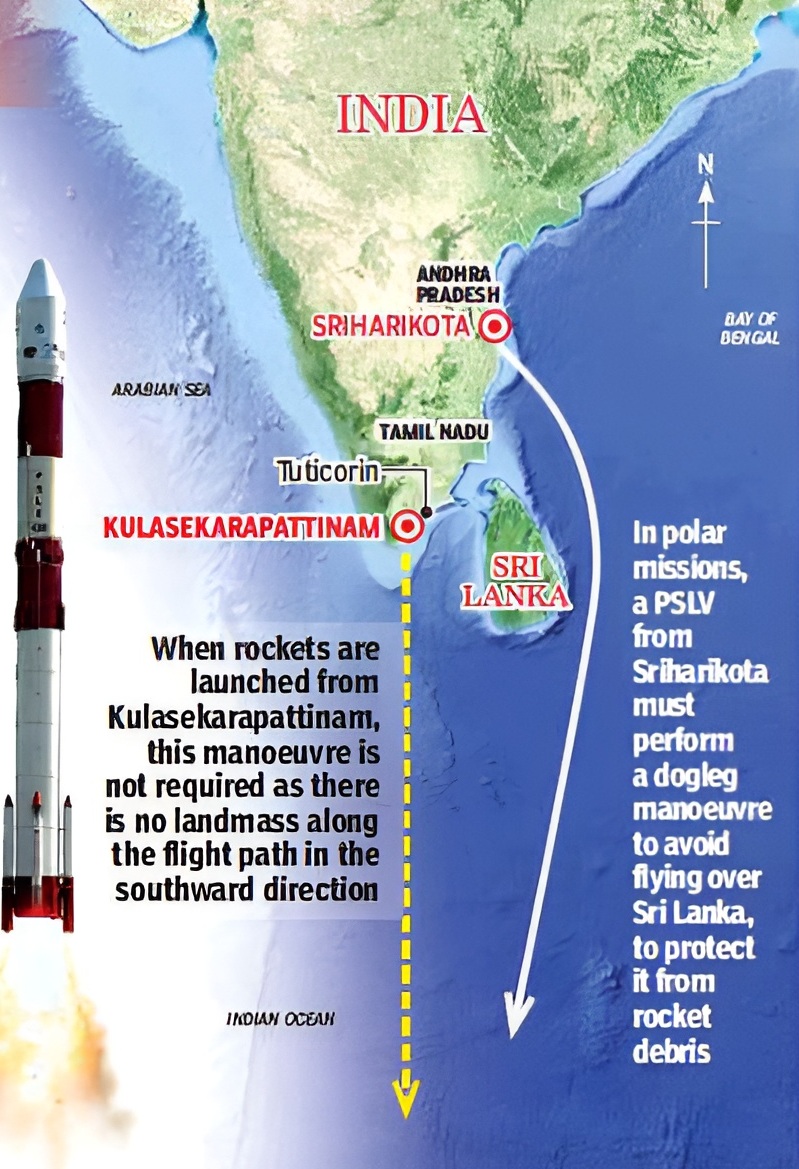
    ISRO Chairman V. Narayanan announced that the upcoming rocket launching site at Kulasekarapattinam (Tamil Nadu) will handle 20–25 satellite launches annually.

    Kulasekarapattinam Launch Complex

    About Kulasekarapattinam Spaceport:

    • Location: Coastal hamlet near Tiruchendur, Thoothukudi district, Tamil Nadu; inaugurated by PM in February 2024.
    • Second Spaceport: India’s second spaceport after Satish Dhawan Space Centre (Sriharikota, Andhra Pradesh, 1971).
    • Capacity: Can handle 20–25 launches annually, including 24 launches using a Mobile Launch Structure.
    • Focus: Dedicated to Small Satellite Launch Vehicles (SSLVs), with capacity to launch rockets up to 500 kg.
    • Facilities: About 35 facilities including launch pad, rocket integration units, ground range, checkout systems, and Mobile Launch Structure with onboard checkout computers.

    Advantages offered by Kulasekarapattinam Spaceport:

    • Direct Southward Launches: Location allows launches into the Indian Ocean without crossing landmasses; ensures more safety from debris fall.
    • No Dogleg Manoeuvre: Unlike Sriharikota, no detour is needed to avoid Sri Lanka, saving fuel.
    • Efficient Trajectory: Improves efficiency for satellites in Sun-Synchronous Polar Orbits (SSPOs).
    • Payload Advantage: SSLVs from Kulasekarapattinam can place ~300 kg into SSPO, higher than from Sriharikota.
    • Decongestion: Reduces pressure on Sriharikota, which will focus on larger PSLV, GSLV, and Gaganyaan launches.
    • Commercial Boost: Strengthens India’s role in the global small-satellite launch market, enhancing space economy.
    • Strategic Advantage: Near-equator position provides benefits for certain orbital paths.
    [UPSC 2008] ISRO successfully conducted a rocket test using cryogenic engines in the year 2007. Where is the test-stand used for the purpose, located?

    Options: (a) Balasore (b) Thiruvananthapuram (c) Mahendragiri* (d) Karwar


  • Primary and Secondary Education – RTE, Education Policy, SEQI, RMSA, Committee Reports, etc.

    [28th August 2025] The Hindu Op-ed: Play Based Learning for India’s Future

    PYQ Linkage

    [UPSC 2016] Examine the main provisions of the National Child Policy and throw light on the status of its implementation.

    Linkage: The National Child Policy envisions ensuring survival, development, protection, and participation of every child. Initiatives like Poshan Bhi Padhai Bhi, Aadharshila, and Navchetna operationalise this by transforming Anganwadis into learning hubs and focusing on early stimulation. This reflects concrete implementation of policy goals through structured ECCE and parental involvement.

    Mentor’s Comment

    India’s vision of Viksit Bharat depends on nurturing its youngest citizens. By placing Early Childhood Care and Education (ECCE) at the core of policy, Anganwadi centres are being reimagined as the first classrooms, not just nutrition hubs. This editorial highlights the significance of play-based learning, the reforms underway, and their impact on social, economic, and human capital development.

    Introduction

    Nation-building begins where learning begins, in Anganwadis and playschools where children first explore and imagine. Since 85% of brain development occurs before six, India has prioritised structured, play-based learning. Initiatives like the National Education Policy (NEP) 2020, Poshan Bhi Padhai Bhi, Aadharshila curriculum, and Navchetna framework mark a decisive shift: education is no longer seen as starting at school, but from birth itself.

    Why in the News?

    Play-based learning has become a national policy priority under the present government. Anganwadi workers are being trained in ECCE, and centres are evolving into early learning hubs. This marks a historic policy turn, shifting focus from higher education to the earliest years of life, where investments yield the highest returns. Evidence shows ECCE can raise IQ levels by up to 19 points and deliver 13–18% returns (Heckman), making it one of the most impactful reforms in recent times.

    Reimagining Anganwadis as Learning Hubs

    1. Anganwadis as First Schools: Transition from nutrition centres to vibrant learning hubs.
    2. Poshan Bhi Padhai Bhi: A flagship initiative introducing structured ECCE and play-based learning.
    3. Training of Workers: First-ever systematic training of Anganwadi workers in ECCE methods.
    4. Budgetary Support: Enhanced allocations for teaching-learning materials.
    5. Community Trust: Parents now view Anganwadis as the foundation of their child’s education.

    Scientific Evidence Supporting ECCE

    1. Brain Development: NEP 2020 highlights 85% of brain growth occurs before six years.
    2. CMC Vellore Study: Children exposed to 18–24 months of ECCE gained up to 19 IQ points by age five, and 5–9 points by age nine.
    3. Global Research: Nobel Laureate James Heckman shows 13–18% returns on early childhood investments.

    Ensuring Holistic Development in Early Childhood

    1. Aadharshila Curriculum: National ECCE framework for children aged 3–6 years.
    2. 5+1 Weekly Plan: Balance of free play, structured learning, creativity, motor skills, social interaction, and values.
    3. Focus Beyond Cognitive Skills: Emotional, social, and physical development equally emphasised.
    4. Outdoor Play & Emotional Bonds: Ensuring resilience, socialisation, and value-building.

    Birth-to-Three: The Neglected but Crucial Stage

    1. Navchetna Framework: National framework for Early Childhood Stimulation.
    2. Parental Involvement: Empowering caregivers with play-based activities at home.
    3. Equity Focus: State as equaliser for low-income families lacking resources.

    Play-Based Learning as a Tool for Nation-Building

    1. Human Capital Formation: Better prepared children ensure stronger productivity.
    2. Social Inclusion: ECCE bridges gaps between privileged and underprivileged children.
    3. Nation’s Future: Early learning reduces dropout rates and improves long-term educational outcomes.

    Conclusion

    If India is to realise its vision of Viksit Bharat @2047, it must begin where life begins. By making play a policy, and not merely leisure, India is reshaping its future workforce and citizens. Anganwadis as learning hubs, structured ECCE, and parental engagement are steps that will yield dividends not just in GDP growth, but in nurturing empathetic, curious, and resilient human beings. Play is no longer child’s play, it is nation-building.

    Value Addition

    Anganwadis

    • Scale and Reach: Over 13.9 lakh Anganwadi Centres (AWCs) functioning under the Integrated Child Development Services (ICDS), covering nearly every village/urban ward.
    • Holistic Role: Provide nutrition, health check-ups, immunisation, pre-school non-formal education, and referral services — making them the convergence point for child and maternal welfare.
    • Policy Integration: Central to schemes like Poshan Abhiyaan, Poshan Bhi Padhai Bhi, and the Saksham Anganwadi & Poshan 2.0.
    • Early Childhood Development: With Aadharshila curriculum and Navchetna framework, AWCs are being repositioned as first schools ensuring ECCE and holistic growth.
    • Empowerment of Women: Run largely by women workers (anganwadi sevikas), providing local employment, social recognition, and female leadership at the grassroots.
    • Challenges: Issues of infrastructure gaps, irregular honorarium, workload burden, training deficits, and low community awareness remain barriers.
    • Global Alignment: Echoes UNICEF and UNESCO emphasis on early childhood care as foundational to human capital and demographic dividend.
  • Promoting Science and Technology – Missions,Policies & Schemes

    With Sci-Hub gone, will the ‘One Nation, One Subscription’ scheme step up?

    Introduction

    The blocking of Sci-Hub in India marks a turning point in the battle between corporate publishers and the principle of open knowledge. At the heart of the issue lies the paradox of publicly funded research locked behind exorbitant paywalls. The government’s One Nation One Subscription (ONOS) scheme, with an allocation of ₹6,000 crore, aims to democratize access to 13,000 journals for research institutions. Yet, concerns remain about its cost-effectiveness, inclusivity, and long-term sustainability.

    Why is this issue in the news?

    • The Delhi High Court’s verdict against Sci-Hub is a landmark moment because:
    • For the first time in India, the judiciary has formally sided with publishers in the long-drawn copyright battle.
    • It stands in sharp contrast with the reality that research is funded by public money but monetized by private publishers with 30%+ profit margins.
    • The problem is enormous: lakhs of rupees per journal subscription make access unaffordable for many institutions, forcing dependence on Sci-Hub earlier.
    • The government’s ONOS initiative is the first large-scale attempt to address structural inequities in knowledge access, but doubts persist about its ability to replace shadow libraries.

    The Distinctive Nature of Scientific Publishing

    1. No royalties for authors: Researchers and peer reviewers are unpaid, unlike musicians or filmmakers.
    2. Publicly funded research: Much of Indian science is taxpayer-funded, yet access is privatized.
    3. Exorbitant subscriptions: Institutions pay lakhs for a single journal. Publishers justify costs via “quality control” but enjoy 30%+ profit margins, raising concerns of rent-seeking.

    The Global Controversy Around Sci-Hub

    1. Copyright infringement: Courts in the U.S., Europe, and now India have ruled against Sci-Hub.
    2. Essential access tool: For countless researchers, Sci-Hub was the only means to access knowledge, especially outside elite universities.
    3. Contempt charges: Alexandra Elbakyan allegedly violated court orders by running Sci-Net, a mirror service.
    4. Declining relevance: Technical unreliability and growing open-access alternatives are reducing its utility.

    The Vision of One Nation, One Subscription

    1. Government-led subscription: Outlay of ₹6,000 crore (2023–2026) for bulk access to 13,000 journals.
    2. Phase I focus: All public institutions; Phase II may include private ones.
    3. Equal access: Seeks to eliminate inequities between elite and smaller research centres.
    4. Limitations: Independent researchers and those at private centres remain excluded until Phase II.

    ONOS in the Context of Global Open-Access Movements

    1. Global open-access movement: Over half of papers are already open access through preprints and repositories.
    2. U.S. policy (2026): All federally funded research must be open.
    3. EU Horizon Europe: Similar open-access mandate.
    4. India’s challenge: At a time when the world moves toward open access, ONOS risks becoming an expensive detour.

    Structural Flaws in Scholarly Publishing

    1. Dependence on foreign publishers: ONOS continues India’s reliance on Western journals.
    2. Copyright transfer: Indian researchers must still give away rights to their work.
    3. Pay-to-publish dilemma: Funds freed at institutions may shift to open-access journals, but may ignore institutional repositories.
    4. Need for rights retention: Policies like Harvard/MIT (mandatory deposit in repositories) could empower Indian researchers.

    Conclusion

    The Sci-Hub ban highlights the persistent inequities in access to scientific knowledge. While ONOS is a step forward, it risks being a band-aid solution unless paired with deeper reforms: indigenous publishing capacity, national repositories, and copyright retention policies. India must not merely manage the symptoms of an exploitative system but must cure the disease by reclaiming knowledge as a public good.

    Value Addition

    Knowledge as a Public Good

    • Publicly funded research must be accessible to all because it is financed by taxpayers.
    • Blocking access (through high subscription fees or court orders) creates an elitist knowledge economy.
    • UN and UNESCO treat knowledge access as a pillar of Sustainable Development Goals (SDG 4: Quality Education, SDG 9: Innovation).

    Economic Dimension

    • Global publishers enjoy 30%+ profit margins, while Indian institutions pay lakhs per journal subscription, draining public funds.
    • ONOS at ₹6,000 crore (2023–2026) represents bulk negotiation power by the state, saving scattered institutional expenditure.
    • Issue of dependency on foreign publishers persists, highlighting the need for indigenous publishing ecosystems.

    Global Comparisons

    • U.S. (2026 mandate): All federally funded research must be openly accessible.
    • EU’s Horizon Europe: Immediate open access to publications funded under the programme.
    • Plan S (Europe, 2018): Publicly funded research must be published in open-access journals.
    • India risks being out of sync if it over-invests in subscriptions while others move to free access models.

    Technology and Governance

    • ONOS = India’s experiment in e-governance for knowledge.
    • Needs to integrate institutional repositories, preprint servers, and rights retention policies (like Harvard/MIT) to empower researchers.
    • Can be linked with the Digital India mission, showing tech-driven democratization of services.

    Ethical Dimension

    • Applied Ethics of Technology: Corporate profits vs. collective social welfare.
    • Moral dilemma: Should intellectual property rights override public access to life-saving or path-breaking research?
    • Covid-19 demonstrated that open-access collaboration saved lives by accelerating vaccine and drug development.

    PYQ Relevance

    [UPSC 2024] ‘’What is the present world scenario of Intellectual Property Rights? Although India is second in the world to file patents, still only a few have been commercialized. Explain the reasons behind this less commercialization.”

    Linkage: The Sci-Hub ban and ONOS scheme reflect how IPR in scientific publishing creates barriers to access despite research being publicly funded. Globally, publishers extract high profits through restrictive copyright, mirroring the broader challenge of IPR becoming a tool of rent-seeking rather than innovation. India’s weak indigenous publishing ecosystem and overdependence on foreign journals parallel the problem of low commercialization of patents—both highlight the gap between innovation output and practical accessibility/utility.

  • Addiction, Not Play

    Introduction

    Online real-money gaming is no longer an innocent form of entertainment. With mechanics borrowed from gambling, variable rewards, high engagement loops, and rapid gratification, these games are engineered to create dependency. For India’s youth, this shift has manifested in addiction, financial losses, academic decline, and severe mental health crises. The government’s ban may seem like a safeguard, but the issue is deeper: India’s children deserve not just a firewall, but also psychological care, awareness, and structured support.

    Online Gaming Addiction as a Pressing Concern

    1. Gambling-like mechanisms: Real-money games mirror casino psychology, using reward loops to sustain engagement.
    2. Rising cases of harm: Children have drained family bank accounts, hidden debts, and even attempted suicide due to gaming stress.
    3. Mental health crisis: Anxiety, depression, and suicidal ideation among adolescents point to an urgent public health issue.

    The Fallout of Gaming Addiction on Families

    1. Toxic home environments: Addiction leads to secrecy, conflict, and breakdown of trust.
    2. Academic decline: Falling grades and inability to concentrate fuel further parental distress.
    3. Financial stress: Unexpected credit card bills or loans worsen family relations.

    The Limits of Gaming Bans

    1. Immediate relief: Bans reduce household conflicts and financial shocks.
    2. Partial bans & age-gating: Allowing adults while protecting minors can delay addiction onset.
    3. Psychological displacement: Without therapy, children may shift to pornography, substance abuse, or compulsive social media use.

    Towards a Comprehensive Strategy Against Gaming Addiction

    1. School-based interventions: Routine mental health screenings and workshops on digital addiction.
    2. Parental guidance: Training parents to spot early warning signs and encourage healthy digital habits.
    3. Child-friendly counselling: Access to therapy services designed for adolescents.
    4. Awareness campaigns: Multi-stakeholder efforts targeting students, caregivers, and teachers.

    Gaming Addiction as a Behavioural Health Challenge

    1. Beyond discipline: Punishment or restriction alone worsens secrecy and aggression.
    2. Long-term healing: A behavioural approach can repair family rifts and promote healthy tech use.
    3. Balanced future: Children should grow up with resilience, not dependency, in digital spaces.

    Way Forward: Towards a Balanced Approach

    1. Public Health Lens: Treat gaming addiction as a behavioural health issue with school screenings, awareness drives, and accessible counselling.
    2. Smart Regulation: Use age-gating, spending caps, and parental consent instead of blanket bans.
    3. Global Lessons:
      • China: Strict weekly limits → relief but drove youth to unregulated platforms.
      • UK/EU: Regulate loot boxes as gambling → targeted, flexible control.
      • South Korea: Late-night gaming ban + rehab centres → balance of restriction and support.
    4. India’s Path: A middle way combining safeguards with education and digital literacy, avoiding both overregulation and laissez-faire neglect.

    Conclusion

    India’s youth deserve more than prohibitionist measures. A firewall can block access, but not heal emotional wounds. True protection lies in combining thoughtful regulation with robust mental health programmes, counselling, and awareness. Only then can families find balance and children grow with a healthier relationship to technology.

    PYQ Relevance

    [UPSC 2023] “Child cuddling is now being replaced by mobile phones. Discuss its impact on the socialization of children.”

    Linkage: Online real-money gaming, like mobile phones, is replacing natural child–parent interaction with addictive digital engagement. This weakens socialization, fuels secrecy and conflict within families, and erodes trust. Both highlight how technology-driven dependence disrupts healthy emotional development in children.

  • Indian Army Updates

    [pib] Exercise ‘BRIGHT STAR 2025’

    Why in the News?

    India is set to participate with over 700 personnel from tri-services for 19th edition of Exercise Bright Star 2025 in Egypt.

    About Exercise Bright Star:

    • Origin: Began in 1980 as a US–Egypt bilateral drill after the Egypt–Israel peace treaty.
    • Nature: Now one of the largest and longest-running multinational tri-service military exercises in the Middle East.
    • Frequency: Held biennially in Egypt with the United States as the principal partner.
    • Objectives:
      • Enhance regional security and stability.
      • Improve jointness, interoperability, and operational coordination among partner nations.

    Key Highlights of the 2025 Edition:

    • Scale: Approximate 7,900 troops from 43 nations.
      • 13 countries directly deploying troops.
      • 30 countries participating as observers.
    • Strategic Significance:
      • Builds defence cooperation between India, Egypt, US, and partner nations.
      • Important amid West Asia, Red Sea, and Gulf security challenges.
    [UPSC 2024] Which of the following statements about ‘Exercise Mitra Shakti-2023’ are correct?

    1. This was a joint military exercise between India and Bangladesh.

    2. It commenced in Aundh (Pune).

    3. Joint response during counter-terrorism operations was a goal of this operation.

    4. Indian Air Force was a part of this exercise.

    Select the answer using the code given below:

    Options: (a) 1, 2 and 3 (b) 1 and 4 (c) 1 and 4 (d) 2, 3 and 4*


  • Climate Change Impact on India and World – International Reports, Key Observations, etc.

    Gangotri Glacier System (GGS) shrinks 10% in 4 decades

    Why in the News?

    A recent IIT Indore study shows that climate change has caused a 10% shrinkage in the Gangotri Glacier System over four decades, altering snowmelt and hydrology.

    Gangotri Glacier System (GGS) shrinks 10% in 4 decades

    About Gangotri Glacier System (GGS):

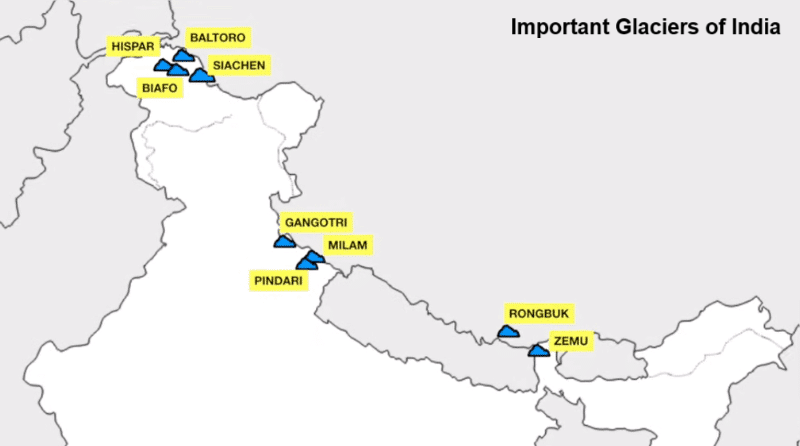
    • Location: Uttarkashi District, Uttarakhand, in the Central Garhwal Himalayas.
    • Origin: Near the Chaukhamba massif at ~7,000 metres above sea level.
    • Size: Main trunk 30–32 km long, 2–4 km wide, with a total glacierized area of ~252 sq. km.
    • Snout: Known as Gaumukh (“cow’s mouth”), source of the Bhagirathi River, which later merges with the Alaknanda at Devprayag to form the Ganga.
    • Tributaries: Includes Chaturangi, Raktavarn, Meru, Rudugaira, Kedar, and Vasuki glaciers.
    • Type: Valley-type glacier with granite, gneiss, and schist bedrock.
    • Features: Moraines, supraglacial lakes, crevasses, and avalanche fans.
    • Debris Cover: 20–24% of the glacier area is debris-covered, affecting melting rates.

    Key Findings of the IIT Indore Study (1980–2020):

    • Flow Contribution: Snowmelt 64%, glacier melt 21%, rainfall-runoff 11%, base flow 4%.
    • Decline in Snowmelt Share: From 73% in 1980–90 to 63% in 2010–20, reflecting climate change impact.
    • Temperature Rise: Mean annual temperature increased by 0.5°C in 2001–2020 compared to 1980–2000.
    • Shift in Peak Discharge: From August to July since the 1990s due to earlier melting and reduced winter precipitation.
    • Snowmelt Rebound: During 2010–2020, colder winters (–2°C) and higher winter precipitation (262 mm) increased snow accumulation.
    [UPSC 2019] Consider the following pairs:

    Glacier: River

    1. Bandarpunch -Yamuna

    2. Bara Shigri -Chenab

    3. Milam -Mandakini

    4. Siachen -Nubra

    5. Zemu -Manas

    Which of the pairs given above are correctly matched?

    Options: (a) 1, 2 and 4* (b) 1, 3 and 4 (c) 2 and 5 (d) 3 and 5


Join the Community

Join us across Social Media platforms.