💥UPSC 2027,2028 Mentorship (April Batch) + Access XFactor Notes & Microthemes PDF

Archives: News

  • International Space Agencies – Missions and Discoveries

    SpaceX’s Starship completes critical test flight

    Why in the News?

    SpaceX’s Starship has completed its first fully successful test flight after a series of failures.

    SpaceX’s Starship completes critical test flight

    About SpaceX Starship:

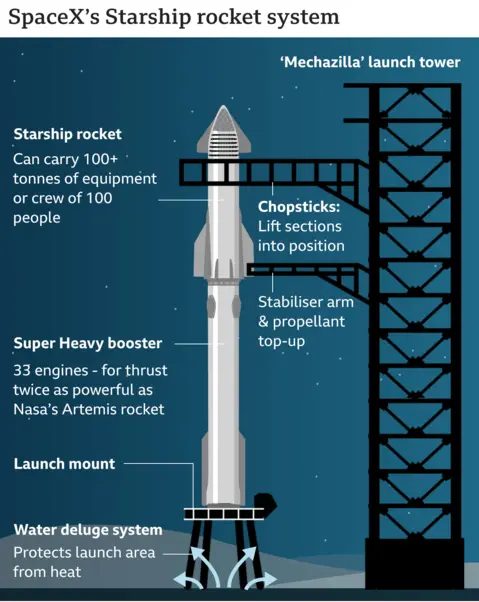
    • Design: A two-stage heavy-lift launch vehicle built to carry crew and cargo to Earth orbit, the Moon, Mars, and beyond.
    • Developer: SpaceX, founded by Elon Musk, with the vision of enabling interplanetary travel and colonisation.
    • Size: Nearly 120 metres tall with booster, making it the largest rocket ever built and flown. Taller than Saturn V (111 m) and India’s Qutub Minar (72.5 m).
    • Historic Test Flight: On 27 August 2025, achieved its first fully successful flight. Booster splashed down in the Gulf of Mexico, spacecraft reached the Indian Ocean.
    • Role in NASA Missions: Critical to Artemis Program for returning humans to the Moon and later missions to Mars.
    • Long-term Goal: Make Starship fully and rapidly reusable, cutting costs and redefining space travel.

    Key Features of Starship:

    • Two-Stage Rocket System:
      • Super Heavy booster powered by 33 Raptor engines generating 74 meganewtons of thrust, nearly double NASA’s SLS and twice Saturn V.
      • Engines burn liquid oxygen and methane, enabling deep-space use and Mars resource utilisation.
      • Booster fully reusable, capable of atmospheric re-entry and recovery.
      • Six Raptor engines and four landing fins, designed for full reusability on long-duration missions.
    • Payload Capacity: Can carry up to 150 tonnes to Low-Earth Orbit and over 100 tonnes to the Moon and Mars, more than all soft-landed lunar payloads combined.
    • Cost Reduction Potential: Estimated to deliver 100 tonnes of cargo to Mars for ~$50 million, compared to NASA Shuttle’s $1.5 billion per launch with far less payload.
    [UPSC 2025] Consider the following space missions:

    I. Axiom-4 II. SpaDeX III. Gaganyaan

    How many of the space missions given above encourage and support microgravity research?

    Options: (a) Only one (b) Only two (c) All the three* (d) None


  • Promoting Science and Technology – Missions,Policies & Schemes

    Samudrayaan Mission

    Why in the News?

    Two Indian aquanauts dived over 5,000 m in the Atlantic aboard French vessel Nautile, as part of India’s Samudrayaan Mission.

    What is Deep Ocean Mission (DOM)?

    • Approved: 2021 by the Union Cabinet, with a budget of ₹4,077 crore for 5 years.
    • Aim: Explore, conserve, and sustainably use deep-ocean resources to support India’s Blue Economy.
    • Six Components:
      • Develop technologies for deep-sea mining, submersibles, and robotics.
      • Ocean climate change advisory service with observations + predictive models.
      • Deep-sea biodiversity exploration and conservation.
      • Surveys for polymetallic nodules and minerals.
      • Energy & freshwater extraction technologies from oceans.
      • Advanced Marine Station for ocean biology & engineering → to bridge research & industry.

    About Samudrayaan Mission:

    • Nature: India’s first crewed deep-sea exploration mission.
    • Objective: To send 3 humans up to 6,000 m depth into the central Indian Ocean by 2027.
    • Vehicle: Crewed submersible Matsya-6000 (fish-shaped, 2.1 m personal sphere).
      • Capacity: 3 aquanauts.
      • Endurance: 12 hours normal + 96 hours emergency life support.
      • Material: Titanium alloy sphere (80 mm thickness) to withstand ~600x atmospheric pressure.
    • Coordinating Agency: National Institute of Ocean Technology (NIOT), Ministry of Earth Sciences.
    • Strategic Significance: Will place India among a select group of countries (US, Russia, China, Japan, France) with human deep-sea exploration capability.

    Progress made so far:

    • Aquanaut Training: Discussed above.
    • Matsya-6000 Development:
      • Successfully wet tested in Feb 2025.
      • Titanium alloy sphere fabrication ongoing at ISRO using electron beam welding.
      • Initial steel test sphere used for 500 m trials.
    • Technology Development:
      • Indigenous acoustic telephone built for underwater communication (works in open ocean after initial failures).
      • Life-support systems designed to maintain 20% oxygen and scrub CO₂.
    • Next Steps:
      • Human test dive at 500 m depth planned before full 6,000 m mission.
      • Full Samudrayaan launch targeted by 2027.
    [UPSC 2021] Consider the following statements:

    1.The Global Ocean Commission grants licenses for seabed exploration and mining in international waters.

    2.India has received licenses for seabed mineral exploration in international waters.

    3. ‘Rare earth minerals’ are present on the seafloor in international waters.

    Which of the statements given above are correct?

    Options:(a) 1 and 2 only (b) 2 and 3 only* (c) 1 and 3 only (d) 1, 2, and 3


  • Urban Floods

    Rivers, Dams, and Headworks of Punjab

    Why in the news?

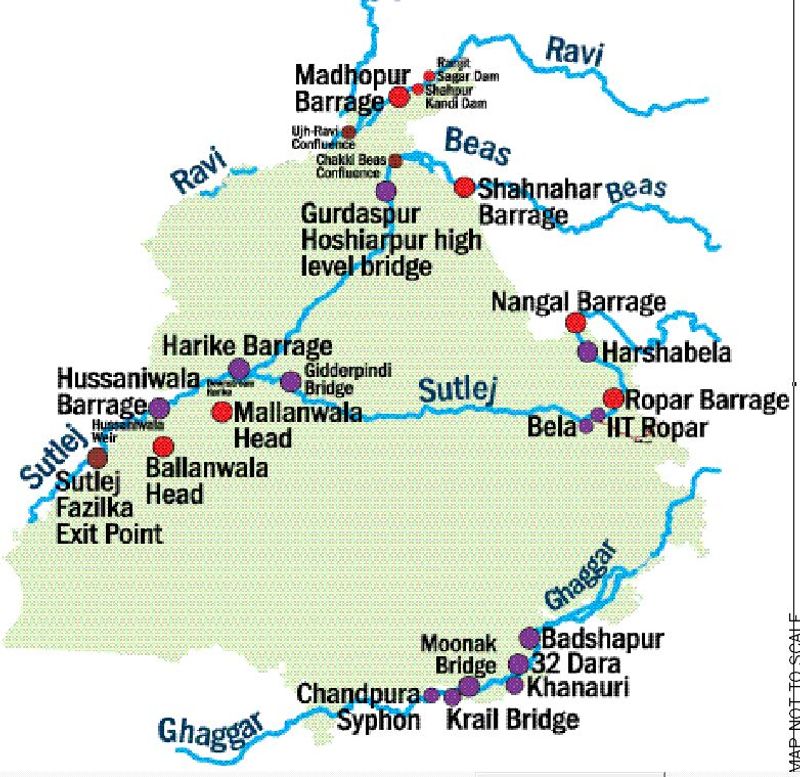
    Floods hit Punjab villages due to heavy rain in Himachal, high dam discharges (Bhakra, Pong, Ranjit Sagar), and regulated headworks flow.

    Rivers, Dams, and Headworks of Punjab

    About the Rivers, Dams, and Headworks of Punjab:

    River Origin & Entry into Punjab Major Dam (Location & Key Facts) Headworks & Functions
    Sutlej Origin: Rakshastal Lake (Tibet); enters India at Shipki La (HP); enters Punjab at Rupnagar; joins Beas at Harike, then Chenab in Pakistan. Bhakra Dam (near Nangal, HP–Punjab border).

    One of India’s highest gravity dams; reservoir = Gobind Sagar Lake; irrigation + hydropower.

    Ropar: Feeds Sirhind & BML canals (Punjab + Haryana).

    Harike: Diverts Sutlej–Beas water to Rajasthan & Punjab canals.

    Hussainiwala: Feeds Bikaner & Eastern Canals (Punjab + Rajasthan).

    Beas Origin: Beas Kund (Rohtang Pass, HP); enters Punjab near Mukerian (Hoshiarpur); flows via Hoshiarpur, Gurdaspur, Tarn Taran, Amritsar. Pong Dam (Maharana Pratap Sagar), HP (Kangra).

    Major irrigation + power dam; supplies Harike.

    Harike: Regulates Beas + Sutlej water; feeds Rajasthan & Punjab canals.
    Ravi Origin: Bara Banghal (Rohtang Pass, HP); enters Punjab near Pathankot; flows via Pathankot, Gurdaspur;

    Enters Pakistan and joins Chenab.

    Ranjit Sagar Dam (Thein Dam), Pathankot (Punjab–J&K border). Irrigation + hydropower. Madhopur: Feeds UBDC canal (Punjab).

    Madhopur–Beas Link: Transfers surplus Ravi to Beas before Pakistan.


    [UPSC 2021] With reference to the Indus river system, among the following four rivers, one of them joins the Indus directly:

    Options: (a) Chenab (b) Jhelum (c) Ravi (d) Sutlej*


  • Microfinance Story of India

    PM SVANidhi Scheme extended until 2030

    Why in the News?

    The Union Cabinet has approved the restructuring and extension of the Prime Minister Street Vendor’s Atmanirbhar Nidhi (PM SVANidhi) scheme.

    About PM SVANidhi Scheme:

    • Launch: June 1, 2020, as Central Sector Scheme fully funded by the Ministry of Housing and Urban Affairs (MoHUA).
    • Purpose: To provide affordable credit to street vendors hit hard by the Covid-19 pandemic and help them restart/expand their businesses.
    • Target Group: Urban street vendors in statutory towns and peri-urban/rural areas.
    • Extension: Restructured and extended up to March 31, 2030.
    • Beneficiaries: 1.15 crore vendors, including 50 lakh new ones.

    Key Features:

    • Collateral-free Loans (incremental):
      • 1st tranche: ₹15,000 (earlier ₹10,000).
      • 2nd tranche: ₹25,000 (earlier ₹20,000).
      • 3rd tranche: ₹50,000.
    • Digital Empowerment:
      • Timely 2nd loan repayment → eligibility for UPI-linked RuPay Credit Card (for emergent business/personal needs).
      • Digital cashback incentives up to ₹1,600 on retail & wholesale transactions.
    • Capacity Building:
      • Training in entrepreneurship, financial literacy, digital skills, and marketing.
      • Food safety & hygiene training for street food vendors (with FSSAI partnership).
    • Implementation:
      • Jointly by MoHUA & Department of Financial Services (DFS).
      • DFS facilitates loans & credit cards through banks/financial institutions.
    • Wider Goals:
      • Promote financial inclusion & digital adoption.
      • Enable vendors’ business expansion & sustainable growth.
      • Contribute to inclusive urban economic development.
    [UPSC 2011] Microfinance is the provision of financial services to people of low-income groups. This includes both the consumers and the self-employed. The service/services rendered under microfinance is/are:

    1. Credit facilities 2. Savings facilities 3. Insurance facilities 4. Fund Transfer facilities

    Options: (a) 1 only (b) 1 and 4 only (c) 2 and 3 only (d) 1, 2, 3 and 4*


  • Labour, Jobs and Employment – Harmonization of labour laws, gender gap, unemployment, etc.

    [27th August 2025] The gender angle to India’s economic vulnerabilities

    PYQ Relevance

    [UPSC 2021] Examine the role of ‘Gig Economy’ in the process of empowerment of women in India.

    Linkage: The article highlights that India’s economic vulnerabilities are aggravated by its failure to integrate women into the workforce. While traditional women-dominated export sectors face instability due to tariff shocks, the gig economy offers a new pathway for empowerment. Platforms like Urban Company demonstrate how women can earn sustainable incomes (₹18,000–25,000/month) with safety, insurance, and skill development. Thus, the gig economy is not just an employment option but a structural enabler of women’s empowerment, mobility, and autonomy. However, as the article stresses, formalisation of gig work, targeted policy support, and social protections are vital to make this empowerment sustainable.

    Mentor’s Comment

    India’s economic rise is undeniable, valued at $4.19 trillion, it is poised to be the world’s third-largest economy. Yet, the proposed 50% U.S. tariffs on Indian exports highlight an uncomfortable truth: India’s growth story is fragile because it has failed to empower half its population. This article unpacks how gender imbalance in labour markets is no longer a social concern but an economic vulnerability.

    Introduction

    India’s ascent as a global economic power is being tested by external shocks such as U.S. tariff hikes targeting $40 billion worth of Indian exports. Unlike China, which diversified and scaled its manufacturing, India’s labour-intensive sectors, textiles, gems, leather, footwear, remain exposed. These are precisely the industries that disproportionately employ women. The looming disruption reveals a deeper structural weakness: India’s persistently low female labour force participation rate (FLFPR). What was once viewed as a social development challenge is now a core economic liability threatening the sustainability of India’s demographic dividend.

    The U.S. tariff shock and its economic implications

    1. Targeted exports: U.S. tariffs at 50% could shave off nearly 1% from India’s GDP, directly hitting sectors employing 50 million workers, many of them women.
    2. Comparative disadvantage: India could face a 30–35% cost disadvantage against competitors like Vietnam.
    3. Dependency: The U.S. absorbs 18% of India’s exports, exposing India’s lack of diversification.
    4. Employment vulnerability: An export decline of up to 50% could destabilise women-dominated industries.

    Women’s participation as India’s strategic liability

    1. Persistently low FLFPR: Stuck at 37–41.7%, far below China’s 60% and the global average.
    2. Lost GDP potential: IMF estimates closing the gender gap could boost India’s GDP by 27%.
    3. Cultural and systemic barriers: Patriarchal norms, unpaid care work, safety issues, poor public transport, and sanitation gaps keep women away from education and jobs.
    4. Urban stagnation: Urban female labour participation shows little improvement despite rising education levels.

    The ticking clock of India’s demographic dividend

    1. Demographic window: India’s working-age population outnumbers dependents, but this will close by 2045.
    2. Historical lessons: China, Japan, and the U.S. capitalised on their demographic peak to fuel growth; Southern Europe failed due to low female participation, resulting in stagnation.
    3. Risk of lost opportunity: Without women’s integration, India risks a slowdown before fully realising its demographic advantage.

    Lessons from global experiences in women’s empowerment

    1. U.S. during WWII: Women’s labour mobilised with equal pay and childcare.
    2. China’s post-1978 reforms: FLFPR at 60%, backed by state-supported childcare and education.
    3. Japan’s reforms: FLFPR rose from 63% to 70%, boosting GDP per capita by 4%.
    4. Netherlands model: Flexible part-time work with full benefits, relevant for India’s context.
    5. Common thread: Institutional investments in legal protections, skills, and care infrastructure.

    Emerging solutions and policy innovations within India

    1. Karnataka’s Shakti Scheme: Free bus travel boosted female ridership by 40%, improving access to jobs, education, and autonomy.
    2. Targeted fiscal policies: Tax incentives for female entrepreneurs, digital inclusion drives, and gender-skilling programmes.
    3. Gig economy empowerment: Urban Company employs 15,000+ women, offering ₹18,000–25,000/month along with maternity benefits and insurance.
    4. Public schemes: Rajasthan’s Indira Gandhi Urban Employment Guarantee Scheme generated 4 crore person-days of work, with 65% jobs for women, enabling many to work for the first time.

    Conclusion

    The U.S. tariff threat is a wake-up call, India’s economic fragility lies not just in external shocks but in internal neglect of women’s potential. Empowering women is no longer a matter of social justice but a strategic necessity for sustaining growth, harnessing the demographic dividend, and achieving global competitiveness. The choice is stark: invest in women and rise as a resilient power, or ignore them and remain vulnerable to shocks and stagnation.

  • Cooperatives at crossroads

    Introduction

    The National Cooperative Policy, 2025 has triggered a sharp Centre–State tussle, with Kerala at the forefront of resistance. Beyond a policy dispute, it reflects deeper tensions around cooperative federalism, involving constitutional authority, political stakes, and nearly ₹3 lakh crore in deposits, making the issue both high-stakes and nationally significant.

    The Current Tussle between Centre and Kerala

    1. Policy provokes backlash: Kerala describes the National Cooperative Policy as “unconstitutional”, asserting that it violates the State’s exclusive authority over cooperatives.
    2. Political dimension: The Left Democratic Front (LDF) government accuses the BJP of attempting to capture Kerala’s cooperative network for political consolidation.
    3. Financial stakes: Kerala’s cooperatives manage deposits worth ₹2.94 lakh crore, making them critical financial entities in the State’s economy.

    The Contentious Nature of the National Cooperative Policy

    1. Federalism at stake: Cooperative societies are a State List subject, yet the Centre is asserting influence, reviving concerns first raised during the Multi-State Cooperative Societies (Amendment) Act, 2023.
    2. Kerala’s historical legacy: Cooperative institutions date back to early 20th century Travancore, Cochin, and Malabar, and evolved through the Kerala Cooperative Societies Act, 1969, making them central to socio-economic life.
    3. Grassroots importance: Primary Agricultural Cooperative Societies (PACS) serve as the credit backbone of Kerala’s rural economy.

    Kerala’s Political and Institutional Response

    1. Political opposition: State Cooperation Minister V.N. Vasavan termed the policy “harmful to cooperatives.”
    2. Organised resistance: The Kerala Primary Agricultural Cooperative Society association passed a resolution against the policy.
    3. Workers’ unions’ concerns: The Kerala Cooperative Employees Union (KCEU) alleged that the Centre seeks to hand over the cooperative sector to corporates.

    Existing Challenges in the Cooperative Sector

    1. Credibility crisis: Several cooperative banks face embezzlement scandals and non-refund of depositors’ money.
    2. Case in point: The Karuvannur Service Cooperative Bank scam in Thrissur dented public confidence and put the State government on the defensive.
    3. State reforms: In 2023, Kerala amended its Cooperative Societies Act to plug loopholes and strengthen safeguards.

    Structural Reforms in Kerala’s Cooperative System

    1. Bank consolidation: Merging of district cooperative banks into the Kerala State Cooperative Bank (Kerala Bank) reduced the traditional three-tier credit structure into a two-tier system.
    2. Policy rationale: Streamlining was aimed at improving efficiency and financial stability in the sector.

    Future Trajectory of Kerala’s Cooperatives

    1. New crossroads: Accelerated urbanisation, youth aspirations, and sectoral shifts in energy, shipping, technology, and health present opportunities for cooperative diversification.
    2. Future trajectory: The ability of cooperatives to adapt and modernise will shape Kerala’s economic resilience in the coming decades.

    Conclusion

    Kerala’s cooperative movement, historically a pillar of rural credit and grassroots empowerment, stands at a critical juncture. The National Cooperative Policy, 2025, while framed in the language of reform, has exposed fault lines in India’s federal structure and deepened Centre–State tensions. For Kerala, the challenge lies in balancing its rich cooperative legacy with the demands of modernisation and transparency. For the Union, respecting constitutional boundaries while ensuring financial discipline will be key to sustaining trust in the cooperative model.

    Value Addition

    Overview of the National Cooperative Policy 2025

    The National Cooperative Policy, 2025—officially unveiled on July 24, 2025 —replaces the 2002 framework with a visionary 20-year roadmap (2025–2045) centered on “Sahkar se

    Policy Goals:

    • Tripling cooperative sector’s GDP contribution by 2034 through expanded outreach and growth-boosting measures
    • Establish one cooperative unit in every village, and set up 5 model cooperative villages per tehsil, with active creation of 2 lakh new multipurpose PACS by 2026
    • Bring 50 crore more people into the fold, increasing cooperative membership and societal participation

    Core Pillars of the Policy: Outlined across six strategic pillars designed to transform cooperatives:

    • Strengthening Foundations
    • Promoting Vibrancy
    • Preparing Cooperatives for the Future (e.g., digitalisation)
    • Enhancing Inclusivity & Reach
    • Expanding into Emerging Sectors
    • Engaging the Younger Generation

    Institutional and Structural Measures:

    • Legal & governance revamp: Updated model bye‐laws, regular review mechanisms (every 10 years), and cluster-based monitoring systems for accountability and responsiveness
    • Tribhuvan Cooperative University: A first-of-its-kind cooperative education hub aimed at professionalising the sector and reducing nepotism
    • National Cooperative Exports Limited (NCEL): To enhance global market integration for cooperatives, especially in staples like wheat and rice
    • Leveraging existing schemes: Integration with programs like DIDF, PMMSY, NPDD to establish infrastructure and functional PACS

    Sectoral Diversification & Modernisation:

    • New sectors for cooperatives: Including green energy, insurance, tourism, taxi services (“Sahkar Taxi”), Jan Aushadhi Kendras, LPG outlets, CSCs, and more
    • Model Cooperative Villages: Combining dairy, fisheries, floriculture, agri-services, and focused inclusion of women and tribal groups as excellence center

    Why It Matters:

    • Policy Revitalisation: First major overhaul in 23 years, indicating the renewed importance given to cooperatives by the government
    • Aligning with National Vision: Anchored in the larger goal of Viksit Bharat 2047, positioning cooperatives as engines of inclusive, rural-led development
    • Digital and Professional Transformation: Emphasises tech adoption, capacity building, and modern governance—crucial in restoring public trust and efficiency
    • Inclusivity at Core: Explicit focus on increasing participation of women, Dalits, Adivasis, and youth—building on the ethos of cooperative empowerment
    • Decentralized Growth Strategy: Village and tehsil-level expansion ensures economic decentralisation and rural integration—a critical tool for grassroots development

    PYQ Relevance

    [UPSC 2014] “In the villages itself no form of credit organisation will be suitable except the cooperative society.” – All India Rural Credit Survey. Discuss this statement in the background of agricultural finance in India. What constraints and challenges do financial institutions supplying agricultural finance face? How can technology be used to better reach and serve rural clients?”

    Linkage: The 2014 question emphasised cooperatives as the most suitable form of rural credit, highlighting their role in agricultural finance. The Kerala–Centre tussle over the 2025 policy shows how this very grassroots credit system, with PACS and cooperative banks at its core, remains vital yet contested. Thus, the article provides a contemporary case study of both the potential and challenges of cooperatives in India’s agricultural and financial landscape.

  • Freedom of Speech – Defamation, Sedition, etc.

    False righteousness

    Introduction

    In a democracy, the judiciary acts as the guardian of fundamental rights, ensuring that executive and legislative actions remain within constitutional limits. However, recent judicial pronouncements urging the executive to tighten controls over online speech raise a worrying question: Is the Court inadvertently enabling state encroachment into constitutionally guaranteed freedoms? This concern is sharpened by the backdrop of the IT Rules, 2021, which already tilt power heavily towards the government in regulating digital speech.

    Expanding Powers of the Executive over Free Speech

    1. Judicial Instructions: The Supreme Court recently directed the Union government to frame guidelines on regulating online speech.
    2. Problematic Precedent: Instead of protecting rights, the Court’s instructions risk empowering the executive to expand censorship powers under vague grounds like “misuse of freedom of speech.”

    Digital Speech: Between Regulation and Censorship

    1. IT Rules, 2021: These rules already allow the government to flag and order removal of online content, with penalties for intermediaries.
    2. 2023 Amendment: Expanded scope to hold social media companies accountable for user-generated content, giving the state wide-ranging discretionary powers.
    3. Challenge Pending in SC: These rules are already under constitutional challenge, making further expansion questionable.

    The Risk of False Righteousness

    1. Distasteful vs. Criminal: While hate speech and incitement to violence are already criminalised, regulating distasteful humour or dissenting opinions risks expanding censorship beyond constitutional boundaries.
    2. Chilling Effect: Citizens begin to self-censor, fearing repercussions for expressing views.
    3. Suppression of Creative Expression: Film producers, directors, and journalists face FIRs and restrictions, stifling art, reporting, and debate necessary for a vibrant democracy.

    Judiciary’s Institutional Role under Question

    1. Protector of Rights: The Court is constitutionally mandated to check executive overreach.
    2. Risk of Overstepping: By urging executive rulemaking, the judiciary risks acting like an unquestioned lord in a feudal setup rather than a rights-protecting institution.
    3. Misplaced Priorities: Instead of fortifying existing protections against hate speech, the Court seems to encourage executive expansion into grey zones.

    Broader Democratic Implications

    1. Weaponisation of Laws: Governments have a record of using regulations to target political opponents and inconvenient voices.
    2. Threat to Democratic Discourse: An atmosphere of censorship undermines deliberation, dissent, and innovation—all vital for a progressive society.
    3. Global Comparison: Mature democracies often rely on civil remedies and self-regulation, rather than empowering the state to police thought and humour.

    Conclusion

    The judiciary’s role is not to expand executive power but to ensure constitutional freedoms are protected. Hate speech and incitement to violence are already criminalised; expanding censorship to regulate humour, dissent, or artistic expression risks creating an atmosphere of fear and conformity. The Supreme Court must remember its constitutional role as the sentinel on the qui vive—guarding liberty, not enabling its curtailment.

    PYQ Relevance

    [UPSC 2014] Discuss Section 66A of the IT Act, with reference to its alleged violation of Article 19 of the Constitution.

    Linkage: The present debate on the Supreme Court urging the executive to frame guidelines for regulating social media echoes the concerns raised in Section 66A of the IT Act, where vague terms led to misuse against free expression. Just like 66A, expanding executive powers risks creating a chilling effect on speech beyond Article 19(2)’s reasonable restrictions. Both highlight the judiciary’s responsibility to act as a protector of rights, not an enabler of censorship.

  • Monsoon Updates

    Mawsynram and Cherrapunji no longer Wettest Places in India

    Why in the News?

    Cherrapunji and Mawsynram have recorded about 50% below normal rainfall this year.

    About the Wettest Places in India:

    • Cherrapunji (Sohra, East Khasi Hills, Meghalaya) and Mawsynram (same district) are globally known as the wettest places on Earth.
    • Average annual rainfall: ~11,000–12,000 mm.
    • World record events:
      • Highest annual rainfall: Mawsynram holds the record for highest annual rainfall.
      • Heaviest rainfall: Cherrapunji recorded 2,493 mm in 48 hours (June 1995), one of the heaviest rainfalls ever documented.

    Comparative Rainfall Data (for 2025 Monsoon Season):

    • Cherrapunji (Sohra): ~3,500 mm (≈50% deficit from normal).
    • Surlabbi (Kodagu, Karnataka): ~7,300 mm (highest in India this year).
    • Tamhini (Maharashtra): 5,788 mm (June–July).
    • Trend: At least 32 stations across India received more rainfall than Cherrapunji in June–July 2025.
    • Historical Low for Sohra: 5,401 mm in 1962 → 2025 may break this record if deficit continues.

    Why Mawsynram /Cherrapunji receive such high rainfall?

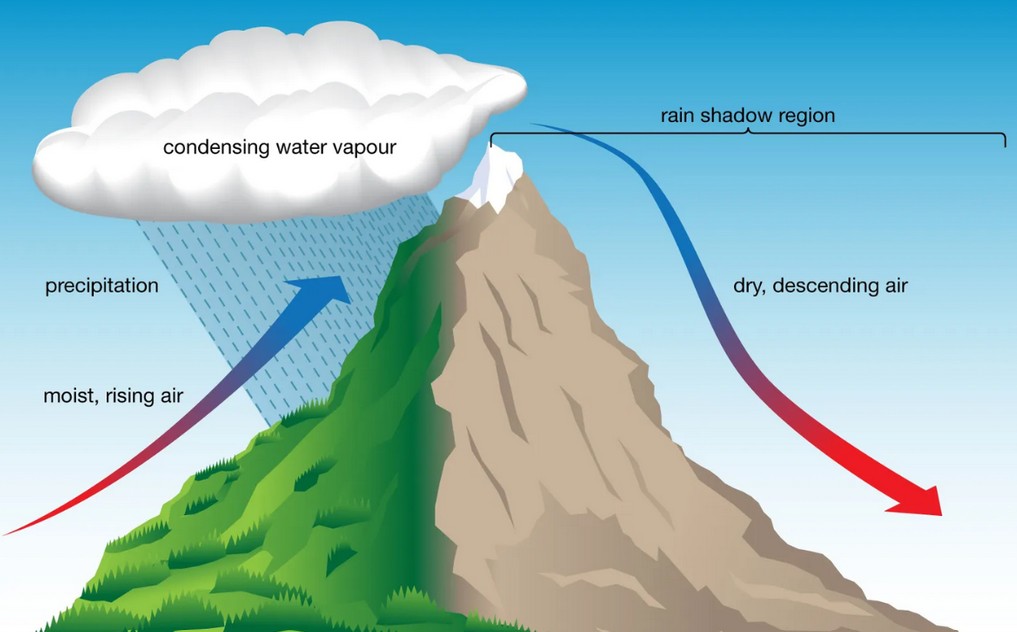
    • Geographical Location: Lies on the southern slopes of the Khasi Hills, directly facing the Bay of Bengal branch of the southwest monsoon.
    • Orographic Effect: Moist monsoon winds hit the steep hills, rise rapidly, and cause heavy orographic rainfall.
    • Monsoon Duration: Receives rainfall almost continuously from June to September, with frequent cloudbursts.
    • Topography: Steep hills + valleys act as a trap for moisture-laden winds, leading to intense rainfall concentration.
    • Climatic Setting: Part of the Humid Subtropical/Monsoonal climate zone of Northeast India, with high moisture inflow.
    [UPSC 2015] Consider the following States:

    1. Arunachal Pradesh 2. Himachal Pradesh 3. Mizoram

    In which of the above States do ‘Tropical Wet Evergreen Forests’ occur?

    Options: (a) 1 only (b) 2 and 3 only (c) 1 and 3 only* (d) 1, 2 and 3


  • Telecom and Postal Sector – Spectrum Allocation, Call Drops, Predatory Pricing, etc

    [pib] India hosts 3GPP RAN Working Group Meetings on 6G Standardization

    Why in the News?

    The Telecommunications Standards Development Society (TSDI) of India has hosted the 3GPP Radio Access Networks (RAN1–RAN5) Working Group Meetings focusing on 6G standardization for the first time, in Bengaluru.

    About 3GPP (3rd Generation Partnership Project):

    • Overview: Global body established in 1998 for mobile telecom standards (2G → 6G).
    • Partners: Collaboration of ARIB (Japan), ATIS (USA), CCSA (China), ETSI (Europe), TSDSI (India), TTA (South Korea), and TTC (Japan).
    • Output: Publishes technical specifications, forming the global benchmark for telecom operators, equipment makers, and regulators.
    • Focus Areas:
      1. RAN (Radio Access Network) – towers & radios connecting users to the network.
      2. Core Network – switching, routing, internet connectivity.
      3. Services & System Aspects – apps, charging, security.

    What is RAN (Radio Access Network)?

    • Definition: The wireless part of a mobile network that links user devices (phones, IoT) to the core network using radio waves.
    • Components:
      • Base Stations (Node B in 3G, eNodeB in 4G, gNodeB in 5G).
      • Antennas & radios.
      • Controllers (e.g., RNC in 3G).
    • Functions:
      • Transmits & receives radio signals.
      • Allocates spectrum.
      • Manages coverage, speed, call/data quality, and handovers.
    • Importance: Defines network performance (speed, latency, capacity).
    • 3GPP RAN Working Groups (RAN1–RAN5): Develop physical layer, radio protocols, performance testing, ensuring smooth migration from 4G → 5G → 6G.

    Back2Basics:  Evolution of Mobile Standards

    • 3G (UMTS – Universal Mobile Telecommunications System): Introduced in early 2000s; based on WCDMA; enabled video calls, MMS, and mobile internet (up to 2 Mbps).
    • 4G (LTE – Long-Term Evolution): All-IP, OFDMA-based; provided high-speed broadband (hundreds of Mbps), VoLTE, and seamless video streaming.
    • 5G (NR – New Radio): Flexible OFDM-based; delivers ultra-high speeds (Gbps), ultra-low latency, supports IoT, automation, AR/VR, and network slicing.
    • 6G (Sixth Generation – under research): Expected by ~2030; aims for terabit-class speeds, AI-native networking, holographic communication, and satellite–terrestrial integration.


    [UPSC 2019] With reference to communication technologies, what is/are the difference / differences between LTE (Long-Term Evolution) and VoLTE (Voice over Long-Term Evolution)?

    1. LTE ‘is commonly marketed as 3G and VoLTE is commonly marketed as advanced 3G.

    2. LTE is data-only technology and VoLTE is voice-only technology.

    Select the correct answer using the code given below.

    Options: (a) 1 only (b) 2 only (c) Both 1 and 2 (d) Neither 1 nor 2*


  • International Space Agencies – Missions and Discoveries

    Discovery of Rare Quadruple Star System with Brown Dwarfs

    Why in the News?

    Scientists have identified UPM J1040−3551 AabBab, a rare quadruple star system with two brown dwarfs orbiting two red dwarfs.

    Discovery of Rare Quadruple Star System with Brown Dwarfs

    About UPM J1040−3551 AabBab:

    • Overview: Newly discovered quadruple star system in the Milky Way.
    • Composition: Two cold T-type brown dwarfs orbiting a pair of young red dwarf stars.
    • Uniqueness: First known system of its kind; extremely rare as brown dwarfs usually exist alone, with less than 5% chance of companions.
    • Significance: Offers new insights into the formation and evolution of low-mass stars and sub-stellar objects.

    What are Brown Dwarfs?

    • Overview: Celestial objects between stars and planets in characteristics.
    • Formation: Form like stars from collapsing gas and dust but lack sufficient mass for sustained hydrogen fusion.
    • Nickname: Often called “failed stars” due to absence of sustained nuclear fusion.
    • Mass Range: Can reach up to about 70 times the mass of Jupiter.
    • Atmosphere: Similar to gas giants like Jupiter and Saturn, with molecules and water vapor clouds.
    • Detection: Very faint and cold; usually identified in multiple-star systems where brighter stars help estimate their properties.
    • Astronomical Importance: Help define the boundary between stars and planets; provide clues to conditions necessary for stellar and planetary formation.
    • Cosmological Role: Studying their abundance and distribution aids in understanding mass distribution in the universe and connections to dark matter.
    [UPSC 2024] Consider the following statements:

    Statement-I: Giant stars live much longer than dwarf stars.

    Statement-II: Compared to dwarf stars, giant stars have a greater rate of nuclear reactions.

    Which one of the following is correct in respect of the above statements?

    Options: (a) Both Statement-I and Statement-II are correct and Statement-II explains Statement-I

    (b) Both Statement-I and Statement-II are correct, but Statement-II does not explain Statement-I

    (c) Statement-I is correct, but Statement-II is incorrect

    (d) Statement-I is incorrect, but Statement-II is correct*


Join the Community

Join us across Social Media platforms.