💥UPSC 2027,2028 Mentorship (April Batch) + Access XFactor Notes & Microthemes PDF

Archives: News

  • Renewable Energy – Wind, Tidal, Geothermal, etc.

    How agriPV can turn India’s farms into dual purpose powerhouses

    Why in the News?

    India’s target of 300 GW solar capacity by 2030 has intensified land-use conflicts with agriculture, bringing agrivoltaics (AgriPV) into focus as a dual-use solution. The near doubling of PM-KUSUM allocation to ₹5,000 crore signals a shift toward farmer-centric solarisation. However, despite ~50 pilots, AgriPV faces scalability challenges due to high costs and regulatory gaps.

    What is Agrivoltaics?

    Agrivoltaics, also known as AgriPV or agrophotovoltaics (APV), is the simultaneous use of land for both solar energy generation and agriculture. Unlike traditional solar farms where panels are ground-mounted on bare land, AgriPV systems are designed to allow crops to grow, livestock to graze, or pollinator habitats to thrive underneath or between the solar panels.

    AgriPV systems optimize land use by placing solar panels in specific configurations to balance electricity production with agricultural needs: 

    1. Elevated (Stilted) Systems: Panels are mounted on tall structures (at least 2.1m to 4m high), providing enough clearance for tractors and farming machinery to operate underneath.
    2. Inter-row (Ground-mounted) Systems: Panels are placed at lower heights but with wide spacing between rows to allow crops to be cultivated in the alleys between arrays.
    3. Vertical Systems: Bifacial panels are mounted vertically (like walls), often at the periphery of fields, capturing sunlight primarily during sunrise and sunset while leaving the maximum amount of ground open for farming.
    4. PV Greenhouses: Solar modules are integrated into the roof or exterior of a greenhouse to regulate internal temperature and power its climate control system.

    How does Agrivoltaics address the land-energy-agriculture conflict?

    1. Dual Land Use: Enables simultaneous electricity generation and crop cultivation on the same land parcel.
    2. Land Efficiency: Reduces pressure on agricultural land compared to utility-scale solar requiring large tracts.
    3. Food-Energy Balance: Maintains agricultural output while expanding renewable capacity.
    4. Example: Elevated panel systems allow crops to grow underneath without disrupting farming operations.

    What are the design and technological variations in AgriPV systems?

    1. Elevated Systems: Panels mounted several metres above ground ensure adequate sunlight for crops.
    2. Row-based Systems: Panels placed between crop rows minimise shading impact.
    3. Vertical Systems: Upright panels reduce land obstruction and optimise sunlight distribution.
    4. Greenhouse Integration: Panels installed on rooftops or walls support controlled farming environments.
    5. Agro-climatic Adaptation: Crop selection varies across regions (e.g., tomato, onion, turmeric in MP; grapes, tomato in Maharashtra).

    What economic benefits does Agrivoltaics provide to farmers?

    1. Income Diversification: Farmers earn through electricity sales, leasing land, or revenue-sharing models.
    2. Reduced Input Costs: Solar-powered irrigation lowers diesel dependency.
    3. Risk Mitigation: Protection from extreme weather (hail, rainfall) stabilises farm output.
    4. Example: PM-KUSUM promotes decentralised solar pumps and power plants to enhance farm incomes.

    What environmental and productivity benefits does AgriPV offer?

    1. Water Conservation: Reduced evapotranspiration due to panel shading improves soil moisture retention.
    2. Climate Resilience: Protection against extreme weather events enhances crop stability.
    3. Energy Sustainability: Supports clean energy generation aligned with net-zero goals.
    4. Example: Partial shading benefits crops sensitive to excessive sunlight.

    What are the key challenges limiting large-scale adoption?

    1. High Capital Costs: Elevated structures and specialised mounting systems increase investment costs beyond conventional solar.
    2. Regulatory Uncertainty: Lack of clarity in land classification, tariffs, and grid connectivity.
    3. Design Gaps: Absence of standardised benchmarks for crop-panel configurations.
    4. Institutional Barriers: Limited access to affordable finance and weak governance frameworks.
    5. Data Deficit: Insufficient empirical evidence across agro-climatic zones.

    What policy measures can accelerate Agrivoltaics deployment?

    1. National Mission Integration: Inclusion in a proposed National Agri-Photovoltaics Mission under PM-KUSUM 2.0.
    2. Financial Support: Viability Gap Funding (VGF) reduces capital cost burden.
    3. State-level Interventions: Identification of clusters and streamlined approvals.
    4. Capacity Building: Integration into farmer training and advisory systems.
    5. Market Linkages: Clear tariffs and long-term purchase agreements ensure financial viability.

    What is the current status of Agrivoltaics in India?

    1. Pilot Projects: Around 50 installations across different regions.
    2. Policy Recognition: Increasing mention in renewable energy discussions.
    3. Scaling Constraint: Lack of commercial-scale implementation due to financial and regulatory barriers.

    Conclusion

    Agrivoltaics provides a viable pathway to reconcile India’s energy transition with agricultural sustainability. Scaling requires policy clarity, financial innovation, and region-specific design optimisation.

    PYQ Relevance

    [UPSC 2022] What is Integrated Farming System? How is it helpful to small and marginal farmers?

    Linkage: AgriPV represents an advanced form of Integrated Farming System, combining agriculture with solar energy generation on the same land. It enhances income diversification and resource efficiency for small and marginal farmers, aligning directly with the objectives of IFS.

  • Tax Reforms

    PRARAMBH 2026 – Income Tax Awareness Campaign 

    Why in the News

    • Government launched PRARAMBH 2026, a nationwide awareness campaign for the Income Tax Act, 2025 (effective from 1 April 2026).

    About PRARAMBH 2026

    • Full form: Policy Reform and Responsible Action for Mission Viksit Bharat
    • Nature: Nationwide taxpayer awareness and outreach campaign
    • Mode:
      • Print, TV, radio, digital, social media
      • On-ground workshops and engagement

    Key Objectives

    • Promote: Tax awareness and Ease of compliance
    • Shift behaviour: From confusion to trust-based compliance
    • Ensure: Smooth implementation of new tax law

    Key Features

    1. Taxpayer Outreach

    • Guidance material: FAQs, Brochures and Tutorial videos
    • Available in: 10 regional languages plus English and Hindi

    2. Digital Initiatives

    • Launch of Income Tax Website 2.0
      • Improved usability
      • Simpler navigation
    • AI chatbot:
      • Kar Saathi
      • Helps with: Act, Rules, and Forms

    3. Capacity Building

    • Nationwide: 300 plus workshops
    • Focus:
      • Training tax officials
      • Stakeholder engagement

    4. Citizen-Centric Approach

    • Principle: Nagrik Devo Bhava
    • Focus on:
      • Empathy
      • Trust-based tax administration
      • Reduced human interface through technology

    New Income Tax Act, 2025

    • Effective from: 1 April 2026
    • Key aims: Simplicity, Clarity, Reduced litigation, and Better compliance

    Governance Philosophy

    • Based on: M.A.N.A.V. framework
      • Moral and ethical systems
      • Accountable governance
      • National sovereignty
      • Accessible and inclusive AI
      • Valid systems
    [2020] In the context of India, which one of the following is the characteristic appropriate for bureaucracy? (a) An agency for widening the scope of parliamentary democracy (b) An agency for strengthening the structure of federalism (c) An agency for facilitating political stability and economic growth (d) An agency for the implementation of public policy
  • Nuclear Energy

    India’s Nuclear Energy Mission  

    Why in the News

    • Government has accelerated Nuclear Energy Mission with ₹20,000 crore allocation for Small Modular Reactors (SMRs) development and a long-term goal of 100 GW nuclear capacity.

    Budget Allocation

    • ₹20,000 crore announced in Budget 2026
    • Focus:
      • Research
      • Design
      • Development
      • Deployment of SMRs

    Key Institutions Involved

    • Department of Atomic Energy (DAE)
    • Bhabha Atomic Research Centre (BARC)
    • Nuclear Power Corporation of India Ltd (NPCIL)

    Types of SMRs Being Developed

    1. BSMR-200 (Bharat SMR)

    • Capacity: 220 MWe
    • Jointly developed by: BARC + NPCIL
    • Construction timeline: 60–72 months

    2. SMR-55

    • Capacity: 55 MWe

    3. HTGCR (High Temperature Gas-Cooled Reactor)

    • Capacity: Up to 5 MWth
    • Use: Hydrogen production
    [2023] Consider the following statements: 
    Statement-I: India, despite having uranium deposits, depends on coal for most of its electricity production. 
    Statement-II: Uranium, enriched to the extent of at least 60%, is required for the production of electricity. 
    Which one of the following is correct? 
    (a) Both Statement-I and Statement-II are correct and Statement-II is the correct explanation for Statement-I (b) Both Statement-I and Statement-II are correct and Statement-II is not the correct explanation for Statement-I (c) Statement-I is correct but Statement-II is incorrect (d) Statement-I is incorrect but Statement-II is correct
  • Banking Sector Reforms

    Urban Cooperative Banks (UCBs) – New RBI Eligibility Norms

    Why in the News

    • An internal working group of the Reserve Bank of India (RBI) has proposed stricter eligibility criteria for granting licences to Urban Cooperative Banks (UCBs).

    Proposed Eligibility Criteria

    To qualify for a UCB licence, credit cooperative societies must meet:

    • Minimum capital: ₹300 crore
    • Capital Adequacy Ratio (CAR): Above 12%
    • Net Non-Performing Assets (NPAs): Below 3%
    • Track record: At least 5 years of sound financial performance

    Governance Reforms

    • UCBs to adopt governance standards similar to commercial banks
    • Requirements include:
      • Professional management
      • Independent board members
      • Strong regulatory oversight

    Current Status of UCB Sector

    • Total weak UCBs under regulatory scrutiny: 82
      • 28 UCBs under All-Inclusive Directions (AID)
      • 32 UCBs under Prompt Corrective Action (PCA)
      • 22 UCBs under Supervisory Action Framework (SAF)

    Key Concerns

    • Weak financial health of many UCBs
    • Poor governance and management issues
    • Rising NPAs and capital inadequacy

    Significance of Reforms

    • Strengthens financial stability
    • Improves credibility of cooperative banking sector
    • Protects depositors’ interests
    • Aligns UCB regulation with banking sector standards
    [2021] With reference to ‘Urban Cooperative banks’ in India, consider the following statements: 
    1. They are supervised and regulated by local boards set up by the State Governments. 
    2. They can issue equity shares and preference shares. 
    3. They were brought under the purview of the Banking Regulation Act, 1949 through an Amendment in 1966. 
    Select the correct answer using the code given below: 
    (a) 1 only (b) 2 and 3 only (c) 1 and 3 only (d) 1, 2, and 3
  • Monsoon Updates

    Erratic Weather in March 2026 

    Why in the News

    • March witnessed unusual weather patterns: early heatwaves followed by thunderstorms, hailstorms, and rain across India.
    • Special Phenomena: Nor’westers (Kalbaisakhi) in eastern India: Sudden intense storms with thunder, lightning, and hail

    What Happened

    • Early March: Heatwaves in North and West India
    • Mid to late March: Sudden shift to:
      • Thunderstorms
      • Hailstorms
      • Intense rainfall
    • Impact: Significant temperature drop

    Main Reasons

    1. Western Disturbances (WDs)

    • Origin: Mediterranean region (via West Asia)
    • Role: Bring rain and snowfall in non-monsoon months
    • Key factor: Two intense Western Disturbances (March 13 & 18) triggered widespread weather changes

    2. Cyclonic Circulation

    • Persistent low-pressure circulation in lower atmosphere
    • Helped intensify: Cloud formation and Rainfall activity

    3. Moisture Influx

    • Winds from: Bay of Bengal and Arabian Sea
    • Result: High moisture availability

    4. Wind Convergence

    • Interaction of: Warm moist winds and cold winds
    • Outcome: Severe convection leading to thunderstorms and hail

    5. Seasonal Transition

    • March marks winter to summer transition
    • Rising temperatures plus moisture create ideal conditions for: Thunderstorms and Hailstorms. 

    Geographical Spread

    • Affected regions:
      • Western Himalayas
      • Northeast India
      • Central and Northwest India
      • Parts of South India
    [2015] Consider the following statements: 
    1. The winds which blow between 30° N and 60° S latitudes throughout the year are known as westerlies. 
    2. The moist air masses that cause winter rains in North-Western region of India are part of westerlies. 
    Which of the statements given above is/are correct? 
    (a) 1 only (b) 2 only (c) Both 1 and 2 (d) Neither 1 nor 2
  • Solar Energy – JNNSM, Solar Cities, Solar Pumps, etc.

    PM Surya Ghar Muft Bijli Yojana 

    Why in the News

    • Government shared progress of rooftop solar installation under the scheme in Parliament.

    Key Achievements

    • 25.87 lakh rooftop solar (RTS) systems installed across India
    • Coverage: Both rural and urban households
    • Beneficiaries: 32.02 lakh households (as of March 16, 2026)

    About the Scheme

    • PM Surya Ghar Muft Bijli Yojana
    • Launched: February 2024
    • Aim:
      • Promote rooftop solar adoption
      • Provide free/subsidised electricity to households
      • Reduce electricity bills
    [2025] Consider the following statements about ‘PM Surya Ghar Muft Bijli Yojana’: 
    1. It targets installation of one crore solar rooftop panels in the residential sector. 
    2. The Ministry of New and Renewable Energy aims to impart training on installation, operation, maintenance and repairs of solar rooftop systems at grassroot levels. 
    3. It aims to create more than three lakhs skilled manpower through fresh skilling and up-skilling, under scheme component of capacity building. 
    Which of the statements given above are correct? 
    (a) I and II only (b) I and III only (c) II and III only (d) I, II and III
  • The Crisis In The Middle East

    Israel–Lebanon Escalation: Litani River Strikes  

    Why in the News

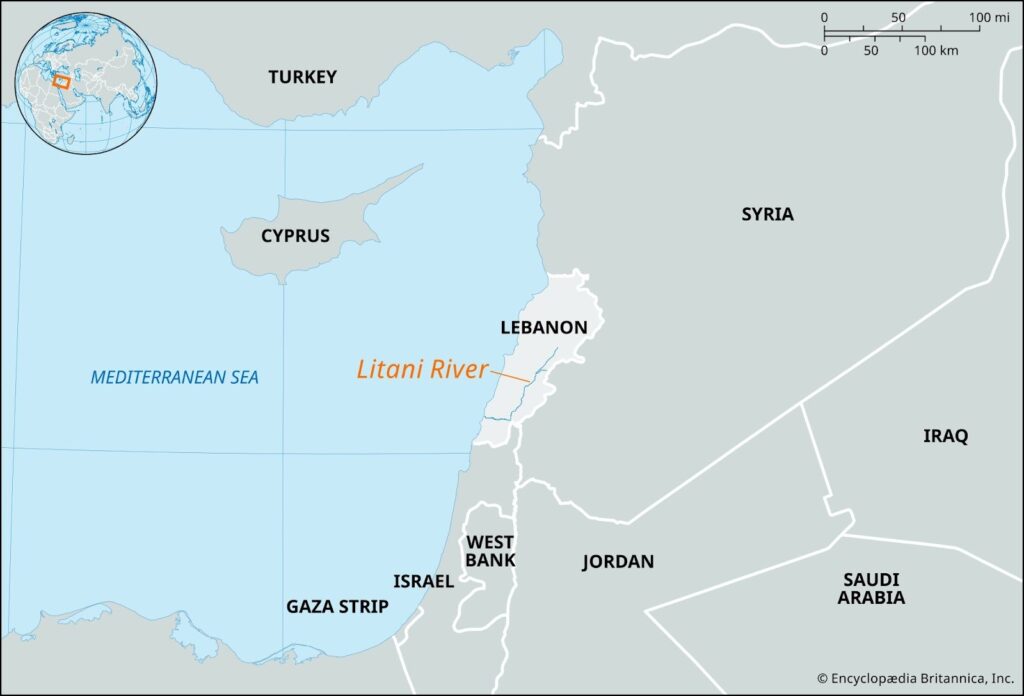
    • Israel carried out strikes on bridges in Lebanon, especially over the Litani River, intensifying the conflict with Hezbollah.

    Key Developments

    • Israel:
      • Struck a key bridge on coastal highway
      • Ordered destruction of all crossings over Litani River
      • Accelerated demolition of border villages
    • Objective:
      • Disrupt Hezbollah movement and supply lines

    Strategic Importance of Litani River

    • Length: ~90 miles
    • Acts as: De facto boundary zone in south Lebanon
    • Historically linked to: Proposed buffer zone between Israel and Hezbollah
    [2017] Mediterranean Sea is a border of which of the following countries? 
    1. Jordan 
    2. Iraq 
    3. Lebanon 
    4. Syria 
    Select the correct answer using the code given below: 
    (a) 1, 2 and 3 only (b) 2 and 3 only (c) 3 and 4 only (d) 1, 3 and 4 only
  • Food Procurement and Distribution – PDS & NFSA, Shanta Kumar Committee, FCI restructuring, Buffer stock, etc.

    Rice & Wheat Procurement Shortfall  

    Why in the News

    • A Parliamentary Standing Committee headed by Kanimozhi Karunanidhi raised concerns over consistently low procurement of rice and wheat compared to estimates. 

    Key Findings

    1. Persistent Gap

    • Since 2022-23: Procurement < 30% of total production
    • Wheat procurement (as % of estimates):
      • 2023-24: 76.7%
      • 2024-25: 71.3%
      • 2025-26: 87.3%

    2. State-Level Shortfalls

    • Rice (Kharif 2024-25): Andhra Pradesh, Karnataka, Punjab below targets
    • Wheat (Rabi 2025-26): Bihar, Gujarat, Punjab, Uttar Pradesh below targets

    Reasons for Low Procurement

    • Production fluctuations
    • Market surplus availability
    • Minimum Support Price (MSP) vs market price
    • Demand-supply conditions
    • Participation of private traders

    Committee Concerns

    • Gap between: Estimated procurement vs actual procurement
    • Indicates: Weak planning and coordination

    Recommendations

    1. Strengthen Procurement Planning

    • Improve estimation methods
    • Make targets more realistic

    2. Better Centre-State Coordination

    • Focus on: States with repeated shortfalls

    3. Real-Time Monitoring

    • Track: Production and Market arrivals

    4. Improve Procurement Efficiency

    • Ensure: Timely and effective procurement operations
    [2020] Which of the following factors/policies were affecting the price of rice in India in the recent past? 
    1. Minimum Support Price Government’s trading 
    2. Government’s stockpiling Consumer subsidies 
    Select the correct answer using the code given below: 
    (a) 1, 2 and 4 only (b) 1, 3 and 4 only (c) 2 and 3 only (d) 1, 2, 3 and 4
  • Land Reforms

    [21st March 2026] The Hindu OpED: Undemocratic politics in Great Nicobar over land

    PYQ Relevance[UPSC 2016] Rehabilitation of human settlements is one of the important environmental impacts which always attracts controversy while planning major projects. Discuss the measures suggested for mitigation of this impact while proposing major developmental projects.Linkage: The PYQ highlights challenges of displacement, rehabilitation, and environmental justice in large infrastructure projects. The Great Nicobar project reflects these concerns through inadequate compensation, weak rehabilitation, and marginalization of tribal communities.

    Mentor’s Comment

    The Great Nicobar mega-infrastructure project has come under scrutiny due to allegations of undemocratic land acquisition and suppression of dissent, marking a significant shift from participatory governance norms. The issue is critical because it involves Particularly Vulnerable Tribal Groups (PVTGs) like the Shompen, who are entirely dependent on forests and cannot be compensated monetarily. The near absence of dissent in official consultations raises concerns of coercion, making it a major governance and rights-based crisis.

    What is the issue?

    1. Land Acquisition Conflict: Involves transfer of tribal reserve land for a strategic mega-infrastructure project.
    2. Compensation Disparity: Offers significantly lower rates compared to similar projects in Andaman region.
    3. Tribal Rights Concerns: Affects Shompen (PVTG) and Nicobarese communities dependent on forests.
    4. Procedural Irregularities: Weak Social Impact Assessment and questionable consent mechanisms.
    5. Governance Deficit: Indicates prioritization of strategic objectives over participatory decision-making. 

    How does the compensation framework reflect structural inequity?

    1. Low Compensation Rates: Offers ₹113-₹180 per sq m; contrasts with ₹11,370-₹20,500 per sq m in Andaman tourism projects.
    2. Inadequate Agricultural Valuation: Suggested ₹1 crore per acre not implemented; current compensation ₹32 lakh vs demand ₹9 lakh per hectare.
    3. Unequal Treatment: Settler families compensated monetarily; tribal communities lack viable compensation mechanisms.

    What procedural violations undermine democratic governance?

    1. Denotification of Tribal Reserve: 84 sq km of legally protected land reclassified for project use
    2. Weak Social Impact Assessment: Serious deficiencies in evaluating livelihood, displacement, and cultural impacts.
    3. Suppression of Dissent: Near-total absence of objections in Shompen consultations indicates possible coercion.
    4. Institutional Complicity: Local administration, Tribal Welfare Department, and Union Ministries involved without adequate safeguards.

    How does the project expose contradictions in representation and democracy?

    1. Settler Contradiction: Settler representatives demand fair compensation while enabling tribal land alienation.
    2. Majoritarian Influence: Settlers form majority population; indigenous voices marginalized.
    3. Political Economy Bias: Strategic and developmental goals override rights-based considerations.

    Why are tribal communities disproportionately affected?

    1. PVTG Vulnerability: Shompen are nomadic hunter-gatherers; monetary compensation irrelevant.
    2. Livelihood Dependency: Complete reliance on forests and marine ecosystems.
    3. Cultural Displacement: Loss of traditional lands disrupts identity and social systems.
    4. Lack of Rehabilitation: No clear framework for restoring livelihoods or ensuring cultural continuity.

    What are the ecological and strategic implications?

    1. Biodiversity Loss: Pristine forests and fragile ecosystems at risk.
    2. Strategic Imperative: Project linked to national security and maritime positioning.
    3. Development vs Sustainability: Trade-off between infrastructure expansion and ecological preservation.

    Does the case reflect a broader governance crisis?

    1. Erosion of Consent: Weak adherence to free, prior, informed consent principles.
    2. Legal Contradictions: Violations of Forest Rights Act provisions.
    3. State-Centric Development Model: Prioritizes strategic autonomy over local rights.
    4. Conflict Potential: Competition between settler and tribal communities for land and resources.

    Conclusion

    The Great Nicobar project reflects a structural imbalance between development imperatives and democratic safeguards. Ensuring equitable compensation, genuine consultation, and ecological sustainability remains essential to reconcile state priorities with constitutional morality.

  • Water Management – Institutional Reforms, Conservation Efforts, etc.

    Our water challenge is stark. Here are four ways to reimagine the solutions

    Why in the News?

    India’s water crisis has reached a critical threshold, with per capita availability nearing scarcity levels and over 80% districts exposed to hydro-meteorological disasters. A major shift is being proposed, from viewing water as a free resource to treating it as a strategic economic asset.

    Why is India’s water crisis structurally alarming?

    1. Resource Imbalance: India supports 18% global population with 4% freshwater, indicating structural scarcity.
    2. Declining Availability: Per capita availability dropped from 1,816 (2001) to 1,486 cubic metres (2021); projected to approach 1,000 cubic metres by 2050.
    3. Climate Variability: Monsoon patterns exhibit unpredictability, with increased rainfall intensity but fewer rainy days, causing floods and droughts simultaneously.
    4. Disaster Vulnerability: Over 80% of the population lives in districts prone to hydro-meteorological disasters.
    5. Groundwater Stress: India is the largest extractor of groundwater globally, leading to depletion and unsustainable use.

    How does mismanagement aggravate the water crisis?

    1. Agricultural Inefficiency: Agriculture consumes ~90% of freshwater, dominated by water-intensive crops like rice and sugarcane.
    2. Policy Distortions: Subsidies on water, power, and fertilizers incentivize inefficient usage.
    3. Urban Mismanagement: Urbanization increases runoff, reduces groundwater recharge, and intensifies flooding risks.
    4. Wastewater Neglect: Only 28% of wastewater is treated, leading to pollution and loss of reusable water.
    5. Infrastructure Deficit: Lack of integrated water systems limits storage, reuse, and efficient distribution. 

    Why must water be redefined as an economic resource?

    1. Economic Transformation: Recognizing water as a strategic national asset ensures efficient allocation across sectors.
    2. Governance Shift: Moves from free-resource perception to regulated and priced commodity.
    3. Incentive Alignment: Pricing mechanisms discourage overuse and encourage conservation.
    4. Sectoral Efficiency: Enables prioritization of high-value economic uses over inefficient consumption. 

    What broad strategic approach is required before detailing specific solutions?

    1. Paradigm Shift in Water Governance: Recognises water as a finite economic and ecological resource, not a free good, ensuring efficient allocation and accountability.
    2. Integrated Water Resource Management (IWRM): Ensures holistic coordination across sectors (agriculture, urban, industry) and scales (local to national) for sustainable use.
    3. Demand-side Management Focus: Prioritises efficiency and conservation over supply expansion, especially in agriculture and urban consumption.
    4. Ecosystem-based Approach: Strengthens natural water systems (forests, wetlands, soils) to enhance recharge, storage, and resilience.
    5. Decentralised and Participatory Governance: Empowers local institutions, communities, and stakeholders for context-specific water management.
    6. Technology and Data-driven Management: Facilitates real-time monitoring, digital water accounting, and evidence-based policymaking.
    7. Circular Economy Orientation: Promotes reuse, recycling, and recovery of wastewater, reducing pressure on freshwater sources.

    How can green water and ecosystem-based approaches help?

    1. Green Water Concept: Soil moisture (rainfed water) constitutes ~60% of rainfall storage globally, critical for agriculture.
    2. Soil Degradation: Chemical-intensive farming reduces soil’s water retention capacity.
    3. Nature-based Solutions:
      1. Mulching, no-till farming: Enhances moisture retention
      2. Agroforestry: Improves soil structure and water holding
    4. Forest Conservation: Protects upstream ecosystems and ensures downstream water availability.
    5. National Green Water Mission: Enables integrated landscape-based water management. 

    How can agriculture transition towards water efficiency?

    1. Crop Diversification: Shift from water-intensive crops to millets, pulses, oilseeds.
    2. Irrigation Reform: Adoption of micro-irrigation (drip, sprinkler) systems.
    3. Subsidy Rationalisation: Reduces distortion in cropping patterns.
    4. Water Productivity: Aligns cropping with agro-climatic suitability.
    5. Data Insight: Agriculture uses nearly 90% water, yet contributes disproportionately lower economic output. 

    What role can circular water economy play?

    1. Wastewater Reuse: Only 28% treated currently, indicating large untapped potential.
    2. Economic Potential: Treated wastewater could unlock a ₹3.2 lakh crore market by 2047.
    3. Industrial Reuse: Reduces freshwater demand in industries.
    4. Biogas & Fertiliser Recovery: Converts waste into energy and nutrients.
    5. Private Participation: Encourages PPP models in wastewater treatment infrastructure.

    How should urban water management be redesigned?

    1. Sponge Cities Model: Cities absorb, store, and reuse rainwater through green infrastructure.
    2. Blue-Green Infrastructure:
      1. Wetlands
      2. Urban forests
      3. Permeable surfaces
    3. Flood Mitigation: Reduces runoff and urban flooding risks.
    4. Case Example: Restoration of ecosystems like Yamuna Biodiversity Park enhances resilience.
    5. Urban Expansion Challenge: Built-up area has increased by one-third since 2005, reducing natural recharge.

    What governance reforms are required in water sector?

    1. Decentralised Governance: Empowers local bodies for water management.
    2. Digital Infrastructure: Enables real-time water accounting and monitoring.
    3. Transparent Pricing: Ensures cost recovery and discourages wastage.
    4. Regulatory Framework: Strengthens enforcement against illegal extraction.
    5. Swachh Bharat Mission 3.0: Targets decentralized wastewater management. 

    Conclusion

    India’s water crisis reflects systemic inefficiencies rather than absolute scarcity. A shift towards economic valuation, ecosystem restoration, efficient agriculture, and circular water systems is essential. Integrated governance and behavioural change remain critical for long-term sustainability.

    PYQ Relevance

    [UPSC 2023] Why is the world today confronted with a crisis of availability of and access to freshwater resources?

    Linkage: The PYQ tests understanding of water resource distribution, scarcity, and management challenges under GS1 (Geography) and GS3 (Environment & Agriculture). It directly aligns with India’s water crisis driven by overuse, mismanagement, and climate variability, as highlighted in the article.

Join the Community

Join us across Social Media platforms.
