💥UPSC 2027,2028 Mentorship (April Batch) + Access XFactor Notes & Microthemes PDF

Archives: News

  • Health Sector – UHC, National Health Policy, Family Planning, Health Insurance, etc.

    Cabinet approves ₹5 lakh Health Cover for Senior Citizens

    Why in the News?

    The Union Cabinet has approved health coverage of ₹5 lakh for all senior citizens aged 70 years and above, regardless of their income, under the Ayushman Bharat Pradhan Mantri Jan Arogya Yojana (AB PM-JAY).

    About Ayushman Bharat Pradhan Mantri Jan Arogya Yojana (AB PM-JAY)

    • AB PM-JAY is the world’s largest publicly funded health assurance scheme, offering ₹5 lakh of coverage per family annually for secondary and tertiary care hospitalizations.
    • It was launched in February 2018.
    • It is a Centrally Sponsored Scheme having central sector component under the Ayushman Bharat Mission.
    • It covers surgery, medical and day care treatments, cost of medicines and diagnostics.
      • It covers up to 3 days of pre-hospitalization and 15 days post-hospitalization expenses.
    • It currently covers 55 crore people from 12.34 crore families, providing comprehensive health benefits regardless of the family members’ age.
    • 7.37 crore hospital admissions have been covered under the scheme, with 49% of the beneficiaries being women.

    Eligibility Criteria:

    • All senior citizens aged 70 and above are eligible for the scheme, receiving a ₹5 lakh health cover on a family basis.
    • Additional Benefits:
      • Senior citizens belonging to families already under AB PM-JAY will get an extra top-up of ₹5 lakh, exclusively for their personal healthcare.
      • Those with private health insurance can also avail of the scheme.
    • Senior citizens covered under other public health insurance schemes, like CGHS, ECHS, or CAPF, must choose between their current plan and AB PM-JAY.
    • All eligible beneficiaries will be issued a distinct health card for easy access to the scheme’s benefits.

    PYQ:

    [2012] With reference to National Rural Health Mission, which of the following are the jobs of Asha, a trained community health worker?

    1. Accompanying women to the health facility for antenatal care checkups

    2. Using pregnancy test kits for early detection of pregnancy

    3. Providing information on nutrition and immunization

    4. Conducting the delivery of baby

    Select the correct answer using the codes given below:

    (a) 1, 2 and 3 only

    (b) 2 and 4 only

    (c) 1 and 3 only

    (d) 1, 2, 3 and 4

  • Rural Infrastructure Schemes

    Launch of PM Gram Sadak Yojana- Phase IV

    Why in the News?

    The Union Cabinet has approved Phase IV of the Pradhan Mantri Gram Sadak Yojana (PMGSY-IV) to build 62,500 km of all-weather roads, connecting villages across India.

    About Pradhan Mantri Gram Sadak Yojana (PMGSY)

    Details
    Launch 
    • In 2000 by former PM Late Atal Bihari Vajpayee.
    • To provide connectivity to unconnected habitations.
    Nodal Agency Ministry of Rural Development
    Type Centrally Sponsored Scheme
    Phases
    • Phase I: Focus on connecting unconnected habitations.
    • Phase II: Upgrading roads built in Phase I to enhance rural infrastructure.
    • Phase III: Consolidation of 1.25 lakh km of rural roads connecting habitations to Gramin Agricultural Markets, Higher Secondary Schools, and Hospitals. Cost: ₹80,250 crore (2019-2025). Funding: 60:40 (Centre), 90:10 for North-East and Himalayan States.

    Phase IV: Aims at constructing 62,500 km of all-weather roads to provide connectivity to 25,000 unconnected habitations with focus on Left-Wing Extremism (LWE) areas, tribal areas, and remote regions.

    Road Length and Coverage 62,500 km of all-weather roads covering 25,000 unconnected habitations.

    Benefits of PMGSY-IV

    • Road Connectivity for 25,000 Villages: All-weather roads will provide reliable access to previously unconnected rural habitations, improving transportation and accessibility.
    • Socio-Economic Transformation: These roads will act as catalysts for socio-economic development in rural areas, enabling access to government educational institutions, health services, markets, and growth centers.
    • Enhanced Infrastructure: The construction will adopt international benchmarks and best practices, such as using Cold Mix Technology, Waste Plastic, Full Depth Reclamation, and materials like Fly Ash and Steel Slag, contributing to eco-friendly construction.

    PYQ:

    [2020] In rural road construction, the use of which of the following is preferred for ensuring environmental sustainability or to reduce carbon footprint?

    1. Copper slag
    2. Cold mix asphalt technology
    3. Geotextiles
    4. Hot mix asphalt technology
    5. Portland cement

    Select the correct answer using the code given below:

    (a) 1, 2 and 3 only

    (b) 2, 3 and 4 only

    (c) 4 and 5 only

    (d) 1 and 5 only

  • Disasters and Disaster Management – Sendai Framework, Floods, Cyclones, etc.

    Union Cabinet approves ‘Mission Mausam’

    Why in the News?

    The Union Cabinet has approved ‘Mission Mausam’ with a budget of ₹2,000 crore over two years.

    About Mission Mausam

    • Mission Mausam focuses on strengthening R&D in weather surveillance, forecasting, and atmospheric sciences.
    • The Ministry of Earth Sciences (MoES) will be the nodal body responsible for implementing the mission.
    • It aims to set a new benchmark for high-precision weather forecasting and management.
    • Three institutes under the MoES will lead the implementation of Mission Mausam:
    1. India Meteorological Department (IMD)
    2. Indian Institute of Tropical Meteorology (IITM)
    3. National Centre for Medium-Range Weather Forecasting (NCMRWF)

    Critical Components of the Mission: 

    • Next-generation radars and satellite systems equipped with advanced sensors.
    • Deployment of high-performance supercomputers to enhance computational capabilities.
    • Development of improved earth system AI models and a GIS-based automated Decision Support System for real-time data dissemination.

    Benefits and Applications

    • Mission Mausam is expected to benefit key sectors, including:
      • Agriculture, through improved weather prediction for farming activities.
      • Disaster management, with better preparedness for natural calamities.
      • Defence, aviation, and shipping, through enhanced forecasting for operational safety.
      • Energy, water resources, power, and tourism sectors.
    • The mission will also enhance data-driven decision-making for urban planning, transport, offshore operations, and environmental monitoring.

    PYQ:

    [2022] Discuss the meaning of colour-coded weather warnings for cyclone prone areas given by India Meteorological Department.

  • Trade Sector Updates – Falling Exports, TIES, MEIS, Foreign Trade Policy, etc.

    UAE-India ties are rooted in affnity, trust, and respect

    Why in the News?

    During Sheikh Khaled’s recent visit, new cooperation agreements were signed, including those related to civil nuclear technology and renewable energy, showcasing the commitment to collaborative advancements in critical sectors.

    Evolving Bilateral Relations:

    • In 1972:  India and the UAE bilateral relationship has been formalized since the establishment of diplomatic relations in 1972, gaining momentum with high-level visits and agreements over the years.
    • In 2015: The greater push was achieved when the visit of India’s PM to the UAE in August 2015 marked the beginning of a new Strategic partnership.
    • In 2017: The relationship was elevated to a Comprehensive Strategic Partnership in 2017, during the visit of the Crown Prince of Abu Dhabi to India in January 2017 as the chief guest at India’s Republic Day.
      • The UAE is India’s third-largest trading partner and a significant source of investment.
    • Today, the UAE hosts over 3.5 million Indian expatriates, which strengthens cultural ties and economic collaboration.

    Present Scenario of Strategic Development

    • Trade and Investment Growth: Bilateral trade reached approximately USD 85 billion in 2022-23, with goals to increase it to USD 100 billion by 2030.
      • The UAE has become a significant investor in India, with FDI from the UAE surging to USD 3.35 billion in FY23.
    • Comprehensive Economic Partnership Agreement (CEPA): India and the UAE signed a CEPA in February 2022, with India being the first country to secure such a deal with the UAE. This agreement led to a 15% rise in bilateral trade within its first year of operation.
    • Regional Ties: India and the UAE are actively engaged in various regional groupings and initiatives such as the I2U2 and the India-Middle East-Europe Economic Corridor (IMEC), reflecting shared interests and strategic alignment.
    • Energy Ties: The UAE plays a crucial role in India’s energy security, with strategic oil reserves stored in India.
    • Fintech Ties: Since August 2019, the RuPay card, India’s domestic card payment network, has been accepted at 21 businesses and 5,000 ATMs across the UAE. This makes the UAE the first Gulf nation to adopt the Indian payment system.
    • Cultural Ties: India participated as the Guest of Honour Country in Abu Dhabi International Book Fair 2019. Indian cinema/TV/radio channels are easily available and have good viewership.
      • The inauguration of the Indian Institute of Technology (IIT) Delhi’s Abu Dhabi campus marks a significant milestone, representing India’s growing educational influence in the UAE.

    Challenges in India-UAE Relations

    • Labor Rights and Kafala System: Concerns regarding the treatment of Indian expatriates under the Kafala labor system necessitate diplomatic engagement to improve labor rights and welfare.
    • Geopolitical Balancing: As India strengthens its ties with the UAE, it must navigate its relationships with other Gulf nations and maintain a balanced approach to regional conflicts, such as the Chinese market dominance and the Israel-Palestine issue.
    • Economic Diversification: While trade is growing, there is a need to diversify economic cooperation beyond traditional sectors like energy and real estate to include technology and innovation.

    Way forward: 

    • Strengthen Labor Rights Cooperation: India and the UAE should engage in continuous diplomatic dialogues to reform labor practices, improving the welfare and rights of Indian expatriates under the Kafala system, and ensuring a more humane and fair working environment.
    • Diversify Economic and Strategic Cooperation: Both countries should focus on expanding collaboration into emerging sectors such as technology, innovation, and renewable energy while maintaining geopolitical neutrality and balancing relations with other Gulf nations.

    Mains PYQ:

    Q How will I2U2 (India, Israel, UAE and USA) grouping transform India’s position in global politics?  (UPSC IAS/2016)

  • Health Sector – UHC, National Health Policy, Family Planning, Health Insurance, etc.

    The grave threat from AMR

    Why in the News?

    Ahead of the UN General Assembly High-Level Meeting on antimicrobial resistance, WHO published its first-ever guidance on Antibiotic pollution from manufacturing.

    Common Pathogens Found in India

    The three most common pathogens associated with antimicrobial resistance (AMR) in India, as reported by the Indian Council of Medical Research (ICMR), are:

    • Escherichia coli (E. coli): Known for causing gut infections, E. coli has shown a significant decrease in susceptibility to antibiotics, particularly carbapenems, from 81.4% in 2017 to 62.7% in 2023.
    • Klebsiella pneumoniae: This pathogen can lead to pneumonia and urinary tract infections. Its susceptibility to carbapenem-class antibiotics has also declined, with rates dropping from 58.5% to 35.6% and from 48% to 37.6% between 2017 and 2023.
    • Acinetobacter baumannii: Primarily associated with hospital-acquired infections, this pathogen has a high resistance rate to carbapenems, standing at 88% in 2023.

    What is Antimicrobial Resistance (AMR) and Why is it a Cause for Concern?

    • Antimicrobial resistance (AMR) occurs when pathogens evolve to survive despite the presence of antimicrobial drugs, rendering standard treatments ineffective. This situation arises mainly due to the misuse and overuse of antibiotics, leading to the development of resistant strains or “superbugs.” 
    • According to the WHO, emergence and spread of AMR could significantly undermine the effectiveness of antibiotics globally, impacting healthcare outcomes, especially for patients with multiple diseases.

    Why is AMR Increasing?

    Several factors contribute to the increasing rates of AMR in India:

    • Self-medication: Many individuals self-prescribe antibiotics for conditions like fever without proper medical consultation, often for viral infections where antibiotics are ineffective.
    • Prescribing habits: A significant percentage of antibiotics are prescribed not for treating infections but for prevention. Doctors often resort to broad-spectrum antibiotics without conducting necessary diagnostic tests, leading to inappropriate usage.
    • Lack of regulation: The management of pharmaceutical waste from antibiotic manufacturing is largely unregulated, contributing to environmental pollution and the spread of resistant bacteria.

    What needs to be done?

    • Prevention of Infections: Implementing better hygiene practices, improving sanitation, and promoting vaccinations can help reduce the incidence of infections, thereby decreasing the reliance on antibiotics.
    • Education for Healthcare Providers: Train doctors to prescribe antibiotics judiciously, reserve stronger antibiotics for hospital patients, and emphasise the importance of diagnostic testing, which can help ensure appropriate antibiotic use.
    • Regulatory Improvements: Strengthening regulations around antibiotic manufacturing and waste management is crucial for controlling antibiotic pollution and preventing the emergence of resistant strains.

    Mains PYQ:

    Q Can overuse and free availability of antibiotics without Doctor’s prescription, be contributors to the emergence of drug-resistant diseases in India? What are the available mechanisms for monitoring and control? Critically discuss the various issues involved.  (UPSC IAS/2016)

  • Freedom of Speech – Defamation, Sedition, etc.

    On ANI’s defamation suit against Wikipedia

    Why in the News?

    The news agency ANI filed a defamation lawsuit against the Wikimedia Foundation, over a description on the site that portrayed the agency as a promoter of government propaganda.

    Why has the news agency ANI filed a lawsuit against the Wikimedia Foundation?

    • ANI has filed a defamation lawsuit against the Wikimedia Foundation over the description of the agency on Wikipedia. The page accused ANI of being a “propaganda tool” for the Indian government, citing sources like The Diplomat, EU DisinfoLab, and The Caravan magazine.
    • ANI claims that these descriptions are defamatory and is seeking ₹2 crore in damages from the Wikimedia Foundation.
    • Wikipedia’s policies emphasize neutrality and reliable sourcing, though it’s often accused of liberal bias. OpIndia claims the site propagates liberal “propaganda” and has criticised the site’s description of the riots for allegedly downplaying attacks by Muslim rioters.
    • Wikipedia has faced government criticism for vandalism, such as on Arshdeep Singh’s page. It lacks a blocking procedure under Indian law, unlike social media platforms.

    What has the Delhi High Court asked the Foundation to reveal?

    • The Delhi High Court ordered the Wikimedia Foundation to provide details about the users who edited ANI’s Wikipedia page. Specifically, the court asks for information about three users involved in the contentious edits.
    • The suit invokes provisions of the Information Technology Act, particularly Section 79, which outlines the responsibilities of intermediaries like Wikipedia.
      • Section 79 provides a framework for the exemption from liability for intermediaries in India regarding third-party content.
    • Justice Navin Chawla has issued a notice to Wikipedia and scheduled the next hearing for August 20, 2024. The court has acknowledged the right of Wikipedia to express opinions but will examine whether the claims made about ANI are backed by facts.

    Will Wikipedia be blocked in India?

    • During the case hearing, the Delhi High Court judge verbally threatened to order the Indian government to block Wikipedia if the Wikimedia Foundation did not comply with its request for user information.
    • Although Wikipedia has faced censorship in countries like China and partial censorship in Russia, it has not yet been blocked in India. However, the current legal proceedings could lead to a similar action if compliance is not met.

    Conclusion: The Indian government should ensure that any legal actions respect user privacy rights while compelling platforms like Wikimedia to cooperate with legitimate legal requests for information, balancing transparency with data protection laws.

  • Wildlife Conservation Efforts

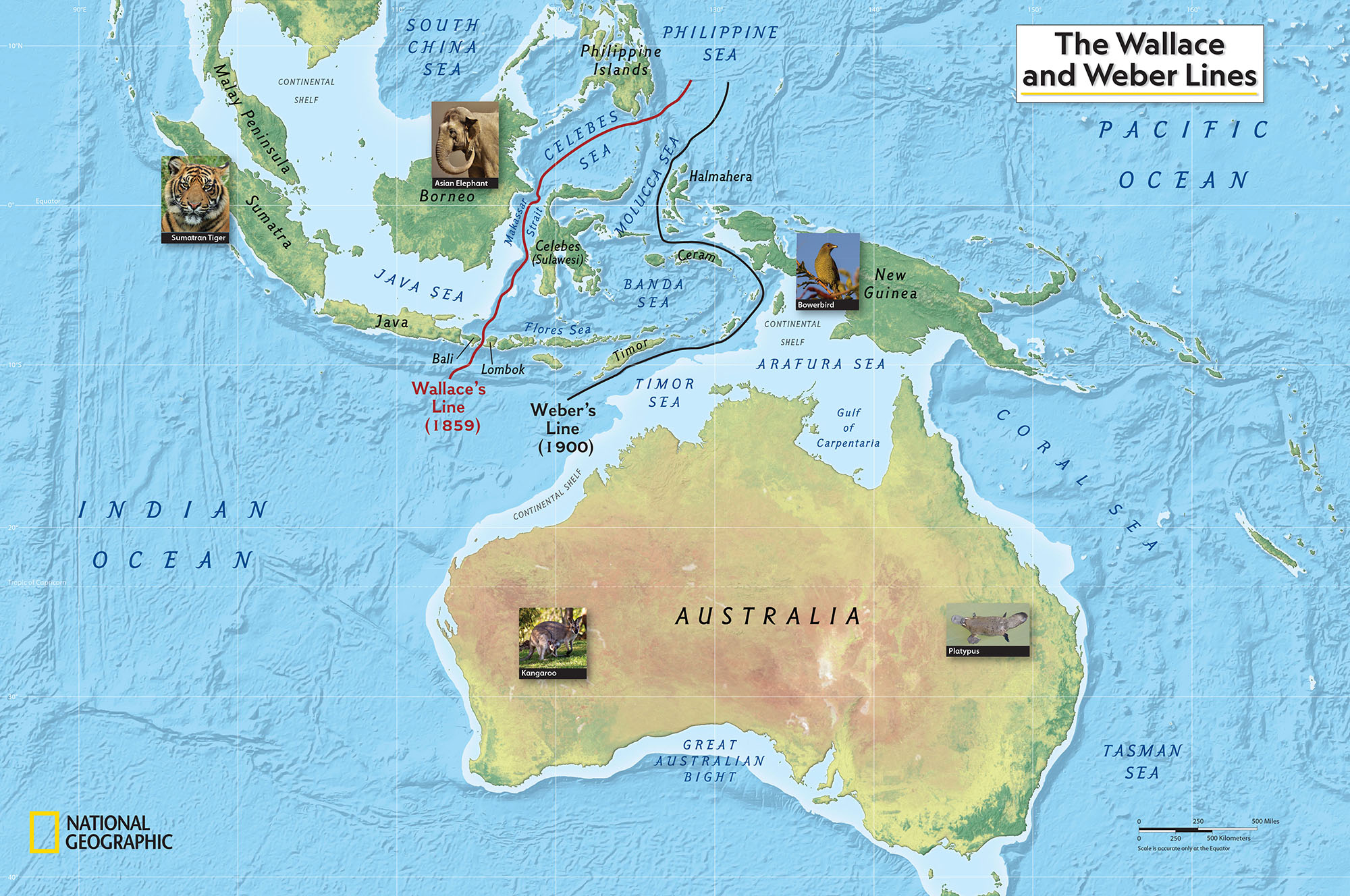
    What is Wallace Line?

    Wallace Line

    Why in the news?

    The Wallace Line, a distinct transition zone between Asia and Australia, has long fascinated researchers due to its unique characteristics.

    What is Wallace Line?

    Details
    What is it?
    • A bio-geographical boundary separating the eco-zones of Asia and Australia.
    • It was identified by British explorer Alfred Russel Wallace in 1863 during his explorations.
    • It is an imaginary line that intersects the Lombok Strait between the Indonesian islands of Bali and Lombok to the south, and extends north through the Makassar Strait between Kalimantan (Borneo) and Sulawesi.
    Unique Features
    • Divides species with distinct evolutionary histories.
    • Asiatic species (tigers, elephants) are found to the west; Australian fauna (kangaroos, marsupials) dominate the east.
    • Despite their geographical proximity, these species evolved separately.
    Impact on Wildlife
    • Birds and mammals are particularly influenced, with few species crossing the line.
    • Flora is less affected, though species like Eucalyptus stay on the Australian side.
    Impact on Marine Species
    • While the Wallace Line is a barrier for terrestrial species, it doesn’t stop marine life. 
    • The area between the Wallace Line and the Sahul Shelf (near Australia) is known as the Coral Triangle, the most biodiverse marine environment on Earth.
    Formation
    • Result of Australia’s drift from Antarctica and subsequent collision with Asia around 35 million years ago.
    • Climate shifts led to cooler, drier Australia and tropical Asia.
    • This collision created a deep-water channel that still acts as a natural barrier for species migration.
    Pleistocene Epoch Influence
    • During the Pleistocene epoch, lower sea levels exposed land bridges.
    • Deep waters between Asia and Australia prevented species migration, maintaining the boundary.


    Note: 

    Weber Line more accurately defines the balance point where the influence of Asian and Australian species is nearly equal, whereas the Wallace Line marks a sharper divide.

  • Wildlife Conservation Efforts

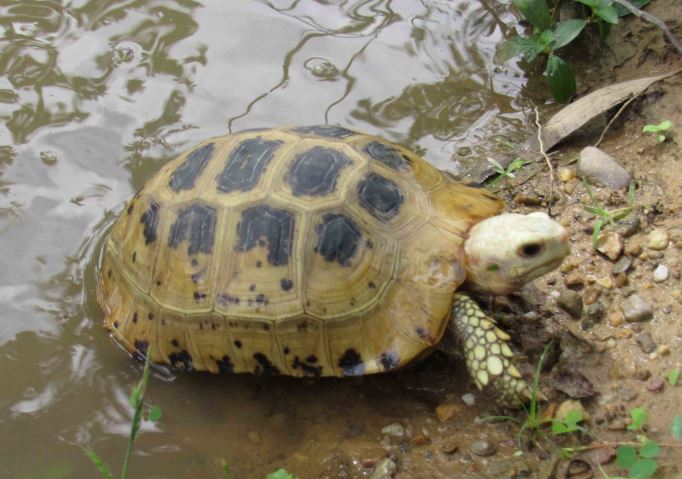
    Elongated Tortoise (Indotestudo elongata) spotted in Aravallis

    Why in the News?

    The elongated tortoise (Indotestudo elongata), a critically endangered species, was recently spotted in Haryana’s Damdama area during a research survey in the Aravalli hills.

    About Elongated Tortoise:

    Details
    Physical Features
    • Medium-sized body with a yellowish-brown or olive-colored shell
    • Black blotches at the center of each scute
    • Pink ring around nostrils during breeding season
    Habitat
    • Found in Sal deciduous and hilly evergreen forests
    • Distribution includes Southeast Asia, northern India, Nepal, Bhutan, Bangladesh, and other regions
    Indian Range Present in the Chhota Nagpur plateau and Himalayan foothills at elevations up to 1,000 meters
    Threats
    • Human exploitation for food and traditional medicine
    • Hunting, often with the help of dogs
    • Habitat degradation and illegal wildlife trade
    Ecological Role Significant species in its ecosystems but highly vulnerable to environmental changes and anthropogenic pressures
    Population Decline Significant population decline due to hunting, habitat degradation, and illegal wildlife trade, despite its wide distribution
    Conservation Status
    • Critically Endangered on the IUCN Red List
    • Appendix II under the CITES


    PYQ:

    [2013] Consider the following:

    1. Star tortoise

    2. Monitor lizard

    3. Pygmy hog

    4. Spider monkey

    Which of the above are naturally found in India?

    (a) 1, 2 and 3 only

    (b) 2 and 3 only

    (c) 1 and 4 only

    (d) 1, 2 and 3 and 4

  • Higher Education – RUSA, NIRF, HEFA, etc.

    Shabd Portal provides technical terms in 22 Indian languages

    Why in the News?

    The Commission for Scientific and Technical Terminology (CSTT), under the Union Education Ministry, has launched a unique website, shabd.education.gov.in, providing technical terms in all 22 official Indian languages.

    About Commission for Scientific and Technical Terminology (CSTT)

    • The Union Education Ministry established the CSTT in December 1960 to develop scientific and technical terminology in Hindi and other Indian languages.
    • It works to evolve, define, and standardize scientific and technical terms in Hindi and other Indian languages.
    • It publishes textbooks, monographs, and glossaries, and releases quarterly journals like Vigyan Garima Sindhu and Gyan Garima Sindhu.
    • It has developed over 450 glossaries, creating more than 3 million standardized words in Indian languages.
    • It prepares administrative glossaries for government departments and institutions to ensure consistent terminology in official documents.

    About the Shabd Portal

    • The portal aims to serve as a central repository for technical terminologies across Indian languages, hosting glossaries from CSTT as well as other institutions and agencies.
    • The portal currently hosts 450 dictionaries comprising 3 million words, making it a vast resource for users seeking scientific and technical terms in Indian languages.
    • Search Features:
      • Users can search for equivalent terms by language, subject, dictionary type, or language pairs.
      • Specific searches can also be made within a particular glossary or across the entire collection.
      • The platform also allows users to provide feedback on the terms prepared by the CSTT.

    Significance of the Portal

    • The launch comes amid efforts to promote technical education in Indian languages, including fields like medicine and engineering.
    • The portal is an essential step in ensuring accessibility of scientific and technical education in regional languages, supporting the vision of multilingual education.

    PYQ:

    [2014] Consider the following languages:

    1. Gujarati

    2. Kannada

    3. Telugu

    Which of the above has/have been declared as ‘Classical Language / Languages’ by the Government?

    (a) 1 and 2 only

    (b) 3 only

    (c) 2 and 3 only

    (d) 1, 2 and 3

  • International Space Agencies – Missions and Discoveries

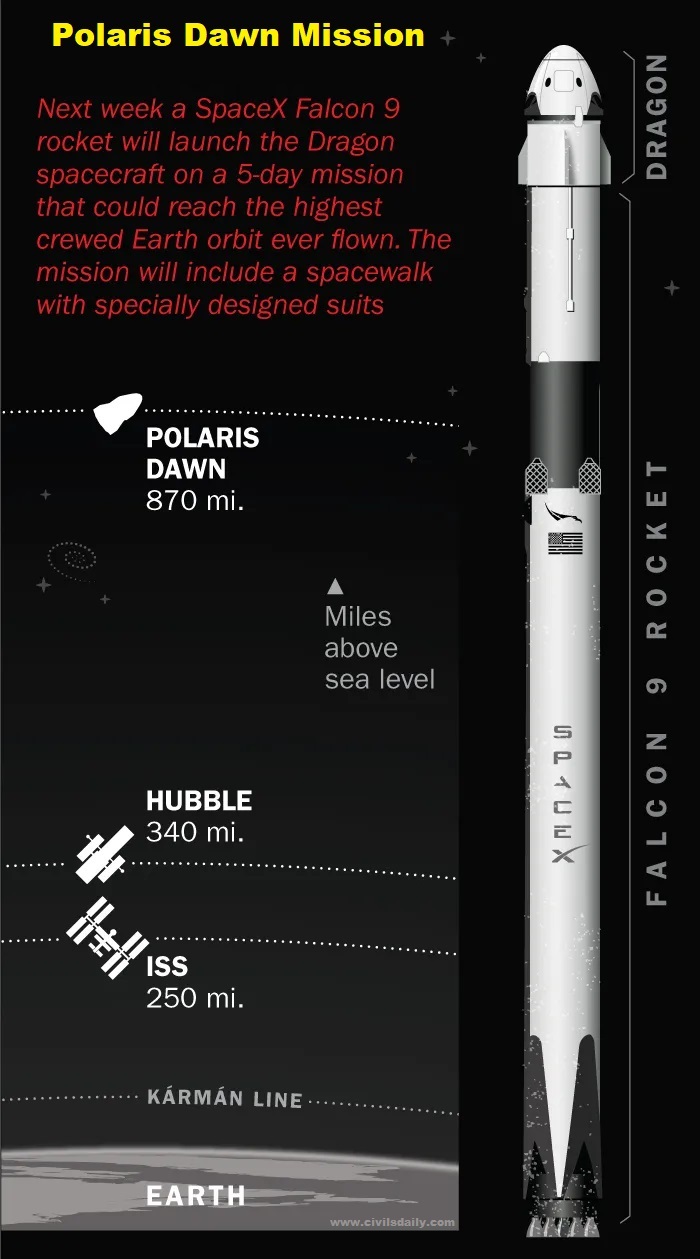
    Polaris Dawn: SpaceX’s Mission for First private Spacewalk

    SpaceX launched its Polaris Dawn Mission sending a four-person crew of civilians on a first-ever commercial spacewalk into Earth's Van Allen radiation belts.

    Why in the News?

    SpaceX launched its Polaris Dawn Mission sending a four-person crew of civilians on a first-ever commercial spacewalk into Earth’s Van Allen radiation belts.

    What is Polaris Dawn Mission?

    • It is a privately-funded space mission led by billionaire entrepreneur Jared Isaacman, in collaboration with SpaceX.
    • It is set to be the first non-government mission to conduct a spacewalk.
    • This 700km altitude will surpass the current record held by NASA’s Gemini 11 mission in 1966.
    • The mission will test new spacesuits designed by SpaceX to protect astronauts from high radiation levels encountered in the Van Allen Belts.

    What are the Van Allen Belts?

    • The Van Allen Belts are two zones of charged particles that surround Earth, held in the magnetosphere.
    • These belts were discovered in 1958 by American physicist James Van Allen.

    Why are the Van Allen Belts dangerous for Humans?

    • The Van Allen Belts are dangerous for humans because they contain high levels of radiation that can pose significant health risks to astronauts.
    • The belts are filled with charged particles that can cause radiation sickness, damage human tissues, and increase the risk of cancer. 


    PYQ:

    [2011] What is the difference between asteroids and comets?

    1. Asteroids are small rocky planetoids, while comets are formed of frozen gases held together by rocky and metallic material.
    2. Asteroids are found mostly between the orbits of Jupiter and Mars, while comets are found mostly between Venus and Mercury.
    3. Comets show a perceptible glowing tail, while asteroids do not.

    Which of the statements given above is/are correct?

    (a) 1 and 2 only
    (b) 1 and 3 only
    (c) 3 only
    (d) 1, 2 and 3

Join the Community

Join us across Social Media platforms.