💥UPSC 2027,2028 Mentorship (April Batch) + Access XFactor Notes & Microthemes PDF

Archives: News

  • Global Geological And Climatic Events

    Typhoon Yagi

    Why in the News?

    India has launched Operation Sadbhav to provide humanitarian assistance to Southeast Asian countries affected by Typhoon Yagi, including Vietnam, Laos and Myanmar.

    Typhoon Yagi: Origin and Impact 

    • Typhoon Yagi began as a tropical storm in the western Philippine Sea on September 1, 2024.
      • Yagi, which means goat or the constellation of Capricornus in Japanese.
    • It made landfall in the Philippines but intensified again due to warm waters in the South China Sea, reaching Category 3 winds by September 4.
    • Yagi further strengthened to a Category 5 typhoon with peak winds of 260 kmph, making it one of only four Category 5 storms recorded in the South China Sea.
    • Although downgraded to a tropical depression, it continued to bring heavy rains and floods to Myanmar and other areas.

    What are Typhoons?

    • A Typhoon is a type of tropical cyclone that forms in the northwestern part of the Pacific Ocean, particularly affecting East Asia, Southeast Asia, and parts of Oceania.
    • They are characterized by strong winds, heavy rain, and can cause severe flooding, storm surges, and damage to infrastructure.

    Key Features of Typhoons:

    • Formation Region: Typhoons form in the Northwestern Pacific Ocean, primarily between 100°E and 180°E.
    • Wind Speed: To be classified as a typhoon, sustained winds must exceed 119 km/h.
    • Structure: Like hurricanes, typhoons have a central eye (calm area) surrounded by a violent eyewall where the strongest winds and heaviest rains occur.
    • Season: Typhoons typically occur from May to October, with a peak from August to September.

    Global Terminology:

    • Typhoon: Northwest Pacific Ocean.
    • Hurricane: North Atlantic, Central and Eastern North Pacific Oceans.
    • Cyclone: South Pacific and Indian Ocean.


    PYQ:

    [2020] Consider the following statements:

    1. Jet streams occur in the Northern Hemisphere only.

    2. Only some cyclones develop an eye.

    3. The temperature inside the eye of a cyclone is nearly 10ºC lesser than that of the surroundings.

    Which of the statements given above is/are correct?

    (a) 1 only

    (b) 2 and 3 only

    (c) 2 only

    (d) 1 and 3 only

  • Textile Sector – Cotton, Jute, Wool, Silk, Handloom, etc.

    Jute Production in India

    Why in the News?

    • Jute production is expected to decline by 20% this financial year, as per the National Jute Board.
      • Jute cultivation in West Bengal and Assam was severely affected by natural calamities, including floods, damaging crops in some areas.

    About National Jute Board (NJB)

    • The NJB was established in 2008 under the National Jute Board Act, 2008 (w.e.f. 2010), and operates under the Ministry of Textiles.
    • Its primary objective is to promote the development of the jute sector by supporting modernization, productivity enhancement, and domestic as well as international marketing of jute products.
    • It implements various initiatives, such as Jute-ICARE, aimed at improving jute cultivation practices, and promotes Jute Geotextiles for infrastructure projects.
    • HQ: Kolkata (West Bengal)
    • NJB implements the Jute Technology Mission (JTM) aimed at improving the productivity, quality, and diversification of jute products.
      • JTM 2.0 presently focuses on further enhancing the productivity, quality, and diversification of jute.

    About the Jute Industry in India

    • Jute, often referred to as the ‘golden fibre’, is considered safe for packaging due to its natural, renewable, biodegradable, and eco-friendly properties.
    • The Jute Industry in India is over 150 years old, with approximately 93 jute mills currently in operation, as per the Indian Jute Mills Association (IJMA).
    • India’s first jute mill was established in 1854 at Rishira, near Kolkata.
      • However, after independence, India faced challenges as the jute-growing areas remained in Bangladesh while the jute factories were located in India.
    • The jute industry is a vital sector in East India, particularly in West Bengal.
      • It supports about 40 lakh agricultural families, employing 1.4 lakh people in the tertiary sector and 2.6 lakh in manufacturing.
    • India is the largest producer of jute, followed by Bangladesh and China. However, Bangladesh leads in global jute trade, accounting for 75% of exports, while India accounts for 7%.

    Jute Cultivation in India

    • Jute cultivation is mainly concentrated in 3 Indian states: West Bengal, Assam, and Bihar which together produce 99% of the country’s jute.
    • Conditions Required:
      • Temperature: 25-35°C
      • Rainfall: 150-250 cm
      • Soil Type: Well-drained alluvial soil
    • This is due to the rich alluvial soil in the Ganga-Brahmaputra delta.
    • Jute is versatile and used to produce gunny bags, mats, ropes, yarn, carpets, and various artefacts.
    • Jute seeds are planted between April and May and harvested between July and August.
    • The leaves can be sold in vegetable markets for nearly two months of the four-month jute crop cycle.
    • The tall, hardy grass shoots up to 2.5 metres and each part of it has several uses.
    • The outer layer of the stem produces the fibre that goes into making jute products.
    • The government fixes the Minimum Support Price (MSP) for raw jute procurement from farmers.


    PYQ:

    [2020] “The crop is subtropical. A hard frost is injurious to it. It requires at least 210 frost-free days and 50 to 100 centimetres of rainfall for its growth. A light well-drained soil capable of retaining moisture is ideally suited for the cultivation of the crop.” Which one of the following is that crop?

    (a) Cotton

    (b) Jute

    (c) Sugarcane

    (d) Tea

  • National Green Tribunal’s Role and Contributions

    NGT seeks report from Central Pollution Control Board

    Why in the News?

    The National Green Tribunal (NGT) has instructed the Central Pollution Control Board (CPCB) to submit a fresh report on the generation and treatment of electronic waste by states and Union territories (UTs).

    About Central Pollution Control Board (CPCB):

    Details
    Constitution Established in September 1974 under the Water (Prevention and Control of Pollution) Act, 1974.
    Additional Powers
    • Empowered under the Air (Prevention and Control of Pollution) Act, 1981.
    • Also works under the provisions of the Environment (Protection) Act, 1986.
    Nodal Ministry Functions under the Ministry of Environment, Forest and Climate Change.
    Main Objective
    • To promote the prevention, control, and abatement of water and air pollution across India.
    • Collects and disseminates technical and statistical data on water and air pollution.
    Key Programs
    • National Air Monitoring Programme (NAMP)
    • National Water Quality Monitoring Program (NWQMP)
    • Oversees the National Air Quality Index (NAQI) to provide real-time data on air quality.
    Initiatives
    • Graded Response Action Plan (GRAP)
    • Clean Air Campaign


    PYQ:

    [2018] How is the National Green Tribunal (NGT) different from the Central Pollution Control Board (CPCB)?

    1. The NGT has been established by an Act whereas the CPCB has been created by an executive order of the Government.

    2. The NGT provides environmental justice and helps reduce the burden of litigation in the higher courts whereas the CPCB promotes cleanliness of streams and wells and aims to improve the quality of air in the country.

    Which of the statements given above is/are correct-?

    (a) 1 only

    (b) 2 only

    (c) Both 1 and 2

    (d) Neither 1 nor 2

  • Agricultural Sector and Marketing Reforms – eNAM, Model APMC Act, Eco Survey Reco, etc.

    India raises Import Tax on Edible Oils

    Why in the News?

    • India has increased the basic import tax on crude and refined edible oils by 20% to protect domestic farmers suffering from low oilseed prices.
      • The move could push up edible oil prices, reduce demand, and potentially lower imports of palm oil, soyoil, and sunflower oil.

    Edible Oil Scenario in India                                              

    • India imports more than 70% of its vegetable oil demand, mainly sourcing:
      • Palm oil from Indonesia, Malaysia, and Thailand, and
      • Soyoil and sunflower oil from Argentina, Brazil, Russia, and Ukraine.
    • Palm oil constitutes over 50% of India’s edible oil imports.

    NITI Aayog Report on Edible Oil Self-sufficiency: Key Highlights

    NITI Aayog, along with the Ministry of Agriculture and other stakeholders, released a report titled “Pathways and Strategies for Accelerating Growth in Edible Oils Towards the Goal of Atmanirbharta.”

    Details
    Consumption Details India consumes 19.7 kg/year per capita edible oil, with 16.5 million tonnes of imports in 2022-23; only 40-45% of demand met through domestic production.
    Projections
    • Domestic production could reach 16 MT by 2030
    • 26.7 MT by 2047 under Business-As-Usual (BAU) scenario
    Strategic Interventions
    • Crop Retention and Diversification
    • Horizontal Expansion (increase cultivation area)
    • Vertical Expansion (improve yield through technology)
    Self-sufficiency Targets
    • Edible oil production of 36.2 MT by 2030
    • 70.2 MT by 2047
    Key Recommendations Focus on seed quality, modern processing infrastructure, and public-private partnerships for growth


    PYQ:

    [2018] Consider the following statements

    1. The quantity of imported edible oils is more than the domestic production of edible oils in the last five years.

    2. The Government does not impose any customs duty on all imported edible oils a special case.

    Which of the statements given above is/are correct?

    (a) 1 only

    (b) 2 only

    (c) Both 1 and 2

    (d) Neither 1 nor 2

  • Road and Highway Safety – National Road Safety Policy, Good Samaritans, etc.

    The shock of crumbling infrastructure and the solution

    Why in the News?

    The recent collapse of under-construction bridges in Bihar highlights ongoing quality control challenges in India’s infrastructure sector, despite efforts like PM Gati Shakti and increased capital expenditure in 2024.

    Issues of Quality Control and Project Implementation in Infrastructure in India 

    • Quality Control Deficiencies: There are significant gaps in the quality control mechanisms for infrastructure projects. Many projects lack a robust system for monitoring and ensuring quality at every stage, from planning to execution. The absence of comprehensive quality assurance frameworks as evidenced by recent bridge collapses in Bihar.
    • Need for Modern Project Management Practices: Traditional project management practices are often outdated and ineffective in addressing the complexities of modern infrastructure projects.

    Internal Challenges in India’s Infrastructure Sector:

    • Project Delays and Cost Overruns: Infrastructure projects frequently experience delays and cost overruns, with a report indicating that 431 projects faced a total cost overrun of ₹4.82 lakh crore.  
    • Lack of Comprehensive Planning: Many infrastructure projects, especially in urban areas, suffer from poor planning and project management, with urban local bodies and local self-governments lacking the necessary capacity and expertise.
    • Multiple Clearances and Bureaucratic Delays: Industrial and commercial activities often require numerous clearances, leading to delays in project conception and commissioning.
    • Funding and Resource Misallocation: Delayed and poorly managed projects crowd out funding for other essential projects, burdening the government with extra expenditures and increasing procurement costs.

    Need to Integrate Modern Tools and Techniques: (Way forward)

    • Real-time Data Management: Traditional project management methods need an overhaul to incorporate modern tools like real-time data collection and analysis, which can help track progress and make timely interventions.
    • Global Best Practices in Project Management: The government must adopt international best practices, like the UK’s Infrastructure and Projects Authority model, which emphasizes efficient project delivery.
    • Program Management Approach: A holistic approach to managing multiple projects systematically, integrating resources, time, and information efficiently, as seen in successful projects like the Shendra-Bidkin industrial corridor.
    • GIS-Based Platforms: Initiatives like PM Gati Shakti demonstrate the integration of GIS-based platforms for real-time monitoring, enabling better coordination among various stakeholders to meet deadlines and enhance project quality.
  • Judicial Reforms

    Public comments on the PM-CJI puja meet are based on a 1997 document on judicial values

    Why in the News?

    Concerns about Prime Minister Modi’s visit to CJI Chandrachud’s residence for the Ganapati puja stem from the 1997 ‘Restatement of Values of Judicial Life’ guidelines on judicial conduct.

    What does the ‘Restatement of values of judicial life’ state?  

    It is a 16-point code of conduct adopted by the Supreme Court of India in May 1997 to guide the ethical behaviour of judges of the Supreme Court and High Courts.

    • Impartiality and Credibility: The first tenet emphasizes that judges’ behaviour must reinforce public faith in the judiciary’s impartiality. Any actions that could undermine this perception should be avoided.
    • Aloofness: Judges are advised to maintain a degree of aloofness that is consistent with the dignity of their office, ensuring they do not engage in relationships that could compromise their neutrality.
    • Public Awareness: Judges must be conscious of their public image and avoid any conduct seen as unbecoming of their high office.
    • Political Neutrality: Judges should remain politically neutral and avoid public discussions on political matters or cases pending judicial determination.
    • Avoiding Conflicts of Interest: Judges must not allow family members of the Bar to appear before them, nor should they engage in speculative financial activities or accept gifts beyond those from close friends and family.
    • Public Trust: The document underscores the importance of maintaining public trust through ethical conduct and discourages close associations with advocates practising in the same court.

    Types of Integrity

    Integrity in the judicial context can be categorized into several types:

    • Personal Integrity: This relates to the character and ethical standards of individual judges, emphasizing honesty and adherence to moral principles.
    • Institutional Integrity: This refers to the judiciary as a whole, ensuring that the institution operates independently and maintains public confidence.
    • Procedural Integrity: This involves the adherence to legal processes and standards that uphold justice, ensuring that all actions taken by judges are fair and transparent.

    Significance of Maintaining Integrity and Public Confidence through Probity

    • Trust in the Judiciary: Upholding integrity is crucial for maintaining public confidence in the judiciary, as it reassures citizens that justice is administered fairly and without bias.
    • Separation of Powers: The judiciary’s integrity is essential for maintaining the constitutional balance between the judiciary and the executive. Any perceived compromise can lead to public skepticism about the independence of judicial decisions.
    • Ethical Standards: The Restatement serves as a guide for judges to navigate their professional responsibilities while adhering to ethical standards, which is vital for the credibility of the judicial system.
    • Public Perception: Actions that appear to blur the lines between the judiciary and executive can lead to gossip and speculation, undermining the institution’s integrity. Judges must be mindful of their public image to prevent any erosion of trust.

    Way forward: 

    • Strengthen Judicial Training: Implement continuous ethical training for judges, emphasizing the importance of maintaining impartiality, political neutrality, and avoiding conflicts of interest to uphold public confidence.
    • Establish Oversight Mechanisms: Create robust internal oversight frameworks to monitor and address potential breaches of judicial integrity, ensuring transparency and accountability in judicial conduct.

  • Coastal Zones Management and Regulations

    Controversy over Mumbai’s salt pans

    Why in the News?

    The Centre has recently approved transferring 256 acres of Mumbai’s salt pan land to DRPPL, a joint venture with Adani Realty, for constructing rental housing for slum residents.

    What are Salt Pan Lands?

    • Salt pan lands are low-lying areas where seawater is allowed to flow in and evaporate, leaving behind salt and other minerals.
    • These lands are part of an important ecological system that, along with mangroves, helps in flood control by absorbing excess water during heavy rainfall and high tides.

    Why are Mumbai’s Salt Pan Lands at Risk?

    • Development Pressures: Salt pans are valuable as undeveloped land in Mumbai, leading to proposals for various development projects, including affordable housing and infrastructure.
    • Government Plans: Recent approvals, such as the transfer of 256 acres of salt pan land for the Dharavi Redevelopment Project, have faced criticism due to concerns that such development will encroach on these ecologically sensitive areas.
    • Legal and Administrative Challenges: Past plans for using saltpan lands for development have been put on hold or altered due to legal and environmental challenges, including those concerning the Coastal Regulation Zone (CRZ) norms.

    Why do Salt Pans Matter?

    • Flood Prevention: Salt pans play a crucial role in preventing flooding in Mumbai’s eastern suburbs by acting as natural reservoirs for excess water during heavy rains and high tides.
      • During significant rainfall events, such as the July 2005 deluge, salt pans helped mitigate the impact of flooding, emphasizing their importance in urban flood management.
    • Environmental Protection: They support local biodiversity, including various species of birds and insects. Destroying or altering these lands could disrupt these ecosystems.
    • Climate Resilience: Salt pans contribute to the city’s climate resilience strategy, making their preservation crucial for managing future climate-related challenges.

    National Context:

    • Across India, approximately 60,000 acres are designated as salt pan lands, distributed among states like Andhra Pradesh, Tamil Nadu, and Maharashtra.
    • These lands are crucial for local ecosystems and flood management, highlighting the broader importance of preserving such areas from development pressures.

    Way Forward: 

    • Strengthen Environmental Regulations: Enhance the enforcement of Coastal Regulation Zone (CRZ) norms and other environmental regulations to safeguard salt pan lands.
    • Promote Sustainable Land Use Planning: Integrate salt pan lands into urban planning strategies as critical components of flood management and biodiversity conservation.
  • Indian Ocean Power Competition

    Port Blair renamed as Sri Vijaya Puram

    Why in the News?

    Union Home Minister announced that Port Blair, the capital of the Andaman and Nicobar Islands, will be renamed Sri Vijaya Puram.

    On December 30, 2018, three islands in the Andaman and Nicobar archipelago were renamed by the Government of India to honor Netaji Subhas Chandra Bose and to commemorate India’s independence struggle:

    • Ross Island renamed as Netaji Subhas Chandra Bose Island
    • Neil Island renamed as Shaheed Dweep
    • Havelock Island renamed as Swaraj Dweep

    Historical Importance of Port Blair

    • The city was named after Lieutenant Archibald Blair, a British naval officer who served during the early 18th century.
    • The infamous Cellular Jail, known as Kaala Paani, was established in 1906.
    • Many prominent freedom fighters, including Veer Savarkar, were incarcerated here under oppressive circumstances.
    • It is also the place that hosted the first unfurling of our ‘Tiranga’ by Netaji Subhash Chandra Bose.

    Port Blair renamed as Sri Vijaya Puram

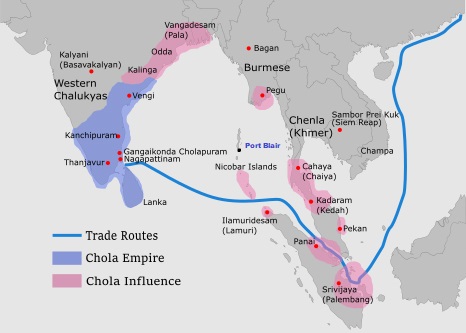
    Behind the new name ‘Sri Vijaya Puram’: Chola History

    • The Chola Empire, under Rajendra Chola I, used the Andaman Islands as a strategic naval base in the 11th century.
      • He launched a naval expedition to attack the Srivijaya Empire in present-day Indonesia.
    • His victory over Srivijaya resulted in the capture of the king Sangrama Vijayottunggavarman and looting valuable treasures, further cementing the Chola dominance.
    • The Thanjavur inscriptions (1050 CE) refer to the islands as Ma-Nakkavaram (great open land), later evolving into the name Nicobar Islands.

    PYQ:

    [2014] Which one of the following pairs of islands is separated from each other by the ‘Ten Degree Channel’?

    (a) Andaman and Nicobar

    (b) Nicobar and Sumatra

    (c) Maldives and Lakshadweep

    (d) Sumatra and Java

  • Indian Army Updates

    [pib] Exercise AL NAJAH

    Why in the News?

    The Indian Army contingent has departed to Salalah, Oman for the 5th edition of the India-Oman Joint Military Exercise AL NAJAH. T

    About Exercise AL NAJAH

    • AL NAJAH has been conducted biennially since 2015, alternating between India and Oman. The last edition of the exercise was held at Mahajan, Rajasthan.
    • Aim: to enhance the capability of both nations’ forces to carry out counter-terrorism operations.
    • Significance: It will focus on operations in a desert environment, preparing both sides for complex challenges in such terrains.
    • Features:
    1. Joint Planning for operations
    2. Cordon and Search Operations
    3. Fighting in Built-Up Areas
    4. Mobile Vehicle Check Posts
    5. Counter-Drone Operations

    PYQ:

    [2024] Which of the following statements about the Exercise Mitra Shakti-2023 is/ are correct?

    1. This was a joint military exercise between India and Bangladesh.
    2. It commenced in Aundh (Pune).
    3. Joint response during counter-terrorism operations was a goal of this operation.
    4. Indian Air Force was a part of this exercise.

    Select the answer using the code given below:

    (a) 1, 2 and 3

    (b) 1 and 4

    (c) 1 and 4

    (d) 2, 3 and 4

  • Artificial Intelligence (AI) Breakthrough

    What is OpenAI o1?

    Why in the News?

    • OpenAI has introduced OpenAI o1, the first in a series of advanced AI models under its Project Strawberry initiative.
      • This new model is designed for tackling more complex tasks in science, coding, and maths.

    About OpenAI o1 

    • This model has been built to approach problems like humans, carefully considering various angles before arriving at an answer.
    • It improves its performance by learning from different perspectives and checking its output for errors.
    • In trials, the upcoming version of the o1 model performed on par with PhD students in areas like physics, chemistry, and biology, and excelled particularly in maths and coding.
    • For instance, it solved 83% of problems in a math contest, compared to earlier versions which solved just 13%.
      • In coding, the model ranked higher than 89% of participants.

    Key Features and Offerings

    • OpenAI is also releasing OpenAI o1-Mini, an economical version designed for developers, offering similar reasoning capabilities at 80% lower cost compared to the o1-preview version.
    • The o1 model excels in generating and debugging complex code and is expected to assist in software development, data analysis, and problem-solving tasks.

    Safety Measures

    • OpenAI has introduced new training methods to ensure the safety of these models, improving their ability to follow safety guidelines and prevent AI jail-breaking.
      • Jailbreaking is a form of hacking that aims to bypass an AI model’s ethical safeguards and elicit prohibited information.
    • In safety tests, the new version scored 84/100, a significant improvement from the previous 22/100 score.
    • The company is collaborating with UK and US governments on AI safety and conducting red teaming to identify and address any weaknesses.

Join the Community

Join us across Social Media platforms.