💥UPSC 2027,2028 Mentorship (April Batch) + Access XFactor Notes & Microthemes PDF

Archives: News

  • Women empowerment issues – Jobs,Reservation and education

    What is the gender gap in education?  

    Why in the news? 

    The 2024 World Economic Forum (WEF) report on global gender gaps has ranked India at 129 out of 146 economies, marking a decline of two positions from the previous year.

    Key Highlights by WEF Report:

    • Gender Parity Regression: India’s gender parity levels in educational attainment dipped in the 18th edition of the report, with a score of 0.964, down from a perfect 1.000 in the 17th edition.
      • This decline is attributed to a 17.2 percentage point gap between men’s and women’s literacy rates, causing India to rank 124th on this indicator.
    • Data Update and Period Variation: WEF’s Insight and Data Lead, Ricky Li, explained that the regression is due to updated data from UNESCO for the 2022 and 2023 periods, contrasting with the data from 2018, 2021, and 2022 used in the previous edition.
      • This emphasizes the impact of periodic updates and corresponding periods on the gender parity score.

    What do figures from the Unified District Information System for Education and the All India Survey on Higher Education indicate? 

    • Overall Enrolment and Gender Ratio: UDISE+ (2021-22) shows that girls constitute 48% of the school population, with enrolment increasing from 46.8% in preschool/kindergarten to 48.3% in higher secondary education.
    • Gross Enrolment Ratio (GER) in Higher Education: AISHE (2021-22) reports that the GER for women in higher education is 28.5%, slightly higher than the male GER of 28.3%, indicating a positive trend in female participation in higher education.
    • Trends in Female Enrolment: Female enrolment has seen a 32% increase since 2014-15, demonstrating significant progress in higher education, despite challenges such as lower enrolment in STEM fields and regional disparities in secondary education access.

    Are girls more likely to complete secondary education when they have access to it? 

    • Yes, girls are more likely to complete secondary education when they have access to it. The data from UDISE+ (2021-22) shows that while there is a slight drop in the percentage of girls enrolled in secondary education (47.9%), those who do have access to secondary education are more likely to continue to higher secondary education, where the gender gap narrows again to 48.3%.
    • This trend indicates that providing access to secondary education facilities helps girls stay in school and complete their education.

    What needs to be done to ensure girls and boys, don’t drop out? (Way forward)

    • Addressing Socio-Cultural Barriers:  Raising awareness about social issues such as early marriage, which disproportionately affects girls, is essential. Collaborating with local authorities and community leaders to advocate for girls’ education can help mitigate these challenges
    • Community Involvement: Engaging parents and the community in the educational process can foster a supportive environment for students. This can include parent workshops, support groups, and regular communication about student progress.
    • Flexible Learning Options:  Offering flexible learning arrangements, such as part-time schooling or distance education, can accommodate students facing economic or personal challenges. This flexibility can help students balance their responsibilities while continuing their education.
    • Vocational Training and Skill Development: Incorporating vocational training programs into the school curriculum can equip students with practical skills that increase their employability. This can motivate students to stay in school as they see a direct link between education and future job opportunities

    Mains PYQ: 

    Q Can the vicious cycle of gender inequality, poverty and malnutrition be broken through microfinancing of women SHGs? Explain with examples. (2021)

  • Modern Indian History-Events and Personalities

    National Flag Day, 2024

    Why in the News?

    On 22nd July in 1947, the Constituent Assembly of India adopted the National Flag.

    PC: The Better India

    About the National Flag Day

    • The Constituent Assembly met in New Delhi at 10 o’clock, chaired by Dr. Rajendra Prasad.
    • The Assembly had been meeting since December 9, 1946, discussing various subjects.
    • The Chair announced the first agenda item: “a Motion by Pandit Jawaharlal Nehru about the Flag.”

    Jawaharlal Nehru’s Resolution on National Flag

    • India’s first Prime Minister, Jawaharlal Nehru, moved the Resolution:
      • The National Flag of India shall be a horizontal tricolour of deep Saffron (Kesari), white, and dark green in equal proportion.
      • In the centre of the white band, there shall be a navy blue Wheel representing the Charkha.
      • The design of the Wheel is based on the Chakra from the Sarnath Lion Capital of Ashoka.
      • The diameter of the Wheel approximates the width of the white band.
      • The ratio of the width to the length of the Flag shall be 2:3.
    • The motion was adopted unanimously by the Assembly.
    • Adoption by Popular Acclaim:
    • Nehru mentioned that the Flag was adopted by popular acclaim and sacrifice over the past decades.
    • Nehru clarified that the Flag was not meant to be seen in communal terms.
    • The design was intended to represent the spirit and tradition of India, grown over thousands of years.

    Reactions and Support

    • There were no significant objections to Nehru’s Resolution.
    • Several members, including Seth Govind Das, V I Muniswami Pillai, Chaudhri Khaliquzzaman, S Radhakrishnan, Saiyid Mohammad Saadulla, Frank R Anthony, and Sarojini Naidu, paid tributes to the Flag and supported the Resolution.
    • H V Kamath suggested adding a Swastika inside the Chakra to symbolize peace but withdrew the amendment after seeing the Flag’s design.
    • Dr. P S Deshmukh preferred retaining the original tricolour with the Charkha but did not push his amendment, respecting the House’s preference.

    Back2Basics: History of Our National Flag

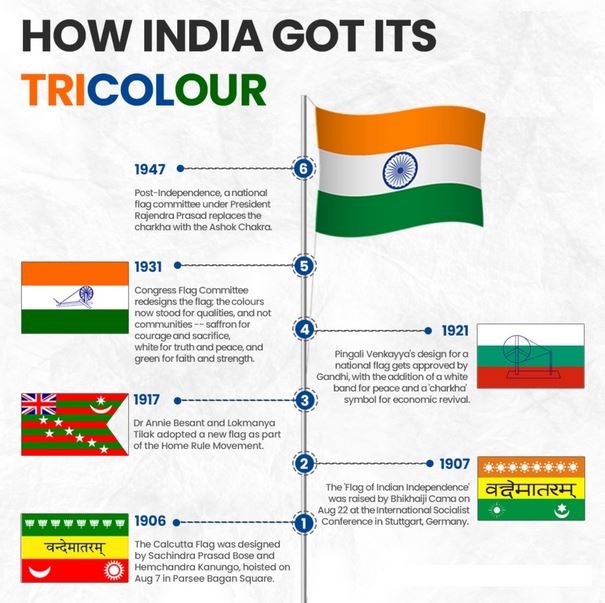
    First Public Display in Kolkata (1906):

    • The first national flag of India was hoisted on August 7, 1906, in Kolkata at Parsee Bagan Square (Green Park).
    • The flag had three horizontal stripes of red, yellow, and green, with “Vande Mataram” inscribed in the center.
      • Symbolism: The red stripe included symbols of the sun and a crescent moon, while the green stripe featured eight half-open lotuses.
    • The flag is believed to have been designed by freedom activists Sachindra Prasad Bose and Hemchandra Kanungo.

    Indian Flag in Germany:

    • In 1907, Madame Cama and her group of exiled revolutionaries hoisted an Indian flag in Germany.
    • This event marked the first time the Indian flag was hoisted in a foreign country.

    Home Rule Movement Flag:

    • Dr. Annie Besant and Lokmanya Tilak introduced a new flag in 1917 as part of the Home Rule Movement.
    • The flag featured alternate red and green horizontal stripes, with seven stars in the Saptarishi configuration.
    • It included a white crescent and star in one top corner, and the Union Jack in the other.

    Version by Pingali Venkayya:

    • Pingali Venkayya, an Indian freedom fighter, is credited with the design of the modern Indian tricolour.
    • Venkayya first met Mahatma Gandhi in South Africa during the second Anglo-Boer War (1899-1902).
    • He conducted extensive research and published a book in 1916 that included possible designs for the Indian flag.
    • At the All India Congress Committee in Bezwada in 1921, Venkayya proposed a basic flag design to Gandhi, featuring two bands of red and green to represent Hindus and Muslims.


    PYQ:

    [2014] The national motto of India, ‘Satyameva Jayate’ inscribed below the Emblem of India is taken from

    (a) Katha Upanishad
    (b) Chandogya Upanishad
    (c) Aitareya Upanishad
    (d) Mundaka Upanishad

  • International Space Agencies – Missions and Discoveries

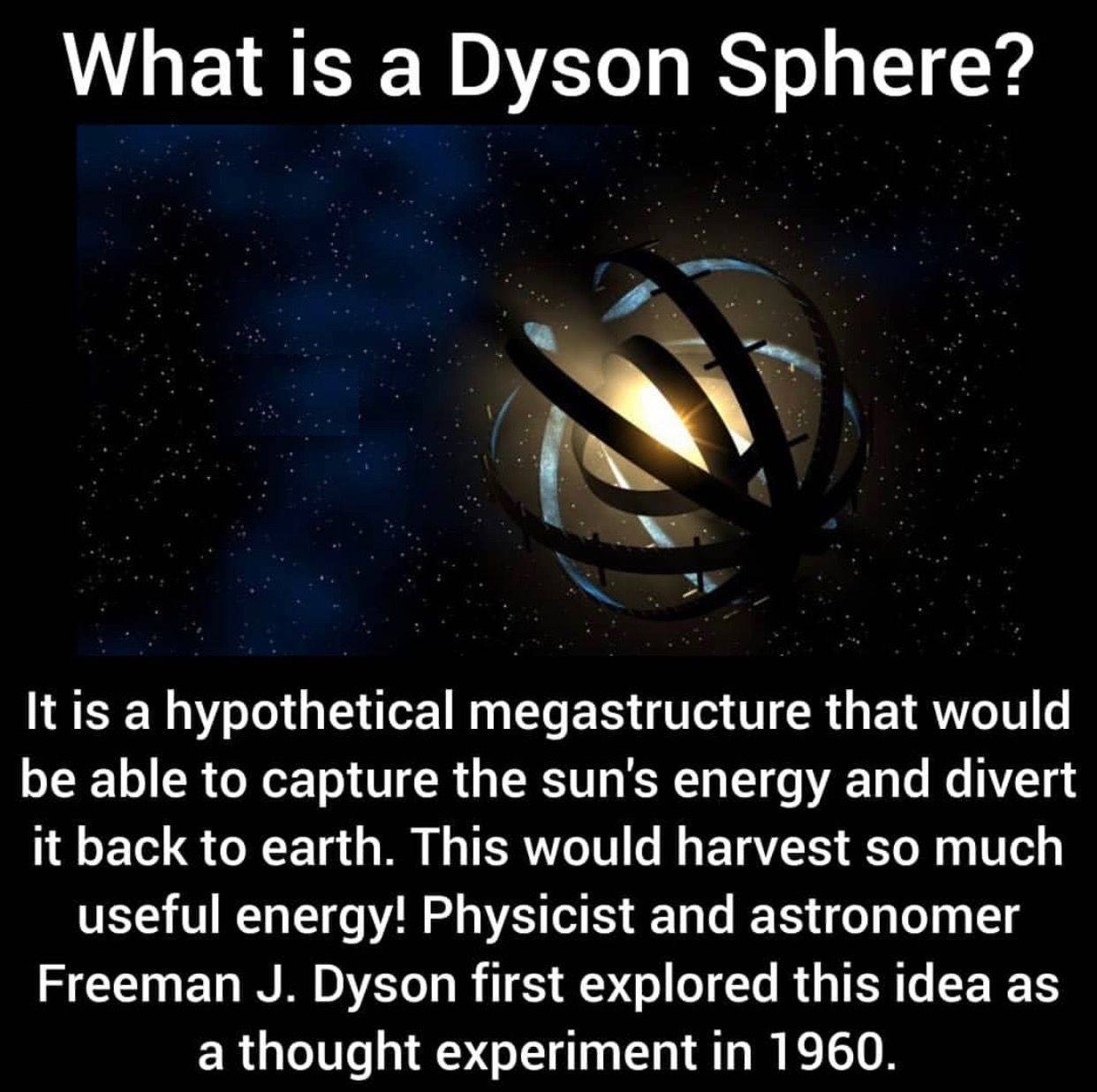
    What is the Dyson Sphere?

    Why in the News?

    Recently, astronomers have made progress in finding possible candidates as Dyson Sphere, sparking new excitement and debate about extraterrestrial life.

    What is a Dyson Sphere? 

    • Imagine you are an astronomer looking for extraterrestrial life and you find a star covered by solar panels. This structure, collecting massive amounts of solar energy, is known as a Dyson sphere.
    • The concept is named after Freeman Dyson, a theoretical physicist who lived from 1923 to 2020.
    • Dyson proposed that advanced civilizations would need to harness a star’s energy, constructing a spherical array of solar collectors around it.
    • He suggested that the heat emitted as infrared radiation could indicate the presence of these massive structures and thus intelligent life.

    Who was Freeman Dyson (1923-2020)?

    • Dyson was a renowned British-American theoretical physicist and mathematician known for his work in quantum electrodynamics, solid-state physics, and astronomy.
    • Born on December 15, 1923, in England, he made significant contributions to science and technology, including the Dyson Sphere concept—a hypothetical structure that could encompass a star to capture its power output.
    • He was also a prominent futurist and author, exploring ideas on space travel, extraterrestrial life, and the future of humanity.
    • Dyson spent much of his career at the Institute for Advanced Study in Princeton and was known for his interdisciplinary approach to science.


    PYQ:

    [2015] The term ‘Goldilocks Zone’ is often seen in the news in the context of

    (a) The limits of habitable zone above the surface of the Earth

    (b) Regions inside the Earth-like planets in outer space

    (c) Search for the Earth-like planets in outer space

    (d) Search for meteorites containing precious metals

  • Capital Markets: Challenges and Developments

    New Asset Class proposed by SEBI

    Why in the News?

    • The markets regulator, SEBI, has proposed a new asset class designed to offer investment products positioned between mutual funds (MFs) and portfolio management services (PMS).
      • This new category aims to fill an opportunity gap for investors and offer greater flexibility in portfolio construction.

    Note:

    • PMS provides customized investment solutions to high net-worth individuals (HNIs) with a minimum investment limit of Rs 50 lakh.
    • MFs, on the other hand, have a much lower minimum investment limit of just Rs 100, managed by a professional fund manager.

    About the New Asset Class

    • The new asset class aims to provide an intermediate option with more flexibility in portfolio construction, helping investors avoid unregistered and unauthorized schemes.
    • It will have a risk-return profile between MFs and PMS, targeting investors with higher risk tolerance and larger investment amounts than those typical of MFs but lower than PMS.
    • The current range of investment products includes:
    1. MF schemes: Focused on retail investors,
    2. PMS: For HNIs, and
    3. Alternative investment funds (AIF): For sophisticated investors.

    How will investments in the new asset class work?

    • The new asset class will be introduced under the MF structure with necessary relaxations in prudential norms.
    • The minimum investment amount is proposed to be Rs 10 lakh per investor within the asset management company (AMC)/MF.
    • This high threshold is intended to deter retail investors while attracting those with investible funds between Rs 10 lakh and Rs 50 lakh.

    Significance of the New Asset Class:

    • SEBI noted that the gap between investment opportunities in MFs and PMS has led some investors towards unauthorized investment avenues.
    • The new asset class will help curb the proliferation of unregistered investment products and provide a structured and regulated option for investors.
    • SEBI emphasized that the new asset class would offer a regulated and structured investment suited to investors looking for opportunities between MFs and PMS.

    Investment Strategies:

    • Like MF schemes, the new asset class will provide options for Systematic Investment Plan (SIP), Systematic Withdrawal Plan (SWP), and Systematic Transfer Plan (STP).
    • AMCs can offer ‘investment strategies’ under a pooled fund structure with tailored redemption frequencies (daily, weekly, monthly, etc.).

    PYQ:

    [2021] Indian Government Bond Yields are influenced by which of the following?

    1. Actions of the United States Federal Reserve
    2. Actions of the Reserve Bank of India
    3. Inflation and short-term interest rates

    Select the correct answer using the code given below.

    (a) 1 and 2 only
    (b) 2 only
    (c) 3 only
    (d) 1, 2 and 3

  • Waste Management – SWM Rules, EWM Rules, etc

    CPCB plans to check violations in Plastic Waste Trading Regime 

    Why in the News?

    • The Central Pollution Control Board (CPCB) has started a national audit of about 800 plastic-waste recyclers across India.
      • This action follows the discovery that four firms in Karnataka, Maharashtra, and Gujarat issued nearly 600,000 fake certificates under the Extended Producer Responsibility (EPR) programme.

    About Central Pollution Control Board (CPCB): Overview

    • The Central Pollution Control Board (CPCB) is a statutory organization established in September 1974.
    • It was constituted under the Water (Prevention and Control of Pollution) Act, 1974.
    • CPCB is also entrusted with powers and functions under the Air (Prevention and Control of Pollution) Act, 1981.
    • It serves as a technical arm of the Ministry of Environment, Forests, and Climate Change, implementing the provisions of the Environment (Protection) Act, 1986.

    Principal Functions:

    • Water Pollution Control:
      • Promote the cleanliness of streams and wells in different states by preventing, controlling, and abating water pollution.
      • Oversee the National Water Quality Monitoring Program to collect, collate, and disseminate technical and statistical data relating to water pollution.
    • Air Pollution Control:
      • Improve the quality of air and prevent, control, or abate air pollution in the country.
      • Conduct air quality monitoring as part of air quality management.
      • Implement the National Air Monitoring Programme (NAMP) to determine current air quality status and trends, regulate pollution from industries, and provide background air quality data for industrial siting and town planning.

    Key Initiatives and Programs:

    • National Air Monitoring Programme (NAMP): Established to monitor air quality status and trends, and to control and regulate industrial pollution to meet air quality standards.
    • National Air Quality Index (NAQI): Provides real-time air quality data and trends.
    • Graded Response Action Plan (GRAP): A set of measures to be taken based on the severity of air pollution levels.
    • Clean Air Campaign: Initiatives aimed at reducing air pollution through public awareness and actionable measures.

    Role in Data Management:

    • CPCB collects, collates, and disseminates technical and statistical data related to water and air pollution.
    • Provides necessary data for regulatory and planning purposes, including industrial siting and urban planning.

    What is Extended Producer Responsibility (EPR) Programme?

    • Extended Producer Responsibility (EPR) means the responsibility of a producer for the environmentally sound management of the product until the end of its life.
    • India had first introduced EPR in 2011 under the:
    1. Plastic Waste (Management and Handling) Rules, 2011
    2. E-Waste Management and Handling Rules, 2011.
    • The EPR scheme requires businesses using plastic packaging to recycle a certain percentage of the plastic used in the previous two years.

    Implementation of EPR:

    • Registration: Producers must register with the Central Pollution Control Board (CPCB) and submit an EPR plan.
    • Collection Mechanisms: Producers set up collection centers, return schemes, or partner with authorized recyclers to manage waste.
    • Documentation: Producers are required to maintain detailed records of waste collected and processed and submit regular reports to the CPCB.
    • Compliance Audits: The CPCB conducts audits to ensure that producers comply with EPR requirements.

    Function of EPR Certificates:

    • Registered plastic waste recyclers generate EPR certificates by recycling plastic waste.
    • Every tonne of plastic recycled generates a certificate.
      • According to a CPCB report in May, nearly 3.7 million tonnes of recycled plastic generated certificates.
    • In 2022-23, about 18,000 companies using plastic packaging were registered with the CPCB, aiming to recycle about 3.3 million tonnes.

    Compliance and Targets:

    • Companies must recycle 70% of the packaging used in the previous two financial years for 2022-23 and 100% for 2023-24. Non-compliance with these targets can result in fines.
    • EPR certificates are uploaded on a dedicated portal maintained by the CPCB, allowing recyclers and buyers to trade online.

    PYQ:

    [2019] In India, ‘extended producer responsibility’ was introduced as an important feature in which of the following?

    (a) The Bio-medical Waste (Management and Handling) Rules, 1998

    (b) The Recycled Plastic (Manufacturing and Usage) Rules, 1999

    (c) The e-Waste (Management and Handling) Rules, 2011

    (d) The Food Safety and Standard Regulations, 2011

  • Panchayati Raj Institutions: Issues and Challenges

    What is the International Centre for Audit of Local Governance?  

    Why in the news? 

    On July 18, CAG Girish Chandra Murmu inaugurated the International Centre for Audit of Local Governance (iCAL) in Rajkot, marking India’s first institute to set global standards for auditing local governance.

    How will iCAL work?

    • iCAL will serve as a platform for policymakers, administrators, and auditors connected with local governments to enhance collaboration and share best practices.
    • Objective: It aims to improve the independence and effectiveness of local government auditors through training, leadership development, and capacity-building initiatives.
    • Significance: iCAL will act as a think tank for addressing governance issues at the grassroots level through interactive workshops, knowledge-sharing sessions, and peer exchanges.

    How are local bodies audited in India?

    • India has a three-tier system consisting of the Union government, state governments, and local bodies (both urban and rural).
    • Local bodies like Panchayats and Urban Local Bodies (ULBs) are audited by various entities:
      • State-level offices like the Examiner of Local Fund Accounts (ELFA)/Director of Local Fund Accounts (DLFA) audit the utilisation of state funds by local bodies.
      • CAG conducts audits of all funds at the central and state levels, including those of local bodies. The CAG also advises and supports ELFA/DLFA.

    Why was a need felt for it?

    • Increased Funding and Need for Proper Auditing: With significant funds flowing to local bodies, there is a pressing need for improved auditing practices to ensure proper utilisation and financial management.
    • Global Practices and Collaboration: There is a need to promote global good practices and institutionalised collaboration among supreme audit institutions (SAIs) to enhance local government audit practices and share best practices.
    • Addressing Inefficiencies: Concerns have been raised about inefficiencies in local body financial management and reporting, as highlighted by the Reserve Bank of India’s 2022 report. iCAL aims to address these inefficiencies through better auditing practices and capacity building.

    Way forward: 

    • Expand Capacity Building and Training Programs: Enhance iCAL’s focus on training and capacity-building for auditors and local government officials.
    • Foster International Collaboration and Knowledge Sharing: Strengthen partnerships with global audit institutions and engage in knowledge exchange initiatives.

    Mains PYQ: 

    Q In the absence of well – educated and organised local-level government systems, Panchayats and Samitis have remained mainly political institutions and not effective instruments of governance. Critically Discuss. (UPSC IAS/2015)

  • Disasters and Disaster Management – Sendai Framework, Floods, Cyclones, etc.

    The promise of parametric insurance

    Why in the news? 

    In 2023, natural disaster losses hit $280 billion, with only $100 billion insured, highlighting a need for innovative insurance solutions amid rising extreme weather events.

    Present Method of Disaster Risk Reduction

    • Indemnity-based Insurance Products: Indemnity-based insurance products require a physical assessment of damage after a disaster to determine the payout amount. For example Health Insurance, Motor Insurance and Travel Insurance.

    Challenges:

    • Verification Issues: When large-scale calamities strike, especially in economically disadvantaged areas, it is difficult to verify losses due to the lack of records and widespread destruction.
    • Delays in Payouts: The need for physical assessment can cause delays in providing financial assistance to the affected individuals and communities.
    • Insurance Gap: There is a significant gap in insurance coverage between developed and developing economies, leaving many vulnerable populations without adequate protection.

    Changing course and the associated limitations:

    • Parametric insurance: Payments are made based on predefined parameters of weather events (e.g., rainfall exceeding 100 mm per day for two consecutive days, specific flood levels, wind speed).The payouts are made without the need for physical assessment of losses, enabling quicker disbursements.

    Examples:

    • Disaster-prone Island Countries: Many have adopted parametric insurance for climate adaptation, moving away from risk retention models. For example, Fiji launched its first parametric insurance product in 2021
    • Morocco received $275 million in parametric insurance after a 6.8 magnitude earthquake, arranged with the help of the World Bank.
    • India has initiated crop insurance (e.g., Pradhan Mantri Fasal Bima Yojana and the Restructured Weather Based Crop Insurance Scheme).

    Associated Limitations

    • Current Focus: Primarily used for low-frequency, high-impact disasters like earthquakes, cyclones, and hurricanes.
    • Data and Infrastructure Requirements: There is challenges related to developing and maintaining the necessary infrastructure for data collection and monitoring can be challenging, especially in developing regions.
    • Affordability and Accessibility issues: It demands high premiums can still be a barrier for economically disadvantaged communities.

    Case Study of Nagaland:

    • Nagaland was the first state in India to buy parametric cover for extreme precipitation in 2021.
    • Based on lessons learned, it improved the product by fixing an absolute annual premium, duration, and rate online, allowing bidders to compete over lower threshold limits and maximized payouts.

    What can be done to ensure effectiveness? (Way Forward)

    • Precise Thresholds and Robust Monitoring: Establish clear, accurate parameters for insurance triggers and implement reliable monitoring systems to track these parameters effectively.
    • Transparent Bidding and Experience Sharing: Follow a transparent bidding process for price discovery and facilitate the exchange of best practices and lessons learned between governments.
    • Widespread Payout Systems and Household Premium Support: Develop comprehensive systems for distributing payouts and promote long-term premium payment by households, leveraging tools like Aadhaar-based payment dissemination.

    Mains PYQ: 

    Q Describe various measures taken in India for Disaster Risk Reduction (DRR) before and after signing ‘Sendai Framework for DRR (2015-2030)’. How is this framework different from ‘Hyogo Framework for Action, 2005’? (UPSC IAS/2018)

  • Agricultural Sector and Marketing Reforms – eNAM, Model APMC Act, Eco Survey Reco, etc.

    The Green Revolution in Maize

    Why in the news? 

    Over the past two decades, India’s maize production has more than tripled, emerging as a private sector-driven green revolution success story. Maize has transitioned from being primarily a feed crop to also serving as a fuel crop.

    What was the Green Revolution?

    • Began in 1968 with the introduction of high-yielding variety (HYV) seeds, especially for wheat and rice, developed by agronomist Norman Borlaug
    • Institutions like CIMMYT (International Maize and Wheat Improvement Center) and IARI (Indian Agricultural Research Institute), led by scientists like Norman Borlaug and M S Swaminathan, played a crucial role.
    • The Green Revolution is credited to M.S. Swaminathan, known as the “Father of the Indian Green Revolution”, who introduced Borlaug’s wheat varieties and other technologies.
    • The initiative focused on increasing agricultural productivity through advanced breeding techniques, fertilizers, and irrigation methods.
    • Wheat production increased from 12 million tons in 1964-65 to 20 million tons in 1970-71.India became self-sufficient in food grain production and a major exporter

    Present India’s Maize Production called as a Green Revolution in Maize

    • Significant Production Increase: Over the last two decades, India’s maize production has surged from 11.5 million tonnes in 1999-2000 to over 35 million tonnes in 2023-24, showcasing a remarkable increase in both yield and output.
    • Private Sector Leadership: This growth has been largely driven by the private sector, with more than 80% of the maize area planted with high-yielding hybrids developed by private seed companies, indicating a successful private sector-led green revolution.
    • Diverse Utilization: Maize in India has evolved from being primarily a feed crop for poultry and livestock to also being a vital industrial crop used for starch and ethanol production, reflecting its expanded role in the economy.

    On Starch and Ethanol Production

    • Maize contains 68-72% starch, with significant industrial applications in textiles, paper, pharmaceuticals, food, and beverages.
    • Maize is emerging as a key feedstock for ethanol production, especially for blending with petrol.
    • IARI has developed a waxy maize hybrid with high amylopectin content, enhancing its suitability for ethanol production.
    • The new Pusa Waxy Maize Hybrid-1 has 71-72% starch with 68-70% recoverable, increasing ethanol yield per tonne.

    Can India adopt new strategies? (Way forward)

    • India can adopt new strategies through innovative breeding techniques like the doubled haploid (DH) technology used by CIMMYT.
    • The DH facility in Karnataka speeds up the development of genetically pure inbred lines, enhancing the efficiency of maize breeding.
    • IARI’s waxy maize hybrid is ready for field trials and commercial release, potentially boosting ethanol production.
    • Collaboration between public sector institutions and private seed companies can drive the adoption of high-yielding, disease-resistant maize varieties.
    • Private sector-bred hybrids account for over 80% of India’s maize area, indicating strong potential for further growth and innovation in maize production.

    Mains PYQ: 

    Q Explain various types of revolutions, that took place in Agriculture after Independence in India. How these revolutions have helped in poverty alleviation and food security in India? (UPSC IAS/2017)

  • Climate Change Negotiations – UNFCCC, COP, Other Conventions and Protocols

    India plans to enter into a carbon crediting mechanism with Japan 

    Why in the news? 

    India is set to establish a Joint Crediting Mechanism (JCM) with Japan for carbon trading and emission-reduction credits.

    Memorandum of Cooperation for Setting Up a Joint Crediting Mechanism (JCM)

    • Objective and Framework: India and Japan plan to sign a Memorandum of Cooperation to establish a Joint Crediting Mechanism (JCM) for sharing emission-reduction credits. The JCM will involve a structured allocation of carbon credits and maintain a registry to track these credits, with projects needing clearance from a Joint Committee.
    • Implementation and Oversight: The mechanism will be governed under Article 6.2 of the Paris Agreement, adhering to relevant domestic laws and regulations of both countries. A Joint Committee will develop rules, manage project cycles, and oversee monitoring and issuance of credits.

    Emission Cuts

    • Credit Allocation: Credits issued under the JCM will contribute to both Japan’s and India’s Nationally Determined Contributions (NDCs) under the Paris Agreement. The JCM will avoid double counting of credits and may authorize some credits for international mitigation purposes.
    • Technology Transfer and Capacity Building: Japan will support technology transfer, finance, and capacity building to enhance the effectiveness of the JCM and facilitate the adoption of new technologies.

    Significance of JCM:

    • Increased Access to Clean Technologies: The JCM will facilitate the transfer of advanced decarbonizing technologies from Japan to India, such as renewable energy systems, energy-efficient appliances, and waste management solutions.
    • Job Creation and Skill Development: The implementation of JCM projects will create new employment opportunities in sectors like renewable energy, energy efficiency, and waste management

    Bilateral ties between India and Japan

    • Strategic Partnership: The JCM will strengthen bilateral ties between India and Japan by fostering collaboration on low-carbon technologies and climate action, aimed at boosting job creation and investments in clean technologies.
    • Clean Energy Partnership: It was launched in March 2022, the India-Japan Clean Energy Partnership (CEP) aims to enhance cooperation in sustainable energy transitions to achieve net-zero emissions by 2070.
    • Investment Commitments: During the 14th India-Japan Annual Summit in March 2022, both nations agreed on a target of $42 billion (JPY 5 trillion) in public and private investment from Japan to India over the next five years
    • Low Carbon Emission Strategies: A $600 million fund was established to focus on environmental sustainability and low carbon emission strategies. This initiative is part of a broader effort to enhance Japanese investments in India while addressing climate change.

    Way forward: 

    • Prioritize the adoption of cutting-edge decarbonizing technologies: Japan should prioritize the transfer of its most advanced low-carbon technologies to India, such as renewable energy systems, energy-efficient appliances, and carbon capture and storage solutions.
    • Expand the scope of the JCM to include other areas of climate cooperation: While the initial focus of the JCM should be on emission reduction projects, India and Japan could explore expanding its scope to include other areas of climate cooperation, such as adaptation measures, climate finance, and capacity building.

    Mains PYQ: 

    Q Clean energy is the order of the day.’ Describe briefly India’s changing policy towards climate change in various international fora in the context of geopolitics. (UPSC IAS/2022)

  • Primary and Secondary Education – RTE, Education Policy, SEQI, RMSA, Committee Reports, etc.

    Bombay HC quashes Exemption from RTE Quota for Private Schools  

    Why in the News?

    The Bombay High Court has cancelled the Maharashtra government’s new rule that allowed private schools within 1 kilometer of government or government-aided schools to avoid reserving 25% of their seats for students from weaker sections and disadvantaged groups.

    Right to Education (RTE) Act: Overview

    • The Right to Education (RTE) Act, 2009 ensures free and compulsory education as fundamental right under Article 21A of the Indian Constitution.
    • It mandates that every child has the right to full-time elementary education of satisfactory and equitable quality in a formal school that meets certain essential norms and standards.
    • Key Provisions:
      • The RTE Act provides for free and compulsory education for all children between 6 and 14 years.
      • Schools must be available within a prescribed distance from the child’s residence to ensure accessibility.
      • The Act ensures the provision of adequate teachers and the establishment of standards for their training and quality.
    • Teacher Qualification: The teacher must pass the Teacher Eligibility Test (TET), which is administered by the respective government authority. The National Council for Teacher Education (NCTE) has established the minimum qualifications required for a person to be eligible for appointment as a teacher for classes I to VIII.
    • The RTE Act does NOT apply to Minority institutions.

    Section 12(1) (C) of the RTE Act:

    • Section 12(1) (C) requires private unaided and specified category schools to reserve at least 25% seats for children from economically weaker sections and disadvantaged groups.
    • This provision aims to promote social inclusion and ensure that children from all backgrounds have access to quality education.
    • The government reimburses schools for the expenses incurred for admitting these children, based on per-child expenditure incurred by the state.
    • Children from economically weaker sections and disadvantaged groups benefit from this Section as it provides them access to private schooling.
    • This section aims to contest education apartheid and bring parity and equality of opportunity for all children.

    Details of the Exemption Rule in Maharashtra

    • The notification stated that private unaided schools within one kilometer of a government or government-aided school would not need to reserve 25% of seats for socio-economically backward students.
    • Students in these areas would first be considered for admission to nearby government or government-aided schools.
    • The exemption also applied to future private schools established within a one-kilometer radius of government or government-aided schools.
    • If no such schools existed in the vicinity, private schools would be identified for RTE admissions.

    Similar Exemptions in Other States

    • Maharashtra joined Karnataka and Kerala in implementing this regime to exempt private schools from RTE admissions.
    • Karnataka introduced the rule in December 2018, referencing Kerala’s rules introduced in 2011.
    • In Kerala, the fee concession is available to RTE quota students only if there are no government or aided schools within one kilometer for Class 1 students.

    Reasons for Introducing Exemptions

    • Karnataka’s Law Minister stated in 2018 that the primary intention of RTE is to provide education to all classes of students.
    • Allowing parents to admit children to private schools despite nearby government schools resulted in a drop in enrollment ratios in government schools.
    • Private schools and teachers’ organizations highlighted that state governments often failed to reimburse fees for students admitted through the RTE quota.
      • Section 12(2) of the RTE Act binds state governments to reimburse expenses incurred by schools per child or the fee amount, whichever is less.
      • In Maharashtra, the Maharashtra English School Trustees Association (MESTA) threatened to boycott RTE admissions last December due to pending reimbursements of Rs 1,800 crore.

    PYQ:

    [2022] The Right of Children to Free and Compulsory Education Act, 2009 remains inadequate in promoting incentive-based systems for children’s education without generating awareness about the importance of schooling. Analyse.

    [2018] Consider the following statements:

    1. As per the right to education (RTE) Act, to be eligible for appointment as a teacher in a state, a person would be required to possess the minimum qualification laid down by the concerned State council of Teacher education.
    2. As per the RTE Act, for teaching primary classes, a candidate is required to pass a Teacher Eligibility Test conducted in accordance with the National Council of Teacher Education guidelines.
    3. In India, more than 90 % of teacher education institutions are directly under the State Governments.

    Which of the statements given above is/are correct?

    (a) 1 and 2
    (b) 2 only
    (c) 1 and 3
    (d) 3 only

Join the Community

Join us across Social Media platforms.