💥UPSC 2026, 2027, 2028 UAP Mentorship (March Batch) + Access XFactor Notes & Microthemes PDF

Archives: News

  • Electoral Reforms In India

    14th Amendment of US Constitution and Its Implications

    Central Idea

    • The US top court ordered the removal of former President Donald Trump from the ballot for the next Presidential elections.
    • The decision was based on Section 3 of the Fourteenth Amendment of the US Constitution, relating to Trump’s alleged role in the January 6, 2021, attacks on the US Capitol.

    14th Amendment of US Constitution

    Details
    Ratification Date July 9, 1868
    Primary Purpose To address civil rights issues following the Civil War, particularly regarding former slaves.
    Key Clauses Citizenship Clause: Citizenship for all persons born or naturalized in the U.S.

    Due Process Clause: Fair legal process required for all citizens.

    Equal Protection Clause: Equal legal protection for all citizens.

    Historical Context Response to post-Civil War issues, including the Black Codes in Southern states.
    Major Significance – Extended Bill of Rights protections to state actions.

    – Foundation for numerous civil rights advancements and Supreme Court decisions.

    Notable Cases – Brown v. Board of Education (1954) for desegregation

    – Roe v. Wade (1973) for abortion rights

    Why in news? Section 3 disqualifies anyone who, having taken an oath to support the Constitution, engages in insurrection or rebellion against the same, or aids its enemies, from holding any office, civil or military, in the United States.

    Applied to Donald Trump

    Impact on Federalism Altered the balance of power between the federal government and states, especially in civil rights and liberties.

    Similar Provisions in India

    Details
    Equal Protection Clause Article 14: Indian Constitution guarantees “equality before the law” and “equal protection of the laws” within the territory of India.
    Citizenship Clause Articles 5 to 11: Deal with aspects of citizenship in India, including citizenship by birth, descent, registration, naturalization, and incorporation of territory.
    Due Process Clause Article 21: Provides protection of life and personal liberty, stating “No person shall be deprived of his life or personal liberty except according to a procedure established by law.”
    Protection of Civil Liberties Article 19: Ensures the protection of certain rights regarding freedom of speech, assembly, etc.
    Prohibition of Discrimination Article 15: Prohibits discrimination on grounds of religion, race, caste, sex, or place of birth.
    Disqualification for Public Office Representation of the People Act, 1951 (Sections 8, 9, 10, 11): Lays out disqualifications for membership of Parliament and State Legislatures due to criminal convictions, corrupt practices, and certain office-of-profit positions.
  • International Monetary Fund,World Bank,AIIB, ADB and India

    World Bank sets up task force for MDB Reform Plan

    Central Idea

    About World Bank

    Details
    Establishment July 1944, during the United Nations Monetary and Financial Conference at Bretton Woods, New Hampshire, USA.
    Initial Purpose To help rebuild European nations devastated by World War II;

    Later expanded to include global development and poverty reduction.

    Components – International Bank for Reconstruction and Development (IBRD)

    – International Development Association (IDA)

    – International Finance Corporation (IFC)

    – Multilateral Investment Guarantee Agency (MIGA)

    – International Centre for Settlement of Investment Disputes (ICSID)

    Membership 189 member countries as of 2021.
    Headquarters Washington, D.C., United States.
    Main Functions Provides loans, credits, and grants; offers technical expertise and policy advice; researches development issues.
    Funding Through issuance of bonds in the international financial markets and earnings from its investments.
    Governance Led by a President, with a Board of Governors and a Board of Executive Directors.
    India’s Involvement – Founding member since 1944.

    – First loan approved in 1949 for Indian Railways.


    Understanding Multilateral Development Banks

    • Definition and Membership: MDBs are financial institutions with multiple country members, both developed and developing, that provide financing and technical assistance for development projects.
    • Operational Focus: Their operations span various sectors, including transport, energy, and urban infrastructure, with developed countries contributing to the lending pool and developing countries primarily borrowing for development projects.

    Rationale behind Proposed Reforms

    • Addressing Global Challenges: The climate crisis and other global issues require mechanisms for global-scale action, particularly in emerging markets and developing economies (EMDEs).
    • Aligning with National Priorities: The expert group recommends that MDBs align more closely with the developmental priorities of individual nations.
    • Enhancing Private Sector Engagement: A shift is suggested towards greater private sector involvement in MDB operations, moving away from the culture of limited interaction between private and sovereign financing arms.

    Key Aspects of the Proposed Reforms

    • Coordination and Stakeholder Involvement: The panel emphasizes the need for greater coordination among stakeholders, including national governments, to develop unified goals and policies.
    • Addressing Coordination Failures: The reforms aim to resolve multiple coordination failures among domestic and international stakeholders, both public and private.
    • Changing Perception and Practices: The current perception of MDBs as bureaucratic and risk-averse is seen as a barrier to private sector involvement, which is crucial for ramping up financing.

    MDBs’ Traditional Lending in Countries like India

    • Role in India’s Development: MDBs have been instrumental in financing key infrastructure projects in India, often with longer gestation periods.
    • World Bank’s Commitments: Since its establishment in 1944, the World Bank has committed $97.6 billion to India, with significant portions in public administration, agriculture, and transport.
    • Asian Development Bank’s Involvement: Formed in 1969, the ADB has committed $59.7 billion to India, focusing on transport, energy, and urban infrastructure.
    • Asian Infrastructure Investment Bank’s Financing: The AIIB, established in 2016, has approved $9.9 billion in financing for India, with a focus on transport, energy, and economic resilience.
    • European Investment Bank’s Contributions: Since 1958, the EIB has committed Euro 4.5 billion to India, primarily in the transport and energy sectors.

    Conclusion

    • Implications of the Recommendations: The proposed shift in MDB operations could lead to more effective and targeted development financing, aligning closely with the specific needs and priorities of individual countries.
    • Potential for Enhanced Global Impact: By addressing coordination challenges and increasing private sector engagement, MDBs could play a pivotal role in meeting global development goals and addressing critical challenges like the climate crisis.
  • Police Reforms – SC directives, NPC, other committees reports

    Supreme Court clarifies Enforcement Directorate’s Arrest Procedures

    Central Idea

    • The Supreme Court ruled on the procedures for arrests made by the Enforcement Directorate (ED).

    About Enforcement Directorate (ED)

    Details
    Establishment May 1, 1956

    Initially set up as an ‘Enforcement Unit’

    Mandate Enforces economic and financial regulations
    Jurisdiction Nationwide
    Legal Authority – Prevention of Money Laundering Act, 2002

    – Foreign Exchange Management Act, 1999

    Functional Focus Economic and financial offenses including money laundering, foreign exchange irregularities
    Investigative Powers – Attachment, confiscation, and arrest

    – Conduct raids and searches

    – Summon and question individuals

    Collaboration Coordinates with various agencies (CBI, local police) and banks
    Reporting Authority Department of Revenue, Ministry of Finance
    Corruption Investigations Has a separate Economic Offenses Division
    Notable Cases – Vijay Mallya extradition

    – PNB fraud case

    – Augusta Westland VVIP chopper scam

    International Cooperation Works with international law enforcement for cross-border investigations (Interpol, FATF)
    Public Interface Accepts complaints and information regarding economic offenses
    Transparency and Accountability Regular reports to the Ministry of Finance; subject to oversight by judiciary and government bodies

    Issue: Revision of ED Arrest Norms

    • Supreme Court Ruling: On Friday, the Supreme Court ruled that the Enforcement Directorate (ED) needs only to orally inform an accused of the grounds of their arrest at the time of arrest.
    • Requirement for Written Grounds: The court also specified that the written grounds of arrest must be supplied to the accused within 24 hours of their arrest.

    Modification of Previous Supreme Court Ruling

    • Earlier Mandate: A two-judge Bench of the Supreme Court on October 3 had mandated the ED to provide the grounds of arrest in writing at the time of custody.
    • Current Ruling: The latest ruling by Justices Bela Trivedi and Satish Chandra Sharma modified this requirement.

    Legal Framework: Section 19 of PMLA

    • ED’s Arrest Power: Section 19 of the Prevention of Money Laundering Act (PMLA) authorizes the ED to arrest individuals based on material evidence.
    • Notification Requirement: The law requires that the reasons for such belief must be recorded in writing, and the grounds of arrest be informed to the accused “as soon as may be.”
    • Understanding ‘As Soon As May Be’: The court interpreted the phrase to mean “as early as possible”, “without avoidable delay”, “within reasonably convenient” or a “reasonably requisite” period.

    Case Background: Supertech Limited’s Founder’s Challenge

    • Delhi High Court’s Decision: The Delhi High Court had dismissed a petition by a person to declare his arrest illegal.
    • Argument: He contended that his arrest violated Section 19(1) of the PMLA and his fundamental rights, as he was not supplied with written grounds for arrest.

    Supreme Court’s December 15 Ruling

    • Non-Retrospective Application: The court stated that the October 3 ruling in Pankaj Bansal vs. UOI cannot be applied retrospectively to cases before that date.
    • Reference to Vijay Madanlal’s Case: The court relied on its July 27 decision in Vijay Mandanlal Choudhary vs. UOI, by a three-judge Bench, to support its ruling.
    • Upholding PMLA Provisions: The validity of Section 19 was upheld, affirming its reasonable nexus with the PMLA’s objectives.

    Resolving Bench Discrepancies

    • 2002 Ruling: In “Pradip Chandra Parija vs. Pramod Chandra Patnaik,” a Constitution Bench ruled that if two Benches of equal strength arrive at different conclusions on the same question of law, the matter must be referred to a higher Bench.
    • Implications for Current Case: This precedent is relevant in resolving discrepancies when two Benches of equal strength, like in the current scenario, differ in their rulings.

    Conclusion

    • Legal Clarity: The Supreme Court’s ruling provides clarity on the procedures for arrests made by the ED, balancing prompt enforcement action with the rights of the accused.
    • Impact on Future Cases: This decision sets a precedent for how the ED’s arrests are to be conducted, influencing future cases involving the agency.
  • Climate Change Impact on India and World – International Reports, Key Observations, etc.

    Climate action needs an updated lexicon


    Cyclone 'Michaung' likely to make landfall on today; rain alert in many  states | Latest News India - Hindustan Times

    Central idea 

    The article discusses the impact of shifting baseline syndrome on our perception of environmental changes, particularly in the context of unprecedented rainfall in south Tamil Nadu. It emphasizes the importance of officialese, or official vocabulary, in effectively communicating climate scenarios, addressing challenges in aligning definitions with lived experiences. The article also explores the global implications of terminological precision in climate negotiations and highlights the need for updated language to navigate evolving climate realities.

    Key Highlights:

    • South Tamil Nadu experiences unprecedented rainfall, reversing a northeast monsoon deficit to a 5% excess within 24 hours.
    • Shifting baseline syndrome distorts perceptions of environmental changes, impacting our understanding of losses and resource availability.
    • Climate change introduces a future-oriented shifting baseline, challenging language and memorialization of evolving climate scenarios.

    Key Challenges:

    • The deceptive simplicity of defining ‘devastating’ events, influenced by shifting baseline syndrome and community memory.
    • Official vocabulary and definitions, such as those for extreme weather events, may not align with lived experiences and evolving climate realities.
    • The role of officialese in communication, accountability, and global negotiations faces challenges in updating and aligning with ground realities.

    Key Terms and Phrases:

    • Shifting baseline syndrome
    • Shared Socio-economic Pathways (SSPs)
    • Intergovernmental Panel on Climate Change (IPCC)
    • Officialese
    • Medical certificate of cause of death (MCCD)
    • Loss and damage fund

    Key Quotes and Statements:

    • “What we consider to be ‘devastating’ is deceptively simple because of the shifting baseline syndrome.”
    • “As the impacts of climate change become clearer, we confront a different kind of shifting baseline, one that stretches into the future.”

    Key Examples and References:

    • Reference to unprecedented rainfall in Thoothukudi and Tiruchendur compared to Chennai’s Cyclone Michaung-induced rainfall.
    • Examples of official vocabulary limitations, like classifying both Chennai and Thoothukudi under ‘extremely heavy’ rainfall despite varying impacts.

    Key Facts and Data:

    • Rainfall data: Thoothukudi recorded 361.4 mm, Tiruchendur 679 mm, and Chennai 500 mm within specific periods.
    • Impact of shifting baseline syndrome on underestimating environmental losses over time.

    Critical Analysis:

    • Discussion on the challenge of aligning lived experiences with official definitions, impacting trust in institutions.
    • The importance of updating officialese to bridge the gap between evolving climate scenarios and language used in official reports.
    • Global implications of officialese in climate negotiations, particularly related to the ‘loss and damage’ fund.

    Way Forward:

    • Advocacy for localized officialese that reflects State-level laws and community context.
    • Emphasis on the need for new official words to describe unprecedented climate events to ensure effective communication and global cooperation.
    • Acknowledgment of the human toll in defining ‘devastation,’ including challenges in medical certifications and disaster responses.
  • Parliament – Sessions, Procedures, Motions, Committees etc

    A security breach that must lead to sweeping changes

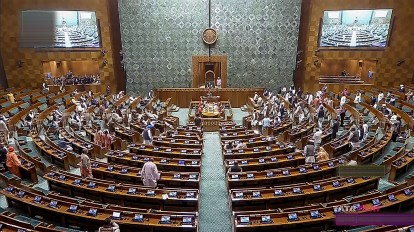
    Massive security breach in Lok Sabha, 2 intruders jump from gallery, spray gas | Latest News India - Hindustan Times

    Central idea 

    The article discusses a security breach in the Lok Sabha, highlighting lapses in personal screening and outdated technology. It emphasizes the need for advanced security measures, questions the responsibility for technology upgrades, and calls for a comprehensive committee to ensure continuous oversight. The incident prompts reflections on securing democracy’s portals through constant monitoring and technological advancements.

    Key Highlights:

    • Security Breach: Lok Sabha breach on December 13, 2023, prompts concerns despite heightened security measures post-2001 attack.
    • Causes of Breach: Inadequate personal screening, traditional metal detectors’ limitations, and lack of vigilance contribute to breach.
    • Technological Need: Emphasizes the necessity for advanced technology like backscatter scanners for effective Parliament screening.

    Key Challenges:

    • Screening Limitations: Traditional metal detectors fail to detect non-metallic threats, showcasing screening vulnerabilities.
    • Vacant Security Positions: Key roles, including Joint Secretary, Security, and chiefs of CRPF and CISF, remain vacant.
    • Responsibility Gap: Ambiguity in responsibility for introducing and upgrading security technology in Parliament.

    Key Terms and Phrases:

    • Parliament Security: Focus on the breach and the need for robust security measures.
    • Backscatter Scanner: Technological solution highlighted for enhanced visitor screening.
    • Unlawful Activities Act: Sections 16 and 18 invoked against intruders for acts related to terrorism.

    Key Quotes and Statements:

    • “The youngsters involved…inflicted the gravest damage by revealing gaps in Parliament security.”
    • “To protect the hallowed portals…security infrastructure is constantly monitored and upgraded with resolve.”

    Key Examples and References:

    • Terrorist Attack Reference: Highlights 2001 attack and subsequent security enhancements.
    • Legal Action: Sections 16 and 18 of the Unlawful Activities Act invoked against intruders.

    Key Facts and Data:

    • Vacant Positions: Key security positions, including Joint Secretary, Security, and chiefs of CRPF and CISF, remain unfilled.
    • Technology Gap: Absence of advanced technology, like backscatter scanners, for thorough screening.

    Critical Analysis:

    • Access Control Critique: Lapses in access control and personal screening procedures scrutinized.
    • Responsibility Query: Raises questions about responsibility for introducing and upgrading security technology.
    • Committee Advocacy: Advocates a comprehensive committee with MPs and specialists for continuous security oversight.

    Way Forward:

    • Supervision Call: Urges Secretary, Security, in the Cabinet Secretariat to supervise Parliament security.
    • Committee Formation: Recommends a committee with MPs and specialists for regular security monitoring.
    • MP Cooperation: Stresses the importance of MPs cooperating with enhanced security measures to protect democracy’s portals.
  • Defence Sector – DPP, Missions, Schemes, Security Forces, etc.

    India’s defence budgeting and the point of deterrence

    Key Highlights:

    • The Medium Multi-Role Combat Aircraft (MMRCA) program faces challenges, with the purchase of only 36 Rafale jets instead of the required 126, leading to a depleted squadron strength in the Indian Air Force (IAF).
    • The article raises concerns about the impact of budgetary constraints on defense preparedness, especially with India in election mode and potential cuts in the defense budget.
    • Emphasis is placed on the need for a judicious assessment of defense planning and budgeting to address threats on the northern borders and enhance sea power against China.

    Key Challenges:

    • The persistent issue of budget constraints impacting defense procurement and preparedness.
    • The gap between the required and actual squadron strength in the Indian Air Force.
    • Concerns about potential cuts in the defense budget amid electoral priorities.

    Key Terms and Phrases:

    • Medium Multi-Role Combat Aircraft (MMRCA) program
    • Squadron strength
    • Budget constraints
    • Defense preparedness
    • Northern borders
    • Sea power
    • Atmanirbhar Bharat
    • Innovations For Defence Excellence (iDEX)
    • Ordnance Factory Board
    • Negative lists for imports

    Key Quotes and Statements:

    • “Mother of all procurements” – Referring to the MMRCA program with a cost of around $10 billion in 2007.
    • “We will fight with what we have” – General V.P. Malik’s quote during the Kargil conflict.
    • “You go to war with the industrial base you have, not the industrial base you want” – From the War on the Rocks article, emphasizing the importance of the existing industrial base.

    Key Examples and References:

    • The purchase of 36 Rafale jets instead of the required 126 under the MMRCA program.
    • The deficit in squadron strength in the Indian Air Force, currently at an abysmal 32.
    • The Global Innovation Index 2022 highlighting India’s low research and development expenditure.

    Key Facts and Data:

    • India’s defense expenditure as a percentage of central government expenditure has declined from around 16.4% in 2012-13 to 13.3% in 2022-23.
    • The Ministry of Defence requested ₹1,76,346 crore for capital acquisitions in 2023-24, but only ₹1,62,600 crore was allotted, creating a deficit of ₹13,746 crore.
    • China spent $421 billion on research and development in 2022, which is 2.54% of its GDP.

    Critical Analysis:

    • The article underscores the challenges of balancing electoral imperatives and national security priorities in defense budget allocation.
    • It highlights the necessity for a smart balance between imports and indigenous accretions for technological modernization.
    • The concerns raised about the long gestation period for indigenization efforts and the need for sustained momentum in policy-making.

    Way Forward:

    • Emphasizes the importance of bipartisan statesmanship to make defense budgeting election-proof.
    • Calls for a continuum in policy-making and adequate defense budgeting to address national security imperatives.
    • Stresses the need for sustained momentum in the Atmanirbhar Bharat drive and other indigenization efforts.
  • Economic Indicators and Various Reports On It- GDP, FD, EODB, WIR etc

    India Tops Global Remittance Inflows in 2023: World Bank Report

    remittance

    Central Idea

    • In 2023, India witnessed the highest remittance inflows globally, amounting to USD 125 billion.
    • The surge was influenced by various factors, including India’s currency agreement with the UAE.

    World Bank’s Analysis on Remittance Growth

    • Report Findings: The World Bank’s report indicates a slowdown in remittance growth in India to 12.4% in 2023, down from 24.4% in 2022.
    • Increased Share in South Asia: India’s share in South Asian remittances is expected to rise to 66% in 2023 from 63% in 2022.

    Global Remittance Scenario

    • Other Leading Countries: Following India, the top remittance-receiving countries are Mexico (USD 67 billion), China (USD 50 billion), the Philippines (USD 40 billion), and Egypt (USD 24 billion).
    • Significance in GDP: In economies like Tajikistan, Tonga, Samoa, Lebanon, and Nicaragua, remittances form a substantial part of the GDP, highlighting their critical economic role.

    Contributing Factors for India

    • Key Drivers: Declining inflation and robust labor markets in high-income countries contributed to increased remittances.
    • Major Sources: Significant remittance flows came from the US, the UK, and Singapore, as well as from the GCC, particularly the UAE.
    • UAE’s Role: The UAE is the second-largest source of remittances to India, accounting for 18% of the total.

    India-UAE Currency Agreement Impact

    • February 2023 Agreement: The agreement to promote local currency use in cross-border transactions and interlink payment systems has boosted remittances.
    • Dirhams and Rupees Usage: The use of dirhams and rupees in transactions is expected to channel more remittances through formal channels.

    Global Remittance Trends

    • Growth in Low- and Middle-Income Countries: Remittances to these countries grew by an estimated 3.8% in 2023.
    • Future Concerns: There is a risk of real income decline for migrants in 2024 due to global inflation and low growth prospects.
  • NPA Crisis

    RBI tightens norms for Alternative Investment Funds (AIFs)

    Central Idea

    • The Reserve Bank of India (RBI) has introduced tighter norms for Regulated Entities (REs) to curb the practice of evergreening loans through investments in Alternative Investment Funds (AIFs).
    • The norms apply to all banks, all India Financial Institutions, and Non-Banking Financial Companies (NBFCs), including Housing Finance Companies.

    About Alternative Investment Funds (AIFs)

    Details
    Definition AIFs are privately pooled investment vehicles established in India, collecting funds from sophisticated investors for investing.
    Regulation Governed by the SEBI (Alternative Investment Funds) Regulations, 2012.
    Formation Can be formed as a company, Limited Liability Partnership (LLP), trust, etc.
    Investor Profile Aimed at high rollers, including domestic and foreign investors in India. Generally favored by institutions and high net worth individuals due to high investment amounts.
    Categories of AIFs Category I: Invests in start-ups, early-stage ventures, SMEs, etc. Includes venture capital funds, angel funds, etc.

    Category II: Includes funds not in Category I/III, like real estate funds, debt funds, etc. No leverage or borrowing except for operational requirements.

    Category III: Employs complex trading strategies, may use leverage. Includes hedge funds, PIPE Funds, etc.

    Fund Structure Category I and II AIFs must be close-ended and have a minimum tenure of three years.

    Category III AIFs can be open-ended or close-ended.

    Background and Regulatory Concerns

    • Investment Practices: REs often invest in units of AIFs as part of their regular investment operations.
    • RBI’s Observations: The RBI noted certain transactions involving AIFs that substituted direct loan exposure with indirect exposure, raising regulatory concerns.

    RBI’s New Guidelines

    • Restriction on Investments: REs are prohibited from investing in any AIF scheme that indirectly or directly has downstream investments in a debtor company of the RE.
    • Mandatory Liquidation: If an AIF scheme, where an RE is already an investor, makes a downstream investment in a debtor company, the RE must liquidate its investment in the scheme within 30 days from the date of such investment by the AIF.
    • Provision for Existing Investments: For existing investments in such schemes, REs have 30 days from the issuance of the circular to liquidate. Failure to do so requires them to make a 100% provision on these investments.
    • Capital Fund Deductions: Investments by REs in subordinated units of any AIF scheme with a ‘priority distribution model’ are subject to full deduction from the RE’s capital funds.
  • Wildlife Conservation Efforts

    Fewer migratory birds in Sultanpur National Park this season

    Sultanpur National Park

    Central Idea

    • The Sultanpur National Park has observed a 20-30% decrease in the number of migratory birds this season, as reported by forest department officials.
    • Estimates show a reduction in bird numbers, with current figures ranging between 8,000 to 10,000, compared to the expected 15,000.

    About Sultanpur National Park

    • Sultanpur NP is located at Sultanpur village on Gurugram-Jhajjar highway, 15 km from Gurugram, Haryana and 50 km from Delhi.
    • It was a bird sanctuary, ideal for birding and bird lookers. Its area covers approximately 142.52 hectares.
    • Migratory birds start arriving in the park in September. Birds use the park as a resting place till the following March-April.
    • During summer and monsoon months the park is inhabited by many local bird species.
    • In April 1971, the Sultanpur Jheel inside the park (an area of 1.21 sq. km.) was accorded Sanctuary status under section 8 of the Punjab Wildlife Preservation Act of 1959.
    • The status of the park was upgraded to National Park in July 1991 under the Wildlife (Protection) Act, 1972.

    Significance of the NP

    • Spanning 1.42 sq km, it is recognized as a national park, wildlife sanctuary, and a Ramsar site since 2021.
    • It is one of the few NPs in the small state of Haryana.
    • Another NP in Haryana is Kalesar National Park.

    Important Fauna at the Park

    • Mammals: Blackbuck, Nilgai, Hog deer, Sambar, Leopard etc.
    • Birds: Siberian Cranes, Greater Flamingo, Demoiselle Crane etc.

    Annual Migratory Patterns

    • Typical Arrival: Migratory birds usually begin arriving in the first week of October.
    • Annual Visitation: By the end of January each year, around 22,000 birds visit Sultanpur Park. However, this year’s numbers are anticipated to be much lower.

    Possible Reasons for Reduced Migration

    • Temperature Changes: Wildlife experts suggests that milder winters in regions like Siberia, Central Asia, and Europe might be influencing migration patterns.
    • Food Availability: If migratory birds continue to find sufficient food in their native regions, they may not feel compelled to migrate.
    • Local Climate Impact: The local temperature at Sultanpur Park has not dropped significantly to align with the birds’ migratory patterns.
    • Effect of Smog: Smog and air pollution could also be contributing factors to the altered migratory behavior.
  • The Crisis In The Middle East

    US launches ‘Operation Prosperity Guardian’ to secure Red Sea

    red sea

    Central Idea

    • US Defense Secretary Lloyd Austin announced the creation of Operation Prosperity Guardian to protect Red Sea commerce.
    • This follows missile and drone attacks by Yemen’s Iran-aligned Houthis.

    Operation Prosperity Guardian

    • Countries Involved: The U.K., Bahrain, Canada, France, Italy, Netherlands, Norway, Seychelles, and Spain are participating.
    • Joint Patrols: These nations will conduct joint patrols in the southern Red Sea and the Gulf of Aden.

    Houthi Rebels’ Stance

    • Continued Aggression: Houthi rebels declared their intention to persist with attacks on Red Sea shipping.
    • Rebels’ Claims: They claim the US-led coalition aims to protect Israel and militarize the sea.
    • Attacks Beyond Yemen: Houthis have targeted vessels in key shipping lanes and launched attacks towards Israel.
    • Recent Drone Attack: Prior to Austin’s announcement, Houthis claimed a drone attack on cargo vessels in the region.

    Significance of the Operation

    • Impact on Suez Canal Traffic: About 12% of global shipping traffic through the Suez Canal is affected by the unrest.
    • Rerouting and Economic Consequences: Shipping firms are diverting routes, leading to increased costs and delays.

    About Red Sea

    Details
    Location Between Africa (Egypt, Sudan, Eritrea, Djibouti) and Asia (Saudi Arabia, Yemen).
    Connection Connects to the Indian Ocean via the Bab el Mandeb strait and the Gulf of Aden.
    Length Approximately 2,250 km long.
    Width Varies from 355 km at its widest point to 20 km at the Strait of Tiran.
    Maximum Depth About 7,254 feet (2,211 m) in the central median trench.
    Unique Features – One of the world’s saltiest bodies of water.

    – Notable for its rich ecosystem, including extensive coral reefs.

    Climate Generally hot and arid; surrounding desert and high evaporation rates contribute to its high salinity.
    Economic Importance Major shipping route; oil-rich region with significant petroleum deposits on the sea’s borders.

Join the Community

Join us across Social Media platforms.