💥UPSC 2026, 2027, 2028 UAP Mentorship (March Batch) + Access XFactor Notes & Microthemes PDF

Type: Explained

  • Forest Conservation Efforts – NFP, Western Ghats, etc.

    Illegal mining, encroachments, and deforestation a threat to Aravali as natural green wall   

    Note4Students

    From UPSC perspective, the following things are important:

    Prelims level: About the Aravalli Range;

    Mains level: Changes in Aravali range due to mining;

    Why in the News?

    The Aravalli range is facing severe threats from illegal mining, deforestation, and encroachments which causing environmental degradation.

    About the Aravalli Range:

    • The Aravalli Range is one of the oldest mountain ranges in the world, stretching from Gujarat to Delhi through Rajasthan.
    • It acts as a natural green wall in the northwestern part of India, forming an ecotone zone between the Thar Desert and the Gangetic Plain in a semi-arid environment.
    • The range spans 692 km in length and varies in width from 10 km to 120 km, with over 500 hillocks. The highest peak is Guru Shikhar in Mount Abu, which is 1,722 meters above sea level.
    • Rajasthan contains 80% of the range, while the remaining 20% is shared by Haryana, Delhi, and Gujarat.

    Change in Forest Area and High Rates of Carbon Influx:

    • Reduction of forest cover: The Aravalli range has experienced a significant reduction in forest cover, with a 0.9% decrease from 1999 to 2019. The forest area decreased from 29,915 sq. km in 1999 to 29,210 sq. km in 2019.
    • Increased Human settlement and reduced water bodies: Human settlements in the region increased from 4.5% in 1975 to 13.3% in 2019, while waterbodies initially increased and then began to reduce over time.
    • Expansion of mining activities: Mining activities have expanded, particularly in districts like Jaipur, Sikar, Alwar, Ajmer, Bhilwara, Chittorgarh, and Rajsamand.
    • High rate of carbon influx: The study identified regions in the upper and lower Aravalli range with high positive rates of carbon flux due to high rainfall and protected areas. In contrast, areas near the Thar Desert in the main middle range showed negative rates of carbon flux, indicating a decline in carbon sequestration.

    How Drone Survey Can Help:

    • Use of LiDAR technology:  A comprehensive drone survey using Light Detection and Ranging (LiDAR) technology is recommended to assess the Aravalli region’s surface and objects in 3D dimensions.
      • The LiDAR survey can help identify and mitigate illegal mining activities by providing detailed information on the surface structure which will allow authorities to take prompt enforcement actions.
    • Establishment of Independent Body: The establishment of an independent Aravali Development Authority, including experts from various fields, is suggested to devise and implement strategies for the sustainable preservation of the hill ecosystem.

    Steps taken: 

    • The Indian government has enacted various legal measures to protect the Aravalli Range.
      • In 1992, parts of the hills were designated as Ecologically Sensitive Areas, and in 2003, the central government prohibited mining operations in these regions.
    • The Supreme Court of India further reinforced these protections by banning mining in notified areas of the Aravalli Range in 2004 and extending this ban in 2009 to cover 448 km² across Haryana’s Faridabad, Gurgaon, and Mewat districts.

    Conclusion: Need to engage local communities in conservation efforts and promote sustainable land-use practices. Establish the proposed Aravali Development Authority to coordinate and implement long-term strategies for ecological restoration and biodiversity preservation.

    Mains PYQ:

    Q Briefly mention the alignment of major mountain ranges of the world and explain their impact on local weather conditions, with examples. (UPSC IAS/2021)

  • Water Management – Institutional Reforms, Conservation Efforts, etc.

    Why climate change poses an existential threat to Panama Canal?   

    Note4Students

    From UPSC perspective, the following things are important:

    Mains level: Impact of Climate change on Panama Canal;

    Why in the News?

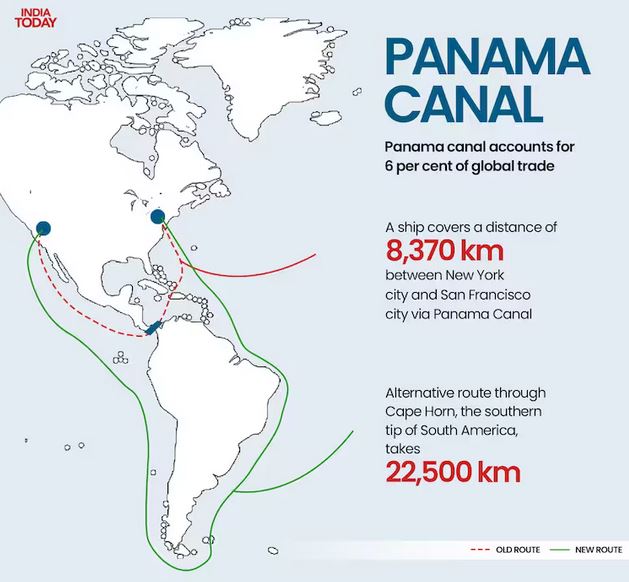
    The Panama Canal, which links the Atlantic and Pacific Oceans through the Isthmus of Panama, opened to ships 110 years ago. Now, it is facing a serious threat to its existence.

    System of Water Elevators

    • The Panama Canal utilizes a sophisticated lock system that functions as water elevators, allowing ships to navigate the elevation difference between the Atlantic and Pacific Oceans. This system is essential because the two oceans are at different elevations, with the Pacific being slightly higher.

    Operation of the Locks

    1. Ship Enters: A ship approaches the first lock chamber, which is at sea level. The gate opens to allow the ship into the chamber and then closes behind it.
    2. Water Level Adjustment: The valve between the first and second chamber (at a higher elevation) is opened, allowing water to flow into the first chamber from the adjacent higher chamber. This increases the water level in the first chamber.
    3. Transition: Once the water levels between the two chambers are equalized, the gate between them opens, allowing the ship to move into the next chamber. This process is repeated until the ship reaches the desired elevation of 85 feet at Gatun Lake.
    4. Lowering: The reverse process occurs when lowering ships back to sea level at the other end of the canal.

    Note: Each passage requires over 50 million gallons (approximately 200 million liters) of freshwater, primarily sourced from Lake Gatun, which is vital for the canal’s operation.

    Threat of Climate Change

    • Recent droughts have led to significantly lower water levels in Lake Gatun because droughts were exacerbated by climate change and the El Niño phenomenon, which have led to significantly reduced water levels in the lake.
    • In 2023, rainfall was 43% lower than average, making it one of the driest years on record for the region.  which reduced the number of ships able to transit the canal.
    • In December, traffic dropped to as low as 22 ships per day, highlighting the vulnerability of the canal to climatic variations.

    Contentious Solution

    • Proposed Dam: This $1.6 billion project aims to create an additional water source for the canal on the Rio Indio, potentially securing water availability for the next 50 years. However, it has sparked controversy due to its social implications.
      • Displacement Issues: The dam would flood the homes of approximately 2,000 residents, predominantly from lower socio-economic backgrounds, forcing them to relocate and lose their livelihoods. This raises significant ethical concerns regarding the balance between infrastructure needs and the rights of affected communities

    Conclusion:

    Before proceeding with the Rio Indio dam project, engage in thorough consultations with the affected communities, ensuring their voices are heard in the decision-making process. Need to develop a fair compensation and resettlement plan that prioritizes the socio-economic well-being of displaced residents, offering alternative livelihoods and housing options to minimize the negative impact on vulnerable populations.

    Do you know about another elevation-based canal system? 

    1. Kiel Canal (Germany): The Kiel Canal features locks that raise and lower vessels to navigate the elevation differences between the North Sea and the Baltic Sea. It is one of the busiest artificial waterways in the world.
    2. Welland Canal (Canada): This canal connects Lake Ontario and Lake Erie and includes a series of locks that lift ships approximately 43 meters (141 feet) to bypass Niagara Falls. It is an essential part of the Great Lakes shipping route.

    Trade from Panama Canal: 

    • The Panama Canal moves roughly $270 billion worth of cargo annually, which is the trade route taken by 40% of all U.S. container traffic alone. It handles about 5% of all global maritime trade.

    Mains PYQ:

    Mention the significance of straits and isthmus in international trade. (UPSC IAS/2022)

  • Air Pollution

    How can traffic which causes air pollution be controlled?    

    Note4Students

    From UPSC perspective, the following things are important:

    Mains level: Challenges related to air pollution in India;

    Why in the News?

    India has 83 of the world’s 100 most polluted cities. Air pollution caused 2.1 million deaths, with 99% breathing air below WHO standards.

    Share of Road Transport in India’s CO2 Emissions as per the International Energy Associates

    • Road transport is responsible for approximately 12% of India’s total CO2 emissions. Within this sector, heavy vehicles are a significant contributor to particulate matter (PM2.5) emissions, which are particularly harmful due to their ability to penetrate deep into the lungs and enter the bloodstream. 
    • Studies indicate that heavy vehicles contribute to about 60-70% of total vehicular PM emissions and 40-50% of total Nitrogen Oxide (NOx) emissions in urban areas. This highlights the critical role that road transport plays in India’s overall air pollution problem.

    Why has the vehicular scrapping policy not been effective in States like Karnataka and Maharashtra?

    • Insufficient Scrapping Facilities: Both states have a limited number of registered vehicle scrapping facilities (RVSFs). For instance, Karnataka has only two authorized RVSFs located in Devanahalli and Koratagere, which are unable to handle the volume of vehicles eligible for scrapping.
    • Voluntary Compliance: The policy’s reliance on voluntary participation has resulted in low engagement from vehicle owners. For example, the policy targets around 20 lakh vehicles for scrapping, but without mandatory compliance, many older, polluting vehicles continue to operate on the roads
    • Lack of Awareness and Less Incentives: There is a lack of awareness regarding the benefits of scrapping old vehicles among the public. Although the policy offers incentives, such as tax relief for scrapping vehicles may not be sufficient to encourage widespread participation.
    • Bureaucratic delays: The implementation of the scrapping policy has faced bureaucratic delays and inconsistencies. In Maharashtra, despite announcing incentives for scrapping old vehicles, the actual impact has been limited due to slow bureaucratic processes and a lack of effective enforcement.

    Steps taken: 

    The Bureau of Energy Efficiency (BEE) has taken several significant steps towards enhancing fuel efficiency and reducing carbon emissions in the transport sector through the implementation of the Corporate Average Fuel Economy (CAFE) norms. 

    • Introduction of CAFE Norms: The BEE has proposed the CAFE III and CAFE IV norms, which aim to set stringent targets for carbon emissions from passenger vehicles.
      • CAFE III, effective from 2027 to 2032, sets a target of 91.7 grams of CO2 per kilometer, while CAFE IV, from 2032 to 2037, aims for 70 grams of CO2 per kilometer. These targets are designed to drive innovation and encourage the adoption of cleaner technologies in the automotive sector.
    • Transition to WLTP Testing: A significant step is the commitment to transition from the Modified Indian Driving Cycle (MIDC) to the World Light Duty Vehicle Testing Procedure (WLTP) by March 31, 2027.
      • The WLTP provides a more accurate and globally harmonized measure of a vehicle’s fuel consumption and emissions, ensuring that the targets reflect real-world driving conditions more effectively.
    • Penalties for Non-Compliance: The BEE has outlined financial penalties for manufacturers that fail to meet the established fuel efficiency standards.
      • For instance, if a manufacturer’s average fuel efficiency exceeds the limit by up to 0.2 liters per 100 km, a penalty of ₹25,000 per vehicle applies. If it exceeds by more than 0.2 liters, the penalty increases to ₹50,000 per vehicle.

    Way forward: 

    • Enhance Infrastructure and Accessibility: Need to increase the number of registered vehicle scrapping facilities (RVSFs) across states like Karnataka and Maharashtra to make the process more accessible.
    • Strengthen Policy Enforcement and Incentives: Transition from voluntary to mandatory compliance for the scrapping of old and polluting vehicles. This can be supported by enhancing public awareness campaigns that highlight the environmental and financial benefits of vehicle scrapping.

    Mains PYQ:

    Q Mumbai, Delhi and Kolkata are the three Megacities of the country but air pollution is a much more serious problem in Delhi as compared to the other two. Why is this so? (UPSC IAS/2015)

  • Artificial Intelligence (AI) Breakthrough

    Reshape the governance structures of AI companies      

    Note4Students

    From UPSC perspective, the following things are important:

    Mains level: Challenges related to Data Access;

    Why in the News?

    Recently, corporations adopting stakeholder capitalism are focusing on products like Generative AI, which require governance models that balance profit-making with broader social responsibilities, reflecting a shift in corporate priorities.

    Data Access Issues

    1. Dependence on Data for AI Development: The advancement of AI technologies necessitates access to vast amounts of data, including personal and sensitive information. This reliance raises significant privacy concerns, as improper handling of this data can lead to breaches of privacy rights.
    2. Regulatory Scrutiny: Companies like Meta have faced regulatory challenges regarding data usage for AI training. For example, Meta was asked to pause its plans to train large language models using public content from Facebook and Instagram due to privacy concerns raised by regulators, highlighting the tension between data access and compliance with privacy laws.
    3. Algorithmic Bias: AI systems can perpetuate existing biases present in the data they are trained on, leading to discriminatory outcomes. For instance, Amazon discontinued a recruiting algorithm that displayed gender bias.

    Purpose vs. Strategy

    1. Conflict Between Purpose and Profit: Many companies, including OpenAI, initially adopted governance structures aimed at public benefit but faced challenges when profit motives clashed with their social objectives. The dismissal of CEO Sam Altman over concerns about prioritizing commercialization over user safety exemplifies this conflict.
    2. Shareholder Primacy: Despite the adoption of alternative governance models, the underlying shareholder primacy often prevails. The pressure to generate profits can overshadow the intended social benefits, leading to a situation where public good becomes secondary to financial gains.
    3. Corporate Governance issue: The governance issues faced by OpenAI, particularly the internal conflict that led to Altman’s firing, raise questions about the effectiveness of public benefit corporate structures in balancing profit and purpose, especially in tech companies reliant on investor capital.
    4. Potential Shift to For-Profit Structures: Rumors about OpenAI considering a transition to a for-profit governance model indicate a trend where companies may abandon their social objectives in favour of profit maximization.

    Workable Strategy (Way forward)

    1. Framing Ethical Standards: Developing comprehensive ethical guidelines for AI product companies is crucial. These standards should address data privacy, algorithmic fairness, and accountability, ensuring that AI technologies are developed responsibly and equitably.
    2. Incentivizing Public Benefit Objectives: Corporations should be incentivized to adopt public benefit purposes that align with their business strategies. This could involve financial incentives for companies that demonstrate long-term profit gains from socially responsible practices.
    3. Reducing Compliance Costs: To encourage adherence to public benefit objectives, it is essential to lower the compliance costs associated with implementing ethical practices.

    Mains PYQ:

    Q The emergence of the Fourth Industrial Revolution (Digital Revolution) hasinitiated e-Governance as an integral part of government”. Discuss. (UPSC IAS/2020)

  • Civil Services Reforms

    The Seductive Trap of the Civil Services    

    Note4Students

    From UPSC perspective, the following things are important:

    Prelims level: About the Kothari commission;

    Mains level: Suggestions from the Kothari Commission;

    Why in the News?

    Public service doesn’t have exclusive rights to serve the nation, nor does it offer any special opportunities for doing so.

    Present Status of Civil Services in India

    1. Reputation and Credibility: Recent controversies, such as the case of IAS probationer Puja Khedkar, who has allegedly misused quotas and provided false documentation shadow over the credibility of UPSC.
    2. High Aspirations and Struggles: The civil service job is a highly demandable career in India. It is often viewed as a prestigious and stable option which leads to a competitive environment where many aspirants repeatedly attempt the UPSC exams leading to mental health struggles and societal pressure. 
    3. Coaching Industry Influence: The expansive coaching industry thrives on the aspirations of civil service candidates by capitalizing on the high failure rates and the desperation of aspirants.

    About the Kothari Commission: 

    • The Kothari Commission, officially known as the Education Commission of 1964-66, was established by the Government of India to comprehensively evaluate the educational system and recommend reforms. It was chaired by Dr. D. S. Kothari.
    • The Commission aimed to align education with national development goals and address various shortcomings in the existing system. 
    • Its report, titled “Education and National Development,” was submitted on June 29, 1966.

    Suggestions from the Kothari Commission:

    The Kothari Commission’s recommendations, which aimed to reform education and public service, can provide a framework for addressing the current challenges in the civil services:

    1. Age Limit Adjustments: The government should reduce the upper age limit for candidates from around 34-35 years to 25 years, with allowances for special categories which could help mitigate the prolonged pursuit of civil services and reduce the burden on young aspirants.
    2. Limiting Attempts: Restricting the number of attempts to three, with an additional attempt for special categories which could help streamline the process and discourage the excessive commercialization of coaching services that exploit aspirants’ ambitions.
    3. Broadened Perspectives on Service: Encouraging young people to view various professions as valid forms of national service rather than solely focusing on government positions.

    Way forward: 

    • Reforming Recruitment and Training Processes: To enhance credibility and transparency in civil services recruitment, the UPSC and related bodies could implement stricter verification processes for candidates’ credentials, including quotas and documentation.
    • Diversifying Career Awareness and Opportunities: The government, along with educational institutions like CBSE can promote awareness of diverse career paths beyond civil services, emphasizing the value of contributing to the nation through various professions.

    Mains PYQ:

    Q Initially Civil Services in India were designed to achieve the goals of neutrality and effectiveness, which seems to be lacking in the present context. Do you agree with the view that drastic reforms are required in Civil Services. Comment (UPSC IAS/2017)

  • Health Sector – UHC, National Health Policy, Family Planning, Health Insurance, etc.

    Freedom from dependence, a new era in health care

    Note4Students

    From UPSC perspective, the following things are important:

    Mains level: Challenges in the Indian healthcare system;

    Why in the News?

    India’s healthcare since globalization has improved greatly, and is globally recognized due to skilled professionals, effective policies, and strong institutions which draw patients from over 147 countries.

    Economic implications of being a preferred Medical Destination:

    • Foreign Exchange Savings: India saves billions in foreign exchange as fewer Indians need to travel abroad for advanced medical treatments.
    • Revenue Generation: The influx of international patients generates over $9 billion annually, contributing to economic growth.
    • Job Creation: The medical tourism sector creates employment opportunities in healthcare, hospitality, transportation, and pharmaceuticals.
    • Cost-Effective Treatments: India’s affordable yet high-quality medical services attract patients globally, further boosting the economy.

    What are the challenges? 

    • Shortage of Healthcare Professionals
        • Current Shortage: India is estimated to be short of around 600,000 doctors, leading to a doctor-patient ratio of approximately 0.7 doctors per 1,000 people, which is significantly lower than the World Health Organization’s recommended ratio of 1 doctor per 1,000 people.  
        • Future Demand: By 2030, the demand for healthcare professionals in India is expected to double, driven by an ageing population and the increasing burden of non-communicable diseases.
    • Inadequate Public Healthcare Spending
        • Low Expenditure: As of 2021-22, India’s public healthcare expenditure stood at 2.1% of GDP, which is significantly lower than that of many developed countries, For instance, countries like Japan and France spend about 10% of their GDP on healthcare, while the United States spends 16.9%.
        • Comparison with Neighbors: Even neighbouring countries like Bangladesh and Pakistan allocate over 3% of their GDP to public healthcare.
    • Unequal Access to Healthcare
        • Urban-Rural Disparity: There is a stark disparity in healthcare access between urban and rural areas. Rural regions often lack basic healthcare facilities, leading to limited access to quality services for a significant portion of the population.  
        • Healthcare Infrastructure: India’s healthcare infrastructure is inadequate to meet the growing demands of its population. For instance, India has one of the lowest per capita bed counts in the world, with only about 0.5 hospital beds per 1,000 people, compared to the OECD average of 4.7 beds per 1,000 people.
    • High Out-of-Pocket Expenditure
      • Financial Burden: Approximately 75% of healthcare expenditure in India is borne out-of-pocket by individuals and families.

    Need for a Strong Vision (Way forward)

    • “Heal in India” Initiative: The Prime Minister’s vision of “Heal in India” emphasizes positioning India as a global healthcare leader. This initiative is not merely a slogan but a strategic approach to enhance India’s reputation as a preferred medical destination.
    • Youth Engagement: Inspiring the youth to pursue careers in healthcare is crucial for sustaining growth in this sector. By encouraging innovation and entrepreneurship among young Indians, the country can ensure a robust healthcare system.
    • Investment in Public Healthcare: Increase public healthcare spending to improve infrastructure, especially in rural areas, and bridge the urban-rural disparity.
    • Focus on Medical Device Manufacturing: Promote domestic production of medical devices under the “Make in India” initiative to reduce dependency on imports.

    Mains PYQ:

    Q Appropriate local community-level healthcare intervention is a prerequisite to achieve ‘Health for All’ in India. Explain. (UPSC IAS/2018)

  • Delhi Full Statehood Issue

    An overview of governance in Delhi

    Note4Students

    From UPSC perspective, the following things are important:

    Mains level: Tussle between the Lt. Governor and elected government of Delhi;

    Why in the News?

    The Supreme Court ruled that Delhi’s LG can independently nominate 10 aldermen to the MCD which escalates tensions between the Union, Delhi, and local governments.

    How did the Delhi government evolve?

    • At the commencement of the Constitution in 1950, Delhi was classified as a Part C State.
    • Following the state reorganisation in 1956, it became a Union Territory governed by an administrator.
    • The Municipal Corporation of Delhi (MCD) was established in 1958, and a limited local government was introduced in 1966.
    • Based on the Balakrishnan Committee’s recommendations in 1989, the 69th Constitutional Amendment in 1991 created a Legislative Assembly and council of ministers for the NCT of Delhi. 
    • However, the Union government retained control over public order, police, and land, excluding these subjects from the Delhi government’s jurisdiction.

    Why is there constant tension and friction between the Union government and the Delhi government?  

    • Legal Disputes: Legal battles have escalated tensions, particularly following Supreme Court judgments that have altered the balance of power between the elected Delhi government and the Lieutenant Governor (LG). For instance, recent rulings have clarified the LG’s powers, allowing for unilateral actions that bypass the council of ministers.
    • Control Over Key Areas: The Union government retains control over critical areas such as police, public order, and land, which limits the Delhi government’s autonomy.
    • Administrative Confusion: The presence of multiple layers of governance, including the MCD and other local bodies, complicates accountability and governance, leading to blame-shifting during crises, such as the recent incidents of electrocution and flooding.
    •  Budgetary Conflict: The Delhi State Government has accused the Central Government of underfunding the MCD, leading to poor civic services, while the Central Government has argued that the State Government is not providing adequate support.
    • Division and Unification of MCD: In 2012, the MCD was trifurcated into three separate entities by the Congress-led state government, a move seen as an attempt to decentralize power. However, in 2022, the BJP-led Central Government passed a law to reunify the MCD, citing administrative efficiency, but the move was perceived by the Delhi State Government as an effort to centralize control.

    What did the 1989 Balakrishnan committee recommend?  

    1. On Union Territory Status: The Balakrishnan Committee recommended that Delhi must remain a Union Territory rather than achieving full statehood.
    2. On Governance Structure: The committee proposed a governance model that included an Administrator exercising powers based on the advice of the Council of Ministers, ensuring a balance of power while maintaining central oversight.
    3. On Representation and Accountability: The committee emphasized the need for a more effective representative democratic system to safeguard the rights of Delhi’s growing population.

    How has the Municipal Corporation of Delhi been involved in the power tussle? 

    • Multiple Authorities: The MCD operates under the Union government’s control, adding complexity to the governance structure in Delhi. For example in public services and urban management.
    • Electoral Conflicts: The MCD’s elected representatives have often been caught in the crossfire of political disputes between the Union and Delhi governments, leading to inefficiencies and a lack of coherent governance. The recent tragedies in the city have highlighted the consequences of this blame-shifting.

    Way Forward:

    • Revisiting Governance Structure: A constitutional amendment could be considered to delineate the powers of the central government and the Delhi government more clearly. For instance, the area of New Delhi (50-100 square kilometres) could be under central control, while the rest could be governed by the Delhi Assembly.
    • Implementation of triple chain accountability: Implementing the spirit of the Supreme Court’s 2023 judgment, which emphasized a triple chain of accountability, could help restore balance and ensure that all layers of government are accountable to the people.
    • Promoting Consensus-Based Governance: Encouraging dialogue and consensus between the different layers of government could help mitigate conflicts and foster a more cooperative governance environment.

    Mains PYQ: 

    Q Whether the Supreme Court Judgement (July 2018) can settle the political tussle between the Lt. Governor and elected government of Delhi? Examine.(2018)

  • Water Management – Institutional Reforms, Conservation Efforts, etc.

    Does India have laws on the movement of ballast water?

    Note4Students

    From UPSC perspective, the following things are important:

    Prelims level: What is Ballast Water?

    Mains level: Serious concern due to Ballast Water;

    Why in the News?

    The TN Water Resources Department (WRD) has informed the National Green Tribunal that it has requested ₹160 crore from Kamarajar Port in Ennore, Tamil Nadu, to address the removal of invasive mussels along the coast near the port.

    • The WRD has accused Kamarajar Port of being primarily responsible for the spread of this invasive species due to its failure to regulate ballast water from ships.

    What is Ballast Water?

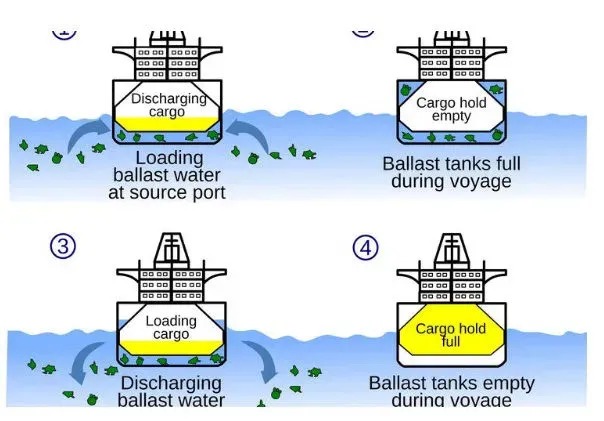
    • Ballast water is fresh or saltwater held in the ballast tanks of ships. It is used to provide stability and maneuverability during a voyage, especially when a ship is not carrying enough cargo or when additional stability is required due to rough seas.
    • Ballast water can carry a variety of biological materials, including bacteria, microbes, and small invertebrates. When discharged at a new location, this water can introduce non-native species into local ecosystems, potentially leading to ecological imbalances.

    How Serious is the Problem?

    • Invasive Species in India: Scientists have recorded nearly 30 invasive species entering Indian waters through ship ballast water, with the charru mussel (Mytella strigata) being one of the most harmful. This species has replaced native species in critical habitats like Pulicat Lake in Tamil Nadu.
    • Ecological Impact: The introduction of invasive species can disrupt local ecosystems, outcompete native organisms, and significantly affect biodiversity. The charru mussel has a high survival rate and prolific reproduction, exacerbating its impact on marine environments.
    • Economic Consequences: The proliferation of invasive species can hinder fishing activities and affect the livelihoods of local communities dependent on marine resources.

    What are Global Regulations?

    • Ballast Water Management (BWM) Convention: The International Maritime Organization (IMO) adopted the BWM Convention, which came into force in 2017. This convention aims to prevent the spread of harmful aquatic organisms and pathogens through ballast water.
    • Under the BWM Convention, ships must manage their ballast water to ensure that aquatic organisms and pathogens are removed or rendered harmless before discharge.
    • Compliance: Countries like Australia and New Zealand have stringent regulations to prevent ballast water from damaging their marine ecosystems, including rigorous checks of ballast water management systems.

    What is India’s Position?

    • As of July 2023, India has not signed the BWM Convention, meaning there are no obligations for ships calling at Indian ports to comply with its regulations. This lack of participation raises concerns about the unchecked discharge of ballast water.
    • While other maritime regulations apply in Indian ports but the discharge of ballast water is not subject to checks or regulations, leading to potential ecological risks.

    Way forward: 

    • Adopt and Implement the BWM Convention: India should consider ratifying the Ballast Water Management (BWM) Convention to align with international standards.
    • Strengthen Domestic Regulations and Awareness: Even before ratifying the BWM Convention, India can introduce national legislation to regulate ballast water discharge in its ports.

    Mains PYQ: 

    Q How does biodiversity vary in India? How is the Biological Diversity Act,2002 helpful in conservation of flora and fauna? (2018)

  • Innovation Ecosystem in India

    Hints of the corporatization of science research in India 

    Note4Students

    From UPSC perspective, the following things are important:

    Mains level: Role of Private sector in RandD;

    Why in the News?

    The establishment of the Anusandhan National Research Foundation and its funding structure clearly signals the government’s intended direction.

    Research Policy in India

    • Shift Towards Corporatisation: The Indian government’s approach encourages research institutions to generate revenue through external sources, moving away from reliance on public funding.
      • This trend aligns with the 2015 Dehradun Declaration, which advocated for marketing patents to self-finance research initiatives.
    • Focus on Market-Driven Research: The ANRF aims to align research outcomes with market needs, promoting the idea that scientific advancements should have immediate applications.
      • This is evident in the emphasis on prototype development, which assesses the marketability of research products, which was highlighted in the 2024 Budget speech.
    • Integration of Industry and Academia: The ANRF is designed to forge collaborations between research institutions and the private sector by earmarking a substantial portion of its funding (approximately 72%) from private sources, bridging the gap between scientific research and commercial application.
    Note: The Anusandhan National Research Foundation (ANRF) is a significant initiative in India’s research landscape, established under the Anusandhan National Research Foundation Act, 2023.

    Funding Mechanism of ANRF

    • Budget Allocation: The ANRF will be allocated ₹50,000 crore over five years, with a significant portion expected to come from non-government sources, including industry and philanthropic contributions.
    • Governance Structure: The ANRF will be governed by a board that includes industry representatives and experts, ensuring that funding decisions align with market demands and technological advancements.

    What are the signals despite the stated objective of ANRF? (challenges)

    • Potential Undermining of Curiosity-Driven Research:  The private sector does not want to fund basic research because it has no immediate commercial applications which ultimately leads to a decline in foundational scientific exploration.
    • Public Funding Concerns: The government’s expectation for private sector funding raises questions about the sustainability of public investment in research.
      • The current ratio of public funding for science research in India (0.6% to 0.7% of GDP) is significantly lower than that of countries like South Korea (around 4.8%  of GDP).

    India’s Achievements Despite a Low GDP Investment in R&D: 

    • High Production of PhDs:  Annually, India generates approximately 40,813 PhDs, ranking third globally after the United States and China. 
    • Robust Research Output: India’s research output remains substantial, with over 300,000 publications in 2022, making it the third-largest producer of scientific publications globally.
    • Growth in Patent Grants: India has shown remarkable progress in intellectual property creation, securing 30,490 patents in 2022, placing it sixth globally.  
    • Improvement in Global Rankings: India has made significant strides in global innovation rankings and research quality. It improved its position on the Global Innovation Index (GII) from 81st place in 2015 to 40th in 2023.  
        • India climbed to the 9th rank in the Nature Index 2023, surpassing countries like Australia and Switzerland.
    • Investment in Autonomous R&D Institutions: A considerable portion of India’s R&D funding is directed towards autonomous research laboratories. The total investment in R&D reached approximately $17.2 billion in 2020-21, with a significant allocation to key scientific agencies such as the Defence Research and Development Organisation (DRDO) and the Indian Council of Agricultural Research (ICAR).

    Comparison with Other Countries

    As of 2023, India’s gross expenditure on R&D stands at approximately 0.64% of its GDP.

    • United States: The U.S. invests about 3.46% of its GDP in R&D
    • South Korea: South Korea leads with an impressive 4.8% of GDP allocated to R&D.
    • Germany: Germany’s R&D spending is around 3.1% of GDP.
    • China: China’s investment in R&D is approximately 2.4% of GDP.
    • Taiwan: Taiwan also invests around 3.77% of its GDP in R&D.

    Way Forward: 

    • Strengthening Public Funding for Basic Research: To ensure a balanced research ecosystem, the government should increase public investment in foundational scientific research.
    • Enhancing Industry-Academia Collaboration: The government should facilitate stronger partnerships between research institutions and the private sector while maintaining a focus on both applied and basic research.

    Mains PYQ: 

    Q What are the research and developmental achievements in applied biotechnology? How will these achievements help to uplift the poorer sections of the society? (2021)

  • Freedom of Speech – Defamation, Sedition, etc.

    The top court as custodian of liberties    

    Note4Students

    From UPSC perspective, the following things are important:

    Prelims level: Judiciary; Preventive detention; Civil liberties; Article 21;

    Mains level: Judiciary; Guarantee of Civil Liberties;

    Why in the News?

    • Delhi Deputy Chief Minister Manish Sisodia was arrested in early 2023 by the CBI and ED in the Delhi liquor policy case. After nearly a year and a half in prison, the Supreme Court of India granted him bail, underscoring that bail should not be used as a form of punishment.

    Previous judgments on the ‘Right to Speedy Trial’:

    1. The Supreme Court referenced its earlier judgments, including Kashmira Singh (1977), P. Chidambaram (2020), and Satender Kumar Antil (2022), which establish that the right to a speedy trial is fundamental under Article 21 of the Constitution.
    2. The Court’s decision in Arnab Manoranjan Goswami vs The State of Maharashtra and Ors. (2020) was cited, reinforcing that liberty is a core component of constitutionalism.
    3. In recent scenario, the SC relied on its earlier order dated October 30, 2023, in Manish Sisodia vs Central Bureau of Investigation, which highlighted concerns about the large volume of evidence (56,000 pages of documents and 456 witnesses) potentially causing significant delays in trial proceedings.

    What are the present limitations?

    • Prolonged Incarceration: The ruling pointed out that the legal system often leads to excessive delays, which can result in individuals being punished without trial.
    • Dependence on Prosecutorial Statements: A concern was raised about the reliance on the prosecution’s assurances regarding the timeline for trial completion.  

    ‘Guarantee of Civil Liberties’:

    • Constitutional Foundation: The Supreme Court emphasized that individual liberties should not be contingent on the discretion of the prosecution.
      • In judgments like Maneka Gandhi v. Union of India (1978), the Court expanded the understanding of due process, emphasising that any deprivation of liberty must follow fair, just, and reasonable procedures.
    • Judicial Responsibility: The judgment aims to prevent the misuse of stringent laws like the Prevention of Money Laundering Act (PMLA) and to uphold the dignity and rights of individuals.
      • In Rana Ayyub v. Directorate of Enforcement (2023), the Supreme Court emphasized judicial oversight in PMLA enforcement while ensuring trials follow underlying offenses.
    • Public’s trust on Judiciary: Presently, the Apex Court pointed out the flawed tendency of some judges to deny bail unnecessarily, ignoring the principle of timely trials. This may lead to loss of public trust in the judiciary.
    • Call for Systemic Change: The ruling urges a reevaluation of the political and legal systems to prioritize justice and individual rights over personal vendettas.
      • State of Maharashtra v. Rani Kusum (2005) underscores the necessity for reforms to address delays in the judicial process.
    • Bail is the Rule, Not the Exception: The Supreme Court’s decision in granting bail to Manish Sisodia reinforces the principle that bail is the rule, not the exception.

    Way forward: 

    • Adherence to procedural deadlines: In this situation, courts should enforce stricter adherence to procedural deadlines and prioritize cases involving prolonged incarceration to safeguard the right to a speedy trial.
    • Independent oversight committees: Need to establish independent oversight committees to regularly review cases of prolonged incarceration without trial, ensuring accountability and reducing reliance on prosecutorial assurances alone.

    Mains PYQ:

    Q What was held in the Coelho case? In this context, can you say that judicial review is of key importance amongst the basic features of the Constitution? (UPSC IAS/2016)