💥UPSC 2026, 2027, 2028 UAP Mentorship (March Batch) + Access XFactor Notes & Microthemes PDF

Type: Explained

  • Minority Issues – SC, ST, Dalits, OBC, Reservations, etc.

    Why did courts revisit bar on sub-quotas?     

    Note4Students

    From UPSC perspective, the following things are important:

    Mains level: Why did the Supreme Court Overrule a Five-Judge Decision of 2004 related to the subcategorisation of SC?

    Why in the News?

    A seven-judge Bench of the Supreme Court has ruled that States can subdivide Scheduled Castes (SC) into groups to allocate sub-quotas within the Dalit reservation.

    Will the Weaker Among Dalits Get Representation from Further Sub-Classification?

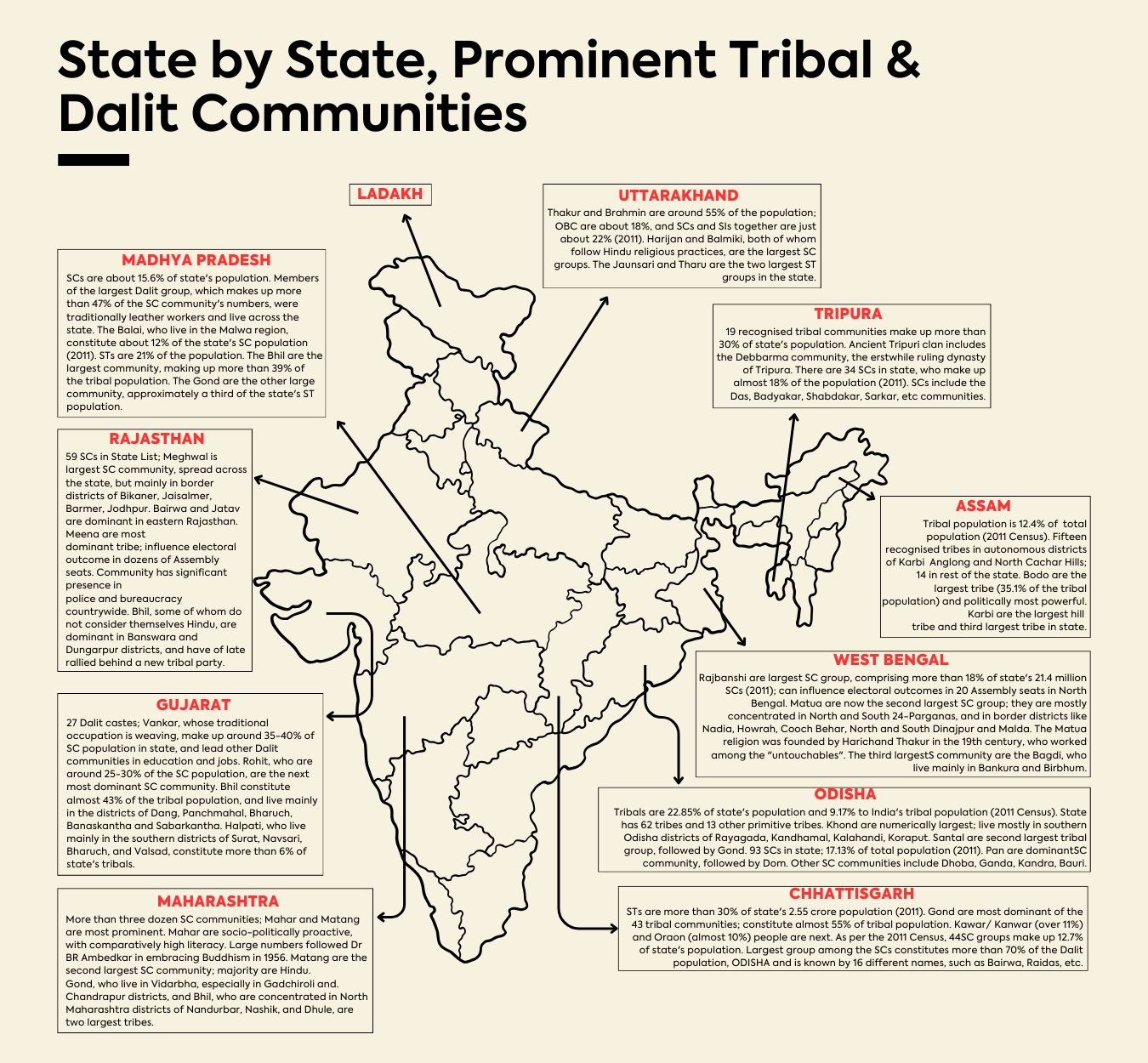
    • The Supreme Court’s ruling allows states to create sub-classifications within the SC category, which is expected to enable states to earmark sub-quotas for the most marginalized sections of Dalits.
    • This decision aims to ensure better representation for weaker groups within the SC community who have historically been underrepresented and have not benefitted adequately from existing reservations.
    • The ruling emphasizes that treating SC communities as a homogeneous group undermines the objective of reservations, as there are significant differences in advancement and discrimination among various SC communities.

    Why Did the Supreme Court Overrule a Five-Judge Decision of 2004?

    • The 2004 judgment in E.V. Chinnaiah vs. State of Andhra Pradesh held that SCs constitute a single homogeneous class and that any sub-classification was unconstitutional, as it violated Article 341, which empowers the President to notify the list of SCs.
    • The recent seven-judge Bench, led by Chief Justice D.Y. Chandrachud, found this ruling to be incorrect, stating that SC communities are not homogeneous and that there are inter se differences among them.
    • The majority opinion argued that the act of notifying a list of SCs does not create a uniform class, and sub-classification is permissible based on “intelligible differentia” and should have a rational nexus to the purpose of doing it.

    What are the views on Creamy layer exclusion?

    • The concept of the creamy layer, which excludes more advanced members of a community from benefiting from affirmative action, is currently applicable only to Other Backward Classes (OBCs) and has not been extended to Dalit communities.
    • Justice B.R. Gavai, in a separate opinion, emphasized the need to identify and exclude the more advanced among SCs from affirmative action benefits, arguing that treating all members equally disregards the principle of equality.
    • The opinions regarding creamy layer exclusion do not constitute a directive for the government to implement this concept for SCs, as the issue was not directly addressed in the current case.

    Do the Judges’ Opinions on this Constitute a Direction to the Government?

    • The judges’ opinions on sub-classification and creamy layer exclusion provide a legal framework for states to follow but do not serve as a direct mandate for the government to implement changes.
    • The ruling establishes that states have the authority to sub-classify SCs for the purpose of extending reservation benefits, but the specific implementation details and parameters for creamy layer exclusion remain open for further consideration and do not compel immediate action from the government.

    Way forward: 

    • Implementation Framework for Sub-Classification: The government should establish a comprehensive framework that outlines the criteria and process for sub-classification of SCs.
    • Addressing Creamy Layer Exclusion: The government should consider developing specific criteria for identifying the “creamy layer” within SCs, similar to the criteria used for OBCs.

  • Climate Change Impact on India and World – International Reports, Key Observations, etc.

    Underwater mapping reveals insights into melting of ice shelves    

    Note4Students

    From UPSC perspective, the following things are important:

    Prelims level: About the Dotson Ice Shelf (DIS) in the Amundsen Sea

    Mains level: Reasons behind ocean warming

    Why in the News?

    New research has documented previously unseen shapes at the base of a West Antarctic ice shelf.  

    Base of a West Antarctic Ice Shelf

    • Basal Melt Dynamics: The base of West Antarctic ice shelves, including the Dotson Ice Shelf, experiences basal melt driven by warm ocean water. This process leads to thinning and hollows out cavities beneath the ice, reducing structural support for the grounded ice above.
    • Autonomous Underwater Vehicle (AUV) Research: Recent research utilized an AUV equipped with multibeam sonar to explore the topography of the basal melt cavity beneath the Dotson Ice Shelf, revealing previously unquantified melt mechanisms and unique formations at the ice shelf’s base.
      • Warm salty water, which is transported through ocean currents, significantly contributes to the melting of ice shelves. This bottom-up melting is critical to understanding the dynamics of ice loss and its implications for global sea level rise.
      • The AUV discovered tear-shaped indents and other unique shapes at the base of the ice shelf, indicating diverse melting patterns influenced by the flow of warm water.

    About the Dotson Ice Shelf (DIS) in Amundsen Sea

    • Dotson Ice Shelf is part of the West Antarctic ice sheet and is located next to Thwaites Glacier in the Amundsen Sea.
    • Thwaites Glacier is considered to have a potentially large impact on future sea level rise due to its size and location.

    Reasons behind ocean warming

    • Greenhouse Gas Emissions: Since the Industrial Revolution, human activities such as burning fossil fuels have significantly increased greenhouse gas (GHG) concentrations in the atmosphere, including carbon dioxide, methane, and nitrous oxide. These gases trap heat, leading to global warming.
    • Heat Absorption: The oceans have absorbed more than 93% of the excess heat from greenhouse gas emissions since the 1970s. This resulted in an average increase in ocean temperature of about 1°F (0.6°C) over the past century.
    • Impact of El Niño: The El Niño weather pattern, characterized by the abnormal warming of surface waters in the equatorial Pacific Ocean, contributes to both ocean warming and rising global surface temperatures.

    International Efforts and Agreements

    • The United Nations Framework Convention on Climate Change (UNFCCC) was signed by 166 countries in 1992, acknowledging humanity’s role in climate change.
    • The Paris Agreement, adopted in 2015, sets the international community the goal of limiting global warming to “well below” 2°C in this century.
    • The Green Climate Fund, established in 2010, aims to help developing countries adopt initiatives to combat climate change and deforestation

    Way forward: 

    • Enhanced Global Commitments: Nations need to reinforce their commitments under international agreements like the Paris Agreement. This includes setting more ambitious targets for reducing greenhouse gas emissions and adhering to these goals through stringent policies and regulations.
    • Funding and Technology Transfer: Developed countries should increase financial contributions to climate funds such as the Green Climate Fund to support mitigation and adaptation efforts in developing countries.

    Mains Question for practice: 

    Q Bring out the relationship between the shrinking Himalayan glaciers and the symptoms of climate change in the Indian sub-continent. (2014)

  • Government Budgets

    What do Scientists make of the Budget?     

    Note4Students

    From UPSC perspective, the following things are important:

    Mains level: Concerns about the sidelining of basic research and stagnation in research funding

    Why in the News?

    Modi’s government launched advanced tech missions and boosted private space participation, achieving a moon landing, amid concerns over basic research neglect and stagnant research funding.

    Priority areas – productivity and resilience in agriculture, energy security, and manufacturing and services:

    • Productivity and Resilience in Agriculture

        • The Union Budget emphasizes transforming agricultural research to enhance productivity and climate resilience.
        • Initiatives such as “speed breeding platforms” have been established to accelerate the development of climate-resilient crop varieties, allowing multiple generations of crops to be grown in a single year.
    • Energy Security

        • The budget prioritizes energy security with a focus on research and development of small and modular nuclear reactors and advanced thermal power plants.
        • The proposed “Critical Minerals Mission” is expected to enhance research in critical minerals essential for clean energy technologies.
    • Manufacturing and Services

      • The budget highlights the importance of enhancing domestic manufacturing capabilities and attracting foreign investment through initiatives like the Production Linked Incentive (PLI) schemes.
      • Plans for “plug and play” industrial parks in 100 cities are expected to facilitate the uptake of indigenous technologies and boost manufacturing output.
      • The focus on commercializing technologies with private sector involvement aims to strengthen the manufacturing sector’s contribution to the economy.

    Concerns about the sidelining of basic research and stagnation in research funding 

    • Sidelining of Basic Research

        • Focus on Advanced Technology: The previous two terms of the Indian government emphasized advanced technology missions (e.g., supercomputing, quantum technologies), which raised concerns that basic research was being neglected.
        • Limited Funding for Basic Research: The establishment of the Anusandhan National Research Fund (ANRF) aims to prioritize basic research, but there are concerns that the emphasis on “prototype development” alongside basic research may indicate a shift towards translational research, potentially sidelining pure scientific inquiry.
        • Disparity in Funding Distribution: Currently, about 65% of research funding is allocated to premier institutions like IITs, while state-run universities receive only about 11% of the funds provided by the Department of Science and Technology (DST). This disparity hampers the growth of basic research across a broader range of institutions.
    • Stagnation in Research Funding

      • Actual Expenditure vs. Allocation: Concerns were raised that the actual expenditure on science and technology and higher education in 2023-2024 was much less than the initial allocation for that year.  
      • Demand for Increased Funding: The scientific community has long demanded higher government funding for basic research, as the private sector has shown limited interest in investing in this area.
      • Impact of Inflation: The nominal increases in budget allocations for research may not be sufficient to counteract inflation, leading to a real decrease in available funding for research activities.

    Way forward: 

    • Increase Research Funding: Need to boost the overall research funding as a percentage of GDP to ensure adequate resources for both basic and applied research. This includes adjusting allocations to counteract the effects of inflation.
    • Equitable Distribution: The government should ensure a more balanced distribution of funds across premier institutions and state-run universities to foster a broader base of scientific inquiry and innovation.
  • Economic Indicators and Various Reports On It- GDP, FD, EODB, WIR etc

    An unstated shift in Modi’s economic direction             

    Note4Students

    From UPSC perspective, the following things are important:

    Prelims level: About Employment Linked Incentives (ELI)

    Why in the news?

    The introduction of the new ELI scheme for corporates by the Narendra Modi government acknowledges the disconnect between GDP growth and job creation.

    About Employment Linked Incentives (ELI)

    • The ELI scheme aims to encourage companies to hire more employees by providing financial incentives for each new hire.
    • Target Sectors: The scheme is expected to focus on labour-intensive sectors such as toys, textiles, apparel, furniture, tourism, and logistics, which have significant potential for job creation.
    • Incentives Offered: Financial incentives may include tax relief and wage subsidies for new jobs created, along with non-financial incentives like reduced regulatory burdens and support for skill development programs.

    Government’s Failure of Initiatives

    • Previous Economic Strategies: Over the past decade, the Indian government relied on traditional economic models, such as the trickle-down approach and production-linked incentives (PLI), which did not yield the expected job growth.
      • Initiatives like “Make in India” and corporate tax cuts aimed to stimulate investment but failed to translate into significant employment opportunities.
    • Jobless Growth: Despite policies designed to boost production, employment growth has been stagnant, with a study indicating a negligible employment growth rate of just 0.01%.

    Issue of Job and Ideas Deficit

    • Jobs Deficit: The lack of job creation has prompted proposals like reserving jobs for locals, reflecting political pressures in a democracy where job scarcity is prevalent.
    • Ideas Deficit: Economists often suggest reforms in labour, education, and business practices as solutions to job creation, but these are complex and difficult to implement.
    • Unemployment Trends: The unemployment rate has shown fluctuations, with a reported decline from 6.0% in 2017-18 to 3.2% in 2022-23. 

    What can be done?

    • Policy Shift: The ELI scheme represents a significant policy shift towards prioritizing job creation over mere economic output. By encouraging firms to hire rather than invest solely in automation, it aims to address the capital-labour imbalance in the economy.
    • Support for MSMEs: Special focus on micro, small, and medium enterprises (MSMEs) is crucial, as they employ a substantial portion of the workforce.
    • Alignment of Goals: Need to Collaborate among various ministries, particularly finance, skill development, and labour, is essential to ensure that skill development aligns with industry needs, enhancing employability and job creation
  • Disasters and Disaster Management – Sendai Framework, Floods, Cyclones, etc.

     Why the Odisha government will plant palm trees to combat lightning strikes          

    Note4Students

    From UPSC perspective, the following things are important:

    Prelims level: Lightning strikes in India

    Mains level: NDMA Guidelines for Lightning

    Why in the news?

    In July, the Odisha government approved a proposal to plant 1.9 million palm trees to mitigate deaths caused by lightning strikes, which were declared a state-specific disaster in 2015.

    How many people have lost their lives to lightning in Odisha?   

    • Over the last 11 years, a total of 3,790 people have lost their lives due to lightning strikes in Odisha.
    • In the previous three fiscal years, 791 fatalities were reported, indicating an increasing frequency of lightning strikes.
    • On September 2, 2023, Odisha recorded 61,000 lightning strikes in a two-hour period, resulting in the deaths of at least 12 people.

    Why are Lightning strikes of particular concern in Odisha?

    • Odisha is located in a tropical zone and experiences a hot, dry climate that creates ideal conditions for lightning strikes.
    • The state has the highest number of cloud-to-ground lightning strikes in eastern and central India. The Annual Lightning Report 2023-2024 indicates a significant concentration of lightning activity in this region.
    • Research indicates that climate change exacerbates lightning activity, with a 10% increase in lightning occurrences for every degree Celsius of warming. This is particularly relevant in Odisha, where climatic factors contribute to frequent lightning events.
    • With 96% of lightning strikes occurring in rural areas, the most affected populations include farmers and daily wage earners who work outdoors, making them particularly vulnerable during peak agricultural seasons.

    How can Odisha defend Itself against lightning strikes?

    • Planting Palm Trees: The Odisha government has approved a proposal to plant 19 lakh palm trees as a natural defense against lightning strikes. Palm trees are considered effective conductors of lightning due to their height and moisture content, which can absorb lightning and mitigate its impact on the ground.
    • Financial Commitment: The state has allocated Rs 7 crore for the palm tree plantation initiative and has banned the felling of existing palm trees to enhance this strategy.
    • Public Awareness and Early Warning Systems: While the state has implemented early warning systems to forecast lightning strikes, experts emphasize the need for widespread public education on safety measures during lightning events.
    • Concerns: Experts have raised concerns about the effectiveness of palm trees as a long-term solution, noting that it takes 15 to 20 years for them to reach a height where they can effectively mitigate lightning strikes.

    NDMA Guidelines for Lightning

    • Preparation and Awareness: The Local government should educate the communities about lightning safety and the risks associated with thunderstorms.
    • Seek Shelter: During a thunderstorm, individuals should seek shelter in a fully enclosed building or a hard-topped metal vehicle. Open vehicles and structures such as metal sheds or under-construction buildings are unsafe.
    • Avoid Trees: Taking shelter under trees is discouraged, as they can attract lightning. If in a wooded area, find the shortest trees for shelter.
    • Crouching Position: If no shelter is available, crouch down with heels touching and head between the knees to minimize height and reduce risk.
    • 30-30 Rule: After seeing lightning, start counting to 30. If you hear thunder before reaching 30, go indoors. This rule helps assess the distance of the storm.

    Way forward: 

    • Installation of Lightning Rods and Conductors: The government should invest in the widespread installation of lightning rods and conductors in rural and vulnerable areas. These devices can provide immediate protection to critical infrastructure, homes, and open fields where farmers and workers are most at risk.
    • Advanced Early Warning Systems: Need to enhance the existing early warning systems with more accurate, real-time data and ensure these warnings are disseminated quickly through multiple channels, including mobile alerts, community announcements, and local radio.

    Main PYQ: 

    Q Explain the mechanism and occurrence of cloudburst in the context of the Indian subcontinent. Discuss two recent examples. (2022)

  • Civil Services Reforms

    Elephant in Civil Servant’s room           

    Note4Students

    From UPSC perspective, the following things are important:

    Mains level: The idea of Constitutional Democracy

    Why in the news?

    The government’s recent decision to lift the ban on government employees participating in RSS activities threatens to undermine the remnants of a free and fair bureaucracy.

    Whether or not civil servants are banned from joining RSS 

    • Lifting the Ban: The Central government has lifted a 58-year ban on government servants joining the Rashtriya Swayamsevak Sangh (RSS). This ban was originally imposed in 1966 due to concerns about the organization’s political activities.
    • Government Justification: The government stated that the activities of the RSS are no longer deemed incompatible with civil service conduct rules, suggesting that the organization has been wrongly categorized as a banned entity.
    • Judicial Commentary: The Madhya Pradesh High Court remarked that it took nearly five decades for the government to recognize its mistake in banning civil servants from joining the RSS, indicating a shift in perception regarding the organization.
    • Political Reactions: The decision has sparked controversy, with opposition parties criticizing it as a threat to India’s secular fabric and accusing the government of politicizing the civil service. Critics argue that the RSS’s ideology conflicts with the principles of a secular state.
    • Support from RSS: The RSS welcomed the decision, asserting that it strengthens India’s democratic system and has historically contributed to national unity and social service.

    The idea of Constitutional Democracy

    • Constitutional democracy is a system of government that combines the principles of democracy with a constitution that limits the powers of the state and protects the rights of citizens.
    • The people are the ultimate source of power, and the government derives its authority from their consent. The constitution places restrictions on the government’s actions and establishes the structure of the government.
    • There is a separation of powers between the legislature, executive, and judiciary, with each acting as a check on the others. The rule of law applies equally to all citizens and the government itself.
    • Minority rights are protected, and the will of the majority is balanced against the rights of individuals and minority groups. Constitutional democracy guarantees some rights to everyone, irrespective of their status as a minority or majority.
    • The origins of constitutional democracy can be traced back to Enlightenment ideas of natural rights, social contract theory, and the separation of powers. The United States Constitution, adopted in 1787, was a pioneering example of a written constitution establishing a federal system of government with a separation of powers

    RSS Ideology vs Constitutional Democracy

    • Conflict of Ideologies: The lifting of the ban raises questions about the relationship between the RSS’s ideology and the constitutional framework of India. The RSS promotes a vision of a Hindu nation, which may conflict with the secular and pluralistic ideals enshrined in the Constitution.
    • Constitutional Morality: The Constitution aims to create a society that respects diverse religions and cultures, contrasting with the RSS’s focus on a singular religious identity. This juxtaposition presents challenges to the commitment of civil servants to uphold constitutional values.
    • Historical background of the Constitution: The Constitution was designed to restructure Indian society post-independence, ensuring inclusivity and rejecting the idea of a state aligned with a single religious community. The RSS’s ideology, which criticizes the post-1947 restructuring, poses a fundamental challenge to this vision.
    • Democratic Challenges: The existence of non-democratic and exclusionary ideas within a democratic framework complicates governance. The rise of Hindutva politics, which emphasizes majoritarianism and exclusion, threatens the principles of constitutional democracy.
    • Need for Reinforcement: To counter the influence of ideologies that contradict constitutional morality, there is a pressing need to reinvigorate the commitment to constitutional democracy among civil servants and the broader public.

    Conclusion: To uphold constitutional democracy, it is crucial to reinforce the commitment to secularism, inclusivity, and the rule of law among civil servants and the broader public amidst ideological challenges.

    Mains PYQ: 

    Q To enhance the quality of democracy in India the Election Commission of India has proposed electoral reforms in 2016. What are the suggested reforms and how far are they significant to make democracy successful? (2017)

  • Forest Conservation Efforts – NFP, Western Ghats, etc.

    Centre reissues draft notification on ecosensitive areas in Western Ghats          

    Note4Students

    From UPSC perspective, the following things are important:

    Prelims level: Ecologically Sensitive Areas (ESAs)

    Mains level: Reason behind the designation of Western Ghat as an ESA

    Why in the news?

    On Friday, the Central government released the sixth draft notification, designating 56,825.7 square kilometre of the Western Ghats as an ecologically sensitive area (ESA) across the states of Gujarat, Maharashtra, Goa, Karnataka, Kerala, and Tamil Nadu.

    Recommendations of the Gadgil and Kasturirangan Committees

    • Gadgil Committee: Recommended that 75% of the Western Ghats (129,037 sq km) be designated as ecologically sensitive areas (ESAs) with restrictions on development activities.
    • Kasturirangan Committee: Notified only 37% of the Western Ghats as ESAs, reducing the extent compared to the Gadgil report. It split the region into cultural (human settlements) and natural (non-human settlements) zones.

    Ecologically Sensitive Areas (ESAs)

    • ESAs are regions recognized for their environmental significance, where human activities are regulated to protect biodiversity, ecosystems, and natural habitats. These areas are often home to endemic species of plants and animals and are crucial for maintaining ecological balance.
    • The Environment (Protection) Act of 1986 allows the Central Government to restrict industrial activities in these sensitive areas to safeguard their ecological integrity. Although the term “Eco-Sensitive Zones” is not explicitly mentioned in the Act, provisions exist to prohibit or regulate activities based on biodiversity and environmental considerations.

    The reason behind it:

    • Biodiversity Hotspot: The Western Ghats is recognized as one of the world’s eight “hottest hotspots” of biological diversity and a UNESCO World Heritage Site. It is home to numerous endemic species and globally threatened flora and fauna, making its protection crucial for conserving biodiversity.
    • Recent Natural Disasters: The draft notification follows severe landslides in Wayanad, Kerala, which resulted in significant loss of life and property. These events underscored the vulnerability of the region to ecological disasters, highlighting the need for protective measures to prevent further environmental degradation

    Opposition from States

    • State governments, including Kerala, have opposed the proposals in the draft notifications for declaring ESAs along the Western Ghats.
    • The Kerala government want to reduce the ESA to 9,993.7 sq km from the Kasturirangan committee’s recommendation of 13,108 sq km.
    • The then Kerala government led by Oommen Chandy opposed the Gadgil report and appointed another panel to come up with an independent report.

    New Panel Formed by the Government

    • In April 2022, the Centre formed another panel to “re-examine suggestions by these six state governments while keeping in view the conservation aspects of the disaster-prone pristine ecosystem, as well as rights, privileges, needs and developmental aspirations of the region”.
    • The Centre and expert panel held 10 meetings with states having Western Ghats to discuss the fifth draft notification at various forums.
    • The sixth draft notification, issued on Friday, declared 56,825.7 sq km of the Western Ghats as ESAs in the states of Gujarat, Maharashtra, Goa, Karnataka, Kerala and Tamil Nadu

    Way forward: 

    • Integrated Management Plans: The Government should develop and implement integrated management plans that balance ecological conservation with the developmental needs of the region.
    • Enhanced Monitoring and Enforcement: There is a need to strengthen the regulatory framework by enhancing monitoring mechanisms and enforcing existing environmental laws more stringently.

    Mains PYQ: 

    Q Differentiate the causes of landslides in the Himalayan region and Western Ghats. (2021)

  • Foreign Policy Watch: India-ASEAN

    Growing Bilateral Relations between India and Vietnam    

    Note4Students

    From UPSC perspective, the following things are important:

    Prelims level: Bordering countries of Vietnam

    Mains level: Importance of Vietnam for India

    Why in the news?

    During his welcome of Vietnamese Prime Minister Pham Minh Chinh, Prime Minister Narendra Modi emphasized the significance of freedom of navigation while subtly referencing China.

    Evolution of Bilateral Relations to Strategic Partnership

    • Early Relations: Cultural and economic links between India and Vietnam date back to the 2nd century, with significant support from India during Vietnam’s struggles against colonialism and foreign intervention, particularly during the Vietnam War.
    • Formal Diplomatic Relations: Official diplomatic relations were established in 1992, marking the beginning of extensive economic ties, including cooperation in oil exploration, agriculture, and manufacturing.
    • Upgrade to Strategic Partnership (2007): The relationship was elevated to a “Strategic Partnership” during Vietnamese Prime Minister Nguyen Tan Dung’s visit to India in July 2007. This marked a significant step in formalizing cooperation across various sectors, particularly in defence and security.
    • Comprehensive Strategic Partnership (2016): During Indian Prime Minister Narendra Modi’s visit to Vietnam in September 2016, the partnership was further upgraded to a “Comprehensive Strategic Partnership.” This upgrade emphasized enhanced cooperation in defence, trade, and cultural exchanges, as well as a shared commitment to regional security.

    Vietnam’s Remarkable Strides under Communist Party of Vietnam (CPV) Leadership

    • Economic Development: Under the CPV’s leadership, Vietnam has experienced significant economic growth and development, embracing a foreign policy of independence and multilateralism.
      • This approach has positioned Vietnam as a reliable partner in the region, fostering deeper economic ties with countries like India.
    • Strategic Investments: Vietnam has actively sought to attract Indian investments in various sectors, including renewable energy, pharmaceuticals, and technology.
      • The Vietnamese government has expressed gratitude for India’s support during the COVID-19 pandemic, particularly in vaccine distribution, which has further solidified ties between the two nations.

    Building Bridges in Strategic Relationship through Foreign Policy

    • Shared Vision for the Indo-Pacific: Both Prime Ministers emphasized their commitment to a free, open, and rules-based Indo-Pacific.
    • Indian PM’s assertion that India supports development, not expansionism, reflects a mutual stance against aggressive territorial claims, particularly in the South China Sea, where both nations advocate for adherence to international law.
    • Collective Approach to Conflicts: The leaders highlighted the importance of a collective approach to resolving regional conflicts, including those in Myanmar and West Asia.
      • This stance underscores their commitment to multilateralism and regional stability, with Vietnam recognizing India’s role as a stabilizing force in the Indo-Pacific.

    Significance of the Visit

    • Strengthening Strategic Ties: Prime Minister Chinh’s visit signifies a deepening of the strategic partnership, with both sides committing to enhanced cooperation in defence, maritime security, and economic development. 
      • The agreement on a $300 million credit line for Vietnam’s maritime capabilities is a notable outcome of the discussions.
    • Cultural and Economic Connectivity: The visit also marked the signing of multiple agreements across various sectors, including customs, agriculture, and traditional medicine, demonstrating a comprehensive approach to enhancing bilateral relations.
      • The establishment of digital payment connectivity is another step towards strengthening economic ties.

    Way forward: 

    • Strengthening Economic and Trade Ties: Both nations should focus on achieving the proposed bilateral trade target of $20 billion by expanding cooperation in key sectors such as renewable energy, technology, and agriculture.
    • Enhancing Defense and Security Cooperation: To address regional security challenges, particularly in the context of the South China Sea, India and Vietnam should deepen their defence and security collaboration.
  • Renewable Energy – Wind, Tidal, Geothermal, etc.

    The relevance of pumped storage projects      

    Note4Students

    From UPSC perspective, the following things are important:

    Prelims level: Renewable energy

    Mains level: Significance of Pumped Storage Projects

    Why in the news?

    The Union Budget for 2024-25 announced that “a policy will be introduced to promote pumped storage projects aimed at electricity storage and ensuring the seamless integration of the increasing share of renewable energy.

    Why is renewable power generation subject to variations and weather changes?

    • Due to Intermittent nature: Renewable energy sources, particularly solar and wind, are inherently intermittent. Solar energy is only available during daylight hours and is affected by weather conditions such as cloud cover, while wind energy varies with wind speed and direction. This variability leads to fluctuations in power generation, making it challenging to match supply with demand consistently.
    • Daily and Seasonal Variations: The generation capacity of renewable sources can change significantly over short periods (hours to days) and longer periods (seasonal). For instance, solar power generation peaks during sunny days and drops to zero at night, while wind power can vary greatly depending on seasonal weather patterns.

    Significance of Pumped Storage Projects

    • Grid Stabilization: Pumped storage projects are critical for stabilizing the power grid by addressing the variability and intermittency of renewable energy sources like solar and wind.
    • Energy Storage Capacity: PSPs account for over 94% of the installed global energy storage capacity, making them the most widely used technology for large-scale energy storage.
    • Flexible Energy Generation: These projects can provide both base load and peaking power, offering flexibility in energy generation.  
    • Environmental Benefits: Pumped storage is a clean and environmentally friendly technology.
    • Economic Viability: The cost of energy from pumped storage is competitive compared to other energy storage technologies.

    How do Power Managers decide which energy source to use?

    • Use of forecasting Techniques: Power managers utilize advanced forecasting techniques to predict renewable energy generation based on expected weather conditions. This allows them to plan the operation of different power plants in advance, ensuring a steady supply of electricity.
    • Demand and Supply Management: Decisions on which energy source to use are based on real-time demand and the availability of renewable energy. When there is a surplus of renewable energy (e.g., during sunny or windy periods), it may be used to pump water in pumped storage systems. Conversely, when renewable generation is low, power managers may rely on more stable sources like hydro, coal, or nuclear power to meet demand.

    Where are some of the Pumped Storage Projects of India situated?

    • Kadamparai: Located in Tamil Nadu, this facility has a capacity of 400 MW and operates by pumping water to a higher reservoir during periods of surplus power generation.
    • Other Notable Projects: India has several other pumped storage projects, including those at Nagarjunasagar, Kadana, and Panchet. These facilities contribute to managing the variability of renewable energy generation in the country.

    How do the reservoirs in Kadamparai, Tamil Nadu operate?

    • The Kadamparai pumped storage plant consists of two reservoirs at different elevations. Water is pumped from the lower reservoir to the upper reservoir when there is surplus power available, typically from solar or wind sources.
    • When demand rises, especially during peak evening hours, water flows from the upper reservoir to the lower reservoir, turning turbines to generate electricity. This operation allows the plant to provide power for three to four hours during peak demand periods, effectively stabilizing the grid.
    • The plant can switch between pumping and generating modes, allowing it to respond quickly to changes in power demand. This flexibility is crucial for integrating variable renewable energy sources into the grid.

    Conclusion: The need to Develop a robust and flexible grid infrastructure that can efficiently handle the integration of renewable energy sources is crucial. Implementing smart grid technologies, including real-time monitoring, advanced forecasting techniques, and automated demand-response systems, can optimize the balance between supply and demand.

  • Minority Issues – SC, ST, Dalits, OBC, Reservations, etc.

    States can sub-classify SCs for quotas: top court      

    Note4Students

    From UPSC perspective, the following things are important:

    Prelims level: What is sub-categorisation within SCs and STs?

    Mains level: Why sub-classification is necessary?

    Why in the news?

    • In a 6:1 majority ruling on August 1, the Supreme Court determined that sub-classification within the Scheduled Castes (SCs) and Scheduled Tribes (STs) categories is permissible to extend the benefits of affirmative action.
    • However, the seven-judge Bench, led by Chief Justice of India (CJI) D.Y. Chandrachud, emphasized that this must be grounded on “quantifiable and demonstrable data” rather than political motivations.

    Why sub-classification is necessary?

    • Addressing Inequality Within SCs: The Supreme Court ruling emphasizes that SCs are not a homogeneous group. Instead, there are significant disparities in socio-economic and educational status among different castes within the SC category.
      • Sub-classification allows for the identification of those who are more disadvantaged and ensures that benefits are equitably distributed among them.
    • Equitable Distribution of Benefits: States have argued that despite existing reservations, certain castes remain grossly underrepresented compared to others.
      • Sub-classification aims to create separate quotas for these underrepresented groups within the SC quota, thereby promoting fairness and equity in the distribution of affirmative action benefits.
    • Legal Precedent and Historical Evidence: The majority opinion of the Supreme Court referenced historical and empirical evidence indicating that specific castes within the SCs face greater oppression and discrimination.
    • Judicial Oversight: The ruling stipulates that any sub-classification must be based on “quantifiable and demonstrable data” regarding levels of backwardness and representation, ensuring that the process is transparent and justifiable.

    What does the creamy layer principle say?

    • Exclusion of the Creamy Layer: The creamy layer principle refers to the exclusion of the more affluent and advanced members within a backward class from receiving reservation benefits. This principle is currently applied to Other Backward Classes (OBCs) but has been suggested for implementation within SCs and STs as well.
    • Achieving True Equality: Justice B.R. Gavai, in his concurring opinion, emphasized the need for states to identify and exclude the creamy layer among SCs and STs to ensure that affirmative action benefits reach those who are genuinely disadvantaged.
    • Historical reason: The creamy layer principle has been upheld in various Supreme Court judgments (Indra Sawhney judgment in 1992), which have recognized that certain individuals within reserved categories may have advanced socio-economic status and should not benefit from reservations intended for the disadvantaged.

    Way forward: 

    • Data Collection and Analysis: States should prioritize the collection of comprehensive and quantifiable data on the socio-economic status of different castes within the SC and ST categories.
    • Policy Framework for Creamy Layer Exclusion: States should develop clear policies to identify and exclude the creamy layer within SCs and STs from reservation benefits.