💥UPSC 2026, 2027, 2028 UAP Mentorship (March Batch) + Access XFactor Notes & Microthemes PDF

Type: Explained

  • Child Rights – POSCO, Child Labour Laws, NAPC, etc.

    Trying juveniles as adults is not the answer  

    Note4Students

    From UPSC perspective, the following things are important:

    Prelims level: Juvenile Justice (Care and Protection of Children) Act, 2015

    Mains level: Laws and Legislations in Debate

    Why in the News?

    In May, a speeding car, allegedly driven by a teenager, resulted in the deaths of two young techies in Pune.

    • The Juvenile Justice Board (JJB) initially granted the minor bail on conditions like writing a 300-word essay on road safety. This decision sparked public outrage and criticism from the Maharashtra Deputy CM.
    • Later, the JJB canceled the minor’s bail and sent him to an observation home, which was again challenged in the Bombay High Court.
    • The Bombay High Court eventually ordered the release of the minor, stating that the JJB’s remand order was illegal and that the minor should be in the care of his paternal aunt as per the Juvenile Justice Act.

    What were the provisions led under the previous Juvenile Justice (Care and Protection of Children) Act of 2015?

    Definitions:
    • Section 2 defines a “child” as a person below the age of 18 years.
    • Section 2(13) defines “children in conflict with law” as those who are alleged or found to have committed an offence.
    • Section 2(14) defines “children in need of care and protection” as those meeting certain criteria, such as being homeless, engaged in illegal labour, victims of abuse, etc.
    Juvenile Justice Boards (JJBs):
    • Section 4 mandates the establishment of Juvenile Justice Boards in each district.
    • Section 4(2) states that the JJBs shall comprise a Metropolitan Magistrate or a Judicial Magistrate of the First Class and two social workers.
    • Section 8 outlines the powers and functions of the JJBs in handling cases related to children in conflict with the law.
    Child Welfare Committees (CWCs):
    • Section 27 requires the establishment of Child Welfare Committees in each district.
    • Section 28 defines the composition and functions of the CWCs in the care, protection, treatment, development, and rehabilitation of children in need of care and protection.
    Adoption Procedures:
    • Chapter VIII (Sections 56-65) provides a comprehensive adoption regime, including the establishment of the Central Adoption Resource Authority (CARA).
    • Sections 56-65 outline the adoption procedures and ensure transparency and accountability.
    Rehabilitation and Social Reintegration: Section 39 emphasizes the rehabilitation and social reintegration of children in conflict with the law through various measures, including counseling, education, skill development, and community-based programs.
    Preliminary Assessment for Heinous Offences: Section 15 mandates a preliminary assessment by the JJB to determine if a child in the age group of 16-18 years accused of committing a heinous offence should be tried as an adult.
    Children’s Court: Section 19 provides for the establishment of a Children’s Court to try children in the age group of 16-18 years accused of committing heinous offences.
    Mandatory Reporting: Section 19(1) makes it mandatory to report the presence of a child in need of care and protection to the authorities, and failure to do so is a punishable offence.
    Registration of Child Care Institutions: Section 41 requires all childcare institutions, whether run by the government or NGOs, to be registered within six months of the commencement of the Act.
    Penalties: Chapter XI (Sections 75-85) prescribes penalties for various offences, including the non-registration of childcare institutions and the sale and procurement of children.

    Amendment in 2021 

    • Empowering District Magistrates: The amendment authorized District Magistrates, including Additional District Magistrates, to issue adoption orders under Section 61 to ensure speedy disposal of cases and enhance accountability.
    • Strengthening Child Welfare Committees (CWCs): The eligibility parameters for the appointment of CWC members were redefined, and criteria for disqualification were introduced under Section 28 to ensure that only competent and capable individuals were appointed.
    • Categorization of Offences: The amendment categorized offences where the maximum sentence is more than 7 years imprisonment but no minimum sentence is prescribed or the minimum sentence is less than 7 years as “serious offences” under Section 2(54).
    • Addressing Implementation Challenges: The amendment introduced changes to remove difficulties arising in the interpretation of various provisions of the Act and to clarify the scope of certain provisions.

    Need for Accountability:

    • Promoting Justice and Fairness: Accountability ensures that juvenile offenders are held responsible for their actions in a manner that aligns with principles of justice and fairness.
    • Preventing Recidivism and Ensuring Rehabilitation: Holding juvenile offenders accountable helps in addressing underlying issues that contribute to their offending behaviour.
    • Maintaining Public Confidence and Trust: Accountability in the juvenile justice system enhances public confidence in the legal process and ensures transparency in decision-making.

    Conclusion: Implement comprehensive rehabilitation programs that are tailored to the individual needs of juvenile offenders, focusing on mental health support, educational opportunities, vocational training, and family reintegration.

    Mains PYQ: 

    Q Examine the main provisions of the National Child Policy and throw light on the status of its implementation. (2016)

  • ISRO Missions and Discoveries

    ISRO has a problem: many rockets, but too few satellites to launch 

    Note4Students

    From UPSC perspective, the following things are important:

    Prelims level: Satellite launching vehicles; ISRO;

    Mains level: ISRO; Present Scenario of Satellites in India;

    Why in the News? 

    After the ambitious Next Generation Launch Vehicle (NGLV) was finalized in June 2024, ISRO Chairman S. Somanath stated its launch capability exceeded demand threefold, highlighting a need for robust domestic market demand for launch vehicles.

    What is the present scenario of Satellites in India?   

    • India operates a diverse fleet of satellites with applications in Communications, Remote Sensing, Positioning, Navigation and Timing (PNT), Meteorology, Disaster Management, Space-based internet, Scientific missions, and Experimental missions.
    • India currently has four main launch vehicles: the Small Satellite Launch Vehicle (SSLV), the Polar Satellite Launch Vehicle (PSLV), the Geosynchronous Satellite Launch Vehicle (GSLV), and the Launch Vehicle Mark-III (LVM-3), capable of launching satellites up to four tonnes to geosynchronous orbit.
    • For satellites weighing more than four tonnes, India relies on foreign launch vehicles, such as Europe’s Ariane V and SpaceX’s Falcon 9, to meet its heavy payload requirements.
    • India has been actively involved in significant space missions like Chandrayaan 3 (a lunar mission) and Aditya L1 (a mission to study the Sun), showcasing its growing capabilities in space exploration.

    Existing Demand-Driven Model in India – Before and After       

    • Before (Supply-Driven Model)
        • The Indian Space Research Organisation (ISRO) primarily built and launched satellites based on its assessments and planned missions without waiting for specific customer demands.
        • After launching satellites, ISRO would then look for customers who needed the services provided by the satellites, which sometimes led to underutilization or delayed utilization of satellite capabilities.
        • The space sector was heavily government-controlled, with limited involvement and investment from private players
        • There was less emphasis on educating potential customers about the benefits and applications of space-based services, leading to lower demand from various sectors.
    • After 2020 (Demand-Driven Model)
      • The Space sector reforms 2019-2020 encouraged greater private sector participation, fostering innovation, competition, and commercialization in the Indian space industry.
      • Satellites are now built and launched based on confirmed customer demands, ensuring that each satellite has a predefined purpose and user base before it is sent into space.
      • The market demand for satellite services is validated and secured before the construction and launch phases, leading to better alignment of resources and higher utilization rates.

    Major Three Limitations Associated at Present Time:

    • Limited Launch Vehicle Capability: Currently, the Indian launch vehicles have restricted payload capacities, necessitating multiple launches for larger missions, increasing costs and complexity.
    • Demand-Supply Mismatch: Transitioning from a supply-driven to a demand-driven model faces challenges, including the need to educate potential customers and create a robust private sector ecosystem.
    • Economic and Technological Constraints: High costs of developing and maintaining launch vehicles and satellites, coupled with the early stages of implementing cost-effective reusable technologies, and insufficient infrastructure and investment.

    Way forward: 

    • Enhance Launch Vehicle Capacity: Invest in research and development to upgrade existing launch vehicles like GSLV and LVM-3 to increase payload capacity, reducing dependence on foreign launch providers.
    • Strengthen Market Engagement and Education: Expand outreach programs to educate potential customers across sectors about the benefits and applications of satellite-based services.
    • Promote Private Sector Participation: Facilitate a conducive regulatory environment to attract private investments and foster innovation in satellite manufacturing and launch services.

    Mains PYQ: 

    Q India has achieved remarkable successes in unmanned space missions including the Chandrayaan and Mars Orbiter Mission, but has not ventured into manned space missions. What are the main obstacles to launching a manned space mission, both in terms of technology and logistics? Examine critically. (UPSC IAS/2017)

  • Foreign Policy Watch: India-China

    China’s Communist Party begins ‘Third Plenum’ with focus on slowing economy       

    Note4Students

    From UPSC perspective, the following things are important:

    Prelims level: Neighbouring countries; China;

    Mains level: Impact of China's Policy on Indian Market;

    Why in the news? 

    China’s Communist Party commenced and formulated a strategy for achieving self-reliant economic growth amidst heightened National security concerns and restrictions on American technology access.

    What are the plenums of the Chinese Communist Party?

    The Chinese Communist Party holds a major congress twice a decade, where members of the Central Committee are elected. In between the party congresses, the Central Committee holds seven plenums attended by all its current members.

    The plenums are numbered from 1st to 7th, with each focusing on different aspects:

    • 1st, 2nd, and 7th plenums typically focus on power transitions between Central Committees.
    • 4th and 6th plenums generally center on party ideology.
    • 3rd plenums have historically focused on long-term economic reforms.
    • 5th plenums are associated with deliberations for the country’s five-year development plans.

    What are the major decisions taken at these meetings?   

    • Chinese govt is planning to take measures to restore and expand domestic consumption, focusing on sectors like automobiles, real estate, and services.
    • Reforms are also planned to transform the mechanisms of economic development by making the domestic market and technological innovation the main drivers of growth and emphasis on advancing the New Development Pattern adopted in the 14th Five-Year Plan (2021-2025)
    • Provisions that provided relaxation of restrictions on home purchases and funding curbs on property developers in some cities are incorporated to boost the struggling real estate market.
    • Focus on advancing science and technology sectors like Artificial Intelligence, Green Energy and Electric Vehicles under the “New Quality productive Forces” initiative

    What are the expected implications shortly for regional trade and politics?

    • Trade and Economic Relations: Policies discussed at plenums can impact China’s trade strategies on economic reforms, market regulations, and industrial policies could influence trade volumes, tariffs, and investment flows.
      • Changes in China’s economic policies could include shifts in investment patterns, and infrastructure projects linked to China’s Belt and Road Initiative.
    • Security Dynamics: Discussions on National security policies and Military strategies can impact regional security dynamics, especially India’s Arunachal Pradesh region influencing alliances, defense postures, and regional stability.

    Conclusion: The Indian Government needs to watch its ‘Neighbourhood First’ Policy very effectively keeping its stance assertive rather than passive this time.

    Mains PYQ: 

    Q China is using its economic relations and positive trade surplus as tools to develop potential military power status in Asia’, In the light of this statement, discuss its impact on India as her neighbor. (UPSC IAS/2017)

  • Parliament – Sessions, Procedures, Motions, Committees etc

    SC to look into the use of ‘Money Bills’ to pass laws   

    Note4Students

    From UPSC perspective, the following things are important:

    Prelims level: What is a Money Bill?

    Mains level: Present challenges to Money Bill

    Why in the News? 

    CJI D.Y. Chandrachud has accepted the plea to list petitions challenging the passage of contentious legislation in Parliament as Money Bills.

    • This has given rise to the expectation that the matter could be heard and decided before Chandrachud demits office in November this year.

    Presently, the three key issues are referred to the 7-judge bench in the Supreme Court:

    • Amendments made post-2015, like the Prevention of Money Laundering Act (PMLA) through Money Bills, giving the Enforcement Directorate wide powers, were valid or not.
    • Whether the passage of the Finance Act of 2017 as a Money Bill to alter appointments to 19 key judicial tribunals was valid or not
    • In the Aadhaar case, the Supreme Court had in 2018 upheld the Aadhaar Act as a valid Money Bill.
      • However, in 2021, Justice D.Y. Chandrachud (who was then a part of the bench) had dissented, saying the larger questions on Money Bills should be decided first before reviewing the Aadhaar judgment.
    • Now, the current Chief Justice D.Y. Chandrachud has agreed to list the petitions challenging the use of the Money Bill route by the Centre to pass contentious amendments, indicating he will constitute a 7-judge Constitution Bench to hear this matter.

    What is a Money Bill?

    • A Money Bill is a specific type of financial legislation that exclusively deals with matters related to taxes, government revenues, or expenditures.
      • It is defined under Article 110 of the Indian Constitution.
    • Every Money Bill is a Finance Bill but every Financial Bill is not a Money Bill: A Financial Bill can cover a broader range of financial issues, whereas a Money Bill is specifically limited to the matters mentioned in Article 110 of the Constitution. Therefore, while every Money Bill is a Financial Bill, not every Financial Bill is a Money Bill.

    Key provisions of the Money Bill: 

    • Article 110(1)(a): Imposition, abolition, remission, alteration, or regulation of any tax
    • Article 110(1)(b): The regulation of borrowing by the government or giving of any guarantee by the government or the amendment of the law for any financial obligations undertaken by the government
    • Article 110(1)(c): Custody of the Consolidated Fund or the Contingency Fund of India, the payment of money into or the withdrawal of money from any such Fund. 
    • Article 110(1)(d): Appropriation of money out of the Consolidated Fund of India
    • Article 110(1)(e): Declaration of any expenditure to be expenditure charged on the Consolidated Fund of India or the increase of the amount of any such expenditure
    • Article 110(1)(f): Receipt of money on account of the Consolidated Fund of India or the public account of India or the custody or issue of such money or the audit of the accounts of the Union or of a State
    • Article 110(1)(g): Any matter incidental to any of the matters specified in sub-clauses (a) to (f).

    What are the present challenges associated with the Parliament?

    • Circumvention of the Rajya Sabha:  The government is accused of misusing the Money Bill provision to evade scrutiny of the Bill by the Rajya Sabha where it was numerically weaker as compared to the Lok Sabha where it enjoyed pre-eminence.
    • Contentious Amendments passed as the Money Bill: Aadhaar Act, 2016; amendments to the Prevention of Money Laundering Act, 2002; amendments to the Foreign Contributions Regulations Act, 2010; Finance Act, 2017 which brought about changes in the mode of appointment of judicial tribunals; electoral bonds scheme brought through Finance Act, 2017.
      • For example, the Finance Act of 2017, passed as a Money Bill, altered the appointment processes for judicial tribunals, which was seen as an attempt to extend executive control over these institutions.
      • The Supreme Court has been involved in multiple such cases questioning the classification of certain bills as Money Bills. For instance, the Rojer Mathew case and the Aadhaar case (K. Puttaswamy case)
    • Finality of the Speaker’s Decision: The Lok Sabha Speaker’s decision to certify a bill as a Money Bill has been contested. The judiciary has debated whether this decision is final or subject to judicial review.

    Way forward: 

    • Need for strengthening Judicial Oversight: Establish clear guidelines and criteria for the classification of bills as Money Bills, ensuring they strictly adhere to the provisions outlined in Article 110 of the Constitution.
    • Requires the Reinforcement of Legislative Procedures: Enhance the role of the Rajya Sabha in the legislative process by ensuring that all significant amendments, especially those affecting governance structures or individual rights, undergo thorough scrutiny in both houses of Parliament.

    Mains PYQ: 

    Q The Indian Constitution has provisions for holding joint session of the two houses of the Parliament. Enumerate the occasions when this would normally happen and also the occasions when it cannot, with reasons thereof. (UPSC IAS/2017)

  • Terrorism and Challenges Related To It

    What is Maharashtra’s new bill to combat Naxalism in urban areas?   

    Note4Students

    From UPSC perspective, the following things are important:

    Prelims level: Federal issues and Internal security;

    Mains level: Naxalism in India;

    Why in the News? 

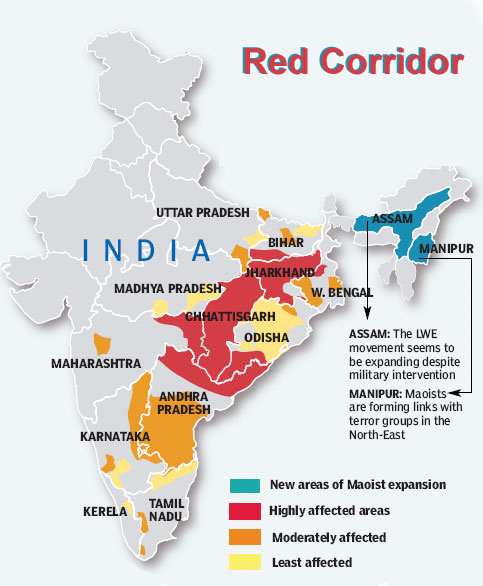
    The Maharashtra state government has introduced a comprehensive new legislation – Maharashtra Special Public Security (MSPC) Bill, 2024,  to address the growing incidence of Naxalism in urban areas.

    • The Maharashtra government claims that Naxalism is no longer limited to remote rural areas, but has now spread its influence to urban centers through “frontal organizations”.
    • The government argues that existing laws like the Unlawful Activities Prevention Act (UAPA) and Maharashtra Control of Organised Crime Act are not sufficient to effectively control these urban Naxal organizations.

    Key provisions drafted under the MPSC Bill, 2024:

    Declaration of Unlawful Organizations The bill empowers the state government to declare any organization as “unlawful” under Section 3. 

    An advisory board of three qualified individuals (current/former/qualified High Court judges) will review such decisions as per Section 4.

    Definition of Unlawful Activities The bill defines “unlawful activities” in broad terms, including “activities threatening public order, peace, and tranquility” (Section 2(f)(i)), “interference with law administration and public servants” (Section 2(f)(ii)), and “encouraging disobedience to law and institutions” (Section 2(f)(iv)).
    Cognizable and Non-Bailable Offences All offences under this law will be cognizable and non-bailable, and will be investigated by a police officer not below the rank of a Sub-Inspector as per Section 9.
    Punishments
    • Members of Unlawful Organizations: Imprisonment up to 3 years and fines up to Rs 3 lakh (Section 10)
    • Non-members Contributing or Aiding Unlawful Organizations: Imprisonment up to 2 years and fines up to Rs 2 lakh (Section 11)
    • Management or Promotion of Unlawful Organizations: Imprisonment up to 3 years and fines up to Rs 3 lakh (Section 12)
    • Committing, Abetting, or Planning Unlawful Activities: Imprisonment up to 7 years and fines up to Rs 5 lakh (Section 13)
    Seizure and Forfeiture The District Magistrate or Commissioner of Police can notify and take possession of any place used for unlawful organization activities (Section 14). The government can also forfeit money and assets intended for unlawful organizations (Section 15).
    Legal Review An advisory board must review the declaration of unlawful organizations within six weeks and submit a report within three months (Section 4). The High Court can review government actions through revision petitions (Section 7).


    Why it is being seen as a threat to civil liberty:

    • Vague Definitions of Unlawful Activities: The bill defines “unlawful activities” in broad and vague terms, including “activities threatening public order, peace, and tranquility” and “encouraging disobedience to law and institutions” in Section 2(f)(i) and (iv).
    • Excessive Powers Granted to the State: The bill allows the state government to unilaterally declare an organization as “unlawful” without adequate judicial oversight in Section 3. It also empowers District Magistrates and Police Commissioners to grant permission for prosecution, bypassing the courts in Section 9.
    • Threat to Civil Liberties and Press Freedom: The bill’s broad provisions in Sections 2(f) and 8 could be used to criminalize activities such as reporting on administrative failures or the plight of citizens, as seen in other states with similar laws. This poses a threat to press freedom and the right to freedom of expression.
    • Lack of Transparency and Public Consultation: The bill was tabled hastily, with the draft not made available for public scrutiny and objections, as noted by civil society members.

    Potential for Misuse and Abuse: Given the vague definitions in Section 2(f) and excessive powers granted to the state in Sections 3, 8 and 9, the bill has a high potential for misuse and abuse against political opponents, activists, and journalists, turning Maharashtra into a “police state”.

    Way forward: 

    • Consultative Process: The Maharashtra government should engage in a consultative process with legal experts, civil society organizations, and stakeholders to refine the bill’s provisions, ensuring they align with constitutional principles and international human rights standards.
    • Safeguarding Rights: Introduce safeguards such as judicial oversight in the process of declaring organizations unlawful, ensuring that fundamental rights like freedom of expression and assembly are protected while addressing legitimate security concerns effectively.

    Mains PYQ: 

    Naxalism is a social, economic and developmental issue manifesting as a violent internal security threat. In this context, discuss the emerging issues and suggest a multilayered strategy to tackle the menace of Naxalism. (2022)

  • Foreign Policy Watch: India-United States

    Donald Trump shot  

    Note4Students

    From UPSC perspective, the following things are important:

    Prelims level: U.S. Secret Service

    Mains level: What is the difference between SPG and US secret services?

    Why in the News? 

    During a campaign rally in Butler, Pennsylvania, Donald Trump was the target of an apparent assassination attempt.

    • The suspected gunman, identified as 20-year-old Thomas Matthew Crooks, fired up to eight shots from an AR-15-style rifle before being killed by a Secret Service sharpshooter.

    What is the U.S. Secret Service?

    • The U.S. Secret Service is a federal law enforcement agency under the Department of Homeland Security. It was originally established in 1865 to combat counterfeiting of U.S. currency.
    • After the assassination of President William McKinley in 1901, the Secret Service was given the additional responsibility of protecting the President.


    About the Protective Mission:

    • The Secret Service is tasked with protecting the President, Vice President, President-elect, Vice President-elect, and their immediate families.
    • It also protects former Presidents and their spouses (unless remarried), as well as major presidential and vice presidential candidates within 120 days of a general election.
    • The Secret Service provides physical security for the White House, the Vice President’s residence, and foreign diplomatic missions in Washington D.C.
    • It secures major events designated as National Special Security Events, like the State of the Union address and presidential inaugurations.

    What is the difference between SPG (Special Protection Group) and the US Secret Service? 

    Dimensions India’s SPG  US Secret Service
    Mandate and Origins The SPG was formed in 1988 to provide proximate security to the Prime Minister of India The U.S. Secret Service was established in 1865 to combat currency counterfeiting.
    Scope of Protection The SPG is mandated to provide security only to the serving Prime Minister and their immediate family. The U.S. Secret Service protects the President, Vice President, their families, presidential/vice-presidential candidates, and former Presidents and their spouses for life.
    Tenure and Resignation SPG personnel have a fixed 6-year tenure and are not allowed to resign during their deputation. U.S. Secret Service agents can resign freely and may be assigned to protective details for 3-5 years before being transferred.
    Coordination with Foreign Agencies When the Indian PM visits the U.S., the SPG takes a backseat while the U.S. Secret Service takes over primary security responsibilities. The U.S. Secret Service coordinates with foreign agencies to protect visiting heads of state, including the Indian PM.
    Operational Differences The SPG has an unblemished record, while the U.S. Secret Service has lost one President (John F. Kennedy) to assassination. SPG personnel are drawn from various paramilitary forces, while the Secret Service has its own dedicated agents.


    Conclusion: While both the SPG and the U.S. Secret Service are elite protective agencies with distinct mandates, origins, and operational structures, they each play critical roles in safeguarding their respective leaders.

    Mains PYQ: 

    Indian government has recently strengthed the anti-terrorism laws by amending the Unlawful Activities (Prevention) Act, (UAPA), 1967 and the NIA Act. Analyze the changes in the context of the prevailing security environment while discussing the scope and reasons for opposing the UAPA by human rights organisations. (UPSC IAS/2019)

  • Police Reforms – SC directives, NPC, other committees reports

    On the Jurisdiction of the CBI         

    Note4Students

    From UPSC perspective, the following things are important:

    Prelims level: CBI; Delhi Special Police Establishment (DSPE) Act, 1946.

    Mains level: Functions and Powers of CBI;

    Why in the News? 

    The Supreme Court upheld the West Bengal government’s suit, which accuses the Union government of “Constitutional overreach” by using the Central Bureau of Investigation (CBI) to register and investigate cases in the state, despite the state’s withdrawal of general consent on November 16, 2018.

    Background

    • In November 2018, the West Bengal government withdrew its “general consent” that allowed the CBI to conduct investigations within the state.
    • However, the CBI continued to register FIRs and conduct investigations in West Bengal, leading the state government to file an original suit in the Supreme Court under Article 131 of the Constitution.
    • The suit accused the Union government of “constitutional overreach” by allowing the CBI to operate in West Bengal despite the withdrawal of general consent.

    Key highlights of the verdict: 

    • Solicitor-General Tushar Mehta argued the CBI’s independence from the Union government, but the Supreme Court pointed to the DSPE Act’s provisions.
    • It highlighted the Act’s requirement for Central government control over CBI’s establishment and administration, except for cases under the Prevention of Corruption Act, which the CVC oversees.

    Is the CBI an Independent Agency or Under Union Government Control?

    • The Supreme Court ruled that the Central Bureau of Investigation (CBI) is not entirely independent. 
      • The CBI is constituted, administered, and has its powers extended under the Delhi Special Police Establishment (DSPE) Act, 1946.
    • The central government exercises superintendence over the CBI, particularly for offenses other than those under the Prevention of Corruption Act, where the Central Vigilance Commission has superintendence.
      • Therefore, the Union government is vitally concerned with the CBI’s functions and operations.

    Does the CBI Need the State’s Permission to Carry Out Investigations in Its Territory?

    • The CBI derives its powers from the DSPE Act, of 1946.
      • According to Section 6 of this Act, the CBI requires the state government’s consent to extend its investigation beyond the Union Territories.
    • The Supreme Court has ruled that although the CBI is under the administrative control and superintendence of the Union government, this does not negate the requirement of state consent for investigations as per the DSPE Act.
    • There are two types of consent – General consent and Specific consent.
      • When a state gives general consent, the CBI does not need to seek permission for every case.
      • However, if the general consent is withdrawn, the CBI needs to seek specific case-by-case consent from the state.
    • Several opposition-ruled states have withdrawn their general consent for CBI investigations, which has hampered the CBI’s ability to freely investigate cases of corruption involving central government employees in those states.
      • The states that have withdrawn are- Mizoram, West Bengal, Andhra Pradesh, Chhattisgarh, and then states of Punjab, Maharashtra, Rajasthan, Kerala, and Jharkhand (2020).
      • Telangana, Tamil Nadu, and Meghalaya withdrew general consent in 2022.
    • However, the withdrawal of general consent does not affect pending CBI investigations or cases where a court has ordered a CBI probe. The CBI can also approach a local court to obtain a search warrant to conduct investigations in states that have withdrawn consent.

    Note: In total, 10 states have withdrawn general consent to the CBI as of 2022. This has significantly limited the CBI’s ability to freely investigate cases in these states without seeking prior permission.

    Way Forward: 

    • Strengthening Federal Cooperation: Establish a clear institutional framework that promotes cooperation and coordination between the central and state governments regarding CBI investigations.
    • Legal and Administrative Reforms: Consider amending the DSPE Act to provide more clarity on the roles and powers of the CBI and the requirements for state consent.

    Jurisdictional Overview and Federal Character:

    The CBI operates within the context of India’s federal structure, which grants states certain powers and autonomy. The need for state consent limits the CBI’s jurisdiction, as it cannot conduct investigations in states without their general consent.

    Powers and Jurisdiction of CBI

    • Offenses against Central Government Employees: The CBI has jurisdiction to investigate crimes committed against employees of the central government, such as bribery, corruption, or misconduct cases involving central government officials.
    • Interstate and International Cases: The CBI can investigate cases that have inter-state or international ramifications, including organized crime, terrorism, human trafficking, money laundering, and other offenses that require a nationwide or global perspective.
    • Specific Offences Listed in the Delhi Special Police Establishment Act: The CBI can investigate offenses specified in the Delhi Special Police Establishment Act, including offences under the Prevention of Corruption Act, crimes related to the violation of certain central laws, and cases referred to the CBI by the courts or the central government.

    Mains PYQ: 

    Q The jurisdiction of the Central Bureau of Investigation (CBI) regarding lodging an FIR and conducting probe within a particular State is being questioned by various States. However, the power of the States to withhold consent to the CBI is not absolute. Explain with special reference to the federal character of India. (UPSC IAS/2021)

  • The SC ruling on the portrayal of disability in films 

    Note4Students

    From UPSC perspective, the following things are important:

    Prelims level: Disability rights

    Mains level: Effectiveness of Disability law

    Why in the News?

    On July 8, the Supreme Court issued guidelines against stereotyping and discriminating persons with disabilities in visual media, prompted by a plea to ban Aaankh Micholi.

    Background:

    • The Supreme Court’s guidelines came in response to a plea filed by activist Nipun Malhotra challenging the alleged insensitive portrayal of differently-abled individuals in the Film ‘Aaankh Micholi’.
    • The petitioner argued that the film contained derogatory references and stereotyping of persons with disabilities.

    Key Highlights of the Supreme Court Ruling:

    • Avoiding Derogatory Language: The court asked creators to avoid words like “cripple”, “spastic”, “afflicted”, “suffering”, and “victim” as they contribute to negative self-image and perpetuate discriminatory attitudes.
    • Accurate Representation: The court said stereotyping differently-abled persons in visual media and films must end, and creators should provide an accurate representation of disabilities rather than mocking or mythifying them.
    • Involvement of Persons with Disabilities: The court asked creators to practice the principle of “nothing about us, without us” and involve persons with disabilities in the creation and assessment of visual media content.
    • Training and Collaboration: The court emphasized the need for training programs for writers, directors, producers, and actors to sensitize them on the impact of portrayals on public perceptions.

    What are the laws which grant disability rights?   

    • Rights of Persons with Disabilities Act (RPwD Act), 2016: This is the primary legislation that comprehensively addresses the rights and entitlements of persons with disabilities in India. It replaced the earlier Persons with Disabilities (Equal Opportunities, Protection of Rights and Full Participation) Act, of 1995.
    • The National Trust Act, 1999: It provides legal support to persons with autism, cerebral palsy, mental retardation, and multiple disabilities. It focuses on enabling guardianship and providing support to those who may not have guardians.
    • Rehabilitation Council of India Act, 1992: Regulates the training of rehabilitation professionals and promotes research in rehabilitation and special education.
    • Mental Healthcare Act, 2017: While primarily focusing on mental health issues, this Act also includes provisions related to the rights and treatment of persons with mental disabilities.

    Are the laws governing the ‘Rights of Differently-abled’ persons being implemented properly?  

    • Implementation Gaps: There are significant gaps between the provisions laid out in laws like the Rights of Persons with Disabilities (RPwD) Act, 2016, and their actual implementation on the ground. Many disabled persons continue to face barriers to accessing their entitlements and rights.
    • Awareness and Sensitization: There is a lack of awareness among the general public, as well as within government bodies and institutions, about the rights and needs of persons with disabilities.
    • Infrastructure and Accessibility: Despite legal mandates for accessibility in public places, transportation, and buildings, implementation remains uneven.
    • Employment Opportunities: While laws mandate employment quotas for persons with disabilities in government and private sectors, these quotas are often not met.

    What is the way forward?

    • Enhanced Monitoring and Accountability: Implement regular audits and monitoring mechanisms to ensure compliance with disability rights laws at all levels of governance and across sectors.
    • Need to Increase Awareness and Sensitization: Launch nationwide awareness campaigns targeting both the general public and stakeholders within government and private sectors to promote understanding of disability rights.

    Mains PYQ: 

    Q The Rights of Persons with Disabilities Act, 2016 remains only a legal document without intense sensitisation of government functionaries and citizens regarding disability. Comment. (UPSC IAS/2022)

  • Foreign Policy Watch: India-Russia

    The Yuan Challenge: How India-Russia trade gap may threaten rupee internationalization efforts    

    Note4Students

    From UPSC perspective, the following things are important:

    Prelims level: India-Russia Bilateral Ties;

    Mains level: Benefits of Internationalization of the Rupee;

    Why in the News? 

    New Delhi aims to boost trade with Moscow to $100 billion by 2030, but India faces a $57 billion trade deficit due to strong oil imports from Russia.

    Background

    • India’s trade with Russia has been skewed since the onset of the Ukraine war in 2022. Russia has become India’s top oil supplier, while Indian exports to Russia have struggled, resulting in a large trade deficit.
    • The trade deficit in the bilateral trade stood at $57 billion in FY24, with a total trade value of $66 billion. This deficit is primarily driven by India’s significant oil imports from Russia.

    Why is the widening trade gap with Russia benefiting the Yuan?

      • Increase in Balanced Trade with China: Unlike India, China has been able to maintain a more balanced trade relationship with Russia since the Ukraine war began in 2022.
        • China’s exports to Russia have surged, with shipments increasing by 47% year-on-year to $111 billion in 2023.
        • 95% of trade between China and Russia is conducted in domestic currencies, making the yuan the most popular currency in the Russian stock market.
      • Increase in volatility of Rubble and Rupee:  Unlike the yuan, both the Indian rupee and Russian ruble have experienced considerable volatility, complicating trade in domestic currency.
        • The yuan’s relative stability compared to the rupee and ruble has made it a more attractive currency for settling Russia-India trade
    • Reluctance of Private Banks: The Indian private banks have been reluctant to facilitate trade with Russia due to fears of Western sanctions.
      • Most Indian private banks have significant business interests in Western countries and fear their branches could face sanctions if they engage with Russia.
      • As Russia prefers the yuan for payments, India’s limited exports to Russia have hindered the use of the rupee in bilateral trade.

    What are the benefits of the Internationalisation of the Rupee?

    • Reduced Dependence on USD: Internationalizing the rupee would reduce India’s reliance on foreign currencies like the US dollar for international trade and financial transactions.
      • This would enhance India’s economic sovereignty and reduce exposure to currency fluctuations.
    • Enhanced Trade Efficiency: Using the rupee for international transactions can simplify trade processes and reduce transaction costs.
      • Internationalization of the rupee would eliminate the need for currency conversions, reducing transaction costs and simplifying cross-border trade.
    • Mitigating Risks: Protection from currency volatility not only reduces the cost of doing business but also enables better growth of business, improving the chances for Indian businesses to grow globally
    • Increased Global Influence: A widely accepted rupee would boost India’s economic and political influence on the global stage.

    How can India internationalize the rupee?

    • The Reserve Bank of India permitted settling trade using the rupee through its circular in July 2022.
      • Trade invoicing: For the rupee to be recognized as an international currency, it needs to be increasingly used for trade invoicing.
      • Trade invoicing refers to the process of issuing invoices for goods or services exchanged between international trading partners. It includes detailing the terms of sale, such as prices, quantities, payment terms, and currencies used for settlement.
    • Increase Rupee Turnover: The rupee needs to achieve a global forex turnover share of around 4% to be regarded as an international currency, up from the current 1.6%.
    • Government Support: Strengthening industrial cooperation and addressing banking sector concerns can promote the use of the rupee.

    Challenges involved:

    • Banking Sector Reluctance: Private banks are hesitant to facilitate trade with Russia due to fear of Western sanctions.
    • Rupee Settlement Mechanism: Indian exporters face difficulties using the rupee settlement mechanism due to the absence of a Standard Operating Procedure (SOP) for banks.
      • Note: A Standard Operating Procedure (SOP) for banks is a formal document outlining step-by-step instructions for routine processes and activities to ensure consistency and compliance.
    • Currency Volatility: Both the ruble and the rupee have experienced considerable volatility, complicating trade in domestic currencies.
    • International Sanctions: Private banks’ significant business interests in Western countries make them wary of facilitating trade with Russia.

    How are Russia and India planning to boost trade?

    • Both countries have decided to eliminate non-tariff and tariff barriers in trade.
      • Negotiations for a trade deal with the Russia-led Eurasian Economic Union (EEU) could ease the flow of Indian products into the EEU.
    • Cooperation in manufacturing sectors like transport engineering, metallurgy, and chemicals.
      • Implementation of joint projects in priority areas and expanding reciprocal trade flows of industrial products.
    • Discussions on a Migration and Mobility partnership agreement to facilitate trade and movement between the two countries.

    Way Forward 

    • Enhanced Banking Support and Infrastructure: Develop a robust Standard Operating Procedure (SOP) for banks to facilitate smoother implementation of the rupee settlement mechanism for trade with Russia.
    • Strategic Economic Diplomacy: Strengthen bilateral economic ties through high-level diplomatic engagements to mitigate banking sector reluctance and enhance trust between Indian and Russian financial institutions.

    Mains PYQ: 

    Q Craze for gold in Indian has led to surge in import of gold in recent years and put pressure on balance of payments and external value of rupee. In view of this, examine the merits of Gold Monetization scheme. (UPSC IAS/2015)

  • Food Procurement and Distribution – PDS & NFSA, Shanta Kumar Committee, FCI restructuring, Buffer stock, etc.

    The PDS impact on household expenditure   

    Note4Students

    From UPSC perspective, the following things are important:

    Prelims level: About PDS and its structural mandate

    Mains level: Imputation of values for food and non-food items

    Why in the news? 

    The Household Consumption Expenditure Survey Data provides an opportunity to analyze the effects of social transfers.

    About Public Distribution System (PDS):

    • The Public Distribution System (PDS) aims to ensure food security by providing subsidized foodgrains to economically vulnerable sections of society. Under the National Food Security Act (NFSA), 2013, up to 75% of the rural population and 50% of the urban population are eligible for subsidized foodgrains.
    • Foodgrains procured by the Food Corporation of India (FCI) are distributed through a network of Fair Price Shops (FPS).

    Its structural mandate: 

    • Procurement and Distribution: The PDS operates through the procurement of foodgrains by the Food Corporation of India (FCI) from farmers at Minimum Support Prices (MSP). These foodgrains are then allocated to states and union territories based on their requirements and distributed to Fair Price Shops (FPS), which deliver subsidized foodgrains to eligible beneficiaries.
    • Identification and Subsidy: Beneficiaries are identified based on the Socio-Economic and Caste Census (SECC) data, classifying households into Priority Households and Antyodaya Anna Yojana (AAY) households. Under the National Food Security Act (NFSA), 2013, eligible households receive rice at ₹3 per kg, wheat at ₹2 per kg, and coarse grains at ₹1 per kg. The system aims to ensure that food security is maintained for the economically vulnerable sections of society.

    Observations made by the HCES:2022-23 report  

    • The Household Consumption Expenditure Survey (HCES) 2022-23 provides insights into the coverage of social welfare programs, including the Public Distribution System (PDS).
    • The survey highlights discrepancies between administrative data and survey estimates due to inclusion and exclusion errors, offering detailed characteristics of households benefiting from these programs.

    Imputation of values for food and non-food items    

    Note: Imputation of values for food and non-food items refers to the process of assigning a monetary value to items received by households for free or at a subsidised rate through social welfare programs like the Public Distribution System (PDS) in India.

    • Purpose: Imputation is done to estimate the total consumption expenditure of households more accurately. It accounts for the fact that households receive goods (such as foodgrains from PDS) without directly paying for them, thus impacting their overall consumption.
    • Methodology: The National Sample Survey Office (NSSO) and other agencies use statistical methods to assign a value to these items. This involves determining the modal (most common) or percentile prices of the items received, which may vary by state and rural/urban classification.
    • Types of Items Imputed: Imputation covers both food and non-food items. In the context of the PDS, it primarily includes foodgrains but can extend to other essential commodities provided through government schemes.
    • Data Sources: Data for imputation can come from surveys like the HCES, where households report receiving these items. NSSO surveys typically provide detailed guidelines on how imputation values are derived and applied in their reports.
    • Impact on Analysis: Imputing values allows analysts to compute metrics like the Monthly Per Capita Consumption Expenditure (MPCE) accurately, reflecting the true economic status and welfare impact of households.

     Implications for Poverty

    • Economic Relief for Poorer Households: By providing foodgrains at highly subsidized rates, the PDS reduces the financial burden on poorer households, allowing them to allocate their limited resources to other essential needs.
    • Enhanced Measurement of Poverty: Imputing the value of free or subsidised items received through programs like the PDS allows for a more comprehensive assessment of household consumption. Including these imputed values in poverty measurements provides a more accurate reflection of the economic well-being of households.
    • Policy Insights and Targeting: Understanding how imputed values impact poverty metrics helps policymakers in targeting social welfare programs more effectively.
    • Diversification of Diet: Access to subsidized foodgrains from the PDS allows households to free up resources, potentially enabling them to purchase a more diverse range of nutrient and protein-rich foods such as vegetables, milk, pulses, eggs, fish, and meat

    Way forward: 

    • Enhancing Efficiency and Targeting: Improve the identification and targeting of beneficiaries through updated and accurate data collection methods. Continuous validation and updating of Socio-Economic and Caste Census (SECC) data can help in reducing inclusion and exclusion errors.
    • Promoting Nutritional Security and Health Outcomes: Expand the scope of subsidized items beyond basic grains to include more nutritious food options like pulses, edible oils, and fruits.

    Mains PYQ: 

    Q What are the major challenges of Public Distribution System (PDS) in India? How can it be made effective and transparent? (2022)

    Q Food Security Bill is expected to eliminate hunger and malnutrition in India. Critically discuss various apprehensions in its effective implementation along with the concerns it has generated in WTO. (2013)
