💥UPSC 2026, 2027, 2028 UAP Mentorship (March Batch) + Access XFactor Notes & Microthemes PDF

Type: Explained

  • Judicial Reforms

    Should India have regional benches of the Supreme Court?

    Note4Students

    From UPSC perspective, the following things are important:

    Prelims level: Special Leave Petitions (SLPs)

    Mains level: The establishment of regional benches of the Supreme Court in India

    Why in the News?

    Recently, the Parliamentary Standing Committee on Personnel, Public Grievances, Law and Justice informed the Lok Sabha that the Law Ministry has accepted its recommendation to establish regional benches of the Supreme Court across India.

    About the Supreme Court:

    • The Supreme Court of India has three jurisdictions under the Constitution: original, appellate, and advisory.
    • The Supreme Court serves as a Constitutional Court as well as a Court of Appeal. The Court sits in benches of varying sizes, as determined by the Registry on the directions of the Chief Justice of India (CJI).

    About SC Constitution Benches:

    • Constitution Bench typically comprises of five, seven, or nine judges who deliberate on a specific issue related to constitutional law.
    • Article 130 says that “the Supreme Court shall sit in Delhi or in such other place or places, as the Chief Justice of India may, with the approval of the President, from time to time, appoint.” It shows that the Supreme Court Rules give the Chief Justice of India the power to constitute Benches.
    • Article 145(3) of the Constitution provides for the setting up of a Constitution Bench.
      • Under Article 143, a minimum of five judges need to sit for deciding a case involving a “substantial question of law as to the interpretation of the Constitution”, or for hearing any reference, which deals with the power of the President to consult the Court.

     View of Supreme Court on setting of regional benches

    • Recently, CJI D.Y. Chandrachud announced his intent to create Constitution Benches of varied strengths as a permanent feature of the Court.
    • The Parliamentary Standing Committee on Personnel, Public Grievances, Law and Justice had earlier noted that the demand for having regional benches of the Supreme Court is about ‘access to justice,’ which is a Fundamental Right under the Constitution. However, the Supreme Court previously has been continuously rejecting the idea.
    • During 2019, former Chief Justice Ranjan Gogoi supported the view, but minimal progress was made during his tenure. In contrast, during the 74-day tenure of former Chief Justice U.U. Lalit, 25 Constitution Bench matters were listed before five-judge benches.

    Recommendations by the Law Commissions on the setting of regional benches:

    • 10th Law Commission (95th Report), 1984: The Supreme Court of India should consist of two Divisions, namely (a) Constitutional Division, and (b) Legal Division”, and that “only matters of Constitutional law may be assigned to the proposed Constitutional Division”.
    • 11th Law Commission (125th Report), 1988: Recommended for splitting the (Supreme) Court into two halves deserves to be implemented.
    • 18th Law Commission (229th Report), 2009: Recommended that “a Constitution Bench be set up at Delhi to deal with constitutional and other allied issues”, and “four Cassation Benches be set up in the Northern region/zone at Delhi, the Southern region/zone at Chennai/Hyderabad, the Eastern region/zone at Kolkata and the Western region/zone at Mumbai to deal with all appellate work arising out of the orders/judgments of the High Courts of the particular region”.
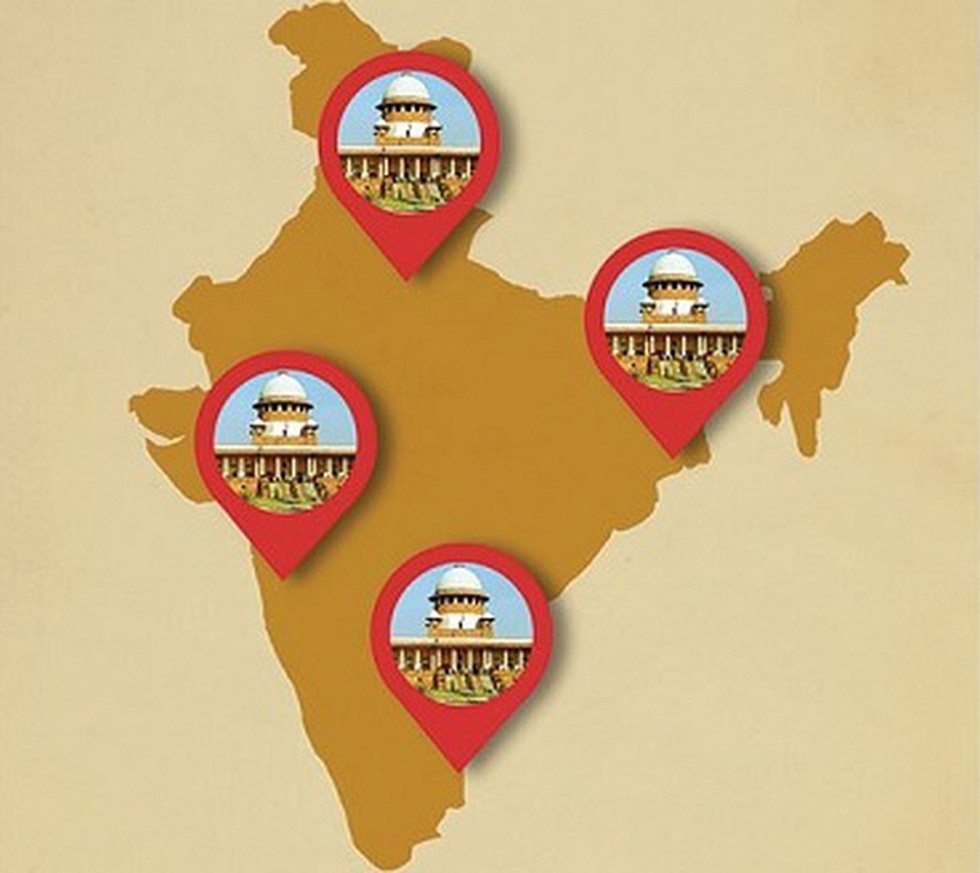
    The Union Government today said the setting up of the Regional Benches of the Supreme Court in different parts of the country is under examination of the Constitutional Bench of the Supreme

    Significance of Regional Benches in India:

    • High Pendency of Cases: In the Supreme Court, a little more than 80,000 cases are currently pending adjudication out of which 60,000 cases are civil. This cannot be alleviated only through usual methods and is highly dependent upon the efforts and efficiency of the Chief Justice.
    • Insufficient Case Disposal Rates: In 2023, the Supreme Court witnessed a 31% increase in the disposal of cases compared to 2022.
      • However, such a disposal rate is negligible when compared to the total pendency of cases.
    • Democratization of Justice: The setting up of regional benches would also lead to greater opportunities and the democratization of the Bar.
      • For example, there was lots of opposition when the jurisdiction of the Tis Hazari Court was divided into different district courts. However, 10-15 years down the line, a vibrant District Bar in Saket, Rohini, and Karkardooma can be seen.
    • Access to Justice for All: People are reluctant to accept arbitrary actions of the state and its agencies and are increasingly approaching courts of law. The outcome of such cases demands further adjudication by the Supreme Court. Also, it becomes difficult for people living in States far away from Delhi to agitate their cause.
    • Importance of Litigant Presence: It is easy to say that the presence of a litigant is not required in appellate forums but the reality is that every litigant wishes to visit his lawyer and witness court proceedings involving his case.
    • Boosting Judicial System with More Judges: The establishment of regional benches will increase the number of judges as well as lawyers resulting in a much-needed boost to our judicial system.

    Challenges associated with regional benches:

    • Status issues:
      • Dilution of sacrosanct nature: Critics argue that the idea of setting up regional benches will lead to Balkanization of the Supreme Court and lessen the binding force of the decisions of the Supreme Court.
      • Territorial Interference: India being diverse country, have emerging diverse views in judiciary too. Hence, the newly formed regional benches can create conflict of interest by interfering in the territorial jurisdiction of the HCs which may adversely affect our justice system.
    • Implementation issues:
      • Rectifying the imbalances: Major of the cases filed in Apex court, arise from nearby High Courts in north India, this imbalance cannot be rectified by using this solution.
      • Frivolous Petitions: If Justice is that easily accessible considering geographical aspect, there is a possibility of numerous frivolous petitions being filed.

    Way Forward:

    • Need for Enhancing Judicial Infrastructure: Some broader judicial reforms are needed to address the systemic issues such as judicial backlog, delay in justice delivery, and judicial vacancies, which are crucial for improving the overall functioning of the legal system.
      • Explore the use of technology, such as video conferencing and virtual courtrooms, to enhance access to justice and facilitate remote adjudication of cases, especially in remote or underserved areas.
    • Need a balanced approach: The debate on regional benches for the Supreme Court involves considerations of accessibility, case management, and judicial efficiency. While proponents see it as vital for access, opponents emphasize potential drawbacks. Striking a balance necessitates thorough evaluation and careful implementation of reforms.

  • Ministry of External Affairs : Important Updates

    Raisina Dialogue: Everything You Need to Know  

    Note4Students

    From UPSC perspective, the following things are important:

    Prelims level: Raisina Dialogue

    Mains level: Factors shaping India's foreign policy

    Introduction

    • The ninth edition of the Raisina Dialogue will be held from February 23 in New Delhi.

    What is Raisina Dialogue?

    • The Raisina Dialogue is an annual multilateral conference.
    • The inaugural edition was held in March 2016.
    • It is held in New Delhi, India.
    • It is organized by the Observer Research Foundation (ORF) and held in collaboration with the Ministry of External Affairs of India.
    • It is modelled after Singapore’s Shangri-La Dialogue.
    • The dialogue brings together policymakers, experts, scholars, and leaders from various fields.
    • It focuses on discussing geopolitical, economic, and strategic issues facing the world.

    Theme of this year’s edition

    • The theme of the 2024 edition is “Chaturanga: Conflict, Contest, Cooperate, Create,” according to a press release by the Ministry of External Affairs.
    • The participants will engage with each other over six “thematic pillars”:
    1. Tech Frontiers: Regulations & Realities;
    2. Peace with the Planet: Invest & Innovate;
    3. War & Peace: Armouries & Asymmetries;
    4. Decolonising Multilateralism: Institutions & Inclusion;
    5. Post 2030 Agenda: People & Progress; and
    6. Defending Democracy: Society & Sovereignty.

    Why is it a significant event for India’s Foreign Policy?

    • International Representation: Reflects India’s aspiration to play a leading role and make significant contributions globally.
    • Platform for Engagement: Offers India avenues to engage with key regional and global issues.
    • Advocacy for World Order: Demonstrates India’s commitment to a world order based on rules, inclusivity, and cooperation.
    • Strengthening Global Image: Enhances India’s reputation as a responsible and resilient global partner.

    Similar Dialogues around the World

    • Shangri-La Dialogue: Security summit in Singapore organized by the IISS.
    • Munich Security Conference: International conference in Germany focusing on security issues.
    • Halifax International Security Forum: Forum in Canada addressing global security threats.
    • Doha Forum: Dialogue platform in Qatar exploring global peace, security, and cooperation trends.
    • Valdai Discussion Club: Russian think tank organizing annual meetings on global politics and economics.
  • Port Infrastructure and Shipping Industry – Sagarmala Project, SDC, CEZ, etc.

    Israel proposes New Trade Route via Mundra Port

    Note4Students

    From UPSC perspective, the following things are important:

    Prelims level: Mundra Port

    Mains level: IMEC

    mundra port

    Introduction

    • Amid ongoing attacks on Israel-linked ships by Yemen’s Houthi rebels in the Red Sea, Israeli Transport Minister Miri Regev has announced an alternative trade route via the Mundra port in Gujarat.
    • The route aligns with the India Middle East Europe Economic Corridor (IMEC) project, aiming to link India to Europe via the Middle East.

    Why discuss this?

    • Houthi Attacks: Houthi rebels in Yemen have been targeting ships connected to Israel in solidarity with Gaza, leading to disruptions in global trade, with about 12% passing through the Red Sea.
    • Industry Response: A recent industry agreement grants seafarers the right to refuse to sail through the Red Sea due to safety concerns, further highlighting the gravity of the situation.

    New Route via Mundra Port

    • Overview: Minister Regev outlined the new trade route in a video from the Mundra port. Goods will travel from Mundra to UAE ports, then proceed by land through Saudi Arabia and Jordan to Israel, primarily using trucks.
    • Operational Details: Israeli company Trucknet and UAE’s PureTrans will operate the trucks transporting goods. This route bypasses the Red Sea, ensuring safer passage amidst escalating tensions.

    About India Middle East Europe Economic Corridor (IMEC)

    Details
    Corridors East Corridor: Connects India to the Arabian Gulf.

    Northern Corridor: Connects the Gulf to Europe.

    Infrastructure Railroad, Ship-to-Rail networks, and Road transport routes.

    Includes an electricity cable, a hydrogen pipeline, and a high-speed data cable.

    Signatories India, the US, Saudi Arabia, UAE, the European Union, Italy, France, and Germany.
    Ports Connected India: Mundra (Gujarat), Kandla (Gujarat), Jawaharlal Nehru Port Trust (Navi Mumbai).

    Middle East: Fujairah, Jebel Ali, and Abu Dhabi in the UAE, as well as Dammam and Ras Al Khair ports in Saudi Arabia.

    Railway Route Connects Fujairah port (UAE) to Haifa port (Israel) via Saudi Arabia (Ghuwaifat and Haradh) and Jordan.

    Israel: Haifa port.

    Europe: Piraeus port in Greece, Messina in South Italy, and Marseille in France.

    Implications and Considerations

    • Benefits: The land route promises reduced travel time and costs for Israel, while generating revenue for Saudi Arabia and Jordan through transport fees and duties.
    • Challenges: Trucks have limited capacity compared to ships, potentially limiting trade volume. Additionally, the route’s viability hinges on stable diplomatic relations between Israel and the transit countries.
    • Long-term Prospects: The route aligns with the India Middle East Europe Economic Corridor (IMEC) project, aiming to link India to Europe via the Middle East. However, the project’s progress may face hurdles due to ongoing conflicts.

    Conclusion

    • Israel’s initiative to establish an alternative trade route reflects its adaptability amidst regional challenges. While offering immediate relief from Red Sea disruptions, the long-term success of the route depends on diplomatic stability and infrastructure development in the transit countries.
    • Despite its limitations, the new route underscores the importance of innovation and collaboration in navigating complex geopolitical scenarios, ensuring continuity in global trade operations.
  • Finance Commission – Issues related to devolution of resources

    Explained: Financial Devolution among States

    Note4Students

    From UPSC perspective, the following things are important:

    Prelims level: Article 270, Article 280 (3)

    Mains level: Not Much

    Introduction

    • Several Opposition-ruled states, particularly from southern India, have voiced concerns over the present scheme of financial devolution, citing disparities in the allocation of tax revenue compared to their contributions.
    • Understanding the concept of the divisible pool of taxes and the role of the Finance Commission (FC) is crucial in addressing these issues.

    Divisible Pool of Taxes: Overview

    • Constitutional Provision: Article 270 of the Constitution outlines the distribution of net tax proceeds between the Centre and the States.
    • Share of taxes: Taxes shared include corporation tax, personal income tax, Central GST, and the Centre’s share of Integrated Goods and Services Tax (IGST), among others.
    • Finance Commission’s Role: Article 280(3) (a) mandates FC, constituted every five years, recommends the division of taxes and grants-in-aid to States based on specific criteria.
    • XVI FC: It consists of a chairman and members appointed by the President, with the 16th Finance Commission recently constituted under the chairmanship of Arvind Panagariya for the period 2026-31.

    Basis for Allocation: Horizontal and Vertical Devolution

    h

    • Vertical Devolution: States receive a share of 41% from the divisible pool, as per the 15th FC’s recommendation.
    • Key criteria for horizontal devolution: For horizontal devolution, FC suggested 12.5% weightage to demographic performance, 45% to income, 15% each to population and area, 10% to forest and ecology and 2.5% to tax and fiscal efforts.
    1. Income Distance: Reflects a state’s income relative to the state with the highest per capita income (Haryana), aiming to maintain equity among states.
    2. Population: Based on the 2011 Census, replacing the earlier 1971 Census for determining weightage.
    3. Forest and Ecology: Considers each state’s share of dense forest in the total forest cover.
    4. Demographic Performance: Rewards states for efforts in controlling population growth.
    5. Tax Effort: Rewards states with higher tax collection efficiency.

    Challenges and Issues

    • Exclusion of Cess and Surcharge: Around 23% of the Centre’s gross tax receipts come from cess and surcharge, which are not part of the divisible pool, leading to disparities in revenue sharing.
    • Variation in State Contributions: Some states receive less than a rupee for every rupee they contribute to Central taxes, indicating disparities in revenue distribution.
    • Reduced Share for Southern States: Southern states have witnessed a decline in their share of the divisible pool over successive FCs, affecting their fiscal autonomy.

    Proposed Reforms  

    • Expansion of Divisible Pool: Including a portion of cess and surcharge in the divisible pool could enhance revenue sharing among states.
    • Enhanced Weightage for Efficiency: Increasing the weightage for efficiency criteria in horizontal devolution, such as GST contribution, can promote equitable distribution.
    • Greater State Participation in FC: Establishing a formal mechanism for state participation in the FC’s constitution and functioning, akin to the GST council, can ensure a more inclusive decision-making process.

    Conclusion

    • Addressing issues of financial devolution requires a collaborative approach between the Centre and the States, focusing on equitable distribution and fiscal federalism.
    • Reforms in revenue-sharing mechanisms, along with enhanced state participation in decision-making bodies like the FC, are essential for promoting balanced development and resource allocation across the country.
  • Parliament – Sessions, Procedures, Motions, Committees etc

    Legal Conundrum: What constitutes a Money Bill?

    Note4Students

    From UPSC perspective, the following things are important:

    Prelims level: Money Bill

    Mains level: Legislative bypass created by Money Bills

    Money Bill

    Introduction

    • Against the backdrop of significant judicial pronouncements, including recent decisions on the electoral bond scheme and the Aadhaar Act, the Supreme Court grapples with a pivotal question: the delineation of a money Bill.

    Why discuss this?

    • The ongoing examination before a seven-judge constitution bench highlights the crucial need to define the scope of a money Bill and its broader implications.
    • This issue carries substantial weight for legislative efficiency and constitutional adherence.

    What are Money Bills?

    Description
    About A financial legislation exclusively dealing with revenue, taxation, government expenditures, and borrowing.
    Constitutional Basis
    • Article 109: Specifies special procedure for Money Bills.
    • Article 110(1): Specifies matters related to taxation, borrowing, and appropriation of funds.
    • Article 110(3): Grants the Speaker of the Lok Sabha the final decision on whether a bill qualifies as a Money Bill.
    Procedure
    • Introduction in Lok Sabha with the President’s recommendation.
    • Consideration and passage in Lok Sabha.
    • Transmission to Rajya Sabha for recommendations (no amendments).
    • Return to Lok Sabha for consideration of recommendations.
    • Acceptance or rejection of recommendations by Lok Sabha.
    • Assent by the President without the power to return for reconsideration.
    Criteria for a Money Bill
    • Imposition, abolition, or regulation of taxes.
    • Regulation of borrowing or giving guarantees by the Government of India.
    • Custody of the Consolidated Fund or the Contingency Fund of India.
    • Appropriation of money from the Consolidated Fund of India.
    • Declaration of any expenditure as expenditure charged on the Consolidated Fund of India.
    • Receipt of money into or out of the Consolidated Fund of India or the public account of India.
    • Any matter incidental to the specified criteria.
    Decision Authority Speaker of the Lok Sabha has the final decision on whether a bill qualifies as a Money Bill.
    President’s Role President can either accept or reject a Money Bill but cannot return it for reconsideration.
    Joint Sitting No provision for Joint sitting for the passage such Bill.


    Key Legal Precedents

    [1] Prevention of Money Laundering Act (PMLA) Amendments:

    • Amendments introduced since 2015 to the PMLA expanded the Enforcement Directorate’s powers, triggering concerns over their passage as Money Bills.
    • Critics argue that such significant alterations should have undergone standard parliamentary scrutiny involving both houses.

    [2] Finance Act of 2017:

    • The Finance Act of 2017, designated as a Money Bill, attracted scrutiny for purportedly aiming to reshape appointments to 19 crucial judicial tribunals.
    • Allegations surfaced suggesting a deliberate manoeuvre to enhance executive authority over these tribunals by categorizing the Act as a Money Bill.
    • Additionally, changes within the Act relaxed qualifications and experience prerequisites for staffing these pivotal judicial entities, raising concerns of dilution.

    [3] Aadhaar Act, 2016:

    • The Supreme Court’s 2018 ruling upheld the validity of the Aadhaar Act as a Money Bill, despite lingering legal and procedural uncertainties.
    • The government’s argument hinged on the Act’s nexus to subsidies disbursed from the Consolidated Fund of India, justifying its classification as a Money Bill.
    • However, the verdict prompted calls for a comprehensive reevaluation, reflecting lingering doubts over the Act’s classification and its implications for parliamentary oversight.

    Legal Implications  

    • Parliamentary Bypass: By categorizing crucial amendments as Money Bills, the standard legislative process involving both houses of Parliament is bypassed, limiting comprehensive scrutiny and deliberation.
    • Eroding Rajya Sabha Scrutiny: Critics argue that such amendments, which often encompass far-reaching implications, should undergo thorough examination and debate in both the Lok Sabha and the Rajya Sabha.
    • Hasty Lawmaking: Designating important legislations as Money Bills undermines the role of the Rajya Sabha, curtailing its authority in the lawmaking process.
    • Against Democratic-Ethos: This erosion of parliamentary oversight raises concerns about the equitable distribution of legislative power and the preservation of democratic principles.
    • Lack of Judicial Scrutiny: The judiciary plays a crucial role in adjudicating the legality and constitutional conformity of categorizing amendments as Money Bills.

    Future Prospects

    • Impending Legal Clarity: The anticipated verdict by the seven-judge bench holds the potential to reshape legislative dynamics, potentially paving the way for renewed challenges against contentious enactments.
    • Judicial Review: The judiciary’s vigilance in scrutinizing the validity of money Bills underscores its commitment to upholding constitutional principles and safeguarding legislative integrity.
    • Democratic Accountability: The evolving jurisprudence surrounding money Bills epitomizes the judiciary’s role in navigating complex constitutional nuances, ensuring robust legislative frameworks and institutional accountability.

    Conclusion

    • As the legal saga unfolds, the apex court’s forthcoming pronouncement holds profound implications for India’s legislative landscape and institutional accountability, heralding a new chapter in the nation’s constitutional journey.

    Try this PYQ:

    Q. Regarding the Money Bill, which of the following statements is not correct? (CSP 2018)

    (a) A bill shall be deemed to be a Money Bill if it contains only provisions relating to the imposition, abolition, remission, alteration or regulation of any tax.

    (b) A Money Bill has provisions for the custody of the Consolidated Fund of India or the Contingency Fund of India.

    (c) A Money Bill is concerned with the appropriation of money out of the Contingency Fund of India.

    (d) A Money Bill deals with the regulation of borrowing of money or giving of any guarantee by the Government of India.


    Post your answers here.


  • Women empowerment issues – Jobs,Reservation and education

    Examining Maintenance Rights of Divorced Muslim Women

    Note4Students

    From UPSC perspective, the following things are important:

    Prelims level: Section 125 of CrPC

    Mains level: Personal Laws contradicting with Gender Equality

    Introduction

    • The Supreme Court’s scrutiny of maintenance entitlements for divorced Muslim women under Section 125 of the CrPC reignites the discourse on the supremacy of secular laws versus personal laws.
    • The ongoing case underscores the need for judicial clarity in navigating the intersection of religious rights and gender equality.

    Maintenance Entitlements: Evolution  

    • Section 125 of CrPC codified to provide maintenance for destitute family members.
    • It includes divorced spouses, without religious distinction, subject to the Magistrate’s discretion.

    Exception for Muslim Women

    • Muslim Women (Protection of Rights on Divorce) Act, 1986: Introduced to address perceived conflicts with religious law post the Shah Bano case, offering maintenance during iddat and extending till remarriage.
    • Judicial Pronouncements: Varied interpretations emerged post Danial Latifi v. Union of India (2001), with courts affirming both CrPC and 1986 Act remedies for divorced Muslim women.

    Case Background

    • Dispute Synopsis: Originating from a challenge by a Muslim man against a Telangana High Court directive for interim maintenance to his divorced wife under CrPC Section 125.
    • Legal Argument: Husband contends 1986 Act supersedes CrPC provisions, citing jurisdictional overlap and prior payment during iddat, while wife asserts her right to CrPC maintenance.

    Court Proceedings and Observations

    • Interpretive Dilemma: Supreme Court underscores the non-obstante clause of the 1986 Act, preserving alternative remedies under CrPC.
    • Constitutional Imperatives: Justices emphasize constitutional guarantees of equality, rejecting the notion of legislative intent to bar Muslim women from CrPC relief.
    • Precedential Insight: Recent High Court decisions affirm divorced Muslim women’s right to CrPC maintenance, notwithstanding iddat completion or khula pronouncement.

    Judgments Referenced in the Input

    • Danial Latifi v. Union Of India (2001): Upheld the constitutional validity of the 1986 Act, extending maintenance rights to divorced Muslim women till remarriage, albeit limited to the iddat period.
    • Arshiya Rizvi v. State of U.P. and Anr (2022): Allahabad High Court reaffirmed divorced Muslim women’s entitlement to CrPC maintenance post iddat, ensuring continued financial support.
    • Razia v. State of U.P. (2022): Further reiterated by the Allahabad High Court, emphasizing the availability of CrPC remedies beyond iddat completion.
    • Shakila Khatun v. State of U.P (2023): High Court upheld divorced Muslim women’s right to seek CrPC maintenance, irrespective of religious personal laws.

    Injustice Caused to Muslim Women

    • Limited maintenance: The 1986 law offers limited maintenance only during the iddat period and extends till remarriage.
    • Burden of personal laws: Unlike divorced women from other communities who can seek maintenance under Section 125 of the CrPC without limitations, Muslim women face restrictions imposed by personal laws.
    • Financial crisis: This results in inconsistent and inadequate financial support for divorced Muslim women, undermining their economic security and perpetuating gender inequality.
    • Unequal treatment: The injustice lies in the unequal treatment of Muslim women under the law, depriving them of the same level of protection and support afforded to women from other communities in matters of divorce and maintenance.

    Implications and Future Trajectory

    • Judicial Deliberation: Pending verdict poised to shape the landscape of maintenance entitlements, balancing religious autonomy with gender justice.
    • Policy Implications: Clarification sought on legislative intent vis-à-vis CrPC and 1986 Act, crucial for uniform application and equitable access to justice.
    • Societal Impact: The outcome resonates beyond legal corridors, reflecting evolving societal norms and rights consciousness among marginalized communities.

    Way Forward

    • Dialogue and Engagement: Foster open dialogue between religious leaders, legal experts, policymakers, and the Muslim community to understand concerns and perspectives.
    • Legal Reforms: Consider amending existing laws or introducing new legislation to balance religious autonomy with gender justice, especially in provisions related to maintenance for divorced Muslim women.
    • Sensitivity Training: Provide training to legal professionals on handling cases involving Muslim women with cultural competence and understanding of Islamic law while upholding equality principles.
    • Alternative Dispute Resolution: Encourage the use of mediation and arbitration within Islamic law to resolve family disputes, including matters of maintenance, fairly and amicably.
    • Consultation and Collaboration: Include Muslim women in decision-making processes and policy formulation through consultation, ensuring their voices are heard and perspectives considered.
    • Respect for Diversity: Acknowledge diversity within the Muslim community, avoiding generalizations, and upholding principles of pluralism and tolerance in addressing women’s rights issues.

    Conclusion

    • The apex court’s forthcoming ruling holds the potential to bridge legal schisms and affirm the rights of marginalized segments, reinforcing the constitutional ethos of equality and justice for all.

    Try this Question from CS Mains:

    Q.1) Do you think marriage as a sacrament is losing its value in Modern India? (2023)

    Q.2) What are the challenges to our cultural practices in the name of secularism? (2019)

    Post your opinions here.
  • Forest Conservation Efforts – NFP, Western Ghats, etc.

    Supreme Court’s Interim Order on Forest Definition

    Note4Students

    From UPSC perspective, the following things are important:

    Prelims level: Godavarman Judgement, Forest Definition

    Mains level: Forest land-use management

    forest

    Introduction

    • The Supreme Court issued an interim order on February 19, 2024, emphasizing that states and Union territories (UTs) must adhere to the Definition of ‘Forest’ as established in the TN Godavarman Thirumalpad v. Union of India judgement of 1996.
    • This order came during the hearing of a public interest litigation challenging the constitutionality of the Forest (Conservation) Act, which was amended by the Union government in 2023.

    Why such move?

    • The petitioners highlighted concerns that the 2023 amendment had narrowed the expansive definition of ‘forest’ provided in the Godavarman judgement.
    • They argue that this move potentially aims at diverting forest lands for non-forest use.

    What is Godavarman Judgement?

    • The Godavarman Judgment is a landmark environmental case in India, first heard in the Supreme Court in 1996, commonly referred to as the “Godavarman Case.”
    • Originating as a PIL filed by Mr Godavarman, a retired forest officer, it addressed concerns about forest degradation due to various developmental activities without proper environmental clearances.

    Key Legal and Regulatory Framework

    • Forest Conservation Act (FCA) and Rules: The case primarily interprets and implements the Forest (Conservation) Act, 1980, and the Forest (Conservation) Rules, 1981, aiming at forest conservation and wildlife protection.
    • Powers of Central Government: The FCA empowers the central government to declare areas as “reserved forest” or “protected forest,” prohibiting non-forest activities without prior approval. It extends to all forests in India, not just declared reserves.
    • Defining Forest: The order defined as any area recorded as forest in the Government record irrespective of the ownership. This definition is broad and encompasses any area recorded as a forest in government records, regardless of its legal status or ownership.
    • Analysis:
    1. Diversion of Forest Land: The case tackled the diversion of forest land for non-forest purposes, emphasizing compliance with the law and due diligence.
    2. Extent of Central Government’s Powers: It clarified that the central government’s authority under the FCA extends to all forests, irrespective of ownership, emphasizing stringent regulation.
    3. Emphasis on Sustainable Development: The court stressed the importance of sustainable development in forest conservation and protecting the rights of forest dwellers and tribal communities.

    Impact of the Judgement

    • Strengthening Forest Conservation Laws: The case led to stricter interpretation and implementation of forest laws, focusing on conservation and protection.
    • Increased Judicial Role in Environmental Governance: It established the judiciary as a watchdog in environmental governance, promoting public scrutiny of environmental decisions.
    • Protection of Forest Lands: Resulted in the cancellation of projects diverting forest land, contributing to biodiversity conservation.
    • Recognition of Rights: Emphasized the recognition and protection of rights of forest dwellers and tribal communities.
    • Promotion of Sustainable Development: Highlighted the importance of balancing economic development with environmental protection.

    Criticism of the Judgement

    • Hindrance to Economic Development: Criticized for hindering economic development and displacing communities.
    • Role of Judiciary: Criticized for causing delays in decision-making and project implementation.

    Key Points of the Recent Order

    • Adherence to 1996 Order: The bench, led by CJI emphasized that states and Union territories (UTs) must adhere to the definition of ‘forest’ as per the Godavarman judgement until the completion of the process of land recorded as ‘forests’ in government records.
    • Recording Forest Land: State and UT administrations are directed to prepare records on forest land within a year from the notification of the 2023 amendment as per Rule 16 of the Van (Sanrakshan Evam Samvardhan) Rules, 2023.
    • Expert Committees: The Union government is instructed to provide a comprehensive record of land registered as ‘forest’ by expert committees constituted by states and UTs within two weeks.
    • Compliance Deadline: All states and UTs must comply with the directions by forwarding the reports of the expert committees by March 31, 2024.

    Additional Directions

    • Zoo and Safari Establishment: Any proposal for the establishment of zoos and safaris in forest areas other than protected areas shall not be finally approved without prior permission from the Supreme Court.
    • Exemption Clause: Section 5 of the Forest (Conservation) Amendment Act, 2023, exempts zoos and safaris from the definition of ‘forests’ within forest areas, excluding protected areas.
    • Government Undertaking: The Union government submitted an undertaking that no precipitative steps would be taken concerning forest areas as per the dictionary sense, in line with the Godavarman judgement.

    Conclusion

    • The Supreme Court’s interim order underscores the importance of preserving forest lands as per the Godavarman judgement and ensuring compliance with environmental protection measures.
    • It aims to safeguard the ecological balance and prevent misuse of forest resources for non-forest purposes.

    Back2Basics: Universal Definition of Forest

    • As per the Conference of Parties (CoP) 9-Kyoto Protocol, the forest can be defined by any country depending upon the capacities and capabilities of the country.
    • Forest- Forest is defined structurally on the basis of
    1. Crown cover percentage: Tree crown cover- 10 to 30% (India 10%)
    2. Minimum area of stand: area between 0.05 and 1 hectare (India 1.0 hectare) and
    3. Minimum height of trees: Potential to reach a minimum height at maturity in situ of 2 to 5 m (India 2m)

    India’s definition of Forests

    The definition of forest cover has clearly been defined in all the India State of Forest Report (ISFR) and in all the International communications of India.

    • The forest cover is defined as ‘all land, more than one hectare in area, with a tree canopy density of more than 10 percent irrespective of ownership and legal status.
    • Such land may not necessarily be a recorded forest area. It also includes orchards, bamboo and palm’.

    Classification of forest cover

    In ISFR 2021 recently published has divided the forest cover as:

    1. Inside Recorded Forest Area: These are basically natural forests and plantations of Forest Department.
    2. Outside Recorded Forest Area: These cover mango orchards, coconut plantations, block plantations of agroforestry.

    Forest Survey of India (FSI) Classification

    • FSI classifies forest cover in 4 classes.
    1. Very Dense forest: All lands with tree cover (including mangrove cover) of canopy density of 70% and above.
    2. Moderately dense forest: All lands with tree cover (including mangrove cover) of canopy density between 40% and 70%.
    3. Open forests: All lands with tree cover (including mangrove cover) of canopy density between 10% and 40%.
    4. Scrubs: All forest lands with poor tree growth mainly of small or stunted trees having canopy density less than 10%.
  • Financial Inclusion in India and Its Challenges

    India’s Fintech Landscape: Challenges and Recommendations

    Note4Students

    From UPSC perspective, the following things are important:

    Prelims level: Fintech and their regulations

    Mains level: Need for regulating Fintechs

    fintech

    Introduction

    • The Standing Committee on Communications and Information Technology recently highlighted concerns regarding the dominance of foreign-owned fintech apps in India’s digital payment ecosystem.
    • While UPI commands a significant share of digital payments in terms of volume, its value share remains relatively low, raising questions about the distribution and control of digital payment platforms.

    What are Fintech?

    • Fintech Definition: Fintech, a fusion of “financial” and “technology,” denotes businesses leveraging technology to enhance or automate financial services.
    • Types of Fintech Companies: They encompass payment solutions (e.g., Bharatpe), lending platforms (e.g., CRED), insurance providers (e.g., Digit Insurance), investment platforms (e.g., Zerodha), and regulatory technology firms (e.g., Razorpay).

    Regulatory Framework in India

    • Regulatory Landscape: While direct RBI intervention in regulating fintech companies remains limited, initiatives like the Fin-Tech Regulatory Sandbox and Payment System Operators license aim to embrace and regulate aspects of the fintech sector.
    • Future Regulatory Outlook: The RBI is developing a regulatory framework to support orderly growth in digital lending, emphasizing that lending activities should be conducted only by entities regulated by the central bank or under other applicable laws.

    Why discuss Fintech?

    • India is amongst the fastest growing Fintech markets in the world. Indian FinTech industry’s market size is $50 Bn in 2021 and is estimated at ~$150 Bn by 2025.
    • The Indian Fintech industry’s total addressable market is estimated to be $1.3 Tn by 2025 and Assets Under Management & Revenue to be $1 Tn and $ 200 Bn by 2030, respectively

    Analysis of Existing Ecosystem

    • Regulatory Oversight: The Committee stresses the need for effective regulation of digital payment apps, noting the rising trend of digital transactions in India. It suggests that regulatory bodies like RBI and NPCI would find it more feasible to regulate local apps compared to foreign entities.
    • Dominance of Foreign Fintech: Foreign-owned fintech companies, such as PhonePe and Google Pay, dominate the Indian market, commanding significant market shares in terms of transaction volume. In contrast, NPCI’s BHIM UPI holds a minimal market share.
    • Regulatory Measures: The NPCI previously imposed a 30% volume cap on transactions facilitated through UPI by third-party apps to maintain market equilibrium and address risks. Compliance timelines were extended to December 2024 to facilitate market growth.

    Concerns about Fraud

    • Money Laundering: The Committee observed instances of fintech platforms being used for money laundering, citing examples like the Abu Dhabi-based app, Pyppl, administered by Chinese investment scamsters. This poses challenges for law enforcement agencies in tracking illegal money trails.
    • Fraud Trends: Despite the rise in digital transactions, the fraud to sales ratio has remained relatively low. However, concerns persist regarding UPI frauds affecting a small percentage of users.

    Impact on the Ecosystem

    • Advantages of Local Players: Local fintech players possess a natural advantage in understanding customer needs and the broader market infrastructure. Foreign fintechs, on the other hand, bring in expertise in new technologies and global connectivity.
    • Revenue Growth: McKinsey’s Global Payments Report suggests that instant payments, including UPI, may contribute less than 10% of future revenue growth due to minimal transaction fees. However, the shift towards digital payments enhances security and access to commerce channels, offsetting the costs associated with managing cash transactions.

    Conclusion

    • Balancing the dominance of foreign-owned fintech platforms with the promotion of local players is essential for the sustainable growth of India’s digital payment ecosystem.
    • Effective regulation, along with efforts to combat fraud and promote financial inclusion, will be crucial in shaping the future trajectory of digital payments in the country.
  • Air Pollution

    La Nina impacted Air Quality in India: Study

    Note4Students

    From UPSC perspective, the following things are important:

    Prelims level: El Nino and La Nina

    Mains level: Link Between ENSO and local Air Pollution

    la nina

    Introduction

    • El Nino and La Nina events have long influenced India’s monsoon patterns, but a recent study suggests a novel connection between these weather phenomena and air quality, particularly during the winter months of 2022.

    Understanding El Nino and La Nina

    • El Nino and La Nina are two opposite phases of the El Nino-Southern Oscillation (ENSO) cycle.
    • ENSO is a naturally occurring phenomenon that involves the interaction between the ocean and atmosphere in the equatorial Pacific.

    Here is a detailed comparison of El Nino and La Nina

    El Nino La Nina
    Definition Warmer-than-normal sea surface temperatures Cooler-than-normal sea surface temperatures
    Frequency Every two to seven years Every two to seven years
    Duration Several months to a year or more Several months to a year or more
    Impact on winds Weakens trade winds, leading to changes in patterns Strengthens trade winds, leading to changes in patterns
    Impact on rains Reduces rainfall and can cause droughts Increases rainfall and can cause flooding
    Impact on temp. Warmer-than-average temperatures Colder-than-average temperatures
    Global effects Droughts in Asia and Africa, floods in Americas Floods in Asia and Africa, droughts in South America

    Impact on India

    El Nino La Nina
    Associated with weak monsoons and drought-like conditions in India Associated with above-normal rainfall and floods in India
    Sea surface temperature in the equatorial Pacific Ocean rises above normal levels Sea surface temperature in the equatorial Pacific Ocean drops below normal levels
    Changes in the atmospheric circulation patterns Changes in the atmospheric circulation patterns
    Shift in the location of the jet stream, affecting the strength and direction of the monsoon winds Increase in the strength of the monsoon winds, bringing more moisture and rainfall to India
    Results in reduced rainfall, dry spells, and heatwaves, leading to crop failures and water scarcity Excessive rainfall can also lead to floods and landslides, causing damage to crops and infrastructure

    El Nino and Indian Monsoon

    • El Nino and its impact on Indian monsoon: El Nino refers to abnormal warming of surface waters in the equatorial Pacific Ocean, which tends to suppress monsoon rainfall in India.
    • Phases of El Nino Southern Oscillation (ENSO): ENSO consists of three phases in the Pacific Ocean: El Nino, La Nina (abnormal cooling), and a neutral phase with sea surface temperatures close to long-term averages.
    • Ocean and atmospheric conditions: ENSO involves not only temperature abnormalities of sea surface waters but also atmospheric conditions, including differences in sea-level air pressure and wind strength and direction.
    • Southern oscillation and the role of winds: Southern Oscillation Index measures the difference in sea-level air pressure over the western and eastern sides of the Pacific Ocean, while wind patterns play a crucial role in ENSO.

    How La Nina impacted air quality?

    • Wind Direction Shift: The study identified a significant alteration in wind circulation patterns during the winter of 2022, with winds typically blowing from the northwest direction diverted towards the south due to the prolonged La Nina effect.
    • Anomalous Behavior: This deviation led to a bypass of pollutant-laden winds from Punjab and Haryana away from Delhi towards southern regions, impacting cities like Mumbai, Bengaluru, and Chennai.
    • Extended La Nina Effect: The persistence of La Nina conditions over three years intensified the impact on wind patterns, culminating in noticeable changes in air quality distribution across India.
    • Uncertainties and Further Exploration: While the study highlights the role of La Nina in altering wind circulation and subsequent air quality, uncertainties remain regarding the potential impact of El Nino events on air quality dynamics.

    Conclusion

    • The study underscores the need for continued exploration into the interplay between global weather phenomena like La Nina, local meteorological conditions, and air quality dynamics in India.
    • Understanding these complex relationships can inform policy measures aimed at mitigating air pollution and enhancing environmental resilience in the face of climate change challenges.
  • Wildlife Conservation Efforts

    Human-Wildlife Conflict in Kerala: Causes and Remedies

    Note4Students

    From UPSC perspective, the following things are important:

    Prelims level: Read the attached story

    Mains level: Man-Animal Conflit and its mitigation

    Introduction

    • The escalation of human-wildlife conflict incidents in Kerala, exemplified by recent protests in Wayanad, underscores the urgent need to address the underlying causes of such conflicts.
    • Kerala grapples with a surge in human-animal conflicts, predominantly involving elephants, tigers, bison, and wild boars, wreaking havoc in districts like Wayanad, Kannur, Palakkad, and Idukki.

    Understanding the Conflict

    • Geographical Dynamics: Kerala’s significant forest cover, encompassing nearly 30% of its area, juxtaposed with densely populated human settlements and agricultural plantations near wildlife habitats, sets the stage for frequent human-animal conflicts.
    • Magnitude of Conflict: State Forest Department data reveals over 48,000 incidents of crop damage due to human-wildlife conflict between 2013-14 and 2018-19, with wild elephants being the primary culprits, followed by wild boars and bonnet macaques.

    Root Causes of Conflict

    • Changing Land Use: Increased cultivation around wildlife habitats and changing cropping patterns exacerbate conflicts by encroaching upon natural habitats and altering animal migratory routes.
    • Conservation Efforts: While conservation initiatives have led to the resurgence of animal populations like elephants and tigers, they have inadvertently intensified conflicts due to habitat depletion.
    • Human Activities: Movement of livestock and humans in wildlife habitats, especially during odd hours, further exacerbates conflicts by triggering defensive responses from animals.

    Proposed Solutions and Their Efficacy

    • Physical Barriers: Strategies like elephant-proof trenches and solar power fences have shown promise in mitigating conflicts but face challenges such as inadequate maintenance and breaches by locals.
    • Eco-Restoration Policy: The Forest department’s plan to restore ecosystems by planting indigenous species aims to deter animals from agricultural lands, yet its effectiveness hinges on implementation and sustenance.
    • Early Warning Systems: Adoption of early warning systems, including drones and human watchers, could help track animal movements and prevent confrontations, but their widespread adoption remains limited.

    Addressing Challenges with Wild Boars

    • Culling Initiatives: While the state awaits approval to declare wild boars as vermin, local bodies have been empowered to cull them as a last resort, alongside strategies like capture, neutering, and relocation.
    • Eco-Sensitive Zone (ESZ): Despite the legislative assembly’s plea to exempt Kerala from ESZ norms, conservationists advocate for its implementation to mitigate conflicts, acknowledging the challenges posed by Kerala’s population density and land scarcity.

    Legal Framework and Conservation Initiatives

    [A] Wildlife Protection and Biodiversity Conservation

    • The Wildlife Protection Act, 1972: Encompassing measures to prohibit hunting, safeguard wildlife habitats, and establish protected areas, this act forms the cornerstone of India’s wildlife preservation efforts.
    • The Biological Diversity Act, 2002: Complementing existing legislation, this act, in alignment with the United Nations Convention on Biological Diversity, fortifies conservation endeavors without undermining other forest and wildlife laws.

    [B] National Conservation Strategies

    • National Wildlife Action Plan (2002-2016): Centered on fortifying protected area networks, conserving endangered species and their habitats, curbing wildlife trade, and promoting research and education, this plan embodies India’s commitment to wildlife preservation.
    • Project Tiger: A pioneering initiative under the Ministry of Environment, Forests, and Climate Change since 1973, Project Tiger aims to create safe havens for the majestic big cats within India’s national parks.
    • Project Elephant: Launched in 1992, this centrally sponsored scheme endeavors to protect elephants, conserve their habitats and ensure safe migration corridors, thereby safeguarding the iconic species’ future.

    Conclusion

    • Balancing conservation efforts with the safety and livelihoods of Kerala’s populace requires a multifaceted approach that addresses the root causes of human-wildlife conflicts.
    • Collaborative efforts involving stakeholders, stringent regulatory measures, and sustainable conservation practices are imperative to foster coexistence between humans and wildlife in Kerala’s diverse landscape.
