💥UPSC 2026, 2027, 2028 UAP Mentorship (March Batch) + Access XFactor Notes & Microthemes PDF

Type: Explained

  • Labour, Jobs and Employment – Harmonization of labour laws, gender gap, unemployment, etc.

    Debunking the myth of job creation

    Why in the News?

    The government has recently approved the Employment Linked Incentive (ELI) Scheme as one of the largest fiscal commitments towards employment generation in recent years. The scale of underemployment in India is striking, over 53% of graduates are working in semi-skilled jobs and 46% of low-skill workers earn less than ₹1 lakh a year raising questions about whether such a scheme can genuinely address unemployment or will deepen structural inequalities.

    Significance of ELI Scheme:

    1. Government Approval: Cleared on July 1, 2025, with ₹99,446 crore outlay.
    2. Primary Aim: Provide fiscal incentives to employers for job creation, especially in manufacturing.
    3. Significance: Represents one of the largest government-led employment incentive packages in India.

    Issues with the ELI Scheme’s design:

    1. Employer-Centric Approach: Focuses on incentivising employers rather than directly empowering workers.
    2. Capital-Labour Asymmetry: Risks strengthening employer bargaining power while leaving workers vulnerable.
    3. Exclusion of Informal Sector: 90% of India’s workforce, largely informal, is excluded as the scheme prioritises EPFO-registered firms.
    4. Underprepared Workforce: Only 4.9% of youth have received formal vocational training, creating a mismatch between jobs and skills.

    Skill Mismatch and Underemployment Trends in India:

    1. Low Skill Utilisation: Only 8.25% of graduates work in jobs matching their qualifications.
    2. High Underemployment: 53% of graduates and 36% of postgraduates in semi-skilled or elementary roles.
    3. Wage Disparity: 46% of low-skilled workers earn < ₹1 lakh/year, while only 4.2% of specialised graduates earn ₹4–8 lakh/year.
    4. Inefficient Education-to-Employment Pipeline: Shows systemic disconnect between education system and industry needs.

    Sectoral Imbalance and Employment Implications:

    1. Manufacturing Bias: Targets manufacturing despite its declining employment elasticity.
    2. Employment Share: Manufacturing employs <13% of total workforce, while agriculture and services employ ~70%.
    3. Potential Marginalisation: Rural youth, women, and informal workers, largely in low-skill services/agriculture, risk being left out.
    4. Automation Pressure: Capital-intensive manufacturing growth reduces labour absorption.

    Risks to Job Quality and Employment Sustainability:

    1. Disguised Unemployment: May encourage enterprises to relabel old jobs as new to claim subsidies.
    2. Structural Inequality: Channels fiscal benefits to already formalised enterprises.
    3. Bypassing Informal Workforce: Misses the majority of new labour market entrants in the informal sector.
    4. Stagnant Productivity: Without skill investment, job creation may remain low-quality.

    Policy Alternatives for Equitable Employment Generation:

    1. Investment in Skilling: Strengthen vocational training to prepare low-skilled workers
    2. Education Reforms: Align curricula with industry demands
    3. Social Security Inclusion: Extend benefits to informal workers for equity
    4. Shift to Long-Term Strategy: Focus on productivity, job quality, and labour rights rather than short-term headcount increases.

    Conclusion

    The ELI Scheme reflects a high-investment, employer-focused strategy that risks deepening existing inequalities in India’s labour market. Without addressing the skill mismatch, informal sector exclusion, and sectoral imbalances, the scheme may generate headcount without creating sustainable livelihoods. A shift towards worker-centric, skill-driven, and socially inclusive employment policies is essential to ensure equitable economic growth.

    Value Addition

    Economic Survey 2024–25

    • Key Insight: Reveals that only 8.25% of graduates are in jobs matching their qualifications, with 53% of graduates underemployed in semi-skilled or elementary roles.
    • Relevance: Strengthens arguments on the education–employment disconnect and the urgent need for targeted skilling reforms.
    • Application: Can be quoted in answers on unemployment, skill development, or human capital formation.

    Dual Labour Market Theory

    • Concept: The labour market is split into two segments, formal (primary) with stable jobs, better wages, and benefits; and informal (secondary) with insecure, low-paid work and no social protection.
    • Relevance to ELI Scheme: The scheme’s EPFO-based targeting inherently supports the formal sector while neglecting the 90% informal workforce, deepening this divide.
    • Application: Useful in analysing structural inequality in employment policies.

    Employment Elasticity

    • Definition: The responsiveness of employment growth to GDP growth.
    • India’s Case: Manufacturing’s employment elasticity is declining due to automation and capital-intensive processes.
    • Relevance to ELI Scheme: Explains why heavy focus on manufacturing may not yield proportional employment gains.
    • Application: Adds depth when evaluating sectoral choices in employment policy.

    ILO’s “Decent Work” Agenda

    • Framework: Promotes productive employment, rights at work, social protection, and social dialogue.
    • Relevance: The ELI Scheme lacks strong components on worker rights, social protection for informal workers, or job quality improvement — thereby falling short of ILO’s standards.
    • Application: Ideal for international comparison in labour policy answers.

    Disguised Unemployment

    • Definition: A situation where more workers are employed than necessary, resulting in negligible or zero marginal productivity.
    • Indian Context: Common in agriculture and informal services.
    • Relevance to ELI Scheme: Risk of enterprises relabeling existing jobs as new to claim subsidies, creating apparent employment without productivity gains.
    • Application: Can be linked to inefficiencies in job creation schemes and low productivity traps.

    Mapping Microthemes:

    GS Paper Theme Micro Theme Example from Article
    GS Paper III Economy Employment generation policies ₹99,446 crore ELI Scheme
    GS Paper III Economy Formal–informal sector divide 90% informal workforce excluded
    GS Paper III Economy Skill mismatch & underemployment 8.25% graduates in matching jobs
    GS Paper III Economy Sectoral imbalance Manufacturing bias despite low share in jobs
    GS Paper II Governance Policy design flaws Employer-centric incentives

    Practice Mains Question

    1. Critically evaluate the Employment Linked Incentive (ELI) Scheme in the context of India’s structural labour market challenges. Suggest policy measures to ensure equitable and sustainable employment growth. (250 words)

    PYQ Linkage:

    [UPSC 2014] “While we flaunt India’s demographic dividend, we ignore the dropping rates of employability.” What are we missing while doing so? Where will the jobs that India desperately needs come from? Explain.

    Linkage: Address the role of skilling in tackling unemployment, evaluate gaps in current initiatives, and connect with how ELI Scheme mirrors or misses these elements. The PMKVY question emphasises the necessity of industry-relevant skills for employment generation. The ELI Scheme, while aiming at job creation, lacks a robust skilling component, risking the same shortcomings seen in earlier programmes like PMKVY.


  • Industrial Sector Updates – Industrial Policy, Ease of Doing Business, etc.

    What will be the impact of Google antitrust case?

    The Google–Competition Commission of India (CCI), anti-trust case is a pivotal moment for India’s digital market regulation. It revolves around allegations that Google abused its dominant position in the Android ecosystem to indulge in anti-competitive practices, especially through mandatory Google Play Billing System (GPBS) usage and bundling of proprietary apps. The matter now rests with the Supreme Court, which will hear appeals from Google, the Competition Commission of India (CCI), and the Alliance Digital India Foundation (ADIF) in November 2025.

    Background: The Core Dispute in Brief

    CCI’s Key Findings (2022)

    1. Abuse of Dominance under Section 4 of the Competition Act, 2002.
    2. Mandatory use of Google Play Billing System (GPBS) for in-app purchases (15–30% commission).
    3. Self-preferencing — exempting YouTube from GPBS, giving it a cost advantage.
    4. Bundling of Google apps (Search, Chrome, YouTube) with Android licensing.
    5. Imposed a ₹936.44 crore fine and behavioural remedies (decoupling payment system, transparency in billing data, no use of developer data for competitive advantage).

    Google’s Defence

    1. Open-Source Nature: Open-source Android with no obligation to install Google apps if the Play Store is not licensed.
    2. Pre-installation improves user experience and security.
    3. Security and User Experience: GPBS ensures fraud protection and global distribution reach.
    4. Exemptions for in-house services reflect different business models.
    5. Market Competition: Success of major Indian apps (like PhonePe and Paytm) on the Android platform as proof of competitive market

    National Company Law Appellate Tribunal (NCLAT) Ruling (March 2025)

    1. Upheld parts of CCI’s findings (bundling & GPBS abuse).
    2. Reduced penalty to ₹216.69 crore (proportionality principle).
    3. Struck down some remedies, reinstated two key transparency-related directions in review.

    Broader Implications and Stakeholders

    1. Consumers: More choice and possibly lower in-app prices via alternative payment gateways; risk of Android ecosystem fragmentation.
    2. Indian Startups & Developers: Level playing field, competitive payment options, and stronger bargaining power against Big Tech.
    3. Smartphone Manufacturers (OEMs): Greater flexibility to pre-install own services or use alternative Android versions without losing Play Store access.
    4. Google & Global Tech: May need to re-evaluate global Android business model; could trigger similar regulations in other countries.
    5. Regulatory Bodies: Will define CCI’s role in digital market regulation and set precedent for balancing innovation, competition, and consumer rights.

    Conclusion

    The Google antitrust case is not just about app payments — it is about defining the rules of engagement in India’s platform economy. The Supreme Court’s verdict will influence how innovation, competition, and consumer rights are balanced in the digital age. It could either mark a new era of platform accountability or reinforce the status quo, shaping the way over a billion Indians interact with their smartphones


    Value Addition:

    Antitrust:

    • It refers to a set of laws and regulations designed to prevent monopolies, stop abuse of market dominance, and ensure fair competition in the market.
    • Purpose: Protect consumers, encourage innovation, and maintain a level playing field for businesses.
    • Example in India: The Competition Act, 2002, enforced by the Competition Commission of India (CCI), is India’s primary antitrust law
    • Example globally: The Sherman Antitrust Act (1890) in the U.S.
    • In simple words: Antitrust laws stop big companies from becoming so powerful that no one else can compete with them fairly.


    Mapping Micro Themes

    Subject Topic Name Micro Theme Example
    GS Paper -II Regulatory Institutions Role, functions, and challenges of statutory bodies like CCI & quasi-judicial bodies like NCLAT CCI’s penalty on Google for abuse of dominance; NCLAT’s partial reversal
    Government Policies Policy needs for digital governance & fair digital ecosystem Draft Digital Competition Bill; TRAI’s consultation on platform regulation
    Judicial Intervention Role of judiciary in interpreting digital economy laws Supreme Court hearing Google–CCI appeal
    GS Paper-III Competition Law Abuse of dominance, anti-competitive practices, cartelisation in the digital economy Google Play Billing System commission model
    Digital Economy Impact of Big Tech on market structure, innovation, startups App developers’ reduced bargaining power due to Google’s policies
    Innovation vs Regulation Balancing tech growth and preventing monopolistic behaviour CCI’s remedies vs Google’s claim of user experience efficiency
    Digital Public Goods Need for open, fair ecosystems for inclusive growth UPI as an open-access payment system in contrast to GPBS
    Platform Neutrality Equal treatment for all apps/services on digital platforms Ban on self-preferencing in EU’s Digital Markets Act


    PYQ Linkage

    [UPSC 2020] How is the Government of India protecting traditional knowledge of medicine from patenting by pharmaceutical companies?

    Linkage: This question demands explaining legal, institutional, and international mechanisms (like TKDL, Patents Act provisions, WIPO engagement) that protect India’s traditional medicinal knowledge from unfair patenting. Similarly, in the Google–CCI case, India is using competition law and regulatory bodies to protect local digital market interests against global corporate dominance, ensuring fair competition and safeguarding the domestic innovation ecosystem.


    Practice Mains Question:

    “In the context of India’s Competition Act, 2002, discuss how the Google–CCI case reflects the challenges of regulating digital platform dominance. Suggest measures to balance innovation and market fairness.”

  • Oil and Gas Sector – HELP, Open Acreage Policy, etc.

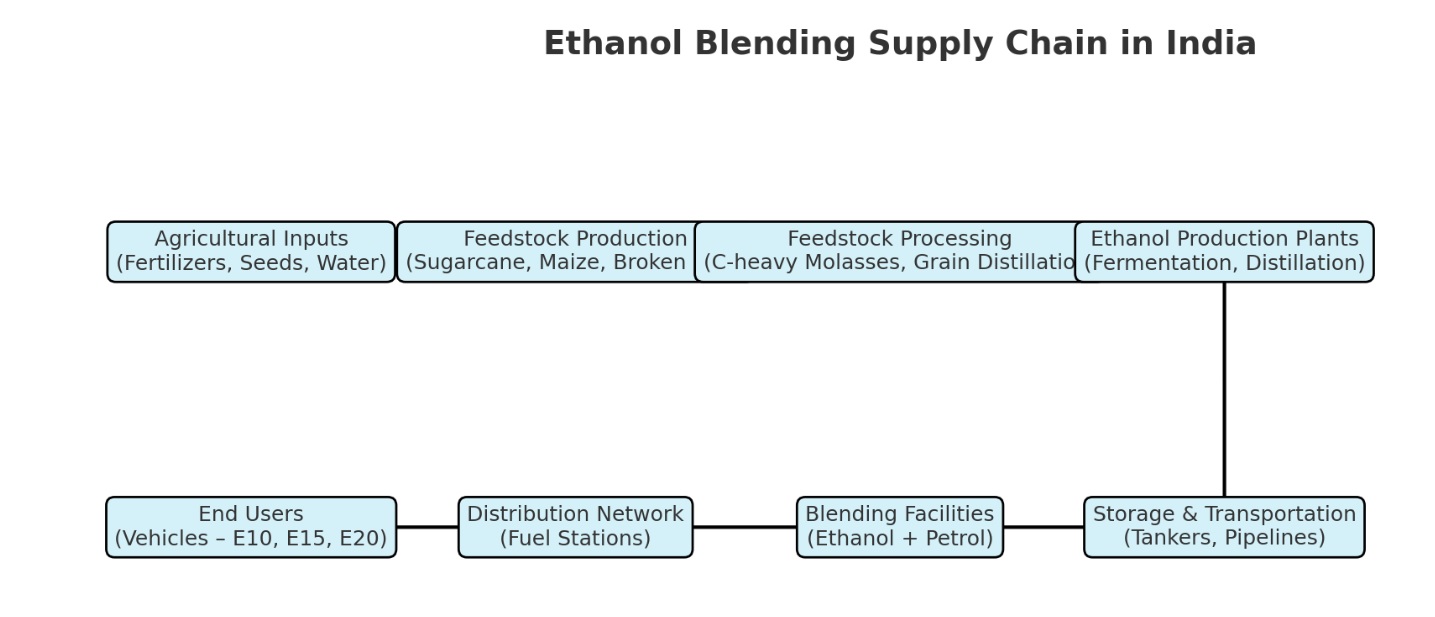
    Assuaging concerns: On India and ethanol-blended fuel

    Introduction:

    Ethanol blending with petrol, mixing ethyl alcohol derived from biomass with conventional fuel, began globally in response to the oil shocks of the 1970s, with countries like the U.S. and Brazil leading the way. In India, the push is driven by three key factors:

    1. Import substitution to save foreign exchange
    2. Price advantage compared to petrol
    3. Lower carbon footprint

    The Government of India has set a target of 20% ethanol blending (E20) by 2025, aiming to save $10 billion annually in import costs. Yet, technical limitations, uneven economic benefits, and food security concerns demand a careful, transparent approach.

    Rationale Behind Ethanol Blending in India

    1. Import Substitution: Reducing dependency on crude oil imports.
    2. Economic Benefit: Estimated savings of $10 billion annually.
    3. Environmental Considerations: Ethanol is considered carbon-neutral as the CO₂ emitted during combustion is offset by plant absorption during growth.
    4. Waste Utilisation: Use of C-heavy molasses, broken rice, and maize to avoid wastage and enhance rural income.

    Economic and Agricultural Concerns

    1. Uneven Benefits:
      1. Farmers, traders, and distillers benefit differently: sugarcane-growing regions may profit disproportionately.
      2. Maize, being less water-intensive, is promoted for ethanol feedstock, but scaling up acreage and productivity has its limits.
    2. Food Security Risks: Initial use of non-edible or surplus produce avoids conflict, but once ethanol supply chains are entrenched, prioritising food over fuel during shortages may become politically difficult.
    3. Hidden Imports: Fertilizers and other agricultural inputs required for ethanol crops may lead to forex outflow, negating some import savings.

    Technical and Engineering Challenges

    • Efficiency Penalty:
      1. Ethanol has lower energy density than petrol, leading to reduced fuel efficiency.
      2. Material durability issues: corrosion of fuel systems and engine parts.
    • Vehicle Compatibility:
      1. BS-II (since 2001) norms allow safe use up to E15.
      2. Vehicles sold since 2023 can handle E20, but older vehicles may face damage.
      3. Lack of consumer choice in fuel type is a concern.
    • International Experience:
      1. U.S. and Brazil’s long history shows ethanol blending is feasible with proper engineering, norms, and market flexibility.

    Policy Framework and Transparency Issues

    1. India has two ethanol-specific fuel norms and is moving towards E27 (Brazil model).
    2. Price benefits not visible at fuel stations despite earlier claims.
    3. Absence of clear consumer disclosures on vehicle compatibility.
    4. Need for automakers to publish past model ethanol limits and mitigation measures.
    5. Insurance policies must cover ethanol-related damages.

    Conclusion

    Ethanol blending offers India a chance to reduce oil imports, utilise agricultural surplus, and move towards greener energy. However, policy success depends on technical readiness, transparency, equitable benefits, and food security safeguards. A balanced roadmap, combining engineering upgrades, farmer diversification, consumer choice, and global best practices, is essential for a sustainable ethanol economy.


    Value Addition

    Ethanol: Definition & Types

    • Ethanol: Ethyl alcohol (C₂H₅OH), a renewable biofuel produced by fermenting sugar/starch-based crops or cellulosic biomass.
    • Blended Fuel: Petrol mixed with ethanol in specific proportions (e.g., E10, E20, E27)

    Key Facts for UPSC

    • National Policy on Biofuels 2018 (amended 2022): Advanced target for 20% blending (E20) by 2025–26 from 2030.
    • Sources in India: Sugarcane juice, C-heavy molasses, damaged food grains, maize, surplus rice.
    • Economic Impact: $10 billion/year projected forex savings with E20 blending (MoPNG & NITI Aayog’s joint report “Roadmap for Ethanol Blending in India 2020–25”)
    • Environmental Impact: Estimated reduction of 27 million tonnes CO₂/year at E20 (NITI Aayog’s 2021 roadmap document, calculated based on life-cycle emissions studies).

    Global Comparisons

    Country Current Blending Standard Notable Feature
    Brazil E27 Long-standing flex-fuel vehicle ecosystem
    USA E10–E15 Voluntary blending with incentives
    India Target E20 by 2025–26 Mandatory programme via OMCs

    Vehicle Compatibility Norms

    • BS-II (since 2001): Safe up to E15.
    • Since 2023: Vehicles designed for E20 compatibility.
    • Flex-Fuel Vehicles (FFVs): Can run on any ethanol-petrol mix (0–100%).

    Related Schemes & Initiatives

    • Ethanol Blended Petrol (EBP) Programme: Launched 2003, scaled up post-2014.
    • PM–JIVAN Yojana: Supports 2G ethanol projects using lignocellulosic biomass.
    • SATAT Scheme: Promotes compressed bio-gas (CBG) as transport fuel.


    Micro Theme Mapping

    Paper Topic Micro Theme Example
    GS Paper III Sustainable Development/Pollution Biofuel production from agricultural residues Ethanol from C-heavy molasses, broken rice under EBP Programme
    GS Paper III Food–Fuel Debate Balancing ethanol feedstock with food security Maize promotion for ethanol with lower water footprint
    GS Paper I Urbanisation- Urban Challenges Waste generation pressure in cities Indore’s waste segregation success
    GS Paper IV Transparency Public disclosure in environmental compliance Automakers’ ethanol compatibility disclosures


    PYQ Linkage

    “[UPSC 2018] What are the impediments in disposing the huge quantities of discarded solid wastes which are continuously being generated? How do we remove safely the toxic wastes that have been accumulating in our habitable environment?

    Linkage: India’s solid waste disposal is hampered by poor segregation, inadequate processing plants, and weak enforcement of rules. Toxic waste removal suffers from limited treatment capacity and high costs. Solutions include scientific landfills, incineration, bioremediation, and EPR. Waste-to-energy projects like ethanol from crop residues show sustainable disposal in action.


    Practice Mains Question

    1. Critically analyse the potential of ethanol blending as a sustainable fuel solution for India. Discuss the associated challenges in terms of technology, agriculture, and policy transparency.
  • Artificial Intelligence (AI) Breakthrough

    How is AI reshaping India’s infotech sector?

    PYQ Relevance:

    [UPSC 2023] Introduce the concept of Artificial Intelligence (AI). How does Al help clinical diagnosis? Do you perceive any threat to privacy of the individual in the use of Al in healthcare?

    Linkage: Artificial Intelligence (AI) simulates human intelligence to perform tasks like analysis, prediction, and decision-making, and in healthcare, it aids clinical diagnosis through rapid image interpretation, predictive analytics, and early disease detection. Linking to India’s evolving IT sector, AI’s role in data management and compliance can ensure safe healthcare adoption, but risks such as data breaches, misuse of personal health records, and algorithmic bias highlight the need for strong privacy safeguards and ethical standards.

    Introduction:

    The Indian IT industry, valued at $280 billion and employing over 5.8 million people, has been the backbone of India’s digital economy for decades. However, the rise of AI is reshaping business models, altering talent requirements, and compelling firms to rethink their role in the global technology ecosystem. Far from being a simple “job killer,” AI is redefining the industry’s competitive advantage.

    Why is the IT Industry in Restructuring Mode?

    1. Beyond the “AI kills jobs” narrative:
      1. The shake-up is not merely about replacing human workers with AI, but about re-engineering processes for efficiency and scale.
      2. AI is driving transformation across the entire software lifecycle — from coding to testing and maintenance.
    2. The TCS trigger:
      1. TCS’s freeze on experienced hires and planned removal of 12,000 employees has been interpreted as a signal to markets, clients, and employees:
      2. Markets: Cost optimisation and forward-looking adaptation.
      3. Clients: AI-powered efficiency.
      4. Employees: Need for continuous upskilling.

    Why is AI Gaining Momentum Now?

    • Cost-optimisation as a driver:
      1. AI-led productivity boosts (30%+) are critical in a cost-sensitive, investor-driven market.
      2. Examples: AI-powered coding assistants, intelligent debuggers, automated testing.
    • Investment surge:
      1. In 2025, $1 trillion+ expected global spending on AI infrastructure, training, and applications.

    Impact on Jobs and Skills

    1. Job contraction in some areas:
      1. Automation, low-code platforms, and AI reduce the need for large teams in certain roles.
      2. Example: U.S. firms openly using workforce attrition to streamline operations.
    2. Skills that remain resilient:
      1. Core coding in C++ (OS, gaming, security systems), robotics, embedded systems.
      2. High-value areas: product management, UI/UX, tech architecture.
    3. Traits that will rule: math skills, imagination, problem-solving.

    Opportunity for India’s IT Sector

    • Addressing global AI adoption barriers:
      1. Legacy systems, poor data quality, and compliance requirements are major bottlenecks abroad.
      2. Indian firms can: Modernise systems, Organise and clean data and Build compliant AI solutions (aligning with laws like EU’s AI Act).
    • Moving from “back office” to “AI innovation partners”:
      1. Future advantage lies with small, lean AI-native teams solving complex domain-specific problems (healthcare, defence, fintech, sustainability, education).

    From Scale to Specialisation:

    1. The traditional “IT park with thousands of coders” model is declining.
    2. A 50-member AI-focused team can outperform a 5,000-member legacy services team.
    3. Requires cultural shift in Indian IT firms from scale efficiency to innovation agility.

    Conclusion:

    AI is not the end of India’s IT story, but a call for reinvention. By leveraging its talent pool, improving innovation culture, and addressing global AI adoption barriers, India can position itself not just as a participant but as a shaper of the AI era. The challenge lies in embracing the shift from large-scale coding work to lean, high-value, AI-driven problem solving.

    Value Addition:

    Thinkers & Scholars on AI: 

    Andrej Karpathy

    • Background: Former Director of AI at Tesla, known for his work on deep learning and computer vision.
    • View: Describes the shift to Software 2.0 and 3.0, where AI models themselves become the primary source code, reducing the advantage of large coding teams.
    • Relevance: Highlights why India’s IT sector must shift from scale-based operations to innovation-focused, AI-native solutions.

    V. Balakrishnan

    • Background: Chairman, Exfinity Ventures; former CFO at Infosys.
    • View: AI is becoming the fabric of enterprise operations, shaping everything from customer service to boardroom decision-making; Indian IT firms can become enablers of global AI adoption.
    • Relevance: Emphasises India’s opportunity in data cleaning, system modernisation, and AI compliance.

    Extra Mile:

    AI Capitalism – Concept: It refers to an economic and social order where artificial intelligence technologies become a core driver of capital accumulation, market power, and social influence. In this system, AI is not just a tool but a means of consolidating wealth and control in the hands of a few global tech giants, venture capital firms, and AI infrastructure providers.

    Scholars and Thinkers

    1. Shoshana Zuboff (The Age of Surveillance Capitalism) – Warns that AI capitalism commodifies human behaviour through constant data extraction.
    2. Nick Srnicek (Platform Capitalism) – Argues AI platforms centralise power and reshape markets in ways that undermine competition.
    3. Kate Crawford (Atlas of AI) – Highlights the environmental, political, and ethical costs of AI capitalism.


    Mapping Micro-themes:

    GS PAPER II Governance in technology adoption, regulation, Tech policy & regulation, India as a global technology partner:

    • Regulatory dimension: Global AI governance (EU AI Act) influencing Indian compliance services.
    • Geopolitical angle: India’s role as a trusted AI partner amid U.S.-China tech tensions.
    GS PAPER III Economic growth, employment (AI & automation impact on employment ), AI innovation ecosystem (Innovation-driven economy), Start-up ecosystem in AI

    • Economic implications: Job losses in low-skilled IT roles vs. high-skilled job creation in AI.
    GS PAPER IV Ethical AI (fairness, transparency, bias mitigation)

    Examples:

    • TCS workforce restructuring as a market signal
    • EU AI Act influencing compliance-driven service demand
    • AI-native teams in healthcare and defence as future growth hubs


    Practice Mains Question

    1. Discuss how Artificial Intelligence is reshaping India’s information technology sector. In your answer, highlight both the challenges and opportunities this transition presents. (250 words)
  • Waste Management – SWM Rules, EWM Rules, etc

    What are the new rules on chemically contaminated sites?

    [UPSC 2023] Enumerate the National Water Policy of India. Taking river Ganges as an example, discuss the strategies which may be adopted for river water pollution control and management. What are the legal provisions of management and handling of hazardous wastes in India?

    Linkage: The National Water Policy emphasises pollution prevention, water quality monitoring, and restoration of contaminated water bodies. Strategies for river pollution control, such as those for the Ganga, parallel the approach in the Environment Protection (Management of Contaminated Sites) Rules, 2025, which involve identification, assessment, remediation, and polluter accountability. Legal provisions for hazardous waste management include the Environment Protection Act, 1986 and the Hazardous and Other Wastes (Management and Transboundary Movement) Rules, 2016, under which contaminated site rules now operate.

    Introduction

    India has identified 103 contaminated sites across states, caused by historical dumping of hazardous wastes. These sites often lie abandoned, with polluters defunct or unable to pay for clean-up. The newly notified Environment Protection (Management of Contaminated Sites) Rules, 2025 under the Environment Protection Act provide the first legal, institutional, and procedural framework to identify, assess, and remediate such locations, addressing a long-standing regulatory gap.

    What are Contaminated Sites?

    1. Defined by the Central Pollution Control Board (CPCB) as areas where past dumping of hazardous wastes has likely contaminated soil, groundwater, and surface water, posing risks to human health and ecosystems.
    2. Examples: Landfills, waste storage/treatment sites, spill-sites, and abandoned chemical handling facilities.
    3. Out of 103 identified sites, only 7 have begun remediation.

    Background – Why New Rules Were Needed:

    1. 2010 Capacity Building Program for Industrial Pollution Management Project initiated by the Environment Ministry aimed to:
      1. Create an inventory of probable contaminated sites.
      2. Develop guidance for assessment and remediation.
      3. Establish a legal, institutional, and financial framework — the missing final step until 2025.
    2. Previous absence of legal codification led to delays, inconsistent responses, and lack of accountability.

    Key Provisions of the 2025 Rules

    Identification & Assessment Process:

    1. District Administration: Submits half-yearly reports on suspected sites.
    2. State Board/Reference Organisation:
      1. Preliminary assessment within 90 days.
      2. Detailed survey within another 90 days to confirm contamination.
      3. Establish levels of hazardous chemicals (189 listed under Hazardous and Other Wastes Rules, 2016).

    Public Notification & Restrictions

    1. Sites exceeding safe chemical levels are publicly listed.
    2. Access restrictions imposed to safeguard health.

    Remediation Planning

    1. Expert body drafts remediation plan.
    2. Polluters identified within 90 days; responsible parties bear clean-up costs.
    3. If polluters cannot pay, State/Centre funds the remediation.

    Legal Accountability

    1. Criminal liability under Bharatiya Nyaya Sanhita, 2023 if contamination leads to loss of life or damage.

    Exemptions

    1. Radioactive waste
    2. mining waste
    3. marine oil pollution
    4. municipal solid waste dumps; governed by separate legislations.

    Key Gaps & Challenges

    1. No fixed remediation deadline post-identification.
    2. Capacity limitations in expert bodies.
    3. Financial constraints for large-scale clean-ups.
    4. Coordination issues between Centre, States, and Local Bodies.

    Conclusion

    The 2025 Rules mark a significant policy milestone in India’s environmental governance. While they close a crucial legal gap, their success will depend on timely implementation, strong enforcement, and adequate funding. Integrating strict timelines, expanding technical expertise, and ensuring polluter accountability will be essential to safeguard public health and restore ecological balance.


    Value Addition:

    Environment Protection (Management of Contaminated Sites) Rules, 2025 are Applicable on: 

    1. ‘Radioactive waste’ as defined under the Atomic Energy (Safe Disposal of Radioactive Wastes) Rules, 1987
    2. ‘Mining operations’ as defined under the Mines and Minerals (Development and Regulation) Act, 1957
    3.  Pollution of the sea by oil or oily substance as governed by Merchant Shipping Act of 1958 and the Merchant Shipping (Prevention of Pollution of the Sea by Oil) Rules, 1974
    4. ‘Solid waste dump’ as defined under Solid Waste Management Rules, 2016.
    5. In case contamination of a site is due to a contaminant mixed with radioactive waste/ mining operations/ oil spill/ solid waste from dump site, and if the contamination of the site due to the contaminant exceeds the limit of response level specified in these rules, then remediation of the site would be covered under these rules.

    Extra Mile:

    1. Case Linkage: Bhopal Gas Tragedy (1984) – absence of strict site remediation frameworks
    2. Environmental Principles:
      1. Polluter Pays Principle
      2. Precautionary Principle
      3. Sustainable Development
    3. Global Context: Comparable frameworks exist in the USA (Comprehensive Environmental Response, Compensation, and Liability Act – CERCLA), EU’s Environmental Liability Directive.
    4. Policy Linkages: National Environmental Policy 2006, SDG-3 (Health), SDG-6 (Clean Water), SDG-15 (Life on Land).

    Mapping Micro-themes

    GS PAPER I Environmental degradation and public health impacts
    GS PAPER II Centre-State coordination in environmental regulation; constitutional provisions (Art. 21, 48A, 243W)
    GS PAPER III Pollution management, hazardous waste rules, environmental governance, technology in remediation
    GS PAPER IV Corporate ethics, polluter responsibility, environmental stewardship, intergenerational equity


    Practice Mains Question

    Q: The Environment Protection (Management of Contaminated Sites) Rules, 2025, represent a long-awaited legal framework for chemical contamination in India. Discuss their significance, key features, and challenges in the context of sustainable environmental governance. (250 words)

  • Minority Issues – SC, ST, Dalits, OBC, Reservations, etc.

    Revision of creamy layer income limit ‘need of the hour’:

    The Parliamentary Committee on Welfare of Other Backward Classes (OBCs) has reiterated the need to revise the “creamy layer” income ceiling for OBC reservation benefits. It called the revision the “need of the hour”, citing inflation and rising income levels, which have rendered the current ₹8 lakh per annum limit (fixed in 2017) inadequate. The Ministry of Social Justice and Empowerment (MoSJE), however, stated that there is currently no proposal under consideration for a revision.

    Understanding the “Creamy Layer” Concept

    1. Introduced following the Indra Sawhney v. Union of India (1992) judgment of the Supreme Court, which upheld 27% OBC reservation but excluded the socially advanced among them.
    2. The creamy layer criterion is an economic threshold: those above the prescribed annual family income are excluded from OBC reservation benefits.
    3. Initially set at ₹1 lakh (1993), it has been revised periodically, ₹2.5 lakh in 2004, ₹4.5 lakh in 2008, ₹6 lakh in 2013, ₹6.5 lakh in 2014, ₹8 lakh in 2017 (last revision)
      1. As per DoPT norms, revision should occur every 3 years.

    OBC Reservations in India: Historical Background

    Constitutional Foundation

    • Article 15(4): Allows the State to make special provisions for the advancement of socially and educationally backward classes (SEBCs), Scheduled Castes (SCs), and Scheduled Tribes (STs).
    • Article 16(4): Empowers the State to provide reservation in appointments or posts in favour of any backward class not adequately represented in State services.
    • Article 340: Empowers the President to appoint a commission to investigate conditions of backward classes and recommend measures.

    Significance of Revising the Creamy Layer Limit

    1. Social Justice: Ensures benefits reach those who truly need them, keeping pace with economic changes.
    2. Reducing Inequality: Supports more OBC families in accessing education, jobs, and government schemes.
    3. Compliance with Policy Guidelines: DoPT’s 1993 order mandates periodic revisions.

    Challenges

    1. Balancing Reservation Benefits: Avoiding over-expansion that may dilute benefits for the most marginalized.
    2. Economic vs. Social Backwardness: Income is only one indicator; social deprivation is harder to quantify.
    3. Political Consensus: Reservation policy changes are politically sensitive.

    Committee’s Concerns on the Current ₹8 Lakh Threshold

    • Erosion by Inflation: Rising basic income levels have reduced the effectiveness of the threshold.
    • Exclusion of Needy Segments: Many OBC families in need of reservation benefits are above ₹8 lakh but still economically disadvantaged in terms of education and access to resources.
    • Socio-Economic Goals: Wider coverage will help raise the social and educational status of more OBC families.

    Way Forward

    • Periodic & Transparent Revision: Institutionalize automatic inflation-indexed adjustments.
    • Comprehensive Backwardness Index: Incorporate education, occupation, and rural/urban disparities along with income.
    • Targeted Scholarships: Expand pre-matric support for lower classes to improve educational pipelines.
    • Better Data: Conduct regular socio-economic surveys for evidence-based policy.


    The creamy layer provision is a critical filter to ensure reservation benefits reach the truly disadvantaged among OBCs. With inflation and rising income levels, the current ₹8 lakh ceiling may no longer serve its purpose effectively. The Parliamentary Committee’s push for revision aligns with constitutional principles of equality and social justice, but implementation will require careful balancing of inclusivity, efficiency, and fairness.


    Value Addition

    Key Developments:

    1. First Backward Classes Commission (Kaka Kalelkar Commission, 1953) – recommended caste-based reservations, but not implemented due to lack of quantifiable data.
    2. Second Backward Classes Commission (Mandal Commission, 1979) – recommended 27% reservation for OBCs in government jobs and educational institutions, implemented in 1990.
    3. Indra Sawhney Case (1992) – capped total reservation at 50% and introduced the creamy layer exclusion for OBCs.

    Recent Trends

    1. The 102nd Constitutional Amendment (2018) gave constitutional status to the National Commission for Backward Classes (NCBC).
    2. The 105th Constitutional Amendment (2021) restored the power of states to identify OBCs for their own purposes.


    Mains Practice Questions:

    1. “Reservation for backward classes should be based on social and educational backwardness rather than economic criteria alone.” Discuss.
    2. The creamy layer in OBC reservation is a safeguard for ensuring equity within equity.’ Comment.
  • Industrial Sector Updates – Industrial Policy, Ease of Doing Business, etc.

    Industrial Accidents in India – The Human Cost of Indifference

    Industrial accidents in India are neither rare nor accidental; they are recurring human tragedies rooted in systemic negligence, regulatory apathy, and corporate cost-cutting. From chemical plant explosions in Telangana to firecracker unit disasters in Tamil Nadu, these incidents underscore a grim reality, industrial safety in India is still treated as a compliance hurdle rather than a fundamental right.

    Magnitude of the Problem

    1. 6,500 workers have died in the last five years in factories, construction sites, and mines averaging three fatalities every day in peacetime.
    2. Centre for Science and Environment (2022): Over 130 major chemical accidents in 30 months post-2020, causing 218 deaths and over 300 injuries.
    3. Small and medium-sized enterprises (SMEs) are disproportionately involved, often escaping robust inspections.

    Root Causes of Industrial Accidents in India

    1. Regulatory Non-compliance:
      1. Factories operating without Fire Department No-Objection Certificates (NOCs).
      2. Missing or dysfunctional firefighting systems, alarms, and sensors.
    2. Unsafe Work Practices:
      1. Absence of permit-to-work systems for high-risk jobs.
      2. Migrant and contract workers without language-appropriate training or signage.
    3. Infrastructure Failures:
      1. Locked or blocked emergency exits.
      2. Poor maintenance of hazardous material storage.
    4. Weak Enforcement and Accountability:
      1. Safety audits treated as formalities.
      2. Negligible penalties and rare convictions for violations.
    5. Cultural Mindset:
      1. Safety seen as an “overhead” instead of a core operational value.
      2. Class bias — migrant and contract workers’ lives undervalued.

    Comparative Global Perspective

    • Germany, Japan: Safety is embedded into industrial design and workplace culture.
    • South Korea, Singapore: Corporate manslaughter laws hold senior executives criminally liable for gross safety failures.

    Policy and Governance Gaps in India

    1. Industrial safety boards are under-resourced.
    2. Weak whistle-blower protections discourage reporting of hazards.
    3. Digital risk-reporting systems are minimal or absent.
    4. Limited integration between labour inspection, pollution control boards, and disaster management authorities.

    India-Specific Legal and Policy Framework

    1. Factories Act, 1948: Provides provisions on workplace safety, health, and welfare of workers, mandates fencing of machinery, safety officers, and periodic medical examinations.
    2. Occupational Safety, Health and Working Conditions Code, 2020: Consolidates 13 labour laws on safety and health, Introduces provisions for free annual health check-ups, safety committees, and hazard communication.
    3. Environment (Protection) Act, 1986: Framework law for protecting and improving environmental safety, including hazardous process management, Manufacture, Storage and Import of Hazardous Chemical Rules, 1989, Requires industries to prepare onsite and offsite emergency plans.
    4. Explosives Act, 1884 & Petroleum Act, 1934: Regulate storage, handling, and usage of explosive and flammable substances.
    5. Bhopal Gas Leak (Processing of Claims) Act, 1985: First special legislation to address industrial disaster victims’ compensation
    6. National Disaster Management Act, 2005: Guides chemical, biological, radiological, and nuclear safety protocols through the NDMA.

    Way Forward

    1. Strengthen Enforcement: Make industrial safety audits independent and transparent; link non-compliance to criminal liability.
    2. Digitisation: Use real-time IoT monitoring for hazard detection and compliance tracking.
    3. Worker Empowerment: Mandate safety training in local languages for all employees, especially contract labour.
    4. Corporate Accountability: Introduce Corporate Manslaughter Legislation for gross negligence causing worker deaths.
    5. Social Responsibility: Shift from post-accident compensation to pre-accident prevention culture.

    Conclusion

    Industrial accidents are not “acts of God” but acts of neglect. India possesses the legal framework to ensure safe workplaces, but without societal outrage, political will, and corporate responsibility, these frameworks remain on paper. For every worker who risks life and limb, industrial safety must be recognised and enforced as a right, not a privilege.


    Practice Mains Question:

    “Industrial accidents in India are not acts of fate but outcomes of systemic negligence.” Discuss the causes, implications, and reforms needed, with reference to recent incidents and existing legal frameworks.

    (250 words, 15 marks)

  • Port Infrastructure and Shipping Industry – Sagarmala Project, SDC, CEZ, etc.

    The Coastal Shipping Bill, 2024: A Legislative Milestone for Maritime Growth

    The Coastal Shipping Bill, 2024, which replaced Part XIV of the Merchant Shipping Act, 1958, marks a significant legislative reform aimed at modernizing and streamlining India’s coastal trade. It is a key component of the government’s vision for a “Viksit Bharat” and “Aatmanirbhar Bharat,” aiming to unlock the vast potential of India’s coastline. It provides a dedicated legal framework to boost coastal trade, reduce logistics costs, and promote sustainable transportation.

    Need for the new Coastal Shipping Bill, 2024:

    1. Repeals Part XIV of the Merchant Shipping Act, 1958, which was outdated and limited in scope.
    2. Coastal cargo movement had been growing (119% increase from 2014–15 to 2023–24), yet regulatory hurdles, outdated provisions, and fragmented oversight hindered its full potential.
    3. Aligns with key national missions such as PM Gati Shakti, National Logistics Policy, Sagarmala Programme and Maritime Amrit Kaal Vision 2047

    Key Provisions of the Coastal Shipping Bill, 2024

    The Act’s jurisdiction extends to vessels engaged in trade within India’s coastal waters, which include territorial waters (up to 12 nautical miles) and adjoining maritime zones (up to 200 nautical miles).

    1. Expanded Definition of Coastal Trade:
      • Earlier: Only carriage of goods and passengers.
      • Now: Includes services such as exploration, research, and commercial activities, excluding fishing.
      • Recognizes maritime zones up to 200 nautical miles from the Indian coast.
    2. Simplified Licensing Framework: Supports Indian shipbuilding, maritime employment, and reduces regulatory burden.
    Vessel Type Licensing Requirement
    Indian-owned vessels Exempted for coastal trade
    Foreign/chartered vessels License required (issued by DG Shipping)
    OCI-chartered vessels operating outside India No license required


    1. Mandated Strategic Planning: National Coastal and Inland Shipping Strategic Plan must be prepared within 2 years and reviewed biennially. It is to be designed by a committee with state representation, ensuring cooperative federalism.
    2. National Database for Coastal Shipping: Aims for real-time tracking, transparency, and data-driven policymaking. It keeps investors informed and supports infrastructure planning.
    3. Modernised Penalties and Decriminalisation


    Strategic Vision and Long-term Impact

    This is a forward-looking, holistic framework aligned with global cabotage practices.”

    — Union Minister of Ports, Shipping and Waterways

    1. Economic Transformation:
      1. Aims to increase India’s coastal cargo share to 230 million metric tonnes by 2030.
      2. Reduces logistics cost (currently ~14% of GDP) by shifting cargo from roads/rails to coastal routes
      3. Coastal shipping is 80% cheaper and more energy-efficient than road transport
    2. Environmental Sustainability:
      1. Supports Net Zero by 2070
      2. Encourages green transport and lower-emission logistics
    3. Job Creation and Industry Support:
      1. Boosts shipbuilding, port services, and manning jobs
      2. Encourages Make in India in the maritime sector.
    4. Strengthened Maritime Security: Greater share of domestic cargo handled by Indian ships reduces reliance on foreign vessels.
    5. Cooperative Federalism: Includes states and UTs in decision-making, enabling inclusive and participatory governance.

    The Coastal Shipping Bill, 2024, represents a landmark step towards building a seamless, efficient, and globally competitive maritime ecosystem in India. By modernizing regulations, promoting domestic industry, and integrating coastal shipping with inland waterways, the Act lays the foundation for a future-ready logistics network that is central to the nation’s economic and strategic goals.

    Mains Practice Question:

    1. Discuss the significance of the Coastal Shipping Act, 2025 in India’s vision for a sustainable and cost-effective transport ecosystem.
    2. Evaluate the role of strategic planning and digital infrastructure under the new Coastal Shipping Act in achieving India’s Maritime Amrit Kaal Vision 2047.
  • Water Management – Institutional Reforms, Conservation Efforts, etc.

    How groundwater contamination is fuelling chronic illnesses

    India’s groundwater is increasingly getting contaminated with toxic substances. Over 85% of rural drinking water and 65% of irrigation needs are met through groundwater, yet unregulated extraction, industrial waste, agricultural runoff, and poor sanitation have turned this life source into a silent killer.

    Scale of the Crisis

    The 2024 Annual Groundwater Quality Report by the Central Ground Water Board (CGWB) reported the following:

    1. Nitrates: Found in 20%+ samples (due to chemical fertilisers & septic tank leakage).
    2. Fluoride: Detected in 9%+ samples, leading to skeletal & dental fluorosis.
    3. Arsenic: Found in parts of Punjab, Bihar, Uttar Pradesh causing cancers & neurological damage.
    4. Uranium: Detected in Punjab, Andhra Pradesh, Rajasthan linked to kidney damage.
    5. Heavy metals: Iron, lead, cadmium, chromium, causing developmental & immune system issues.

    Major Contaminants and Health Impacts

    • Fluoride Contamination: 
      1. Affects 230 districts across 20 states.
      2. Health impact: Skeletal fluorosis, stunted growth, joint pain.
      3. Rajasthan, MP, and UP report high prevalence.
      4. Example: Jhabua (MP) – 40% of tribal children affected
    • Arsenic Exposure:
      1. Concentrated in Gangetic belt.
      2. Health impact: Skin lesions, respiratory illness, cancers (skin, liver, kidney, bladder).
      3. Example: Ballia (UP) – Arsenic 200 g/L (20× WHO limit) linked to 10,000+ cancer cases.
    • Nitrate Pollution: 
      1. 56% districts exceed safe limits.
      2. Health impact: Blue Baby Syndrome in infants, gastrointestinal distress.
      3. Driven by fertilisers & poor waste management.
    • Uranium Contamination:
      1. Increasing due to over-extraction & phosphate fertilisers.
      2. Health impact: Nephrotoxicity, chronic organ damage.
      3. Example: Malwa (Punjab) – 66% samples risky for children.
    • Heavy Metal Pollution: 
      1. Sources: Industrial discharge, mining.
      2. Health impact: Neurological issues, anaemia, developmental delays.

    Groundwater Death Zones: Case Studies

    1. Budhpur, Baghpat (UP) – 13 deaths in 2 weeks from kidney failure linked to industrial waste.
    2. Jalaun (UP) – Petroleum-like fluids from hand pumps due to underground fuel leaks.
    3. Paikarapur (Bhubaneswar) – Sewage leakage caused illness in hundreds.

    Why the Crisis Persists: Root Causes and Systemic Failures:

    1. Institutional Fragmentation: Various agencies like the CGWB, the CPCB, the SPCBs, and the Ministry of Jal Shakti operate in silos, leading to a lack of a unified, coordinated approach.
    2. Weak Legal Enforcement: The Water (Prevention and Control of Pollution) Act, 1974, has inadequate provisions for groundwater. This, combined with lax enforcement and regulatory loopholes, emboldens polluters.
    3. Lack of Real-Time Data: Monitoring is infrequent and poorly disseminated. Without early warning systems, contamination is often discovered only after serious health consequences have emerged.
    4. Excessive Groundwater Extraction: Over-pumping lowers water tables and concentrates pollutants, making aquifers more vulnerable to both geogenic toxins and industrial contaminants.
    5. Deficient Waste Management: Inadequate industrial effluent treatment and poor sanitation infrastructure, especially in rural areas, allow pollutants to seep directly into aquifers

    The Way Forward: A Multi-Dimensional Strategy

    Addressing this crisis requires a bold, multi-dimensional strategy that integrates regulation, technology, health, and public participation.

    1. National Framework: Enact a comprehensive National Groundwater Pollution Control Framework with clear legal authority to regulate groundwater use and discharge.
    2. Modern Monitoring Infrastructure: Deploy real-time monitoring systems using sensors and public dashboards to create an early warning network.
    3. Targeted Remediation: Implement targeted interventions for specific contaminants, such as defluoridation plants in high-fluoride zones and arsenic removal technologies in affected regions.
    4. Waste Management Reforms: Enforce strict industrial effluent treatment norms and promote sustainable agricultural practices to reduce the use of chemical fertilizers.
    5. Citizen-Centric Governance: Empower local communities through Jal Gram Sabhas to manage local water resources, conduct community water testing, and raise public awareness.

    Value Addition: Key Concepts:

    • Geogenic Contamination: Naturally occurring pollutants like arsenic and fluoride mobilized by human activity.
    • Anthropogenic Contamination: Human-induced pollution from industries, agriculture, and urban waste.
    • Skeletal Fluorosis: A debilitating condition causing bone deformities.
    • Methemoglobinemia (“Blue Baby Syndrome”): A potentially fatal condition in infants caused by nitrate-laced water.

    Practice UPSC MAINS question:

    “Groundwater pollution in India is no longer about scarcity—it is about safety and survival.” Discuss this statement with recent examples and suggest a multi-pronged approach to tackle this issue.


  • Waste Management – SWM Rules, EWM Rules, etc

    What is the potential of Biochar?

    As India gears up to launch its carbon market in 2026, biochar, a carbon-rich material made from agricultural and organic waste, is gaining attention as a sustainable solution for carbon capture and waste management. Despite its immense potential, biochar remains underutilised due to lack of policy support, market structures and awareness.

    What is the potential of biochar?

    What is Biochar and Why is it Important?

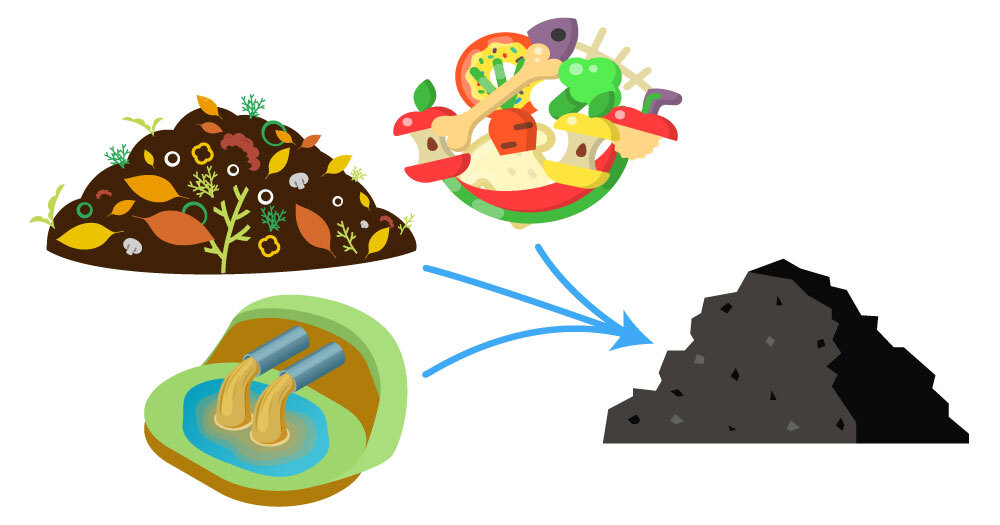
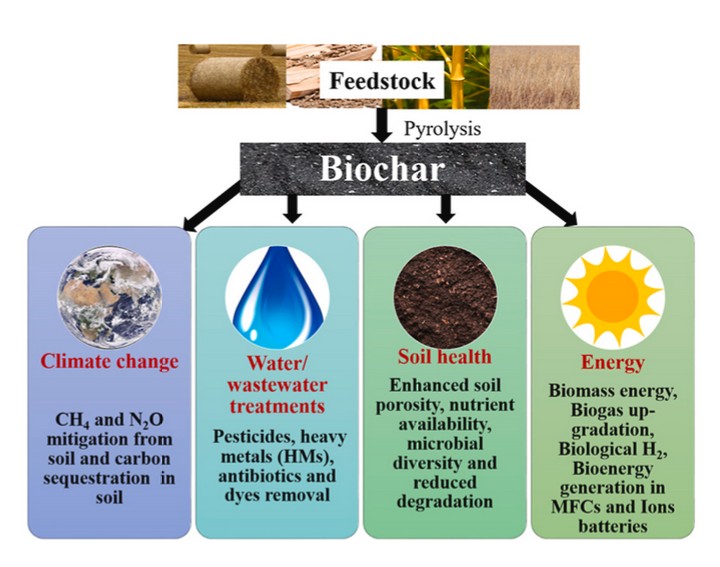
    • Biochar is a type of charcoal/black carbon produced by heating organic waste (like crop residue or solid municipal waste) in a low-oxygen environment.
    • It locks carbon into the soil for hundreds of years, reducing greenhouse gases and improving soil quality.
    • It is an effective long-term carbon sink.

    Biochar Potential in India:

    • India generates over 600 million tonnes of agricultural waste and 60 million tonnes of municipal waste each year, much of which is burned or dumped, contributing to pollution.
    • By converting just 30–50% of this waste into biochar, India could:
      • Produce 15–26 million tonnes of biochar
      • Remove 0.1 gigatonnes of Carbon Dioxide (CO₂) equivalent emissions annually
    • Biochar production also provides with the following:
      • Syngas (20–30 million tonnes) which can generate 8–13 TWh of electricity, replacing about 0.5–0.7 million tonnes of coal
      • Bio-oil (24–40 million tonnes) which can offset 12–19 million tonnes of diesel/kerosene, reducing oil imports and fossil fuel emissions by more than 2%

    Applications of Biochar in Key Sectors:

    1. Agriculture: It improves soil health and water retention, especially in semi-arid and nutrient-poor regions. It can reduce nitrous oxide emissions by 30–50%, which is vital as this gas has 273x more warming potential than CO₂. Its application leads to higher crop yields (10–25%) and reduced fertilizer needs (by 10–20%). Biochar can also enhance soil organic carbon, helping restore degraded soils.
    2. Construction: Adding just 2–5% biochar in concrete improves strength and heat resistance. It helps capture 115 kg of CO₂ per cubic metre of concrete, turning buildings into carbon sinks.
    3. Wastewater Treatment: One kg of biochar can help treat 200–500 litres of wastewater. India’s untreated wastewater (~72%) could use 2.5–6.3 million tonnes of biochar annually.
    4. Carbon Capture: Biochar can be modified to absorb CO₂ from industrial exhausts, though current efficiency is lower than traditional methods.
    5. Circular Economy: Biochar aligns with the circular economy model, waste to wealth.

    Why is Biochar Still Not Widely Adopted?

    1. It remains underrepresented in carbon credit systems due to the absence of standardised feedstock markets and consistent carbon accounting methods, which undermine investor confidence.
    2. Limited policy support, low public awareness, and no coordinated action across sectors.
    3. No strong carbon credit mechanism to reward users and producers.

    Steps that can be undertaken for Large-Scale Adoption of Biochar:

    1. R&D Support: Develop region-specific feedstock guidelines and technologies.
    2. Policy Integration: Link biochar with Crop residue management schemes, Bioenergy programs and State Action Plans on Climate Change
    3. Carbon Market Recognition: Allow biochar to earn carbon credits, giving financial incentives to farmers and investors.
    4. Village-Level Deployment: Establish small-scale biochar units that can create over 5 lakh rural jobs.
    5. Linkage with National Missions: Can be linked with Mission LiFE and the Swachh Bharat Abhiyan.

    Biochar offers a powerful tool for India’s climate smart and sustainable agriculture by enhancing soil health, improving water and nutrient retention, and bolstering climate resilience. Its integration can reduce dependency on synthetic inputs, aligning with organic farming principles. Crucially, biochar provides a significant mechanism for carbon sequestration and mitigating greenhouse gas emissions from agriculture, contributing to India’s climate goals. Leveraging this “black gold” through targeted policy support and research is essential for a greener, more resilient future.

    Practice UPSC Mains Question

    1. Biochar is emerging as a multipurpose tool for sustainable development in India. Discuss its potential across sectors and the challenges in its adoption.
    2. What are the salient features of ‘Waste-to-Energy’ policy of India? Describe the role of waste to energy technologies in achieving energy security in India.