💥UPSC 2026, 2027, 2028 UAP Mentorship (March Batch) + Access XFactor Notes & Microthemes PDF

Type: Prelims Only

  • Climate Change Negotiations – UNFCCC, COP, Other Conventions and Protocols

    Fifth Session of Intergovernmental Negotiating Committee (INC)

    Why in the News?

    The second part of the fifth session of the Intergovernmental Negotiating Committee (INC-5.2) on plastic pollution has opened in Geneva, Switzerland.

    About Intergovernmental Negotiating Committee (INC):

    • Formation: Created by the United Nations Environment Programme (UNEP) in March 2022 to develop a global treaty on plastic pollution.
    • Nature: UN-mandated body with equal participation of all member states.
    • Output: Produces consensus-based treaties, sometimes including voluntary provisions.
    • Precedents: Similar to the Convention on Biological Diversity (1992) and UN Framework Convention on Climate Change (1992).
    • Mandate: By 2024, draft a legally binding treaty covering plastic’s full life cycle—production, design, use, and disposal.

    Negotiation Process & Timeline:

    • Method: Plenary sessions, technical groups, and stakeholder consultations.
    • Sessions:
      1. Uruguay (Nov–Dec 2022)
      2. France (May–June 2023)
      3. Kenya (Nov 2023)
      4. Canada (Apr–May 2024)
      5. South Korea (Nov–Dec 2024, final session)
    • Key Debates: Scope, binding vs. voluntary rules, financing, compliance, and differentiated responsibilities.
    • Outcome: Treaty text refined until consensus or majority approval.

    Goals on Plastic Pollution:

    • Standards: Global production and waste management norms.
    • Targets: Combination of binding goals and voluntary approaches.
    • Financing: Creation of funding mechanisms for treaty implementation.
    • Sustainability: Promotion of circular economy and efficient resource use.
    • Participation: Inclusion of governments, industry, civil society, Indigenous groups, and waste pickers.
    [UPSC 2021] The ‘Common Carbon Metric,’ supported by UNEP, has been developed for:

    (a) Assessing the carbon footprint of building operations around the world* (b) Enabling commercial farming entities around the world to enter carbon emission trading (c) Enabling governments to assess the overall carbon footprint caused by their countries (d) Assessing the overall carbon footprint caused by the use of fossil fuels by the world in a unit time


  • Urban Floods

    District Flood Severity Index (DFSI)

    Why in the News?

    Researchers from IIT Delhi and IIT Gandhinagar have developed a District Flood Severity Index (DFSI) to aid flood planning using past data and human impact indicators.

    About the District Flood Severity Index (DFSI):

    • Objective: To provide a comprehensive, data-based assessment of flood severity across Indian districts.
    • Focus: District-level analysis, as districts are the core units for planning and implementation of disaster management in India.
    • Based on long-term data (since 1967): Collected annually by the India Meteorological Department (IMD) on major flood events.
    • Significance: Responds to the lack of an official national index that incorporates human impact, not just flood magnitude.

    Key Parameters Used in DFSI:

    The index incorporates multiple indicators to measure both the scale and impact of flooding:

    1. Mean duration (in days) of flood events per district.
    2. Percentage of district area historically affected by floods.
    3. Total deaths and injuries due to floods.
    4. Population of the district — used to assess per capita impact.
    5. 40-year curated dataset developed at IIT Delhi used for historical flood mapping.

    Key Insights from the Index:

    • Thiruvananthapuram (Kerala): Recorded the highest number of flood events (231), but does not feature in the top 30 most severely impacted districts as per DFSI.
    • Patna (Bihar): Ranked #1 on the severity index due to higher population impact and flood spread.
    • Assam districts like Dhemaji, Kamrup, and Nagaon consistently face high flood frequency (178+ events), but ranking depends on combined indicators.


    [UPSC 2014] What are the benefits of implementing the ‘Integrated Watershed Development Programme’?”

    1. Prevention of soil runoff 2. Linking the country’s perennial rivers with seasonal rivers

    3. Rainwater harvesting and recharge of groundwater table 4. Regeneration of natural vegetation

    Options: (a) 1 and 2 only (b) 2, 3 and 4 only (c) 1, 3 and 4 only* (d) 1, 2, 3 and 4 only


  • Innovations in Biotechnology and Medical Sciences

    Prophylaxis Therapy for Haemophilia

    Why in the News?

    With haemophilia care evolving globally, the shift from reactive to preventive treatment has brought Prophylaxis Therapy to the forefront of modern clinical practice.

    About Haemophilia:

    • What is it: Rare genetic bleeding disorder due to deficiency of clotting factors, mainly Factor VIII (Haemophilia A).
    • Effect: Causes prolonged bleeding, even from minor injuries; can lead to internal bleeds in joints, muscles, or brain.
    • Key Symptoms: Excessive bleeding, painful joint swelling, risk of disability or brain hemorrhage.
    • Prevalence: Estimated 1–1.5 lakh cases in India; only ~29,000 diagnosed (~20%).
    • Underdiagnosis Causes: Low awareness, poor access to diagnostics, and socio-economic challenges.
    • Impact if Untreated: Each untreated bleed may reduce lifespan by ~16 days; leads to pain, disability, missed school/work, and job loss.

    Prophylaxis (Regular Replacement Therapy) and its Benefits:

    • What It Is: Regular infusion of clotting factors or non-factor therapies to prevent bleeds.
    • Global Standard: Replaces on-demand therapy; adopted as best practice in developed countries.
    • Joint Protection: Prevents recurrent bleeds, avoids deformities and long-term disability.
    • Quality of Life: Reduces pain and fear, enables normal schooling, work, and social life.
    • Healthcare Savings: Cuts emergency visits, hospital stays, and long-term costs.
    • Global Status: ~90% of haemophilia patients in developed countries are on prophylaxis.
    • India’s Progress: On-demand remains common; some states offer prophylaxis for children under 10.
    [UPSC 2021] In the context of hereditary diseases, consider the following statements:

    1.Passing on mitochondrial diseases from parent to child can be prevented by mitochondrial replacement therapy either before or after in vitro fertilization of the egg.

    2.A child inherits mitochondrial diseases entirely from the mother and not from the father.

    Which of the statements given above is/are correct?

    Options: (a) 1 only (b) 2 only (c) Both 1 and 2* (d) Neither 1 nor 2


  • Wildlife Conservation Efforts

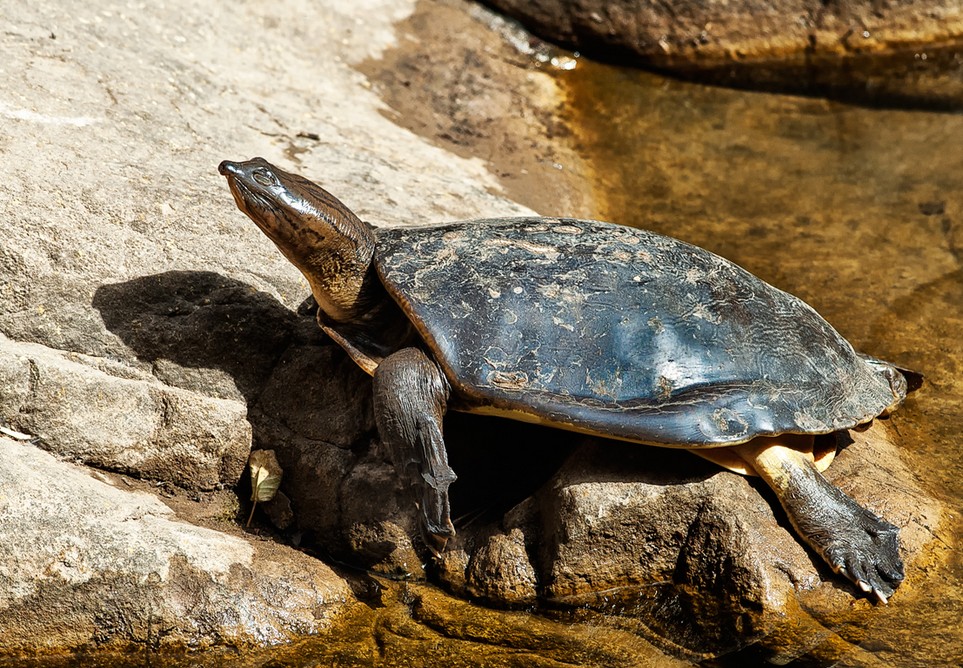
    Specie in news: Indian flapshell turtle (Lissemys punctata)

    Why in the News?

    The Social Forestry Department of Vadodara rescued an Albino Indian flapshell turtle (Lissemys punctata) from a freshwater lake in Chikhodra, Gujarat.

    Specie in news: Indian flapshell turtle (Lissemys punctata)

    About Indian Flapshell Turtle (Lissemys punctata):

    • Type: Small, freshwater softshell turtle native to South Asia
    • Unique Feature: Named for femoral flaps on the plastron that cover the limbs when retracted
    • Geographic Range: Found in India, Pakistan, Nepal, Bangladesh, Sri Lanka, and Myanmar
    • River Systems: Occurs in the Indus, Ganges, Irrawaddy, and Salween basins
    • Habitat: Prefers shallow, quiet freshwater bodies like rivers, ponds, lakes, marshes, tanks, and canals with muddy or sandy bottoms for burrowing
    • Conservation Status:
      • IUCN Red List: Vulnerable
      • CITES Listing: Appendix II
      • Wildlife (Protection) Act, 1972: Schedule I (maximum protection)
    • Major Threats:
      • Poaching for meat, blood-based potions, aphrodisiacs, and traditional medicine
      • Illegal trade for fishing bait, livestock feed, leather, and exotic pets
      • Habitat loss due to pollution, encroachment, and waterbody destruction
      • Albino individuals especially targeted in the illegal pet market
    [UPSC 2013] Consider the following fauna of India:

    1. Gharial 2. Leatherback turtle 3. Swamp deer

    Which of the above is/are endangered?

    Options: (a) 1 and 2 only (b) 3 only (c) 1, 2 and 3* (d) None


  • Women empowerment issues – Jobs,Reservation and education

    Yashoda AI Literacy Program

    Why in the News?

    The National Commission for Women (NCW) has launched “Yashoda AI”, an AI literacy program to empower women with skills in cybersecurity, digital privacy, and safe online practices, promoting digital inclusion across India.

    About Yashoda AI:

    • Launch: Introduced in May 2025 as an Artificial Intelligence Literacy Program for women.
    • Organisers: Joint initiative by the NCW and Future Shift Labs.
    • Objective: To train women in cybersecurity, digital privacy, and safe online practices.
    • Focus Areas: Covers AI-driven crimes, digital safety, and practical risk mitigation strategies.
    • Reach: Over 2,500 women trained to date.
    • Beneficiaries: Includes Self-Help Group members, local representatives (Sarpanchs, Pradhans, Mayors, Members of Legislative Assemblies), and frontline workers like Accredited Social Health Activists (ASHA workers).

    Back2Basics: National Commission for Women

    • Status: Statutory body established in 1992 under the NCW Act, 1990.
    • Composition: Consists of a Chairperson, 5 Members, and a Member-Secretary—appointed by the Central Government.
    • Term: All members serve for a term of 3 years.
    • Powers: Holds civil court powers during inquiries:
      • Can summon individuals and enforce attendance
      • Examine witnesses under oath
      • Demand records and receive affidavits
      • Issue commissions for examination of witnesses or documents


    [UPSC 2017] What is the purpose of Vidyanjali Yojana’?

    1. To enable the famous foreign campuses in India.

    2. To increase the quality of education provided in government schools by taking help from the private sector and the community.

    3. To encourage voluntary monetary contributions from private individuals and organizations so as to improve the infrastructure facilities for primary and secondary schools.

    Select the correct answer using the code given below:

    Options: (a) 2 only * (b) 3 only (c) 1 and 2 only (d) 2 and 3 only


  • Judicial Reforms

    Doctrine of Legal Insanity

    Why in the News?

    The Chhattisgarh High Court acquitted a double murder convict citing legal insanity under Section 84 of the IPC (Section 22 BNS), stressing the need to distinguish it from medical insanity and improve mental health investigations.

    About Legal Insanity:

    • Definition: Legal insanity refers to a mental condition where the accused cannot understand the nature of the act or distinguish right from wrong at the time of the offence.
    • Legal Basis: Codified under Section 22 of the Bharatiya Nyaya Sanhita (formerly Section 84 of the Indian Penal Code, 1860); based on the Mc’Naughten Rule (1843) from English law.
    • Presumption of Sanity: Law presumes every person is sane unless proven otherwise; burden of proof lies on the accused (Section 105, Indian Evidence Act).
    • Timing Requirement: Insanity must be present at the time of the offence—not before or after.
    • Legal vs. Medical Insanity: Legal insanity (court-recognised) is different from medical insanity (clinical diagnosis); only the former is valid for defence.
    • Terminology: Section 22 BNS uses the phrase “unsoundness of mind” instead of “insanity”.
    • Exclusions: Mental illness, abnormal behaviour, or psychiatric history alone do not qualify.
    • Test Applied: Based on cognitive incapacity—whether the person knew the nature, consequences, or wrongfulness (legal or moral) of the act.
    • Underlying Principle: Based on “Actus non facit reum nisi mens sit rea” – no crime without a guilty mind.

    Important Judicial Precedents:

    • Jai Lal v. Delhi Administration (1969): Insanity defence rejected—accused made rational statements and showed no mental disorder post-crime.
    • Shrikant Anandrao Bhosale v. State of Maharashtra (2002): Accused had paranoid schizophrenia and was found incapable of understanding the act—acquitted under Section 84.
    • Surendra Mishra v. State of Jharkhand (2011): Court held that not all mentally ill persons qualify; only proven legal insanity is valid.
    • Kamala Bhuniya v. State of West Bengal (2015): Acquittal granted—prosecution failed to prove sanity; accused’s conduct supported unsoundness of mind.
    [UPSC 2021] With reference to India, consider the following statements:

    1.When a prisoner makes out a sufficient case, parole cannot be denied to such a prisoner because it becomes a matter of his/her right. 2.State Governments have their own Prisoners Release on Parole Rules.

    Which of the statements given above is/are correct?

    Options: (a) 1 only (b) 2 only* (c) Both 1 and 2 (d) Neither 1 nor 2


  • Nobel and other Prizes

    Maryam Mirzakhani New Frontiers Prize

    Why in the News?

    Indian mathematician Dr. Rajula Srivastava has received the Maryam Mirzakhani New Frontiers Prize for her groundbreaking work in harmonic analysis and number theory.

    About the Indian Laureate: Dr. Rajula Srivastava

    • Affiliation: Hausdorff Center for Mathematics, University of Bonn and Max Planck Institute of Mathematics, Germany.
    • Field of Work:
      • Dr. Srivastava studied how to break down complex mathematical functions into simpler parts using advanced math tools.
      • She worked on finding how close certain numbers can get to specific points on curved shapes in higher dimensions.

    About the Maryam Mirzakhani New Frontiers Prize:

    • Purpose: Recognises early-career women mathematicians (within two years of PhD completion) for outstanding research contributions.
    • Named After: Maryam Mirzakhani — first woman and first Iranian to win the Fields Medal; known for her work on geometry and Riemann surfaces.
    • Objective: To honour Mirzakhani’s legacy, encourage more women in mathematics, and elevate early-career contributions.
    • Established: November 2019 by the Breakthrough Prize Foundation.
    • Prize Amount: $50,000, may be shared by multiple recipients in a year.
    • Eligibility: Women mathematicians who have:
      • Recently completed their PhD (within 2 years)
      • Shown exceptional promise and innovation in mathematical research.

    Other Important Prizes in Mathematics:

    • Fields Medal: Awarded every four years to mathematicians under 40, the Fields Medal is the most prestigious global mathematics award, established in 1936, and presented by the International Mathematical Union to recognize outstanding contributions to the field.
    • Abel Prize: Instituted by the King of Norway in 2001, the Abel Prize is an annual international award recognizing lifetime achievement in mathematics, often considered the closest equivalent to the Nobel Prize in the discipline.
    • Wolf Prize in Mathematics: Awarded annually since 1978 by the Wolf Foundation in Israel, the Wolf Prize honours exceptional achievements across all branches of mathematics and is ranked just below the Fields and Abel Prizes in prestige.
    [UPSC 2016] A recent movie titled The Man Who Knew Infinity is based on the biography of

    Options: (a) S. Ramanujan* (b) S. Chandhrashekhar (c) S. N. Bose (d) C. V. Raman


  • Bacterial cause behind Mass Starfish Deaths

    Why in the News?

    Since 2013, over 5 billion starfish have died along North America’s Pacific coast due to a wasting disease now linked to Vibrio pectenicida, a cholera-related bacterium.

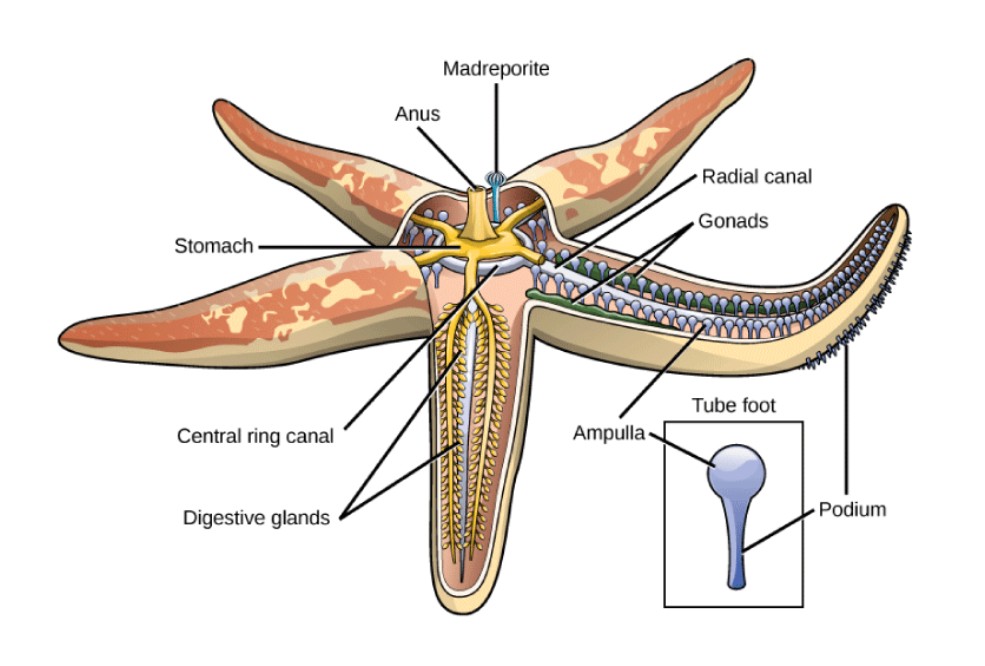
    Bacterial cause behind Mass Starfish Deaths

    About Starfish (Sea Stars):

    • Taxonomy: Belong to phylum Echinodermata; exclusively marine organisms.
    • Species: Brisingida, Forcipulatida, Velatida, Valvatida, Spinuloside
    • Body Structure:
      • Radial symmetry (adults), bilateral symmetry (larvae)
      • Calcareous exoskeleton for protection
      • Water vascular system for respiration and circulation
    • Unique Features:
      • Regeneration: Can regrow lost limbs
      • No blood or brain: Seawater circulates nutrients
      • Eyespots: At arm tips, help sense light
      • Tough skin: Made of calcium carbonate
    • Feeding: Carnivorous, detritivorous, and scavengers

    Reasons for Mass Deaths (2013–2025):

    • Causal Agent: Identified in 2025 as Vibrio pectenicida, a bacterium related to cholera-causing strains.
    • Symptoms: Limb detachment; Tissue disintegration; Melting into a pile of gunk.
    • Most Affected Species: Sunflower sea stars, which saw a 90% population decline.
    • Geographical Spread: Along the Pacific coast from Alaska to Mexico.
    • Ecological Consequences:
      • Starfish are keystone predators, especially of sea urchins.
      • Their decline led to urchin population explosions, which overgrazed kelp forests.
      • Resulted in biodiversity loss and reduced carbon sequestration.
    [UPSC 2012] Vultures which used to be very common in Indian countryside some years ago are rarely seen nowadays. This is attributed to:

    (a) the destruction of their nesting sites by new invasive species disease among them (b) a drug used by cattle owners for treating their diseased cattle persistent and fatal (c) scarcity of food available to them (d) a widespread, persistent and fatal disease among them


  • Festivals, Dances, Theatre, Literature, Art in News

    In news: Lalit Kala Akademi 

    Why in the News?

    The 64th National Exhibition of Art (NEA), organized by the Lalit Kala Akademi, India’s National Academy of Art, was inaugurated in New Delhi.

    About Lalit Kala Akademi:

    • Establishment: Located in New Delhi, as an autonomous organisation.
    • Inauguration: Launched on 5 August 1954 by Maulana Abul Kalam Azad, the then Minister for Education.
    • Legal Status: Granted statutory status in 1957 under the Societies Registration Act, 1860.
    • Funding: Supported by the Ministry of Culture, Government of India.
    • Structure: Operates through the General Council, Executive Board, and various Committees.
    • Regional Centres: Present in Chennai, Kolkata, Lucknow, Bhubaneswar, and Garhi (New Delhi).
    • Functions:
      • Scope of Work: Promotes modern, contemporary, folk, and tribal visual arts of India.
      • Art Collection: Maintains a permanent collection of Indian visual art.
      • International Role: Facilitates global cultural exchange through international cultural agreements.

    Key Events and Initiatives:

    • National Exhibition of Art: Annual flagship event since 1955, showcasing artists from across India.
    • 64th Edition (2025): Held from 5 August to 15 September at Kamani Auditorium and Lalit Kala Art Galleries, New Delhi.
    • Triennale India: Major international art exhibition featuring global artists.
    • Print Biennale India: Dedicated to printmaking; 3rd edition scheduled for 2025–26.
    • Artist Promotion: Provides platforms for both emerging and established artists; strengthens India’s soft power through cultural diplomacy.
    [UPSC 2009] Consider the following statements:

    1. The National School of Drama was set up by Sangeet Natak Akademi in 1959.

    2. The highest honour conferred by the Sahitya Akademi on a writer is by electing him its Fellow.

    Which of the statements given above is/are correct?

    (a) 1 only (b) 2 only  (c) Both 1 and 2*  (d) Neither 1 nor 2


  • Port Infrastructure and Shipping Industry – Sagarmala Project, SDC, CEZ, etc.

    Parliament passes Carriage of Goods by Sea Bill, 2025

    Why in the News?

    Parliament has passed the Carriage of Goods by Sea Bill, 2025, replacing the nearly century-old Indian Carriage of Goods by Sea Act, 1925.

    About Carriage of Goods by Sea Bill, 2025:

    • Replaces: The colonial-era Indian Carriage of Goods by Sea Act, 1925.
    • Purpose: Regulates the rights, duties, liabilities, and immunities of parties involved in shipping goods by sea from Indian ports to domestic or international destinations.
    • International Alignment: Retains consistency with the Hague Rules (1924), which also formed the basis of the 1925 Act.
    • Objective: Modernises maritime law in line with global standards and boosts India’s ease of doing business in the maritime sector.

    Key Features:

    • Bills of Lading Defined: It outlines the details of the shipment, including the type and quantity of goods, the origin and destination, and the terms of the agreement between the shipper and the carrier.
      • Includes details on goods’ type, quantity, condition, and destination.
      • Serves as a legally binding contract between the shipper and carrier.
    • Central Government Powers:
      • May issue directions for implementation.
      • Can amend the Schedule of Rules related to bills of lading.
    • Part of Broader Maritime Reforms:
      • Supports port development and coastal trade.
      • Encourages creation of State Maritime Boards and a Maritime State Development Council.
      • Covers port safety, disaster response, pollution control, and dispute resolution.
    • Global Compliance: Aligns India’s shipping laws with evolving international conventions and practices.
    [UPSC 2016] The term ‘import cover’, sometimes seen in the news, refers to

    (a) It is the ratio of value of imports to the Gross Domestic Product of a country

    (b) It is the total value of imports of a country in a year

    (c) It is the ratio between the value of exports and that of imports between two countries

    (d) It is the number of months of imports that could be paid for by a country’s international reserves*