💥UPSC 2026, 2027, 2028 UAP Mentorship (March Batch) + Access XFactor Notes & Microthemes PDF

Type: Species

  • Wildlife Conservation Efforts

    Species in news: 40 Gharials released into Ghaghara River in UP

    Note4Students

    From UPSC perspective, the following things are important:

    Prelims level: Gharial, Mugger , Saltwater Crocodile

    Mains level: Species reintroduction and various associated issues in news

    Forty gharials (Gavialis gangeticus) were released in the Ghaghara River by the Bahraich forest division of Uttar Pradesh.

    This year, we have seen many news focusing on species reintroduction into the wild. Can you recall them?? If not, Click Here.

    And one may often get confused between the Mugger, Gharial and the Saltwater Crocodile. Note the differences about their IUCN status, habitat (freshwater/saltwater) etc..

    Gharials

    • The Gharial is a fish-eating crocodile is native to the Indian subcontinent. They are a crucial indicator of clean river water.
    • Small released populations are present and increasing in the rivers of the National Chambal Sanctuary, Katarniaghat Wildlife Sanctuary, Son River Sanctuary.
    • It is also found at the rainforest biome of Mahanadi in Satkosia Gorge Sanctuary, Orissa.
    • Gharials are ‘Critically Endangered’ in the IUCN Red List of Species.
    • The species is also listed under Schedule I of the Wild Life (Protection) Act, 1972.

    Into the wild

    • A major chunk of gharials in India is found in the Chambal River, which has about 1,000 adults.
    • The Ghaghara acts as an important aquatic corridor for gharials in Uttar Pradesh. The river is a major left-bank tributary of the Ganges.
    • About 250 gharials have been released in the Ghaghara since 2014.
    • However, there are satellite populations of less than 100 adults in the Girwa River (Katarniaghat Wildlife Sanctuary in Uttar Pradesh, the Ramganga River in Jim Corbett National Park and the Son River).
    • Like Uttar Pradesh, Bihar too is releasing gharials in the Valmiki Tiger Reserve as part of restocking the wild population. Unlike crocodiles, gharials do not pose any danger to humans.

    Back2Basics

    Mugger

    • The mugger is a marsh crocodile which is found throughout the Indian subcontinent.
    • It is a freshwater species and found in lakes, rivers and marshes.
    • IUCN Status: Vulnerable

    Saltwater Crocodile

    • It is the largest of all living reptiles.
    • It is found along the eastern coast of India.
    • IUCN Status: Least Concerned
  • Innovations in Biotechnology and Medical Sciences

    Species in news: Quinine Nongladew

    Note4Students

    From UPSC perspective, the following things are important:

    Prelims level: HCQ, Quinine Nongladew

    Mains level: NA

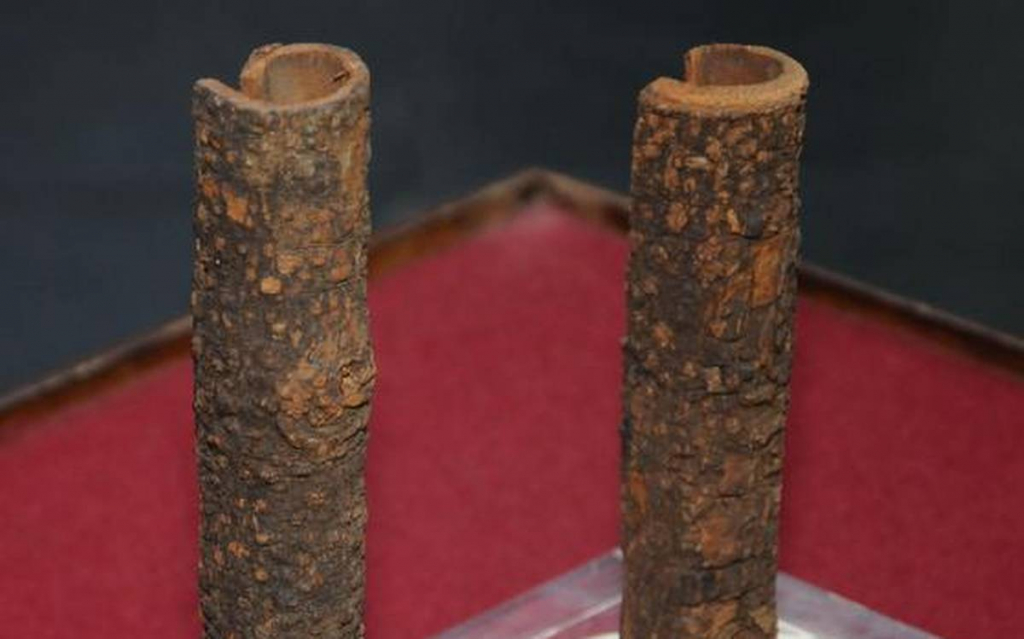
    Quinine, the most primitive antimalarial avatar of Hydroxychloroquine (HCQ), has made a village in Meghalaya latch on to its past for a curative future.

    Relate Quinine Nongladew with the following question. Such peculiar names are very important.

    Q. Recently, there was a growing awareness in our country about the importance of Himalayan nettle (Girardinia diversifolia) because it is found to be a sustainable source of (CSP 2019)

    (a) anti-malarial drug

    (b) bio-diesel

    (c) pulp for paper industry

    (d) textile fibre

    Quinine Nongladew

    • The herb Quinine Nongladew is the alkaloid quinine extracted from the bark of cinchona, a plant belonging to the Rubiaceae family and classified as either a large shrub or a small tree
    • The tree is named after a village about 70 km south of Guwahati, on the highway to Meghalaya capital Shillong.
    • The cinchona nursery was raised in the 19th century, probably around 1874, when Shillong became the British administrative headquarters for Assam Province.
    • Large swathes of Meghalaya used to be, and still are, malaria-prone.
    • The British had the foresight to start the plantation to combat malaria and other diseases caused by mosquitoes.

    Back2Basics: Hydroxychloroquine (HCQ)

    • HCQ is an oral tablet used as an anti-malarial drug. It is used to treat malaria, lupus erythematosus, and rheumatoid arthritis.
    • It may be used as part of a combination therapy where it is taken with other drugs.
  • Wildlife Conservation Efforts

    Species in news: Trimeresurus Salazar

    Note4Students

    From UPSC perspective, the following things are important:

    Prelims level: Trimeresurus Salazar

    Mains level: Not Much

    The new species, Trimeresurus Salazar is a snake been discovered in Arunachal Pradesh.

    Another specie spotted with one more peculiarity, the name Salazar 🙂 Such species are most likely to be asked in prelims to match the columns with their habitat state.

    Trimeresurus Salazar

    • Salazar’s pit viper belongs to the genus Trimeresurus Lacépède comprising “charismatic venomous serpents with morphologically as well as ecologically diverse species”.
    • Pit vipers are venomous snakes distinguished by their heat-sensing pit organs between the eye and the nostril.
    • The name was inspired by Salazar Slytherin, the co-founder of J.K. Rowlings’ fictional Hogwarts School of Witchcraft and Wizardry.
  • Wildlife Conservation Efforts

    Species in news: Himalayan Ibex

    Note4Students

    From UPSC perspective, the following things are important:

    Prelims level: Himalayan Ibex

    Mains level: NA

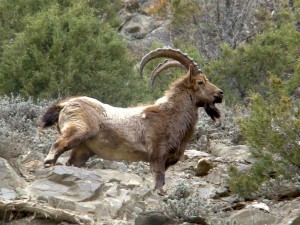
    A recent study by scientists of the Zoological Survey of India (ZSI) has proved that Himalayan Ibex, distributed in the trans-Himalayan ranges of Jammu and Kashmir, Ladakh and Himachal Pradesh, is a distinct species from the Siberian Ibex.

    Himalayan Ibex

    IUCN/WPA Status:    Least Concern / Schedule I

    • Himalayan Ibex (Capra ibex sibirica) is widely found in arid and rocky mountain of Karakoram, Hindukush and Himalayas of Gilgit-Baltistan.
    • The males are characterized by heavy body, large horns, long bears while females have small body small horns.
    • The threats that Himalayan ibex face are the illegal hunting, human disturbance, habitat loss and competition for forage with domestic livestock.
  • Wildlife Conservation Efforts

    Species in news: Red Panda

    Note4Students

    From UPSC perspective, the following things are important:

    Prelims level: SAWEN, TRAFFIC, Red Panda

    Mains level: Not Much


    According to a report by the TRAFFIC report, there has been a considerable reduction in the poaching of Red Panda (ailurus fulgens). The report also recommended trans-boundary law enforcement co-operation through the use of multi-government platforms like SAWEN (South Asia Wildlife Enforcement Network).

    Red Panda

    IUCN Red List Status: Endangered

    • The red panda (Ailurus fulgens) is a mammal native to the eastern Himalayas and southwestern China.
    • Its wild population is estimated at fewer than 10,000 mature individuals and continues to decline due to habitat loss and fragmentation, poaching, and inbreeding depression.
    • Despite its name, it is not closely related to the giant panda
    • The animal has been hunted for meat and fur, besides illegal capture for the pet trade.
    • An estimated 14,500 animals are left in the wild across Nepal, Bhutan, India, China and Myanmar.
    • About 5,000-6,000 red pandas are estimated to be present in four Indian states – Arunachal Pradesh, Meghalaya, Sikkim and West Bengal.
    • The diminishing habitat is a major threat to the species which is a very selective feeder and survives on selected species of bamboos.

    About South Asia Wildlife Enforcement Network (SAWEN)

    • SAWEN is a Regional network is comprised of eight countries in South Asia: Afghanistan, Bangladesh, Bhutan, India, Maldives, Nepal, Pakistan and Sri Lanka.
    • It aims at working as a strong regional intergovernmental body for combating wildlife crime by attempting common goals and approaches for combating illegal trade in the region.
    • The South Asia region is very vulnerable to illegal traffic and wildlife crimes due to the presence of precious biodiversity and large markets as well as traffic routes for wildlife products in the south East Asian region.
    • The collaboration in harmonizing as well as enforcing the wildlife protection in the region is considered very important for effective conservation of such precious biodiversity.
    • India adopted the Statute of the SAWEN and became its formal member in 2016.

    Back2Basics

    TRAFFIC

    • The TRAFFIC, the Wildlife Trade Monitoring Network, is a leading non-governmental organisation working on wildlife trade in the context of both biodiversity conservation and sustainable development.
    • It is a joint program of World Wildlife Fund (WWF) and the IUCN.
    • It aims to ensure that trade in wild plants and animals is not a threat to the conservation of nature.
    • The TRAFFIC is governed by the TRAFFIC Committee, a steering group composed of members of TRAFFIC’s partner organizations, WWF and IUCN.
    • TRAFFIC also works in close co-operation with the Secretariat of the Convention on International Trade in Endangered Species of Wild Fauna and Flora (CITES).
  • Wildlife Conservation Efforts

    Species in news: Swamp Wallaby

    Note4Students

    From UPSC perspective, the following things are important:

    Prelims level: Swamp Wallaby and its uniqueness

    Mains level: NA


    Researchers reported that the swamp wallaby, a marsupial related to the kangaroo, is pregnant throughout its adult life. It typically conceives a new embryo days before delivering the newborn from its previous pregnancy.

    Swamp wallaby

    IUCN Status: Least Concerned

    • The swamp wallaby is a small macropod marsupial of eastern Australia. It is likely the only mammal pregnant and lactating all lifelong.
    • Female wallabies and kangaroos have two uteri and two separate ovaries.
    • At the end of a pregnancy in one uterus, a new embryo develops in the other uterus.
    • Kangaroos and wallabies regularly have an embryo in the uterus, a young joey in the pouch, and a third semi-dependent young at foot, still drinking its mother’s milk.

    How it is different from Kangaroo?

    • In kangaroos, the new embryo is conceived a day or two after the previous birth.
    • In the swamp wallaby (Wallabia bicolor), the new conception happens one or two days before the previous joey is delivered.

    What happens after?

    • As soon as the mature foetus is born and settles in the pouch, the swamp wallaby arrests the development of the new embryo.
    • This is called embryonic diapause, which happens in many animals to pause reproduction until the conditions are right — season, climate, food availability.
    • For wallabies, this is also to ensure that the new one is born only when the pouch is free again.
    • If this did not happen, the swamp wallaby would be birthing new young every 30 days — it has a short gestation period — and its pouch could not support that.
  • Wildlife Conservation Efforts

    Species in news: Eurasian Otters

    Note4Students

    From UPSC perspective, the following things are important:

    Prelims level: Eurasian Otters

    Mains level: NA


    Researchers conducting a study in Odisha’s Chilika Lake have found the presence of a viable, breeding population of Eurasian Otters, a fishing cat in the brackish water lagoon.

    Eurasian Otters

    • IUCN Status: Near Threatened
    • Species in India: Smooth-coated, Asian small-clawed and Eurasian Otters
    • Habitat: Smooth-coated — all over India; Asian small-clawed — only in the Himalayan foothills, parts of the Eastern and southern Western Ghats; Eurasian — Western Ghats and Himalayas.
    • Diet comprises several small animals, mainly crabs and small fishes.
    • Lives in small packs, is mostly nocturnal, but can be diurnal in areas which are less disturbed.
  • Historical and Archaeological Findings in News

    Species in news: Thanatotheristes

    Note4Students

    From UPSC perspective, the following things are important:

    Prelims level: Thanatotheristes

    Mains level: Not Much


    Scientists have found that a dinosaur fossil, found in Alberta in Canada in 2010, belongs to a new species of tyrannosaur. They have named it Thanatotheristes, which means “reaper of death”.

    Thanatotheristes

    • Tyrannosaurs were one of the largest meat-eating dinosaurs to have ever lived, with very large and high skulls, and the best known among them is the Tyrannosaurus rex, celebrated in the Jurassic Park series.
    • The 79-million-year-old fossil that the researchers have found is the oldest tyrannosaur known from northern North America.
    • Thanatotheristes preyed on large plant-eating dinosaurs such as the horned xenoceratops and the dome-headed colepiochephale.
    • The research suggests that tyrannosaurs did not have one general body type; rather different tyrannosaur species evolved distinct body sizes, skull forms and other such physical features.
    • The fossil specimen is important to understand the Late Cretaceous period, which is the period when tyrannosaurs roamed the Earth.
  • Wildlife Conservation Efforts

    Species in news: Flame-throated Bulbul

    Note4Students

    From UPSC perspective, the following things are important:

    Prelims level: Flame-throated Bulbul

    Mains level: NA

    The flame-throated bulbul, also called the Rubigula, was chosen as the mascot of the 36th National Games to be held in Goa. It is the State bird of Goa.

    Flame-throated Bulbul

    IUCN status: Least Concern

    • The Flame-throated Bulbul is endemic to southern peninsular India where it is locally distributed in southern Andhra Pradesh, eastern Karnataka, Goa, Orissa, eastern Kerala and northern Tamil Nadu.
    • It prefer habitats like rocky, scrub-covered hills mostly in the Eastern Ghats and central peninsular India but also in some places in the Western Ghats.
    • It is a Schedule – IV bird under the Wildlife (Protection) Act, 1972.
  • Innovations in Biotechnology and Medical Sciences

    Species in news: Natrialba Swarupiae

    Note4Students

    From UPSC perspective, the following things are important:

    Prelims level: Natrialba Swarupiae, Sambhar Lake

    Mains level: Not Much

    • Scientists at the National Centre for Microbial Resource — National Centre for Cell Science (NCMR-NCCS) in Pune have reported a new archaeon (a kind of microorganism), which they discovered in Sambhar Salt Lake in Rajasthan.
    • The new archaeon has been named Natrialba swarupiae, after Dr Renu Swarup, secretary, Department of Biotechnology, for her initiative in supporting microbial diversity studies in the country.

    Archaea

    • Archaea (singular archaeon) are a primitive group of microorganisms that thrive in extreme habitats such as hot springs, cold deserts and hypersaline lakes.
    • These slow-growing organisms are also present in the human gut, and have a potential relationship with human health.
    • They are known for producing antimicrobial molecules, and for anti-oxidant activity with applications in eco-friendly waste-water treatment.
    • Archaea are extremely difficult to culture due to challenges in providing natural conditions in a laboratory setting.
    • As archaea are relatively poorly studied, very little is known about how archaea behave in the human body.
    • The organism has potential gene clusters that helps maintain the metabolism of the archaea to survive in extreme harsh conditions.

    Search and discovery

    • Sambhar Lake has been poorly studied for microbial ecology studies.
    • With a salt production of 0.2 million tonnes per annum, it is also a hypersaline ecosystem which provides an opportunity for microbial ecologists to understand organisms that thrive in such concentrations.