💥UPSC 2026, 2027, 2028 UAP Mentorship (March Batch) + Access XFactor Notes & Microthemes PDF

Archives: News

  • Capital Markets: Challenges and Developments

    Understanding the issues with bond market in India

    What explains the Indian government borrowing at a higher interest rate than the interest rates for a home loan? The answer lies in the structural shortage in demand for government bonds. 

    How the government’s cost of borrowing matter

    • Interest on government debt is a transfer from taxpayers to savers who own government bonds.
    • As the government bondholders are primarily domestic, interest paid by the government is just a transfer from one hand to the other within the economy.
    • However, the government’s cost of borrowing does matter.
    • The large increase in interest costs limits the government’s ability to spend elsewhere.
    • But more importantly, this rate also affects the cost of borrowing for large parts of the economy.

    Understanding the term premium and credit spread

    • The RBI sets the repo rate, which is the short-term risk-free rate.
    • That is, the loan must be repaid in a few days and there is almost no risk of default.
    • The rate at which the government borrows is the long-term risk-free rate.
    • But the lender wants higher returns given the longer duration of the loan.
    • The difference between the repo rate and government’s borrowing cost, say on a 10-year loan, is called the term premium.
    • When a private firm takes a 10-year loan, it would have some credit risk too, which means a credit spread is added to the 10-year risk-free rate.

    Challenge posed by term premium

    • From an average rate of 73 basis points since 2011 (one basis point is one-hundredth of a per cent), and 120 basis points in 2018 and 2019, the 10-year term premium is currently 215 basis points.
    • In other words, the interest rate for a 10-year period borrowing is 2.15 per cent higher than the current repo rate.

    How this is related to dysfunction in bond market in India

    • Financial markets are forward-looking, and as the collective expression of the views of thousands of participants, efficient ones can occasionally “predict” what comes next.
    • But the Indian bond market is not one such: The view some hold, that the rise in term premium reflects future rate hikes by the monetary policy committee (MPC), is mistaken.
    • The Indian bond market is still too illiquid and not diverse enough to predict future trends.
    • Even though some pandemic-driven measures are being withdrawn, the MPC continues to be accommodative, and for several months at least, headline inflation is unlikely to force an abrupt change.
    • In any case, the spurt in yields after the budget points to the causality being fiscal instead of inflation-related.
    • But even the fiscal rationale seems weak.
    • The Centre’s tax collection for FY2020-21 has been substantially ahead of target, and state governments have also borrowed Rs 60,000 crore less than expected.
    •  Also, the14 states, accounting for three-fourths of all state deficits, have budgeted FY2021-22 deficits at 3.3 per cent, far lower than the 4 per cent average expected earlier.
    • Just these factors suggest that total bonds issued by the central and state governments should be lower than what the market had feared before the union budget was presented.
    • And yet, government borrowing costs have not returned to pre-budget levels.
    • This reflects dysfunction in the market.
    • Why else would a government be borrowing at a higher cost than a mortgage on a house?

    What is the reason for dysfunction in bond market

    • Dysfunction can be traced to residential mortgages being among the most competitive of loan categories.
    • On the other hand, there is a structural shortage in demand for government bonds.
    • In such a market where there is a structural shortage in demand the marginal buyer holds all the cards, and as any buyer would, demands higher returns.
    • Over 15 years,  the share of banks in the ownership of outstanding central government bonds has fallen from 53 per cent to 40 per cent now.
    • But no alternative buyer of size has emerged to fill the space vacated.
    • The RBI sometimes buys bonds to inject money into the economy, but of late this space has been used to buy dollars to save the rupee from appreciation.

    Solutions

    • The solution to the problem of bond market may lie in getting new types of buyers.
    • The RBI opening up direct purchases by retail investors is a step in this direction, though it may not become meaningful for a few years.
    • That leaves us with tapping foreign savings.
    • The limit on share of government bonds that foreign portfolio investors (FPIs) can buy has been raised steadily.
    • But without Indian bonds being included in global bond indices, these flows may not be meaningful, and would be volatile, as they have been over the past year.
    • To enable inclusion in bond indices, the RBI and the government have earmarked special-category bonds which are fully accessible (FAR) by foreign investors.
    • The FTSE putting India on a watch-list for “potential future inclusion” in the Emerging Markets Government Bonds Index is a step forward, and, one hopes, triggers similar actions by other index providers.

    Consider the question “How the lack of retailness in the bond market affects the cost of borrowing of the government as well as the private borrowers? Suggest the measures to deal with the issues.”

    Conclusion

    The issues with bond markets in India highlights the urgency to find new buyers for government bond as it has implications not just for the government’s own fiscal space, but also for the cost of borrowing in the economy.

  • Insolvency and Bankruptcy Code

    What is the Pre-pack under Insolvency and Bankruptcy Code?

    The central government has promulgated an ordinance allowing the use of pre-packs as an insolvency resolution mechanism for MSMEs with defaults up to Rs 1 crore, under the Insolvency and Bankruptcy Code.

    Read till the end to know about the ‘Swiss Challenge’.

    What are Pre-packs?

    • A pre-pack is the resolution of the debt of a distressed company through an agreement between secured creditors and investors instead of a public bidding process.
    • This system of insolvency proceedings has become an increasingly popular mechanism for insolvency resolution in the UK and Europe over the past decade.
    • Under the pre-pack system, financial creditors will agree to terms with a potential investor and seek approval of the resolution plan from the National Company Law Tribunal (NCLT).
    • The approval of a minimum of 66 percent of financial creditors that are unrelated to the corporate debtor would be required before a resolution plan is submitted to the NCLT.
    • Further NCLTs are also required to either accept or reject any application for a pre-pack insolvency proceeding before considering a petition for a CIRP.

    Benefits of pre-packs over the CIRP

    • One of the key criticisms of the Corporate Insolvency Resolution Process (CIRP) has been the time taken for resolution.
    • One of the key reasons behind delays in the CIRPs is prolonged litigations by erstwhile promoters and potential bidders.
    • The pre-pack in contrast is limited to a maximum of 120 days with only 90 days available to the stakeholders to bring the resolution plan to the NCLT.
    • The existing management retains control in the case of pre-packs while a resolution professional takes control of the debtor as a representative of creditors in the case of CIRP.
    • This allows for minimal disruption of operations relative to a CIRP.

    What is the key motivation behind the introduction of the pre-pack?

    • Pre-packs are largely aimed at providing MSMEs with an opportunity to restructure their liabilities and start with a clean slate.
    • It provides adequate protections so that the system is not misused by firms to avoid making payments to creditors.
    • Pre-packs help corporate debtors to enter into consensual restructuring with lenders and address the entire liability side of the company.

    How are creditors protected?

    • The pre-pack also provides adequate protection to ensure the provisions were not misused by errant promoters.
    • The pre-pack mechanism allows for a swiss challenge for any resolution plans which proved less than full recovery of dues for operational creditors.
    • Under the swiss challenge mechanism, any third party would be permitted to submit a resolution plan for the distressed company and the original applicant would have to either match the improved resolution plan or forego the investment.
    • Creditors are also permitted to seek resolution plans from any third party if they are not satisfied with the resolution plan put forth by the promoter.

    Back2Basics: Swiss Challenge

    • A Swiss Challenge is a method of bidding, often used in public projects, in which an interested party initiates a proposal for a contract or the bid for a project.
    • The government then puts the details of the project out in the public and invites proposals from others interested in executing it.
    • On the receipt of these bids, the original contractor gets an opportunity to match the best bid.
    • In 2009, the Supreme Court approved this method for the award of contracts.
    • This method can be applied to projects that are taken up on a PPP basis but can also be used to supplement PPP in sectors that are not covered under the PPP framework.
  • Judicial Appointments Conundrum Post-NJAC Verdict

    [pib] Justice Ramana appointed as Chief Justice of India

    The President of India, in the exercise of the powers conferred by clause (2) of Article 124 of the Constitution of India, appointed Shri Justice NV Ramana, a Judge of the Supreme Court, to be the CJI.

    Chief Justice of India

    • The CJI is the chief judge of the Supreme Court of India as well as the highest-ranking officer of the Indian federal judiciary.

    Appointment

    • The Constitution of India grants power to the President to nominate, and with the advice and consent of the Parliament, appoint a chief justice, who serves until they reach the age of 65 or until removed by impeachment.
    • Earlier, it was a convention to appoint seniormost judges.
    • However, this has been broken twice. In 1973, Justice A. N. Ray was appointed superseding 3 senior judges.
    • Also, in 1977 Justice Mirza Hameedullah Beg was appointed as the chief justice superseding Justice Hans Raj Khanna.

    Qualifications

    The Indian Constitution says in Article 124 (3) that in order to be appointed as a judge in the Supreme Court of India, the person has to fit in the following criteria:

    • He/She is a citizen of India and
    • has been for at least five years a Judge of a High Court or of two or more such Courts in succession; or
    • has been for at least ten years an advocate of a High Court or of two or more such Courts in succession; or
    • is, in the opinion of the President, a distinguished jurist

    Functions

    • As head of the Supreme Court, the CJI is responsible for the allocation of cases and appointment of constitutional benches which deal with important matters of law.
    • In accordance with Article 145 of the Constitution and the Supreme Court Rules of Procedure of 1966, the chief justice allocates all work to the other judges.

    On the administrative side, the CJI carries out the following functions:

    • maintenance of the roster; appointment of court officials and general and miscellaneous matters relating to the supervision and functioning of the Supreme Court

    Try this PYQ:

    Q. Who/Which of the following is the custodian of the Constitution of India?

    (a) The President of India

    (b) The Prime Minister of India

    (c) The Lok Sabha Secretariat

    (d) The Supreme Court of India

    Removal

    • Article 124(4) of the Constitution lays down the procedure for removal of a judge of the Supreme Court which is applicable to chief justices as well.
    • Once appointed, the chief justice remains in the office until the age of 65 years. He can be removed only through a process of removal by Parliament as follows:
    • He/She can be removed by an order of the President passed after an address by each House of Parliament supported by a majority of the total membership of that House and by a majority of not less than two-thirds of the members of that House present.
    • The voting has been presented to the President in the same session for such removal on the ground of proved misbehavior or incapacity.

    About Justice Ramana

    • Justice Ramana will take over as 48th Chief Justice of India.
    • He is a first-generation lawyer, having an agricultural background, and hails from Ponnavaram Village, Krishna District in Andhra Pradesh.
    • He is an avid reader and literature enthusiast. He is passionate about Carnatic music.

    His legal career

    • He was called on to the Bar on 10.02.1983.
    • Initially, he was appointed as a Permanent Judge of Andhra Pradesh High Court on 27.06.2000. He also functioned as Acting Chief Justice of his parent High Court from 10.3.2013 to 20.5.2013.
    • He practiced in the High Court of Andhra Pradesh, Central and Andhra Pradesh Administrative Tribunals, and the Supreme Court of India.
    • He specialized in Constitutional, Civil, Labour, Service, and Election matters. He has also practiced before Inter-State River Tribunals.
    • He served as Judge of the Supreme Court of India from 17.02.2014.
    • He has also served as the Executive Chairman of the National Legal Services Authority (NALSA) since 27.11.2019.
  • Genetically Modified (GM) crops – cotton, mustards, etc.

    [pib] Sadabahar: A mango variety that bears fruits round the year

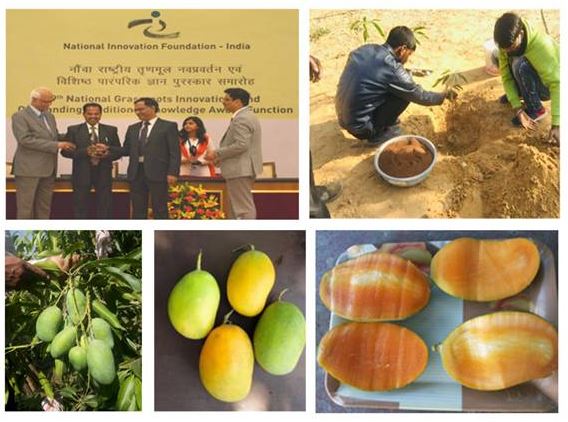
    A farmer from Kota, Rajasthan, has developed a round-the-year dwarf variety of mango called Sadabahar, which is resistant to most major diseases and common mango disorders.

    Try this PYQ:

    Q.With reference to the Genetically Modified mustard (GM mustard) developed in India, consider the following statements:

    1. GM mustard has the genes of a soil bacterium that give the plant the property of pest-resistance to a wide variety of pests.
    2. GM mustard has the genes that allow the plant cross-pollination and hybridization.
    3. GM mustard has been developed jointly by the IARI and Punjab Agricultural University.

    Which of the statements given above is/are correct? (CSP 2018)

    (a) 1 and 3 only

    (b) 2 only

    (c) 2 and 3 only

    (d) 1, 2 and 3

    Sadabahar

    • The fruit is sweeter in taste, comparable to langra and being a dwarf variety, is suitable for kitchen gardening, high-density plantation, and can be grown in pots for some years too.
    • Besides, the flesh of the fruits, which is bourn round the year, is deep orange with a sweet taste, and the pulp has very little fiber content which differentiates it from other varieties.
    • The bountiful nutrients packed in mango are immensely good for health.
    • This variety has been verified by the National Innovation Foundation (NIF), India, an autonomous institution of the Department of Science & Technology.
  • Health Sector – UHC, National Health Policy, Family Planning, Health Insurance, etc.

    Integrated Health Information Platform (IHIP)

    The Union Minister of Health & Family Welfare has launched the Integrated Health Information Platform (IHIP).

    About IHIP

    • The new version of IHIP will house the data entry and management for India’s disease surveillance program.
    • In addition to tracking 33 diseases now as compared to the earlier 18 diseases, it shall ensure near-real-time data in digital mode, having done away with the paper mode of working.

    Various functions

    • IHIP will provide a health information system developed for real-time, case-based information, integrated analytics, advanced visualization capability.
    • It will provide analyzed reports on mobile or other electronic devices. In addition, outbreak investigation activities can be initiated and monitored electronically.
    • It can easily be integrated with another ongoing surveillance program while having the feature of the addition of special surveillance modules.

    Unique features

    • This is the world’s biggest online disease surveillance platform.
    • It is in sync with the National Digital Health Mission and fully compatible with the other digital information systems presently being used in India.
    • The refined IHIP with automated -data will help in a big way in real-time data collection, aggregation & further analysis of data that will aid and enable evidence-based policymaking.
    • With IHIP, the collection of authentic data will become easy as it comes directly from the village/block level; the last mile from the country.
    • With its implementation, we are fast marching towards AtmaNirbhar Bharat in healthcare through the use of technology.

    Also read:

    [Burning Issue] Rolling-out of National Digital Health Mission

  • Women empowerment issues – Jobs,Reservation and education

    Global Gender Gap Report, 2021

    India has slipped 28 places to rank 140th among 156 countries in the World Economic Forum’s Global Gender Gap Report 2021, becoming the third-worst performer in South Asia.

    For the 12th time, Iceland is the most gender-equal country in the world. The top 10 most gender-equal countries include Finland, Norway, New Zealand, Rwanda, Sweden, Ireland and Switzerland.

    Global Gender Gap Index

    • The report is annually published by the World Economic Forum (WEF).
    • It benchmarks countries on their progress towards gender parity in four dimensions: Economic Participation and Opportunity, Educational Attainment, Health and Survival and Political Empowerment.
    • The report aims to serve “as a compass to track progress on relative gaps between women and men on health, education, economy and politics”.

    Highlights of the 2021 report

    Indian prospects

    According to the report, India has closed 62.5% of its gender gap to date.

    • Economic participation: India’s gender gap on this dimension widened by 3% this year, leading to a 32.6% gap closed to date.
    • Political empowerment: India regressed 13.5 percentage points, with a significant decline in the number of women ministers.
    • Income: Further, the estimated earned income of women in India is only one-fifth of men’s, which puts the country among the bottom 10 globally on this indicator.
    • Health: Discrimination against women is also reflected in the health and survival subindex statistics. With 93.7% of this gap closed to date, India ranks among the bottom five countries in this subindex.
    • Violence: Wide gaps in sex ratio at birth are due to the high incidence of gender-based sex-selective practices. In addition, more than one in four women has faced intimate violence in her lifetime, the report said.

    India’s neighbourhood

    • In South Asia, only Pakistan and Afghanistan ranked below India.
    • Among India’s neighbours, Bangladesh ranked 65, Nepal 106, Pakistan 153, Afghanistan 156, Bhutan 130 and Sri Lanka 116.
    • Among regions, South Asia is the second-lowest performer on the index, with 62.3% of its overall gender gap closed.
    • Within the region, a wide gulf separates the best-performing country, Bangladesh, which has closed 71.9% of its gender gap so far, from Afghanistan, which has only closed 44.4% of its gap.
    • Because of its large population, India’s performance has a substantial impact on the region’s overall performance.
  • e-Commerce: The New Boom

    E-commerce policy is needed for speedy, inclusive growth

    The article highlights the untapped potential of the e-commerce sector in the transformation of the Indian economy and suggests factors to take into account in the new e-commerce policy.

    How pandemic contributed to the growth of e-commerce

    • A celebrated McKinsey study has revealed that we have covered a ‘decade in days’ in the adoption of digital during the pandemic.
    • Behavioural changes have been witnessed in most areas like work, learning, health, travel, entertainment, etc.
    • But the biggest surge has been in e-commerce, both in goods and services.

    Significance of the sector for India

    • E-commerce is one of India’s fastest-growing sectors, for attracting FDI and creating jobs, and providing a pan-India market for lakhs of SMEs, and facilitating exports.
    • India has a vibrant retail sector, bubbling with energy and a bright future.
    • E-commerce can rope in lakhs of MSMEs in cross-border trade and multiply turnover and revenues enormously.
    • Its role in facilitation of exports with linkages and access to overseas markets can also help inject competitiveness in our products and creating a lot of jobs and market opportunities, adding to inclusive growth.

    Issues faced by the sector

    • The digital interface during e-commerce processes with multiple agencies has resulted in a plethora of compliances.
    • These compliances include Income Tax Act 1961, Information Technology Act 2000, Consumer Protection Act 2019, FEMA Act 2000, Competition Act 2002, Companies Act 2013, Anti-Piracy Law, GSTN, DGFT, etc.
    • In addition, handling, generation and protection of humongous data is a major issue under data protection laws.
    • At times, there are requirements of compliances with various local and state laws, and during exports, adherence to foreign laws, many of which could be quite complex and rigorous.

    E-commerce policy to aid Inclusive growth

    • Inclusive growth being an important objective of the proposed e-commerce/FDI policy, it should recognise and support new business models in both product and service segments.
    • The policy should be aimed at improving consumer experience and providing gainful employment to regular and gig workers with improved earnings.
    • India, in fact, is the first country to extend protections to workers including the new-age gig and platform workers, which is being viewed with interest globally.
    • With the passage of the Code on Social Security 2020, policymakers have focused on financial and social security associated with employment to contemporary socio-economic realities.
    • The role of platform workers amidst the pandemic has presented a strong case to attribute a more robust responsibility to platform aggregator companies and the State.
    • This has cemented their role as public infrastructures who also sustain demand-driven aggregators and e-commerce platforms.
    • This role of the platform workers may help in higher productivity and more sustainable employment, when many of them could potentially become mini-entrepreneurs.
    • This, however, would need to be facilitated by concerned public and private institutions as also the multiple regulators in the e-commerce ecosystem.
    • In an online services market place and to provide full support to regular and gig professionals rendering services on the platform, it must be imperative on the service platform to build their capacity through training, technology and access to high-quality consumables and tools.

    Consider the question “Examine the role e-commerce can play in India’s pursuit of inclusive growth? What are the issues faced by the sector in India?” 

    Conclusion

    We are in for exciting times, as we enter this decade, rightly called the ‘Techade’; 2020 has accelerated technology infusion in all segments of life and activity. The world is looking at India with expectations and we owe it to our nation.


    Source: https://www.financialexpress.com/opinion/e-commerce-policy-needed-for-speedy-inclusive-growth/2226729/

  • Goods and Services Tax (GST)

    Should Petroleum be brought within the ambit of GST?

    The article deals with the issues of demand for the inclusion of fuel oils in the GST regime and its implications for the revenue of the states and the Centre.

    How much tax we pay on petrol and diesel

    • The Union and state levies put together account for roughly 55 per cent and 52 per cent of the retail price of petrol and diesel respectively.
    • These work out to around 135 per cent and 116 per cent of the base prices of the two products respectively.
    • The central levy on petrol and diesel works out to around 36 per cent of the retail price while the state component is around 20 per cent (diesel) to 28 per cent (petrol).
    • Of the total central levies on petrol and diesel, Rs 1.40 per litre and Rs 1.80 per litre is the basic excise duty for the two fuels, and Rs 11 per litre and Rs 18 per litre is the special additional excise duty.
    • Both these components form part of the divisible pool of taxes i.e. 42 per cent of which (approximately Rs 52,000 crore) goes to the states.
    • The remaining portion of Rs 18 per litre in both cases is the Road and Infrastructure Cess and Rs 2.50 per litre and Rs 4 per litre is the Agriculture Infrastructure and Development Cess which are retained by the Centre.

    How other countries tax fuel oils

    • Being demerit goods, fuel oils and liquor are almost universally subject to a dual levy by countries that implement any kind of VAT or GST.
    • The levy is a mix of GST at a fixed percentage of the price which qualifies for credit in the value chain and a fixed amount or percentage of the price which is not creditable and is thus outside GST.
    • Punitive taxes of this order are levied primarily to discourage consumption of environmentally degrading fossil fuels and to garner revenues to fund infrastructure, while the creditable component enables offsetting of taxes on basically capital inputs.
    • These products are subjected to a plethora of levies like VAT, excise duty, storage levies, security levies and environmental taxes in the EU and the total incidence of such taxes ranges from around 45 per cent to 60 per cent.
    • The US is an exception in these matters since it imposes taxes at rates as low as around 15 per cent.

    Including fuel oils in the GST regime

    • the 122nd Constitution Amendment Bill in 2014 for GST adopted the delayed choice approach.
    • Under the delayed-choice approach, petroleum products would be subjected to GST with effect from such date as the council may recommend.
    • Accordingly, sections 9(2) and 5(2) of the CGST/SGST Act and the IGST Act respectively, explicitly provide for levy of GST on these products with effect from such date as the Council may recommend.
    • Thus, bringing the aforesaid petro-products under GST is not within the reach of the central government alone.

    How much will be the loss of revenue

    • A 28 per cent levy of GST on the base price would fetch around Rs 5.40 per litre on petrol and around Rs 5.45 on diesel to the central and each of the state governments.
    • Contrast the above with the current yield of Rs 32.90 per litre on petrol and Rs 31.80 per litre on diesel to the Centre alone and an average of around Rs 20 per litre and Rs 15 per litre on petrol and diesel, respectively, to each of the states.
    • This, however, would bring down the prices of petrol and diesel to around Rs 55 per litre.
    • This would translate into a revenue loss of around Rs 3 lakh crore on account of petrol and around Rs 1.1 lakh crore on account of diesel to the Centre and the states, at current volumes.

    Consider the question “What are the various levies contributing to the prices of petrol and diesel in India? Examine the rationale for the heavy taxing of these products in India.”

    Conclusion

    Clearly, bringing petro-products under GST would not lower fuel oil prices by itself, unless the Union and the state governments are willing to take deep cuts in their revenues.

  • Forest Fires

    Why forest fires break out in the spring?

    Uttarakhand has witnessed over 1,000 incidents of a forest fire over the last six months, including 45 in the last 24 hours alone.

    Forest fires this year

    • Since the start of 2021, there has been a series of forest fires in the Himachal Pradesh, Nagaland-Manipur border, Odisha, Madhya Pradesh, and Gujarat, including in wildlife sanctuaries.
    • April-May is the season when forest fires take place in various parts of the country.
    • But forest fires have been more frequent than usual in Uttarakhand and have also taken place during winter; dry soil caused by a weak monsoon is being seen as one of the causes.

    As of 2019, about 21.67% of the country’s geographical area is identified as forest, according to the India State of Forest Report 2019 (ISFR) released by the Forest Survey of India (FSI).  Tree cover makes up another 2.89% (95, 027 sq km).

    How vulnerable are forests in Uttarakhand?

    • Uttarakhand and Himachal Pradesh are the two states that witness the most frequent forest fires annually.
    • In Uttarakhand, 24,303 sq km (over 45 per cent of the geographical area) is under forest cover.

    What causes forest fires?

    • Forest fires can be caused by a number of natural causes, but officials say many major fires in India are triggered mainly by human activities.
    • Emerging studies link climate change to rising instances of fires globally, especially the massive fires of the Amazon forests in Brazil and in Australia in the last two years.
    • Fires of longer duration, increasing intensity, higher frequency and highly inflammable nature are all being linked to climate change.
    • In India, forest fires are most commonly reported during March and April, when the ground has large quantities of dry wood, logs, dead leaves, stumps, dry grass and weeds that can make forests easily go up in flames if there is a trigger.
    • Under natural circumstances, extreme heat and dryness, friction created by rubbing of branches with each other also have been known to initiate fire.

    Why Uttarakhand?

    • In Uttarakhand, the lack of soil moisture too is being seen as a key factor. In two consecutive monsoon seasons (2019 and 2020), rainfall has been deficient by 18% and 20% of the seasonal average, respectively.
    • But, forest officials say most fires are man-made, sometimes even deliberately caused.
    • Even a small spark from a cigarette butt, or a carelessly discarded lit matchstick can set the fire going.
    • For example, in Odisha, which saw a major fire last month in Simlipal forest, villagers are known to set dry leaves to fire in order to collect mahua flowers, which go into preparation of a local drink.

    Why are forest fires difficult to control?

    • The locality of the forest and access to it pose hurdles in initiating firefighting efforts.
    • During peak season, shortage of staff is another challenge in dispatching firefighting teams.
    • Timely mobilization of forest staff, fuel and equipment, depending on the type of fire, through the thick forests, remain challenges.
    • As it is impossible to transport heavy vehicles loaded with water into the thick forests, a majority of fire dousing is initiated manually, using blowers and similar devices.
    • But there have been incidents when forest fires were brought under control using helicopter services.
    • Wind speed and direction play a critical role in bringing a forest fire under control. The fire often spreads in the direction of the winds and towards higher elevations.

    What factors make forest fires a concern?

    Forests play an important role in mitigation and adaptation to climate change.

    • Carbon emission: They act as a sink, reservoir and source of carbon.
    • Livelihood loss: In India, with 1.70 lakh villages in close proximity to forests (Census 2011), the livelihood of several crores of people is dependent on fuelwood, bamboo, fodder, and small timber.
    • Destruction of animals’ habitat: Heat generated during the fire destroys animal habitats. Soil quality decreases with the alteration in their compositions.
    • Soil degradation: Soil moisture and fertility, too, is affected. Thus forests can shrink in size. The trees that survive fire often remain stunted and growth is severely affected.

    Various efforts taken

    • Since 2004, the FSI developed the Forest Fire Alert System to monitor forest fires in real-time.
    • In its advanced version launched in January 2019, the system now uses satellite information gathered from NASA and ISRO.
    • Real-time fire information from identified fire hotspots is gathered using MODIS sensors (1km by 1km grid) and electronically transmitted to FSI.
    • This information is then relayed via email at state, district, circle, division, range, beat levels. Users of this system in the locality are issued SMS alerts.
  • Monsoon Updates

    How Asian desert dust enhances Indian summer monsoon?

    A new study has revealed how dust coming from the deserts in West, Central and East Asia plays an important role in the Indian Summer Monsoon.

    Try this PYQ:

    With reference to ‘Indian Ocean Dipole (IOD)’, sometimes mentioned in the news while forecasting Indian monsoon, which of the following statements is/are correct?

    1. IOD phenomenon is characterized by a difference in sea surface temperature between tropical Western Indian Ocean and tropical Eastern Pacific Ocean.
    2. An IOD phenomenon can influence an El Nino’s impact on the monsoon.

    Select the correct Option using the code given below:

    (a) Only 1

    (b) Only 2

    (c) Both 1 and 2

    (d) Neither 1 nor 2

    Why study dust?

    • Many studies have shown that the dust emission scheme is extremely sensitive to climate change.
    • Understanding these mechanisms and effects of dust will help us understand our monsoon systems in the face of global climate change.

    Impact of dust on Indian Monsoon

    • Dust swarms from the desert when lifted by strong winds can absorb solar radiation and become hot.
    • This can cause heating of the atmosphere, change the air pressure, wind circulation patterns, influence moisture transport and increase precipitation and rainfall.
    • A strong monsoon can also transport air to West Asia and again pick up a lot of dust.
    • The researchers say this is a positive feedback loop.

    Role of the Iranian plateau

    • Not just the dust from the Middle East, the Iranian Plateau also influences the Indian Summer Monsoon.
    • The hot air over the Iranian Plateau can heat the atmosphere over the plateau, strengthen the circulation over the deserts of the Arabian Peninsula and increase dust emission from the Middle East.
    • The researchers also explain how the Indian Summer Monsoon has a reverse effect and can increase the winds in West Asia to produce yet more dust.

    Transported aerosols

    • Deserts across the globe play important roles in monsoons.
    • The dust aerosols from deserts in West China such as the Taklamakan desert and the Gobi Desert can be transported eastward to eastern China and can influence the East Asia summer monsoon.
    • And in the southwest United States, we have some small deserts that influence the North African monsoon.

    Anthropogenic contributions

    • Some studies have found that the anthropogenic aerosols emitted from the Indian subcontinent can decrease summer monsoon precipitation.
    • However, some others found that absorbing aerosols such as dust can strengthen the monsoon circulation.

    Minor components

    • Earlier it was believed that dust from deserts across the globe will have the same components.
    • But it was found that different deserts have different chemical compositions and this can influence the dust’s properties.
    • For example, dust from the Middle East has the more absorbing ability of solar radiation than dust from North Africa and this difference in absorbing ability might influence monsoon systems.

Join the Community

Join us across Social Media platforms.